Environmental sustainability has become a primary concern on the level of government policy for citizens and educational systems. One of the challenges facing society today is to find ways to facilitate balanced interaction between humans and nature. Following the Earth Summit in Rio de Janeiro in 1992 under the auspices of the UN (UN Conference on Environment and Development, 1992), an awareness of the global environmental crisis has arisen. A memorandum of principles entitled Agenda 21 was formulated, becoming a foundation for sustainable development in the 21st century, that is, a situation whereby our activities today do not compromise the ability of future generations to meet their needs and fulfill their desires (World Commission on Economic Development, 1987).
There is an increasing awareness of subjects associated with the environment, and schools, from preschool to high school as well as higher education, devote time to curricula and projects designed to develop an awareness of the environment and activity associated with it (Darner, Reference Darner2009). Chirkov, Ryan, and Sheldon (Reference Chirkov, Ryan, Sheldon, Chirkov, Ryan and Sheldon2011) suggested that in order to achieve sustainability, we must first achieve a substantial transformation of values, attitudes, and behaviours, so that pro-environmental behaviours and motivation are sustained and become a part of people's identities and lifestyles. The present article presents a systemic educational initiative in this domain.
Our study was based on the theoretical framework of self-determination theory (SDT; Deci & Ryan, Reference Deci and Ryan2000). The purpose of the study was to shed light on the educational settings that promote adolescents’ autonomous motivation to act for the benefit of the environment, and specifically examined the role of educators and parents in supporting students’ autonomy while encouraging pro-environmental behaviours (PEBs).
The participants in the study were all high-achieving students who participated in an SDT-based educational program aimed at advancing excellence, leadership, and self-determination, with the emphasis on encouraging PEBs. The program places an emphasis on creating an educational setting that supports basic psychological needs (Deci & Ryan, Reference Deci and Ryan2000; Reference Deci, Ryan, Van Lange, Kruglanski and Higgins2012), as a process aimed at promoting autonomous motivation and active involvement of young people from the Bedouin community in Israel in topics associated with the natural and human environments in their localities. Although the present study did not directly examine the program's effectiveness, we view the present article as an opportunity to demonstrate how SDT can provide an effective theoretical framework to guide research and intervention programs focused on PEBs and sustainable development within collectivist societies.
The study started with the question of whether autonomy support to encourage an awareness of the environment and related activity is feasible in Bedouin society, which is still characterised by a traditional and collectivist-hierarchical orientation compared with Western societies (Al-Krenawi, Reference Al-Krenawi1999, Reference Al-Krenawi, Abu-Rabia-Queder and Weiner-Levy2010). In this article, we will first briefly introduce the field of environmental education and the facilitation of PEBs. Then we will discuss SDT, including evidence regarding the effects of autonomy support on various outcomes, and specifically regarding PEBs. We will briefly refer to the unique population of our study. The next section will focus on an overview of the intervention program. After the theoretical sections we will present a detailed report of the qualitative research.
Theoretical Framework: Environmental Education and the Facilitation of PEBs
Various environmental phenomena are the result of human behaviours, and environmental problems are amplified as the world population grows (Pelletier, Baxter, & Huta, Reference Pelletier, Baxter, Huta, Chirkov, Ryan and Sheldon2011). Thus, it is not surprising that enhancing students’ PEBs has been, and still is, part of the focus of environmental education.
The concept of PEBs refers to various behaviours that people can exhibit that involve an awareness of environmental consequences, or prevention of adverse impacts on the environment. These behaviours include activities such as recycling (e.g., returning to the shop anything that can be recycled), actions intended to clean up the environment (e.g., keeping the area around my house clean), preservation behaviours (e.g., avoiding wasting water), and environmental-oriented activism (e.g., participating in events organised by environmental organisations). Such environmentally proactive or responsible behaviours could enhance the ability of future generations to meet their needs (World Commission on Economic Development, 1987).
What are the conditions that enable meaningful learning of new PEBs in students so that they will be consistently implemented out of a sense of identification and a deep understanding of the importance of these behaviours for their lives and the world they live in? Environmental education is a key thread in this process.
Environmental (or sustainability) education is characterised by interdisciplinarity that refers to various dimensions, such as environmental and natural sciences, education and its subfields (e.g., learning in various settings, psychology, sociology, and curriculum development), political, economic, sociocultural, ethics and values, and so forth (Stevenson, Dillon, Wals, & Brody, Reference Stevenson, Dillon, Wals, Brody, Stevenson, Brody, Dillon and Wals2013).
The characteristics of environmental education were already manifested in the early definitions, which emphasised, and continue to emphasise, students’ behaviour changes and involvement in solving problems associated with the environment, alongside aspects of knowledge acquisition, developing critical thinking, changing attitudes, establishing values, and acquiring skills (Martin, Reference Martin, Martins and Wheeler1975; Stevenson et al., Reference Stevenson, Dillon, Wals, Brody, Stevenson, Brody, Dillon and Wals2013; Tbilsi Declaration, 1978). The field of environmental education has changed over the years. In its beginnings, scientific knowledge occupied a dominant place alongside emphasis on individual behaviour change as the main target of education (Kyburz-Graber, Reference Kyburz-Graber, Stevenson, Brody, Dillon and Wals2013). Consequently, studies (mostly positivist) and intervention programs were based on the assumption that an increase in environmental awareness would create a change in attitudes that would lead to environmentally responsible behaviours (Stevenson et al., Reference Stevenson, Dillon, Wals, Brody, Stevenson, Brody, Dillon and Wals2013; Wals & Dillon, Reference Wals, Dillon, Stevenson, Brody, Dillon and Wals2013). Studies showed that this linear paradigm explains very simplistically how human behaviour changes (Wals & Dillon, Reference Wals, Dillon, Stevenson, Brody, Dillon and Wals2013). Educators and researchers argue that environmental behaviour is a complex phenomenon that includes cognitive, emotional, ideological, and cultural aspects, and can involve a variety of mutually influencing variables. PEBs can stem from a variety of factors (Heimlich, Mony, & Yocco, Reference Heimlich, Mony, Yocco, Stevenson, Brody, Dillon and Wals2013), such as attitudinal factors (values, beliefs, and norms), contextual factors, personal capabilities, habits, and routines (Stern, Reference Stern2000). A review of various models for explaining environmental behaviour and the factors likely to be involved in these behaviours can be found in the article written by Heimlich et al. (Reference Heimlich, Mony, Yocco, Stevenson, Brody, Dillon and Wals2013).
Criticism concerning behaviour changes as a principal outcome of environmental education also raised questions regarding the influence of the sociocultural context on the individual's behaviour, and regarding ethical aspects as well, such as: What is correct environmental behaviour? Who determines what is right? And, what is the individual's role in deciding how to behave?
In the 1990s, the discourse changed from behaviour change to interpretive, socioecological, and critical research, and to intervention approaches. These approaches emphasise social processes of reflectivity and critical thinking on worldviews and real-life situations, and involve active participation and collaboration of all the participants (e.g., students, teachers, parents) concerning issues and problems connected with the environment (Gough, Reference Gough, Stevenson, Brody, Dillon and Wals2013; Kyburz-Graber, Reference Kyburz-Graber, Stevenson, Brody, Dillon and Wals2013).
Change also occurred in the understanding of educators and researchers regarding the nature of environmental learning processes. Emphasis shifted toward an attempt to understand the conditions that affect environmental learning and the connection between conceptual learning and effective and cognitive outcomes, and the domain was also influenced by the constructivist approach (Gough, Reference Gough, Stevenson, Brody, Dillon and Wals2013). In this context, emphasis is placed on worldviews and belief systems that shape the individuals’ understandings and interpretations, and mediate their behaviours. ‘This increased attention to engagement in environmental learning has resulted in a greater focus on the agency of children, including issues of their identity-subjectivity and active participation in all phases of inquiry’ (Stevenson et al., Reference Stevenson, Dillon, Wals, Brody, Stevenson, Brody, Dillon and Wals2013, p. 514).
The changes that have occurred in this domain reflect the understanding that creating a change in environmental behaviour is complex. PEBs are not isolated actions or the implementation of specific physical skills or actions. Students bring with them their experiences, their personal world, and their culture. Learning and action are carried out within a specific context, and consequently, the implementation or the behaviours can change in different situations. PEBs are carried out alone and with others; they evoke emotions, they are bound up in cognitive evaluations and interpretation, and at times reflect what the individual understands rather than what science has determined to be ‘correct’ behaviour. This complexity poses a challenge for educators.
Contemporary approaches to environmental education place emphasis on the empowerment of students in order to provide them with an opportunity to build their vision and encourage them to be actively involved, both individually and in their communities, to develop creative, critical, and ethical thinking, the ability to analyse and understand environmental situations, and to make decisions (Stevenson et al., Reference Stevenson, Dillon, Wals, Brody, Stevenson, Brody, Dillon and Wals2013). In this process there is also room for the students’ personal world in the socioecological world in which they live.
Thus, outcomes for individual learners might be defined in the cognitive, affective, and behavioural domains, and might refer to knowledge and understanding, skills, dispositions, awareness, attitudes, values, critical thinking, reflectivity, changing ritualised behaviours, and much more (Brody & Storksdieck, Reference Brody, Storksdieck, Stevenson, Brody, Dillon and Wals2013).
Wals and Dillon (Reference Wals, Dillon, Stevenson, Brody, Dillon and Wals2013, p. 255) raise the question: ‘How can we create optimal conditions and support mechanisms which allow citizens, young and old, to develop in the face of change?’ And Brody and Storksdieck (Reference Brody, Storksdieck, Stevenson, Brody, Dillon and Wals2013, p. 286) ask: ‘How are attitude, motivation, interest, disposition and identity interlinked?’
Self-determination theory (SDT) provides a coherent framework that might help us answer these questions. The theory can deepen our understanding on how to enhance environmental learning processes (inside and outside the classroom) that might advance internalisation processes of PEBs.
By its very nature, this motivation theory is suitable for implementation of the knowledge that has been accumulated on environmental learning processes and the emphases in environmental education, such as encouraging active involvement and the agency of students, the understanding that behaviour is the product of cognitive processes, and is bound up in emotions, and so forth. The theory refers explicitly to the social, contextual, and interpersonal conditions that might evoke the motivation to adopt new PEBs, and their role in advancing the internalisation processes of such behaviours. Moreover, it refers to affective, cognitive, and behavioural aspects associated with different types of motivation (Pelletier et al., Reference Pelletier, Baxter, Huta, Chirkov, Ryan and Sheldon2011). In the next section, we describe SDT, which constitutes the basis for intervention programs, and the study that will be presented below.
Self-Determination Theory as a Framework to Facilitate PEBs
According to SDT, the nutriments for optimal development are three basic psychological and universal needs: the need for relatedness, the need for competence, and the need for autonomy (e.g., Deci & Ryan, Reference Deci and Ryan2000). Satisfaction of these needs contributes to autonomous motivation, wellbeing, active engagement, social adjustment, and positive academic functioning, while their frustration leads to controlled motivation and negative outcomes (Deci & Ryan, Reference Deci and Ryan2000, Reference Deci, Ryan, Van Lange, Kruglanski and Higgins2012; Kaplan & Assor, Reference Kaplan and Assor2012; Reeve, Reference Reeve, Evertson and Weinstein2006; Reeve, Deci, & Ryan, Reference Reeve, Deci, Ryan, McInerney and Van Ettan2004).
The need for relatedness is the need for close, safe, and satisfying relationships with others in one's social environment, and to be part of a community. Relatedness support includes teacher behaviours, such as expressing affection, devoting resources and time, and willingness to help, strengthening the inclination for empathy, the value of consideration for others, and a non-competitive learning structure (Assor, Reference Assor and Aviram2003).
The need for competence is the need to experience oneself as capable of realising plans, aspirations, and aims, which is not always easy to achieve, and to experience a sense of effectiveness (Deci & Ryan, Reference Deci and Ryan2000). Competence support is typified by providing optimal challenges, supportive structures, immediate and non-evaluative feedback and assistance in coping with failure, teaching learning strategies, and conveying messages of faith in the students’ ability to succeed (Connell, Reference Connell and Cicchetti1990; Deci & Ryan, Reference Deci and Ryan2000).
The need for autonomy refers to the striving to be free from coercion and have optional choices, and the striving to develop and realise authentic, meaningful, and direction-giving values, potentials, abilities, goals, and interests (Assor, Reference Assor and Aviram2003; Reeve & Assor, Reference Reeve, Assor, Chirkov, Ryan and Sheldon2011). Teacher autonomy support includes absence of coercion, participation in choosing the aims of the learning or activity, arousing interest, clarifying the relevance of the studied material and processes, enabling the expression of negative emotions and doubts, encouraging personal initiative, and recognition of the child's perspective (Assor, Reference Assor and Aviram2003; Deci & Ryan, Reference Deci and Ryan2000; Reeve, Reference Reeve, Evertson and Weinstein2006). Teacher autonomy suppression is typified by pressuring students to think, feel, and perform in certain ways (Deci & Ryan, Reference Deci and Ryan1987), restricting the expression of independent opinions (Assor, Kaplan, & Roth, Reference Assor, Kaplan and Roth2002), using public judgmental evaluations, employing pressuring communication styles, and using extrinsic motivational factors, such as behaviour modification (Reeve, Reference Reeve, Evertson and Weinstein2006).
Students with autonomy-supportive teachers experience a wide range of positive outcomes, such as investment in learning, high achievements, intrinsic motivation, positive emotions (Assor et al., Reference Assor, Kaplan and Roth2002; Deci & Ryan, Reference Deci and Ryan2000; Kaplan, Assor, Elsied, & Kannat-Maymon, Reference Kaplan, Assor, Elsaied and Kannat-Maymon2014) and conceptual understanding (Grolnick & Ryan, Reference Grolnick and Ryan1987).
Central to SDT is the distinction between different types of motivation (Deci & Ryan, Reference Deci and Ryan2000). SDT draws a distinction between amotivation and inherent intrinsic motivation. Other motivation types can be classified on a continuum of an internalisation process, from extrinsic motivation to integrative motivation that is typified by a high level of self-determination: (a) extrinsic motivation — acting from external pressure, such as hoping for material rewards or a desire to avoid punishment; (b) introjected motivation — acting from internal pressure, such as a desire to receive love, appreciation, or avoid rejection, feelings of guilt or shame, or striving to preserve self-worth; (c) identified motivation — a more autonomous form of extrinsic motivation, in which the individual acts out of identification with the value of the behaviour or the action, or an understanding of its connection with his or her objectives; and (d) integrative motivation — the product of a full process of internalising extrinsic motivation. The individual perceives the action as being consistent with his or her identity, and as being important relative to other actions.
The term autonomous motivation refers to motivational processes entailed in a relatively high sense of self-determination (identified motivation, integrative motivation, or intrinsic motivation). Behaviours deriving from extrinsic motivation can become self-determined by means of a process of internalisation — an active process wherein beliefs, attitudes, values, behaviours, or requests that were originally practised out of extrinsic motivation become an integral part of the self (Deci & Ryan, Reference Deci and Ryan2000). Most behaviours associated with the environment are not inherently intrinsic, and educational programs need to consider internalisation processes in order to transform them into part of the individual's lifestyle (Osbaldiston & Sheldon, Reference Osbaldiston and Sheldon2003).
SDT has been established as a useful conceptual framework for understanding motivation and behaviours in several contexts, such as non-formal education (Madjar & Cohen-Malayev, Reference Madjar and Cohen-Malayev2013) and weight control processes (Katz, Madjar, & Harari, Reference Katz, Madjar and Harari2015). In the following section we will briefly refer to studies and interventions regarding the promotion of PEBs, and will introduce existing SDT-based research on this topic.
Promoting PEBs: Previous Interventions and Findings Connecting SDT to PEBs
Pelletier, Baxter, and Huta (Reference Pelletier, Baxter, Huta, Chirkov, Ryan and Sheldon2011) reviewed the findings of PEB-based studies and interventions and found that the majority focused on changing a specific behaviour (e.g., encouraging recycling) or inculcating information pertaining to specific aspects associated with the environment (e.g., health risks), and implemented strategies such as employing social norms in message framing, providing feedback or information on the outcomes of particular behaviours. Many studies focused on examining students’ attitudes or knowledge, and only a few explored students’ experiences regarding their environmental learning processes (Lundholm, Hopwood, & Rickinson, Reference Lundholm, Hopwood, Rickinson, Stevenson, Brody, Dillon and Wals2013).
Studies revealed a disparity between students’ awareness of or positive attitudes toward the need to be involved in PEBs and their actual behaviours, especially when it comes to tasks that are difficult to perform (Pelletier, Tuson, Green-Demers, Noels, & Beaton, Reference Pelletier, Tuson, Green-Demers, Noels and Beaton1998; Pelletier et al., Reference Pelletier, Baxter, Huta, Chirkov, Ryan and Sheldon2011). Thus, many people remain inactive regarding environmental issues, or adopt only a few types of environmental behaviours (Pelletier, Dion, Tuson, & Green-Demers, Reference Pelletier, Dion, Tuson and Green-Demers1999). Many people continue to maintain habits that cause harm to the environment. Even when people actually change their behaviours, long-term maintenance of these behaviours is a problem.
Behavioral strategies, such as rewards and incentives, are extrinsic motivation factors that have immediate and observable effects, and are consequently favoured by leaders of change (Moller, Ryan, & Deci, Reference Moller, Ryan and Deci2006). Nevertheless, according to SDT, processes that promote extrinsic motivation reduce autonomous motivation and impair the process of internalisation (Deci, Koestner, & Ryan, Reference Deci, Koestner and Ryan1999). In the absence of internalisation, discontinuation of rewards and punishments can lead to discontinuation of the activity and reverting to old habits prior to the intervention (e.g., Wang & Katzev, Reference Wang and Katzev1990), especially in the face of obstacles in the environment. Thus, control methods have negative effects and are not recommended for educational projects that focus on the environment (Moller et al., Reference Moller, Ryan and Deci2006).
Darner (Reference Darner2009) contends that today's research literature is not uniform in its understanding of the factors that predict the success of programs to promote PEBs. Particularly conspicuous is the absence of a central motivation theory that explains differences in the reasons people give for their behaviours. A theory is needed that will help us understand how to promote internalisation of the values and behaviours associated with the environment, so that they become an integral part of the individual's identity.
Pelletier and his colleagues proposed SDT as a motivational approach to understanding environmental behaviours and as a framework for a research program on the issue of PEBs. They developed new research instruments, and confirmed the existence of various types of motivation in the environmental context as well (Pelletier, Reference Pelletier, Deci and Ryan2002; Pelletier et al., Reference Pelletier, Tuson, Green-Demers, Noels and Beaton1998; Villacorta, Koestner, & Lekes, Reference Villacorta, Koestner and Lekes2003).
Studies have demonstrated that PEBs are linked to the type of motivation underlying the behaviours (e.g., Green-Demers, Pelletier, & Menard, Reference Green-Demers, Pelletier and Menard1997). A positive correlation has been found between autonomous motivation and a higher frequency of engagement in various specific PEBs, such as recycling or conservation behaviours (Pelletier et al., Reference Pelletier, Tuson, Green-Demers, Noels and Beaton1998; Villacorta et al., Reference Villacorta, Koestner and Lekes2003), or environmental activism and proactive behaviours, such as seeking out information on environmental health risks (Levesque, Pelletier, & Hunsley, Reference Levesque, Pelletier and Hunsley1999). Higher self-determined motivation and sense of competence regarding PEBs were effective in encouraging people to overcome difficult tasks associated with the environment, that is, performing more difficult behaviours was predicted by high levels of self-determination (Green-Demers et al., Reference Green-Demers, Pelletier and Menard1997). Autonomous motivation was also positively related to performing a much wider range of PEBs and not just one behaviour (Pelletier, Reference Pelletier, Deci and Ryan2002; Pelletier et al., Reference Pelletier, Tuson, Green-Demers, Noels and Beaton1998). It is evident that activities performed out of autonomous motivation overcome the limitations of interventions carried out from other theoretical perspectives, as presented earlier; for example, maintaining behaviours in the long term, broadening the range of behaviours, and so forth.
According to SDT, in order to promote PEBs, it is important to support internalisation processes by means of autonomy-supportive educational activities alongside relatedness and competence support that promotes autonomous motivation for PEBs (Darner, Reference Darner2009; Moller et al., Reference Moller, Ryan and Deci2006; Pelletier, Reference Pelletier, Deci and Ryan2002; Pelletier et al., Reference Pelletier, Baxter, Huta, Chirkov, Ryan and Sheldon2011). However, there are few studies that directly demonstrate the effects of autonomy support on autonomous motivation and environmental behaviours. Pelletier (Reference Pelletier, Deci and Ryan2002) reports on a study conducted by Pelletier, Legault, and Green-Demers that examined people's perceptions regarding the interpersonal climate likely to influence their PEB and motivation. Involvement and autonomy support (by friends, colleagues, and relatives) were positively related to self-determination through the mediation of perceived environmental importance and perceived competence for environmental behaviours.
Osbaldiston and Sheldon (Reference Osbaldiston and Sheldon2003) examined the processes whereby people internalise new environmental behaviours in an experiment carried out in a university psychology course. Participants who perceived the experimenter as autonomy-supportive displayed greater internalised motivation regarding certain environmental goals. In turn, internalised motivation predicted goal performance during the following week, which in turn predicted intentions to continue performing the goals after the study was over.
The effects of parents’ and peers’ autonomy support were examined in a study conducted by Villacorta and his colleagues in 2003. They found that student participants were more likely to engage in autonomous environmental behaviours if their parents expressed interest in their attitudes regarding the environment, if their peers supported their freedom to make decisions about the environment, and if they had already developed life aspirations such as concern for their community. Autonomous individuals reported stable pro-environmental attitudes over time, and a greater number of environmental behaviours.
Legault and Pelletier (Reference Legault and Pelletier2000) examined the impact of a 1-year environmental program on students’ and parents’ attitudes, motivation, and behaviours. Children who participated in the program engaged in environmental behaviours for extrinsic motives to a lesser degree than children who were part of the control group. The parents, too, became much more aware of environmental conditions. From the program description one can infer that it includes autonomy support; for example, the program includes student and teacher committees working together for the benefit of the environment.
A major contribution of the present study is its studied population, namely Bedouin high school students who belong to a collectivist society. We shall now address the issue of the universality of SDT and its applicability for collectivist cultures, and present the characteristics of the population in the present study.
The Applicability of Self-Determination Theory for Collectivist Societies
Despite impressive findings demonstrating that students benefit from teachers’ and parents’ autonomy support and experience negative outcomes in response to controllingness (Deci & Ryan, Reference Deci and Ryan2000; Reeve, Jang, Carrell, Jeon, & Barch, Reference Reeve, Jang, Carrell, Jeon and Barch2004), in recent years SDT has been challenged regarding the universality of the need for autonomy.
A number of researchers taking a cross-cultural perspective have questioned the importance of the need for autonomy in non-individualistic cultures, and suggest that autonomy support and suppression may not have important effects on motivation for students belonging to cultures with strong collectivist orientations. According to these claims, autonomy is a Western ideal that focuses on individualism, and is not important in Eastern or traditional cultures that stress conformity, social harmony, and interdependence with family (e.g., Iyengar & Lepper, Reference Iyengar and Lepper1999; Markus & Kitayama, Reference Markus and Kitayama1991; Rothbaum, Pott, Azuma, Miyake, & Weise, Reference Rothbaum, Pott, Azuma, Miyake and Weise2000). In a collectivist society, development leads to symbiotic and harmonious relations with the significant other, whereas in Western society it leads to unique self-determination. In collectivist societies, attaining the group's goals and maintaining group harmony are much more important than attaining personal autonomy and individuation (Iyengar & Lepper, Reference Iyengar and Lepper1999).
According to SDT, psychological needs are universal and are manifested in all cultures. In response to claims rejecting the universality of the need for autonomy, various studies have shown that SDT is also applicable in traditional collectivist societies, such as Russia (Chirkov, Ryan, Kim, & Kaplan, Reference Chirkov, Ryan, Kim and Kaplan2003), China (Vansteenkiste, Zhou, Lens, & Soenens, Reference Vansteenkiste, Zhou, Lens and Soenens2005), Taiwan (Hardré, Chen, Huang, Chiang, Jen, & Warden, Reference Hardré, Chen, Huang, Chiang, Jen and Warden2006), South Korea (Jang, Reeve, Ryan, & Kim, Reference Jang, Reeve, Ryan and Kim2009), Japan (Yamauchi & Tanaka, Reference Yamauchi and Tanaka1998), Turkey (Chirkov et al., Reference Chirkov, Ryan, Kim and Kaplan2003), and Pakistan (Stewart, Bond, Zaman, Dar, & Anwar, Reference Stewart, Bond, Ho, Zaman, Dar and Anwar2000). No research has been published on this particular issue with a Bedouin student population.
Thus, the present study was conducted in view of the lack of sufficient evidence regarding the effects of autonomy support on students involved in PEB in general, and on Bedouin students who belong to a collectivist culture in particular.
The Bedouin Culture in Israel
The Bedouins of Israel's Negev Desert are a Muslim-Arab minority group. Traditionally, they are nomadic tribes; however, during the past half century, as a result of intensive exposure to Western culture, values, and norms, they have experienced a rapid transition from traditional to modern life. These changes have undermined the social, family, and even economic foundations that have typified this society (Al-Krenawi, Reference Al-Krenawi, Abu-Rabia-Queder and Weiner-Levy2010).
However, despite these change processes, Bedouin lifestyle is still characterised by collectivist cultural orientations as defined by researchers belonging to this society as well (Al-Krenawi, Reference Al-Krenawi1999, Reference Al-Krenawi, Abu-Rabia-Queder and Weiner-Levy2010; Abu-Rabia-Queder & Weiner-Levy, Reference Abu-Rabia-Queder, Weiner-Levy, Abu-Rabia-Queder and Weiner-Levy2010). Recent findings still support the notion that Arabs in Israel hold more traditional attitudes (communal and religious) in comparison with the secular Jewish population (Sharabi, Reference Sharabi2014). The preservation of these traditional attitudes may be explained as a reaction to the fact that the urbanisation process has been a result of external forces (political and geographical changes) rather than a communal decision (Al-Krenawi, Reference Al-Krenawi, Abu-Rabia-Queder and Weiner-Levy2010; Sharabi, Reference Sharabi2014), a phenomenon that is beyond the scope of our investigation. Therefore, it is reasonable to characterise Bedouin society as generally more collectivist compared to other Western cultures.
The concepts of collectivism and individualism as a way of defining a culture are based on previous studies and classifications (e.g., Hofstede, Reference Hofstede2001; Hofstede, Hofstede, & Minkov, Reference Hofstede, Hofstede and Minkov2010; Reeve et al., Reference Reeve, Vansteenkiste, Assor, Ahmad, Cheon, Jang and Wang2013; Schwartz & Bilsky, Reference Schwartz and Bilsky1987). Nevertheless, it is important to bear in mind that the change processes taking place in a society can create cultural variations within that society, and differences between different groups belonging to it. Thus, a cautious approach to the classification of social groups is needed.
Bedouin society is a tribal society typified by loyalty to the membership group (family, tribe), adherence to values of honour, hierarchical structures, and a high level of obedience to male and parental (especially paternal) authority, with an emphasis on the group's objectives over those of the individual. The social order restricts young people and women in the various aspects of life (Al-Krenawi, Reference Al-Krenawi1999).
Bedouin towns and localities are ranked in the lowest SES of local authorities in Israel (Israel Central Bureau of Statistics, 2011). The current situation in terms of the environment in many Bedouin localities is grim. Awareness of issues associated with the environment is low, and in many places engagement in this subject is inadequate (Sustainable Development for the Negev, Israel, 2013). This difficult situation has created a need to build an intervention program to foster outstanding Bedouin students with emphasis on environmental issues.
The Intervention Program
Between 2008 and 2011, the first author of the present article conducted an intervention program aimed at promoting excellence, leadership, and self-determined motivation for learning and for PEB among middle and high school Bedouin students. The program has been spearheaded by the Center for Motivation and Self-Determination at Kaye Academic College of Education. About 125 high-achieving 8th–12th grade students participated in the program over the years.
From an SDT perspective, meaningful changes only occur if internalisation processes are enhanced on both organisational and individual levels (Assor, Kaplan, Feinberg, & Tal, Reference Assor, Kaplan, Feinberg and Tal2009). Teachers and administrators must fully identify with the new ideas promoted by the change agents. This can be achieved if their basic psychological needs are satisfied (Assor et al., Reference Assor, Kaplan, Feinberg and Tal2009). To enhance internalisation, the program was based on SDT principles as a schema through which the objectives were set and the activities structured. We shall now describe the program's various spheres through an SDT lens.
Systemic sphere
The program consisted of supportive organisational structures: a parent-community forum and a leading school team. The parents participated in workshops aimed at enhancing their involvement in and knowledge of the program's contents and processes. Administrators, teachers, and student moderators participated in workshops that focused on an SDT approach as a guide for autonomy-supportive teaching and mentoring. The workshops were also aimed at strengthening the participants’ identification with ideas relating to preserving the environment. As we know from previous research, teachers’ needs satisfaction is the fuel for self-determined teaching that in turn leads to teachers’ autonomy-supportive behaviours, which in turn lead to students’ autonomous motivation (Roth, Assor, Kanat-Maymon, & Kaplan, Reference Roth, Assor, Kanat-Maymon and Kaplan2007).
The work was carried out with cultural sensitivity, and respect for, the unique characteristics of Bedouin society. For example, when working with parents, separate activities were held for men and women, special work was carried out to enable girls to participate in field trips (which is not forbidden in the society), contact was established with local religious figures, and in the sermons they delivered in the mosque, they encouraged activity for the environment by community members.
Learning sphere
In the 8th and 9th grades, students learned about the environment in three languages: Arabic, Hebrew, and English. In the 10th grade, they participated in Project Based Learning (PBL; Lam, Cheng, & Ma, Reference Lam, Cheng and Ma2009) of generative issues relevant to the community, namely complex and authentic issues that enable emotional and cognitive involvement of the self, which require taking a stand, and enable learning and implementation. The lessons were characterised by needs-supportive instruction (e.g., Jang, Reeve, & Deci, Reference Jang, Reeve and Deci2010; Reeve, Reference Reeve, Evertson and Weinstein2006); for example, providing a meaningful rationale, making connections between what is learned, and the students’ life and interests (autonomy support), acquiring learning strategies (competence support), and creating a close community of learners (relatedness support).
Community sphere
Students were encouraged to lead environmental projects for the benefit of the environment and to contribute to their community. The aim of the program was to promote activity out of autonomous motivation, rather than out of coercion. Consequently, it was a developmental program and continued over the years, during which the students’ projects became increasingly complex. At first, the projects were carried out in the immediate environment of the classroom and school, and later in the extended community. Thus, from a project designed to make the classroom ‘green’ or the school grounds a clean environment, the students moved on to PBL in which they researched, initiated, and implemented activity for the benefit of the community. For example, one project was aimed at improving the quality of life in the area of the local market, which is central to the lives of the residents, and which usually constitutes an environmental hazard. This was a type of action-research process (McNiff & Whitehead, 2010) that enabled them to improve their practice.
Darner (Reference Darner2009, p. 46) claims that ‘to support students’ need for autonomy, curricular activities would include ample opportunities for students to actively solve environmental problems of their choosing’. Moller and his colleagues (Reference Moller, Ryan and Deci2006) assert that choice that provides options connected to inner values and interests, rather than forcing solutions, might lead to autonomous motivation and behaviour change. The present program actually enabled decision-making and choosing processes.
Enrichment sphere
In order to enrich the students’ world, which is usually very narrow and limited to their community, they participated in trips and excursions around the country, including places associated with environmental issues, they met with significant community leaders, participated in cultural activities, such as attending the theatre or visiting a museum, workplaces, and so forth.
Autonomy supportive dialogue and processes
Autonomy-supportive dialogue (Kaplan & Assor, Reference Kaplan and Assor2012) took place during lessons, in bi-weekly meetings in small groups moderated by Arab educational counsellors, and during the environmental activities.
This kind of dialogue is characterised by the enhancement of self-knowledge (e.g., my dreams for the future, my interests, values, abilities, strengths, and difficulties), talking about the importance, meaning, and relevance of environmental activities to the students’ life, talking about the connections between learning processes and PEBs, fostering an emotional language and reflective ability, and encouraging independent thinking and opinions. The project mediators also provided room for expressing difficulties regarding the program's various activities.
The concept of autonomy-supportive dialogue resembles Moller and colleague's (Reference Moller, Ryan and Deci2006) and Pelletier's (2013) concept of autonomy-supportive communication when they refer to public policy that promotes autonomous choice for behaviour change. This kind of communication includes characteristics such as avoiding the use of coercion, providing a rationale about the value of behaviour change, communicating messages in an autonomy-supportive tone, and providing meaningful choices for people.
The environmental projects were carried out in an autonomy-supportive way. The moderators encouraged the students to examine for themselves the state of the environment in their locality (or their school), to choose what they do for the environment, and how they do it. The students also took part in the evaluation processes regarding the effects of their activities on the state of the environment and on the people who live in their locality. Project moderators refrained from imposing activities that the students did not like, and from giving rewards, prizes, or penalties, and avoided social comparisons and competitions.
Competence support
Student moderators helped students to set optimally challenging goals appropriate to their prior experiences and knowledge, and to plan the aims and processes whereby they would act. The students acquired skills — for example, decision-making, goal-setting and attainment, teamwork, and so forth. They received a clear structure of how to undertake the entire PEB process, which was provided in an autonomy-supportive way. During meetings, they received immediate and non-evaluative feedback that helped them to improve their work, and their moderators also helped them to cope with difficulties that were perceived as legitimate. The students experienced success as they saw the positive outcomes of their initiatives.
Relatedness support
The project's various spheres supported the students’ sense of community. The program enabled deep familiarity between the students themselves and between the students and their educators. The joint work over the years created a learning community in which the opinions of each and every one were respected. Moderators ensured that the students did not compete with one another, and refrained from conducting comparisons relating to the students’ activities for the environment.
How Did We Maintain Cultural Sensitivity During the Project?
This question is particularly relevant since both researchers belong to a different culture that is essentially individualistic. In order to overcome this gap, the project was led in full collaboration with the school's educational counsellor, who also served as a ‘critical friend’ (Schuck & Russell, Reference Schuck and Russell2005), which enabled us to identify fundamental cultural issues and adapt the project's structure, content, and processes to the culture. Additionally, the project was monitored and carried out by teachers, the principal, the educational counsellor, and educational psychologists, all of whom are members of the Bedouin community. For example, the instructors were Arabic-speaking educational psychologists, and the dialogue with the students was conducted in Arabic. We also established two teams: a parent-community forum and a leading school team. Thus, as recommended by Darner (Reference Darner2009), the program incorporated students’ and community members’ cultural knowledge and traditions, and used intervention methods appropriate to the specific community, as part of autonomy support.
The Study
The study described in the present article did not aim to evaluate the program itself. Its main objective was to investigate the potential effects of an SDT-based educational program. It focused on testing a model based on SDT concepts established in previous studies (Deci & Ryan, Reference Deci and Ryan2000). As change agents running an SDT-based intervention program in a collectivist society, we were interested in examining if an SDT model actually works in such a context, as was found among Israeli Jewish students in similar intervention programs (Assor et al., Reference Assor, Kaplan, Feinberg and Tal2009). The study is presented in the next section.
It could be argued that students belonging to a collectivist society would not benefit from autonomy support regarding environmental behaviours, and need external regulation as a motivational factor (rewards, punishments). We hypothesised that autonomy support would be associated with autonomous motivation, which in turn would lead to PEB. In other words, autonomous motivation would mediate the effects of project moderators’ and parents’ autonomy support on three kinds of students’ PEBs, and that these effects would be found above and beyond the effects of students’ self-perceived competence and relatedness.
Method
Participants
One hundred and two Israeli Bedouin students in Grades 8 (31%), 9 (29%), and 10 (40%), 68% females, of whom were with a mean age of 14.7 (with 1.12 SD) participated in the study. All the students took part in a project based on SDT (Deci & Ryan, Reference Deci and Ryan2000) principles and aimed at enhancing PEBs.
The students studied in a special program for outstanding students, operating in all Bedouin middle and high schools in Israel's southern district. The program is part of a national effort aimed at advancing the achievements of Bedouin students and raising their chances of being admitted to higher learning institutions and to the more prestigious disciplines, thereby strengthening Bedouin society. Nevertheless, the subject of environmental education, as presented in this article, is specific to the school in which the research was conducted and is not part of the program in other schools. The students were chosen on the basis of their scholastic achievements (the top 10% of the population) and teacher recommendations regarding their social skills.
SES level was indicated by their parents’ formal education and employment, which in Israel is closely linked to SES. The majority of the students came from low SES families (24% unemployment among fathers in comparison with less than 6% in the general population; 42% of the fathers and 74% of the mothers had not graduated with a high school diploma).
Procedure and Measures
Each student completed questionnaires assessing his or her perceptions regarding the extent to which their project moderator (the project moderators were all educational counsellors) supported or suppressed their autonomy regarding environmental behaviours, and regarding their parents’ autonomy-supportive behaviours. All the questionnaires were distributed 1 month before the end of the school year. The range of the scales was between 1 (strongly disagree) and 7 (strongly agree). The scales were adapted from Assor and his colleagues (Reference Assor, Kaplan and Roth2002), and have also been used in other studies (Kaplan, Reference Kaplan2004; Kaplan & Assor, 2013).
Exploratory factor analysis (EFA) with a varimax rotation supported the distinction between the variables referring to the self and variables referring to the students’ perceptions regarding their moderators’ and parents’ behaviours (i.e., moderators’ autonomy support, moderators’ autonomy suppression, parents’ autonomy support, self-perceived relatedness, and self-perceived competence), which rotated into five separate factors (with 52% sum-of-squared loadings; KMO measure = .61). Sample items:
• Moderators’ autonomy support: ‘It's important for my moderator at school that I do things for the environment that interest me.’
• Moderators’ autonomy suppression: ‘When I choose what to do for the environment, my moderators interfere too much and try to influence my choice.’
• Parents’ autonomy support: ‘At home I talk to my parents about ideas of what to do for the environment or the community.’
The participants also completed a scale assessing autonomous motivation (intrinsic and identified) regarding participation in activities for the environment (adapted from the Motivation Toward the Environment Scale; Pelletier et al., Reference Pelletier, Tuson, Green-Demers, Noels and Beaton1998; originally based on Ryan & Connell, Reference Ryan and Connell1989), and scales assessing self-perceived competence regarding their activities for the environment and self-perceived relatedness regarding their community as control variables (adapted from Assor et al., Reference Assor, Kaplan and Roth2002; and Kaplan, Reference Kaplan2004). The range of the scales was between 1 (strongly disagree) and 7 (strongly agree). Sample items:
• Autonomous motivation: ‘I work for the environment because of the satisfaction I get when I contribute to the environment/because acting for the environment improves our life as human beings.’
• Self-perceived relatedness: ‘In the future, when I finish my studies I want to continue living in my village.’
• Self-perceived competence: ‘When I decide to do some kind of activity for the environment or the community I can do it.’
Also included were three self-reported measures of PEBs: activism and recycling behaviours, cleaning behaviours, and conserving behaviours (adapted from Green-Demers et al., Reference Green-Demers, Pelletier and Menard1997; Pelletier et al., Reference Pelletier, Tuson, Green-Demers, Noels and Beaton1998). The range of the scales was between 1 (strongly disagree) and 7 (strongly agree). Additional EFA with varimax rotation supported the distinction between the PEB behaviours (i.e., activism, cleaning, and preservation), and rotated into three separate factors (with 50% sum-of-squared loadings; KMO measure = .79). Sample items:
• Activism and recycling: ‘I participate in events organised by the various environmental organisations/I return to the shop anything that can be recycled; bottles, for example.’
• Cleaning behaviours: ‘I take care to keep the neighbourhood where I live and the area around my house clean.’
• Preservation behaviours: ‘I try to avoid wasting water.’
• Activism and recycling, cleaning behaviours; preservation behaviours: ‘I try to avoid wasting water.’
It is important to stress that in order to conduct a study of this kind, students have to be familiar with the specific concepts included in the research questionnaires, and this was made possible due to the intervention program. Thus, for example, one cannot ask students who are not participating in an environmental project about moderators’ autonomy support for environmental activity, or use specific concepts like recycling and conservation, especially in a society in which these concepts are new and the students’ exposure to the media is limited.
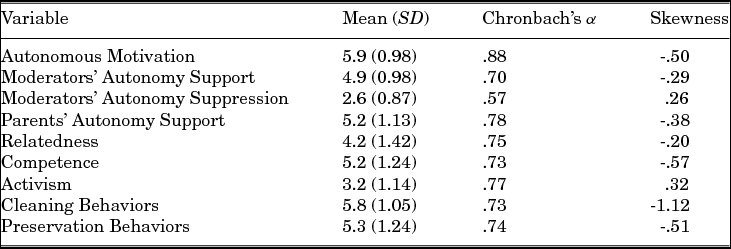
The scales were translated into Arabic and then back-translated into Hebrew by translators qualified in both languages. All measurement constructs were previously validated in published studies. Only the moderators’ autonomy-suppression variable had insufficient internal reliability, with Cronbach's α = .57, but it was not included in the final model. All the other variables had sufficient internal reliability, and reliability coefficients ranged from .70 to .88. Table 1 presents the study's descriptive statistics.
Descriptive Statistics

Note: Scale is 1–7 for all variables.
Results
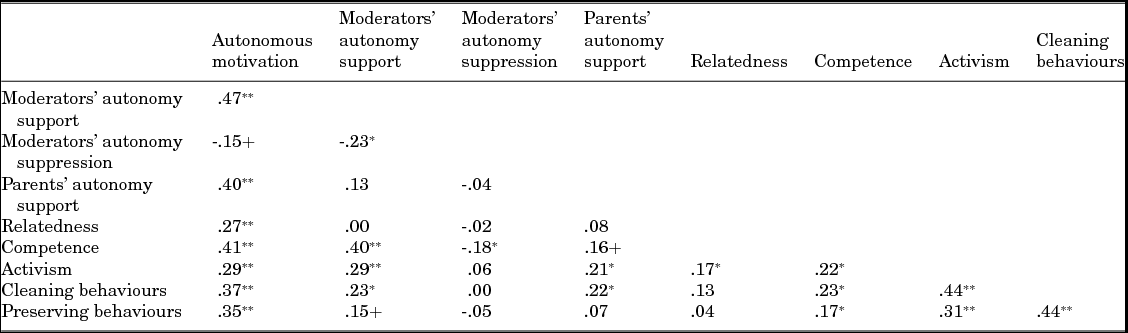
Table 2 presents the zero-order correlation matrix between all the variables. The pattern of the correlations provides further support for the construct validity of the variables. For example, students’ autonomous motivation is positively associated with moderators’ autonomy support (r = .47, p < .001), but negatively associated with moderators’ autonomy suppression (r = -.15, p < .08). In addition, sense of competence and sense of relatedness were associated with autonomous motivation (r = .41; r = .27, p < .001; respectively); however, it was not associated with controlled motivations. The correlation between autonomous and controlled motivation is moderate yet significant (r = .20, p < .05), but this finding is common in an SDT-based study of motivation. In general, the correlation pattern fits the theoretical constructs and previous findings, which demonstrated that basic needs support was associated with a higher level of autonomous motivation, whereas suppression of these needs was associated with a higher level of extrinsic motivation.
Correlation Matrix
Note: + p < .08, * p < .05, **p < .01 one-tailed.
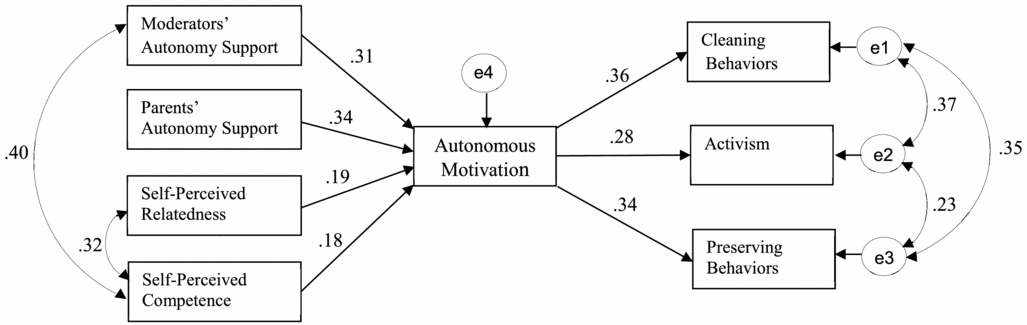
Structural equation modelling (SEM) using AMOS20 confirmed the proposed theoretical model, in which autonomous motivation mediates the effects of project moderators’ autonomy support and parents’ autonomy support above and beyond students’ self-perceived competence and relatedness on three kinds of students’ PEBs. Thus, moderators’ and parents’ autonomy support for PEB has unique positive effects on students’ autonomous motivation regarding participating in activities for the environment above and beyond the effects of students’ sense of relatedness and sense of competence. The model fit indices were found to be satisfactory (χ² = 11.84, df = 16, p = ns, CFI = 1.0, NFI = .92, RMSEA = .00), and all the estimated coefficients are statistically significant (see Figure 1). Although it has been suggested that sample sizes of >50 can yield adequate results (Iacobucci, Reference Iacobucci2010), especially when data is not skewed, we also applied a stricter method for estimation (i.e., asymptotically distribution-free). Model fit indexes remained adequate (χ² = 17.35, df = 16, p = ns, CFI = .99, NFI = .91, RMSEA = .03), with no meaningful differences from previous ML estimations.
Path analysis using structural equation modelling results.
Acceptance of the presented theoretical model rules out any other possible models. Therefore, it is important to test alternative models that may provide different explanations of the data. One such model can be a revised direction of the arrays – which may occur if children who participate in pro-environmental activities internalize the autonomous motivation, which in turn changes the perception of the learning setting; however, this model did not fit the data (χ² = 72.6, df = 23, p < .001, CFI = .57, NFI = .53, RMSEA = .16), nor did other models that were tested. This provides further corroboration that the hypothesised model can be used to conceptualise the association between autonomy support, autonomous motivation, and PEBs.
Discussion
Creating educational conditions that promote self-determined PEBs are a highly significant issue in the study of environmental education. The present article introduced an intervention program, followed by empirical research, aimed at enhancing PEB in a unique cultural group using an SDT framework (Deci & Ryan, Reference Deci and Ryan2000). Although some scholars have utilised an SDT framework in the domain of environmental education (e.g., Pelletier, Reference Pelletier, Deci and Ryan2002, Reference Pelletier2013), it has been argued in the theoretical and research literature that the need for autonomy is a concept that is embedded in Western-individualistic culture, values, and beliefs, and therefore may not have the same effects in relatively more collectivist cultures (e.g., Rothbaum et al., Reference Rothbaum, Pott, Azuma, Miyake and Weise2000). Although previous studies established the role of autonomy support in the internalisation of autonomous motivation in Eastern-collectivist societies (e.g., Jang et al., Reference Jang, Reeve, Ryan and Kim2009; Stewart et al., Reference Stewart, Bond, Ho, Zaman, Dar and Anwar2000; Yamauchi & Tanaka, Reference Yamauchi and Tanaka1998), the question remains whether SDT can provide a solid theoretical framework to explain PEBs and motivation in the Bedouin population in Israel, commonly characterised by a traditional and collectivist orientation (Al-Krenawi, Reference Al-Krenawi, Abu-Rabia-Queder and Weiner-Levy2010), that has not been explored in this regard.
The findings clearly dispute the claim that an autonomy-supportive educational setting might not be important for Bedouin students who belong to a collectivist society. The study supported a model in which Bedouin students’ perceptions regarding their project moderators’ and parents’ autonomy-supportive behaviours enhance autonomous motivation for PEBs, which in turn lead to the implementation of these behaviours) according to their reports). These effects were found above and beyond students’ sense of competence and sense of relatedness, indicating the unique contribution of project moderators’ and parents’ autonomy support to the prediction of PEB through the mediation of autonomous motivation. Thus, although all the students participated in an intervention program, those with a higher level of perceived basic-needs-support were more likely to be autonomously motivated and to implement PEB.
Pelletier and his colleagues (2011, p. 273) claim that ‘research on PEB should also examine how people from different countries and different cultures integrate PEB in their own lifestyle’. The present study joins previous studies that demonstrated the effects of autonomy support in various cultures (Chirkov et al., Reference Chirkov, Ryan, Kim and Kaplan2003; Chirkov et al., Reference Chirkov, Ryan, Sheldon, Chirkov, Ryan and Sheldon2011). In a broader perspective, the study provides support for the assertion that SDT is a universal theoretical framework (e.g., Deci & Ryan, Reference Deci and Ryan2000; Reeve, Deci et al., Reference Reeve, Deci, Ryan, McInerney and Van Ettan2004).
The study further indicates that SDT can serve as a framework for educational programs that focus on improving students’ self-determined PEBs. Thus, if adults — teachers, moderators, and parents — support students’ autonomy, it might enhance students’ autonomous motivation, which will in turn promote PEB. It could be implied that such intervention among Bedouin students might enhance students’ internalisation of values and behaviours regarding the environment.
Pelletier and colleagues (2011) have suggested that ‘In order for psychological science to truly make a difference with respect to environmental destruction, research needs to be strongly guided by a comprehensive theory . . .’ (p. 261). Pelletier later added that effective intervention programs should enable the development of intrinsic goals in order to increase the level of self-determined motivation (SDT Conference, July 2013). Intervention programs that encourage students to choose their own objectives and plan how to do activities for the benefit of the environment are an example of how to achieve these goals. We further state that in order to build an effective intervention program, it should be based on research that shows the change agents and community members that the intervention might indeed lead to the desired outcomes for the specific population in which the intervention is designed to bring about change. This is especially important when the change agents are working with a culture in which the theoretical principles are unfamiliar or even contradict cultural norms or common behaviours.
There are few research reports on comprehensive educational intervention programs that are SDT-based (e.g., Assor et al., Reference Assor, Kaplan, Feinberg and Tal2009; Deci, Reference Deci2009; Su & Reeve, Reference Su and Reeve2011). Two large-scale school reform programs that are close to SDT are the First Things First program (Deci, Reference Deci2009), and the Caring School Community (CSC) program (Solomon, Battistich, Watson, Schaps, & Lewis, Reference Solomon, Battistich, Watson, Schaps and Lewis2000). There are also some other interventions that are not school-wide (e.g., Cheon & Reeve, Reference Cheon and Reeve2013; Reeve, Jang et al., Reference Reeve, Jang, Carrell, Jeon and Barch2004; Su & Reeve, Reference Su and Reeve2011). The program presented in this article is unique in that it focuses on SDT-based environmental education. However, the program still needs to be empirically studied. The present study shows the potential effects of such an intervention.
The results regarding the significant role of parents also indicate the value of systemic educational work. Thus, it not enough to merely learn about the environment, or change students’ awareness (Wals & Dillon, Reference Wals, Dillon, Stevenson, Brody, Dillon and Wals2013). Even participation in various activities in school will not necessarily lead to the continuity of such behaviours (Pelletier et al., Reference Pelletier, Baxter, Huta, Chirkov, Ryan and Sheldon2011). As we know from the literature on environmental education, PEBs can stem from a variety of causes (Heimlich et al., Reference Heimlich, Mony, Yocco, Stevenson, Brody, Dillon and Wals2013). In order to advance internalisation, one should focus on a combination of multiple spheres to include wide-ranging school reform regarding the environment (Deci, Reference Deci2009), and this includes parents and other community members as well.
According to SDT, parents’ support of their children's psychological needs leads to autonomous motivation and optimal functioning at school (Grolnick, Reference Grolnick2009). In the present study, the students were asked about parental behaviours that support their need for autonomy in an environmental context: encouraging choice and personal initiative, accepting the child's views on the environment, providing explanations on the importance of acting for the environment, bringing up ideas together on what to do for the environment, and participating in activities for the environment together with the child. The intervention program included meetings with parents, some together with the students, providing explanations, and raising the parents’ awareness regarding the environment. We recommend the incorporation of this channel in any educational program associated with the environment.
What is the Importance of the Present Study for the Domain of Environmental Education?
The present study provides further support for the importance of motivation within the domain of environmental education, and specifically the promotion of autonomous motivation (as opposed to extrinsic motivation) to act for the benefit of the environment. When individuals or students act out of autonomous motivation, they interpret their behaviour and attribute it to intrinsic reasons (pleasure and interest, or understanding and identification with the activity). This is a cognitive and affective process. Autonomous motivation expresses the internalisation of a behaviour or value, and its integration in the self, as part of the individual's identity. The current literature on environmental education underscores the active involvement and agency of students (Stevenson et al., Reference Stevenson, Dillon, Wals, Brody, Stevenson, Brody, Dillon and Wals2013). It emphasises meaningful learning (from a constructivist approach) that involves cognitive and affective processes (Gough, Reference Gough, Stevenson, Brody, Dillon and Wals2013). It also emphasises the important and influential place of the social and cultural contexts (Kyburz-Graber, Reference Kyburz-Graber, Stevenson, Brody, Dillon and Wals2013). For example, Lundholm and colleagues (2013) refer to a number of studies and present the complexity of environmental learning processes: the students are dealing with emotions and values, they examine the relevance of the activity for themselves and for the environment, and this process entails a negotiation between different viewpoints among the students themselves and between them and their teachers. According to the researchers, environmental learning is a cognitive and affective process that has received little research attention. They pose a challenge for environmental educators: ‘Can teaching create an atmosphere where different views are shared and discussed comfortably despite power imbalance between students and their teachers?’ (p. 250).
The learning processes revealed in the present study indicate the importance of supporting students’ autonomy (e.g., acknowledging emotions, supporting the relevance of the learning or activity, encouraging the expression of different views), and the need for relatedness support that can help students in this complex process.
SDT proposes a well-researched theoretical framework for advancing the internalisation of PEBs as an active process through which students gradually transform socially valued behaviours into personally endorsed activities. According to SDT, and as found in the present study, satisfaction of students’ three inherent psychological needs through their teachers’ and parents’ support promotes the internalisation of autonomous forms of regulation (Pelletier et al., Reference Pelletier, Baxter, Huta, Chirkov, Ryan and Sheldon2011). The present study demonstrated the meditational role of self-determined motivation (autonomous motivation) as a mechanism that mediates between adults’ (project mediators and parents) autonomy-supportive behaviours and students’ PEBs. Thus, we suggest that SDT should be included in the professional approach and language of environmental educators. It is important for them to possess the psychological knowledge regarding internalisation processes and how to foster them. The study indicates the importance of supporting the students’ psychological needs and the need to avoid employing extrinsic motivational factors, and proposes specific practices to achieve this (see below).
A further contribution of the present study relates to the research population. It joins previous studies demonstrating the applicability of SDT in collectivist societies (Chirkov et al., Reference Chirkov, Ryan, Sheldon, Chirkov, Ryan and Sheldon2011). This is an important insight for environment professionals since the environmental challenges we face exist all over the world, in different countries, and in numerous cultures and societies.
The intervention program we have described, which presents the importance of multi-system, multi-year intervention, and reference to a variety of factors involved in environmental education, including parents, is corroborated by the current literature on environmental education that views behaviour change as complex and influenced by a wide variety of factors (Heimlich et al., Reference Heimlich, Mony, Yocco, Stevenson, Brody, Dillon and Wals2013).
In general, the approach and attendant methodologies of action research can be incorporated, which facilitate support of students’ needs, and advance their agency and active involvement. Action research is action-oriented, involves participants in researching their own practices, cycles of action, and critical reflection, and is concerned with actual problems that people face. During the process, the students can generate knowledge that emerges from the actions they take (Stevenson & Robottom, Reference Stevenson, Robottom, Stevenson, Brody, Dillon and Wals2013). This brief introduction on the main principles of action research clearly shows its connection to the notion of autonomy support.
Although the findings of the present study are intriguing and contribute to theory and practice, some limitations should be considered when interpreting and implementing their implications. First, the study is based on self-report measures. This means that it does not necessarily represent the students’ behaviours, but rather what they report. This is also the case with the educators’ behaviours, which are measured through students’ perceptions. Future studies can employ multiple methods to assess students’, teachers’, and moderators’ experiences and behaviours (such as observations, behavioural indicators of PEBs, or in-depth interviews) in order to draw more significant conclusions.
In addition, the entire sample participated in the intervention program, and we cannot compare the model with students who did not take part in such a program.
Another limitation refers to the possibility that the very selection of the students for this special experience might create a bias. All the students participated in a program that is considered prestigious, and the implementation of PEBs may be associated with their very belonging to the project and a desire to preserve their image, rather than due to the instructors or teachers supporting their autonomy. This aspect should be examined in a future study.
Additionally, the complex nature of changing students’ behaviours, which is well documented in the literature (Stevenson et al., Reference Stevenson, Dillon, Wals, Brody, Stevenson, Brody, Dillon and Wals2013), requires integration of multiple factors that might be connected to PEBs.
It is important to also bear in mind that the students’ experience in the project was very complex. They learned about the environment, went on excursions to different sites, participated in activities with their parents, and so forth. The present study does not examine the unique contributions of the individual activities, nor does it draw a distinction between the students’ experiences in the different activities, and the support they received from the adults. A comprehensive evaluation of the various aspects of the intervention program is needed in the future.
In the present article we also raise the argument that support for students’ autonomy is a better approach than autonomy suppression, such as using rewards, punishments, incentives, social sanctions, social shaming, or social rejection. A follow-up study is needed to show that autonomy support and autonomous motivation predict PEBs at least as well, and perhaps even significantly better, than controlled motivation and social control.
Another point worth mentioning refers to the question: What is the impact of such an intervention program on cultural perceptions? In the present study we did not include any components pertaining to cultural change or cultural appropriateness, and it seems important to address these components especially in a comprehensive systemic intervention program that involves community members (parents, for example).
Future studies can address these limitations. This can be achieved with a longitudinal design that incorporates multiple measures of personal, environmental, and contextual factors, and establishes causality. A longitudinal study might even show the short-term effects of external regulations on PEBs.
The study also raises important questions for future research. For example: What are the differences between boys and girls in the internalisation processes of values and behaviours associated with the environment? (We were unable to examine this question in the present study due to the large number of girls in the program.) How does the perceived fulfillment of the psychological needs of instructors or teachers in a project of this kind contribute to predicting their autonomy support of the students? What are the effects of an environmental intervention program on community and school culture?
The present study and the intervention program that was introduced in this article demonstrate how SDT can be an effective theoretical framework in the field of environmental education. Advancing meaningful learning and the internalisation of values and behaviours associated with the environment are important challenges for educators, especially at a time typified by rapid changes in all aspects of life, most of which are connected with the environment. If we wish to educate our students to be active citizens, it is important that values and behaviours associated with the environment constitute an integral part of their lifestyle and experience. We hope the present article will add to the knowledge of educators on how to advance these important challenges.
Author Biographies
Haya Kaplan (PhD) is a Senior Lecturer in Kaye Academic College of Education in Beer Sheva, Israel. She is the head of the Center for Motivation and Self-Determination and the head of Growth Resources - Kaye Induction Unit for beginning teachers. She also serves as an academic advisor for in-service teachers who are studying at the college. She runs comprehensive intervention programs in Bedouin high schools, aimed at enhancing autonomous motivation and leadership, and in regular and special education schools, aimed at enhancing self-determination among children and teachers. In the last three years, she has run an SDT based network of schools in Beer Sheva. Her primary interests and research are in educational processes affecting autonomous motivation, educational reforms, career development of students and professional development of beginning teachers based on Self-Determination Theory principles.
Nir Madjar (PhD) is a Lecturer in the Program of Educational Counselling in the School of Education, Bar-Ilan University, Israel. His main research interests include educational settings that promote adaptive motivation, the development of academic and social motivational orientations across time, and the implications of school transitions on these developmental trajectories. Madjar is a trained educational psychologist and lectures in motivation, group counselling, abnormal psychology and advanced courses in research methods and statistics.