Introduction
Local foods are increasingly incorporated into programs designed to reduce food insecurity, support local farmers and rural economies, encourage more healthful eating habits and foster closer connections between farmers and consumersReference King, Hand, DiGiacomo, Clancy, Gomez, Hardesty, Lev and McLaughlin1. Farm to Institution (FTI) programs claim all of these benefits and can serve a keystone of regional food system development. Based on a review of literature that addressed the interest in and programmatic barriers of FTI processes, Vogt and KaiserReference Vogt and Kaiser2 assert that FTI is a ‘common sense solution’ to three main concerns: escalating rates of obesity, supporting farms of different sizes and energy use. At the same time, Americans continue to spend more on meals away from home including at schools and colleges. According to the United State Department of Agriculture (USDA) Economic Research Service, food purchases away from home, as a share of total household food spending, reached its highest level of 43.1% in 2012 and comprised almost half (49.5%) of total food dollars3.
Institutions such as K-12 schools, colleges and hospitals are promising market outlets for farmers because they tend to purchase from multiple producersReference Hardesty, Allen, Feenstra, Ohmart, Perkins and Perez4 and have growing interest in local food purchasing programs. The USDA Farm to School Census, which surveyed public school districts across the country about their local food purchases in the 2011–2012 school year, reports that $385 million of the $3 billion spent on school food went toward local food purchases5. Farm to Preschool, Farm to College and Health Care Without Harm are other FTI-related programs with similar goals to provide local food to consumers.
Economic and social motivations, as well as perceived benefits and challenges, influence the opportunities and dilemmas of farmer participation in FTI marketing. In order for these programs to thrive, farmers must have a firm understanding of the opportunities and limitations associated with institutional market outlets. In turn, this will allow farmers to determine whether these markets are right for them and if they will receive desired benefits from participating in them. In an effort to address the limited research on FTI engagement from the farmer perspective, this survey research was designed to better understand Michigan vegetable farmers’ interest in and willingness to participate in institutional markets through predominant FTI supply chains, and to identify the perceived barriers and opportunities of marketing vegetables to local institutions, including K-12 schools, hospitals and colleges/universities.
Literature Review
Producer net revenue per unit in local markets ranges from approximately equal to more than seven times the price received in mainstream channelsReference King, Hand, DiGiacomo, Clancy, Gomez, Hardesty, Lev and McLaughlin1. However, sales volume in local food supply chains may be limited by access to, and costs associated with, food processing and distribution, compliance with standards on low-volume enterprises imposed by public or private entities, and extended seasonal availabilityReference King, Hand, DiGiacomo, Clancy, Gomez, Hardesty, Lev and McLaughlin1. Additionally, institutional food service programs often operate under tight budgetsReference Izumi, Alaimo and Hamm6, particularly school meals programs that typically rely on federal reimbursements through Child Nutrition Programs, such as the National School Lunch Program. Due to budget limitations, food service buyers may not be able to deviate much from purchasing food beyond wholesale pricing to which they are accustomed through large-scale, full-service food distribution channels. Procurement regulations for schools participating in USDA Child Nutrition Programs primarily prioritize priceReference Izumi, Alaimo and Hamm6 over other considerations in school food purchasing, although the federal geographic preference rule now allows schools to prefer local unprocessed or minimally processed agricultural products. Still, Vogt and KaiserReference Vogt and Kaiser2 found, through their analysis of 19 FTI publications, that farmers may benefit financially by selling to shorter supply chains with fewer intermediaries involved due to higher profitability.
Farmers’ interest in FTI may pragmatically reflect their need to diversify market outlets, including as a risk management strategyReference Goodman7, Reference Izumi, Wright and Hamm8, and spread costs across multiple revenue sourcesReference King, Hand, DiGiacomo, Clancy, Gomez, Hardesty, Lev and McLaughlin1, suggesting economic motivations. However, much of the literature to date also suggests that farmers have social motivations for participating in FTI, including increasing consumers’ access to fresh, nutritious produce and supporting the local communityReference Gregoire, Arendt and Strohbehn9 as well as contributing to social benefits through direct actionReference Izumi, Wright and Hamm8. A study conducted in Vermont, which discusses the high transaction costs of selling directly to institutions, found farmers’ motivations to market to institutions centered around a mix of social and economic factorsReference Conner, King, Kolodinsky, Roche, Koliba and Trubek10. One group of farmers was willing to make significant investments and incur greater transaction costs (including use of forward contracts and increased frequency of delivery) in order to increase institutional sales and gain higher profits. Another group was primarily interested in social benefits, was less willing to change distribution practices or incur high transaction costs and experienced significantly lower institutional sales and smaller impact on profitability.
Significant challenges and barriers have kept many farmers from entering these marketsReference Hardesty, Allen, Feenstra, Ohmart, Perkins and Perez4. Challenges most commonly reported by farmers were limited selection/seasonalityReference Hardesty, Allen, Feenstra, Ohmart, Perkins and Perez4, Reference Gregoire, Arendt and Strohbehn9 and central distribution for local sourcingReference Starr, Card, Benepe, Auld, Lamm, Smith and Wilken11. The Institute of Agriculture and Trade Policy (IATP) grower surveys (of farmers, ranchers and other producers) revealed many concerns for growers selling specifically to schools, with guaranteeing specific quantity on a specific date, seasonality of products fitting with ordering schedules, pricing, finding interested schools and delivering to schools among the top concernsReference Berkenkamp12, Reference Berkenkamp13.
On the buyers’ side, a study of farm to school programs in the Upper Midwest and Northeast found three primary motivators that school food service professionals suggested for buying locally grown food: the students liked it, the price was right and it helped local farmersReference Izumi, Alaimo and Hamm6. While other study results of institutional food buyers are consistent with the motivation to support local farmers through local food purchasing programsReference Markley, Kalb and Tedeschi14, Reference Colasanti, Matts and Hamm15, food service professionals in various studies have cited a wide range of additional benefits, including: increased student participation in school meal programsReference Vallianatos, Gottlieb and Haase16, eating healthier/increased student consumption of fruits and vegetablesReference Izumi, Alaimo and Hamm6, Reference Markley, Kalb and Tedeschi14, Reference Colasanti, Matts and Hamm15, 17, increased student nutrition education knowledgeReference Markley, Kalb and Tedeschi14, 18, supporting the local economyReference Izumi, Alaimo and Hamm6, Reference Markley, Kalb and Tedeschi14, Reference Colasanti, Matts and Hamm15 and access to fresher, higher quality foodReference Colasanti, Matts and Hamm15. From the perspective of health care providers, supporting local farmers was also considered a primary benefit of FTI, along with improved human health, increased patient access to more nutritious food, and creating a greater impact in the community19.
Despite the many perceived benefits, food distributors and foodservice professionals have also noted a wide range of barriers to FTI. Limited selection/seasonalityReference Colasanti, Matts and Hamm15, Reference Izumi, Wright and Hamm20, Reference Izumi, Rostant, Moss and Hamm21, local food price premiumsReference Hardesty, Allen, Feenstra, Ohmart, Perkins and Perez4, reliable deliveryReference Hardesty, Allen, Feenstra, Ohmart, Perkins and Perez4, Reference Feenstra, Allen, Hardesty, Ohmart, Perkins and Perez22, reliable supplyReference Colasanti, Matts and Hamm15, Reference Izumi, Rostant, Moss and Hamm21, food safetyReference Colasanti, Matts and Hamm15, Reference Izumi, Rostant, Moss and Hamm21, additional labor and preparation time17, Reference Berkenkamp23, difficulty finding farmers from whom to purchase directlyReference Colasanti, Matts and Hamm15, 17, pricing and budgets17, Reference Izumi, Rostant, Moss and Hamm21, Reference Berkenkamp23, federal and state procurement regulationsReference Colasanti, Matts and Hamm15, Reference Izumi, Rostant, Moss and Hamm21, and central distribution for local sourcingReference Vallianatos, Gottlieb and Haase16, 18, Reference Izumi, Rostant, Moss and Hamm21, Reference Berkenkamp23–Reference Johnson and Stevenson25 all posed challenges to developing and sustaining FTI programs.
Research to date has just begun to examine the farmer perspective on FTI, and some of the aforementioned studiesReference Hardesty, Allen, Feenstra, Ohmart, Perkins and Perez4, Reference Gregoire, Arendt and Strohbehn9, Reference Starr, Card, Benepe, Auld, Lamm, Smith and Wilken11–Reference Berkenkamp13 used convenience sampling of current FTI practitioners and/or farmer directories and stakeholder recommendations. At this time we are unaware of any published studies that have examined factors determining participation in FTI with a representative farmer sample, which would allow generalizations to a larger population. This study provides a major contribution to FTI research in that it utilizes a representative farmer sample, provided by the USDA National Agricultural Statistics Service Michigan Field Office (NASS MI), to explore marketing to institutions, rather than often smaller convenience or purposive sampling typical of previous studies.
While FTI is a promising opportunity for market diversification and farm profitability as well as fulfilling social motivations, more research is needed to examine perceptions of this market outlet, and to determine whether FTI marketing is profitable, can be sustained and can help realize the presumed health and environmental benefits that come along with it. Further research is also needed to help educators and FTI advocates and facilitators better understand farmers’ perceptions and needs around FTI, and effectively support farmers of all scales in realizing this expanding market opportunity.
Conceptual Framework
Food supply chain actors, such as farmers, distributors and institutional buyers, all incur transaction costs when they engage in trade; the more differentiated the product, the higher the transaction costReference Hobbs26. Institutional food service directors and buyers engaged in FTI programs demand products differentiated by provenance (i.e., local or regionally grown) due to perceived attributes and benefits embedded in these foods, such as freshness and ability to support local farmersReference Izumi, Alaimo and Hamm6, Reference Conner, King, Kolodinsky, Roche, Koliba and Trubek10, Reference Colasanti, Matts and Hamm15. Minimizing transaction costs when possible is in the best interest of both buyers and sellers, in this case farmers, to create efficient transactions. However, farmers may find particular ‘feel good’ value in providing healthy, locally grown foods for school children. Farmers may also find instrumental value in creating customer loyalty and brand awareness through exposing community members to locally grown foods in institutional settings, particularly as more Americans are consuming more meals away from home.
Farmers interested in marketing to institutions will incur transaction costs to make FTI a reality. HobbsReference Hobbs26 theorized that transaction costs have three main forms: information, negotiation and monitoring. In the case of FTI, information costs may be incurred in seeking a buyer of a product with a local attribute. Negotiation costs include determining prices, product quantities, specifications and quality standards, packaging, payment terms, delivery and ordering schedules, etc. with that buyer. These negotiation costs may be higher with FTI and products differentiated as local or regional because, unlike with standardized commodities, there may not be well-established markets and terms. Monitoring costs, which ensure the terms and outcomes of the transaction are satisfactorily met by each party over time, may include quality and food safety assurances or attributes.
We theorize that farmers are more interested in FTI marketing when transaction costs are lower. Specifically through FTI, farmers will seek to sell relatively large, predictable quantities over regular time periods, have predictable and attainable quality, packaging and delivery standards and terms as required by institutional buyers, and receive timely payment at a reasonable, predictable price. Additionally, we theorize that minimizing transaction costs will be relatively more important to larger, more specialized, less diversified farmers, and that smaller, more diverse farms will place more value on instrumental social motivations which create customer loyalty and brand awareness.
Methods
Study site and design
Michigan is an ideal location for this research for a number of reasons. First, the state boasts one of the most diverse sets of agricultural crops in the nation, including many food crops. With over 55,000 farms and nearly 10 million acres of land in farms27, Michigan ranks seventh in the country in the vegetable category (which includes melons, potatoes and sweet potatoes)28. Secondly, its economy is highly reliant on the food and agriculture industry; the Michigan Department of Agriculture and Rural Development notes that the industry has grown to contribute about US $96 billion each year to the state economy, with total employment (direct, indirect and induced) accounting for about 22% of the state's employment27. Finally, with extensive outreach, education and research conducted over the past decade, Michigan is home to a thriving farm-to-school statewide program and network. Results of a 2013 survey of Michigan school food service directors showed that local food purchasing continues to increase among this population: up from 54% in a 2012 survey, 68% of school food service directors reported purchasing local foods through one or more channels. Whether or not they had purchased local foods before, 82% of Michigan school food service directors indicated interest in buying Michigan foods for their food service programsReference Matts and Smalley29. These survey results point to significant opportunity for Michigan farmers to market Michigan foods to institutions. In addition, this extensive farm-to-school activity makes Michigan a relatively mature site for FTI research as its farmers may have developed at least some awareness of the topic, if not strong opinions and/or depth of experience. Farm to school in Michigan has provided a foundation for significant, emerging FTI work, including efforts to track local food purchases by institutions of all types through a new statewide campaign called Cultivate Michigan. More demand research such as this must be conducted in the future to determine if interest in, and demand for, local foods is similar across food service directors and buyers of different institution types, such as hospitals, colleges/universities, early childcare and education programs, and long-term care programs, both in Michigan and in other states and regions of the country.
The researchers of the study at hand contracted with staff at the NASS MI to finalize an FTI survey tool, disseminate a paper survey to a representative sample of Michigan vegetable farmers, and conduct phone follow-up as needed. This research was conducted in accordance with the Michigan State University Human Research Protection Program and was deemed exempt (IRB# x09–967).
Participants and recruitment
Michigan vegetable farmers were chosen as the subjects of this survey because vegetables constitute a food group that Michigan school food service directors have great interest in purchasing locallyReference Colasanti, Matts and Hamm15, Reference Izumi, Rostant, Moss and Hamm21. Vegetables are closely associated with positive health outcomes but are often consumed in quantities insufficient to meet dietary guidelinesReference Conner, Knudson, Hamm and Peterson30. Also, profitable fresh market sales of vegetables are critical to develop and sustain community-based, or local and regional, food systemsReference Conner and Levine31. The sampling frame available through NASS MI did not distinguish between fresh (sold to the consumer in an unaltered state) and processing markets for several vegetable crops that may be sold to either type of market, including asparagus, squash and celery. We chose to include these crops in the sampling frame, although by doing so the sample included some growers who do not typically sell to fresh market outlets. Similarly, some data for crops typically deemed fruits, including strawberries, cantaloupes and watermelons, are collected by NASS under the rubric of vegetables as they are produced similarly. Therefore, growers of these products were also included in the sampling frame. NASS MI divided the total population of Michigan vegetable farmers who primarily sell crops to fresh market outlets (1522 farms in early 2012) into five strata by farm size from 1 acre to 100 and greater acres, from which they selected a representative sample for a total survey sample of 825 farmers.
Instrument
An eight-page 25-question paper survey was pilot tested with farmers in Michigan (primarily fruit farmers who would not be asked to complete the final survey) and Vermont to gather additional feedback before final revisions were completed. In the final paper survey, each response option was coded with an identifying cell number for keying response data. Each survey was labeled with a farm identification number, only known by the NASS MI staff, to retain farmer anonymity when completed surveys were returned to the researchers, unless farmers chose to provide optional contact information for follow-up purposes. This identifying information was separated from other survey responses by NASS MI staff prior to analysis by the researchers.
Survey question topics included: vegetable production and management practices, fresh product sales to institutions and other markets, and demographics. FTI questions focused on past activities, motivators, concerns and logistical challenges for selling to this type of market, factors that could help farmers sell to institutions, and information and learning opportunities that could help farmers make FTI marketing decisions. The majority of FTI-related questions were based on a five-point Likert-type scale (not important, of little importance, moderately important, important and very important).
Procedure
Using mailing labels printed by NASS MI staff, the mailers consisting of the paper survey, a cover letter with consent information and a self-addressed return envelope were prepared by the researchers and sent by mail to each farmer included in the sample. To maximize the response rate, a two-wave mailing procedure was used followed by NASS MI staff phone calls to non-respondents 4 weeks after the first mailing (late February 2012). All response data were entered into Excel software and edited by NASS MI staff prior to sending the final data set to the researchers for analysis.
Data analysis
Data were analyzed using the SPSS statistical package (version 20, IBM Corporation, Somers, NY, 2011). Descriptive statistics, including frequencies, means, ranges and standard deviations, were calculated when applicable. Cross-tabulations were performed to determine if perceived needs for assistance and logistical challenges varied by farm scale and product diversity, as hypothesized in the conceptual model above. Two dummy variables were created: ‘small_farm’ coded as 1 for farms less than 25 acres and 0 for farms greater than 25 acres, and ‘diverse_farm’ coded as 1 if the farm grew 10 or more different vegetables, 0 if it grew nine or fewer. A χ2 test was used to measure statistical significance.
Results
Descriptive statistics
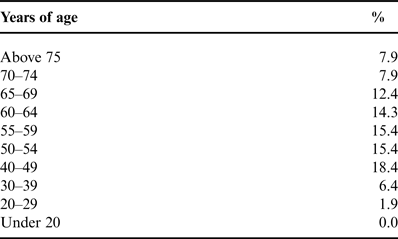
Although 525 surveys were returned, some uncompleted surveys were returned and indicated the farm was no longer active, primarily due to the closing of the business and/or retirement of the farmer. Only 311 farmers who responded still had active farms when completing the survey. If the inactive farms were removed from the sample, the total sample size was 611 and the response rate was 51%. The n for subsequent questions discussed here will be 311 or less, depending on responses by question. Eighty-five percent (85%) of the respondents were male and 15% were female. The age distribution is shown in Table 1, with the mean age of 55–59 years and 28% of respondents indicating age as 65 years and above. This is similar to the average age of principal farm operators at the state and national levels, which is 57.632 and 58.3 years33, respectively. The mean years farming was 33.4 years, ranging from 1 to 80 years. The mean number of acres in production in 2011 was 96 acres but the median and mode were 18 and 2 acres, respectively. This farm size is somewhat larger than the average farm with vegetables harvested for sale (including fresh market and processing) in Michigan (53 acres)34 and at the national level (62 acres)35. Farms in the sample larger than 25 acres tended to have more certifications and verifications than smaller farms; about 68% of respondents with USDA Good Agricultural Practices (GAP) audits and 59% with Michigan Agriculture Environmental Assurance Program (MAEAP) verification were larger than 25 acres (The Michigan Agriculture Environmental Assurance Program (MAEAP) is a voluntary program designed to ‘prevent or minimize agricultural pollution risks’, according to its website). Farmers with farms smaller than 25 acres reported more synthetic pesticide free and fertilizer free (72.3 and 72.1%) production methods compared to farms larger than 25 acres (25.5 and 23.3%).
Age distribution of farmers (n = 266).

When asked which fresh market vegetables were grown in the past 2 years, farmers’ responses illustrated the diversity of vegetable crops grown in Michigan. The most frequent vegetables grown were tomatoes (57.6%), sweet corn (53.4%), winter squash (50.5%), peppers (47.6%) and cucumbers (46.9%). Each of the 32 crop types listed on the survey was represented by at least three respondents.
Farmers indicated that the factors that influenced general market selection the most were: fair prices (89.4%), reliable payment (87.1%) and markets’ value of local food and farming (79.3%). Almost 61% of respondents indicated that they sold their fresh market vegetables through a farm store/stand, 56.6% sold at a farmers' market and 30.3% sold to a packer/shipper. Only 7.3% (20 respondents) had sold their produce to institutions, including K-12 schools, hospitals and colleges/universities. Of those who had not participated in selling directly to an institution, 47% said they were interested in selling to K-12 schools, 41.2% to hospitals and 40.3% to colleges and/or universities. Overall, 50% of farmers were interested in selling to at least one of the three listed institution types.
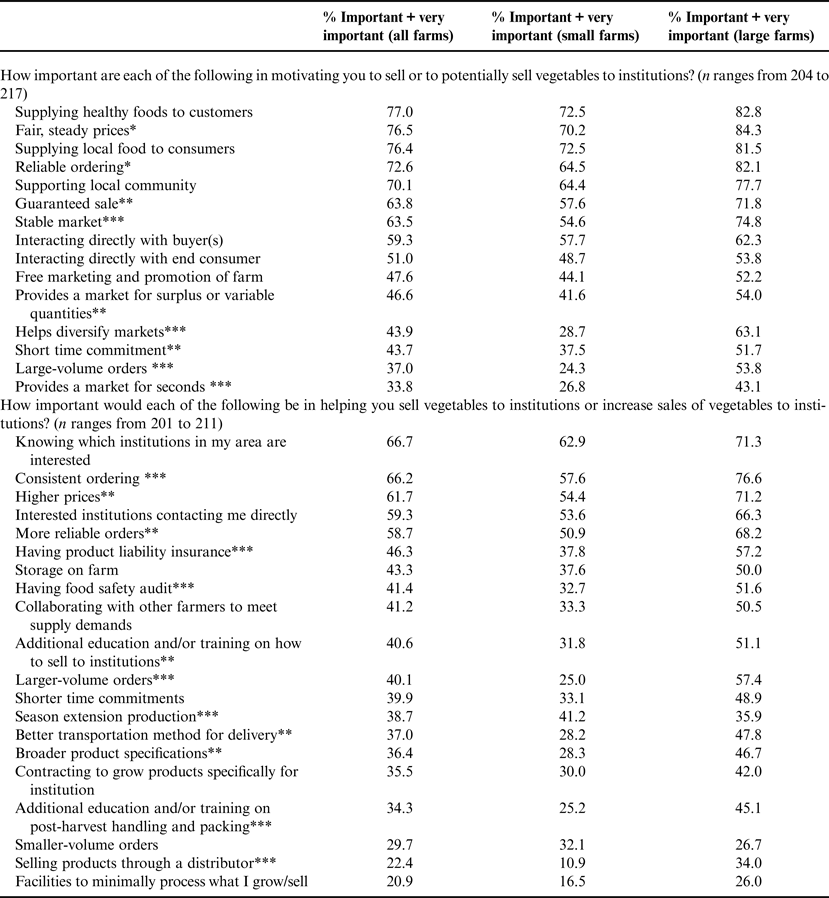
Farmers were asked about the importance of numerous factors that motivate or would motivate them to sell to institutions. The motivating factors rated as ‘important’ or ‘very important’ most frequently were supplying healthy foods to customers (77%), fair, steady prices (76.5%) and supplying local food to consumers (76.4%; Table 2). When asked how important different factors would be to help sell or increase sales of vegetables to institutions (Table 2), farmers most frequently chose knowing which institutions in the area were interested (66.7%), consistent ordering (66.2%) and higher prices (61.7%). Farmers rated the importance of facilities to minimally process what they grow/sell (20.9%) and selling products through a distributor (22.7%) least frequently as factors in helping them to sell to institutions.
Motivating and important factors in selling to institutions.

Note: One, two and three asterisks (*, **, ***) denote statistically significant differences in responses at the 0.10, 0.05 and 0.01 levels, respectively, among small (less than 25 acres) and large (25 or more acres) farms, as measured by a χ2 test.
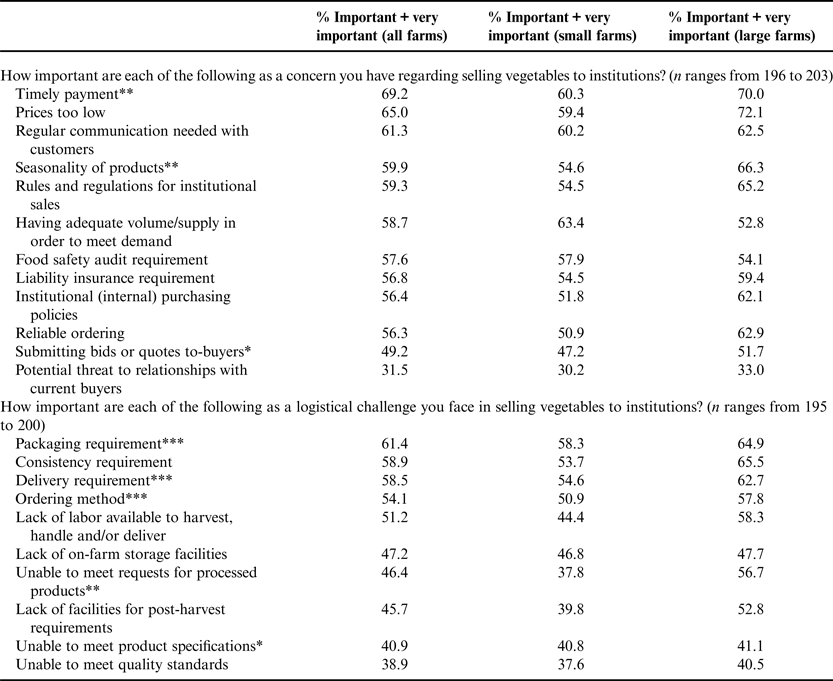
When provided with a list of concerns in selling or potentially selling to institutions, respondents rated the majority of factors relatively equally (Table 3). The most frequently reported concerns that were ‘important’ or ‘very important’ were timely payments (69.2%), prices too low (65.0%) and regular communication needed with customers (61.3%). Only one factor had less than 50% positive response—potential threat to relationships with current buyers (31.5%)—indicating that farmers likely did not see this as a major concern. Farmers were also asked about potential logistical challenges that might hinder them from selling to institutions. Again, the factors were rated relatively equally as ‘important’ or ‘very important’. The most frequently reported logistical challenges included institutions’ potential packaging requirement (61.4%), (product) consistency requirement (58.9%) and delivery requirement (58.5%).
Concerns and logistical challenges in selling to institutions.
Note: One, two and three asterisks (*, **, ***) denote statistically significant differences in responses at the 0.10, 0.05 and 0.01 levels, respectively, among small (less than 25 acres) and large (25 or more acres) farms, as measured by a χ2 test.
Overall farmers responded positively to potential opportunities to learn more about selling to institutions. Almost 85% thought it would be helpful to have lists of institutions in their area that were interested in purchasing local food. Regulatory information such as rules about buying and selling local foods (78.4%) and food safety information (75.4%) were also of great interest.
A small subset of respondents (n = 20) had already sold products to local institutions. While this subset is too small to draw any valid conclusions from their survey responses, the researchers explored these results with an eye toward opportunities for future research. The diverse group of farmers that made up this subset indicated that their total sales to institutions were generally small in dollar value; over 75% of these farmers reported total sales of US $5000 or less to institutions in the previous year (2011). Eighty percent of these farmers also sell produce at a farmers' market. Otherwise, there was great variability in this population, including in the age of the farmer, farm size and crop diversity of their farm. According to these farmers who had already sold vegetables to institutions, institutions have variable requirements, including delivery services, product liability insurance and food safety audits or assurances, in order to sell produce to them. Most (73.7%) of these farmers indicated that the institutions to which they sell vegetables require delivery services. Only 42.1% indicated that the institutions require product liability insurance while 52.6% responded that they never were required to have this insurance. Only 37.5% of farmers indicated that they were required by their institutional customers to have a food safety audit or some type of food safety assurance.
Bivariate analysis
χ2 analyses of cross-tabulations revealed significant differences (at the 0.10 level or higher) by farm scale in responses to 18 of the variables measuring motivations, perceived needs for assistance and logistical challenges (Tables 2 and 3). Small farms (less than 25 acres) were less likely than larger farms to place importance on several economic motivations, including fair and steady prices, large and reliable orders, stable and diverse markets, markets for seconds or surpluses, guaranteed sales and short time commitments (e.g., one stop delivery). There was no significant difference between these groups in social motivations like supplying healthy or local food.
With regard to factors that would help farmers sell to institutions, small farms were less likely to indicate product specifications, higher prices, shorter time commitments, larger orders, more reliable orders, season extension technologies, delivery transportation, selling through distributors, liability insurance, food safety assurances, packaging and training on working with institutions. Similarly, small farms tended to rate the following logistical challenges to sell to institutions as less important than did larger farms: ordering methods, delivery requirement, packaging, product specifications and providing processed products.
None of these variables was significantly different by farm diversity (nine or fewer vegetables grown versus ten or more). Again, whether a farm had already sold to institutions was not significantly affected by farm size or diversity.
Discussion
This study suggests that Michigan vegetable farmers’ motivations to sell to institutions were driven largely by social values. The farmers in this study assigned both ‘supplying healthy foods to customers’ and ‘supplying local food to consumers’ as two of three most frequently chosen motivating factors in selling to institutions (‘fair, steady prices’ as the third). This finding represents the importance that is placed on the social values and benefits in selling to institutions, and is consistent with studies that reported that farmers who participated in farm-to-school programs were motivated by contributing to social benefits through supplying nutritious food and supporting the local communityReference Izumi, Wright and Hamm8, Reference Gregoire, Arendt and Strohbehn9, Reference Markley, Kalb and Tedeschi14.
Farmers’ motivating factors to participate in FTI are also aligned with those of food service directors’ motivations in buying from local farms. Surveys of Michigan school food service directors in both 2004 and 2009 found that supporting the local economy was within food service directors’ top two motivators to purchase food from local farmsReference Colasanti, Matts and Hamm15, Reference Izumi, Rostant, Moss and Hamm21. Although the social benefits of selling to institutions are perceived positively, more research is needed to determine the profitability and sustainability of FTI markets.
Over 75% of the small subset of farmers who indicated that they sold produce to institutions reported gross sales of US $5000 or less from this type of market. While we cannot make any generalizations from this small group, this trend may indicate that FTI sales, which are often low volume, may not significantly contribute to the overall income of these farms, although they could provide a reliable base market and help mitigate risk in the long run by diversifying market outlets. Most institutions, especially K-12 schools, operate under tight budgets, and sales to them may not produce revenues proportional to true costs and/or requirements, thus primarily fulfilling social values for farmers. However, in some cases it is possible that the value of the benefits of selling to institutions are difficult to quantify, like free marketing and promotion of a farmer and his/her farm and products, and increase the total long-term market value and economic benefits for the farmer. More research can provide a better understanding of the impacts of costs and pricing on farmers’ willingness to participate and profitability in FTI marketing.
In this study, ‘facilities to process produce’ and ‘selling products through a distributor’ were among the least frequently reported important factors to help farmers sell to institutions. However, some other studies found that farmers considered a lack of accessible processing facilities to process product in ready-to-use forms to be a top challenge in selling to institutions, and a lack of processing points to be a challenge for food service professionals and food distributors participating in FTIReference Vallianatos, Gottlieb and Haase16, 18, Reference Izumi, Rostant, Moss and Hamm21, Reference Berkenkamp23–Reference Johnson and Stevenson25. A survey of school food service directors in Minnesota found that buying local food through distributors was the most attractive and effective way to make requirements more manageableReference Berkenkamp23. Our research reveals potential conflicts in the continued growth and future of FTI, as intermediaries such as food distributors and processors may help ‘institutionalize’ FTI markets and may be necessary to increase the scale of programsReference Izumi, Wright and Hamm20. More research is necessary to gain better insight on the availability and accessibility of processing and distribution infrastructure for FTI and to realistically assess the cost and benefit of central processing and distribution locations from the farmers' perspective. This is especially critical now as developing and expanding food hubs may seek to become involved in local and regional food supply chainsReference Fischer, Hamm, Pirog, Fisk, Farbman and Kiraly36.
The level of concern over food safety poses another misalignment between farmer and food service director perspectives in FTI. In this study, farmers did not cite food safety as a top concern for selling to institutions. However, school food service directors indicated food safety was within the top three barriers to local food purchasing in the 2004 and 2009 Michigan surveysReference Colasanti, Matts and Hamm15, Reference Izumi, Rostant, Moss and Hamm21. This conflicting notion leads to the assumption that farmers may be unaware of the importance of food safety to institutional buyers and/or may not yet be prepared to meet the certifications or assurances demanded. Therefore, education and support resources are needed to ensure that farmers, with farms of all scales, have access to food safety assurances and certifications. Based on a case study analysis of five California values-based supply chains, Feenstra, Visher and HardestyReference Feenstra, Visher and Hardesty37 offer a potential explanation of the low level of concern among farmers by suggesting ‘small producers who have developed in the direct marketing world are less sophisticated about regulations and have not had to deal with buyer-driven food safety policies’ (p. 53). Vogt and KaiserReference Vogt and Kaiser2 support this assertion from a liability perspective, suggesting ‘…institutional policies often require farmers to carry expensive insurance and liability policies that are appropriate for large food distribution companies but are a barrier to market entry for individual farmers’ (p. 249). In addition to larger volumes easing the local food purchasing process for some institutional buyers, the emphasis on buyer-led food safety policies might suggest why larger farms or food vendors, like full-service distributors, are the preferred choice for some institutional buyers.
In this study, ‘large-volume orders’ was not a top motivating factor for farmers. Instead, farmers indicated fair prices, reliable payment and the market's value of local food and farming as influential factors in their general selection of markets (including and beyond institutions). The market's value of local food and farming was intended to indicate the buyers’ social motivations to purchase local food, namely a high value in sourcing food locally and supporting local farmers. However, sales volume seems to be a growing concern among farmers, as evidenced by other studies. Minnesota producers also cited the challenge of a school’s volume either being too small or too large relative to available supplyReference Berkenkamp12, Reference Berkenkamp13. Although farm to school is framed as a viable market opportunity for farmers and local foods distributors, some studies suggest that consistently low-volume sales are common in these programsReference Izumi, Wright and Hamm8, Reference Joshi and Beery38 and may be an emerging challenge as farm-to-school programs matureReference Colasanti, Matts and Hamm15. If this trend in farm to school is consistent across other institutional markets, this may favor direct sales by smaller, diversified farmers who often experience these high transaction costs in other market outlets and push out larger-scale, more specialized farmers who are often economically motivated by larger-volume sales.
Farmers in this study also indicated that diversifying markets was not an important motivator to sell to institutions, in contrast to findings by Izumi et al.Reference Izumi, Wright and Hamm8 in a farm-to-school study. The authors reported that all farmers in their study emphasized the importance of diversifying their market strategies to remain economically viable, by spreading risk across many different marketsReference Izumi, Wright and Hamm8. Low-volume FTI sales, as indicated in this study, may cause farmers to discredit FTI marketing as a significant diversification opportunity, especially larger-scale farmers. Farm size may also explain why farmers in our survey indicated the diversity of market outlets as less important compared to pricing and supplying healthy and local food to consumers.
Our predictions of the role of transaction costs held as expected in farm scale but not in product diversity. In our sample, smaller-scale farms (less than 25 acres) were significantly less likely to rate economic factors and help in meeting logistical challenges as important. This may mean that these farmers are less motivated by economic factors and overall are more ready to meet the complex logistical challenges of supplying institutions, but it may also indicate that these farmers are simply more unaware of the challenges related to FTI, in particular due to their lack of experience. In general, smaller-scale farms tend to operate in markets with relatively high transaction costs, including farmers' markets, u-pick operations and community-supported agriculture (CSA) or farm share programs. They survive despite relatively low sales volumes by receiving premium prices for differentiated products and a higher percentage of the consumer dollar. Larger farmers often operate in wholesale commodity markets with higher volumes, lower margins and lower transaction costs. They survive by selling higher volumes despite receiving lower prices per unit. In this way, FTI markets may be no different to farmers of these different scales; our results seem to confirm that smaller farmers see more potential social value in FTI markets while larger farmers will seek to minimize their transaction costs related to this market. Our predictions around product diversity and transaction costs did not hold, however, as there were no significant differences in responses to questions about motivations or challenges. This suggests that, in our sample, farm scale is more indicative of sales strategies than is product diversity.
Farmers in this study expressed their interest in participating in different opportunities to learn more about entering institutional markets, which provides critical direction to organizations that support or advocate for FTI. Farmers most frequently indicated the need to know which institutions in their area were interested in buying from local farms. Many online marketing tools available to Michigan growers, such as Michigan Market Maker, Local Harvest and Local Orbit (which also allows for transactions), have attempted to fill this gap by connecting farmers and food vendors with buyers, but there is room for more education about these resources as well as expanded use of them. Farmers were also interested in learning about food safety and rules and regulations related to selling to institutions. Outreach and education opportunities, such as farmer-to-farmer training and dissemination of research results in a practical format, may be effective tools to help farmers understand how to enter and sustain institutional markets. Focusing some of these efforts on larger farms may make sense for two reasons: these farms were more likely to rate many barriers and help as important, and they have the volume to supply institutional needs, like through larger-scale distribution channels.
Limitations
Potential limitations of this study must be addressed. It is important to note that 525 of 825 surveys were returned, but many indicated that the farm business was no longer active for various reasons. This discrepancy demonstrates the challenges of maintaining databases of active farms, especially as farm numbers decline and the average age of farmers rises. It is also important to note that socially disadvantaged farmers, as coined by the USDA, are considered by many as underrepresented in USDA databases; therefore, these farmers are likely underrepresented in this survey study as well. Additionally, the small number of survey respondents who were currently participating in FTI marketing (n = 20) was of interest to the authors to explore but is too small to draw any valid conclusions or generalizations; therefore, this discussion has focused primarily on the potential of this market outlet rather than Michigan vegetable farmers’ prior experiences with it. However, as previously discussed, this study contributes to the FTI literature with results from a representative sample rather than a convenience sample typical of many previous FTI studies.
Another limitation of this study is that respondents and non-respondents may perceive institutional marketing, including its opportunities and challenges, differently. If this is true, the generalizability of the results to all Michigan vegetable farmers would be limited. Furthermore, this study is limited to Michigan vegetable farmers and may not be representative of vegetable farmers in other parts of the country, or farmers of other crops such as fruit, livestock, dairy and grains in Michigan or elsewhere. Despite these limitations, this study demonstrates interest in institutional marketing by Michigan vegetable farmers and brings to the light some of the motivators and challenges associated with it, along with factors that could help further it. These findings may help FTI practitioners, supporters and advocates consider these issues as they begin or expand FTI programs in the future.
Conclusion
In this study, we explored Michigan vegetable farmers’ interest in and willingness to participate in institutional markets, and perceived barriers and opportunities of marketing vegetables to local institutions, specifically K-12 schools, hospitals and colleges/universities. From a representative sample of Michigan vegetable farmers, these findings contribute to the growing body of literature on FTI, and, in particular, provide insight on farmers’ perceptions of these markets.
Although only a small percentage of the farmers who responded currently sell to institutions and may not rely on this venue for farm profitability, Michigan vegetable farmers’ interest in selling to at least one of the three institution types was high. Responding farmers expressed a variety of concerns and challenges related to selling to institutions, such as timely payment, prices too low, and packaging, consistency and delivery requirements, but they also indicated a high degree of interest in learning more about selling to institutions, which provides direction for future outreach and education efforts to assist farmers in meeting this growing market demand. Educational and outreach opportunities, such as farmer-to-farmer training on selling to institutions, networking events between farmers, distributors and institutional buyers, and food safety training can help farmers address barriers and challenges, and may increase the number who choose to sell to institutional markets, thereby further contributing to the development of regional food systems. However, these opportunities should acknowledge potential differences in motivators, including around transaction costs and farm scale, for farmers to participate in FTI. Additional research is necessary to understand the perspectives of FTI marketing held by other types of Michigan farmers’, including fruit, livestock and dairy farmers.
Literature to date has indicated possible social and environmental benefits related to farmers selling to local institutions and, as shown in the present study, many farmers, especially smaller-scale farmers, recognize and may utilize social values as motivation for entering this market. Future research should focus on whether or not these motivations are realized in FTI in practice, and whether farmer participation in institutional markets is profitable over the long term. Future research could further explore the predictive power of farm scale (and lack thereof of product diversity) in transaction cost strategies in other samples and settings. As the demand for local food increases, it will be critical to continue to understand benefits and challenges to farmers participating in FTI to best serve the needs, challenges and opportunities unique to this market outlet as they emerge.
Acknowledgements
This study was supported by the Agriculture and Food Research Initiative of the USDA National Institute of Food and Agriculture and was conducted with the generous assistance of staff from the USDA National Agricultural Statistics Service Michigan Field Office. The authors would like to thank the many Michigan vegetable farmers who completed and returned surveys to make this study possible.