Introduction
The globalisation of international migration has put the relationship between migration and care on the agenda of the social sciences, and especially on scholarship on aging and old age (see e.g. Torres, Reference Torres, Baars, Dannefer, Phillipson and Walker2006a, Reference Torres and Phellas2013, Reference Torres2015, Reference Torres, Ślusarczyk, Pustułka and Struzik2018 as well as Torres and Karl, Reference Torres, Karl, Karl and Torres2016). This is why research has brought attention to the care chains migration creates (e.g. Hochschild, Reference Hochschild, Hutton and Giddens2000; Yeates, Reference Yeates2004), long-term care systems’ increasing reliance on migrant workers (e.g. Browne and Braun, Reference Browne and Braun2008), and the ethical challenges that the import of workers entails (e.g. Robinson, Reference Robinson2006). Attention has also been paid to the supposedly ‘special’ care needs that older ethnic minorities have (e.g. Torres, Reference Torres2006b, Reference Torres, Karl and Torres2016), and the barriers they face when utilising long-term services. The ways in which the media has conveyed the challenges that international migration poses to the elderly care sector have, however, received little attention. This is surprising considering that the media influences how public opinion is shaped especially about groups at the fringes of our societies (e.g. Wood and King, Reference Wood, King, King and Wood2001), and studies on elderly care can give us important insights on a society’s moral backbone (cf. Tronto, Reference Tronto1995). With regards to the latter it must be noted that ‘given the centrality of care activities for human (and other) survival, how well or how badly care is accomplished in any given society will stand as a measure of how well that society is able to adhere to other virtues as well’ (Tronto, Reference Tronto1993: 154). Thus, discussion about ‘care puts moral ideals into action’ (ibid.), which is why we suggest that analyses of media representations on elderly care like this one can contribute to expanding ongoing discussions on the ethea of inclusiveness and equality of care, which are the core themes of this themed section issue.
Our analysis draws inspiration from Pickering (Reference Pickering2001: 72) who argues: ‘the location of the Other is primarily in language’, and that ‘conceptions of the Other and the structures of differences and similarity which they mobilize do not exist in any natural form at all’. Thus, the rhetorical approach that informs this study does not view language as a mirror of reality, but regards it as a building site that achieves state-of-affairs (Potter, Reference Potter1996). In showing how culture is rhetorically deployed, we stress the context dependency of the meaning of culture, which is changeable and negotiable depending on which views are expressed in different circumstances. This means that this article is not concerned with how culture should be defined since it is a known fact that there are multiple and contradictory usages of the notion of culture in circulation in research, policy and practice (cf. Gunaratnam, Reference Gunaratnam2008). Thus, instead of engaging in the ontological conundrum of what culture is and is not, we bring attention to how notions of culture are deployed in media representations of elderly care and migration, the various ways in which these notions accomplish demarcation and segment the ‘strangeness’ of ethnic minorities/ migrants, and what all of this suggests about the ethea of inclusiveness and equality of care that are the pillars of welfare sectors.
The social justice framework as a backdrop to make sense of public discourses
The ethea heretofore alluded to are intimately related to scholarly discussions on social justice. This is why this section is dedicated to the framework for social justice that informs the analysis of the daily newspaper reporting on elderly care and migration that this article focuses on. This framework – which was first proposed by Nancy Fraser in her 1996 Tanner Lecture on Human Values – was formulated to bridge the gaps that materialised when social justice theoreticians started to complement their thinking on redistribution with the notion of recognition that Fraser had launched (see Fraser, Reference Fraser1997, Reference Fraser, Fraser and Honneth2003). Fraser’s framework – which proposes that injustices are best tackled not only if we distribute resources in a more just way, but also if we think about resources in both symbolic and political terms – contends that only when we regard differences as a given that enrich our societies, rather than challenge them, can we curtail injustices.
Fraser (Reference Fraser1997) claims also that theorists drawn to the politics of recognition believe that cultural domination, non-recognition and disrespect are what facilitate injustice, while redistribution-minded theorists see economic restructuring as the remedy for injustice. These conceptualisations of injustice differ in how they regard the collectives whose injustices they try to remedy. For redistribution-minded theorists it is class-like collectivities that need to be in focus, while recognition-minded theorists regard those that are deemed to be less esteemed (and/or those who are accorded the least prestige) that must be kept in sight. This is why the former envision a world where differences can be abolished, while the latter think that differences (irrespective of whether or not they are regarded as pre-existing or not) need to be recognised since the problem is not that they exist but rather that we regard them in a hierarchical way.
The first iterations of Fraser’s (Reference Fraser1997, Reference Fraser, Fraser and Honneth2003) framework proposed that it is ludicrous to make justice claims that do not incorporate both of these angles: redistribution and recognition. In a later iteration of the framework (Fraser, Reference Fraser2009), she added a new angle from which injustices could be tackled: representation, which is about political participation in general terms; i.e. having one’s voice be heard. It is this version of the framework that has led Fraser-minded social scientists to think of injustices as resulting from the interplay between redistribution (the economic resources angle), recognition (the cultural angle), and representation (the political angle). In this article we use Fraser’s framework to interrogate the paradoxical relationship to particular ‘Others’ that media representations on elderly care in Sweden convey, and question these public discourses’ capacity to report in a way that is compatible with the ethea of inclusiveness and equality of care that characterize the welfare sector. Of particular relevance to our analysis is Näre’s (Reference Näre2013) use of the concept of recognition in her study of how care workers in Finland refer to migrants. Her results resonate well with ours although we utilise Fraser’s framework as a whole, and focus on the rhetorical practices and notions of culture that the daily newspaper reporting hereby alluded to deploy when depicting ethnic minorities and migrants as different from ethnic Swedes.
Data and method
The data comes from a project that explores media representations of ethnicity and migration-related issues in relation to elderly care in Sweden and Finland (see Lindblom and Torres, Reference Lindblom and Torres2011; Torres, Reference Torres2017, Reference Torres, Ślusarczyk, Pustułka and Struzik2018; Torres and Lindblom, Reference Torres and Lindblom2020; Torres et al., Reference Torres, Lindblom and Nordberg2012, Reference Torres, Lindblom and Nordberg2014). Here, we present one of the angles of analysis we have employed when analysing articles published in the two largest national daily newspapers in Sweden: Svenska Dagbladet (SvD) and Dagens Nyheter (DN). Since it was in 1995 that the public interest on these issues began, this is the starting point for data collection. The search terms used in the database Mediearkivet were in Swedish. English approximations are: elderly care*, geriatric care*, old person*, senior*, immigrant*, ethnic*, ethnicity*, culture*, foreign*, language/linguistic*, multicultural*, diversity*, minority*, labor immigra*, migration*. (The * indicates that all words beginning with a root word have been searched). The initial database search resulted in about 3,500 articles. However, on closer examination, we found that most articles dealt with either ethnicity (or the other related terms), or elderly care. Thus, the data is composed of the 370 articles that address both between 1995 and 2017.
First, we used quantitative content analysis (and SPSS) to analyse the occurrence of various themes (see Esaiasson et al., Reference Esaiasson, Gilljam, Oscarsson and Wängnerud2007). In order to create good conditions for reliability we followed Neuendorf’s (Reference Neuendorf2002) suggestion to use a coding notebook (to register all of the coded data), and a code scheme (describing the principles used when coding). Furthermore, in order to deepen the quantitative analysis, we conducted qualitative content analysis to complement the ‘what’ questions, with ‘how’ ones (Silverman, Reference Silverman2001: 222). We have also considered alternative codes in peer-debriefing sessions (cf. Creswell, Reference Creswell1998) to increase the trustworthiness of the analyses.
The Swedish context: diversity within and outside the elderly care sector
The total population of Sweden amounted to 10,230,185 at the end of 2018. At the beginning of 2019, 20 per cent of the population was over the age of sixty-five, while 38 per cent belonged to the fifty-plus group. Thirteen percent of the sixty-five-plus population in this country, and 16.5 per cent of the fifty-plus group, has a foreign-born background (Statistics Sweden, 2019). Thus, the number of foreign-born people for which Swedish elderly care planners need to reckon is increasing. This has happened because the sector has not only become weaker, but also less universal (Szebehely and Meagher, Reference Szebehely and Meagher2018). In 2017, 28 per cent of staff working in nursing homes were born abroad (National Swedish Board of Health and Welfare, 2019). A look at the Stockholm region also shows that 55 per cent of workers in these settings had this background in 2017 (ibid.). It is figures like these that have led policy debates on elderly care in this country to focus on migration, and daily newspapers to report on this sector.
It is important to note that one of the first scholarly contributions to draw attention to public discourses on migrants in Sweden can be found in a book by Allen Pred (Reference Pred2000) entitled Even in Sweden: Racism, Racialized Spaces, and the Popular Geographical Imagination. In his analyses of Swedish daily press, Pred (Reference Pred2000) showed that the portrayal of tensions between ‘natives and foreigners’ had become common as the ethno-cultural diversity of the population had increased. The implicit question that has guided the design of our project has, however, been whether Pred’s findings resonate with how public discourses on elderly care describe migrants since the import of migrants to this sector has been discussed (and in some countries implemented) as a way of tackling the staff shortages that this sector faces. This would suggest that less straightforward representations of migrants may be found in the daily newspaper reporting that focuses on this sector.
Media representations of elderly care and migration
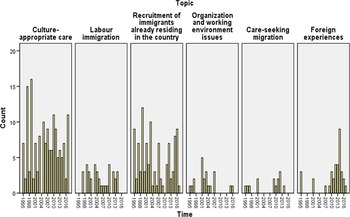
Our previous analysis shows that six themes dominate the daily newspaper reporting to which we draw attention in this article (see Lindblom and Torres, Reference Lindblom and Torres2011; Torres, Reference Torres2017, Reference Torres, Ślusarczyk, Pustułka and Struzik2018; Torres and Lindblom, Reference Torres and Lindblom2020 as well as Torres et al., Reference Torres, Lindblom and Nordberg2012, Reference Torres, Lindblom and Nordberg2014) (see Fig 1). The themes are:
-
culture-appropriate care (which includes references to language, religion, manners and customs, food and cultural values) is the topic used when discussing the so called ‘special care needs’ that older ethnic minorities supposedly have, and the fact that the sector is not equipped to meet these needs;
-
labour immigration has to do with the ‘import’ of care workers to the sector;
-
the recruitment of immigrants already residing in the country brings attention to the various efforts made to attract immigrants to the care sector who already live in Sweden;
-
organisation and working environment issues address just this very topic;
-
care-seeking migration focuses on people who travel to Sweden to use the elderly care offered and
-
foreign experiences deal with other countries’ experiences of providing elderly care.
Topics and their distribution over time in the Swedish media representations on elderly care (n=370).

Figure 1 displays how these themes are distributed in the reporting hereby analysed over time.
Figure 1 shows that the reporting has first and foremost focused on culture-appropriate care (42.4 per cent of the articles focus on this), and that this theme was particularly predominant during the late 1990s until 2011, and again toward the end of the period we have analysed. Furthermore, the recruitment of immigrants to the sector – which was particularly frequent in the reporting between 2012 and 2016 – has also been a significant theme (28.6 per cent), and one that has received more attention than labour migration (10 per cent), foreign experiences (9.5 per cent), organisation and working environment issues (5.7 per cent), and care-seeking migration (3.8 per cent).
As already mentioned, this article focuses on the five rhetorical practices discerned when the themes mentioned above were analysed. These are: genre and actor stratification; hegemonisation; normative referencing; homogenisation and idealisation and diminishment. Hereby we will show that these practices establish boundaries between the ethnic majority (Swedes), and ethnic minorities in Sweden, which are sometimes alluded to as migrants, and other times as the Swedish minority groups in this country (e.g. the Sami, Tornedalians and Elfdalians). Thus, the term ‘ethnic minority’ is used here to refer to those that are regarded as ‘ethnic Others’ in Sweden (Torres, Reference Torres2006b), not just migrants, which is what Pred’s (Reference Pred2000) analyses were exclusively focused on. The data corpus refers, however, to migrants at times, so we will use this term as well when appropriate.
Genre and actor stratification
Our analyses suggest that the rhetorical practice we call genre and actor stratification operates on the epistemological level (Lindblom, Reference Lindblom2015), and gives us insight into the ‘stage and voices’ that the public discourses in focus rely on. The significance of genre relates to the conditions that produce states-of-affairs (cf. Potter, Reference Potter1996), which is why discourse analysts often highlight that different genres have distinctive traits, and that the news section and the debate section of a newspaper have different epistemological entitlements. It is in the news articles that information and facts are presented, while debate articles are, to a greater extent, associated with subjectivity and personal opinions. Genres dictate therefore not only what actors can claim but also how. Thus, in the data corpus in focus here, genres draw attention to where utterances about ethnicity and migration-related issues were made.
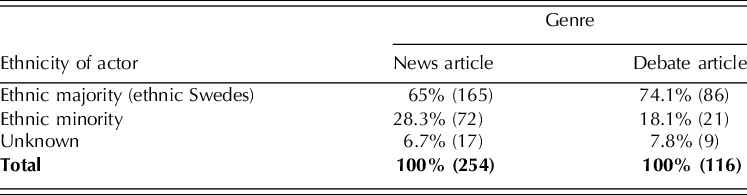
Table 1 demonstrates that the majority of the articles come from the news section (68.6 per cent or 254/ 370 articles) even if there are some debate articles as well (31.4 per cent or 116/ 370 articles). Thus, in this data corpus, genre stratification involves the use of a fact-producing medium to rhetorically construct ethnic minorities – with or without a migrant background – as culturalised beings. This means that news articles – with their privileged claims – characterise the reporting analysed here. We argue that this is one of the reasons why the presumed cultural needs, skills and stereotypes with which ethnic minorities are associated in these media representations seem indisputable and natural when one reads the data corpus as a whole. Thus, by reducing minorities to their ethno-cultural backgrounds, without little allusions to their socio-economic ones, these media representations seem oblivious to the type of redistribution claims that social justice theorists would like us to acknowledge (cf. Fraser, Reference Fraser1997, Reference Fraser, Fraser and Honneth2003).
Genre and actor ethnicity in the Swedish media representations on elderly care (n = 370)

Table 1 shows also that ethnic Swedes dominate both the news genre (65 per cent), and the debate genre (74.1 per cent). Thus, it is mostly the ethnic majority that get to state their views about what ethnicity and migration-related issues mean for Swedish elderly care; a pattern that is interesting considering what we learned in the section on Fraser’s social justice framework about representation being one of the tools through which injustices can be tackled. Headlines – such as: ‘Finnish voices help the patient: success in bilingual elderly care’ (SvD 27/12-1995), ‘Language needs’ (DN 19/6-2007), ‘Elderly people are provided more culture’ (DN 22/8-2008), ‘A nursing home of their own for Syrians’ (SvD 12/9-1995) and ‘A nursing home with features of the home country’ (DN 26/1-2006) – inform the public that minorities have ‘special’ cultural needs that the elderly care sector must meet, and that meeting these needs poses a challenge. In doing so, these headlines deploy a notion of culture that implicitly suggests that ethno-cultural background is something that defines the ‘Other’, and their care-related needs. Because of this, the notion that cultural background determines who ethnic minorities and migrants are, and what their care needs are, becomes reified. Alternative interpretations and realities – drawing e.g. on care recipients’ individual desires, or their socio-economic situation in which some of these minorities find themselves – are undermined as a result of this. Thus, the possibility that minorities’ presumed ‘difference’ can be addressed in socio-economic ways as redistribution-minded scholars would urge us to do – which would entail zeroing in on their class affiliation, income and spending power – is not part of the imagery that these public discourses utilise.
Hegemonisation
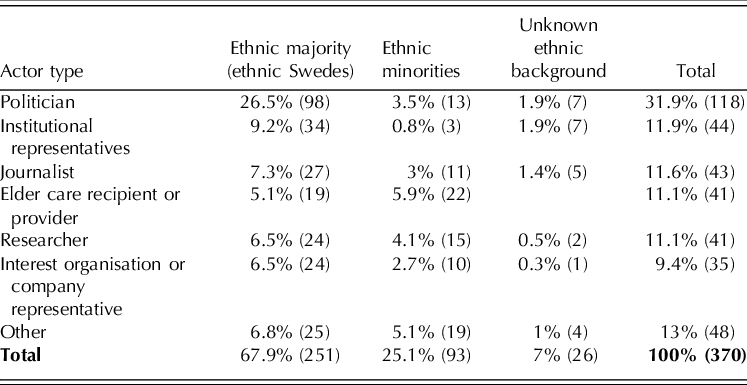
Another rhetorical practice identified in this reporting is hegemonisation. This refers to the fact that it is not only that the ethnic majority has been given the platform to shape the media coverage, it is also that this majority has an elite background (see Table 1); a fact that raises concerns if we use Fraser as a lens to make sense of the media representations that this reporting conveys. The concept of hegemony is useful here as it refers to the power that the reigning elite can exert over subjugated groups through the manipulation of symbols (e.g. Hall, Reference Hall1997). In this case, it is the manipulation of the media representations of migration, migrants and culture in relation to elderly care that is at stake. Cultural hegemony draws namely on the authority to mark, assign and classify the reality of a group in a certain way, establishing a representational regime in society. This is why mass media, education and politics are all deemed to be significant channels through which hegemony is produced and maintained, and why Fraser (Reference Fraser2007, Reference Fraser2009) argues that understanding the role that representation – i.e. where minorities’ voices are heard when hegemony is being reproduced – is important in our quest for social justice.
Table 2 demonstrates that very few care recipients and providers of elderly care get to express their views in the reporting in question. Politicians (31.9 per cent) and institutional representatives (11.9 per cent) dominate this reporting. Furthermore, Table 2 shows that approximately four out of five politicians (98/118) and institutional representatives (34/44) who have been given a platform are ethnic Swedes. These results are illustrated in an article where a Swedish politician claims that Finns and other ethnic minorities need culture-appropriate care:
There are many groups who would like to have a profiled nursing home, but they do not have the financial capacity to run an elderly home entirely on their own, he says [Leif Rönngren]. He also mentions the Finnish Elderly Centre, which is run by a foundation since 1995. In addition to nursing services offered in their mother tongue, there is also bingo, karaoke, celebrations of Finnish festivals and a Finnish sauna (DN 29/4-2009).
Actor type and ethnicity in the Swedish media representations on elderly care (n = 370)

In this excerpt we see how a member of the ethnic majority and the elite is given the opportunity to convey to the public, not only that culture-appropriate care (here referred to as profiled nursing home) is something migrants want, but also what kind of activities such care initiatives could offer. Articles like this one are not uncommon in the reporting in focus here, and particularly interesting considering that Sweden has yet to invest in a representative study of older people with migrant and/or ethnic minority backgrounds. This is why articles like this one remind us of Ronström (Reference Ronström and Andersson2002: 136) who has stressed that the ethnification of elderly care in this country is largely ‘an arrangement of the ruling elite’. This raises questions related to Fraser’s framework, which argues that in order to combat injustices we need to make sure that vulnerable groups are given a voice so that discussions about them are carried out with them. The notion of representation urges us, after all, to query who is included (and excluded) ‘from the circle of those entitled to participate’ (Fraser, Reference Fraser2009: 147); a circle that in this daily newspaper reporting does not encompass ethnic minorities and migrants.
Normative referencing
The third rhetorical practice identified is normative referencing, which is a term we borrow from Calasanti and Zajicek’s (Reference Calasanti and Zajicek1993) analysis. They have pointed out that when a group’s unique perspective is not acknowledged, their opinions run the risk of being viewed as aberrations that beg explanation. The media representations in focus here regard the ethnic majority (Swedes) as the norm against which minorities are compared. This deserves our attention because Fraser (Reference Fraser1996: 7) has argued that ‘being subjected to patterns of interpretation/…/ that are associated with another culture and are alien and/or hostile to one’s own’– which is what cultural domination is all about – is one of the ways through which injustices can be reproduced.
To this end, it seems necessary to mention that a conventional sociological understanding of culture refers to socially transmitted norms, values, habits and material things between generations (cf. Giddens and Sutton, Reference Giddens and Sutton2013). In the media representations alluded to here, however, the notion of culture most often deployed when alluding to care recipients from the ethnic majority is strikingly different from the one used to allude to minorities. The former are represented as individuals who are not determined by their ethno-cultural backgrounds, while the latter are often described as cultural beings whose language, religion, traditions and customs determine who they are. To illustrate this, we present two contrasting examples from the data corpus. First, an article on older migrants with Greek backgrounds illustrates the significance of cultural needs in the representation of ethnic minorities as care recipients:
More and more of us [Greeks] are getting older and older. At the moment there are only a few that are really old but in a couple of years… We need a Greek nursing home, we are Greeks and want to speak our language. We want to celebrate our national holidays, eat the Easter food that we are used to but we do not want to go back to Greece. It is here [in Sweden] that I have my children and grandchildren, says Anastasia Karekeva [the President of an Association for Elder Greeks] (SvD 20/3-2000).
The above can be contrasted to how cultural background is described in relation to older Swedes. In the following a politician deploys a notion of culture that is different when alluding to older Swedes’ future care needs:
Our vision for the future is nursing homes that specialize in culture, gardening or pets. The elderly will be able to use their ‘old-age money’ to choose living accommodation with different profiles. It’s a question of quality of life […] In March we’ll begin training ‘culture guides’ in cooperation with the Stockholm City Library […] One nursing home might try to entice people with an extra selection of cultural activities, another might offer opportunities to potter around in a garden, and still another might allow residents to bring their pets with them (SvD 10/2-2001).
In the case of care recipients with ethnic majority backgrounds, the notion of culture that is deployed alludes to the ‘extra selection of cultural activities’ that could improve their ‘quality of life’. Similarly, in another article on older Swedes, culture denotes listening to music, going to the movies and visit museums and art galleries (SvD 5/4-2016). Viewed this way, culture is not regarded as a background that determines who people are but rather as a set of activities that people may like to (but need not necessarily) engage on. By regarding culture in this way, Swedish older people are described as care recipients that have preferences but not necessarily needs. This is in contrast to minorities who are described as having needs, not preferences.
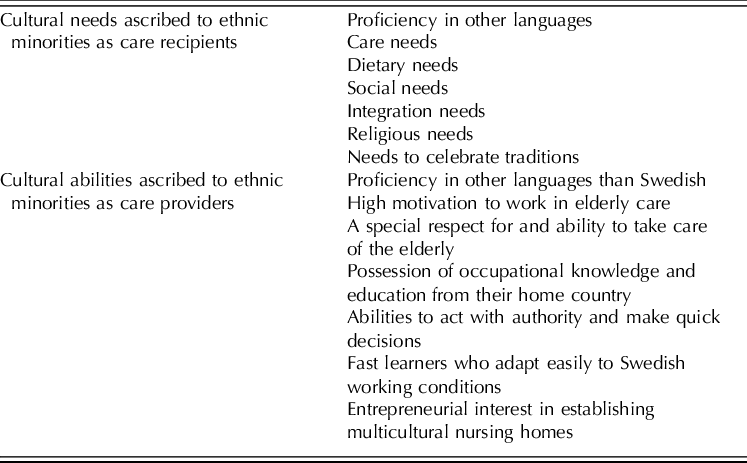
Table 3 presents a list of the needs and abilities attributed to minorities in the data corpus. Irrespective of which group the media representations focuses on (i.e. care providers or care recipients), the needs and abilities alluded to in this table rely on allusions to culture as the basis for them being the ‘Other’.
Needs and abilities attributed to ethnic minorities in the Swedish media representations on elderly care (n=370)

Homogenisation
Another rhetorical practice that the reporting uses is homogenisation, which is about dismissing the heterogeneity that exists within minority groups and is therefore yet another practice that raises questions when we approach this reporting from the perspective on recognition that Fraser’s framework on social justice proposes. This homogenising practice inadvertently conveys that the kind of segregation that Swedish ‘integration policies’ have been claimed to lead to (cf. Torres, Reference Torres2006b, Reference Torres, Karl and Torres2016) makes sense within the context of elderly care. In this respect it is important to note that migration scholars have claimed that Swedish ‘integration policies’ have a twofold meaning. On the one hand, they refer to the preservation of minority groups’ specific cultural character. On the other, they allude to the idea that migrants need to become integrated into Swedish society. As such, these policies inadvertently promote ‘the separation from the whole’ (Westin, Reference Westin1999) that Fraser’s notion of recognition could be deemed to be about since her framework for social justice takes for granted that differences need to be acknowledged if injustices are to be tackled. However, separation – which is what the homogenising practice hereby alluded to accomplishes – need not be intrinsic to the type of recognition that Fraser proposes in her framework.
Irrespective of what Fraser would think about arguing that separation is needed once we have recognised the differences that underpin inequalities, we argue that allusions to the need for culture-appropriate care resemble the segregationist tendencies that are at the core of Swedish paradoxical ‘integration politics’. When the reporting stresses that there are ‘needs among older migrants to live together with their fellow country-men and be cared for by staff who speak their language’ (DN 20/10-1996), the media is ‘separating’ older migrants ‘from the whole’ even though no representative studies have been conducted to offer evidence for older minorities’ so called ‘needs’ and preferences. One of the main reasons why this separation is implicitly advocated is that cross-cultural interaction between care providers and recipients is expected to give rise to complications and stressful tensions as illustrated below:
[I]t is not always easy to examine patients who do not speak Swedish. Misunderstandings easily arise, like when a man from Iran, a few years ago, stated that it was 1376. This caused first surprise but turned out to be true because Iran has a completely different calendar than Sweden (1997 is 1376) (DN 22/11-1997).
In the reporting analysed here there are no accounts of older migrants who speak Swedish, prefer traditional Swedish elderly care, appreciate Swedish cuisine and/or want their care providers to speak Swedish. Instead, older migrants are portrayed not only as being different, but also as people who want to be different and require care in separate nursing homes. As such, they are depicted in homogenous ways even though there is a great heterogeneity amongst them (cf. Torres, Reference Torres2006b). Thus, even though over 100 ethnic backgrounds can be found amongst older migrants in Sweden, many speak Swedish after having lived here for decades, and many have contributed through their taxes to building this country’s welfare state, these newspapers constantly emphasise the differences between migrants and ethnic Swedes as opposed to those that exist within minorities. Segregation becomes also naturalised when the provision of care to minorities is discussed as something that other minorities are most suitable to provide. This is why we suggest that the matching of ethno-cultural backgrounds that is alluded to in some of the newspaper articles as ‘the most practical option’ not only becomes a given through the rhetorical practice that is homogenisation, but raises question if we think that Fraser’s recipe for the tackling of injustices is a viable way forward.
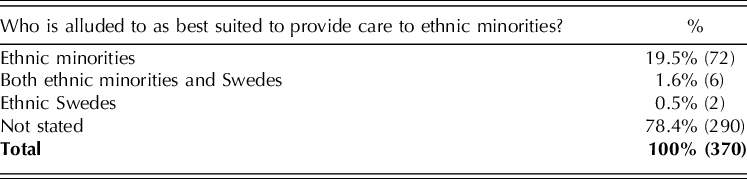
Table 4 shows that, among the articles that address the suitability of care workers, ethnic minorities are described as the most suitable care provider for migrants and Swedish minority groups (19.5 per cent). In contrast, ethnic Swedes are rarely alluded to as best suited for (0.5 per cent) elderly care provision, or as good as (1.6 per cent) care providers from these groups. This is why segregation ends up seeming reasonable. An example is an article describing a group of older Syrians who applied for a nursing home intended only for them. In response to their request, a municipal commissioner is quoted as saying: ‘Elderly Syrians enjoy living together. Our immigrants are interested in integrating, but when it comes to nursing homes, the positive aspects outweigh the negative ones’ (SvD 13/ 9-1995). Thus, in this reporting, elderly care is deemed to be a special context where integration is neither necessary nor preferable. The provision of culture-appropriate care is, in other words, deemed to be more important than the expectation that minorities will either become (or remain) integrated into Swedish society once they reach old age. Moreover, in another article, an elderly care manager defends separate nursing homes for Finns, Jews and Iranians by stressing the positive effects felt by the relatives of older migrants: ‘Paradoxically enough, the segregation of older migrants promotes the integration of their relatives, who are not forced to provide care against their will’ (SvD 20/3-2000). Thus, by emphasising the assumed care expectations that older migrants place on their younger relatives, culture-appropriate care is claimed to be reconcilable with the notion of integration.
Who is the most suitable to provide care to ethnic minorities in the Swedish media representations on elderly care? (n=370)

Idealisation and diminishment
The rhetorical practice of idealisation and diminishment draws on the split evaluation of ethnic minorities’ cultural background as either an asset (idealising) or a burden/challenge (diminishing). The former – idealisation – is typical of the representation of migrant care workers that previous research has already exposed (see e.g. Näre, Reference Näre2013; Torres and Lindblom, Reference Torres and Lindblom2020), while the latter is mostly a characteristic of how care recipients with migrant backgrounds are described. Thus, while care recipients with migrant backgrounds are depicted as a challenge to the sector because of their ethno-cultural backgrounds, and the presumed ‘special’ needs that these create, care providers with the exact same backgrounds are described as an asset since the sector is experiencing staff shortages, and these workers are deemed to be particularly suitable to care (cf. Browne and Braun, Reference Browne and Braun2008; Laurén and Wrede, Reference Laurén and Wrede2008; Näre, Reference Näre2013). The common practice of ascribing positive attributes to care providers (e.g. being ‘caring’, ‘light-hearted’, ‘cheerful’) is, however, rarely, or never, observable in articles that focus on care recipients with migrant backgrounds. As already noted, ‘cultural’ needs (e.g. language, religion and food) are consistently attributed to care recipients with migrant backgrounds but seldom to care recipients without them or care providers with these backgrounds. The excerpt alluded to next is illustrative of how the reporting idealises migrant care providers:
Working in the large bright kitchen with chirping birdcages at the old folk’s home […] we find Yeman from Ethiopia and Mahmoud from Lebanon. They have been working three and thirteen years, respectively. Both speak excellent Swedish, joke a lot and are not afraid of closeness and physical contact. But the old ladies are happy too […] One of them, Margareta Boussard, thought it was ‘like going to heaven’ when she came here from long-term care in 1985 (SvD 22/2-2002).
This excerpt exemplifies the notion of ‘care cultures’ that the reporting constantly deploys when portraying migrants as being gifted with extra-ordinary qualities as care providers. Assumed to originate from cultures where caring for older people is axiomatic and morally obligatory, migrants are described as being sensitive, loving and highly motivated to work in elderly care. Indeed, care work is represented as something that comes naturally to them. Thus, in the case of migrant care workers, and contrary to how care recipients with minority backgrounds are described, culture tends to denote an asset.
Table 3 lists the variety of ‘traits’ that the reporting utilises to describe care providers with migrant backgrounds. Most of the qualities listed in this table are alluded to in an article in which a relative to a Swedish care recipient is interviewed; a relative that is quoted as saying that migrant care workers ‘[are] dedicated people who are there for others, treat the elderly with love and care, work twice as long when there is no staff, sign up for service at Christmas and New Year’ (SvD 31/5-2003).
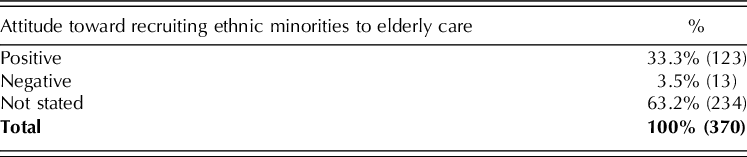
Table 5 shows, however, that although most articles do not explicitly state the reasons why recruiting minorities (and in particular migrants) to Swedish elderly care makes sense, there are some articles that do convey a picture of them in positive terms (33.3 per cent). Few articles question, in other words, the recruitment of minorities to the sector (only 3.5 per cent do). The fact that Swedes are sometimes described as highly unsuitable for care work merits therefore attention. This is illustrated in an article by a researcher on globalisation and welfare, who claims that the dreams of well-educated, young Swedes would be crushed if they were to be recruited into elderly care. Alluding to the fact that it would be very costly for the sector to hire ethnic Swedes, the researcher interviewed contends that migrants are better suited for care work and asks: ‘So why not allow, say Philippines, to do it? They would earn better than in Manila and Swedes – old and young – would win on it’ (DN 5/4-2008). Similarly, in another article, a head of a unit in elderly care notes that the sector needs to hire migrants as ‘most Swedish-born prioritize their careers and aim to qualify for higher education. For them, elderly care has now often become a passage on the way to [other] occupations as a nurse or a social worker’ (DN 12/4-2011). Thus, migrants’ presumed care competence is contrasted with ethnic Swedes’ presumed inability or reluctance to do care work. This makes the recruitment of migrants seem like the natural solution to the staff-shortage that Swedish elderly care is grappling with (see also Torres and Lindblom, Reference Torres and Lindblom2020 where this is discussed). The point we are making here is that one of the ways through which this interesting balancing act is accomplished in this reporting is through the rhetorical practice of idealisation and diminishing hereby identified.
Attitudes toward recruiting ethnic minorities in the Swedish media representations on elderly care (n=370)

Discussion
This article has examined the ways in which Swedish daily newspaper reporting on elderly care has conveyed the challenges associated with international migration; an angle of investigation that has received little attention (see Nordberg, Reference Nordberg2016 and Weicht, Reference Weicht2010 who seem to be amongst the few to study public discourses on these challenges). This article has focused on the rhetorical practices that Swedish daily newspaper reporting on elderly care and migration has employed. The reason why is that care discussions can be a profuse source of information about not only social justice, but also the moral backbone of a society (see Torres, Reference Torres, Ślusarczyk, Pustułka and Struzik2018). Thus, in exposing the rhetorical boundary making practices that these daily newspapers utilise to differentiate the ethnic majority of this country from the ethnic minority and people with migrant backgrounds, we have taken the moral pulse of this country’s public discourse. Discussions about care expose, after all, whether or not a country can be deemed to be a caring democracy (Tronto, Reference Tronto2013; see also Torres and Lindblom, Reference Torres and Lindblom2020).
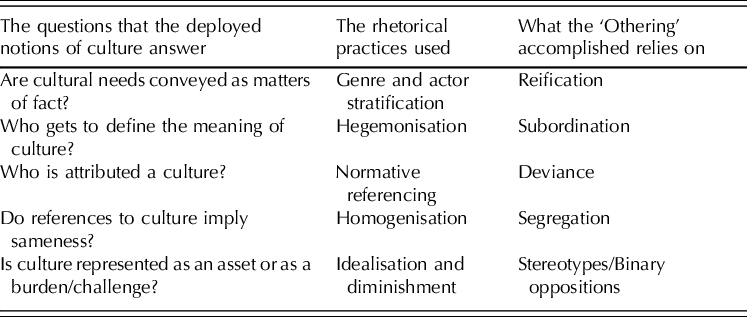
Table 6 summarises the findings by making explicit not only the questions that the deployed notions of culture attempted to answer in this reporting about elderly care and migration (see the first column of this table), but also the rhetorical practices that the answers to these questions were characterised by (see second column), and the type of ‘Othering’ that was accomplished through these practices (see third column).
Notions of culture, rhetorical practices and the ‘Othering’ accomplished in media representations on elderly care

Thus, in the data corpus heretofore presented, the rhetorical strategy that is genre and actor stratification relied on reification to accomplish ‘Othering’ while answering the implicit question that lurked in the back of some newspaper articles (i.e. are the cultural needs of elderly care recipients with minority/ migrant backgrounds a given or not?). The rhetorical practice of hegemonisation – which accomplished ‘Othering’ via subordination – was, in turn, used to answer the implicit question of who is actually given the chance to define what culture means in the daily newspaper reporting on elderly care and migration that this article has brought attention to. Related to this is the question of who is attributed culture in these media representations; a question that was answered in this reporting via the use of the rhetorical practice of normative referencing. The question of whether the notions of culture deployed allude to sameness or difference was answered through the rhetorical practice we called homogenisation – and, since the establishment of difference seems to be at the very core of what these media representations of migrants accomplish, it is not difficult to grasp that the ‘Othering’ that is set in motion this way relies on segregation. Last but not least, our analysis showed that the rhetorical practices of idealisation and diminishment – which were used to answer the implicit question of whether cultural background should be deemed to be an asset or a burden in elderly care – relied on the use of stereotypes and binary oppositions while accomplishing – just like every other rhetorical practice does – the ‘Othering’ of ethnic minorities and migrants.
Our analysis contributes to a growing body of research that problematises the culturalisation that care sectors can engage in (e.g. Gunaratnam, Reference Gunaratnam2008; Brotman, Reference Brotman2003). With regards to care recipients with minority backgrounds, Pon (Reference Pon2009) has argued that the notion of ‘cultural competency’ – which this reporting is clearly influenced by – draws on a depoliticised notion of culture, which implicitly promotes discrimination and intolerance against minorities. Similarly, Brotman (Reference Brotman2003) has claimed that research needs to expose the institutional structures that promote the racialised subordination of ethnic minority older people within the elderly care sector. In tandem with the increased reliance on migrant workers by home- and long-term care systems, we have also begun to see that scholars now urge policy makers to formulate comprehensive approaches to the management of multicultural teams within these sectors since there is already evidence that the distribution of work amongst care workers is becoming ethnically-coded (see e.g. Laurén and Wrede, Reference Laurén and Wrede2008; Tingvold and Fagertun, Reference Tingvold and Fagertun2020). Evidence from studies conducted within home- and long-term care in both Norway and Finland have shown, for example, that care workers’ migrant backgrounds can easily end up creating a niche for themselves within these sectors, and that the various stereotyped ideas about what characterises migrants is one of the ways through which these niches are created (Laurén and Wrede, Reference Laurén and Wrede2008; Näre, Reference Näre2013; Tingvold and Fagertun, Reference Tingvold and Fagertun2020). Our study contributes to this body of work by suggesting that the linguistic categories that daily newspaper reporting on elderly care and migration relies on play a role in how discussions about the sector materialise. We urge care scholars to recognise the analysis of public discourses as a viable source of information about how care is perceived since the construction of ethnic minorities (and migrants) as subordinated ‘Others’ (cf. Hall, Reference Hall1997) does not only take place within the health and social care sectors, but also outside of these contexts when ‘tales about these sectors’ are reproduced by the media.
At first glance, the rhetorical practices identified seem to be viable tools in the quest to establish the recognition that some social justice scholars have deemed to be needed for injustices to be addressed. These practices have drawn attention to who it is that the daily newspaper reporting deems to be less esteemed within the context of elderly care. However, when we dissect how the notions of culture deployed, the rhetorical practices utilised, and the implicit messages about ethnic minorities conveyed are constructed, it becomes easier to grasp why it is that Fraser has argued that recognition is not sufficient to tackle injustices. Against this backdrop, we propose that our findings raise an array of questions for those of us who regard the ethea of inclusiveness and equality of care as the pillars of the welfare sector. For example, it is because Fraser has argued that recognition and representation efforts are not enough, that we noted that these newspaper articles seldom mention the socio-economic predicament under which older minorities/ migrants sometimes find themselves (predicaments that redistribution-minded theorists would undoubtedly urge us to take into account). Furthermore, it is because Fraser’s framework places the ‘political injustices of misframing’ and ‘the intersection of symbolic framing and democratic voice’ (Fraser, Reference Fraser2009: 147) at the centre of our attention that we have also noted that the public discourses hereby dissected seldom give voice to the minorities to whose ethno-cultural backgrounds the daily newspaper reports constantly refer. In addition, the fact that the reporting often compared these minorities to the majority population is also something we cannot dismiss since social justice scholars have argued that the constant comparison of vulnerable groups to privileged ones is one of the ways in which injustices are reproduced. Thus, our analyses have exposed that the daily newspaper reporting about elderly care and migration in Sweden discusses minorities’ presumed difference in the kind of value-hierarchical way of which Fraser (Reference Fraser1997, Reference Fraser, Fraser and Honneth2003) urges us to become cognisant. This is why we have argued that the media representations of elderly care and migration that the daily newspaper reporting analysed here is not in line with the ethea of inclusiveness and equality of care with which we have come to associate the welfare sector.