Introduction
First World War propaganda, aimed at motivating men to fight overseas and women to support the war effort at home, positioned the rural landscape as the essential England being fought for.Footnote 3 This merging of nationalistic and topographical meanings of the word ‘country’Footnote 4 encouraged the general public to identify with this post-enclosure rural landscape as something that was part of their own identity, even if the reality was that they might only rarely visit it and for practical or financial reasons could not hope or wish to live in it. This propaganda was to create a hostage to fortune in the interwar period, as new or re-energised voluntary organisations, opinion formers and the media came to recognise that the state and private sector seemed to have none of the special regard for the country's landscape in the post-First World War period that the public had been implored to cultivate.
John Sheail identifies ‘Reconstruction, Restoration and Recovery’ as the key words of the first part of the interwar period, and the CPRE as a product of it, representing a decision by a professional, educated segment of the interwar generation to protect the country's ‘heritage of natural beauty’ from ‘alien forms of development’, such as new industrial sites that served centres of urbanisation not rural communities, and house-building that fed the desire of the moneyed classes to escape the worst aspects of urban life.Footnote 5 David Matless observes that while concern for the landscape was not a new phenomenon, with the Commons Preservation Society formed in 1865 and the National Trust in 1895,Footnote 6 the interwar landscape planning and preservation movement sought to ally ‘preservation and progress’.Footnote 7 The CPRE was one of these organisations. It was founded in 1926 as a federation of interest groups rather than a mass movement, in order to achieve a complete coverage of issues pertaining to the rural landscape through the coordination of efforts of groups concerned with architecture, planning, landowning, leisure, local government and wildlife.Footnote 8 The CPRE sought to ‘organise concerted action to secure the protection of rural scenery . . . act either directly or through its members . . . [and] . . . arouse, form and educate public opinion’,Footnote 9 and were against the ‘erecting horrors and monstrosities in the countryside’.Footnote 10
The organisation did not define what rural ‘scenery’ or ‘landscape’ meant, but the Oxford English Living Dictionary defines ‘scenery’ as ‘the natural features of a landscape considered in terms of their appearance, especially when picturesque’.Footnote 11 This definition should suffice for the purpose of this article, although it was clear from the CPRE's outset that it possessed a nuanced interpretation of the word ‘preservation’ (part of its name initially but later to be replaced by ‘protection’ in the 1960s). Brian Short asserts that the CPRE's priorities were to save the countryside from ‘the ominous march of industrial, “bungaloid” and suburban ribbon-like “progress” with its accompanying advertising hoardings’;Footnote 12 this did not, however, mean that everything was to be preserved in aspic in a CPRE world. It favoured ‘reasonable use and development of rural areas’,Footnote 13 and Professor Patrick Abercrombie, one of the CPRE's founders, stated just as the CPRE was being created that he was in favour of ‘new, more advanced or more intensive methods of farming . . . [and] . . . it may become more economical to work fields in larger units, entailing the removal of hedges and trees’.Footnote 14 The CPRE married aesthetic concerns with planners’ pragmatism for the creation of an ideal rural, physical, economic and cultural identity, and land used for any defined agricultural purpose was at this time, and until the post-Silent Spring 1960s, regarded by the CPRE as intrinsically meritorious. In short, it promoted ‘a planned idyll’.Footnote 15 This did not mean that preservationist polemics did not break out from within the CPRE's broad-church ranks from time to time, but when it did, more utilitarian opinion formers and policy makers such as L. Dudley Stamp, who had directed a Land Utilisation Survey of Great Britain in the early 1930s recording the use of ‘every parcel of land’,Footnote 16 would argue against creating a countryside ‘which behind a smiling face hides much human poverty and misery’.Footnote 17
With the coming of war, mere preservation must have seemed like a rather attractive concept, however. At this time there was little legislative protection for land in rural (or indeed urban) areas, even allowing for the 1932 Town and Country Planning Act, and departmental responsibility for the environment at government level rested nominally within the Ministry of Health. British War Departments’ pre-1939 demands were therefore unregulated and uncontrolled at a formal legislative and policy level, and this was exacerbated by the Emergency Powers (Defence) Act of 1940, which effectively empowered government and its ministries to undertake any action they deemed necessary in pursuit of war aims and objectives. With its preference for flat, well-drained sites ideal for airfields corresponding to the characteristics of good agricultural land, between 1934 and 1938 the annual loss of agricultural land in England and Wales to the Air Ministry rose from 3,000 to 24,500 acres;Footnote 18 the Ministry would go on to serve 62,000 land requisition notices during the course of the war.Footnote 19 Between 1939 and 1945, landholdings of the services as a whole increased from 140,000 to 903,000 acres,Footnote 20 including land for 450 new airfields,Footnote 21 and by 1944, 20 per cent (11 million acres) of the UK's land area was under some form of military control.Footnote 22 The military's use of some of this land was admittedly short-term, with some requisitioned land being returned to its original use before the end of the war, particularly if it had an agricultural use, but some land was retained for decades due to military needs associated with the Cold War, and some land has never been returned to civilian use, emblematic of which remains the village of Tyneham, Dorset.
The work of the CPRE in challenging war-related land requisitioning between 1936 and 1946 represents the only centrally coordinated activity at a national level by any voluntary body seeking to restrict and otherwise influence the use to which land in rural areas was utilised for war-related purposes. While the National Trust did undertake valuable work in this area, sometimes in collaboration with the CPRE, the Trust's primary duties were limited by its founding Act of Parliament to conserving the land and buildings that it had purchased or been covenanted. Only the CPRE had a national reach therefore. In the case of agriculture, the Ministry of Agriculture was an advocate within government for the protection of agricultural land from military use, and could conceivably have been influential given that a heightened capacity to be self-sustaining in food was a strategic priority central to Britain's war effort. However, the initial consultation process for Air Ministry land needs consisted of all potential sites being considered by an Aerodrome Board made up entirely of RAF officers, with the Ministry of Agriculture, along with other interested departments, only being given fourteen days to object to a particular site and suggest alternatives. Following discussions at War Cabinet level in August 1941 resulting from the Ministry's frustration with the existing consultation process, it was agreed that a Ministry of Agriculture representative could sit on the Aerodrome Board and therefore if necessary raise objections to proposed airfield sites much earlier than had been the case before, thus giving more time to put forward possible alternatives. Nevertheless, only seventeen proposed sites were abandoned as a result of Ministry of Agriculture objections, out of a total of 245 sites.Footnote 23 Meanwhile the rural landscape per se, offering no direct utilitarian war effort-related benefit, had no such champion within government, although as we shall see, civil servants and politicians had their sympathies.
The CPRE's Twelfth Annual Report of 1938 recorded that it had 44 constituent bodies, 152 affiliated bodies, 38 county-based branches, and an ‘ever increasing’ (but not quantified) associate membership of individuals.Footnote 24 Nevertheless, the picture painted by the existing very limited historiography of wartime voluntary organisations concerned with the rural landscape is a negative one: Peter Mandler considers that ‘even in the 1930s . . . [the CPRE] . . .was still regarded by most politicians and civil servants as a gang of cranks beneath notice’;Footnote 25 and in the view of Alan F. Wilt, the CPRE was ‘less active during the war than before it’.Footnote 26
So how did the CPRE leap from this seemingly unpromising position to one of elevated stakeholder status from 1938 onwards, entitled to engage with government departments over their war effort-related demands on rural land for airfields, military camps, and new industrial sites, to the point where by November 1946 it was enlisted by the government to act as a conduit between the state and civil society over Defence Departments’ ongoing needs for land in the emerging Cold War period? This article will answer that question.
1935-7: The beginning of opposition and the forging of policy
Matless describes war as having the effect of ‘shaking up the geography of England, unsettling people and their objects, transforming landscapes, moving things to where they weren't before’.Footnote 27 For the CPRE this war began not on 3 September 1939 but on 29 October 1935, when its Executive Committee minutes record discussion of an Air Ministry proposal to establish an aerodrome near the Dorset village of Woodsford:
the CPRE objection might be on the grounds that the proposed site was in the middle of what was known as the ‘Hardy Country’ and this was the only ground upon which objection could be taken from the public standpoint . . . it was decided that the CPRE could take no action on the matter.Footnote 28
A month later the item was again on the agenda and the CPRE agreed to associate itself with the local County Council's opposition to it,Footnote 29 but by January 1936 the Air Ministry had turned down an alternative site proposal, and said that if necessary, it would take steps to acquire the site compulsorily.Footnote 30 The CPRE withdrew its objection. A few months later, faced with an outbreak of Air Ministry demands for aerodromes in Gloucestershire, the CPRE identified the wider issue of plans being initiated without prior consultation with County Council or Planning Authorities, and wrote to the Air Ministry.Footnote 31 By October it was faced with further instances in Lancashire, Wiltshire and Wales; the issue of Defence Department land acquisitions would now be a virtually ever-present agenda item at the CPRE's monthly Committee meetings throughout the late 1930s, the whole of the Second World War and into the late 1940s. That month the CPRE's secretary, Herbert G. Griffin, wrote to W. F. Ascroft of CPRE's Lancashire Branch that opposition without the suggestion of viable alternatives was unlikely to succeed, and that ‘Defence Departments would be much more vulnerable . . . from the point of view of the uses to which land acquired by them was put after they had finished with it’,Footnote 32 because currently there were insufficient safeguards as to what use the land could be put once the Defence Departments no longer needed the site.Footnote 33 The CPRE's hope was that Defence Departments would consult with local councils and planning authorities prior to purchase, or if this was too much to ask given the ‘present state of national urgency and emergency’,Footnote 34 then the matter should be the subject of interdepartmental consultation, particularly with the Ministry of Health.
The above represents the emergence of the CPRE's decision-making criteria for dealing with war-related land requisition issues, and these would form the basis of its key operating principles for subsequent years. First, that the CPRE was not confident defending a proposed site against requisition purely on the basis of its amenity or cultural value in a rural area lacking special significance – perhaps – the picturesque; second, it was wary of being the sole body in opposition against government; third, that a viable alternative site was essential if a position of opposition was chosen; fourth, that it was aiming to establish some form of mechanism through which elements of the state concerned with planning and the environment could have influence over the requisitioning process, and lastly, that even three-to-four years before the Second World War would begin, the CPRE was already looking towards the return of requisitioned rural land once a war was over.
Throughout the period 1936 to 1937 the CPRE was faced with the demands of government departments unfettered by any responsibility to consult meaningfully with bodies that had an interest in any given piece of land that the state wished to take control of for war-related purposes. This led to increasing levels of concern and irritation within the CPRE. In a letter of May 1937 from Griffin to J. C. Wrigley at the Ministry of Health, Griffin notes a further four instances of Defence Departments seeking to acquire sites with:
the apparent reluctance of the Defence Departments to consider any interests other than their own . . . we cannot ascertain that there has been any consultation between your Department and the War Office or the Air Ministry about what is taking place there . . . I believe that it will be in the interests of [your] Department . . . to try and meet this criticism, which to our certain knowledge is increasing rapidly all over the country and will undoubtedly give rise to innumerable questions in the House and Parliamentary action once more, if something is not doneFootnote 35
There was a new dimension to the CPRE's argument by July 1937, invoking, where possible, the importance of agriculture in the requisition equation. While the CPRE had, since its inception, been a strong advocate for agricultural development, this was the first time, as far as the archival record shows, that the organisation linked the issue with its attempt to influence initial Defence Department preferences for sites. That month Griffin wrote to the Air Ministry secretary in aid of a site for a depot at Bishops Cleeve in Gloucestershire, asking if it was possible to acquire a site less valued for its aesthetic and agricultural value.Footnote 36
By the end of 1937 the CPRE had a working, if not formally agreed, policy stance consisting of four main tenets: that in the final resort national defence must take precedence, but that other national interests, especially those of agriculture, should receive due consideration before final decisions were made about which sites were finally selected; further, that there should be Defence Department consultation with local authorities under Section 33 of the Town and Country Planning Act of 1932, and also interdepartmental consultation between the Defence Departments and those ministries concerned with agriculture and the environment.Footnote 37 During the war, the CPRE would declare that it ‘sought to have a reputation with government for competent and reasonable representations’.Footnote 38 The above suggests that the necessarily realistic and balanced appraisal of any given potential demand on rural land was already firmly in place before the war started.
Towards stakeholder status
The CPRE wrote to the Ministry of Health in February 1937 in support of these policy objectives, and for much of that year awaited a formal, detailed response. While it waited, the demands of the government's Defence Departments continued unabated: over the course of the year the CPRE was involved in twenty major cases of which three, it stated, were dropped due to ‘parliamentary criticism’ and some others did not go ahead for other reasons or in an amended form as a result of interventions either by the CPRE or the National Trust.Footnote 39 Events in Wiltshire during that year would, however, act as a catalyst for the breakthrough that the CPRE was seeking to achieve. The agriculturally rich county was a hot spot of Defence Department requisitions, and by May 1939 more than one eighth (860,616 acres) of its total acreage would be under the control of the Defence Departments.Footnote 40 Supporters in Wiltshire requested that the CPRE take national action on the issue of Defence Department land requisitions in the county; however, CPRE Headquarters felt it was not in a position to make representations direct to Neville Chamberlain, who had become prime minister in May that year, while they were still in negotiations with the Ministry of Health. Griffin was therefore asked to collaborate in drafting a suitable letter to Chamberlain, to be sent by the Chair of the Wiltshire CPRE, Lord Herbert, and signed by the Lord Lieutenant and other leading Wiltshire residents.Footnote 41 The letter and memorandum covered the main tenets of the CPRE's arguments, but in a Wiltshire context, and asked for the prime minister's intercession.
Chamberlain's response: a place at the table for the CPRE
When the prime minister's response to the Wiltshire letter was received in January 1938 it fundamentally transformed the nature of the relationship between the CPRE, the Defence Departments and other government departments that had the potential to influence the future shape of the country's rural landscape during wartime. Chamberlain responded clearly and directly to what he termed ‘non-defence interests when sites are being selected for Government establishments’.Footnote 42 While he made it clear that the needs of the Defence Departments were bound ultimately to receive priority, that it was not possible to avoid all of the issues that concerned the CPRE. In the interests of national defence he was against an ‘over-elaboration of consultative machinery’, he advised that he had nevertheless instructed the Defence and other departments concerned to consider the contents of the CPRE's letter, and required each Defence Department to establish a procedure:
which will ensure that other interests of national importance shall receive adequate consideration when the selection and development of sites are being carried out and that that consideration shall take place in time to enable due weight to be given to the results by the Departments concerned, before decisions as to acquisition are taken.Footnote 43
The undertaking was both public and political. The Times quoted and commented on the letter at length in a news piece,Footnote 44 and in a simultaneously welcoming and sceptical Editorial, called the measure ‘timely’ given the thirty thousand acres of agricultural land acquired for defence purposes over the previous three years, but felt that ‘it remains to be seen how far the new arrangement results in a diminution of the protests which have so often appeared legitimate in the past’.Footnote 45
The Minister for the Coordination of Defence, Sir Thomas Inskip, in a written statement to parliament, stated that the actual consultative procedure each department took would probably differ according to the particular requirements of the department concerned.Footnote 46 The Air Ministry's approach to Chamberlain's requirement was almost immediate: on 1st March 1938 its secretary of state announced the appointment of Professor Abercrombie as a consultant to the acquisition of sites demanded by the expansion of the RAF.Footnote 47 CPRE regarded it as ‘the first fruits of the announcement made on behalf of the Prime Minister and embodied in his letter to Lord Herbert’.Footnote 48 At CPRE's Executive Committee meeting on 8th March Abercrombie, perhaps unnecessarily, asserted that ‘members might rest assured that as far as he possibly could, their interests would receive every possible consideration’.Footnote 49 It was he who would be at the apex of the consultation process, working for the Air Ministry and on the Executive Committees of both the CPRE and the National Trust. It was ‘the best of a job that would satisfy no one’, as he recalls the CPRE's President, Lord Crawford, saying of his new appointment. Abercrombie himself found the work both ‘troublesome and upsetting’:
one site for example was visited four times in the hope of finding alternatives and split a county into differing camps . . . the attempt, in a report, to decide what weight to attach to objections by local authorities, the local branch of the CPRE, the Farmers’ Union, the landowner or villagers affected: on the other hand to consider whether the Ministry were justified, whether speed . . . must prevail or whether a rash and unconsidered choice should be abandoned – these attempts were no light tasks . . . I don't think I have once been thanked for saving a man from having an aerodrome on the other side of his garden fence.Footnote 50
Chamberlain: an open door
On the face of it Chamberlain's concession to the CPRE represents quite an exceptional decision, for two reasons. First, while Chamberlain invested considerably more hope in efforts for peace than some of his fellow politicians, he was nevertheless presiding over a government that was slowly and steadily preparing for war, and the consultative mechanism placed a responsibility on government departments that those who were less conservation-minded would doubtlessly have been happy to do without. Second, the consideration that Chamberlain gave to the issue must be seen in the wider context of his responsibilities at this point in his premiership, where he had so many demands on his time with international efforts to avoid war and domestic political turbulence: issues that have been much pored over by political and military historians. According to R. Self, ‘after he [Chamberlain] returned to London . . . [after Parliament's winter recess] . . . he almost immediately found himself in “the thick of a tangle of problems”’.Footnote 51 Scant available opportunity, one might have thought, for concerning oneself with a conservation organisation's lobbying.
Seen in a different context, however, the CPRE's lobbying was pushing at an open door, and the organisation could have wished for no more suitable a figure than Chamberlain to approach with its concerns. The senior statesman was a long-standing appreciator of nature and supporter of civil society efforts to protect Britain's landscape, and just a month before the letter from Lord Herbert was sent to him, he had attended the Tenth National Conference for the Preservation of the Countryside, commenting of the CPRE that ‘for many years I have been a supporter of the Council and have watched their work with keen interest’.Footnote 52 He also allowed 10 Downing Street to be used to host CPRE's fundraising ‘England Ball Committee’,Footnote 53 and as Minister of Health in December 1926 had attended the CPRE's inaugural meeting, at which he declared that he was ‘most heartily to give my support and approval to the objects of this new Council . . . [and was] . . . deeply concerned at the persistent and rapid defacement of the countryside’.Footnote 54 He went on to state that one of the reasons he liked the CPRE's Objects was because they focused on what society could achieve, and did not explicitly include an intention to ‘harry and worry the Ministers of Government’,Footnote 55 but ironically it was to be just such an activity, directed towards him, that was to prove so successful eleven years later.
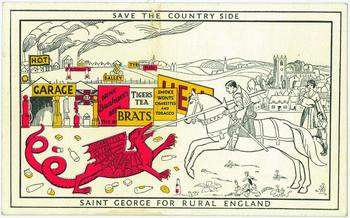
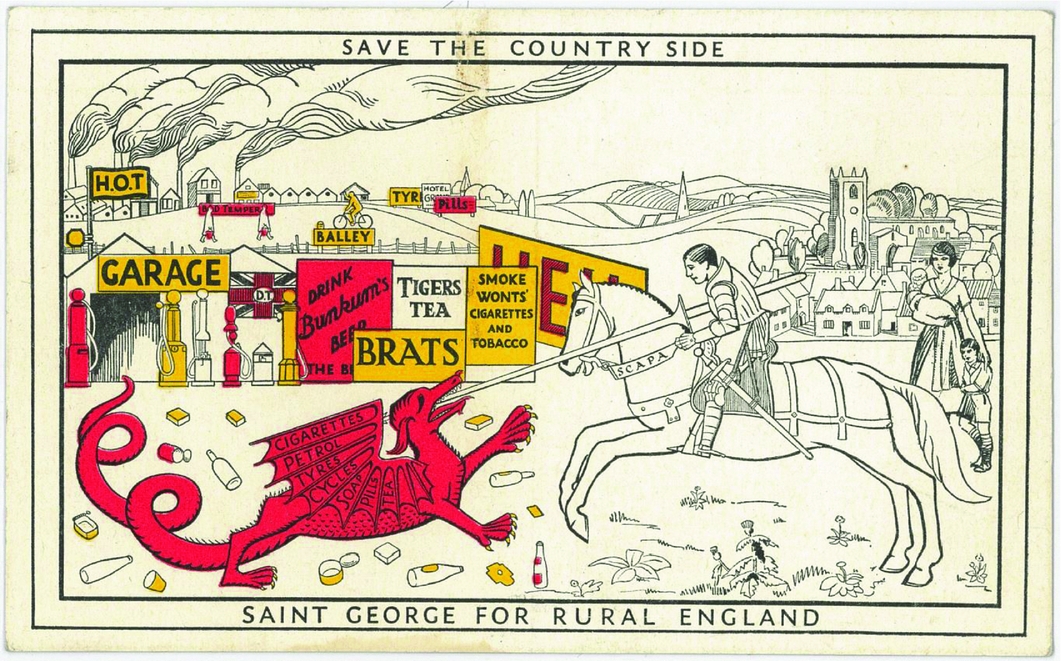
It would certainly not have been unhelpful that the CPRE established patriotic credentials through at times wrapping itself in the nation's flag; in only its second full year of operation, in 1928, the CPRE produced this campaigning postcard (Figure 1), depicting, in the view of Matless, the ‘fundamental patriotic authority’ of Saint George, coming to the rescue of his nation's rural landscape.Footnote 56
CPRE campaigning postcard, 1928.
While the CPRE was clear and unequivocal in its support for the war effort, it was careful not to give this unconditionally at the expense of the very rural landscape it was pledged to protect. When the CPRE published its wartime position and priorities in July 1940 the tone was predictably patriotic yet also combative:
[T]he threats to rural England that have arisen owing to the national crisis and the war have of course been greatly intensified. It is inevitable that while the very existence of the nation is at stake, all else must take second place. Nevertheless it is the considered opinion of the CPRE that the importance of safeguarding the English countryside has been increased rather than diminished in time of war.Footnote 57
This contrasted starkly with, for example, the more quixotic free-thinkers of the loosely formed organic movement, who would be singularly unsuccessful in securing any influence during the war, not least because, as Philip Cornford writes, ‘organicism’ was entangled with a range of ‘eccentric and unstable, disreputable and hated ideas’.Footnote 58
The Chamberlain mechanism in practice
Although Chamberlain's response had not given the CPRE the formal interdepartmental consultative machinery that it had wanted, it had given the organisation a mechanism through which it could engage with government departments before decisions relating to war effort related land requisition were taken. The first recorded assessment by the CPRE of the consultation mechanism was in its Monthly Report of April/May 1939, where it reflected on the previous year:
The CPRE had hoped that, with the appointment of Professor Abercrombie as adviser on sites to the Air Ministry . . . and the arrangements made by the other Departments . . . the acquisition of land for defence and kindred objects would proceed with less friction than in the past. With one or two noted exceptions this has on the whole been the case.Footnote 59
Beyond this, however, frustratingly for the historian, but understandably given the wartime context, the CPRE was circumspect in its internal documents about the detail of the work it undertook with government departments through the mechanism. The CPRE Executive Committee minutes do not systematically document specific sites under consideration by the various war effort-related government departments, presumably in case the material fell into the wrong hands. It is clear, however, from looking at the long series of minutes that the organisation was being actively consulted on a large number of defence and other government department proposals through the Air Ministry/Abercrombie conduit, and consultative mechanisms with the Ministry of Works and Buildings with regard to the siting of Royal Ordnance Factories. These procedures held up for some time into the war, even though the architect of them, Chamberlain, was no longer prime minister by May 1940, and was dead by the end of that year. As the CPRE was keen to state during the war, whenever these mechanisms were not always initially adhered to ‘the undertaking was precise and has never been revoked’.Footnote 60
With the passage of time the imperative to consult did, in the CPRE's view, diminish. In a letter to The Times in 1945, the CPRE's secretary reflected that ‘as the urgency and volume of the country's war needs developed . . . this procedure tended to fall into abeyance’.Footnote 61 However, in the years immediately following its imposition, the mechanism facilitated CPRE influence over the war effort's impact on Britain's landscape out of all proportion to the organisation's size and general standing in the country. This is all the more remarkable given the wide-ranging nature of the wartime legislation enacted by the Coalition Government. The Emergency Powers (Defence) Act, 1939, passed ten days before the outbreak of the war, enabled the government, or to be precise, the King in Council, to devise and apply whatever Defence Regulations as were necessary ‘for securing the public safety, the defence of the realm, the maintenance of public order, and the efficient prosecution of the war’.Footnote 62 These powers would be in force until February 1946. The Defence Regulations were Orders in Council and as such could amend any primary or secondary legislation within the limits set by the Emergency Powers Acts. The CPRE observed that ‘it will be seen that it confers absolute control over all persons and all property’.Footnote 63 This proved no exaggeration; in the year after the 1940 Act, two thousand separate orders were issued.Footnote 64 While there was no power for the compulsory acquisition through ownership of land, there was compulsory requisition over the course of the war of 14.5 million acres.Footnote 65 The consultation mechanism initiated by Chamberlain was therefore an operational requirement, but not something that government departments were legally obliged to follow, particularly as conduct of all aspects of the war effort moved from Chamberlain's administration to Churchill's.
Other avenues of influence
The CPRE was not, however, solely dependent on the mechanism established at Chamberlain's behest. The organisation was aided and abetted in the development of its policy and tactics by invaluable, informal and sometimes private and confidential communications between CPRE's secretary, H. G. Griffin, and civil servants, illustrating a familiarity as a result perhaps of inhabiting the same social, cultural and educational milieu. For example, in the CPRE archives at the Museum of English Rural Life Special Collections there are several pieces of ‘Dear Griffin’ / ‘Dear Sheepshanks’ correspondence between Griffin and a T. H. Sheepshanks in the 1937 to 1938 period. Sheepshanks was at this time assistant secretary in the Town and Country Planning Division of the Ministry of Health, so a key contact. An Executive Committee minute of that month records that CPRE and others met with Sheepshanks and another civil servant who provided valuable intelligence as to how government departments should be lobbied:
[I]n connection with factory sites they were consulted through the Ministry of Labour, but that in connection with operational stations like Munition Dumps, Aerodromes, the Defence Departments were paramount . . . the Ministry of Health think the CPRE should continue their practice of making representations direct and informing the Ministry accordingly.Footnote 66
It was to be Sheepshanks that same month who rang Griffin in the strictest confidence to advise the CPRE that it would be in its and the National Trust's interests to work in close cooperation vis-à-vis the Defence Departments and their land acquisition proposals. This was because Sheepshanks had become aware that the Trust was in bilateral discussions with these departments, and there was the potential for the existing discussions not just to be limited to Trust properties, therefore possibly prejudicing CPRE interests. Griffin promptly informed Abercrombie, who was on the Executive Committee of both organisations, asking him to entreaty the Trust Secretary Donald M. Matheson to be clear in the Trust's dealings with the Defence Departments that it was confining its views to their own property interests and if they did act independently, to make it quite clear that they did so without prejudice to any CPRE representations.Footnote 67 Having just made Abercrombie aware of the Sheepshanks tip-off in his ‘private and confidential’ note, Griffin then tells him that ‘you must not know about this communication from Sheepshanks’.Footnote 68
Other informal avenues also existed. George L. Pepler was a senior civil servant in the Ministry of Health and a member of the CPRE's Executive Committee from its inception, and Henry G. Strauss, an associate member of the CPRE, would become joint parliamentary secretary to the minister of town and country planning in 1943 when the new ministry was created.Footnote 69 The Parliamentary Amenities Group was a more formal asset; the group consisted of eighteen active MPs and five Lords, and a further eleven MPs and six Lords who could be called on to act,Footnote 70 and could be used ‘to raise issues relating to housing, coastal amenities, land acquisition and use by Defence Departments’.Footnote 71 CPRE correspondence from 1939 shows the Amenities Group proactively approached both the CPRE and the National Trust for their suggestions regarding Private Members Bills that the group could initiate.Footnote 72
It is difficult therefore to reconcile this archival record with the assertion by Mandler that the CPRE was viewed by politicians and civil servants in the 1930s as a gang of cranks beneath notice. Mandler does not provide any documentary proof of his assertion, but even if it was accurate at some point, the CPRE's political influence and contacts by the mid-to-late 1930s and into wartime, even putting the Chamberlain mechanism to one side, represented an impressive transformation.
CPRE wartime policy
In addition to the aforementioned set of operational principles that the CPRE had developed from 1936 onwards, once war was declared the organisation established a policy platform for engaging with government and the military. ‘The CPRE Policy in Wartime’ statement consisted of five key policy objectives: agricultural development, the facilitation of Service (Defence and defence-related government) Departments’ needs, rural industries, social amenities for rural populations, and national parks.Footnote 73 These were an accurate representation of what the CPRE would be actively engaged in for the next five years, although it would seem to have done (or been able to do in the wartime circumstances) little to encourage ‘bona fide’ rural industries, other than by resisting industrial ventures that it judged to be trying to inveigle their way into rural areas under cover of the war.Footnote 74 As it had in peacetime, the CPRE remained consistent throughout the war in its opposition to and disdain for piecemeal, opportunistic industrial development in rural areas, opposing private firms moving into rural areas if suitable sites were available in more urban industrial zones. Furthermore, it was deeply suspicious of arguments for wartime industrial relocation, which it regarded as a Trojan Horse for inappropriate economic development in rural areas. On 13th August 1940 The Times reported on the CPRE's wartime policy statement:
The Council intends to concentrate its activities so far as agricultural development is concerned to the safeguarding of all potentially productive land by the permanent restriction or prohibition of building on such land except in cases where building is urgently required in the national interests . . . the invasion of agricultural areas by industrial undertakings of a sporadic and speculative nature will be resisted.Footnote 75
There were sporadic incidents during the war that only served to justify the CPRE's position. In 1941 for example, in a case toxically mixing military imperative with business acumen, the CPRE and other bodies opposed a development in the Lake District proposed by Butlin's, which would have involved the company building a camp for the Admiralty and then taking it over for use as a holiday camp at the end of the war.Footnote 76 Utilising its ‘Chamberlain’ mechanism with the Admiralty and its political contacts, the CPRE was able to persuade the Admiralty to choose another less contentious site.
A fine fuss: building flying boats in the Lake District
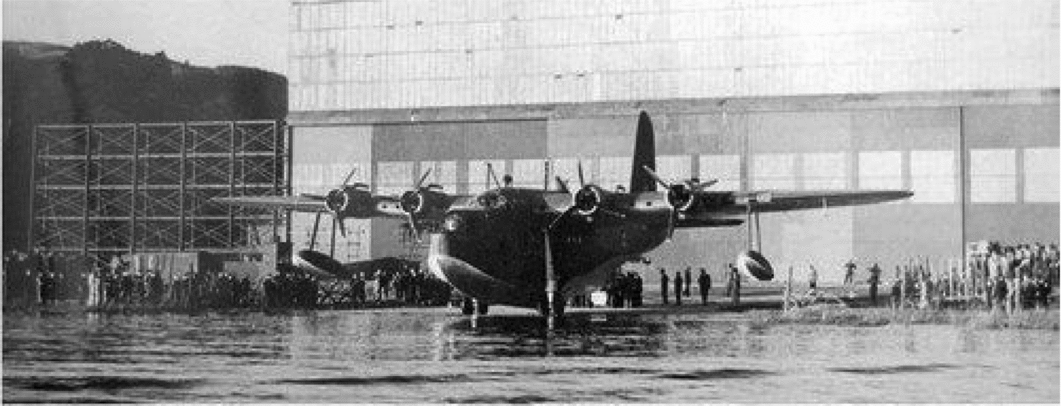
The CPRE's ‘constant vigilance in potential national parks’Footnote 77 – what Matless refers to as ‘wild scenery’Footnote 78 – ensured there would be implacable opposition to any Defence Department proposal to locate its sites in proposed national park areas. ‘Some areas, like the Lake District, the Peak District and Snowdonia should be preserved inviolate’, CPRE was to state categorically in mid-1941.Footnote 79 The proposal, therefore, by the Ministry of Aircraft Production in 1940 to site a Short Sunderland flying boat production factory at Calgarth on the shores of Lake Windermere in the heart of the Lake District showed CPRE willing to test its relationship with the government to the point of potential destruction. The site was to cover over five acres, employ up to 1,500 workers,Footnote 80 and buildings constructed would include a hangar that would be the largest single-span building in the country.Footnote 81 It was a fight that the CPRE was, in terms of the involvement of national organisations, on its own. The CPRE sought to enlist the support of the National Trust but in a letter from Matheson to Griffin in December 1940, the trust secretary admitted that:
no National Trust properties are affected directly, though the proposal does of course involve a possible spoiling of the view from Wray Castle . . . [and] . . . as I dare say you appreciate . . . our hands are pretty full with things which affect us still more directlyFootnote 82
This lack of support did not deter the CPRE, which sought to use its full array of arguments with its contacts. There was a rapid-fire exchange of letters between the CPRE and various figures on the government side and in the press, which stand out in the archives for the quantity of correspondence on one subject and the intense amount of effort that the CPRE put into this single issue. While a more limited use of these arguments and political connections occurred in other instances, on no other subject and location do they appear to have been so comprehensively deployed. On Griffin being advised that it was the Ministry of Aircraft Production responsible for the project, he wrote to Squadron Leader Keeling MP, who had a role in the War Cabinet Office and was a leading member of the Parliamentary Amenities Group:
I am astonished, in view of the late Prime Minister's pledge to us which has never been abrogated, that we have not been consulted officially about this business at WindermereFootnote 83
This was followed, four days later, by:
if I were in the House of Commons I would not hesitate to say that the proposal is a thoroughly bad one from a national point of view . . . to put a factory of this kind on a lake like Windermere is sheer madness, as, owing to the very peculiar shape of the lake, the site can be so very easily identified from the air and I prophecy that it will be bombed unmercifully and probably from great heights because of the difficult flying conditions . . . it is probably the worst choice strategically that has yet been made . . . this one . . . is open to so much criticism from so many anglesFootnote 84
Colonel Llewellin of the Ministry of Aircraft Production staff, who was lobbied by Keeling, retorted:
it would be madness to erect further buildings there . . . [at Rochester in Kent] . . . which had already been bombed . . . the product is a flying boat. A site on the edge of deep water is essential . . . [and] . . . we had a very thorough search madeFootnote 85
Griffin enlisted Abercrombie both in his capacity as consultant to the Air Ministry and as CPRE Chairman,Footnote 86 to lobby the Minister for Aircraft Production, Lord Beaverbook; the CPRE secretary also warned in a letter to Pepler, who was balancing his civil service and CPRE roles:
. . . really the Ministry of Aircraft Production or the Ministry of Supply or whoever it is, ought not to put inviting targets of this kind in . . . the Lake District . . . plenty of people, both outside and inside Parliament, are prepared to handle this matter . . . [Griffin then namedrops the local MP, the Archbishop of York and other Lords] . . . we are prepared to make a fine fuss . . . even in our present national emergency . . . after all, if we must fight, let us have something left to fight for Footnote 87
All of this pressure elicited a response from Lord Beaverbrook at the end of 1940:
it is with extraordinary reluctance that we contemplate such a project . . . but it is essential for us to find a new site for a seaplane factory and conditions at Windermere seems to be so much more favourable than any we are likely to find elsewhere that our course seems to be imposed on us . . . we are concerned to provide the aircraft which will bring nearer the day of victory. Then peace and tranquillity will be restored to Lake Windermere and its temporary association with the aircraft industry will, happily, be at an endFootnote 88
The project went ahead.
DP176 seaplane ready to launch at the Windermere factory (courtesy of Allan King, photographer Derek Hurst).

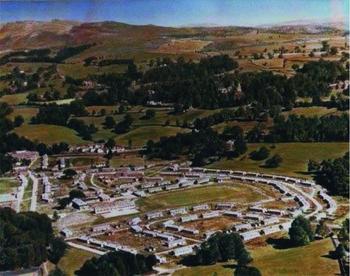
Aerial Photograph of Calgarth Estate, c. 1943 (courtesy of Lorna Pogson).Footnote 90
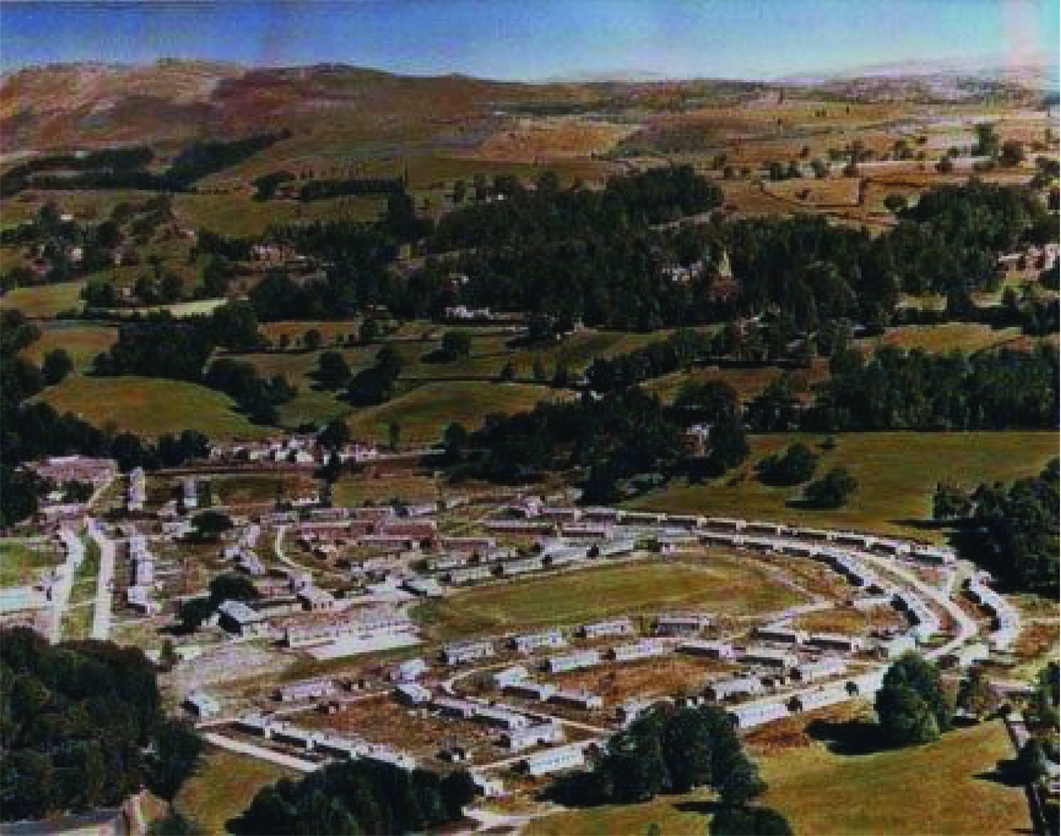
Beaverbrook's inference that the factory and temporary workers’ accommodation would be taken away at the end of the war was seized on by the CPRE and became a major plank of its argument to ensure that the Calgarth site was returned to its original rural identity after the war. The CPRE may have tested its political allegiance and reputation for ‘competent and reasonable representations’ that it sought to establish with the Coalition Government, but there was a logic to its actions. In September 1945 the CPRE stated that it and others saw Calgarth as:
[A]s a test case in the process of restoring rural England after the impact of war conditions . . . [and] . . . the Dower Report . . . [published May 1945] . . . ‘placed the Lake District among the first and essential areas to be recommended as a National Park’.Footnote 91
In its determination to treat Calgarth as a red line issue, the CPRE had not seemingly been able to adhere to two of the operational tenets that it had established in the late 1930s. First, that if it was to oppose a Defence Department site proposal, then it needed to be able to suggest a viable alternative. Second, it needed to form allegiances with other influential and preferably national bodies, to avoid being isolated; once the National Trust had excluded itself from the campaign, it was not able to do this.
The CPRE's behind-the-scenes efforts on Calgarth show the shortcomings of Wilt's critique that the CPRE was less active during the war than before it, as, given the documentary evidence of the CPRE's activity during the war, Wilt must have based his assessment on visible activity. Given the nature of the wartime restrictions, public campaigns, questions and debates in parliament, and much media work, were necessarily curtailed.
Light at the end of the tunnel: the postwar settlement
As noted earlier, the CPRE was always extremely wary of requisitioned land not being restored to its prewar use; it had calculated that the government would have approximately one thousand modern factories built by the state to produce war effort-related materials – a significant number of which were in rural areas – to potentially turn over to the private sector by or at the end of the war,Footnote 92 in addition to some military sites. By early 1944 the CPRE was aware that the President of the Board of Trade was interviewing possible civilian purchasers of factories,Footnote 93 and feared that deals might be made between the Board of Trade and prospective buyers without proper consultation with the still relatively new Ministry of Town and Country Planning. It was the CPRE's view that the ministry and local planning authorities should be consulted in every case. Such was the importance it attached to the issue that it established a monthly subcommittee just to focus on the reinstatement of requisitioned land.
The issue of the postwar fate of requisitioned land eventually centred around the Requisitioned Land and War Works Bill, which became an Act of Parliament in 1945 ‘to authorise the acquisition of certain land used or dealt with for war purposes’.Footnote 94 The CPRE did not feel the original bill provided for sufficient safeguards, as it allowed the government to retain requisitioned land that had been damaged by war usage where reinstatement would be hazardous and costly, and as there was very little requisitioned land that had not been damaged or on which some buildings had not been erected, the Bill effectively allowed the government to retain whatever land it wanted.Footnote 95
The CPRE went public in January 1945 with its concerns through the pages of The Times, complaining that the Bill lacked the facility for sufficient parliamentary oversight over the actions of ministers operating the proposed powers.Footnote 96 Abercrombie, newly knighted in the New Year Honours list, weighed in a few weeks later via the same mechanism, criticising the complete lack of reference to town and country planning, and raising the spectre of the 800,000 acres of agricultural land that had been requisitioned for non-farming use in wartime being sold off for non-agricultural use because it would fetch a higher price, thereby allowing industrial spread into rural areas.Footnote 97 A period of intense lobbying followed, with the CPRE using its supportive MPs on the Parliamentary Amenities Group to table a number of amendments, and by June the CPRE was able to report that the Bill had been ‘substantially amended . . . and much improved from the CPRE point of view and is as good as could be expected in the circumstances which prevailed’.Footnote 98 Sir Lawrence Chubb added at the Executive Committee's meeting that month that the CPRE had also secured ‘a definite locus for . . . [itself] . . . and other bodies to appear before the War Works Commission in support of any opposition’.Footnote 99 Albeit self-perception, this suggests that the CPRE had taken a further step towards acknowledged stakeholder status within Whitehall.
The postwar retention by the state of a significant amount of Britain's land surface area that had been in non-military hands prior to the start of the long war did not escape CPRE attention. In June 1945 its Quarterly Report carried an inventory of acreage and properties still held by the Admiralty, War Office, Air Ministry, Ministry of Supply, Ministry of Aircraft Production, Ministry of Works and Board of Trade. On 1st October a CPRE delegation met with the Director of Military Training and the Comptroller of War Office Lands to urge his Office to decide as quickly as possible which lands and properties it would need to acquire for a longer period of time – and which they could release to facilitate the planning work needed for postwar industry, agriculture and housing.Footnote 100
The CPRE's interest in the Defence Departments’ postwar training needs may well have been a case of needing to be careful what you are interested in. In November 1946 the CPRE was invited to arrange for the coordination and presentation to the Inter-Departmental Committee on Service Land Requirements all of the evidence that voluntary organisations throughout the country might wish to give regarding the effects of the Services’ postwar land proposals from the point of view of amenity, archaeology, natural history and other scientific interests.Footnote 101 This led to the CPRE having under review 433 cases in England covering 646,598 acres and CPRE Wales 55 cases, covering 111,742 acres, using confidential material supplied by the Defence Departments.Footnote 102The CPRE described it as having to work on: ‘an unprecedented scale and it is no exaggeration to say that it is at once the largest and the most formidable single subject with which, during this period, the Council has had to deal’,Footnote 103 and ‘a considerable number of proposals to which the CPRE or its branches took strong objection have been withdrawn’.Footnote 104 The resulting Government White Paper, ‘Needs of the Armed Forces for Land for Training and Other Purposes’, published in December 1947, set out the forces’ needs in England, Wales and Scotland.
The CPRE reflected ruefully on this work that:
it was hardly to be foreseen that the CPRE's main preoccupation during the ensuing year would be, not the restoration of rural England after its merciful deliverance from the last war but the provision of extended training facilities in preparation for the next. Yet so far this has proved to be the case.Footnote 105
The CPRE poacher had turned gamekeeper. Despite the advantages that influence brought, The CPRE found itself an agent of the state, tasked with dealing with multiple voluntary organisation interests and agendas, some more capable of objectivity than others, rather like the different shades of opinion within the CPRE itself. Perhaps ill advisedly, but unintentionally entertainingly, the CPRE complained about how difficult a job it had given itself:
it must be stated quite frankly that in trying to discharge this difficult task . . . the CPRE . . . (has) . . . not been helped by the inaccurate or tendentious form which public criticism has sometimes taken. It has for example, been alleged that the War Office, in selecting their training areas, have either deliberately sought out the most beautiful parts of the country as such or at any rate have made their choice on other grounds than the areas’ suitability for military training . . . and there have been frequent complaints that the Services’ proposals are ‘suddenly’ announced and precipitately decided.Footnote 106
It was all rather reminiscent of the 1936 to 1938 period, when the CPRE had been making the very same allegations about the Defence Departments. Except that in between the CPRE had been engaged in a ‘glorious arena of work’.Footnote 107
Conclusion
The CPRE's Wartime Progress Report for 1942–3, in a section rather euphemistically entitled ‘Changes in the Countryside’, summarised the impact of the war on the rural landscape: the loss of previously unspoilt farm land as a result of the dispersal of existing industry and the establishment of new industry, together with the necessary accommodation buildings for the workers, and the construction of airfields, camps and defence works; the wholesale alteration of extensive coastal areas and their hinterlands due to the designation of Defence Areas; the breaking up of woodlands and private parklands in the search for all types of timber; a dramatic increase in open-cast mining; and lastly, an increase in the pollution of rivers and streams.Footnote 108 The organisation was able to state that ‘the effects of the war upon the countryside have not, however, been wholly bad’Footnote 109 as a result of the ‘great stimulation’Footnote 110 given to agriculture; this observation was no great surprise, given the CPRE's advocacy of agricultural development since its inception.
In one sense the CPRE had had a ‘good war’, despite the enormous changes that were imposed on the rural landscape as a result of a war effort that enabled Britain to initially survive and then ultimately prevail. It achieved a degree of influence over both the choice of requisitioned sites for war effort-related purposes, and forced concessions from government with regard to the postwar derequisitioning of land settlement. The CPRE suffered defeats, such as the siting of the flying boat factory at Calgarth (although it would eventually get its wish that the site be more or less totally dismantled), and otherwise made representations to various government departments vested with responsibility for prosecuting the war, which may have been unwelcome, but it retained its standing because support for it was robust enough in political circles and the civil service to insulate it from falling out of favour at times when it was most oppositional. Crucially also, it was a conservation organisation concerned with protecting a cornerstone of the country's visual identity and culture, and could therefore be seen to be carrying out a patriotic function, at a time when the countryside was an emblematic cornerstone of the argument for resisting invasion and pursuing victory. Further, the organisation stated explicitly that it supported the war effort, and – Calgarth notwithstanding – sought to pick its battles carefully. Hence, for example, it did not seek to challenge landscape-transforming activities central to the war effort such as the wholesale felling of the nation's woodlands for timber, and open-cast mining, until several years into the war, as each issue started to become seriously problematic. Furthermore, the CPRE was uncritical during wartime of the change wrought on the landscape by the perimeter of coastal and inland defences, but expected prompt postwar restitution.Footnote 111 How incredibly challenging this operating environment was is illustrated by the difficulty that the Ministry of Agriculture itself had in protecting high-value agricultural land from the demands of the military: its enhanced consultation process was only achieved in the Autumn of 1941, over three years later than the consultation mechanism the CPRE had established through Neville Chamberlain.
Fundamentally the CPRE enjoyed a significant degree of interest-convergence with the state, initially at the outbreak of war in respect of the benefits and necessity of agricultural development – and subsequently with regard to the relative enthusiasm in political quarters for greater state intervention in industry, agriculture, housing, energy, transport, education and amenities as part of the postwar settlement, manifesting itself in 1947’s Town and Country Planning Act and 1949’s National Parks and Access to the Countryside Act; which Dwyer and Hodge describe as the first and second major pieces of rural conservation legislation in Britain.Footnote 112 The CPRE was on the right side of history, although with rural and urban planning and national parks major elements of CPRE policy from before the war, it was a history that the organisation had played a major role in shaping.
In addition to being an article about the CPRE's Second World War, this has also been an exploration of how a voluntary organisation outside of government but with links to it, achieved influence in wartime when normal democratic processes were severely curtailed or indeed suspended. It also points to what sources the (environmental) historian can use to identify relevant material. The use of the CPRE's archives – from formal minutes of meetings to private correspondence and file notes – demonstrates how much work, out of necessity, was carried out by key individuals (generally in private once war broke out) by letter, over the telephone, and in small meetings, rather than through media work and the lobbying of politicians to raise issues publicly in parliament. On this occasion, press and parliamentary records can play only a limited part in uncovering this aspect of our history.
Acknowledgements
With thanks to Oliver Hilliam at CPRE and the Special Collections Team at the Museum of English Rural Life for facilitating access to CPRE's archives, and to Mark Merry at the Institute of Historical Research for his advice and support.