‘We fight against poverty because hope is an answer to terror. We fight against poverty because opportunity is a fundamental right to human dignity. We fight against poverty because faith requires it and conscience demands it. And we fight against poverty with a growing conviction that major progress is within our reach.’
(Former US President George W. Bush)Footnote 1
‘Development is the answer to all puzzles, as well as the key solution to all problems in Xinjiang . . . Only economic development can alleviate social contradictions, consolidate unification, and realize people's happiness.’
(People's Daily)Footnote 2
1. Introduction
Facing the threat of terrorism, many practitioners in different countries have been claiming that there is a direct link between poverty and terrorist activities. For example, Berrebi (Reference Berrebi2007) collects the speeches given by a number of politicians from the US, European countries, and the Middle East, and shows that the argument that poverty is responsible for terrorism has already been prevalent, even before the 9/11. Such authors have been joined with fellows from a country that used to be kept off ‘the radar of the international jihadist movement’ (Potter, Reference Potter2013), the People's Republic of China (PRC). On 2 October 2013, one day after the National Day of China, a car crashed and exploded in the Tiananmen Square, a politically sensitive place in Beijing, leading to the death of five people, including the three attackers in the car. It is reported that they were Uyghurs and ‘a flag imprinted with religious slogans’ was found.Footnote 3 Six months later, the Kunming Railway Station, which is located in Southwest China and more than 3000 kilometers away from Xinjiang, was attacked by eight Uyghurs with knives, who killed 31 civilians and injured another 141. The incident was so astonishing that the media in the West even named it a ‘massacre’ when reporting.Footnote 4
Similar to the claim by George W. Bush, the Chinese leaders respond to the increasing threat of terrorism with projects that try to promote economic growth. Nineteen prosperous provinces and cities in East China have been assigned to provide aid to specific areas in Xinjiang. For example, Shanghai's task is to contribute to improving people's livelihood and to promoting sustainable development in four counties of Kashgar, a big but poor city in South Xinjiang where most local residents are Uyghurs.Footnote 5
Can these projects be as effective as expected in reducing terrorism? The answer lies in whether poverty (and relevantly, the lack of education) is really the root of terrorism. Although there has been a great volume of literature in the field of terrorism studies and on the relationship between income and terrorist activities, there has been no similar effort to examine this relationship in Xinjiang, empirically and systematically. In this paper, I intend to fill this gap by applying the theories and methods of social science. I would like to examine the within-region variation in the occurrence of terrorist attacks in Xinjiang. Using county-level cross-sectional data for 2013, I find that rapid economic growth in Xinjiang may have become the source of terrorism in the region. The regression results indicate that, first, a higher income level measured by GDP per capita increases the likelihood of a terrorist attack in Xinjiang. Meanwhile, average years of schooling are statistically indistinguishable from zero at conventional test levels. In addition, the positive sign of the coefficient of the unemployment rate in the models shows that income growth, without distributional equality, is the cause of widespread economic grievances that eventually lead to terrorism. Because of tight social control, terrorist attacks – rather than mass protest or armed rebellion – becomes the most feasible and influential way to express grievances in the region. Here we use the definitions provided by Blomberg et al. (Reference Blomberg, Hess and Weerapana2004) to distinguish armed rebellion with terrorism: In a rebellion a dissident group is aimed at overthrowing the current government and seizing power, while in a terrorist attack a dissident group seeks not to take over power but to express anger by means of creating fear. The latter is much less costly because it requires fewer participants and less resources (like weapon and funding).
A case study on Xinjiang is of both theoretical and practical importance. Not only can it directly contribute to answering the theoretical question of whether a higher income level is a cure for terrorism, and to deepening the scholastic debate between grievance theory (both political and economic) and opportunity theory in explaining the onset of civil conflicts,Footnote 6 it also has significant policy implications. Xinjiang is playing a decisive role in the so-called ‘Rise of China’. Being part of Mackinder's ‘Heartland’, its strategic value has been attractive to great powers ever since the thrilling era of ‘The Great Game’. Recently, Xinjiang has become one of the two cores of the ‘One Belt, One Road Initiative’, the so-called China ‘Marshall Plan’.Footnote 7 China expects to strengthen cooperation with Eurasian countries and to export its capital and capacity through this Initiative, for which the Silk Road Fund and the Asian Infrastructure Investment Bank (AIIB) have been established. Therefore, if the ethnic conflicts in the region cannot be handled properly, Xinjiang may become the ‘Achilles Heel’ of China's rise.Footnote 8 For instance, the 2014 Kashgar Central & South Asia Commodity Fair was forced to close earlier than planned because of the riots in the nearby Shache County.Footnote 9
The structure of this paper is as follows. Section 2 briefly reviews the background of Xinjiang. Section 3 provides a literature review on the topic of the political economy of terrorism, and presents the hypotheses based on existing theories in the literature and some empirical observations on Xinjiang. Section 4 sets out the estimation results from the empirical models. The paper concludes with further discussions, limitations, and future research agenda.
2. Background of Xinjiang
In this section, some background information about Xinjiang is provided, as described in the Chinese Government White Paper titled ‘History and Development of Xinjiang’.
The Xinjiang Uygur Autonomous Region (also called Xinjiang for short),Footnote 10 situated in the border area of northwest China and the hinterland of the Eurasian Continent, occupies an area of 1.6649 million sq km, accounting for one sixth of Chinese territory. It has a land border of 5,600 km bounded by eight countries.Footnote 11
According to the statistics of the Chinese government, in 2013, Xinjiang has a population of 22.643 million. Among them approximately 47% are Uyghurs and 38% are Han Chinese. The remaining 15% are mostly Kazak and Hui. Han Chinese are demographically dominant in North Xinjiang, such as Urumqi (73%), Karamay (75%), Shihezi (94%), while the Uyghurs are mostly concentrated in the relatively poor South Xinjiang, such as Kashgar and Hotan, where approximately 95% of local residents are Uyghurs (Xinjiang Statistical Yearbook, 2014). Even so, an undeniable fact is that the population of Han Chinese in this region has increased significantly – the proportion of Han Chinese back in the 1940s was estimated to be only 5% or so in Xinjiang.
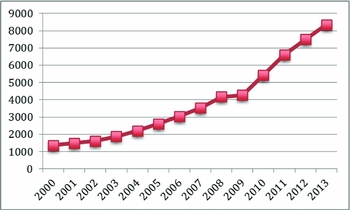
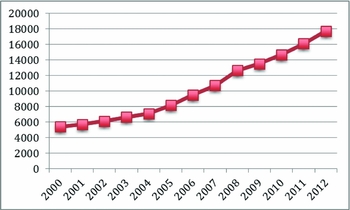
The GDP for Xinjiang has witnessed rapid growth ever since the launch of the Great Western Development Drive (GWDD for short, xibu dakaifa in Chinese) in 2000, and it reached 836 billion RMB in 2013 (see Figure 1). The implementation of GWDD relies on two pillars, oil exploitation and cotton cultivation, or the so-called ‘One Black, One White’ (Becquelin, Reference Becquelin2000). Thus, over the past decade we have witnessed growth in these products (see Figure 2). Unlike most other provinces in China, where economic growth has been export-led, Xinjiang's economy is highly dependent on natural resource extraction. As a result, ‘oil and gas exploitation represents almost half of Xinjiang's fiscal revenues’ (Becquelin, Reference Becquelin2004). But the revenue generated from resource exploitation is not distributed equally as the Han Chinese ‘fill approximately four fifths of all jobs in manufacturing, the oil and gas industries, transport, communications, and science and technology, and fully nine-tenths of jobs in the burgeoning field of construction’ (Fuller and Starr, Reference Fuller and Starr2004: 18). This is the reason why there exists a large income gap not only between North and South Xinjiang, but also between Han Chinese and the Uyghurs (Wu and Song, Reference Wu and Song2014). As a result, the ‘economic grievances’ are widespread among the Uyghurs (Reed and Raschke, Reference Reed and Raschke2010: 24–6). Before we examine the relationship between growth and violence empirically, in the next section I will review the literature that links economic and political grievances to the occurrence of terrorism.
GDP growth in Xinjiang (100 million RMB)

Total energy production (including coal, crude oil, natural gas, hydro-power, and wind power, 10000 tons of SCE)

3. Literature review
This section will summarize the literature that is aimed at studying the internal factors that account for the risk of terrorism, with an emphasis on economic and social variables. This review is not exhaustive, but tries to combine the theories in the field and relevant empirical observations on Xinjiang, in order to formulate the hypotheses to be tested in the next section.
3.1 Income
One of the major focuses in the literature is the effect of income. De Mesquita (Reference De Mesquita2008) offers a selective but informative overview of the political economy literature on terrorism. In general, there are two camps concerning whether poverty is the root of terrorist risk, and whether economic development can cure terrorism, as is proposed by many policy-makers.
The first camp is in favor of the intuitive argument that economic development decreases terrorist acts. In the model of Blomberg et al. (Reference Blomberg, Hess and Weerapana2004), a group's perception of the current economic status quo is the explanatory variable, while the possibility to bring about drastic institutional changes is the conditional variable. More importantly, their model describes the links between the economy and the type of conflict: Unhappy with the economic status quo, a group can choose a ‘rebellion attack’ or a ‘terrorist attack’, which is much less costly than the former. Since it is too costly to overthrow a rich country with rebellion, terrorism is more preferable. Their cross-country analysis indicates that economic variables can affect the probabilities of terrorist activities conditional on the power of the state. Drakos and Gofas (Reference Drakos and Gofas2006b) adopt a zero-inflated negative binomial model to capture the statistical properties of terrorist activities and report that a terrorist attack venue is on average characterized by low trade openness. If we expand the range of the dependent variable to include other forms of political violence, such as coups (Alesina et al., Reference Alesina, Ozler, Roubini and Swagel1996) and civil wars (Collier and Hoeffer, Reference Collier and Hoeffler2004; Miguel et al., Reference Miguel, Satyanath and Sergenti2004), income is a statistically significant predictor of political conflicts across the world.
Recently, many scholars challenge the findings of the first camp, which are mainly cross-country analyses. Instead, this new camp studies the effect of income using micro-level data, particularly those collected in the Middle East. For example, Berrebi (Reference Berrebi2007) finds that both higher standards of living and higher levels of education are positively associated with participation in Hamas or Palestinian Islamic Jihad (PIJ), using individual-level data. One of the surprising findings is that suicide bombers tend to be richer and more educated than average, though they usually come from lower socio-economic groups when compared to non-suicidal terrorists. Krueger and Malečková (Reference Krueger and Malečková2003) gives an explanation why the connection between poverty, education and terrorism is ‘indirect, complicated and probably quite weak’. They believe that terrorist attacks are similar to hate crimes that are defined as ‘crimes against members of religious, racial or ethnic groups because of their group membership, rather than their characteristics or actions as individuals’. What the perpetrators do is a response to ‘political conditions and long-standing feelings of indignity and frustration that have little to do with economics’ (Krueger and Malečková, Reference Krueger and Malečková2003). The two authors also present the results of public opinion polls conducted in the West Bank and Gaza Strip, and compare the characteristics of Hezbollah militants with Lebanese of similar age to support their argument. Similarly, Piazza (Reference Piazza2006) proposes a ‘social cleavage theory’ that rejects the relevance of poor economic performance in explaining the causes of terrorism. In sum, the conclusions made from micro-level evidences collected in specific areas are often contradictory to the theoretical generalization of country-level analysis.
Can income and education decrease terrorist activities as the first camp suggests, or are they simply irrelevant in Xinjiang? We can get some hints from both macro-level and micro-level observations. In terms of the effect of income, we see an upward trend not only in the graph of Xinjiang's GDP growth and resource output, but also in the frequency line graph of Xinjiang's terrorist attacks since 2000, particularly after 2009 (see Raymond Lee's coding,Footnote 12 Figures 1 and 2). Therefore, it seems that economic growth is positively correlated with terrorist risk. But we still need to take other factors into consideration before we lay out the full picture of our argument.
3.2 Education
Policy makers expect the level of education, which directly reflects the level of economic development, to help curb terrorism. However, the academia is much more pessimistic about the effect of education. Some cross-country analyses cast doubt on the claim that better education can lead to fewer terrorist activities. For example, Brockhoff et al. (Reference Brockhoff, Krieger and Meierrieks2010) finds that for 119 countries for the period 1984–2007, education neither fosters nor retards terrorism on its own, and the precise effect of education on terrorism depends on country-specific conditions.
If this argument is valid, we should pay more attention to the specificities of Xinjiang when examining the effect of education. A Uyghur scholar in China (Tursun, Reference Tursun2014) surveys the individual features of ‘East Turkistan’ terrorists, based on the data publicized by the Ministry of Public Security and the courts. The author finds that within the sample of 55 terrorists, 80% of them did not receive senior high school education, and a significant proportion of them did not continue their study after primary school. She also provides information about the education problem in South Xinjiang:
In 2012, only 33.61% of junior high school graduates in Kashgar continue their study in senior high school . . . In Aksu, this number is 45.5% . . . In Kuche County it is only 32%, leaving approximately 7000 junior high school graduates to the society unemployed. They have become the source for social instability. (Tursun, Reference Tursun2014)
Thus Tursun (Reference Tursun2014) believes that the low education level among Uyghurs youth in South Xinjiang facilitates the recruitment by terrorist organizations. However, it would be too imprudent to jump to the conclusion that education is definitely a cure to terrorism. As Bovingdon (Reference Bovingdon2010) observes,
The profile of individuals arrested in 1997 challenged a centerpiece of propagandists’ belief against separatists. Instead of the uneducated, unemployed, religious lumpen described in antiseparatist propaganda, the organization turned out to be young and well educated – and growing more so over time. Suspects apprehended in connection with a spate of arson attacks in late May 1998, reportedly aimed at turning Ürümci into ‘a sea of fire’ and causing Hans to flee, were found to include female students from two of Xinjiang's top universities, Xinjiang University and the Medical College. (Bovingdon, Reference Bovingdon2010: 122)
In other words, similar to the Middle East, in Xinjiang we can also find micro-level evidence that suggests education level is not negatively associated with participation in terrorist activities. Thus, a more cautious proposition would be that terrorism is not a monotonic decreasing function of education. We will test the validity of this proposition in the empirical analysis as well.
3.3 Unemployment
Scholars who study the political economy of terrorism have not reached a consensus on the effect of unemployment either. While the results depend on the sample they collect, the time span they cover, and the methods they use, most empirical researches (particularly those that use an aggregate level dataset) treat the unemployment rate as an indicator of economic performance (Sambanis, Reference Sambanis2004; Caruso and Gavrilova, Reference Caruso and Gavrilova2012). In other words, the authors assume that the unemployment rate is negatively associated with income. For example, Krueger and Malečková (Reference Krueger and Malečková2003) regard the downward trend of the unemployment rate in Palestine since 2000 as an indication of improvement in the local economy.
Such understanding on the relationship between income and the unemployment rate may be misleading and cannot be applied to the study of places experiencing rapid growth, such as Xinjiang, where an increase in both the unemployment rate and the growth rate exists at the same time, particularly at the aggregate level. Compared to other indicators of income, such as GDP per capita, the unemployment rate can more directly measure the degree of relative deprivation that is a cause of economic grievances (Gurr, Reference Gurr1970). One reason why rapid economic growth cannot satisfy all Uyghurs is that economic development is worsening the employment circumstances for local Uyghurs. Natural resource exploitation and cotton cultivation have attracted too many Han Chinese migrants from other provinces of China,Footnote 13 and good-earning jobs that were created in the boom are mostly occupied by Han Chinese. According to Layne and Liang's (Reference Layne and Liang2008) study, Han Chinese occupy 71% of the high-end jobs, such as officials and managers, and 57% of professional jobs, while the Uyghurs only comprise 17% of government officials. Zhu and Balchford (Reference Zhu and Blachford2012) also find that Han Chinese are particularly overrepresented in two major economic sectors: the oil industry and the Xinjiang Production and Construction Corps (XPCC) – over 95% or the in these two sectors is Han Chinese.Footnote 14
The Uyghurs are, therefore, struggling with unemployment. Many Uyghurs believe that they are discriminated against in the job market. In December 2012, some ethnic minority parents, who believed that the recruitment process was unfair to ethnic minority young people, went to the streets to protest against oil the companies in Karamay – the oil companies imposed too many restrictions on ethnic ratio. They also complained about the lower salaries for minorities. The protest lasted for almost half a year, and in February and May 2013, some parents even resorted to petitioning (shangfang), on behalf of the 5,000 unemployed ethnic minority youth.Footnote 15 Therefore, the variable of unemployment that is supposed to be a cause of widespread economic grievances should be included in our regression analysis.
The language policy in China partly contributes towards the unemployment problem. According to a survey, only 19.88% of the Uyghurs have the ability to speak Mandarin, ranking the 50th among the 54 minorities surveyed (Han, Reference Han2013). In fact, the Chinese government's language policy before the 1990s should be held responsible for the poor knowledge of Mandarin Chinese of many Uyghurs youth. In Mao Zedong's era, the Uyghurs were not required to learn Mandarin. This language policy continued under Hu Yaobang and Zhao Ziyang's liberalization reform. As Dwyer (Reference Dwyer2005) puts it: the 1980s were ‘a period of enormous expansion of support for minority languages, with central and local governments establishing and revising writing systems and creating many new language materials and programs’. In a relatively free market, the ability to speak Mandarin fluently does give Han Chinese a considerable advantage in many respects, including searching for jobs when compared to local ethnic minorities, for whom Mandarin is a completely unknown language. This is the reason why the Asian Development Bank (ADB) report of 2001 identifies the language issue in Xinjiang as one of the most fundamental obstacles to the upward mobility of the Uyghurs (ADB, Reference Bank2002: 276–7).
3.4 Ethnic fractionalization
Since a terrorist attack is a form of ethnic conflict between the local Uyghurs and the Han Chinese, it is reasonable to include the ratio of Uyghurs in relation to total population in the region in the regression analysis. Political Scientists and economists working in the field have been trying to measure ethnic fractionalization. For example, Abadie (Reference Abadie2006) uses the indices for linguistic, ethnic and religious fractionalization to ‘reflect the probability that two individuals chosen at random from the same country belong to different linguistic, ethnic, or religious groups’. This measurement, referred to as the ethnolinguistic fractionalization index (ELF), is commonly adopted in quantitative research. However, although widely used, it is now facing more and more theoretical challenges. A representative discussion can be found in Cederman and Girardin (Reference Cederman and Girardin2007), who suggest two explanations for why ethnic conflicts that are not compatible with the ELF-approach. First, the state plays a central role in the evolution of conflict, in the sense that parties in the conflict struggle over the ownership of the state. Second, conflict proceeds among groups rather than among individuals. These two explanations imply that ‘competition for state resources is seen as a matter concerning not just individuals or associations of shared interests, but rather whole ethnic groups’ (Wimmer, Reference Wimmer2002: 103). As a consequence, ethnic conflicts are more likely to happen in places ‘where the dominant group is a demographic minority: The more demographically significant ethnic groups are excluded from state power, the more likely it is that there will be violent attempts at overcoming such imbalance’ (Cederman and Girardin, Reference Cederman and Girardin2007). Recent empirical researches (Buhaug et al., Reference Buhaug, Cederman and Rød2008; Cederman et al., Reference Cederman, Buhaug and Rød2009; Wimmer et al., Reference Wimmer, Cederman and Min2009; Cederman et al., Reference Cederman, Wimmer and Min2010) offer support for the exclusion theory that holds that the probability of ethnic conflicts increases with the demographic power of the politically marginalized group.
The exclusion theory can also be applicable in explaining the ethnic conflicts in Xinjiang. First of all, political exclusion from state power does exist. Despite the fact that the name of the region is the ‘Uyghur Autonomous Region’, the heads of the different levels of government are mostly Han Chinese. Second, in Xinjiang it is indeed the more demographically significant group in the region – the Uyghurs – that is excluded from state power. Thus, according to Cederman and Girardin's theory, places with more Uyghurs should be prone to terrorist attacks. Therefore, in the regression analysis, we are not going to use the ELF index nor other modified versions because they fail to capture the specific features of Xinjiang mentioned above. Thus a simple calculation of the ratio of Uyghur over total population is sufficient in representing ethnic fractionalization and the potential effect of exclusion from state power.
3.5 Other factors
One potential candidate for the controlled variable is population density (or density-weighted population), which is also frequently treated as a predictor for terrorist attacks in both empirical and descriptive analysis in the field (Willis et al., Reference Willis, Morral, Kelly and Medby2006; Berrebi and Lakdawalla, Reference Berrebi and Lakdawalla2007; Willis, Reference Willis2007; Chatterjee and Abkowitz, Reference Chatterjee and Abkowitz2011). The logic is fairly straightforward: higher population density means higher competitiveness for resources and probably more casualties caused by terrorist attacks, thus terrorism incidents are much more likely to take place. When we examine the specificities of Xinjiang, this factor is also relevant. Despite that its population density is one of the lowest of all provinces in China, we should keep in mind that only 8.5% of Xinjiang's territory is habitable, while other lands are mostly deserts or mountainous areas.Footnote 16 Besides land resources, residents of Xinjiang are also suffering from the lack of sufficient water. The in-migration flood and the GWDD are believed to be responsible for water shortage in many traditional oasis and settlements (Shen and Lein, Reference Shen and Lein2005). Thus population density that measures the competitiveness for resources such as land and water would be an informative controlled variable.
In addition, past terrorist activity may also be influential. People have the impression that a country that has experienced terrorist attacks in the past is more likely to experience attacks in the future. This is due to logistical advantages and economies of scale upon which they can build in order to lower the cost of planning their activities (Drakos and Gofas, Reference Drakos and Gofas2006b). Davis et al. (Reference Davis, Duncan and Siverson1978) conceptualizes such phenomenon as ‘addictive contagion’, which is treated as an internal permissive/enabling factor in Drakos and Gofas's (Reference Drakos and Gofas2006b) taxonomy framework. Thus a dummy variable of past activity can also be included as one of the controlled variables.
Based on a brief review of general theories, observations from other regions, and descriptive information about the specificities of Xinjiang, we can predict that economic development actually encourages terrorist activities in Xinjiang, since economic growth fails to address the deteriorating employment situation among the Uyghurs, which generates economic grievances. This statement can lead us to the following two hypotheses that are to be tested in the next section:
-
Hypothesis 1: Having a higher income level increases the likelihood of being attacked by terrorists in a county.
-
Hypothesis 2: Having a higher unemployment rate increases the likelihood of being attacked by terrorists in a county.
4. Empirical analysis
In this section, I will first introduce briefly the data and variables I am going to I use. Then I will present the regression results. It ends with a discussion on an alternative explanation and interpretation of the results.
4.1 Description of variables and summary statistics
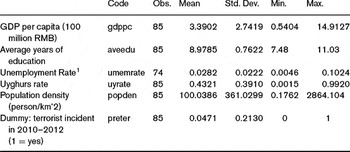
I am going to use a county-level cross-sectional dataset with a sample size of approximately 80. I combine the nine county-level districts in Urumqi into one single observation, not only because by doing so the size of the new unit will become more comparable to other counties, but also because some data are only available at the aggregate level. Due to the missing data problem, I have to drop the cities administered by the XPCC except Shiheizi City. Although leaving these observations out may cause biasedness, we can still justify dropping these observations because these cities are not within the hierarchical system of the Autonomous Region Government, but are instead semi-militant organizations directly answering to the Central Government. Since they are so different from other counties, we can treat them as outliers. The data on the independent variables are summarized in Table 1.
Descriptive statistics of independent variables

Note: I calculate the unemployment rate by adding up the numbers of those who do not work after graduation, those who lose their jobs because of work unit (danwei) reasons, those who lose jobs because of personal reasons, and those whose land is expropriated, leaving out those who lose the ability to work. I then divide the sum by the population of those who have registered in the government as either ‘working’ or ‘not working’.
I collect the data for GDP per capita, Uyghurs rate, and population density from Xinjiang Statistical Yearbook, 2014, which consists of the statistics for 2013.Footnote 17 For average years of education and unemployment rate, I rely on the results of the 6th national population census conducted in 2010, because these two items are not included in the Xinjiang Statistical Yearbook, while the population census is only conducted every ten years. Despite the fact that the timing is not exactly the same for every independent variable, the two variables from the 2010 national population census are still useful since we can assume that there was unlikely to be a drastic change in these variables within three years during which major policy intervention was largely missing. Xinjiang's education policy, aimed at improving the employment prospects of locals in South Xinjiang, was not implemented until 2014,Footnote 18 when the length of compulsory education was prolonged to 12 years, three years more than before, and the national standard.Footnote 19 For the dummy variable previous attacks, I use the coding of Raymond Lee, which I will elaborate on more in the next paragraph.
I would like to examine whether the variables mentioned above can explain the geographical variation in terrorism. Thus, my dependent variable has two outcomes: a terrorist attack occurred, or did not occur, in certain county in 2013. Regarding data, as mentioned above, I mainly rely on the coding of Raymond Lee,Footnote 20 cross-referenced with media sources home and abroad. According to his coding, in 2013, eight major terrorist attacks occurred in seven counties of Xinjiang. However, the accuracy of the information is never guaranteed, because the violent events in Xinjiang are always considered to be very ‘sensitive’ by the Chinese government, which imposes all sorts of restrictions on scholars or journalists who want to conduct a field study there (Bovingdon, Reference Bovingdon2010: 18; Reed and Raschke, Reference Reed and Raschke2010: 14–16).
What can be expected is that due to the strict constraints the frequency of terrorist activities and violent events is likely to be underreported. Drakos and Gofas (Reference Drakos and Gofas2006a) try to address this problem rigorously. They notice two mechanisms that are responsible for any biasedness: the so-called encouragement effect and underreporting bias. The former is stronger if the level of democracy is higher. More democratic polity allows for more press freedom. In order to maximize the publicity, terrorists prefer to carry out the attacks in places where it is more likely to be reported. On the other hand, underreporting bias means that the complete number of terrorist incidents simply cannot find their way to publicly available sources. In other words, press freedom carries a dual effect: ‘an exacerbating effect via publicity seeking’ (Drakos and Gofas, Reference Drakos and Gofas2006a).
Underreporting is not going to cause severe statistical problems in our analysis. First, the underreporting bias can be ignored because across the counties in Xinjiang we could not find different levels of information control: generally social control is very strict across the whole region. Thus, we can treat the unreported terrorist activities as random and unrelated with county characteristics. The cost for ignoring the underreporting bias is mainly the change in the intercept, providing that we are going to estimate a logistic regression. In other words, it will not fundamentally change the significance level and the sign of the coefficients.
Similarly, we do not need to address the encouragement effect either, because none of the counties has a more open environment for media than the others. Such encouragement effect does exist, but not in Xinjiang. In order to maximize their publicity in China and in the world, some perpetrators have been planning terrorist attacks outside the Autonomous Region. The Tiananmen Car crash in 2013 and the Kunming Massacre in 2014 are good indications that terrorist organizations are now shifting their targets to places other than Xinjiang, where the level of press freedom is indeed much higher, and information is more accessible to foreign media (at least in other provinces of China it is unimaginable that the Internet can be partially shut down for almost one year, which happened after the bloody riots on 5 July 2009 in Xinjiang).Footnote 21 Thus, the encouragement effect is not our concern unless we are going to perform a cross-province analysis. The encouragement effect is much stronger in the more prosperous and more internationalized coastal areas of China. Simply put, the underreporting of terrorist incidents in Xinjiang does not do a great disservice to exploring the roots of terrorism using quantitative methods.
4.2 Empirical results
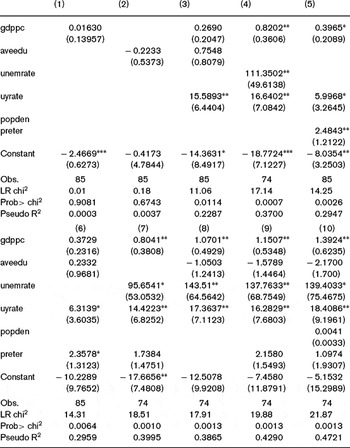
Because the dependent variable has binary outcomes, I adopt the method of logistic regression.Footnote 22 The results are reported Table 2.
Logistic regression results

Notes: Standard error in the parenthesis.
*p < 0.1, **p < 0.05, ***p < 0.01.
Under some model specifications, the coefficient of GDP per capita is not statistically significant even at the 10% level, though they all have positive signs. Controlled with more variables, income becomes significantly associated with the probability of terrorist incidents, and they are associated positively. Thus, we can believe that all other variables being equal, the higher the income level of a county, the more likely it will suffer from terrorist attacks. The expectation of the Chinese government that boosting economic growth can decrease terrorism activities is not supported by empirical evidence.
The empirical results also show that increasing education levels is not a solution to terrorism either. The effect of average years of education on the probability of terrorism incidents is not significantly different from zero. Moreover, the inconsistent signs of years of education in the models imply that the terrorism risk may not be a linear function of education. Since both the less educated and the more educated can be active participants of terrorist attacks in Xinjiang, the effect of education may be more complicated than many people believe.
What is more, unemployment is indeed a cause of terrorism as we hypothesize. Under most models, the unemployment rate is positively associated with the logit, and the effect is also statistically significant at conventional levels. Controlled with different variables, the positive sign does not change and the coefficients remain significant. Thus, it is reasonable to believe that economic grievances among Uyghurs do exist and result in terrorism. Last but not least, there is strong evidence for the positive effect of the rate of Uyghurs population. In most models, the effect is statistically significant at the 5% level. Thus, counties with a higher ratio of Uyghurs are more likely to suffer from terrorist attacks as we expected.
4.3 An alternative explanation
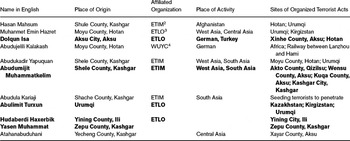
Although we have found a correlation between economic growth and terrorist activities, it may be possible that places with higher income are more likely to suffer from terrorist attacks not because the locals are more dissatisfied with distributional inequality during development, but simply because these places are more attractive for terrorists. In the previous analysis, we have not distinguished between the origins and the targets of terrorists. In other words, we have assumed that local people commit local terrorist acts, which does not necessarily hold. For example, Krueger and Laitin (Reference Krueger, Laitin, Keefer and Loayza2008) find that the origins of terrorism are in countries that suffer from political oppression, while the targets are countries that enjoy a measure of economic success. If this is also true in Xinjiang, we may have to reconsider the explanatory power of economic grievance theory and invest more to examine what are the determinants of the venue's attractiveness for terrorists. Micro-level data on the individual features of terrorists in Xinjiang can give us some hints on whether terrorist attacks are really committed by local perpetrators (see Table 3).
First batch of terrorists identified by public security ministry1

Notes: 1ETIM is the abbreviation of East Turkistan Independence Movement. It can be dated back to the 1930s and 1940s when the Uyghurs founded the First and the Second East Turkistan Republic with the support from the Soviet Union. For the historical background of ETIM, see Wang (Reference Wang2013).
2 ETLO is the abbreviation of East Turkistan Liberation Organization.
3 WUYC is the abbreviation of World Uyghur Youth Congress.
4 The Public Security Ministry identified three batches of terrorists in 2003, 2008, and 2012, respectively. I did not list the second or the third batch because their jiguan (place of origin, not necessarily place of birth) is not specified. Moreover, the second batch consists exclusively of perpetrators who were responsible for a series of attacks before the 2008 Beijing Summer Olympics, and half of them (4 out of 8) were actually targeting Chinese citizens outside the country. See the website of the Ministry of Public Security of the PRC, http://www.mps.gov.cn/n16/n983040/n1988498/index.html [accessed 4 March 2016.
From Table 3 we can tell that among 11 listed terrorists, nine were responsible for organizing terrorist attacks within Xinjiang. Among these nine terrorists, over half of them (in bold font) were responsible for the attacks in their places of origin. Although the terrorists listed above are only organizers who stay abroad and the information about the perpetrators is not yet fully known to us, it seems that the planners of terrorist acts do have a preference to target places where they have more associations.
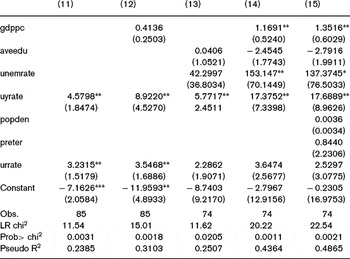
At the aggregate level, we can also work on causal inference by controlling one more variable in our regression analysis. If terrorists would like to maximize publicity and casualty, then the preferable venue for terrorist attacks is the urbanized area with more people crowds, instead of remote villages or small towns. Thus, a controlled variable of the urbanization rate (urrate), defined as the ratio between urban population and total population, can represent such attractiveness.
From the regression results of Model (11) and (12) in Table 4, we may infer that the rate of urbanization is positively associated with the likelihood of terrorist attacks, which seems to support the theory of attractiveness. But the effect disappears when we try to include more variables, such as education level, unemployment rate, and other controlled variables. Thus, we cannot find strong evidence in Xinjiang that suggests the necessity of disaggregating target and origin of terrorism. In particular, in Model (14) and (15), even when urbanization rate is controlled, the effects of income and unemployment on the probability of terrorist incidents are still statistically significant, and positive. In other words, we can conclude that attractiveness cannot explain the occurrence of terrorism, and the proposition that economic development is not an effective cure to terrorism still holds.
Logistic regression controlled with urbanization rate

Notes: Standard error in the parenthesis.
*p < 0.1, **p < 0.05, ***p < 0.01.
5. Further discussions
In this section, I will further clarify how economic growth is responsible for increasing terrorist acts in Xinjiang. Specially, I am going to address two important questions that remain unanswered in the previous quantitative analysis. First, we need to understand why the perpetrators prefer terrorist attacks to other forms of resistance, such as protest or armed rebellion. Second, we also need to understand why other ethnic minorities in China, who are facing similar situations, have not resorted to violence as some Uyghurs did.
5.1 Why choosing terrorism?
Although we have proved that economic performance is positively associated with terrorist risk in Xinjiang, we have not answered one question, which is also missing in most literature that tries to establish a link between income and terrorism: Why do economic grievances sometimes not lead to terrorism in many other places, but instead to other forms of domestic political violence, such as civil wars? De Mesquita (Reference De Mesquita2008) believes that a long-run goal of terrorism studies should be to connect more directly with the enormous literature on civil wars and other forms of violence.
An open research question is: When do insurgents find terrorism to be a useful tactic and when are other forms of insurgency deemed more likely to be effective. To the extent that insurgents are making this choice endoneously, dividing our data into, for example, those data sets covering terrorism and those covering civil wars may be a serious mistake, introducing important sources of bias if factors that we use to explain various forms of violence also affect what type of violence is employed.Therefore, we should also expand our vision to cover other forms of resistance in Xinjiang, if we want to fully clarify the causal mechanism. I will develop my explanation on the choice of forms of resistance partly based on the rational choice model built in Blomberg et al. (Reference Blomberg, Hess and Weerapana2004) and mentioned above in the literature review, which discusses two types of confliction: rebellion and terrorist attack.Footnote 23 In addition to these two forms of resistance, I will include one more type of resistance in the following analysis that is also a result of economic and political grievances among some of the Uyghurs: mass protests.
In the model of Blomberg et al. (Reference Blomberg, Hess and Weerapana2004), a group that is not satisfied with the current economic status quo will choose rebellion when the government is so weak that overthrowing the government is possible. If not, terrorist attack is a preferable option since its cost is much smaller. I will redefine the goal of the unsatisfied group. For them, overthrowing the government is not what they want in the end, it is only one of the means that can lead to the ends. The ultimate goal of dissidents, facing unfavorable economic and political conditions in places such as Xinjiang, is the redistribution of wealth, an improvement in the employment environment, less political exclusion from state power, etc. Armed rebellions, terrorist attacks, and mass protests are the three most frequently used methods to achieve these goals.
Mobilization depends on the availability of collective identities, shared motivations, capacities, and opportunities for collective action (Gurr, Reference Gurr2000: 65). In Xinjiang, some Uyghurs may have a strong collective identity as well as a shared motivation to improve their political and economic treatment, but they lack sufficient capacities and opportunities to mobilize and organize a collective action with mass participation. From a rational point of view, it is much more feasible, much less costly, and relatively more effective to conduct terrorist attacks, particularly when the dissidents are living under a strictly controlled society. First, compared to terrorism, rebellions and protests are much less feasible per se. The more people are involved, the bigger the problem of ‘collective action’ (Olson, Reference Olson2009). Therefore, even though many people are dissatisfied with the status quo, most of them are expecting others, instead of themselves, to take on the burden of voicing their anger. The same logic applies to the Uyghurs dissidents in Xinjiang. In the riots of 1997, many Uyghurs were expecting others to take the initiative. Thus, the Chinese government successfully developed a strategy to cope with potential protests: deterring would-be leaders from taking the initiative (Bovingdon, Reference Bovingdon2010: 130).
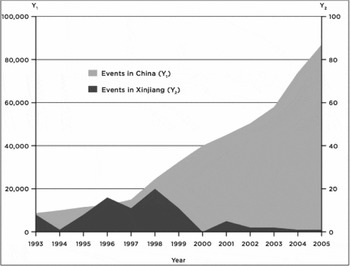
Second, besides the logic of collective action, organizing protests also face external constraints that make it much more costly, thus much less preferable: The Chinese government is not tolerant of any mass protests in Xinjiang. While public protests are labeled as ‘splittism’ that are usually crushed harshly and punished severely, the Chinese government basically makes no concession even if the Uyghurs successfully organize a street protest. Between 1980 and 1997, the government in Beijing and Urumqi made concessions in only four instances to matters raised during demonstrations (Bovingdon, Reference Bovingdon2010: 128). As a result, the frequency of protest events in Xinjiang has dropped sharply since the late 1990s, even though in other provinces of China the trend is heading in the opposite direction (see Figure 3). Some Chinese scholars also notice this phenomenon. According to a report by Li and Tian (Reference Li and Tian2014), Guangdong, which is supposed to be the most ‘open’ and ‘freest’ province partly because of its proximity to Hong Kong, has nurtured more mass protests over the past 13 years than any other province. According to their data, there have been 267 mass protests that involve more than 100 participants in the past 13 years in Guangdong. In contrast, during the same period, the number is five in Xinjiang. The real numbers are surely underestimated in this report, but it is still informative in the sense that the authors compare the frequency of protests across different provinces.
Protest events in China and Xinjiang (1993–2005)

In sum, the reason why terrorism is chosen over protests and rebellion is that it faces a lesser degree of collective action problem, while at the same time it costs relatively less compared to mass protests that basically cannot make the government compromise, let alone armed rebellions, which is completely infeasible at current time and in the foreseeable future. Realizing the lack of both capacity and opportunities, rational perpetrators would substitute mass public forms of resistance with terrorist attacks that involve fewer people, are more difficult to detect, and easily publicized.
5.2 Why only the Uyghurs
In the previous analysis, we focused exclusively on the ethnic conflict between the Uyghurs and Han Chinese. While the dissatisfaction and resistance of the Uyghurs are worthy of careful examination, we should not ignore the fact that, besides the Uyghurs, there are many other ethnic minorities in China and within Xinjiang who do not resort to terrorism, even if they face similar unfavorable conditions. Specifically, we need to understand why other ethnic minorities living in the region (including both Muslim and non-Muslim) do not resist violently, and why other ethnic minorities outside Xinjiang usually choose peaceful means in spite of similar economic and political grievances existing, such as the Tibetans.
First, other ethnic minorities living in Xinjiang, to some extent, have better political treatment compared to the Uyghurs. In addition to 10.74 million Uyghurs and 8.6 million Han Chinese, there were also approximately 1.59 million Kazak, 1.05 million Hui, 0.2 million Kirgiz, 0.18 million Mongols, and 0.04 million Xibo living in Xinjiang in the year of 2013 (Xinjiang Statistical Yearbook, 2014). Since these ethnic minorities are outnumbered by the Uyghurs, they are not willing to see an independent Xinjiang/East Turkistan that is dominated by the latter (Wang Reference Wang2007: 263–4). The Chinese government successfully makes use of the worries among Kazak, Hui, Kirgiz, and Mongols, and wins the political support from these ethnic groups. Within Xinjiang, Autonomous Prefectures have been established for Kazak, Hui, Kirgiz, and Mongols,Footnote 24 despite the fact that they are usually not the most populated ethnic group in the prefecture. For example, in Bayingolin Mongol Autonomous Prefecture, the size of which is larger than 30% of Xinjiang, there are only 52 thousands of Mongols, while the population of Uyghurs is 470 thousands. In Bortala Mongol Autonomous Prefecture, the number of Uyghurs is more than twice that of Mongols (Xinjiang Statistical Yearbook, 2014). However, in these two prefectures, Mongols have more chance to participate in political affairs and take important positions in the government: in Hejing County of Bayingolin, almost 40% of cadres (ganbu) were Mongols, though they constituted only 17.3% of the local population (Li, Reference Li2002: 58–63) in 1990. The situation is similar for other ethnic groups like Hui, Kazak, and Kirgis. The fear of being suppressed by the demographically dominant ethnic group and more opportunities for political participation in the regime may account for the lack of incentive to resist among ethnic minorities that are outnumbered by the Uyghurs.
Second, the linkage with the international jihadist movement of the Uyghurs extremists may explain why, unlike the Tibetans, some Uyghurs are radicalized. The East Turkistan Independence Movement was revived in the 1980s as a result of the international Islamic revival and the independence of Central Asian countries after the collapse of Soviet Union (Wang, Reference Wang2013: xiii). In the previous empirical analysis, external factors, especially radical Islam and the jihad impulse, were not included in the list of independent variables. But it does not mean that the religion issue is not related to rising terrorism in Xinjiang. Dropping these variables is simply due to the lack of reliable and accurate data that can measure the strength and width of religious elements, like underground extremist religious preaching. In fact, the claim of the Chinese government that the ETIM has been assisted by the Taliban cannot be simply dismissed as political propaganda. Potter (Reference Potter2013) investigates the connection among ETIM, Taliban, al-Qaeda, and other terrorist organizations that have been active in Central Asia, Afghanistan, and Pakistan. He finds that ‘cross-fertilization’ has occurred between ETIM and other terrorist organizations in the region:
According to Karachi Islam, a jihadist newspaper, the recently killed leader of the ETIM/TIP,Footnote 25 Abdul Shakoor Turkistani, also commanded al-Qaeda forces and training camps in the federally administered tribal regions of Pakistan. Shakoor assumed control after Abdul Haq al Turkistani was killed in a 2010 US Predator drone strike in North Waziristan. Haq was also central in al-Qaeda activities and a member of al-Qaeda's Shura Majlis (executive council) (Potter, Reference Potter2013).
Thus, it can be confirmed that terrorists in Xinjiang are indeed linked with foreign organizations that are driven by religious fanaticism. In addition to economic grievances and political exclusion, the factor of the international jihadist movement is no less important in explaining rising terrorism in Xinjiang. Though the effect of this aspect is not revealed in our empirical models, the quantitative analysis presented in this paper is still meaningful because we cannot attribute the terrorist threat solely to external factors. First of all, although ETIM and other foreign Uyghur militant organizations are responsible for organizing a number of incidents, in some cases we hardly find strong evidence indicating that ETIM has been involved. In other words, it is possible that many perpetrators simply conducted a terrorist attack spontaneously, without the guidance or assistance from external entities.Footnote 26 Moreover, even it is true that terrorist organizations are playing a role in the incidents, a simple counterfactual analysis will lead us to the proposition that these organizations would not have been able to recruit so many supporters if the latter were satisfied with their life in Xinjiang. If protests and violence are not just a result of ‘blackhand (heishou)’ and separatist organizations involvement, but more of the ‘authentic expressions of mass sentiment’ (Bovingdon, Reference Bovingdon2010: 121), then it is necessary to explore the causal effect of internal factors, which may actually be the roots of such sentiments.
6. Conclusions, limitations, and policy recommendations
The major task and contribution of this paper is to provide a systematic empirical test about the relationship between economic growth and terrorism in Xinjiang, which, to my knowledge, is still missing in the literature. The quantitative analysis using a county-level databset shows that both the income level and unemployment rate are positively associated with the probability of terrorist acts. In other words, the claim that economic development is a cure to terrorism seems questionable, at least in Xinjiang. Relevantly, promoting education may not necessarily be so effective as we usually expect.
Although income is important in explaining the occurrence of terrorist attacks, it is not the only explanatory variable in our theory. In particularly, the contamination effect of Islamic extremism should not be underestimated. Due to data limitation and methodological constraints, I did not devote much effort in examining the interaction between this external factor and local conditions. Future research could make more progress in this field by studying the determinants that make Islamic fundamentalism more accessible and attractive to certain subgroups. For example, more micro-level evidence is needed before we can make a conclusion on whether subgroups with lower income or less education are really more easily influenced by foreign terrorist organizations. Only by developing a conditional theory can we understand why there exists a divergence in the attitudes of the Uyghurs towards the current political and economic situation (Gladney, Reference Gladney and Starr2004: 378–9).
What policy recommendations can be offered? Despite that the unemployment problem may be playing a significant role in causing terrorism, the Chinese government neither intentionally allows the situation to deteriorate, nor can it do much in improving the situation by promoting growth and reform. Though some label the migration flood as ‘ethnic genocide’ or ‘demographic annihilation’, Zhu and Balchford (Reference Zhu and Blachford2012) believe that it is largely self-initiated/market-driven. As they suggest, ‘the real problem is, market mechanisms do not provide solutions to deal with the negative outcomes of economic competition but may in fact exacerbate problems’. It can be expected that the situation will get worse when China pushes for further market-oriented reforms. Unless the Chinese government put more emphasis on the ‘re-embedding’ efforts of social protection (in Polanyi's sense), the resistance from the dissidents cannot be eliminated. Recently the Chinese government has realized the importance of securing employment for ethnic minorities, and invested 1.9 billion RMB to help college graduates in Xinjiang to find a job.Footnote 27 Unlike the counter effect of economic development, and the uncertain effect of education, improving the employment situation for ethnic minorities may have become a preferable and feasible cure to terrorism in Xinjiang.
About the author
Weiwen Yin is currently a Ph.D. student at the Department of Political Science, Texas A&M University. Previously he studied at Peking University (China), University of Tokyo (Japan), and Central European University (Hungary), and worked as a research assistant at Centre on Asia and Globalization, Lee Kuan Yew School of Public Policy, National University of Singapore.