Introduction
The power of food as a means to establish and further social differentiation has been the subject of much anthropological research (Bray Reference Bray2003; Dietler & Hayden Reference Dietler and Hayden2001; Gosden & Hather Reference Gosden and Hather1999; Gumerman Reference Gumerman1997; Hastorf Reference Hastorf2016; Hayden & Villeneuve Reference Hayden and Villeneuve2011; Palmer & Van der Veen Reference Palmer and Van der Veen2002; Van der Veen Reference Van der Veen2003; Wiessner & Schiefenhövel Reference Wiessner and Schiefenhövel1996). High-status foods that elites use to create social alliances, maintain prestige, or naturalize social inequality tend to share a number of common characteristics, although not all of them are concurrent (Curet & Pestle Reference Curet and Pestle2010; Ervynck et al. Reference Ervynck, Neer, Hüster-Plogmann and Schibler2003; Goody Reference Goody1982). Foods in this category are often fatty, spicy, or sweet. They easily entice people's appetites. They are esteemed because large amounts of time, energy and labour are required to produce and prepare them. They may also be valued because they are available only in small quantities, or available infrequently for ecological or sociopolitical reasons. Related to these key characteristics is that high-status foods are often made with non-local foodstuffs or according to foreign cuisines. Exotic foodstuffs that are scarce in a particular region or are costly to produce readily translate into political assets which elites may opt to use for the purpose of displaying their wealth and power and maintaining social hierarchy.
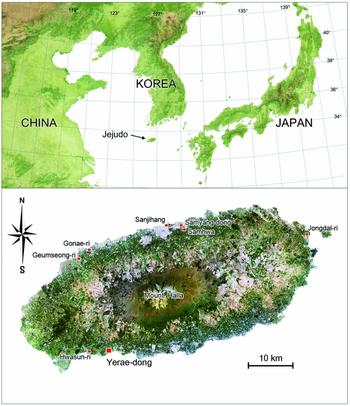
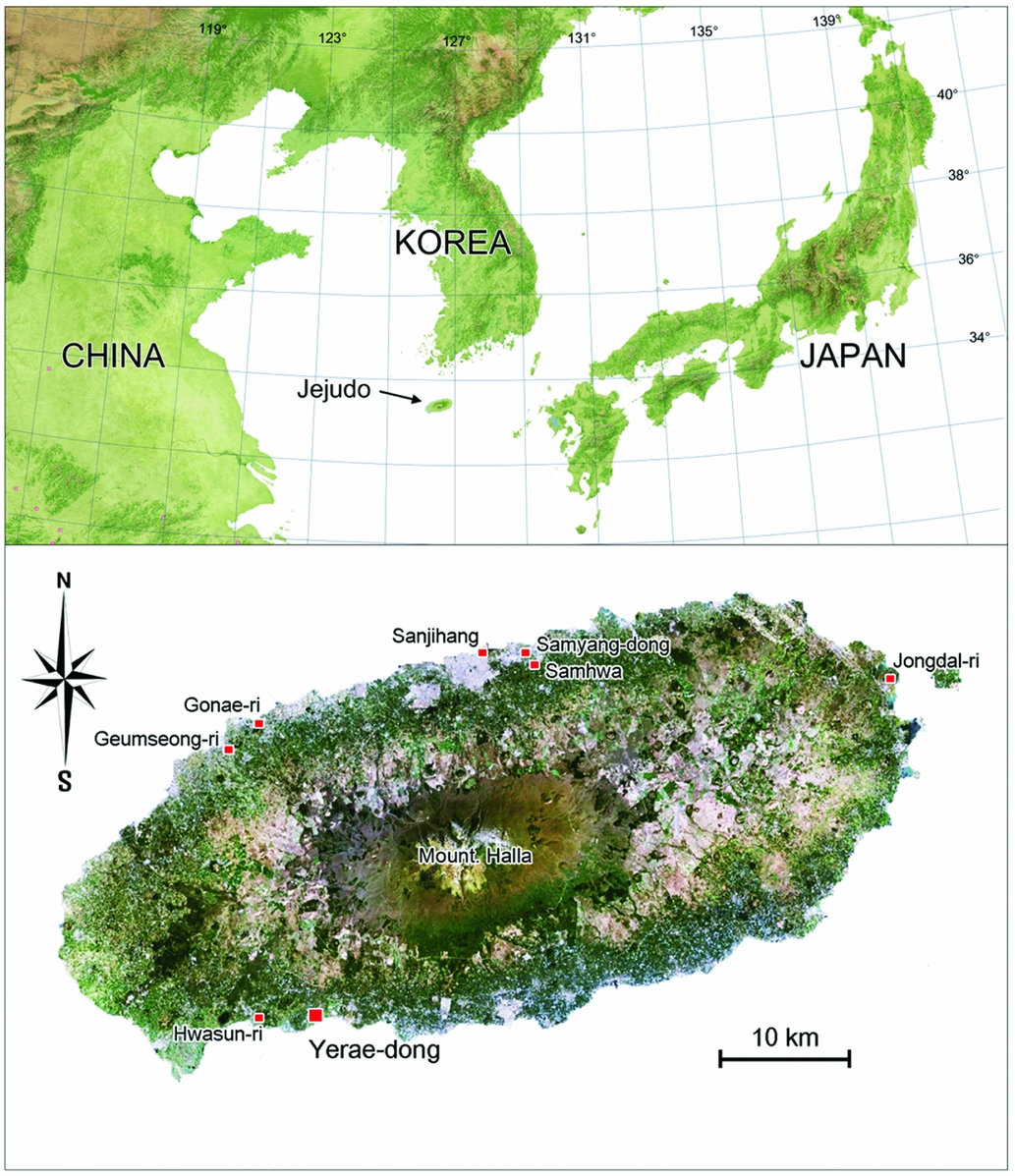
Rice is a representative luxury food crop under certain circumstances (Hayden Reference Hayden2003; Hunter-Anderson et al. Reference Hunter-Anderson, Thompson and Moore1995; Ohnuki-Tierney Reference Ohnuki-Tierney1993). In this study, we present archaeobotanical research from Yerae-dong on the island of Jeju (Jejudo), Korea, and discuss sociopolitical implications of prehistoric rice consumption in the marginally agricultural setting of a volcanic island. Jejudo is the largest island (1849 sq. km) in Korea. It is located 85 km off the southern coast of the peninsular mainland (Fig. 1). Although prehistoric inhabitants of Jejudo have maintained strong cultural ties with people of the Korean peninsula, the physical environment of Jejudo is radically different from that of the mainland. Therefore, island people would have to adjust their lifeways accordingly. This paper focuses on geological characteristics of Jejudo, a volcanic island composed mainly of basalt, lava and pyroclastic rocks (Jeju Provincial Government 2017; T. Kim Reference Kim2012; M. Lee Reference Lee2006; Lee & Son Reference Lee and Son2006). Owing to these geomorphic characteristics, rainwater readily permeates through the ground into the aquifer via lava tubes and cracks. Permanent water sources such as rivers and lakes are virtually absent on Jejudo, although the island annually receives precipitation of approximately 1500 mm. Groundwater flows out in small amounts along narrow edges of its coastlines which have been the loci of population aggregation and village formation since the Neolithic period (8000–1000 bc) (Jeong Reference Jeong2012). This contrasts with the environment in peninsular Korea where large rivers, streams and well-developed plains dominate the landscape, particularly in the southwestern region, and water shortage for agricultural activities is less of a problem.
Location of Yerae-dong and sites mentioned in the text.
Different environmental conditions have profound impacts on plant cultivation, especially rice. Although all crops need the supply of water for their growth, rice tends to require large amounts of water and a large workforce (Fuller & Qin Reference Fuller and Qin2009). Archaeobotanical research in the Korean peninsula showed that rice began to be cultivated in the Bronze Age (1500–300 bc) (G.-A. Lee Reference Lee2011). The earliest carbonized rice was recovered from Gyo-dong in central-eastern Korea. It has been radiocarbon-dated to around 1400 bc (Ahn Reference Ahn2010). Recent excavations have further revealed that paddy fields, a critical component in intensive rice production, had begun to be constructed no later than 1000 bc (Toyama Reference Toyama, Lee and Lee2014). There are currently 25 Bronze Age sites with remains of paddy fields in South Korea (Korean Archaeological Society 2013). These fields are located close to rivers and streams. They have bunds, drainage outlets and aqueducts to allow sophisticated water management. Geoarchaeological investigation on paddy soils has illustrated distinctive patterns in silty clay concentration formed by repeated tillage and irrigation (H. Lee et al. Reference Lee, French and Macphail2014). Rice cultivation in peninsular Korea appears to have taken advantage of abundant water supplies along riverine areas, although the possibility that rice might have been grown in dry fields cannot be ruled out. Water supply and management was a prime concern for rice farmers in the neighbouring regions in East Asia (Fuller & Qin Reference Fuller and Qin2009; Jin et al. Reference Jin, Yan, Udatsu, Lan, Wang and Tong2007; Zong et al. Reference Zong, Chen, Innes, Chen, Wang and Wang2007). Whether rice was also cultivated in prehistoric Jejudo, and if so, why people struggled to grow rice in such unfavourable conditions, were unanswered questions.
Carbonized seed assemblages from Yerae-dong show that rice was cultivated in Jejudo and that its cultivation began considerably earlier than what has hitherto been known. Before the present study, the earliest rice grains on the island were reported from the sites at Gonae-ri and Jongdal-ri. They were dated to the ninth century ad (Jeju National Museum Reference Museum2001). In local chronology, these remains belonged to the Late Tamra period and by a few hundred years postdated the beginning of the earliest states of Jejudo. By contrast, a direct AMS date from Yerae-dong carbonized rice was 2050±40 uncal. bp (180 bc– ad 50 (95.4%), SNU12-R106). This date is contemporaneous with material evidence for emergent social hierarchy. The new date suggests that the spread of rice to the insular region was not the result of tributary trades or exchanges between fully developed complex societies. Instead, it was likely to be initiated by local elites in the process of status competition and social transformation. The excavation of Yerae-dong yielded archaeological evidence for status-related variations in foodways and the use of exotic prestige items. The new discovery sheds light on the social impetus for a new plant associated with previous arguments that rice was cultivated primarily for feasting and for use in special meals in some socio-ecological settings (Hayden Reference Hayden2003; Hunter-Anderson et al. Reference Hunter-Anderson, Thompson and Moore1995; McGovern et al. Reference McGovern, Zhang and Tang2004). In what follows, we will present archaeobotanical analysis and discuss the sociopolitical context of prehistoric rice in reference to additional archaeological data on settlements, specialized craft items and food-related artefacts such as pottery jars and grinding stones.
Site, chronology and vegetation
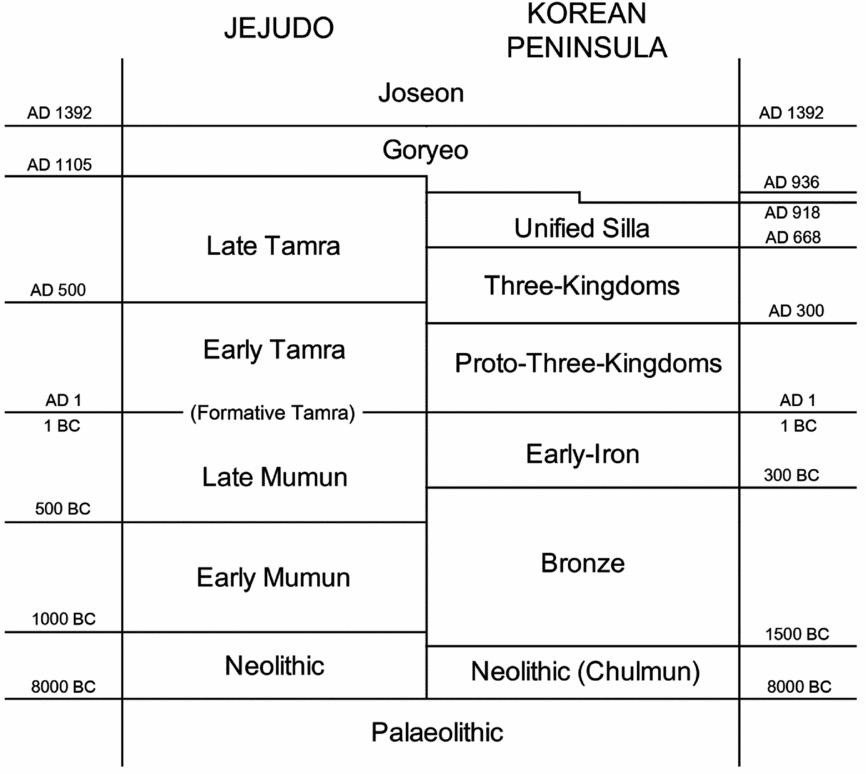
The locus of this study was Yerae-dong (33°23'11“N 126°39'79”E) located on the southwestern coast of Jejudo (Fig. 1). The basic chronological framework for Jejudo has been presented by C. Lee (Reference Lee1995) and it has been continuously revised with new discoveries and excavations. Based on previous discussions (Kang Reference Kang2006; Reference Kang2009; G. Kim Reference Kim2016; J. Lee Reference Lee2016; Y. Lee Reference Lee2016; Oh Reference Oh2016), we divided the archaeological sequence of Jejudo into four periods: Palaeolithic (–8000 bc), Neolithic (8000–1000 bc), Mumun (1000–1 bc) and Tamra (ad 1–1105). The Mumun period was further divided into Early (1000–500 bc) and Late (500–1 bc). The Tamra period was also divided into Early (ad 1–500) and Late (ad 500–1105; Fig. 2). According to Kang (Reference Kang2006; Reference Kang2009), the period of approximately 400 years ranging from the late phase of the Late Mumun period to the early phase of the Early Tamra period might be called the ‘Formative Tamra’ period, during which prehistoric societies in Jejudo were in the process of being organized into ones with institutionalized social hierarchy.
Archaeological chronology of Jejudo and the Korean peninsula.

The presence of a prehistoric site at the location of Yerae-dong was reported in 2004 by research crews from the Jeju Culture and Art Foundation, who conducted surface survey and retrieved potsherds from the Late Mumun period. Excavation by the Jeju Cultural Heritage Institute in 2007–10 revealed that the site was occupied multiple times in prehistory. It contained remains from the Neolithic, Mumun and Tamra periods. The excavated area measures 133,614 sq. m and archaeological features discovered included 265 pit houses, 16 raised-floor buildings, 26 outdoor hearths, 2104 underground pits and 43 water catchment pits (Jeju Cultural Heritage Institute 2013).
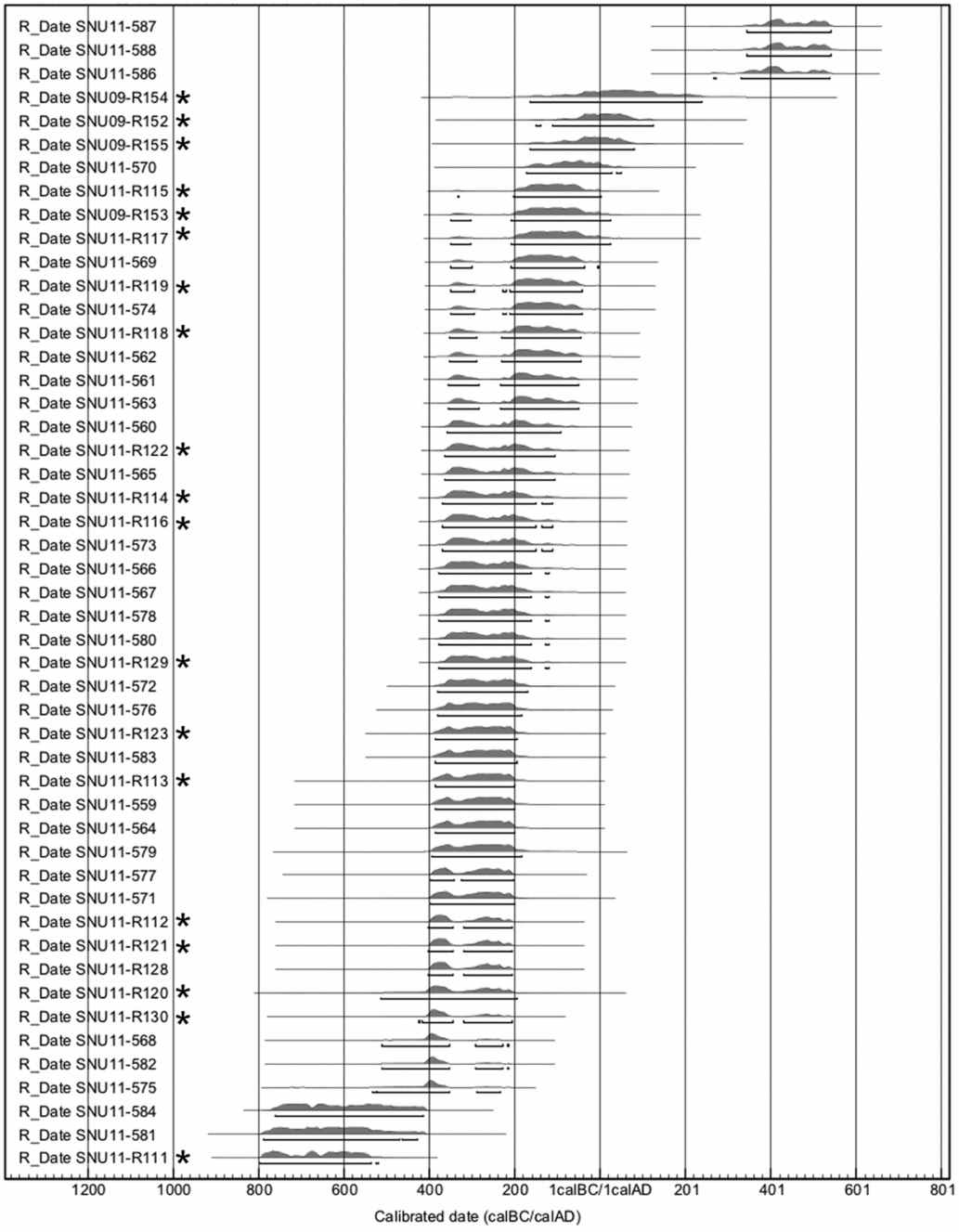
Neolithic potsherds and stone tools were present. However, there were only a few artefacts, and no Neolithic pit houses were found. It is presumed that Yerae-dong was a camp site at this point, occupied only briefly by a small number of people. The site size reached its culmination during the Late Mumun period. The majority of the pit houses, if not all, were dated to this period. Forty-nine AMS dates obtained from charcoal samples showed that most houses were built around 400 bc– ad 100 (Fig. 3). Although the settlement continued until ad 600, the site size shrank considerably in the Early and Late Tamra periods. Only a few pits and hearths were dated to these periods (Jeju Cultural Heritage Institute 2013).
Calibrated AMS chronology of charcoal from Yerae-dong houses and pits. Asterisk (*) indicates dates obtained from pit houses. The dates were calibrated using Oxcal v4.3.2 (Bronk Ramsey Reference Bronk Ramsey2017) with IntCal13 atmospheric curve (Reimer et al. Reference Reimer, Bard and Bayliss2013).

The current vegetation around Yerae-dong is a product of intensive anthropogenic disturbance. It is also a mixture of native and introduced plants. Jejudo is dominated by Mt Halla (1950 m) and the vegetation changes drastically in response to altitude (Jeju Provincial Government 2017). The zone of coastal areas and lowlands up to 900 m in elevation, where Yerae-dong is situated, is dominated by evergreen broad-leaved forests composed mainly of Quercus salicina, Q. glauca, Q. acuta and Castanopsis cuspidate. Acorns, nuts of oaks (Quercus), have a high nutritional value containing approximately 50 per cent starch, 2 per cent proteins and 2 per cent fat. They are believed to have been a dietary staple during the Korean Neolithic period (Ahn Reference Ahn2012). Acorns from evergreen oaks in Jejudo contain lesser amounts of tannin than the deciduous species in the peninsula. They are easier to prepare and more palatable (Ko Reference Ko2002). Minor arboreal components include kaya (Torreya nucifera) and common camellia (Camellia japonica). These tree species are highly limited in distribution in peninsular Korea and are found only along the southern coast (Yim Reference Yim1977). Citrus fruits are the main agricultural products in Jejudo today. There are no modern rice fields, either dry or wet, in the vicinity of Yerae-dong.
Materials and methods
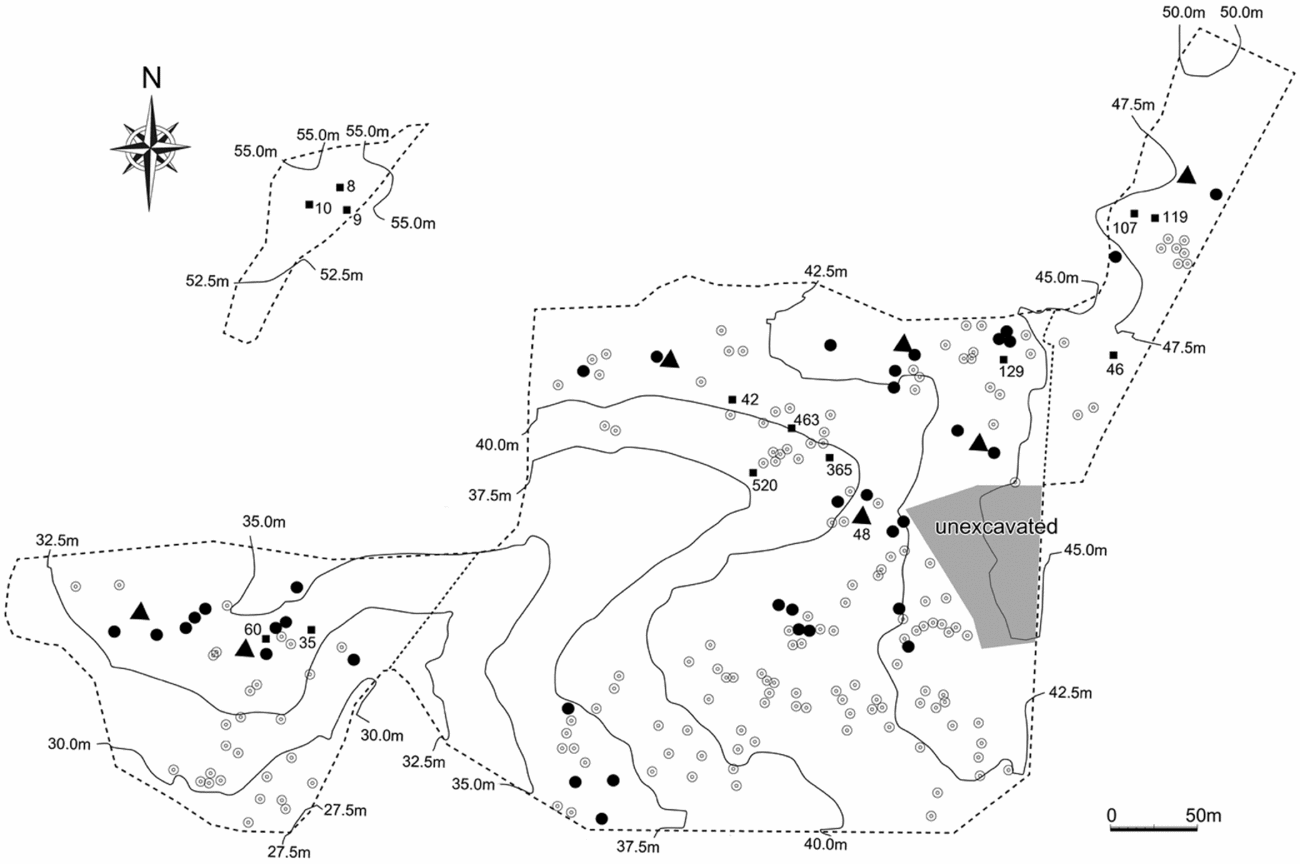
Soil samples were collected from five house floors and 18 underground pits (Fig. 4). Most sampled features contained multiple layered deposits varying in depth from 20 to 120 cm below the past ground surface. Soil samples were collected from the lowest deposits, or within 3 cm from the floor levels, in order to increase the possibility that the retrieved botanical remains had been deposited while the sampled features had been in use, or immediately before they had been abandoned. Samples from houses were collected from several different localities and a single bulk sample was taken from each underground pit. Target soil volumes for houses and pits were 20 and 5 litres, respectively. However, sample size varied with feature size.
Yerae-dong site map. Double circle (ⓞ), solid circle (●), and triangle (▲) indicate the location of pit houses in Groups A, B and C, respectively. These houses were categorized based on the amount of storage jars relative to the number of grinding stones. Square (■) indicates underground pits.

These samples were floated using a simple bucket method as described by Pearsall (Reference Pearsall2000), separated into light and heavy fractions and dried at room temperature. Some charcoal fragments that did not float were hand picked from heavy fractions. Light fractions were passed through 4, 2, 1 and 0.5 mm mesh screens and sorted by size. Microscopic examination of light fractions was conducted using a stereoscopic microscope up to ×80 magnification. If necessary, sorted charcoal fragments were gently rubbed with a wet paint-brush or cleaned with an ultrasonic cleaner in order to remove alien substances on the surface. Retrieved seed remains were identified, guided by illustrated references and comparative specimens (J. Lee et al. Reference Lee, Kim and Lee2009; Liu et al. Reference Liu, Jin and Kong2008; Obata Reference Obata and Obata2008; Zhao Reference Zhao2010).
Results: botanical remains
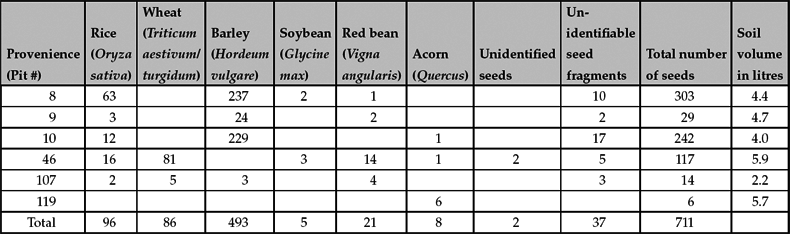
In total, 711 seeds representing 6 taxa were found in these samples (Table 1). In addition to rice (Oryza sativa), the following plants were discovered: wheat (Triticum aestivum/turgidum), barley (Hordeum vulgare), soybean (Glycine max), red bean (Vigna angularis) and acorn (Quercus) (Fig. 5). Carbonized seeds were found from 6 pits out of 18. However, no seeds were discovered from house floors. AMS dates obtained from carbonized rice grains and wood charcoal from Pit #46 were 2050±40 uncal. bp (180 bc– ad 50 (95.4%), SNU12-R106) and 2220±40 uncal. bp (390–190 bc (95.4%), SNU11-583), respectively, indicating that these samples temporally corresponded to the Late Mumun period.
Yerae-dong archaeological features with carbonized seed remains.

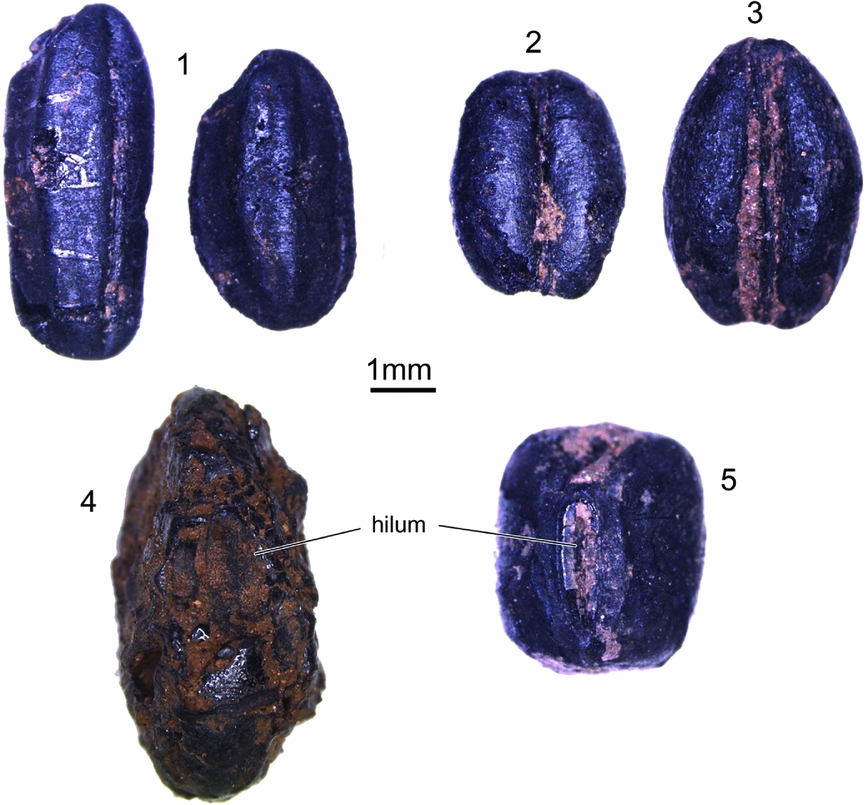
Carbonized crop remains from Yerae-dong. (1) Rice (Oryza sativa); (2) Wheat (Triticum aestivum/turgidum); (3) Barley (Hordeum vulgare); (4) Soybean (Glycine max); (5) Red bean (Vigna angularis).
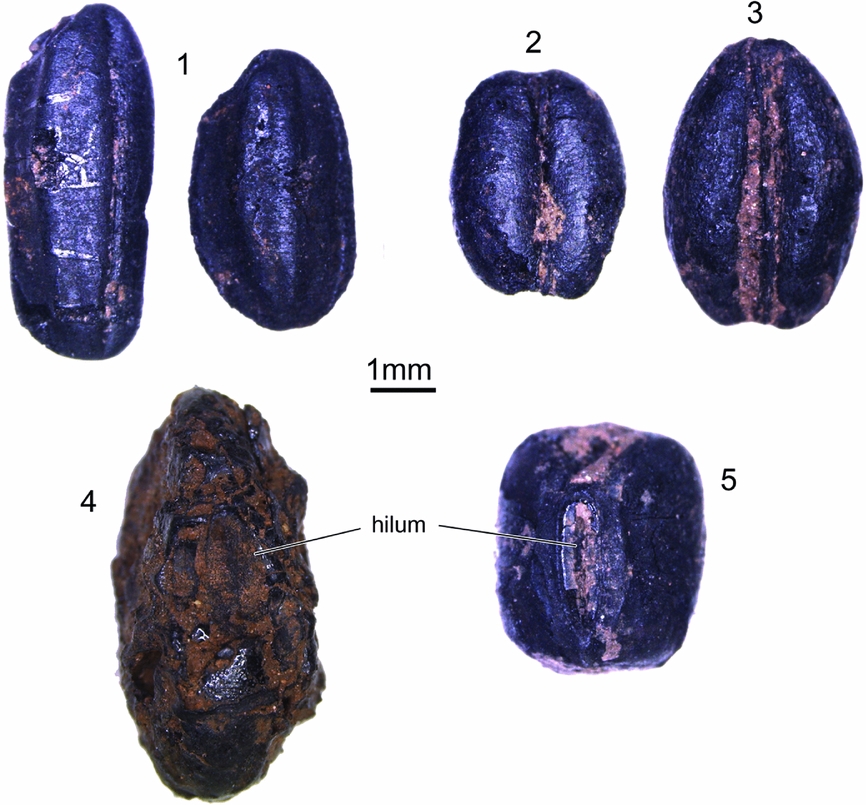
Wheat and barley grains were easily recognizable by a ventral furrow and a sunken embryo. These two taxa were separated based on quantitative and qualitative criteria that included bluntness at the apex, deepness in ventral furrows, embryo shapes, flatness in ventral faces, position of the greatest width and presence or absence of a dorsal hump (Hillman et al. Reference Hillman, Mason, de Moulins and Nesbitt1996; Jacomet Reference Jacomet2006). Archaeological wheat specimens from East Asia have been conventionally identified as bread wheat (Triticum aestivum). However, it has been pointed out that the previous identification might be overspecific and that it is difficult to differentiate between bread wheat and durum wheat (T. turgidum subsp. durum), two free-threshing varieties, based solely on seed morphology (Flad et al. Reference Flad, Li, Wu and Zhao2010; Frachetti et al. Reference Frachetti, Spengler, Fritz and Mar'yashev2010). Accordingly, we classified the current wheat remains rather conservatively as belonging to the T. aestivum/turgidum group. Soybean (Glycine max) and red bean (Vigna angularis) were identified based on positions and relative sizes of hila and shapes of the primary-leaf trace (Obata Reference Obata and Obata2008; Reference Obata2011; Yoshizaki & Tsubakisaka Reference Yoshizaki and Tsubakisaka2001). Obata (Reference Obata2011) and Obata et al. (Reference Obata, Sakamoto and Otsubo2003) have presented a detailed guideline to identify acorns (Quercus) from East Asia. However, identification down to a specific level was not attempted because the recovered acorns were fragmentary. Finally, rice grains had shallow furrows on the surface and a trace of embryo bud at the apex (Fig. 5). As with other crops, rice was represented only by seeds. No other parts of the plant were recovered.
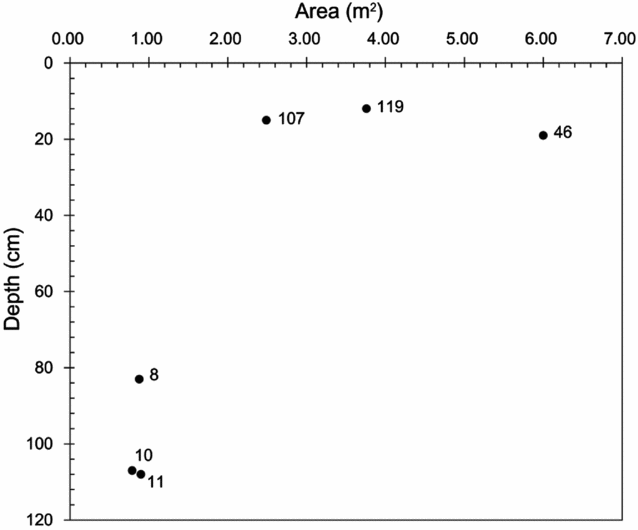
Carbonized seeds were discovered from pits with different shapes and sizes. Some pits were suggestive of feasting or communal food consumption events. Pits #46 and #107 contained carbonized remains of rice, wheat, barley and legumes. These two pits were relatively large compared to other pits, occupying areas of 6.00 and 2.49 sq. m, respectively. However, they were shallow with depths of 23 and 15 cm, respectively (Fig. 6). These pits were not associated with any other pit houses and they were located more than 20 m away from the nearest house (Fig. 4). We retrieved burnt clods, charcoal and more than a hundred potsherds from these pits. Reconstructed vessels were small bowls assumed to have been used for food serving. These pits were filled with unlayered deposits, suggesting that the pits were filled immediately after use, presumably as a deliberate act. These two pits were in sharp contrast with Pits #8, #9 and #10 which occupied small areas, were deep and contained few potsherds (Fig. 6). Given their relatively shallow depths and the dominance of small bowls, Pits #46 and #107 were unlikely to have been used for food storage. Rather, these features were indicative of food consumption and subsequent disposal. Large pit sizes and sheer numbers of potsherds implied gathering of many people, possibly from multiple households.
Size distribution of six pits that contained carbonized botanical remains.

These Yerae-dong samples were dated approximately 800 years earlier than the previously known evidence for rice cultivation on Jejudo. The earliest rice grains reported prior to this study were those from Gonae-ri and Jongdal-ri, two shell middens from the ninth century ad (Jeju National Museum Reference Museum2001). These sites belonged to the Late Tamra period according to the local chronology and post-dated the establishment of ‘Tamra’, a polity that was documented to have had diplomatic relationships with ancient states of peninsular Korea after the fifth century ad (G. Kim Reference Kim2017). The current findings, by contrast, were dated as early as the first century bc. This showed that rice cultivation was earlier than the beginning of Tamra. Most researchers believe that Tamra was a chiefdom-level society during the Early Tamra period, although it was documented as a ‘state’ in historical texts (Kang Reference Kang2017). The current botanical remains pre-dated any archaeological evidence for institutionalized social hierarchy on Jejudo, regardless of whether Tamra was a chiefdom or a state. We will discuss this issue in detail below.
Seed assemblages from Yerae-dong showed that, despite environmental differences, many crops cultivated in peninsular Korea during the Bronze Age were also grown on Jejudo by the Late Mumun period. Previous archaeobotanical research in the peninsula has shown that cultivation of millets (Setaria italica and Panicum miliaceum) and legumes (Glycine max and Vigna angularis) had begun as early as the Neolithic period (G.-A. Lee Reference Lee2011; Reference Lee2013; G.-A. Lee et al. Reference Lee, Crawford, Liu, Sasaki and Chen2011). Wheat and barley cultivation was conventionally thought to have begun in the Bronze Age. However, recent discovery of carbonized wheat at Daecheon-ri and AMS dates obtained directly from these grains have suggested that wheat cultivation had begun as early as 3000 bc during the Chulmun period (Han et al. Reference Han, Ku and Kim2014). Rice cultivation almost certainly began with the beginning of the Bronze Age around 1500 bc, judging from the carbonized rice from multiple Bronze Age sites across the Korean peninsula (Ahn Reference Ahn2010; National Research Institute of Cultural Heritage 2015).
Yerae-dong seed assemblages were similar to the Bronze Age crop composition of peninsular Korea. However, the current analysis could not resolve whether millets were cultivated in Jejudo during the Late Mumun period. Millets are likely to have been cultivated in Jejudo at the time of Yerae-dong, if not earlier, because they grow with relatively small amounts of water, adapt easily to a variety of environmental conditions and have a long history of cultivation in East Asia (G.-A. Lee Reference Lee2011; Zhao Reference Zhao2011). Millets are also among major cereal crops in contemporary Jejudo along with barley and legumes. The absence of millets in the current analysis should not be taken as evidence for a lack of millet cultivation. This issue needs to be addressed in depth in follow-up research.
Yerae-dong foodways: storage jars and grinding stones
Foodways of Yerae-dong would have comprised more than food ingredients. Other classes of artefacts involved in food storage and preparation were examined in this study to understand food-related behaviours of site residents. The cultural meaning of rice has been intensively discussed in anthropological literature (Bray Reference Bray1986; Hayden Reference Hayden2003; Hunter-Anderson et al. Reference Hunter-Anderson, Thompson and Moore1995; M. Kim Reference Kim2015; Ohnuki-Tierney Reference Ohnuki-Tierney1993). Although rice may be considered a staple food and a source of bodily energy in some modern societies, its meaning is intrinsically multifaceted. It may change depending on social contexts. Researchers have argued that rice in prehistory might have been a luxury good and a food reserved for special occasions (Hayden Reference Hayden2003; Hunter-Anderson et al. Reference Hunter-Anderson, Thompson and Moore1995). Based on ethnographic observations of Southeast Asian tribes, Hayden (Reference Hayden2003) argued that the earliest rice was a prestige item and a highly valued delicacy that was consumed in the context of competitive feasts. Rice was seen as a luxury crop cultivated in ‘trans-egalitarian’ or emergent chiefdom communities for feasts and ostentatious displays. Hunter-Anderson et al. (Reference Hunter-Anderson, Thompson and Moore1995) also demonstrated that rice was consumed as a valuable, rather than a staple, in Oceanic islands. In China, rice was an important element in the production of fermented beverage as early as c. 7000 bc (McGovern et al. Reference McGovern, Zhang and Tang2004). Provided that Yerae-dong witnessed emergent social differentiation with rice as a luxury prestige food featured in status competition and feasts, it is expected that a transition toward a non-egalitarian social structure would be demonstrated from other classes of artefacts directly related to food preparation, distribution and consumption.
The Late Mumun period, to which most Yerae-dong pit houses were dated, was known for the presence of large villages of more than 100 houses (G. Kim Reference Kim2005; J. Lee Reference Lee2016). There were six sites with at least one pit house from the Early Mumun and 12 for the Late Mumun. Among these 12 Late Mumun settlements, sites at Yerae-dong (265 pit houses), Hwasun-ri (137 pit houses) and Samyang-dong (45 pit houses) were relatively large with regard to the number of discovered houses, whereas the remaining nine sites were small-scale, with fewer than 10 houses (Jeju Cultural Heritage Institute 2013; M. Kim & Kwon Reference Kim and Kwon2010). In comparison, Samhwa was the largest Early Mumun site, with 69 pit houses, while the remaining five sites had only one, two, or four pit houses (Park Reference Park2013). Large sites existed in both the Early and Late Mumun periods. However, inter-site size variation widened in the later period with the establishment of grandiose villages. Large house numbers imply population aggregation in the Late Mumun period, although they might partly reflect long occupation spans.
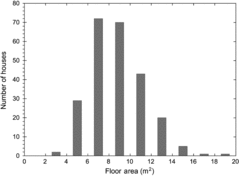
Sizes of pit houses do not necessarily mean differences among individual household units. Figure 7 presents the size distribution of 243 pit houses from Yerae-dong, excluding 22 of unknown sizes. These houses measured 8.92 sq. m on average with a standard deviation of 2.53 sq. m. Individual house sizes ranged from 3.9 to 19.5 sq. m. Despite the wide size variation and the presence of a few large houses, the house sizes conformed to a normal distribution. These houses were not separable into distinctive groups in a non-arbitrary manner.
Histogram of floor area of Yerae-dong pit houses.

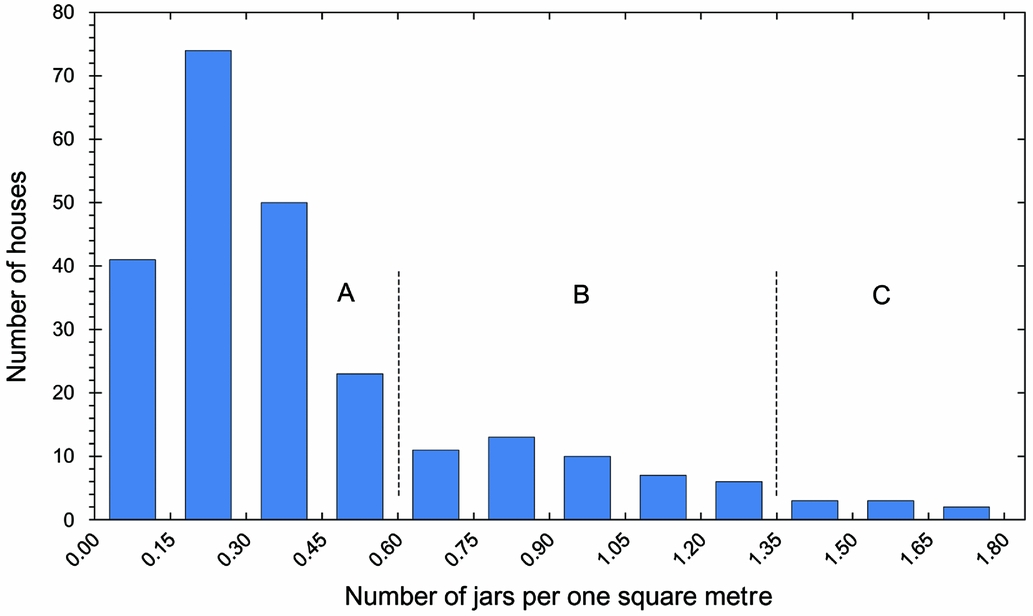
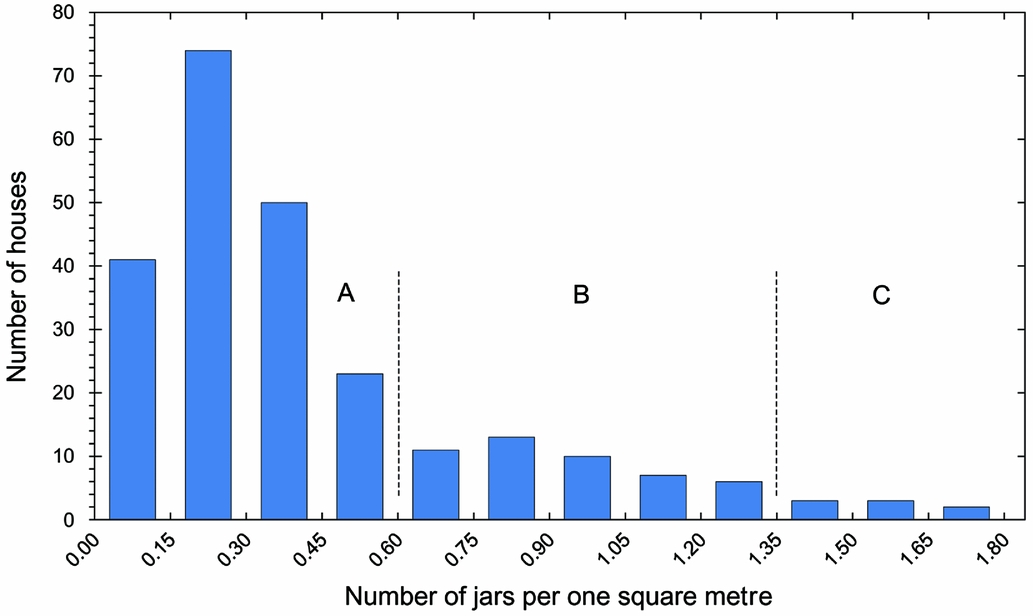
By contrast, pottery jars were not evenly distributed, with some houses containing far more of them than others. The histogram in Figure 8 shows the number of houses categorized according to the minimum number of jars discovered per square metre of a house floor. This figure only considered houses that had at least one jar with a measurable floor area (n=243). The minimum number of jars here refers to the smallest number of jars after shape reconstruction, regardless of how many potsherds were discovered in the house. The graph is heavily skewed toward the right and it can actually be considered as multimodal. In the following discussion, we will classify these houses into three groups (A, B and C) for comparison. A total of 199 (81.9 per cent) out of 243 houses had less than 0.6 jar per unit area. We classified these into Group A. There were a total of 173 jars present in Group A houses. The remaining 44 houses in Groups B and C collectively had 320 jars. Group C consisted of eight (3.3 per cent) houses and they contained a total of 56 jars. Therefore, pottery jars were not evenly distributed among houses. A few houses had far more jars than most other houses.
Histogram of the minimum number of jars per square metre of a house floor.
Most pottery jars of Yerae-dong were classified as wide-rimmed jars. They were 25 cm tall and 17 cm wide, with an average volume of 5.5 litres. Approximately four-fifths of the discovered jars could be classified as this type. The remaining jars were categorized as bowl-shaped. They were relatively small, with an average height of 15 cm, width of 10 cm and volume of 1.2 litres. In local pottery classification, these two types of jars were categorized as reddish-brown hard pottery. They became popular across Jejudo during the Late Mumun period (G. Kim Reference Kim2001). Jar fragments found in house floors rarely had fire traces. These vessels were not in direct contact with fire and it was presumed that they were used for food storage.
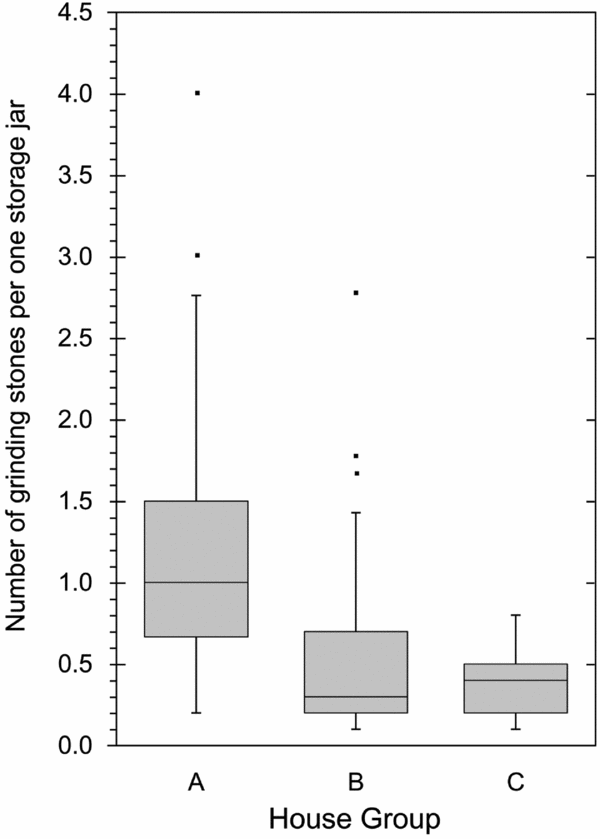
Houses with relative large numbers of clay vessels did not necessarily have equally large numbers of grinding stones. Figure 9 compares the number of grinding stones per storage jar for the three house groups. Group A houses which had small numbers of storage jars had relatively large numbers of grinding stones. However, houses in Groups B and C showed low and decreasing ratios of grinding stones. Grinding stones were the most commonly found lithic artefact type in Yerae-dong. They have different stone-tool categories, such as mortar, pestle, metate and mano. Although they came in different shapes and sizes, their primary function was assumed to be processing food resources, especially breaking nuts and dehusking cereals (M. Kim & Kwon Reference Kim and Kwon2010). They were ubiquitous tools, but their amounts were variable. Each pit house contained 0.07 to 1.45 grinding stones per square metre. The pattern in Figure 9 demonstrates that artefacts for food preparation and artefacts for storage were reversely related in Yerae-dong. Half of Group A houses had more food preparation tools than storage vessels, whereas most houses in Groups B and C showed opposite patterns. Groups B and C houses had relatively large numbers of storage vessels compared to food preparation tools.
Box plots for the number of grinding stones per storage jar in three house groups. The end of the whisker indicates the lowest or the highest number within 1.5 times the mid-spread beyond either end of the box. Outliers are shown individually.

Another observation was that these three house groups were not randomly distributed across the site (Fig. 4). Group C houses, which contained far more storage jars than grinding stones, were located at the northern side of the site, being widely spaced from each other. They did not occur in a cluster. They were at least 60 m distant from the nearest house of their own group. Group B houses were mostly located at the northern side of the site and they were absent in the southeastern or southwestern portions. Finally, Group A houses were scattered across the site area. Many of them were found on the southern side, which was characterized by a paucity of Group B and C houses.
The current investigation suggested that amounts of stored food were variable among these residents and/or that food resources were mobilized and accumulated in special-purpose contexts. Some households stored more foods than their immediate needs. Residents in the northern area had greater amounts of stored foods than did their neighbours on the southern side. Storage jar numbers in this regard served as proxy data for stored food amounts. Their differential distribution represented unequal accumulation of domestic wealth. Alternatively, Group C houses may not represent wealthy households. They may have been part of special activities, e.g. communal food storage. Provided this was the case, Yerae-dong residents accumulated foods for some purposes in a few discrete locations, while residence was scattered over a much wider area. What is implied in the latter scenario is the mobilization of resources and the presence of centralized leadership that coordinated the collection, storage and distribution of food resources. Regardless of the specific nature of Group C houses, analysis points toward a degree of social differentiation. The Yerae-dong community was different from small-scale societies in which families were self-sufficient to produce and prepare their own food. They did not have access to similar amounts of stored food. Rather, food was differentially distributed. A few household units or individuals had control over resources that were produced and prepared by people from other units.
The Late Mumun period was a time of population aggregation and Yerae-dong was at the culmination of site hierarchy. Whatever the reasons for aggregation, the change in settlement pattern would have increased the number of occasions for rituals and communal food consumption. The large site size suggests that ritualized feasts might have been held periodically in Yerae-dong. Pits with potsherds and carbonized seeds were possibly the remains of such activities. The differential distribution of storage jars and grinding stones indicates that those who stored foods were not always the ones who prepared them. Food was mobilized between households, and/or a segment of the community was able to control food that was prepared outside their domestic units. The Yerae-dong residents decided to cultivate rice with this new sociopolitical change.
Dolmens and exotic objects
There are other lines of archaeological evidence suggesting that the Late Mumun period was the time of emergent social hierarchy and status competition. First of all, dolmens began to be constructed during this period. Capstones for dolmens typically weigh over 10 tons. Therefore, more than a hundred people needed to collaborate to quarry, transport and erect these stones. The presence of dolmens is indicative of labour mobilization across multiple households and the presence of agricultural surplus amassed for ancestral worship and funeral rites. In the Korean peninsula, dolmens were constructed in c. 1000–1 bc. This burial type has been discussed in relation to the emergence of social inequality and territoriality (S. Kim Reference Kim2007; Reference Kim2015). Dolmen construction in Jejudo started no earlier than 300 bc. There are currently 157 dolmens reported across the island (Jeju National Museum Reference Museum2001; J. Kim Reference Kim2016; C. Lee Reference Lee1995). Five dolmen clusters with three to five dolmens each are located within a 10 km radius from Yerae-dong. They are believed to be contemporaneous with the site (J. Kim Reference Kim2016).
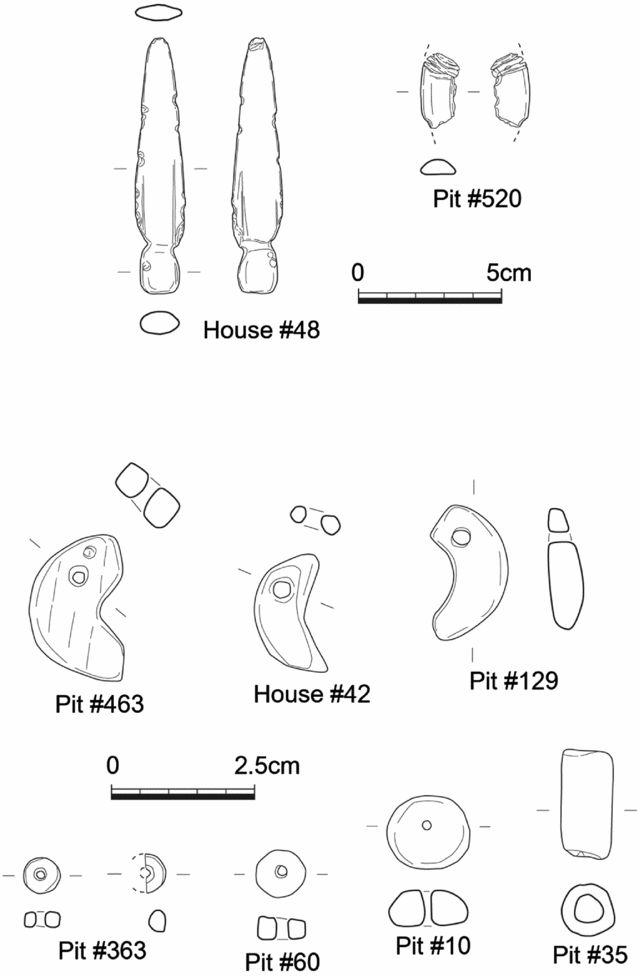
Next, exotic and foreign objects unprecedented in the region began to appear in the Late Mumun period. Many artefacts in this category were also discovered at Yerae-dong. The first example was a fragment of bronze dagger found from House #48 (Fig. 10). Bronze daggers are representative artefacts of the Bronze and Early Iron Ages of Korea. They are classified into two types based on shape: the mandolin-shaped bronze daggers dated c. 1000–300 bc found in northeastern China and Korea, and the narrow-bladed bronze daggers dated c. 500–1 bc found in southern Korea and Japan (Korean Archaeological Society 2010). The artefact found at Yerae-dong is thought to be the tip of a narrow-bladed bronze dagger. The presence of a newly made groove along the butt indicates that this object was used with a string (Jeju Cultural Heritage Institute 2013). Because there were no copper ore deposits in Jejudo, this artefact certainly originated somewhere else, most likely peninsular Korea. House #48 had a large number of storage jars per unit area (1.41; 18 jars in 13.52 sq. m) and it showed a low grinding-stone:storage-jar ratio (0.47; 18 jars and 9 grinding stones). It belonged to Group C house according to the previous examination.
Bronze ornaments and stone beads discovered at Yerae-dong.

Another exotic artefact was the broken rim of a bronze mirror discovered in Pit #520 (Fig. 10). Bronze mirrors began to be used in the Korean peninsula around 300 bc. They are classified into two types based on the elaborateness in decoration: fine-lined and coarse-lined (Korean Archaeological Society 2010). The artefact from Yerae-dong is a broken edge of the former (Jinseon Jo pers. comm., 2017). Similar to the aforementioned broken dagger tip, this object had a groove along the edge, which showed that it was used as a stringed ornament. Bronze daggers and mirrors contemporaneous with Yerae-dong artefacts were also discovered at multiple Jejudo sites such as Geumseong-ri, Jongdal-ri, Samyang-dong and Sanjihang (Jeju National Museum Reference Museum2001). These objects were possibly transferred over generations and across different groups. They were used as exotic status symbols, regardless of their original purposes.
Beads are also exotic objects. They indicate the presence of exchange networks between Jejudo and other East Asia regions. A total of eight beads made of nephrite or tuff were discovered at Yerae-dong (Fig. 10). The bead found in Pit #463 was made of nephrite. It was curved to be a comma shape and had a small hole in the upper middle part for threading. Artefacts found in House #42 and Pit #129 were made of tuff. They were also curved with holes. Other nephrite artefacts were either circular or tubular. They were all perforated, without exception. Artefacts of similar shapes and dates have been reported from Samyang-dong on the northern coast of Jejudo (Jeju National Museum Reference Museum2001; Park Reference Park2011).
Curved stone beads were found in peninsular Korea as early as the Bronze Age. Many of them from burial contexts are believed to have been symbols of prestige and power for the elites (Nelson Reference Nelson1993; Reference Nelson2017). These objects continued to be used until the Three Kingdoms period. They have been found in great numbers in burial mounds and royal mausoleums. Nelson (Reference Nelson2017) argued that curved beads used to decorate a crown or the middle part of a necklace were ancient symbols of shamanism and leadership, reflecting a tradition of the Eurasian Steppes. Curved beads began to be made in the Japanese archipelago no later than the Early Jomon period (c. 4000 bc). Its production continued until the sixth century ad (Otsubo Reference Otsubo2011). It was difficult to determine where these Yerae-dong beads originated, because artefacts of similar styles were popular across a wide region. Regardless of their exact origins, nephrite is not locally available and it is reasonable to conclude that some stone beads were imported from overseas.
Finally, the clearest evidence for interregional exchange is from the remains of bronze coins manufactured in ancient Chinese states. A number of different coins, such as Wu Zhu, Huo Quan, Da Quan Wu Shi and Huo Bu made in Xin (ad 9–23) and Eastern Han (ad 25–220) have been discovered at sites of Sanjihang and Geumseong-ri (Jeju National Museum Reference Museum2001). Coins at Sanjihang had been carefully hoarded in an underground pit along with a bronze dagger and mirror that appeared to be related to a ritual activity. Kwon (Reference Kwon2009) and C. Lee (Reference Lee1995) noted that some coins were deliberately perforated and argued that they were used as prestige items, for instance as pendants for necklaces or bracelets, rather than as currency. Although Yerae-dong did not contain any coin remains, coins from other Jejudo sites temporally overlapped with estimated dates for Yerae-dong and its carbonized seed remains.
Multiple lines of archaeological evidence suggested that the Late Mumun was a transitional period with status competition and emergent social differentiation. In light of anthropological discussion on social inequality, aspiring leaders might have followed two different strategies in pursuit of prestige and power: corporate and network (Blanton et al. Reference Blanton, Feinman, Kowalewski and Peregrine1996; Feinman Reference Feinman, Price and Feinman1995; Trubitt Reference Trubitt2000). With the corporate strategy, elites are first among equals. Individual elites are not well represented by material evidence because power is vested in groups rather than in individuals. The corporate strategy is reflected in the construction of monuments such as, potentially, dolmens in Jejudo. With the network strategy, in contrast, power is concentrated in individuals, and elites are represented by valuable items that were individually possessed. These elites controlled exchange and trade networks. The use and management of exotic materials is important for expressing social status and power. The presence of exotic valuables such as bronze daggers, mirrors, stone beads and coins is indicative of the network strategy. We argue that Yerae-dong's rice could also be taken as an example of such objects.
Discussion and conclusions
This article presents the newly discovered crop remains from Yerae-dong. We examined status-related foodways and the use of prestige items in an effort to understand the spread of rice cultivation to an insular and agriculturally marginal setting. Although the current finding provided evidence for the oldest rice in Jejudo, this should by no means lead one to conclude that this was the earliest rice. Rice cultivation may have a longer history. People might have attempted to grow rice in the preceding Early Mumun period, if not earlier. We expect that continued efforts in archaeobotanical research will provide more information on rice and prehistoric agriculture on this island. Nonetheless, the current study shows that rice cultivation pre-dated the beginning of Tamra. Historical documents give accounts of tributary trade between Tamra and ancient states in peninsular Korea. Agricultural products have been recorded as items bestowed by kings in overseas countries (Kang Reference Kang2009). These accounts are the only written records for the introduction of cultivated plants to the region. However, it is highly unlikely that this was the beginning of agriculture in this region. This study shows that Jejudo people were already aware of rice and other domesticated plants and that they endeavoured to cultivate rice despite an unfavourable environment. The evidence for status competition and social differentiation that is contemporaneous with the newly discovered rice suggests that this plant was initially introduced as a valuable or delicacy, not as a staple food.
We do not intend to classify rice or other crops into mutually exclusive symbolic categories. We do not argue that rice was always luxurious, whereas others were secular. Food's meaning is subjected to change, depending on its social and environmental contexts (Hastorf Reference Hastorf2016; Palmer & Van der Veen Reference Palmer and Van der Veen2002). Wheat, barley, legumes and acorns deposited with the rice could also have been important parts of feasting and rituals. We believe, however, that rice might have been esteemed higher than most other edible plants available to the Yerae-dong residents. As discussed above, Jejudo has unfavourable geological conditions for rice cultivation. Therefore, rice is a costly crop, whether locally produced or imported. Many dry crops are less laborious and precarious to grow. Accordingly, they are more reliable sources of calories and nutrition. Considering vegetation composition, nut-bearing trees are naturally abundant. They produce acorns that are rich in carbohydrates and fat. This means that it was unlikely that rice cultivation in prehistoric Jejudo was attempted with the purpose of producing more food matter. Rather, rice cultivation was intended to produce a ‘special’ food. Incorporating this plant into insular lifeways might have been an important part of social transformation during the Late Mumun period.
Rice has been consistently described as non-local and special in historical documents on Jejudo. According to Sejong Silrok Jiriji [Geographical Records in the Annals of King Sejong] written in 1454, rice paddies in Jejudo were 116 gyeol (approximately 1.1 sq. km), accounting for only 1.2 per cent of the farmland (Jeong Reference Jeong2014). The total amount of rice produced annually on the island was estimated to be less than 280 tons in the fifteenth century. The Jeju Pungtorok [Record of Natural Characteristics of Jeju] written by Kim Jeong in 1521 enumerated a number of items that were not available, or were difficult to acquire, on this island. These items were salt, ceramics, iron, brass and rice. Kim documented that local gentry imported rice from the mainland, whereas staple foods for the lower class were other dry crops (O. Kim Reference Kim2009). The Jeju Pungtogi [Annal of Natural Characteristics of Jeju] written by Lee Geon in 1634 documented that the district office of Jejudo annually purchased rice from the mainland, while wealthy local residents cultivated rice in dry fields. The staple food for the commoners was recorded as millets (O. Kim Reference Kim2009). Ethnographic work by Japanese anthropologist Seiichi Izumi in rural Jejudo villages in the 1930s documented that rice was a luxury food. It was eaten only to celebrate the completion of communal work, or to serve special guests, whereas staple crops were barley and millets (J. Kim Reference Kim2014). The extant historic texts on Jejudo, albeit few in number, consistently state that rice was a rare and highly prized food, demonstrating that people had access to rice in a manner directly proportional to their political and economic power.
In summary, Yerae-dong is one of the earliest rice-cultivation sites. It illustrates efforts of people on a volcanic island to incorporate rice into their lifeways. The Late Mumun period (c. 500–1 bc) was a time of social transformation. The Yerae-dong residents had differential economic wealth and witnessed a surge of prestige items that were of external origins. Ancient communities in Jejudo were in the process of being organized into ones with a non-egalitarian ethos. They eventually became a stratified society in the subsequent Early Tamra period (c. ad 1–500). In this new social setting, rice held importance beyond subsistence. It was a political asset for emergent elites. Although many questions remain unresolved, this study expands our understanding of the diffusion of rice to marginal and insular environments by pushing the absolute date for rice a few centuries back into the past and contextualizing the findings within a new sociopolitical context.
Acknowledgements
This work was supported by the Ministry of Education of the Republic of Korea and the National Research Foundation of Korea (NRF-2017S1A5A2A01024541).