Background
Rhabdomyomas are the most common benign paediatric cardiac tumours. In about 50% of cases, rhabdomyomas are associated with tuberous sclerosis. Reference Serikawa, Takahashi and Kikuchi1 Rhabdomyomas are most frequently haemodynamically insignificant. However, clinical symptoms can occur when tumours obstruct cardiac flow, impact myocardial function, and/or are associated with cardiac arrhythmias. The dysrhythmias that have been reported include premature atrial and ventricular contractions, Wolff-Parkinson-White syndrome (ventricular pre-excitation), conduction abnormalities (prolonged PR interval, second- and third-degree atrioventricular block and bundle branch block), and brady or tachyarrhythmias. Reference Ide, Miyoshi and Katsuragi2,Reference Wacker-Gussmann, Strasburger, Cuneo, Wiggins, Gotteiner and Wakai3 Most cardiac rhabdomyomas resolve over time, and with tumour regression, electrocardiographic abnormalities also typically resolve over time. A conservative approach is typically recommended, with intervention indicated only in cases of severe haemodynamic compromise or persistent arrhythmia. Reference Yıldırım, Aypar and Aydın4,Reference Weiland, Bonello and Hill5 We report the case of a child with cardiac rhabdomyomas and arrhythmia who started on sirolimus therapy as a neonate and experienced tumour regression but experienced recurrence of the tumour and conduction abnormality after therapy withdrawal.
Case
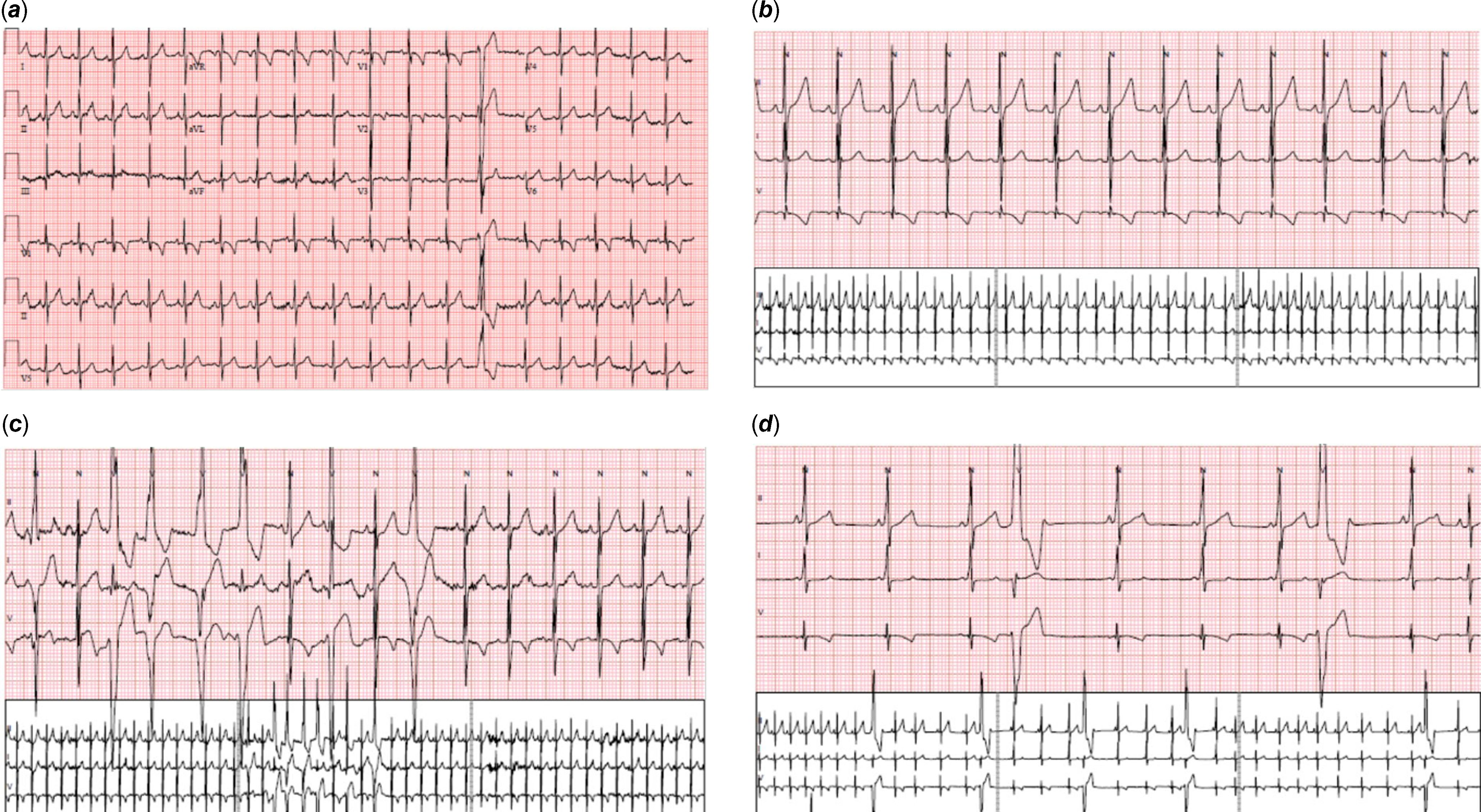
Multiple large cardiac rhabdomyomas, atrial ectopy and non-sustained tachyarrhythmias were diagnosed in a 29-week fetus by fetal echocardiography. Transplacental sirolimus was considered but not administered. Postdelivery, echocardiography on the infant confirmed multiple homogenous rhabdomyomas without inflow or outflow obstruction. The largest were in the anterior wall/outlet septum measuring 2.2 × 1.7 cm, the posterobasal septum measuring 1.2 × 1.1 cm, and in the right ventricular apex measuring 0.7 × 0.5 cm (Figure 1a). The initial electrocardiogram was significant for ventricular pre-excitation (Figure 2a). Due to the large tumour size, the ventricular pre-excitation on ECG, and the history of fetal arrhythmias, we initiated treatment with Sirolimus at 0.3 mg (0.1 mg/kg) daily, with a steady state target level of 5–15 ng/ml for tumour regression and propranolol 2.2 mg/kg/day for arrhythmia suppression. Neurology and Genetics consultations confirmed the diagnosis of tuberous sclerosis based on the presence of 2 clinical criteria (ash leaf spots, cardiac rhabdomyomas).
( a )–( d ): Transthoracic echo images (PSAX at the level of the base of the heart) showing cardiac rhabdomyoma on the posterior basal leaflet of tricuspid valve and RVOT, progression through initial resolution, recurrence with medication cessation and progressive resolution following recommencement of Sirolimus. ( a ): Immediate postnatal. ( b ) 3 months. ( c ): 5 months. ( d ): 12 months.

( a )–( d ): Showing evidence of manifest pre-excitation, subsequent resolution and re-emergence of pre-excitation and Ventricular tachycardia and final resolution with recommencement of therapy. ( a ): Immediate postnatal. ( b ): 3 months. ( c ): 8 months. ( d ): 15 months.

Follow-up at 12 weeks after treatment initiation showed complete tumour regression by echocardiography (Figure 1b) with complete resolution of both ventricular pre-excitation and atrial arrhythmias by ECG and Holter monitoring (Figure 2b). At the mother’s request, sirolimus and propranolol were discontinued. However, 2 months later, follow-up echocardiography showed recurrence of multiple rhabdomyomas [posterior to tricuspid valve measured (1.5 × 0.93 cm); right ventricular basal septum (0.8 x 0.6 cm); tricuspid chordal apparatus (0.4 × 0.3 cm) and anterior to the right ventricular outflow tract 1.8 × 2 cm] (Figure 1c). ECG showed recurrence of ventricular pre-excitation. The mother declined to restart sirolimus and propranolol due to her concerns of behavioural alteration. The infant presented 3 months later with seizure, and telemetry showed evidence of her prior supraventricular tachycardia and new ventricular tachycardia (Figure 2c). An echocardiogram showed unchanged rhabdomyoma size. During this admission, both sirolimus and propranolol were restarted with suppression of arrhythmias 12 weeks after therapy initiation.
A follow-up visit 3 months later showed a significant reduction in the rhabdomyoma size, with the largest mass measuring 1.4 × 1.1 cm compared to prior 1.8 × 2 cm near the right ventricular outflow tract (RVOT) (Figure 1d). Additionally, the 24-hour Holter monitor did not show any evidence of ventricular tachycardia (Figure 2d).
Discussion
Typically, cardiac rhabdomyomas and associated conduction abnormalities and arrhythmias exhibit spontaneous regression. Approximately 50% will resolve within the first year of life. With mass effect or significant arrhythmias, treatment is warranted. Recently, Mammalian target of rapamycin (mTOR) inhibitors, including sirolimus, have been reported as a reasonable treatment alternative to surgical resection. MTOR inhibitors act by inhibiting the mTOR pathway. Tuberous sclerosis is characterised by dysregulated signalling through the mTOR pathway. Dysregulated mTOR signalling has been implicated in the development of many cancers, including rhabdomyomas. Sirolimus exerts its inhibitory effects on mTOR-regulated processes by reducing the phosphorylation of downstream mTOR effectors. This inhibitory effect disrupts the translation of messenger RNA encoding pivotal proteins that are involved in cell cycle regulation, glycolytic activity, angiogenesis, cell size control, and cellular growth. Reference Curatolo and Moavero6
This patient showed a remarkable regrowth of her cardiac rhabdomyomas within a few weeks of cessation of sirolimus therapy, with some suggestion of tumour migration (posterobasal mass) across the AV groove (Figure 1a–d). Based on our review of multiple images, these new tumours were deemed to represent regrowth of the original tumours. The rapidity of the tumour recurrence and the return of her cardiac conduction abnormality, including new onset of ventricular tachycardia, highlight the need for continued therapy for tumour suppression. Different reports have suggested variable durations of treatment for complete resolution of cardiac rhabdomyoma and arrhythmias, with no consensus on therapy duration. Based on our experience, consistent medication use for at least six months may be necessary, especially in cases involving fetal and postnatal arrhythmias and conduction abnormalities. Additionally, close follow-up is warranted for serial echocardiography and cardiac rhythm monitoring to determine whether complete resolution or recurrence has occurred.
Arrhythmias in cardiac rhabdomyomas are common. Several reports Reference Ide, Miyoshi and Katsuragi2,Reference Wacker-Gussmann, Strasburger, Cuneo, Wiggins, Gotteiner and Wakai3,Reference Janson, Bhupathiraju, Talathi and Glotzbach7 suggest that rhabdomyomas may act as a macroscopic accessory pathway, thus explaining the strong association with Wolff-Parkinson White syndrome, paroxysmal supraventricular tachycardia, and the ventricular arrhythmias that our patient experienced. Rapid resolution of both pre-excitation and ventricular arrhythmias with sirolimus therapy supports a directly causative relationship between the tumour burden and the arrhythmias. To our knowledge, there is a paucity of data on the role of sirolimus in treatment. Our report further contributes to the limited knowledge base on its therapeutic indication. Indeed, our patient experienced arrhythmia resolution long before we saw evidence of tumour regression. This may reflect early downregulation of the mTOR pathway, with a cellular effect on conduction. However, it is also possible that early arrhythmia suppression was due to concomitant use of propranolol.
Conclusion
A few studies have described regrowth of cardiac rhabdomyomas after cessation of sirolimus therapy, but to a lesser scale than in this case. Our report is the first to report a much larger regrowth with recurrence of a conduction abnormality and recurrent arrhythmias. While it is true that cardiac rhabdomyomas usually regress spontaneously within a few years, it is equally important to identify a subset that might need the initiation of medical therapies or the prolongation of therapies to avoid the significant regrowth of tumours and associated arrhythmias that can significantly increase patient morbidity and mortality. Based on our experience, we recommend continuing sirolimus therapy for at least six months if well tolerated, with close monitoring during discontinuation.
Acknowledgements
None.
Financial support
This research received no specific grant from any funding agency, commercial, or not-for-profit sector.
Competing interests
None.