

Growing Native concerns and government requirements in many American and Canadian jurisdictions have increasingly constrained the archaeological investigation of ancient Native American/First Nation mortuary features. Both countries have federal regulations for discoveries on federal and tribal lands, while finds in other areas are generally dealt with under a plethora of state and provincial policies (Ross-Stallings Reference Ross-Stallings, Chacon and Dye2007:348). The question underlying all of these sets of “best practices” is whether to protect the feature from further disturbance, or to excavate it and move the bones and artifacts to a more secure location (often a reburial site).
A decision generally involves negotiations among the affected parties. These will include a Native group acting as the representative of the deceased Ancestors, the landowner, and a government representative. In some cases in which the feature is on public land, the government representative will also be acting as the landowner. An archaeologist may act in an advisory role.
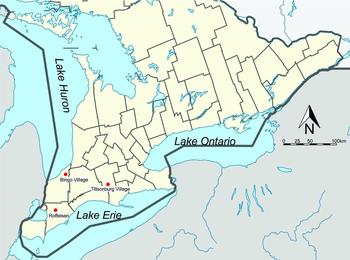
Some understanding of the scope of the problem and the nature of the features will be necessary if the negotiating parties are to arrive at an informed decision. Ideally, this understanding should be achieved without any further disturbance of the remains. In Ontario, a set of informal practices has evolved to accomplish this (e.g., Conolly et al. Reference Conolly, Dillane, Dougherty, Elaschuk, Csenkey, Wagner and Williams2014; Fontaine Reference Fontaine2004a; Molto et al. Reference Molto, Spence and Fox1986). However, their effectiveness in providing accurate and comprehensive information, thus enabling the negotiating parties to reach a satisfactory resolution and the archaeologists to correctly interpret the site, has not yet been adequately tested. To remedy this, the reliability of the method is evaluated here with data from three sites in southwestern Ontario (Figure 1).
Map of southwestern Ontario with archaeological sites (map by Matthew Beaudoin).

THE CONCERNS OF THE STAKEHOLDERS
In general, the stakeholders are much the same from one jurisdiction to another: Natives, landowners, government, and archaeologists. However, there will be variation in the roles that they play in the negotiations, the outcomes that they desire, and the information that they need to make their decisions.
Natives
Native representatives usually prefer, if possible, to avoid any excavation of burials. To that end they will want to know the severity of the risk to the features and the distribution of the features across the area to be impacted. If exhumation seems likely, they will also want information on the nature of the features, to evaluate the scale of disturbance, and, in many cases, to determine what rituals to conduct when the feature is being either exhumed or covered up and preserved. Another important concern is that all the human bone on a site, not just the formal burials, be identified and recovered for reburial.
In one Ontario case, tribal Elders insisted that the male and female skeletons be separated if they co-occur in features, and that they be reburied in separate features. In another case, Elders wanted subadults separated from adults, and adult males separated from adult females. There were special rituals for each category of person. A set of best practices for the initial assessment of a mortuary feature would thus include an evaluation of the number of individuals in the feature and their ages and sexes. Native groups are also concerned with the identification and recovery for reburial of any grave accompaniments in the feature.
Landowners
The landowner will, like Native representatives, be concerned with the extent and distribution of mortuary features in the area that is threatened. However, that concern will relate more to an understanding of the time and cost of exhumations and, if the features are to be left undisturbed, the extent of the area that will be left open for the landowner's use. With respect to each feature, some idea of the complexity (number and completeness of individuals) might be desired, again with an eye to time and costs. For example, a single primary burial can be excavated within a day while even a small multiple secondary burial may require several days.
Government
The role of government agencies will vary from one jurisdiction to another. In Ontario, the government representative, the Registrar of Cemeteries, is responsible for identifying the landowner and an appropriate Native community and for then seeing that the negotiations take place and that their outcome conforms to legal requirements. The Registrar is required to know “the cultural affiliation of the deceased” and “the style and manner in which the remains are interred” (Ministry of Consumer Services 1998). This information can usually be acquired with a proper initial assessment of the feature.
Archaeologists
As noted above, the role of the archaeologist in the negotiations is often just to supply information to the negotiating parties. This will entail arranging for an initial assessment of the features. That assessment, it is argued here, should be conducted by a bioarchaeologist, a practice that has become more common (but not yet required) in Ontario. If the negotiators decide on exhumation, that too is best done by a bioarchaeologist. However, the archaeologist will also have an additional responsibility: the development of a correct and comprehensive interpretation of the site. If no exhumation is permitted, or if the bone is too fragile to survive excavation, that interpretation will be dependent upon the quality of the initial assessments.
THE INITIAL ASSESSMENT
When human remains are encountered in Ontario, whether on an archaeological site, in a development, or in somebody's garden, police must be notified and a coroner's investigation is launched. If the find is not of forensic concern, responsibility for it is assumed by the Registrar of Cemeteries, who will identify and contact the negotiating parties. An archaeologist will usually be asked to determine the extent and nature of the find, which will involve identifying the number and distribution of possible mortuary features.
At this point, an initial assessment of each feature should be made by a bioarchaeologist (e.g., Ross-Stallings Reference Ross-Stallings, Chacon and Dye2007:344–346). Any soil still on top of the feature is removed to reveal the uppermost undisturbed level, usually at the topsoil-subsoil interface. This surface is then carefully cleaned to expose each skeletal element in situ without displacing any of them (Ubelaker Reference Ubelaker1978:11–13). It is then possible for the bioarchaeologist to assess the feature, to make sure that it is indeed a mortuary feature, and to learn something of its nature.
One major question involves the type of mortuary feature. Most of the Late Woodland peoples of Ontario, and many in other regions, practiced a system of primary to secondary burial (Spence Reference Spence1994; Ubelaker Reference Ubelaker1978:19–21; Williamson and Steiss Reference Williamson, Steiss, Williamson and Pfeiffer2003). This produces three types of mortuary feature in the archaeological record: the primary burial (which was often incompletely exhumed); the secondary burial (which is usually the disarticulated and incomplete interment of multiple individuals); and the “sorted deposit” (Spence Reference Spence2011a). The sorted deposit is a feature containing the skeletal elements that had been exhumed from a primary burial but that had not been selected for inclusion in the secondary burial. Sorted deposits can be difficult to identify because disarticulated smaller elements like ribs and the bones of the hands and feet typically dominate the assemblage. The failure to recognize these features, which are sometimes identified only later during laboratory analysis, may lead to an underestimation of the extent of mortuary features in the area. They also play an important role in archaeological interpretation. At the Tillsonburg Village site, for example, the sorted deposits of adults tended to be in open areas rather than inside the longhouses, suggesting participation in the mortuary rituals by a large proportion of the villagers, an important indication of the level of social cohesion in the community. Subadult primary burials and sorted deposits, on the other hand, were usually in the longhouses, pointing to differential treatment of adults and subadults and to a more socially limited participation in the subadult rituals (Spence Reference Spence2011a).
Other components of the initial assessment that are often requested are the Minimum Number of Individuals (MNI) represented in the feature and their ages and sexes. Age and sex determination, done in the field and with limited time available, usually follows a few well-known sources (e.g., Buikstra and Ubelaker Reference Buikstra and Ubelaker1994). Also of concern in some cases are the presence and nature of any nonskeletal inclusions, like grave goods or the debris from mortuary feasts.
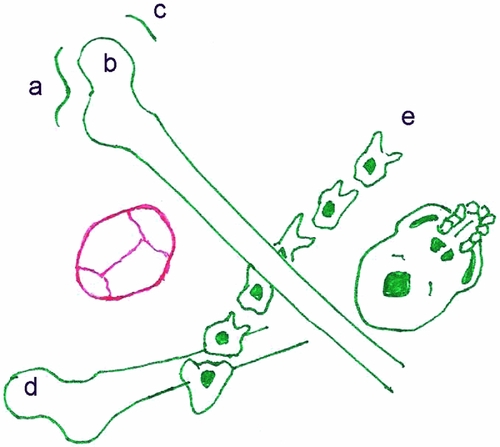
Figure 2 illustrates an example of an initial assessment. Feature 352 of the Bingo Village site was determined in the initial assessment to be the secondary burial of two adult females. However, subsequent full excavation of the feature revealed more skeletal elements and showed that, although the feature was indeed the secondary burial of two people, one of them was actually a subadult of unknown sex. There were also grave goods in the pit that had not been visible at the level of the initial assessment.
Plan sketch of Bingo Village secondary burial F352, at level of initial assessment. Green: elements of adult female. Red: cranium of subadult, mistakenly identified as adult female. (a) left innominate; (b) left femur; (c) right innominate; (d) right femur; (e) articulated segment of vertebral column (plan by Jean Spence). Not to scale.

The decisions of the negotiators often depend on the information provided by these initial assessments. But is that information reliable enough to bear that responsibility? Also, will it be sufficient for an archaeological analysis of the site's mortuary program? The example of Feature 352 suggests that the method may have some deficiencies. The question of the accuracy and reliability of initial assessments should be resolved before this approach is adopted as best practice and recommended to investigators in other jurisdictions.
TESTING THE RELIABILITY OF INITIAL ASSESSMENTS
Recently the opportunity has arisen at three Late Woodland sites in Ontario to test the reliability of the initial assessments (Figure 1). Based in part on the results of the initial assessments, the negotiating parties in all three cases decided to proceed with full exhumation followed by reburial. This allows for a comparison between the initial assessments and the information revealed by the exhumations. I, as the project bioarchaeologist, did the initial assessments, exhumations, and analyses for the Tillsonburg Village and Bingo Village sites. The initial assessment for the Roffelsen site was done by the site archaeologist, while I did the exhumation and analysis. There are thus no concerns about varying levels of experience or interobserver error at the first two sites, but these should be taken into consideration for Roffelsen. In the Tillsonburg Village and Bingo Village cases, observations of the skeletal materials were permitted during the exhumation process, after which they were moved to storage to await the reburial ceremony. In the Roffelsen case, further laboratory analysis of the skeletal material was allowed.
The comparisons will be framed here in terms of the identification of mortuary features across the area to be impacted and of four basic aspects of each feature: its type (primary, secondary, or sorted deposit); the number of people represented in it; the age and biological sex of each individual; and the presence of feature inclusions, which may be grave goods, tools used to prepare the bodies, or remnants from a mortuary feast.
Case Study 1: Tillsonburg Village
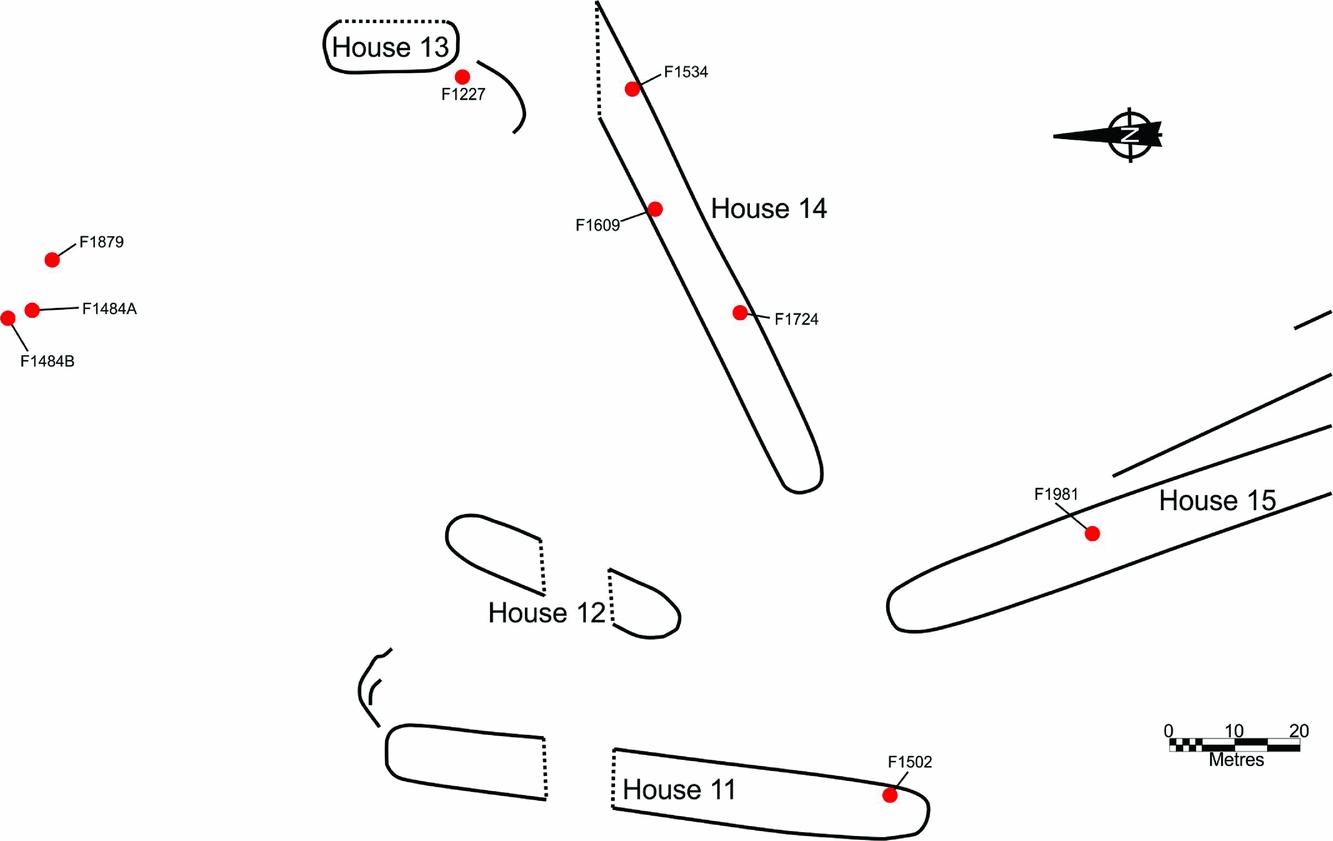
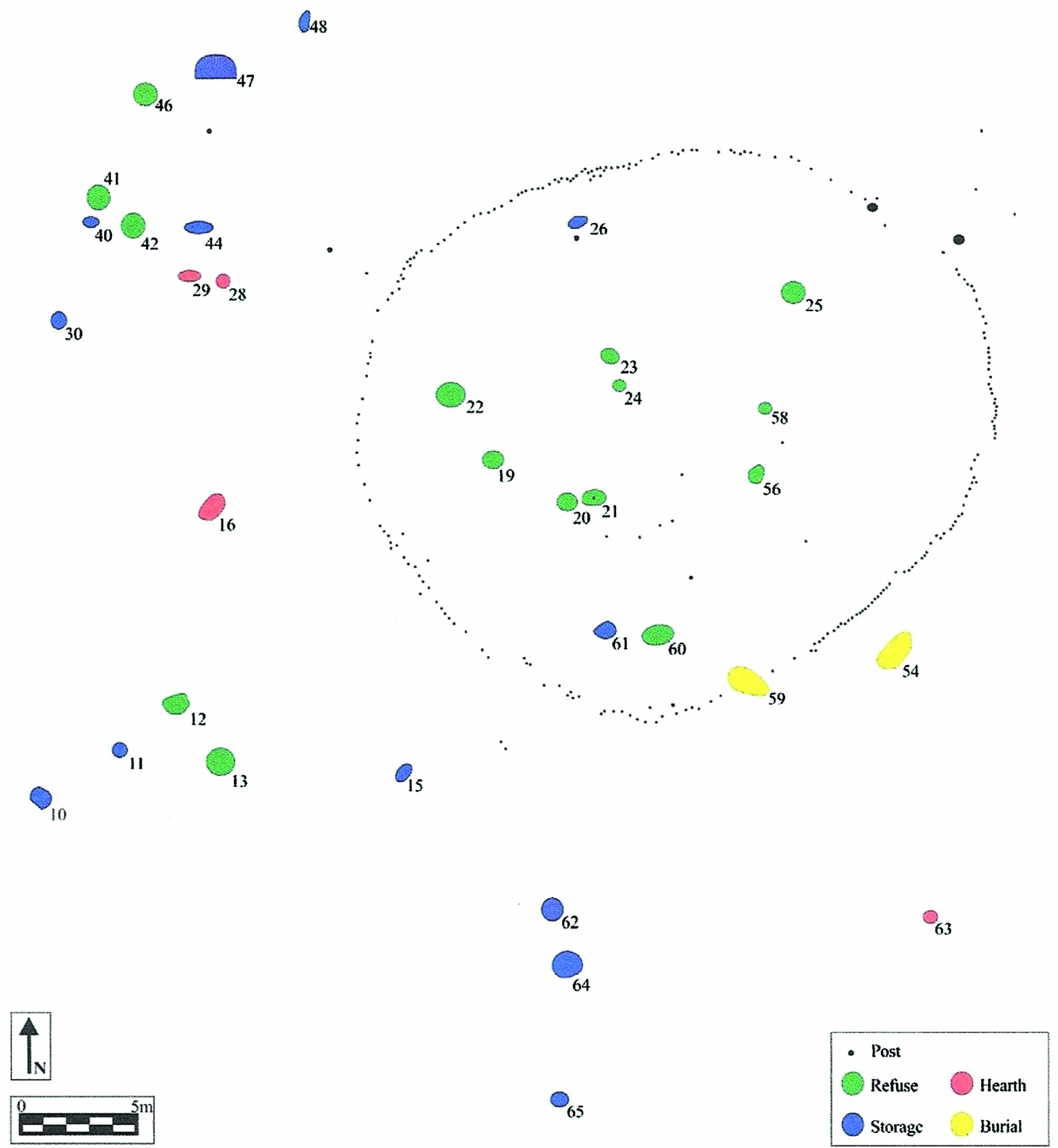
Tillsonburg Village was a fourteenth-century Middle Ontario Iroquoian village (Figure 1; Spence Reference Spence2011a; Timmins Reference Timmins, Miroff and Knapp2009). Part of the site was excavated in 2000–2001, the rest in 2008. The 2008 work led to the discovery of nine mortuary features (Figure 3; Spence Reference Spence2011a). All but one received an initial assessment after the topsoil had been removed and the uppermost bones had been exposed. The one exception, sorted deposit F1609, was recognized as a mortuary feature only after it had been fully excavated. Nevertheless, the skeletal material excavated from the feature could still be analyzed at the time of the initial assessments of the other features, so that information was also made available to the stakeholders. The question of disposition was then negotiated between the landowner and Six Nations, the Native community that agreed to act on behalf of the deceased. The decision was to exhume the human remains and rebury them in a nearby cemetery that had been created for the skeletal remains found in the earlier 2000–2001 field season.
Plan of Tillsonburg Village with mortuary features (plan by Matthew Beaudoin).

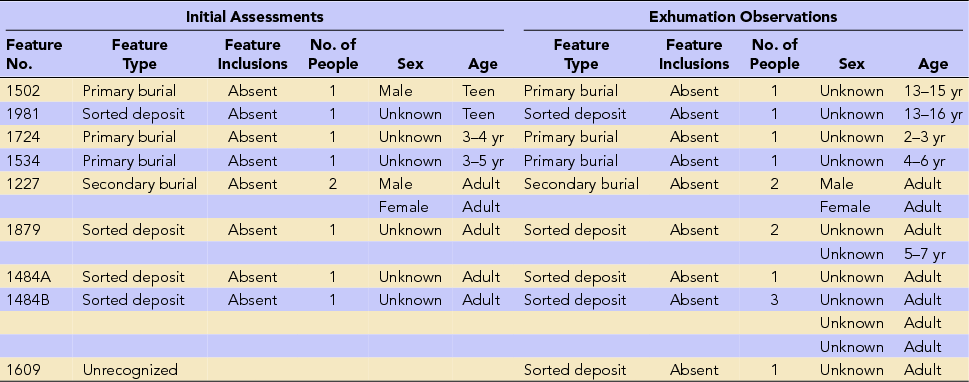
Analysis of the bones was restricted to the time of their excavation. This brief interval allowed for the determination of the number of individuals and the age and sex of each (Table 1). It was also possible to look for some of the more obvious morphological and pathological features, such as persisting metopic suture, healed or perimortem fractures, and severe pathological conditions such as advanced tuberculosis or treponemal infection.
Mortuary Features of Tillsonburg Village.

For the most part, the initial assessments compare favorably with the results from the full excavation (Table 1). The feature type had been properly identified for all features, albeit belatedly in the case of F1609. More specific ages were assigned to the subadults, but these were within or overlapped the initial assignments. However, the initial sex determination of male in F1502 was withdrawn after a closer examination of the bones showed sex to be indeterminate. Also, F1879 had one more individual added to it, a subadult represented only by an unfused humerus head, and F1484B was found to contain the incomplete remains of three, not just one, adults. Importantly, the Registrar of Cemeteries learned the number and distribution of mortuary features (including F1609) and their “style and manner” of interment with the initial assessment.
Case Study 2: Bingo Village
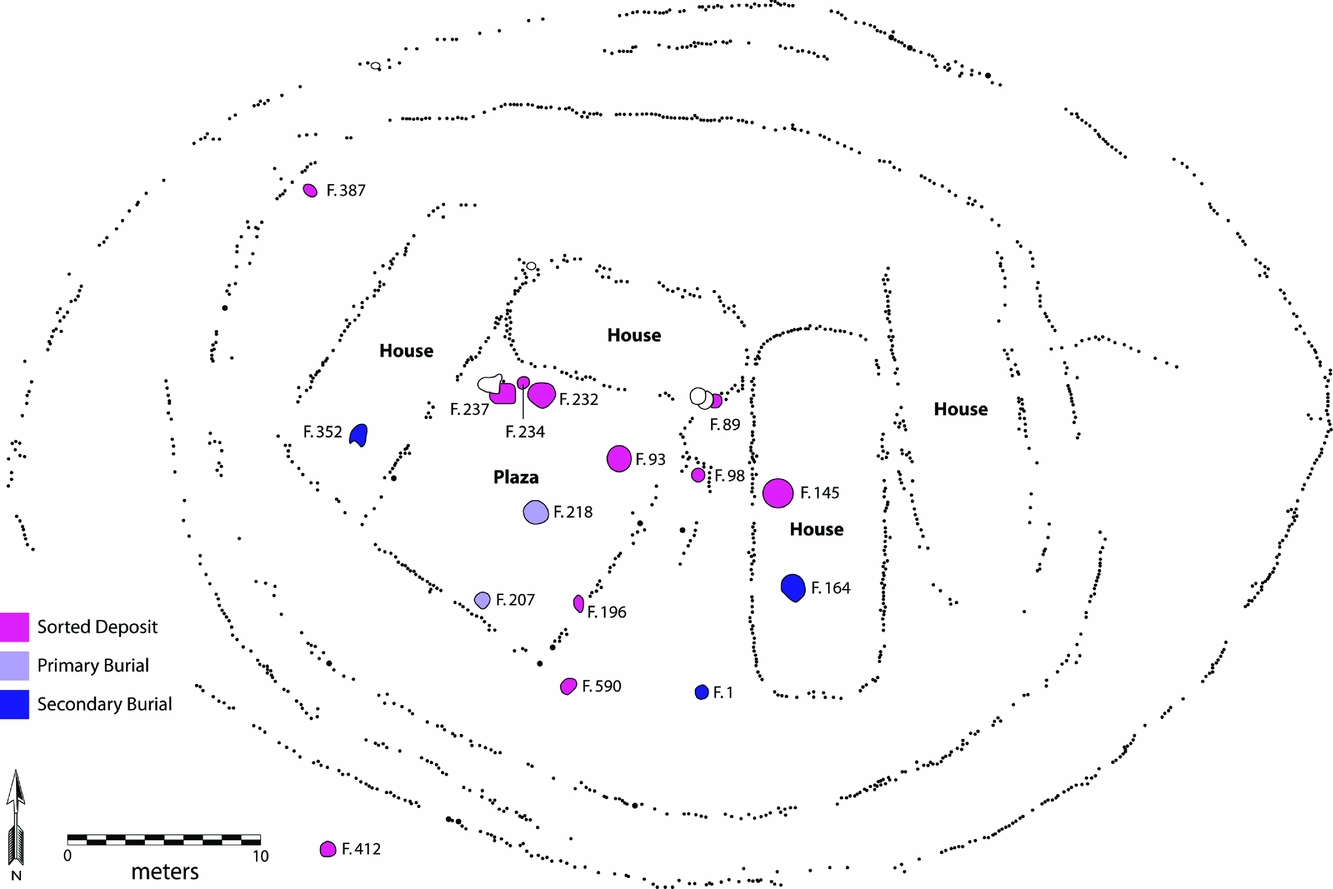
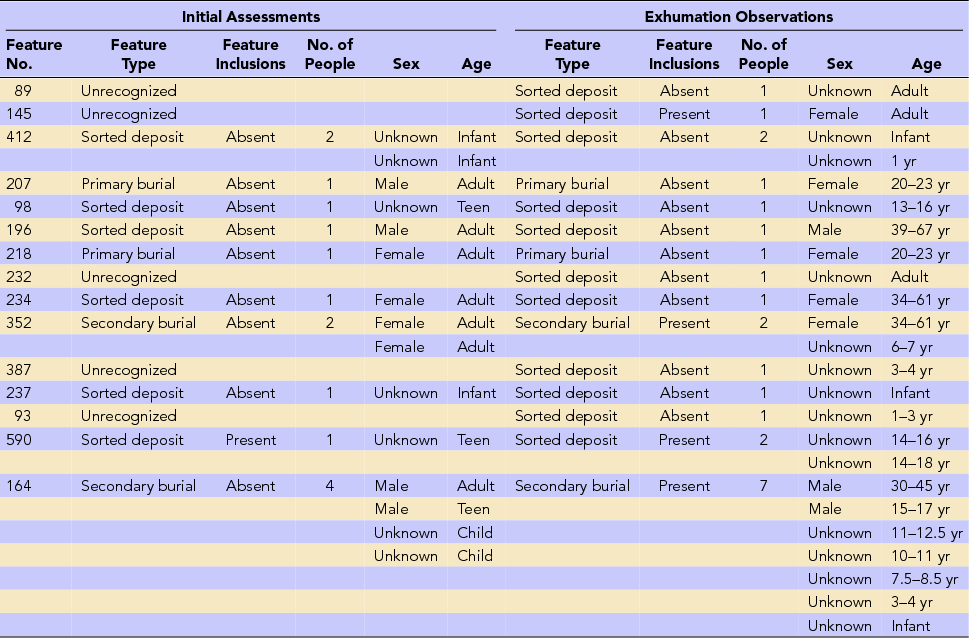
Bingo Village was a palisaded village of the Younge phase of the Western Basin tradition, dating to AD 1150–1250 (Figure 1). The site was completely excavated, leading ultimately to the identification of 16 mortuary features (Figure 4; Table 2; Spence Reference Spence2011b). However, one secondary burial (Feature 1) of at least three people was moved intact to a new cemetery after the initial assessment, with no further exploration, so it will not be considered further here. Two others, both sorted deposits (F89, F232), were recognized only during the later laboratory analysis of faunal material, and another three sorted deposits (F93, F145, F387) were identified in the field but only after their complete excavation. The latter three features could still be characterized and that information made available to the negotiating parties. The remaining 10 features had been recognized earlier and included in the initial assessments and were later fully excavated after the landowner and the Native community, the Chippewa of Kettle and Stony Point, agreed that they should be exhumed and moved to a nearby newly established cemetery (Table 2).
Plan of Bingo Village with mortuary features (plan by Chris Watts).

Mortuary Features at Bingo Village.

Observations were possible during the exhumation process, before the skeletal materials were moved to storage to await the reburial event. The parameters were thus much the same as in the Tillsonburg Village case, although the circumstances did allow for somewhat more thorough analysis in this case. The on-site examination during the exhumations focused on the type of feature, the number of individuals, their age and sex, mortuary treatment, and health indicators.
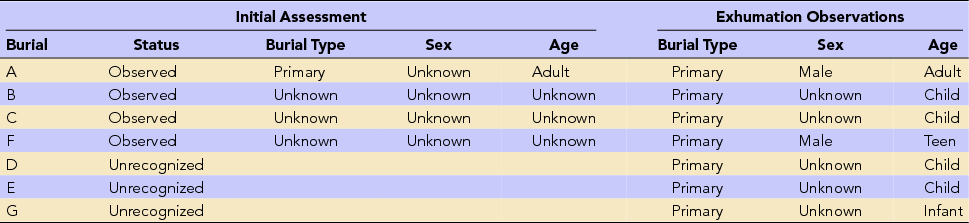
The type of feature was found to have been correctly identified in the initial assessments for all the mortuary features except for the five that had been recognized only later; analysis of the contents of these five showed that they were all sorted deposits. However, several other aspects of the initial assessments had to be revised in the light of the exhumation observations (Table 2). In some cases, these revisions were just minor refinements of the age identifications, but in others there were more significant qualifications of the original findings. The sex of F207 was changed from male to female, and the two adult females of F352 became one female and one subadult (Figure 2). The one teenager of F590 was found to be two teenagers, and the four individuals of F164 grew to seven individuals with the addition of three more subadults.
A number of other aspects of the features became apparent with their full excavation (Spence Reference Spence2011b). Several of the subadults had disks excised from their crania, and one had a drilled cranial hole, both common features of Western Basin Younge phase burials (Greenman Reference Greenman1937; Spence et al. Reference Spence, Williams and Wheeler2014). There were inclusions in four features, consisting of artifacts in both of the secondary burials and one sorted deposit, and of masses of faunal material in two sorted deposits that may have been the remains of associated feasts. Skeletal elements from some features bore cutmarks that helped to reveal aspects of the mortuary processing. Also, the only two primary burials, only 4 m apart, proved to both be young adult females with the early stages of ankylosing spondylitis (Ortner and Putschar Reference Ortner and Putschar1985:411–415). This pathological condition has a strong genetic component, suggesting that the two women may have been related (Waldron Reference Waldron2009:58).
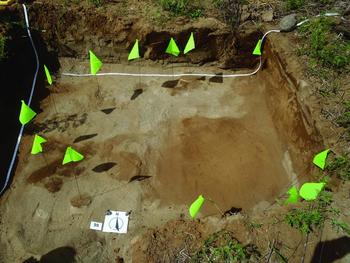
Most surprising, however, was the identification of sets of postholes encircling several of the features (Figure 5). These enclosures had not been visible earlier because of the practice, required by the Registrar of Cemeteries, of closing down excavation in the immediate vicinity of any mortuary feature as soon as it is identified. Full excavation was necessary to reveal them. Similar features have not been found in other sites, so they represent a new aspect of Younge phase mortuary ceremonialism.
Enclosure around Bingo Village Feature 98 sorted deposit. Flags mark postholes (photograph by Brandy George).

The results of the exhumations in this case led to some significant revisions of the original assessments. However, these discrepancies in the initial assessments would not have altered the ultimate outcome, and excavation would have proceeded as it did. The landowner would still have wanted the site cleared for his use. The Registrar of Cemeteries was given correct identifications of the feature types, at least for those features that were recognized and for the three that had already been excavated. The First Nation representatives were very interested in the additional data and the further insights provided by those data, but they had already decided to exhume the burials based on the more limited information provided by the initial assessments. The major loss would have been to the archaeologists, who would have had a considerably impoverished understanding of the site if the exhumations had not taken place or if observations had not been allowed during the process.
The main flaw in the initial assessment was the failure to identify five of the sorted deposits from the surface evidence. However, three of them were belatedly recognized after they had been excavated so that they could still be characterized and taken into consideration in the negotiations between the landowner and the First Nation. The other two were identified only during later laboratory analyses. Nevertheless, given their location and nature (Figure 4), their earlier recognition would not have seriously altered the apparent scope of the work.
Case Study 3: Roffelsen
Unlike the two previous cases, the Younge phase Roffelsen site (Figures 1, 6) was a special mortuary site, not a village (Grant Reference Grant2016; Spence et al. Reference Spence, Williams and Wheeler2014). The initial assessment by the archaeologist indicated the presence of four individuals in a single pit (Feature 59) set into the palisade line. One was identified as an articulated adult, but the ages and condition of the others were not clear (Table 3).
Plan of Roffelsen site with burial (Feature 59) in palisade line (plan by Adria Grant).

The Roffelsen Mortuary Feature.

In this case, the landowner and the responsible Native community, the Bkejwanong First Nation of Walpole Island, decided not only to have the burials exhumed for reburial in a safer location but also to allow time for laboratory analysis and to allow samples to be taken from the bones for isotopic and genetic analysis. This was a significantly different level of analysis than was permitted at the other sites, and it led to a series of striking findings (Spence et al. Reference Spence, Williams and Wheeler2014).
The burial was indeed a primary burial, but the archaeologist's assessment missed several points (Table 3). The numerous cutmarks indicated that all of the individuals had been stripped of virtually all their soft tissues, leaving only articulated skeletons. This defleshing was far more thorough than the defleshing seen in some of the Bingo Village individuals. Three more individuals were added to the initial count, two children and one infant, for a total of seven. Six of these had excised cranial disks and four had drilled cranial holes, like some of the Bingo Village individuals. All of the individuals, with the possible exception of the infant, suffered from a genetically based hearing defect that left them partially or completely deaf. Other pathological conditions included vertebral tuberculosis, infantile cortical hyperostosis, and sagittal suture synostosis (Spence et al. Reference Spence, Williams and Wheeler2014). Carbon stable isotopes indicated a high level of maize consumption in the diet, equal to or surpassing that of their contemporary Ontario Iroquoian neighbors to the east. Four items had been included in the burial, three of them perhaps tools that had been used in the mortuary processing.
Some of this was missed by the bioarchaeologist in the more limited analysis that took place in the course of the exhumation. The cranial excisions and drilled holes were seen, but the extent and thoroughness of soft tissue removal was greatly underestimated. The sagittal suture synostosis and infantile cortical hyperostosis were noted, but the tuberculosis was missed. The genetic hearing defects were not noticed until the laboratory analysis, and the stable isotope and genetic analyses took place much later.
CONCLUSIONS
The question of the reliability of initial assessments really becomes two questions. How effective are initial assessments in providing the negotiating parties with the information needed to make the proper decision in light of their own concerns? And do they provide the archaeologist with the data needed to develop a proper interpretation of the site, if no further excavation is permitted? The information requirements of the Registrar of Cemeteries would be generally satisfied with the cultural identity of the deceased (Native vs. Eurocanadian), the extent of the area covered by burials, the types of mortuary features, and to some extent the number of individuals represented. This information is obtained for the most part in the initial assessments, albeit perhaps with some errors in the details. The landowner often wants to have things handled quickly and cheaply, although some are also quite interested in the findings and willing, if financially able, to underwrite some further exploration (this was the case with the landowner in the Roffelsen site investigation).
The response of the First Nation/Native American community can vary from nation to nation and even among the different factions and traditionalists within a community. One general theme is the desire to avoid further disturbance of the deceased, a desire often shared by archaeologists. If exhumation is necessary, they want to ensure reburial with the appropriate rituals as soon as possible and as close as possible to the original burial site. Beyond that, there is variation in expectations.
The numbers in the cases described here are too small for statistical analysis, but the raw counts give some idea of the accuracy of the initial assessments. In the two cases (Bingo Village and Tillsonburg Village) where both the initial assessments and the final exhumation observations were done by the same bioarchaeologist (but excluding the six features recognized only after their excavation), the feature type was identified correctly in the initial assessments of all 18 features (Tables 1–2). Twenty-four individuals were identified in the initial assessments, rising to 31 with full excavation. The number of males dropped from 6 to 4 while the number of females remained unchanged at 5, but only because two errors in sex identification cancelled out each other. In the age categories, the number of adults increased from 12 to 13, of teenagers from 5 to 6, and of infants and children from 7 to 12. Feature inclusions were noted in the initial assessment of one feature, but the exhumations added two more. In sum, the identification of feature types in the initial assessments was always correct, but feature inclusions were identified in only one-third of the cases. The MNI assessment of 24 had an accuracy of 77 percent. The determination of sex was correct in 8 of 11 cases (73%). In terms of age, most of the adults were identified (12 of 13: 92%), but only 12 of 18 subadults were noted (67%).
Given this level of accuracy, data from the initial assessments would usually be considered reliable enough to be acceptable to the negotiating parties. However, there is one major problem with this methodological approach: the failure to recognize sorted deposits. Of the 16 sorted deposits in the Tillsonburg Village and Bingo Village sites, six were identified only after they had been fully excavated. Often holding only scattered lesser elements, sorted deposits can be overlooked even by experienced archaeologists. If they are frequently missed, it could lead to a serious underestimation of the extent of mortuary features across the site, a misunderstanding of the social contexts of the mortuary program, and a failure to recover for reburial all of the human bone from the site. The solution, recommended here, is to have a bioarchaeologist on the excavation team to monitor the excavation of any possible mortuary features— especially if secondary burials are present—and to forewarn the team of the possibility of sorted deposits. When bones of any kind are uncovered, the bioarchaeologist would be directly available to determine whether they are human and, if so, to then conduct an initial assessment. As an example, as part of the preparation for a large residential development in southwestern Ontario, the Middle Ontario Iroquoian Dorchester site was fully excavated. A bioarchaeologist was part of the field team throughout the project. Twenty-nine mortuary features containing an MNI of 42 were identified and given initial assessments (Fontaine Reference Fontaine2004a). Realizing the scale of the work that would be required to exhume the features, the Native community and the landowner decided not to allow their excavation. The residential development was redesigned to protect all the mortuary features in green spaces, while the archaeologists still had adequate information for their site interpretations.
The archaeologists, however, have concerns that are somewhat different from those of the negotiating parties. They will have to prepare a report on the site, developing interpretations of its mortuary program, social structure, demography, and ideology, all potentially impacted by the findings of the mortuary feature excavations. If the negotiating parties decide on excavation, the archaeologists will have the potential of a rich database. However, if the decision is to avoid excavation and protect the area, the archaeologists are then dependent on the results of the initial assessments. Even if these had been done by a bioarchaeologist who had immediate access to all potential mortuary features, there could still by problems. Grave inclusions, which often lie on the pit floor, are usually not seen in the initial assessments, a serious hindrance to archaeological interpretation. The type of mortuary feature can be accurately identified, providing good evidence for the reconstruction of the mortuary program. On the other hand, demographic analyses would have to be undertaken with some caution, given the imperfect record of MNI and of age and sex estimation in the initial assessments. For example, large ossuaries containing hundreds of individuals were a feature of some mortuary programs in Ontario (Williamson and Steiss Reference Williamson, Steiss, Williamson and Pfeiffer2003) and Maryland (Ubelaker Reference Ubelaker1974, Reference Ubelaker1978:20–33). An initial assessment of one of these would certainly identify it as an ossuary, but the MNI would be greatly underestimated and accurate age and sex profiles would be impossible.
Most archaeologists would probably prefer that the negotiated decision, if for exhumation, should include some level of analysis. Even the limited analysis allowed in the Tillsonburg Village and Bingo Village cases produced a considerable amount of information on the ancient villagers. However, the extended analysis permitted in the Roffelsen case led to a much more detailed understanding of the feature and some quite unexpected insights. Even though the role of the archaeologists is usually just an advisory one, they can still request some level of analysis. To encourage a positive response, they should consider, and incorporate, the questions and perspectives of Native peoples in their investigations (Wylie Reference Wylie, Padovani, Richardson and Tsou2015).
In sum, the initial assessment method can be recommended as best practice for other Canadian and American jurisdictions. The stakeholders will be provided with reliable enough information to arrive at a satisfactory decision about further excavation. The method will also give archaeologists information that will be useful in the reconstruction of the site's mortuary program and, with some caution, demography. However, this recommendation comes with the caveat that a bioarchaeologist should do the assessment, and ideally should be a member of the archaeological field team. A bioarchaeologist not only will be able to make a more thorough and accurate initial assessment but will also be better able to identify any sorted deposits and any anomalous mortuary practices, for example, burials left in their primary graves in the hope of reincarnation (Kapches Reference Kapches1976) or the discarded body parts of executed war captives, which can be difficult to distinguish from sorted deposits and may require special rituals for their exhumation and reburial (e.g., Fontaine Reference Fontaine2004b; Rainey Reference Rainey2002; Williamson Reference Williamson, Chacon and Dye2007:198–201).
Acknowledgments
The three sites were excavated by Archaeologix Inc. (now absorbed into Golder Associates Inc.). I am grateful to Jim Wilson, director of Archaeologix, for the opportunity to participate in the excavation and analysis of the sites and to Arthur Figura, the field director, for his help. Ontario Ministry of Tourism, Culture and Sport permit requirements were cleared by the Golder Associates reports 08-1136-001, 002, and 003, and by the Archaeologix report on Roger Leprise Consent Application B121/95. The work was generously supported by the landowners: Henry and Lisa Roffelsen (Roffelsen site); Bamford Homes Inc. and Bethel Temple Pentecostal Church (Tillsonburg Village); and Van Bree Enterprises (Bingo Village). I was assisted in the assessments and excavations by Tracie Carmichael, Bernard George, Brandy George, Adria Grant, Cindy Henry, Jason Henry, Mike Henry, Kurt Kostok, Luis Machinho, Courtney Mournier, and Pat Shawnoo. Three anonymous reviewers were of help with the preparation of this article. I am also grateful to Six Nations, Bkejwanong First Nation, and Chippewas of Kettle and Stony Point First Nation for their consent and support in the investigations. Their concern for the spiritual safety of the archaeologists formed a significant part of their rituals. All three collections have been reburied with the appropriate traditional ceremonies.
Data Availability Statement
All of the human skeletal material and associated artifacts have been reburied in ceremonies conducted by elders and traditionalists from Six Nations (for Tillsonburg Village), Chippewas of Kettle and Stony Point First Nation (Bingo Village), and Bkejwanong First Nation (Roffelsen). Articles have been published on the Tillsonburg Village and Roffelsen burials (Spence Reference Spence2011b; Spence et al. Reference Spence, Williams and Wheeler2014), and one on the Bingo Village burials has been submitted to a journal.