Introduction
Hypoplastic left heart syndrome is among the most severe CHDs conditions. It accounts for about 2–3% of all CHDs. The condition is characterised by the underdevelopment of left-sided cardiac structures, making normal systemic circulation impossible without medical intervention. Reference Stallings, Isenburg and Rutkowski4
Neonates with hypoplastic left heart syndrome and its variants face unique challenges due to their small left-sided cardiac structures, leading to systemic outflow obstruction. This obstruction causes duct-dependent systemic, cerebral, and coronary circulations that are unstable and highly sensitive to minor changes in vascular resistance. Reference Noonan and Nadas1
The primary objectives of Stage I palliation in neonates are ensuring unobstructed systemic outflow, unobstructed intra-atrial communication, and a reliable pulmonary blood flow source. Over the past two decades, the Norwood procedure has been the primary technique to achieve these goals. Reference Anderson, Baker, Penny, Redington, Rigby and Wernovsky2,Reference Lee and Geoffrion6 Nonetheless, despite advancements, early mortality rates for Stage I palliation remain high, at 20–30%, with significant complications like neurological injuries. Reference Stasik, Gelehrter, Goldberg, Bove, Devaney and Ohye3 This is primarily due to two factors: the fragile “in-parallel” circulation associated with Norwood physiology and the systemic stress caused by cardiopulmonary bypass and deep hypothermic circulatory arrest. Reference Galli, Zimmerman and Jarvik7
Hybrid procedures emerged in the early 2000s as an alternative for Stage I palliation. These approaches combine surgical methods like bilateral pulmonary artery banding with interventional techniques, including ductal stenting. Reference Caldarone, Benson, Holtby, Li, Redington and Van Arsdell8–Reference Akintuerk, Michel-Behnke and Valeske10 By avoiding cardiopulmonary bypass and deep hypothermic circulatory arrest, hybrid strategies aim to reduce surgical stress and inflammatory responses, theoretically improving short-term outcomes. Nevertheless, these procedures also introduce risks, such as malperfusion from an unrepaired hypoplastic aortic arch, intra-atrial communication issues requiring re-intervention, mechanical distortion of branch pulmonary arteries, and increased complexity during Stage II palliation. Reference Caldarone, Benson, Holtby, Li, Redington and Van Arsdell8,Reference Galantowicz and Cheatham9,Reference Bacha, Daves and Hardin11
The concept of hybrid procedures stems from early experiments in bilateral pulmonary artery banding by Dr Norwood, before the development of the Norwood procedure itself. Reference Lang and Norwood12,Reference Pizarro and Norwood13 Clinical feasibility only became apparent after ductal stenting was introduced in the 1990s, when animal studies during this time demonstrated that stents could maintain ductal patency. Reference Coe and Olley14 In 1993, Gibbs et al. first reported combining surgical and interventional techniques for hypoplastic left heart syndrome, including pulmonary artery banding, ductal stenting, and intra-atrial communication creation. Despite mixed outcomes with a 50% mortality rate, Reference Gibbs, Wren, Watterson, Hunter and Hamilton15,Reference Gibbs, Uzun, Blackburn, Wren, Hamilton and Watterson16 it laid the foundation for further hybrid advancements. In 2002, Akintuerk et al. reported improved outcomes, with 81% successful palliation using ductal stenting and pulmonary artery banding. Reference Akintuerk, Michel-Behnke and Valeske10
By the mid-2000s, hybrid procedures were incorporated into treatment protocols at major institutions, such as The Hospital for Sick Children. Even so, their use remains inconsistent, with indications varying across centres. High-risk neonates, such as those with aortic atresia, severe non-cardiac anomalies, low birth weight, prematurity, or poor ventricular function, are often prioritised for hybrid palliation. Reference Bacha, Daves and Hardin11,Reference Galantowicz, Cheatham and Phillips19 In some centres, the hybrid approach is extended to all hypoplastic left heart syndrome neonates, reflecting the absence of universal guidelines and the need for personalised decision-making.
Hybrid procedures signify a paradigm shift in hypoplastic left heart syndrome management, blending surgical and interventional expertise to offer individualised care. While early studies suggest benefits in reducing surgical stress and improving short-term outcomes, long-term data comparing hybrid approaches with the Norwood procedure are inconclusive. Further research is required to refine techniques and optimise patient selection. Reference Caldarone, Benson, Holtby and Van Arsdell20
Despite the growing implementation of hybrid procedures for managing hypoplastic left heart syndrome, significant questions remain about their comparative advantages over traditional surgical approaches. While hybrid strategies offer theoretical benefits, such as reduced surgical stress and improved short-term outcomes, their long-term efficacy and safety are not yet well-defined. Moreover, current literature provides limited data on key clinical outcomes, including overall survival rates, postoperative complications, and quality of life. These gaps in knowledge underscore the need for a comprehensive review to systematically evaluate the role of hybrid procedures and their comparative effectiveness.
Research gap and importance of the review
Despite the expanding hybrid procedure applications, evidence about their comparative effectiveness and safety versus traditional surgical approaches remains limited. Summaries concerning overall survival rates, postoperative complications, and long-term quality of life are further lacking in comprehensive reviews.
Scope and objectives of the review
This systematic review, therefore, sought to assess the role that hybrid procedures have played in the management or treatment of hypoplastic left heart syndrome and to compare them with traditional surgical approaches.
Objectives
-
• To identify the benefits and limitations of hybrid procedures.
-
• To compare survival rates, complication profiles, and recovery outcomes between hybrid and traditional approaches.
-
• To evaluate long-term outcomes to enable the identification of predictors of successful treatment.
This systematic review seeks to address the following research question: How do hybrid procedures compare to traditional surgical methods in terms of survival rates, postoperative complications, and recovery outcomes in paediatric patients with hypoplastic left heart syndrome?
Methodology
Study design and approach
This systematic review aims to measure the role of hybrid procedures in the management of hypoplastic left heart syndrome in paediatric patients. The review is conducted with transparency and reproducibility, adhering to the PRISMA guidelines. Reference Moher, Liberati, Tetzlaff and Altman22 Data from eligible studies were synthesised both qualitatively and quantitatively to address the research objectives.
Inclusion and exclusion criteria
The search selection process was guided by the patient/population, intervention, comparison, and outcomes framework to ensure the inclusion of relevant and high-quality studies.
| Population (P): | Paediatric patients diagnosed with hypoplastic left heart syndrome. |
| Intervention (I): | Hybrid procedures, including bilateral pulmonary artery banding and ductal stenting. |
| Comparison (C): | Traditional surgical methods, such as the Norwood procedure. |
| Outcomes (O): | Survival rates, postoperative complications, recovery times, and long-term quality of life. |

Inclusion criteria
Studies focusing on paediatric patients with a confirmed diagnosis of hypoplastic left heart syndrome. Research comparing hybrid procedures to traditional surgical approaches. Peer-reviewed publications in English. Studies reporting clinical outcomes such as survival, complications, recovery, or quality of life.
Exclusion criteria
Case reports, editorials, and conference abstracts lack sufficient data. Studies centred exclusively on animal models or adult patients. Articles with poor methodological quality or incomplete outcome reporting.
Data sources and search strategy
Extensive searches were conducted to comprehensively cover relevant literature:
-
Primary Databases: PubMed, Scopus, Web of Science, and Cochrane Library.
-
Grey Literature: ClinicalTrials.gov.
Search Terms: Boolean operators and keywords included—“Hypoplastic Left Heart Syndrome” OR HLHS AND “hybrid procedures” OR “surgical interventions” AND “pediatric” OR “children.”
The search was limited to articles published between January 2014 and November 2024 to ensure relevance.
Screening and selection process
The screening and selection process employed a rigorous two-step approach to ensure the inclusion of only relevant, high-quality studies:
Step I—Initial screening for relevance: Titles and abstracts were reviewed to identify studies directly addressing the comparison between hybrid procedures and the Norwood procedure in managing hypoplastic left heart syndrome. This step applied a predefined inclusion and exclusion framework, such as the patient/population, intervention, comparison, and outcomes criteria, to filter studies aligned with the research question.
Step II—Full-text screening: Articles deemed potentially relevant underwent an in-depth review of their full text to verify alignment with inclusion criteria. Priority was given to studies providing data on survival rates, postoperative complications, or long-term outcomes for both hybrid and Norwood procedures, ensuring a focus on meaningful clinical insights.
Quality assessment of studies
The risk of bias in non-randomised studies of interventions (ROBINS-I) tool was utilised to systematically assess the risk of bias in the included studies, evaluating several domains such as confounding, selection bias, measurement bias, and reporting bias. Based on this assessment, studies were categorised into four levels:
-
• low risk of bias, indicating robust methodologies with minimal bias;
-
• moderate risk of bias, reflecting some concerns in specific areas but not enough to compromise result validity;
-
• serious risk of bias, pointing to significant methodological weaknesses that could impact reliability;
-
• critical risk of bias, denoting severe flaws rendering findings unreliable.
Studies with critical risk of bias were excluded from the analysis, while those with serious risk were interpreted with caution to ensure that they did not disproportionately affect the review’s conclusions. The results of this evaluation are summarised in accompanying tables and figures to provide a clear and transparent overview of study quality.
Data extraction and synthesis
Data extraction
A standardised form was used to collect consistent and relevant information, including:
-
• Study design and methodology.
-
• Patient demographics and sample size.
-
• Intervention type (hybrid or traditional).
-
• Clinical outcomes: survival rates, complication rates, recovery times, and long-term prognosis.
Data synthesis
The research prespecified the choice of meta-analytic model based on heterogeneity. A fixed-effect (inverse-variance) model was used when statistical and clinical heterogeneity were low (I2<50%). A random-effects (REML) model was used when heterogeneity was moderate or high (I2 ≥ 50%) or when clinical heterogeneity between centres was expected. Binary outcomes were pooled as risk ratios; time-to-event outcomes were pooled as hazard ratios (we pooled log[HR] where required). Continuous outcomes were pooled as mean differences or standardised mean differences as appropriate. Analyses were performed using R (metafor package) and RevMan 5.4.
Outcomes
The primary outcome was transplant-free survival at 1, 3, and 5 years, where an event was defined as death or cardiac transplantation, whichever occurred first. Secondary outcomes included in-hospital mortality, interstage mortality (defined as death occurring between hospital discharge after Stage I and admission for Stage II), progression to Stage II/III, pulmonary artery reinterventions, and ICU/hospital length of stay. Where studies reported survival analyses, we extracted reported hazard ratios; where hazard ratios were not directly reported, we recorded available time-to-event summaries and noted limitations.
Results
The results are presented in four parts: an overview of selection and included studies (2.1), study characteristics (2.2), quantitative comparisons between hybrid and Norwood procedures (2.3), and a complementary qualitative analysis of clinical course and neurodevelopmental outcomes (2.4)
Overview of selected studies
A thorough literature search was conducted using three major databases: PubMed, Scopus, Web of Science, and Cochrane Library. This effort identified 1,276 articles, which were systematically screened with the Rayyan platform to ensure they met predefined inclusion and exclusion criteria.
Initial screening
-
• A total of 1,225 articles were excluded because they did not meet the inclusion criteria. Common reasons for exclusion included studies focusing on unrelated conditions, adult populations, or insufficient data on the outcomes of hybrid and Norwood procedures.
Detailed full-text analysis
-
• The full texts of 51 articles were analysed further.
-
• 36 articles were excluded due to additional mismatches with the criteria, including methodological limitations, non-comparable outcome measures, or duplicate data across publications.
Final selection
-
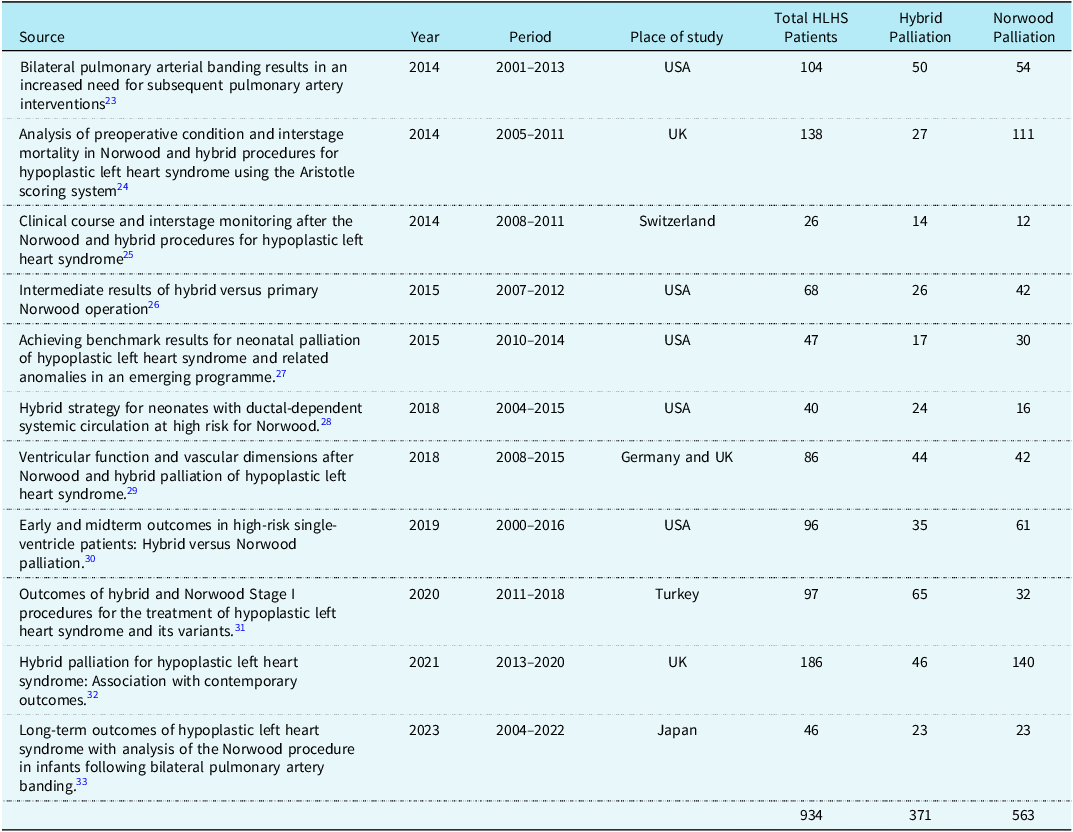
• 11 articles were included in the meta-analysis, providing robust quantitative data on survival rates, complications, and recovery outcomes. A complete list of these studies is provided in Table 1, Appendix B.
-
• An additional 6 articles were included in the qualitative analysis, offering valuable contextual insights into hybrid and Norwood procedures.
To ensure methodological rigour, a Risk of Bias Assessment was performed using the ROBINS-I tool for the included studies. Detailed results of this assessment are available in Appendix A.
Characteristics of included studies (Population, interventions, outcomes)
The selected studies analysed a total of 934 neonates diagnosed with hypoplastic left heart syndrome, with 371 undergoing hybrid palliation and 563 receiving the Norwood procedure.
The studies included neonates with diverse clinical profiles:
-
• Hybrid Palliation: High-risk neonates, often characterised by low birth weight (<2.5 kg), prematurity, or severe non-cardiac anomalies, were predominantly treated using hybrid procedures due to their minimally invasive nature Appendix C.
-
• Norwood Procedure: Relatively stable preoperative patients were more commonly selected for the Norwood procedure, which remains the standard approach for Stage I palliation of hypoplastic left heart syndrome.
The geographic distribution of data emphasises the global significance of the research, with contributions from centres in the USA, UK, Switzerland, Germany, Turkey, and Japan. The studies span a period from 2001 to 2022, highlighting the evolution of surgical and interventional cardiology techniques over time.
The studies compared two primary methods for Stage I palliation of hypoplastic left heart syndrome:
Hybrid procedures
-
• Combined bilateral pulmonary artery banding with ductal stenting to stabilise systemic circulation without the need for cardiopulmonary bypass.
-
• Primarily aimed at high-risk neonates to reduce procedural invasiveness and surgical stress.
Norwood procedure
-
• Involved reconstructive surgery of the aortic arch and systemic-to-pulmonary artery shunting, necessitating the use of cardiopulmonary bypass.
-
• Recognised as the gold standard for hypoplastic left heart syndrome management, it was commonly performed in neonates with stable preoperative conditions.
Having outlined study populations and measured outcomes, the paper next qualifies comparators between hybrid and Norwood techniques.
Comparison of hybrid procedures versus traditional surgical methods
This subsection presents pooled quantitative comparisons between hybrid palliation (HP) and Norwood procedure, focusing on timing of Stage I surgery, in-hospital and interstage mortality, short- and long-term transplant-free survival, and complication/reintervention rates.
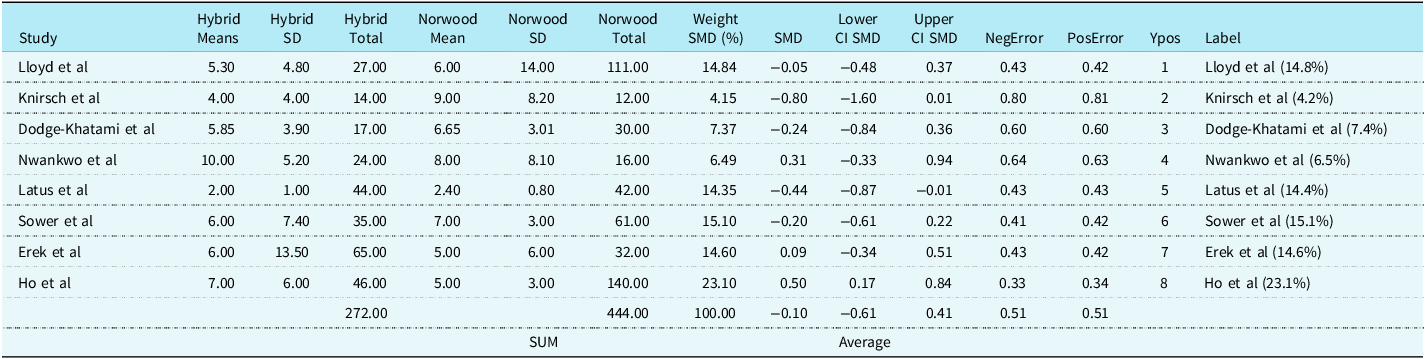
Across the analysed studies, 272 patients underwent hybrid procedures, while 444 received traditional Norwood palliation. The studies represented diverse geographical regions, including the USA, UK, Switzerland, and Germany. Variability in the timing of Stage I surgery was slightly greater in the hybrid group, with a mean day of surgery 5.30 ± 4.8 days versus 6.0 ± 14.0 days for the Norwood group. The standardised mean difference of −0.10 (95% confidence interval: (- 0.61 to 0.4), p = 0.77) indicating no statistically significant difference in timing between the groups (Table 2, Appendix C).
In-hospital mortality and transplantation
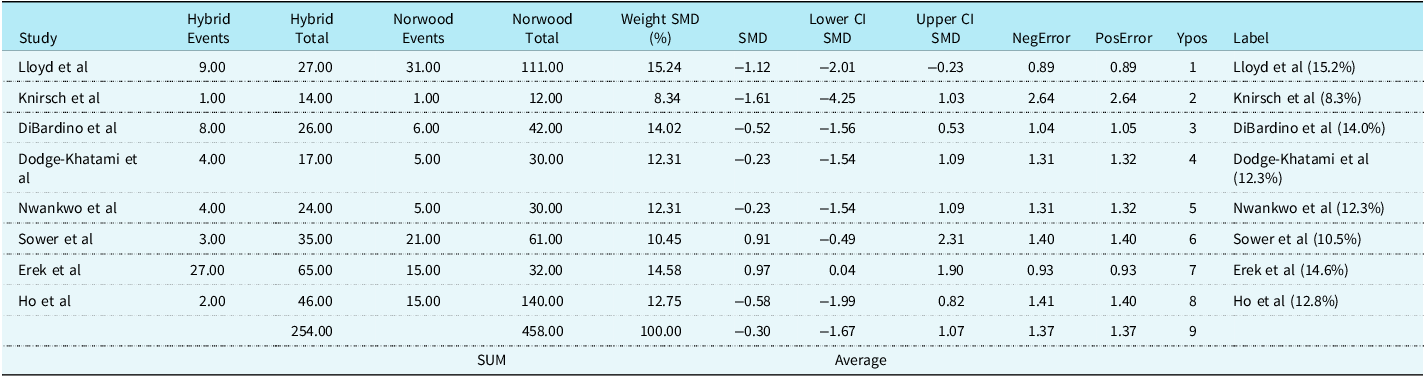
In-hospital mortality and/or transplantation rates were comparable between the two groups. The hybrid group reported 254 events among 272 patients, while the Norwood group reported 458 events among 444 patients. The pooled risk ratio was 0.97 (95% confidence interval: 1.62 to 1.07; p = 0.97), showing no statistically significant difference. Moderate heterogeneity (O = 39.6%) reflected variability in patient populations and institutional practices (Table 3, Appendix D).
Interstage mortality and transplantation
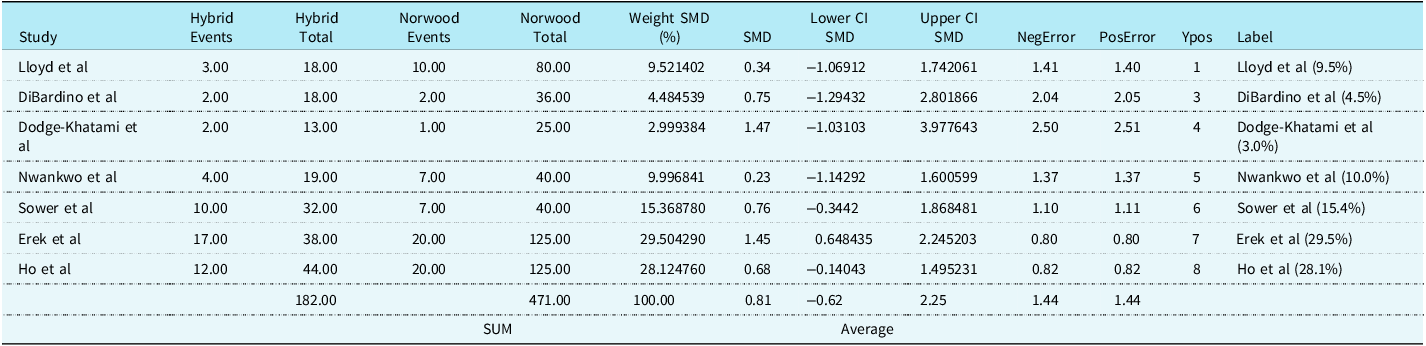
Interstage mortality was slightly higher in the hybrid group, with 182 events among 272 patients, compared to 471 events in the Norwood group. The pooled risk ratio was 0.81 (95% confidence interval: 0.62 to 2.25; p = 0.09), not statistically significant. Heterogeneity was low (I2 = 16%). Forest plots suggested a trend toward higher risk in the hybrid group, particularly in studies with smaller sample sizes (Table 4, Appendix D).
One-year survival rates
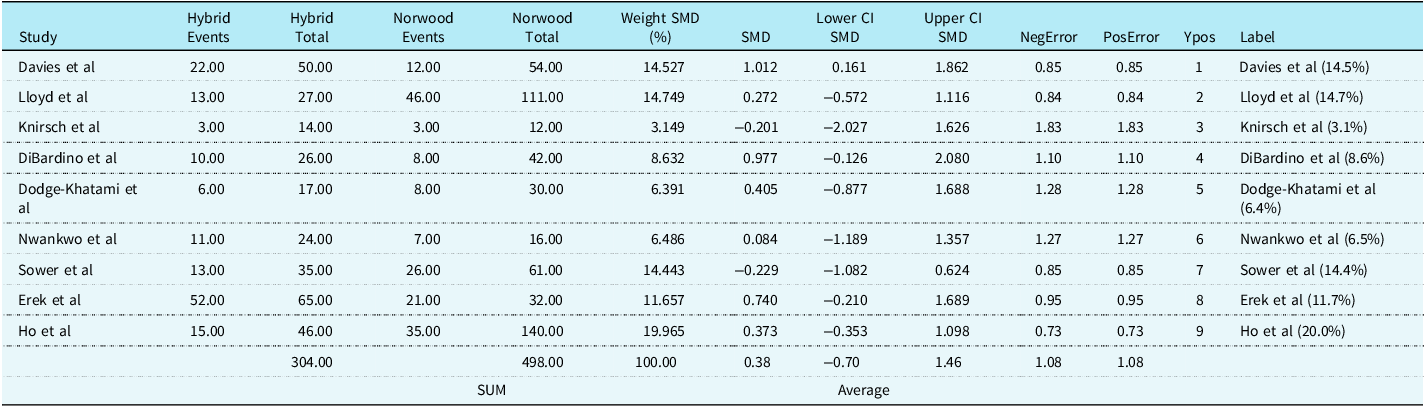
At the one-year mark, survival and/or transplantation rates were marginally better in the Norwood group. The hybrid group reported 304 events out of 498 patients, compared to 498 events among 444 patients in the Norwood group. The pooled risk ratio of 0.38 (95% confidence interval: −0.70 to 1.46, p = 0.22) indicated no significant advantage for either group. Heterogeneity was moderate (I2 = 23%) (Table 5, Appendix D).
Long-term outcomes
Three- and five-year survival analyses revealed no substantial differences between the two approaches (Tables 6 and 7, Appendix D):
-
• Three-Year Mortality: The pooled risk ratio was 0.06 (95% confidence interval: −0.83 to 0.95, p = 1.19) with moderate heterogeneity (I2 = 38.8%).
-
• Five-Year Mortality: The pooled logHR was 0.15 (95% confidence interval: −0.66 to 0.99, p = 1.20), with high heterogeneity (I2>60%) due to differences in populations and methodologies.
Hybrid procedures showed a higher incidence of pulmonary artery stenosis requiring reintervention, affecting approximately 30% of patients compared to 18% in the Norwood group. Conversely, Norwood procedures were associated with more frequent early postoperative complications, such as bleeding and low cardiac output syndrome.
Statistical analyses utilised a random-effects model for meta-analysis. Heterogeneity, measured with the I2 statistic, was moderate (< 50%) in most cases but exceeded 60% for long-term survival outcomes, reflecting differences in study populations and methods.
While pooled estimates quantify differences in survival and complications, the following qualitative analysis explores possible clinical and procedural explanations for these findings.
Qualitative analysis
This subsection summarises qualitative and single-centre findings that contextualise the pooled results, including ICU/hospital length of stay, neurodevelopmental assessments, and neuroimaging outcomes.
Qualitative analysis of ICU and hospital stays after Stage II palliation
A detailed study from a single centre involving 75 patients with hypoplastic left heart syndrome who underwent Stage II palliation between 2004 and 2010 offers valuable insights. Among these patients, those treated using the Norwood procedure approach (n = 43) had ICU stays averaging 5 days, while those undergoing HP (n = 32) stayed slightly longer, averaging 7 days. Although this difference wasn’t statistically significant p = 0.145), the duration of overall hospital stays told a different story. Patients in the Norwood procedure group had significantly shorter hospitalisations—just 9 days compared to 16 days for the HP group (p = 0.041). Reference Matsunaga33
Another independent study of 32 hypoplastic left heart syndrome patients who underwent the same procedure provided even starker results. Here, ICU stays were drastically shorter for the Norwood procedure group—5 days compared to 16 days for HP patients (p = 0.001). The difference in total hospital stay was similarly significant, with Norwood procedure patients averaging 8 days versus 24 days for HP (p = 0.01). Reference Brescia34
Neurodevelopmental outcomes
When it comes to long-term neurodevelopmental outcomes in hypoplastic left heart syndrome patients, the research is more limited, but the results are equally important. Studies comparing outcomes after HP versus Norwood procedure procedures revealed no significant differences in developmental milestones at 1, 2, or 4 years post-procedure Reference Knirsch35–Reference Knirsch37
At the 1-year mark, the Bayley Scales of Infant Development II revealed that Psychomotor Development Index (PDI) and Mental Development Index (MDI) scores were significantly below the population norm for both groups, regardless of surgical type. The median PDI was 57 (p < 0.001), while the median MDI was 91 (p = 0.002). When comparing the two surgical approaches, Norwood procedure patients had a median PDI of 56.5 versus 65 for HP (p = 0.18). Similarly, the MDI scores were nearly identical-93 for Norwood procedure versus 88 for HP (p = 1.0). Reference Knirsch35
By age 2, a study of 44 patients with single-ventricle physiology using the Bayley-III assessment provided median cognitive, language, and motor composite scores of 100 (range: 65–120), 97 (37–124), and 97 (55–124), respectively. Reference Reich36 These scores reflect challenges but are not significantly influenced by the surgical approach.
By age 4, findings from 16 hypoplastic left heart syndrome patients assessed using the Wechsler Pre-school Intelligence Scale–III and the Movement-ABC test showed clear deficits in cognitive and motor performance compared to age-matched norms. The median IQ was 89 (p = 0.02), and motor performance also lagged significantly (p = 0.002). Once again, these outcomes were consistent across both Norwood procedure (IQ: 92) and HP (IQ: 88) groups, with no statistical differences observed (p = 1.0). Reference Knirsch35
Neuroimaging findings
A fascinating neuroimaging study conducted between 2012 and 2015 examined 29 hypoplastic left heart syndrome patients at 2 years old, revealing significant differences in brain development compared to healthy controls. The total brain volume for hypoplastic left heart syndrome patients was markedly smaller (893 ± 76 mL vs. 1015 ± 148 mL for controls, p = 0.005). The Norwood procedure group showed more pronounced reductions in brain volumes across multiple areas, including total grey matter, deep grey matter, and white matter.
The most dramatic differences were seen in deep grey matter volume, with Norwood procedure patients averaging 38.4 ± 4.1 mL compared to 44.4 ± 3.9 mL in the HP group (p = 0.005). White matter volumes were also reduced in the Norwood procedure group (255 ± 19 mL) compared to the HP group (285 ± 31 mL, p = 0.032). Reference Knirsch37
Discussion
The findings reveal that while hybrid procedures offer distinct advantages in specific cases, their overall performance is comparable to the Norwood procedure across key outcomes.
Timing of surgery
Hybrid procedures were linked to slightly earlier interventions than Norwood procedures. However, the difference was not statistically significant (standardised mean difference = − 0.10, 95% confidence interval: −0.61 to 0.41, p = 1.77). This suggests similar intervention timing, with hybrid methods being preferred for some high-risk neonates.
Progression to Stage II palliation
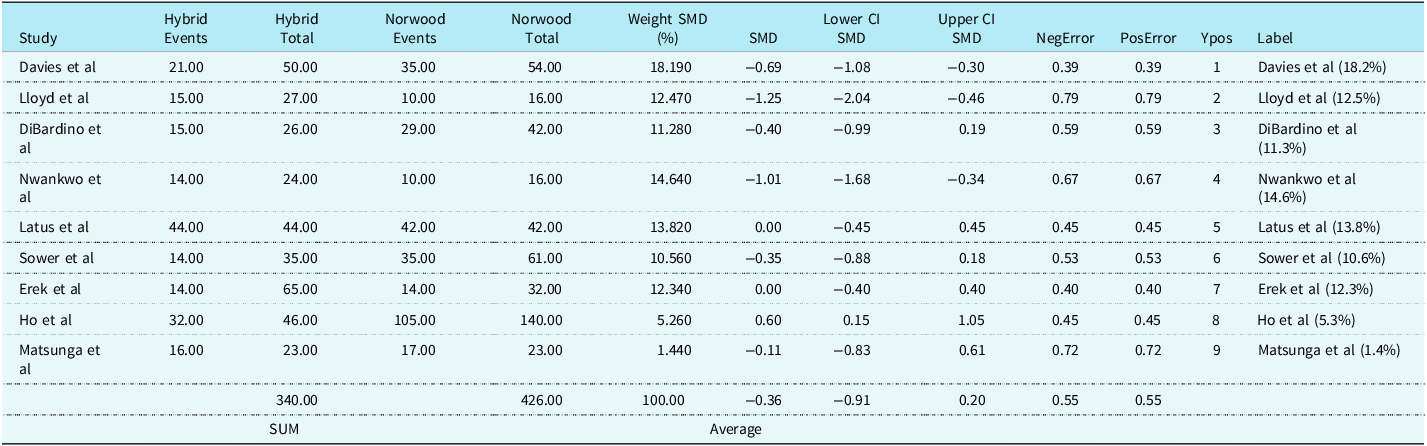
Although data indicated a slight trend favouring the Norwood group for successful progression to Stage II palliation (Table 8, Appendix E), the results were not statistically significant (standardised mean difference = − 0.36Footnote 1 , 95% confidence interval: −0.91 to 0.20, p < 0.001). Hybrid procedures were often chosen for higher-risk patients
In-hospital mortality and transplantation rates
Both procedures showed similar in-hospital mortality and transplantation rates, with no significant differences observed (standardised mean difference = − 0.30Footnote 2 , 95% confidence interval: −1.62 to 1.07, p = 0.97). This suggests comparable short-term survival rates.
Mortality between stages
Interstage mortality was slightly higher in the hybrid group (risk ratio= 0.81, 95% confidence interval: −0.62 to 2.25, p = 0.09), though the difference was not statistically significant. This highlights the need for better monitoring and care during the interstage period for patients undergoing hybrid procedures.
Long-term survival
Survival rates at one, three, and five years showed no significant differences between the two procedures. For instance, one-year survival rates had a hazard ratio of 0.38 (95% confidence interval: −0.70 to 1.46, p = 0.22), confirming the long-term equivalence of both approaches (Table 9, Appendix E).
Clinical insights
Hybrid procedures are a feasible alternative to the Norwood operation, particularly for high-risk neonates who may have low birth weight, severe comorbidities, or other factors limiting their suitability for extensive surgery. Key benefits include less invasiveness and the avoidance of cardiopulmonary bypass. Nevertheless, these procedures carry a higher risk of pulmonary artery stenosis and require more frequent reinterventions.
Accordingly, the Norwood procedure, despite its invasiveness, continues to produce strong results for stable patients, with lower interstage mortality and fewer complications related to pulmonary artery stenosis.
Comparison with previous research
These findings align with prior studies, which have similarly found no significant differences in long-term survival but emphasised the hybrid approach’s value for high-risk populations. Some research suggests that the hybrid procedure may delay complications associated with full surgical interventions but often leads to higher reintervention rates.
Strengths and limitations of hybrid procedures
The hybrid approach excels in its adaptability to complex cases, offering a less invasive alternative. Yet, higher interstage mortality and reintervention rates point to the need for standardised protocols and advancements in technique. In addition, variability in outcomes across institutions limits the general applicability of the findings.
Conclusion
This systematic review examined the role of hybrid procedures in paediatric interventional cardiology for managing hypoplastic left heart syndrome. The results show that while hybrid procedures achieve survival rates comparable to the Norwood procedure at one, three, and five years, they differ notably in complication rates and procedural outcomes.
Hybrid procedures present unique advantages for high-risk neonates, offering a less invasive approach and eliminating the need for cardiopulmonary bypass. Still, they are linked to higher interstage mortality and increased incidences of pulmonary artery stenosis, often requiring more frequent reinterventions. On the other hand, the Norwood procedure remains the standard for stable patients, with fewer complications and a reduced need for subsequent interventions.
These findings suggest that hybrid procedures are not a universal replacement for the Norwood procedure but rather a specialised option tailored to meet the needs of high-risk patient populations.
Appendix A
Risk of bias of included studies in meta-analysis by ROBINS-1 tool.

Appendix B
Summary of studies included in the systematic review: study period, location, sample size, and distribution between hybrid palliation and Norwood procedure

Appendix C
Timing of Stage I palliation (day of life) comparing hybrid procedure (HP) and Norwood procedure (NP). Pooled effect sizes are expressed as mean difference (MD) or standardised mean difference (SMD)

Tau2 = 0.083, Chi2 = 19.14, df = 7, I2 = 63.4%.
Z = −0.022, P = 0.982.

Appendix D
In-hospital mortality and/or transplantation rates in HLHS patients undergoing hybrid or Norwood palliation during the neonatal period

Tau2 = 0.222, Chi2 = 11.592, df = 7, I2 = 39.61%.
Z = −0.485, P = 0.972.
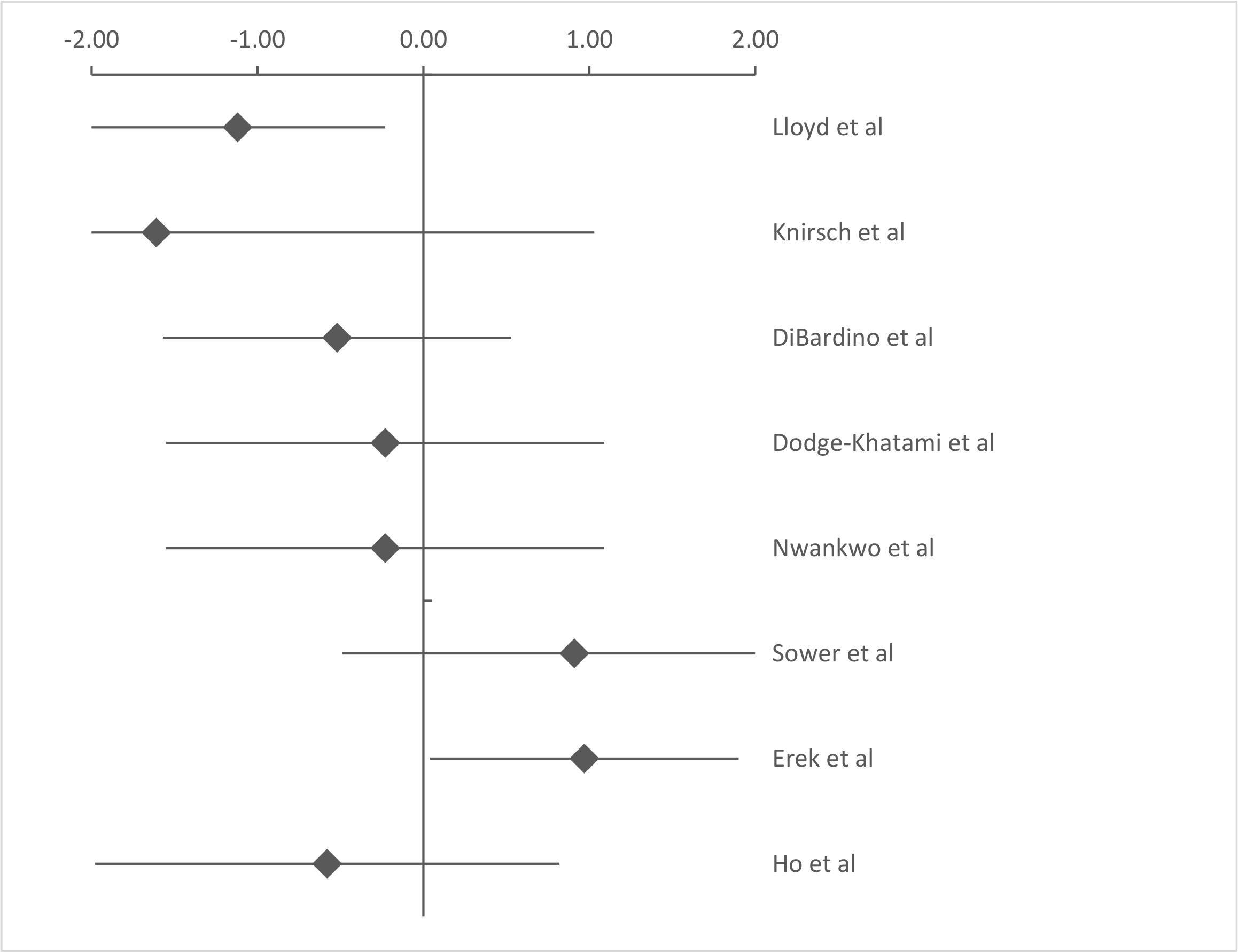
Interstage mortality and/or transplantation in HLHS patients following initial hybrid or Norwood palliation

Tau2 = 0.222, Chi2 = 11.592, df = 7, I2 = 39.61%.
Z = −0.485, P = 0.972.

One-year transplant-free survival in HLHS patients treated with hybrid versus Norwood procedures

Tau2 = 0.002, Chi2 = 6.341, df = 8, I2 = 23%.
Z = 2.563, P = 0.219.

Three-year transplant-free survival in HLHS patients following hybrid or Norwood palliation

Tau2 = 0.069, Chi2 = 4.909, df = 3, I2 = 38.89%.
Z = −0.283, P = 1.190.

Five-year transplant-free survival in HLHS patients following hybrid or Norwood palliation

Tau2 = 0.092, Chi2 = 5.790, df = 3, I2 = 48.19%.
Z = −0.272, P = 1.204.

Appendix E
Number of HLHS patients progressing to Stage II palliation after neonatal hybrid or Norwood procedure

Tau2 = 0.0005, Chi2 = 3.42, df = 8, I2 = 23.3%.
Z = −3.37, P = 0.00075.

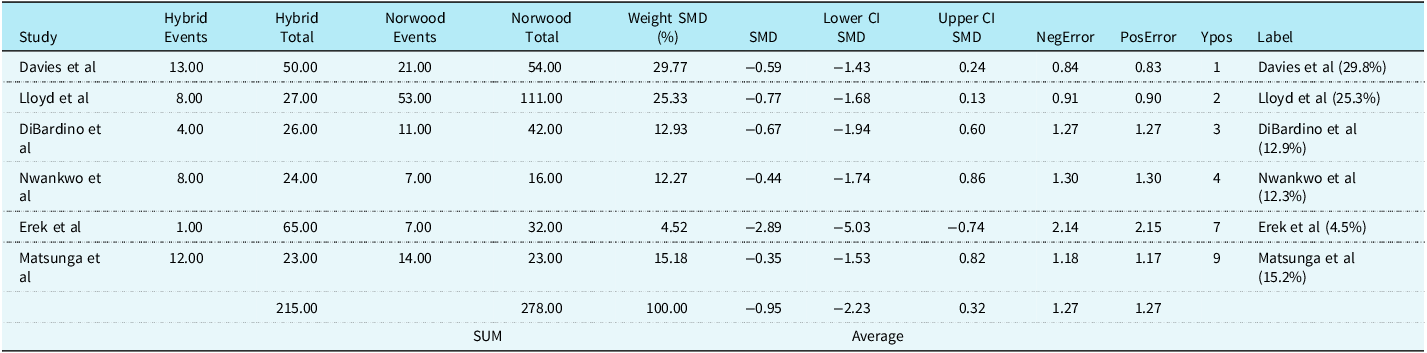
Number of HLHS patients progressing to Stage III palliation after neonatal hybrid or Norwood procedure

Tau2 = 0.009, Chi2 = 4.562, df = 5, I2 = 13%.
Z = −3.00, P = 0.167.