Introduction
Achieving optimal health and well-being among young Australians is an important political and social goal. The goals of the Melbourne Declaration on Educational Goals for Young Australians focused on supporting children and young people to become confident, creative and active citizens (Barr et al., Reference Barr, Gillard, Firth, Scrymgour, Welford, Lomax-Smith and Constable2008). This Declaration reflects and reinforces concern with the social and emotional well-being of the whole child, with their capacity to learn, create and participate (Mission Australia, Reference Meltzer, Muir and Craig2017; VicHealth, 2015; White & Wyn, Reference White and Wyn2013). Other scholars point to the economic value of enhancing young people’s well-being and preventing the adoption of health-damaging behaviours (Marmot & Wilkinson, Reference Luszczynska, Schwarzer, Conner and Norman2006).
This article draws on extensive self-report survey data collected at baseline (Baseline) and 2 years later (Wave 2) to identify what factors influenced the well-being of young people (aged 9–14 years) living in rural and regional New South Wales. Our focus on the experiences of young people growing up in rural and regional Australia sought to challenge universal constructions of ‘youth’ through highlighting spatial factors (Cuervo, Reference Cowen, Work, Hightower, Wyman, Parker and Lotyczewski2015). Analysis of these data allowed the exploration of commonly assumed strategies for supporting young people’s well-being. The paper concludes with recommendations for policy makers and communities wishing to better support the development of young people’s well-being, challenging dominant values that construct youth transitions as normative, neutral and natural (Cuervo, Reference Cowen, Work, Hightower, Wyman, Parker and Lotyczewski2015).
The concept of ‘well-being’
Concern with young people’s well-being has been the focus of significant research and policy activism for at least three decades in Australia (Hamilton & Redmond, Reference Hall, Smith and Toumbourou2010). Despite this interest, there remains considerable diversity in definitions and application of the concept among researchers (VicHealth, 2015; White & Wyn, Reference White and Wyn2013; Wyn, Cuervo, & Landstedt, Reference Wyn, Cuervo, Landstedt, Wright and McLeod2015). Well-being suffers from being an ‘idea whose time is come’ (White Reference White2010, p. 159), appealing in its simplicity and common-sense applications. Adding to this complexity, activists have used the concept polemically to counter deficit-oriented policy arguing well-being offers a more inclusive aspiration (Bessant, Reference Bessant2007; McNamara, Reference Marmot and Wilkinson2013). White argues that the concept of well-being is holistic and ‘rejects the compartmentalisation of people’s lives’ (White, Reference White2010, p. 159).
Operationalising a holistic notion of well-being is challenging for researchers (Hamilton & Redmond, Reference Hall, Smith and Toumbourou2010). This has led some ‘well-being’ researchers to focus on the internal psychological world, others to emphasise the interpersonal (family) world and still others to focus on the external (community or environmental) world (De Plater, Reference Davie2008; National Institute for Health and Clinical Excellence, Reference Murphey, Bandy, Schimitz and Moore2009). A study of the relevant literature also reveals the different positions taken as to whether well-being is a product (an outcome of policy) or a process (subjective experience) (Atkinson, Reference Atkinson2013). It is also common for writers to identify ‘risk’ and ‘protective’ factors (Viner et al., Reference Viner, Ozer, Denny, Marmot, Resnick, Fatusi and Currie2012). Particularly in the health literature, this led to a focus on individual behaviours such as drinking, smoking and exercise (Atkinson, Reference Atkinson2013; Currie et al., Reference Cuervo, Worth, Dwyer and Skelton2012). While there is a large literature on individual risk factors that may affect young peoples’ well-being, much less has been published from quantitative studies on community-level factors (or what the social determinants literature refers to as ‘proximal’ factors).
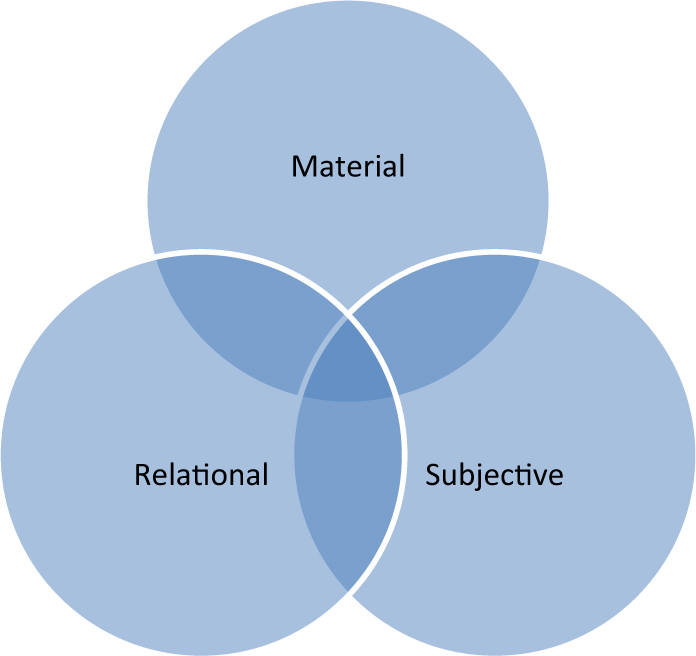
This paper adopts a multi-dimensional understanding of well-being (see Figure 1), exploring material, subjective and relational factors (Bourke & Geldens, Reference Bourke and Geldens2007) with the authors taking the position that well-being is a process, rather than an outcome. Well-being is reflected in young people’s sense of self in the world and is central to ontological security (Hulse & Saugeres, Reference Hamilton and Redmond2008) or identity work (Cote, 2007). There is a range of ways in which well-being can be operationalised in research; however, in this article, it is measured by a modified version of Cowen’s Perceived Self-Efficacy Scale (PSE) used in the Raine Study, a Western Australian Pregnancy Cohort (Straker et al., Reference Steinbeck, Hazell, Cumming, Skinner, Ivers, Booy and Hawke2017a). Perceived self-efficacy is the belief that one can master difficult tasks or cope with certain life stressors (Schwarzer & Warner, Reference Ruming2013). High levels of perceived self-efficacy reflect a sense of control over one’s environment and an optimistic belief in being able to cope with, or change, challenging situations (Schwarzer & Warner, Reference Ruming2013). Previous research has identified self-efficacy as influential in health behaviours such as smoking, physical exercise and sexual health practices (Conner & Norman, Reference Conner and Norman2005), educational outcomes (Bandura, Reference Bandura1997) and persistence (Luszczynska & Schwarzer, Reference Luscombe, Cheng, Balzer, Chow, Paxton, Steinbeck and Hawke2005). These characteristics are similar to those identified in the resilience literature, however, in this article we also seek to understand the external enablers that support self-efficacy among young people (Ungar, Reference Ungar, Theron, Liebenberg and Ungar2015).
There is a strong consensus in the literature that material factors have profound health impacts, described as the social determinants of health (Goodman et al., Reference Gilman, Meyers and Perez2003; Marmot & Wilkinson, Reference Luszczynska, Schwarzer, Conner and Norman2006; Viner et al., Reference Viner, Ozer, Denny, Marmot, Resnick, Fatusi and Currie2012). These social determinants include income, education, employment, ethnicity or race, age and gender. Despite this, there remains a policy, practice and research focus on the internal world of young people. Ungar (Reference Ungar, Theron, Liebenberg and Ungar2015), a leading social work researcher on resilience in young people, argues that much greater attention needs to be paid to the factors that support well-being which are beyond the control of the individual young person. In a similar vein, White (Reference White2010) argues that well-being ‘inheres within the community as a collectivity’ (p. 168). The availability of support services and appropriate opportunities for engagement are important determinants of young people’s well-being (Bernard, Stephanou, & Urbach, Reference Bernard, Stephanou and Urbach2007; Davie, Reference Currie, Zanotti, Morgan, Currie, de Looze, Roberts, Samdal, Smith and Barnekow2015; Wyn et al., Reference Wyn, Cuervo, Landstedt, Wright and McLeod2015). Infrastructure that supports young people’s participation in community life such as the availability of facilities, public transport, quality public amenities and safety are all material factors likely to impact on young people’s well-being (White & Wyn, Reference White and Wyn2013). If a ‘place-based approach’ is scaffolded over Ungar’s ideas, opportunities exist now to refresh the approach used to address disadvantage and promote well-being. Infrastructure that supports young people in the long term could slow the widening rural and urban divide that has seen almost half of all new jobs created in the last decade based in Australian city centres (Department of Infrastructure and Regional Development, 2015). While it is evident that rural communities experience greater disadvantage than urban communities (Vinson, Rawsthorne, Beavis, & Ericson, Reference Vinson, Rawsthorne, Beavis and Ericson2015), less is known about how young people experience this disadvantage or how this might change as they age.
Well-being is at its core subjective. A young person’s well-being will be shaped by their perceptions and experiences of belonging, of safety and connectedness. This sense of belonging is not only an individual experience but also a collective experience, with young people developing an understanding of how much they are valued or welcomed within a community through their peer group (White & Wyn, Reference White and Wyn2013). Subjective well-being is enhanced when one’s values, experiences and sense of self concur with the broader communal meanings or understandings (Mission Australia, Reference Meltzer, Muir and Craig2017; White, Reference White2010). In white Australia, there is widespread acceptance of an idyllic narrative that represents rural as consisting of ‘simple, harmonious, cohesive and homogeneous communities, ordered and free of social conflict’ (Scott, Lyons, & MacPhail, Reference Schwarzer, Warner, Prince-Embury and Saklofske2015, p. 221). This representation creates a discursive meaning of ‘rural’, most often in juxtaposition to the ‘urban’ other (Winterton, Chambers, Farmer, & Munoz, Reference Winterton, Chambers, Farmer and Munoz2014). Within the sociological literature, there are varying interpretations of how rural young people’s well-being is shaped by these discourses. Some researchers suggest young people are ‘forced’ to leave rural communities to increase their life opportunities (Davie, Reference Currie, Zanotti, Morgan, Currie, de Looze, Roberts, Samdal, Smith and Barnekow2015, p. 17) while others highlight the oppressive nature of the rural idyllic discourse for young people (Rawsthorne, 2003). Little longitudinal research on the experiences of rural young people in Australia exists, thus limiting our understanding of how young people’s sense of belonging changes over time, if at all.
Well-being is concerned with social relations and is seen as the product of the interaction of an individual with their broader social context (VicHealth, 2015). Relational factors are essential to understand well-being, as ‘people become who and what they are in and through their relatedness to others’ (White, Reference White2010, p. 164). Traditionally, research has focused on young people’s relationships with peers, school and family to understand well-being. There is some research (Mission Australia, Reference Meltzer, Muir and Craig2017; Wyn et al., Reference Wyn, Cuervo, Landstedt, Wright and McLeod2015) that suggests broader community supports, beyond family and school, are also likely to be influential. Previous research has found that participation in non-school activities and voluntary organisations has positive impacts on young people’s well-being, particularly when supervised by supportive adults (Erbstein, Hartzog, & Geraghty, Reference De Plater2013). Gilman, Meyers, and Perez (Reference Fabiansson2004) found young people’s involvement in what they call extracurricular activities enhances life satisfaction. Recent Australian qualitative research with young people aged 12–20 years has also highlighted the importance of ‘trusted adults’ in young people’s transition from childhood to adulthood (Meltzer, Muir, & Craig, Reference McNamara2016, Reference Meltzer, Muir and Craig2018). This research concluded that these relationships were most valuable when chosen by the young person and marked by low-key, direct and equitable conversations (Meltzer et al., Reference Meltzer, Muir and Craig2018, pp. 582–583). Within the Australian policy context, young people’s participation in physical activities, particularly sport, is strongly advocated as contributing to health and well-being (Mission Australia, Reference Meltzer, Muir and Craig2017). Research undertaken with Norwegian young people identified a strong relationship between participation in competitive sports and mental health (Breistøl Clench-Aas, Van Roy, & Kjærsti Raanaas, Reference Breistøl, Clench-Aas, Van Roy and Kjærsti Raanaas2017).
With approximately one-third of 10–13-year-olds living in regional or remote areas (32.8%; ABS, 2011), the well-being of Australian rural and regional adolescents still remains poorly documented and understood. Additionally, the use of a single ‘rural’ category obscures differences within young people living outside major urban areas (Davie, Reference Currie, Zanotti, Morgan, Currie, de Looze, Roberts, Samdal, Smith and Barnekow2015).
This article seeks to contribute to greater understanding of the impact of material, subjective and relational factors on rural and regional young people’s well-being. It aims to inform youth policy, which currently assumes a normative developmental process which is often presented as context free (Fabiansson, Reference Erbstein, Hartzog and Geraghty2015). Accordingly, this article seeks to increase our understanding of what factors impact on rural young people’s well-being. This may have important future implications in terms of support strategies, community action and urban migration.
Research design and data collection
The data reported in this article were collected as part of the Adolescent Rural Cohort study of Hormones, Health, Education, Environment and Relationships (ARCHER) study which explores the relationship between universal measures of adolescent behaviours, mental and physical health and hormone changes through puberty (Steinbeck et al., Reference Scott, Lyons and MacPhail2012). The ARCHER study collected both physiological and social data; however, this article focuses on specific social data only. The study was conducted in regional and rural Central Western New South Wales (NSW), Australia. Adolescents in school years 5–7 were recruited primarily through schools and flyers placed in community organisations and print media. Both adolescents and parents/guardians were asked to complete annual ARCHER surveys. The local community, including young people, has been involved since the conception of the study through ARCHER Community Consultative Committees and focus groups (Robbins et al., Reference Robbins, Rawsthorne, Paxton, Hawke, Skinner and Steinbeck2012). A young person also contributed as an author to the writing of this manuscript.
Participant profile
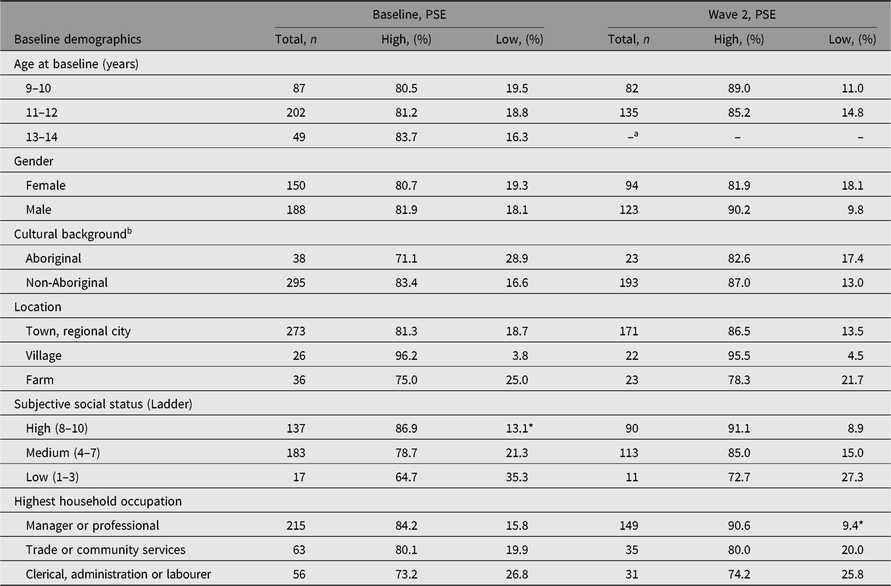
Baseline participant demographic profiles are provided in Table 1. At baseline, the mean parent/carer age was 42.7 years and median adolescent age was 11 years, with slightly fewer female adolescent participants (45%) than males. Comparisons with local government area data indicated that the adolescent participants represented the region in terms of gender distribution but had slightly fewer youth of Aboriginal background (11% vs 17% in the region). While the young participants came from diverse socioeconomic backgrounds, comparisons with households in the region indicated that participating families had higher rates of completing higher education and were less likely to be in rental housing. For two-thirds of the households, the highest household occupation was managerial (64%) and for 17% was sales, machinery operation, labouring or home duties (Luscombe et al., Reference Luscombe, Cheng, Balzer, Chow, Paxton, Steinbeck and Hawke2017). Caution should be exercised in generalising the findings from this study due to the nature of the sample.
Relationship between baseline demographics and PSE at baseline and Wave 2

* Indicates a statistically significant association with level of PSE at p < 0.05.
a PSE data were not collected for 15–16-year-olds in the follow-up, who were 13–14 years at baseline.
b Cultural background of the young person was reported by parent/guardian.
Key concepts and data analysis
This article reports findings from a number of specific variables within the larger ARCHER study. These variables are reported in two waves, at Baseline when participants first joined the study and at Wave 2, some 2 years later. Hence, the paper is not reporting longitudinal change over time but cross-sectional data at two time points.
Perceived self-efficacy
The survey measured perceived self-efficacy via a 22-item modified version of the validated PSE (Cowen et al., Reference Cote, Helve and Brynner1991; Straker et al., Reference Straker, Mountain, Jacques, White, Smith, Landau and Eastwood2017b). Individual questions explored participants’ confidence and sense of capacity in a range of settings including a social setting (you meet a person for the first time), at school (you have new work to do at school), at home (you have to work out a problem with your mother) as well as more generally (you have to make an important decision) (see Appendix for all questions), with responses on a 5-point scale from ‘not at all sure’ to ‘very sure’. For the purpose of analysis, these responses were scored and recoded in accordance with the Raine Study (where scores less than one standard deviation below the sample mean were taken to indicate low PSE) (Straker et al., Reference Straker, Mountain, Jacques, White, Smith, Landau and Eastwood2017b). PSE data were not collected for 15–16-year-olds in the follow-up, who were 13–14 years at baseline. High PSE was defined as participant’s demonstrating confidence and a sense of capacity in a range of settings.
Well-being
The concept of well-being was conceptualised as comprising material, subjective and relational factors. Each of these factors was operationalised through multiple variables as detailed below.
Material factors included socioeconomic status (SES) (subjective as measured by Adler et al.’s (Reference Adler, Epel, Castellazzo and Ickovics2000) ladder and highest household occupation); gender; cultural background (Aboriginality); location (coded as farm, village, town or regional city); and environmental factors/facilities. The inclusion of environmental factors/facilities seeks to explore material factors in the external environment that may support or undermine young people’s well-being (Ungar, Reference Ungar, Theron, Liebenberg and Ungar2015). Participants’ perceptions of key environmental factors/facilities were measured with five questions from the Research with East London Adolescents Community Health Survey (RELACHS) study on 3-point Likert scale (good/average/bad).
Subjective factors included community belonging and safety which were measured with five items from the RELACHS study on a 5-point Likert scale (strongly agree/agree/neither/disagree/strongly disagree).
Relational factors included participation and competency in non-school activities (sports and hobbies); relationships with significant other adults; and relationships with peers. Participation in non-school activities was measured using items taken from the Achenbach System of Empirically Based Assessment (ASEBA) Youth Self-Report (Achenbach & Rescorla, Reference Achenbach and Rescorla2000). Data on ‘significant other adults’ were collected drawing on questions from the California Health Kids Survey (California Department of Education, Reference Achenbach2014). Data on number and extent of friendship networks were based on questions taken from the Youth Self-Report (Achenbach, Reference Achenbach1991).
Analysis of the survey data was undertaken with SPSS 24. Ethics approval was granted by the University of Sydney Human Research Ethics Committee (Protocol 13094). Participation in the study involved attendance at the ARCHER research office over a period of 3 years. Consent was obtained from young people and a parent/guardian, in writing and verbally. Verbal consent was obtained at each stage of data collection from the young people. Research findings on participation in longitudinal research with young people and parents influenced the research design (see Rawsthorne, Klineberg, Paxton, Hawke, & Steinbeck, Reference Rawsthorne2015 and Robbins et al., Reference Rawsthorne, Klineberg, Paxton, Hawke and Steinbeck2012 for further discussion).
Limitations
Caution needs to be exercised in interpreting the data presented in this article. While we present data at two points in time in this article, we have not explored change over time in specific individuals. Due to the survey design, at the time of writing, longitudinal data were only available for a subset of the sample (those aged 9–12 at baseline). And, as noted above, PSE was not collected for 15–16-year-olds in the follow-up, who were 13–14 years at baseline. Accordingly, the data are analysed as two cross-sectional data sets. This enables us to explore whether associations identified in the data increase, remain or decrease over time. Tests of association (between say PSE and parental occupation) were undertaken within each data set, not between the two data sets. Due to changes in survey design, recruitment and attrition, the number of participants who provided data on PSE declined from 342 at baseline to 217 approximately 2 years later. Full longitudinal analysis on the wide range of health issues studied by the ARCHER team will be undertaken in the future once all data have been collected, cleaned and the impact of attrition identified.
Further, the size and specific nature of the sample also limit the generalisability of the findings. Some data analyses (for example by location) are based on small cell sizes.
Additionally, the findings in this article are solely based on quantitative survey data. It is likely that qualitative research would provide additional, contextualised insights.
Findings
We analysed data on young people’s Perceived Self-Efficacy in relation to each of the dimensions of well-being. Most young people (81%, n = 275/338) had high PSE at baseline and at Wave 2 (87%, 188/217). In this section, we focus on those associations that appeared to be most influential for PSE.
Material factors
There is a large body of research on the relationship between SES and health (Marmot & Wilkinson, Reference Luszczynska, Schwarzer, Conner and Norman2006). Among the young people in our study, the impact of SES was as anticipated, with those reporting lower socioeconomic factors also reporting lower levels of PSE. A statistically significant relationship was evident in data on Highest Household Occupation, in which adolescents with caregivers employed in professional or managerial roles reported higher PSE, particularly at Wave 2. Interestingly, other material factors, such as age, gender and cultural background, had less impact. This finding contrasts with previous research and requires further exploration. Differences in PSE between Aboriginal and non-Aboriginal young people decreased over time. This would suggest that efforts to build PSE among young people need to be tailored to ensure the inclusion of those with less financial resources.
Previous research suggests the existence and quality of these environmental factors/facilities will affect young people’s perceived self-efficacy and their capacity to participate as active citizens (Mission Australia, Reference Meltzer, Muir and Craig2017; White & Wyn, Reference White and Wyn2013). The survey asked participants to rate a range of environmental factors/facilities. These questions aimed to identify the material factors beyond the control of individual young people that are likely to impact on young people’s well-being (VicHealth, 2015).
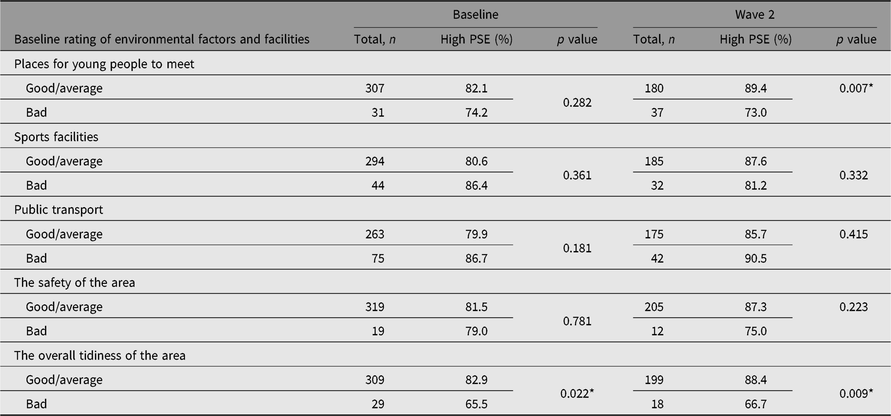
Table 2 shows tests of association between material (amenities) factors and PSE over time and reveals a statistically significant association with responses to questions about ‘places for young people to meet’ and ‘overall tidiness of the area’. This suggests an association between perceived disorder and lower levels of PSE. Possibly reflecting the scarcity of public space for mid-teens in these communities, we also found a statistically significant association between PSE and places for young people to meet at Wave 2. Generally, there was a decline in young people’s positive rating of each of these environmental factors/facilities over time. This was reflected in open-text responses such as
Not as many social places. (Girl, 13 yrs, Wave 2)
The rubbish being dumped anywhere. We don't have as big a budget for things such as maintenance. (Girl, 15 yrs, Wave 2)
Relationship between young person’s baseline ratings of environmental factors and facilities and PSE at baseline and Wave 2

* Indicates a statistically significant association with level of PSE at p < 0.05.
Over time, young people’s rating of all public amenities declined, with the availability of public transport consistently poor. Young people living outside of the regional cities (Orange and Dubbo) were at least twice as likely to rate public transport as ‘poor’. Drilling further into the data, we found differences by location, with those living in villages or on farms having the worst access to public amenities. For example, young people living in the regional cities were more positive about places to meet than those living in towns (93.1% compared to 84.6%). These differences point to the spatial impact of material factors on young people’s well-being.
These findings support other research with young people. Data collected as part of the Communities That Care research in regional Victoria reported just over half of their adolescent participants (50.6%; made up of 44% Year 6; 56% Year 8 and 52% Year 10) felt there were sufficient prosocial opportunities within the community Hall et al. (Reference Rosier and McDonald2015). It is possible that poorer neighbourhoods are marked by greater disorder or, conversely, in neighbourhoods subject to greater levels of surveillance, the surveillance itself contributes to fear of crime. Previous research has established that environmental and social disorder (captured in the survey through ‘overall tidiness of the area’) can have adverse mental health impacts (Vinson & Rawsthorne, Reference Vinson and Rawsthorne2013). Research by Ross and Mirowsky (Reference Rosier and McDonald2001) concluded that ‘people who report that there is a lot of crime, graffiti, vandalism, trouble, drug use, dirt and danger in their neighbourhood have more chronic health problems, worse self-reported health and worse physical functioning than people in neighbourhoods typified by order and safety’ (p. 266). To some extent, these findings run counter to the idyllic discourse of rural communities as inherently safer and ordered than urban environments (Valentine, Reference Valentine1997).
Subjective factors
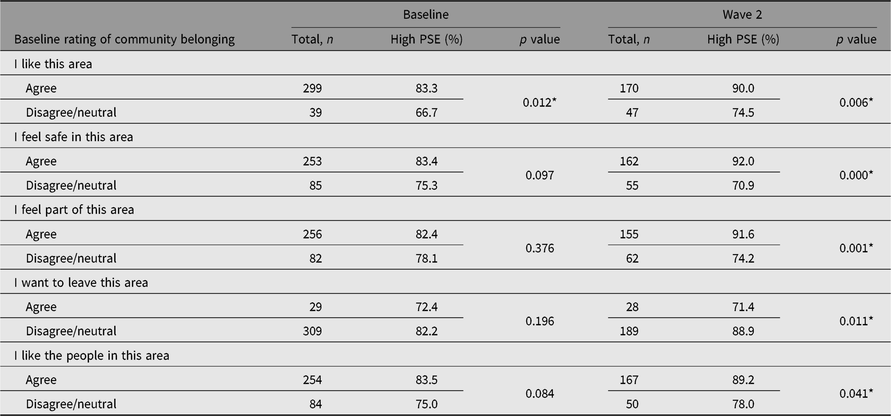
Research findings suggest that a sense of belonging is likely to impact on young people’s well-being (Fabiansson, Reference Erbstein, Hartzog and Geraghty2015; Mission Australia, Reference Meltzer, Muir and Craig2017; Scott et al., Reference Schwarzer, Warner, Prince-Embury and Saklofske2015; White, Reference White2010). Our analysis found strong statistical associations between a sense of community belonging and PSE at Wave 2 (see Table 3). Those young people with a stronger sense of community belonging reported higher levels of PSE. The reverse also held – that is, that those young people reporting low sense of community belonging reported lower levels of self-efficacy.
Relationship between young person’s baseline ratings of community belonging and PSE at baseline and Wave 2

N.B. ‘agree’ combines agree and strongly agree responses; ‘disagree/neutral’ combines neither agree nor disagree, disagree and strongly disagree responses.
* Indicates a statistically significant association with level of PSE at p < 0.05.
At baseline, the relationship was not as marked, apart from the statement ‘I like this area’ which was statistically significant. Our analysis found that perceptions of safety were important as was feeling ‘part’ of the area in relation to young people’s PSE. For those young people who felt a strong sense of belonging, the community was associated with safety and nurture as demonstrated in this young person’s quote:
Family feel in [the] community. (Boy, 14 yrs, baseline)
Recent research undertaken by Mission Australia also identified safety concerns among young people, particularly those from lower socioeconomic background. Forty-one and a half percent (41.5%) of low SES young people in the 2016 Youth Survey identified their area as unsafe, compared to 27.7% of high SES young people (Mission Australia, Reference Meltzer, Muir and Craig2017, pp. 19–20).
Relational
Young people’s participation in activities beyond school and family environments has significant implications for their social and emotional well-being. There are obvious benefits for physical and mental health but also benefits for social relations (Mission Australia, Reference Meltzer, Muir and Craig2017). Social benefits of non-school activities include improved communication and social skills, building resilience and coping mechanisms, establishing new social networks and gaining early leadership experiences (Bailey, Reference Bailey2005). Relational factors at both the personal and community level are seen to contribute to young people’s overall well-being (Fabiansson, Reference Erbstein, Hartzog and Geraghty2015; Mission Australia, Reference Meltzer, Muir and Craig2017).
Participation, particularly in sports, has strong policy and public support within Australia. The ABS General Social Survey found two-thirds of young people (aged 15–17) had participated in a social group and 9 out of 10 young people had participated in sport or recreational physical activity in the past 12 months (ABS, 2014). Internationally, well-being was found to be associated with competitive sports (Breistøl et al., Reference Breistøl, Clench-Aas, Van Roy and Kjærsti Raanaas2017). We found no statistically significant association between the amount of sports participation and PSE. Those young people reporting less than average participation in sports were found to have similar PSE as those more involved. Likewise, competency (how well) in sport appears to have minimal impact (either positive or negative). This general trend also holds for non-sports-related activities such as computer gaming, music or arts-based hobbies. This is an important finding for those wishing to build young people’s well-being (parents, policy makers and health professionals) as it casts some doubt on sports participation as a key strategy. Interestingly, our analysis suggests that active participation in organisations, clubs, teams or groups did make a difference with those young people involved in more organisations, clubs, teams or groups reporting higher PSE. This suggests that encouraging young people to become active in decision-making and organisational matters rather than simply participating in a pre (adult) organised activity may build Self-Efficacy.
In the following section, data in relation to ‘significant other adults’ were reported, recognising that ‘positive adolescent adaptation and development depends in part on the presence of supportive … caring adults’ (Erbstein et al., Reference De Plater2013). Having one or more caring adults in a child’s life increased their potential to ‘flourish’ and complete the transition to independent adult successfully (Meltzer et al., Reference McNamara2016; Murphey, Bandy, Schimitz, & Moore, 2013). These caring adults may include other relatives, neighbours, friends of parents, teachers, coaches and religious leaders (Murphey et al., 2013).
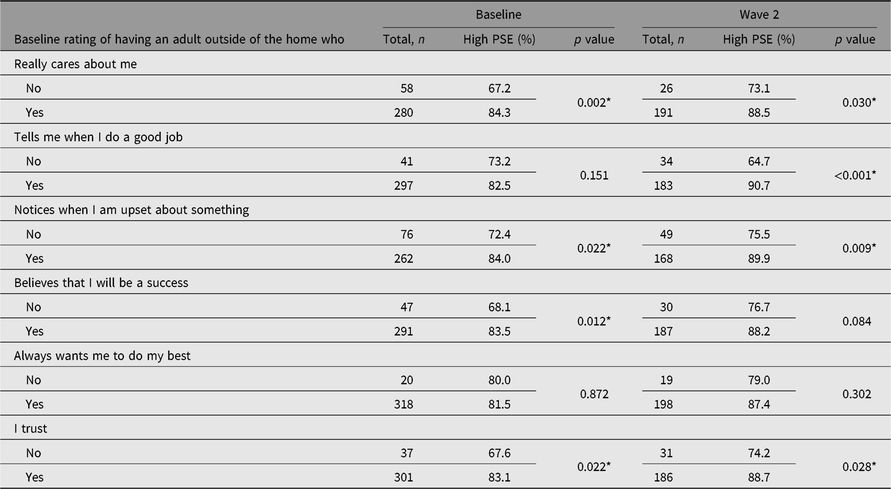
A test of association between responses to questions from the California Health Kids Survey (caring other adult) and PSE suggests identified several significant associations (see Table 4). A statistically significant association was found at both baseline and Wave 2 in relation to all these statement except ‘who always wants me to do my best’. In general, high PSE was associated with perceived support from other adults.
Association between young person’s baseline ratings of relationships with significant other adults and PSE at baseline and Wave 2

* Indicates a statistically significant association with level of PSE at p < 0.05.
Association between young person’s baseline ratings of relationship with peers and PSE at baseline and Wave 2

* Statistically significant p < 0.05.
This analysis suggests a sharp increase in the importance of having someone ‘who tells me when I do a good job’ as the participants move through adolescence. This contrasts with what could be interpreted as external expectations (always wants me to do my best) which appear to have little relationship with PSE. This concurs with findings from other Australian research on the importance of trusted adults talking not telling (Meltzer et al., Reference McNamara2016, pp. 60–62). The associations found between what we have called significant other adults and PSE are more marked than other relational factors such as participation in non-school activities. However, it is probable that contact with these significant other adults occurs through participation in organised activities like music and sport.
Analysis between the baseline and 2-year follow-up suggests very little change over time in terms of the respondent’s perceptions of significant other adults in their lives. In general, shifts tended to be positive, with the ‘very much true’ percentage increasing approximately 5% across all statements except ‘whom I trust’. Data on perceptions of ‘trust’ ran somewhat counter, with an increase in respondents believing it was ‘not at all true’ that they had someone whom they trusted over time (1.7%–3.8%). While this increase is concerning, other Australian research found that 39.8% of young people ‘rarely’ trusted people (Fabiansson, Reference Erbstein, Hartzog and Geraghty2015, p. 98).
Peers play an increasingly important role in young people’s well-being as they move through adolescence. Our analysis found no statistical association between how many friends participants had and PSE (see Table 5). There was, however, an association at Wave 2 between the amount of contact with peers and PSE. Those participants with only occasional contact with peers (less than once per week) were more likely to report lower PSE compared to those having three or more contacts per week with peers.
Discussion
Supporting young people’s well-being and confidence in a range of settings is of interest to parents, educators, policy makers and the broader community. In this section, we draw on our findings to discuss policy and service innovation opportunities to support young people’s well-being in rural and regional communities. In tailoring strategies to the specific uniqueness within a regional centre or rural community, we aim to avoid the trap of applying a ‘likeness of disadvantage’ across all young people (Davie, Reference Currie, Zanotti, Morgan, Currie, de Looze, Roberts, Samdal, Smith and Barnekow2015, p. 65).
Our findings confirm that the material environment and social context in which young people grow impacts on well-being (Ungar, Reference Ungar, Theron, Liebenberg and Ungar2015). While young people are most often identified as the cause of litter and graffiti (see Cetinski, Reference Cetinski2018; Ruming, Reference Ross and Mirowsky2017), our research points to the negative impact generalised disorder has on young people as well. Regular maintenance and cleaning of public amenities may assist in addressing perceptions of poor safety and physical disorder.
Places for young people to meet have been long recognised in Australia as significant for young people (White & Wyn, Reference White and Wyn2013) and this was also identified in our study. Encouragingly, planners and policy makers are increasingly acknowledging the importance of listening to young people and facilitating their participation (see Commissioner for Children, Tasmania, n.d., for useful resources). Given the negative impact on young people’s well-being by the material environment, our research supports engagement with young people in the development of space and place in rural communities. The provision of places for young people to meet that are free and welcoming is likely to have a positive impact on young people’s well-being.
Our research highlighted very high levels of dissatisfaction among participants with public transport. Transport disadvantage is recognised as an issue impacting on rural and regional communities (Rosier & McDonald, Reference Robbins, Rawsthorne, Paxton, Hawke, Skinner and Steinbeck2011). Young people are among those identified as being at higher risk of experiencing transport disadvantage, together with low-income households and Aboriginal and Torres Strait Islander people (Rosier & McDonald, Reference Robbins, Rawsthorne, Paxton, Hawke, Skinner and Steinbeck2011). Nutley (cited in Rosier & McDonald, Reference Robbins, Rawsthorne, Paxton, Hawke, Skinner and Steinbeck2011) argues that public transport has been overlooked in research and policy domains due to high levels of private car ownership in rural areas. However, household car ownership is unlikely to address the transport disadvantage experienced by participants in our study. Further research and service innovation into localised transport solutions, such as small buses between larger centres and small outlying communities over the weekend, are required.
Participation in non-school activities, particularly sport, is widely promoted as enhancing young people’s well-being (see Australian Sports Commission, n.d). Like previous research findings (Australian Sports Commission, 2017), in our study, we found distance from the larger regional cities created a barrier to participation, a finding which supports our earlier recommendation for localised transport solutions. Our research found high levels of participation among the young people across a diverse range of activities, including arts and music. The lack of public investment in arts and music is well recognised in Australia, generally, and this is even worse in rural communities (The Conversation, Reference Straker, Mountain, Jacques, White, Smith, Landau and Eastwood2018). We suggest that investments in public infrastructure in rural communities could go beyond sporting facilities to include performance and studios spaces that are accessible to young people. The opening up of public spaces in these locations (such as village halls) to young people for music or art practice may also be helpful.
Belonging – that is, liking the area, feeling part of the area and feeling safe – appears influential for young people’s well-being. A focus on actively building belonging is likely to be useful for communities wishing to support young people’s well-being. This could be achieved through acknowledging and celebrating participation of young people across the diversity of their activities. Young people reporting lower SES felt a greater sense of alienation from the local community, suggesting that these acknowledgements and celebrations need to be inclusive of young people across the SES spectrum. Further, our research supports calls for attention to be paid to the nature of the relationships in these non-school activities (Meltzer et al., Reference McNamara2016, Reference Meltzer, Muir and Craig2018). In our research, the availability of significant caring adults outside their homes was influential for young people’s well-being. Adults involved in young people’s lives, as coaches, instructors or leaders, have the potential to positively support young people’s well-being. Even just one important relationship can enable cognitive change and personal agency in a young person and, in turn, impact the subjective, relational and material domains used in this paper (Little cited in Centre for Community Child Health, 2017, p. 9). The technical capacity to play music, dance or netball is less important than adults who nurture a sense of belonging and are supportive of young people. This means that their relationships with adults in extra-curricular activities need to be supportive, encouraging and provide role modelling to young people (Meltzer et al., Reference McNamara2016, p. 61). This could also help reduce feelings of alienation or isolation that young people may experience in rural areas while developing trust in the community.
To conclude, policies and strategies aimed at supporting young people’s well-being need to include attention to the environment in which young people are growing, rather than seeing resilience or well-being as an individual task to be achieved. Attention to the environmental context which includes resources, organisational capacity and relationships needs to be primary in thinking about interventions (Centre for Community Child Health, 2017, p. 13), including access to quality amenities and physical spaces that welcome young people. This includes a shift in focus from young people as dangerous to ensuring young people feel safe in our communities. Any strategies designed to support young people’s well-being need to be sensitive and tailored to spatial differences, gender differences and very importantly socioeconomic differences.
Conceptualisation of well-being (White, Reference White2010, p. 162).

Appendix Modified Cowen’s Perceived Self-Efficacy Scale
How sure are you that you can manage when …
1. You meet a person for the first time?
2. You are in a place you don’t know anything about?
3. You have new work to do at school?
4. You have to get something done and there is a lot of pressure?
5. You have to work out a problem with a teacher?
6. You have to work out a problem with your mother?
7. You have to give a talk in class?
8. You have to do something for the first time?
9. You have to travel to a new place by yourself?
10. You have to work out a problem with your friend?
11. You have trouble solving a problem in school?
12. You feel very unhappy?
13. You lose something important?
14. You have to do things people expect you to do?
15. You have to figure out something by yourself?
16. You have to make an important decision?
17. Someone counts on you to do something important?
18. You are bored and want to find something interesting to do?
19. Things are going wrong?
20. You become older?
21. You have to work out a problem with your father?
22. You have done something wrong?
Response scale: Not at all sure/Somewhat sure/A little sure/Quite sure/Very sure.