Parental socialization of emotions, the process in which parents impart emotion regulation skills via their responses to their children's emotions, occurs in many ways. Whereas certain forms of socialization (such as emotion-focused or problem-focused supportive strategies) are associated with adaptive outcomes, others may result in negative psychological outcomes (Denham, Reference Denham2007; Morris, Silk, Steinberg, Myers, & Robinson, Reference Morris, Silk, Steinberg, Myers and Robinson2007). One example is parental invalidation, where a parent or primary caregiver persistently punishes, trivializes, disregards, or dismisses a child's communicated experiences and needs (Linehan, Reference Linehan1993). Importantly, invalidation has been found to be positively associated with symptoms of various mental health disorders, including borderline personality disorder (BPD) (Keng & Wong, Reference Keng and Wong2017; Robertson, Kimbrel, & Nelson-Gray, Reference Robertson, Kimbrel and Nelson-Gray2013), eating disorders (Mountford, Corstorphine, Tomlinson, & Waller, Reference Mountford, Corstorphine, Tomlinson and Waller2007), major depressive disorder (Sauer-Zavala, Geiger, & Baer, Reference Sauer-Zavala, Geiger and Baer2013), and narcissistic personality disorder (Reeves, James, Pizzarello, & Taylor, Reference Reeves, James, Pizzarello and Taylor2010). However, despite its significance, little is known about the precursors of parental invalidation. Past research has demonstrated that negative parenting practices could transmit across generations (Belsky, Jaffee, Sligo, Woodward, & Silva, Reference Belsky, Jaffee, Sligo, Woodward and Silva2005; Conger, Neppl, Kim, & Scaramella, Reference Conger, Neppl, Kim and Scaramella2003), suggesting that parental invalidation may also be transmitted cross-generationally. In this study, we examined past experienced parental invalidation as a predictor of one's invalidating tendencies towards one's children. We also investigated whether parental difficulties in emotion regulation mediated the association between past experience of invalidation and current invalidating parenting practices.
Overview of the Biosocial Model – Invalidating Environment
The biosocial model posits that both individual and environmental factors interact over time to contribute to the development of BPD (Fruzzetti, Shenk, & Hoffman, Reference Fruzzetti, Shenk and Hoffman2005; Linehan, Reference Linehan1993). The individual factor refers to biological vulnerabilities to experiencing intense negative affect while the environment factor refers to a chronic invalidating environment. An invalidating environment can consist of the following characteristics: (a) telling the individual that their experiences, thoughts, and feelings are wrong, (b) attributing one's negative emotional reactions to undesirable personal characteristics (e.g., characterizing the display of negative emotions as a sign of personal weakness), (c) oversimplification or minimization of difficulties, and (d) discouraging the display of negative affect. Linehan's (Reference Linehan1993) definition implies that invalidation can manifest in various forms. Severe invalidation may include sexual and physical abuse, in which a child's security and safety are violated. On the other end of the spectrum, invalidation could occur in subtle ways, such as praising a child for accomplishing a task while simultaneously putting them down for failing to accomplish the task in the past. Therefore, in all instances of invalidation, a child's needs, thoughts, or feelings, which could be communicated verbally or nonverbally, or implicitly assumed as a universal human need, are punished, disregarded, or dismissed. Importantly, the chronicity and pervasiveness of invalidation, rather than the occasional experience of invalidation, constitute an invalidating environment (Fruzzetti et al., Reference Fruzzetti, Shenk and Hoffman2005).
The present study builds upon the biosocial model by examining potential precursors to parental invalidation, which reflects the “environment” aspect of the model. Despite Linehan's (Reference Linehan1993) emphasis on the interaction between individual vulnerabilities and parental invalidation in contributing to the development of BPD, emotional vulnerability (Gill & Warburton, Reference Gill and Warburton2014; Reeves et al., Reference Reeves, James, Pizzarello and Taylor2010) and parental invalidation (Gill & Warburton, Reference Gill and Warburton2014) have each been shown to predict BPD symptoms independently. In this research, we examined potential precursors to parental invalidation, given that it is one aspect of the biosocial model that is malleable to psychological intervention.
Intergeneration Transmission of Parenting Behaviors
Parenting behaviors could be influenced by a variety of factors, including parental personality, child temperament (Hong et al., Reference Hong, Tan, Lee, Tan, Tsai, Poh and Zhou2015; Prinzie, Stams, Deković, Reijntjes, & Belsky, Reference Prinzie, Stams, Deković, Reijntjes and Belsky2009), gender (Elam, Chassin, Eisenberg, & Spinrad, Reference Elam, Chassin, Eisenberg and Spinrad2017), and marital stress (Elam et al., Reference Elam, Chassin, Eisenberg and Spinrad2017). Crucially, an earlier generation's parenting behavior also influences a later generation's parenting attitudes and behaviors – a process termed as intergenerational transmission of parenting (Van Ijzendoorn, Reference Van Ijzendoorn1992).
Longitudinal studies have found that both positive and negative parenting transmit across generations. These cross-generational transmissions of parenting style have been observed for angry, aggressive parenting (Conger et al., Reference Conger, Neppl, Kim and Scaramella2003), and for the experience of low parental supervision, harsh and inconsistent discipline, and poor parent–child relationship (Capaldi, Pears, Patterson, & Owen, Reference Capaldi, Pears, Patterson and Owen2003). Positive parenting practices such as parenting behaviors that convey affection or having good communication with children (Belsky et al., Reference Belsky, Jaffee, Sligo, Woodward and Silva2005; Chen & Kaplan, Reference Chen and Kaplan2001) have also been observed to be transmitted intergenerationally. Furthermore, an individual's parenting style could be influenced by the parenting style experienced during their early childhood to adolescence years (Belsky et al., Reference Belsky, Jaffee, Sligo, Woodward and Silva2005).
While the studies above evinced the intergeneration transmission of various parenting behaviors, this phenomenon has been largely unexplored for parent invalidating behaviors except for a meta-analysis which reported a medium effect size of .29 for the intergenerational transmission of maltreatment (Assink et al., Reference Assink, Spruit, Schuts, Lindauer, van der Put and Stams2018). Nonetheless, child maltreatment represents an extreme form of parental invalidation (Linehan, Reference Linehan1993) and little work has examined the cross-generational transmission of parental invalidating behaviors more broadly. Our study thus aimed to build on the biosocial model and identify precursors of parental invalidation by examining the association between past childhood invalidation and current invalidating behaviors reported by one's children. Consistent with existing research on intergenerational transmission of parenting behaviors, we hypothesize that past parental invalidation would positively predict current invalidation reported by one's child.
Potential Mechanisms Underlying the Transmission of Parenting Behaviors
Research has demonstrated that social learning (Bandura, Reference Bandura1977; Conger et al., Reference Conger, Neppl, Kim and Scaramella2003) and emotion dysregulation (Yan, Han, & Li, Reference Yan, Han and Li2016) may partially account for how parenting behavior is transmitted across generations. However, studies are less consistent with regard to potential moderators of cross-generation transmission of parenting behaviors, such as gender (Shaffer, Burt, Obradović, Herbers, & Masten, Reference Shaffer, Burt, Obradović, Herbers and Masten2009; Simons, Whitbeck, Conger, & Wu, Reference Simons, Whitbeck, Conger and Wu1991; Thornberry, Freeman-Gallant, Lizotte, Krohn, & Smith, Reference Thornberry, Freeman-Gallant, Lizotte, Krohn and Smith2003). In this study, we explored emotion regulation as a potential mediator underlying cross-generation transmission of invalidation, as well as gender as a factor that may influence the transmission.
Gender-specific pathways of intergenerational transmission of invalidation
Social learning is the process by which individuals model behaviors that they have observed in others (Bandura, Reference Bandura1977). Individuals could learn and internalize parenting behaviors by several means: (a) via one's own interaction with parents, (b) through observation of parents’ interaction with other children, and (c) being taught by parents how to interact with other children (Crittenden, Reference Crittenden1984).
Although social learning could occur for all individuals, boys and girls may be differentially influenced by their parents, such that modeling may be stronger for gender-similar than for gender-dissimilar parental models (Bussey & Bandura, Reference Bussey and Bandura1999). In traditional families, including those in Singapore, mothers typically assume the role of a primary caregiver (Cinamon & Rich, Reference Cinamon and Rich2002; Hong et al., Reference Hong, Tan, Lee, Tan, Tsai, Poh and Zhou2015; Ministry of Social and Family Development, 2013) and spend more time with their children (Ministry of Community Development, Youth, and Sports, 2009; Russell & Russell, Reference Russell and Russell1987). Given the prominence of mothers’ parenting role, girls may model after their mothers’ parenting practices more than those of their fathers (Bussey & Bandura, Reference Bussey and Bandura1999; Perry & Bussey, Reference Perry and Bussey1979). In contrast, fathers tend to spend more time with sons than with daughters (Lundberg, Reference Lundberg2005). In addition, gender-related attitudes and beliefs between fathers and sons were found to be more closely aligned than those of fathers and daughters (Halpern & Perry-Jenkins, Reference Halpern and Perry-Jenkins2016; Kulik, Reference Kulik2002). Therefore, fathers may exert greater influence on sons as compared to daughters.
Preliminary evidence suggests that the intergenerational transmission of parenting style is gender specific. Thornberry et al. (Reference Thornberry, Freeman-Gallant, Lizotte, Krohn and Smith2003) recruited two generations of parents (with mothers forming the majority of the first-generation parent respondents) and found that the parenting styles across generations were more similar between mother–daughter pairs than mother–son pairs. A similar pattern of findings was also reported by Simons et al. (Reference Simons, Whitbeck, Conger and Wu1991), who found that harsh parenting practices of first-generation mothers were more related to harsh parenting practices of mothers than fathers in the second generation.
Indirect effect – difficulties in emotion regulation
Our study also investigated whether parents’ emotion dysregulation mediated the association between past parental invalidation and current invalidating parental behaviors. In a conceptual model proposed by Eisenberg, Cumberland, and Spinrad (Reference Eisenberg, Cumberland and Spinrad1998), parenting practices may influence the development of child emotion regulation capacities, which could in turn affect the way a child interacts with their children when they become parents. The model points to the role of emotion regulation difficulties as a potential mediator of the relationship between past experienced parental invalidation as a child and current invalidating behaviors as a parent. In line with this notion, Yan et al. (Reference Yan, Han and Li2016) found that emotion dysregulation mediated the relationship between past experience of negative parenting (overcontrol and less warmth/affection) and current parenting invalidation practices in a sample of 217 Chinese fathers. However, the study did not examine past parental invalidation and whether the association also applies to mothers. Nonetheless, pervasive invalidation could result in a child having low emotional awareness, poor emotion regulation competence, and an attitude of nonacceptance towards emotional experiences (Fruzzetti et al., Reference Fruzzetti, Shenk and Hoffman2005). When the child becomes a parent, the failure to regulate their own emotions may result in the parent invalidating their child, especially when the child displays intense emotions.
Although few studies have examined whether emotion dysregulation mediates past experienced parenting and current parenting styles, empirical studies have examined the links (a) between parental invalidation and emotion dysregulation, and (b) between difficulties in emotion regulation and parenting behaviors. Parental invalidation has been positively associated with emotion dysregulation in both adolescents (Buckholdt, Parra, & Jobe-Shields, Reference Buckholdt, Parra and Jobe-Shields2014; McCallum & Goodman, Reference McCallum and Goodman2019) and adults (Gill & Warburton, Reference Gill and Warburton2014; Sturrock & Mellor, Reference Sturrock and Mellor2014). Separately, meta-analyses have found that parental depression (Lovejoy, Graczyk, O'Hare, & Neuman, Reference Lovejoy, Graczyk, O'Hare and Neuman2000; Wilson & Durbin, Reference Wilson and Durbin2010), and maternal BPD symptoms (Reinelt et al., Reference Reinelt, Stopsack, Aldinger, Ulrich, Grabe and Barnow2013) were positively associated with negative parenting behaviors, supporting the notion that parental emotion regulation difficulties could be linked to negative parenting behaviors.
Taken together, parenting behaviors (e.g., invalidation) could influence children's emotion regulation capacities, which might affect children's parenting styles when they become parents. Our study examined whether emotion regulation difficulties of the parents would mediate the link between their childhood experienced invalidation and current invalidating behaviors exhibited toward their child, through the use of path analysis conducted on data from a large sample of parent–adolescent dyads in Singapore.
Specific Aims and Hypotheses
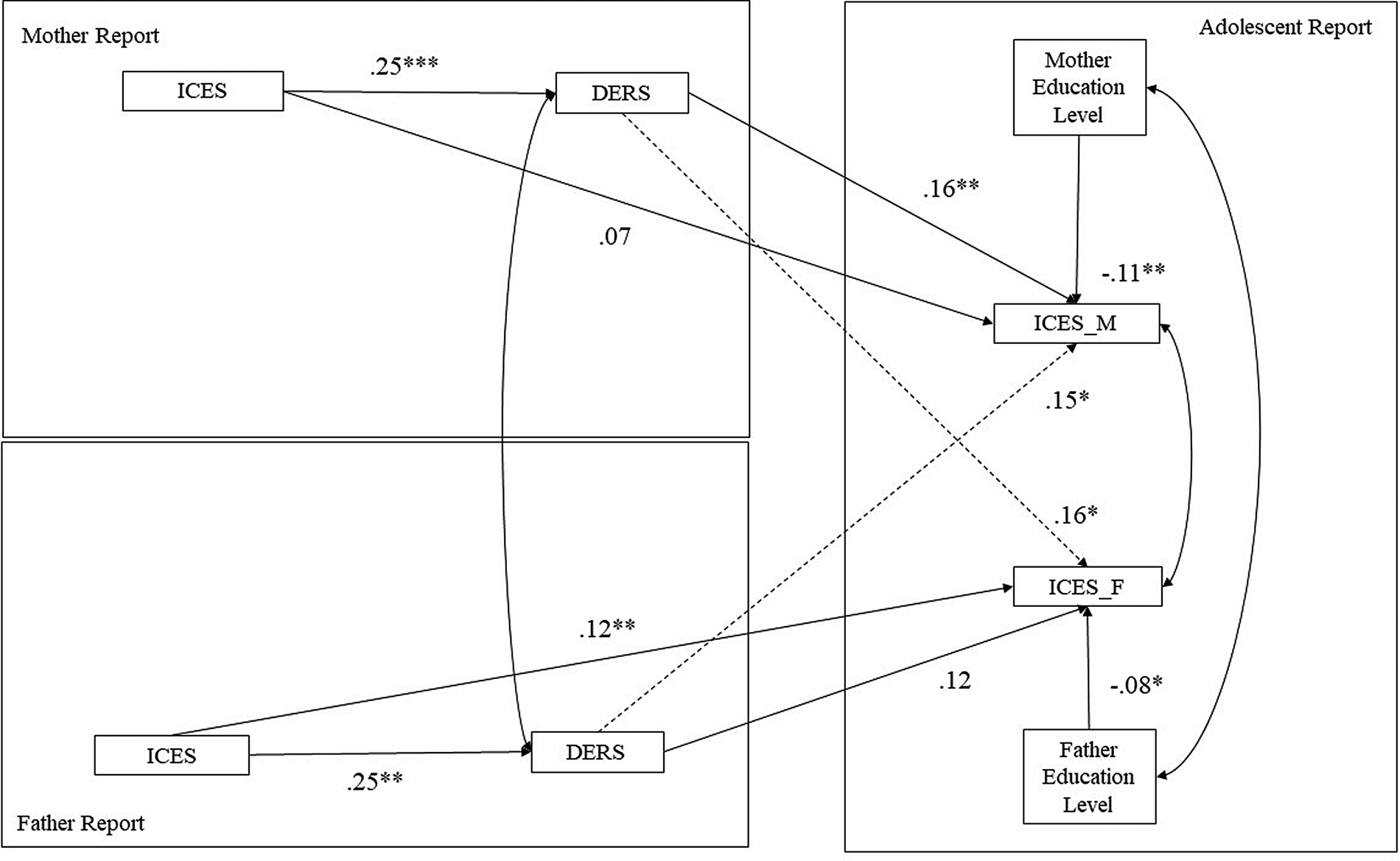
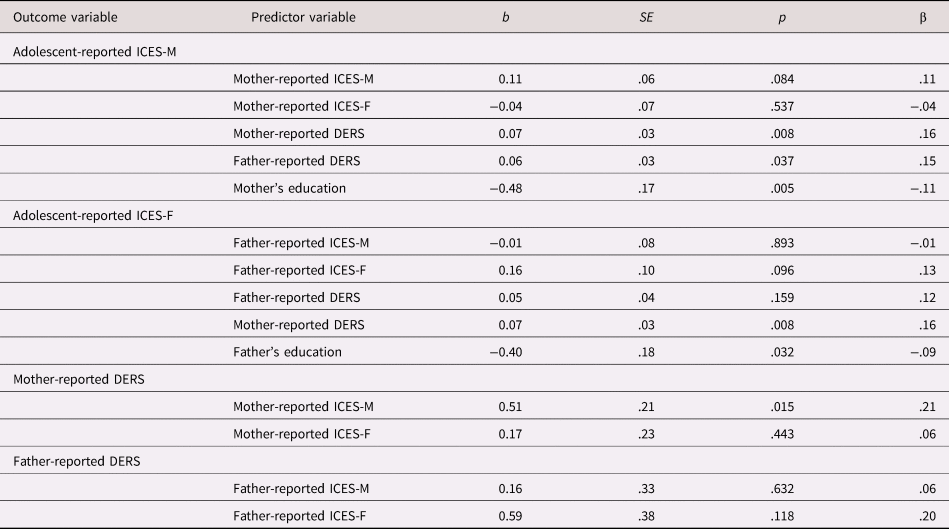
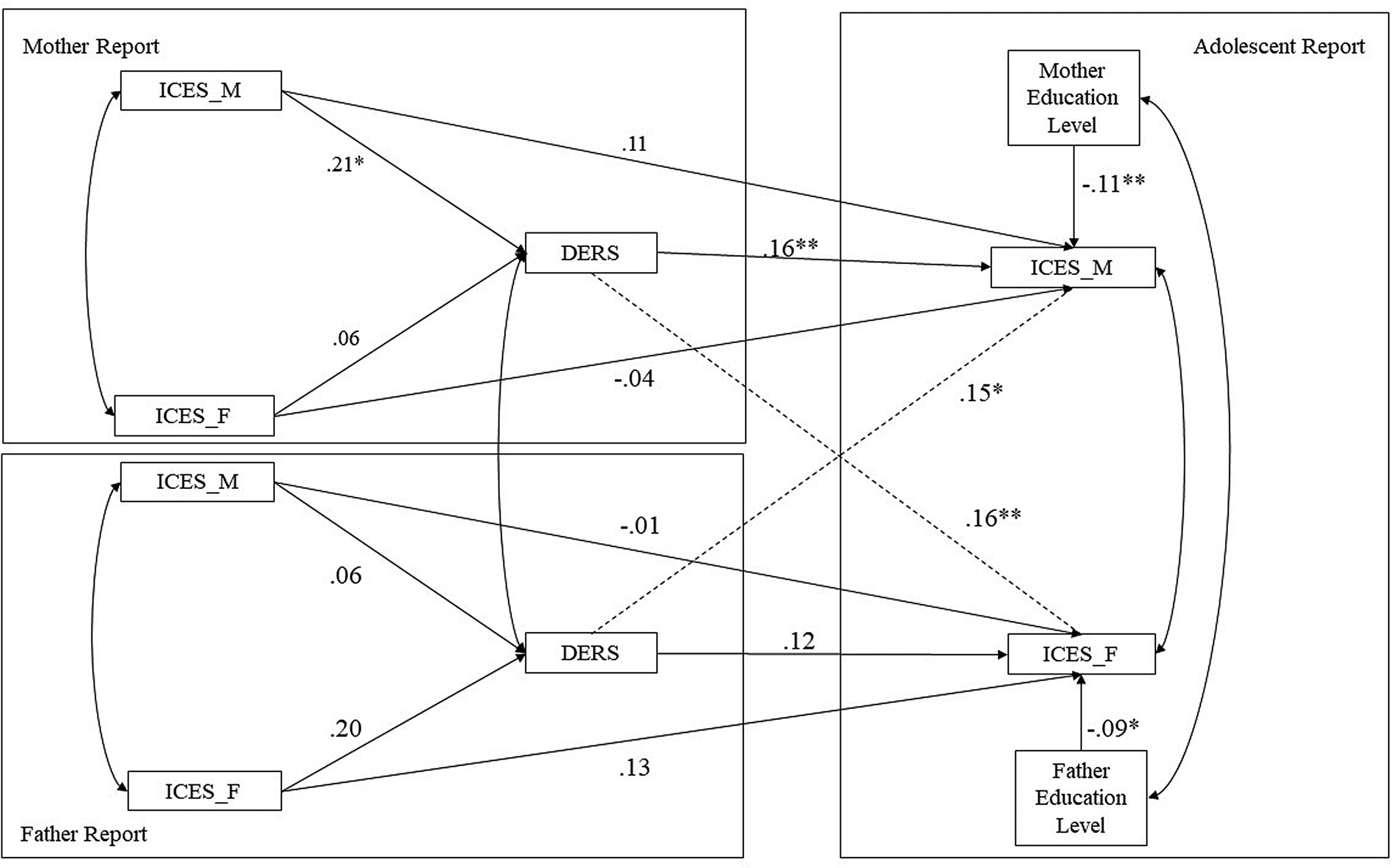
The aim of our study was to extend the biosocial model (Linehan, Reference Linehan1993) by investigating (a) past invalidation experienced by parents as a predictor of current invalidation reported by one's children, and (b) the role of parental emotion regulation difficulties as a mediator of this association. We hypothesized that there would be a significant, positive association between a parent's self-reported past parental invalidation and current invalidation experienced by one's child (Model 1). Further, we hypothesized that there would be gender-specific effects of the intergenerational association of invalidating parenting behaviors, such that mothers’ invalidating behaviors would be positively predicted by their experience of invalidation with their own mothers, while fathers’ invalidating behaviors would be associated with their experience of invalidation from their own fathers (Model 2). In addition, we hypothesized that difficulties in emotion regulation (as reported by parents) would mediate the link between parents’ past experiences of invalidation and current invalidating behaviors reported by their children. Figures 1 and 2 depict Models 1 and 2, respectively.
Model 1: intergenerational transmission of overall parental invalidation. The values presented represent the standardized estimates for each path. ICES = Invalidating Childhood Environment Scale; ICES-M = Invalidating Childhood Environment Scale – Maternal Scale; ICES-F = Invalidating Childhood Environment Scale – Paternal Scale; DERS = Difficulties in Emotion Regulation Scale; dotted lines represent parameters that were added after reviewing modification indices ***p < .001; **p < .01; *p < .05.

Model 2: gender-specific links between intergenerational transmission of parental invalidation. The values presented represent the standardized estimates for each path. ICES-M = Invalidating Childhood Environment Scale – Maternal Scale; ICES-F = Invalidating Childhood Environment Scale – Paternal Scale; DERS = Difficulties in Emotion Regulation Scale; dotted lines represent parameters that were added after reviewing modification indices **p < .01; *p < .05.
Method
Participants
We used baseline data of a larger longitudinal research study conducted by Yale-NUS College, Singapore and the National University of Singapore. Three hundred and thirty-three families were recruited from the community. At least one parent was required to participate with an adolescent from the same family. Only one adolescent per family was allowed to participate in the study. Participants were recruited via online advertisements in parenting-related websites or via a survey company. Participants were required to be proficient in English. Adolescents with developmental disorders or hearing or visual (apart from corrected vision) impairment were not eligible.
As our study aimed to investigate the intergenerational transmission of parental invalidation and whether there might be a gender-specific association for its transmission, we conducted analyses using only data from dual-parent families (defined as families in which parents are married or living together, or families with both parents participating in the study despite not being married, not living together, separated, or divorced). Participants were reimbursed at a rate of $5 (Singapore dollars) per 30 min. All procedures were approved by the National University of Singapore's institutional review board.
Of all participating families, 293 families were dual-parent families (88.0%). Of these families, both parents from 161 families participated in the study along with their adolescent child. The remaining 132 families consisted of mother as the sole parent participant (90.9%) and father as the sole parent participant (9.1%).
The adolescents were between 12 and 17 years old (M = 14.13, SD = 1.63; 58.7% female), while parents were between 27 and 64 years old (M = 45.63, SD = 5.59). Approximately 68.9% of the adolescents identified with the Chinese ethnicity, while 17.7%, 6.4%, and 6.8% of the adolescents identified as Malay, Indian, and other ethnic categories, respectively. An estimated 52.5% of the parents attained a diploma or higher education qualification. About 55.0% of the households reported a monthly combined household income of more than $6000 (Singapore dollars). Therefore, our sample constituted predominantly middle-income households. Additional details of our sample demographics are presented in Appendix 1.
Of note, our a priori power analysis conducted via Monte Carlo simulations revealed that some of our analyses required a sample of 500 families to be adequately powered. Therefore, our sample size of 293 families resulted in under-powered analysis of some of the regression paths in our models. Broadly, for both models, most path parameters associated with mothers were adequately powered, but those for fathers had less optimal power. Details and results of the power analysis are presented in Appendix 2.
Procedure
Participants were provided with an option of completing a battery of questionnaires either via hard copy or online (hosted via Qualtrics). All questionnaires were administered in the English language. Only the measures relevant to this study are described below. Both parents and adolescent completed the Invalidating Childhood Environment Scale (ICES; Mountford et al., Reference Mountford, Corstorphine, Tomlinson and Waller2007), while parents additionally completed the Difficulties in Emotion Regulation Scale (DERS; Gratz & Roemer, Reference Gratz and Roemer2004) and a demographic data form.
Measures
Demographic data form
The demographic data form assessed participants’ gender, age, ethnicity, overall household income, parents’ employment status, and parents’ education level.
Invalidating Childhood Environment Scale (Mountford et al., Reference Mountford, Corstorphine, Tomlinson and Waller2007)
The ICES (Mountford et al., Reference Mountford, Corstorphine, Tomlinson and Waller2007) is a retrospective measure of the invalidating childhood environment that focuses on parental responses to a child's emotions, behaviors, and difficulties faced. The scale was administered to both parents and adolescents in this study. It consists of 14 items focusing on descriptions of actual parental behaviors that are in line with the themes of an invalidating environment as defined by Linehan (Reference Linehan1993). The items were rated on a 5-point Likert scale, with 1 indicating “never”, and 5 indicating “all of the time”. Examples of items in the measure include “If I was happy, my parents would be sarcastic and say things like: ‘What are you smiling at?’.” and “If I said I couldn't do something, my parents would say things like ‘You're being difficult on purpose.’.”
In this study, parent respondents were instructed to provide ratings for their own parents’ (both maternal and paternal) parenting behaviors up to the age of 18 years, while adolescent respondents provided ratings for their parents’ behaviors up to their current age. Scores for the perceived maternal and paternal invalidation scale were obtained by a summation of all 14 items in the respective scales. An overall parental invalidation score was obtained by averaging the maternal and paternal invalidation scale scores. Although the ICES (Mountford et al., Reference Mountford, Corstorphine, Tomlinson and Waller2007) was developed and used mostly in Western populations (Robertson et al., Reference Robertson, Kimbrel and Nelson-Gray2013; Sturrock, Francis, & Carr, Reference Sturrock, Francis and Carr2009), it demonstrated acceptable to good internal consistencies in Singaporean undergraduate samples (Keng & Soh, Reference Keng and Soh2018; Keng & Wong, Reference Keng and Wong2017). In the current sample, the measure demonstrated good internal consistency for all participants (mother's report: maternal scale α = .80, paternal scale α = .76; father's report: maternal scale α = .80, paternal scale α = .74; adolescent's report: maternal scale α = .83, paternal scale α = .84).
Difficulties in Emotion Regulation Scale (Gratz & Roemer, Reference Gratz and Roemer2004)
The DERS (Gratz & Roemer, Reference Gratz and Roemer2004) is a 36-item self-report measure of emotion dysregulation administered to all parents in the study. Items are rated on a 5-point Likert scale, with 1 indicating “almost never”, and 5 indicating “almost always”. The DERS consists of six subscales, namely: nonacceptance of emotional responses, difficulty engaging in goal-directed behaviors, difficulty controlling impulses, lack of emotional awareness, low access to strategies for emotion regulation, and lack of emotional clarity. The DERS has demonstrated good psychometric properties, with Cronbach's alphas ranging from .80 to .89 for each subscale and a test–retest reliability of .88 over a 4- to 8-week period (Gratz & Roemer, Reference Gratz and Roemer2004). The measure has demonstrated excellent internal consistency for both mothers (α = .94) and fathers (α = .94) in this sample.
Results
Preliminary analyses
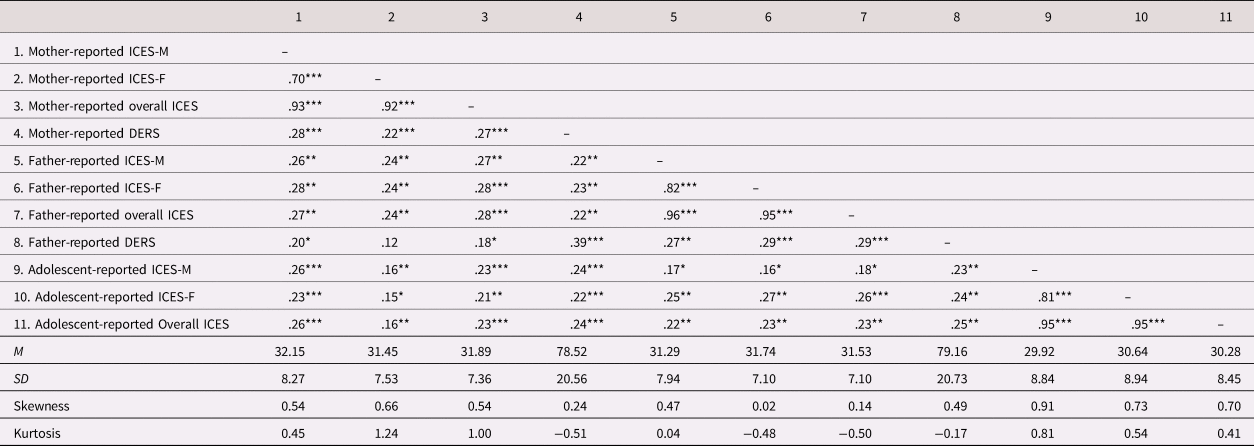
Analyses were performed using the Lavaan package (Rosseel, Reference Rosseel2012) in R (R Development Core Team, 2018) and SPSS Version 25.0 (IBM Corp, 2017). Little's missing completely at random test was first conducted to check the pattern of missing data. As item-level data were missing completely at random for all variables of interest (ps > .05), an imputation procedure of item-level missing data was conducted using the expectation-maximization algorithm prior to the computation of scaled scores. Data from the scored scales were also missing completely at random (p > .05). Univariate distributions of most variables were considered normal as the skewness and kurtosis fell within |1|, except for mothers’ report of paternal invalidation (kurtosis = 1.24). Bivariate relationships among the variables were explored via Pearson's correlations. Table 1 presents the descriptive statistics and correlations among study variables.
Descriptive statistics and correlations among variables

Note: ICES = Invalidating Childhood Environment Scale; ICES-M = Invalidating Childhood Environment Scale – Maternal scale; ICES-F = Invalidating Childhood Environment Scale – Paternal Scale; DERS = Difficulties in Emotion Regulation Scale; Maximum possible range of scores – for ICES: 14–70; for DERS: 36–180. ***p < .001; **p < .01; *p < .05
Preliminary analyses were conducted with various demographic variables (i.e., adolescents’ gender, household income, parents’ education level) included as covariates in the path analysis models. Results demonstrated that only parents’ education level predicted adolescents’ reported parental invalidation, and was therefore retained in the final models.
Path analysis
Following preliminary data analyses, path analysis was conducted using the Lavaan package (Rosseel, Reference Rosseel2012) in R to test the hypothesized models of interest. Owing to the presence of missing data at the scale score level for various variables (e.g., missing values for a parent who declined participation in the research), the robust maximum likelihood estimation method (using the Huber–White robust standard error estimator) was used to accommodate the missing data and adjust for nonnormality. The model fit was examined via the Tucker–Lewis index (TLI), a comparative fit index (CFI), and root mean square error of approximation (RMSEA). For a good fit, RMSEA should be less than .06 with its 90% confidence interval not greater than .10, while CFI and TLI values of more than .95 reflect excellent model fit (Hu & Bentler, Reference Hu and Bentler1999).
Two path analysis models were specified: the first by using overall invalidation scores for all parent participants (Model 1), and the second was specified using separate parent-reported maternal and paternal invalidation scores (Model 2). In both models, parent-reported childhood invalidation served as the predictor variable, while adolescent-reported maternal and paternal invalidation were the outcome variables. Both models yielded satisfactory fit to the data (fit statistics for Model 1: χ2 (16) = 44.43, p < .001; CFI = .95; TLI = .92; RMSEA = .08, 90% CI [.05, .11].; fit statistics for Model 2: χ2 (27) = 74.45, p = <.001; CFI = .95; TLI = .91; RMSEA = .08, 90% CI [.06, .10]). Nonetheless, as the RMSEA values for both models were above .06, a review of the modification indices was conducted.
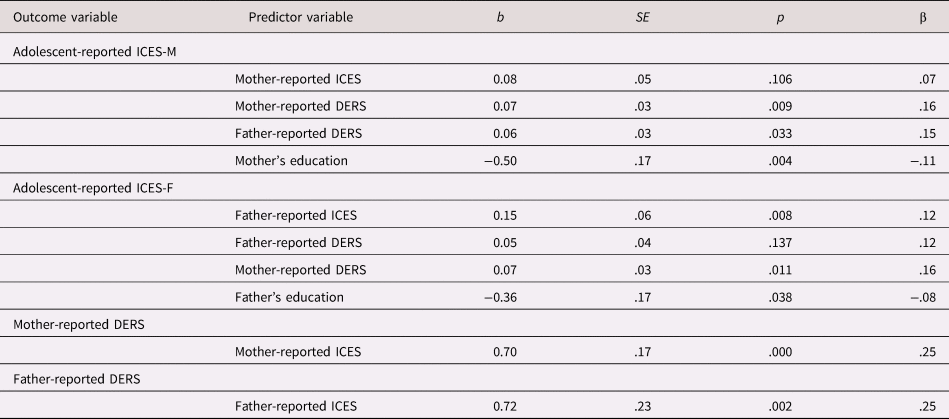
Modification indices (MI) for both models revealed the possibility of regressing adolescent-reported maternal and paternal invalidation on paternal (for Model 1: MI = 11.46; for Model 2: MI = 11.00) and maternal (for Model 1: MI = 11.44; for Model 2: MI = 11.86) DERS scores, respectively. Based on the family systems perspective, the thoughts, behaviors, and emotions experienced in a subsystem (e.g., parent–child subsystem, spousal subsystem) can be transferred to another subsystem (Erel & Burman, Reference Erel and Burman1995). Thus, one parent's difficulties in emotion regulation might influence the partner's parenting behavior for possible reasons such as increased inter-parental conflict. Two additional paths were hence added to Models 1 and 2 by regressing adolescent-reported maternal and paternal invalidation on paternal and maternal DERS scores, respectively. The finalized Model 1 and Model 2 yielded good data fit (for Model 1: χ2 (14) = 28.62, p = .01; CFI = .97; TLI = .95; RMSEA = .06, 90% CI [.03, .09]; For Model 2: χ2 (25) = 58.70, p < .001; CFI = .96; TLI = .93; RMSEA = .07, 90% CI [.05, .09]). The chi-square difference tests for both Model 1 and Model 2 were significant (for Model 1: Δχ2 (2) = 16.25, p < .001; for Model 2: Δχ2 (2) = 16.24, p < .001), therefore, the models with the additional paths were chosen as the final models. Tables 2 and 3 present the parameter estimates for Model 1 and Model 2, respectively.
Unstandardized and standardized parameters estimates for path analysis Model 1

Note: ICES = Invalidating Childhood Environment Scale (overall); ICES-M = Invalidating Childhood Environment Scale – Maternal Scale; ICES-F = Invalidating Childhood Environment Scale – Paternal Scale; DERS = Difficulties in Emotion Regulation Scale
Unstandardized and standardized parameters estimates for path analysis Model 2
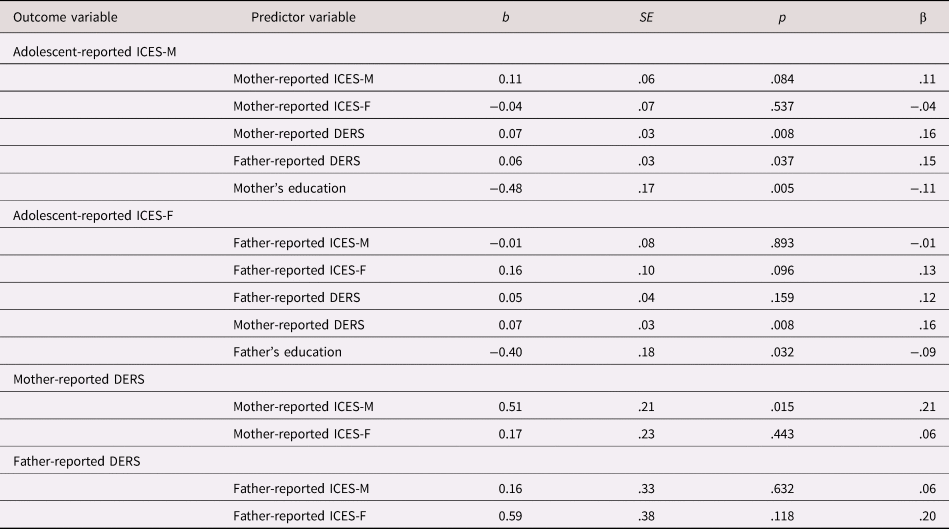
Note: ICES-M = Invalidating Childhood Environment Scale – Maternal Scale; ICES-F = Invalidating Childhood Environment Scale – Paternal Scale; DERS = Difficulties in Emotion Regulation Scale.
Association between parental invalidating behaviors across generations
Results based on Model 1 indicated that, while taking into account mothers’ difficulties in emotion regulation, fathers’ overall childhood invalidation positively predicted adolescents’ reported paternal invalidation (b = 0.15, SE = .06, p = .008, β = .12). However, for mothers, overall childhood invalidation did not predict adolescents’ current experienced maternal invalidation (b = 0.08, SE = .05, p = .106, β = .07). Hence, the hypothesis that past experienced parental invalidation would predict current invalidating parenting behaviors was partially supported. We compared the direct effects by conducting a chi-square difference test between a baseline model (i.e., all parameters were freely estimated) and a more restrictive model (i.e., the direct paths were constrained to be equal to each other), which showed that the two direct effects did not differ from each other significantly (Δχ2 (1) = 1.39, p = .239).
Direct gender-specific effect. The hypothesized gender-specific effect was investigated by specifying Model 2. Results demonstrated that a parent's own childhood experience of maternal or paternal invalidation did not predict adolescents’ report of their current invalidating behaviors.
Specifically, mothers’ report of childhood maternal (b = 0.11, SE = .06, p = .084, β = .11) and paternal (b = −0.04, SE = .07, p = .537, β = −.04) invalidation did not predict adolescents’ report of maternal invalidation. Similarly, fathers’ report of their childhood maternal (b = −0.01, SE = .08, p = .893, β = −.01) and paternal (b = 0.16, SE = .10, p = .096, β = .13) invalidation failed to predict adolescents’ report of paternal invalidation. Therefore, we did not find support for our direct gender-specific hypothesis.
Difficulties in emotion regulation as a mediator. Mediational analyses were first conducted using overall parental invalidation reported by parents as the predictor, and maternal or paternal invalidation reported by adolescents as the outcome variable (Model 1). Both mothers’ (b = 0.70, SE = .17, p < .001, β = .25) and father's (b = 0.71, SE = .23, p = .002, β = .25) past parental invalidation positively predicted their difficulties in emotion regulation. Mothers’ difficulties in emotion regulation positively predicted adolescents’ reported maternal invalidation (b = 0.07, SE = .03, p = .009, β = .16). However, fathers’ emotion dysregulation did not predict adolescents’ reported paternal invalidation (b = 0.05, SE = .04, p = .137, β = .12). The indirect effect of difficulties in emotion regulation mediating the link between past parental invalidation and current perceived invalidation by the adolescents was significant for mothers (b = 0.05, SE = .02, p = .037, β = .04), but not fathers (b = 0.04, SE = .03, p = .235, β = .03). As the indirect effect obtained for mothers was significant (while the direct effect was not significant), the association between past parental invalidation experienced by mothers and their current invalidating behaviors was therefore fully mediated by mothers’ current difficulties in emotion regulation. Nonetheless, although there was a significant indirect effect for mothers, the indirect effect obtained for mothers did not differ significantly from that obtained for fathers (b = 0.01, SE = .04, p = .799, 95% CI [−0.07, 0.09]).
Further analyses were conducted by separating past invalidation experienced by parents into maternal and paternal sources (Model 2). Mothers’ report of their own maternal (b = 0.51, SE = .21, p = .015, β = .21), but not paternal (b = 0.17, SE = .23, p = .443, β = .06), invalidation positively predicted their current difficulties in emotion regulation. Further, mothers’ report of emotion regulation difficulties positively predicted adolescents’ report of maternal invalidation (b = 0.07, SE = .03, p = .008, β = .16). However, the indirect effect of difficulties in emotion regulation mediating past parental invalidation and current invalidating behaviors for mothers was not significant for both past maternal (b = 0.04, SE = .02, p = .083, β = .03) and paternal (b = 0.01, SE = .02, p = .469, β = .01) invalidation.
For fathers, past maternal (b = 0.16, SE = .33, p = .632, β = .06) and paternal (b = 0.59, SE = .38, p = .118, β = .20) invalidation did not predict current emotion regulation difficulties. Their difficulties in emotion regulation also did not predict their invalidating parenting behaviors (b = 0.05, SE = .04, p = .159, β = .12). Therefore, for fathers, difficulties in emotion regulation did not mediate the link between both past maternal (b = 0.01, SE = .02, p = .665, β = .01) and paternal invalidation (b = 0.03, SE = .03, p = .313, β = .02) and current invalidation reported by their adolescents.
Partner effect on parental invalidating behaviors
Incidentally, our results also demonstrated that a parent's difficulties in emotion regulation positively predicted adolescent's perception of invalidation from the other parent. Fathers’ difficulties in emotion regulation were positively associated with a child's perceived maternal invalidation (Model 1: b = 0.06, SE = .03, p = .033, β = .15; Model 2: b = 0.06, SE = .03, p = .037, β = .15). Similarly, mothers’ difficulties in emotion regulation positively predicted a child's reported paternal invalidation (Model 1: b = 0.07, SE = .03, p = .011, β = .16; Model 2: b = 0.07, SE = .03, p = .008, β = .16).
Discussion
Our study examined the intergenerational transmission of parental invalidation and whether emotion regulation difficulties would mediate the transmission in a sample of 293 dual-parent families in Singapore. For fathers, we found a direct effect of overall past parental invalidation positively predicting current invalidating parenting behaviors, whereas the direct effect was not significant for mothers. Instead, for mothers, the association between overall childhood experienced invalidation and current invalidating parenting behaviors was fully mediated by their emotion regulation difficulties. In addition, we did not find evidence of gender-specific transmission of parent invalidating behaviors across generations.
Our findings are consistent with previous studies demonstrating intergeneration transmission of negative parenting behaviors for mothers and fathers (Capaldi et al., Reference Capaldi, Pears, Patterson and Owen2003; Conger et al., Reference Conger, Neppl, Kim and Scaramella2003), albeit via different mechanisms. The direct effect for fathers indicates that children could internalize the caregiving roles and parenting attitudes of their parents from a young age, including maladaptive forms of parenting behaviors such as invalidation, which may be carried over and exhibited towards their children when they became parents.
For mothers, difficulties in emotion regulation fully mediated the association between childhood invalidation and current invalidating parenting behaviors. An examination of the specific regression paths found that past parental invalidation positively predicted emotion dysregulation for parents of both genders; a result mirroring past research, which found positive associations between parental invalidation and difficulties in emotion regulation (Gill & Warburton, Reference Gill and Warburton2014; Sturrock & Mellor, Reference Sturrock and Mellor2014). As theorized by both Linehan (Reference Linehan1993) and Fruzzetti et al. (Reference Fruzzetti, Shenk and Hoffman2005), chronic invalidation could result in a child having a lack of emotional awareness, clarity, and regulation skills. Of note, however, emotion regulation difficulties positively predicted current invalidating behaviors of mothers, but not fathers. As a figure who is often the primary caregiver of children, mothers may have significantly more interactions with their children. Therefore, any emotion regulation difficulties experienced by mothers may have a more direct or immediate impact on their parenting behaviors compared to fathers. Future research could examine other potential mechanisms underlying the intergenerational transmission of paternal invalidation, such as gender-related attitudes (e.g., endorsement of traditional gender norms).
Contrary to our gender-specific hypothesis, mothers’ past experienced maternal invalidation (and fathers’ past experienced paternal invalidation) did not predict current invalidating behaviors towards their children, suggesting that parents do not model their current parenting practices after their parent of the same gender. Furthermore, although mothers are frequently reported to be the primary caregiver for most children in Singapore (Hong et al., Reference Hong, Tan, Lee, Tan, Tsai, Poh and Zhou2015; Ministry of Social and Family Development, 2013), past experienced maternal invalidation did not predict fathers’ current invalidating behaviors. Therefore, having greater opportunities to observe a specific parent's behavior did not have a direct effect on an individual's behaviors as a parent. Nonetheless, we observed strong positive correlations between maternal and paternal invalidation as reported by all parents and adolescents in our study (r = .70–.82). The highly similar parenting styles of parents in dual-parent families may have contributed to the lack of association between past maternal or paternal invalidation and current invalidating behaviors.
Our analyses also revealed that when past parental invalidation was separated into past maternal and paternal invalidation, only the association between past maternal invalidation and difficulties in emotion regulation for mothers remained significant. This fine-grained analysis of parent–child gender dyads suggests that maternal emotion socialization may have a unique influence on the development of emotion regulation in daughters. This finding corresponds with a study conducted on South Korean mothers, which found that unsupportive responses from mothers were associated with increased negativity in only girls (Song & Trommsdorff, Reference Song and Trommsdorff2016). Personality traits may also contribute to the higher vulnerability of girls to unsupportive parental responses. Specifically, girls have consistently been found to exhibit higher levels of neuroticism compared to boys (Schmitt, Realo, Voracek, & Allik, Reference Schmitt, Realo, Voracek and Allik2008). This may result in them being more vulnerable to negative outcomes associated with parental invalidation.
Taken together, our findings highlight the importance of considering the influence of a childhood invalidating environment (instead of the influence of specific parent figures) on emotion regulation capacities and parenting behaviors of the second-generation parents. Nonetheless, the presentation of emotion dysregulation and invalidating behaviors could also be a function of genetic factors. A twin study found that genetic factors could largely account for the association between childhood abuse and BPD symptoms (Bornovalova et al., Reference Bornovalova, Huibregtse, Hicks, Keyes, McGue and Iacono2013), which suggests that genetic traits may also account for the transmission of invalidating behaviors and emotion dysregulation from one generation to the next.
Overall, our study provided evidence for the intergenerational transmission of invalidation and extended the biosocial model by demonstrating that a parent's past childhood invalidation could serve as a precursor to parental invalidation experienced by the child. The positive association between overall family invalidating environment and emotion dysregulation in our study provided support for the main effect of parental invalidation in the biosocial model (Linehan, Reference Linehan1993). As emotion dysregulation is a core feature of BPD, parental invalidation could exert a unique, independent effect on the development of BPD symptoms by extension (Gill & Warburton, Reference Gill and Warburton2014). Future research could examine whether transmission of parental invalidation across generations could explain the development and co-occurrence of psychological disorders within a family, above and beyond known environmental and genetic factors (e.g., see Arroyo, Segrin, & Andersen, Reference Arroyo, Segrin and Andersen2017; Hammen, Hazel, Brennan, & Najman, Reference Hammen, Hazel, Brennan and Najman2012; Reinelt et al., Reference Reinelt, Stopsack, Aldinger, Ulrich, Grabe and Barnow2013). Our findings underscore the importance of increasing parents’ awareness of ways in which their parenting behaviors may be influenced by their own parents. Interventions targeted at reducing parental invalidation (and increasing validation) could help mitigate emotion regulation deficits resulting from chronic invalidation. For example, parents could be provided with validation training, which has been shown to increase validation and decrease invalidation between spouses (Edlund, Carlsson, Linton, Fruzzetti, & Tillfors, Reference Edlund, Carlsson, Linton, Fruzzetti and Tillfors2014). Our preliminary analyses also revealed that parents with higher levels of education were reported by their adolescents to be less invalidating, potentially due to greater awareness of invalidation's negative consequences. Future research should explore the role of education as a protective factor that may interrupt the transmission of invalidation across generations.
Incidentally, our study found that a parent's difficulties in emotion regulation were associated with their adolescent's reported invalidating experiences from the other parent.. It is plausible that a parent's emotion regulation difficulties may contribute to increased tension between both parents, resulting in the other parent having reduced capacity to respond effectively to a child's display of negative emotions. Future research should explore the potential bidirectional influences (i.e., spillover effects) of emotion regulation difficulties and invalidating behaviors between parents.
Our study is one of few studies that have examined invalidation in an Asian – specifically Singaporean – context. Demographically, individuals of Chinese ethnicity form 74% of the Singapore population, while Malays and Indians form 13% and 9% of the population, respectively (Department of Statistics Singapore, 2020). Therefore, Singapore can be considered a largely collectivistic society given the influence of Chinese Confucian and other Asian values. In this context, emotional restraint tends to be viewed as a desirable character trait as it aids in maintaining interpersonal relationships (Butler, Lee, & Gross, Reference Butler, Lee and Gross2007). While it is unclear whether emotional suppression is associated with invalidation, the levels of parental invalidation reported by participants in our sample are comparable with those reported in Australia (Sturrock et al., Reference Sturrock, Francis and Carr2009). Furthermore, the associations between parental invalidation and difficulties in emotion regulation obtained in our study are similar in magnitude to those found in previous studies (Gill, Warburton, & Beath, Reference Gill, Warburton and Beath2018; Reeves et al., Reference Reeves, James, Pizzarello and Taylor2010). Overall, the findings suggest that the negative implications of parental invalidation on emotion regulation may cut across cultures. Future research could investigate the impact of culture on children's perception and interpretation of parental invalidation, as well as how specific sociocultural variables, such as conformity and gender socialization, might influence the transmission of parenting behaviors.
The present study has several strengths, including the recruitment of whole family units, and the assessment of paternal and maternal invalidation as separate constructs. The latter addressed existing limitations in several past studies, which recruited mainly mothers in a single generation or did not capture the gender of grandparents (Chen & Kaplan, Reference Chen and Kaplan2001; Thornberry et al., Reference Thornberry, Freeman-Gallant, Lizotte, Krohn and Smith2003).
The study has several limitations. As described earlier, several of our analyses were under-powered, which might have contributed to selected null results in our analyses, especially analyses conducted in relation to fathers. To be adequately powered, our analyses would require a sample of 500 families, which were logistically challenging to recruit given resource limitations. Future studies could consider doing more targeted recruitment of fathers to enable more robust analyses of parenting behaviors pertaining to fathers.
Our measure of childhood invalidation relies on parents’ retrospective recall, which is subject to memory and self-report biases. However, use of the same scale to measure parental invalidation for both parents and adolescents ensures consistency in measurement. This is in contrast with past studies that employed nonidentical measures of parenting when investigating intergenerational transmission of parenting behaviors (Chen & Kaplan, Reference Chen and Kaplan2001; Madden et al., Reference Madden, Domoney, Aumayer, Sethna, Iles, Hubbard and Ramchandani2015). Importantly, the ICES (Mountford et al., Reference Mountford, Corstorphine, Tomlinson and Waller2007) measures participants’ recollection of behaviors exhibited by parents, rather than the perception of parental invalidation. As perceptions of parenting behaviors are also important determinants of parenting outcomes (Soenens, Vansteenkiste, & Van Petegem, Reference Soenens, Vansteenkiste and Van Petegem2015), future research could include measures to assess the relative impact of perceived versus objective parental invalidating behaviors on developmental outcomes. Lastly, intergenerational transmission of invalidation in less traditional families could be further explored, such as in families with same-sex parents, in which the distribution of gender roles and expressions may be more fluid.
In addition, our study examined emotion regulation difficulties as a broad construct. Future studies could examine the roles that different aspects of emotion regulation difficulties may play in the intergenerational transmission of parenting behaviors. For instance, the experience of parental invalidation may be more strongly associated with the lack of emotional awareness and clarity, while difficulties controlling impulsive behaviors and engaging in goal-directed behavior when distressed are aspects of emotion dysregulation that may be more strongly associated with parents’ engagement in invalidating behaviors.
Lastly, our study features a cross-sectional design, which limits the interpretation of directional and causal effects. Nonetheless, use of the ICES enables the inference of a temporal relationship between earlier invalidating experiences and current emotion regulation difficulties, as the measure assesses past childhood experiences of invalidation up to the age of 18 years as a reference period. However, as perception (and memory) of childhood experiences could change over time, future studies could investigate whether changes to perceptions of experienced parenting have an impact on developmental outcomes by implementing real-time assessment of these experiences.
Supplementary Material
The supplementary material for this article can be found at https://doi.org/10.1017/S0954579421000778
Funding Statement
The authors disclose receipt of the following financial support for the research, authorship, and/or publication of this article. Preparation of this manuscript was supported by the Social and Family Research Fund grant (SFRF 2017-2) administered by the Ministry of Social and Family Development in Singapore to Shian-Ling Keng, Stephanie S. M. Lee, and Ryan, Y. Hong. The content – including the methods, findings, and results – is solely the authors’ responsibility and does not represent the endorsement and views of the grant-administering organization.
Conflicts of Interest
None.