Introduction
An initial and fundamental step towards understanding the trophic ecology of organisms and its implications for the organization and functioning of biological communities and ecosystems is the study of the species' natural diet (Majdi et al., Reference Majdi, Hette-Tronquart, Auclair, Bec, Chouvelon, Cognie, Danger, Decottignies, Dessier, Desvilettes, Dubois, Dupuy, Fritsch, Gaucherel, Hedde, Jabot, Lefebvre, Marzloff, Pey, Peyrard, Powolny, Sabbadin, Thebault and Perga2018). Fishes are a suitable biological model for trophic ecology studies, due to their wide distribution, diversity and abundance in aquatic ecosystems (Helfman et al., Reference Helfman, Collette, Facey and Bowen2009). Knowledge about the diet of fish provides information that helps to investigate ecological issues such as the functioning and dynamics of aquatic communities and their food webs, breadth and overlapping of trophic niches, life history and habitat requirements (Gerking, Reference Gerking1994). Furthermore, temporal and spatial analysis of the diet of predatory fish can reveal which predator–prey interactions may have important effects on populations and community structure (Winemiller and Layman, Reference Winemiller, Layman, Ruiter, Wolters and Moore2005). Among these effects, we can highlight bottom-up and top-down controls along the food web and their consequences for secondary production (Hairston et al., Reference Hairston, Smith and Slobodkin1960; Mittlebach and McGill, Reference Mittelbach and McGill2019), as well as the importance of key species in community regulation (Paine, Reference Paine1969; Estes et al., Reference Estes, Terborgh, Brashares, Power, Berger, Bond, Carpenter, Essington, Holt, Jackson, Marquis, Oksanen, Paine, Pikitch, Ripple, Sandin, Scheffer, Schoener, Shurin, Sinclair, Soulé, Virtanen and Wardle2011) and possible impacts related to the introduction of exotic species on native ones (Zaret and Paine, Reference Zaret and Paine1973; Begon et al., Reference Begon, Townsend and Harper2006). Regardless of the functional responses at the community and ecosystem levels, it is paramount to initially understand the consumer's food habits to infer the food sources sustaining the species in the food web (Condini et al., Reference Condini, Hoeinghaus and Garcia2015; Garcia et al., Reference Garcia, Claudino, Mont'Alverne, Pereyra, Copertino and Vieira2017a, Reference Garcia, Winemiller, Hoeinghaus, Claudino, Bastos, Correa, Huckembeck, Vieira, Loebmann, Abreu and Ducatti2017b; Bastos et al., Reference Bastos, Lippi, Gaspar, Yogui, Frédou, Garcia and Ferreira2022).
A great array of methodological approaches and tools have been employed to investigate fish trophic ecology (Gerking, Reference Gerking1994; Majdi et al., Reference Majdi, Hette-Tronquart, Auclair, Bec, Chouvelon, Cognie, Danger, Decottignies, Dessier, Desvilettes, Dubois, Dupuy, Fritsch, Gaucherel, Hedde, Jabot, Lefebvre, Marzloff, Pey, Peyrard, Powolny, Sabbadin, Thebault and Perga2018; Silveira et al., Reference Silveira, Semmar, Cartes, Tuset, Lombarte, Ballester and Vaz-dos-Santos2020). Traditionally, analyses of the stomach contents (SCA) have been applied to describe the food items consumed and the relative importance of different prey species to the diet (Hyslop, Reference Hyslop1980). Despite being a widely used method, it has some limitations like the difficulty in identifying partially digested items and the uncertainty in evaluating the true nutritional role of consumed items, since many items can be refractory to the digestive process and not be assimilated by the predator (Hyslop, Reference Hyslop1980; Jepsen and Winemiller, Reference Jepsen and Winemiller2002; Silveira et al., Reference Silveira, Semmar, Cartes, Tuset, Lombarte, Ballester and Vaz-dos-Santos2020).
Another method that has been increasingly used to investigate trophic ecology is stable isotope analysis (SIA) (Peterson and Fry, Reference Peterson and Fry1987; Fry, Reference Fry2006; Layman et al., Reference Layman, Araujo, Boucek, Harrison, Jud, Matich, Hammerschlag-Peyer, Rosenblatt, Vaudo, Yeager, Post and Bearhop2012). The atomic ratios of stable isotopes in the tissues of predators and their food can be used to understand the pathways of organic matter as it travels among the various consumers along the food chain (Fry, Reference Fry2006). SIA has been used to infer food assimilation by consumers, including indirect links as the relevance of primary producers as basal sources sustaining carnivorous. It has also been used to estimate the trophic position (TP) of a given species in the food chain (Layman et al., Reference Layman, Araujo, Boucek, Harrison, Jud, Matich, Hammerschlag-Peyer, Rosenblatt, Vaudo, Yeager, Post and Bearhop2012) and other metrics such as the isotopic niche (Jackson et al., Reference Jackson, Inger, Parnell and Bearhop2011). These metrics are useful to help understand important dimensions of the ecological niche, such as the use of food resources and the trophic role of the species in the ecosystem (Newsome et al., Reference Newsome, Martinez del Rio, Bearhop and Phillips2007; Layman et al., Reference Layman, Araujo, Boucek, Harrison, Jud, Matich, Hammerschlag-Peyer, Rosenblatt, Vaudo, Yeager, Post and Bearhop2012).
The Plata pompano Trachinotus marginatus (Cuvier, 1832) is a marine fish of the Carangidae family that is distributed from the coast of Rio de Janeiro in Brazil to the coast of Northern Argentina (Fischer et al., Reference Fischer, Pereira and Vieira2011). It is considered a euryhaline species (Sampaio et al., Reference Sampaio, Tesser and Burkert2003), with the predominant life cycle in the marine environment. In the coastal zone of extreme southern Brazil, during warmer seasons (austral spring and summer), the species reproduce offshore (~40 m deep) and its eggs and larvae are later transported to the shallower inshore waters. Juveniles (<20 mm) are commonly found in the marine surf zone (<2 m deep) of sandy beaches during summer and autumn, which acts as nursery areas for the species. After reaching larger body sizes (>150 mm) in this nursery grounds, they move to the intermediate deep waters (20 m), where they remain until reaching sexual maturity (L50 = 211.5 mm) (Lemos et al., Reference Lemos, Junior, Velasco and Vieira2011). During its residence in this nursery area, the species is one of the dominant catch components in the trammel net surf-zone fishery (Santos and Vieira, Reference Santos and Vieira2016).
Thus, the marine surf zone is an important area for the development of juvenile T. marginatus (Monteiro-Neto et al., Reference Monteiro-Neto, Cunha and Musick2003; Lima and Vieira, Reference Lima and Vieira2009; Lemos et al., Reference Lemos, Junior, Velasco and Vieira2011; Vieira et al., Reference Vieira, Román-Robles, Rodrigues, Ramos and Santos2019). However, the trophic ecology of this species during its residency in nursery grounds is largely unknown, being restricted only to diet description based on SCA. For example, Monteiro-Neto and Cunha (Reference Monteiro-Neto and Cunha1990) studied the diet of T. marginatus at Cassino Beach in the extreme south of Brazil (32°S) and found that the diet was composed mainly of small planktonic and benthic crustaceans, insects, polychaetes, molluscs, and fish. Currently, no information is available on important aspects of trophic ecology of juvenile T. marginatus, such as the primary producers sustaining the species, food niche dimensions and TP along the food chain.
In this context, the present study combined SCA and SIA techniques to investigate the trophic ecology of the species in a marine surf zone in southern Brazil (29°S). Using both techniques allow a more comprehensive and accurate understanding of fish trophic ecology, than solely using traditional methods such as SCA (e.g. Winemiller et al., Reference Winemiller, Zeug, Robertson, Winemiller and Honeycutt2011; Condini et al., Reference Condini, Hoeinghaus and Garcia2015). In addition to describing the diet of juvenile T. marginatus using SCA, SIA was applied to investigate the relative importance of basal (planktonic and benthic pathways) and prey sources sustaining juveniles, as well as their food niche structure and TP.
Materials and methods
Study area
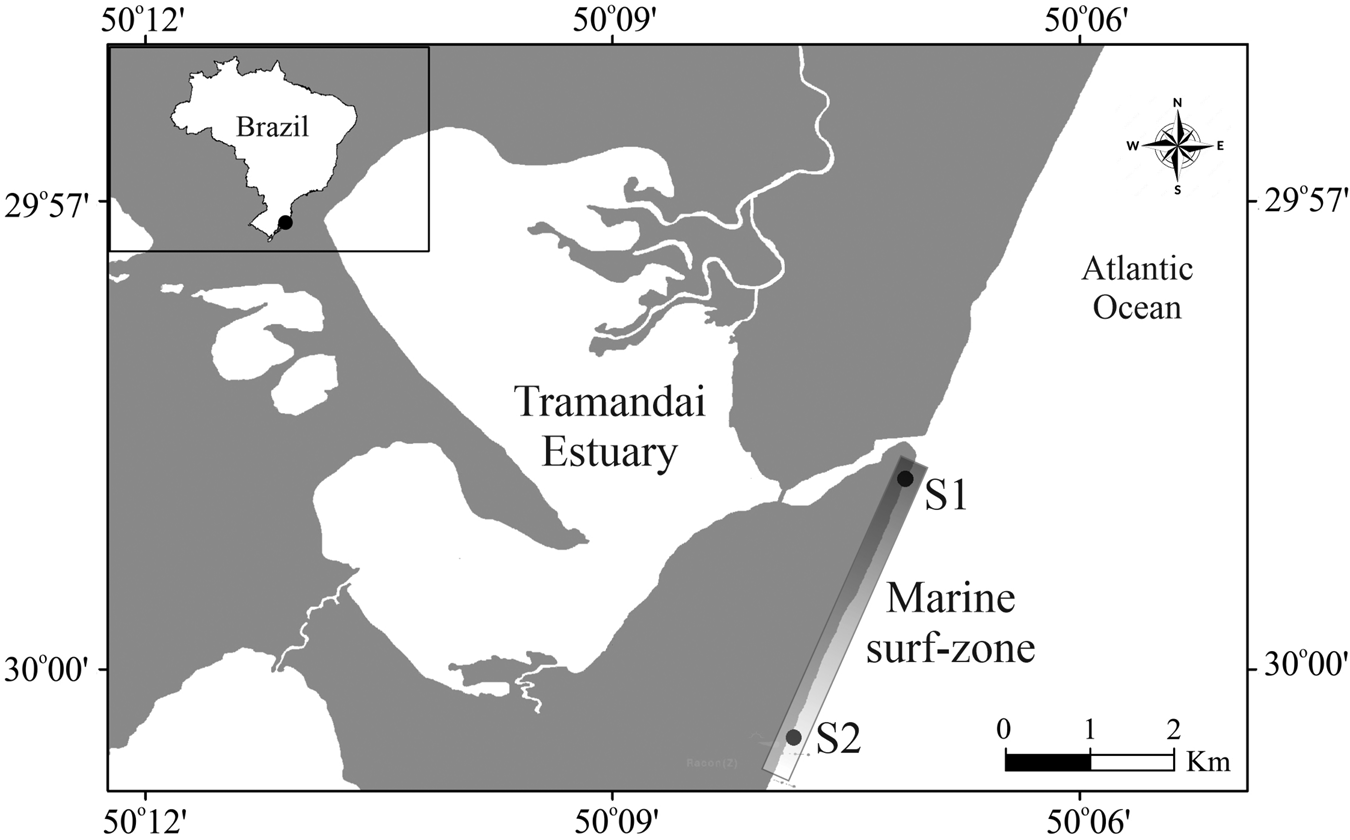
The study was carried out at the marine surf zone of Tramandaí Beach (Figure 1), which is characterized by fine sand and dissipative to intermediate morphodynamics, being directly exposed to waves with medium to high energy (Tomazelli and Villwock, Reference Tomazelli and Villwock1991; Toldo et al., Reference Toldo, Dillenburg, Almeida, Tabajara, Ferreira and Borguetti1993; Pereira et al., Reference Pereira, Calliari and Barletta2010). Such sandy beaches are important growing sites for juvenile T. marginatus along the extensive (~180 km) coastal plain that characterizes southern Brazil (Lemos et al., Reference Lemos, Junior, Velasco and Vieira2011). The climate in this region is classified as humid subtropical, with higher incidence of northeast winds between September and March, whereas southwest winds predominate between April and August (Nimer, Reference Nimer1977). Precipitation in the region shows a small increase in the winter season (Hasenack and Ferraro, Reference Hasenack and Ferraro1989).
Location of the sampling stations (S1 and S2) of Trachinotus marginatus in the surf zone of Tramandai (Brazil). The shaded rectangular area denotes the studied marine surf-zone.

Field collections and sample processing
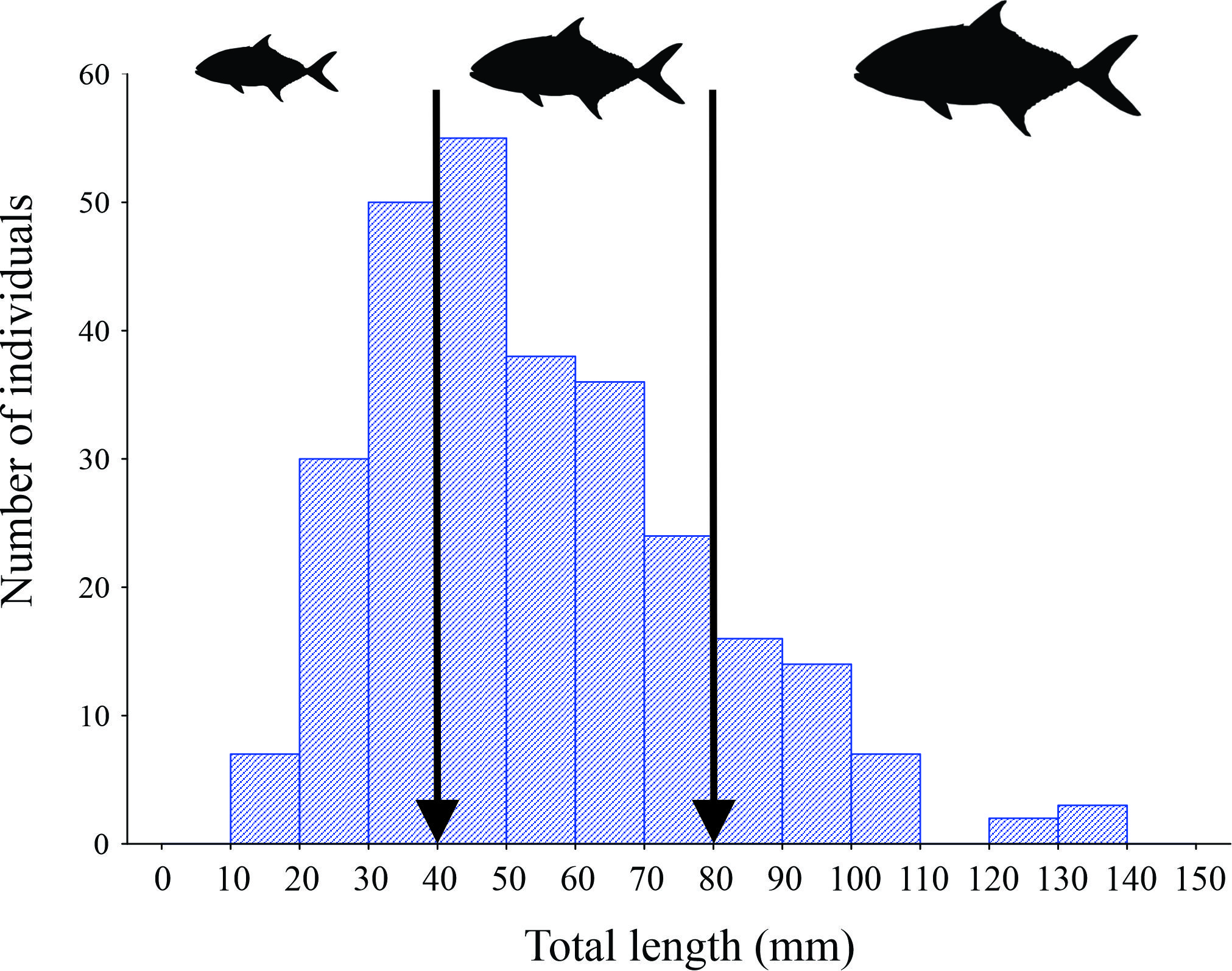
Sample collection was carried out seasonally at two locations in the surf zone of Tramandaí Beach (Figure 1) during March (autumn), July (winter) and October (spring) 2015 and February (summer) 2016. Fish were collected using beach seine, with the net having the following dimensions: 9 m long, 1.5 m high, 13 mm mesh opening in the wings and 5 mm mesh in the centre (Garcia et al., Reference Garcia, Santos, Garcia and Vieira2019a). After collection, individuals were preserved in 4% formalin for subsequent stomach contents analysis (SCA) in the laboratory. A total of 282 individuals with an average total length of 55.1 mm (range = 17–136 mm) had their stomach contents analysed. Specimens were collected with the authorization of the SISBIO (Biodiversity Information and Authorization System) of the Chico Mendes Institute for Biodiversity Conservation (ICMBIO) under license number 47567-1.
For SIA, 25 specimens were collected in March 2015, stored on ice in the field and later preserved in a freezer in the laboratory. In addition to fish collections, samples of basal sources as particulate organic matter in suspension (POM) and in sediment (SOM) were also collected at each location for isotopic analysis. POM was obtained by filtering ~1.5 l of water onto a precombusted (450°C, 4 h) Whatman glass-fibre filter (0.75 mm). In order to obtain an SOM sample, about 2 cm of surface sediment was removed using a 10 cm diameter plastic pipe. These organic sources were collected to serve as proxies of the isotopic variability of microalgae and debris (Fry, Reference Fry2006; Vollrath et al., Reference Vollrath, Possamai, Schneck, Hoeinghaus, Albertoni and Garcia2021), which constitutes the main sources of primary organic matter sustaining consumers in sandy beaches along the studied coastal plain (Pinotti et al., Reference Pinotti, Minasi, Colling and Bemvenuti2014; Garcia et al., Reference Garcia, Santos, Garcia and Vieira2019a, Reference Garcia, Oliveira, Odebrecht, Colling, Vieira, Rodrigues and Bastos2019b). Other primary producers, such as floating aquatic macrophytes, seagrasses and macroalgae beds, are usually absent in the sandy beaches of this coastline (Odebrecht et al., Reference Odebrecht, Bergesch, Rubi and Abreu2010).
Representative preys of the main food categories (crustaceans, fishes, insects, annelids and molluscs) observed in the food content of T. marginatus (see Results) were collected. These comprised (1) hippid crab Emerita brasiliensis, (2) juvenile fishes of the mullet Mugil liza and T. marginatus with TL between 17.0 and 24.5 mm, (3) insects of the orders Hymenoptera, Hemiptera, Coleoptera and Odonata, (4) the polychaeta Spio gaucha and (5) the bivalve Amarilladesma mactroides. These prey species were sampled in the same studied sandy beach where basal sources (POM and SOM) were obtained, with exception of the insects and annelids that were obtained from the literature (Huckembeck et al., Reference Huckembeck, Winemiller, Loebmann and Garcia2020 and Garcia et al., Reference Garcia, Oliveira, Odebrecht, Colling, Vieira, Rodrigues and Bastos2019b, respectively). These studies were carried out in the same coastline of the present study (29°59′S): the former in a sandy dune adjacent to the marine surf zone (31°08′S) and the latter in a sandy beach (32°17′S), respectively. The number of samples obtained for each prey and month/year of their collections are shown at Supplementary Table S1.
In the laboratory, fish were identified and the total length (mm) and total weight (g) of each individual was obtained. Later, each specimen was eviscerated for removal of their stomach, and stomach contents were analysed under a stereoscopic microscope (40×). Food items found within the stomachs were identified at the lowest possible taxonomic level, counted and had their mass measured with a precision scale (0.0001 g) (Hyslop, Reference Hyslop1980). For SIA, fish were cleaned with distilled water to remove debris and other materials adhered to the surface, then a sample of muscle tissue in the anterodorsal region of each individual was extracted. After washing, each sample was placed individually in a small glass Petri dish previously sterilized (24 h in HCl) and dried in an oven at 60°C for 48 h. Dried samples remained in the desiccator for a few hours and then grounded to a fine powder with a mortar and pestle. Subsamples were weighed (1–3 mg for animal tissues, 2–3 mg for POM, 25–30 mg for SOM) in tin capsules (Costech, Valencia, CA, USA) and sent to the Stable Isotope/Soil Biology Laboratory, University of Georgia, USA, for analysis of carbon (δ13C) and nitrogen isotope ratios (δ15N). The standard material for carbon and nitrogen were Pee Dee Belemnite (PDB) and atmospheric air, respectively. Results were expressed as delta notation: δ13C or δ15N = [(R sample/R standard) – 1] × 1000, where R is the ratio between 13C and 12C or 15N and 14N (Fry, Reference Fry2006). Standard deviations for δ13C and δ15N replicate analyses of internal standards were 0.11 and 0.10%, respectively. The extraction of lipids in fish samples or mathematical corrections to normalize the data were not performed because C:N ratio of analysed muscle tissues were lower than 3.5 suggesting relatively low levels of lipid content (Post et al., Reference Post, Layman, Arrington, Takimoto, Quattrochi and Montana2007; Hoffman et al., Reference Hoffman, Sierszen and Cotter2015).
Data analyses
For statistical analysis, individuals of T. marginatus were classified into three size body groups to evaluate potential ontogenetic diet shifts (SCA) and ontogenetic changes in food assimilation (SIA): from 0 to 40 mm (GI), from 40 to 80 mm (GII) and greater than 80 mm (GIII) (see Supplementary Figure S1).
Stomach content analysis (SCA)
There were no individuals captured in spring; therefore, SCA was carried out only for autumn, winter and summer seasons. The relative importance of food items found in the stomachs was estimated using the alimentary index (IAi) (Kawakami and Vazzoler, Reference Kawakami and Vazzoler1980) calculated as: IAi = %FO × %W, where %FO represents the frequency of occurrence (i.e. the percentage of the food items found in all analysed stomachs) and %W represents the weight in percentage (i.e. the weight of a food item in relation to the total weight of all food items food found in all analysed stomachs).
Multidimensional non-metric scaling analysis was used to evaluate similarities in diet compositions across body size classes (GI to GIII) of T. marginatus and seasons (Borcard et al., Reference Borcard, Gillet and Legendre2018). For this analysis, prey items were grouped into five broad food categories: annelid, mollusc, crustacean, fish and insect. Differences in diet composition across body size groups and seasons were also evaluated by a permutational analysis of variance (PERMANOVA) test, using a Bray–Curtis matrix of dissimilarity with food item abundance data (log(x + 1) transformed). PERMANOVA was performed with 9999 permutations and α = 0.05. These statistical analyses were performed using the Vegan Package in the R software (R Core Team, 2020).
Stable isotope analysis (SIA)
Changes in δ13C or δ15N across size groups of T. marginatus were initially evaluated using boxplots and potential differences in average values were tested using the non-parametric Kruskal–Wallis and the Dunn post-hoc tests. These procedures were carried out using ggplot2, dplyr and rstatix packages in the R software (R Core Team, 2020). Isotopic ellipses for each size group were calculated using the standard area of the corrected ellipse (SEAc), which is suitable for relatively small samples (n < 30) (Jackson et al., Reference Jackson, Inger, Parnell and Bearhop2011). The statistical comparison between the sizes of the ellipses and the degree of overlap between them was made using direct probability and Bayesian estimates. These analyses were performed using the package Stable Isotope Bayesian Ellipses in R (SIBER) in the R software (Jackson et al., Reference Jackson, Inger, Parnell and Bearhop2011).
The relative contribution of basal (POM, SOM) and prey sources (crustaceans, fishes, insects, annelids, molluscs) to fish was estimated with Bayesian isotopic mixing models using the Stable Isotope Mixing Models in R (SIMMR) package (Phillips et al., Reference Phillips, Inger, Bearhop, Jackson, Moore, Parnell, Semmens and Ward2014; Parnell and Inger, Reference Parnell and Inger2016). This approach considers uncertainty and variation in food sources, consumers and isotopic fractionation, employing Gaussian likelihood and Markov chain Monte Carlo (MCMC) to fit the model to the data (Parnell and Inger, Reference Parnell and Inger2016). The mean values (and standard deviation) of isotopic fractionation used in the mixing models were 0.54 (0.53) ‰ for carbon (δ13C) and 3.02 (0.47) ‰ for nitrogen (δ15N) (Bastos et al., Reference Bastos, Corrêa, Winemiller and Garcia2017). These fractionation values were multiplied by two for the mixing models with basal sources because the studied fish is a carnivorous consumer and, therefore, is subject to more than one isotopic fractionation in the food chain (Phillips et al., Reference Phillips, Inger, Bearhop, Jackson, Moore, Parnell, Semmens and Ward2014; Garcia et al., Reference Garcia, Santos, Garcia and Vieira2019a). The performance of the fitted models was evaluated using the Gelman test, which diagnoses the adequacy of the simulations' fit (Parnell and Inger, Reference Parnell and Inger2016). The average values (±SD) of carbon (δ13C) and nitrogen (δ15N) isotope ratios of the fish (consumer), basal and prey sources used in the isotope mixing models are shown in Supplementary Table S1.
The TP estimates for the different size groups of T. marginatus were computed with Bayesian models performed using the tRophicPosition package (Quezada-Romegialli et al., Reference Quezada-Romegialli, Jackson, Hayden, Kahilainen, Lopes and Harrod2018) in the R software. The model considered isotopic variability (δ13C and δ15N) of each individual fish and primary sources (POM and SOM) as two isotopic baselines (Post, Reference Post2002). The mean values (and standard deviation) of isotopic fractionation of δ15N and δ13C were 3.02 (0.47) and 0.54 (0.53), respectively, which have been suggested for carnivorous fishes (Bastos et al., Reference Bastos, Corrêa, Winemiller and Garcia2017). Mean TP values and 95% credibility intervals were obtained using MCMC simulations with 10,000 interactions and 10,000 samples in the JAGS 4.3.0 program (Quezada-Romegialli et al., Reference Quezada-Romegialli, Jackson, Hayden, Kahilainen, Lopes and Harrod2018).
Results
Diet composition
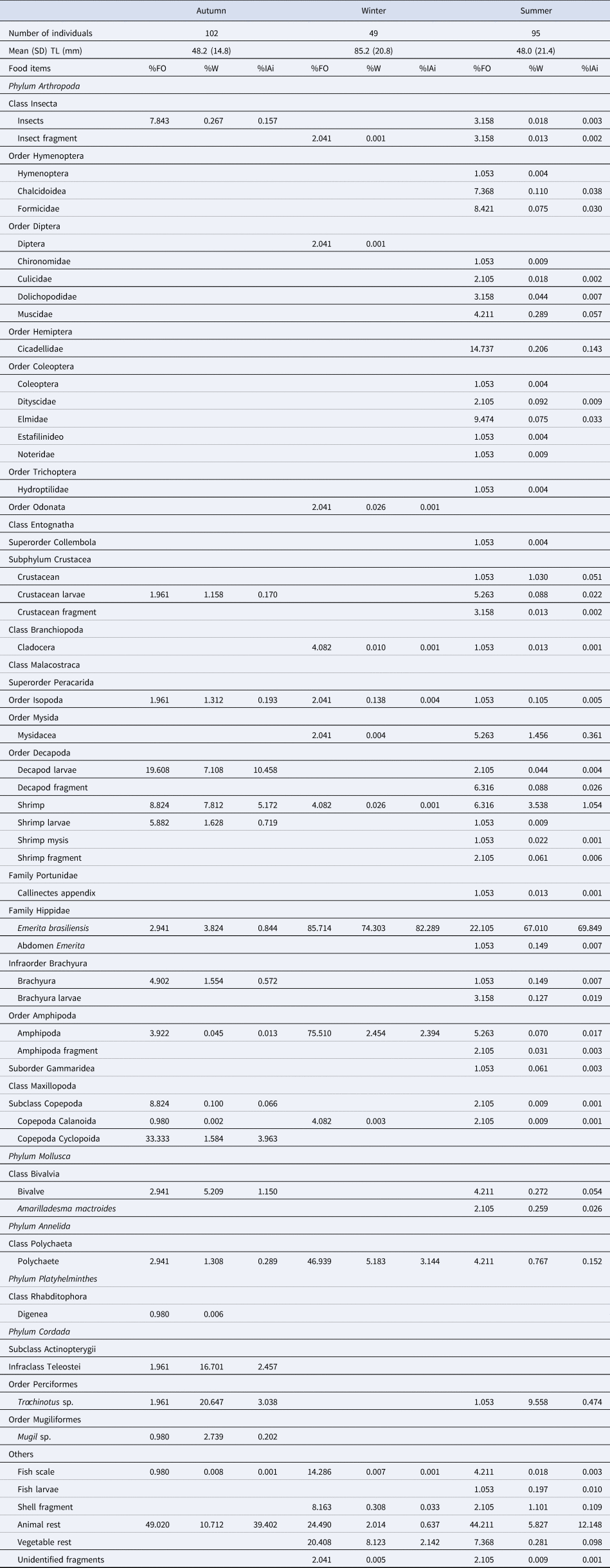
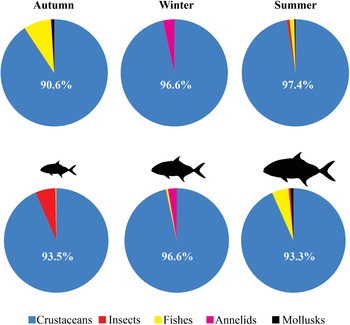
The stomach contents of 284 individuals of juvenile T. marginatus were analysed, of which 36 were empty. In total, 54 prey taxa were identified (Table 1). Crustacean prey were by far the dominant item (IAi > 90%) in the species' diet, both across different size groups and seasons (Figure 2). The main consumed crustacean was the hippid crab E. brasiliensis, which dominated the diet during winter (82.3%) and summer (69.8%) but was rare during autumn (0.8%) (Table 1). Among the less abundant food categories in the diet, the consumption of fish preys stands out mainly in autumn (8.3%) by larger T. marginatus individuals (>80 TL mm) and annelids in winter (3.4%) by individuals with body sizes between 40 and 80 TL mm (Figure 2). Among the consumed fish that was possible to identify at the genus level were juveniles of both Trachinotus spp. and mullet Mugil spp. Insects were consumed during summer (0.9%) by smaller individuals (<40 TL mm). Despite their low relative importance in the diet, these terrestrial prey stood out for their high species diversity, being represented by several orders (Hymenoptera, Diptera, Hemiptera, Coleoptera, Trichoptera and Odonata) distributed in 15 families (Table 1).
Frequency of occurrence (%FO), weight (%W) and alimentary index (IAi) values for the food items found in the stomach contents of juveniles of the Plata pompano Trachinotus marginatus in the marine surf zone of Tramandaí sandy beach in southern Brazil

Values equal to and less than 0.000 are not shown. There were no individuals caught during spring sampling. Number of individuals with no empty stomachs analysed and its mean total length (TL) in mm are shown.
Relative importance (based on the IAi) of the food categories found in the stomach content of Trachinotus marginatus along the seasons (autumn, winter, summer) and body sizes groups (smaller: 0–40, intermediate: 40−80 and larger: >80 TL mm).

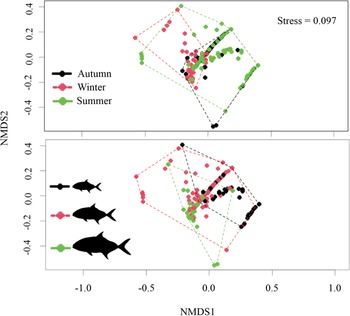
Overall, comparison of the diet similarity along seasons and body size groups revealed marked overlap patterns (Figure 3). Nevertheless, it was possible to observe differences in diet in some cases. For example, diet similarity between autumn and winter was lower when compared with summer, which had higher intraspecific variability in the diet. A similar pattern was observed for body size groups, with slightly lower diet similarity between individuals with body sizes <40 and >80 TL mm, with intermediate body size individuals indicating comparatively higher intraspecific diet variability (Figure 3). These patterns were corroborated by results of the PERMANOVA test, which revealed statistical differences (P < 0.005) both between seasons (P = 0.0001) and body size groups (P = 0.0001).
Diet similarity among seasons and body size groups (smaller: 0–40, intermediate: 40–80 and larger: >80 TL mm) using multidimensional non-metric scaling analysis (NMDS) based on the IAi of the food categories found in the stomach content of Trachinotus marginatus.

Isotopic niches, assimilation of food sources and trophic position
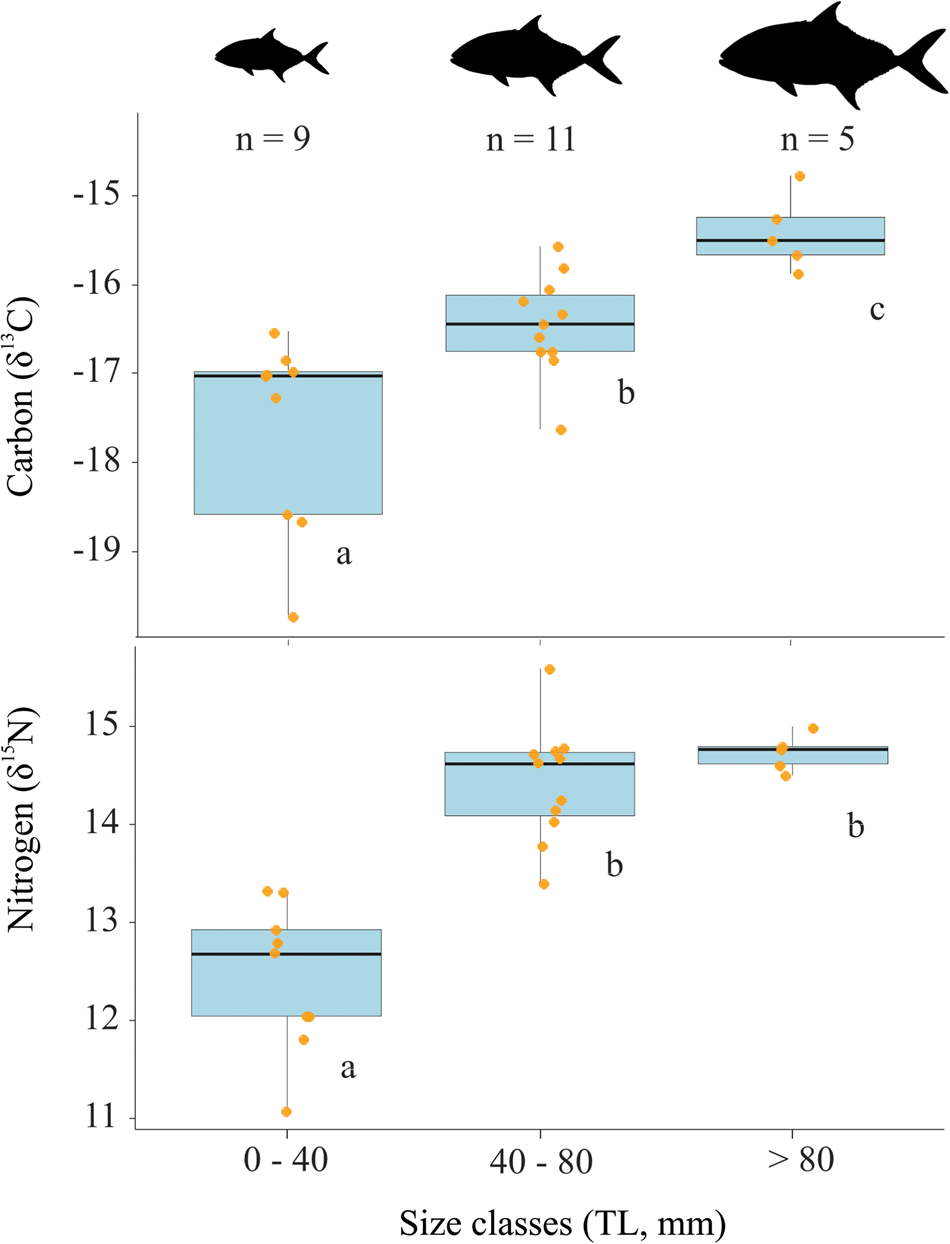
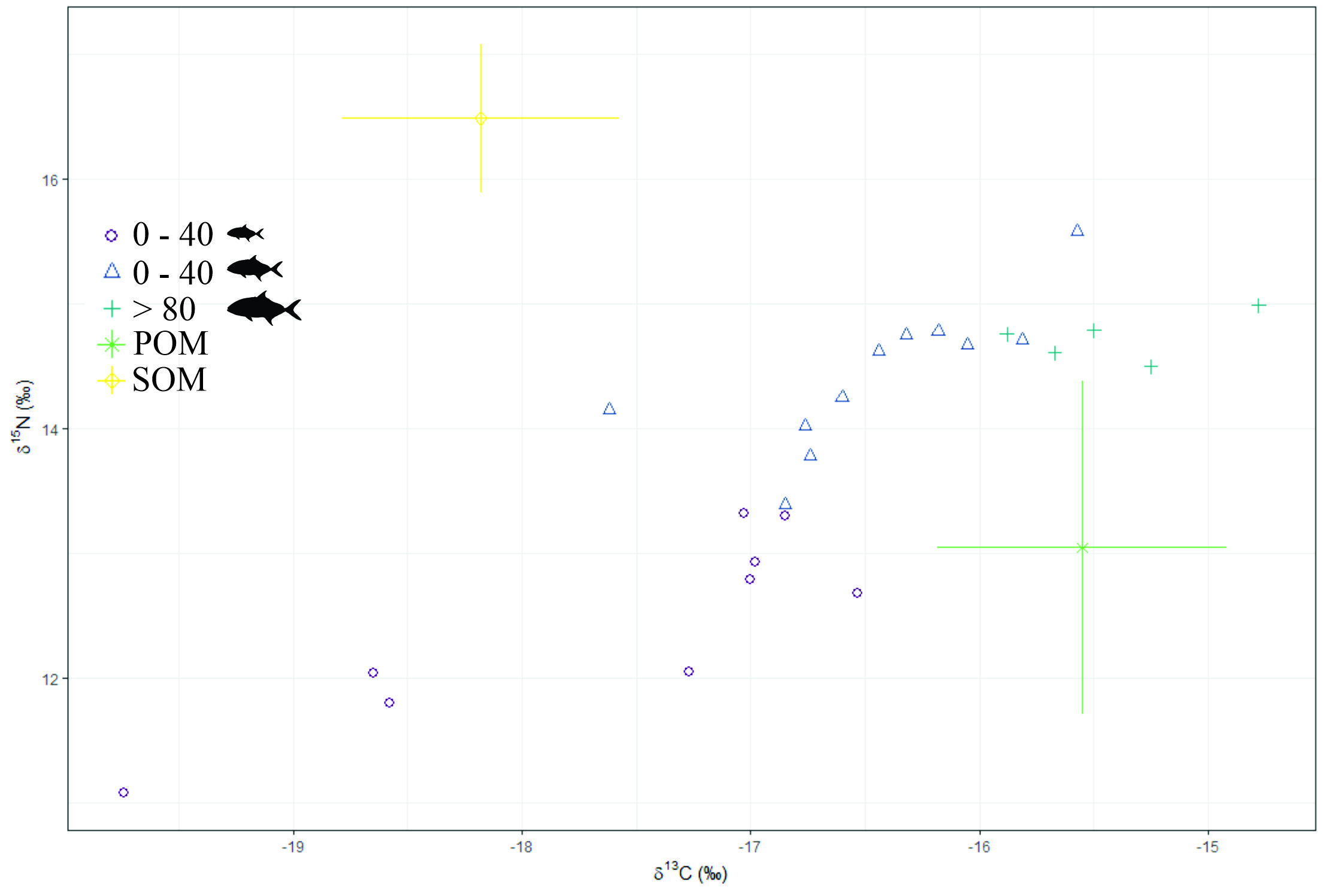
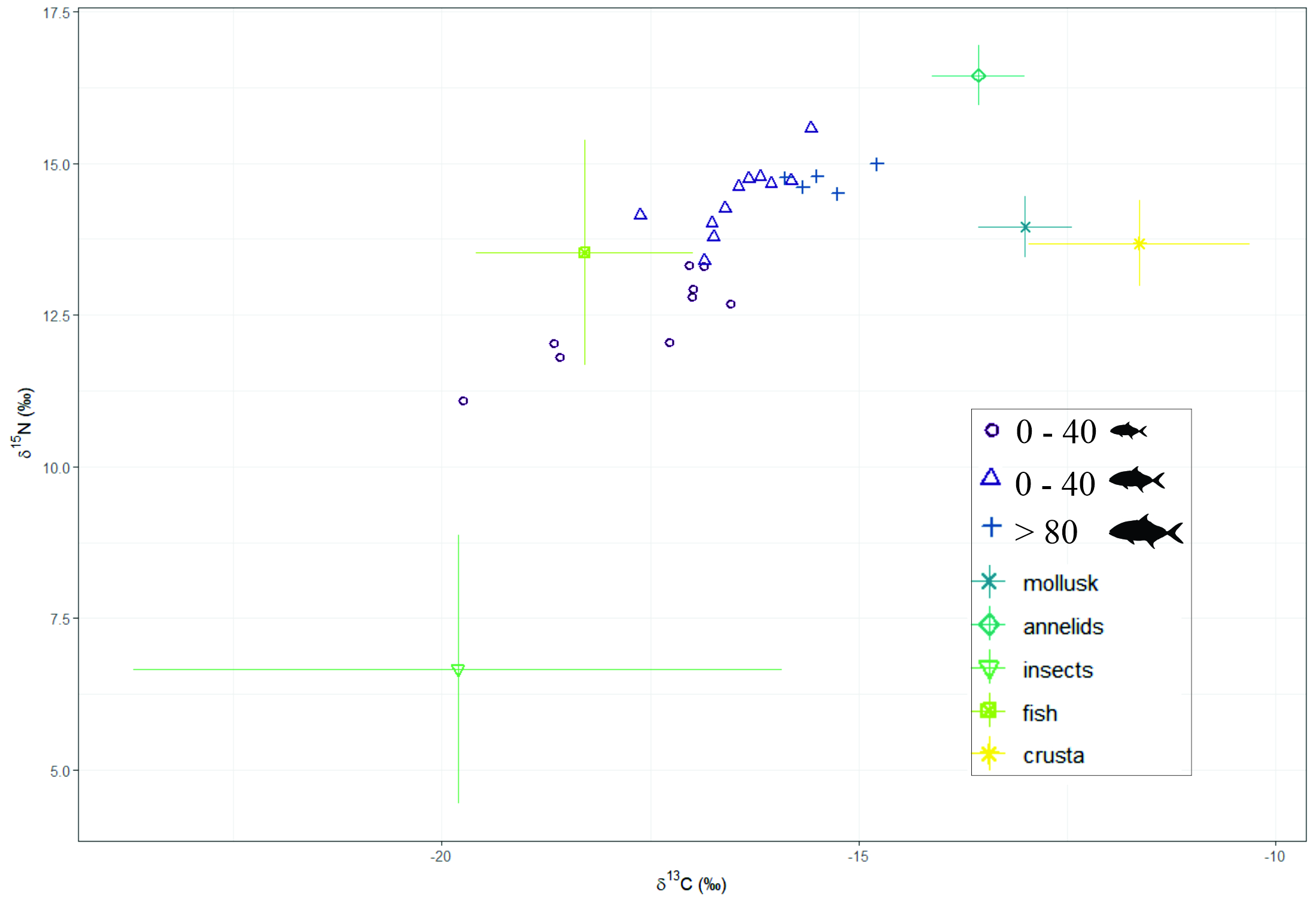
Carbon (δ13C) and nitrogen (δ15N) stable isotope ratios had marked variations among body size groups (Figure 4). There was an increase in both δ13C and δ15N with increasing body sizes. Concomitantly, there was a decrease in the isotopic variability around the mean with the increase in individuals' body sizes (Figure 4). Accordingly, the Kruskal–Wallis test revealed statistically significant differences in average δ13C and δ15N values across body size groups (P = 0.0003 and P = 0.0002, respectively). Duncan's post-hoc test (P = 0.05) indicated that all groups were statistically different for δ13C, but only group I was statistically different from groups II and III for δ15N (Figure 4).
Boxplots of carbon (δ13C) and nitrogen (δ15N) isotope ratios among body size groups (smaller: 0–40, intermediate: 40–80 and larger: >80 TL mm) of Trachinotus marginatus. The box is the interquartile range, with the lower end being the first quartile (25% of the data) and the upper end the third quartile (75% of the data). The black horizontal line is the median, the vertical line represents the upper and lower limits of the values, and the yellow circles represent each sample.

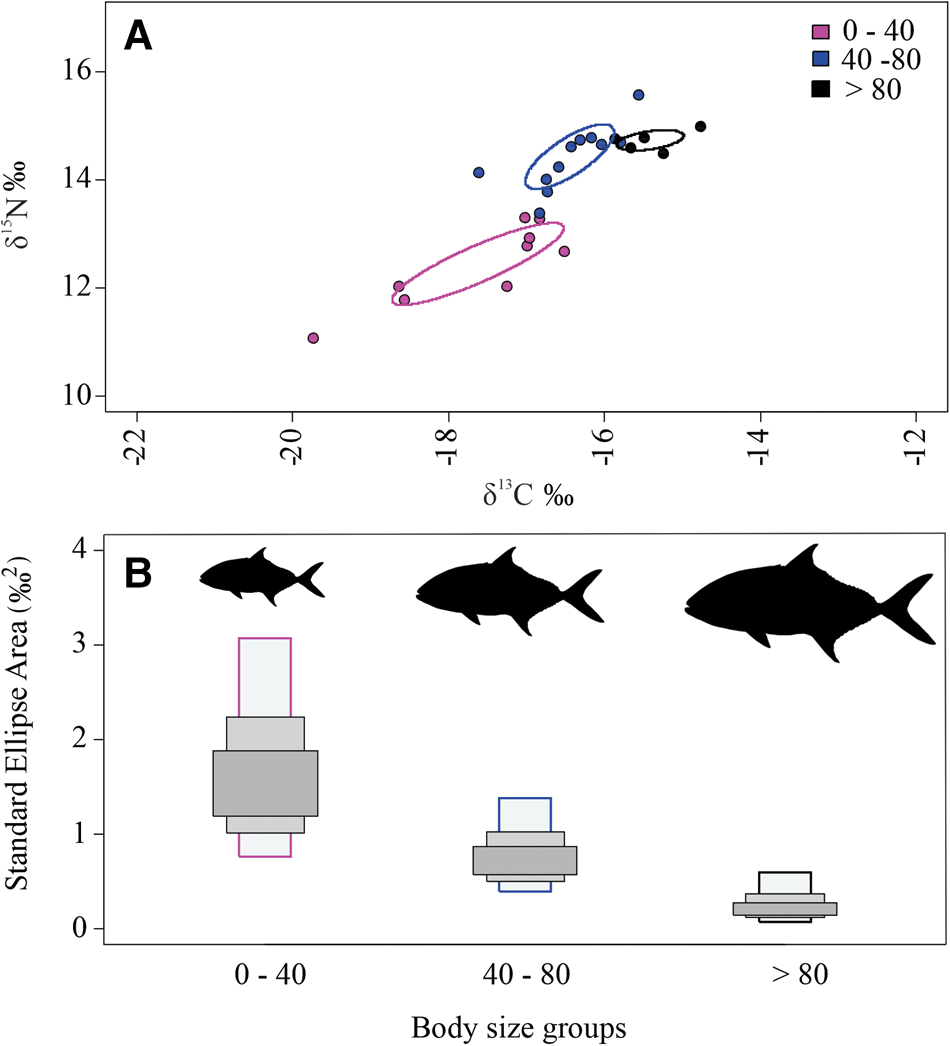
Isotopic ellipses areas (SEAc) showed an inverse relationship with increasing T. marginatus body sizes (Figure 5A), with highest values (median: 1.41‰2) for smaller individuals (0–40 TL mm), intermediate size (0.76‰2) for individuals between 40 and 80 TL mm and lowest size (0.3‰2) for larger (>80 TL mm) individuals. Credibility intervals (95%) on the SEAc estimates also showed an inverse relationship with increasing body sizes, with higher uncertainty for smaller individuals (0–40 TL mm) (Figure 5B). These patterns were corroborated by direct pairwise probability test that revealed statistically significant (P < 0.5) differences in SEAc median values among all size groups.
Standard ellipse areas (SEA) (A) and their Bayesian estimates (SEAB) (B) for the different body size groups (smaller: 0–40, intermediate: 40–80 and larger: >80 TL mm) of Trachinotus marginatus. SEAB's credibility intervals of 95, 75 and 50% are denoted by light grey, grey and dark grey bars, respectively.

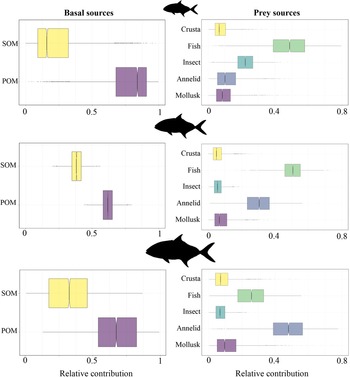
Isotopic mixing models showed that, regardless of body size group, POM was the primary source that most contributed to T. marginatus in the marine surf-zone in comparison with SOM (Figure 6 and Supplementary Figure S2). Mean values of POM contribution ranged from 67.2% (95% CI 38.3–95.7) in larger individuals (>80 TL mm) to 71.3% (95% CI 24.3–97.5) in smaller individuals (0–40 TL mm). In contrast, SOM contribution ranged from 23.6% (95% CI 2.5–75.7) in smaller individuals to 38.1% (95% CI 27.7–48.2). The predominance of POM over SOM was higher for smaller (75.6 vs 24.4%) individuals but become lesser pronounced for intermediate (61.7 vs 38.3%) and larger (66.8 vs 33.2%) ones (Figure 6).
Boxplots showing the relative contributions of basal (particulate organic matter in suspension, POM and in sediment, SOM) and prey sources for the different body size groups (smaller: 0–40, intermediate: 40–80 and larger: >80 TL mm). The box boundaries represent the 25th and 75th percentiles, the horizontal line is the median and the whiskers mark the 2.5th and 97.5th percentiles.

Among prey sources, isotopic mixing models revealed that fishes were the most assimilated in the muscle of smaller (48.1, 95% CI 15.7–74.5) and intermediate (50.3, 95% CI 33.9–63.4) body size individuals of T. marginatus. In contrast, annelids were the most assimilated prey by the larger individuals (46.6, 95% CI 13.8–69.1), being also the second most assimilated by intermediate ones (29.6, 95% CI 8.9–46.4). Insects had a relatively noticeable assimilation (22.1, 95% CI 7.9–36.0) only by smaller individuals. Crustaceans and molluscs had negligible assimilations (<10%) across all body size classes of T. marginatus (Figure 6 and Supplementary Figure S3).
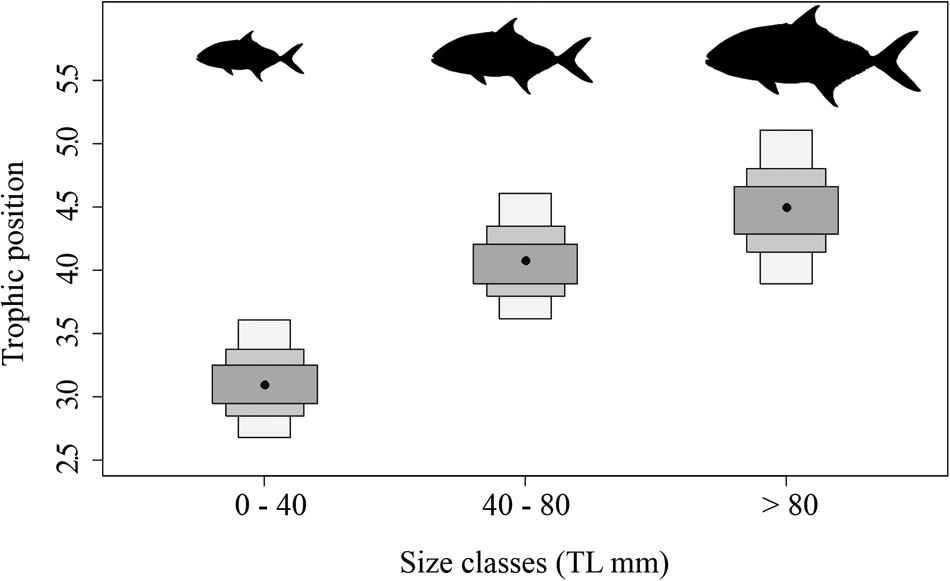
TP increased with T. marginatus body sizes, most notably intermediate (40–80 TL mm) and larger (>80 TL mm) individuals that had values of 4.1 (95% CI 3.6–4.6) and 4.5 (95% CI 3.9–5.1) approximately one trophic level higher than smaller (0–40 TL mm) ones (3.1; 95% CI 2.7–3.6) (Figure 7).
Estimates of the trophic position for the different body size groups (smaller: 0–40, intermediate: 40–80 and larger: >80 TL mm) of Trachinotus marginatus and their respective credibility intervals of 95% (light grey), 75% (intermediate grey) and 50% (dark grey).

Discussion
Changes in diet across seasons and consumer's body size
The diet of juvenile T. marginatus in the studied marine surf zone was dominated across all body sizes by small crustaceans, mainly the hippid crab E. brasiliensis, which presents a seasonal recruitment pattern in the subtropical beaches of its geographical distribution, with higher abundances during the spring and summer months (Neves et al., Reference Neves, Silva and Bemvenuti2008; Silva et al., Reference Silva, Neves and Bemvenuti2008). Although this prey has an escape behaviour of burying itself in the sediment (Cansi, Reference Cansi2007), the high wave action in the surf zone tend to remove them from the sediment, making it available to opportunistic fish predators (Monteiro-Neto and Cunha, Reference Monteiro-Neto and Cunha1990). In fact, this prey has been reported as an important food item in the diet of other congeneric species like T. carolinus in tropical marine beaches (Niang et al., Reference Niang, Pessanha and Araújo2010; Santos, Reference Santos2010). It is also worth mentioning the consumption of fish prey by larger T. marginatus individuals (>80 mm), such as juvenile Mugil sp. and specimens of the genus Trachinotus, suggesting that intraspecific cannibalism likely occurs in this species. Although it was not possible to identify these predated fish to species level, it is highly likely that these consumed specimens were T. marginatus due to its high abundance in the region, compared with other congeneric species (e.g. T. carolinus) that are rarely found in this area (Lima and Vieira, Reference Lima and Vieira2009; Vieira et al., Reference Vieira, Román-Robles, Rodrigues, Ramos and Santos2019).
Despite the predominance of crustaceans in the diet of juvenile T. marginatus in our study site throughout the year, it was possible to observe temporal and ontogenetic variations in diet composition. Smaller individuals (0–40 mm) also consumed a variety of insects during summer, which coincided with the juvenile recruitment of T. marginatus in the surf zone (Lemos et al., Reference Lemos, Junior, Velasco and Vieira2011). This led a greater variability in the diet during summer compared to other seasons. Higher consumption of insects during the warmer season is expected in this subtropical latitude, since this prey usually achieved higher densities during summer when higher temperatures and food availability favour its reproduction (Paschoal, Reference Paschoal, Souza, Lima, Paschoal and Piovezan2013). This may have resulted in a higher density of these preys at this warmer time of year, which were later transported to the marine surf zone.
The transport of terrestrial prey, such as insects, to the studied marine surf zone is probably associated with physical vectors, such as wind, rainfall and continental discharge. Increased rainfall and river flow can lead to an increase in the estuarine plume (Calliari et al., Reference Calliari, Speranski, Torronteguy and Oliveira2001; Marques et al., Reference Marques, Fernandes, Monteiro and Möller2009), which in turn can carry particulate organic matter (POM) and prey to ocean waters, making them available to marine consumers (Savage et al., Reference Savage, Thrush, Lohrer and Hewitt2012; Garcia et al., Reference Garcia, Oliveira, Odebrecht, Colling, Vieira, Rodrigues and Bastos2019b). Winds can also transport terrestrial prey (e.g. insects) from the continental environment (e.g. coastal dunes) directly to the surf zone (Lazzari et al., Reference Lazzari, Panizzi and Grazia2008), where they can be ingested by opportunistic carnivorous consumers (Pinotti et al., Reference Pinotti, Minasi, Colling and Bemvenuti2014). Additionally, insects are commonly found in sandy marine beaches associated, for example, with macrodebris and decaying vegetation (Gianuca, Reference Gianuca, Mclachlan and Erasmus1983; Giménez and Yannicelli, Reference Giménez and Yannicelli2000). We hypothesized that the occurrence of insects in the dunes that are within a few metres of the surf-zone had facilitated their transport to the sea, where they were consumed opportunistically by T. marginatus juveniles.
It is also worth noting that the observed consumption of insects in summer in the present study was somewhat unexpected because this time of year is characterized by low rainfall in southern Brazil. For example, a prior study carried out 300 km south of the present study observed consumption of insects in the winter, when rainfall and freshwater discharge is usually higher (Monteiro-Neto and Cunha, Reference Monteiro-Neto and Cunha1990). Such apparent discrepancy may be related to the occurrence of a strong El Niño between 2015 and 2016, which increased rainfall and river discharge in the region during our sampling. A prior study in the adjacent Tramandaí-Armazém estuarine complex demonstrated that the hydrological impacts associated with the 2015–16 El Niño promoted the consumption of terrestrial-derived material by estuarine fish (Garcia et al., Reference Garcia, Pasquaud, Cabral, Garcia, dos Santos and Vieira2019c). Hence, it seems reasonable to speculate that this phenomenon may also have contributed to the transport of terrestrial prey, such as insects, to the adjacent marine region, where they were preyed upon by T. marginatus juveniles.
Isotopic niches, assimilation of food sources and trophic position
Isotopic niche metrics revealed changes in food niche breadth across different body size classes of T. marginatus individuals inhabiting surf zone nursery grounds. Isotopic ellipses indicated that the smallest sizes fishes (<40 mm) had larger isotopic niches suggesting a more diverse diet. In contrast, intermediate (40–80 mm) and larger (>80 mm) individuals had smaller isotopic niches, which could be associated with a less diverse diet. We proposed two non-mutually exclusive hypotheses that could explain the higher isotopic niche observed in the smaller individuals: (i) only smaller individuals consumed terrestrial preys (insects) that tend to have distinct isotopic composition than marine preys (Garcia et al., Reference Garcia, Oliveira, Odebrecht, Colling, Vieira, Rodrigues and Bastos2019b; Huckembeck et al., Reference Huckembeck, Winemiller, Loebmann and Garcia2020), which may have contributed to increase the size of their isotopic ellipses, and (ii) considering that the isotopic muscle turnover (i.e. the time the tissue takes to reflect a new food source) of marine fishes is approximately three months (Mont'alverne et al., Reference Mont'Alverne, Pereyra and Garcia2016; Oliveira et al., Reference Oliveira, Mont'Alverne, Sampaio, Tesser, Ramos and Garcia2017), the smaller individuals sampled in the surf zone could be partially reflecting offshore food sources, since they originally migrate (as eggs and larvae) from the deeper coastal zone (40 m) into the surf zone (2 m) in the summer period. Further studies using controlled feeding diet in laboratory and using tags to track their displacement between offshore and surf zone would be needed to evaluate these hypotheses.
Isotopic mixing models showed that, regardless of changes in body sizes, T. marginatus individuals inhabiting the surf zone are assimilating more suspended POM than SOM, suggesting they derived primary nutrients mainly from a planktonic food chain. The major intermediate trophic links connecting the carnivorous T. marginatus to the base of the food web are probably microcrustaceans, which dominated the fish diet in the surf zone. Most of these crustaceans spend their initial development as planktonic larvae feeding on phytoplankton and/or zooplankton and as suspension feeders as adults. This pattern seems to be corroborated by other studies showing the importance of POM (a proxy for phytoplankton and POM) for consumers of sandy marine beaches (Bergamino et al., Reference Bergamino, Lercari and Defeo2011; Pinotti et al., Reference Pinotti, Minasi, Colling and Bemvenuti2014; McLachlan and Defeo, Reference McLachlan and Defeo2017). For example, Garcia et al. (Reference Garcia, Oliveira, Odebrecht, Colling, Vieira, Rodrigues and Bastos2019b) demonstrated that POM represents the main primary source of energy sustaining zoobentivorous fish, such as T. marginatus, in the surf zone of Cassino Beach, southern Brazil. Although in relatively lower proportion (~30%), SOM also contributed with primary nutrients to T. marginatus juveniles, suggesting that benthic-derived nutrients were complementary sources fuelling the food chain sustaining the species in the marine surf-zone.
Isotope tracers revealed that the most important food item found in the stomach content of T. marginatus juveniles, the hippid crab E. brasiliensis, was not the most assimilated in their muscle tissues. Rather, ingested prey like fishes and annelids were the most assimilated by juvenile T. marginatus in the marine surf-zone. This apparently contrasting findings are not entirely surprising considering that preys protected by carapaces or shells (like the hippid crab and molluscs found in the stomach content) are usually refractory food items less susceptible to digestion and assimilation (Condini et al., Reference Condini, Hoeinghaus and Garcia2015). Hence, although the hippid crab E. brasiliensis was by far the most observed in stomach contents of juvenile T. marginatus (IAi > 90%), this prey probably contributes less (per unit ingested biomass) to assimilated energy due to its slower digestion rates. In comparison, prey like small fish and polychaetes are comparatively more palatable and more prone to be digested and assimilated and, therefore, tended to be observed with less frequency in the stomachs (Gerking, Reference Gerking1994). Hence, our findings based on isotopic mixing models suggested that small fish preys (<25 TL mm) like the mullet M. liza and the polychaeta S. gaucha, which are abundant in the study area (Pinotti et al., Reference Pinotti, Minasi, Colling and Bemvenuti2014; Rodrigues et al., Reference Rodrigues, Cabral and Vieira2015), represent import food sources sustaining juvenile T. marginatus in the marine surf-zone. Isotopic mixing models also corroborated the relative importance of insects for smaller T. marginatus individuals (<40 TL mm). As discussed in the prior subsection, insects are abundant in the adjacent dunes and commonly disperse towards the surf-zone, where they are consumed by juvenile T. marginatus. Our study with isotope tracers revealed for the first time that such prey can be assimilated in the muscle tissue of fish in the marine surf-zone. Prior works have pointed out evidence of trophic connectivity between terrestrial and marine ecosystems along this extensive subtropical coastline (~500 km) (Oliveira et al., Reference Oliveira, Bastos, Claudino, Assumpção and Garcia2014; Garcia et al., Reference Garcia, Winemiller, Hoeinghaus, Claudino, Bastos, Correa, Huckembeck, Vieira, Loebmann, Abreu and Ducatti2017b, Reference Garcia, Oliveira, Odebrecht, Colling, Vieira, Rodrigues and Bastos2019b). Further investigations are needed to reveal the real extension and implications of such between-ecosystem trophic linkages and its potential to act as trophic subsidies (sensu Polis et al., Reference Polis, Anderson and Holt1997) for fish populations along the southern coastline of the southwestern Atlantic.
TP estimation using SIA revealed that juvenile T. marginatus in the surf zone can be considered as tertiary consumers, with a tendency of increasing their TP in the surf zone with increasing body size. Phytoplankton/debris forms the basis of the food chain in the marine surf zone and sandy beach environments (McLachlan and Defeo, Reference McLachlan and Defeo2017). The benthic macrofauna has the role of consuming this primary food on sandy beaches, while in the surf zone this role is shared with zooplankton, assuming the position of secondary consumers in the food chain (Pinotti et al., Reference Pinotti, Minasi, Colling and Bemvenuti2014). In turn, fish are the predators of zooplankton in the surf zone, mainly juveniles, consuming them in the water column where they are most abundant (Pinotti et al., Reference Pinotti, Minasi, Colling and Bemvenuti2014). Thus, juvenile fish tend to be tertiary consumers in this environment (McLachlan and Defeo, Reference McLachlan and Defeo2017). Our findings using SIA corroborates the trophic role of juvenile T. marginatus as carnivores acting at higher trophic levels of the food chain in the marine surf zone, which was corroborated by the isotopic mixing models revealing that the species assimilated mainly fish preys.
In conclusion, our findings provided the first description of food habits and food sources sustaining the Plata pompano T. marginatus during the early phase of its life cycle in the marine surf-zone. SCA revealed that juveniles fed mainly on the hippid crab E. brasiliensis, but also consumed other invertebrates (annelids, insects, molluscs) and fishes (including some cases of cannibalism). However, SIA showed that although microcrustaceans were the most important food item found in the stomach content of T. marginatus juveniles, they were not the most assimilated. Rather, more palatable prey without carapaces or shells, like fishes and annelids, were the most assimilated by T. marginatus juveniles in the marine surf-zone. SIA also showed changes in their isotopic niches and TP associated both with between-season changes and increment in body sizes during their development in their nursery grounds. Moreover, isotope tracers also allowed to infer that juvenile T. marginatus in the surf-zone assimilated most of their primary nutrients from a planktonic food chain and, to a lesser extent, from a benthic pathway. The Plata pompano T. marginatus is a conspicuous component of the southwestern Atlantic coast (Lemos et al., Reference Lemos, Junior, Velasco and Vieira2011; Vieira et al., Reference Vieira, Román-Robles, Rodrigues, Ramos and Santos2019; Garcia et al., Reference Garcia, Oliveira, Odebrecht, Colling, Vieira, Rodrigues and Bastos2019b) and commonly targeted by coastal fisheries (Santos and Vieira, Reference Santos and Vieira2016). Therefore, future investigations in other habitats comprising their life cycle (e.g. reproductive sites offshore) are needed to better understand its trophic ecology and functional role in the food web of surf-zone ecosystems.
Supplementary material
The supplementary material for this article can be found at https://doi.org/10.1017/S0025315423000711
Data availability
Data available at Vieira J. P, Garcia A. M, Lemos V. M (2022). PELD-ELPA Species composition and abundance patterns of fish assemblages at shallow waters of Patos Lagoon estuary. Version 1.11. Sistema de Informação sobre a Biodiversidade Brasileira – SiBBr. Sampling event dataset https://doi.org/10.15468/kci8zb.
Acknowledgments
We are thankful to Ana Cecilia Giacometti Mai and Bianca Possamai for their suggestions and comments made in an early draft of the manuscript and colleagues from the Ichthyology Laboratory of the Rio Grande Federal University for their assistance during fish collections and sample processing.
Author contributions
A. L. S. A. conceptualized the manuscript, conducted the analyses and figures preparation, and led the manuscript preparation. A. F. S. G. conducted field trips and fish sampling, and contributed to manuscript preparation. E. F. A. helped with preys' identification in the stomach food content analysis and contributed to manuscript preparation. L. A. C. helped with preys' identification in the stomach food content analysis and contributed to manuscript preparation. J. P. V. contributed to project idea, helped with field trips and fish sampling and contributed to manuscript preparation. AMG helped with field trips and fish sampling, contributed with statistical analyses and figure preparation and contributed to manuscript preparation.
Financial support
This work was funded by FAPERGS (project number 2327–2551/14–6) and also received support from the program Brazilian Long-Term Ecological Research (BR-LTER) in the Patos Lagoon Estuary and Adjacent Marine Coast sponsored by the National Scientific and Technological Development Council (CNPq). A. M. G. was supported by CNPq through the Research Fellowship (grant: 313008/2021-3).
Competing interest
None.
Ethical standards
Specimens were collected with the authorization of the SISBIO (Biodiversity Information and Authorization System) of the Chico Mendes Institute for Biodiversity Conservation (ICMBIO) under license number 47567-1.