



1 Introduction
We work over an algebraically closed ground field of arbitrary characteristic.
Recall that a del Pezzo surface is a smooth projective surface X with ample anticanonical divisor. For a divisor class D on X we set
 $\deg (D)=D\cdot (-K_X)$
, where
 $K_X$
is the canonical class of X, and for a vector bundle V on X we set
 $\deg (V)=\deg (c_1(V))$
. The degree of X is
 $\deg (-K_X)=(-K_X)^2$
.
Recall that a vector bundle V is called exceptional if it is simple and
 $\operatorname {Ext}^{>0}(V,V)=0$
. A pair of exceptional bundles
 $(V_1,V_2)$
is called exceptional if
 $\operatorname {Ext}^*(V_2,V_1)=0$
.
Theorem A. For any del Pezzo surface X of degree
 $4$
and any pair of relatively prime numbers
 $(d,r)$
, where
 $r>0$
, there exists an exceptional pair
 $({\mathcal {O}}_X,V)$
on X with V an exceptional bundle of rank r and
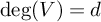 $\deg (V)=d$
.
In fact, in Theorem 4.6 we will provide a family of exceptional pairs
 $({\mathcal {O}}_X,V)$
for given
 $(d,r)=(\deg (V),\operatorname {rk}(V))$
, with
 $c_1(V)$
of specific form depending on a way to present a degree
 $4$
del Pezzo surface X as a blow up of
 ${\mathbb P}^1\times {\mathbb P}^1$
. The number of exceptional pairs arising by this construction can be computed explicitly and depends on
 $(d,r)$
(see Remark 4.7). Not all pairs
 $({\mathcal {O}}_X,V)$
are of the form described in Theorem 4.6. Let us say that an exceptional pair
 $({\mathcal {O}}_X,V)$
is sporadic if it is not of the form considered in Theorem 4.6 (for any way of presenting X as a blow up of
 ${\mathbb P}^1\times {\mathbb P}^1$
). We prove that sporadic pairs appear only when
 $|d|$
is not too large compared to r (with an explicit quadratic bound). A more precise statement is given in Theorem 5.3.
Following a referee’s suggestionFootnote
1
, we use fully faithful embeddings of the derived categories of certain weighted projective lines
 ${\mathcal C}_4$
and
 ${\mathcal C}_5$
into the right orthogonal to
 ${\mathcal {O}}_X$
in
 $D^b(\operatorname {Coh} X)$
(see Sec. 4.1 and 4.2) and some results on exceptional bundles over weighted projective lines (see Sec. 3). Here
 ${\mathcal C}_n$
denotes a stacky projective line with n points of weight
 $2$
(i.e., having
 $\mu _2$
as automorphism groups). Theorem 4.6 follows from a simple description of exceptional bundles on
 ${\mathcal C}_4$
, while Theorem 5.3 translates into a statement that in a certain range of rank and degree every exceptional bundle on
 ${\mathcal C}_5$
comes from
 $D^b(\operatorname {Coh} {\mathcal C}_4)$
contained in
 $D^b(\operatorname {Coh} {\mathcal C}_5)$
as the right orthogonal to one of the exceptional sheaves supported at stacky points on
 ${\mathcal C}_5$
(see Proposition 3.8).
For del Pezzo surfaces of degree
 $k\ge 5$
, we show that the possible pairs
 $(d=\deg (V),r=\operatorname {rk}(V))$
for an exceptional pair
 $({\mathcal {O}},V)$
have to satisfy inequality
 $$ \begin{align} d^2-krd+kr^2\ge -k, \end{align} $$
with equality for
 $k=9$
. In particular, for
 $k\ge 5$
not all relatively prime pairs occur (see Sec. 5.3). We also prove in Proposition 5.4 realisability in the case
 $5\le k\le 8$
(resp.,
 $k=9$
) of pairs satisfying
 $$ \begin{align*}-k\le d^2-krd+kr^2\le -1,\end{align*} $$
(resp.,
 $d^2-9rd+9r^2=-9$
) with some caveats for
 $k=8$
. Note that in the case
 $k=9$
our equality implies that
 $3|d$
.
Our interest in exceptional pairs of the form
 $({\mathcal {O}},V)$
on del Pezzo surfaces is due to their relevance in the theory of Feigin-Odesskii Poisson brackets on projective spaces. Recall that for a simple vector bundle E of rank r and degree
 $d>0$
on an elliptic curve C (or its degeneration), one has a natural Poisson bracket on
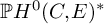 ${\mathbb P} H^0(C,E)^*$
, constructed in terms of the geometry of vector bundles on C (see [Reference Feigin and Odesskii10], [Reference Polishchuk24]). This Poisson bracket (well defined up to proportionality) depends only on the elliptic curve C and the discrete invariants
 $(d,r)$
of E. We will refer to it as FO bracket of type
 $(d,r)$
and denote it by
 $q_{d,r}(C)$
.
It was observed in [Reference Hua and Polishchuk13] (by generalising earlier construction of Odesskii-Wolf [Reference Odesskii and Wolf21]) that if
 $({\mathcal {O}}_X,V)$
is an exceptional pair on a del Pezzo surface X then for every anticanonical divisor
 $C\subset X$
the restriction map
 $H^0(X,V)\to H^0(C,V|_C)$
is an isomorphism, and the Poisson brackets on
 ${\mathbb P} H^0(X,V)^*\simeq {\mathbb P}^{d-1}$
(where
 $d=h^0(V|_C)=\deg (V)$
by Riemann-Roch) coming from
 $V|_C$
for various anticanonical divisors form a vector space of compatible Poisson brackets (which means that the Schouten bracket between each pair of the corresponding bivectors is zero). In the case
 $r=1$
(and arbitrary d) one can take X to be a del Pezzo surface of degree
 $8$
, so this gives a
 $9$
-dimensional linear subspace of compatible FO brackets on
 ${\mathbb P}^{d-1}$
containing any given FO bracket of type
 $(d,1)$
. For
 $r>1$
, [Reference Hua and Polishchuk13] gives some partial results on compatible FO brackets of type
 $(d,r)$
.
Theorem B. Assume the characteristic is zero.
(i) For any elliptic curve C and any relatively prime positive numbers
 $(d,r)$
, with
 $d>r+1$
, the FO bracket
 $q_{d,r}(C)$
on
 ${\mathbb P}^{d-1}$
is contained in a
 $5$
-dimensional linear subspace of compatible FO brackets on
 ${\mathbb P}^{d-1}$
of type
 $(d,r)$
. If
 $r=2$
or
 $r=d-2$
then
 $q_{d,r}(C)$
is contained in a
 $6$
-dimensional linear subspace of compatible FO brackets on
 ${\mathbb P}^{d-1}$
of type
 $(d,r)$
.
(ii) For
 $5\le k\le 9$
and a relatively prime pair
 $(d,r)$
such that
 $d>r+1$
and
 $$ \begin{align*}-k\le d^2-krd+kr^2\le -1,\end{align*} $$
where
 $3|d$
in the case
 $k=9$
, any FO bracket
 $q_{d,r}(C)$
on
 ${\mathbb P}^{d-1}$
is contained in a
 $(k+1)$
-dimensional linear subspace of compatible FO brackets on
 ${\mathbb P}^{d-1}$
of type
 $(d,r)$
.
(iii) Any nonzero linear subspace of compatible Poisson brackets on
 ${\mathbb P}^{d-1}$
, whose generic element is an FO bracket of type
 $(d,r)$
, lifts uniquely to a linear subspace of compatible
 ${\mathbb G}_m$
-invariant Poisson brackets on the affine space
 ${\mathbb A}^d$
.
The proof uses results of [Reference Hua and Polishchuk13], our study of exceptional pairs
 $({\mathcal {O}},V)$
on del Pezzo surfaces, and the results on existence of anticanonical pencils with non-constant j-invariant, passing through a given anticanonical curve in a del Pezzo surface, established in Sec. 6.1 (some of them are most likely known to the experts). Note that the assumption
 $d>r+1$
in Theorem B comes from the use of [Reference Hua and Polishchuk13, Thm. 2.4] on recovering an isomorphism class of an elliptic curve from an FO bracket.
More precisely, given an exceptional pair
 $({\mathcal {O}},V)$
on a del Pezzo surface of degree k, with V of degree d and rank r, the construction of [Reference Hua and Polishchuk13] provides
 $k+1$
compatible FO brackets on
 ${\mathbb P}^{d-1}$
of type
 $(d,r)$
, and gives a criterion for their linear independence. Theorem A constructs such an exceptional pair for every slope
 $d/r$
on a degree
 $4$
del Pezzo surface, and Theorem B(i) checks the linear independence criterion (for
 $d>r+1$
). Although some slopes are achievable on higher degree del Pezzo surfaces,
 $k=4$
turns out to be the largest degree for which all slopes are achievable. Moreover, even if we had only been interested in surfaces of lower degree, it would still be easier to work with degree 4, as for a given rank, for all slopes but finitely many, the pair with V of that slope is unique up to the action of the Weyl group
 $W(D_5)$
on the Picard group; this fails in lower degree. This criticality of degree 4 appears in other ways; see Remark 5.2.
Note that Theorem B does not give the maximal number of compatible FO brackets for all pairs
 $(d,r)$
. For example, there are well-known Poisson isomorphisms
 $$ \begin{align*}({\mathbb P}^{d-1},q_{d,r}(C))\simeq ({\mathbb P}^{d-1},q_{d,r'}(C))\end{align*} $$
for
 $rr'\equiv 1\ \mod (d)$
coming from autoequivalences of the derived category of an elliptic curve (see [Reference Polishchuk24]). In this way we see that
 $q_{7,3}(C)\simeq q_{7,5}(C)$
and
 $q_{7,4}(C)\simeq q_{7,2}(C)$
can be included into
 $6$
-dimensional spaces of compatible FO brackets, which cannot be seen directly from Theorem B applied to
 $q_{7,3}(C)$
and
 $q_{7,4}(C)$
.
2 Preliminaries
2.1 Exceptional objects on del Pezzo surfaces
Let X be a del Pezzo surface, and let
 $Q=-K_X$
denote the anticanonical class on X. The Hirzebruch-Riemann-Roch theorem on X gives
 $$ \begin{align*} \chi(V,V')&:=\sum_i (-1)^i\dim \operatorname{Ext}^i(V,V')\\ &=-\operatorname{rk}(V)\operatorname{rk}(V')+\operatorname{rk}(V)\chi(V')+\chi(V)\operatorname{rk}(V')-c_1(V)\cdot (c_1(V')+\operatorname{rk}(V')Q) \end{align*} $$
(see [Reference Rains25, (4.5)]). For an exceptional object V we have
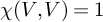 $\chi (V,V)=1$
, so for such V,
 $$ \begin{align} \chi(V)=\frac{r^2+c_1(V)\cdot (c_1(V)+rQ)+1}{2r}, \end{align} $$
where
 $r=\operatorname {rk}(V)$
. Note that this formula immediately implies that for an exceptional V one has
 $$ \begin{align} \chi(V)-\chi(V^\vee)=\deg(V)=c_1(V)\cdot Q. \end{align} $$
Lemma 2.1. Let V be an exceptional bundle on a del Pezzo surface of degree k, with
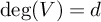 $\deg (V)=d$
and
 $\operatorname {rk}(V)=r$
. Then
 $$ \begin{align} \frac{d^2}{k}+rd+rd^2\ge 2r\cdot \chi(V)-1. \end{align} $$
Proof. Let us write
 $c_1(V)=\frac {d}{k}Q+\alpha $
, where
 $\alpha \in \langle Q\rangle ^\perp _{\mathbb {Q}}\subset \operatorname {Pic}(X)_{\mathbb {Q}}$
. The desired inequality is obtained by plugging this into (2.1) and using the fact that
 $\alpha ^2\le 0$
by the Hodge index theorem.
Lemma 2.2. Let A be an exceptional object in
 $D^b(\operatorname {Coh} X)$
. Then
 $A\simeq F[n]$
, where
 $[n]$
denotes the shift in the derived category, and F is a coherent sheaf, which is either locally free or isomorphic to
 ${\mathcal {O}}_C(d)$
, where C is a
 $(-1)$
-curve,
 $d\in {\mathbb {Z}}$
.
Proof. In characteristic zero this was proved by Kuleshov-Orlov [Reference Kuleshov and Orlov15, Prop. 2.9, 2.10]. Below we review the steps of the proof to check that the argument carries over to arbitrary characteristic. For coherent sheaves
 $F,G$
we set
 $h^i(F,G):=\dim \operatorname {Ext}^i(F,G)$
;
 $TF$
denotes the maximal torsion subsheaf in F;
 $T^0F\subset TF$
is the maximal torsion subsheaf with
 $0$
-dimensional support.
Step 1. For a torsion-free coherent sheaf F on a smooth projective surface S one has
 $$ \begin{align} h^1(F,F)\ge h^1(F^{\vee\vee},F^{\vee\vee})+h^1(F^{\vee\vee}/F,F^{\vee\vee}/F). \end{align} $$
For a nonzero coherent sheaf M with
 $0$
-dimensional support (such as
 $F^{\vee \vee }/F$
above) on S, one has
 $$ \begin{align} h^1(M,M)>0. \end{align} $$
These statements are proved in [Reference Mukai20] for sheaves on a symplectic surface over
 $\mathbb {C}$
, however, the arguments work for arbitrary S and in any characteristic. Namely, the first assertion follows from the spectral sequence converging to
 $R\operatorname {End}(F)$
coming from the resolution
 $[F^{\vee \vee }\to F^{\vee \vee }/F]$
of F. Since
 $F^{\vee \vee }$
is locally free and
 $F^{\vee \vee }/F$
has
 $0$
-dimensional support, we have
 $$ \begin{align*}\operatorname{Ext}^1(F^{\vee\vee},F^{\vee\vee}/F)=\operatorname{Ext}^1(F^{\vee\vee}/F,F^{\vee\vee})=0,\end{align*} $$
and thus the associated filtration on
 $\operatorname {Ext}^1(F,F)$
has middle subquotient
 $$ \begin{align*}\operatorname{Ext}^1(F^{\vee\vee},F^{\vee\vee})\oplus \operatorname{Ext}^1(F^{\vee\vee}/F,F^{\vee\vee}/F),\end{align*} $$
giving inequality (2.4).
The inequality (2.5) is derived as follows: first, we note that
 $\chi (M,M)=0$
and by Serre duality,
 $h^0(M,M)=h^2(M,M)$
. Hence,
 $h^1(M,M)=2h^0(M,M)$
, which is positive for nonzero M.
Step 2. For an exact sequence
 $0\to G_2\to E\to G_1\to 0$
of coherent sheaves on a smooth projective surface, such that
 $h^0(G_2,G_1)=h^2(G_1,G_2)=0$
, one has
 $$ \begin{align*}h^1(E,E)\ge h^1(G_1,G_1)+h^1(G_2,G_2).\end{align*} $$
If in addition
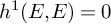 $h^1(E,E)=0$
then one has
 $$ \begin{align*}h^0(E,E)=h^0(G_1,G_1)+h^0(G_2,G_2)+\chi(G_1,G_2), \ \ h^2(E,E)=h^2(G_1,G_1)+h^2(G_2,G_2)+\chi(G_2,G_1).\end{align*} $$
This is [Reference Kuleshov and Orlov15, Lem. 2.2(2)]. The proof is a homological algebra argument valid in any characteristic.
Step 3. Let G be a coherent sheaf on X with
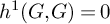 $h^1(G,G)=0$
. Then
-
(1)
 $T^0G=0$
,
$h^1(TG,TG)=h^1(G/TG,G/TG)=0$
;
-
(2)
$h^0(G,G)>h^2(G,G)$
. Furthermore, for any coherent sheaf F on X one has
$h^0(F,G)\ge h^2(G,F)$
.




In the case
 $T^0G=0$
, the proof of (2) is given in [Reference Kuleshov and Orlov15, Lem. 2.4, Rem. 2.5]. The proof of (1) is given in [Reference Kuleshov and Orlov15, Cor. 2.7], based on Step 2 and the case
 $T^0G=0$
of (2). Note that to check that
 $T^0G=0$
, one applies Step 2 to the sequence
 $0\to T^0G\to TG\to TG/T^0G\to 0$
and deduces that
 $h^1(T^0G,T^0G)=0$
, which implies the vanishing of
 $T^0G$
by Step 1 (see (2.5)).Footnote
2
All these proofs work in arbitrary characteristic.
Step 4. Let F be an exceptional coherent sheaf on X. Then F is either locally free or
 $F\simeq {\mathcal {O}}_C(d)$
, where C is a
 $(-1)$
-curve,
 $d\in {\mathbb {Z}}$
.
The proofs given in [Reference Kuleshov and Orlov15, Lem. 2.8, Prop. 2.9], based on Steps 1, 2 and 3, are valid in arbitrary characteristic.
Step 5. Let A be an exceptional object in
 $D^b(\operatorname {Coh} X)$
. Then
 $A\simeq F[n]$
, where F is a coherent sheaf.
The proof in [Reference Kuleshov and Orlov15, Prop. 2.10], based on Step 3(2), is valid in arbitrary characteristic.
Lemma 2.3.
(i) For an exceptional bundle V on X and a smooth anticanonical divisor
 $C\subset X$
, the restriction
 $V|_C$
is a simple bundle on the elliptic curve C. The degree
 $\deg (V)=c_1(V)\cdot Q$
is relatively prime to the rank of V.
(ii) An exceptional bundle V on X is slope stable with respect to Q and its isomorphism class is uniquely determined by its class in
 $\mathrm {K}_0(X)$
, the Grothendieck group of X. If in addition V is right orthogonal to
 ${\mathcal {O}}_X$
, i.e.,
 $(V,{\mathcal {O}}_X)$
is an exceptional pair, then the isomorphism class of V is determined by the invariants
 $\operatorname {rk}(V)$
and
 $c_1(V)\in \operatorname {Pic}(X)$
.
(iii) Let
 $\pi :X\to X'$
be the blow down of a collection of non-intersecting
 $(-1)$
-curves (then
 $X'$
is also a del Pezzo surface), and let V be an exceptional vector bundle on X such that
 $c_1(V)\in \pi ^*\operatorname {Pic}(X')$
. Then
 $V\simeq \pi ^*W$
for an exceptional vector bundle on
 $X'$
.
Proof. (i) The fact that
 $V|_C$
is simple follows immediately by applying the functors
 $\operatorname {Ext}^*(V,?)$
to the exact sequence
 $0\to V(-C)\to V\to V|_C\to 0$
and observing that
 $\operatorname {Ext}^1(V,V(-C))\simeq \operatorname {Ext}^1(V,V)^*=0$
by Serre duality (see [Reference Kuleshov and Orlov15, Lem. 3.6]).
To prove the second statement we note that a smooth anticanonical divisor
 $C\subset X$
always exists (see [Reference Demazure7, Thm. 1]). Then
 $\deg (V)=\deg (V|_C)$
and
 $\operatorname {rk}(V)=\operatorname {rk}(V|_C)$
, and we use the well known fact that the degree and rank of a simple vector bundle
 $V|_C$
on an elliptic curve are relatively prime.
(ii) Let us choose a smooth anticanonical divisor
 $C\subset X$
(it exists by [Reference Demazure7, Thm. 1]). By (i),
 $V|_C$
is a simple bundle on an elliptic curve. It is well known that such a bundle is stable. Now suppose
 $0\to V_1\to V\to V_2\to 0$
is a destabilising sequence with
 $V_2$
torsion free. Then the sequence
 $0\to V_1|_C\to V|_C\to V_2|_C\to 0$
is exact, so it destablises
 $V|_C$
, a contradiction. Thus, V is semistable. Since the degree and rank of V are relatively prime (by part (i)), we deduce that V is stable. Note that in characteristic zero, stability of V was proved in [Reference Gorodentsev12].
The fact that V is determined by its class in
 $\mathrm {K}_0$
follows from stability (see [Reference Gorodentsev12, Cor. 2.5]). Indeed, if
 $[V_1]=[V_2]$
then
 $\chi (V_1,V_2)=\chi (V_1,V_1)=1$
. By stability,
 $h^2(V_1,V_2)=h^0(V_2,V_1(-Q))=0$
. Therefore,
 $h^0(V_1,V_2)>0$
, so there is a nonzero morphism
 $V_1\to V_2$
which must be an isomorphism by stability.
The class in
 $\mathrm {K}_0$
is determined by
 $\operatorname {rk}(V)$
,
 $c_1(V)$
and
 $\chi (V)$
. If
 $H^*(X,V)=0$
then
 $\chi (V)=0$
, so V is determined by
 $\operatorname {rk}(V)$
and
 $c_1(V)$
.
(iii) See [Reference Kuleshov and Orlov15, Cor. 3.2]. The proof is valid in arbitrary characteristic.
2.2 Action of the Weyl group on geometric markings
We denote by
 $\mathrm {Q}(D_n)\subset \mathrm {P}(D_n)$
the root and the weight lattices of type
 $D_n$
, respectively. We denote by
 $\varepsilon _1,\ldots ,\varepsilon _n$
the standard orthonormal basis of
 $\mathrm {Q}(D_n)_{\mathbb {Q}}$
(used in [Reference Bourbaki3]), so that the roots are
 $\pm \varepsilon _i\pm \varepsilon _j$
. The weights of
 $D_n$
are elements
 $\sum _i y_i\varepsilon _i$
such that
 $y_i\in \frac {1}{2}{\mathbb {Z}}$
and
 $y_i-y_j\in {\mathbb {Z}}$
.
Let X be a del Pezzo surface of degree
 $4$
. Given a representation of X as an iterated blow up of
 ${\mathbb P}^2$
, we get an isomorphism of lattices
 $$ \begin{align} \phi:I^{1,5}\to \operatorname{Pic}(X), \end{align} $$
where
 $\operatorname {Pic}(X)$
is equipped with the intersection form, and
 $I^{1,5}=\bigoplus _{i=0}^5 {\mathbb {Z}} {\mathbf e}_i$
with
 ${\mathbf e}_0\cdot {\mathbf e}_0=1$
,
 ${\mathbf e}_i\cdot {\mathbf e}_i=-1$
for
 $i>0$
,
 ${\mathbf e}_i\cdot {\mathbf e}_j=0$
for
 $i\neq j$
(see [Reference Dolgachev8, Ch. 8]). Namely,
 $\phi ({\mathbf e}_0)=h$
, the pull-back of
 ${\mathcal {O}}_{{\mathbb P}^2}(1)$
on
 ${\mathbb P}^2$
, while for
 $i=1,\ldots ,5$
,
 $\phi ({\mathbf e}_i)=e_i$
, the classes of exceptional curves. Such an isomorphism
 $\phi $
is called a geometric marking of X, and the corresponding basis
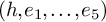 $(h,e_1,\ldots ,e_5)$
of
 $\operatorname {Pic}(X)$
a geometric basis.
One has
 $\phi ({\mathbf q})=Q=-K_X$
, where
 ${\mathbf q}=3{\mathbf e}_0-\sum _{i=1}^5 {\mathbf e}_i$
, and the sublattice
 $\langle {\mathbf q}\rangle ^\perp \subset I^{1,5}$
, with the form
 $(v,w)=-v\cdot w$
, is identified with the
 $D_5$
root lattice
 $\mathrm {Q}(D_5)$
. More precisely, we choose this identification so that the simple roots are sent by
 $\phi $
to
 $$ \begin{align} \alpha_1\mapsto e_1-e_2, \ \ \alpha_2\mapsto e_2-e_3, \ \ \alpha_3\mapsto e_3-e_4, \ \ \alpha_4\mapsto e_4-e_5, \ \ \alpha_5\mapsto h-e_1-e_2-e_3. \end{align} $$
The intersection form between these classes is determined by the Dynkin graph
 $D_5$
:

Furthermore, the group of isometries of
 $I^{1,5}$
fixing
 ${\mathbf q}$
is isomorphic to the Weyl group
 $W(D_5)$
with its natural action on the root lattice
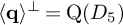 $\langle {\mathbf q}\rangle ^\perp =\mathrm {Q}(D_5)$
(see [Reference Dolgachev8, Sec. 8.2]). Thus, we have a natural right action of the group
 $W(D_5)$
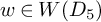
on the set of lattice isomorphisms (2.6): the action of
 $w\in W(D_5)$
sends
 $\phi $
to
 $\phi \circ w$
. An important fact we need is that this
 $W(D_5)$
-action preserves the set of geometric markings (see [Reference Dolgachev8, Sec. 8.2.8]). Equivalently, the natural action of the group of isometries of
 $\operatorname {Pic}(X)$
fixing Q (isomorphic to
 $W(D_5)$
) on bases of
 $\operatorname {Pic}(X)$
sends a geometric basis to a geometric basis.
For computations with the action of
 $W(D_5)$
it is convenient to use the following orthonormal basis of
 $\langle Q\rangle ^\perp _{\mathbb {Q}}\subset \operatorname {Pic}(X)_{\mathbb {Q}}$
with respect to the negative of the intersection form (over
 $\mathbb {Q}$
):
 $$ \begin{align} \varepsilon_i=\frac{1}{2}(h-\sum_{i=1}^5 e_i)+e_i, \ \ i=1,\ldots,5, \end{align} $$
so that
 $\phi (\alpha _i)=\varepsilon _i-\varepsilon _{i+1}$
for
 $i=1,\ldots ,4$
and
 $\phi (\alpha _5)=\varepsilon _4+\varepsilon _5$
. The action of
 $W(D_5)$
is generated by permutations of
 $(\varepsilon _i)$
, as well as by the sign changes of even number of
 $\varepsilon _i$
. The closure of the fundamental chamber of
 $D_5$
is given with respect to this basis by the inequalities
 $y_1\ge \ldots \ge y_4\ge |y_5|$
for
 $\sum _i y_i\varepsilon _i\in \mathrm {Q}(D_5)_{{\mathbb {R}}}$
.
One has
 $$ \begin{align} h=\frac{3}{4}Q-\frac{1}{2}\sum_{i=1}^5 \varepsilon_i, \ \ e_j=\frac{Q}{4}+\varepsilon_j-\frac{1}{2}\sum_{i=1}^5\varepsilon_i, \ j=1,\ldots,5. \end{align} $$
We can also represent X as a blow up of
 ${\mathbb P}^1\times {\mathbb P}^1$
at
 $4$
points, which gives a basis of
 $\operatorname {Pic}(X)$
of the form
 $$ \begin{align} s,f,E_1,E_2,E_3,E_4 \end{align} $$
where
 $E_i$
are classes of exceptional divisors (we use upper case to distinguish from the basis obtained from the blow up of
 ${\mathbb P}^2$
), and s and f are the classes of the two rulings on
 ${\mathbb P}^1\times {\mathbb P}^1$
, so that
 $s\cdot f=1$
,
 $E_i^2 = -1$
, and all other intersections are zero. We will refer to such bases (2.10) as
 ${\mathbb P}^1\times {\mathbb P}^1$
-type geometric bases.
Lemma 2.4. The action of the group of isometries of
 $\operatorname {Pic}(X)$
fixing Q sends a
 ${\mathbb P}^1\times {\mathbb P}^1$
-type geometric basis to a
 ${\mathbb P}^1\times {\mathbb P}^1$
-type geometric basis.
Proof. Let
 $\alpha :\operatorname {Pic}(X)\to \operatorname {Pic}(X)$
be such an isometry. Since
 $\alpha $
preserves the intersection number with Q, we see that
 $E^{\prime }_1=\alpha (E_1),\ldots ,E^{\prime }_4=\alpha (E_4)$
are classes of disjoint
 $(-1)$
-curves (see [Reference Dolgachev8, Sec. 8.2.6]), therefore, they can be contracted. Let
 $X'$
denote the corresponding blown down surface. Then
 $X'$
is a del Pezzo surface of degree
 $8$
, hence, either
 $X'\simeq {\mathbb P}^1\times {\mathbb P}^1$
or
 $X'\simeq F_1$
, the first Hirzebruch surface. The classes
 $s'=\alpha (s)$
and
 $f'=\alpha (f)$
form a basis of
 $\operatorname {Pic}(X')$
, with
 $(s')^2=(f')^2=0$
,
 $s'\cdot f'=1$
. Thus, the intersection form on
 $\operatorname {Pic}(X')$
is even, so
 $X'\simeq {\mathbb P}^1\times {\mathbb P}^1$
, and
 $s'$
and
 $f'$
are the classes of the rulings (since we know their (self-)intersections as well as their intersections with Q).
We associate a
 ${\mathbb P}^1\times {\mathbb P}^1$
-type geometric basis
 $(s,f,E_1,\ldots ,E_4)$
with a geometric basis
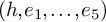 $(h,e_1,\ldots ,e_5)$
by setting
 $$ \begin{align} s=h-e_4, \ \ f=h-e_5, \ \ E_1=e_1, \ \ E_2=e_2, \ \ E_3=e_3, \ \ E_4=h-e_4-e_5. \end{align} $$
3 Exceptional bundles on the weighted projective lines
3.1 Generalities on hyperelliptic weighted projective lines
We refer to [Reference Geigle and Lenzing11], [Reference Lenzing17] and [Reference Meltzer19] for basic facts about weighted projective lines and exceptional sheaves on them. We will only consider hyperelliptic weighted projective lines associated with a collection of n distinct points
 $\lambda _1,\ldots ,\lambda _n$
on
 ${\mathbb P}^1(k)$
(‘hyperelliptic’ means that all the weights are
 $2$
). Recall that for the normalisation
 $\lambda _1=\infty $
,
 $\lambda _2=0$
,
 $\lambda _3=1$
, one considers a graded algebra
 $$ \begin{align*}S(\lambda_\bullet)=k[X_1,\ldots,X_n]/(X_i^2-X_2^2+\lambda_i X_1^2 \ | \ i=3,\ldots,n).\end{align*} $$
The
 ${\mathbb {Z}}$
-grading on the algebra
 $S(\lambda _\bullet )$
(where
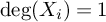 $\deg (X_i)=1$
) extends to a grading, given by
 $\deg _L(X_i)=x_i$
, with values in a bigger abelian group
 $$ \begin{align} L=(\bigoplus_{i=1}^n {\mathbb{Z}}\cdot x_i)/(2(x_1-x_2),\ldots,2(x_{n-1}-x_n))\simeq ({\mathbb{Z}}/2)^{n-1}\oplus {\mathbb{Z}}. \end{align} $$
Classically, the category
 $\operatorname {Coh} {\mathcal C}$
of coherent sheaves on the corresponding weighted projective line
 ${\mathcal C}={\mathcal C}_n={\mathcal C}(\lambda _1,\ldots ,\lambda _n)$
is defined as the quotient of the category of finitely generated L-graded
 $S(\lambda _\bullet )$
-modules by the Serre subcategory of finite dimensional modules. This means that
 ${\mathcal C}$
itself can be defined as a stacky quotient
 $(\operatorname {Spec}(S(\lambda _\bullet ))-0)/G$
, where G is a
 $1$
-dimensional commutative group scheme dual to L (see [Reference Chan and Lerner6, Sec. 11]). We refer to objects of
 $\operatorname {Coh} {\mathcal C}$
of finite length as torsion sheaves, and to torsion free objects of
 $\operatorname {Coh} {\mathcal C}$
, i.e., those not admitting nonzero subobjects of finite length as vector bundles on
 ${\mathcal C}$
.
For every element
 $l\in L$
, the coresponding free graded module
 $S(\lambda _\bullet )(l)$
induces a line bundle on
 ${\mathcal C}$
, and this defines an isomorphism
 $L\simeq \operatorname {Pic}({\mathcal C})$
. We will denote by
 ${\mathcal {O}}_{{\mathcal C}}(1)$
the line bundle corresponding to the canonical element
 $2x_i\in L$
. The dualising line bundle on
 ${\mathcal C}$
is
 $\omega _{{\mathcal C}}={\mathcal {O}}_{{\mathcal C}}(n-2)(-\sum _{i=1}^n x_i)$
. We define the degree of line bundles on
 ${\mathcal C}$
using the homomorphism
 $\deg :L\to {\mathbb {Z}}$
sending each
 $x_i$
to
 $1$
. One also defines the natural notions of rank and degree of any coherent sheaf on
 ${\mathcal C}$
(see [Reference Meltzer19, Sec. 3.1.8]). This allows to talk about slope and define slope stability in the usual way.
The abelian category
 $\operatorname {Coh} {\mathcal C}$
is hereditary, i.e., has trivial
 $\operatorname {Ext}^{\ge 2}$
(see [Reference Geigle and Lenzing11, Sec. 2]). Hence, every indecomposable object of the derived category
 $D^b(\operatorname {Coh} {\mathcal C})$
is a sheaf up to a shift.
Remark 3.1. One can identify
 ${\mathcal C}$
with the root stack of degree
 $2$
at the divisor given by the points
 $\lambda _1,\ldots ,\lambda _n$
on
 ${\mathbb P}^1$
(see [Reference Chan and Lerner6, Sec. 11]). Note that the automorphism groups of the stacky points on
 ${\mathcal C}$
are isomorphic to
 $\mu _2$
. In the case when n is even, one can also view
 ${\mathcal C}$
as the stacky quotient
 $[\Gamma /\mu _2]$
, where
 $\Gamma \to {\mathbb P}^1$
is the degree
 $2$
covering ramified at
 $\lambda _1,\ldots ,\lambda _n$
(see [Reference Geigle and Lenzing11, Ex. 5.8] for the case
 $n=4$
). In this case the category
 $\operatorname {Coh} {\mathcal C}$
is identified with the category of
 $\mu _2$
-equivariant coherent sheaves on
 $\Gamma $
. Note however that
 $\Gamma $
is smooth only if the characteristic is
 $\neq 2$
.
For every
 $i=1,\ldots ,n$
, we have two simple coherent sheaves on
 ${\mathcal C}$
,
 $S_i$
and
 $S^{\prime }_i$
, with
 $\operatorname {rk}(S_i)=\operatorname {rk}(S^{\prime }_i)$
,
 $c_1(S_i)=c_1(S^{\prime }_i)=x_i$
, fitting into the exact sequences


 $$ \begin{align} &0\to S^{\prime}_i\to {\mathcal{O}}_{{\mathcal C}}/{\mathcal{O}}_{{\mathcal C}}(-1)\to S_i\to 0, \end{align} $$
where the embedding
 ${\mathcal {O}}_{{\mathcal C}}(-1)\to {\mathcal {O}}_{{\mathcal C}}$
is given by
 $X_i^2$
.
We have a full exceptional collection
 $$ \begin{align} {\mathcal{O}}_{{\mathcal C}}(-1), {\mathcal{O}}_{{\mathcal C}}, (S_i)_{i=1,\ldots,n} \end{align} $$
in
 $D^b(\operatorname {Coh} {\mathcal C})$
, where the last block consists of mutually orthogonal objects. Indeed, this collection is obtained from the standard exceptional collection
 $$ \begin{align*}{\mathcal{O}}_{{\mathcal C}}(-1), ({\mathcal{O}}_{{\mathcal C}}(-x_i))_{i=1,\ldots,n}, {\mathcal{O}}_{{\mathcal C}}\end{align*} $$
(see [Reference Geigle and Lenzing11, Prop. 4.1]) by mutating all
 ${\mathcal {O}}_{{\mathcal C}}(-x_i)$
through
 ${\mathcal {O}}_{{\mathcal C}}$
(the fact that we get
 $(S_i)$
follows from exact sequences (3.2)).
The space
 $\operatorname {Hom}({\mathcal {O}}_{{\mathcal C}}(-1),{\mathcal {O}}_{{\mathcal C}})$
is
 $2$
-dimensional with the basis
 $X_1^2$
,
 $X_2^2$
, while the spaces
 $\operatorname {Hom}({\mathcal {O}}_{{\mathcal C}}(-1),S_i)$
and
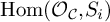 $\operatorname {Hom}({\mathcal {O}}_{{\mathcal C}},S_i)$
are
 $1$
-dimensional. The endomorphism algebra of collection (3.5) is determined by the compositions
 $$ \begin{align*}\operatorname{Hom}({\mathcal{O}}_{{\mathcal C}}(-1),{\mathcal{O}}_{{\mathcal C}})\otimes \operatorname{Hom}({\mathcal{O}}_{{\mathcal C}},S_i)\to \operatorname{Hom}({\mathcal{O}}_{{\mathcal C}}(-1),S_i), \ i=1,\ldots,n.\end{align*} $$
Furthermore, since the spaces
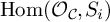 $\operatorname {Hom}({\mathcal {O}}_{{\mathcal C}},S_i)$
and
 $\operatorname {Hom}({\mathcal {O}}_{{\mathcal C}}(-1),S_i)$
are
 $1$
-dimensional, the isomorphism class of this algebra is determined by the kernels of the above maps, viewed as subspaces of
 $\operatorname {Hom}({\mathcal {O}}_{{\mathcal C}}(-1),{\mathcal {O}}_{{\mathcal C}})$
. The latter kernels are the
 $1$
-dimensional subspaces
 $\langle X_i^2\rangle $
, or equivalently (due to the defining relations in
 $S(\lambda _\bullet )$
),
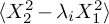 $\langle X_2^2-\lambda _i X_1^2\rangle $
for
 $i>1$
and
 $\langle X_1^2\rangle $
for
 $i=1$
. Note that the collection (3.5) is strong, as follows from [Reference Meltzer19, Lem. 3.2.4].
Lemma 3.2. Let
 $$ \begin{align*}L_1,L_2,(E_i)_{i=1,\ldots,n},\end{align*} $$
be a strong full exceptional collection in an enhanced triangulated category
 ${\mathcal D}$
, where
 $(E_i)$
are mutually orthogonal,
 $\dim \operatorname {Hom}(L_1,L_2)=2$
,
 $\dim \operatorname {Hom}(L_1,E_i)=\dim \operatorname {Hom}(L_2,E_i)=1$
. Assume that the kernels of the maps given by compositions
 $$ \begin{align*}\operatorname{Hom}(L_1,L_2)\to \operatorname{Hom}(L_2,E_i)^*\otimes \operatorname{Hom}(L_1,E_i)\end{align*} $$
are n distinct lines
 $(\ell _i)$
in
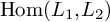 $\operatorname {Hom}(L_1,L_2)$
. Then there exists an equivalence
 $D^b(\operatorname {Coh} {\mathcal C}_n) \simeq {\mathcal D}$
taking (3.5) to our exceptional collection, for the weighted projective line
 ${\mathcal C}_n$
corresponding to the configuration of points
 $(\ell _i)$
in
 ${\mathbb P}^1$
.
Proof. This follows from the above calculation of the endomorphism algebra of (3.5) and from Bondal’s theorem that relates the category generated by a strong exceptional collections with the derived category of modules over its endomorphism algebra (see [Reference Bondal1]).
It is known that every exceptional vector bundle on
 ${\mathcal C}$
is slope stable (see [Reference Meltzer19, Prop. 3.2.7]). An exceptional sheaf is uniquely determined by its class in the Grothendieck group
 $\mathrm {K}_0({\mathcal C})$
(see [Reference Meltzer19, Lem. 4.4.1]). It is also known (see [Reference Meltzer19, Thm. 4.5.1]) that the degree and rank of an exceptional bundle on
 ${\mathcal C}$
are coprime.
Lemma 3.3.
(i) For
 ${\mathcal C}={\mathcal C}(\lambda _1,\ldots ,\lambda _n)$
, let
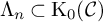 $\Lambda _n\subset \mathrm {K}_0({\mathcal C})$
denote the kernel of the antisymmetrisation of the Euler form
 $\chi (\cdot ,\cdot )$
. Then
 $x\in \Lambda _n$
if and only if
 $\deg (x)=\operatorname {rk}(x)=0$
. Furthermore,
 $\Lambda _n$
equipped with the symmetric form
 $(\cdot ,\cdot ):=\chi (\cdot ,\cdot )|_{\Lambda _n\times \Lambda _n}$
is isomorphic to
 $\mathrm {Q}(D_n)$
, the root lattice of type
 $D_n$
, in such a way that
 $$ \begin{align} \varepsilon_i=[S_i]+\frac{1}{2}([{\mathcal{O}}_{\mathcal C}(-1)]-[{\mathcal{O}}_{\mathcal C}]). \end{align} $$
(ii) The elements
 $$ \begin{align} [{\mathcal{O}}_{\mathcal C}]-\frac{1}{2}\sum_i[S_i], \ [{\mathcal{O}}_{\mathcal C}(-1)]-\frac{1}{2}\sum_i[S_i], \ \varepsilon_1,\ldots,\varepsilon_n \end{align} $$
form a basis of
 $\mathrm {K}_0({\mathcal C})_{\mathbb {Q}}$
, such that the first two elements generate the left (or right) orthogonal M to
 $\Lambda _n$
with respect to
 $\chi $
. Let
 $$ \begin{align*}\pi:\mathrm{K}_0({\mathcal C})_{\mathbb{Q}}\to (\Lambda_n)_{\mathbb{Q}}\simeq \mathrm{Q}(D_n)_{\mathbb{Q}}\end{align*} $$
denote the projection along M. Then
 $$ \begin{align} \pi[{\mathcal{O}}_{\mathcal C}]=\pi[{\mathcal{O}}_{\mathcal C}(-1)]=\frac{1}{2}\sum_{i=1}^n\varepsilon_i, \ \ \pi[S_i]=-\pi[S^{\prime}_i]=\varepsilon_i, \ i=1,\ldots,n. \end{align} $$
In particular,
 $\pi (\mathrm {K}_0({\mathcal C}))$
is contained in
 $\mathrm {P}(D_n)$
, the weight lattice of
 $D_n$
.
(iii) We have
 $$ \begin{align} \chi([V],[V'])=(1-\frac{n}{4})r(V)r(V')+\frac{1}{2}(d(V')r(V)-d(V)r(V'))+\chi(\pi[V],\pi[V']). \end{align} $$
In particular,
 $$ \begin{align} \chi([V],[V])&=(1-\frac{n}{4})r(V)^2+(\pi[V],\pi[V]). \end{align} $$
 $$ \begin{align} \chi([V],[S_i])&=\frac{r(V)}{2}+y_i, \ \ \chi([V],[S^{\prime}_i])=\frac{r(V)}{2}-y_i, \end{align} $$
for
 $\pi [V]=\sum _i y_i\varepsilon _i$
.
Proof. (i) Since the classes of objects of the exceptional collection (3.5) freely generate
 $\mathrm {K}_0({\mathcal C})$
, the Euler form
 $\chi $
is determined by the condition that
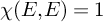 $\chi (E,E)=1$
for each object E of (3.5) and by
 $$ \begin{align} \chi({\mathcal{O}}_{\mathcal C}(-1),{\mathcal{O}}_{\mathcal C})=2, \ \chi({\mathcal{O}}_{\mathcal C}(-1),S_i)=\chi({\mathcal{O}}_{\mathcal C},S_i)=1, \ \chi(S_i,S_j)=0 \end{align} $$
with other values on objects of (3.5) vanishing by semiorthogonality. Note that equalities (3.12) follow from [Reference Meltzer19, Prop. 3.2.5(i)]).
Thus, for
 $\chi ^-(A,B)=\chi (A,B)-\chi (B,A)$
we have
 $$ \begin{align*} &\chi^-(a_1[{\mathcal{O}}_{\mathcal C}(-1)]+a_0[{\mathcal{O}}_{\mathcal C}]+\sum_i b_i [S_i],a^{\prime}_1[{\mathcal{O}}_{\mathcal C}(-1)]+a^{\prime}_0[{\mathcal{O}}_{\mathcal C}]+\sum_i b^{\prime}_i [S_i])\\ &=2(a_1a^{\prime}_0-a^{\prime}_1a_0)+\sum_i(a_0+a_1)b^{\prime}_i-\sum_i (a^{\prime}_0+a^{\prime}_1)b_i. \end{align*} $$
On the other hand,
 $$ \begin{align*}\operatorname{rk}(a_1[{\mathcal{O}}_{\mathcal C}(-1)]+a_0[{\mathcal{O}}_{\mathcal C}]+\sum_i b_i [S_i])=a_0+a_1, \ \ \deg(a_1[{\mathcal{O}}_{\mathcal C}(-1)]+a_0[{\mathcal{O}}_{\mathcal C}]+\sum_i b_i [S_i])=-2a_1+\sum_i b_i.\end{align*} $$
This immediately shows that the kernel
 $\Lambda _n$
of
 $\chi ^-(\cdot ,\cdot )$
coincides with
 $\ker (\operatorname {rk},\deg )\subset \mathrm {K}_0({\mathcal C})$
. Formulas (3.12) also show that the classes
 $\varepsilon _i\in (\Lambda _n)_{\mathbb {Q}}$
given by (3.6) are orthonormal with respect to
 $\chi (\cdot ,\cdot )$
.
Furthermore,
 $\Lambda _n=\ker (\operatorname {rk},\deg )$
is generated by the classes
 $[S_i]-[S_j]$
and
 $[{\mathcal {O}}_{\mathcal C}(-1)]-[{\mathcal {O}}_{\mathcal C}]+2[S_i]$
, which are given in terms of the basis
 $(\varepsilon _i)$
as
 $$ \begin{align*}[S_i]-[S_j]=\varepsilon_i-\varepsilon_j, \ \ [{\mathcal{O}}_{\mathcal C}(-1)]-[{\mathcal{O}}_{\mathcal C}]+2[S_i]=2\varepsilon_i,\end{align*} $$
so
 $\Lambda _n$
coincides with the root lattice
 $\mathrm {Q}(D_n)$
.
(ii) Using the exceptional collection (3.5), we see that the classes (3.7) form a basis of
 $\mathrm {K}_0({\mathcal C})$
. Also, one immediately checks that the first two classes are orthogonal to
 $\Lambda _n$
with respect to
 $\chi (\cdot ,\cdot )$
. Since the restriction of
 $\chi (\cdot ,\cdot )$
to
 $\Lambda _n$
is nondegenerate, this gives the required decomposition
 $\mathrm {K}_0({\mathcal C})_{\mathbb {Q}}=M\oplus (\Lambda _n)_{\mathbb {Q}}$
. The formulas for
 $\pi [{\mathcal {O}}_{\mathcal C}]$
,
 $\pi [{\mathcal {O}}_{\mathcal C}(-1)]$
and
 $\pi [S_i]$
are straightforward. The formula for
 $\pi [S^{\prime }_i]$
follows from the equality
 $[S_i]+[S^{\prime }_i]=[{\mathcal {O}}_{\mathcal C}]-[{\mathcal {O}}_{\mathcal C}(-1)]$
that follows from (3.4).
(iii) Formula (3.9) can be checked on the generating classes
 $[{\mathcal {O}}_{\mathcal C}(-1)]$
,
 $[{\mathcal {O}}_{\mathcal C}]$
,
 $([S_i])$
.
Let us now consider the case
 $n=4$
. This case is special in that the corresponding weighted projective lines have more derived autoequivalences (see [Reference Lenzing and Meltzer18]). Also, in this case the first term in the formula (3.9) vanishes.
Definition 3.4. For a pair of integers
 $(r,d)$
, let us denote by
 $B(r,d)\subset \mathbb {Q}^4=\mathrm {Q}(D_4)_{\mathbb {Q}}$
the set of vectors
 $y=y_1\varepsilon _1+\ldots +y_4\varepsilon _4$
such that
-
•
$\sum _{i=1}^4 y_i^2=1$
; -
•
$y_i\equiv r/2\ \mod {\mathbb {Z}}$
; -
•
$\sum _{i=1}^4 y_i\equiv d\ \mod 2{\mathbb {Z}}$
;
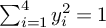


It is easy to see that
 $B(r,d)$
is non-empty if and only if r and d are not both even, and in this case
 $B(r,d)$
consists of exactly
 $8$
elements forming a single
 $W(D_4)$
-orbit. More precisely,
 $B(r,d)$
depends only on the parity of r and d, and
 $$ \begin{align*}B(0,1)=W(D_4)\cdot \varepsilon_1,\end{align*} $$
 $$ \begin{align*}B(1,0)=W(D_4)\cdot \frac{1}{2}(\varepsilon_1+\varepsilon_2+\varepsilon_3+\varepsilon_4),\end{align*} $$
 $$ \begin{align*}B(1,1)=W(D_4)\cdot \frac{1}{2}(\varepsilon_1+\varepsilon_2+\varepsilon_3-\varepsilon_4).\end{align*} $$
There is a unique element of
 $B(r,d)$
in the closure of the fundamental chamber of
 $D_4$
(given by
 $y_1\ge y_2\ge y_3\ge |y_4|$
).
Lemma 3.5. Let
 ${\mathcal C}={\mathcal C}(\lambda _1,\ldots ,\lambda _4)$
, and let
 $\pi :\mathrm {K}_0({\mathcal C})\to \mathrm {Q}(D_n)_{\mathbb {Q}}$
be the projection defined in Lemma 3.3(ii).
-
• If
$v\in \mathrm {K}_0({\mathcal C})$
satisfies
$\chi (v,v)=1$
then
$\pi (v)\in B(\operatorname {rk}(v),\deg (v))$
. Furthermore, for every coprime integers
$(r,d)$
, the map (3.13)is bijective.
$$ \begin{align} \{v\in \mathrm{K}_0({\mathcal C}) \ |\ \chi(v,v)=1, \operatorname{rk}(v)=r, \deg(v)=d\}\to B(r,d): v\mapsto \pi(v) \end{align} $$
-
• For every
$v\in \mathrm {K}_0({\mathcal C})$
with
$\chi (v,v)=1$
, such that
$(\operatorname {rk}(v),\deg (v))$
is coprime and
$\operatorname {rk}(v)\ge 0$
, there is a unique (up to isomorphism) exceptional sheaf V on
${\mathcal C}$
such that
$[V]=v$
.








Thus, for every coprime
 $(r,d)$
with
 $r>0$
and any
 $y\in B(r,d)$
, there is a unique exceptional sheaf V on
 ${\mathcal C}$
such that
 $\operatorname {rk}(V)=r$
,
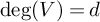 $\deg (V)=d$
, and
 $\pi ([V])=y$
.
Proof. Let
 $\pi (v)=\sum _{i=1}^4 y_i\varepsilon _i$
. From formula (3.10) with
 $n=4$
, we immediately see that
 $\chi (v,v)=1$
if and only if
 $\sum _i y_i^2=1$
. Furthermore, by (3.11), one has
 $\chi (v,[S_i])=r/2+y_i$
, which implies that
 $y_i\equiv r/2\ \mod {\mathbb {Z}}$
. On the other hand, this formula gives
 $\chi ([{\mathcal {O}}_{\mathcal C}],v)=d/2+\sum _i y_i/2$
. Hence,
 $\sum _i y_i\equiv d\ \mod 2{\mathbb {Z}}$
, which shows that
 $\pi (v)$
is in
 $B(r,d)$
.
Since
 $\pi $
restricts to an isomorphism on
 $\ker (\operatorname {rk},\deg )=\Lambda _n$
(see Lemma 3.3(i),(ii)), a class
 $v\in \mathrm {K}_0({\mathcal C})$
is determined by
 $\operatorname {rk}(v)$
,
 $\deg (v)$
and
 $\pi (v)$
. Hence, the map (3.13) is injective. Since
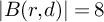 $|B(r,d)|=8$
for coprime
 $(r,d)$
, it remains to show that for every coprime
 $(r,d)$
with
 $r>0$
, there exist exactly
 $8$
isomorphism classes of exceptional sheaves V on
 ${\mathcal C}$
(with distinct classes in
 $\mathrm {K}_0({\mathcal C})$
) such that
 $\operatorname {rk}(V)=r$
and
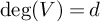 $\deg (V)=d$
.
To this end we use the fact that for any slope
 $\mu $
there exists an autoequivalence
 $\Phi $
of
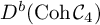 $D^b(\operatorname {Coh} {\mathcal C}_4)$
taking indecomposable bundles of slope
 $\mu $
to indecomposable bundles of slope
 $0$
(see [Reference Lenzing and Meltzer18, Thm. 6.3]). Therefore, it is enough to check our assertion for slope
 $0$
, i.e., to show that there are
 $8$
isomorphism classes of line bundles of degree
 $0$
on
 ${\mathcal C}$
. But this is clear from the identification of
 $\operatorname {Pic}({\mathcal C})$
with the abelian group L (see (3.1)): the subgroup
 $\ker (\deg )\subset L$
is isomorphic to
 $({\mathbb {Z}}/2)^3$
.
Remark 3.6. If the characteristic is
 $\neq 2$
, we can identify the category
 $\operatorname {Coh} {\mathcal C}_4$
with the category of
 ${\mathbb {Z}}/2$
-equivariant sheaves on the corresponding double covering
 $\Gamma $
of
 ${\mathbb P}^1$
(see Remark 3.1), which is an elliptic curve. Let
 $\varphi :\operatorname {Coh} {\mathcal C}_4\to \operatorname {Coh} \Gamma $
be the corresponding forgetful functor. Then it is easy to see that a sheaf E on
 ${\mathcal C}={\mathcal C}_4$
is exceptional if and only if the sheaf
 $\varphi (E)$
on
 $\Gamma $
is simple. Indeed, this follows from the well known decomposition
 $$ \begin{align*}\operatorname{Hom}_{\Gamma}(\varphi(E),\varphi(E))\simeq \operatorname{Hom}_{{\mathcal C}}(E,E)\oplus \operatorname{Hom}_{{\mathcal C}}(E,E\otimes\omega_{{\mathcal C}})\end{align*} $$
together with the Serre duality
 $\operatorname {Hom}_{{\mathcal C}}(E,E\otimes \omega _{{\mathcal C}})^*\simeq \operatorname {Ext}^1(E,E)$
. Thus, in characteristic
 $\neq 2$
, Lemma 3.5 can also be approached via studying
 ${\mathbb {Z}}/2$
-equivariant structures on stable bundles over elliptic curves.
3.2 Omnipresent exceptional bundles on
${\mathcal C}_5$

Recall (see [Reference Meltzer19, Sec. 7.3]) that an exceptional bundle V on a weighted projective line
 ${\mathcal C}_n$
is called omnipresent if
 $\operatorname {Hom}(V,S_i)\neq 0$
and
 $\operatorname {Hom}(V,S^{\prime }_i)\neq 0$
for all
 $i=1,\ldots ,n$
. Note that the corresponding
 $\operatorname {Ext}^1$
-groups vanish (this follows for example from Serre duality and the fact that V has no torsion, see [Reference Geigle and Lenzing11, Sec. 2.2]). Hence, the above condition is equivalent to the numerical condition
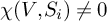 $\chi (V,S_i)\neq 0$
,
 $\chi (V,S^{\prime }_i)\neq 0$
for all i. By Serre duality, this is equivalent to
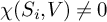 $\chi (S_i,V)\neq 0$
,
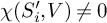 $\chi (S^{\prime }_i,V)\neq 0$
for all i.
Our goal is to show the absence of omnipresent bundles on
 ${\mathcal C}_5={\mathcal C}(\lambda _1,\ldots ,\lambda _5)$
in a certain range of
 $(\operatorname {rk}(V),\deg (V))$
(see Proposition 3.8 below).
Recall that the closure of the fundamental chamber of
 $D_5$
consists of vectors
 $\sum _{i=1}^5 y_i\varepsilon _i$
such that
 $y_1\ge \ldots \ge y_4\ge |y_5|$
.
Lemma 3.7. Let r be a positive integer. If
 $v=\sum _{i=1}^5 y_i\varepsilon _i\in \mathrm {P}(D_5)$
is in the closure of the fundamental chamber of
 $D_5$
and satisfies
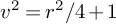 $v^2= r^2/4+1$
and
 $\sum _i y_i\le r/2+\sqrt {r}-1$
, then one of the following holds:
-
(1)
$r\ge 9$
is odd and
$v=\frac {r}{2}\varepsilon _1+\frac {1}{2}(\varepsilon _2+\varepsilon _3+\varepsilon _4+\varepsilon _5)$
or
$r\ge 5$
is odd and
$v=\frac {r}{2}\varepsilon _1+\frac {1}{2}(\varepsilon _2+\varepsilon _3+\varepsilon _4-\varepsilon _5)$
; -
(2)
$r\ge 4$
is even and
$v=\frac {r}{2}\varepsilon _1+\varepsilon _2$
; -
(3)
$r\ge 4$
is a square and
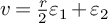
$v=(\frac {r}{2}-1)\varepsilon _1+\frac {\sqrt {r}}{2}(\varepsilon _2+\varepsilon _3+\varepsilon _4-\varepsilon _5)$
; -
(4)
$r\ge 16$
is an even square and
$v=(\frac {r}{2}-1)\varepsilon _1+\sqrt {r}\varepsilon _2$
; -
(5)
$r=11$
and
$v=\frac {5}{2}(\varepsilon _1+\varepsilon _2+\varepsilon _3+\varepsilon _4-\varepsilon _5)$
;











Proof. See Appendix A.
Below we will use the notations and the results of Lemma 3.3.
Proposition 3.8. Let V be an omnipresent exceptional bundle of rank r and degree
 $d<0$
on
 ${\mathcal C}_5$
, and suppose that
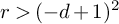 $r>(-d+1)^2$
. Then
 $(r,d)=(11,-2)$
, and
 $\pi [V]$
is in the
 $W(D_5)$
-orbit of
 $-\frac {5}{2}\sum _{i=1}^5\varepsilon _i$
.
Proof. Let
 $v:=\pi [V]\in \mathrm {P}(D_5)$
. Using formula (3.9), the condition
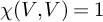 $\chi (V,V)=1$
can be rewritten as
 $$ \begin{align*}(v,v)=r^2/4+1.\end{align*} $$
On the other hand, stability of V (see [Reference Meltzer19, Prop. 3.2.7]) implies that for any line bundle L of degree 0 one has
 $\operatorname {Hom}(L,V)=0$
, hence,
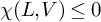 $\chi (L,V)\le 0$
. Taking L to be either
 ${\mathcal {O}}$
or of the form
 ${\mathcal {O}}(x_i-x_j)$
or
 ${\mathcal {O}}(x_i+x_j-x_k-x_l)$
and applying formula (3.9) (taking into account (3.8)), we get the inequality
 $$ \begin{align} (\omega, v)\le \frac{r}{4}-\frac{d}{2} \end{align} $$
for every
 $\omega $
in the
 $W(D_5)$
-orbit of
 $\omega _0:=\sum _{i=1}^5 \varepsilon _i/2$
. Let
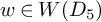 $w\in W(D_5)$
be an element such that
 $v_0:=w\cdot v$
is in the closure of the fundamental chamber of
 $D_5$
. Since our system of inequalities (3.14) is
 $W(D_5)$
-invariant, the same system of inequalities holds for
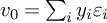 $v_0=\sum _i y_i\varepsilon _i$
. Using the obtained inequality for
 $(\omega _0,v_0)=\sum y_i/2$
, we get that
 $$ \begin{align} \sum_{i=1}^5 y_i\le \frac{r}{2}-d<\frac{r}{2}+\sqrt{r}-1, \end{align} $$
where the second inequality follows from the assumption that
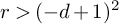 $r>(-d+1)^2$
. Thus, the assumptions of Lemma 3.7 hold for
 $v_0$
. Since the inequality here is strict, cases (3) and (4) of this lemma do not arise, and thus we are left with cases (1), (2), and (5). In the first two cases, the fact that
 $y_1=r/2$
implies that one of the coordinates of
 $v=\pi (V)$
is equal to
 $\pm r/2$
. Then, by formula (3.11), for some i either
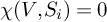 $\chi (V,S_i)=0$
of
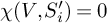 $\chi (V,S^{\prime }_i)=0$
.
In case (5) we find that
 $r=11$
and inequalities (3.15) become
 $$\begin{align*}y_1+y_2+y_3+y_4+y_5=15/2\le 11/2-d<9/2+\sqrt{11}, \end{align*}$$
forcing
 $-d=2$
.
Remark 3.9. The fact that an omnipresent exceptional bundle of rank
 $11$
and degree
 $-2$
on
 ${\mathcal C}_5$
indeed exists follows from Theorem 5.3 below. Namely, let
 $i:{\mathbb P}^1\to {\mathbb P}^2$
denote the Veronese embedding, and let
 $p:X\to {\mathbb P}^2$
denote the blow up at the
 $5$
points
 $i(\lambda _1),\ldots ,i(\lambda _5)$
(where
 ${\mathcal C}_5$
is associated with the configuration
 $(\lambda _i)$
). Then the omnipresent bundle in question corresponds to the bundle
 $(p^*T_{{\mathbb P}^2}(1))(-Q)$
on X, using the equivalence of
 $\langle {\mathcal {O}}_X\rangle ^\perp $
with
 $D^b(\operatorname {Coh} {\mathcal C}_5)$
considered in Proposition 4.1 below.
4 Exceptional pairs on del Pezzo surfaces of degree
$4$

4.1 Connection with the derived category of
${\mathcal C}_5$

Let X be a del Pezzo surface of degree
 $4$
obtained as the blow up of
 ${\mathbb P}^2$
at
 $5$
points
 $p_1,\ldots ,p_5$
, and let
 $h,e_1,\ldots ,e_5$
denote the corresponding geometric marking. Let
 $\langle {\mathcal {O}}_X\rangle ^{\perp }\subset D^b(X)$
denote the subcategory right orthogonal to
 ${\mathcal {O}}_X$
. The Grothendieck group
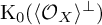 $\mathrm {K}_0(\langle {\mathcal {O}}_X\rangle ^{\perp })$
is then identified with the subgroup of
 $\mathrm {K}_0(X)$
consisting of classes x with
 $\chi (x)=0$
. Hence, the homomorphism
 $$ \begin{align*}c_1:\mathrm{K}_0(\langle {\mathcal{O}}_X\rangle^{\perp})\to \operatorname{Pic}(X)\end{align*} $$
identifies the subgroup
 $\ker (\operatorname {rk})\subset \mathrm {K}_0(\langle {\mathcal {O}}_X\rangle ^{\perp })$
with
 $\operatorname {Pic}(X)$
, We will use the induced identification of the subgroup
 $\ker (\operatorname {rk},\deg )\subset \mathrm {K}_0(\langle {\mathcal {O}}_X\rangle ^{\perp })$
with the sublattice
 $\langle Q\rangle ^\perp \subset \operatorname {Pic}(X)$
of elements of degree
 $0$
in
 $\operatorname {Pic}(X)$
(which is identified with the root lattice of
 $D_5$
).
Below we use mutations of exceptional collections. Recall that for an exceptional pair
 $(V_1,V_2$
), the left mutation
 $L_{V_1}V_2$
of
 $V_2$
through
 $V_1$
(resp., right mutation
 $R_{V_2}V_1$
of
 $V_1$
through
 $V_2$
) fits into an exact triangle
 $$ \begin{align*}L_{V_1}V_2\to R\operatorname{Hom}(V_1,V_2)\otimes V_1\to V_2\to\ldots;\end{align*} $$
 $$ \begin{align*}(\text{resp}., V_1\to R\operatorname{Hom}(V_1,V_2)^\vee\otimes V_2\to R_{V_2}(V_1)\to\ldots).\end{align*} $$
We denote by
 $\operatorname {rk}_X$
,
 $\deg _X$
(resp.,
 $\operatorname {rk}_{{\mathcal C}}$
,
 $\deg _{{\mathcal C}}$
) the rank and degree of sheaves on X (resp.,
 ${\mathcal C}$
).
Proposition 4.1. Let D denote the unique conic in
 ${\mathbb P}^2$
passing through
 $p_1,\ldots ,p_5$
, and let
 ${\mathcal C}={\mathcal C}_5$
be the weighted projective line associated with this configuration of
 $5$
points on
 $D\simeq {\mathbb P}^1$
. Then there is an equivalence

such that
 $$ \begin{align*}\Phi({\mathcal{O}}_{\mathcal C}(-3)(\sum x_i))={\mathcal{O}}_X(-2h+\sum e_i), \ \ \Phi({\mathcal{O}}_{\mathcal C}(-2)(\sum x_i))={\mathcal{O}}_X(-h)[1],\end{align*} $$
 $$ \begin{align*}\Phi(S^{\prime}_i)={\mathcal{O}}_X(e_i-h)[1], \ \ \Phi(S_i)={\mathcal{O}}_X(-Q-e_i+h)[1], \ i=1,\ldots,5.\end{align*} $$
One has
 $$ \begin{align} \operatorname{rk}_X(\Phi(V))=-\deg_{\mathcal C}(V), \ \ \deg_X(\Phi(V))=\operatorname{rk}_{\mathcal C}(V)+2\deg_{\mathcal C}(V). \end{align} $$
Furthermore, the isomorphism induced by
 $\Phi $
,

coincides with the one coming from the geometric marking (see (2.7)).
Proof. Since X is an intersection of two quadrics in
 ${\mathbb P}^4$
, in characteristic
 $\neq 2$
the existence of an equivalence
 $\Phi $
of
 $\langle {\mathcal {O}}_X\rangle ^\perp $
with the derived category of a weighted projective line
 ${\mathcal C}_5$
follows from [Reference Kuznetsov16, Cor. 5.7]. We give a different proof below which works in any characteristic and constructs an equivalence
 $\Phi $
matching specific exceptional collections in both categories.
Step 1. The full exceptional collection on X (see [Reference Orlov22]),
 $$ \begin{align*}({\mathcal{O}}_{e_i}(-1)[-1])_{i=1,\ldots,5},{\mathcal{O}}_X(-2h),{\mathcal{O}}_X(-h),{\mathcal{O}}_X\end{align*} $$
gives a full exceptional collection in
 $\langle {\mathcal {O}}_X\rangle ^\perp $
(by deleting the last object). Since
 $\operatorname {Hom}^*({\mathcal {O}}_{e_i}(-1), {\mathcal {O}}_X(-2h+\sum _i e_i))=0$
(e.g., by Serre duality), the exact sequence
 $$ \begin{align} 0\to {\mathcal{O}}_X(-2h)\to {\mathcal{O}}_X(-2h+\sum_i e_i)\to \bigoplus_i {\mathcal{O}}_{e_i}(-1)\to 0 \end{align} $$
shows that the left mutation of
 ${\mathcal {O}}_X(-2h)$
through the subcategory
 $\langle {\mathcal {O}}_{e_i}(-1)[-1], i=1,\ldots ,5\rangle $
is
 ${\mathcal {O}}_X(-2h+\sum _i e_i)[-1]$
. Hence, we get a full exceptional collection
 $$ \begin{align*}{\mathcal{O}}_X(-2h+\sum_i e_i)[-1], ({\mathcal{O}}_{e_i}(-1)[-1])_{i=1,\ldots,5}, {\mathcal{O}}_X(-h)\end{align*} $$
in
 $\langle {\mathcal {O}}_X\rangle ^\perp $
. Next, since
 $\operatorname {Hom}^*({\mathcal {O}}_X(e_i-h),{\mathcal {O}}_X(-h))=0$
, the exact sequence
 $$ \begin{align*}0\to {\mathcal{O}}_X(-h)\to {\mathcal{O}}_X(e_i-h)\to {\mathcal{O}}_{e_i}(-1)\to 0\end{align*} $$
shows that the right mutation of
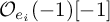 ${\mathcal {O}}_{e_i}(-1)[-1]$
through
 ${\mathcal {O}}_X(-h)$
is
 ${\mathcal {O}}_X(e_i-h)$
. Thus, we get an exceptional collection
 $$ \begin{align} {\mathcal{O}}_X(-2h+\sum_i e_i)[-1], {\mathcal{O}}_X(-h), ({\mathcal{O}}_X(e_i-h))_{i=1,\ldots,5}. \end{align} $$
Step 2. Let us show that collection (4.3) is strong. Let us set
 $L:={\mathcal {O}}_X(-h+\sum _i e_i)$
. It is convenient to tensor our collection with
 ${\mathcal {O}}_X(h)$
to get the collection
 $$ \begin{align} L[-1], {\mathcal{O}}_X, ({\mathcal{O}}_X(e_i))_{i=1,\ldots,5}. \end{align} $$
Since
 $\deg (L)=2$
,
 $\deg ({\mathcal {O}}_X)=0$
and
 $\deg ({\mathcal {O}}_X(e_i))=1$
, we have
 $$ \begin{align*}\operatorname{Hom}(L,{\mathcal{O}}_X)=\operatorname{Hom}(L,{\mathcal{O}}_X(e_i))=\operatorname{Hom}({\mathcal{O}}_X,L(-Q))=\operatorname{Hom}({\mathcal{O}}_X(e_i),L(-Q))=0,\end{align*} $$
which by Serre duality implies that
 $$ \begin{align*}\operatorname{Ext}^2(L,{\mathcal{O}}_X)=\operatorname{Ext}^2(L,{\mathcal{O}}_X(e_i))=0.\end{align*} $$
We also have
 $\operatorname {Ext}^{>0}({\mathcal {O}}_X,{\mathcal {O}}_X(e_i))=H^{>0}(X,{\mathcal {O}}_X(e_i))=0$
(this follows from the vanishing of cohomology of
 ${\mathcal {O}}_X(e_i)|_{e_i}$
).
Step 3. Next, let us compute the endomorphism algebra of collection (4.3), or equivalently of (4.4). Since
 $\operatorname {Hom}({\mathcal {O}}_X,{\mathcal {O}}_X(e_i))$
is
 $1$
-dimensional, we just need to calculate the natural maps
 $$ \begin{align} H^1(X,L^{-1})\to H^1(X,L^{-1}(e_i)). \end{align} $$
Let
 $C\subset X$
denote the strict transform of the unique conic D passing through the point
 $p_1,\ldots ,p_5$
. Consider the commutative diagram

where the left horizontal arrows are given by C and the vertical arrows are given by
 $e_i$
. It follows that the restriction maps
 $H^1(X,L^{-1})\to H^1(C,{\mathcal {O}}_C(-3))$
and
 $H^1(X,L^{-1}(e_i))\to H^1(C,{\mathcal {O}}_C(-2))$
are isomorphisms, so the map (4.5) coincides with the morphism
 $H^1(C,{\mathcal {O}}_C(-3))\to H^1(C,{\mathcal {O}}_C(-2))$
given by the point
 $C\cap e_i$
.
Step 4. Since
 $H^1(C,{\mathcal {O}}_C(-3))$
is 2-dimensional, and the points
 $C\cap e_i$
on C map to the corresponding points
 $p_i$
on
 $D\simeq {\mathbb P}^1$
, by Lemma 3.2, there exists an equivalence

where
 ${\mathcal C}={\mathcal C}_5$
is associated with the configuration
 $(p_i)$
on D, identifying the exceptional collection (4.3) with the image of
 $$ \begin{align*}{\mathcal{O}}_{\mathcal C}(-1), {\mathcal{O}}_{\mathcal C}, (S_i)_{i=1,\ldots,5}.\end{align*} $$
We claim that
 $$ \begin{align*}\widetilde{\Phi}(S^{\prime}_i)\simeq {\mathcal{O}}_X(-Q+h-e_i).\end{align*} $$
First, we can check that the left mutation of
 $S_i$
through
 $\langle {\mathcal {O}}_{\mathcal C}(-1),{\mathcal {O}}_{\mathcal C}\rangle $
is isomorphic to
 $S^{\prime }_i[-1]$
. Namely, combining the exact sequence (3.2) with (3.3) tensored by
 ${\mathcal {O}}_{{\mathcal C}}(-1)$
, we get an exact triangle
 $$ \begin{align*}S^{\prime}_i[1]\to F\to S_i\to\ldots\end{align*} $$
with
 $F\in \langle {\mathcal {O}}_{{\mathcal C}}(-1),{\mathcal {O}}_{{\mathcal C}}\rangle $
. On the other hand, the left mutation of
 ${\mathcal {O}}_X(e_i-h)$
through
 ${\mathcal {O}}_X(-h)$
is
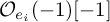 ${\mathcal {O}}_{e_i}(-1)[-1]$
(see Step 1), and the exact sequence
 $$ \begin{align*}0\to {\mathcal{O}}_X(-Q+h-e_i)\to {\mathcal{O}}_X(-2h+\sum_j e_j)\to {\mathcal{O}}_{e_i}(-1)\to 0\end{align*} $$
together with the vanishings
 $\operatorname {Hom}^*({\mathcal {O}}_X(-2h+\sum _j e_j),{\mathcal {O}}_X(-Q+h-e_i))= H^*(X,{\mathcal {O}}_X(-e_i))=0$
show that the left mutation of
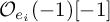 ${\mathcal {O}}_{e_i}(-1)[-1]$
through
 ${\mathcal {O}}_X(-2h+\sum _j e_j)[-1]$
is
 ${\mathcal {O}}_X(-Q+h-e_i)[-1]$
. Since
 $\widetilde {\Phi }$
is compatible with mutations, this implies our claim.
Step 5. To obtain the equivalence
 $\Phi $
we compose
 $\widetilde {\Phi }$
with the autoequivalence
 $$ \begin{align*}F\mapsto F\otimes {\mathcal{O}}_{\mathcal C}(2)(-\sum x_i)[1]\end{align*} $$
of
 $D^b(\operatorname {Coh} {\mathcal C})$
. Then
 $\Phi $
identifies the exceptional collection (4.3) in
 $\langle {\mathcal {O}}_X\rangle ^\perp $
with the collection
 $$ \begin{align*}{\mathcal{O}}_{\mathcal C}(-3)(\sum x_i), {\mathcal{O}}_{\mathcal C}(-2)(\sum x_i), (S^{\prime}_i)_{i=1,\ldots,5}\end{align*} $$
on
 ${\mathcal C}$
, and sends
 $S_i$
to
 ${\mathcal {O}}_X(-Q+h-e_i)[1]$
.
Since the classes of the objects of our exceptional collections generate the corresponding Grothendieck groups, the assertions concerning the induced map on
 $\mathrm {K}_0$
follow, including the relation between the ranks and degrees.
4.2 Connection with the derived category of
${\mathcal C}_4$

Let X be a del Pezzo surface of degree
 $4$
with a geometric basis
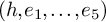 $(h,e_1,\ldots ,e_5)$
, and let
 $(f,s,E_1,\ldots ,E_4)$
be the corresponding
 ${\mathbb P}^1\times {\mathbb P}^1$
-type basis (see (2.11)).
Proposition 4.2. (i) There is an equivalence

for a weighted projective line
 ${\mathcal C}={\mathcal C}_4$
, such that
 $$ \begin{align*}\Phi_f({\mathcal{O}}_{\mathcal C}(-2))={\mathcal{O}}_X(-s-f), \ \ \Phi_f({\mathcal{O}}_{\mathcal C}(-1))={\mathcal{O}}_X(-s), \ \ \Phi_f(S^{\prime}_i)={\mathcal{O}}_{E_i}(-1), \ i=1,\ldots,4.\end{align*} $$
(ii) One has
 $$ \begin{align*}\operatorname{rk}_X(\Phi_f(V))=\operatorname{rk}_{\mathcal C}(V), \ \ \deg_X(\Phi_f(V))=\deg_{\mathcal C}(V),\end{align*} $$
and the map
 $c_1\circ \Phi _f:\mathrm {K}_0({\mathcal C}_4)\to \operatorname {Pic}(X)$
is given by
 $$ \begin{align*}c_1\circ \Phi_f:r\cdot ([{\mathcal{O}}_{\mathcal C}]-\frac{1}{2}\sum \varepsilon_i)+d\cdot \frac{1}{2}([{\mathcal{O}}_{\mathcal C}]-[{\mathcal{O}}_{\mathcal C}(-1)])+\sum y_i\varepsilon_i\mapsto r(f-\frac{Q}{2})+d\frac{f}{2}+\sum_i y_i(\frac{f}{2}-E_i).\end{align*} $$
The restriction of
 $c_1\circ \Phi _f$
to
 $\mathrm {Q}(D_4)\simeq \ker (\operatorname {rk}_{\mathcal C},\deg _{\mathcal C})\subset \mathrm {K}_0({\mathcal C}_4)$
coincides with the isometry
 $A:\mathrm {Q}(D_4)_{\mathbb {Q}}\to \mathrm {Q}(D_4)_{\mathbb {Q}}\subset \mathrm {Q}(D_5)_{\mathbb {Q}}\subset \operatorname {Pic}(X)_{\mathbb {Q}}$
given by
 $$\begin{align*}\begin{array}{l} \varepsilon_1\mapsto \frac{f}{2}-E_1=\frac{1}{2}(-\varepsilon_1+\varepsilon_2+\varepsilon_3+\varepsilon_4), \nonumber\\ \varepsilon_2\mapsto \frac{f}{2}-E_2=\frac{1}{2}(\varepsilon_1-\varepsilon_2+\varepsilon_3+\varepsilon_4), \\ \varepsilon_3\mapsto \frac{f}{2}-E_3=\frac{1}{2}(\varepsilon_1+\varepsilon_2-\varepsilon_3+\varepsilon_4), \\ \varepsilon_4\mapsto \frac{f}{2}-E_4=\frac{1}{2}(-\varepsilon_1-\varepsilon_2-\varepsilon_3+\varepsilon_4), \end{array} \end{align*}$$
where we use the embedding
 $\mathrm {Q}(D_5)_{\mathbb {Q}}\subset \operatorname {Pic}(X)_{\mathbb {Q}}$
coming from the geometric marking on X (see (2.8)). The map A sends
 $B(r,d)$
to
 $B(d,r+d)$
, where we view these sets as subsets of
 $\mathbb {Q}^4\subset {\mathbb {R}}^4=\bigoplus _{i=1}^4 {\mathbb {R}}\varepsilon _i$
.
Proof. (i) Viewing X as the blow up of
 ${\mathbb P}^1\times {\mathbb P}^1$
at
 $4$
points
 $q_1,\ldots ,q_4$
, gives the standard full exceptional collection in
 $D^b(\operatorname {Coh} X)$
,
 $$ \begin{align*}({\mathcal{O}}_{E_i}(-1)[-1])_{i=1,\ldots,4}, {\mathcal{O}}_X(-s-f), {\mathcal{O}}_X(-s), {\mathcal{O}}_X(-f), {\mathcal{O}}_X).\end{align*} $$
Deleting the last two objects we get a full exceptional collection in
 $\langle {\mathcal {O}}_X(-f),{\mathcal {O}}_X\rangle ^{\perp }$
.
Let
 $F_i$
denote the exceptional curve with the class
 $f-E_i$
(the proper transform of the ruling f through
 $q_i$
). We claim that the right mutation of
 ${\mathcal {O}}_{E_i}(-1)[-1]$
through
 $\langle {\mathcal {O}}_X(-s-f),{\mathcal {O}}_X(-s)\rangle $
is
 ${\mathcal {O}}_X(-s)|_{F_i}$
. Indeed, this follows from the exact sequences
 $$ \begin{align*}0\to {\mathcal{O}}_X(-s-f)\to {\mathcal{O}}_X(-s-f+E_i)\to {\mathcal{O}}_{E_i}(-1)\to 0,\end{align*} $$
 $$ \begin{align*}0\to {\mathcal{O}}_X(-s-f+E_i)\to {\mathcal{O}}_X(-s)\to {\mathcal{O}}_X(-s)|_{F_i}\to 0\end{align*} $$
and the vanishings
 $\operatorname {Hom}^*({\mathcal {O}}_{E_i},{\mathcal {O}}_X(-s-f))=\operatorname {Hom}^*({\mathcal {O}}_{F_i},{\mathcal {O}}_X)=0$
, obtained using Serre duality. Namely, the first sequence shows that the right mutation of
 ${\mathcal {O}}_{E_i}(-1)[-1]$
through
 $\langle {\mathcal {O}}_X(-s-f)\rangle $
is
 ${\mathcal {O}}_X(-s-f+E_i)$
, while the second sequence shows that the right mutation of
 ${\mathcal {O}}_X(-s-f+E_i)$
through
 $\langle {\mathcal {O}}_X(-s)\rangle $
is
 ${\mathcal {O}}_X(-s)|_{F_i}$
. Thus, we get a full exceptional collection
 $$ \begin{align} {\mathcal{O}}_X(-s-f), {\mathcal{O}}_X(-s), ({\mathcal{O}}_X(-s)|_{F_i})_{i=1,\ldots,4} \end{align} $$
in
 $\langle {\mathcal {O}}_X(-f),{\mathcal {O}}_X\rangle ^{\perp }$
. This collection is strong and its endomorphism algebra is determined by the compositions
 $$ \begin{align*}\operatorname{Hom}({\mathcal{O}}_X(-s),{\mathcal{O}}_X(-s)|_{F_i})\otimes \operatorname{Hom}({\mathcal{O}}_X(-s-f),{\mathcal{O}}_X(-s))\to \operatorname{Hom}({\mathcal{O}}_X(-s-f),{\mathcal{O}}_X(-s)|_{F_i}).\end{align*} $$
These compositions can be identified with the restriction maps
 $$ \begin{align*}H^0(X,{\mathcal{O}}(f))\to H^0(X,{\mathcal{O}}_X(f)|_{F_i})\simeq H^0(F_i,{\mathcal{O}}).\end{align*} $$
Since
 $F_i$
lies in a fiber of the projection
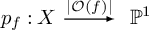 , the above maps are identified with the restriction maps
 $H^0({\mathbb P}^1,{\mathcal {O}}(1))\to {\mathcal {O}}(1)|_{p_f(q_i)}$
.
By Lemma 3.2, we get an equivalence of
 $ \langle {\mathcal {O}}_X(-f),{\mathcal {O}}_X\rangle ^{\perp }$
with
 $D^b(\operatorname {Coh} {\mathcal C})$
identifying the collection (4.6) with (3.5), where
 ${\mathcal C}={\mathcal C}_4$
is associated with the points
 $p_f(q_1),\ldots ,p_f(q_4)$
in
 ${\mathbb P}^1$
. To get the equivalence
 $\Phi _f$
we use in addition tensoring by
 ${\mathcal {O}}_{{\mathcal C}}(-1)$
which takes the collection (3.5) to
 $$ \begin{align*}{\mathcal{O}}_{\mathcal C}(-2), {\mathcal{O}}_{\mathcal C}(-1), (S_i)_{i=1,\ldots,4}.\end{align*} $$
Since the left mutation of
 $S_i$
through
 $\langle {\mathcal {O}}_{\mathcal C}(-2),{\mathcal {O}}_{\mathcal C}(-1)\rangle $
is
 $S^{\prime }_i[-1]$
(see Step 4 in the proof of Prop. 4.1), we have
 $\Phi _f(S^{\prime }_i)={\mathcal {O}}_{E_i}(-1)$
.
(ii) The formulas for the rank and the first Chern class (and hence, for degree) are checked on our exceptional collections. To get the required formulas for the linear map A we compute using (2.9) and (2.11):
 $$ \begin{align*} & \frac{f}{2}-E_i=\frac{1}{2}h-e_i-\frac{1}{2}e_5=\frac{1}{2}(\varepsilon_1+\varepsilon_2+\varepsilon_3+\varepsilon_4)-\varepsilon_i, \ \text{for } i=1,2,3,\\ & \frac{f}{2}-E_4=-\frac{1}{2}h+e_4+\frac{1}{2}e_5=\frac{1}{2}(-\varepsilon_1-\varepsilon_2-\varepsilon_3+\varepsilon_4). \end{align*} $$
It is easy to check that A sends
 $B(0,1)$
to
 $B(1,1)$
,
 $B(1,1)$
to
 $B(1,0)$
, and
 $B(1,0)$
to
 $B(0,1)$
.
Remark 4.3. In characteristic
 $\neq 2$
, another way to get an equivalence of
 $\langle {\mathcal {O}}_X(-f),{\mathcal {O}}_X\rangle ^{\perp }$
with
 $D^b(\operatorname {Coh} {\mathcal C}_4)$
is by applying [Reference Kuznetsov16, Thm. 4.2, Cor. 3.16] to the conic bundle
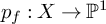 $p_f:X\to {\mathbb P}^1$
.
Corollary 4.4. Let V be an exceptional object of rank r and degree d in
 $\langle {\mathcal {O}}_X(-f),{\mathcal {O}}_X\rangle ^{\perp }\subset D^b(\operatorname {Coh} X)$
, where X is a del Pezzo surface of degree
 $4$
with a geometric basis
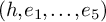 $(h,e_1,\ldots ,e_5)$
(and
 $f=h-e_5$
is a part of the corresponding
 ${\mathbb P}^1\times {\mathbb P}^1$
-type basis (2.11)). Then
 $$ \begin{align} c_1(V)=\frac{r+d}{2}f-\frac{r}{2}(Q-f)+y, \end{align} $$
with
 $y=\sum _{i=1}^4 y_i\varepsilon _i\in B(d,r+d)$
(see Definition 3.4), where
 $(\varepsilon _i)_{i=1,\ldots ,5}$
come from the geometric marking of X (see (2.8)). Furthermore, for every coprime
 $(r,d)$
with
 $r>0$
and every
 $y\in B(d,r+d)$
, there exists an exceptional bundle V in
 $\langle {\mathcal {O}}_X(-f),{\mathcal {O}}_X\rangle ^{\perp }$
of rank r, degree d, and
 $c_1(V)$
given by (4.7).
Proof. Let
 $V'$
be an exceptional object in
 $D^b(\operatorname {Coh} {\mathcal C})$
such that
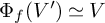 $\Phi _f(V')\simeq V$
. Then by Proposition 4.2(ii),
 $\operatorname {rk}(V')=r$
,
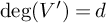 $\deg (V')=d$
and
 $$ \begin{align*}c_1(V)=\frac{r+d}{2}f-\frac{r}{2}(Q-f)+A(y'),\end{align*} $$
where
 $y'=\pi ([V])$
. It remains to observe that by Lemma 3.5,
 $y'\in B(r,d)$
, and so by Proposition 4.2(ii),
 $y=A(y')\in B(d,r+d)$
. The last assertion follows from Lemma 3.5.
4.3 Existence of exceptional pairs with a given slope
Let X be a del Pezzo surface of degree
 $4$
. As before, we fix a geometric marking
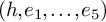 $(h,e_1,\ldots ,e_5)$
, and denote by
 $(f,s,E_1,\ldots ,E_4)$
the corresponding
 ${\mathbb P}^1\times {\mathbb P}^1$
-type marking.
The following definition is motivated by formula (4.7) for
 $c_1$
of an exceptional object contained in
 $\langle {\mathcal {O}}_X(-f),{\mathcal {O}}_X\rangle ^{\perp }$
.
Recall that for coprime
 $(r,d)$
we defined a subset
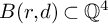 $B(r,d)\subset \mathbb {Q}^4$
depending only on parity of r and d (see Definition 3.4). Now for coprime
 $a,b\in {\mathbb {Z}}$
and
 $y=\sum _{i=1}^4 y_i\varepsilon _i\in B(a+b,a)$
, let us consider a class in
 $\operatorname {Pic}(X)_{\mathbb {Q}}$
given by
 $$ \begin{align*}D_{ab}(y):=(a/2)f + (b/2)(Q-f)+y=(a/2)(Q/2-\varepsilon_5)+(b/2)(Q/2+\varepsilon_5)+y.\end{align*} $$
Note that since
 $B(a+b,b)$
is a single
 $W(D_4)$
-orbit, for fixed
 $a,b$
the classes
 $(D_{ab}(y))$
form a single
 $W(D_4)$
-orbit, where we view
 $W(D_4)$
as a subgroup of elements in
 $W(D_5)$
fixing
 $\varepsilon _5$
(equivalently,
 $W(D_4)$
is the subgroup of isometries of
 $\operatorname {Pic}(X)_{\mathbb {Q}}$
fixing Q and
 $f=Q/2-\varepsilon _5$
).
Note that Corollary 4.4 states that for an exceptional object
 $V\in \langle {\mathcal {O}}_X(-f),{\mathcal {O}}_X\rangle ^{\perp }\subset D^b(\operatorname {Coh} X)$
of rank r and degree d one has
 $$ \begin{align*}c_1(V)=D_{r+d,-r}(y)\end{align*} $$
for some
 $y\in B(d,r+d)$
.
Lemma 4.5. Let us fix coprime
 $a,b$
. Then
-
• the
$W(D_4)$
-orbits
$\cup _{y\in B(a+b,a)}D_{ab}(y)$
and
$\cup _{y\in B(a+b,a)}D_{ba}(y)$
belong to a single
$W(D_5)$
-orbit; -
• we have an equality of
$W(D_4)$
-orbits,
$\cup _{y\in B(a+b,a)}D_{ab}(y)=\cup _{y'\in B(-a-b,-a)} (-D_{-a,-b}(y'))$
.






Proof. Consider the element
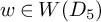 $w\in W(D_5)$
sending
 $\varepsilon _1$
to
 $-\varepsilon _1$
,
 $\varepsilon _5$
to
 $-\varepsilon _5$
and fixing
 $\varepsilon _i$
for
 $i=2,3,4$
. For the first item it is enough to prove that for any
 $y\in B(a+b,a)$
, one has
 $wD_{ab}(y)=D_{ba}(w(y))$
where
 $w(y)\in B(a+b,b)$
. Indeed, we have
 $$ \begin{align*}wD_{ab}(y)=(a/2)(Q/2+\varepsilon_5)+(b/2)(Q/2-\varepsilon_5)+w(y).\end{align*} $$
Note that w preserves
 $B(0,1)$
and swaps
 $B(1,0)$
with
 $B(1,1)$
, hence,
 $wB(a+b,a)=B(a+b,b)$
, and our claim follows.
The second item follows from
 $$ \begin{align*}-D_{-a,-b}(y)=(a/2)f+(b/2)(Q-f)-y=D_{a,b}(-y)\end{align*} $$
(note that the longest element of
 $W(D_4)$
takes y to
 $-y$
).
The following is a more precise version of Theorem A (since
 $\deg (D_{d-r,r}(y))=\deg (D_{r,d-r}(y))=d$
).
Theorem 4.6. Let X be a del Pezzo surface of degree
 $4$
with a fixed geometric marking. For all relatively prime
 $(d,r)$
, with
 $r>0$
, and every
 $y\in B(d,d-r)$
(resp.,
 $y'\in B(d,r)$
) there is a unique (up to an isomorphism) exceptional bundle V on X of rank r with
 $c_1(V)=D_{d-r,r}(y)$
(resp.,
 $c_1(V)=D_{r,d-r}(y')$
), and that bundle satisfies
 $R\operatorname {Hom}(V,{\mathcal {O}}_X)=0$
. Similarly, there is a unique exceptional bundle V of rank r with
 $c_1(V)=D_{d+r,-r}(y)$
(resp.,
 $c_1(V)=D_{-r,d+r}(y')$
), and that bundle satisfies
 $R\operatorname {Hom}({\mathcal {O}}_X,V)=0$
.
Proof. Uniqueness follows from the fact that an exceptional object
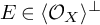 $E\in \langle {\mathcal {O}}_X\rangle ^\perp $
is determined by its rank and
 $c_1$
(see Lemma 2.3(ii)). By Lemma 4.5 and duality, it is enough to prove existence of an exceptional pair
 $(V,{\mathcal {O}}_X)$
with V of rank r and
 $c_1(V)=D_{d+r,-r}(y)$
. But this immediately follows from Corollary 4.4.
Remark 4.7. Note that Theorem 4.6 doesn’t give all exceptional pairs
 $({\mathcal {O}}_X,V)$
, only those with
 $c_1(V)$
of specific form with respect to a geometric marking. One can ask how many exceptional pairs
 $(V,{\mathcal {O}}_X)$
with given
 $d=\deg (V)$
and
 $r=\operatorname {rk}(V)$
do we get from Theorem 4.6 by varying the geometric marking on X. Since the markings are permuted by
 $W(D_5)$
, taking into account Lemma 4.5, we see that such exceptional pairs are in bijection with the
 $W(D_5)$
-orbit in
 $\operatorname {Pic}(X)$
containing the class
 $D_{d-r,r}(y)$
for some (and hence for all)
 $y\in B(d,d-r)$
. Equivalently, we should count the number of elements in the
 $W(D_5)$
-orbit O of the projection of
 $D_{d-r,r}(y)$
to
 $\langle Q\rangle ^\perp \subset \operatorname {Pic}(X)_{\mathbb {Q}}$
, i.e., of
 $y+(r-d/2)\varepsilon _5$
. This number of elements in O is easy to calculate by identifying the stabiliser subgroup of
 $y+(r-d/2)\varepsilon _5$
in each case.
-
(1) If d is even (and r is odd), O is the orbit of
$\varepsilon _1+(r-d/2)\varepsilon _5$
. If
$d\neq 2(r-1)$
then the stabiliser is
$S_3\times ({\mathbb {Z}}/2)^2$
, so
$|O|=80$
. In the case
$d=2(r-1)$
the stabiliser is
$S_3\times S_2\times ({\mathbb {Z}}/2)^2$
, so
$|O|=40$
. -
(2) If d is odd and r is odd, O is the orbit of
$\frac {1}{2}(\varepsilon _1+\ldots +\varepsilon _4)+(r-d/2)\varepsilon _5$
. If
$d\neq 2r-1$
then the stabiliser is
$S_4$
, so
$|O|=80$
. In the case
$d=2r-1$
the stabiliser is
$S_5$
, so
$|O|=16$
. -
(3) If d is odd and r is even, O is the orbit of
$\frac {1}{2}(\varepsilon _1+\varepsilon _2+\varepsilon _3-\varepsilon _4)+(r-d/2)\varepsilon _5$
. If
$d\neq 2r\pm 1$
then the stabiliser is
$S_3$
, so
$|O|=320$
. If
$d=2r-1$
then the stabiliser is
$S_4$
, so
$|O|=80$
. If
$d=2r+1$
, the stabiliser is
$S_3\times S_2$
, so
$|O|=160$
.

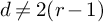
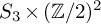

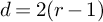





It is natural to ask whether our divisor classes
 $D_{a,b}(y)$
descend to del Pezzo surfaces of bigger degree (with respect to blow up maps).
Proposition 4.8. The divisor class of the form
 $D_{a,b}(y)$
, for coprime
 $a,b$
and
 $y\in B(a+b,a)$
, is the pull-back of a class on a del Pezzo surface of degree
 $5$
if and only if either
 $|a|\le 2$
or
 $|b|\le 2$
. If
 $a=\pm 1$
(resp.,
 $b=\pm 1$
), a class of the form
 $D_{a,b}(y)$
descends to
 ${\mathbb P}^1\times {\mathbb P}^1$
if b is odd (resp. a is odd); otherwise, it descends to the Hirzebruch surface
 $F_1$
. The classes corresponding to the pairs
 $(a,b)=(1,2),(-1,-2),(2,1),(-2,-1)$
are the pull-backs from
 ${\mathbb P}^2$
.
Proof. A class descends to a del Pezzo surface of degree
 $5$
if and only if it is orthogonal to the class of an exceptional curve. In terms of the basis
 $(Q,\varepsilon _1,\ldots ,\varepsilon _5)$
of
 $\operatorname {Pic}(X)_{\mathbb {Q}}$
, the set of classes of 16 exceptional curves is the
 $W(D_5)$
-orbit of
 $$ \begin{align*}2h-\sum_{i=1}^5 e_i=Q/4+\sum_{i=1}^5 \varepsilon_i/2.\end{align*} $$
In other words, all exceptional classes have form
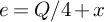 $e=Q/4+x$
, where
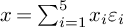 $x=\sum _{i=1}^5 x_i\varepsilon _i$
has
 $x_i=\pm 1/2$
, with even number of
 $x_i$
’s negative. Recall that the basis
 $(\varepsilon _i)$
is orthonormal with respect to the negative of the intersection form. Hence, the intersection number of the class e with
 $Q/2-\varepsilon _5$
(resp.,
 $Q/2+\varepsilon _5$
) is
 $1/2+x_5$
(resp.,
 $1/2-x_5$
). Thus, we have
 $$ \begin{align*}e\cdot D_{a,b}(y)=\begin{cases} a/2+x\cdot y, & x_5=1/2, \\ b/2+ x\cdot y, & x_5=-1/2.\end{cases}\end{align*} $$
Recall that
 $y=\sum _{i=1}^4 y_i\varepsilon _i\in B(a+b,a)$
(and so
 $y_5=0$
). By the definition of
 $B(a+b,a)$
, either
 $y_i=\pm 1/2$
for
 $i=1,\ldots ,4$
, or
 $y_{i_0}=\pm 1$
for some
 $i_0\in [1,4]$
and
 $y_i=0$
for
 $i\neq i_0$
. Since
 $x_i=\pm 1/2$
, this implies that
 $|x\cdot y|\le 1$
. Therefore,
 $e\cdot D_{a,b}(y)$
can be zero only if either
 $|a|\le 2$
or
 $|b|\le 2$
. It follows that either a or b belongs to the set
 $\{\pm 1, \pm 2\}$
(since a and b are relatively prime). By Lemma 4.5, using an action of
 $W(D_5)$
on geometric markings of X, we can replace the pair
 $(a,b)$
by
 $(b,a)$
and by
 $(-a,-b)$
. Thus, it is enough to consider the cases
 $b=2$
and
 $b=1$
, with some choice of y.
In the case
 $b=2$
, a is odd, so
 $y\in B(1,1)$
, i.e.,
 $y_i=\pm 1/2$
, with odd number of negative
 $y_i$
’s. Hence,
 $e=Q/4+y-\varepsilon _5/2$
is an exceptional class with
 $e\cdot D_{a,b}(y)=0$
(recall that
 $y\cdot y=-(y,y)=-1$
).
In the case where
 $b=1$
and a is odd, we can take
 $y=-\varepsilon _4$
. Then
 $$ \begin{align*}D_{a,1}(\varepsilon_4)=\frac{a}{2}(Q/2-\varepsilon_5)+\frac{1}{2}(Q/2+\varepsilon_5)-\varepsilon_4=\frac{a-1}{2}(Q/2-\varepsilon_5)+Q/2-\varepsilon_4=\frac{a-1}{2}f+s\end{align*} $$
which comes from
 ${\mathbb P}^1\times {\mathbb P}^1$
.
In the case where
 $b=1$
and a is even, we can take
 $y=-\sum _{i=1}^4 \varepsilon _i/2$
. Then
 $$ \begin{align*}D_{a,1}(-\sum_{i=1}^4\varepsilon_i/2)=\frac{a}{2}(3Q/4-\sum_{i=1}^4\varepsilon_i/2-\varepsilon_5/2)-(\frac{a}{2}-1)(Q/4-\sum_{i=1}^4\varepsilon_i/2+\varepsilon_5/2)=\frac{a}{2}h-(\frac{a}{2}-1)e_5,\end{align*} $$
which comes from
 $F_1$
, and even from
 ${\mathbb P}^2$
in the case
 $a=2$
.
Corollary 4.9. The exceptional pairs
 $({\mathcal {O}}_X,V)$
constructed in Theorem 4.6 (with
 $c_1(V)=D_{d-r,r}(y)$
or
 $c_1(V)=D_{r,d-r}(y')$
) descend to a del Pezzo surface of degree
 $5$
provided
 $r=2$
or
 $r=d\pm 2$
. Similarly, in the case
 $r=1$
or
 $r=d\pm 1$
they descend to a del Pezzo surface of degree
 $8$
(to
 ${\mathbb P}^1\times {\mathbb P}^1$
if d is even, and to
 $F_1$
otherwise).
Proof. By Proposition 4.8, if
 $r=2$
or
 $d-r=\pm 2$
then the divisor class
 $c_1(V)$
descends to a del Pezzo surface of degree
 $5$
. Similarly, if
 $r=1$
or
 $d-r=\pm 1$
then this class descends to a del Pezzo surface of degree
 $8$
(to
 ${\mathbb P}^1\times {\mathbb P}^1$
if d is even, and to
 $F_1$
if d is odd). Hence, by Lemma 2.3(iii), V itself also descends (the descended bundle still forms an exceptional pair with
 ${\mathcal {O}}_X$
).
Remark 4.10. The statement of Theorem 4.6 also holds for
 $r=0$
, with the sole exception that the sheaf one obtains is not a bundle but is supported on an exceptional curve. Namely, the classes
 $D_{1,0}(y)$
, for
 $y\in B(1,1)$
, are exactly the
 $8$
exceptional classes that have trivial intersection with f.
5 More on exceptional pairs
5.1 Transformations of exceptional pairs
$(V,{\mathcal {O}})$

Let X be a del Pezzo surface of degree k. We have the following three natural operations on exceptional pairs
 $(V_1,V_2)$
on X:
-
(1) duality
$(V_1,V_2)\mapsto (V_2^\vee , V_1^\vee )$
; -
(2) mutation
$(V_1,V_2)\mapsto (L_{V_1}V_2,V_1)$
, where
$L_{V_1}V_2$
is the left mutation of
$V_2$
through
$V_1$
; -
(3) rotation
$(V_1,V_2)\mapsto (V_2(-Q),V_1)$
.





Combining these operations we get the following two operations on exceptional pairs of the form
 $(V,{\mathcal {O}})$
:
 $$ \begin{align} &(V,{\mathcal{O}})\mapsto (M(V):=L_{{\mathcal{O}}}(V^\vee),{\mathcal{O}}), \nonumber \\ &(V,{\mathcal{O}})\mapsto (R(V):=V^\vee(-Q),{\mathcal{O}}). \end{align} $$
We can calculate the effect of these operations on the discrete invariants of V.
Lemma 5.1. One has
 $$ \begin{align*}\operatorname{rk}(M(V))=-\deg(V)-\operatorname{rk}(V), \ \ \operatorname{rk}(R(V))=\operatorname{rk}(V),\end{align*} $$
 $$ \begin{align*}c_1(M(V))=c_1(V), \ \ c_1(R(V))=-c_1(V)-\operatorname{rk}(V)Q.\end{align*} $$
Hence,
 $$ \begin{align*}\mu(M(V))=-\frac{\mu(V)}{\mu(V)+1},\ \ \mu(R(V))= -k-\mu(V),\end{align*} $$
where
 $\mu (V)=\deg (V)/\operatorname {rk}(V)$
.
Proof. The formula for the rank and
 $c_1$
of
 $M(V)$
follow from additivity of these invariants in exact triangles and the fact that for an exceptional pair
 $(V,{\mathcal {O}})$
one has
 $\chi (V^\vee )=-\deg (V)$
as follows from (2.2).
Remark 5.2. Note that both M and R are involutions acting by fractional-linear transformation on the slope
 $\mu \in {\mathbb {R}}{\mathbb P}^1$
, and thus generate a dihedral subgroup of
 $\operatorname {PGL}_2({\mathbb {R}})$
(infinite or finite). The generating rotation (i.e., the element
 $RM$
in
 $\operatorname {PSL}_2({\mathbb {R}})$
) is elliptic for
 $k<4$
, hyperbolic for
 $k>4$
, and parabolic for
 $k=4$
. For
 $k>4$
, the open interval between the two fixed points of
 $RM$
in
 ${\mathbb {R}}{\mathbb P}^1$
is given by the inequality
 $\mu ^2+k\mu +k<0$
, or, in terms of degree and rank,
 $d^2+krd+kr^2<0$
. In Sec. 5.3 below we will show that a coprime pair
 $(d,r)$
in this range arises from an exceptional pair
 $(V,{\mathcal {O}})$
if and only if
 $(d,r)$
satisfies an additional inequality (5.2).
5.2 Non-sporadic range for del Pezzo surfaces of degree
$4$

Let X be a del Pezzo surface of degree
 $4$
. We refer to exceptional pairs
 $({\mathcal {O}}_X,V)$
or
 $(V,{\mathcal {O}}_X)$
, that do not have
 $c_1(V)$
of the form described in Theorem 4.6 for some geometric marking, as sporadic. The next result gives a range of values
 $(r,d)$
for which sporadic pairs do not appear. As before, X denotes a del Pezzo surface of degree
 $4$
.
Theorem 5.3. Let V be an exceptional bundle on X of rank r and slope
 $\mu =d/r$
, such that the pair
 $(V,{\mathcal {O}}_X)$
is exceptional. Assume that
 $$ \begin{align*}\mu\not\in[-r-\frac{1}{r}-4, r+\frac{1}{r}].\end{align*} $$
Then
-
• either
$c_1(V)=D_{d+r,-r}(y)$
(where
$y\in B(d,r+d)$
) with respect to an appropriate geometric marking, -
• or
$V\simeq p^*\Omega _{{\mathbb P}^2}(-1)$
, where
$p:X\to {\mathbb P}^2$
is an appropriate blowdown (in this case
$r=2$
,
$\mu =-15/2$
), -
• or
$V\simeq (p^*T_{{\mathbb P}^2}(1))(-Q)$
(in this case
$r=2$
,
$\mu =7/2$
).








Proof. Recall that we have the operation
 $(V,{\mathcal {O}}_X)\mapsto (R(V)=V^\vee (-Q),{\mathcal {O}}_X)$
on exceptional pairs. Since
 $\mu (R(V))=-\mu (V)-4$
and R preserves the rank (see Lemma 5.1), for each fixed rank r, passing from V to
 $R(V)$
transforms the condition
 $\mu <-r-1/r-4$
into the condition
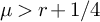 $\mu>r+1/4$
. Thus, it is enough to prove the assertion assuming that
 $\mu>r+1/r$
. Since an exceptional bundle in
 $\langle {\mathcal {O}}_X\rangle ^\perp $
is determined by its rank and
 $c_1$
(see Lemma 2.3(ii)), it is enough to check that for this range either
 $c_1(V)=D_{d+r,-r}(y)$
or
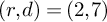 $(r,d)=(2,7)$
and
 $c_1(V)=5h-2Q$
for some geometric marking.
Recall that by Proposition 4.1, we have an equivalence

where
 ${\mathcal C}={\mathcal C}_5$
is a weighted projective line. Let
 $V'=\Phi ^{-1}(V)\in D^b(\operatorname {Coh}{\mathcal C})$
. Then by (4.1), one has
 $r':=\operatorname {rk}_{\mathcal C}(V')=2r+d>0$
and
 $d':=\deg _{\mathcal C}(V')=-r$
, so changing
 $\Phi $
by an even shift we can assume
 $V'$
to be a vector bundle on
 ${\mathcal C}$
. Our assumption
 $d/r>r+1/r$
is equivalent to
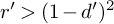 $r'>(1-d')^2$
.
Applying Proposition 3.8 we deduce that either
 $V'$
is right orthogonal to one of the objects
 $S_i$
or
 $S^{\prime }_i$
, or
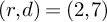 $(r,d)=(2,7)$
and
 $\pi [V']$
is in the
 $W(D_5)$
-orbit of
 $-\frac {5}{2}\sum _{i=1}^5 \varepsilon _i$
. In the latter case, we get that with respect to an appropriate geometric marking,
 $\pi [V']=-\frac {5}{2}\sum _{i=1}^5 \varepsilon _i$
. Since
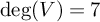 $\deg (V)=7$
, we have
 $c_1(V)=\frac {7}{4}Q+\alpha $
, where
 $\alpha \in \langle Q\rangle ^\perp _{\mathbb {Q}}$
. By Proposition 4.1, we get
 $\alpha =\pi [V']=-\frac {5}{2}\sum _{i=1}^5 \varepsilon _i$
, with respect to the identification
 $\langle Q\rangle ^\perp =\mathrm {Q}(D_5)$
. Hence,
 $$ \begin{align*}c_1(V)=\frac{7}{4}Q-\frac{5}{2}\sum_{i=1}^5 \varepsilon_i=5h-2Q.\end{align*} $$
In the former case we get that either
 $\operatorname {Hom}^*(S_i,V')=0$
or
 $\operatorname {Hom}^*(S^{\prime }_i,V')=0$
for some i. Applying the equivalence
 $\Phi $
above, we get that either
 $\operatorname {Hom}^*({\mathcal {O}}_X(e_i-h),V)=0$
or
 $\operatorname {Hom}^*({\mathcal {O}}_X(Q-e_i+h),V)=0$
for some i. But the classes
 $e_i-h=-Q/2+\varepsilon _i$
and
 $-Q-e_i+h=-Q/2-\varepsilon _i$
, where
 $i=1,\ldots ,5$
, form a single
 $W(D_5)$
-orbit. Thus, choosing an appropriate geometric marking, we can assume that
 $\operatorname {Hom}^*({\mathcal {O}}_X(-f),V)=0$
(recall that
 $f=h-e_5$
). But then V is in the subcategory
 $\langle {\mathcal {O}}_X(-f),{\mathcal {O}}_X\rangle ^\perp $
, so by Corollary 4.4,
 $c_1(V)$
is of the form
 $D_{d+r,-r}(y)$
.
5.3 Exceptional pairs on del Pezzo surfaces of degree
$\ge 5$

For a del Pezzo surface of degree k, where
 $5\le k\le 9$
, not every slope
 $\mu =d/r$
occurs as
 $\mu (V)$
for an exceptional pair
 $(V,{\mathcal {O}})$
on X. Indeed, if
 $(V,{\mathcal {O}})$
is an exceptional pair of bundles then
 $\chi (V)=0$
, so by (2.3),
 $d=\deg (V)$
and
 $r=\operatorname {rk}(V)$
satisfy
 $$ \begin{align} d^2+krd+kr^2\ge -k. \end{align} $$
Here are explicit examples of pairs
 $(r,d)$
that are prohibited by the constraint (5.2): for k odd one can consider
 $d=(-kr+1)/2$
with
 $r\ge 3$
odd, while for k even one can take
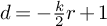 $d=-\frac {k}{2}r+1$
where
 $r\ge 2$
.
Note that in the case
 $k=9$
(i.e., for
 ${\mathbb P}^2$
), the argument of Lemma 2.1 shows that the inequality (5.2) becomes an equality
 $$ \begin{align} d^2+9rd+9r^2=-9, \end{align} $$
so
 $d=\deg (V)$
is divisible by
 $3$
. In this case, using the fact that all exceptional objects in
 $\langle {\mathcal {O}}_{{\mathbb P}^2}\rangle ^\perp $
lie in the helix generated by
 $({\mathcal {O}}_{{\mathbb P}^2}(-2),{\mathcal {O}}_{{\mathbb P}^2}(-1))$
, one can determine all the slopes
 $\mu (V)$
that occur for
 $(V,{\mathcal {O}})$
.
More generally, for
 $k\ge 5$
, we can consider relatively prime
 $(d,r)$
satisfying
 $$ \begin{align} -k\le d^2+krd+kr^2\le -1. \end{align} $$
We will prove that all of them arise as
 $(\deg (V),\operatorname {rk}(V))$
from exceptional pairs
 $(V,{\mathcal {O}})$
(with the restriction that d is divisible by
 $3$
if
 $k=9$
).
Proposition 5.4. Let
 $(d,r)$
be a pair of relatively prime integers satisfying (5.4) with
 $r>0$
, and let
 $X_k$
be a del Pezzo surface of degree k.
-
(i) If
$5\le k\le 7$
then there exists an exceptional pair
$(V,{\mathcal {O}})$
on
$X_k$
with
$r=\operatorname {rk}(V)$
,
$d=\deg (V)$
. -
(ii) If
$k=8$
and
$X_8\simeq {\mathbb P}^1\times {\mathbb P}^1$
then such
$(V,{\mathcal {O}}_X)$
exists if and only if in addition d is even. If
$k=8$
and
$X_8\simeq F_1$
(the Hirzebruch surface) then such
$(V,{\mathcal {O}}_X)$
exists if and only if in addition either d is odd or
$d\equiv 2\ \mod (4)$
. -
(iii) Let
$(d,r)$
be a pair of integers satisfying (5.3) with
$r>0$
(automatically coprime). Then there exists an exceptional pair
$(V,{\mathcal {O}})$
on
${\mathbb P}^2$
with
$r=\operatorname {rk}(V)$
,
$d=\deg (V)$
.








Proof. For each k,
 $5\le k\le 9$
, let us consider the quadratic order of discriminant
 $k(k-4)$
,
 $$ \begin{align*}O_k:={\mathbb{Z}}+{\mathbb{Z}}\frac{-k+\sqrt{k(k-4})}{2}\subset O\subset \mathbb{Q}(\sqrt{k(k-4)}),\end{align*} $$
where O is the ring of integers in the quadratic extension, and let
 $\sigma :O_k\to O_k$
denote the Galois conjugation. Note that
 $O_k\simeq {\mathbb {Z}}[x]/(x^2+kx+k)$
. For every V with
 $(\deg (V),\operatorname {rk}(V))=(d,r)$
, we set
 $$ \begin{align*}\xi(V)=\xi(d,r):=-d+r\frac{-k+\sqrt{k(k-4)}}{2}\in O_k.\end{align*} $$
Note that
 $$ \begin{align*}\operatorname{Nm}(\xi(d,r))=d^2+krd+kr^2.\end{align*} $$
In particular, the norm is always a square modulo k.
Let us consider two operations (5.1) on exceptional pairs
 $(V,{\mathcal {O}})$
(where we allow V to be any exceptional object of the derived category). It is easy to check that
 $$ \begin{align} \xi(R(V))=-\sigma\xi(V), \ \ \xi(RM(V))=u\cdot \xi(V), \end{align} $$
where
 $u=-1+k/2+\sqrt {k(k-4)}/2$
is a unit in
 $O_k$
.
The following elementary observation will be used implicitly in the arguments below. Let
 ${\mathbb {Z}}\subset A={\mathbb {Z}}[x]/(x^2+mx+n)$
be a quadratic extension, and let p be a prime number. If an element
 $a\in A$
satisfies
 $\operatorname {Nm}(a)=\pm p$
then the ideal
 $(a)$
in A is prime. Indeed, in this case it is easy to see that
 $A/(a)\simeq {\mathbb {Z}}/(p)$
.
Now we consider the case of each k separately.
Case
 $k=9$
. In this case
 $O_9={\mathbb {Z}}+{\mathbb {Z}}\cdot 3\frac {-1+\sqrt {5}}{2}$
has conductor
 $3$
in the ring of integers
 $O\subset \mathbb {Q}(\sqrt {5})$
. Note that
 $u=u_f^4$
, where
 $u_f=(1+\sqrt {5})/2$
is the fundamental unit in O. We are looking for elements of
 $O_9$
of norm
 $-9$
. Since
 $3$
generates a prime ideal in O, they are of the form
 $\pm 3u_f^{2n+1}$
. Thus, up to the action of the operations (5.5), we can reduce to the case
 $\xi (V)=\pm 3u_f$
, in which case V is a shift of
 ${\mathcal {O}}(-2)$
.
Case
 $k=8$
. In this case
 $O_8={\mathbb {Z}}+{\mathbb {Z}}\cdot 2\sqrt {2}$
has conductor
 $2$
in
 $O={\mathbb {Z}}[\sqrt {2}]$
, and
 $u=u_f^2$
, where
 $u_f=1+\sqrt {2}$
is the fundamental unit in O. We are looking for elements of
 $O_8$
with norm in
 $[-8,-1]$
. Since a norm of an element in
 $O_8$
is a square modulo
 $8$
, the norm is actually either
 $-8$
,
 $-7$
, or
 $-4$
.
If
 $\operatorname {Nm}(a)=-8=-(\sqrt {2})^6$
for
 $a\in O$
, then using the fact that the ideal
 $(\sqrt {2})\subset O$
is prime, we get
 $$ \begin{align*}a=(\sqrt{2})^3v,\end{align*} $$
where
 $v\in O$
has
 $\operatorname {Nm}(v)=1$
, so
 $v=\pm u_f^{2n}$
. Hence, our operations (5.5) (together with the shift) reduce to the case
 $\xi (V)=2\sqrt {2}$
, i.e.,
 $\operatorname {rk}(V)=1$
,
 $\deg (V)=-4$
.
Similarly, if
 $\operatorname {Nm}(a)=-7$
, then we use the prime decomposition
 $(7)=(-1+2\sqrt {2})(1+2\sqrt {2})$
. Hence, replacing a by
 $-\sigma (a)$
if needed, we get
 $a=(-1+2\sqrt {2})v$
, where
 $\operatorname {Nm}(v)=1$
, so we can reduce to
 $\xi (V)=-1+2\sqrt {2}$
, i.e.,
 $\operatorname {rk}(V)=1$
,
 $\deg (V)=-3$
.
Finally, if
 $\operatorname {Nm}(a)=-4$
then
 $a=2v$
(again using primality of
 $(\sqrt {2})$
), where
 $v=\pm u_f^{2n+1}$
, so we can reduce to
 $\xi (V)=2(-1+\sqrt {2})$
, i.e.,
 $\operatorname {rk}(V)=1$
,
 $\deg (V)=-2$
.
Thus, the question reduces to which of these degrees can occur for a line bundle L forming an exceptional pair
 $(L,{\mathcal {O}})$
. For
 $X_8={\mathbb P}^1\times {\mathbb P}^1$
, the degree is always even, and both degrees
 $-2$
and
 $-4$
occur (for
 $L={\mathcal {O}}(-1,0)$
and
 $L={\mathcal {O}}(-1,-1)$
).
On the other hand, it is easy to see that for
 $X_8=F_1$
, the exceptional pair
 $(L,{\mathcal {O}})$
should have
 $L={\mathcal {O}}(-s+nf)$
or
 $L={\mathcal {O}}(-f)$
or
 $L={\mathcal {O}}(-2s-2f)$
, where f is the class of a fiber of
 $F_1\to {\mathbb P}^1$
, and s is the class of a section with
 $s^2=-1$
. Since
 $Q=2s+3f$
,
 $$ \begin{align*}\deg({\mathcal{O}}(-s+nf))=2n-1, \ \ \deg({\mathcal{O}}(-f))=-2, \ \ \deg({\mathcal{O}}(-2s-2f)=-6.\end{align*} $$
Thus, for
 $X_8=F_1$
, the cases
 $\operatorname {Nm}(\xi (d,r))=-4$
and
 $\operatorname {Nm}(\xi (d,r))=-7$
occur, while the case
 $\operatorname {Nm}(\xi (d,r))=-8$
does not occur. Since
 $\operatorname {Nm}(\xi (d,r))\equiv d^2\ \mod (8)$
, we have
 $\operatorname {Nm}(\xi (d,r))=-7$
if and only if d is odd, and
 $\operatorname {Nm}(\xi (d,r))=-4$
if and only if
 $d\equiv 2\ \mod (4)$
.
Case
 $k=7$
. In this case
 $O_8=O={\mathbb {Z}}+{\mathbb {Z}}\frac {\sqrt {21}-1}{2}$
is the ring of integers in
 $\mathbb {Q}(\sqrt {21})$
, and we are looking for elements of O with the norm in
 $[-7,-1]$
. We have
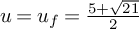 $u=u_f=\frac {5+\sqrt {21}}{2}$
.
Since the norm is a square modulo
 $7$
, the norm has to be in
 $\{-7,-6,-5,-3\}$
. It is easy to rule out
 $-7$
. Also,
 $d^2+7rd+7r^2$
can be even only if both d and r are even, which rules out
 $-6$
.
Using the fact that
 $\operatorname {Nm}(\frac {-1+\sqrt {21}}{2})=-5$
, we see that if
 $\operatorname {Nm}(a)=-5$
then replacing a by
 $-\sigma (a)$
if needed, we get
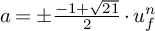 $a=\pm \frac {-1+\sqrt {21}}{2}\cdot u_f^n$
, so we can reduce the problem to
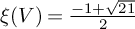 $\xi (V)=\frac {-1+\sqrt {21}}{2}$
, i.e.,
 $\operatorname {rk}(V)=1$
,
 $\deg (V)=-3$
.
Similarly, since
 $\operatorname {Nm}(\frac {-3+\sqrt {21}}{2})=-3$
, if
 $\operatorname {Nm}(a)=-3$
then replacing a by
 $-\sigma (a)$
if needed, we get
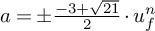 $a=\pm \frac {-3+\sqrt {21}}{2}\cdot u_f^n$
, so we can reduce to
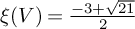 $\xi (V)=\frac {-3+\sqrt {21}}{2}$
, i.e.,
 $\operatorname {rk}(V)=1$
,
 $\deg (V)=-2$
.
In both cases we can take
 $(V,{\mathcal {O}})$
to be the pull-back of the similar pair on
 $F_1$
under the blow up map
 $X_7\to X_8\simeq F_1$
.
Case
 $k=6$
. In this case
 $O_6={\mathbb {Z}}[\sqrt {3}]$
, we have
 $u=u_f=2+\sqrt {3}$
, and we are looking for elements with the norm in
 $[-6,-1]$
. Since the norm is a square modulo
 $6$
, it has to be in
 $\{-6,-5,-3,-2\}$
. It is easy to rule out
 $-6$
. If
 $d^2+6rd+6r^2=-5$
then
 $d^2\equiv -1\ \mod (4)$
which is impossible. Thus, the only two possibilities are
 $\operatorname {Nm}(a)=-3$
and
 $\operatorname {Nm}(a)=-2$
. Arguing as before, we reduce to solutions of the form
 $\pm \sqrt {3}u_f^n$
and
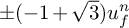 $\pm (-1+\sqrt {3})u_f^n$
, so we reduce to the cases
 $(r,d)=(1,-3)$
and
 $(r,d)=(1,-2)$
. Both cases are realised as pull-backs under the blow up map
 $X_6\to X_7$
.
Case
 $k=5$
. In this case
 $O_5=O={\mathbb {Z}}+{\mathbb {Z}}\frac {-1+\sqrt {5}}{2}$
, and
 $u=u_f^2$
, where
 $u_f=(1+\sqrt {5})/2$
, and we are looking for elements with the norms in
 $[-5,-1]$
(with
 $(r,d)$
relatively prime). Since the norm is a square modulo
 $5$
, it has to be in
 $\{-5,-4,-1\}$
. If
 $d^2+5rd+5r^2=-4$
then
 $d^2+rd+r^2$
is even which is possible only if both r and d are even, which is a contradiction. Hence, the only possible norms are
 $-5$
and
 $-1$
. The norm
 $-5$
is realised by elements of the form
 $\pm \sqrt {5}u_f^{2n}$
, while the norm
 $-1$
is realised by elements of the form
 $\pm u_f^{2n+1}$
. Thus, we reduce to the cases
 $(r,d)=(2,-5)$
and
 $(r,d)=(1,-2)$
. The latter case is realised as the pull-back under the blow up map
 $X_5\to X_6$
.
It remains to find an exceptional pair
 $(V,{\mathcal {O}})$
with
 $\operatorname {rk}(V)=2$
and
 $\deg (V)=-5$
. For this we use a realisation of
 $X=X_5$
as the linear section of the Grassmannian
 $G(2,5)$
. Such a realisation exists in any characteristics: by [Reference Brodmann and Schenzel4, Thm. 2.2], X is defined a subscheme in
 ${\mathbb P}^5$
by the five Pfaffians of a skew symmetric
 $5\times 5$
matrix of linear forms. Since
 $G(2,5)$
is defined in
 ${\mathbb P}^9$
by the five Pfaffians of the general skew symmetric
 $5\times 5$
matrix (with linear independent entries), this gives a required realization. Now we can take
 $(V,{\mathcal {O}})$
to be the restriction to X of the exceptional pair
 $({\mathcal U},{\mathcal {O}})$
on
 $G(2,5)$
, where
 ${\mathcal U}\subset {\mathcal {O}}^5$
is the universal subbundle (the needed cohomology on X are easily computed using the Koszul resolution for
 ${\mathcal {O}}_X$
on
 $G(2,5)$
).


6 Anticanonical pencils and application to compatible Poisson brackets
6.1 Nodal anticanonical divisors on del Pezzo surfaces
The main goal of this section is to establish existence of a pencil with non-constant j-invariant passing through any given anticanonical divisor, under certain assumptions (see Corollary 6.5 below). This will be used in the proof of Theorem B in Sec. 6.2. Even though we only need the case of characteristic zero for Theorem B, we prove our result on anticanonical divisors under more general assumptions since it could be of independent interest.
Lemma 6.1. Let X be a del Pezzo surface of degree
 $k\ge 3$
. Then there exists a nonempty open subset
 $U\subset X$
, such that for every
 $q\in U$
, there exists an irreducible anticanonical curve
 $C\subset X$
, such that q is a singular point of C.
Proof. In the case
 $k=3$
, X is a cubic surface in its anticanonical embedding into
 ${\mathbb P}^3$
. Then we can take
 $U\subset X$
to be the complement to the union of
 $27$
lines on X. For every
 $q\in U$
, let
 $H_q\subset {\mathbb P}^3$
be the tangent plane to X. The intersection
 $C_q:=H_q\cap X$
is an anticanonical divisor, singular at q. Since
 $C_q$
is a cubic in
 $H_q$
, and q does not lie on a line contained in X,
 $C_q$
is irreducible.
In the case
 $k>3$
, let
 $\pi :X'\to X$
be the blow up map, where
 $X'$
is a smooth cubic surface. Then we can take
 $U\subset X$
to be the complement to the image of the union of the lines on
 $X'$
.
Let X be a del Pezzo surface of degree
 $k\ge 3$
,
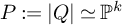 $P:=|Q|\simeq {\mathbb P}^k$
the anticanonical linear system. Let
 $\widetilde {P}\subset P\times X$
denote the incidence variety of
 $(C,p)$
such that
 $p\in C$
. We consider the following loci in P and
 $\widetilde {P}$
:
-
•
$P_{sing}$
(resp.,
$\widetilde {P}_{sing}$
) is the locus of singular divisors (resp., of pairs
$(C,p)$
such that p is a singular point of C); -
•
$P_{red}\subset P_{sing}$
is the locus of reducible divisors; -
•
$P_{cusp}\subset P_{sing}$
is the locus of non-nodal divisors.



Let us denote by
 $X_3^F\subset {\mathbb P}^3$
the Fermat cubic
 $x_0^3+x_1^3+x_2^3+x_3^3=0$
.
Lemma 6.2. Assume that
 $k\ge 3$
.
-
(i) The loci
$P_{sing}$
,
$\widetilde {P}_{sing}$
,
$P_{red}$
and
$P_{cusp}$
are closed. The variety
$\widetilde {P}_{sing}$
is irreducible of dimension
$k-1$
. The variety
$P_{sing}$
is irreducible. -
(ii) One has
$P_{red}\neq P_{sing}$
. Assume that either characteristic is
$\neq 2$
, or
$X\neq X_3^F$
(the Fermat cubic). Then
$P_{cusp}\neq P_{sing}$
. Thus, under this assumption integral curves are dense in
$P_{sing}$
.


Proof. (i) Since
 $-K_X$
is very ample, for a fixed point
 $p\in X$
, the condition that an anticanonical divisor C is singular at p is given by three independent linear conditions on a point in P. Hence,
 $\widetilde {P}_{sing}$
is closed in
 $P\times X$
and is a projective bundle over X, with fibers
 ${\mathbb P}^{k-3}$
, so
 $\widetilde {P}_{sing}$
is irreducible of dimension
 $k-1$
. The subset
 $P_{sing}\subset P$
is the image of
 $\widetilde {P}_{sing}$
, so it is closed and irreducible.
Reducible anticanonical divisors of the form
 $C_1+C_2$
, with fixed rational equivalence classes of
 $C_1$
and
 $C_2$
, are in the image of the map
 $|C_1|\times |C_2|\to P$
, so they form a closed subset. We claim that there is finitely many possibilities for rational equivalence classes of
 $C_i$
. Indeed, we can assume that neither
 $C_1$
or
 $C_2$
is a
 $(-1)$
-curve. Assume
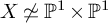 $X\not \simeq {\mathbb P}^1\times {\mathbb P}^1$
. Then representing X as a blow up of a set of points
 $S\subset {\mathbb P}^2$
, we get that
 $C_1+C_2$
is the proper transform of a reducible cubic passing through S, so the class of one of the components is either h or
 $h-e_i$
or
 $h-e_i-e_j$
. In the case
 $X\simeq {\mathbb P}^1\times {\mathbb P}^1$
we have
 ${\mathcal {O}}(C_i)\simeq {\mathcal {O}}(a_i,b_i)$
,
 $i=1,2$
, with
 $a_i\ge 0$
,
 $b_i\ge 0$
and
 $a_1+a_2=b_1+b_2=2$
, so there is finitely many possibilities for
 $(a_i,b_i)$
. This implies the claim and proves that
 $P_{red}$
is closed.
It is well known that the locus of curves in P with at most nodal singularities is open, hence,
 $P_{cusp}$
is closed.
(ii) Lemma 6.1 shows that
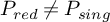 $P_{red}\neq P_{sing}$
. It remains to prove existence of a nodal anticanonical divisor
 $C\subset X$
under our assumptions. For
 $k\ge 4$
, X can be realised as the blow up of
 ${\mathbb P}^2$
in a set S of
 $\le 5$
points (in general linear position), so we can take as C the proper transform of
 $\overline {C}=L_1\cup L_2\cup L_3$
, the nodal union of three lines in
 ${\mathbb P}^2$
, so that
 $S\subset \overline {C}$
but none of the nodes of
 $\overline {C}$
is in S. For example, if
 $S=\{p_1,\ldots ,p_5\}$
, we can take
 $L_1$
to be the line through
 $p_1,p_2$
,
 $L_2$
the line through
 $p_3,p_4$
, and
 $L_3$
a generic line through
 $p_5$
.
Now assume
 $k=3$
, i.e.,
 $X\subset {\mathbb P}^3$
is a cubic surface. It is well known (see [Reference Dolgachev8, Sec. 9.1]) that X has exactly
 $45$
‘tritangent trios’, i.e., hyperplane sections given by a union of three lines. Such a hyperplane section is a nodal curve, unless the lines are concurrent, i.e., the plane corresponds to an Eckardt point of a cubic. By [9, Lemma 13.2], there is only one cubic surface that has exactly
 $45$
Eckardt points: the Fermat cubic in characteristic 2. Thus, any other cubic surface has a non-concurrent tritangent trio, hence, a nodal anticanonical divisor.
Proposition 6.3. Let X be a del Pezzo surface of degree
 $k\ge 3$
. If
 $k=3$
and the characteristic is
 $2$
assume also that
 $X\not \cong X^F_3$
. Then there exists a nonempty open subset
 $U\subset X$
, such that for every
 $q\in U$
there exists an integral nodal anticanonical curve
 $C\subset X$
such that q is the node of C.
Proof. By Lemma 6.2, integral nodal curves are dense in
 $P_{sing}$
. By Lemma 6.1, the projection
 $\widetilde {P}_{sing}\to X$
is dominant. Hence, the restriction to the non-empty open subset of
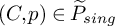 $(C,p)\in \widetilde {P}_{sing}$
with C integral nodal is also dominant.
Lemma 6.4. Let X be a weak del Pezzo surface with
 $K_X^2>1$
,
 $C\subset X$
an irreducible anticanonical divisor,
 $p\in C$
a smooth point. Then the blow up
 $\widetilde {X}$
of X at p is still a weak del Pezzo surface, the proper transform
 $\widetilde {C}\subset \widetilde {X}$
of C is irreducible, and the projection
 $\widetilde {C}\to C$
is an isomorphism.
Proof. By [Reference Dolgachev8, Prop. 8.1.23], it is enough to check that p does not lie on any
 $(-2)$
-curve
 $C'$
. But this immediately follows from
 $C\cdot C'=0$
.
Corollary 6.5. Under the assumptions of Proposition 6.3, every anticanonical curve
 $C_0\subset X$
is contained in a pencil of anticanonical curves with non-constant j-invariant.
Proof. By Proposition 6.3, there exists an integral nodal anticanonical curve
 $C\subset X$
. In addition, we can assume that the node of C is not contained in
 $C_0$
. We claim that then the pencil
 $\langle C_0,C\rangle $
satisfies our requirement.
Indeed, applying Lemma 6.4 to blowing up points
 $C\cap C_0$
, and replacing
 $C_0$
and C by their proper transforms, we reduce to the case when X is a weak del Pezzo surface of degree
 $1$
. Then blowing up the unique point in
 $C_0\cap C$
gives a relatively minimal genus one fibration
 $\pi :\widetilde {X}\to {\mathbb P}^1$
with a section (provided by the exceptional divisor), such that the proper transform of C on
 $\widetilde {X}$
is an integral nodal fiber
 $\pi ^{-1}(x_0)$
. Indeed, the map to
 ${\mathbb P}^1$
is given by the anticanonical linear system on
 $\widetilde {X}$
. Minimality follows from the fact that the canonical class of
 $\widetilde {X}$
has zero intersection number with any component of any fiber F (since we can represent the anticanonical class by a fiber different from F).
Furthermore, we claim that the generic fiber of
 $\pi :\widetilde {X}\to {\mathbb P}^1$
is smooth. Indeed, otherwise
 $\pi $
is a quasi-elliptic fibration with a section. By the classification of fibers of such fibrations in [Reference Cossec and Dolgachev5, Prop. 5.5.9, Prop. 5.5.10],
 $\pi $
cannot have an integral nodal fiber, which proves our claim.
Let
 $U\subset {\mathbb P}^1$
be an open neighbourhood of
 $x_0$
(where the fiber
 $\pi ^{-1}(x_0)$
is integral nodal), such that
 $\pi $
is smooth over
 $U\setminus \{x_0\}$
. Then we get a morphism from U to the coarse moduli space
 $\overline {M}_{1,1}$
of stable curves of genus one with one marked point. This morphism is dominant since the family over U has both smooth and nodal members. Hence, our family has non-constant j-invariant.
6.2 Compatible Poisson brackets
Proof of Theorem B
Start with an elliptic curve C. It is easy to see that for every
 $k\ge 4$
, C can be realised as an anticanonical divisor on a del Pezzo surface
 $X_k$
of degree k (where in the case
 $k=8$
we can take
 $X_8=F_1$
). Namely, start with an embedding
 $C\subset {\mathbb P}^2$
and
 $5$
generic points
 $p_1,\ldots ,p_5\in C$
, so that no three are collinear. Then the blow up
 $X_4$
of
 ${\mathbb P}^2$
at these
 $5$
points is a del Pezzo surface of degree
 $4$
, and C lifts to an anticanonical curve of
 $X_4$
. By blowing up a subset of these
 $5$
points, we can embed C into
 $X_k$
with
 $k\ge 4$
.
Let
 $({\mathcal {O}},V)$
be an exceptional pair of vector bundles on
 $X_k$
, where
 $\operatorname {rk}(V)=r$
and
 $\deg (V)=d>r+1$
. Applying [Reference Hua and Polishchuk13, Thm. 4.4(i)], we get a linear map
 $$ \begin{align*}\kappa:H^0(X_k,{\mathcal{O}}(Q))\to H^0({\mathbb P}^{d-1},{\bigwedge}^2 T),\end{align*} $$
so that every element corresponding to a smooth anticanonical divisor D maps to the corresponding Poisson bracket of type
 $q_{d,r}(D)$
, and all the brackets in the image of
 $\kappa $
are compatible. Furthermore, by [Reference Hua and Polishchuk13, Thm. 4.4(ii)],
 $\kappa $
is injective provided every singular anticanonical divisor on
 $X_k$
extends to an anticanonical pencil with non-constant j-invariant. By Corollary 6.5 the latter condition is always satisfied since
 $k\ge 4$
. Note that the assumption
 $d>r+1$
is needed for [Reference Hua and Polishchuk13, Thm. 4.4]: it comes from a similar assumption in [Reference Hua and Polishchuk13, Thm. 2.4] on recovering an isomorphism class of an elliptic curve from an FO bracket.
Now part (i) follows from Theorem A. Namely, we can find
 $({\mathcal {O}},V)$
on
 $X_4$
with given
 $(d,r)$
. Then
 $\kappa (C)$
is exactly
 $q_{d,r}(C)$
, and the image of
 $\kappa $
is the required linear subspace of dimension
 $\dim H^0(X_4,Q)=5$
. In the case
 $r=2$
or
 $r=d-2$
, we first descend
 $({\mathcal {O}},V)$
to a degree
 $5$
del Pezzo
 $X_5$
, see Remark 4.9.
Similarly, part (ii) follows from Proposition 5.4 (applied to
 $(-d,r)$
since this Proposition is formulated in terms of the dual pair
 $(V^\vee ,{\mathcal {O}})$
). Note that in the case
 $k=8$
, if we need to take
 $X_8={\mathbb P}^1\times {\mathbb P}^1$
in Proposition 5.4, we start by realising C as an anticanonical divisor in
 ${\mathbb P}^1\times {\mathbb P}^1$
(which is always possible).
For part (iii), recall that there is a natural linear map from the set of
 ${\mathbb G}_m$
-invariant (i.e., quadratic) bivectors on
 ${\mathbb A}^d$
(where we use the standard action of
 ${\mathbb G}_m$
on
 ${\mathbb A}^d$
) to bivectors on
 ${\mathbb P}^{d-1}$
. Furthermore, there is a well known linear section of this map,
 $$ \begin{align*}s:H^0({\mathbb P}^{d-1},{\bigwedge}^2 T)\to H^0({\mathbb A}^d, {\bigwedge}^2 T)^{{\mathbb G}_m}\end{align*} $$
sending Poisson brackets on
 ${\mathbb P}^{d-1}$
to
 ${\mathbb G}_m$
-invariant Poisson brackets on
 ${\mathbb A}^d$
(see [Reference Bondal2], [Reference Polishchuk23, Sec. 12]). Thus, if L is a linear subspace of compatible Poisson brackets on
 ${\mathbb P}^{d-1}$
then
 $s(L)$
is a subspace of compatible
 ${\mathbb G}_m$
-invariant Poisson brackets on
 ${\mathbb A}^d$
. Recall also that by [Reference Hua and Polishchuk14, Thm. 6.12], a nonzero FO bracket
 $\pi $
on
 ${\mathbb P}^{d-1}$
admits no nonzero Poisson vector fields. By [Reference Polishchuk23, Thm. 12.1], any Poisson bracket on
 ${\mathbb P}^{d-1}$
admitting no nonzero Poisson vector fields has a unique lifting to a
 ${\mathbb G}_m$
-invariant Poisson bracket on
 ${\mathbb A}^d$
. Hence, if a generic element b of L is an FO bracket then
 $s(v)$
is the only
 ${\mathbb G}_m$
-invariant Poisson bracket on
 ${\mathbb A}^d$
lifting b. This implies the uniqueness statement.
Appendix A Proof of Lemma 3.7
Since
 $v\in \mathrm {P}(D_5)$
, we either have
 $y_i\in {\mathbb {Z}}$
for all i, in which case
 $v^2\in {\mathbb {Z}}$
, so r is even, or we have
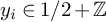 $y_i\in 1/2+{\mathbb {Z}}$
for all i, in which case
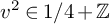 $v^2\in 1/4+{\mathbb {Z}}$
, so r is odd. In either case,
 $$ \begin{align*}y_i\equiv \frac{r}{2}\quad \mod {\mathbb{Z}} \ \text{ for all }\ i.\end{align*} $$
Moreover,
 $\sum y_i\ge 0$
(because v is dominant), hence
 $r/2+\sqrt {r}-1\ge 0$
, hence
 $r\ge 1$
.
If
 $y_1>r/2$
then
 $y_1\ge r/2+1$
, so that
 $v^2\ge y_1^2>r^2/4+1$
, which is a contradiction. We thus have
 $y_1\le r/2$
. Set
 $$ \begin{align*}\delta:=r/2-y_1.\end{align*} $$
As we have seen above,
 $\delta $
is a nonnegative integer, hence,
 $\delta \in [0,r/2]$
.
The condition
 $\sum y_i\le r/2+\sqrt {r}-1$
can be rewritten as
 $$ \begin{align} y_2+y_3+y_4+y_5\le \sqrt{r}-1+\delta. \end{align} $$
Furthermore, for any permutation
 $(i,j,k)$
of
 $(3,4,5)$
, we have
 $y_2+y_i\ge 0$
and
 $y_j+y_k\ge 0$
by dominance of v, so by triangle inequality,
 $$ \begin{align*}|y_2+y_i-y_j-y_k|\le |y_2+y_i|+|y_j+y_k|=y_2+y_3+y_4+y_5.\end{align*} $$
Thus, we have
 $$\begin{align*}|y_2+y_3+y_4+y_5|,\ |y_2+y_3-y_4-y_5|,\ |y_2-y_3+y_4-y_5|,\ |y_2-y_3-y_4+y_5|\le \sqrt{r}-1+\delta \end{align*}$$
The above four inequalities define a hypercube with the side
 $\sqrt {r}-1+\delta $
in the Euclidean space
 ${\mathbb {R}}^4$
with coordinates
 $y_2,\ldots ,y_5$
. On the other hand, by dominance we have
 $$\begin{align*}|y_2|,\ |y_3|,\ |y_4|,\ |y_5|\le r/2-\delta, \end{align*}$$
which is a hypercube with the side
 $r-2\delta $
. Since for a point in a hypercube in
 ${\mathbb {R}}^4$
with side a, the distance from the center is bounded by a, we deduce that
 $$\begin{align*}y_2^2+y_3^2+y_4^2+y_5^2\le \min(\sqrt{r}-1+\delta,r-2\delta)^2. \end{align*}$$
On the other hand,
 $y_2^2+y_3^2+y_4^2+y_5^2=r^2/4+1-y_1^2=r^2/4+1-(r/2-\delta )^2$
, hence
 $$ \begin{align} 1+r\delta-\delta^2\le (\sqrt{r}-1+\delta)^2, \end{align} $$
 $$ \begin{align} 1+r\delta-\delta^2\le (r-2\delta)^2. \end{align} $$
Now we discuss three different cases. Recall that
 $\delta $
is an integer and
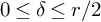 $0\le \delta \le r/2$
.
Case 1. First, assume
 $\delta =0$
, i.e.,
 $y_1=r/2$
. Then
 $y_1^2=r^2/4$
, hence
 $$ \begin{align*}y_2^2+y_3^2+y_4^2+y_5^2=1,\end{align*} $$
and therefore
-
• either
$y_2=1$
,
$y_3=y_4=y_5=0$
and r is even; then (A.1) implies
$r\ge 4$
, and we obtain case (2) of the lemma; -
• or
$y_2=y_3=y_4=1/2$
and
$y_5=\pm 1/2$
and r is odd; if
$y_5=1/2$
the (A.1) implies
$r\ge 9$
, and if
$y_5=-1/2$
then (A.1) implies
$r\ge 4$
, and we obtain case (1) of the lemma.






From now on we assume
 $\delta \ge 1$
.
Case 2. Now assume
 $\delta =1$
, i.e.,
 $y_1=r/2-1$
. Then
 $y_1^2=r^2/4-r+1$
, hence
 $$ \begin{align*}y_2^2+y_3^2+y_4^2+y_5^2=r.\end{align*} $$
This means that the distance from
 $(y_2,\ldots ,y_5)$
to the origin is
 $\sqrt {r}$
, which is maximal possible for a point of the hypercube
 $$\begin{align*}|y_2+y_3+y_4+y_5|,\ |y_2+y_3-y_4-y_5|,\ |y_2-y_3+y_4-y_5|,\ |y_2-y_3-y_4+y_5|\le \sqrt{r}. \end{align*}$$
This forces
 $(y_2,y_3,y_4,y_5)$
to be a vertex of the above hypercube, and thus, by dominance,
 $(y_2,\ldots ,y_5)$
is either
 $(\sqrt {r},0,0,0)$
or
 $\sqrt {r}(1/2,1/2,1/2,-1/2)$
, giving cases (3) and (4) of the lemma.
From now on we assume
 $2\le \delta \le r/2$
. Before we consider the last case we prove the following
Lemma A.1. If
 $2\le \delta \le r/2$
then
 $$ \begin{align} r/2-\sqrt{r}\le \delta\le r/2-\sqrt{\frac{r^2+4}{20}}. \end{align} $$
In particular,
 $8\le r\le 19$
.
Proof. Note that the assumption
 $2\le \delta \le r/2$
implies
 $r\ge 4$
.
First, consider (A.3). The left side increases and the right side decreases when
 $\delta \le r/2$
, hence this inequality must hold for
 $\delta =2$
, i.e.,
 $2r-3\le (r-4)^2$
. This can be rewritten as
 $r^2-10r+19\ge 0$
and implies
 $r\le \lfloor 5-\sqrt {6}\rfloor =2$
or
 $r\ge \lceil 5+\sqrt {6}\rceil =8$
. The first inequality contradicts to
 $r \ge 4$
, hence the second holds, i.e.,
 $r\ge 8$
.
Next, consider (A.2). It can be rewritten as
 $$ \begin{align*}2\delta^2+\delta(2\sqrt{r}-2-r)+(r-2\sqrt{r})\ge 0,\end{align*} $$
and since
 $\delta =1$
is obviously a root of the left side, the other root is
 $r/2-\sqrt {r}$
. Note that
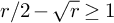 $r/2-\sqrt {r}\ge 1$
for
 $r\ge 9$
(because this is an increasing function and
 $8/2-\sqrt {8}\ge 4-3$
), hence the above inequality means that
 $\delta \le 1$
or
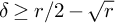 $\delta \ge r/2-\sqrt {r}$
. But
 $\delta \ge 2$
by assumptions, hence we obtain the first inequality in (A.4).
Now we look at (A.3) again. Rewriting it, we obtain
 $5\delta ^2-5r\delta +(r^2-1)\ge 0$
, hence
 $$ \begin{align*}\delta\le r/2-\sqrt{\frac{r^2+4}{20}} \ \ \ \text{ or } \ \ \ \ \ \delta\ge r/2+\sqrt{\frac{r^2+4}{20}}.\end{align*} $$
The latter inequality contradicts the assumption
 $\delta \le r/2$
, hence we obtain the former, which gives us the second inequality in (A.4).
Finally from (A.4) we obtain
 $\frac {r^2+4}{20}\le r$
, hence
 $1=\lceil 10-\sqrt {96}\rceil \le r\le \lfloor 10+\sqrt {96}\rfloor =19.$
In particular, we conclude that
 $r\le 19$
.
Case 3. Now assume
 $\delta \ge 2$
. By Lemma A.1, we have
 $8\le r\le 19$
and (A.4) holds. Computing the left and right sides of (A.4) for all integers
 $r\in [9,19]$
, it is easy to check that there is an integer
 $\delta $
between the sides only if
-
•
$r\in \{8,9,10\}$
, and this integer is
$\delta =2$
; -
•
$r\in \{11,12,13\}$
, and this integer is
$\delta =3$
; -
•
$r\in \{15,16\}$
, and this integer is
$\delta =4$
.


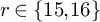

Now we note that the conditions
 $r^2/4+1=\sum y_i^2$
and
 $y_i\equiv r/2\ \mod {\mathbb {Z}}$
imply that
 $r^2+4$
is a sum of five squares of the same parity as r with the largest square equal to
 $4y_1^2=(r-2\delta )^2$
. It is easy to see that the only such sums of squares decompositions and vectors v are

(
 $15^2+4=229$
does not admit such a decomposition). It is also easy to see that among these v only
 $v=(\frac {5}{2},\frac {5}{2},\frac {5}{2},\frac {5}{2},-\frac {5}{2})$
satisfies the inequality
 $\sum y_i\le r/2+\sqrt {r}-1$
, which gives case (5) of Lemma 3.7.
Acknowledgments
We are grateful to the anonymous referee for many useful comments and especially for suggesting a more conceptual approach to studying exceptional pairs
 $({\mathcal {O}},V)$
on a del Pezzo surface of degree
 $4$
, using the connection with weighted projective lines. This material is based upon work supported by the National Science Foundation under grant No. DMS-1928930 and by the Alfred P. Sloan Foundation under grant G-2021-16778, while both authors were in residence at the Simons Laufer Mathematical Sciences Institute (formerly MSRI) in Berkeley, California, during the Spring 2024 semester. In addition, A.P. is partially supported by the NSF grant DMS-2349388, by the Simons Travel grant MPS-TSM-00002745, and within the framework of the HSE University Basic Research Program. A.P. is also grateful to the IHES, where part of this work was done, for hospitality and excellent working conditions.
Competing interests
The authors declare that there are no competing interests.
Data availability statement
This research did not generate any data.






