Introduction
A number of studies on the communist movement in Malaya and Singapore have been published by historians, social scientists and former British Army personnel.Footnote 1 Of late, ex-police or military personnel who fought against the communists have also published their memoirs.Footnote 2 Yet, apart from Agnes Khoo's collection of interviews with 16 female ex-cadres of the Malayan Communist Party (MCP) from the Peace VillagesFootnote 3 in southern Thailand, no comprehensive study on women's involvement in the Malayan communist movement has been attempted.Footnote 4 While beneficial to this study, Khoo's book is a preliminary effort at piecing together the stories/voices of the many women who were MCP guerrillas. Nor is her work intended as military, political or historical analysis. This led me to extend the research through the dual prisms of gender and historiography in order to better understand the motivations, roles and challenges of women in the Malayan communist movement — as guerrilla warriors, leaders and comrades. In short, this paper intends to look into the agency of women during war and revolution, a role which has been neglected due to the essentialising of women as ‘victims’ and men as ‘perpetrators’ during armed conflicts.Footnote 5 While interviews with ex-members of the MCP remain important sources, equally significant are memoirs written by leaders and ordinary cadres, newspapers, video recordings, websites and printed material from the ‘Peace Villages’.
Motivations for joining guerrilla movements
Women's involvement in and experience of guerrilla warfare should not be viewed as being synonymous with those of women in a regular army. Women in the army undergo rigorous selection and training, but they are well taken care of, salaried, served healthy food and have opportunities to take leave, and to socialise through mess parties and other festivities.Footnote 6 Conditions are vastly different for their opposite number in guerrilla warfare, who generally lack adequate food and arms, have to negotiate mountainous or hostile terrain and resort to ‘hit and run’ tactics.Footnote 7 Why would any woman choose such an unusual and dangerous path? Under the patriarchal system men are perceived as strong, active and powerful. They are assigned to the public sphere, while women are their antithesis — weak, passive, powerless and relegated to the private or domestic sphere. This gender divide suggests that women should not be involved in warfare, as it is always exclusively a male domain. Women who enter the war zone, more so as guerrillas, are seen as threats to the social order as they project the image of liberated women which threaten the patriarchal order.Footnote 8 Yet historically, women have never distanced themselves completely from war; through the ages there have been female rulers and warrior queens.
With the spread of feminism the issue of women's subordination, the struggle for equality and efforts to change the system became more pronounced among Asian women. Although feminism is always thought of as a Western imposition, Kumari Jayawardena claims historical circumstances were equally responsible in producing ideological changes that affected women.Footnote 9 The early women's movement corresponds to, and was determined by, wider social movements. Feminist struggles emerged in Asia in the context of general resistance against imperialism, colonialism, feudal monarchies, and traditional patriarchal and religious structures.
In Malaya, the nationalist struggles provided a base for women's participation in politics. Women's associations had emerged well before the Second World War and were linked to political groups in the postwar period. The struggles became a strong pull that enticed women from the domestic sphere. With a higher proportion of girls being educated and of women entering the labour force, the women's emancipation movement and nationalist struggles in decolonising Asia provided mutual encouragement for major change.Footnote 10 In Malaya, this movement led to two situations. Efforts at emancipation, by both male and female reformers who had benefited from colonial educational opportunities, initially put women back in subordinate positions as they themselves were more interested in being liberating from certain customs, and economic and political constraints. A case in point was Kaum Ibu, the women's wing of the United Malays National Organisation (UMNO) and the largest postwar women's organisation, whose platform represented continuity between the traditional world of the village and the political world of the emerging nation. Kaum Ibu members were encouraged by party leaders to participate in politics, but to be subservient to UMNO and its male leaders.Footnote 11 A similar situation held for the Malayan Chinese Association (MCA) and the Malayan Indian Congress (MIC).Footnote 12 It was the more radical women in the MCP who were willing to take the struggle further; they challenged the oppressive patriarchal structure and advocated revolutionary political and social alternatives.
Women in the MCP were deeply influenced by the global feminist movement led by Clara Zetkin.Footnote 13 Zetkin had initiated the formation of the Communist Women's International during the Second Congress of the Communist International in Moscow in July 1920. Notably, when the Chinese Communist Party (CCP) was formed in 1921, Mao Zedong mobilised the revolutionary potential of women, especially those who were students, teachers and working-class.Footnote 14 The mobilisation of women and the improvement of their social position became an important CCP strategy in the early 1920s.Footnote 15 From then on, efforts to bring women into the movement became more organised; women propagandists travelled with the Red Army to explain communist policy to peasants and female workers to train them in guerrilla activity, espionage and sabotage.Footnote 16
A similar situation is seen in Malaya. The economic crisis of 1929–33 left the labouring class in hardship and poverty. Although the economy began to improve in 1933, wages did not rise. The MCP targetted workers as new members to bring pressure on the colonial government. Many educated young Chinese women like Eng Ming Ching (henceforth referred to as Suriani Abdullah)Footnote 17 and her progressive friends joined the fight to improve workers' welfare and liberate Malaya from colonialism along with fighting for women's emancipation. Suriani, who was influenced by communist ideology while studying at Nan Hwa High School in Sitiawan, Perak, believed that these goals could only be achieved by joining the communist movement. She became an MCP member in 1940 and was sent with her friends to organise anti-Japanese activities among women labourers in Perak.Footnote 18 Shamsiah Fakeh, who was first the leader of Angkatan Wanita Sedar (AWAS) and then became an influential leader in the MCP's 10th Regiment, besides being influenced by the global women's movement, was motivated by her own marital breakup and wish to free women from the bondage of feudalism, capitalism, imperialism and masculine oppression. For Shamsiah, these were heavy tasks, but ‘a liberated country is the first step in bringing freedom to women’.Footnote 19
Suriani and Shamsiah fit nicely with Khoo's conclusion that women from various educational and social backgrounds had joined the MCP primarily as a ‘form of rebellion against [the] feudalistic, patriarchal oppression they had experienced as young women’.Footnote 20 One of her interviewees, Zhu Ning (born in Thailand in 1931) came from a conservative Chinese family. She had endured mental anguish when she was married off at the age of fifteen by her family. Ill treatment by her mother-in-law, an absent husband, the urge to get out of poverty, and anger against feudalism led her to join the MCP in 1967.Footnote 21 Her story is shared by many others from several countries who were interviewed by Khoo, and who had joined the movement as early as the 1930s and remained until the signing of the Hat Yai Peace Accord in 1989.
Many women joined the MCP during the Japanese Occupation of Malaya (1942–45) and the Emergency (1948–60) for patriotic and nationalistic reasons. Patriotism was an important factor for many Chinese women and their families, as in the case of Lin Guan Yin (born in China in 1923, but brought up in Negeri Sembilan) especially since the 1937 Japanese invasion of China. Lin claims that nearly everyone in her village in Negeri Sembilan had joined the resistance against the Japanese Occupation. She joined the MCP in her late teens; coming from a poor family she believed in the communist ideology of fighting against capitalism.Footnote 22
Many Malay women who joined the MCP to liberate Malaya did so secretly as most Malays viewed involvement in communism as being anti-Islamic. Encouraged by propaganda by Malay nationalists and the MCP during the Japanese Occupation, Malays were also involved in the anti-Japanese movement in Perak. In Johor, a Malay guerrilla organisation, the North Johor Brigade, was established on 12 September 1948. Led by Jasman Sulaiman and his wife, the brigade was involved in the anti-Japanese movement from May 1942.Footnote 23 In Pauh village, Arau, Perlis, the family of Malay revolutionaries Pak Saud and wife Mak Tijah had actively organised Malay women's groups to fight the Japanese. In fact, Arau was considered a strong base for the anti-Japanese movement.Footnote 24 Pak Saud and Mak Tijah later joined the MCP.
According to Short, folklore about the 1890s Pahang rebellion led by Dato' Bahaman influenced Malays in the state to join the communists.Footnote 25 Having blood ties with Bahaman inspired Malays like Siti Norkiah, the Benta AWAS leader, to join the MCP. Her paternal grandfather was one of Bahaman's followers. Pahang was also a stronghold of several radical Malay movements such as the KMM (Kesatuan Melayu Muda), Parti Kebangsaan Melayu Malaya (PKMM), Angkatan Pemuda Insaf (API) and AWAS. Siti Norkiah was born in 1920 in Raub, one of the main API and AWAS bases. Siti Norkiah's father was a strong MPAJA supporter, while her sister Zainab Mahmud (Pahang AWAS leader and national secretary) and brothers were also active members. Besides Raub, Temerloh, Benta and Kuala Lipis strongly supported the PKMM and its affiliates, API and AWAS. Later Pahang was chosen by the MCP as a base for its propaganda work.Footnote 26 Many Malays from the state joined the MCP in 1948.Footnote 27 The story of the Pahang Malays and their anti-colonial struggles was a favourite theme in the theatrical activities in communist camps in south Thailand.Footnote 28
Feminism, patriotism and nationalism were not always relevant, however. Many Chinese women joined the MCP during the Emergency to avoid detention after the British banned all labour organisations in 1948 or in the early 1950s when the Chinese middle-school students were under strict surveillance. Guo Ren Luan (born in Singapore in 1937) was influenced by one of her classmates at the Nan Chiao Girls' High School, but she joined the MCP on her own free will after the 1953 rape and murder of a girl by a man who was heavily influenced by pornography.Footnote 29 This incident sparked the beginning of the ‘anti-yellow culture’ campaign in Chinese middle schools in which Guo actively participated.Footnote 30
The ‘anti-yellow culture’ campaign was directed against imported, ‘degenerate’ culture that weakened and corrupted individuals and the public. T.N. Harper claims the ‘anti-yellow’ campaign paralleled the revitalisation of the Communist United Front in raising political awareness among intellectuals. In Singapore, it was widely supported by student bodies, trade unions, radical politicians like Lee Kuan Yew, as well as Malay and Indian cultural associations, including the Malay literary association ASAS 50.Footnote 31 Colonial authorities saw the campaign as a vehicle for the dissemination of communist ideology and placed all imported publications (mostly from China) under surveillance.Footnote 32 They viewed efforts to oppose yellow culture as anti-colonial actions and a form of communist threat.Footnote 33 The government claimed the campaign was aimed at stirring political consciousness using moral issues.Footnote 34
Women entered the fray as organisers and participants in the ‘anti-yellow culture’ campaign between July–September 1956. The Singapore Women's Federation (SWF), a newly organised leftist body, was among the sponsoring organisations and the earliest to promote the formation of a permanent anti-yellow culture secretariat. The issues raised by SWF such as equal pay, equal employment opportunities and the abolition of polygamy persuaded many educated young Chinese women to join the organisation.Footnote 35 The anti-yellow culture campaign resumed in early 1956 with SWF's leader, Linda Chen, appointed as President of the Anti-Yellow Culture Council. However, Chen was arrested before her delegation met the new chief minister, Lim Yew Hock,Footnote 36 to submit resolutions on how to stop yellow culture.Footnote 37 Unlike his predecessor David Marshall, Lim took strong actions to eradicate communist influences in Singapore. Linda's arrest with six others on 19 September 1956 was linked to her involvement in an organisation seen to be under communist influence and the government's decision to deregister the SWF put the campaign on hold.Footnote 38 The move was widely perceived by the left as a colonial effort to deprive locals of their rights and freedom.Footnote 39 This made Lim Yew Hock unpopularFootnote 40 and at the same time forced many women to go underground to avoid detention.
Some women, notably those who had lived in areas considered revolutionary zones during the Japanese Occupation, joined because of their surroundings without any comprehension of the party's struggles. Chen Xiu Zhu (born in Bukit Gurun, Kedah in 1937), for one, had known communists at a young age.Footnote 41 She and the other children were familiar with the communists who dropped by to conduct propaganda classes, harping on the unjust treatment of the masses, including women, by both Japanese and British imperialists. Sometimes the girls became ‘informal’ couriers, sending letters and making purchases for the communists. Slowly, children and older girls like Chen Xiu Zhu developed a revolutionary consciousness and joined the movement. The path became more obvious if they were born into a family that supported the revolution. Luo Lan (born in Bentong, Pahang in 1947) and Zhao Ya Yin (born in Batu Gajah, Perak in 1955) were both born into families which had supported the communists since the anti-Japanese war. Family involvement was one of the reasons that pulled them into the MCP's armed struggle.Footnote 42
The MCP benefited from the existing social structure and values within Chinese society which put kinship and friendship networks above everything. This meant that family members or close friends who had joined the guerrillas would be given support, which enabled the MCP to achieve a strong position in the initial stages of the Emergency.Footnote 43 Besides friendship the MCP provided services such as welfare (financial aid, literacy classes for workers, village infrastructure repair, farm labour) and recreational activities (music, literature, sports and games). These welfare and recreational activities were interspersed with party propaganda and indoctrination.Footnote 44
Malay women who joined the MCP were often influenced by the aura around the party's female leaders. Siti Meriyam alias Atom from Lubok Kawah did not understand much about the struggle, but was inspired by the ‘heroism’ of MCP leaders like Shamsiah Fakeh and Zainab Mahmud. She believed these women were imbued with the spirit of Bahaman and Mat Kilau (another Pahang warrior).Footnote 45 Siti Nong Ishak and Siti Zamiah Abdul Latif, both first generation Malay women in the MCP, joined the party for similar reasons. Born in Kampung Buntut Pulau, Temerloh, Siti joined in 1948 at the age of 13 without any comprehension of communism. She left the MCP and returned to Temerloh in 1955.Footnote 46 Siti Zamiah joined in 1948 at the age of 16, not out of political awareness but because her mother, Aminah Teh Bakar was the Temerloh AWAS leader. She joined the movement because its youth section was under her mother and their home in Lubok Kawah was a meeting place for AWAS members.Footnote 47 After joining the MCP, she began to study party ideology, later moving to the jungle to escape the British dragnet.
Personal interviews with former female guerrillas and memoirs written by former MCP members indicate, however, that different factors motivated some women to join the movement after the MCP relocated to southern Thailand in 1953. The MCP policy to open its doors to new blood in the early 1960s created a new generation of women guerrillas (the second generation cadres) whose motives for joining differed from those women who joined before the MCP withdrawal to southern Thailand (first generation cadres). Nationalistic reasons like the liberation of the fatherland had become inconsequential for the Thais who joined after the ‘open door’ policy. Ibrahim Chik of the 10th Regiment claims that socioeconomic reasons were more important for the second generation cadres. The failure of the 1955 Baling Talks between the Malayan government and the MCP forced party leader Chin Peng to strengthen party security and strategy. In 1961 the New Political Line was adopted after the MCP proclaimed that ‘the revolutionist line be exposed and criticised and that the line of persistent armed struggled be reaffirmed’. This new directive ordered a major recruitment of new blood and extensive participation in mass work.Footnote 48
In retrospect, Ibrahim Chik believes that the recruitment of new blood brought more problems for the party. Most recruits from the 1960s came from the local Thai community and very few Malaysians joined. Most of the Thais were not wholeheartedly for the party struggle; they were motivated by socioeconomic need rather than anything else. According to Ibrahim, after the MCP had moved to the Malaysia–Thai border, access to food sources had considerably improved. This attracted many local villagers to join the guerrillas, bringing their wives and teenage children along.Footnote 49
Party cadres during a musical show

Revolutionary drill dance performed by cadres

My interviews with the second generation women combatants residing in Betong and Sadao, Southern Thailand, support Ibrahim Chik's contention. Poverty and endless family squabbles forced Muna or Mek Pik, Chang Li Li, Rokiah and Khatijah Daud to live in the jungle as guerrillas.Footnote 50 Khatijah claims that many of the local women in her camps had joined because of poverty although a few joined voluntarily because they believed in communism. Most of these interviewees, however, say that they joined the movement to follow their husbands or were influenced by relatives and friends.Footnote 51 Poverty was nothing new to the first generation cadres, but it was not the main reason they left for the jungle. For Siti Meriyam and her siblings, for instance, living in poverty was nothing new as their mother was involved in the revolutionary movement and liable to be arrested at any time by the authorities.Footnote 52 Instead she was inspired by women like Shamsiah and Zainab Mahmud to join the guerrillas. Despite such narratives, Short believes that poverty in riverine villages in Pahang was an important factor that was utilised by Chinese guerrillas to persuade Malays to join the MCP with the promise of a better life.Footnote 53 The MCP also used the still resonant spirit of the Pahang rebellion to create a strong base in the state.
Clearly women of the second generation joined the movement mainly for various non-ideological reasons such as to escape poverty, or to follow their friends, husbands or lovers. There were cases of young women who were kidnapped and forcibly brought to the jungle — as in the case of Rosimah Alang Mat Yen (84 years old) from Kampung Gajah, Perak. Kidnapped by communist guerrillas in 1942 at the age of 17 while working in a paddy field in Changkat Jering, Perak, she spent much of her life with the communists. She lived with a Chinese communist family, was forced to abandon Islam and Muslim culture and forced to marry a Chinese communist although she was already married to a Malay at the time.Footnote 54 She only returned to her family in Perak in 1994. The fear of kidnapping led some Malay parents to force their daughters to join the Women Special Constables (WSC), as in the case of Munah bt. Husin of Kampong Malau, Kenering, Gerik, who joined WSC in the early 1950s.Footnote 55 Gerik was a communist stronghold during the Emergency.
Women as strategists in the MCP
Women's rights became part of communist doctrine at the 1922 Third Conference of International Communists, when it was decided that a special committee to incorporate women should be established in the Communist Party in all countries.Footnote 56 The MCP only began to address the issue seriously after the Japanese surrender, however, when there was a pressing need to disseminate party ideology to the masses and to strengthen the membership base in line with the goal of liberating Malaya. Justus Van der Kroef divides the development of the MCP into four phases: from the early 1920s to the birth of the anti-Japanese resistance in mid-1942; the guerrilla war against Japan (1942–45); constitutional and legal activity; and the resort to violence and guerrilla war (1948–60)Footnote 57 while others like Collin Abraham stretch the date to the 1989 Hat Yai Peace Accord, which he claims ushered in ‘real independence’ for Malaya. According to Abraham, the Accord ended the guerrilla war which the MCP had waged for the previous 40 yearsFootnote 58 although historian Joseph Fernando is of the view that the MCP threat had become marginal by 1951.Footnote 59 What is clear is that women had played crucial roles through all the MCP's phases of expansion and operation.Footnote 60
The Japanese invasion of China beginning with Manchuria in 1931 and Beijing in 1937 followed by the outbreak of the Second World War in December 1941 resulted in British overtures to the MCP and the subsequent formation of the Malayan People's Anti-Japanese Army (MPAJA) in January 1942. The move saw the recruitment of more women into the organisation. By mid-1945, the MPAJA had about 8,000 armed soldiers and thousands of supporters.Footnote 61 Only a handful of women went into the jungle as fighters, however, as will be discussed later. The recruitment of women entered a new phase after the war ended in August 1945. With the MCP becoming legal under the postwar British Military Administration (BMA) the party widened its support base. It was involved in the Advisory Council in Singapore; its greatest success was the establishment of the General Labour Union (GLU) in Singapore, followed by Malaya. Just as the CCP in China, the MCP placed great importance in controlling workers' organisations and trade unions. Throughout 1945 and 1946, the GLU orchestrated strikes and labour rallies which became markedly more frequent by 1947.Footnote 62
The party had also penetrated youth groups, women's associations and peasant groups. Equality for women became a major platform to woo potential allies. BMA efforts to improve the British image after the war through welfare work had provided an opportunity for communist women to strengthen the party's image. Under the BMA Emergency Relief Committee which first met in Singapore in mid-1945, representatives of various charities, Chinese businessmen, Kuomintang and the Anti-Japanese Union (AJU) were co-opted under one roof. AJU, the civilian wing of the MPAJA, had begun to register refugees at the district centres. Lee Kiu, the female representative in the AJU claimed that by 26 September the organisation had registered 80,000 refugees (out of a total of 700,000) in Singapore. The AJU later became part of the official party operation and by 8 October 1945, communist or resistance associations were running 8 out of the 18 postwar relief centres.Footnote 63
Labour organisations, youth groups, women's associations and peasant groups strove to attract mass support for the communists. These contributed significantly to the communist network which created tension in MCP–British relations. To make the party attractive to the non-Chinese, the MCP embarked on ‘Malayanisation’ and quietly dropped its goal of a Malayan democratic republic. ‘Malayanisation’ was later replaced with a minimum democratic program: the establishment of self-rule in Malaya, the right to vote and the introduction of democratic institutions, improvement in wages, working conditions and the education system and equality for women.Footnote 64
While the MCP focused on peaceful struggle, it also faced internal problems when the government eventually assumed full control of labour associations. Chin Peng's rise was a turning point for the party. He believed a revolution was necessary for the party to seize power in Malaya, and his ideas were immediately made known to all cadres. Sabotage and violence towards imperial functionaries marked the start of the communist revolution, forcing the government to declare an Emergency in Malaya on 18 June 1948, followed by Singapore on 24 June 1948. The government declared its resolve to deal with the MCP, which was banned on 23 July 1948. This forced many Malay leftists, including those from the PKMM and its affiliates, API and AWAS, to follow the MCP underground. They became the core of the 10th Regiment, which was formed in May 1949.
June 1948 marked the start of the armed struggle between the MCP and the colonial government. In the second half of 1949, there was an average of one major incident per week with heavy casualties amongst the security forces and civilians.Footnote 65 This led to counter-attacks by government forces, including the anti-bandit campaigns in the early 1950s with the government declaring ‘red areas’ as controlled areas. As a result the communists faced shortages of arms, ammunition and food.Footnote 66 With continual attacks by security forces and MCP morale at its lowest Chin Peng was forced to relocate to south Thailand at the end of 1953.Footnote 67 This relocation involved hundreds of women.
Long March to south Thailand, 1953

Throughout the history of the MCP, women had played their part in strengthening its military strength and strategy. Besides cooking, growing vegetables, transporting food, and nursing, women played an important role in the MCP underground network, as couriers and even as important party figures. Indeed, the party communication system depended on female couriersFootnote 68 since they were less likely to be subjected to close searches by police or the army. This saw the recruitment of many women in a network covering southern Thailand through to Johor and Singapore. One important figure in this network was Lee Meng or Lee Ten (Tian) Tai, a hard-core cadre and leader of the Kepayang team which operated in Ipoh. Her team was instrumental in connecting Ipoh with Singapore and the MCP Central Committee in south Thailand.Footnote 69 In My side of history, Chin Peng recognises the contribution of Lee Meng whom he describes as ‘a dedicated comrade’, but who lacked caution resulting in her apprehension on 24 July 1952 in Lahat Road, Ipoh. She was sentenced to death, but escaped the gallows and was exiled to China. Chin Peng singled out for praise another female comrade, Li Jhen, who was the MCP's radio expert attached to the Mentakab MCP headquarters in mid-1949. Former Ipoh school teacher Jhen Yin Feng was one of his best couriers. Yin Feng, according to Chin Peng, coordinated a courier group of several women and quickly managed to link up various camps in Perak and Selangor to Mentakab.Footnote 70
While the government was kept busy with labour disputes and strikes, in Singapore regular raids on schools saw the arrests of many female students and teachers. On 28 April 1953, a female Chinese school teacher was arrested at No. 24, Farrer Road. She was in possession of a quantity of communist literature. Another Chinese female was arrested at No. 224, Jalan Besar — a known MCP communication centre — on 22 October 1953. Subsequent raids resulted in the arrests of two more Chinese students — a girl from Nanyang Girls' School and a boy from Chinese High School.Footnote 71 On 22 October 1953, a Chinese student at Chung Wah Girls' School was detained after police identified her connection with an MCP Communication Centre.Footnote 72 The most important person arrested in October 1953 was a Chinese woman who was responsible for directing and strategising all the MCP's underground activities in Singapore in the early 1950s. She was also responsible for all communication routes between Singapore and Johor; and through Johor, contact with the Central Politburo. Her arrest led to the detention of two other women couriers attached to the MCP Special Service Corps which was responsible for all communist activities in Singapore.Footnote 73
The important role played by female comrades in organising the underground network that linked the MCP in Singapore, Malaya and later, Thailand is ample proof of the party's recognition of female members' ability to shoulder major responsibilities. There were many other female comrades responsible for unit strategy or organising large-scale operations. Two such figures were Suriani Abdullah and Ah Yen. Both were extremely capable organisers, highly respected by all the party members, men and women alike. Both were heavily involved in developing strategies that determined party survival.
Like the women guerrillas in the Philippines, Vietnam and Zimbabwe, however, women generally occupied a lower position in the MCP hierarchy, except for a few brave and intelligent ones. Suriani possessed both qualities plus invaluable experience in the MCP revolution from long before the Occupation and her later struggle to improve the lives of fellow comrades after 1989. She had joined the party at the age of 16; being the only girl in the family, it was a tough decision for her. Despite parental objections, her desire to liberate Malaya was too strong. Smart, highly motivated and a good speaker, Suriani was often asked to give talks to the masses about the MCP and their struggles.Footnote 74
Initially Suriani led the labouring class in the Kampar area, but her charismatic leadership opened the way for greater responsibilities, including secretary of a party committee in Ipoh in 1942. She joined the 5th Regiment, and led its propaganda unit in Perak during the Japanese Occupation. She was captured and tortured by the Japanese in 1945; for this she was labelled the ‘anti-Japanese fighter’ among female international communists. Her male comrades regarded Suriani as a charismatic figure who had shown a firm fighting spirit and dedicated her life to the party despite being tortured by the Japanese.Footnote 75 After the war she was appointed as Perak MCP representative and the MCP representative in the BMA. During the Emergency, she served in the Johor Committee, before joining the 6th Regiment in Pahang. Later she assisted the relocation of the 10th Regiment to south Thailand.
Suriani's leadership qualities became more evident when she was with the 10th Regiment. She was tasked to assist Abdullah C.D., the 10th Regiment commander, to coordinate the move from Pahang to south Thailand, liaise with local support groups, take care of medical needs, and work as a translator. She was also appointed liaison officer between the regiment and the party central committee. In 1955 she was appointed member of the regiment's senior officer corp. Her highest accolade came in 1975 when she was appointed to the central committee.Footnote 76 She also led the 10th Regiment when Abdullah C.D., whom she had married in 1955, fell ill due to poisoning in September 1975. Suriani did not see her responsibility as an easy one as she had to carry out all directives given by headquarters, and to ensure that all regimental fighting units operated effectively.Footnote 77 Her marriage to a Malay and conversion to Islam is also indicative of the high degree of interracial tolerance within the party. Both decisions were her own choice. While interracial marriage was unavoidable in such situations and there were many such cases in the jungle camps,Footnote 78 Suriani's marriage was important because it involved the union of two influential figures in the 10th Regiment and the MCP.
Other than the armed struggle, Suriani also contributed to the spread of Malay culture and language in the camps. Her memoirs indicate her interest in cultural and language activities through the formation of a cultural body within the MCP in the 1980s. This body performed poetry, songs, dances and dramas for the enjoyment of fellow cadres or as propaganda in villages.Footnote 79 Suriani's vision for the arts and language was driven by her conviction that it was imperative to encourage local arts and not the Western hybrid (popular culture). She viewed Malay culture as important but felt that a national culture should integrate other elements so as to foster unity.Footnote 80 The MCP had already recognised Malay as the national language before 1965; but Suriani nevertheless painstakingly worked to master the language and deepen her knowledge of Malay culture.
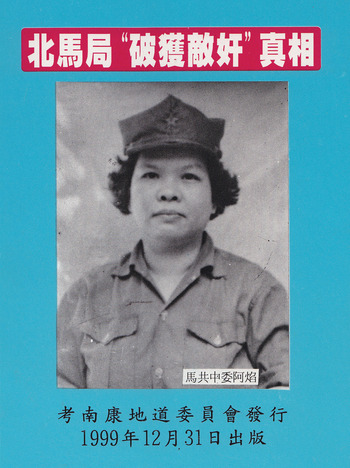
Cover of book titled Bei Ma Ju Po Huo Di Jian Zhen Xiang [The truth behind the detention of spies by the Northern Peninsular Department]

Another equally remarkable figure is Ah Yen. Ah Yen (real name Wu Ruiai) or Zainun was a Penang-born Chinese trained as a teacher in the prewar Fukien Girls' School (Penang Chinese Girls' High School). She was an educated woman who was despatched to conduct party work among women labourers in Perak.Footnote 81 Her highest achievement was to become a member of the party central committee and being appointed party adviser in the peace negotiations involving the Malaysian and Thai governments in 1988. She was often entrusted to look into strategies to strengthen the party. Besides giving lectures on communist ideology, she was responsible for exposing spies in the 12th Regiment in 1968. Later she was tasked to inform all camps of these arrests. These spies, who included women and children, were sent by the Thai military. Ah Yen apprehended 22 suspected spies mainly among new party members. Ah Yen was involved in the subsequent trials and meted out punishment to those found guilty.Footnote 82
It is still unclear how and to what extent the women leaders determined party policy, but they worked closely with their male comrades to ensure all policies were implemented. In fact based on reports and suggestions by women leaders like Suriani, militia units were formed in a number of villages under the 10th Regiment.Footnote 83 International Women's Day on 8 March was always celebrated by the MCP as a mark of respect for the contributions of its female cadres.Footnote 84
Women as guerrilla fighters: Challenges and sacrifices
Many women also played an active role in the actual armed struggle, leading platoons and fighting units. Their involvement as guerrilla fighters started during the MPAJA era. Except for one platoon in Perak which was comprised entirely of teenage girls,Footnote 85 there were usually only a few girls in each MPAJA camp. Spencer F. Chapman, who was the British liaison officer to the MPAJA during the Second World War reported only two girls (out of twenty guerrillas) at the Ulu Slim camp (near Tanjong Malim), three to four girls (out of forty guerrillas) at the Kuala Kubu camp, five girls (out of seventy) at the Batu Caves camp and three girls at the Manchis camp.Footnote 86 Although few in number, lacking in arms and beset by unhygienic camp conditions, Chapman had high praise for them. Their role was identical to the women of the Chinese Red Army whose guidelines were followed by the MCP. According to this decorated British officer, the better-educated female guerrillas taught Mandarin and singing while the stronger ones helped in the kitchen. All of them were involved in patrols, guards of honour, and many acted as couriers, nurses and seamstresses. They were very disciplined and keen to fight the Japanese. Chapman related how a courageous female guerrilla with a tommy gun bravely provided cover for a group of leaders attending a meeting during a Japanese ambush in Kuala Lumpur. She was killed, but the majority of the leaders escaped.Footnote 87 Chynoweth, a platoon leader in the Malay Regiment from 1953 to 1954, wrote about his encounter with guerrillas at Fraser's Hill, Pahang on 1 September 1953. The guerrillas were led by a woman named Ah Wong who was armed with a tommy gun. Chynoweth describes her as a ‘hot poppet’.Footnote 88
During wartime there were no clear gender boundaries. Like men, female combatants had to undergo the same hardships and were exposed to ambush by Japanese, and later British security forces during the Emergency. Reports about women guerrillas being caught, killed or wounded by British forces appeared regularly in local newspapers and government correspondence. On 18 May 1949, police ambushed and killed a Chinese woman in a house in Tapah. Inside, police found 45 rounds of ammunition, detonators, communist literature, food and blankets.Footnote 89 Other reports touched on the arrests of two female Chinese and twelve males in Ayer Kuning, Perak, who were involved in guerrilla activities and the killing of two female guerrillas in Jerangsong, Pahang.Footnote 90 The Straits Echo and Times of Malaya, 23 September 1949, reported the detention of a 24-year-old Chinese woman in Ipoh who was a suspected bandit (guerilla); on 9 October, out of a total of 1,434 people screened in Ulu Yam Bahru and Ulu Yam Lama, four women and twenty men — spies, suppliers, couriers, three part-time bandits and a recruit were detained. On 8 October, the police detained an Indian and a Chinese woman who were suspected of aiding the guerrillas in Chetty Estate at Sungai Choh, Rawang.Footnote 91 In 1955 in Johor, a captured and wounded female guerrilla who was not given proper medical treatment by hospital staff attracted the attention of the Johor British Adviser. The Principal Medical Officer subsequently directed doctors at the Segamat Hospital to provide the necessary treatment so she could provide valuable information on communist activities in the state.Footnote 92 Until 1957, 6,398 communists were reported killed and another 1,245 captured, including many women.Footnote 93
In the 10th Regiment, women were attached to different platoons. Zainab Mahmud was the Women's Section Leader. As discussed earlier, many Malay women joined the MCP during the Emergency just to avoid detention. They had no understanding of party aims and ideology. In the jungle they became more aware of these matters as courses and military training were provided to turn them into fighters and platoon leaders. Although few in number, Malay women guerrillas were not spared from undertaking heavy tasks. For the long march to south Thailand, which started in June 1953, Abdullah C.D. reorganised his main base to ensure a smooth journey. One of its formations, the Hang Jebat troop, was placed under Abu Samah. This was divided into four sections with the 4th section composed entirely of women and led by a woman, Rosmah.Footnote 94 The women's section managed to endured the great hardships of the long march north, which took 18 months. They lacked ammunition, arms, food and were ambushed by security forces.
Many women guerrillas perished during skirmishes with security forces, and their contributions have been acknowledged by former MCP leaders. Most of the women mentioned in the memoirs of these leaders were from the first generation. Their fighting spirit and readiness to face hardship during the Emergency explained why the title ‘Srikandi’ (heroines) was given to them and not to those from the second generation.Footnote 95 For the sake of the party, some sacrificed having children. Siti Norkiah and her husband Abu Samah kept postponing having a family as they were not willing to give away their babies for adoption. To avoid pregnancy, Abu Samah used birth control and had to undergo minor reproductive surgery. When peace finally came in 1989 the couple was ready to have a family, but Siti Norkiah was then 69 years old! For Siti Norkiah, suppressing the family lineage was one of her greatest sacrifices as an MCP member.Footnote 96
This is not to say that the second generation lacked a fighting spirit. The story of two women cadres (one of them pregnant) who were lost for 21 days in the deep jungle in southern Thailand because of an ambush by the Thai military in 1954 is an example of the strength of women's belief in the party. Hunger, cold and wild animals did not weaken their resolve; both were willing to die rather than surrender to the Thai armed forces.Footnote 97 But, perhaps due to the diminishing frequency and number of armed encounters after the relocation to south Thailand, these women were never tested to the full.
Interestingly, while memoirs written by MCP leaders claimed that all combatants were treated fairly and equally regardless of gender, interviews with former women combatants from the second generation claimed otherwise. They reiterate that it was always the men who were chosen for military operations although selection was claimed to be made without gender consideration. Only women with considerable stamina, extraordinary bravery, good eyesight, and who were healthy, active and loyal to the leadership were selected for the military expeditions into Malaya. The limited arms available were usually given to male comrades rather than women, except those who were selected for the campaigns into Malaya. Except for Chang Li Li, most of the women interviewed said they were never involved in an armed skirmish.Footnote 98 They reiterated that women were the last to be given weapons training; instead, they were given comparatively easier tasks due to their physical build although at times they were assigned to transport food to the camp, a task which many considered difficult.Footnote 99 Sentry duty, cooking, planting vegetables, breeding animals, sewing and nursing the sick were tasks generally allocated to the female combatants especially after the relocation. A shortage of arms and ammunition meant that it was not unusual for women not to have weapons. This was the case even with the first generation cadres. One of the female leaders in the 10th Regiment, Siti Zamiah (Ibrahim Chik's wife) claims that the first time she was given a pistol was in 1954 in Belum, Perak, although she had joined the MCP in 1948!Footnote 100
Life in the hostile jungle and breakdown of gender boundaries
The above discussion brings up another issue about the lives of women guerrillas in the jungle. MCP leaders and the party organ Freedom News (c.1947–57) portrayed women as crucial assets in the revolution:
In the Malayan revolutionary history, especially during the period of resistance against Japan and the present period of anti-British war, numerous fine women Communist party members, women cadres and the masses of women revolutionaries made their appearance. Like men, they have conducted struggles, toiled and shed their blood […] Malaya's revolutionary history is inseparably linked with the undertakings of these women.Footnote 101
The Party claimed that only the MCP could offer women the justice they deserved, but does this mean that gender boundaries were absent in the jungle? In a way women guerrillas were manifestations of the ‘new woman’ as they challenged the political order and society's oppressive patriarchal structures, but most of the leaders and combatants came from the same society beset with gendered social and cultural values. Thus, did women guerrillas abandon their notions of motherhood and womanhood?
Women's involvement in the MCP should be viewed through the different phases of party development. During the early years of the armed struggle, all guerrillas focused on party survival and mutual safety which temporarily broke down male–female divisions. To avoid distractions (sexual problems and unwanted pregnancies) married couples were placed in different platoons. As a result complications caused by sexual relations were unheard of during this time.Footnote 102 In fact between 1948 and 1953 when the 10th Regiment was still in Pahang, there were no new marriages among members.Footnote 103 Gender boundaries became more discernible after the move to southern Thailand. With fewer skirmishes, sexual relationships and family issues came to the fore.
To control social problems relating to sexuality, certain regiments put in place strict policies. Polygamy was strictly prohibited in the predominantly Muslim 10th Regiment, for instance. Most male combatants (including the leaders) had left their wives behind during the relocation. They then either married local Thai or Malayan women who had joined the long march. Some, like Ibrahim Chik, had to file for divorce after their spouses were caught by the Thai/Malayan security forces.Footnote 104
A special unit was set up by the 10th Regiment to deal with the many marriages that took place after the move. It is difficult to determine, however, if the regiment adhered strictly to Islamic marriage rituals as various sources provide different answers. According to Ibrahim Chik, when the party started recruiting new members in the early 1960s, the regiment had to set up a Religious Committee to handle matrimonial matters.Footnote 105 Ibrahim relates that sometimes marriages took place with the consent of the wali (father or brother of the new recruit) in accordance with Islamic procedures. Others like Pak Kassim and Hajah Haslina claim that marriages in the jungle were performed as secular rituals as there were no religious officials present to solemnise the union: mutual consent and the consent of their superiors was all that was required for two cadres to live as husband and wife.Footnote 106 Another factor was the almost fivefold increase in the size of the regiment in the 1970s.Footnote 107 By the time of the Peace Agreement in 1989, there were 320 cadres in the regiment, with roughly equal numbers of men and women (there were about 20 more males than females).Footnote 108
Despite the strict rules and discipline, love affairs sometimes ended in unwanted pregnancies. The MCP knew about this, but could not provide clear guidelines on the matter as even some of the upper echelon were involved in illicit affairs, marriages and childbirth. Some leaders viewed illicit affairs as a serious problem that contributed to moral decline among party cadres, but others gave the impression that it was tacitly condoned. The affair involving the commander of the 5th platoon of the 12th Regiment, which was then based in Upper Rambong, Betong, shocked platoon members. The affair was exposed in 1964 during the rectification campaign of the first Party School of North Malaya. It was during this campaign that senior cadre Laosheng revealed his affair with comrade Guiying, who was known to have had many affairs with other fellow cadres. The revelation stunned platoon members; many were confused about how a hero of the anti-Japanese war could be involved in such a scandalous escapade. Yet there were other similar relationships that had led to the births of babies without anyone claiming fatherhood.Footnote 109
In reality unwanted pregnancies, whether from unapproved or secret liaisons or ‘legal marriages’ — the latter were those sanctioned by military officers — were normal occurrences especially after the relocation. A former member claims the MCP had used women as sex objects in the camps. Former political detainee, Chew Kah Gen, writes that women were robbed not only of their money and chastity but were sent to the jungle to satisfy the lusts of MCP leaders.Footnote 110 Pregnancies did occur despite the risks of either abortion or giving away newborns to nearby villagers or relatives as the jungle was not conducive for child-rearing. On 2 November 1951 a 9-month-old baby girl was found by a military patrol in Welch Estate at the 12th mile Segamat–Jementah Road. The baby's father, Ching Chee Ming (head Min Yuen agent in Jementah), was killed earlier on 25 July 1951 while the mother Siak Chin was active in her late husband's unit. In another case, a two-month old baby girl was picked up by police on 14 July 1951 near a latex collecting station in Pagoh Estate (on the Segamat–Labis Road). Her parents were unknown, but she was left behind with food, ostensibly by the communists.Footnote 111
According to Ibrahim Chik, women were also manipulated by the Thai military forces to sabotage the MCP. They were sent to MCP camps to create havoc from within through illicit affairs, espionage and poisoning in order to derail the party's focus on political struggles and communist ideology.Footnote 112 Poisoning was seen as a popular method of sabotage by women in the camps, given that most were given kitchen duties; many cases of sabotage by poisoning were highlighted in the memoirs of MCP leaders. As for espionage, Ah Yen had exposed the enemy's method in her report: when female leaders went to the toilet the spies who had access to their rooms would start searching for information and other party secrets.Footnote 113
The defectors
The 16 former MCP members interviewed by Agnes Khoo represent those who remained loyal to the party. However, not all of them shared the same views with regard to their involvement in the communist movement. Some left on their own will while others went along with decisions made by their spouses. Those who defected are viewed as traitors by the party; their spouses too were accorded similar treatment. Perhaps the most well-known case was that of Musa Ahmad and his wife, Zainab Mahmud, who surrendered to the Malaysian government in October 1980. Musa was roundly criticised by party leaders and members; his action was regarded as cowardly and traitorous.Footnote 114 His wife was accorded similar treatment. Fellow comrade Siti Zamiah, while having some sympathy for Zainab who might have had no other choice but to follow her husband, also believes Zainab could simply have refused to tag along if she was a true fighter. To Siti Zamiah, Zainab was not a true revolutionary and weak in party ideology, which rendered her unable to make an independent decision. In reality women were always affected by their spouses. Efforts to apprehend spies in the party in 1968 saw many women who had to endure punishment because of their spouses' wrongdoings. Li Andong who was assistant to a senior official of the party central committee was dismissed from his party post because of his opposition to the anti-spy campaign. His wife was accused of being the leader of an enemy espionage team organised by the Thai military and condemned to death while their daughter was labelled a spy and later repented.Footnote 115
The autobiography of a lesser-known cadre by the pseudonym of ‘Xiulan’ provides a very different perspective about women as MCP guerrillas and the party itself. She had joined the MCP in 1963 at the age of 19 at the instigation of her lover, Zhizen. Her 12 years in the jungle with the 5th Platoon purportedly to ‘liberate the people’ proved futile. ‘Xiulan’ saw the MCP as a problematic organisation saddled with leadership problems. With regard to internal power struggles, ‘Xiulan’ claimed the rectification campaign in her camp between the late 1960s and early 1970s only showed the injustice perpetrated by high-ranking officials and severely affected morale. The campaign, which was rooted in the mass recruitment for new blood in the early 1960s, had resulted in more sabotage, which in turn led to the purge of party members by the North Malaya Bureau. ‘Xiulan’ writes that many of the new recruits became victims of the purge as leaders acted on rumours and hearsay. The victims (including herself) were cruelly tortured. Some became insane while others committed suicide.Footnote 116 In the 1970s the MCP also launched military expeditions into Malaya which proved futile. Many comrades who took part in these expeditions such as one in 1971 subsequently died (including her husband) due to starvation and exhaustion — and not just at the hands of the Malaysian army. For her, the ‘liberation’ struggle was a mere slogan to fool others which led her to surrender to the Raub police in March 1974.Footnote 117
Another cadre, Hajjah Haslina or Siti Aishah Haji Khatib (born in 1927 in Ulu Langat, Selangor), decided to live as a guerrilla when she was 20 to avoid possible arrest after AWAS was banned in 1948. She lived in the jungle for 10 years and surrendered in 1958 in Segamat. Like ‘Xiulan’, Haslina also saw the futility of the MCP's struggle because it had failed to solicit enough support from the Malay majority because communism was viewed as anathema to Islam. Personally, the 10-year fight with the MCP did not bring any good: she lost most of her property in her hometown due to neglect. What she most deplored, however, was having had to abandon Islamic teachings during her years with the party.Footnote 118
Khadijah Daud (from Pattani) also reflected on her time as a guerrilla as futile. She joined in 1975 at the age of 34 and lived in the jungle for six years. Khadijah left the jungle in 1983 with her spouse as they could no longer endure the hardship and the separation from their children. Khadijah was also convinced that she could not fulfil the aims of the struggle to liberate Malaysia given her Thai nationality. She recalled that many women at her camp wanted to leave the jungle, but could not do so for fear of party retribution.Footnote 119
It is clear that not all women guerrillas shared the same views of the revolutionary struggle. Khoo's 16 informants, Suriani, Shamsiah, Siti Norkiah and many others who had remained in the party until the Hat Yai Peace Accord may have shared the same fighting principles, which was to liberate Malaya and emancipate women. But other combatants who had left before 1989 did so because they no longer believed in the MCP's cause and goals. They also missed the world that they had left behind, especially their children and families. These defectors' perception of the party struggle inevitably did not conform with MCP ideology.
Conclusion
The above discussion suggests that, as elsewhere in the world, women guerrillas in Malaya have their own space in war history. They joined the MCP for myriad reasons and survived in a male domain by fighting and working alongside their comrades. Women born in China, Malaya/Malaysia, Singapore and south Thailand were involved in the Malayan Communist movement — and war and revolution transformed many of them into agents or actors as strategists, propagandists, instructors and unit leaders. Even as ordinary cadres women had important responsibilities crucial to party survival as cooks, seamstresses, nurses, wireless operators, sentries, and drivers besides combat duties. Like their male counterparts, they were vulnerable to being caught and killed in combat. Yet while combat may have breached the boundary between men and women, their gender was never a totally separate issue for female comrades. In peacetime or during lulls in fighting, issues such as individuality, gender identity, sexuality, and the need for love, intimacy, and desire for motherhood reappeared. This meant that illicit love affairs, pregnancies and motherhood were not unusual in the guerrilla camps which sometimes led women to defect. Undeniably the party leadership's lack of trust also contributed to this phenomenon.
What can be concluded here is that women's voices were never monolithic and theirs is not a single story; all are part of the history of women in the Malayan guerrilla war. The sources for such a study, whether official or from the communist side, are not easy to obtain and have to be continuously mined; this means that existing research on women in the guerrilla war is still far from complete.