1. INTRODUCTION
Historical analysis of the management of ‘the commons’, property held in common by all members of a community, is a field of research that has met with resounding success in recent years.Footnote 1 Research on Central and Northern Europe has made an important contribution to the scholarship of the commons, with studies available from France, Belgium, Germany, England, Sweden and Switzerland.Footnote 2 By contrast, there are few historical treatments of the subject within the Mediterranean area, and in the Italian peninsula in particular, which deal with the economic and social aspects of the topic in any depth, particularly from a regional perspective.Footnote 3 The recent work by Guido Alfani and Riccardo Rao is a rare exception that deals with the Italian peninsula.Footnote 4 This article seeks to further redress the imbalance by identifying some starting points from which to address this historiographical void. It focuses on the loss of properties held in common by rural communities in the Italian States during the sixteenth and seventeenth centuries and considers the attempts to protect the commons made by both the communities themselves and by state authorities.
The Republic of Venice will be the main subject of the article, first, because little is known about the commons in the territories governed by this ‘most serene’ republic, or Serenissima, but also with the purpose of comparing what emerges from the Venetian archives with the documents drawn from other Italian States. Section 2 describes the problem of the loss of the commons in the Italian peninsula during the sixteenth and the seventeenth centuries. The following sections discuss the degree to which the transition from local, community-based arrangements for governing the commons to more hierarchical arrangements involving the state influenced the loss of the commons. In the final sections the strategies and tactics adopted by communities in their attempts to preserve their common lands are analysed. Two questions are discussed: to what extent was the existence of strong ‘social capital’ – to use Robert D. Putnam's termFootnote 5 – fundamental to the preservation of the commons; and how beneficial was intervention by an external authority in achieving this goal? As an in-depth analysis of these topics would require at least a full-length book, my purpose here is to identify topics for further scrutiny and to suggest avenues for future research. Some initial interpretations of, and reflections on, the data available to date will be presented. Such generalisations are, however, just that; each community can only be properly understood in its own unique context.
2. THE MANAGEMENT OF THE COMMONS IN THE ITALIAN PENINSULA: FROM COLLECTIVE PARTICIPATION TO EXCLUSIVE EXPLOITATION
Previous research by the current author, on the implications of the management of the Venetian military for the economy of the rural communities in the provinces of Vicenza and Brescia within the Serenissima, underlined the critical financial situation of many of these communities in the seventeenth century.Footnote 6 In brief, the costs of defence, such as building and maintaining fortresses, and housing troops, were borne by rural communities.Footnote 7 The cause of this crisis, however, lay not so much in increasing expenditure as in gradually diminishing incomes, especially those derived from land held in common by the community.Footnote 8 This was accelerated, from around the end of the fifteenth century, by a gradual increase in the disparity of the distribution of wealth amongst inhabitants of the rural areas and the growth, particularly from the end of the sixteenth century onwards, of the debts incurred by the communities. The result was a vicious circle: rural communities that had previously generated revenues by renting out their common lands, when faced with unforeseen demands to fund military costs, had to take on debts. To guarantee the debts they were forced to concede some or all of their common lands, further exacerbating the situation.Footnote 9 It should be recognised that at the same time, the Mediterranean region as a whole was in the midst of a particularly negative economic, agricultural and demographic cycle.Footnote 10 Between the end of the sixteenth century and the mid-seventeenth century there was an uninterrupted sequence of food shortages and plagues, and, in addition, major trade routes were being diverted towards Northern Europe.Footnote 11 Within this general context, the article will focus on two particular issues that were fundamental to the loss of the common lands and the problems that accompanied that loss. The first issue was the failure of many of the institutions of self-governance put in place to preserve their local commons.Footnote 12 The second, arising as a direct result of these failures, was the widespread intervention by authorities external to the local communities who imposed regulations designed to protect and preserve the common lands.
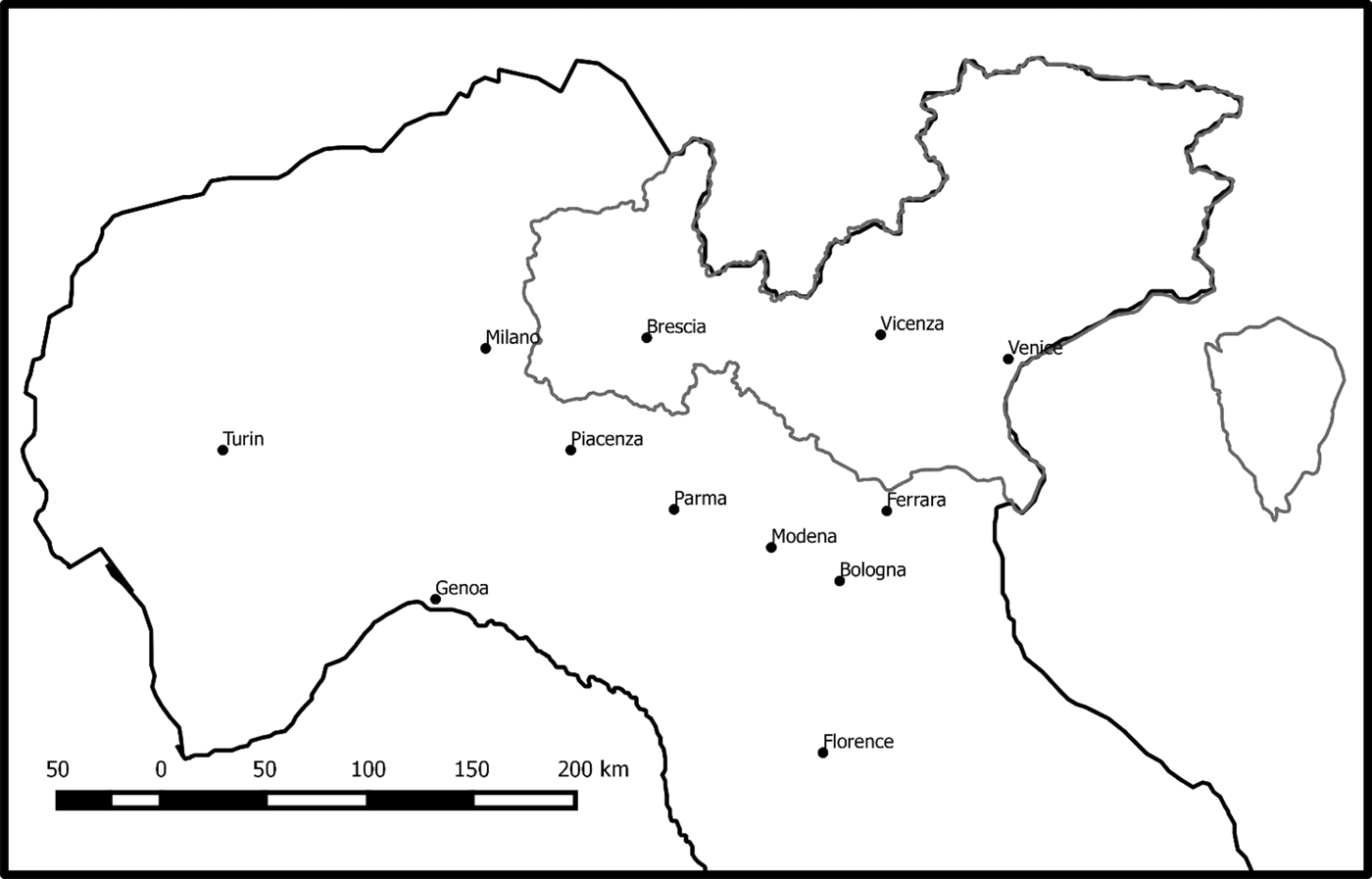
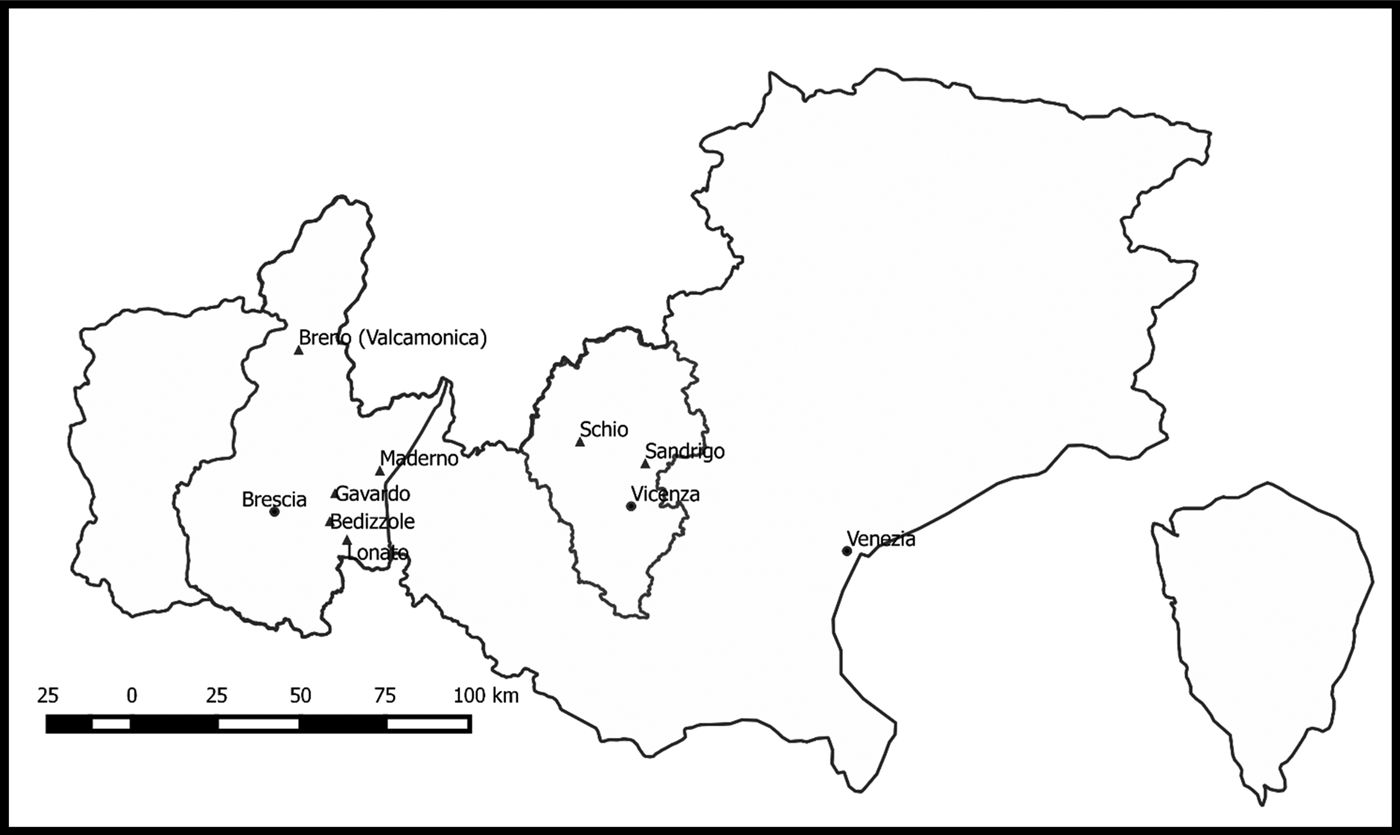
Before continuing, it should be noted that the Republic of Venice (Figure 1) comprised both a Mainland Dominion and Maritime Territories and that the former was unique in the Italian peninsula, in that all the property held in common there was divided into beni comuni and beni comunali. Beni comuni were those properties owned in common by a community including woods, pastures and streams, but also mills and other buildings. Beni comunali, on the other hand, were properties that had been owned by noble families prior to the Venetian conquest of the early fifteenth century, which had become the property of the state but could be exploited by the communities.Footnote 13 In the discussion of common property in the Republic of Venice that follows, the common lands referred to are beni comuni, unless otherwise specified. Property held in common, and its direct use by the inhabitants, had long provided the basis for the rural economic system in the Republic. The management of such property in each community was the responsibility of an assembly of community members (convicinie). In theory, because their members were drawn from across the community, with only ‘foreigners’ (that is, those who were not members of the community) being excluded, these councils offered protection against the potential seizure or abuse of the commons. In 1393, for instance, the community of Schio, a small village in the northern part of the Venetian province of Vicenza (Figure 2), was able to establish laws regulating the collection of wood from the guizza, or common woodland; the exploitation of common fields as grassland for sheep; and the use of the mill race for agricultural and manufacturing purposes.Footnote 14 In addition, it was decreed that no foreigner could use the commons and that all leases were to be subjected to the scrutiny of the community council. Such policing was essential, according to the statute, ‘otherwise it [was to be] presumed that the administration by the dean [the mayor] [was] inappropriate and he must refund the community for all losses incurred’. A century later, the situation had changed completely. In Schio and the other communities of the Republic small councils, made up exclusively of members from élite families, had replaced the community councils that had hitherto ensured that the distribution of income generated from the commons and, in some cases, the division of the common property between community members, was for ‘the common good’.Footnote 15 From that point onwards, the management of the commons was subordinated to the requirements of the élite families.Footnote 16 This often meant that the way in which the resources were exploited changed; the commons gained market value, so that the properties, rather than remaining a communal resource to be used by the inhabitants, were leased on a wide scale. However, the process of their transformation from having a ‘collective’ value to having a ‘monetary’ one did not necessarily place restrictions on the collective enjoyment of the commons. On a theoretical level, the entire community should have earned greater profits from the income generated by leasing the properties than they would have from their direct use. If communal pastures were rented out, for example, this should have benefitted members of the community more widely than if sheep were grazed on common land, since all were theoretically entitled to a share of the profit, whereas before only those who could afford livestock would benefit from the grazing rights on the common land. In practice, however, the renting out of communal land came to be associated with the ‘private’ management of communal property. This, along with the exploitation of rental incomes by the élite as a means of avoiding direct taxation – a practice often encouraged by the state – produced unfair results. In short; the problem in the mid-sixteenth century was not that the commons gained monetary value, but the way in which any rental income was now used.
Map showing the location and extent of the Republic of Venice within Northern Italy. Source: Author.

Map showing the location of the provinces of Vicenza and Brescia within the Republic of Venice and the communities discussed in the text. Source: Author.

Setting this issue aside for a moment, the management of the commons by a smaller élite had many consequences: chief among these was the use of common property to guarantee loans, as this avoided the imposition of taxes that penalised the richest peasants. Even before the end of the sixteenth century, communities in rural Brescia were selling part of their common property in order to fulfil their financial contribution to the construction of a fortress by the Venetian authorities at Palmanova in Friuli.Footnote 17 There are copious examples of such behaviour in the years which followed,Footnote 18 the most striking being the declaration, in 1633, by the community council in Gavardo that it no longer had any access to credit, because it had no further common properties to pawn; the village's commons had been completely surrendered.Footnote 19
Apart from the issue of debts, the management of the commons by local élites meant that wealthy peasants could take advantage of their position to appropriate common property and commandeer the income earned, or to make use of the property without paying rent. In 1615, for example, the Venetian Captain of Brescia had to intervene in Lonato, a village in Brescia's hinterland, where the most powerful local families were utilising the grasslands without paying rent.Footnote 20 Many communities in the Val Camonica, in the same province, complained to Venice in 1625, 1648 and 1649 that their Consoli (mayors) were committing fraud. The Consoli had been misusing their authority to lease the common lands and steal the proceeds.Footnote 21 Such abuses were not unique to Brescia: in 1623, the Venetian Captain of the province of Vicenza, Francesco Malipiero, reported a situation that was as bad, if not worse.Footnote 22 Over the previous ten years, members of the community of Sandrigo had sold properties supposedly held in common to the tune of 10,000 ducats, and this was by no means the only such case in the province of Vicenza.
As the Venetian authorities in the Mainland Dominion had noted, one of the main reasons that rural communities found themselves in debt was that leading local families were using the profits from the lease or sale of the commons in order to meet their private legal obligations. Captain Alvise Valaresso of Brescia, in his 1628 report to the Senate, was quite clear on this matter: ‘the reasons and the justifications [given] for the expenses and the embezzlements [are]: litigation and billets [for troops]’.Footnote 23 Valaresso's report, along with a host of other sources, confirms that the majority of the sums involved in both the loans sought and the loss of properties, were used either to settle legal disputes or to meet the costs of housing troops.
The general picture presented for the Republic of Venice can be extrapolated to the entire Italian peninsula in the Early Modern period, but with some differences from state to state. Communities in Spanish Lombardy were also burdened by debts in the seventeenth and eighteenth centuries, but there the loss of the commons had different traits.Footnote 24 Not only the commons but also – indeed mainly – small rural properties were involved and this brought about a redefinition of Lombard society, creating a new class of rich peasants that stood in opposition to the more long-standing rural élites. In the Papal States, Stefano Tabacchi has identified that common land was used as collateral for loans and as a means of avoiding direct taxation in the same manner as in the Republic of Venice.Footnote 25 A similar situation was also seen in the Kingdom of Naples where it has been linked to the gradual increase in the debts incurred by communities and the loss of common land observed during the seventeenth century.Footnote 26 Similar situations also occurred in PiedmontFootnote 27 and in France and German-speaking lands during the Thirty Years War.Footnote 28 Even in the Netherlands, which had one of Europe's most booming economies in the seventeenth century,Footnote 29 similar issues arose,Footnote 30 although the country's more favourable economic circumstances meant that it was more proof against a downward spiral of debt during the prolonged war of 1568–1648 with Spain.Footnote 31
Why did management of the common lands fail, and why did the institutions appointed to govern them evolve in such a way as to contribute to their eventual loss? Elinor Ostrom, in her famous book on the management of the commons, identified seven requirements for institutions to be strong enough to survive for an extended period while preserving the economic value of the properties for which they were responsible. The requirements were: that the properties concerned had clearly defined boundaries; that there was congruence between the rules for the appropriation and provision of resources, and local conditions; that arrangements allowing collective choice were in place; all aspects of the management of the properties were monitored; there were graduated sanctions for misdemeanours; conflict-resolution mechanisms were in place; and that there was recognition by external authorities of the rights of local appropriators to devise their own rules.Footnote 32 As government of the commons evolved, restrictions on who could sit on a village council reshaped the extent to which community members could be involved in decision-making. The restrictions also undermined two of Ostrom's required conditions by removing both collective-choice arrangements and monitoring of the management of the commons by members of the community.Footnote 33 Ostrom cited case studies that demonstrated how successful local institutions could efficiently maintain forms of cooperation in the long-term management of their common properties, but in the Italian cases considered here such cooperation failed because of the rise of strong economic, social and – not least – institutional hierarchies.Footnote 34 According to Ostrom, collective-choice arrangements were fundamental to successful management of the commons as they guaranteed that as many people as possible were aware of any management issues, while also creating a shared set of norms, respected, in theory at least, by all participants. Any contraction of participation in the management would, therefore, be deleterious for smaller shareholders, both when it came to the division of any revenue generated by the properties, but also with respect to the protection of their interests. Similarly, ‘wider’ monitoring of the use of communal resources by all sections of society benefitted the more vulnerable, and when some sections of society were disqualified from participating in the institutions appointed to undertake this function, this inexorably led to a system that was vulnerable to abuse.
In order to fully understand such a scenario, it is useful to call on theories of social dilemmas, such as the dilemma of the commons. The behaviour of the Italian rural élites can be analysed in terms of Garrett Hardin's ‘tragedy of the commons’.Footnote 35 It is undeniable that the choice made by specific groups in rural society to exclude other sections of the population from the management – and, ultimately, the use – of the commons was driven by the fact that, as Hardin says, each person (or social class) aims to maximise his own gains ‘even though society as a whole, of which he is part, suffers’.Footnote 36 Various scholars including OstromFootnote 37 have discussed the apparent inevitability of this process, but it is undoubtedly the case that this type of tragedy could have been avoided, if only those using the resources in question had agreed to cooperate. In the absence of any agreement and with no interaction between the interested parties, it would have been easy to stumble into a ‘prisoner's dilemma’ game.Footnote 38 M. Robyn Dawes argues that such chains of events unfold because ‘the social dilemma games discussed … [did] not involve interaction’.Footnote 39 The irrational outcomes of so-called ‘rational’ management of the commons by people, or sectors of society, who were not communicating with each other, led to the commons being over-exploited. It is important to point out that in the Italian case studies discussed above, the individuals, or groups, controlling the management of the commons and those excluded from their management were not only not communicating, they were also in unequal positions, with different access to resources. In practice this situation resulted in an even more short-sighted policy of depletion of the commons and their resources. In the Republic of Venice, for example, the interests of one class prevailed over all the others who, theoretically, had equal rights. According to Hardin's theory, those individuals, or classes in this case, appropriating the commons stood to make all the gains, while the costs were shared across the community. This encouraged exploitation of the commons to the point of exhaustion. Had the institutions of self-governance evolved in order to ensure sustainable use of the available resources, Ostrom argues, this could have saved the commons, but there was no such development in the Italian States during the Early Modern period, particularly not in the Republic of Venice. The institutions, that is, the local councils, did adapt to changes in society but not in ways that guaranteed all parties had equal access to resources. Instead they evolved to support the convergence of decision-making power into the hands of a few, rich families, and this threatened access to and the distribution of resources and the resources themselves. Ultimately, the councils became one of the constituent elements of the problem of the loss of the commons.
3. PROTECTING THE COMMONS: STATE INTERVENTION IN THE SEVENTEENTH CENTURY
Although the article has established the role of the councils and their failure to apply the logic of collective actionFootnote 40 with regards to the commons in the Republic of Venice and in other Italian States, this was not a pattern that was seen more widely. In Spanish Lombardy, for example, the commons remained under the control of the majority of community members and, rather than decreasing in the seventeenth century, the commons expanded as communities acquired properties previously owned by peasants who had become insolvent. It is therefore necessary to analyse the different efforts made by the authorities in various Italian States to preserve the commons during the sixteenth and seventeenth centuries, when it was clear that such property was in jeopardy almost everywhere. Ostrom's criticism of Hardin's ‘state-centric’ point of view is particularly relevant here. According to Hardin, intervention by an external, state authority was the only way to counteract narrow-minded and short-sighted management of the commons. Ostrom discusses the argument that privatisation of the commons was the most efficient way to protect resources, and proposes alternative models of self-governance, based on her seven requirements, which, while not infallible, could have avoided the intervention of an external public or private authority.Footnote 41 Sixteenth- and seventeenth-century Italy – and the Republic of Venice in particular – are interesting models on which to test this theory. The sources indicate that there were appeals from a wide range of communities for state intervention in relation to their commons. The appeals came in different guises, depending on the social and economic circumstances of each territory, but reflect some common traits and problems. The spiral of debt and the sale of common properties, in parallel with increased fiscal and military demands, meant that the Venetian State developed an interest in the condition of local finances towards the end of the sixteenth century, and this continued through the following century. Many other Italian States also made interventions regulating the public economy of their rural communities, especially those aspects relating to the credit markets – they artificially limited interest rates and prohibited loans without prior state approval – and to the management of the commons. The state legislators were not driven by any desire to hand over control of the commons to the communities; their interest lay in preserving the economic value of the properties, so that the communities could maintain their contributions to the state coffers. In many cases, the States appointed specific agencies to collect information on and keep control over local finances. Tuscany did so from 1560, the Papal States from 1592, the Republic of Genoa from 1623, Piedmont from 1661 and the Kingdom of Naples did so for a short period between 1612 and 1615.Footnote 42 Other States, such as the Republic of Venice, did not set up such agencies; nevertheless they still intervened in the management of local economies and the commons.
Although the Republic of Venice did not formally give any institution control over local finances, the Collegio dei X poi XX Savi del Corpo del Senato (which literally translates as ‘Board of the Ten and then Twenty Sages of the Senate’) may be considered an exception. This institution was established in 1529 to adjudicate on petitions arising from the revenue system of the Mainland Dominion.Footnote 43 The Senato produced a wide range of legislation concerning local economies and property held in common during the second half of the sixteenth century and, especially, the opening decades of the seventeenth century. In the same period, as seen above in relation to Lonato and the Val Camonica, Venetian officers intervened repeatedly at the local level in order to protect the commons. There is copious information available, but no full-scale study of this topic has yet been conducted. In November 1648, Giovanni Moro, Captain of Brescia, noted that the Senato had issued many edicts on the management of local finances over the course of the preceding decades, specifically in 1553, 1627, 1635 and 1640. He also noted that in 1621 the Inquisitori in Terraferma (civilian officials who visited local communities to report upon government, and who also issued orders to cities and rural communities) had ‘established many rules for the correct and good administration of the communities’.Footnote 44 Moro was right: in 1627, the Senato had prohibited the imposition of livelli (contracts of debt) without the approval of the government.Footnote 45 This measure affected not only the credit market, but also the management of the commons. In February 1645, for example, the community of Bedizzole, in the province of Brescia, was given permission to lease its common lands to creditors in perpetuity (livello perpetuo). The certificate of authorisation stipulated, however, that interest was to be paid at a rate of 5 per cent and, most importantly, that the lease should be renewed every 29 years by both the community council and the Senato. Footnote 46 In this way, the property was not permanently and irrevocably lost. Moro's list of edicts is incomplete, however. In June 1614, Captain Antonio Grimani of Brescia issued more instructions for the good governance of communities, instructions confirmed the following year by the Senato, and concerning among other things ‘violations and disorganizations … doing serious damage … to the properties and revenues of the communities’.Footnote 47 Many of Grimani's recommendations concerned the commons: those renting common property were not allowed to hold public office, so as to avoid any conflict of interest, and common land was to be leased for no more than seven years, in order that the richest peasant tenants should not ‘become owners’. Further points related to bans on loans and on the selling of common property without the consent of four-fifths of the Convicinia. This was not a new departure for the Venetian authorities: in the mass of legislation containing these orders, there was also a provision of the Council of Ten, one of the major governing bodies of the Republic of Venice, dated 27 October 1493, which prohibited the selling of any common property without the consent of the Convicinia.Footnote 48 This policy was quite general, but during the seventeenth century measures taken by the Venetian authorities became more frequent and specific as they responded to the increasing number of problems associated with the loss of the commons. In 1622, orders similar to Grimani's were issued for rural Vicenza;Footnote 49 here too the new regulations decreed that communities could not surrender part of their commons without observing specific legal steps.
The fact that the Republic of Venice was only interested in protecting its communities' ability to contribute to state finances is highlighted by the fact that, while the sale of municipal properties was prohibited, the state authorities sold off the majority of the Republic's own beni comunali in some provinces. During the War of Candia (1645–1669) in particular, but also at other, later dates, when there was an urgent need to fill the Treasury's chest the Republic fulfilled this need by relinquishing a great deal of state property.Footnote 50 Moreover, orders, quoted above, specified that the commons were not to be directly used by the inhabitants, but instead rented out so that the latter could pay their debts and taxes. This was standard practice in the Republic of Venice: when, in 1652, the captain of Vicenza, Girolamo Loredan issued a set of orders concerning the effective administration of the province of Vicenza, they reaffirmed that their inhabitants were obligated to generate income from the commons to pay their taxes.Footnote 51
These examples illustrate that although interventions relating to the commons by the Venetian state were fragmented to some extent, they were still broadly similar to provisions made by other Italian and European states.Footnote 52 By the middle of the sixteenth century, prammatiche (laws) had been issued in the Kingdom of Naples which restricted the autonomy of communities when selling off their common property.Footnote 53 The early seventeenth century saw a proportionate increase in the extent of state intervention, with reforms undertaken by the Count of Lemos (1610–1616), an inquiry by the Camera della Sommaria (1624–1625) and the Stati Discussi of Carlo Tapia (1626–1628). These measures aimed to address the problem of the loss of the commons at a local level by returning illegitimately sold properties to their communities.Footnote 54 The Neapolitan case is interesting for two reasons. Firstly, from the 1630s onwards there was a gradual transfer of the commons out of public use and into leases, strongly suggesting that here too, as in the Republic of Venice, the fundamental aim of state intervention was to conserve – and even to increase – the incomes earned by communities, not to guarantee a fair distribution of resources.Footnote 55 Secondly, the interventions set in train by the Kingdom of Naples ultimately ended in failure, because the state authorities were unable to make an impact at the local level, thanks to a combination of the complex local situation and a lack of information.
In the Papal States, from as early as 1587, papal visitatori (visitors) were sent out into the countryside to inspect local finances and remedy the loss of the commons.Footnote 56 With the approval of the law known as the Pro Commissa (Papal Seal) in 1592, the interventions became more programmatic and the Congregazione del Buon Governo was established. As its name suggests, the Congregazione was an institution aimed at overseeing the management of the communities. The Pro Commissa decreed that each community had to submit its balance sheet for scrutiny to papal officials (the Camerlengo and Tesoriere) and that property held in common could not be given up, particularly as anyone appropriating or using it illegally would be excluded from public office.Footnote 57 Over the following decades, the influence of the Congregazione del Buon Governo grew, and the measures taken by the Pro Commissa were included in its jurisdiction. As in the Kingdom of Naples and the Republic of Venice, a contract system for the leasing of properties was established in the Papal States, in order to make management of the commons more efficient and thus more profitable and better documented, but this caused a collapse in the public use of the available resources.Footnote 58 State intervention in the Papal States also met with opposition from both the peasants and local institutions, the interests of both of whom had always to be taken into account by the state authorities.
These examples indicate how at particular times, the Italian States intervened in order to protect the financial footing of the communities within their borders but, as in the case of the Val Camonica, they also took action in response to requests from those sections of rural society who would suffer if they were to lose their common lands. State interventions not only took the form of edicts concerning credit markets, or the efficient administration of local finances; they also regulated how the commons were to be managed. This involved policing the seizure of woods and fields; the sale of such properties was prohibited, and permission had to be sought from the state for their use as collateral for debts. These measures were better organised and coordinated in some areas, such as Tuscany and the Papal States, than in others, such as the Republic of Venice, during the first half of the seventeenth century, although state interventions in the Republic did increase.
Finally, Spanish Lombardy was an exception in this period, because it saw the expansion of its common lands. During the sixteenth and the seventeenth centuries, the Spanish authorities took as many steps to redistribute fiscal and military burdens among the people of the region, as they made provisions to stabilise the crisis in local finances through intervention in the credit market.Footnote 59 There is no documentary evidence, however, to show that the State took an interest in the management of the commons. In Lombardy, according to Emanuele Colombo, ‘from a legal perspective, the commons … were not considered properties of the communities as juridical subjects, rather, to be common in this instance meant that they could be pawned or sold only with the consent of all the community members'.Footnote 60 In Venice, by contrast, where communities were managed by small councils, often dominated by élite families, these communities could take decisions on the management of the commons without the intervention of all members. Therefore, there was no significant loss of such property in Lombardy and the state authorities only intervened in desperate cases.Footnote 61
Before undertaking further analysis of the absence of state intervention in the management of the commons in Spanish Lombardy, it is useful to present the results of state intervention in the other Italian States, and especially in the Republic of Venice. When Ostrom talks about state intervention in the management of the commons, she emphasises that such measures could only be effective if the authorities had an adequate stream of information, adequate policing in place and the ability to pose sanctions without entailing increased costs.Footnote 62 In the majority of the examples cited above, state intervention foundered when putting the first prerequisite in place; having failed to see that there were no effective channels of information concerning the management of local finances and common properties, they also failed to put such channels in place. According to Tabacchi, a lack of information – despite the presence of the Sindaci Inquisitori (officers of the state) throughout the Mainland Dominion – explained why in the eighteenth century it remained the case that in the Republic of Venice, ‘many interventions remained occasional, because of the absence of outlying institutions with control functions'.Footnote 63 It should be noted that when Tabacchi uses the term ‘control’, he is referring specifically to an ability to collect information.Footnote 64 With reference to the Papal States, Tabacchi argues that while the establishment of the Congregazione del Buon Governo led to great progress in the creation of information channels between the state and the towns and countryside, ‘limits certainly remained. Throughout the entire seventeenth century, the Congregazione often proved unable to acquire fundamental information on the administration of the communities, rural and urban’.Footnote 65 In the Kingdom of Naples, government activity did focus on the construction of communication structures, but here too the state failed to establish a more pronounced presence within its boundaries.Footnote 66 In Piedmont, it was not until the eighteenth century that the State was able to assert itself in the management of local finances, which it then did, thanks to the establishment of the Intendenti, ‘who were appointed to send essential information about local intervention to the central institutions'.Footnote 67
The States' failure, or partial failure, to gather information meant that they were unable to police the common lands, or impose sanctions where needed, and these duties reverted to offices in the rural communities where community members were delegated to police themselves. This was not a recipe for success. A variety of local élites – the rural élite in the Republic of Venice, the feudal élite in southern Italy, and the élites with links back to the Roman aristocracy in the Papal States – remained fundamentally involved in any attempt to establish new regulations affecting the commons. Their effectiveness was often compromised but this comes as no surprise: states are not abstract entities, above and beyond local dynamics, and the Early Modern state was no exception.Footnote 68 It was due to these reasons that the Italian States did not intervene with the intention of establishing the monetary value of properties held in common, nor in order to guarantee equality of access in the long term and profit sharing among the members of a community; instead their main aim was to protect the commons as a source of revenue. Given that it held this stance, the state did encourage monetary values to be placed on properties where this would enable communities to contribute financially to the state, even although this meant that lands, woods and pastures could not be put to collective use. In short, local élites could manage common properties as they liked, as long as they did not compromise the community's ability to pay taxes.
4. PROTECTING THE COMMONS: INSTITUTIONS OF SELF-GOVERNANCE IN SPANISH LOMBARDY
Lombardy provides an interesting case of self-governance of the commons. Self-governance did not mean that all members of the community shared revenue equally, or that the richest rural families did not take advantage of the management of the commons. It only meant that the community had to give its consent to the forfeiture or sale of any part of the property they held in common. Our purpose here is not to establish what was ‘correct’ in terms of collective solidarity and how this stood in opposition to what was ‘wrong’ with élite enjoyment of common resources. Instead the aim is to consider both sides and to try to understand them. The legal impossibility of forfeiting common properties in Lombardy, where the law placed greater emphasis on the ‘commonality’ of such property than it did in the Republic of Venice, was linked to a long tradition of economic solidarity within Lombard communities.Footnote 69 The region of Geradadda, in the eastern part of the Duchy of Milan, is interesting because from the end of the fifteenth century to the mid-sixteenth century, numerous confraternities were founded there. Like elsewhere, these were groups founded for devotional and social purposes, often dedicated to a particular saint. Here, they became important providers of credit, which had significant implications for the fortune of the commons in the region. The confraternities, controlled by the richest local families, obtained common properties in exchange for loans, but then returned the same properties to the community.Footnote 70 In Geradadda, when a community needed a loan, in the majority of cases it did not turn to private or city lenders. Instead it transferred part of its common property to a local confraternity in exchange for the money needed. Under a ‘resale agreement’, the community could recover their property when their fortunes improved. If they did not find themselves in a better position and the properties remained in the hands of the confraternities, ‘the practice of cooperation produced a local redistribution of wealth, insomuch as more than 85 per cent of lost properties continued to produce incomes in loco’.Footnote 71 There was another element that is also relevant here; although the confraternities were both founded and expanded thanks to the significant economic and administrative participation on the part of the local, rural élites, this did not lead to particular disparity in the allocation of wealth,Footnote 72 because the main aim of the élite families was not to enrich themselves by their efforts, but to preserve the local social structures. In other words, the interest of the élites lay not in economic profit, but in the maintenance of the economic and, in particular, the social status quo. As Matteo di Tullio has put it, ‘to be part of a community meant to have a network of relations that guaranteed access to a locally produced social capital’.Footnote 73 The confraternities were founded to defend precisely this social capital, which may be considered one of the fundamental elements of the ‘Lombard system’ as this article will demonstrate below, with particular reference to Putnam's theory.Footnote 74 Lombardy thus provides an important example of how, without the intervention of an external authority, communities were able to manage their commons, while simultaneously coping with the dangers of the credit market, a main factor in the loss of the commons. It is not clear, however, if this solution evolved during the seventeenth century when rural finances were at their most critical juncture. Colombo writes that, as early as the first half of the seventeenth century, the major burden of debt incurred by a community in Lombardy was shared by a cross-section of rural society.Footnote 75 This facilitated the protection of the community's wealth, as it was not transferred to money-lenders in the city, and also inspired enduring solidarity among members of the community, at least in relation to their common resources. The scenario in Lombardy should not be idealised; both Colombo and Di Tullio underline how important family networks were in the control of these credit dynamics and how, as a consequence, management of the commons fell to the élite. It could easily be argued that the spoils of the efficient management of common properties in Lombardy were not divided fairly among the members of the community, but what is important is that, in comparison to the Republic of Venice and other Italian States, the presence of the confraternities played a fundamental role in the preservation, and, indeed, expansion of the commons, while contemporaneous solutions adopted by most of the other Italian States ended in general failure. Confraternities were not only found in Spanish Lombardy however; there were analogous institutions in the Republic of Venice, but the latter were not as omnipresent, and their economic role was generally much less pronounced than that of their counterparts in Lombardy.
5. CONCLUSIONS
This article set out to present the different solutions implemented by Italian communities to govern their commons and to outline the evolution of the institutions involved. In some areas of the Italian peninsula, where membership of the community councils was restricted and participation in the management of the commons was reshaped, a concurrent growth in the financial demands made by the state authorities resulted in the loss of many, if not most, common properties. The communities affected sometimes appealed for protection to an external authority; the state. In turn, the state sometimes intervened in the absence of an appeal from below in order to protect its own interests. However, the state's ability to intervene was limited and was inevitably further compromised in negotiations with the local authorities, rendering the interventions largely ineffective. From the beginning of the sixteenth century, on the other hand, and even though the fate of community councils there was much the same as elsewhere, communities in Spanish Lombardy protected their commons by creating institutions specifically for this purpose. It is likely that the legal system in Lombardy made the sale or forfeiture of common properties extremely difficult, if not impossible, but there is no documentary evidence to prove this. From 1614, the approval of the Convicinia was required before any portion of the commons in the Republic of Venice could be given up, but the dispossession of communities in certain areas of the Republic, such as the province of Brescia, continued nonetheless. The difference between Lombardy and the other Italian States was therefore not strictly a legal one. Although there was a protracted critical financial situation in Lombardy around the turn of the seventeenth century, the commons flourished rather than withered away, even though their intrinsic value fell because land depreciated in value.Footnote 76
While Ostrom's guidelines were followed in order to understand, and partly explain, the failure of state intervention to safeguard the commons in the Republic of Venice, the article will now take an alternative approach in order to interpret the much greater success enjoyed in Spanish Lombardy. As demonstrated above, the appeal of the confraternities in Lombardy arose not only out of the economic necessity of preserving the commons but also from the desire of the rural élites to protect and perpetuate pre-existing social structures. The case of Lombardy seems to confirm Putnam's theory concerning the importance of ‘social capital’, both in the growth of various institutions and in the way that economic and social dynamics evolved in the various areas of the Italian peninsula.Footnote 77 Putnam asserts that:
Voluntary cooperation is easier in a community that has inherited a substantial stock of social capital, in the form of norms of reciprocity and networks of civic engagement. Social capital here refers to features of social organization, such as trust, norms, and networks, that can improve the efficiency of society by facilitating coordinated actions.Footnote 78
While Putnam concentrates on Italy's cities, his findings can be extended to the rural areas of the peninsula. He argues that the presence of confraternities from the late medieval period is a clear indicator of the presence of a virtuous circle, based on the horizontal relationships (based on reciprocity and collaboration across groups) typical of the north of Italy, while in the south of the peninsula, the institutions evolved differently, being characterised by stronger centralisation that produced vertical (hierarchical) relationships and an absence of a sense of solidarity within communities. The case study of Spanish Lombardy confirms the importance of both the confraternities and ‘social capital’ to the preservation of the commons, a point also made by Ostrom.Footnote 79 Some elements of Putnam's theory remain open to debate; it is very difficult, for example, to make a link between the presence of ‘social capital’ and the absence of more vertical relationships. Increasing wealth inequality within communities occurred in both the north and the south of the Peninsula. The presence of horizontal relationships was not exclusive to the north of Italy, and ‘social capital’ was to be found in all parts of the Peninsula. The social balances in the north and south were probably different, but it is a stretch to assume – as Putnam does – that there were ‘at least two broad equilibria toward which all societies that face problems of collective action (that is, all societies) tend[ed] to evolve and which, once attained, tend[ed] to be self-reinforcing’.Footnote 80 Despite this qualification, Putnam's theory is certainly useful and, in many respects, valid. As the case of Lombardy attests, the will to preserve ‘social capital’ played a fundamental role in the preservation of the commons.
The examples cited above demonstrate, as Putnam's theory emphasises, how important the internal dynamics of a community were to its resilience when coping with particular economic pressures. In Spanish Lombardy, the commons were protected thanks not to the intervention of an external authority, but to the emergence of particular local institutions. Daniel R. Curtis reached the same conclusions in his study of European rural communities between the thirteenth and twentieth centuries.Footnote 81 In his arguments Curtis elaborates on the internal organisation of communities, discussing how the balance of power within a community was related to the distribution of its common property, both from a legal perspective and in terms of the practical uses to which the land was put.Footnote 82 According to Curtis, almost all of the Italian communities discussed above could be considered as ‘polarised-dynamic societies' that ‘exploited their resources using short-term strategies'.Footnote 83 In other words, they were communities where the polarisation of wealth progressively led to an élite few holding a monopoly on the management of common resources. The appropriateness and validity of Curtis's categories are open to challenge. First of all, it is not clear that the internal dynamics of the communities and the presence of (more or less) horizontal structures are, on their own, sufficient to explain the diverse forms of management and extent to which the commons were protected, particularly as areas with similar social, institutional and economic dynamics experienced quite different outcomes. The examples presented above demonstrate that rural communities in Italy all faced similar economic problems and all experienced the polarisation of wealth, council bias and a contraction of participation in the management of the commons. In these regards the situations in the Republic of Venice and Spanish Lombardy were the same, and therefore, from Curtis's viewpoint, the outcomes should have been the same but, as demonstrated above, they did in fact differ between the two states. The importance of the internal structure of communities and the presence of various forms of cooperation, all designed to preserve social capital, emerged from each of the examples provided, so the importance of these ‘internal factors' should not be underestimated; they were undoubtedly decisive in whether or not the commons were preserved. Rather than proposing a generalised model, the article has used the examples cited to underline that the combination of problems, institutional dynamics and state interventions found in each of the Italian States was specific to that state. This does not mean that generalised models cannot be proposed, but they ought to incorporate local forces and structures on the one hand, and state action on the other.
ACKNOWLEDGEMENTS
I wish to thank Professor Jose Miguel Lana-Berasain for reading an early draft of this article. His advice is much appreciated.