




1. Introduction
The study of truncated theta series was launched by Andrews and Merca [Reference Andrews and Merca4], and their motivation came from a family of linear inequalities for the partition function p(n) given in [Reference Andrews and Merca4, p. 1640, equation (1.4)]:
 \begin{align}
(-1)^{m} \sum_{j=0}^{m} (-1)^j \Big(p\big(n-\tfrac{j(3j+1)}{2}\big)-p\big(n-\tfrac{j(3j+5)}{2}-1\big)\Big)\ge 0,
\end{align}
which holds for all nonnegative integers m and positive integers n.
Recall that the generating function of p(n) is given by
 \begin{align*}
\sum_{n\ge 0} p(n) q^n = \frac{1}{(q;q)_{\infty}},
\end{align*}
where for  $N\in \mathbb{N}\cup\{\infty\}$, we adopt the q-Pochhammer symbols:
 \begin{align*}
(A;q)_N &:= \prod_{k=0}^{N-1} (1-Aq^k),\\
(A_1,A_2,\ldots,A_m;q)_N &:= (A_1;q)_N (A_2;q)_N \cdots (A_m;q)_N.
\end{align*}
The key observation of Andrews and Merca is that the linear inequality in (1.1) is tied with a truncation of Euler’s pentagonal number theorem [Reference Andrews3, p. 11, equation (1.3.1)]:
 \begin{align}
(q;q)_\infty = \sum_{n\ge 0} (-1)^n (1-q^{2n+1})q^{\frac{n(3n+1)}{2}}.
\end{align}
Following the same path, Guo and Zeng [Reference Guo and Zeng10] truncated two theta series due to Gauß [Reference Andrews3, p. 23, equations (2.2.12) and (2.2.13)]:
 \begin{align}
\frac{(q;q)_\infty}{(-q;q)_\infty} &= \sum_{n\ge 0} (-1)^n (1-q^{2n+1}) q^{n^2},
\end{align}
 \begin{align}
\frac{(q^2;q^2)_\infty}{(-q;q^2)_\infty} &= \sum_{n\ge 0} (-1)^n (1-q^{2n+1}) q^{n(2n+1)},
\end{align}
and derived similar linear inequalities for the enumerations of overpartitions [Reference Corteel and Lovejoy7] and partitions wherein odd parts are distinct but even ones may repeat [Reference Berkovich and Garvan6].
The above three relations are specialized from Jacobi’s triple product identity [Reference Andrews3, p. 22, equation (2.2.11)]:
 \begin{align}
(q^s,q^{r-s},q^r;q^r)_\infty = \sum_{n\ge 0} (-1)^n (1-q^{s(2n+1)}) q^{r\binom{n+1}{2}-sn}.
\end{align}
In view of a similar truncation, the following nonnegativity property was conjectured by Andrews and Merca [Reference Andrews and Merca4, p. 1643, Question 2] and re-conjectured by Guo and Zeng [Reference Guo and Zeng10, p. 705, Conjecture 6.1]: For 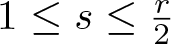 $1\le s\le \frac{r}{2}$ and
 $m\ge 0$,
 \begin{align}
\frac{(-1)^{m}}{(q^s,q^{r-s},q^r;q^r)_\infty} \sum_{n=0}^{m} (-1)^n (1-q^{s(2n+1)}) q^{r\binom{n+1}{2}-sn}
\end{align}
has nonnegative coefficients in its series expansion except the constant. This ex-conjecture was confirmed by Mao [Reference Mao12] analytically and Yee [Reference Yee15] combinatorially. Subsequently, to acquire a more clear understanding of this nonnegativity property, Wang and Yee [Reference Wang and Yee13] started from the following bivariate form of Jacobi’s triple product identity [Reference Andrews3, p. 21, equation (2.2.10) with  $(z,q)\mapsto (-zq^{-\frac{1}{2}},q^{\frac{1}{2}})$]:
 \begin{align}
(z,q/z,q;q)_\infty = \sum_{n\ge 0} (-1)^n z^{-n} (1-z^{2n+1}) q^{\binom{n+1}{2}},
\end{align}
and established an explicit expression [Reference Wang and Yee13, p. 387, equation (9)]:
 \begin{align}
&\frac{1}{(z,q/z,q;q)_\infty}\sum_{n=0}^{m}(-1)^n z^{-n} (1-z^{2n+1})q^{\binom{n+1}{2}} \nonumber\\
&\qquad\qquad\qquad=1+{(-1)^{m} q^{\binom{m+1}{2}}}
\sum_{n\ge m+1} q^n \begin{bmatrix}n-1\\m\end{bmatrix}_q \nonumber\\
&\qquad\qquad\qquad\qquad\quad\times \sum_{\substack{n_1,n_2,n_3,n_4\ge 0 \\ n_1+n_2+n_3+n_4=n}} \frac{q^{(m+1)n_2+n_3n_4}z^{n_3-n_4}}{(q;q)_{n_1}(q;q)_{n_2}(q;q)_{n_3}(q;q)_{n_4}},
\end{align}
where the q-binomial coefficients are defined by
 \begin{align*}
\begin{bmatrix}M \\ N\end{bmatrix}_q:=\begin{cases}
{
\dfrac{(q;q)_M}{(q;q)_N(q;q)_{M-N}}}, & \text{if }0\le N\le M,\\[6pt]
0, & \text{otherwise}.
\end{cases}
\end{align*}
Recently, Xia, Yee, and Zhao [Reference Xia, Yee and Zhao14] established three new truncated theta series, with the simplest being [Reference Xia, Yee and Zhao14, p. 3, equation (1.6)]:
 \begin{align*}
&\frac{1}{(q;q)_\infty} \sum_{n=0}^{m} (-1)^n (1-q^{n+1}) (1-q^{2n+2}) q^{3\binom{n+1}{2}}\\
&\qquad\qquad\qquad = 1 + (-1)^m q^{\binom{m+1}{2}} \sum_{n\ge m+1} \frac{q^{(m+3)n}}{(q;q)_n} \begin{bmatrix}n-1\\m\end{bmatrix}_q.
\end{align*}
By absorbing the idea in another work of Andrews and Merca [Reference Andrews and Merca5], Li, Lin, and Wang [Reference Li, Lin and Wang11] offered a unified proof of these three relations by means of the Rogers–Fine identity [Reference Fine8, p. 15, equation (14.1)]:
 \begin{align*}
\sum_{n\ge 0} \frac{(a;q)_n t^n}{(b;q)_n} = \sum_{n\ge 0} \frac{b^n t^n q^{n^2-n} (1-atq^{2n}) (a,atq/b;q)_n}{(1-t)(b,tq;q)_n}.
\end{align*}
More interestingly, they observed that two among the truncations of Xia, Yee, and Zhao [Reference Xia, Yee and Zhao14, p. 3, equations (1.6) and (1.7)] are connected with the following variant of Jacobi’s triple product identity:
 \begin{align}
(q^s,q^{r-s},q^r;q^r)_\infty = \sum_{n\ge 0} (-1)^n (1-q^{s(n+1)}) (1-q^{(r-s)(n+1)}) q^{r\binom{n+1}{2}}.
\end{align}
As instances, the above relation gives companions to (1.2), (1.3), and (1.4):
 \begin{align}
(q;q)_\infty = \sum_{n\ge 0} (-1)^n (1-q^{n+1}) (1-q^{2n+2})q^{3\binom{n+1}{2}},
\end{align}
 \begin{align}
\frac{(q;q)_\infty}{(-q;q)_\infty} = \sum_{n\ge 0} (-1)^n (1-q^{n+1})^2 q^{2\binom{n+1}{2}},
\end{align}
 \begin{align}
\frac{(q^2;q^2)_\infty}{(-q;q^2)_\infty} &= \sum_{n\ge 0} (-1)^n (1-q^{n+1}) (1-q^{3n+3}) q^{4\binom{n+1}{2}}.
\end{align}
Inspired by Andrews and Merca’s nonnegativity ex-conjecture for (1.6), Li, Lin, and Wang [Reference Li, Lin and Wang11, Conjecture 1.13] conjectured the following analog:
Conjecture 1.1.
[Li–Lin–Wang]. For  $1\le s\le \frac{r}{2}$ and
 $m\ge 0$,
 \begin{align}
\frac{(-1)^{m}}{(q^s,q^{r-s},q^r;q^r)_\infty} \sum_{n=0}^{m} (-1)^n (1-q^{s(n+1)}) (1-q^{(r-s)(n+1)}) q^{r\binom{n+1}{2}}
\end{align}
has nonnegative coefficients in its series expansion except the constant.
In this article, we will go beyond by considering the bivariate form of (1.9):
 \begin{align}
(z,q/z,q;q)_\infty
=\sum_{n\ge 0} (-1)^n(1-z^{n+1})(1-(q/z)^{n+1})q^{\binom{n+1}{2}}.
\end{align}
Analogous to (1.8), we establish the following explicit formula, which turns out to be able to confirm Li, Lin, and Wang’s conjecture by putting  $(z,q)\mapsto (q^s,q^r)$.
Theorem 1.2. For  $m\ge 0$,
 \begin{align}
&\frac{1}{(z,q/z,q;q)_\infty}\sum_{n=0}^{m}(-1)^n(1-z^{n+1})(1-(q/z)^{n+1})q^{\binom{n+1}{2}} \nonumber \\
&\qquad\qquad\qquad\qquad=1+{(-1)^{m} q^{\binom{m+1}{2}}}
\sum_{n\ge m+1} q^n \begin{bmatrix}n-1\\m\end{bmatrix}_q \nonumber\\
&\qquad\qquad\qquad\qquad\qquad\quad\times \sum_{\substack{n_1,n_2,n_3,n_4\ge 0 \\ n_1+n_2+n_3+n_4=n}} \frac{q^{(m+2)n_2+(n_3+1)n_4}z^{n_3-n_4}}{(q;q)_{n_1}(q;q)_{n_2}(q;q)_{n_3}(q;q)_{n_4}}.
\end{align}
In particular, the coefficients in the bivariate series expansion of
 \begin{align}
\frac{(-1)^m}{(z,q/z,q;q)_\infty}\sum_{n=0}^{m}(-1)^n(1-z^{n+1})(1-(q/z)^{n+1})q^{\binom{n+1}{2}}
\end{align}
are all nonnegative except the constant.
The exceptional series of Xia, Yee, and Zhao [Reference Xia, Yee and Zhao14, p. 3, equation (1.8)] that is not a truncation of (1.9), or more precisely of (1.12), reads:
 \begin{align*}
&\frac{(-q;q^2)_\infty}{(q^2;q^2)_\infty} \sum_{n=0}^{m} (-1)^n (1-q^{2n+2}) (1-q^{4n+4}) q^{2n^2+n}\\
&\qquad\qquad\qquad = 1 + q + (-1)^m \frac{(-q;q^2)_{m+2}}{(q^2;q^2)_m} \sum_{n\ge m+1} \frac{q^{(m+1)(2n+1)}(-q^{2n+3};q^2)_\infty}{(q^{2n+4};q^2)_\infty},
\end{align*}
which also exhibits a sign pattern depending on the parity of m. To move on to its bivariate extension, our attention is paid to another variant of Jacobi’s triple product identity:
 \begin{align}
(1+z)(z,q/z,q;q)_\infty
=\sum_{n\ge 0} (-1)^n z^{-n} (1-z^{2(n+1)}) (1-q^{n+1}) q^{\binom{n+1}{2}}.
\end{align}
We have a second companion to (1.8) as follows.
Theorem 1.3. For  $m\ge 0$,
 \begin{align}
&\frac{1}{(z,q/z,q;q)_\infty}\sum_{n=0}^{m}(-1)^n z^{-n} (1-z^{2(n+1)}) (1-q^{n+1}) q^{\binom{n+1}{2}} \nonumber \\
&\qquad\qquad=1+z+{(-1)^{m} q^{\binom{m+1}{2}}}
\sum_{n\ge m+1} q^n \begin{bmatrix}n-1\\m\end{bmatrix}_q \nonumber\\
&\qquad\qquad\qquad\qquad\quad\times \sum_{\substack{n_1,n_2,n_3,n_4,n_5\ge 0 \\ n_1+n_2+n_3+n_4+n_5=n}} \frac{q^{n_1+(m+2)n_2+(n_3+1)n_4}z^{n_3-n_4-n_5}(1+z)}{(q;q)_{n_1}(q;q)_{n_2}(q;q)_{n_3}(q;q)_{n_4}}.
\end{align}
In particular, the coefficients in the bivariate series expansion of
 \begin{align}
\frac{(-1)^m}{(z,q/z,q;q)_\infty}\sum_{n=0}^{m}(-1)^n z^{-n} (1-z^{2(n+1)}) (1-q^{n+1}) q^{\binom{n+1}{2}}
\end{align}
are all nonnegative except those for  $z^0 q^0$ and
 $z^1 q^0$.
In §6, we shall further utilize our results to provide two families of linear inequalities bearing a reminiscent but more elaborate nature to (1.1) for a bi-parametric partition function.
2. A Bailey pair
Let a be an indeterminate. We call  $(\alpha_n,\beta_n)_{n\ge 0}$ a Bailey pair relative to
 $(a,q)$ [Reference Andrews1, p. 25, equation (3.27)] if for each
 $n\ge 0$,
 \begin{align}
\beta_n = \sum_{i=0}^n \frac{\alpha_i}{(q;q)_{n-i} (aq; q)_{n+i}}.
\end{align}
Equivalently, this relation can be inverted as [Reference Andrews1, p. 29, equation (3.40)]:
 \begin{align}
\alpha_n = \frac{1-a q^{2n}}{1-a} \sum_{j=0}^n \frac{(-1)^{n-j} q^{\binom{n-j}{2}} (a;q)_{n+j} \beta_j}{(q;q)_{n-j}}.
\end{align}
The following Bailey pair is at the centre of our analysis for Theorem 1.2.
Lemma 2.1. The sequences with  $n\ge 0$:
 \begin{align*}
\alpha_n = (-1)^n (1-z^{n+1}) (1-(q/z)^{n+1}) q^{\binom{n+1}{2}}
\end{align*}
and
 \begin{align*}
\beta_n = \frac{(z,q/z;q)_{n+1}}{(q^3;q)_{2n}}
\end{align*}
form a Bailey pair  $(\alpha_n,\beta_n)_{n\ge 0}$ relative to
 $(q^2,q)$.
Proof. We shall make use of the following Bailey pair  $(\widetilde{\alpha}_n,\widetilde{\beta}_n)_{n\ge 0}$ relative to
 $(1,q)$ due to Andrews [Reference Andrews2, p. 257, Lemma 3]:
 \begin{align*}
\widetilde{\alpha}_n = \begin{cases}
(-1)^n (z^n q^{\binom{n}{2}} + z^{-n} q^{\binom{n+1}{2}}), & \text{if } n\ge 1,\\
1, & \text{if }n=0,
\end{cases}
\end{align*}
and
 \begin{align*}
\widetilde{\beta}_n = \frac{(z,q/z;q)_n}{(q;q)_{2n}}.
\end{align*}
By (2.2) with a = 1, we know that for  $n\ge 1$,
 \begin{align*}
\widetilde{\alpha}_n &= (1-q^{2n}) \sum_{j=0}^n \frac{(-1)^{n-j} q^{\binom{n-j}{2}} (q;q)_{n+j-1} \widetilde{\beta}_j}{(q;q)_{n-j}}\\
&= (1-q^{2n}) \left\{\frac{(-1)^n q^{\binom{n}{2}}}{1-q^n} + \sum_{j=0}^{n-1} \frac{(-1)^{n-1-j} q^{\binom{n-1-j}{2}} (q;q)_{n+j} \widetilde{\beta}_{j+1}}{(q;q)_{n-1-j}}\right\}.
\end{align*}
Using the fact that
 \begin{align*}
\beta_n = (1-q)(1-q^2)\widetilde{\beta}_{n+1},
\end{align*}
we reformulate the above as
 \begin{align}
\widetilde{\alpha}_n = (1-q^{2n}) \left\{\frac{(-1)^n q^{\binom{n}{2}}}{1-q^n} + \sum_{j=0}^{n-1} \frac{(-1)^{n-1-j} q^{\binom{n-1-j}{2}} (q^3;q)_{n-1+j-1} \beta_j}{(q;q)_{n-1-j}}\right\}.
\end{align}
By abuse of notation, we write in view of (2.2):
 \begin{align*}
\alpha_n := (1-q^{2n+2}) \sum_{j=0}^n \frac{(-1)^{n-j} q^{\binom{n-j}{2}} (q^3;q)_{n+j-1} \beta_j}{(q;q)_{n-j}},
\end{align*}
and close our argument by showing that
 \begin{align}
\alpha_n = (-1)^n (1-z^{n+1}) (1-(q/z)^{n+1}) q^{\binom{n+1}{2}}.
\end{align}
With the above notation, we rewrite (2.3) as
 \begin{align*}
\widetilde{\alpha}_n = (1-q^{2n}) \left\{\frac{(-1)^n q^{\binom{n}{2}}}{1-q^n} +\frac{\alpha_{n-1}}{1-q^{2n}}\right\},
\end{align*}
solving which yields that for  $n\ge 1$,
 \begin{align*}
\alpha_{n-1} = \widetilde{\alpha}_n - (-1)^n (1+q^n) q^{\binom{n}{2}}.
\end{align*}
Plugging in the expression of  $\widetilde{\alpha}_n$ leads to the desired relation (2.4).
Now applying a truncated Bailey transform due to Wang and Yee [Reference Wang and Yee13, p. 385, Lemma 2.1], we have the following relation.
Corollary 2.2. For  $m\geq 0$,
 \begin{align}
&\frac{(-1)^mq^{\binom{m+1}{2}}}{(q;q)_m}\sum_{n=0}^{m}\frac{(q^{-m};q)_n(q;q)_{m+n+2}(z,q/z;q)_{n+1}}
{(q;q)_{2n+2}}\nonumber\\
&\qquad\qquad\qquad\qquad\qquad=\sum_{n=0}^{m}(-1)^n(1-z^{n+1})(1-(q/z)^{n+1})q^{\binom{n+1}{2}}.
\end{align}
It is notable that we may also reformulate the left-hand side of (2.5) as
 \begin{align*}
\operatorname{LHS}(2.5) &=\frac{1}{(q;q)_m}\sum_{n=0}^{m} \frac{(-1)^{m-n} q^{\binom{m-n+1}{2}} (q^{m-n+1};q)_n (q;q)_{m+n+2} (z,q/z;q)_{n+1}}{(q;q)_{2n+2}}\\
&=\frac{1}{(q;q)_m}\sum_{n=0}^{m} \frac{(-1)^n q^{\binom{n+1}{2}} (q^{n+1};q)_{m-n} (q;q)_{2m-n+2} (z,q/z;q)_{m-n+1}}{(q;q)_{2m-2n+2}}\\
&= \sum_{n=0}^{m} \frac{(-1)^n q^{\binom{n+1}{2}} (q^{2m-2n+3};q)_{n} (z,q/z;q)_{m-n+1}}{(q;q)_n}.
\end{align*}
Letting  $m\to\infty$, the above becomes
 \begin{align*}
\lim_{m\to\infty} \operatorname{LHS}(2.5) = (z,q/z;q)_\infty \sum_{n\ge 0} \frac{(-1)^n q^{\binom{n+1}{2}}}{(q;q)_n} = (z,q/z,q;q)_\infty,
\end{align*}
where for the last equality we have utilized Euler’s second sum [Reference Gasper and Rahman9, p. 354, equation (II.2)]:
 \begin{align}
\sum_{n\ge 0} \frac{(-z)^n q^{\binom{n}{2}}}{(q;q)_n} = (z;q)_\infty.
\end{align}
Therefore,
 \begin{align*}
\sum_{n\ge 0} (-1)^n(1-z^{n+1})(1-(q/z)^{n+1})q^{\binom{n+1}{2}} = (z,q/z,q;q)_\infty,
\end{align*}
which is exactly (1.14).
3. Proof of Theorem 1.2
Now we utilize Corollary 2.2 to prove Theorem 1.2. To begin with, we plug (2.5) into the left-hand side of (1.15) to obtain
 \begin{align*}
\frac{1}{(z,q/z,q;q)_\infty}\sum_{n=0}^{m}(-1)^n(1-z^{n+1})(1-(q/z)^{n+1})q^{\binom{n+1}{2}} = \frac{(-1)^mq^{\binom{m+1}{2}}}{(q;q)_m}\sum_{n=0}^{m} S_n,
\end{align*}
where we put
 \begin{align*}
S_n := \frac{(q^{-m};q)_n(q;q)_{m+n+2}(z,q/z;q)_{n+1}}
{(z,q/z,q;q)_\infty(q;q)_{2n+2}}.
\end{align*}
Next, we reformulate Sn in the following way:
 \begin{align*}
S_n &= \frac{(q^{-m};q)_n}{(q^{n+2}/z;q)_\infty (q;q)_n}\cdot \frac{(q^{2n+3};q)_\infty}{(q^{n+1};q)_\infty (q^{m+n+3};q)_\infty (q^{n+1}z;q)_\infty}\\
&= \frac{(q^{-m};q)_n}{(q^{n+2}/z;q)_\infty (q;q)_n} \sum_{n_1\ge 0}\frac{q^{(n+1)n_1}}{(q;q)_{n_1}} \sum_{n_2\ge 0} \frac{q^{(m+n+3)n_2}}{(q;q)_{n_2}} \\
&\quad \times \sum_{n_3\ge 0}\frac{(q^{n+2}/z;q)_{n_3}q^{(n+1)n_3}z^{n_3}}{(q;q)_{n_3}},
\end{align*}
where we have applied Euler’s first sum [Reference Gasper and Rahman9, p. 354, equation (II.1)]:
 \begin{align}
\sum_{n\ge 0} \frac{z^n}{(q;q)_n} = \frac{1}{(z;q)_\infty},
\end{align}
and the q-binomial theorem [Reference Gasper and Rahman9, p. 354, equation (II.3)]:
 \begin{align}
\sum_{n\ge 0} \frac{(a;q)_n z^n}{(q;q)_n} = \frac{(az;q)_\infty}{(z;q)_\infty}.
\end{align}
We note in addition that
 \begin{align*}
\frac{(q^{n+2}/z;q)_{n_3}}{(q^{n+2}/z;q)_\infty} = \frac{1}{(q^{n+n_3+2}/z;q)_\infty} = \sum_{n_4\ge 0} \frac{q^{(n+n_3+2)n_4} z^{-n_4}}{(q;q)_{n_4}},
\end{align*}
where Euler’s first sum (3.1) has been applied once again. Therefore,
 \begin{align*}
S_n &= \frac{(q^{-m};q)_n}{(q;q)_n} \sum_{n_1\ge 0}\frac{q^{(n+1)n_1}}{(q;q)_{n_1}} \sum_{n_2\ge 0} \frac{q^{(m+n+3)n_2}}{(q;q)_{n_2}} \sum_{n_3\ge 0}\frac{q^{(n+1)n_3}z^{n_3}}{(q;q)_{n_3}}\\
&\quad \times \sum_{n_4\ge 0} \frac{q^{(n+n_3+2)n_4} z^{-n_4}}{(q;q)_{n_4}}.
\end{align*}
It turns out that
 \begin{align*}
\sum_{n=0}^m S_n &= \sum_{n_1,n_2,n_3,n_4\ge 0} \frac{q^{n_1+(m+3)n_2+n_3+(n_3+2)n_4}z^{n_3-n_4}}{(q;q)_{n_1}(q;q)_{n_2}(q;q)_{n_3}(q;q)_{n_4}} \\
&\quad \times \sum_{n=0}^m \frac{(q^{-m};q)_n q^{(n_1+n_2+n_3+n_4)n}}{(q;q)_n}.
\end{align*}
Applying [Reference Gasper and Rahman9, p. 354, equation (II.4)]:
 \begin{align}
\sum_{n\ge 0}\frac{(q^{-m};q)_n z^n}{(q;q)_n} = (zq^{-m}; q)_m
\end{align}
to the inner sum yields
 \begin{align*}
\sum_{n=0}^m S_n = \sum_{n_1,n_2,n_3,n_4\ge 0} (q^{n_1+n_2+n_3+n_4-m};q)_m \frac{q^{n_1+(m+3)n_2+n_3+(n_3+2)n_4}z^{n_3-n_4}}{(q;q)_{n_1}(q;q)_{n_2}(q;q)_{n_3}(q;q)_{n_4}},
\end{align*}
which, by noting that  $(q^{n_1+n_2+n_3+n_4-m};q)_m = 0$ whenever
 $1\le n_1+n_2+n_3+n_4\le m$, further equals
 \begin{align*}
(q^{-m};q)_m &+ \sum_{\substack{n_1,n_2,n_3,n_4\ge 0 \\ n_1+n_2+n_3+n_4\ge m+1}} (q^{n_1+n_2+n_3+n_4-m};q)_m\\
&\quad\times \frac{q^{n_1+(m+3)n_2+n_3+(n_3+2)n_4}z^{n_3-n_4}}{(q;q)_{n_1}(q;q)_{n_2}(q;q)_{n_3}(q;q)_{n_4}}.
\end{align*}
Using the fact that
 \begin{align*}
(q^{-m};q)_m = (-1)^m q^{-\binom{m+1}{2}} (q;q)_m,
\end{align*}
and that
 \begin{align*}
\frac{(q^{n_1+n_2+n_3+n_4-m};q)_m}{(q;q)_m} = \begin{bmatrix}n_1+n_2+n_3+n_4-1\\m\end{bmatrix}_q,
\end{align*}
we arrive at the desired relation (1.15), from which the nonnegativity of (1.16) is evident.
4. Another Bailey pair
The main objective of this section is the following Bailey pair that will be utilized for the proof of Theorem 1.3.
Lemma 4.1. The sequences with  $n\ge 0$:
 \begin{align*}
\alpha_n = (-1)^n z^{-n} (1-z^{2(n+1)}) (1-q^{n+1}) q^{\binom{n+1}{2}}
\end{align*}
and
 \begin{align*}
\beta_n = \frac{(1+z)(1-q^{n+1})(z;q)_{n+1}(q/z;q)_n}{(q^3;q)_{2n}}
\end{align*}
form a Bailey pair  $(\alpha_n,\beta_n)_{n\ge 0}$ relative to
 $(q^2,q)$.
Proof. In view of (2.1),
 \begin{align*}
\beta_n &= \sum_{i=0}^n \frac{(-1)^i z^{-i} (1-z^{2(i+1)}) (1-q^{i+1}) q^{\binom{i+1}{2}}}{(q;q)_{n-i} (q^3; q)_{n+i}}\\
&= \frac{1}{(q^3;q)_{2n}} \sum_{i=0}^n (-1)^i (z^{-i}-z^{i+2}) (1-q^{i+1}) q^{\binom{i+1}{2}} \begin{bmatrix}2n+2\\n-i\end{bmatrix}_q.
\end{align*}
Now we observe that
 \begin{align*}
&-\sum_{i=0}^n (-1)^i z^{i+2} (1-q^{i+1}) q^{\binom{i+1}{2}} \begin{bmatrix}2n+2\\n-i\end{bmatrix}_q\\
&\quad = \sum_{i=-n-2}^{-2} (-1)^i z^{-i} (1-q^{i+1}) q^{\binom{i+1}{2}} \begin{bmatrix}2n+2\\n-i\end{bmatrix}_q.
\end{align*}
Hence,
 \begin{align*}
\beta_n = \frac{1}{(q^3;q)_{2n}} \sum_{i=-n-2}^{n} (-1)^i z^{-i} (1-q^{i+1}) q^{\binom{i+1}{2}} \begin{bmatrix}2n+2\\n-i\end{bmatrix}_q,
\end{align*}
by further noting that the summand equals zero when the index  $i=-1$. Now changing the index with
 $i \mapsto n-i$ yields
 \begin{align*}
\beta_n &= \frac{(-1)^n z^{-n} q^{\binom{n+1}{2}}}{(q^3;q)_{2n}} \sum_{i=0}^{2n+2} (-1)^i z^{i} (1-q^{n-i+1}) q^{\binom{i}{2}-ni} \begin{bmatrix}2n+2\\i\end{bmatrix}_q\\
&= \frac{(-1)^n z^{-n} q^{\binom{n+1}{2}}}{(q^3;q)_{2n}} \sum_{i=0}^{2n+2} (-1)^i (zq^{-n})^{i} q^{\binom{i}{2}} \begin{bmatrix}2n+2\\i\end{bmatrix}_q\\
&\quad - \frac{(-1)^n z^{-n} q^{\binom{n+2}{2}}}{(q^3;q)_{2n}} \sum_{i=0}^{2n+2} (-1)^i (zq^{-n-1})^{i} q^{\binom{i}{2}} \begin{bmatrix}2n+2\\i\end{bmatrix}_q.
\end{align*}
Invoking [Reference Andrews3, p. 36, equation (3.3.6)]:
 \begin{align*}
\sum_{i=0}^n (-1)^i z^i q^{\binom{i}{2}} \begin{bmatrix}n\\i\end{bmatrix}_q = (z;q)_n,
\end{align*}
we arrive at
 \begin{align*}
\beta_n &= \frac{(-1)^n z^{-n} q^{\binom{n+1}{2}}}{(q^3;q)_{2n}} (zq^{-n};q)_{2n+2} - \frac{(-1)^n z^{-n} q^{\binom{n+2}{2}}}{(q^3;q)_{2n}} (zq^{-n-1};q)_{2n+2}\\
&= \frac{(z;q)_{n+2} (q/z;q)_n}{(q^3;q)_{2n}} + \frac{z (z;q)_{n+1} (q/z;q)_{n+1}}{(q^3;q)_{2n}}\\
&= \frac{(1+z)(1-q^{n+1})(z;q)_{n+1}(q/z;q)_n}{(q^3;q)_{2n}},
\end{align*}
as claimed.
The following relation is again a consequence of Wang and Yee’s truncated Bailey transform [Reference Wang and Yee13, p. 385, Lemma 2.1].
Corollary 4.2. For  $m\geq 0$,
 \begin{align}
\frac{(-1)^m (1+z)q^{\binom{m+1}{2}}}{(q;q)_m}&\sum_{n=0}^{m}\frac{(1-q^{n+1})(q^{-m};q)_n(q;q)_{m+n+2}(z;q)_{n+1}(q/z;q)_n}
{(q;q)_{2n+2}}\nonumber\\
&\qquad =\sum_{n=0}^{m}(-1)^n z^{-n} (1-z^{2(n+1)})(1-q^{n+1})q^{\binom{n+1}{2}}.
\end{align}
In the same way as how we treat (2.5), the left-hand side of (4.1) can be rewritten as
 \begin{align*}
(1+z)\sum_{n=0}^{m} \frac{(-1)^n (1-q^{m-n+1}) q^{\binom{n+1}{2}} (q^{2m-2n+3};q)_{n} (z;q)_{m-n+1}(q/z;q)_{m-n}}{(q;q)_n}.
\end{align*}
Letting  $m\to\infty$ and applying Euler’s second sum (2.6), we further have
 \begin{align*}
\sum_{n\ge 0} (-1)^n z^{-n} (1-z^{2(n+1)}) (1-q^{n+1}) q^{\binom{n+1}{2}} = (1+z)(z,q/z,q;q)_\infty.
\end{align*}
This is (1.17).
5. Proof of Theorem 1.3
Now we prove Theorem 1.3 by means of Corollary 4.2. By substituting (4.1) into the left-hand side of (1.18), we have
 \begin{align*}
\frac{1}{(z,q/z,q;q)_\infty}&\sum_{n=0}^{m}(-1)^n z^{-n} (1-z^{2(n+1)})(1-q^{n+1})q^{\binom{n+1}{2}}\\
&\qquad\qquad = \frac{(-1)^m (1+z) q^{\binom{m+1}{2}}}{(q;q)_m}\sum_{n=0}^{m} S'_n,
\end{align*}
where
 \begin{align*}
S'_n := \frac{(1-q^{n+1})(q^{-m};q)_n(q;q)_{m+n+2}(z;q)_{n+1}(q/z;q)_n}
{(z,q/z,q;q)_\infty(q;q)_{2n+2}}.
\end{align*}
In light of Euler’s first sum (3.1) and the q-binomial theorem (3.2),
 \begin{align*}
S'_n &= \frac{(q^{-m};q)_n}{(q^{n+1}/z;q)_\infty (q;q)_n}\cdot \frac{(q^{2n+3};q)_\infty}{(q^{n+2};q)_\infty (q^{m+n+3};q)_\infty (q^{n+1}z;q)_\infty}\\
&= \frac{(q^{-m};q)_n}{(q^{n+1}/z;q)_\infty (q;q)_n} \sum_{n_1\ge 0}\frac{q^{(n+2)n_1}}{(q;q)_{n_1}} \sum_{n_2\ge 0} \frac{q^{(m+n+3)n_2}}{(q;q)_{n_2}} \\[4pt]
&\quad \times \sum_{n_3\ge 0}\frac{(q^{n+2}/z;q)_{n_3}q^{(n+1)n_3}z^{n_3}}{(q;q)_{n_3}}\\
&= \frac{(q^{-m};q)_n}{(1-q^{n+1}/z)(q;q)_n} \sum_{n_1\ge 0}\frac{q^{(n+2)n_1}}{(q;q)_{n_1}} \sum_{n_2\ge 0} \frac{q^{(m+n+3)n_2}}{(q;q)_{n_2}}\\
&\quad\times \sum_{n_3\ge 0}\frac{q^{(n+1)n_3}z^{n_3}}{(q;q)_{n_3}}\sum_{n_4\ge 0} \frac{q^{(n+n_3+2)n_4} z^{-n_4}}{(q;q)_{n_4}}\\
&= \frac{(q^{-m};q)_n}{(q;q)_n} \sum_{n_1\ge 0}\frac{q^{(n+2)n_1}}{(q;q)_{n_1}} \sum_{n_2\ge 0} \frac{q^{(m+n+3)n_2}}{(q;q)_{n_2}}\\
&\quad\times \sum_{n_3\ge 0}\frac{q^{(n+1)n_3}z^{n_3}}{(q;q)_{n_3}}\sum_{n_4\ge 0} \frac{q^{(n+n_3+2)n_4} z^{-n_4}}{(q;q)_{n_4}} \sum_{n_5\ge 0} q^{(n+1)n_5}z^{-n_5}.
\end{align*}
Therefore, we derive with recourse to (3.3) that
 \begin{align*}
\frac{1}{(q;q)_m}\sum_{n=0}^m S'_n &= \sum_{n_1,n_2,n_3,n_4,n_5\ge 0} \frac{(q^{n_1+n_2+n_3+n_4+n_5-m};q)_m}{(q;q)_m}\\
&\quad\times \frac{q^{2n_1+(m+3)n_2+n_3+(n_3+2)n_4+n_5}z^{n_3-n_4-n_5}}{(q;q)_{n_1}(q;q)_{n_2}(q;q)_{n_3}(q;q)_{n_4}}\\
&= \frac{(q^{-m};q)_m}{(q;q)_m} + \sum_{\substack{n_1,n_2,n_3,n_4,n_5\ge 0 \\ n_1+n_2+n_3+n_4+n_5\ge m+1}}\frac{(q^{n_1+n_2+n_3+n_4+n_5-m};q)_m}{(q;q)_m}\\
&\ \quad\quad\qquad\qquad\times \frac{q^{2n_1+(m+3)n_2+n_3+(n_3+2)n_4+n_5}z^{n_3-n_4-n_5}}{(q;q)_{n_1}(q;q)_{n_2}(q;q)_{n_3}(q;q)_{n_4}}.
\end{align*}
This finally gives us
 \begin{align*}
&\frac{(-1)^m q^{\binom{m+1}{2}}}{(q;q)_m}\sum_{n=0}^{m} S'_n\\
&\qquad = 1 + (-1)^m q^{\binom{m+1}{2}}\sum_{\substack{n_1,n_2,n_3,n_4,n_5\ge 0 \\ n_1+n_2+n_3+n_4+n_5\ge m+1}}\begin{bmatrix}n_1+n_2+n_3+n_4+n_5-1\\m\end{bmatrix}_q\\
&\,\quad\quad\qquad\qquad\qquad\qquad\times \frac{q^{2n_1+(m+3)n_2+n_3+(n_3+2)n_4+n_5}z^{n_3-n_4-n_5}}{(q;q)_{n_1}(q;q)_{n_2}(q;q)_{n_3}(q;q)_{n_4}}.
\end{align*}
The required relation (1.18) then follows and hence the nonnegativity of (1.19) becomes an immediate consequence.□
6. Linear inequalities for a bi-parametric partition function
Recall that a partition of a natural number n is a weakly decreasing sequence of positive integers (which are called parts) such that their sum equals n.
Let  $p(d,n)$ count the number of partitions of n such that the difference of the numbers of parts congruent to 1 and 2 modulo 3 equals d. Then
 \begin{align*}
\sum_{n\ge 0} \sum_{d=-\infty}^\infty p(d,n) z^d q^n = \frac{1}{(zq,q^2/z,q^3;q^3)_\infty}.
\end{align*}
Now in (1.16), making the substitutions  $(z,q)\mapsto (zq,q^3)$, we have
 \begin{align*}
\frac{(-1)^m}{(zq,q^2/z,q^3;q^3)_\infty}&\sum_{j=0}^{m}(-1)^j\big(q^{\frac{3j(j+1)}{2}}+q^{\frac{3(j+1)(j+2)}{2}}\\
&\qquad\qquad -z^{j+1}q^{\frac{(j+1)(3j+2)}{2}}-z^{-j-1}q^{\frac{(j+1)(3j+4)}{2}}\big),
\end{align*}
which, in light of the generating function of  $p(d,n)$, equals
 \begin{align*}
(-1)^m \left(\sum_{n\ge 0} \sum_{d=-\infty}^\infty p(d,n) z^d q^n\right) &\sum_{j=0}^{m}(-1)^j\big(q^{\frac{3j(j+1)}{2}}+q^{\frac{3(j+1)(j+2)}{2}}\\
&\quad -z^{j+1}q^{\frac{(j+1)(3j+2)}{2}}-z^{-j-1}q^{\frac{(j+1)(3j+4)}{2}}\big).
\end{align*}
By the second part of Theorem 1.2, all coefficients except the constant in the bivariate series expansion of the above are nonnegative. This fact immediately leads us to the following family of linear inequalities that bears a similar form to (1.1).
Theorem 6.1. For any nonnegative integer  $m$, positive integer
 $n$, and integer
 $d$,
 \begin{align}
&(-1)^m \sum_{j=0}^m (-1)^j \Big( p\big(d,n-\tfrac{3j(j+1)}{2}\big) + p\big(d,n-\tfrac{3(j+1)(j+2)}{2}\big)\nonumber\\
& \quad- p\big(d-j-1,n-\tfrac{(j+1)(3j+2)}{2}\big) - p\big(d+j+1,n-\tfrac{(j+1)(3j+4)}{2}\big) \Big) \ge 0.
\end{align}
In the same vein, we have another family of linear inequalities for  $p(d,n)$ by Theorem 1.3.
Theorem 6.2. For any nonnegative integer  $m$, positive integer
 $n$, and integer
 $d$,
 \begin{align}
&(-1)^m \sum_{j=0}^m (-1)^j \Big( p\big(d+j,n-1-\tfrac{(j+1)(3j-2)}{2}\big) + p\big(d-j-2,n-1-\tfrac{(j+1)(3j+8)}{2}\big)\nonumber\\
&\quad - p\big(d+j,n-1-\tfrac{(j+1)(3j+4)}{2}\big) - p\big(d-j-2,n-1-\tfrac{(j+1)(3j+2)}{2}\big) \Big) \ge 0.
\end{align}
Acknowledgements
Shane Chern was supported in part by the Austrian Science Fund (Grant No. 10.55776/F1002). Chun Wang was supported in part by the Shanghai Rising-Star Program (Grant No. 23QA1407300).


