A growing body of evidence suggests that maternal exposure to stress and adversity early in life can have enduring effects on mental health in adulthood, including emotional distress during pregnancy (Li, Long, Cao, & Cao, Reference Li, Long, Cao and Cao2017; McDonnell & Valentino, Reference McDonnell and Valentino2016). Exposure to adverse childhood experiences (ACEs; Centers for Disease Control and Prevention, 2016) such as maltreatment and domestic violence can have lasting effects on neurobiological development and psychological outcomes across multiple stages of development (Anda et al., Reference Anda, Felitti, Bremner, Walker, Whitfield, Perry and Giles2006; Danese & McEwen, Reference Danese and McEwen2012; Neigh, Gillespie, & Nemeroff, Reference Neigh, Gillespie and Nemeroff2009). Emerging evidence guided by a life span model of pregnancy health (Misra, Guyer, & Allston, Reference Misra, Guyer and Allston2003) suggests that women with histories of adversity may be particularly vulnerable to emotional distress during pregnancy, including prenatal depression and anxiety (Madigan et al., Reference Madigan, Wade, Plamondon, Vaillancourt, Jenkins, Shouldice and Benoit2014; Yildiz Inanici, Inanici, & Yoldemir, Reference Yildiz Inanici, Inanici and Yoldemir2017). Given that emotional distress during pregnancy is linked to impairments in multiple domains of infant development (Dunkel Schetter & Tanner, Reference Dunkel Schetter and Tanner2012; Glynn et al., Reference Glynn, Howland, Sandman, Davis, Phelan, Baram and Stern2018), understanding the conditions by which maternal history of adversity impacts emotional health during pregnancy is critical to preventing adverse perinatal and postnatal outcomes for mothers and their children (Sara & Lappin, Reference Sara and Lappin2017).
Dimensions of Early Adversity
Despite the plausibility that history of adversity increases risk for emotional distress during pregnancy, most studies of prenatal women have only had access to adult retrospective reports of adversity, which are more prone to memory errors and recall bias compared to prospective measures of childhood adversity (Hardt & Rutter, Reference Hardt and Rutter2004; Naicker, Norris, Mabaso, & Richter, Reference Naicker, Norris, Mabaso and Richter2017; Newbury et al., Reference Newbury, Arseneault, Moffitt, Caspi, Danese, Baldwin and Fisher2017; Reuben et al., Reference Reuben, Moffitt, Caspi, Belsky, Harrington, Schroeder and Danese2016). Furthermore, rather than differentiate between types of stressors, most studies either focus on one specific ACE (e.g., sexual abuse) or combine a list of exposures into a cumulative adversity score (Atkinson et al., Reference Atkinson, Beitchman, Gonzalez, Young, Wilson, Escobar and Villani2015; Centers for Disease Control and Prevention, 2016; Felitti et al., Reference Felitti, Anda, Nordenberg, Williamson, Spitz, Edwards and Marks1998). The cumulative adversity approach has led to important knowledge advancements regarding the disruptive impact of “toxic stress” on long-term health (Hughes et al., Reference Hughes, Bellis, Hardcastle, Sethi, Butchart, Mikton and Dunne2017; Kalmakis & Chandler, Reference Kalmakis and Chandler2015; Mersky, Topitzes, & Reynolds, Reference Mersky, Topitzes and Reynolds2013). However, some have argued that reliance on cumulative adversity scores has hindered clarification of the specific mechanisms underlying the impact of adversity on health outcomes, given that potential subdomains of adversity may differentially influence physiological and neurobiological processes underlying psychopathology (Humphreys & Zeanah, Reference Humphreys and Zeanah2015; McLaughlin & Sheridan, Reference McLaughlin and Sheridan2016).
For example, guided by the neural bases of fear learning and sensory deprivation, McLaughlin and colleagues differentiated between adversities characterized by threat (e.g., abuse or violence) versus deprivation (e.g., neglect; McLaughlin & Sheridan, Reference McLaughlin and Sheridan2016; McLaughlin, Sheridan, & Lambert, Reference McLaughlin, Sheridan and Lambert2014). Whereas amplified emotional reactivity to stress was specific to threat-based adversity (McLaughlin & Sheridan, Reference McLaughlin and Sheridan2016), severe deprivation was linked to a blunted stress profile (McLaughlin et al., Reference McLaughlin, Sheridan, Tibu, Fox, Zeanah and Nelson2015). In addition to these direct experiences of abuse and neglect, several common parent-related stressors, including parent mental illness, substance use, and domestic violence, have also been indirectly linked to negative developmental outcomes by compromising parenting behavior (e.g., increasing household dysfunction or inconsistent parenting; Bailey et al., Reference Bailey, Hill, Guttmannova, Oesterle, Hawkins, Catalano and McMahon2013; Huang, Wang, & Warrener, Reference Huang, Wang and Warrener2010; Neger & Prinz, Reference Neger and Prinz2015; Turney, Reference Turney2011). Although most studies treat ACEs as a single cumulative measure, factor analytic evidence indicates that childhood abuse loads onto a separate factor from parent-related stressors (Karatekin & Hill, Reference Karatekin and Hill2018; Mersky, Janczewski, & Topitzes, Reference Mersky, Janczewski and Topitzes2017) and is differentially associated with adult health outcomes (Chartier, Walker, & Naimark, Reference Chartier, Walker and Naimark2010). Some studies have found further distinctions between sexual abuse and physical/emotional abuse (Ford et al., Reference Ford, Merrick, Parks, Breiding, Gilbert, Edwards and Thompson2014), and ACEs pertaining to family loss and separation (i.e., incarceration and caregiver separation) have loaded onto a distinct factor as well (Mersky et al., Reference Mersky, Janczewski and Topitzes2017). Distinguishing between subdomains of adversity has important implications for understanding the mechanisms through which early adversity impacts later vulnerability to prenatal emotional distress, a critical step for identifying targets for screening and intervention.
Stress Sensitization During Pregnancy
The impact of early adversity on emotional distress during pregnancy may be further amplified for women reexposed to traumatic stressors during pregnancy (Mezey, Bacchus, Bewley, & White, Reference Mezey, Bacchus, Bewley and White2005), reflecting a broader theory of “stress sensitization” (Hammen, Henry, & Daley, Reference Hammen, Henry and Daley2000). That is, early adversity may contribute to enduring emotional distress and psychopathology in adulthood by heightening an individual's overall sensitivity to stress across the life span, including the prenatal period (Glaser, van Os, Portegijs, & Myin-Germeys, Reference Glaser, van Os, Portegijs and Myin-Germeys2006; McLaughlin, Conron, Koenen, & Gilman, Reference McLaughlin, Conron, Koenen and Gilman2010). The plausibility of early life stress sensitization is supported by evidence that early adversity alters the reactivity and regulation of stress physiology (e.g., hypothalamic–pituitary–adrenal axis and autonomic nervous system; Bunea, Szentágotai-Tătar, & Miu, Reference Bunea, Szentágotai-Tătar and Miu2017; Hunter, Minnis, & Wilson, Reference Hunter, Minnis and Wilson2011) and is associated with higher emotional reactivity (i.e., tendency to react to stressors with increased negative affect and interpret events negatively; Shapero et al., Reference Shapero, Farabaugh, Terechina, DeCross, Cheung, Fava and Holt2019). Women with previous adversity exposure may perceive, react to, and respond to stressors differently in adulthood, thus magnifying the negative effects of adult stressors on psychological outcomes (Gunnar, Reference Gunnar and Nelson2000). A growing number of studies have detected interactive effects between early adversity and adult stressors, whereby the magnitude of stress effects on mood and anxiety outcomes varied depending on history of early adversity (Dienes, Hammen, Henry, Cohen, & Daley, Reference Dienes, Hammen, Henry, Cohen and Daley2006; Harkness, Bruce, & Lumley, Reference Harkness, Bruce and Lumley2006; McLaughlin et al., Reference McLaughlin, Conron, Koenen and Gilman2010). These synergistic effects of early adversity and later adult stress were evident beyond the simple additive effects of early adversity or adult stressors alone, suggesting that early adversity increases vulnerability for later emotional distress by changing the way later stressors are experienced (Harkness et al., Reference Harkness, Bruce and Lumley2006).
Although most studies testing stress sensitization have reported a “kindling effect,” whereby previous adversity heightens sensitivity to later stressors, a number of studies have observed an opposite pattern, such that moderate levels of adversity predicted decreased emotional distress to subsequent stressors (Ellis & Boyce, Reference Ellis and Boyce2008; Lovallo, Farag, Sorocco, Cohoon, & Vincent, Reference Lovallo, Farag, Sorocco, Cohoon and Vincent2012; Rutter, Reference Rutter1987, Reference Rutter2013). Several overlapping theoretical models based on evolutionary biology have been proposed to explain these seemingly contradictory patterns of stress reactivity. The adaptive calibration model (Del Giudice, Ellis, & Shirtcliff, Reference Del Giudice, Ellis and Shirtcliff2011), an extension of the biological sensitivity to context theory (Boyce & Ellis, Reference Boyce and Ellis2005), posits that childhood adversity may impact responses to stress in a nonlinear pattern to optimize fit with the expected future environment. For children who grow up with moderate stress exposure, a dampened stress response system may be advantageous to buffer the negative effects of stress (Ruttle et al., Reference Ruttle, Shirtcliff, Serbin, Fisher, Stack and Schwartzman2011), sometimes called a “steeling effect.” However, if the environment is characterized by more extreme levels of stress characterized by danger and unpredictability, a heightened sensitivity to threat may be more advantageous for survival in the short term, although this response style may contribute to long-term consequences in psychological health (Frankenhuis & Del Giudice, Reference Frankenhuis and Del Giudice2012).
Tests of the adaptive calibration model in humans are still emerging, but a number of studies have provided support for a physiological “steeling effect” resulting from moderate early stress exposure (Del Giudice, Hinnant, Ellis, & El-Sheikh, Reference Del Giudice, Hinnant, Ellis and El-Sheikh2012; Ellis, Oldehinkel, & Nederhof, Reference Ellis, Oldehinkel and Nederhof2017; Gunnar, Frenn, Wewerka, & Van Ryzin, Reference Gunnar, Frenn, Wewerka and Van Ryzin2009). Similar patterns of findings are emerging for studies measuring psychological/emotional responses to stress. For example, a longitudinal study of 163 adolescents found that individuals exposed to moderate life stress in childhood (e.g., parent–child conflict or parental hardship) had reduced risk for depression in the context of later environmental stressors than adolescents with few early stress exposures (Shapero et al., Reference Shapero, Hamilton, Stange, Liu, Abramson and Alloy2015). Although it is possible that these effects were influenced by differences in self-reporting of depression by individuals exposed to moderate life stress, these results suggest that some childhood adversity may promote resilience to later depression by promoting adaptive psychological responses to stress. Similarly, a national sample of adults found that individuals with moderate lifetime adversity were less affected psychologically by adverse events in adulthood than individuals with zero or high levels of previous adversity (Seery, Holman, & Silver, Reference Seery, Holman and Silver2010). Although no studies have compared linear versus quadratic models of stress sensitization specifically during the pregnancy period, these results suggest that when measuring a full range of exposures, some types of early adversity may influence prenatal emotional outcomes in a nonlinear pattern. For example, some studies have reported nonlinear associations between the threat domain of adversity and later socioemotional outcomes; moderate harsh parenting has been linked with lower offspring behavioral problems in some studies of African American youth, whereas severe violence exposure and maltreatment is linked with elevated psychological problems (Deater-Deckard & Dodge, Reference Deater-Deckard and Dodge1997; Ripoll-Núñez & Rohner, Reference Ripoll-Núñez and Rohner2006; Simons, Wu, Lin, Gordon, & Conger, Reference Simons, Wu, Lin, Gordon and Conger2000). Thus, studies that test both linear and nonlinear models are needed to clarify how best to operationalize and statistically model the long-term influence of early adversity on prenatal emotional distress.
Intimate Partner Violence
Together, studies based on stress sensitization and the adaptive calibration model highlight the importance of considering the joint contributions of early adversity and concurrent stressors when predicting emotional distress during pregnancy. One of the most common serious stressors experienced during pregnancy is intimate partner violence (IPV), including physical violence (e.g., hitting, punching, or slapping) and emotional abuse (e.g., verbal abuse or frequent humiliation; Centers for Disease Control and Prevention, 2018). At least 3%–15% of women experience IPV during pregnancy (Bailey, Reference Bailey2010), and pregnant women living in low-income environments and those who are unmarried have even greater risk (10%–36%; Alhusen, Lucea, Bullock, & Sharps, Reference Alhusen, Lucea, Bullock and Sharps2013; Bailey & Daugherty, Reference Bailey and Daugherty2007; Taillieu & Brownridge, Reference Taillieu and Brownridge2010). IPV during pregnancy can have serious implications for both maternal and offspring health (Alhusen, Frohman, & Purcell, Reference Alhusen, Frohman and Purcell2015; Alhusen, Ray, Sharps, & Bullock, Reference Alhusen, Ray, Sharps and Bullock2015), and these risk processes may be particularly heightened for women who already have a history of early victimization (Narayan, Hagan, Cohodes, Rivera, & Lieberman, Reference Narayan, Hagan, Cohodes, Rivera and Lieberman2019). Compared to women who have not experienced IPV, victims of IPV are three times more likely to experience major depressive disorder (Beydoun, Beydoun, Kaufman, Lo, & Zonderman, Reference Beydoun, Beydoun, Kaufman, Lo and Zonderman2012) and nearly three times more likely to be diagnosed with an anxiety disorder (Bonomi et al., Reference Bonomi, Anderson, Reid, Rivara, Carrell and Thompson2009). Most studies of IPV have focused on physical violence exposure, but emotional abuse is more prevalent (Smith et al., Reference Smith, Zhang, Basile, Merrick, Wang, Kresnow and Chen2018) and may be linked to more severe depression symptoms (Martin et al., Reference Martin, Li, Casanueva, Harris-Britt, Kupper and Cloutier2006; Pico-Alfonso et al., Reference Pico-Alfonso, Garcia-Linares, Celda-Navarro, Blasco-Ros, Echeburúa and Martinez2006). Few studies, however, have distinguished the relative impact of these IPV subtypes on prenatal mental health or considered how these effects may differ for women with and without a history of adversity. From a biological stress sensitization perspective, reexposure effects may be even more powerful during pregnancy due to changes in reproductive hormones that also influence maternal responses to stress (Brummelte & Galea, Reference Brummelte and Galea2010).
Present Study
Although maternal emotional distress during pregnancy is likely influenced by both maternal history of adversity and concurrent stressors during pregnancy, few studies have had the capacity to prospectively examine how different subdomains of early adversity interact with traumatic stressors during pregnancy to influence prenatal emotional distress. Our study is based on a large population-based sample of urban-living women who were assessed annually from ages 8 to 17 for a range of adversity domains, including traumatic violence exposure (e.g., sexual assault or victim of violent crime), harsh parenting (e.g., corporal punishment or psychological aggression), caregiver loss (e.g., caregiver separation or incarceration), and compromised parenting (e.g., parent depression or parent substance abuse). The present study aimed to examine the linear and nonlinear associations between these differentiated domains of adversity and prenatal depression and anxiety symptoms in a subsample of pregnant women between the ages of 18 and 24.
We hypothesized that the association between childhood threat-based adversity (i.e., traumatic violence) and prenatal emotional distress would be moderated by physical and emotional IPV during pregnancy in a linear pattern consistent with stress sensitization theory. For history of harsh parenting, a more moderate and common threat-based stressor, we expected a nonlinear association such that some history of harsh parenting would predict decreased associations between prenatal IPV and emotional distress, but that high levels of harsh parenting would predict heightened emotional distress in response to prenatal IPV. Given the dearth of literature specific to other subdomains of adversity, we did not make any directional hypotheses for loss or compromised parenting but expected the patterns of interactions between prenatal IPV and these early adversity domains to differ from interactions with early threat exposure.
Method
Sample and procedures
Participants were drawn from an ongoing longitudinal study of 2,450 urban-living women, who were initially recruited in childhood (the Pittsburgh Girls Study; PGS; Hipwell et al., Reference Hipwell, Loeber, Stouthamer-Loeber, Keenan, White and Kroneman2002; Keenan et al., Reference Keenan, Hipwell, Chung, Stepp, Stouthamer-Loeber, Loeber and McTigue2010). The original sample was identified in 1999–2000 based on a stratified, random household sampling of 103,238 city households that oversampled low-income neighborhoods. In Wave 1, the girls were relatively evenly distributed across four age cohorts (5, 6, 7, and 8 years old), and the sample was racially diverse (52% African American, 41% European American, and 7% multiracial or other), with 39% of households receiving public assistance. Since then, participants have been assessed annually in the home, and sample retention has remained very high over the past 17 years (mean = 89%). The present study employed prospectively gathered measures of early adversity from age 8 (youngest age with full participant data) through age 17.
Participants in the primary analyses included a subsample of 200 young pregnant women (aged 18–24) who delivered a live birth while participating in the larger longitudinal study. To assess emotional distress and IPV exposure during pregnancy, data from the assessment wave immediately prior to each participant's date of delivery were identified. Participants were included in analyses if they had completed their annual interview while pregnant and were aged 18 years or older during their assessment. Pregnancy data from the first birth were used for women with multiple births since age 18. Although exact gestational age data were unavailable, the mean length of time between the pregnancy assessment and the baby's date of birth was 19.26 weeks (SD = 11.23; range = 0.50–39.93), with approximately 31% of women assessed in their first trimester, 26% in their second trimester, and 33% in their third trimester of pregnancy. Compared to the original sample, women in this pregnant subsample were significantly more likely than nonparticipants to be of minority race (79.5%; χ2 = 38.70, p < .001), they received more years of public assistance (t = 4.46, p < .001), and they experienced significantly more early life stressors from ages 8 to 17, including more exposure to violent trauma (t = 3.53, p = .001), harsh parenting (t = 2.84, p = .005), and compromised parenting (t = 2.24, p = .026).
All study procedures were approved by the institutional review board. Prior to data collection at each time point, written informed consent was obtained. Caregivers provided written consent and participants provided verbal assent prior to age 18, after which participants provided their own written consent. Trained interviewers collected interview data separately from participants and caregivers during annual home visits using laptop computers. Interview data regarding parent incarceration were additionally supplemented by official records from publicly accessible criminal justice system dockets (http://ujsportal.pacourts.us/DocketSheets.aspx). Families received a monetary reimbursement for their research participation.
Measures
Childhood adversity
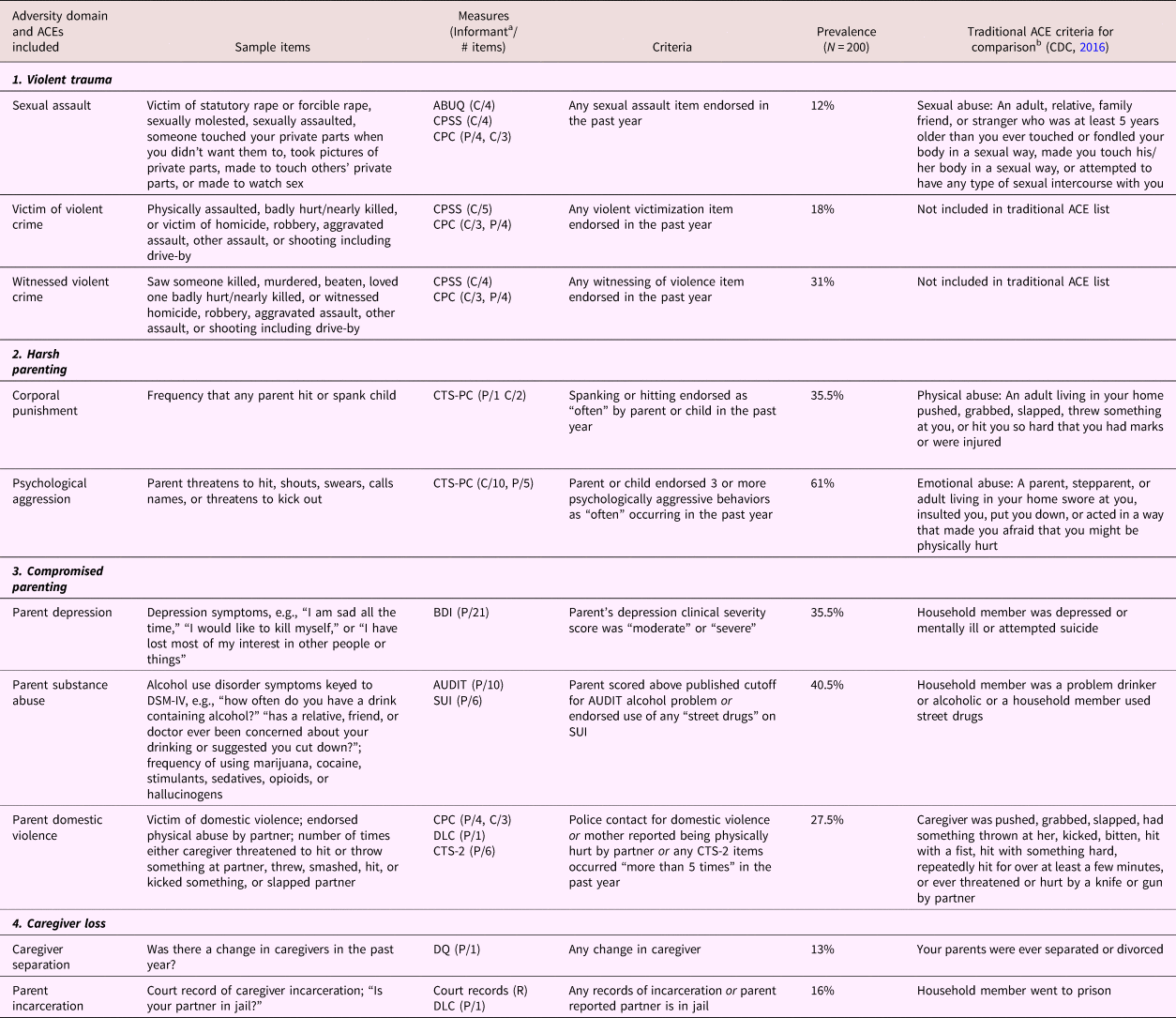
Data on childhood adversity were prospectively gathered annually from ages 8 to 17 based on self-report, parent report, and available legal records. See Table 1 for an overview of the measures, items, and criteria used to assess each domain of adversity. Ten total ACE variables were measured: five exposures (parent depression, substance use, domestic violence, caregiver separation, and parent incarceration) corresponded directly to the traditional ACE categories (Centers for Disease Control and Prevention, 2016). Measures of corporal punishment (e.g., spanking or hitting), psychological aggression (e.g., yelling), and sexual assault (by peers or adults) were collected as related proxies for the three traditional ACE categories of physical abuse, emotional abuse, and sexual abuse, respectively. Two additional experiences reflecting exposure to community violence were also included due to its relevance to this high-risk urban sample (Cronholm et al., Reference Cronholm, Forke, Wade, Bair-Merritt, Davis, Harkins-Schwarz and Fein2015). Each ACE was first coded as present or absent during each year of assessment based on criteria summarized in Table 1, and scores were summed to produce the total number of years exposed to each ACE from ages 8 to 17. An “or rule” was used when multiple informant data were available (e.g., participants were coded as exposed to an ACE if either the parent or child endorsed exposure that year). To account for study attrition, we used the proportion of years exposed to each ACE out of the total number of years the child participated in the study from ages 8 to 17 for analyses. Based on these 10 total ACEs, the present study differentiated between four subdomains of adversity based on subscales empirically identified in the full population-based sample using a principal component analysis (components with eigenvalues > 1 and item loadings > .40). Adversity scores within each subscale were summed to reflect the number and duration of adversity exposures in that subdomain, including: violent trauma (i.e., sexual assault, victim of violent crime, or witnessed violent crime), harsh parenting (i.e., corporal punishment or psychological aggression), compromised parenting (i.e., parent depression, substance use, or domestic violence), and caregiver loss/separation (i.e., caregiver separation or parent incarceration).
Adverse childhood experiences (ACEs) assessed annually from ages 8 to 17

Note: aInformant: C = child, P = parent, R = records. bCriteria for the most similar ACE from the Centers for Disease Control and Prevention (CDC) list is included for comparison. Note that the current study did not formally assess physical, sexual, or emotional abuse. Measures in alphabetical order: ABUQ, Abuse Questionnaire (Keenan, Hipwell, & Stouthamer-Loeber, Reference Keenan, Hipwell and Stouthamer-Loeber2004); AUDIT, Alcohol Use Disorders Identification Test (Babor, de la Fuente, Saunders, & Grant, Reference Babor, de la Fuente, Saunders and Grant1989); BDI, Beck Depression Inventory—II (Beck, Steer, & Brown, Reference Beck, Steer and Brown1996); CPC, Child Police Contact (Loeber, Farrington, Stouthamer-Loeber, & Van Kammen, Reference Loeber, Farrington, Stouthamer-Loeber and Van Kammen1998); CPSS, Child PTSD Symptom Scale (Foa et al., Reference Foa, Johnson, Feeny and Treadwell2001); CTS-2, Conflict Tactics Scale—Revised (Straus et al., Reference Straus, Hamby, Boney-McCoy and Sugarman1996); CTS-PC, Parent–Child Conflict Tactics Scale (Straus, Hamby, Finkelhor, Moore, & Runyan, Reference Straus, Hamby, Finkelhor, Moore and Runyan1998); DLC, Difficult Life Circumstances (Barnard, Reference Barnard1988); DQ, demographics questionnaire (study-specific); and SUI, Substance Use Inventory (White, Hipwell, & Mizelle, Reference White, Hipwell and Mizelle2002).
Prenatal IPV
During pregnancy, women were evaluated for exposure to IPV using the Conflict Tactics Scale—2 (Straus, Hamby, Boney-McCoy, & Sugarman, Reference Straus, Hamby, Boney-McCoy and Sugarman1996). Women first answered if they had romantic relationships in the past year, and women with no partners in the past year (n = 41) were coded as “no IPV.” Women with at least one partner in the past year then rated items on the frequency of exposure to any IPV on 7-point scales (0 = this never happened to 6 = more than 20 times in the past year). The Conflict Tactics Scale—2 includes subscales that have been validated in community-based samples of women (Yun, Reference Yun2011), including physical and psychological abuse across multiple levels of severity. The present study used the total psychological aggression construct as a continuous variable (sum of 8 items; e.g., “shouted or yelled at me” or “threatened to hit me”) to represent the severity of emotional IPV. Physical IPV was measured using the physical assault minor severity construct (5 items; e.g., “pushed/shoved,” “slapped,” or “twisted my arm”). Given the low frequency of physical assault items endorsed, physical assault was dichotomized to represent the presence (14.8%) or absence (85.2%) of any physical IPV in the past year.
Prenatal emotional distress
Symptoms of emotional distress were assessed using the Adult Self-Report Inventory—4 (ASRI-4; Gadow, Sprafkin, & Weiss, Reference Gadow, Sprafkin and Weiss2004), which includes DSM-IV symptoms of major depressive disorder and generalized anxiety disorder (American Psychiatric Association, 2000). Eight items corresponded to the eight symptoms of generalized anxiety disorder and were scored on a 4-point Likert scale (0 = never to 3 = very often). For depression, participants rated the frequency of DSM symptoms of major depressive disorder plus two related symptoms: low self-esteem and hopelessness. Seven symptoms were rated on the 4-point Likert scale, whereas four symptoms (change in appetite, sleep, activity, and concentration) were scored as 0.5 = absent or 2.5 = present. Scores were initially summed to form separate depression and anxiety scales (Gadow et al., Reference Gadow, Sprafkin and Weiss2004). The ASRI-4 depression and anxiety scales demonstrate convergent and discriminant validity and have been shown to differentiate between clinical and nonclinical samples (Gadow et al., Reference Gadow, Sprafkin and Weiss2004). Reflecting the frequent comorbidity between prenatal anxiety and depression, the anxiety and depression scales in the ASRI-4 were strongly correlated (r = .66, p < .05). To preserve parsimony, the scales were combined to create a total emotional distress scale.
Covariates
Severity of childhood depression and anxiety were assessed annually in childhood and adolescence based on parent and child reports. From ages 10 to 17, children and their caregivers completed the Child Symptom Inventory—4 (Gadow & Sprafkin, Reference Gadow and Sprafkin1994), a child version of the ASRI-4. Similar to the ASRI-4, parents and children rated symptoms of major depressive disorder plus two related symptoms (low self-esteem and hopelessness). Seven symptoms were rated on a 4-point Likert scale and considered present if either parent or child rated the symptom as occurring for the child “a lot” or “all the time,” whereas four symptoms (change in appetite, sleep, activity, and concentration) were answered as present or absent. We included the average number of depression symptoms from ages 10 to 17 in the analysis. Childhood anxiety was assessed from ages 8 to 17 using the Screen for Child Anxiety and Related Emotional Disorders (Birmaher et al., Reference Birmaher, Khetarpal, Brent, Cully, Balach, Kaufman and Neer1997). Parents and children rated 29 items about the child's anxiety symptoms on a 3-point Likert scale (0 = not true or hardly ever true to 2 = very true), including 9 items keyed to DSM criteria for generalized anxiety disorder. The total generalized anxiety score averaged from ages 8 to 17 was included in models of prenatal anxiety as a covariate. Posttraumatic stress disorder (PTSD) symptoms were assessed using the Child PTSD Symptom Scale (Foa, Johnson, Feeny, & Treadwell, Reference Foa, Johnson, Feeny and Treadwell2001), a 24-item scale keyed to DSM criteria for PTSD. Participants were first asked about any exposure to a traumatic event in the past year; positive endorsement of at least one traumatic event was followed up by rating the frequency of PTSD symptoms on a 4-point Likert scale (0 = not at all, 1 = once a week or less, 2 = 2–4 times a week, and 3 = 5 or more times a week). PTSD total scores from the year of pregnancy were included in analyses to covary for co-occurring PTSD. Given that ACEs are correlated with poverty (Evans, Reference Evans2004) and minority race status (Roxburgh & MacArthur, Reference Roxburgh and MacArthur2014), we coded each participant's exposure to childhood poverty, measured as the proportion of years that the family received public assistance out of the total number of years the family participated in the study from ages 8 to 17, as well as minority race (non-White) status. Age at the time of conception was approximated by subtracting 40 weeks from the woman's age at date of delivery. Education level was measured as the total number of years of schooling completed by conception. Given that women reporting no intimate partners during their pregnancy may have experienced additional stress from lack of a partner, we included presence of intimate partner as a covariate.
Data analytic plan
All analyses were conducted in Stata 13 using full information maximum likelihood estimation with robust standard errors to handle missing data. Of the 200 women in our sample, 86% had complete data, including all primary variables and covariates; most variables included in the study (e.g., all adversity and IPV variables) did not have any missing data, with variable missingness ranging from 0%–23%. Compared to other methods of handling missing data (e.g., listwise or pairwise deletion, or mean imputation), full information maximum likelihood produces significantly less biased parameter estimates and decreases Type 1 error (Collins, Schafer, & Kam, Reference Collins, Schafer and Kam2001). All adversity and IPV variables were centered prior to generating interaction terms to aid interpretation of parameter estimates.
In the first regression step, prenatal emotional distress was regressed on the linear and quadratic effects of the four adversity domains (violent trauma, harsh parenting, compromised parenting, and caregiver loss) as well as the main effects of prenatal physical and emotional IPV, controlling for childhood anxiety, childhood depression, childhood poverty, minority race, age cohort, age at conception, education level, prenatal PTSD symptoms, and presence of intimate partner as covariates. Next, we tested each adversity subdomain's interaction with physical and emotional IPV while controlling for the main effects of all other adversity domains. Given that analyses included four full models reflecting each early adversity domain, a Bonferroni correction was used to interpret the significance of results (threshold of p < .0125) to reduce the chance of Type 1 error due to multiple testing. Power analyses based on our sample size of n = 200 were conducted to aid interpretation of effect sizes (Soper, Reference Soper2019), confirming sufficient power (.80) to detect medium effect sizes (f 2 ≥ .16) at the Bonferroni-adjusted probability level of p = .0125.
Significant Early Adversity × Prenatal Physical IPV interactions were probed by examining the linear and quadratic simple slopes of the adversity variable on prenatal emotional distress for women with and without physical IPV exposure during pregnancy. Following standard guidelines for continuous moderators, significant interactions by prenatal emotional IPV were probed based on standard deviation at 0 = –1 SD (“no emotional IPV”), 1 = grand mean (“moderate IPV”), 2 = +1 SD (“high IPV”; West & Aiken, Reference West and Aiken1991). In addition, regions of significance were identified to reveal the specific threshold of the moderator (emotional IPV) in which the association between adversity and prenatal emotional distress became significant (Preacher, Curran, & Bauer, Reference Preacher, Curran and Bauer2006).
Results
Preliminary analyses
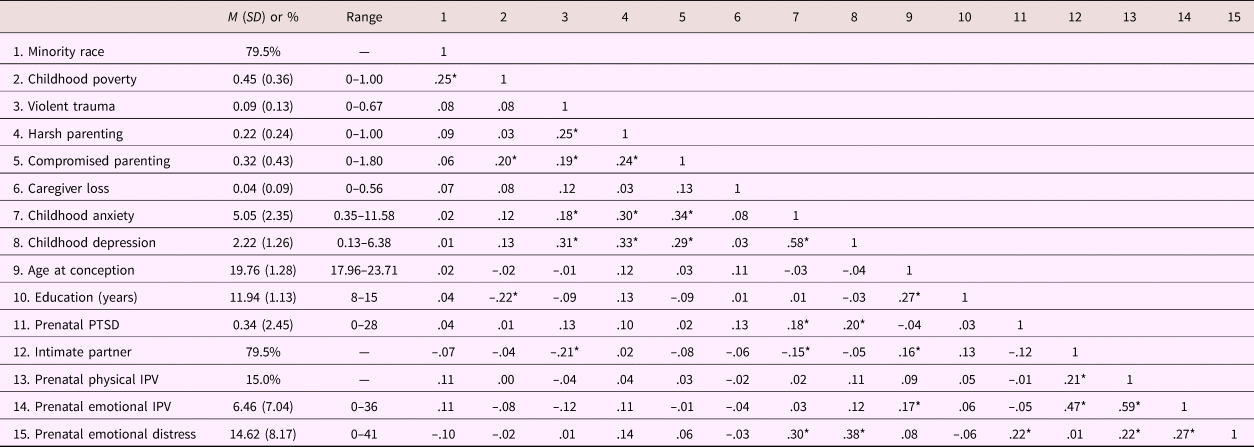
Descriptive statistics and bivariate correlations among study variables are shown in Table 2. Compared to population averages of ACEs (Centers for Disease Control and Prevention, 2016), our sample had higher rates of childhood exposure to compromised parenting (i.e., parent depression, substance use, and domestic violence). Corporal punishment and psychological aggression were more frequent in our sample compared to population rates of physical and emotional abuse, likely due to the less severe nature of our measures. Rates of traumatic sexual violence history were comparable to other studies of pregnant women with similar racial and socioeconomic backgrounds (Chung et al., Reference Chung, Nurmohamed, Mathew, Elo, Coyne and Culhane2010), although our sample included higher rates of community violence exposure. Rates of separation through parent incarceration were higher in our sample than in the general population (Centers for Disease Control and Prevention, 2016), but other forms of caregiver separation (e.g., divorce) were lower, potentially due to the high rate of single mothers in our sample. Rates of IPV during pregnancy in our sample were congruent with statistics reported in other studies (Bailey, Reference Bailey2010), but somewhat lower than some studies that focused specifically on low-income women (Alhusen et al., Reference Alhusen, Lucea, Bullock and Sharps2013; Bailey & Daugherty, Reference Bailey and Daugherty2007; Taillieu & Brownridge, Reference Taillieu and Brownridge2010). Finally, the mean score of emotional distress in our sample was slightly higher than symptom scores reported in mixed-gender community samples (Sprafkin, Gadow, Weiss, Schneider, & Nolan, Reference Sprafkin, Gadow, Weiss, Schneider and Nolan2007), which may reflect higher rates of anxiety and depression in women compared to men.
Descriptive statistics and bivariate correlations among study variables

*p < .05.
Exposure to violent trauma, harsh parenting, and compromised parenting were correlated with childhood anxiety and depression severity. Childhood anxiety and depression, in turn, were significantly correlated with prenatal emotional distress. On a bivariate level, early adversity domains were not linearly correlated with emotional distress during pregnancy, supporting the need to examine nonlinear associations and moderating effects of prenatal stress. Both physical and emotional IPV during pregnancy were significantly and positively correlated with prenatal emotional distress. Finally, none of the early adversity variables (independent variables) were associated with prenatal physical or emotional IPV (moderator variables), suggesting that significant interactions predicting prenatal emotional distress are not purely due to victims of IPV having more severe histories of adversity.
Predicting prenatal emotional distress
Physical IPV
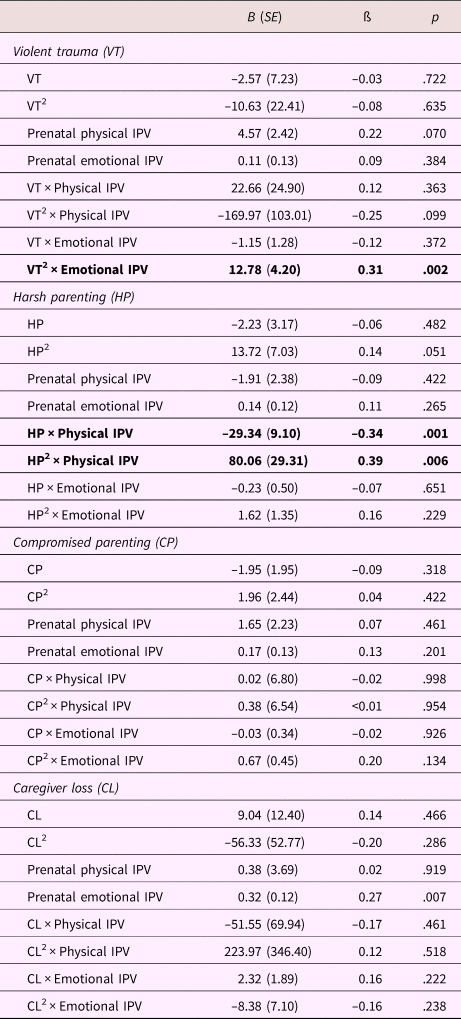
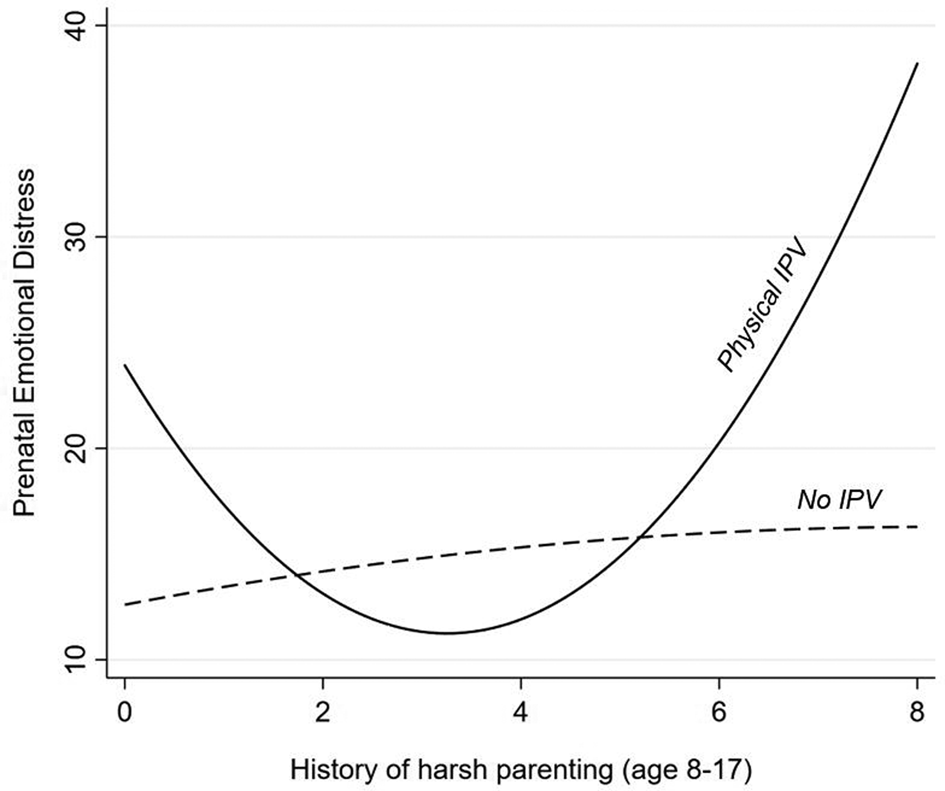
Regression results appear in Table 3. Controlling for all covariates, physical IPV significantly moderated the nonlinear association between history of harsh parenting and prenatal emotional distress (Figure 1), even after accounting for Bonferroni correction. Specifically, history of harsh parenting in childhood did not predict later prenatal emotional distress for women without concurrent prenatal physical IPV exposure (B = 1.72, SE = 8.67, p = .843), whereas history of harsh parenting was associated with prenatal emotional distress in a positive quadratic pattern for women reexposed to physical violence during pregnancy (B = 81.78, SE = 25.16, p = .001). As shown in Figure 2, stress sensitization for women reexposed to violence during pregnancy was characterized by a positive quadratic pattern, such that moderate levels of harsh parenting in childhood decreased prenatal emotional distress during pregnancy, whereas a history of frequent harsh parenting increased risk for prenatal emotional distress. The moderating effect of physical IPV was specific to the association between history of harsh parenting and prenatal emotional distress; physical IPV did not interact with history of violent trauma, compromised parenting, or caregiver loss.
Linear regressions predicting prenatal emotional distress from early adversity domains, prenatal IPV, and their interactions

Note: B, unstandardized coefficient. ß, standardized coefficient. Significant interactions after Bonferroni correction (threshold p < .0125) are bolded for emphasis. Each model included the following covariates: age cohort, minority race, childhood anxiety, childhood depression, childhood poverty, education level at conception, age at conception, presence of intimate partner during pregnancy, co-occurring PTSD symptoms during pregnancy, and other subscales of early adversity.
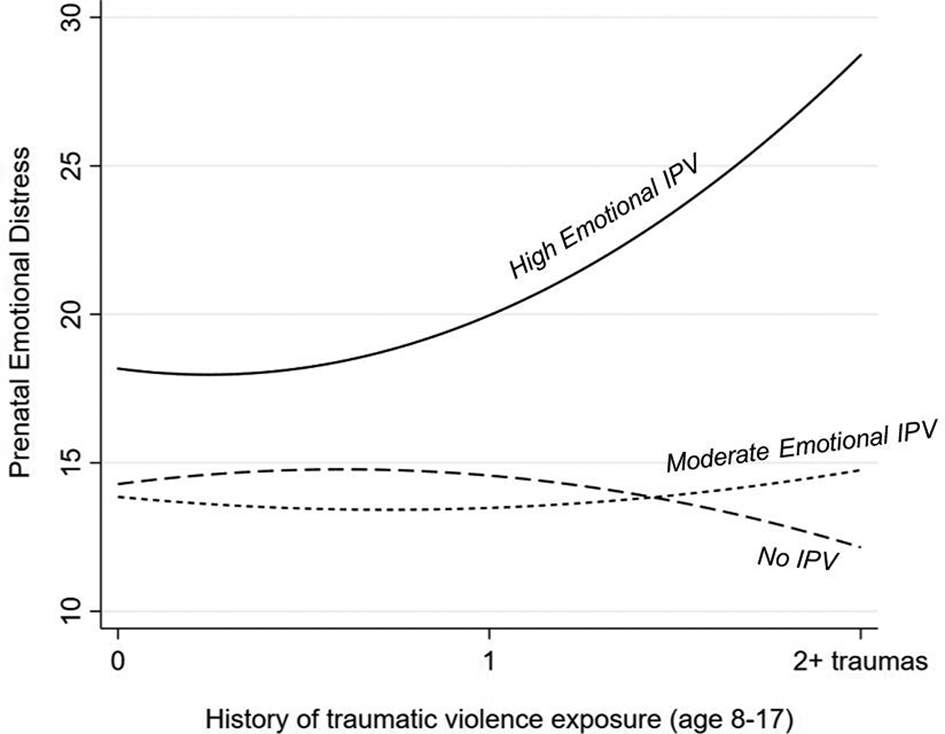
Emotional intimate partner violence (IPV) during pregnancy moderated the nonlinear association between history of traumatic violence and prenatal emotional distress. For ease of interpretability, history of traumatic violence exposure in the figure above represents the total number of traumatic exposures from ages 8 to 17 (recoded from the proportion score sums used in analyses).

Physical intimate partner violence (IPV) during pregnancy moderated the nonlinear association between history of harsh parenting and prenatal emotional distress. For ease of interpretability, history of harsh parenting in the figure above represents the total number of traumatic exposures from ages 8 to 17 (recoded from the proportion score sums used in analyses).

Emotional IPV
Emotional IPV moderated the nonlinear association between history of violent trauma and prenatal emotional distress (Figure 2). Violent trauma history increased risk for prenatal emotional distress in a positive quadratic pattern, but only for women exposed to high levels of emotional IPV during pregnancy (B = 147.60, SE = 51.44, p = .004): as history of violent trauma increased, risk for prenatal emotional distress also increased, and the rate of increase accelerated significantly for women with a history of multiple traumas. Specifically, regions of significance analyses revealed a significant nonlinear association between history of violent trauma and prenatal emotional distress for women whose emotional IPV score surpassed a score of 8 (sample mean = 6.46, SD = 7.04). In contrast, the effect of violent trauma history on prenatal distress was not significant for women exposed to average/moderate levels of emotional IPV (B = 22.54, SE = 22.22, p = .310). For women with no emotional IPV exposure during pregnancy, history of violent trauma was associated with prenatal anxiety in a negative quadratic pattern (B = –.102.51, SE = 42.54, p = .016), although changes in emotional distress were minimal from a clinical significance perspective (Figure 2). None of the other early adversity subdomains (i.e., harsh parenting, compromised parenting, or caregiver loss) had a main effect nor interacted with emotional IPV to predict prenatal emotional distress.
Discussion
In a community-based sample of pregnant women assessed annually since childhood, this study investigated how exposure to physical and emotional IPV during pregnancy influenced the association between maternal history of adversity and later vulnerability to emotional distress during pregnancy. Whereas most studies of prenatal health focus exclusively on stressors during the pregnancy period, our study was guided by a life span model of pregnancy health and integrated both current stressors (physical and emotional IPV) and history of adversity (Misra et al., Reference Misra, Guyer and Allston2003). To reflect prevailing theories of stress sensitization, we modeled both linear and nonlinear effects of adversity (Boyce & Ellis, Reference Boyce and Ellis2005; Del Giudice et al., Reference Del Giudice, Ellis and Shirtcliff2011), differentiated between subdomains of adversity (McLaughlin & Sheridan, Reference McLaughlin and Sheridan2016), and rigorously controlled for potential confounding factors, including history of poverty and childhood psychopathology. Several key findings emerged that were partially supportive of hypotheses. Consistent with hypotheses, the associations between history of adversity and prenatal emotional distress were moderated by prenatal IPV, supporting a life span conceptualization of pregnancy health. Patterns of interactions were best characterized by nonlinear patterns and generally consistent with theories of adaptive calibration (Boyce & Ellis, Reference Boyce and Ellis2005; Del Giudice et al., Reference Del Giudice, Ellis and Shirtcliff2011), such that moderate early stress appeared associated with a “steeling effect” whereas more extreme and traumatic stress magnified sensitivity to stress during pregnancy. However, results diverged based on the subdomain of early adversity (e.g., threat vs. loss) and type of IPV.
Two aspects of the early adversity results were notable. First, although early adversity was significantly correlated with childhood anxiety and depression, none of the early adversity variables directly predicted prenatal emotional distress symptoms after accounting for childhood symptoms, demographic characteristics, and IPV exposure during pregnancy. Instead, early adversity only predicted later prenatal emotional distress when this vulnerability was “activated” by later traumatic stress exposure during pregnancy. These results are consistent with psychophysiological studies of stress showing that the effects of early adversity on cortisol are more apparent during acute phases of the stress response (i.e., peak and recovery phases of lab-based stress tasks) versus baseline hypothalamic–pituitary–adrenal axis functioning (e.g., resting cortisol; Bunea et al., Reference Bunea, Szentágotai-Tătar and Miu2017). Results also point to the importance of considering patterns of stress continuity and discontinuity from preconception through pregnancy when evaluating risk for prenatal emotional distress. Given that most studies of prenatal health focus on stressors at single time points, our findings highlight a need to examine environmental stress from a more dynamic perspective, considering the interplay between past and current environment.
Second, patterns of interactions differed between subdomains of adversity, such that significant interactions were specific to threat-based adversity (i.e., harsh parenting and traumatic violence), but did not generalize to experiences of caregiver loss/separation or exposure to compromised parenting. Specifically, history of harsh parenting and violent trauma predicted prenatal emotional distress only for women reexposed to prenatal physical and emotional violence, respectively. Overall, these results are consistent with emerging literature indicating that different domains of adversity have unique influences on stress neurobiology (McLaughlin & Sheridan, Reference McLaughlin and Sheridan2016). Given that the present study focused specifically on threat during pregnancy (physical and emotional IPV), the specificity of the sensitization effects to childhood threat experiences may reflect a domain-specific pattern of stress sensitization. Most studies of early adversity conceptualize stress along a single dimension ranging from low to high severity, but the physiological stress response includes general- as well as stimulus-specific pathways (Vogel & Wagner, Reference Vogel and Wagner2005). Individuals may be more likely to respond to adult stressors that resemble stressful events that were experienced in childhood, potentially through stimulus-specific social learning processes and/or the shaping of domain-specific schemas through early experience (Baldwin, Reference Baldwin1992; Baldwin & Meunier, Reference Baldwin and Meunier1999; Pine et al., Reference Pine, Mogg, Bradley, Montgomery, Monk, McClure and Kaufman2005). Although no studies to our knowledge have tested domain-specific patterns of stress sensitization during pregnancy, our results are consistent with a recent longitudinal study of African American men and women that found childhood adversity to interact with adult adversity in a domain-specific fashion: childhood experiences of harsh parenting heightened the association between adult exposure to intimate partner hostility and chronic inflammation, whereas childhood discrimination specifically heightened inflammation responses to adult discrimination (Simons et al., Reference Simons, Woodring, Simons, Sutton, Lei, Beach and Gibbons2019). These domain-specific patterns of stress sensitization may be particularly heightened during pregnancy, when emotions are influenced by rapid changes in reproductive hormones that directly influence maternal sensitivity to stress (Brummelte & Galea, Reference Brummelte and Galea2010). Follow-up studies are needed to elucidate the specific physiological mechanisms underlying our results and to examine if patterns differ during the sensitive period of pregnancy.
Within the threat domain of adversity, patterns of interactions differed between severe traumatic threats (e.g., sexual assault or violent victimization) and more common experiences of harsh parenting (corporal punishment or psychological aggression). Starting at the lower end of the threat severity spectrum, harsh parenting was only associated with prenatal emotional distress for women reexposed to physical violence during pregnancy. For these women, moderate levels of harsh parenting in childhood was associated with slightly lower levels of emotional distress during pregnancy, whereas a history of frequent and chronic harsh parenting increased risk for prenatal emotional distress. These curvilinear results are consistent with the adaptive calibration model (Del Giudice et al., Reference Del Giudice, Ellis and Shirtcliff2011), in which mild to moderate stress in childhood appears to buffer later sensitivity to stress in adulthood through a “steeling effect” (Rutter, Reference Rutter2012). It is important to highlight that our results are specific to prenatal emotional distress (anxiety and depression symptoms). It is unclear if this steeling effect generalizes to other health outcomes. For example, some evidence suggests that there may be a physiological cost to adaptation and resilience, such that individuals who exhibit high psychosocial competence and few adjustment problems despite socioeconomic risk also have higher levels of allostatic load, a measure of physiological “wear and tear” on the body (Brody et al., Reference Brody, Yu, Chen, Miller, Kogan and Beach2013) . More research is needed to elucidate the mechanisms underlying the steeling effect observed in our study.
When examining the severe end of the threat domain, history of traumatic violence, reexposure to emotional IPV (but not physical IPV) uniquely moderated vulnerability to emotional distress during pregnancy in a pattern consistent with stress sensitization theory. Specifically, the association between childhood trauma and prenatal emotional distress was significant only for women with a score above 8 (out of a maximum possible score of 48) on the emotional IPV scale. This was a relatively modest level of stress in our sample (only 2 points above the sample mean) suggesting that even a moderate level of verbal or psychological abuse from an intimate partner can activate stress sensitization effects from childhood exposure to traumatic violence. Furthermore, effects were nonlinear, such that risk for emotional distress accelerated rapidly for women with a history of multiple traumatic events. This was significant even after accounting for childhood history of anxiety and depression as well as co-occurring PTSD symptoms during pregnancy. These results highlight the importance of screening for a history of violent traumas as well as current exposure to emotional IPV during pregnancy. Compared to physical IPV, emotional IPV is greatly understudied, despite being more prevalent (Smith et al., Reference Smith, Zhang, Basile, Merrick, Wang, Kresnow and Chen2018). Our findings are consistent with some studies reporting that emotional IPV is more closely linked to depression symptoms than physical IPV (Martin et al., Reference Martin, Li, Casanueva, Harris-Britt, Kupper and Cloutier2006; Pico-Alfonso et al., Reference Pico-Alfonso, Garcia-Linares, Celda-Navarro, Blasco-Ros, Echeburúa and Martinez2006), and further suggest that this may particularly be the case for women with a history of traumatic sexual or physical violence.
The results of this study should be interpreted in the context of several study limitations. IPV and prenatal emotional distress were measured concurrently, precluding temporal conclusions, although we did control for history of anxiety and depression as covariates to increase specificity to the pregnancy period. IPV and prenatal psychopathology likely reciprocally influence each other (Kessler, Molnar, Feurer, & Appelbaum, Reference Kessler, Molnar, Feurer and Appelbaum2001), and future studies employing cross-lagged models of both constructs across a shorter time frame will help shed light on their association during the prenatal period. In addition, although our study prospectively measured a variety of ACEs typically included in previous studies, measures of physical and emotional neglect were unavailable, and thus we cannot speak to the impact of early deprivation (McLaughlin & Sheridan, Reference McLaughlin and Sheridan2016). Furthermore, whereas other studies have focused on severe exposures to physical and sexual abuse, our measure of harsh parenting included a range of exposures including more common experiences (e.g., spanking), and our measure of sexual assault included any sexual violence (vs. being specific to sexual abuse by a family member); future studies must further differentiate between these factors when examining nonlinear effects of early adversity. Of note, although the adversity variables measured in our study were not correlated with prenatal IPV, other studies have reported links between severe adversity (e.g., maltreatment) and later risk for IPV (Castro, Peek-Asa, García, Ruiz, & Kraus, Reference Castro, Peek-Asa, García, Ruiz and Kraus2003; Huth-Bocks, Krause, Ahlfs-Dunn, Gallagher, & Scott, Reference Huth-Bocks, Krause, Ahlfs-Dunn, Gallagher and Scott2013). Future studies that include more specific measures of child abuse and neglect may find direct associations with prenatal IPV and can test alternative frameworks (e.g., prenatal IPV as a mediator between adversity and prenatal distress). In interpreting our results, it is important to note that our study focused on a relatively high-risk sample of young perinatal women. Although the focus on this understudied population is a strength of our study due to their elevated risk for prenatal health problems, our results may not generalize to other samples of women (e.g., older pregnant women or higher SES samples). Similarly, because we used a DSM-keyed measure of depression and anxiety symptom severity, our results may not capture effects of adversity on nonclinical measures of mood and anxiety. Finally, although our findings are consistent with theoretical models implicating a steeling effect of moderate harsh parenting exposure on later vulnerability to emotional distress, more work is needed before conclusions can be made about the implications of this profile. It is unclear from our study if stress-related adaptations to severe early adversity led to “inoculation” to later stressors during pregnancy (Rutter, Reference Rutter1987), or if this effect was accompanied by other social-emotional, behavioral, or physical health costs. Resilience is a dynamic process, and what appears to be protective in one context may not represent resilience in other contexts or for other outcomes (Rutter, Reference Rutter2006; Wood & Bhatnagar, Reference Wood and Bhatnagar2015). More studies that consider the dynamic nature of stress and characterize global outcomes are needed to better understand the implications of these individual differences in emotional distress during pregnancy.
Author ORCIDs
Irene Tung, https://orcid.org/0000-0003-1263-066X
Acknowledgments
Special thanks go to the families of the Pittsburgh Girls Study for their participation in this research, and to our dedicated research team for their continued efforts.
Funding Statement
This project was supported by funded through National Institute of Mental Health Grants MH056630 and MH071790, Eunice Kennedy Shriver Institute of Child Health and Human Development Grant HD067185, and National Institute of Drug Abuse Grant DA012237. During the preparation of this manuscript, further support was provided by National Institute on Alcohol Abuse and Alcoholism Grant T32AA00745 (to I.T.).