INTRODUCTION
In the wake of the COVID-19 global pandemic, executives across the fifty United States and the federal government issued emergency declarations. From Arizona, where Governor Doug Ducey issued a declaration on March 11, 2020, to Wisconsin, where Governor Tony Evers declared a health emergency the very next day, governors across the country took bold executive action to confront the novel coronavirus (National Conference of State Legislatures 2020). States have broad police power to protect the health and safety of their populations in the face of public health emergencies and other public health threats (Jacobson, Chrysler, and Bresler Reference Jacobson, Denise, Jessica, Burris, de Guia, Lance Gable, Levin and Terry2020). But what exact measures state executives have available to respond to public health emergencies—for example, waiving provider licensing requirements, procurement and rationing of medical supplies, timing and extent of delegation of powers to public health agencies—depends on the laws on their books.
In the United States’ federal system, public health law is a patchwork. The federal government and its agencies, like the Centers for Disease Control and Prevention (CDC), do not have the power to directly impose infectious disease policy in states. Thus, in the decades before the coronavirus outbreak, reformers in the federal government, as well as non governmental organizations, legal scholars, and state health practitioners, grew concerned about the antiquated and piecemeal nature of state public health law and the danger that it posed to adequate state response to future public health threats (Committee for the Study of the Future of Public Health 1988; Gostin, Burris, and Lazzarini Reference Gostin, Scott and Zita1999). Reformers embraced model law development as one way to encourage states to adopt a more robust and consistent approach to organizing their public health authority and protecting individual rights. For example, with the support of the CDC, legal scholars developed the Model State Emergency Health Powers Act (Emergency Powers Act) in 2001, which allocated emergency powers to state governors to confront public health emergencies (Gostin Reference Gostin2002).Footnote 1 Arizona, Wisconsin, and dozens of other states adopted the Emergency Powers Act in whole or in part and were able to draw on the statute nearly two decades later during the COVID-19 pandemic (Hodge Reference Hodge2006).
The development of model public health laws like the Emergency Powers Act—exemplary statutes that states can choose to adopt either in whole or in part—is one prominent strategy that reformers use to improve and promote a more uniform approach to infectious disease control, and public health law more generally, across the fifty states. A wide diversity of organizations have drafted more than one hundred model public health laws for state adoption since 1907 (Hartsfield, Moulton, and McKie Reference Hartsfield, Moulton and McKie2007). The development of model public health laws often reflects reform-oriented, standard-setting goals in addition to the desire to promote some consistency across states. Reformers convene experts and representatives of interest groups as model law drafting groups to promote the model legislation that they hope states will adopt. But these expert-written model laws are produced outside of legislatures and in the context of fundamental scientific uncertainty about both the precise nature of future public health threats and the effectiveness of public health measures, raising a critical research question that is taken up here: how do developers secure the legitimacy of their model statutes?
In this study, I conceptualize the development and promulgation of model public health laws as a form of legal standardization. I utilize qualitative social science methods—interviews as well as the analysis of archival records and participant observation—to investigate how model law developers work to secure the legitimacy of their products and to assess their success. I examine the development of four related and partially overlapping model public health laws, including the Emergency Powers Act, produced in part by the same legal academic research center between 1999 and 2007. I find that developers used a number of strategies to promote the legitimacy of the model public health laws that they produced. They relied on forms of legal expertise—expert judgment, expert drafting, statutory research—as alternatives to empirical evidence to secure a model law’s technical legitimacy. To promote a model law’s political legitimacy, they emphasized the disinterestedness, representativeness, and transparency of the drafting process, and they built flexibility into model laws themselves. I argue that, despite sharing some content and being produced in part by the same organization, the four model laws examined in this study had varying degrees of success in obtaining legitimacy, as indicated by levels of internal disagreement in drafting groups, external controversy, and their ultimate adoption. In the final section of the article, I propose some possible explanations for these differences.
By applying the science and technology studies (STS) literature on standardization to model lawmaking, this study contributes to the existing socio legal literature on model laws by offering fresh insight into how model law developers work to leverage alternative forms of expertise present in drafting groups and negotiate the demands of the ultimate adopters—the state legislatures—to secure both the technical and political legitimacy of their model laws. In doing so, I demonstrate how, even in the context of scientific uncertainty, these weakly positioned standardizers are able to achieve legitimacy—albeit fragmented—for their model laws. Breaking open the “black box” of these legal standardization efforts also permits greater understanding of the scientific underpinnings (or lack thereof) of the substantive law currently being mobilized in response to COVID-19 and other public health threats of recent years.
MODEL LAWS IN THE SOCIO LEGAL LITERATURE
Since the late nineteenth century, various organizations have drafted hundreds of model laws in an effort to promote legal standardization across states. The most famous model laws—the Model Penal Code and the Uniform Commercial Code (UCC)—have enjoyed wide adoption in states. Uniform laws differ from model laws in that they are written with the explicit intention of nationwide, uniform adoption, often by dedicated drafting organizations. In contrast, a wider swath of organizations and actors have drafted model laws that are intended to serve as more flexible templates for state legislatures. Public health legal reformers are generally more likely to embrace the “functional equivalence” that model laws offer rather than pursue the strict conformity of uniform laws (Hartsfield, Moulton, and McKie Reference Hartsfield, Moulton and McKie2007, S1). Both types of laws, however, are dedicated to a central purpose—to improve state law—and both rely on voluntary adoption by state legislatures.
Legal historians have demonstrated that the development of the first model statutes at the turn of the twentieth century was a response to a sense of growing uncertainty and complexity in American law (Hull Reference Hull1990, 57; White Reference White1997, 2). Scholars have read the founding of the American Law Institute in 1923, the organization that produced the Model Penal Code and helped produce the UCC, as a triumph of modernist jurisprudence. The law, according to the American Law Institute’s founders, needed to be shaped by elite legal experts (White Reference White1997, 3). Despite these legal standardization organizations emerging in the same historical moment as other standardization organizations, like industrial standards-setting bodies, socio legal scholars studying model laws have not linked their development with the broader phenomenon of standardization that emerged in the late nineteenth century (Higgins and Hallström Reference Higgins and Kristina2007, 688).
The most sustained scholarly treatment of model laws produced in the United States centers on a particular subtype: commercial model laws. The focus on commercial model laws by scholars and model lawmaking organizations is not particularly surprising; the requirement of some level of legislative uniformity has long been recognized to be a precondition for the functioning of the “modern economy” (Rheinstein Reference Rheinstein, Shils and Rheinstein1954, li). In this area of the literature, scholars have also been engaged in questions of legitimacy. Kathleen Patchel (Reference Patchel1993), for example, argues that interest groups have played an outsized role in the creation of the UCC, pointing to one dominant way that the legitimacy of model laws can be challenged. Provocatively, she contends that the “uniform laws process, as currently structured, is almost custom-made for drafting and enactment of pro-business legislation” (88). Scholars have neglected, however, to evaluate the production and legitimacy of legal standardization efforts in other domains, such as public health, where there also are significant reasons to pursue uniformity (albeit not as lucratively). In public health, for example, the legitimacy of a model law may be more likely to be challenged on the grounds that it is not adequately based on evidence or that it relies on a too-narrow group of technical experts rather than that its development was overly influenced by industry groups.
Socio legal scholars engaged with issues of international governance have devoted more attention to model laws and are more apt to conceptualize model laws as a form of legal standardization than are US-focused scholars. However, they also do not analyze the development or reception of model laws as being analogous to other types of standardization processes. In this area too, there is an emphasis on the development of commercial model laws, produced in response to the global consolidation of markets (Pistor Reference Pistor2002, 97). In the transnational context, model laws are referred to, somewhat interchangeably, as “global norms” or “soft law” and, importantly for our purposes, “standards.” For example, Terence Halliday and Bruce Carruthers (Reference Halliday and Carruthers2007), in their study of global bankruptcy law, refer to model laws as part of the broader body of global norms produced primarily by powerful international financial organizations. They suggest that the legitimacy of international bankruptcy legal standards depends, in part, on their development by representative and deliberative global bodies, as opposed to being perceived as the work of a few experts (1185).
Katharina Pistor (Reference Pistor2002) has also critically examined the proliferation of legal standards, of which model laws are one type, in international trade harmonization efforts. She argues that global legal standards are produced to harmonize international trade law and reduce transaction costs and, together, act as “a vehicle for building the legal architecture of global markets” (97). She questions the legitimacy of global model laws in the financial arena by suggesting that such legal instruments may undermine the development of effective legal systems in low-income countries (98). However, in contrast to the approach taken here, Pistor distinguishes the global “legal standards” that she examines from other types of standards—that is, “quality and product standards” (97). In this way, existing scholarship fails to take full advantage of the similarities between legal standards such as model laws and other types of standards. As I demonstrate in the following section, there is much to be gained by placing model laws in the broader social phenomenon of standardization.
MODEL LAWS AS A FORM OF LEGAL STANDARDIZATION
Social theorists have long recognized the increasing standardization of people, practices, and things as a central feature of modernity. Scholars have demonstrated how the standardization of human populations and the environment enabled the formation of the modern nation-state (Scott Reference Scott1999); how the standardization of measures, time, goods, industrial practices, and technology facilitated the global spread of capitalist markets and institutions (Kula Reference Kula, Szreter and Princeton1986; Giddens Reference Giddens1990; Harvey Reference Harvey1991; Cronon Reference Cronon1992); and how discipline, a modern form of social power, normalizes the social body through the standardization of education, labor, and health (Foucault Reference Foucault1995; Sauder and Espeland Reference Sauder and Wendy2009).
The development of model laws—which, when adopted, make legal routines and procedures more consistent across time and space—may be considered one facet of the rationalization, systematization, and codification of law that Max Weber (Reference Weber, Shils and Rheinstein1954, 304–5, 314–15) observed in the West. But because Weber’s interest in contemporary Anglo-American law centered on the differences between its common law tradition and the continental, code-based modes of legal thought, his description of the formal rationalization of law focuses on the rationalization of the content of law (that is, the systematization and codification of legal concepts) and legal procedures (that is, deductive reasoning by judges) and fails to fully capture the phenomenon of statutory legal standardization through model lawmaking (304, 315).
Empirical standardization scholarship cuts across multiple academic fields. Organizational studies scholars have examined cycles of technological change and the emergence of industry standards, or “dominant designs,” among fields of rivals (Abernathy and Utterback Reference Abernathy and Utterback1978; Anderson and Tushman Reference Anderson and Tushman1990). Economists also have studied the path-dependent de facto selection of technical standards in the marketplace as well as the de jure promulgation of standards by regulators and standards-setting bodies (David and Greenstein Reference David and Greenstein1990). Socio legal scholars have drawn on these literatures in their study of the emergence of standardized “boilerplate” contract terms (Kahan and Klausner Reference Kahan and Michael1997; Suchman Reference Suchman2003). In the interdisciplinary literature of STS, there has also been strong theoretical and empirical interest in the social processes of standardization (Brunsson and Jacobsson Reference Brunsson, Brunsson and Jacobsson2002; Lampland and Star Reference Lampland and Susan2009; Timmermans and Epstein Reference Timmermans and Steven2010; Busch Reference Busch2011; Merry Reference Merry2016). STS scholars have empirically examined standards at various stages of their development, reception, and implementation. Research in both STS and organizational studies has critically engaged with questions regarding both the legitimacy of standards themselves (Higgins and Hallström Reference Higgins and Kristina2007, 686–87) as well as the legitimacy they confer on sponsoring (Castel Reference Castel2009, 746) and adopting organizations (DiMaggio and Powell Reference DiMaggio and Powell1983, 151).
Different scholars define the term differently, but, across many accounts, model laws seem to fit the “standard” standard mold. Nils Brunsson and Bengt Jacobsson (Reference Brunsson and Bengt2002) argue that standards are a form of rules, and standardization is a form of social regulation. Standards, they contend, differ from other types of rules—namely, directives and norms—in that, critically, they are “voluntary” (1). Lawrence Busch (Reference Busch2011, 13) writes that standards “are means for partially ordering people and things so as to produce outcomes desired by someone.” Model laws, which function as a template for legislators to configure statutes, and, thus, the rights, powers, and duties provided for within, meet these basic definitions of standards. But, just as Nils Brunsson (Reference Brunsson, Brunsson and Jacobsson2002, 33) notes that standards are not always completely voluntary and, in fact, may be more binding or coercive, model laws also may be attached to third parties with authority (and/or funding) that make their uptake more compelling. Like other standards, model law development is tightly linked to experts and expertise (Jacobsson Reference Jacobsson, Brunsson and Jacobsson2000, 40; Busch Reference Busch2011, 269) and to the project of “modernity” more broadly (Brunsson and Jacobsson Reference Brunsson and Bengt2002, 2; Lampland and Star Reference Lampland and Susan2009, 10; Busch Reference Busch2011, 1). This is not to say that model laws do not differ from product standards in important ways; indeed, regulators and private parties may compel the uptake of industrial standards (see, for example, David and Greenstein Reference David and Greenstein1990) in a manner that cannot be imposed on state actors considering model legislation. Nevertheless, based on these characteristics, model laws can be productively conceived of as standardization projects.
What leverage does analyzing model lawmaking as a form of standardization provide? This framework sensitizes us to a number of dimensions of model laws critical for understanding both their emergence and their impact. First, treating model laws as standards immediately brings questions surrounding the relationship between expertise and political authority into the analysis. Model laws, like other standards, are hybrid techno-political projects. Although they may appear as “apolitical” products of technical experts, by helping to govern social life, standards have a politics (Thévenot Reference Thévenot2009, 805; Timmermans and Epstein Reference Timmermans and Steven2010, 70; Merry Reference Merry2016, 19–20). Bengt Jacobsson (Reference Jacobsson, Brunsson and Jacobsson2000, 47) warns, for example, that expert knowledge and expert solutions to social problems are rarely politically neutral. By thinking about model laws as a form of legal standardization, akin to other forms of standardization, it becomes clear why the technical quality, or the “scientificity,” of model laws may help them achieve legitimacy, in addition to more political considerations such as whether they were produced by a representative, disinterested, transparent standards-setting body.
Although there is a growing recognition of the many useful applications of STS in law and society research (see Cole and Bertenthal Reference Cole and Bertenthal2017), neither model public health laws nor model laws in general have been studied as standards comparable to those in other fields such as commerce or medicine. This study fills this gap by analyzing model lawmaking using concepts drawn from the STS literature on standardization to explain how developers leverage both scientific and legal expertise to achieve technical and political legitimacy for their products.
THE PRESENT STUDY
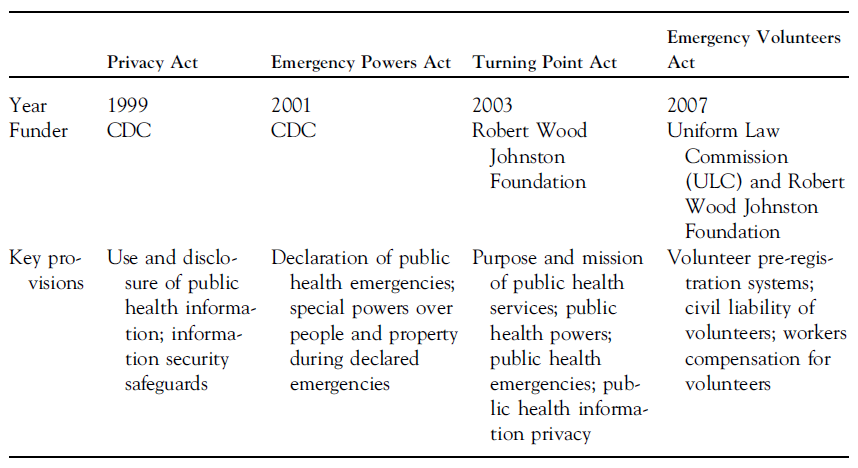
This study examines the development of four model public health laws produced by a CDC-funded academic organization, the Center for Law and the Public’s Health (CLPH), at Johns Hopkins University and Georgetown University.Footnote 2 These four laws include the 1999 Model State Public Health Privacy Act (Privacy Act), which facilitates state public health agencies’ collection of health and safeguards individuals’ privacy; the 2001 Model State Emergency Health Powers Act (Emergency Powers Act), which grants state governors and health agencies additional powers to respond to public health emergencies while protecting individual rights; the 2003 Turning Point Model State Public Health Act (Turning Point Act), which comprehensively defines the mission, powers, and limits of state public health activities, including provisions for health privacy and emergencies; and the 2007 Uniform Volunteer Emergency Health Practitioners Act (Emergency Volunteers Act), which facilitates the deployment of volunteer licensed health practitioners to respond to emergencies in part by limiting their civil liability (Center for Law and the Public’s Health 2010).Footnote 3 The sponsors and key provisions of the model laws included in this study are summarized in Table 1.
Summary of model laws included in this study

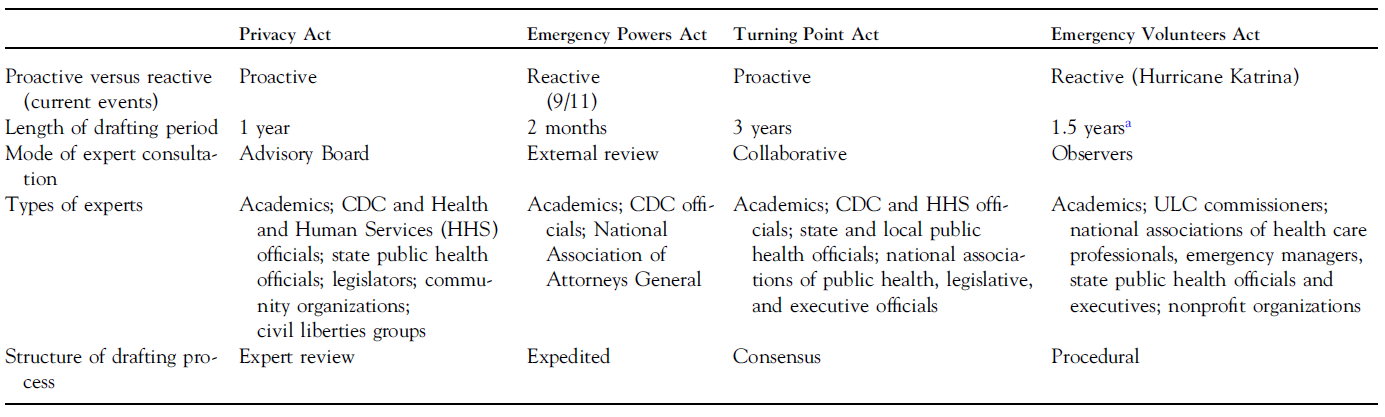
Although the four model laws included in this study were largely written by the same two people—public health law professors Lawrence Gostin and James Hodge—the configuration of their drafting teams and processes, which are summarized in Table 2, differed in important ways. For example, the developers of the CDC-sponsored Privacy Act convened a highly diverse internal advisory board, which included state legislators, representatives from the federal government, a wide range of scholars, as well as organizations with experience in HIV/AIDS patient advocacy like the Gay Men’s Health Crisis, AIDS Action Council, and Lambda Legal (Gostin and Hodge Reference Gostin and Hodge1999). In contrast, the Emergency Powers Act was rapidly drafted by a much smaller group of legal academics in the wake of the 9/11 terrorist attacks and utilized an external expert review structure, with the first draft posted publicly for comment, leading to a subsequent revision (Annas Reference Annas2002; Gostin et al. Reference Gostin, Sapsin, Teret, Scott, Julie Samia, Hodge and Vernick2002). The Turning Point Act, sponsored by the Robert Wood Johnson Foundation, the nation’s largest public health philanthropy organization, was drafted over three years in collaboration with a large group of stakeholders, including local and state health officials, and was marked by a consensus-driven approach (Meier, Hodge, and Gebbie Reference Meier, Hodge and Gebbie2009). The Emergency Volunteers Act was drafted in response to Hurricane Katrina by the storied uniform law-producing body, the Uniform Law Commission (ULC), which places great emphasis on national representation of its commissioners and technical drafting procedures and utilizes a system of expert observers (Hodge, Pepe, and Henning Reference Hodge, Pepe and Henning2007). In the online supplementary material, I provide a thicker description of the model laws included in this analysis.
The development processes of four model public health laws

Note:
a The bulk of the Emergency Volunteers Act drafting took place in six months (February–July 2006). However, there were additional amendments added in 2007, so the final version was released one and a half years after drafting began.
These model laws were selected for a number of reasons. First, because public health law is an interdisciplinary field drawing on scientific, medical, epidemiological, and legal scholarship, the creation of model public health laws provides a particularly rich case for examining how expertise and scientific evidence are used in statutory standardization efforts to secure legitimacy. Model public health law developers working in epidemiological or medical epistemic cultures have the added expectation that standards be based on empirical scientific evidence, but they have a very limited evidence base on the relative effectiveness of various legal provisions on which to draw. Second, three of the model laws studied here were unusually “successful” with regard to adoption in that a number of states adopted some or all of their provisions; this makes them unusually impactful model state laws in the traditional sense. Third, the four model public health laws include all of the model law efforts undertaken by the CLPH. Because the model laws’ substantive content and the membership of their expert drafting committees and advisory committees overlap, studying only a subset of them would risk generating an incomplete picture of the strategies that developers used to secure their legitimacy. Nevertheless, it is important to note that the model public health laws included in this study are a convenience sample and were not selected to be representative of all model public health laws.Footnote 4
METHODS
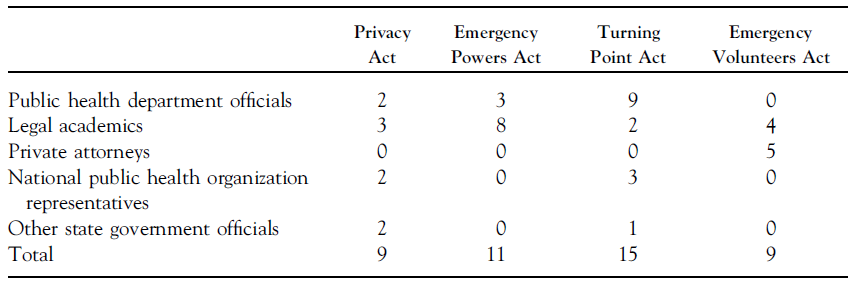
I use interview, archival, and ethnographic methods to elucidate the strategies that developers used to secure the legitimacy of their model laws and evaluate their success. In the first phase of the research process, I reviewed primary source documents relating to the model laws.Footnote 5 Individuals named in these documents as either authors of the laws, drafting committee members, or review committee members were compiled into a central database for interview recruitment. In addition, scholars and public figures who wrote or spoke out publicly about any of the model laws (for example, in newspaper or scholarly articles) were also recruited for interviews. Of the fifty-three recruitment letters sent, thirty-four people consented to participate. The Northwestern University Institutional Review Board reviewed the research protocol and determined that the study was exempt from human-subjects review. Interviews with participants took place in person and over the phone and Skype and lasted for approximately sixty minutes. Several participants were involved in more than one of the model law drafting projects. See Table 3 for a breakdown of the interview participants by model law and professional background.
Interview participants

All interviews were conducted with a semi-structured interview guide and, with the participants’ permission, were audio recorded and transcribed. Participants were asked to recount their experiences working on the model law(s), to reflect on model public health laws more generally (for example, their utility, their effectiveness, and so on), and about what advice they would give a group of people who wanted to write a model law. Consistent with a grounded-theory approach (Bryant and Charmaz Reference Bryant and Kathy2007), I inductively generated a 102-item coding scheme and systematically coded each interview using the qualitative analysis software program Atlas.ti (version 7). Umbrella substantive and theoretical codes covered a range of developers’ possible legitimation strategies and assessments of their products’ success—for example, “science,” “expertise,” “drafting procedures,” “controversy,” and “adoption.” Moreover, to further evaluate the role that model laws play in contemporary public health law academic and practitioner discourse, I reviewed the existing secondary literature on the model laws and conducted ethnographic observations of the 2014 National Public Health Law Conference. Although no session or speech focused exclusively on one of the four model laws included in this study, they were mentioned multiple times throughout the meeting.
FRAGMENTED LEGITIMACY IN MODEL PUBLIC HEALTH LAWMAKING
Many different groups of people have a stake in the outcome of public health legal standardization efforts. The multiple audiences for a given model law—the drafting groups themselves, the external academics not involved directly in drafting, the funding organizations, the community groups, the practitioners in the field, and the state legislators—are all capable of conferring legitimacy. Part of the trouble that the developers of the model public health laws face is creating a product that is acceptable to such a diverse audience overall as well as within certain categories (for example, legal scholars versus public health scholars; attorney generals versus public health department heads; left- versus right-leaning politicians). As with other standardization efforts, developers wanted their standards to be accepted as technically legitimate (that is, expert, state-of-the-art, scientific, and/or modern) as well as politically legitimate (that is, objective, representative, and deferent to elected legislators) by all or at least some of these audiences.Footnote 6
In the following sections, I first explore the strategies that the developers of four model public health laws used to overcome these challenges and assert both the technical and political legitimacy of their products. Next, I analyze the outcome of these efforts by looking at the extent to which the four model laws were accepted as legitimate among the core drafting group members, outside experts and the public at large, and by state legislatures.
Technical Legitimacy with Limited Evidence: Expert Judgment, Expert Drafting, and Statutory Data
Legal standardization efforts are closely bound up with the notion of reform and of improving state law in some substantive or technical way. How the technical legitimacy of a model public health law is evaluated, however, depends on the audience. Public health scholars and practitioners may question whether the model law adequately promotes population health. A legal audience, on the other hand, might ask whether the model law is drafted in a way that is clear and enforceable or whether it is consistent with constitutional standards. In this subsection, I examine the strategies that developers used to achieve technical legitimacy across these different audiences.
Many of the drafters I spoke with—including both public health law academics and private attorneys—emphasized the role that model public health laws can play in exporting best practices developed in one state throughout the country (Interview 14; Interview 36). Most prominently, however, drafters discussed their reform goals using the language of modernization. Their deployment of modernization discourse permeated both the archival record and the developers’ discussion of the development of the model public health laws. It reached its high point in the third and most comprehensive of the model laws I studied, the Turning Point Act. The word “modern” almost made it into the title of Act (the 2002 draft title was the Model State Public Health Act: Modern Benchmarks for Public Health), and its introduction retains the language of modernity:
The Act strives to address modern conditions which impact public health; incorporate modern scientific developments in the areas of disease control and epidemiology; equip public health officials with a range of flexible powers needed to control infectious diseases and other conditions; define relationships among public health agencies and other partners in the public health system; and comport with current legal standards of privacy, due process, and risk assessment. (Turning Point Public Health Statute Modernization Collaborative 2003; emphasis added)
This language was not limited to the Turning Point Act, however. Reflecting on his work on the Emergency Powers Act, for example, a drafter, who was a public health legal scholar, said: “I am proud of the fact that I was able to contribute in a very rapid response to modernizing laws after the catastrophe of 9/11” (Interview 117; emphasis added).
When developers used the language of modernization to describe their work creating model laws, it was often in explicit contrast to what they saw as the main problem they were addressing: “antiquated” state laws. In general, developers would suggest that existing state laws were antiquated in that they did not reflect modern science (for example, new disease categories or epidemiological techniques) and/or that they did not reflect modern legal standards (that is, constitutional due process protections). A lawyer who worked for the CDC, who was the sponsor of the Emergency Powers Act, voiced this dual modernizing aim:
It was clear to me that most of the public health emergency powers had not been updated since Brown v. Board of Education. Most of them were written in 1930s and didn’t include the modern concepts of procedural protections and strict judicial scrutiny and all of this, they were not written into those laws; they hadn’t had to do emergency community-wide control measures since probably the polio, prior to the polio vaccine in 1955. So, we knew those laws were crap and were very, very old. (Interview 119)
Another drafter, a public health legal scholar, explicitly counterposed the problem of antiquated state laws with the modernizing potential of model laws:
When you go to look at existing public health laws in this country, you’ll see a lot of trends: They’re antiquated, they’re non-reflective of best practices, they are not constitutionally sound as drafted. They do not reflect even what public health officials know to do in these specific powers. So, some quarantine and isolation powers in the United States at the state and local level might reflect what’s been done 150 years ago. Public health officials know that’s not how to practice quarantine and isolation—the law should reflect that. The movement in this sort of public health law renaissance, is some people would say—towards revamping public health law to reflect modern trends—absolutely essential. (Interview 36)
What exactly did drafters mean when they used rhetoric of modernity? Scholars of modernity note the high value and authority placed on scientific knowledge and professional expertise in modern societies (Giddens Reference Giddens1990; Foucault Reference Foucault1995; Porter Reference Porter1996). Model public health law developers likewise embraced the central role of expertise and scientific evidence in ensuring their products were technically legitimate.
Scholars of standardization have noted that, even when there is “gold standard” scientific evidence to base a standard on, which in evidence-based medicine typically refers to randomized controlled trials (Timmermans and Kolker Reference Timmermans and Kolker2004, 182), standardization is a process whereby conventions are created out of fundamentally uncertain evidence. There is a sense in which all standards are simply conventions and, thus, to a certain extent, arbitrary (Thévenot Reference Thévenot2009, 796). However, compared with the production of clinical medical guidelines, for example, model public health law standardization faces a more serious barrier to being accepted as “scientific” by a public health audience: the lack of experimental empirical data on whether legal provisions for certain public health measures are effective at improving population health. As one Privacy Act developer, a former state legislator, noted, “it’s hard to do a double-blinded controlled study of whether HIV confidentiality laws are helpful” (Interview 56). Another developer, a public health legal academic, echoed the observation of the lack of empirical evidence, stating: “[N]o one looked at evidence of how public health agencies work or what powers they need or how a particular legal phrasing or kind of power would or would not advance public health practice, and I’m not sure how you could” (Interview 102). The evidence that several of these drafters valued, in other words, simply did not exist at the time that these model laws were developed. Indeed, efforts to rigorously evaluate the impact that different legal provisions have in improving (or harming) public health have only recently begun (Interview 87; Interview 102).
How did model public health law developers overcome this obstacle, especially given their own interest in legal “modernization” and scientifically sound law? I contend that they used three main strategies—which are all characteristic forms of legal expertise—to promote the technical legitimacy of the model laws they produced: they relied on expert judgment instead of empirical research; they emphasized the importance of technically sound expert legal drafting, and they drew on existing state law as a form of “statutory data.”
Expert Judgment
Although evidence-based medicine scales rank “expert opinion” as the weakest form of evidence to base clinical standards on (Daramola and Rhee Reference Daramola and Rhee2011, 46–47), many model law developers embraced their group’s reliance on expert judgment. Some developers, especially state public health officers and private attorneys, explained that it allowed the drafters to gain insight from public health practitioners on how well a given provision would work “on the ground” (Interview 96; Interview 111). Others framed expert judgment as a way to garner knowledge about empirically valid evidence-based practices. For example, one Turning Point Act drafter, a public health legal scholar, said that the development process was “really about asking and working with public health scientists and public health officials. Literally saying to them, straight up, ‘what works?’ And not based on your guesswork. ‘What works empirically?’” (Interview 36).
Whereas expert judgment is not as highly valued in medical standardization efforts, it fit more easily for traditional legal audiences, especially legislators. After all, “even in highly technical areas,” legislators do not often need high levels of scientific evidence to ground their actions (see Jasanoff Reference Jasanoff2005, S56). This is also true in public health law. For example, one developer, who was also a state legislator, provided an anecdote to describe the haphazard way that he experienced scientific evidence being incorporated into routine legislation:
Years ago, when we were passing the bill to add the chickenpox vaccine to the list of mandated vaccines, the bill almost was on the assembly floor and one of the top staff people to the speaker who was looking at the bill, asked his kid’s pediatrician what he thought of it. And the pediatrician said, “well you know, there’s a lot of evidence for it, but I’m not sure we’re really there yet.” And so this staff guy told that to the speaker and for that year, that was the end of the bill. A year later, his pediatrician said to him, “you know, I’ve read a few more articles, and I think it’s now clear, we should really do that,” and bingo, the bill became law. (Interview 56)
As this quotation exemplifies, whether or not a public health law is based on the strongest scientific evidence may not matter much for its adoption. For some developers, stories like this suggest that if a single pediatrician’s opinion could decide the fate of vaccination requirements for an entire state’s population, the evidentiary bar for model laws is not so high.
Some drafters, however, hinted at the limitations of the use of expert opinion in the crafting of standards. As one public health legal scholar involved in the development of multiple model laws reflected,
I don’t know if they really—if [the model laws] were evidence-based. … And that I think is problematic. I mean, the whole, the whole emergency powers, we did not really do what we should have to evaluate it. … I mean there’s a role to a certain degree for certain types of problems to just get a lot of experts together to figure out a good next step. And I suppose you could say that is true for law too, you could do law that way. But you’d still have to evaluate it to see whether those expert guesses were valid. (Interview 102)
Others suggested that, although expert judgment cannot be considered truly scientific, it was all that was possible given the lack of empirical evidence at the time. For example, one federal public health official with a social science background said that the model law he worked on was not “based on what you and I would call scientific evidence” because “science did not exist at the time.” He went on to describe a “spectrum of evidence” with anecdotal evidence, on one end, to “systematic reviews of multiple random controlled trials,” on the other, emphasizing that the model law used evidence from “the former end” (Interview 87).
Drafters who straddled multiple epistemic worlds, such as medicine and law or epidemiology and law, generally had more concerns about the lack of empirical evidence used in the model law development. One Emergency Volunteers Act developer, a health law scholar with a background in medicine, strongly criticized the drafting process on multiple fronts. He said: “Model law processes—it’s all opinion. These guys are just talking out their behinds. And at least in health care, you’ve got to justify every single statement, every single contention, every single claimed fact has to be substantively analyzed and backed up by a citation. In law, it’s all opinion” (Interview 25). Notably, this participant found this reliance on expert judgment instead of explicit decision criteria to be generalizable to lawmaking and legal standardization more broadly. Another public health legal scholar who served as an Emergency Volunteers Act expert observer expressed frustration that empirical data was not mobilized to answer a key question mobilizing that law’s development: how often were out-of-state practitioners actually sued for work they performed in a disaster? She said: “[I]n this case it was all, ‘well, it’s believed that people are concerned’—well that’s not data. That’s opinion. And opinion shouldn’t drive the issue” (Interview 33).
Expert Drafting
While many developers deployed the rhetoric of modernization, scientificity, and expertise when talking about the Privacy Act, the Emergency Powers Act, and the Turning Point Act, the notion that the model law they produced was in any way “scientific” or utilized scientific evidence was flatly rejected by a number of participants involved with the Emergency Volunteers Act—the only one of the four model laws included in this study that was produced by the ULC (see Table 2).Footnote 7 How then did the Emergency Volunteers Act developers promote the technical legitimacy of their products? They emphasized their consistently careful, deliberative, and expert drafting of model and uniform statutes, which is another characteristic form of legal expertise. For example, one ULC commissioner, a legal academic, argued that the quality of drafting the ULC does, in part due to its dedicated “Style Committee,” fundamentally sets the organization apart from others that develop model laws:
[T]he point is that we’re very, very careful with our language. We want the conference to speak with one voice in one certain style, and this committee does unbelievably good work, because they unearth ambiguity after ambiguity. We draft something, we think it’s perfectly clear, send it to them, and they come back with 100 fixes. And I think with outside groups who don’t have a process like that, trying to draft model legislation, it’s just not well written, even if they think it’s well written. (Interview 58)
Another ULC commissioner involved in the development of the Emergency Volunteers Act, who was a private attorney, echoed this sentiment, arguing:
Drafting of legislation is a specialty, without regard to what its subject is. And that is probably what the Uniform Law Commission is best at. And what it contributes broadly to society is the capacity to draft legislation that will not create problems as much as solve them. And bad drafting creates problems. (Interview 133)
This quotation offers insight into the way the ULC, which is composed of hundreds of commissioners—the vast majority of whom are private attorneys—is able to legitimately draft hundreds of model and uniform laws in diverse substantive areas: commissioners do not require subject-matter expertise to produce legitimate model laws, they need only to be expert at drafting and rely upon outside substantive experts to determine the content of the laws.
Although this emphasis on the quality and importance of expert legislative drafting to reduce legal ambiguity was emphasized most by ULC-affiliated developers, some other drafters echoed this view. As one example, at the 2014 Public Health Law Conference during a presentation on the then-raging Ebola epidemic, a public health legal scholar advised state public health officials concerned about their state laws that they look at the 2001 Emergency Powers Act as it contained “state-of-the-art language.” This phrase—“state-of-the-art language”—captures nicely how drafters often promote the “scientificity” and technical legitimacy of model laws through an emphasis on their high-quality language. In an interview, this developer also emphasized the skill involved in the drafting of model legislation (Interview 36). Like the ULC commissioners, this drafter found the technical drafting of model laws to be an important form of expertise used in legal standardization efforts.
But, as with the use of expert judgment, developers working from other, more interdisciplinary, epistemic backgrounds cast doubt on whether “expert drafting” was sufficient to create technically legitimate model laws. Another public health legal scholar said plainly: “I think the idea that you can take on a problem where you don’t actually have evidence about what the right thing to do is, and just by crafting language you somehow magically come up with a bright idea. You know, that I don’t believe” (Interview 102).
Statutory Data
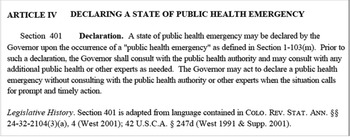
Another strategy that developers used to promote the laws’ technical legitimacy was to draw on pre-existing state laws as a form of “statutory data.” For example, when asked how evidence or research was incorporated into a model law, one Turning Point Act developer, a state public health official, said that, although they did not draw on epidemiological research, “Georgetown did lots of background research into existing state laws and federal laws” (Interview 111). An Emergency Powers Act drafter, a public health legal scholar, also emphasized the amount of legal research that needed to be done: “We knew that we would benefit by having a small fleet of students do the work because there was a lot of research that needed to be done in all of it to prepare the model law” (Interview 37). What does all this legal research on existing state law do? First, legal research is necessary for determining the legality of different possible provisions. But it appears to do other important work too—namely, it provides a form of “citation.” In the text of the model laws themselves, drafters included citations after each provision—not of empirical studies but, rather, of existing state laws. For example, in the Emergency Powers Act, every provision is linked to a (sometimes lengthy) legislative history. As an illustration, Figure 1 displays the text associated with Article IV: Declaring a State of Public Health Emergency and its accompanying legislative history.
Legislative history as “citation”.

This technique of citing existing law—of using legal texts like statutes and judicial opinions as authoritative—is central to the practice of law, legal pedagogy, and legal scholarship (Mertz Reference Mertz2000); therefore, it is hardly surprising that it would be deployed by a group of legal scholars drafting model legislation. Indeed, the “taken-for-grantedness” and comprehensibility of statutory data for legal audiences, which is what organizational scholars call “cognitive legitimacy” (Suchman Reference Suchman2003, 582–83), may help explain why this strategy was used by model law developers. Moreover, the practice of citing state law also demonstrates deference to state legislatures, a move that, as discussed in greater depth below, may also have served to help secure the political legitimacy of the model statutes as well.
What is interesting is how this form of evidence and citation was not seen in itself as an adequate evidentiary base for some interdisciplinary scholars. Private attorneys and legal scholars, for example, were more likely to emphasize such tactics, as they conformed well to a “legal techne”; external scholars, especially those with training in epidemiology and biomedicine, were less likely to accept the technical legitimacy on that basis—neither expert opinion and expert drafting nor existing state law qualified as “data” in their view. In the next subsection, I examine other strategies used by developers to achieve legitimacy for their model laws that do not rely on their technical or scientific qualities.
Political Legitimacy without Legislators: Objectivity, Representation, and Flexibility
Standards of all stripes are vulnerable to legitimacy challenges beyond whether or not they are technically or scientifically sound. As Stefan Timmermans and Steven Epstein (Reference Timmermans and Steven2010, 80) write, “[s]tandard organizations promise technical expertise without political entanglements. Yet such technocratic governmentality without popular approval creates a fragile authority, one that, because of the self-selection of experts and the inevitable formalism, remains open to challenges of legitimacy.” In this subsection, I show how model public health law developers, working outside of the traditional legislative process, promote the political legitimacy of their products. In particular, I show how developers work to make model laws into objective, representative, and flexible documents as a way to secure their political legitimacy. In this way, developers are able to claim a “disinterested,” even apolitical status, for their model laws, while at the same time showing deference to legislatures.Footnote 8
Objectivity
Lawrence Busch (Reference Busch2011, 68–69) suggests that the objectivity of a standard might depend on its mechanical, non-subjective development (that is, through a machine) or by virtue of its development by a “community of practitioners,” its reflection of natural processes, or through a consensus by a broad range of stakeholders. Alberto Cambrosio and colleagues (Reference Cambrosio, Peter, Thomas and George2006, 194) claim that the promulgation of biomedical standards such as guidelines and protocols is the effect of a new form of objectivity—“regulatory objectivity”—wherein objectivity is derived from collective forms of expertise combining people and objects connected by specific coordination regimens. Lorraine Daston (Reference Daston1992) also describes the many contemporary usages of the term “objectivity” as well as its historically contingent meaning. She notes that objectivity can refer to the empirical, to the scientific, or to impartiality (597). In the case of the development of these four model public health laws, drafters highlighted the disinterestedness, or impartiality, of the experts involved as a way to ensure their product’s objectivity and, thus, its political legitimacy.
Drafters often emphasized the degree to which the experts involved in the process were “non-ideological” and “nonpartisan.” For example, one ULC commissioner said about the annual meeting: “When we get there you can’t tell whether you’re Democrat, Republican, you have no idea. It’s the most nonpartisan thing you’ve ever seen” (Interview 14). Another developer, a public health legal scholar, who worked on multiple laws spoke about how the public health purposes of the model acts would be automatically undermined by politics: “I’m very disdainful of any projects out there which in a particular political bent or perspective is underlying these provisions. You can’t draft consistent with the public health while being sort of beholden to a political bent or perspective. You’ve got to divorce yourself from that” (Interview 36). Similarly, other developers sought to distance the model public health law projects they worked on from other model laws produced by well-known conservative “ideological” groups like American Legislative Exchange Council (Interview 56; Interview 117).
Representation
At the same time, perhaps somewhat paradoxically, another strategy that developers employed was to highlight the representative nature of the drafting groups as an important and positive attribute of model law development. In other words, while they eschewed the possible political interests of drafting groups in some settings, they embraced it in others. A common sentiment among developers was “the more stakeholders you can get at the table the better” (Interview 96). As a Privacy Act advisor, a state public health official, reflected: “[T]his was pretty broadly constituted—this group” (Interview 149). Members of the Turning Point Act drafting collaborative found the group to be so inclusive and representative that, when pressed, they could often not think of any group that was “left out” of the drafting process (Interview 17; Interview 63). And, yet, comparing the types of experts involved with the Turning Point Act with those involved with the Privacy Act, which was produced just a few years earlier, it is clear that the Turning Point Act collaborative did not necessarily have the broadest possible group of stakeholders involved, for it did not include representatives from civil rights or civil liberties groups (see Table 2). At one early meeting, the collaborative discussed the possible inclusion of organizations such as the American Civil Liberties Union (ACLU), a “conservative counterpart to the ACLU,” and the United Migrant Opportunity Service, but there is no evidence they were ultimately included beyond being part of the wider “Review Group” (Turning Point Public Health Statute Modernization Collaborative 2000).
These tactics align well with the strategies that scholars have described in studies of other standardization organizations. For example, Winton Higgins and Kristina Hallström (Reference Higgins and Kristina2007, 692), in their study of national and international standard-setting organizations, note that the authority of national standards—a form of “soft law”—rested on three linked claims: “that they represented the optimal solution to a recurring technical problem; that they arose as consensus solutions out of an open, representative process; and that compliance with them is in principle voluntary.” Similarly, among the interview participants in this study, those drafters or reviewers who were critical of the model law projects often challenged the process on the grounds that it was too insular, self-selected, and working without broad popular support. For example, one external reviewer of the Emergency Powers Act, a public health law scholar, said:
I did not get the sense that it was a very inclusive process. It wasn’t a grassroots process. I don’t know to what extent interest groups, folks representing, for example, underserved and historically vulnerable communities ever had an opportunity to participate in it. But I don’t fully know. I mean I wasn’t part of the group, I wasn’t at the table, I wasn’t in DC, and so I don’t want to criticize people for not doing something that maybe they did. It was never presented as a publicly inclusive process. (Interview 27)
This characterization contrasts, unsurprisingly, with the account of those more intimately involved in drafting the Emergency Powers Act who stressed that the process of using external expert review was critical to its transparency. For example, one drafter said: “We wanted to contact people who we thought would be critical of what we were doing—so we did that and we wanted the process to be as transparent as we could make it at the same time that we were struggling to get things done quickly” (Interview 37).
Similarly, although drafters of the Emergency Volunteers Act pointed to the ULC’s long-standing process of assembling an extremely broad array of stakeholders (invited to be expert “observers” in the process) (Interview 24; Interview 119), some of both the ULC commissioners and observers felt that the ULC had failed to assemble a group with the necessary experience and expertise in disaster response, medicine, and liability (Interview 25; Interview 118). As one Emergency Volunteers Act observer said, he found the inclusion of a broad group of advisors to be “just window dressing,” where groups such as the Federation of State Medical Boards were invited to participate but then their input was not actually incorporated and they subsequently stopped coming to meetings (Interview 25). Overall, despite claims to representativeness, the make-up of the drafting groups and expert review bodies was one of the most contentious aspects of model law development, generating substantial external, public controversy in the case of the Emergency Powers Act and substantial internal disagreement within the development group in the case of the Emergency Volunteers Act. These cases support the observation that the legitimacy of standards is often tenuous and open to challenge on the basis of how inclusive or representative the standard-setting process actually was.
Flexibility
Another way that model public health law developers sought to secure political legitimacy was to demonstrate deference to the states’ normal legislative process and the constraints of federalism through the provision of “alternatives” that built flexibility into model laws. The embrace of formal flexibility in model law drafting represents both a solution to a fundamental adoption problem (standardizers, by definition, cannot force states to adopt model laws) as well as a solution to a legitimacy problem. In other words, by tempering their desires for uniformity and providing states with more “menu”-like options, public health legal standardizers are in a better position to both promote the legitimacy of their products and protect the legitimacy of their organizations.
Scholars of standardization have noted that nearly all standards fail to achieve full uniformity (Brunsson and Jacobsson Reference Brunsson and Bengt2002, 149; Thévenot Reference Thévenot2009, 810). As Monica Casper and Adele Clarke (Reference Casper and Clarke1998, 273) reveal, for example, in their study of the development of the Pap smear as a cervical cancer screening tool, “[t]he search for the means of standardization has been long, arduous, and not particularly successful.” Similarly, Kathleen Jordan and Michael Lynch (Reference Jordan and Michael1998, 795) find that, far from being a fully standardized technique, polymerase chain reaction (a DNA analysis technology) was “procedurally flexible” and adapted and transformed in local settings. They found that “[t]he incentives to stabilize and standardize the technique are counteracted by other, locally prevalent, incentives to de-stabilize and de-standardize it.”
As these examples make clear, all standards must negotiate local contexts to achieve adoption. Analyzing model lawmaking as just one type of standardization illuminates the unique barriers to uniformity that statutory standardization efforts face. Every model and uniform law promulgated in the United States must be introduced and voted on by a legislative body before it can be adopted. Unlike a quality standard for the production of a new technological device, new state laws must be embedded within existing state codes and be made consistent with existing laws. Moreover, to achieve complete uniformity, model laws must garner adequate political support by a group of legislative representatives in every state and be adopted wholesale. In a politically diverse representative democracy such as the United States, obstacles such as these are nearly impossible to overcome. Despite these obstacles, year after year, nonprofit organizations, academic centers, federal agencies, and industry groups promulgate model laws. In this way, one might think of legal standardization as an “aspirational” endeavor—drafters strive for uniformity even as they are cognizant that it can never be fully achieved.
Multiple developers voiced this aspirational sentiment (Interview 37; Interview 117; Interview 124). For example, an Emergency Powers Act drafter reflected:
I think that the idea of a model law number one promotes—doesn’t achieve —but promotes some level of uniformity across the 50 states. You don’t end up with exact uniformity, but to have some uniformity is a good idea. I think that the model law is good because it gives the states a template from which to work but maintains the respect for state legislators to make their own choices so they can pick and choose. It’s like a smorgasbord or a buffet that you are presenting in front of them and they can say, “I want to take a little of this, and a little of that.” (Interview 37)
Model acts, in this way, offer a flexible middle ground for states: they promote uniformity without coercion. States are presented with options with the hope that they will adopt as much of it as possible. The model law developers suggest that they gain authority by formally dispensing with their authority. By showing “respect for state legislators,” through the provision of alternatives, legal standardizers are able to protect the political legitimacy of their products. Other developers, especially those affiliated with the CDC, also expressed a strong desire to demonstrate respect for states’ autonomy, which in turn helps to maintain the organization’s legitimacy (Interview 87; Interview 91). These sentiments are not surprising once one considers that, as a federal agency, the CDC is legally prohibited from lobbying for state laws. Indeed, the CDC’s direct involvement with the Emergency Powers Act, some developers argued, had actually crossed the federalism line. Had the Bush administration not “loved” the Act, one developer suggested, some officials would have lost their jobs over their involvement in promoting it (Interview 119).
Others, however, especially those with years of experience working with the ULC, espoused stronger aspirations for uniformity. For example, one Emergency Volunteers Act drafter said:
To the degree that legislation is appropriate at all in a field, certainly medicine is one of those areas in which I should think uniformity is called for. Because you don’t have differences, yes you have different practitioners, yes you have different capabilities, yes you have different degrees of specialization and special knowledge, those are all unique to areas, people, et cetera. But, we have standards—standards of care that shouldn’t vary significantly from place to place because we’re talking about health. (Interview 133)
Here, one sees the suggestion that, for medical care to be standardized across states, law pertaining to the administration of medical care (in this case, practitioner licensure and liability in emergencies) must be standardized as well. The Emergency Volunteers Act, which was produced by the ULC and officially titled a “uniform act,” was the law whose developers were most committed to promoting uniformity.
Nevertheless, it is illustrative that even the ULC, a commission dedicated to the creation of uniform state acts, recognizes the intrinsic barriers to legislative uniformity. Although they always aim for fifty-state adoption, one developer conceded that they consider seventeen state adoptions to be a success (Interview 133). As another commissioner said, although the goal is uniformity, “they are not all enacted exactly as written, and states at a minimum have to make adjustments to make sure they fit into the body—to be consistent with other state laws, but then states will frequently tweak this or that” (Interview 24). Therefore, even the ULC recognizes that full adoption is often unlikely to happen and that they must give states the room to adjust even “uniform” laws to meet their particular needs. Given how difficult the achievement of uniformity is, ULC drafters emphasized that alternatives for states are routinely built into their uniform acts (Interview 14; Interview 24). In the case of the Emergency Volunteers Act, after lengthy debate over the civil liability provisions—where they were not able to reach consensus—the final Act gave states a set of possible alternatives regarding the level of liability protection they would grant emergency volunteers and organizations (National Conference of Commissioners on Uniform State Laws 2007, 7–8).
Even more fundamentally, a number of developers mentioned a more global transition in the field away from model laws altogether. Some developers, especially those affiliated with the CDC, expressed a growing preference for legislative “menus” over model laws. The CDC’s Public Health Law Program—the original sponsor of the Privacy Act and the Emergency Powers Act—has actively taken up publishing “menus” of laws and regulations to assist states. On their website, for example, one can find an array of “menus,” like the “Menu of Doctor Shopping Laws” and the “Menu of State Hospital Influenza Vaccination Laws,” but no model laws (CDC Public Health Law Program 2019). At the same time, however, it is unlikely that the production of model laws will ever completely stop in public health law or in law more generally. Certainly, as long as the ULC survives as an organization, model laws will continue to be produced. Indeed, as long as flexibility is built into model laws, both substantively and formally, as with other standards, they are likely to continue to exert a substantial impact on the social world.
In their study of the standardization of medical protocols, Stefan Timmermans and Marc Berg (Reference Timmermans and Marc1997) propose the concept of “local universality,” which at first appears contradictory. They argue that to understand the “universalization of standards,” such as medical protocols, it is crucial to understand the mechanisms by which they are incorporated and transformed by local processes: “Rather than being antagonistic to it, a certain looseness in the network may be the preferred (or only possible) way to achieve standardization” (277). Timmermans and Berg contend that, to the extent that standards such as medical protocols or biological techniques are locally negotiated, they will always be transformed, but this should not be understood as a failure of standardization. Rather, it is the only way that it is possible. As with other standardization projects then, flexibility can, and often should, be built into model laws not only to maintain their technical function but also to preserve their political legitimacy.
Fragmented Legitimacy
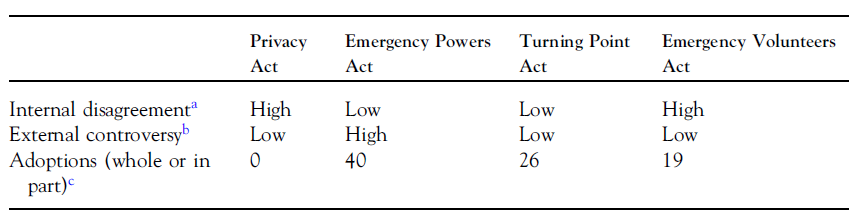
Did the legitimation strategies described here work for model public health law developers? In this final section, by examining several different indicators of legitimacy for each model law—the level of internal disagreement within drafting groups, external controversy, and state adoption—I argue that overall the model laws achieved a fragmented form of legitimacy. For example, as shown in Table 4, although the Emergency Powers Act suffered from serious legitimacy challenges from political organizations and external scholars, it enjoyed widespread state adoption. The Emergency Volunteers Act, although it sparked little public controversy, generated substantial internal controversy and was adopted by only nineteen states (Uniform Law Commission 2020). How might one explain such patterns?
Indicators of legitimacy

Notes:
a This categorization is based mainly on self-reporting from the informant interviews, although some archival materials (such as emails and formal letters) and secondary sources supplement the accounts. All interviewees were asked about whether any parts of the drafting process became “controversial” and, if so, how disagreements were resolved.
b This categorization is based on a review of secondary materials commenting on the model laws as well as on interviews.
c For adoption counts, see Center for Law and the Public’s Health 2007; Fairchild, Bayer, and Colgrove Reference Fairchild, Ronald and James2007; Hodge and White Reference Hodge and White2012; Uniform Law Commission 2020.
Internal Disagreement
Evidence of high levels of disagreement within a model law’s drafting group suggests a legitimacy problem. Based on my interviews, there was some evidence of internal disagreement within the Privacy Act drafting group (that is, conflicts between public health officials and HIV/AIDS advocacy organizations). Although all the developers I spoke to, including representatives from both the “public health” and “privacy” camps, suggested that, ultimately, they felt the model law reached an adequate balance between facilitating the flow of public health information and balancing individual rights to privacy (Interview 18; Interview 124), other historical accounts suggest that, by accommodating the concerns of the privacy advocates, the model law failed to secure legitimacy among the state health officials more broadly (Fairchild, Bayer, and Colgrove Reference Fairchild, Ronald and James2007, 233). Developers who participated in the Emergency Powers Act and the Turning Point Act drafting groups nearly unanimously suggested that there were no real ideological or professional rifts within the drafting groups themselves. The most anyone alluded to was amicable disagreements over specific provisions (Interview 37).
In contrast, the developers I spoke with characterized the Emergency Volunteers Act drafting process as having incredibly high levels of internal disagreement. In this case, concerns came not only from the commissioners involved in the drafting but also from the expert observers who were invited to attend the meetings. This finding may seem paradoxical: the Emergency Volunteers Act, as a production of the ULC, benefited from having formal procedures guiding its development and participants with decades of experience drafting uniform laws. This distinguished the Emergency Volunteers Act from the other model laws that were created outside dedicated model law-producing organizations (see Table 2). Yet, in some ways, the storied tradition of the ULC process itself, as well as its sizeable attempt to include as many stakeholders as nonvoting observers as possible in the drafting process, made the Emergency Volunteers Act more susceptible to internal disagreement.
When they were recalling the internal disagreement that the Emergency Volunteers Act experienced, one memory stood out for multiple developers: the 2006 floor debate over its approval at the commissioners’ annual meeting in Hilton Head, South Carolina. One participant described how the debate raged into the night, making all the commissioners late for their formal dinner (Interview 24). They remarked how unusual this situation was. The debate was anomalous—one said that such a controversy had never occurred before in their memory of the ULC (Interview 58). A large part of the reason that the Emergency Volunteers Act was so contentions was not due to its substantive content but, instead, due to its expedited production, which bypassed the ULC’s normal checks (which include the requirement that the proposed uniform act be presented to ULC at two annual meetings before approval, instead of one) (Interview 14; Interview 24; Interview 133). Nevertheless, many in the ULC leadership had little regret, and even some of those who said they were concerned about the timeline now look back fondly at their work (Interview 58; Interview 71).
Yet there were also major substantive disagreements over the Emergency Volunteers Act that challenged both its technical and political legitimacy. As discussed above, some developers felt that the ULC process was not adequately scientific, that drafters had not done sufficient research to demonstrate that a uniform law was really necessary or that the best way to go about ameliorating practitioner shortages (if they did in fact exist) in an emergency situation (Interview 25; Interview 33). Other members of the drafting committee were substantively concerned about the narrowness of the proposed law—whether it included the right types of practitioners (for example, veterinarians were initially not included as “health practitioners” in the act) (Interview 118). Others were disturbed at what they perceived to be the out-sized influence of the American Red Cross, which they perceived as pushing strongly for limiting liability not only for emergency practitioners but also for the organizations with whom they work (Interview 71). Perhaps the most vehement critics, however, were plaintiffs’ bar organizations like the Center for Constitutional Litigation, which were included in drafting committee meetings and which challenged the limits on practitioner and organization liability that the Emergency Volunteers Act would grant in emergency situations (Peck Reference Peck2007).
In summary then, the Emergency Volunteers Act demonstrates how a model law can fail to achieve legitimacy among some audiences without facing a total legitimacy crisis. This scenario suggests that some of the ULC legitimation strategies paid off. In particular, the inclusion of alternatives for the controversial liability provisions served to facilitate state adoption and may have helped the Emergency Volunteers Act avoid a broader, more public challenge like the one the Emergency Powers Act faced, which is explained in the next section.
External Controversy
The level of external controversy that a model law generates may well be considered another indicator of its legitimacy, particularly among audiences external to the drafting group, such as outside scholars, political organizations, and state legislatures. Whether controversy is “internal” or “external” to the drafting group is often an artifact of how the expert drafting group is convened. When model law drafting groups are diverse, inclusive, and large, disagreement is likely to take place internally; when model law drafting groups are homogenous, exclusive, and small, controversy is more likely to take place in the public sphere. Among the model laws included in this study, the Emergency Powers Act, produced on the heels of the September 11, 2001 terrorist attacks, provoked the most external, or public, controversy; none of the other model laws came close to generating the amount of negative media coverage and scholarly critique that the Emergency Powers Act did. The Emergency Powers Act was also drafted exclusively by a small group of scholars all affiliated with the CLPH.
Despite the breadth of the actors involved in the Emergency Powers Act’s institutional web (see Table 2), and the depth of technical expertise embodied by the drafters, when the first October draft was sent to external reviewers for comments, drafters received a slew of feedback, some of it positive but some sharply negative. Indeed, one individual recalled that, although they anticipated some criticism, he felt the group was “beaten up” by the comments (Interview 37). The October version of the Act was seen to have overreached in terms of the governmental power it granted state executives and its lack of civil liberties protection. Public outcry in turn triggered some of the former “collaborators” such as the National Council of State Legislatures, to distance themselves from the bill (Rosner and Markowitz Reference Rosner and Gerald2005). George Annas, a senior professor of medicine, law, and public health at Boston University, became a prominent and outspoken critic of the model law. In his view, it represented a return to an “old Soviet system” of public health governance rather than one based on human rights (Annas Reference Annas2005, 11). In response to these proposed measures, George Annas and a group of fellow law professors formed the New England Coalition for Law and Public Health and sent a letter detailing their concerns to the secretary of the Department of Health and Human Services (Bayer and Colgrove Reference Bayer, James and Jonathan2003, 61). In addition, civil liberties and lesbian, gay, bisexual, transgender, and queer civil rights groups expressed concern that HIV/AIDS could fit under the definition of a “health emergency” and that hard-won privacy protections could be undermined by the Act (62).
Much of the critique challenged the technical legitimacy of the Act, suggesting, for example, that there was not good evidence for believing that coercive quarantine provisions were necessary or effective (Interview 93). Others challenged the political legitimacy of the Act by questioning the representativeness of the drafting group (Interview 27). Even after the model law was revised on the basis of the comments, some critics felt that these changes failed to do enough and that the model law should be withdrawn completely (ACLU 2002; Annas Reference Annas and Jonathan2003, 43). And, yet, despite this persistent and strong challenge to the model law’s legitimacy, many of the drafters I spoke with viewed the Emergency Powers Act as a resounding success (Interview 37; Interview 108; Interview 113; Interview 117; Interview 119). Indeed, interview participants spoke of it as unquestionably the most successful of the four model acts. Although it was subject to divisive external controversy, the Emergency Powers Act was the most widely adopted of the four model laws.
Adoption
For many involved in the development of model laws, the number of states adopting a given law would likely be seen as the most important indicator of its legitimacy. The voluntary adoption of a statute by semi-autonomous states en masse would seem to constitute strong evidence of its legitimacy, at least among state legislators and their constituents. If one were to just look at adoption counts (see Table 3), one might well assume that the Privacy Act was widely perceived as illegitimate, and the Emergency Powers Act achieved strong legitimacy, as they had zero and forty adoptions respectively.Footnote 9 Looking at a different indicator, like levels of internal or external controversy, however, would lead one to conclude just the opposite.
There are a few possible explanations that may help account for the otherwise puzzling pattern of fragmented legitimacy one finds, for example, with the Emergency Powers Act. First, it may be that wide-scale adoption of a model law, itself an indicator of legitimacy, might in turn trigger challenges among other audiences. In other words, there might be reason to believe that the level of external controversy is closely related to the level of adoption—in that political organizations, legislators, and outside scholars only become sufficiently concerned with a model law to challenge its legitimacy publicly when there is reason to believe it may actually get widely adopted. Alternatively, it may also be that both the level of external controversy and the number of adopting states are both caused by a third phenomenon (for example, a historical triggering event like 9/11). One critic of the Emergency Powers Act suggested that part of the heightened concern over the Act may have been due to the post-9/11 political climate, where there was a broader clampdown on civil liberties spearheaded by the Bush administration (Interview 27).
Internal controversy over drafting can cut both ways in terms of ultimate adoption. For the Privacy Act, the high level of internal disagreement within the drafting group around privacy protection ultimately led to a compromise that some have suggested was too protective of individual rights to ultimately be accepted by state public health practitioners (Fairchild Reference Fairchild2007, 233). In contrast, for the Emergency Volunteers Act, internal disagreement led to a final product with sufficient alternatives so as to be attractive for adoption. Given the fragmented nature of legal standards’ legitimacy, it is critically important to question to which audience (for example, legislative, public health, or academic) various legitimation strategies are aimed and to what end.
CONCLUSION
In this article, I demonstrated that the development of model public health laws can be fruitfully analyzed within the literature of standardization. STS scholarship on standardization contributes to the existing socio legal literature on model laws in a number of ways. First, it draws attention to the heterogeneous groups of experts involved in model lawmaking and provides a framework for analyzing the conflicts that might arise among drafting groups due to epistemological differences. Second, the STS literature brings to the fore the fragile legitimacy of model public health laws as well as providing a framework for understanding why, and how, developers strive to promote both the technical and political legitimacy of their products. The successful application of the robust science studies literature on standardization has focused mainly on the product, quality, technological, and medical standards of a new domain—law—and speaks to the strength of this existing framework.
And, yet, I have also shown how the standardization of public health law, when compared with other forms of standardization, faces a particularly high barrier to achieving legitimacy due to the diversity of experts involved in the drafting, the lack of empirical evidence, and the legislative adoption process. I have described the strategies that legal standardizers pursue to overcome challenges to the legitimacy of model public health laws. I found that standardizers of public health law relied on expert judgment instead of empirical research; that they emphasized the importance of technically sound legal drafting; and that they drew on existing state law as a form of “statutory data” as a way of promoting their technical legitimacy. I also found that developers promoted the objectivity, representativeness, and flexibility of model laws as a way to achieve political legitimacy in a process that complicates the traditional legislative drafting process. By demonstrating how the standardization of public health law—a difficult case for legitimate standardization—is able to achieve some legitimacy—albeit fragmented—this study sheds light on how standardization efforts in other seemingly nontechnical areas of social life are able to proceed so swiftly.
Given the substantial commonalities between legal standardization and other types of standardization efforts, this study suggests that some of the received notions of standardization should be revised to include this significant area of social standardization. First, histories of “modern” standardization in the United States should be revised to include both the nineteenth-century activity of lawyers who founded the ULC and the early twentieth-century movement to found the American Law Institute. Current accounts mainly point to the work of engineers in spearheading national and international standards bodies (Higgins and Hallström Reference Higgins and Kristina2007). More historical research is necessary to determine how these activities were seen at the time as being consonant with, or divergent from, the more industrial-oriented standardization efforts in the United States. In addition, this study suggests that the “standard-setting” (that is, reform) and “standardizing” (that is, uniformity) functions of standardization should be more disaggregated conceptually than they often are in the existing STS literature (Timmermans and Epstein Reference Timmermans and Steven2010, 71). As demonstrated above, model public health lawmakers, even those based in the ULC, increasingly embrace flexibility over strict uniformity in their standard-setting goals. This difference in emphasis of the dual goals of standardization may vary at the level of an individual standard as well as at the level of the standard-setting organization. Further study is necessary to elucidate what social conditions lead to uniformity, taking precedence over substantive reform goals (and vice versa).
There are additional insights that might be gleaned by applying the STS literature on standardization to model public health lawmaking. Future research would benefit from a focus on model public health law adoption in legislatures, as Benjamin Meier, James Hodge, and Kristine Gebbie (Reference Meier, Hodge and Gebbie2009) have done for the Turning Point Act, to permit a richer examination of the partisan and interest-group politics surrounding their reception. Additionally, the ongoing COVID-19 pandemic lays bare the importance of the legal infrastructure that states have at their disposal to use when facing novel public health threats. To what extent effective state and interstate response to the novel coronavirus has been aided or hindered by the differential adoption of the public health provisions in the model laws examined here is also a worthy subject for future research. Taken together, this study shows the importance of including legal standardization within the broader sociology of standardization. Doing so reveals how even weakly positioned standardizers pursue, and sometimes secure, the legitimacy of their products. Moreover, a focus on legal standardization raises the stakes of the growing sociological interest in standardization more broadly by demonstrating how legislation and the democratic process does not stand outside of, or opposed to, forms of standardization. Scholarly recognition of such processes may provide a first step for those interested in pondering political responses to legal standardization in public health and beyond.
Supplementary material
To view supplementary material for this article, please visit https://doi.org/10.1017/lsi.2021.31