INTRODUCTION
The experience of multiple unrelieved symptoms and associated distress in patients with advanced cancer may contribute to the increased frequency of clinic appointments, emergency department visits, and hospitalizations for “high tech” symptom management interventions (Hearn & Higginson, Reference Hearn and Higginson1998; National Comprehensive Cancer Network, 2007). A recent review of the prevalence of symptoms in advanced cancer patients noted that multiple symptoms are highly prevalent during the palliative phase of care (Teunissen et al., Reference Teunissen, Wesker and Kruitwagen2007), however, little is known about the relationships among multiple concurrent symptoms or about the associations between multiple concurrent symptoms and patient outcomes (i.e., functional status, mood, quality-of-life [QOL]). Therefore, the purposes of this review, focused on palliative care patients with advanced cancer, are to: (1) describe the relationships among multiple symptoms; (2) describe the predictors of multiple symptoms; and (3) describe the relationships between multiple symptoms and patient outcomes.
SEARCH METHODS
Comprehensive literature searches were completed using the following databases: PubMed, Cumulative Index to Nursing and Allied Health Literature, and PsychInfo. The key words: cancer or advanced cancer or neoplasm, AND palliative care or terminal care or hospice or end-of-life, AND symptoms or multiple symptoms or symptom clusters were combined. Studies were included if they met all of the following criteria: (1) the entire sample had a cancer diagnosis and was receiving palliative care for symptom management; (2) at least three or more symptoms were evaluated and reported on in the results; and (3) the relationships among multiple symptoms or between symptoms and their predictors (e.g., demographic and clinical characteristics) or patient outcomes were described. Studies were excluded if the patients' prognoses were mixed or if the sole intervention was palliative tumor treatments (i.e., palliative radiation, palliative chemotherapy) rather than global palliative care that included symptom management. Twenty-two studies were identified based on these criteria (Peruselli et al., Reference Peruselli, Camporesi and Colombo1993, Reference Peruselli, Paci and Franceschi1997; Vainio & Auvinen, Reference Vainio and Auvinen1996; Morasso et al., Reference Morasso, Capelli and Viterbori1999; Mercadante et al., Reference Mercadante, Casuccio and Fulfaro2000; Walsh et al., Reference Walsh, Donnelly and Rybicki2000, Reference Walsh, Rybicki and Nelson2002; McMillan & Small, Reference McMillan and Small2002; Nekolaichuk & Bruera, Reference Nekolaichuk and Bruera2004; Francoeur, Reference Francoeur2005; Modonesi et al., Reference Modonesi, Scarpi and Maltoni2005; Stromgren et al., Reference Stromgren, Sjogren and Goldschmidt2005; Doorenbos et al., Reference Doorenbos, Given and Given2006; Peters & Sellick, Reference Peters and Sellick2006; Teunissen et al., Reference Teunissen, de Graeff and de Haes2006; Tsai et al., Reference Tsai, Wu and Chiu2006; von Gruenigen et al., Reference von Gruenigen, Hutchins and Reidy2006; Walsh & Rybicki, Reference Walsh and Rybicki2006; Rodin et al., Reference Rodin, Zimmermann and Rydall2007; Bakitas et al., Reference Bakitas, Lyons and Hegel2009; Cheung et al., Reference Cheung, Le and Zimmermann2009; Kirkova et al., Reference Kirkova, Walsh and Rybicki2009).
Research of multiple symptoms and their impact on patient outcomes has only recently emerged as a unique focus in palliative care. Therefore, in the majority of the studies included in this review, descriptions of relationships among concurrent symptoms and/or descriptions of relationships between concurrent symptoms and patient outcomes were not the main aims of the studies. However, several of the studies reported results that were pertinent to more than one of the reviews' purposes. The findings from these 22 studies (Table 1) are summarized in sections based on the purposes of this review.
Summary of studies of symptom relationships in patients with advanced cancer

RESULTS
Description of the Studies
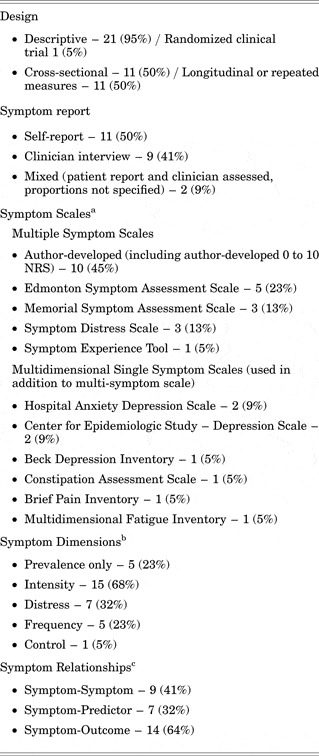
The majority of the studies used descriptive, prospective, repeated-measures designs (Table 2). Symptom data were obtained primarily using patient self-reports or clinician interviews. Twelve of the twenty-two studies used valid and reliable scales to measure multiple symptoms (Peruselli et al., Reference Peruselli, Camporesi and Colombo1993, Reference Peruselli, Paci and Franceschi1997; Morasso et al., Reference Morasso, Capelli and Viterbori1999; McMillan & Small, Reference McMillan and Small2002; Nekolaichuk & Bruera, Reference Nekolaichuk and Bruera2004; Modonesi et al., Reference Modonesi, Scarpi and Maltoni2005; Stromgren et al., Reference Stromgren, Sjogren and Goldschmidt2005; Doorenbos et al., Reference Doorenbos, Given and Given2006; Peters & Sellick, Reference Peters and Sellick2006; Rodin et al., Reference Rodin, Zimmermann and Rydall2007; Bakitas et al., Reference Bakitas, Lyons and Hegel2009; Cheung et al., Reference Cheung, Le and Zimmermann2009). In addition, several studies used multidimensional scales of single symptoms (e.g. pain, depression, fatigue) (McMillan & Small, Reference McMillan and Small2002; Francoeur, Reference Francoeur2005; Stromgren et al., Reference Stromgren, Sjogren and Goldschmidt2005; Doorenbos et al., Reference Doorenbos, Given and Given2006; Peters & Sellick, Reference Peters and Sellick2006; Rodin et al., Reference Rodin, Zimmermann and Rydall2007; Bakitas et al., Reference Bakitas, Lyons and Hegel2009).
Summary of characteristics of studies of multiple symptoms in palliative care patients with advanced cancer

aTotals may exceed 100% because several studies use more than one scale.
bTotals may exceed 100% because several studies examined more than one dimension.
cTotals may exceed 100% because several studies examined more than one relationship.
Sample sizes ranged from 39 to 1640. Thirteen of the studies had fewer than 200 participants (Peruselli et al., Reference Peruselli, Camporesi and Colombo1993, Reference Peruselli, Paci and Franceschi1997; Morasso et al., Reference Morasso, Capelli and Viterbori1999; McMillan & Small, Reference McMillan and Small2002; Nekolaichuk & Bruera, Reference Nekolaichuk and Bruera2004; Modonesi et al., Reference Modonesi, Scarpi and Maltoni2005; Stromgren et al., Reference Stromgren, Sjogren and Goldschmidt2005; Doorenbos et al., Reference Doorenbos, Given and Given2006; Peters & Sellick, Reference Peters and Sellick2006; Teunissen et al., Reference Teunissen, de Graeff and de Haes2006; Tsai et al., Reference Tsai, Wu and Chiu2006; von Gruenigen et al., Reference von Gruenigen, Hutchins and Reidy2006; Kirkova et al., Reference Kirkova, Walsh and Rybicki2009). Gender distribution was fairly even across the studies. For the 16 studies that reported age, the grand mean age was 64.9 years. The most prevalent cancer sites were lung (11–35%), gastrointestinal (GI) (9–30.2%), and genitourinary (GU) (6.3–32.7%). However, in most of the studies the samples were heterogeneous in terms of cancer diagnosis.
Finally, the study settings were varied (i.e., five inpatient, seven clinic, four home care, and seven in a combination of settings). Eleven of the studies were conducted in the United States, one in Canada, eight in Europe, one in Taiwan, and one was multinational.
Symptom Measurement
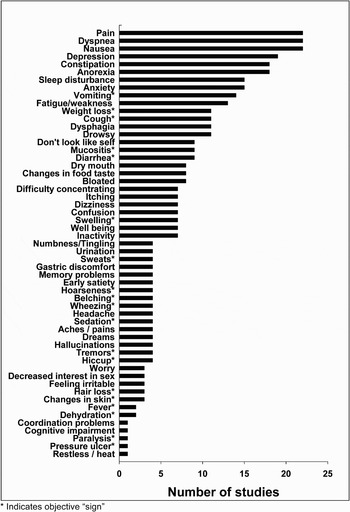
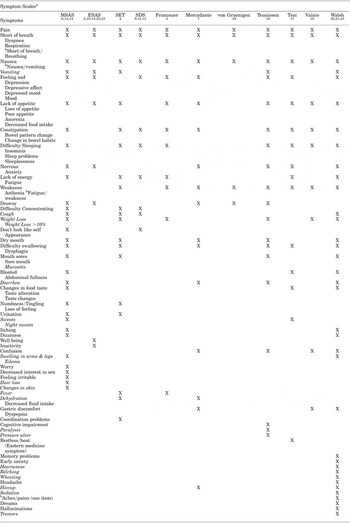
Fifty-six unique symptoms were evaluated across the 22 studies (Fig. 1). However, 19 of these “symptoms” are more accurately categorized as signs because they can be measured objectively (e.g., fever). The 14 symptoms that were evaluated in >50% of the studies, were pain, dyspnea, nausea, depression, constipation, anorexia, sleep disturbance, anxiety, vomiting, fatigue, weight loss, cough, dysphagia, and drowsiness. Only pain, dyspnea, and nausea were measured in all 22 studies. Table 3 summarizes the symptoms that were evaluated within and across the 22 studies.
Symptom Assessment Frequency by Study

Symptoms evaluated within and across studies

MSAS – Memorial Symptom Assessment Scale
ESAS – Edmonton Symptom Assessment Scale
SET – Symptom Experience Scale
SDS – Symptom Distress Scale
aAuthor developed symptom scales are listed under the first author's name
bTwo symptoms were assessed as a single item
Italics indicates an observable sign (rather than a subjective symptom)
4Doorenbos (Reference Doorenbos, Given and Given2006), 5Francouer (Reference Francoeur2005), 6McMillan (Reference McMillan and Small2002), 7Mercadante (Reference Mercadante, Casuccio and Fulfaro2000), 8Modonesi (Reference Modonesi, Scarpi and Maltoni2005), 9Morasso (Reference Morasso, Capelli and Viterbori1999), 10Nekolaichuk (Reference Nekolaichuk and Bruera2004), 11Peters (Reference Peters and Sellick2006), 12Peruselli (Reference Peruselli, Camporesi and Colombo1993), 13Peruselli (Reference Peruselli, Paci and Franceschi1997), 14Rodin (Reference Rodin, Zimmermann and Rydall2007), 15Stromgren (Reference Stromgren, Sjogren and Goldschmidt2005), 16Teunissen (Reference Teunissen, de Graeff and de Haes2006), 17Tsai (Reference Tsai, Wu and Chiu2006), 18Vainio (Reference Vainio and Auvinen1996), 19von Gruenigen (Reference von Gruenigen, Hutchins and Reidy2006), 20Walsh (Reference Walsh and Rybicki2006), 21Walsh (Reference Walsh, Rybicki and Nelson2002), 22Cheung (Reference Cheung, Le and Zimmermann2009), 23Bakitas (Reference Bakitas, Lyons and Hegel2009), 24Kirkova (Reference Kirkova, Walsh and Rybicki2009), 25Walsh (Reference Walsh, Donnelly and Rybicki2000)
In terms of prevalence estimates, only 12 studies reported the prevalence of the various symptoms (Vainio & Auvinen, Reference Vainio and Auvinen1996; Mercadante et al., Reference Mercadante, Casuccio and Fulfaro2000; Walsh et al., Reference Walsh, Donnelly and Rybicki2000; Doorenbos et al., Reference Doorenbos, Given and Given2006; Peters & Sellick, Reference Peters and Sellick2006; Teunissen et al., Reference Teunissen, de Graeff and de Haes2006; Tsai et al., Reference Tsai, Wu and Chiu2006; von Gruenigen et al., Reference von Gruenigen, Hutchins and Reidy2006; Walsh & Rybicki, Reference Walsh and Rybicki2006; Rodin et al., Reference Rodin, Zimmermann and Rydall2007; Cheung et al., Reference Cheung, Le and Zimmermann2009; Kirkova et al., Reference Kirkova, Walsh and Rybicki2009). However, diverse approaches were used to present prevalence data (e.g., presence of the symptom, percentage of patients who rated the symptom as moderate-to-severe). In addition, the wording of the items that were used to measure symptoms varied across studies (e.g., present or absent, ability to control the symptom, distress associated with the symptom). Given the variability in symptom measurement and reporting across studies, symptom prevalence estimates cannot be summarized or compared across these 22 studies.
A variety of symptom dimensions (e.g., intensity, frequency, distress, controllability) were assessed across these 22 studies. However, given the diversity of symptom scales used, summary data on the various dimensions cannot be calculated. For example, the Edmonton Symptom Assessment Scale (ESAS) assesses the intensity of symptoms using 0 (no symptom) to 100 (worst possible) visual analogue scales (VAS). In contrast, in another study (Francoeur, Reference Francoeur2005), participants were asked to rate the difficulty in controlling symptoms using a 5-point Likert scale (i.e., complete, a lot, some, little, none). In these 22 studies, symptom intensity was the most frequently reported dimension (68%). The only study to examine the relationship between two symptom dimensions found that greater symptom severity was associated with symptom distress (Kirkova et al., Reference Kirkova, Walsh and Rybicki2009).
RELATIONSHIPS AMONG MULTIPLE SYMPTOMS AND BETWEEN MULTIPLE SYMPTOMS, THEIR PREDICTORS, AND PATIENT OUTCOMES
Relationships Among Multiple Symptoms
Only nine studies examined the relationships among multiple concurrent symptoms (Peruselli et al., Reference Peruselli, Camporesi and Colombo1993, Reference Peruselli, Paci and Franceschi1997; Mercadante et al., Reference Mercadante, Casuccio and Fulfaro2000; Walsh et al., Reference Walsh, Rybicki and Nelson2002; Francoeur Reference Francoeur2005; Tsai et al., Reference Tsai, Wu and Chiu2006; von Gruenigen et al., Reference von Gruenigen, Hutchins and Reidy2006; Walsh & Rybicki, Reference Walsh and Rybicki2006; Cheung et al., Reference Cheung, Le and Zimmermann2009) using the following methods: examination of correlations among symptom severity scores (Peruselli et al., Reference Peruselli, Camporesi and Colombo1993; von Gruenigen et al., Reference von Gruenigen, Hutchins and Reidy2006); identification of key symptoms that predicted other symptoms or outcomes (Walsh et al., Reference Walsh, Rybicki and Nelson2002); and description of occurrence patterns among multiple, concurrent symptoms (Peruselli et al., Reference Peruselli, Paci and Franceschi1997; Mercadante et al., Reference Mercadante, Casuccio and Fulfaro2000; Tsai et al., Reference Tsai, Wu and Chiu2006). In addition, three studies identified symptom clusters using cluster analysis (Francoeur, Reference Francoeur2005; Walsh & Rybicki, Reference Walsh and Rybicki2006; Cheung et al., Reference Cheung, Le and Zimmermann2009).
Examination of Correlations Among Symptom Severity Scores
In one study of 43 advanced cancer patients (Peruselli et al., Reference Peruselli, Camporesi and Colombo1993), principal component analysis was used to identify the relationships among 13 symptoms on the Symptom Distress Scale (SDS). A four-factor structure accounted for 67.4% of variance in symptom distress. The first factor consisted of six symptoms (i.e., loss of appetite, fatigue, insomnia, difficulty in concentration, appearance, mood disturbances). Four items loaded on the second factor (i.e., pain frequency, pain intensity, bowel pattern, insomnia). Factors 3 (i.e., nausea frequency, nausea intensity) and factor 4 (i.e., respiration, coughing) each contained two items.
In a second correlation study (von Gruenigen et al., Reference von Gruenigen, Hutchins and Reidy2006), the relationships between physical symptoms and psychological symptoms were evaluated in 39 gynecologic-oncology patients who received palliative chemotherapy. Higher total physical symptom severity scores were associated with higher depression (r = 0.57) but not with anxiety scores using the Hospital Anxiety Depression Scale (HADS).
Identification of Key Symptoms
In a large heterogeneous sample of patients with advanced cancer (N = 1000), five symptoms (i.e., anorexia, dry mouth, dyspnea, dysphagia, weight loss) (Walsh et al., Reference Walsh, Rybicki and Nelson2002) previously identified as key predictors of survival in the National Hospice Study (NHS) (Reuben et al., Reference Reuben, Mor and Hiris1988), were examined to determine if they were prognostic for overall symptom presentation. Using a step-wise Cox proportional hazards analysis, as the patient's number of the NHS symptoms increased, the median number of other symptoms reported on a 38-item symptom checklist increased significantly as well (i.e., 0 NHS symptoms to 4 symptoms, 1 NHS symptom to 6 symptoms, 2 NHS symptoms to 9 symptoms, 3 NHS symptoms to 11 symptoms, 4 NHS symptoms to 13 symptoms, 5 NHS symptoms to 15 symptoms).
Patterns of Multiple Symptoms Across Time
Only three studies evaluated the relationships among symptoms over time ( Peruselli et al., Reference Peruselli, Paci and Franceschi1997; Mercadante et al., Reference Mercadante, Casuccio and Fulfaro2000; Tsai et al., Reference Tsai, Wu and Chiu2006). In a study that examined the relationships among symptom distress scores at three time points (Peruselli et al., Reference Peruselli, Paci and Franceschi1997), patients with advanced cancer (N = 73) who reported a SDS total score of <36 were categorized as minimally distressed, and those with a score ≥36 were categorized as highly distressed at enrollment. Symptom assessments completed 2 weeks after enrollment and during the last week of life were compared across the two symptom distress groups. At both follow-up assessments, no between-group differences were found in the mean SDS scores. Of note, SDS scores of the highly distressed group improved and those of the minimally distressed group remained the same. Patients in this study were receiving palliative care at home which may explain the study findings.
In another longitudinal study (Mercadante et al., Reference Mercadante, Casuccio and Fulfaro2000), the relationships among symptoms and disease progression were evaluated in a sample of patients (N = 373) with a variety of advanced cancers. Patient's Karnofsky performance status (KPS) score was used as a surrogate marker for disease progression over time. The prevalence of dyspnea, drowsiness, weakness, and confusion increased as disease progressed. In contrast, the prevalence of nausea, vomiting, dry mouth, gastric pyrosis, and diarrhea increased initially, peaked at a KPS score of 40, and then decreased as the cancer progressed. These results must be interpreted with caution because changes in performance status were used as a surrogate for disease progression.
In a longitudinal study of 77 patients with various cancers admitted to a palliative care unit in Taiwan, symptom patterns over time were examined (Tsai et al., Reference Tsai, Wu and Chiu2006). Symptoms were reported at the time of admission, 1 week later, and 2 days before death. Symptom patterns were identified based on a visual inspection of the graph of changes in each symptom's severity over time. Symptoms were grouped based on the similarity of their pattern. Patterns were labeled based on the shape of the curve across the three points (i.e., “static” signifying no change in intensity, “increase” signifying steady increase in intensity, “decrease” signifying steady decrease in intensity). Six symptom patterns were identified: (1) Continuous/static (i.e., restless/heat [a symptom in Eastern Medicine], abdominal fullness, constipation, dizziness, insomnia); (2) Static/increase (i.e., fatigue, weakness, nausea/vomiting, taste alteration, dysphagia, diarrhea, dry mouth, night sweats); (3) Decrease/static (i.e., pain, depression); (4) Decrease/increase (i.e., anorexia, dyspnea); (5) Static/decrease (i.e., aggression); and (6) Decrease (i.e., anxiety). No statistical analyses were performed to examine the strength of these relationships.
Symptom Clusters
Finally, three studies identified symptom clusters in palliative care patients with advanced cancer (Francoeur, Reference Francoeur2005; Walsh & Rybicki, Reference Walsh and Rybicki2006; Cheung et al., Reference Cheung, Le and Zimmermann2009). In a study of 268 patients with various cancers and bone metastases who received radiation therapy and home-based palliative care (Francoeur, Reference Francoeur2005), the occurrence of symptom clusters was examined using an author-developed checklist of nine symptoms. Using regression analysis, significant interaction terms were found for the following symptom clusters: pain and fatigue, pain and weight loss, pain and fever, and sleep and fever. In addition, each of these clusters predicted depressive affect on the Center for Epidemiologic Study Depression scale. Although similar symptoms were found in the four distinct clusters, the author suggested that these clusters may represent distinct biological mechanisms or pathways (Francoeur, Reference Francoeur2005).
In the second study (Walsh & Rybicki, Reference Walsh and Rybicki2006), which evaluated 922 patients with various types of advanced cancer, clinician ratings of the presence or absence of 35 signs and symptoms were used to identify symptom clusters based on a correlation score of ≥0.68. Seven unique clusters were identified and named: (1) Fatigue, anorexia/cachexia cluster (i.e., easy fatigue, weakness, anorexia, lack of energy, dry mouth, early satiety, weight loss, taste changes); (2) Neuropsychological cluster (i.e., sleep disturbance, depression, anxiety); (3) Upper GI cluster (i.e., dizzy spells, dyspepsia, belching, bloating); (4) Nausea/vomiting cluster (i.e., nausea, vomiting); (5) Aerodigestive cluster (i.e., dysphagia, dyspnea, cough, hoarseness); (6) Debility cluster (i.e., edema, confusion); and (7) Pain cluster (i.e., pain, constipation). Although seven clusters were identified, the use of occurrence rather than severity ratings to form the clusters may have influenced the results, in that the symptom only needed to be present (rather than having to reach a severity cut-off) to be included in a cluster. In addition, the clustering of some symptoms (e.g., dizzy spells with upper GI symptoms, or edema with confusion) suggests that the association criteria (i.e., r ≥ 0.68) was not sufficiently stringent. Finally, no mechanism was offered to explain these clusters.
In a third study (Cheung et al., Reference Cheung, Le and Zimmermann2009), two symptom clusters were identified using the ESAS in a sample of outpatients (N = 1366) with a variety of advanced cancers. Cluster 1 consisted of fatigue, drowsiness, nausea, decreased appetite, and dyspnea. Cluster 2 included anxiety and depression.
Predictors for Multiple Symptoms
Seven studies attempted to determine predictors for multiple symptoms (Vainio & Auvinen, Reference Vainio and Auvinen1996; Walsh et al., Reference Walsh, Donnelly and Rybicki2000; Doorenbos et al., Reference Doorenbos, Given and Given2006; Peters & Sellick, Reference Peters and Sellick2006; Bakitas et al., Reference Bakitas, Lyons and Hegel2009; Cheung et al., Reference Cheung, Le and Zimmermann2009; Kirkova et al., Reference Kirkova, Walsh and Rybicki2009). These studies examined the relationships between symptoms and demographics (i.e., age, gender) (Walsh et al., Reference Walsh, Donnelly and Rybicki2000; Kirkova, et al., Reference Kirkova, Walsh and Rybicki2009), cancer type (Vainio & Auvinen, Reference Vainio and Auvinen1996; Doorenbos, et al., Reference Doorenbos, Given and Given2006; Cheung et al., Reference Cheung, Le and Zimmermann2009), and the healthcare delivery environment (Peters & Sellick, Reference Peters and Sellick2006). Only one randomized control trial was identified for this review (Bakitas et al., Reference Bakitas, Lyons and Hegel2009).
In a large study of patients with advanced cancer referred for palliative care (N = 1000) (Walsh et al., Reference Walsh, Donnelly and Rybicki2000), demographic variables (i.e., age, gender) were predictive of symptom report using an author-developed 38 symptom checklist. Eleven symptoms (i.e., blackout, vomiting, pain, nausea, headache, sedation, bloating, sleep problems, anxiety, depression, constipation) were more likely to be reported by younger patients after adjusting for gender and performance status. In addition, after adjusting for age and performance status, gender was found to be a predictor of symptom report as well.
In a follow-up study in the same palliative care clinic as described earlier (Kirkova et al., Reference Kirkova, Walsh and Rybicki2009), the relationships among demographics (i.e., age, gender), primary cancer site, and performance status and symptom severity as well as symptom distress in 181 patients with advanced cancer were examined. In the regression analysis, female gender, age < 65 years, and an Eastern Cooperative Oncology Group (ECOG) score of 3 or 4 was found to be associated with symptom severity as well as symptom distress. After controlling for symptom severity, primary cancer site was not associated with symptom reports.
In a cross-sectional, descriptive study of multiple symptoms in patients with various advanced cancers (Cheung et al., Reference Cheung, Le and Zimmermann2009), differences in identified symptom clusters were found based on primary cancer site. Pain and drowsiness clustered for solid tumors of the central nervous system as well as head and neck cancers. A cluster of lack of appetite and poor well-being was identified for gastrointestinal, genitourinary, gynecological, breast, and lung cancers. Anxiety and depression clustered for all solid tumors while anxiety, depression, fatigue, and dyspnea clustered for hematological malignancies.
In a longitudinal study of patients with various cancers (N = 174), Hierarchal Linear Modeling (HLM) was used to identify predictors of patients' total number of symptoms during the last year of life (Doorenbos et al., Reference Doorenbos, Given and Given2006). After controlling for gender, age, depression, activities of daily living (ADL) status, and proximity to death, patients with lung cancer experienced more symptoms in their last year of life than patients with other solid tumors (p = 0.003). In addition, after controlling for cancer type, neither gender nor age predicted changes over time in the total number of symptoms reported by these patients.
In a large study of symptom prevalence, in patients with various cancers (N = 1640) who received hospice care from seven different centers across five countries (Vainio & Auvinen, Reference Vainio and Auvinen1996), nine symptoms were assessed using an author-developed questionnaire. Statistically significant differences in symptom prevalence rates were found among various cancer diagnoses for pain, nausea, dyspnea, anorexia, weakness, and weight loss but not for constipation, insomnia, and confusion. Nausea was the most prevalent symptom in patients with gynecologic and stomach cancers, but was seldom reported by patients with head and neck and lung cancers. Gastrointestinal symptoms (i.e., nausea, constipation, anorexia) were prevalent in esophageal, stomach, and colorectal cancers. Finally, compared to all other cancer diagnoses, weakness was highly prevalent in hematologic, colorectal, and esophageal cancers, whereas dyspnea was most prevalent in lung cancer. No data were reported on age or gender differences in symptom occurrence rates within or across cancer diagnoses.
In a study of 58 patients with advanced cancers (Peters & Sellick, Reference Peters and Sellick2006), whereas no differences were found in the total number of symptoms, significant differences in the prevalence of several symptoms were found between home care patients and inpatients on a palliative care unit. The four most prevalent symptoms in home care patients were fatigue, pain, weakness, and flatulence. In contrast, the most prevalent symptoms reported by inpatients were weakness, fatigue, dry mouth, sleeping during the day, and pain. The only symptoms with significantly different prevalence rates were lack of appetite, belching, and diarrhea which were more common with inpatients (66%, 53%, and 47%, respectively) than with home care patients (39%, 27%, and 12%, respectively). In addition, inpatients reported significantly higher total mean intensity (t = 2.03, p < 0.05) and distress (t = 2.37, p < 0.05) scores.
The only randomized clinical trial identified in this review examined the effect of a nurse–practitioner-led palliative care program on symptom management of 322 outpatients with various advanced cancers (Bakitas et al., Reference Bakitas, Lyons and Hegel2009). No difference was found between the intervention group and the group receiving usual care on symptom intensity using the ESAS. However, patients in the intervention group did report significantly lower depressed mood on the CES-D over 13 months. It is not known if there were between-group differences on individual symptoms, because only the ESAS total scores were reported.
Relationships between Symptoms and Patient Outcomes
Fourteen studies examined the relationships between symptoms and patient outcomes (i.e., functional status, psychological status, QOL, survival time) (Vainio & Auvinen, Reference Vainio and Auvinen1996; Morasso et al., Reference Morasso, Capelli and Viterbori1999; Mercadante et al., Reference Mercadante, Casuccio and Fulfaro2000; Walsh et al., Reference Walsh, Donnelly and Rybicki2000, Reference Walsh, Rybicki and Nelson2002; Doorenbos et al., Reference Doorenbos, Given and Given2006; McMillan & Small, Reference McMillan and Small2002; Nekolaichuk & Bruera, Reference Nekolaichuk and Bruera2004; Modonesi et al., Reference Modonesi, Scarpi and Maltoni2005; Stromgren et al., Reference Stromgren, Sjogren and Goldschmidt2005; Peters & Sellick, Reference Peters and Sellick2006; Teunissen et al., Reference Teunissen, de Graeff and de Haes2006; von Gruenigen et al., Reference von Gruenigen, Hutchins and Reidy2006; Rodin et al., Reference Rodin, Zimmermann and Rydall2007). In addition, two studies described the relationship between symptoms and other outcomes (i.e., patient satisfaction, study participation).
Functional Status
In a large study of patients with advanced cancer referred for palliative care (N = 1000) (Walsh et al., Reference Walsh, Donnelly and Rybicki2000), the relationship between performance status and symptom prevalence using an author-developed 38 symptom checklist was evaluated. Performance status was associated with 14 symptoms (i.e., confusion, sedation, blackout, hallucination, weakness, mucositis, anorexia, memory problems, dry mouth, constipation, anxiety, wheezing, pain, itching) after adjusting for age and gender.
In a longitudinal study of patients with various cancers (N = 174), HLM was used to evaluate the relationship between prevalence of multiple symptoms and functional status (i.e., ADL) during the last year of life (Doorenbos et al., Reference Doorenbos, Given and Given2006). In the final HLM model after controlling for gender, age, depression, cancer site, and proximity to death, patients with greater dependence with ADL (as measured by the Katz Index) experienced increased symptom prevalence in the last year of life.
In a longitudinal study of patients receiving palliative care (N = 373) (Mercadante et al., Reference Mercadante, Casuccio and Fulfaro2000), the relationship between symptom severity and KPS score was evaluated. Pain was measured using a 0 to 10 numeric rating scale (NRS), and 14 other symptoms were measured using a 0 to 3 categorical scale (i.e., not at all, slight, a lot, awful). Mean symptom severity score for patients with each respective KPS score were reported. In general, as KPS score decreased, symptom severity scores increased. However, the categorization of KPS scores, rather than using them as a continuous variable did not allow for an examination of the correlation between functional status and symptom severity.
The relationship among symptom severity, functional status, and the decision to continue to participate in a research study was evaluated in patients (N = 175) with various cancers in Denmark who were referred to a palliative care program (Stromgren et al., Reference Stromgren, Sjogren and Goldschmidt2005). Change in mean symptom severity scores on the ESAS and mean KPS scores were calculated between four time points (i.e., T1 – T0, T2 – T1, T3 – T2). The likelihood of continued study participation was evaluated by comparing the change scores on the ESAS and the KPS scores for patients who dropped out versus those who continued to participate. Patients with more severe symptoms at baseline were less likely to continue study participation after baseline data collection. For patients who continued to participate in the study, performance status, rather than symptoms, was found to be the only predictor of continued participation in the study over time. As KPS scores decreased, participation rates decreased.
Finally, in a large multicenter study of 1640 patients with various advanced cancers (Vainio & Auvinen, Reference Vainio and Auvinen1996), the prevalence of common cancer symptoms was estimated. The primary cancer sites with the highest prevalence of pain (i.e., gynecologic, stomach, colorectal, and prostate) were associated with poorer functional status as measured by the ECOG score. No other symptoms had a significant relationship with ECOG scores.
Psychological Status
Only three studies examined the relationships between multiple symptoms and psychological variables (i.e., psychological distress, hope, desire to hasten death) in patients with advanced cancer (Morasso et al., Reference Morasso, Capelli and Viterbori1999; Nekolaichuk & Bruera, Reference Nekolaichuk and Bruera2004; Rodin et al., Reference Rodin, Zimmermann and Rydall2007).
In a study that evaluated the needs and factors associated with unmet needs of advanced cancer patients (N = 89) (Morasso et al., Reference Morasso, Capelli and Viterbori1999), a moderate positive correlation was found between SDS score and psychological distress measured by the Psychological Distress Inventory (r = 0.46). In addition, content analysis was performed on transcripts of semi-structured interviews regarding met and unmet needs. Six unmet needs (i.e., symptom control, occupational functioning, emotional support, nutrition, sleep, communication needs) were significantly associated with higher psychological and symptom distress.
In a study of 96 inpatients and outpatients with advanced cancers (Nekolaichuk & Bruera, Reference Nekolaichuk and Bruera2004), the relationship between hope and symptom intensity was examined. The 10 item ESAS was used to establish the validity of the Hope Differential-Short (HDS) scale. Exploratory factor analysis was used to determine the factor structure of the HDS. Negative correlations were found between both HDS subscales and depression (r = −0.40 for authentic spirit subscale, −0.25 for comfort subscale) and anxiety (−0.42 for authentic spirit, −0.39 for comfort).
In a study of 326 patients with advanced cancer (Rodin et al., Reference Rodin, Zimmermann and Rydall2007), factors (including symptoms) associated with wishing to hasten death were examined. The 32 symptom MSAS was used along with the Brief Pain Inventory, and the Beck Depression Inventory to measure multiple aspects of the symptom experience. The 20 item Schedule of Attitudes Toward Hastened Death (SAHD) was used to measure desire to hasten death, the will to live, and the anticipated burden of physical and emotional suffering. An association was found between higher scores on the SAHD (indicating an attitude favoring hastening death) and higher levels of depression, physical symptoms, symptom distress, pain intensity, pain interference, as well as hopelessness, and global distress. In addition, increased SAHD scores were associated with lower levels of functional status, spiritual well-being, social support, and self esteem, as well as living alone. However, regression analysis revealed that only depression and hopelessness along with lower physical functioning predicted 34.4% of the variance in the desire to hasten death. Of note, physical symptoms and symptom distress did not contributed significantly to the model.
QOL
Only two studies were identified that evaluated the relationship between multiple symptoms and QOL in palliative care patients with advanced cancer (McMillan & Small, Reference McMillan and Small2002; Peters & Sellick, Reference Peters and Sellick2006). In a cross-sectional study of 178 patients with various cancers receiving hospice home care, the MSAS was used to measure their multidimensional symptom experience (McMillan & Small, Reference McMillan and Small2002). The 28-item Hospice Quality of Life Index was used to measure QOL. Univariate analysis revealed that higher levels of total symptom distress (r = −0.67), pain intensity (r = −0.20), dyspnea intensity (r = −0.27), and constipation intensity (r = −0.38) were associated with poorer QOL. However, multiple regression analysis revealed that after controlling for age, symptom distress (i.e., MSAS total score) was the only significant predictor of QOL explaining > 34% of the variance.
The second study examined the relationships between symptoms and QOL in inpatients and outpatients (N = 58) with various advanced cancers (Peters & Sellick, Reference Peters and Sellick2006). Participants completed the MSAS, the HADS and four subscales of the European Organization of Research and Treatment of Cancer Quality of Life Questionnaire - Cancer 30. Although in univariate analyses, symptom distress was associated with QOL, it was not retained in the final regression model. In the final regression model, global physical condition, total control, and depression (as measured by the HADS) predicted 84.4% of the variance in QOL. However, depression explained only 2.1% of the total variance in QOL compared to 73% explained by global physical condition. Relationships between QOL or global physical condition and single symptoms on the MSAS were not reported.
Survival
Only three studies evaluated the relationships between symptoms and survival (Walsh et al., Reference Walsh, Rybicki and Nelson2002; Modonesi et al., Reference Modonesi, Scarpi and Maltoni2005; Teunissen et al., Reference Teunissen, de Graeff and de Haes2006). In a longitudinal study of 162 patients with various cancers admitted to a palliative care unit (Modonesi et al., Reference Modonesi, Scarpi and Maltoni2005), symptoms were assessed using the ESAS for 7 days. Patients were then dichotomized into two groups, those who survived >30 days and those who survived ≤30 days. Patients who survived ≤30 days reported significantly higher intensity ratings for fatigue, drowsiness, dyspnea, and anorexia. Patients in the >30 day survival group reported significantly higher depression scores. Patients in the >30 day group (37.5 ± 16.5) reported significantly higher total ESAS scores than patients in the ≤30 day survival group (33.1±16.4). Although these findings are interesting, it is not clear whether a difference of 4.4 points represents a clinically meaningful difference.
In a study of 181 patients with various advanced cancers who were hospitalized and referred to a palliative care team (Teunissen et al., Reference Teunissen, de Graeff and de Haes2006), the prognostic value of symptoms to predict survival was examined. The occurrence of 11 symptoms (i.e., headache, abdominal pain, anorexia, >10% weight loss, nausea, vomiting, dysphagia, dyspnea, drowsiness, confusion, and depressed mood) was significantly correlated with survival. Patients who reported nausea, dysphagia, dyspnea, and confusion, but not depression had a higher relative risk of dying compared to other patients. In addition, as patients experienced a larger number of these symptoms (or absence of depression), the relative risk of dying increased (i.e., 1 symptom, RR = 1.47; 2 symptoms, RR = 2.7; 3 symptoms, RR = 2.1; 4 symptoms, RR = 9.0; confidence intervals [CI] not reported in original manuscript). Multivariate analyses revealed that after controlling for diagnosis, the recurrence of four symptoms was associated with an increased likelihood of dying (i.e., nausea, RR = 1.96 [CI = 1.33–2.89]; dysphagia, RR = 1.81 [CI = 1.11–2.96]; dyspnea, RR = 1.79 [CI = 1.27–2.53]; confusion, RR = 2.35 [CI = 1.52–3.63]). In this model, depressed mood decreased the likelihood of dying with a relative risk of 0.56. In addition, it was noted that the presence of these four symptoms (i.e., nausea, dysphagia, dyspnea, confusion) resulted in an 83% mortality rate at 1 month and a 100% mortality rate at 6 months compared to 20% at 1 month and 48% at 6 months for patients with none of these symptoms.
Finally, the relationships between symptoms and survival were examined in a large sample of patients (N = 1000) with various advanced cancers referred to a palliative care program (Walsh et al., Reference Walsh, Rybicki and Nelson2002). Baseline symptom assessments, using a 38-item author-developed checklist, were analyzed to determine if the occurrence of certain symptoms predicted survival. After controlling for cancer site and time since diagnosis, a step-wise Cox proportional hazards model revealed that dysphagia and early satiety along with poor performance status and male gender increased the risk of death significantly (the hazard ratios were 1.3 [CI = 1.0–1.6], 1.3 [CI = 1.1–1.5], 1.4 [CI = 1.3–1.6] and 1.3 [CI = 1.1–1.6], respectively). In addition, five symptoms (i.e., anorexia, dry mouth, dyspnea, dysphagia, weight loss) previously identified to predict survival in the NHS (Reuben et al., Reference Reuben, Mor and Hiris1988), were examined. As the number of NHS symptoms increased, the mean number of months of survival decreased significantly (i.e., 0 NHS symptoms, 4.2 months survival; 1 NHS symptom, 3.4 months; 2 NHS symptoms, 3.3 months; 3 NHS symptoms, 2.9 months; 4 NHS symptoms, 2.4 months; all 5 NHS symptoms, 1.9 months).
CONCLUSIONS
Several important methodological issues need to be considered when interpreting the results from the 22 studies included in this review. The majority of the studies used author-developed tools to assess symptoms for which the reliability and validity of these instruments are not known. In addition, across the studies both signs and symptoms were evaluated. Whereas the distinction between a subjective experience (symptom) and an objective indicator (sign) is defined (Dodd et al., Reference Dodd, Janson and Facione2001), many of these studies did not make a differentiation between signs and symptoms. Certain signs such as fever or cough can be clearly observed by a healthcare provider or family caregiver, however other symptoms such as pain, fatigue, or sleep disturbance to name a few are most accurately measured when patient self-report is used for data collection. Understanding the difference between subjective and objective data is critical, given the emerging importance of psychological symptoms such as anxiety and depression (Irving & Lloyd-Williams, Reference Irving and Lloyd–Williams2010) as well as other psychological factors such as hope, distress, and desire to hasten death (Morasso et al., Reference Morasso, Capelli and Viterbori1999; Nekolaichuk & Bruera, Reference Nekolaichuk and Bruera2004; Rodin et al., Reference Rodin, Zimmermann and Rydall2007) and their relationship with QOL.
Significant variation existed in the number of symptoms assessed. Pain, dyspnea, and nausea were measured in every study, however, one cannot draw any conclusions about their prevalence relative to other symptoms that were not included in every study. Although 56 signs and symptoms were evaluated across the 22 studies, it is not clear whether this number represents a complete list of symptoms experienced by advanced cancer patients. Additional research is warranted to determine the most prevalent symptoms in advanced cancer patients, particularly those that co-occur or occur in a cluster.
In addition, it is not yet known which symptom dimensions are the most important to assess. Across most of these studies, intensity and distress were not evaluated as distinct dimensions of symptoms. Furthermore, the terms symptoms, physical status, and QOL were used synonymously across many of these studies. Many QOL instruments that incorporate ratings of symptom severity as part of their total score may need to be revised, or to exclude these items from analyses that examine the relationship between symptoms and QOL. The findings across these 22 studies suggest that patients with advanced cancer experience a wide range of symptoms and that a variety of scales that include various symptom dimensions have been used to examine their symptom experience.
Significant variation existed in the classification of the psychological symptoms of anxiety and depression as either mood states or symptoms. Studies that used multiple symptom scales tended to treat depression and anxiety as symptoms. Whereas studies that used multidimensional symptom scales treated depression and anxiety as mood states. This variation may have contributed to differences in the results among studies. Perhaps the question is whether psychological symptoms, such as anxiety and depression, function as stable predictors or as outcome variables that are responsive to treatment interventions. Further research is needed to determine how these psychological symptoms relate to other symptoms as well as to predictors and outcomes.
In these 22 studies, a variety of statistical approaches were used to examine the relationships among multiple symptoms. The variation in analytical techniques (i.e., factor analysis, intra-class correlations, relative risk modeling, visual graphing of scores over time, t-test of difference scores, regression analysis, cluster analysis) probably contributed to the differences in the findings. Meaningful comparisons among these studies were limited by that fact that no one scale or analytical approach was used in more than one study. The four studies that identified symptom clusters in this population took very different methodological approaches, and subsequently reported very different clusters in their results (e.g., number of symptoms in the clusters, composition of the clusters). Additional research is needed to develop a better understanding of the relationships among multiple concurrent symptoms cross-sectionally, as well as over time.
Whereas more than half of the 22 were longitudinal studies, traditional statistical approaches used (e.g., repeated measures ANOVA, paired t-tests, factor analysis, comparison of mean change scores) were used to analyze changes in symptoms over time. Only one study (Doorenbos et al., Reference Doorenbos, Given and Given2006) used an advanced modeling procedure to examine the relationships between symptoms, covariates, and the outcome variables. These advanced methods for longitudinal data analysis allow for a more detailed evaluation of inter-individual differences as well as predictors of these differences (O'Connell & McCoach, Reference O'Connell and McCoach2004). However, these approaches require relatively large sample sizes and a minimum of five measurements.
In addition to small sample sizes and varying analytical approaches, each predictor and patient outcome discussed in this review was examined in only a limited number of studies. Replication is needed to confirm the relationships between symptoms, predictors, and outcomes reported to date.
In patients with advanced cancer, the experience of multiple symptoms is not well characterized both cross-sectionally and over time. Little is known about symptom dimensions other than intensity (i.e., distress, frequency, interference, controllability). The literature that examines the relationships between symptoms and functional status as well as QOL is complex and inconclusive. No literature exists on the potential existence of patient subgroups based on experience with specific symptoms. Additional research is needed to identify symptom clusters in patients with advanced cancer; to examine the relationships among symptoms and identify symptom clusters; to describe the relationships between predictors such as personal as well as clinical characteristics and symptoms; to describe the relationship between symptoms and patient outcomes; to identify the existence of patient subgroups based on their experience with specific symptoms; and to examine the relationships between patient subgroups, predictors, and patient outcomes