


I. INTRODUCTION
A Dutch patient who wanted to receive a new kind of multi-disciplinary treatment for her Parkinson's disease in Germany. An English patient who travelled to France because she believed that the waiting lists of the UK National Health Service (‘NHS’) were too long for her urgent knee operation. A Romanian patient who left her local hospital because of an alleged lack of basic medical supplies to receive cardiovascular surgery in Germany. The right of EU patients to receive medical treatment in another Member State, and to be reimbursed for their treatment by their home Member State, is very much ‘self-made’—it has been developed through the free movement of patients and the litigation it has produced. The various cases brought by proactive patients forced the Court of Justice of the European Union (‘CJEU’) to develop the free movement rights of patients, and these cases eventually encouraged the EU legislature to adopt legislation which confirmed and developed their rights in cross-border healthcare.Footnote 1
The patient in free movement law has received strong academic criticism from the moment that the first cases reached the CJEU.Footnote 2 Free movement of patients was seen as an expression of consumerism by patients escaping their national healthcare systems to obtain more advanced and often more expensive treatment in other Member States. Bringing these cases within the scope of free movement law fundamentally changed the nature of healthcare services into a commercial activity.Footnote 3 Furthermore, the fact that patients asked their home Member State to reimburse medical treatment that they had received in another Member State reduced the solidarity between national healthcare systems and their patients.Footnote 4 It enabled individual patients to escape the limits of their national healthcare systems to the detriment of other patients who were unable to do so. These non-moving patients ultimately suffered from the fact that their healthcare systems had to reimburse the costs of medical treatment obtained in other Member States. Finally, an extensive interpretation of the right of patients to receive medical treatment abroad could encourage Member States to reduce the entitlements of patients under their national healthcare systems.Footnote 5 As a result, the quality of healthcare provided by national healthcare systems could be reduced as a result of free movement of patients. This critical attitude to free movement of patients has remained relatively unchallenged over the years. Moreover, the number of patients who travel to another Member State for treatment and then claim reimbursement from their home Member State is relatively low.Footnote 6
Twenty years after the CJEU delivered its first judgment on free movement of patients in Kohll,Footnote 7 this article will challenge the negative perception of the patient in free movement law on the basis of an empirical assessment of all CJEU cases in which patients claimed reimbursement for medical treatment that they had received in another Member State. Most of the existing literature has focussed on the implications of free movement law on health policy. The aim of this article is to develop and broaden the perspective on the cases by exploring the role of free movement law ‘in the treatment room’. This will be done through a detailed empirical analysis of the cases. As a result, the focus of the article will not be on the legal framework for cross-border medical treatment,Footnote 8 but on the impact of free movement law on the patient-doctor relationship. By assessing the characteristics of the patient and the relationship with their doctor, the analysis makes it possible to provide a characterisation of the patient in free movement law. It will be shown that the characteristics of the moving patient in the EU are diverse and nuanced. Although there are some cases in which patients acted like consumers, in a significant number of cases patients did not have a genuine choice, and they were strongly supported in receiving cross-border healthcare by medical doctors in their home Member State.
Moreover, it will be argued that a link can be made between free movement of patients and national solidarity. Through the exercise of their free movement rights, moving patients acted as explorers for their national healthcare systems. It was only because they were willing and able to pay for the treatment abroad before claiming reimbursement that a connection could be made between the medical treatment and their national healthcare system. Ultimately, in doing so, they have also improved the prospects of patients who are unable to move to another Member State for medical treatment. As such, they have indirectly contributed to the solidarity among patients covered by the same national healthcare system.
The analysis will proceed in four steps. First, the background to the analysis must be set out in more detail. The three main criticisms of free movement of patients—ie consumerism, lack of solidarity, and lowering of quality of healthcare—will be discussed (Part II). Second, the CJEU cases in which patients claimed reimbursement for healthcare services which they had received in another Member State will be analysed. For each case, the focus will be on three questions: was the medical treatment urgent; was the medical condition of the patient life-threatening; and was the medical treatment in another Member State supported by a medical doctor in the home Member State (Part III)? Third, the empirical analysis will be used to analyse the characteristics of the patient in free movement law. What were the motives of patients to receive healthcare services in another Member State, and what was the attitude of the medical profession in the home Member State (Part IV)? Fourth, the article will outline the different ways in which free movement of patients has had and can have an impact on national healthcare systems (Part V). In the conclusion, it will be argued that free movement law has an important impact on medical treatment and the patient-doctor relationship. A more strategic use of the free movement provisions by patients, doctors, and their lawyers can help to improve the quality of healthcare in the EU (Part VI).
II. BACKGROUND AND METHODOLOGY
Before we can look in more detail at the various free movement of patient cases that reached the CJEU, it is necessary to outline the three main problems with cross-border movement of patients which have been identified in the literature. First, from the judgment in Kohll, it has been argued that by bringing medical treatment within the scope of Article 56 of the Treaty on the Functioning of the European Union (‘TFEU’) the CJEU has encouraged a process of consumerism.Footnote 9 Labelling free movement of patients as consumerism has two important consequences. First of all, it changes the nature of medical treatment. In order to be considered a service under Article 56 TFEU, the service has to be provided for remuneration. This means that medical treatment has to be regarded as a commercial activity which is taking place in a market.
In many healthcare systems—in particular those like the NHS, which are based on universal coverage—patients never get to see the price of their medical treatment.Footnote 10 Therefore, it is difficult to put an individual price on each medical treatment. Furthermore, the extent to which healthcare is provided for genuine market prices is different in each Member State. This is because some Member States subsidise medical treatments more heavily than other Member States, which have adopted a more liberalised approach to the provision of healthcare services. Consumerism means that healthcare services are being treated as regular services and that their special character is not considered. Secondly, consumerism also transforms the patient into a consumer. The patient is regarded as a consumer who is buying a service. As a consumer, the patient has a choice to decide where to be treated. Decisions are made on a rational basis, and are determined by questions about where patients consider that they have the highest chance of recovery or improvement of their condition, or where they might have faster access to medical treatment.Footnote 11 In other words, consumerism is about what the patient wants—not necessarily about what they need. As a result, the patient has become more independent from the medical profession. They are no longer relying exclusively on the expertise of their doctor, and they will often conduct their own research. The possibility of free movement increases the independence of patients and increases the number of treatment options available to them.Footnote 12
Second, it has been argued that enabling patients to receive medical treatment in another Member State has a negative impact on national solidarity. The rights of individual patients are improved at the cost of their national healthcare systems. Patients who are able to travel abroad for treatment often have to take a risk and pay for the treatment upfront before they can claim reimbursement from their home Member State's healthcare system. As a consequence, the wealthy patient can escape the boundaries of national healthcare systems at the cost of poorer patients who are unable to move abroad for medical treatment. Newdick has articulated this fear most explicitly: ‘The Court's jurisprudence of individualism in respect of national health resources is more likely to generate unequal access to care and a lack of trust’.Footnote 13 The fact that healthcare systems end up having to pay for the moving patient has a negative impact on patients who stay at home because fewer financial resources are available to be spent on the national healthcare system. Although the individual patient may have been cured, other patients in the same national healthcare system will suffer. The possibility of free movement makes it more difficult for healthcare systems to make certain policy choices—such as keeping waiting lists for a certain kind of treatment—and to defend them vis-à-vis their citizens.Footnote 14 Overall, individualism prevails and the choice of patients to receive medical treatment abroad is made for selfish reasons.
Third, there is a risk that free movement of patients leads to a reduction of the quality of care that patients receive under national healthcare systems. This discussion has become particularly prominent after the accession of the new Member States in 2004. Several recent CJEU cases came from these Member States. In cases like Elchinov Footnote 15 and Petru,Footnote 16 the CJEU continued to adopt an extensive interpretation of the right of patients to receive medical treatment in another Member State. It did not show much sensitivity to the national context of these cases, which all came from newer Member States that cannot spend the same amount of resources on their national healthcare systems as some of the older Member States.Footnote 17 Because the right of patients to be reimbursed for medical treatment which they have received in another Member State is based on their entitlements under their home healthcare system, there is a real risk that Member States that do not want to spend more money on their healthcare systems may reduce the kind of medical treatments or the quality of medical treatment which patients are entitled to receive. In doing so, they would make it impossible for patients to receive medical treatment abroad which is not covered by the home Member State. As Hatzopoulos has put it, the CJEU's approach ‘places in direct competition Member States’ healthcare systems which, by definition, have unequal inputs (fiscal and human resources) and outputs (quality of services provided). Under the current fiscal austerity conditions, such competition may only lead to downward spirals and to straining the relations between Member States’ authorities’.Footnote 18 As a result, despite the fact that Article 168 TFEU expressly provides that the EU does not have the competence to regulate the delivery of healthcare services at the national level,Footnote 19 the CJEU's judgments on free movement of patients may indirectly put pressure on Member States to reduce the entitlements of patients under national healthcare systems.
The strong criticism of free movement of patients is, to an important extent, caused by the approaches which have been adopted in the literature. They can be characterised by a health policy or public health perspective rather than a medical perspective.Footnote 20 The main focus has been on the impact on healthcare systems.Footnote 21 The empirical research which has been undertaken has also been conducted from that perspective.Footnote 22 This article will change the perspective by analysing the impact of free movement law on the patient-doctor relationship. The aim is to analyse the interaction between free movement law and medical treatment in the cases that reached the CJEU. In doing so, the article aims to bridge the gap between EU law and medical law.Footnote 23 The empirical approach will focus on the medical condition of the patient and the relationship between patients and their doctors. What role does free movement law play ‘in the treatment room’? Does it make patients more autonomous vis-à-vis their doctors? And what impact does free movement law have on how medical doctors interpret the concept of evidence-based care? As such, the article also hopes to inform doctors and patients about the (potential) role of free movement law in medical treatment.
The next section will analyse all CJEU cases in which patients travelled abroad for the purpose of receiving medical treatment, and then subsequently tried to claim reimbursement from their home healthcare system. For this analysis, the legal basis of the cases does not matter. Cases brought based on the Social Security RegulationFootnote 24 and Article 56 TFEU have been included as long as they were about a patient who made a deliberate choice to travel abroad for medical treatment. Despite the fact that the Cross-Border Healthcare Directive had to be implemented by Member States in October 2014, none of the cases brought before the CJEU by patients were based on this Directive.Footnote 25 Although its title—focusing on patients’ rights—seems to imply a rights-based perspective, the primary aim of its adoption was to codify the various justifications for restrictions on free movement of patients which had been developed in the case law of the CJEU.Footnote 26 The Directive represents the outcome of a balancing exercise between the individual interests of patients and the interests of national healthcare systems.Footnote 27 The empirical reality, which shows that none of the CJEU cases so far were based on the Cross-Border Healthcare Directive, might indicate that patients prefer to rely on Article 56 TFEU or the Social Security Regulation.Footnote 28
A total of twelve cases were included.Footnote 29 Because some cases were joined cases, the total number of patients included is fourteen.Footnote 30 For each patient, three questions will be answered:
1. Was the medical treatment in another Member State urgent?
2. Was the condition for which the patient received treatment in another Member State life-threatening?
3. Was the medical treatment in another Member State supported by a medical doctor in the home Member State (at the time when the patient travelled abroad)?
For all cases, the answers to these three questions will first be presented in a table. This table will then be supplemented by a narrative of the answers. The cases have been divided into three categories in chronological order. In the first series of cases (‘the early cases’), the CJEU laid down the foundations of the rights of patients to receive medical treatment in another Member State. In the second series (‘consolidation’), the CJEU further developed some of the basic principles and applied these principles to more specific legal issues. Finally, in the third and most recent series of cases (‘further developments’), some of the new Member States entered into the picture.
III. MEDICAL HISTORY: AN EMPIRICAL ANALYSIS OF THE CASE LAW
A. The Early Cases (1999–2001)
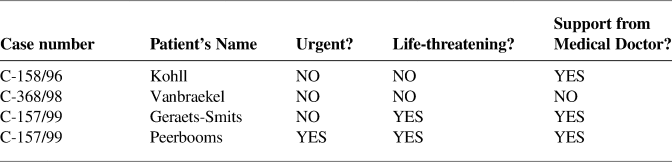
The first case before the CJEU in which a patient wanted to travel abroad for medical treatment and relied on EU law in doing so was Luisi et Carbone.Footnote 31 Ms Luisi was an Italian citizen who wanted to travel to Germany to receive various kinds of medical treatment. However, her case focussed on the restrictions on cross-border movement of cash which were imposed by Italian legislation at that time. She did not claim reimbursement from the Italian healthcare system. As such, no link was made between her medical treatment in Germany and the Italian healthcare system. It was simply about Ms Luisi's ability to take money abroad to pay for various services, including medical treatment. For that reason, the case is excluded from the analysis. Similarly, Decker,Footnote 32 a case in which the CJEU's judgment was delivered on the same day as Kohll, is excluded from the analysis because it was brought on the basis of the free movement of goods. Mr Decker sought reimbursement from the Luxembourg healthcare system for a pair of glasses which he had bought in Belgium.
As a result, Kohll is the first case which should be included in our analysis. Mr Kohll, a Luxembourg national, applied for prior authorisation for his daughter to receive orthodontic treatment in Germany. It is clear from the judgment that Mr Kohll's request was formally submitted by a doctor in Luxembourg.Footnote 33 As a consequence, it was supported by a medical doctor. Authorisation was refused by his health insurer on the basis that the treatment was not urgent and could be provided in Luxembourg. Despite the lack of medical urgency and the fact that Ms Kohll's condition was not in any way life-threatening, the request for prior authorisation was supported by the treating orthodontist. In Vanbraekel, the patient was not actually Mr Vanbraekel himself, but his late wife, Ms Descamps. Ms Descamps went to France to receive treatment for bilateral gonarthritis (arthritis of the knee). There is no indication that her treatment was urgent, or that Ms Descamps had died as a result of the medical condition for which she had been treated in France. Ms Descamps's main problem was that she did not have the support of a doctor who was practising in a national university hospital.Footnote 34 It is unclear whether her request was in fact supported by a doctor working in a non-academic hospital.
A year later, the joined cases of Geraets-Smits and Peerbooms reached the CJEU. Mrs Geraets-Smits had suffered from Parkinson's disease for several years. Parkinson's disease is a progressive illness of the patient's central nervous system which ultimately leads to the patient's death. Patients with Parkinson's disease cannot be cured, and the main focus of their treatment is on relieving and improving their symptoms. Mrs Geraets-Smits applied for prior authorisation to receive treatment in a clinic in Germany which provided “categorial and multidisciplinary treatment” for patients with Parkinson's disease.Footnote 35 This would require a three- to six-week admission to the clinic. Mrs Geraets-Smits's request was supported by the neurologist who was treating her. However, prior authorisation was refused on the basis of an expert opinion by a Professor of Neurology from the University of Nijmegen, who had concluded that the categorical treatment was not evidence-based and that, as a result, there was no clinical necessity for Mrs Geraets-Smits to receive this treatment in Germany.Footnote 36 In the end, Mrs Geraets-Smits never travelled to Germany for medical treatment.Footnote 37
A similar discussion about the evidence-based nature of the medical treatment took place in Peerbooms. Mr Peerbooms fell into a coma after a traffic accident. He was treated in the University Hospital Maastricht. His treating neurologist submitted a request to the health insurer for Mr Peerbooms to receive medical treatment in the University Hospital of Innsbruck.Footnote 38 In Innsbruck, Mr Peerbooms could receive intensive neurostimulation therapy, which was only offered on an experimental basis in the Netherlands to patients below the age of twenty-five.Footnote 39 Mr Peerbooms was in his late thirties and was not entitled to receive this treatment. If he did not receive the treatment in Innsbruck, he would be transferred to a rehabilitation centre in the Netherlands where no further treatment would be provided (and he would be likely to die). Mr Peerbooms's request was refused on the basis that the treatment in Innsbruck was experimental and not based on scientific evidence. Adequate treatment could be provided in the Netherlands. When the case was brought before the national court, the same Professor of Neurology who had written the expert report in Mrs Geraets-Smits's case was asked to provide an expert opinion.Footnote 40 This time, he concluded that no adequate treatment was available in the Netherlands and that Mr Peerbooms should be allowed to receive treatment in Innsbruck. However, the health insurer maintained its position that the treatment was not evidence-based and would not be reimbursed. Despite this refusal by the health insurer, Mr Peerbooms was treated with neurostimulation therapy in Innsbruck and did in fact wake up from his coma.Footnote 41
B. Consolidation (2003–2006)
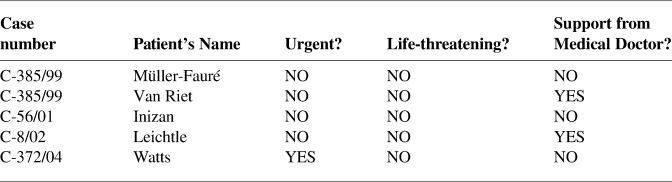
The next case to reach the CJEU after Geraets-Smits and Peerbooms was significantly less complicated from a medical point of view. Again, it was a joined case from the Netherlands: Müller-Fauré and Van Riet. Ms Müller-Fauré was not satisfied with the level of dental care provided in the Netherlands. For that reason, she visited a German dentist while she was on a holiday in Germany.Footnote 42 She had not received prior authorisation for this treatment, which included the insertion of a number of crowns. Her treatment was not urgent, her medical condition was not life-threatening, and she had not been supported by a Dutch dentist or doctor. Although the total costs of her treatment in Germany amounted to a total of about 3,800 EUR, she could in fact only claim reimbursement for a total amount of 200 EUR, as the costs of the other treatments were not covered by her Dutch health insurer.Footnote 43 Ms van Riet suffered from pain in her wrist. The doctor who was treating her submitted a request for prior authorisation for her to receive an arthroscopy in a hospital in Belgium. The main reason for this request was that the waiting lists were much shorter there.Footnote 44 There is no indication that Ms Van Riet's treatment was urgent. Her request for prior authorisation was refused because medical treatment was available within a reasonable period of time in the Netherlands. Nevertheless, she went ahead and received treatment in Belgium.
Ms Inizan's medical situation was more complicated. She had been treated in Paris for many years for an incurable chronic illness, which caused her a lot of acute pain on a daily basis.Footnote 45 All treatments—including psychological treatment—had been unsuccessful. For that reason, she sought permission from her French health insurer to receive multidisciplinary treatment in a clinic in Berlin. Her request for prior authorisation was refused on the basis that there were sufficient treatment options available in France.Footnote 46 Furthermore, the proposed treatment in Berlin would not be equally effective, because her chronic condition required long-term and continuous monitoring which could not be provided by a healthcare provider established in another Member State.Footnote 47 In Leichtle, the patient was a civil servant who worked for the Federal Labour Office in Germany. Mr Leichtle wanted to travel to Italy for a thermal cure in Ischia and applied for prior authorisation to be reimbursed for his treatment there. His request was supported by a medical doctor in Germany.Footnote 48 Mr Leichtle had been suffering from chronic back pain and polyarthralgia. The medical report stated that he had exhausted treatment in Germany, that he required in-patient rehabilitation and that the fango baths and radon treatments available in Ischia would be particularly effective.Footnote 49 His request was refused because he had not established that thermal cures available in Germany had been unsuccessful, and because a significant number of treatments that had proved to be effective for similar illnesses were available in German health spas. Mr Leichtle's appeal against the refusal was rejected because the relevant German legislation provided that it had to be ‘absolutely necessary that the cure be provided outside Germany in order to have the greatest prospect of success’.Footnote 50
The first—and only—patient case to reach the CJEU from the United Kingdom was the case of Watts. Mrs Watts had arthritis and required a hip replacement. She was hoping to receive surgery. However, when she went to see a consultant in the UK, she was told that she was as deserving of a hip replacement as other patients with arthritis in the UK and that she would have to wait for about a year.Footnote 51 On that basis, her request for prior authorisation to receive surgery in France was refused. She started legal proceedings and, in the course of the proceedings, travelled to France to be assessed by a French surgeon. This surgeon recommended that she receive surgery within a few months.Footnote 52 As a result of his report, Mrs Watts was again seen by a consultant in the UK, who concluded that her situation was semi-urgent and that she required a hip replacement within a couple of months. This report did not explicitly support the treatment of Mrs Watts in France, but simply recognised that her medical condition had become more urgent. Despite this increased urgency, a renewed request for prior authorisation was rejected because the length of the waiting list was in line with the NHS Plan targets.Footnote 53 Mrs Watts decided to travel to France anyway and paid for the treatment herself.
C. Further Developments (2006–2014)
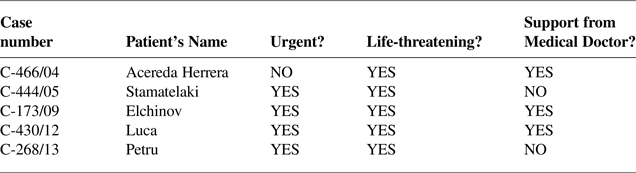
Mr Acereda Herrera was a Spanish patient who was urgently admitted to a Spanish hospital, where he was diagnosed with lung cancer.Footnote 54 Because the medical treatment that he received in Spain was inadequate, Mr Acereda Herrera applied for prior authorisation under Regulation 1408/71 to receive treatment in Paris. His Spanish health insurer granted prior authorisation and, in the course of one year, Mr Acereda Herrera travelled to Paris on a number of occasions for medical treatment.Footnote 55 As a result, his case is one of the few cases brought before the CJEU in which prior authorisation had been granted. The focus of his case was on the question of whether he could also receive reimbursement for the travel and accommodation costs that he and his family members had incurred when they travelled from Spain to France. In Stamatelaki, Mrs Stamatelaki brought a case in the name of her deceased husband, Mr Stamatelakis. Mr Stamatelakis, a Greek national, had been diagnosed with bladder cancer. Because his cancer was rapidly advancing,Footnote 56 he decided to obtain medical treatment in the UK. He did not apply for prior authorisation and there is no indication that his decision was supported by a medical doctor in Greece. For a period of over a month, he received medical treatment in a private hospital in London—the London Bridge Hospital. The total costs of his treatment were GBP 13,600.Footnote 57 On his return to Greece, Mr Stamatelakis—and, after his death, his widow—claimed reimbursement of the costs from his Greek health insurer. The health insurer refused to reimburse him because the relevant Greek legislation provided that treatment in private hospitals could not be reimbursed, except for children under the age of fourteen.Footnote 58
The last trio of cases before the CJEU came from two of the Member States that joined the EU in 2004—the first case was from Bulgaria, the second and third from Romania. Mr Elchinov, a Bulgarian national, was diagnosed with cancer in his right eye. His treating doctor in Bulgaria advised that the most effective way to treat the tumour was through laser therapy—more precisely, through ‘treatment consisting of the attachment of radioactive plates or proton therapy’.Footnote 59 No such treatment was available in Bulgaria. The only treatment that could be provided in Bulgaria would involve the complete removal of his eyeball. For that reason, his doctor advised Mr Elchinov to receive treatment in a clinic in Berlin. Mr Elchinov applied for prior authorisation to receive treatment in Germany. Because of the medical urgency, Mr Elchinov did not wait for the decision and went to Berlin for the treatment. The Administrative Court of Sofia held that Mr Elchinov was entitled to reimbursement. However, on appeal, the Supreme Administrative Court held that Mr Elchinov was not entitled to reimbursement, because the treatment that he had received in Germany was not available in Bulgaria.Footnote 60 As a result, it could not be held to be covered by the Bulgarian healthcare system.
Ms Luca was a Romanian patient who was diagnosed with laryngeal cancer in 2008.Footnote 61 She applied for prior authorisation from her Romanian health insurer to receive treatment in Vienna. Prior authorisation was duly granted, and Ms Luca was successfully treated in Vienna. On her return to Romania, her health insurer refused to reimburse her for all the costs, but only provided partial reimbursement on the ground that Ms Luca should have applied for reimbursement after she had received the treatment in Vienna. This decision was upheld by the Romanian court at first instance.Footnote 62 However, the Court of Appeal of Bacau decided to make a preliminary reference to the CJEU. Ms Petru was also a Romanian patient. She suffered from a serious cardiovascular illness, for which she was treated in a hospital in Timisoara. After a number of years, her illness started to develop rapidly, and she urgently required open-heart surgery.Footnote 63 The mitral valve had to be replaced and she also required two stents. While she was waiting for the surgery in Timisoara, she discovered that the hospital had a lack of basic medical supplies, such as painkillers.Footnote 64 Furthermore, the hospital had admitted three times more patients than its number of beds. As a result, Ms Petru became worried about the adequacy and safety of her medical treatment and decided to apply for prior authorisation to receive treatment in a hospital in Germany. Authorisation was refused by her Romanian health insurer because effective medical treatment was available in Romania.Footnote 65 Nevertheless, Ms Petru decided to travel to Germany to receive treatment there. On her return, she brought legal proceedings to claim reimbursement of the costs of her treatment, which were about 17,700 EUR.
IV. DIAGNOSIS: A CHARACTERISATION OF THE PATIENT IN FREE MOVEMENT LAW
A. The Motives of Patients to Receive Treatment in Another Member State
The empirical analysis of the case law shows that it is not possible to provide a single, unified characterisation of the patient in free movement law. The patient in free movement law seems to have two faces. On the one hand, in about half of the cases, the patient was clearly acting like a consumer. The treatment abroad was similar to what could be described as a second opinion—the patient was dissatisfied with the level of care that was provided in the home Member State and decided that it would be better to obtain a second opinion outside the national healthcare system. In these cases (eight patients), the medical condition of the patient was not urgent.Footnote 66 Furthermore, the treatment was not life-threatening (seven patients). Müller-Fauré and Leichtle provide good examples. In Müller-Fauré, the patient had formed the view that dental care in Germany was of a higher level than in the Netherlands.Footnote 67 For that reason, when she was on a holiday in Germany, she seized the opportunity to receive dental care there. There was no urgency and she made a well-considered decision to obtain treatment under the German healthcare system. Similarly, Mr Leichtle could be regarded as a consumer, who preferred the thermal baths in Italy over those in Germany. In a significant number of Member States, the medical nature of his proposed treatment in Italy would be questioned. Nevertheless, Mr Leichtle's request for prior authorisation was supported by a medical doctor in Germany.Footnote 68 In both cases, a rational and well-considered choice was made to receive medical treatment in another Member State.
A second category—again about half of the cases—shows a different picture. In these cases, the medical condition of the patient required urgent treatment (six patients). Moreover, the illness was life-threatening (seven patients). Therefore, the patient was not able to think long and hard about the possibility of medical treatment in another Member State. In many of these cases, the treatment that was being sought in another Member State was fundamentally different from the treatment that could be provided in the home Member State. In a way, this is not surprising—after all, a Member State only has to grant prior authorisation for medical treatment in another Member State if the same or equally effective medical treatment is not available in the home Member State. As such, in these cases, the other Member State's healthcare system offered an opportunity that simply did not exist in the home Member State.
In cases where patients required urgent treatment and where their illness was life-threatening, it cannot be said that they were acting like a consumer. These cases were characterised by a fundamental lack of choice—if the patient did not travel abroad, they would either die or they would be prevented from the possibility of a cure which was not available in their home Member State. The pressure these patients were under is evidenced by the fact that many of them were not in a position to wait for the decision of their insurer or public authority in their home Member State. Peerbooms and Elchinov are the best examples. In the Netherlands, Mr Peerbooms would not have been offered any kind of further medical treatment. This decision was based on his age and on the fact that the proposed treatment was experimental.Footnote 69 The hospital in Innsbruck was prepared to offer him a treatment—and the prospect of waking up from his coma—which the Dutch healthcare system was not able to provide. In those circumstances, it is not surprising that he—or rather his family and his neurologist—wanted (him) to receive treatment in Austria. His situation was not too different from that of Mr Elchinov, who travelled to Berlin to receive laser treatment on the tumour behind his eyeball. Again, this was a kind of treatment that was not available in Bulgaria and that was more effective and safer—it would mean that his eyeball would not have to be removed—than what could be offered in Bulgaria.Footnote 70 In both cases, the initiative to receive medical treatment in another Member State was taken by the doctor who was treating the patient. The patient was not a proactive consumer who had explored various treatment options and who had finally reached the conclusion that the best treatment available could be found abroad. On the contrary, the patient was very much in the hands of the doctor, who positively encouraged—and, in Peerbooms, even applied for prior authorisation to receive—medical treatment abroad.
B. The Role of the Medical Profession in Free Movement Cases
This is probably the most striking outcome of the empirical analysis: in more than half of the cases (eight patients), the patient was actively supported in their request to receive medical treatment abroad by the doctor who was treating them in their home Member State. Often, it was even the doctor who took the initiative to seek medical treatment in another Member State. This is the best evidence of the fact that the patient was not acting like a consumer, but that they were still very much relying on the expertise of their doctor. By contrast, a process of consumerisation of the patient involves the emancipation of the patient—the patient genuinely becomes more independent from the doctor. This is because the patient is able to independently obtain information about their diagnosis and about the possible treatment options. As a result, the patient relies less on the doctor in making their decisions. The majority of free movement cases do not support this consumerist perspective. The initiative for the treatment was often taken by the doctor, or the doctor at least strongly supported the request for prior authorisation to receive medical treatment abroad. These cases were not about patients emancipating from their doctor, but they were still very much about the patient relying on the expertise of the doctor.
It is clear that free movement of patients is often initiated by the medical profession. It provides an opportunity to the medical profession to show to the State or to the health insurers that are responsible for reimbursing healthcare that high-quality care is provided in another Member State, and that this treatment is offering something to their patients which they currently cannot get in their own Member State. As such, the possibility of free movement of patients provides the medical profession with a tool of confrontation. National healthcare systems are required to react to what is happening in another Member State, and they have to engage with the substance of the medical treatment that is provided in another Member State. The possible reactions from national healthcare systems will be analysed in more detail in the next section. Elchinov was a case where free movement of patients was used by a Bulgarian doctor to confront the Bulgarian healthcare system with a treatment that was being provided in Germany, and that offered a higher prospect of success—and the possibility for patients to keep their eyeball—compared to what could be offered under the Bulgarian healthcare system. Free movement law provided the tool to argue that, despite the fact that the treatment was not available in Bulgaria, it was still covered by the Bulgarian healthcare system. It forced the Bulgarian healthcare system to engage with the type and quality of medical treatment that was provided in another Member State. As a result, free movement law forced a national healthcare system to ‘open up’ to approaches adopted in other Member States.Footnote 71
The possibility of free movement of patients is not only used by doctors to provoke a reaction from the State or from health insurers—in other words, from those who are responsible for the organisation of the healthcare system and for the reimbursement of the costs of healthcare. In addition, free movement of patients is used to encourage discussion within the medical profession itself. In the last decades, and influenced by developments in the United States, the medical profession has put much more emphasis on evidence-based medicine.Footnote 72 This has not been an entirely independent decision on the part of the medical profession—insurers and public bodies have also started to put more pressure on doctors to justify why a particular treatment is necessary. Consequently, professional standards and guidelines adopted by the medical profession have to rely to a significant extent on scientific evidence.Footnote 73 The pressure to rely on scientific evidence can lead to discussion within the medical profession. Although evidence-based medical treatment has to be based on scientific research, the results of scientific research are often open to multiple interpretations. Free movement of patients serves as a tool to medical doctors to confront another group with a different kind of treatment, and possibly with a different kind of interpretation of what constitutes evidence-based treatment. As such, free movement law enables medical professionals to challenge existing interpretations of medical evidence in their home Member State and encourages a process of internationalisation of medical opinion.Footnote 74
Similar to the impact of Elchinov, this does not automatically mean that medical treatment will always be provided in accordance with the highest possible standards, but it does mean that medical professionals and national healthcare systems are encouraged to exchange their interpretations of medical evidence. In Peerbooms, both the doctor who was treating Mr Peerbooms and the independent expert appointed by the Dutch court were of the opinion that Mr Peerbooms should be given the chance to receive neurostimulation treatment in Innsbruck. The ruling of the CJEU, which held that decisions on prior authorisation had to be taken on the basis of international scientific evidence, enabled the doctors to confront their colleagues with the view of the medical profession in other Member States, and to initiate a discussion among their colleagues. As we will see below, this does not necessarily mean that views are changed, but it does mean that an obligation is imposed on the doctors who represent the majority view in a particular Member State to justify why their position is correct.Footnote 75 This can only improve the quality and the evidence-based nature of medical treatment.
C. The Relationship between the Moving Patient and the Non-moving Patient
The criticism of free movement of patients also has a strong social component: free movement law appears to favour those patients who are financially independent. Their financial independence enables them to make choices which are good for themselves, but which do not necessarily help patients who do not have the financial means to move abroad and who are reliant on their national healthcare system. The fact that the moving patients subsequently claimed reimbursement from their national healthcare system meant that money had to be paid to a different healthcare system, which would otherwise have been paid into the home healthcare system.Footnote 76 As such, patients who stay at home allegedly suffer from free movement of patients, since financial resources are being shifted to other Member State's healthcare systems. On a first impression, this criticism appears to be justified. In most of the analysed cases, the patient was sufficiently financially independent to decide to receive medical treatment abroad. This made it possible for the patient to travel abroad to receive treatment despite the fact that the national healthcare system or health insurer had not (yet) granted prior authorisation to receive treatment in another Member State.Footnote 77 It has already been shown above that the financial independence from the national healthcare systems did not necessarily mean that patients also made decisions independently from the medical profession in their home Member State. Often, they relied on the judgement of their treating doctor in seeking treatment abroad. Still, the patients travelled to another Member State—they simply wanted to get better and they believed that they had a higher chance of getting cured abroad. There are no indications that there was in any way an altruistic motive behind the free movement of patients.
However, even though the motives of patients may be purely selfish, the exercise of free movement rights by patients does create a link between the moving and non-moving patient. This link is created through the process of claiming reimbursement. It will be recalled that patients are only entitled as a right derived from EU law to receive medical treatment in another Member State if the treatment is covered by their home healthcare system or health insurance policy. As a result, in claiming that reimbursement should be awarded, the patient is making a broader claim about the scope of the coverage of their national healthcare system or insurance policy. This claim has an impact on all patients—not just on those patients who are financially able to move abroad for medical treatment.Footnote 78
This can be explained most convincingly by reference to Elchinov. Mr Elchinov claimed that the laser treatment which was not available in Bulgaria was covered by his Bulgarian health insurance. The fact that Mr Elchinov was able to travel abroad and pay for the treatment himself, subsequently enabled him to make this claim before the Bulgarian courts. In other words, Mr Elchinov's financial investment in the medical treatment in Germany made it possible for him to claim that the treatment was covered by the Bulgarian healthcare system. When the CJEU found that the treatment could indeed be held to be covered by the Bulgarian system—even though it was not available in Bulgaria—the result was that all Bulgarian patients were entitled to receive this medical treatment, whether in Bulgaria or abroad. Mr Elchinov's financial investment in the German system was ultimately an investment in the Bulgarian healthcare system, because it made it possible for non-moving patients to receive the same kind of treatment. Someone with the financial independence of Mr Elchinov was necessary to make this treatment available to all Bulgarian patients. In a way, it could be argued that he acted like an explorer for his national healthcare system.Footnote 79 Although he did not act for social or altruistic reasons, the outcome of his actions was to improve the position of the non-moving patient in Bulgaria.
A similar outcome can be seen in Watts. Because Mrs Watts was not willing to wait for the NHS’ waiting lists and decided to pay for surgery in France, she put pressure on the NHS to change its policy on waiting lists. In the end, the NHS decided to create more flexibility in the management of waiting lists.Footnote 80 Furthermore, it decided to actively send patients abroad for medical treatment. As a result, although it looked like Mrs Watts had got involved in some—very uncharacteristic for the English—queue-jumping, in fact she improved the position of other patients on the waiting lists. Her financial independence made this possible. Overall, therefore, free movement of patients—even if it does not take place for altruistic motives—creates a link between the moving patient and the non-moving patient. The effect of the exercise of free movement rights by financially independent patients is that patients also benefit at the domestic level. As such, the solidarity between moving and non-moving patients is improved through the process of reimbursement in the home Member State, which has a positive effect on the quality of healthcare provided to patients beyond the case of the individual patient.
V. PROGNOSIS: THE IMPACT OF THE MOVING PATIENT ON NATIONAL HEALTHCARE SYSTEMS
In the final part of the analysis, our focus will shift from the characteristics of the patient to the impact of the moving patient on national healthcare systems. This means that it is no longer sufficient to focus only on the characteristics of the patient—it is also necessary to analyse the reaction of national healthcare systems to free movement of patients. In order to be able to do this, the outcome of free movement cases must be investigated. As such, the empirical perspective on the moving patient will be supplemented with an empirical analysis of what happened after the judgments of the CJEU. This analysis has not been undertaken for every case included in this article. Rather, the aim is to identify patterns based on a detailed analysis of the outcome of four cases: Peerbooms, Watts, Elchinov, and Petru. It will be argued that there are three different patterns of reactions that free movement of patients can provoke. First, it can lead to no real changes in the national healthcare system. In other words, the ‘status quo’ is maintained.Footnote 81 Second, national healthcare systems can react positively to free movement and introduce positive changes in the national healthcare system after the free movement of patients. This could be described as a ‘learning process’ as a result of free movement of patients. Third, it can lead to a negative reaction by the national healthcare system. Free movement of patients is rejected and restricted. Each of these patterns will now be analysed in more detail.
A. Maintaining the Status Quo
One of the reactions of national healthcare systems to free movement of patients could be to not make any changes to the entitlements of patients at all. If the finding of the CJEU was that the treatment was covered by the home Member State's healthcare system, but that the treatment abroad was more effective or could be provided more quickly, the Member State has to accept that it is possible for patients to receive this treatment in another Member State. If they do not react to this finding of the CJEU, it means that in future cases they will continue to have to grant prior authorisation to these patients and to reimburse the costs of the treatment abroad. Depending on the regime chosen for prior authorisation, this could mean that patients are not required to pay for the treatment abroad themselves and that payment can be made directly by their national healthcare systems or health insurers. As a result, the case before the CJEU paved the way for more patients to receive the treatment in another Member State. Since there has not been a reaction by the Member State, patients know that they are now also entitled to receive this treatment. Although their individual circumstances always have to be considered—and this may have an impact on the urgency of their situation—the basic rule is that the treatment abroad is now available.
This is what happened in Bulgaria after Elchinov. After the preliminary reference before the CJEU, it became clear that the treatment that Mr Elchinov had received in Germany was covered by the Bulgarian healthcare system and that he was entitled to reimbursement of the costs. At that point, three options were open to the Bulgarian State. First of all, they could keep the rules and the entitlements of patients under the national healthcare system as they were. This would mean that patients continued to be entitled to receive the same kind of treatment Mr Elchinov had received in other Member States. A second reaction could be to accept that, since the treatment was now held to be covered by the Bulgarian healthcare system, the laser treatment should also be provided in Bulgaria. As such, it could lead to the ‘import’ of the medical treatment in Bulgaria. Thirdly, the CJEU's decision that the laser treatment was covered by the Bulgarian healthcare system could provoke a negative reaction by the Bulgarian authorities. It could lead to a change to the entitlements of Bulgarian patients under the national healthcare system, so that it was clear that the treatment was not covered by the Bulgarian system. If this happened, it would mean that patients would no longer be entitled to receive the treatment abroad.
In Bulgaria, the status quo was maintained. The treatment which Mr Elchinov had received in Germany is still unavailable in Bulgaria. It has not led to a situation where Bulgarian doctors are now also providing the treatment. However, the Bulgarian State has not expressly excluded the treatment from the entitlements of Bulgarian patients either.Footnote 82 As a result, it is still possible for Bulgarian patients to receive the treatment in another Member State and to be reimbursed for it by the Bulgarian healthcare system.Footnote 83 In fact, Elchinov has resulted in an increase of free movement of patient cases in Bulgaria.Footnote 84 The negative reaction by the Bulgarian State which had been feared by many commentators has not occurred. This may have been the result of the low number of patients who have moved abroad for medical treatment, but it remains a fact that, through his free movement case, Mr Elchinov has created an opportunity for other Bulgarian patients to receive high-quality treatment in another Member State. Because no changes have been made to the entitlements of patients under the national healthcare system, the possibility of cross-border treatment remains open and remains a realistic opportunity for patients whose prospects of improvement under the Bulgarian system are lower. Although we should be careful to draw general conclusions from Elchinov, the case does show that Member States are unwilling to explicitly restrict the entitlements of patients as a result of free movement of patients cases.
B. Learning from the Healthcare Provided in Another Member State
Because the number of cases in which patients sought reimbursement for medical treatment abroad is quite low, maintaining the status quo is the most likely scenario after a free movement case. However, free movement of patients could also provoke a positive reaction by the home healthcare system. This reaction could be in two different ways: first, free movement of patients could lead to a situation where the treatment would now be provided in the home Member State (the ‘import’ of the treatment already referred to above). This could be because it is recognised that the treatment provides a higher chance of improvement for patients and should, therefore, be available in the home Member State. It could also be imported for more pragmatic reasons: if the treatment is covered by the national healthcare system, it might be more efficient to provide the treatment under the national healthcare system than to have to spend money on another Member State's healthcare system. Second, the Member State could decide to ‘embrace’ the possibility of free movement of patients by proactively sending patients abroad for medical treatment. Again, this would be based on the recognition that patients could get something in another Member State which they were not able to get under their national healthcare systems. Depending on the type of national healthcare system, this could mean that the healthcare system or health insurer would decide to send patients to another Member State for treatment. In both scenarios, the home Member State accepts that the treatment (or the quality of treatment) provided in another Member State should also be provided in the home Member State, or that the home Member State's healthcare system is responsible for guaranteeing that patients have access to this treatment abroad. As such, it can be said that the home Member State has engaged in a learning process based on the medical treatment provided in another Member State—the type and quality of medical treatments that patients receive is improved as a result of the exercise of free movement rights.
This is precisely what happened in the UK after Watts. After the case of Mrs Watts, the NHS decided to proactively send patients to France for knee operations on a regular basis because of the length of the waiting lists in England.Footnote 85 As such, embracing free movement becomes a possible scenario in situations where medical treatment is not available without undue delay in the home Member State. This is not a situation where it would be necessary to import the medical treatment into the home Member State—after all, it is already being offered there. However, the delay caused by the length of waiting lists makes it necessary to embrace free movement. Again, this is both for effectiveness and efficiency reasons—it means that patients are being treated earlier, and it also makes it possible for the home Member State to control the expenditure on other Member State's healthcare systems. Overall, the learning exercise in these cases is not so much focussed on new types of treatment—ie on quality of healthcare—but more on the efficiency with which medical treatment is provided. It could also impose an obligation on the national healthcare system to look more proactively at treatment options in the home Member State itself.
This could be the result of Petru, in which the CJEU held that patients have a right to receive medical treatment abroad if, because of a lack of basic medical supplies, the medical treatment in the home Member State would not be adequate.Footnote 86 However, this right would only arise if no adequate treatment could be provided in the entire Member State—not just in the hospital where the patient was being treated. As a consequence, if Ms Petru could not be adequately treated in Timisoara, the Romanian healthcare system had to find a different hospital for her in Romania where she could receive adequate medical treatment. It was only if the entire national healthcare system was unable to provide adequate medical treatment that free movement became a legitimate option.Footnote 87 The Romanian national court still has not given its judgment after the preliminary reference before the CJEU.Footnote 88 However, it is clear that the free movement of patients in this case forced the national healthcare system to engage in another type of comparative exercise. This exercise would not involve the comparison of the treatment in another Member State with what could be offered in the home Member State, but it would force the national healthcare system to engage in a comparative exercise to investigate what quality of care could be provided in different hospitals in the home Member State.Footnote 89
C. Rejecting the Healthcare Provided in Another Member State
The third and final pattern of reaction by a Member State could be to restrict the possibility of free movement after the case which had been brought before the CJEU. Although this could again happen in different ways, the most likely way for Member States to achieve this restriction would be to redefine the entitlements of patients under their national healthcare system or health insurance policy. This could be based on a different interpretation of the entitlements in the home Member State or through an express limitation or restriction of these entitlements. This was the fear of many commentators after the judgment in Elchinov. They warned that the broad interpretation of the scope of the free movement rights of patients could provoke a negative reaction by Member States that were worried about spending too much money on their national healthcare system. Therefore, they could expressly provide that certain treatments were not—or no longer—covered by the national healthcare system in order to avoid having to reimburse the costs of these treatments in other Member States. Such a rationing exercise could be particularly attractive to some of the newer Member States.Footnote 90 Ultimately, as has already been described above, this is not what has happened after Elchinov. More generally, there are no indications that Member States have introduced changes to their legislation, or that health insurers have restricted the entitlements of patients as a result of free movement of patients. Apparently, the financial gains of such a restriction exercise are not sufficient considering the limited number of patients who travel abroad for medical treatment.
One case which did provoke a negative reaction at the national level was Peerbooms. The main issue in this case was whether Mr Peerbooms was entitled to receive intensive neurostimulation treatment under his Dutch health insurance policy. The Dutch health insurer used two conditions in deciding which treatments were covered—medical treatment had to be both ‘necessary’ and ‘normal’.Footnote 91 It concluded that the treatment that Mr Peerbooms wanted to receive in Innsbruck was experimental and not sufficiently evidence-based. The CJEU accepted that the criterion of ‘normal treatment’ could be used. However, it also held that what constituted normal treatment had to be decided in light of international scientific evidence. The treatment had to be ‘sufficiently tried and tested by international medical science’.Footnote 92 As a result, the Dutch court had to decide whether the treatment was normal on the basis of an assessment of international scientific evidence.
Initially, when Mr Peerbooms's case was brought before the Dutch court, the experts had based themselves on a Dutch report on patients in a vegetative state.Footnote 93 This report was also relied on by the court to refuse reimbursement when the case returned to the Netherlands after the judgment of the CJEU. However, on appeal, the Centrale Raad van Beroep held that the lower court had relied exclusively on the opinion in Dutch medical science.Footnote 94 Therefore, the appeal was allowed since the court should have assessed the evidence from an international perspective. The Centrale Raad van Beroep asked the experts to explicitly address the question whether there was international scientific evidence to suggest that neurostimulation therapy could lead to patients waking up from their coma.Footnote 95 The experts looked at PubMed, the main international database for medical scientific publications, and analysed a number of American and Canadian studies. In the end, the conclusion was that neurostimulation therapy was not (yet) evidence-based and that there were no studies which proved that the treatment was successful. The Centrale Raad van Beroep also noted that the professor who had been providing the treatment in Innsbruck for many years had not been able to provide scientific evidence to confirm the positive effects of the treatment.Footnote 96 As a result, Mr Peerbooms was not awarded reimbursement of the costs of the treatment.
This case shows that free movement of patients forced the medical profession in the home Member State to engage in a more internationally focussed assessment of the available scientific evidence. Even though the Dutch medical profession ultimately rejected the possibility of neurostimulation therapy—which meant that it was not covered by Mr Peerbooms's health insurance—they could only do this on the basis of a broader assessment of the scientific evidence. As such, free movement law encourages a dialogue between and within healthcare systems, and between different interpretations of scientific evidence.Footnote 97 Because of the lack of scientific evidence, the Dutch system was entitled to refuse reimbursement for this treatment. From a general point of view, it is important to note that the restriction of free movement was based on a well-considered judgement about the quality of the treatment provided in another Member State. The rejection of the possibility of free movement was based on concerns about the quality of care. This is now also expressly recognised as a ground to refuse prior authorisation for medical treatment abroad in the Cross-Border Healthcare Directive.Footnote 98 There have been no cases in which free movement of patients was restricted for purely economic reasons. Although this may be because of the low number of patients who travel abroad for medical treatment, it is a relevant factor in assessing the impact and desirability of free movement of patients.
VI. CONCLUSION
The overall aim of this article has been to rethink the primarily negative attitude towards the impact of free movement law in the healthcare sector. The analysis has been conducted from a bottom-up perspective. By taking the patient in free movement law as a starting point, the impact of free movement law ‘in the treatment room’ has been analysed. From this patient-based perspective, the article has shown how free movement of patients has led and can potentially lead to changes to national healthcare systems. However, free movement law does not only have an impact on healthcare systems. It directly affects patients and doctors when they receive and provide medical care. The empirical evidence shows that free movement law is not just about the exercise of patient autonomy. The dynamics between patients and doctors are more cooperative. Furthermore, free movement law has encouraged the medical profession to reconsider existing interpretations of evidence-based medicine.
The empirical analysis has shown that the characteristics of the patient in free movement law cases are more nuanced than what has previously been suggested in the literature. The extent to which patients acted like consumers is significantly more limited and free movement of patients is often encouraged and driven by the medical profession. It is clear that the number of patient cases which have reached the CJEU is low. It cannot be excluded that the low number of patients who decided to travel abroad for medical treatment is at least partially the result of the negative attitude towards free movement of patients in the literature. This is a field with a significant amount of interaction between patients, doctors, and the legal profession. In this triangular relationship, more can be done to make free movement of patients a realistic option for patients who would like to—or who have to—receive a different type of medical treatment in another Member State—or who have to receive treatment more speedily than the available treatment in their home Member State. In other words, free movement of patients should be considered more strategically. Before this can be done, patients and doctors have to be better informed about the potential of free movement of patients.
Patients, doctors, and lawyers should be encouraged to increase the dialogue on the role of free movement law in the healthcare sector. A more strategic approach to free movement of patients would not suddenly turn the patient into a consumer, because any decisions to seek free movement should be based on cooperation between doctor and patient. Lawyers have an important role to play in advising the medical profession—and potentially also patients and patient associations—about the limits of national healthcare systems or health insurance policies, and about the ways in which the entitlements of patients under their national healthcare systems can be interpreted in such a way that free movement is made possible. If the cooperation between these parties is more effective, free movement of patients can be used more frequently as a tool to improve the quality of healthcare that is available to patients across the EU.


