Resilience (RS) refers to positive adaptation or recovery despite experiences of significant adversity, that is, despite life situations that usually produce maladjustment (Luthar, Reference Luthar, Cicchetti and Cohen2006). According to this author’s review (2006), that covers five decades of research on resilience, it is not unusual that children exposed to different kinds of adversities and life stressors develop positive adaptation. Confronted with this fact, researchers have recognized the importance of identifying which environmental and personal factors are responsible of such adaptation, in order to develop intervention programs aimed at promoting resilience. Three kinds of protective factors had been identified: family, community and personal factors (Luthar, Reference Luthar, Cicchetti and Cohen2006). However, the different conceptual perspectives and methodological strategies used in research make progress difficult, unless some problems are solved (Luthar & Brown, Reference Luthar and Brown2007; Masten, Reference Masten2007).
First, there is a conceptual problem. Resilience, competence, ego-resilience and hardiness overlap in some way, and it is necessary to decide whether they are unique or redundant scientific constructs. With the intent to clarify their similarities and differences, Luthar (Reference Luthar, Cicchetti and Cohen2006) relied on theoretical criteria. For her, resilience implies two elements, positive adaptation and adverse situations, whereas competence implies only the first. As for ego-resilience, it is considered a trait reflecting general resourcefulness in response to varying situations, whereas resilience is a phenomenon. As for hardiness, it is a general trait including three personality dispositions: commitment (having a purpose, being active, etc.), control expectancies, and challenge (Kobasa, Maddi, & Kahn, Reference Kobasa, Maddi and Kahn1982). Other authors even consider that resilience is a personality super-factor including different intermediate personality factors (Block, Reference Block2001). For us, from a conceptual point of view, most personality traits need to be explained. Their identification, in most cases, is the result of analysing self-report measures describing and summarizing behavioural tendencies resulting from the interaction between temperament and environment conditions, but not of the identification of the “personality processes” underlying such tendencies. So, it might be the case that such processes were common for resilience and the personality factors mentioned. And the same happens to resilience. In fact, resilience -as a phenomenon- needs to be explained (Leopold & Greve, Reference Leipold and Greeve2009). So, in order to determine in précis way which kinds of factor contribute to resilience, or whether it is different or not from the characteristics referred to by the personality constructs above mentioned, the phenomenon itself needs to be measured in some way. That is, it is necessary to state the degree of positive adaptation in the face of conditions implying high risk of developing maladjustment. However, risk and positive adaptation are not “all or none” concepts. As Luthar (Reference Luthar, Cicchetti and Cohen2006) has pointed out, people can be resilient when facing a kind of adversity, but not when facing others, and they can be resilient in different degree. Researchers, then, must determine what can be considered an index of positive adaptation when facing a specific “kind” of risk, that is, in a particular adverse context. Of course, there are processes underlying resilience like, for example, the use of coping strategies (Leopold & Greve, Reference Leipold and Greeve2009; Reaching In… Reaching out, 2010), but it is necessary to measure the phenomenon in order to validate the “process models” that can be hypothesized to underlie resilience. In the same way, there are “personal and contextual protective and vulnerability factors” that are intertwined with each other and configure the processes that produce resilience (Masten, Reference Masten2007). However, even if previous research has identified protective factors that favour resilience, it is necessary to measure the phenomenon to validate with greater accuracy protective “asset or strength models” able to explain resilience. And finally, without measuring the phenomenon, it is difficult to differentiate on empirical grounds its similarities and differences with personality constructs.
Second, there is a measurement problem. In person-based analyses involving comparisons between children who experience high risk and show high competence for adaptation and children also experiencing high risk but not such competence, once the risk group is identified –for instance, children living in poverty conditions-, competence for positive adaptation is derived: (a) standardizing scores in scales assessing different protective factors and adding them (Luthar & Zelazo, Reference Luthar, Zelazo and Luthar2003), or (b) stipulating cutoffs that represent positive and negative adjustment in each indicator. However, these procedures presuppose that resilience is the result of summing up those characteristics determining it –for example, sense of mastery, sense of relatedness and emotional reactivity (Prince-Embury & Courville, Reference Prince-Embury and Courville2008) –, a supposition that must be demonstrated. This problem could be solved if researchers had a more direct measure of resilience, that is, of positive adaptation in spite of adversity. This kind of measure could be based on behaviours showing positive adaptation (objective measure) or on the perception of the usual way of reacting to adverse situations (subjective measure). Each kind of measure has its own advantages and drawbacks, but both are necessary, as they show different facets of resilience. So, we have decided to develop a measure of “subjective resilience” -the subjective experience of not giving up in front of adversity- and to carry out some analyses aimed to test its validity.
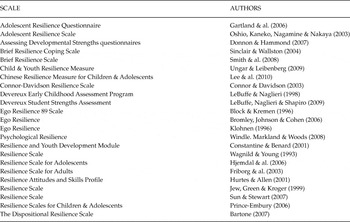
From the contextual factors that can affect resilience in a positive or negative way (Masten, Reference Masten2007), those related to family educational practices, to peer attitudes and behaviours towards the child, and to instructors’ teaching and classroom management practices are especially important. This fact suggested us the convenience of developing a scale including adverse family, school and relation-to-peer conditions, and of assessing the degree of resilience experienced in such conditions. Before doing so, we tried to know the state of the art in measuring resilience. Fortunately, we found two very recent works dealing with the topic. First, a systematic examination of conceptual and methodological problems on measuring resilience carried out in the context of the project “Reaching In… Reaching out” (2010), and second, a recent methodological review of resilience measurement scales carried out by Windle, Bennet, and Noyes (Reference Windle, Bennet and Noyes2011). We found also some questionnaires not included in these reviews. Main questionnaires and scales cited in both studies or found later are presented in Table 1.
Main instruments for assessing resilience

The “Reaching in…Reaching out” project examines a total of 38 assessment instruments intended to measure resilience and related characteristics, such as hardiness, as well as strengths and protective/risk factors. However, all the measures, even those included under the heading “resilience”, are centred on factors favouring resilience, but do not measure the phenomenon itself. The same seems to happen with other measures not included in the review. For example, Nickolite and Doll (Reference Nickolite and Doll2008) work with the Class-Maps Consultation, a tool for assessing risk and protective factors examining six educational characteristics: (a) academic self-efficacy; (b) behavioural self-control (paying attention to teacher, interacting with peers in a competent way, etc.); (c) academic self-determination (fixing personal learning goals); (d) a warm relation teacher-student; (e) supportive and rewarding friendship with peers; and (f) home-school communication.. All these characteristics may favour resilience, but “are not” resilience.
Windle et al. (Reference Windle, Bennet and Noyes2011), on their side, examined the quality of nineteen resilience measures from a conceptual and methodological point of view. The criteria used included content validity, internal consistency, criterion validity, construct validity, reproducibility, responsiveness to intervention, control of floor and ceiling effects, and interpretability. Many of the scales were the same included in the “Reaching in… Reaching out” project. The results showed that the conceptual and theoretical adequacy of most scales was questionable. Also, that most of scales were in the early stages of development, and that only three –all for adults- were adequately rated based on their psychometric properties. Besides, none of them was designed for assessing the subjective perception of resilience.
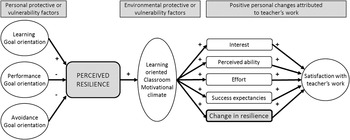
Since no questionnaire covered the gap we had detected, it was decided to go on with the development of a questionnaire of perceived or subjective resilience. It should cover answers to adversity due to family, peer and teacher actions. The main indicator of resilience –or of the lack of it- is the degree in which people react showing positive attitudes in adverse situations. So, items making reference to positive or negative reactions exhibiting such attitudes were designed. Several analyses were carried out in order to determine its factor structure and internal consistency. However, the main problem was to decide how to determine the validity of the new measure. Several steps and strategies were possible. A first step was to determine the cross-validity of the questionnaire factor structure. Beyond this analysis, how could we determine construct and predictive validity? Given that our main research project focuses on the study of classroom motivational climate effects on motivation (Alonso-Tapia & Fernández, Reference Alonso-Tapia and Fernández2008, Reference Alonso-Tapia and Fernández2009; Ames, Reference Ames1992; Midgley et al., Reference Midgley, Maher, Hruda, Anderman, Anderman, Freeman and Urdan2000), we decided to start testing several hypotheses relating goal orientations, resilience and classroom motivational climate in the way presented in Figure 1.
Hypothesized relations between goal orientations, resilience, classroom motivational climate and positive personal changes attributed to teacher’s work.

In the first place, as it can be seen in the left part of the figure, goal orientations (GO) are considered personal protective or vulnerability factors affecting resilience. This supposition receives support from the work by Good and Dweck (Reference Good, Dweck, Sternberg and Subotnik2006). These authors suggested that self-theories on intelligence and goal orientations foster the resilience that contributes to shape personality. According to their theory and to studies supporting it, students confront challenges or obstacles that are often experienced as adversities: they have worked on difficult problems, navigate school transitions, are presented with challenging course work, or are members of stereotyped groups and thus, are vulnerable to stereotype-induced performance deficits. When confronting these adversities, they do it with an entity or incremental self-theory of intelligence and with a learning or performance goal-orientation (self-theories and goal orientations are very closely related). However, in the studies carried out or revised by Good and Dweck, self-theories and goal orientations —not initial ability differences— distinguished between those who succumbed to adversity and those who thrived. So it could be expected that goal orientations and resilience, as measured by the new questionnaire, will correlate in the direction hypothesized by Good and Dweck: As students’ learning goal orientation increased, so would do resilience, whereas as students’ performance or avoidance goal orientation increased, resilience would decrease. If this was the case, it would be adequate to intervene on the coping and self-regulation processes underlying goal orientations in order to promote resilience.
In the same figure it follows that resilience predicts the degree in which students perceive that classroom motivational climate (CMC) is learning oriented, and next, that CMC relates to the degree in which students attribute perceived changes in interest, perceived ability, effort, success expectancies and resilience to their teacher’s work. Where do these predictions come from?
Goal orientations are personal characteristics that can favour resilience. Nevertheless, as Luthar (Reference Luthar, Cicchetti and Cohen2006) pointed out, resilience seems to depend mainly on environmental characteristics –or situational factors-. One of these factors can be the classroom motivational climate configured by the set of teaching patterns of teachers, such as Ames (Reference Ames1992) coined the term. According to achievement goal theory (Elliot, Reference Elliot, Elliot and Dweck2005; Alonso-Tapia, Huertas, & Ruiz, Reference Alonso-Tapia, Huertas and Ruíz2010), positive and negative patterns of cognition and affect, defining mastery/learning, performance-approach or performance-avoidance goal orientations can be elicited by different situational factors and instructional demands. Hence, researchers have studied which variables configure the classroom motivational climate “that most favour interest and effort to learn”. Alonso-Tapia and Pardo (Reference Alonso-Tapia and Pardo2006), in line with Ames, summarized a set of teaching strategies that could be organised around different points along the learning sequence–before, during and after instruction-, and whose effectiveness for enhancing learning motivation had been pointed out by research. Building on this work, Alonso-Tapia & Fernández (Reference Alonso-Tapia and Fernández2008, Reference Alonso-Tapia and Fernández2009) developed the Classroom Motivation Climate Questionnaire (CMCQ). This questionnaire –described below- assesses the degree in which students declare that different teaching patterns contribute to create a classroom motivational climate favouring their motivation to learn. Studies carried out with this questionnaire have produced two kinds of results that provide the base for the two hypotheses previously mentioned.
First, it has been found that goal orientations (GO) moderate scores on perceived CMC, that is, the degree in which students consider that the “CMC is learning oriented “ relates positively to the degree of learning orientation (LO) they had when they entered to classroom, and negatively, to the degree of their performance or avoidance orientation (PO, AO). This could be attributed to the coherence of teaching patterns -or the lack of it- with students’ expectancies. At the same time, Good and Dweck (Reference Good, Dweck, Sternberg and Subotnik2006) have shown that GO contribute to resilience, as GO imply different ways of coping with difficulties and failures. So, it may be that the general perceived resilience that students have when they enter to classroom moderates also scores on perceived CMC, as SRS is the result of similar coping processes.
Second, studies revised by Good and Dweck (Reference Good, Dweck, Sternberg and Subotnik2006) had shown that changing goal orientations contribute to change resilience –as LO increases, so does RS, and the opposite happens as PO and AO increase-, and our own studies cited in this work had shown that CMC scores predict the degree in which students’ subjective changes in interest, effort, perceived ability, success expectancies and satisfactions are attributed to the way teachers conduct their classrooms. So, following the reasoning of Good and Dweck, if teaching patterns (CMC) contribute positively to change variables related to learning motivation –the ways of coping with difficulties and failures- and if these processes underlie resilience (Leopold & Greeve, Reference Leipold and Greeve2009), it can be expected that CMC will improve resilience, and that the perception of this change -if produced- would relate positively to CMC. The hypothesis about the relationship between the attribution of changes in motivational variables and resilience with students’ satisfaction is based in the same line of reasoning and in evidence gathered in previous studies (Alonso-Tapia & Fernández, Reference Alonso-Tapia and Fernández2008, Reference Alonso-Tapia and Fernández2009; Alonso-Tapia & Moral, Reference Alonso-Tapia and Moral2010).
Method
Participants
Several public schools in Madrid (Spain) voluntarily accepted to participate in the study. A total of 471 students from them formed the sample. There were 231 females and 240 males. The age range for which the questionnaire was developed is that of the sample, students from 12 to 17 years old (M = 15.3; SD = 1.56). The sample was randomly divided in two sub-samples with almost equal number of subjects. The first sample was used for carrying out the initial analysis and the second sample, for cross-validating the results. Only subjects without missing values were used for the analyses.
Materials
In order to test our hypotheses, the following instruments were used.
Subjective Resilience Questionnaire (SRSQ) Footnote 1 .
This questionnaire contains 30 items describing positive (resilient) and negative reactions related to adverse events experienced by the students when relating with their teachers, peers and parents –or surrogates, the adult persons they live with- as, for example: “Though sometimes I’m not appreciated by my teachers due to my limitations and errors, in these occasions I do not discouraged, and go on trying to learn”; “If my peers leave me alone when doing a task, I lose my motivation even if I like very much the task”; “Despite the fact that my parents do not give support to me when I need their help, I do not allow difficulties to overwhelm me”. One of the objectives of this study is to determine the structure of this questionnaire and its reliability, and to test the hypotheses formulated on their content and predictive validity. Items had to be answered in a 5-point Likert scale. Item scores were added to obtain the scale scores.
“Motives and expectancies” questionnaire (MEVA3).
This is an abbreviated version of the MEVA questionnaire (Alonso-Tapia, Reference Alonso-Tapia2005). It includes two parts. The first is composed by three scales that allow assessing the three main goal orientations described in the literature (Elliot, Reference Elliot, Elliot and Dweck2005): learning (α = .79), performance (α = .74) and avoidance (α = .75). The second is formed by two scales for assessing self-efficacy expectancies (α = .68), and control expectancies (α = .80). Goal orientations were used to test the hypothesized relations between these variables and resilience (Good & Dweck, Reference Good, Dweck, Sternberg and Subotnik2006). They were also used to gauge their relative weight in predicting the degree of perceived change in resilience and motivational variables, such as interest, perceived efficacy, effort, success expectancies and satisfaction attributed to teacher’s work. We had not specific hypotheses about the role of expectancies. However, we decided to include the expectancy scales to explore their potential role as moderator variables in the different predictions being tested.
The Classroom Motivation Climate Questionnaire (CMCQ) (Alonso-Tapia & Fernández, Reference Alonso-Tapia and Fernández2008).
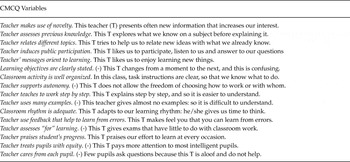
This questionnaire was designed to cover sixteen kinds of teaching strategies or patterns that, according to the theoretical review, could affect positively the student motivation to learn. Two items were written to assess each kind of pattern. To avoid acquiescence effects, one was positive and the other negative. Each item had to be answered in a five-point Likert scale, so the score of each pattern ranged from one to ten. Table 2 shows the sixteen variables and examples of the items. The questionnaire has only one scale, Classroom Motivation Climate oriented to learning (reliability α = .93). This scale was used to test, first, whether resilience, as a more or less stable perceived personal characteristic, moderates the student’s perception of the classroom motivational climate; and second, to exam whether the degree in which students attribute resilience to teacher’s work depends mainly on classroom motivational climate or is moderated by other variables such as previous subjective resilience -measured by the SRSQ- or student’s expectancies.
Teaching patterns assessed by the CMCQ with item-examples

Six independent scales for assessing the Perceived teacher’ role in changing student’s resilience, interest, perceived ability, effort expenditure, success expectancies and satisfaction with teacher work were also used. The perceived change in resilience scale has eight items and a reliability index, (αPCRS = .83). The following four scales have three items and their reliabilities are: (αINT = .75); (αPAB = .72); (αEFF = .69); αSUC = .66). Finally, the satisfaction scale has four items with reliability (αSAT = .72). Table 3 includes item examples of these scales. They were used for examining whether the degree in which students attribute resilience and motivational changes to teacher work depends mainly on classroom motivational climate or on the potential moderating role of goal orientations, expectancies and general perceived resilience. All these scales had been developed and used in previous studies (Fernández, Reference Fernández2009), except the scale measuring perceived change in resilience. This scale, with eight items, was developed for this study Footnote 2 .
Item examples of scales assessing the role attributed to teacher in perceived resilience and motivational change

Procedure
The students filled in the questionnaires in two sessions of 50 minutes. When items referred to parents, they were told to think in persons developing their role if they did not live with their real parents. They answered the MEVA and the SRSQ, and then each group of students was instructed to fill in the CMCQ and the final scales in relation to the teacher of one of the academic subjects selected randomly. Once the questionnaires were filled, the following analyses were carried out.
In order to determine the SRSQ factorial structure, two confirmatory factor analyses (CFA) were carried out. First, In in order to test whether resilience could be considered a general characteristic manifesting in a similar way in all the items, a one-factor structure was used as baseline model to be estimated with confirmatory techniques (CFA-1) using the AMOS program (Arbuckle, Reference Arbuckle2003). Estimates were obtained using the maximum likelihood method. Absolute fit indexes (χ2, χ2/df, GFI), and non-centrality fit indexes (CFI, RMSEA) were used to assess model-fit, as well as criteria for acceptance or rejection based on the degree of adjustment described by Hair, Black, Babin, Anderson, and Tathan (Reference Hair, Black, Babin, Anderson and Tathan2006). Second, a structure derived from one of the theoretical considerations described in the introduction –the existence of three main external types of factors affecting resilience (teachers, peers and family)- was used as competing model (CFA-2), and the same estimation procedures were used. Third, in order to cross-validate the results of the analysis with best fit, a multiple group confirmatory analyses was carried out using the two validation sub-samples (CFA-3). The theoretical model was used, individually, as the base for comparison without any restriction for parameter equality between samples. Against each model, several models were compared, in which equality between the groups was imposed for different sets of parameters. The relative decline in goodness-of-fit was assessed by means of the difference in the chi-square statistic between the model with restrictions imposed and the model without restrictions.
Third, with the aim of testing not whether there are differences in scores between men and women, but whether gender had a significant effect on the structure of the resilience questionnaire, the sample was divided by gender in two sub-samples, and a re-estimation by groups was carried out.
Forth, the reliability of the SRSQ was calculated.
Fifth, in order to get initial information on the external validity of the SRSQ, correlation analyses between scores on all the general scales used in the study were computed using the whole sample. Moreover, four regression analyses were estimated. In the first one, goal orientations were used as predictors and subjective resilience as criterion to test the Good-Dweck hypothesis. In the second one, subjective resilience, goal orientations and expectancy scores were used as predictors, and the score in the CMCQ as criterion to test the second hypothesis. In the third, goal orientations, expectancies, resilience and perceived classroom motivational climate were used as predictors, and the scales assessing the role attributed to the teacher in the degree of improvement experienced in resilience, as criterion. Finally, in the fourth, the same variables were used again as predictors, and satisfaction with teacher’s work as criterion.
Results
Subjective Resilience Questionnaire (SRSQ): Confirmatory factor analyses.
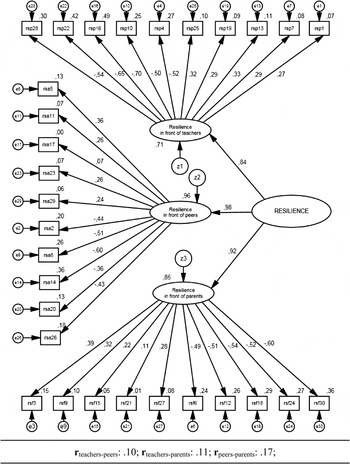
Table 4 shows the fit statistics of the proposed models (CFA-1, CFA-2). In both models all the estimated loadings (λ) were significant (p < .001). The adjustment in both cases was very similar, though slightly better for model CFA-2. Figure 2 shows the corresponding standardized estimates for this last analysis as well as correlations between first-order factors. Chi-square statistic was significant, probably due to sample size, but the adjusted ratio χFootnote 2 /df = 1.91 < 5 and RMSEA = .06 < .08 (root mean square error of approximation) were well inside the limits that allow the model to be accepted. The remaining fit indexes fell slightly short on the standard limits of acceptance: GFI (goodness of fit index) = .80; CFI (comparative fit index) = .69.
RSQ: Initial confirmatory standardized solution and correlations between first-order factors.

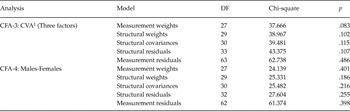
Goodness of fit statistics for CFA of base model, of multi-group cross-validation analysis, and of multi-group analysis by gender

Note:
CFA = Confirmatory Factor Analysis, CVA = Cross-Validation Analysis.
Multi-group cross-validation analyses (CVA).
In order to test the validity of the model, a multi-group analysis was carried-out. In the validation of model CFA-3, the fit indexes were inside acceptable limits, though CFI fell slightly short on accepted cut-off points (see Table 4, CFA-3). Nevertheless, the model comparison statistics presented in Table 5 (CFA-3 CVA) show that fit is not reduced significantly even if restrictions on measurement weights, structural weights, structural covariances, structural residuals and measurement residuals are imposed.
CFA-2 Cross validation of the model using multi-group analyses with two samples. Chi-square differences for model comparison against the unconstrained multi-sample model

Notes:
1 CFA = Confirmatory Factor Analysis, 2 CVA = Cross-Validation Analysis.
Testing gender effects on goal structure: Multi-group analysis by gender.
The second multi-group analysis tests the validity of the identified structure as a function of gender. As it can be seen again, the adjustment indexes are inside acceptable limits thought GFI and CFI fell slightly short on accepted cut-off points (see Table 4, CFA-4 Males-Females). Again, however, the model comparison statistics presented in Table 5 (CFA-4: Males-Females) show that fit is not reduced significantly when considering the different restrictions imposed. Therefore, it can be concluded that the model is valid for males and females and should not be rejected.
SRSQ Reliability.
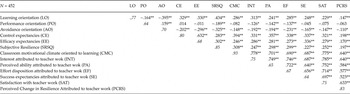
Before studying the external validity of the SRSQ, Cronbach-α coefficients were computed for this and the remaining scales used in the study. Results are shown in Table 6. The reliability index of SRSQ is excellent (.85). The indexes of the scales of the remaining questionnaires are good enough to be accepted for the aims of our study.
Correlations and internal consistency of the scales (Whole sample)1, 2

Note:
1 ** Correlations significant at 0.01 level; * Correlations significant at 0.05 level. 2 Reliability indexes (α) are shown in the diagonal.
Correlation and regression analyses.
Table 6 shows also the correlations between SRSQ and the remaining scales used in the study. Several results deserve to be pointed out.
First, correlations between goal orientations and SRSQ are as expected, a fact that gives support to our first hypothesis. Moreover, as it is shown by the regression analysis presented in Table 7, the three GO contribute in a significant way as predictors of SRSQ. Control expectancies also contribute to this prediction in a significant way. No prediction had been made concerning this result. It may be that the positive attitude underlying subjective resilience entails positive control expectancies.
Regression analysis. Criterion: Subjective Resilience (SRSQ)

Note:
*** p < .001; ** p < .01; * p < .05.
Second, according also to our second prediction SRSQ and CMC correlate positively and in a significant way. Besides, as it is shown by the regression analysis presented in Table 8, SRSQ is the main predictor of the degree in which students perceived the CMC as learning oriented. Only control expectancies add a significant weight to this prediction.
Regression analysis. Criterion: Perceived Learning Classroom Motivational Climate (CMC)

Note:
*** p < .001; ** p < .01; * p < .05.
Third, also as expected, CMC correlates in a significant way with the degree in which students attribute perceived changes in motivational variables and in resilience to the work of their teachers. Moreover, though SRSQ correlates in a significant way with the perceived change in resilience (PCRS) (see table 6), only CMCQ -not SRSQ- contributes in a high and significant way to this result (R Footnote 2 = .422***; CMCQ regression weight = .649***). This result highlights the importance of creating a learning oriented CMC for favouring resilience improvement.
Finally, perceived changes in all motivational variables and in resilience correlate as expected with satisfaction with teacher’s work, and most important, as it is shown by the regression analysis presented in Table 9, all of them contribute in a significant and similar way, together with CMC, to students’ satisfaction with teacher’s work, reaching very high value in the amount of explained variance (R Footnote 2 = .740).
Regression analysis. Criterion: Satisfaction Attributed to teacher’s work

Note:
*** p < .001; ** p < .01; * p < .05.
Discussion and Conclusions
The main objective of this paper was to develop a measure of subjective resilience for adolescents, and to provide initial evidence on its validity. What kind of contributions has our study made in relation to it?
First, our work has introduced the concept of “subjective resilience”, that is, “the subjective experience of not giving up in front of adversity”. This concept has not been dealt with before in the resilience literature. However, it should be taken into account that subjective experience is important for three reasons: (a) because this experience is a “facet” of resilience that might play a role in helping people to decide how to act in front of adversity; (b) because measuring it could help to study the relationships between resilience and personality constructs related to it, and (c) because if measures of it were developed, they would simplify the process of validating models related to protective and vulnerability “factors” underlying resilience, the process of validating models related to the “processes” that make possible resilience (Leopold & Greve, Reference Leipold and Greeve2009), and the evaluation of the efficacy of intervention programs aimed at favouring resilience. As resilience is not an “all or none” phenomenon –people may be more or less resilient, or may be resilient in one context but not in others (Luthar, Reference Luthar, Cicchetti and Cohen2006; Masten, Reference Masten2007)-, “subjective resilience” might be more sensitive to educational interventions in the short run (people may feel secure and prone to act in a resilient way before acting in such a way) than objective measures based on behavioural observed indexes that may manifest resilience in the middle or long run. Of course, subjective resilience measures should be compared in the long run with more objective measures in order to test their validity.
Second, our results have shown that the questionnaire has a well defined structure, cross-validated in different groups –either established by random, or as a function of gender-, and the SRS has very good reliability. However, two considerations have to be made in relation to the structure found.
-
1) In the first place, first order factors measuring the reactions in front of teachers’, peers’ and parents’ harmful behaviours relate in significant way to the general second order factor of subjective resilience. This fact has important implications for clarifying the relation between “resilience” and personality factors as, for example, “ego-resilience” (Eisenberg et al., Reference Eisenberg, Spinrad, Fabes, Reiser, Cumberland, Shepard and Thompson2004). As previously stated, some authors consider that these constructs point to different realities (Luthar, Reference Luthar, Cicchetti and Cohen2006): Resilience is a phenomenon in which positive adaptation happens in front of adversity due to coping processes favoured by contextual factors, and ego-resilience is considered a personality trait or disposition reflecting general resourcefulness, sturdiness and flexibility in response to different situations, that is to say, that reflect personal coping processes. However, our results suggest that, though resilience –as a phenomenon- may vary from one kind of environment to other, adaptive or non-adaptive processes producing resilience or the lack of it tend to generalize across harmful environments. This generalization implies the possibility that common specific processes underlie positive adaptation in front of adversity in different contexts -resilience-, and may be that these processes are the same underlying ego-resilience, as this is a characteristic usually measured through self-report –a subjective measure-, though not in relation to adversities. This is a question open to future research.
-
2) In the second place, the results of the initial process of testing the external validity of the scale has important implications for guiding interventions aimed at favouring processes underlying resilience. After reviewing the personal characteristics that seem to favour resilience, Masten and Wright (Reference Masten, Wright and Reich2009) point out the importance of favouring: attachment relationships, agency and mastery motivation systems, executive functioning and problem solving, self-regulation of thinking, emotion and behaviour, and making meaning. These are important objectives to achieve in order to help people to act in a resilient way. However, which educational processes can favour their acquisition? The extant literature on resilience demonstrating the efficacy of specific instructional actions is very scarce, though some important interventions had been carried out (Forgatch & DeGarmo, Reference Forgatch and DeGarmo1999; Wolchick et al., Reference Wolchick, Sandler, Millsap, Plummer, Greene, Anderson and Haine2002). Nevertheless, our results suggest a possible line of action. According to them, resilience seems to depend positively on mastery goal orientation, a result in line with the ideas of Good and Dweck (Reference Good, Dweck, Sternberg and Subotnik2006) and Prince-Embury and Courville (Reference Prince-Embury and Courville2008). Associated to and underlying mastery goal orientation, there are specific self-regulatory processes related to academic tasks, social interactions and personal emotions –self-messages, self-instructions, self-reinforcements, etc.- that can be taught and learned (Alonso-Tapia et al., Reference Alonso-Tapia, Huertas and Ruíz2010; Alonso-Tapia & Panadero, Reference Alonso-Tapia and Panadero2010; Alonso-Tapia & Pardo, Reference Alonso-Tapia and Pardo2006; Leopold & Greve, Reference Leipold and Greeve2009; Panadero, Alonso-Tapia, & Huertas, Reference Panadero, Alonso-Tapia and Huertas2012). So, promoting the acquisition of such processes may favour the development of resilience. However, how can it be done?
Our work has shown that motivational variables associated to goal orientation –interest, perceived ability, effort and success expectancies- tend to increase as teachers’ teaching patterns configure a classroom motivational climate oriented to learning, and perceived changes in resilience that take place in parallel are also attributed to such climate. These facts imply that the classroom motivational climate, as conceptualized and assessed through the CMCQ in line with the original ideas of Ames (Ames, Reference Ames1992; Ames & Archer, Reference Ames and Archer1988), is a powerful protective factor favouring at least subjective resilience. Besides, what is most important, the items of the CMCQ point to “specific teaching processes” that can be learned by teachers and that, if it were applied, could favour the development of specific processes that allow students to self-regulate the cognitions, emotions and behaviours which can produce resilience. So, interventions should try to help teachers to acquire teaching patterns in line with those suggested by the CMCQ in order to help children to become resilient. Of course, we are aware that the hypotheses we are suggesting are based on correlational data. So, experimental interventions aimed at improving objective and subjective resilience through changes in the CMC created by teachers’ teaching patterns are needed.
Some limitations of our work deserve additional considerations. First, our validation process has focused on the relationship between resilience and the classroom motivational climate. This option does not mean that family and peers do not play an important role as protective or vulnerability external factors, but their relation to subjective resilience would be deal with in future studies. Second, the SRSQ was developed in Spanish, and the study was carried out with a sample of Spanish students. Our results should be validated in other countries.