Introduction
There is an abundance of evidence that complying with the international recommendation of 150 min of moderate-to-vigorous physical activity (PA) per week has important physical and mental health benefits in older people (Almeida et al., Reference Almeida, Khan, Hankey, Yeap, Golledge and Flicker2014). Even a dose of moderate-to-vigorous PA below current recommendations reduces mortality by 22% in older adults, while a further increase in PA dose improves these benefits in a linear fashion (Hupin et al., Reference Hupin2015). Understanding factors associated with the compliance of PA recommendations is an important focus for public health, and special attention should be given to vulnerable populations.
Older adults with anxiety are one such vulnerable population. The prevalence of anxiety in community samples of older adults in high-income countries ranges from 1.2% to 15%, and in clinical settings from 1% to 28%, while the prevalence of anxiety symptoms is much higher, ranging from 15% to 52.3% in community samples, and 15% to 56% in clinical samples (Bryant et al., Reference Bryant, Jackson and Ames2008). Similar prevalence rates have been found in low- and middle-income countries (LMICs) (Prina et al., Reference Prina, Ferri, Guerra, Brayne and Prince2011). Previous research has shown that anxious older adults have a higher chronic physical burden, a lower health-related quality of life, and a higher risk for cognitive decline (Prina et al., Reference Prina, Ferri, Guerra, Brayne and Prince2011; Fung et al., Reference Fung2017; Kassem et al., Reference Kassem2017). A study involving 38 countries worldwide and including almost 185,000 individuals showed that people with anxiety are less likely than those without anxiety to meet PA guidelines (Stubbs et al., Reference Stubbs2017). Moreover, sedentary behavior and less PA are associated with an increased risk of developing anxiety (Pasco et al., Reference Pasco2011; Teychenne et al., Reference Teychenne, Costigan and Parker2015) and less PA is associated with greater symptom severity (Hiles et al., Reference Hiles, Lamers, Milaneschi and Penninx2017). PA is known to improve anxiety symptoms including in older adults (Mochcovitch et al., Reference Mochcovitch, Deslandes, Freire, Garcia and Nardi2016).
Given the important health benefits of PA and the higher risk for physical inactivity in people with anxiety, as well as the high prevalence of low PA and anxiety in the older population, there is a need for research to investigate what factors influence PA participation in this population. To the best of our knowledge, such studies are currently lacking. Exploring PA correlates in people with symptoms of anxiety in LMICS is in particular important given the suboptimal treatment of anxiety (Patel et al., Reference Patel2007) and a low level of knowledge regarding the benefits of PA (Pengpid et al., Reference Pengpid, Peltzer, Kassean, Tsala, Sychareun and Müller-Riemenschneider2015) in LMICs. Next to this, as the pace of the population aging will occur more rapidly in the years to come in LMICs, further research into the mental and physical health of older people in LMICs is essential (World Health Organization, 2015). Information on PA correlates of older people with anxiety could guide the design and delivery of targeted interventions for this vulnerable population in these countries. We used past literature as a guide to select the 32 correlates of PA (sociodemographic, health behavior, mental and physical health) (Vancampfort et al., Reference Vancampfort2015). Thus, given the aforementioned gaps within the literature, we aimed to assess PA correlates among community-dwelling older adults with symptoms of anxiety in six LMICs.
Methods
The survey
We analyzed data from the Study on Global Ageing and Adult Health (SAGE) survey. All interested researchers may seek access to this dataset through the World Health Organization (WHO) website (http://www.who.int/healthinfo/sage/en/). Interviews and performance tests were undertaken between 2007 and 2010 in China, Ghana, India, Mexico, Russia, and South Africa, which were all LMICs at the time of the survey according to the World Bank classification. Details of the survey methodology are provided in the above-mentioned WHO website. In brief, following a standard research protocol across countries, trained interviewers conducted face-to-face interviews using a standard questionnaire to collect information with either the use of a computer-assisted personal interview (CAPI) or a paper and pencil interview (PAPI) depending on the setting. Standard translation procedures for the questionnaires were undertaken to ensure comparability between countries. Respondents who were unable to undertake the interview because of limited cognitive function were not included in the analysis. Sampling weights were calculated to adjust for the population structure as reported by the United Nations Statistical Division. Ethical approval was obtained from the WHO Ethical Review Committee and local ethics research review boards. Written informed consent was obtained from all participants. The survey response rate was 93% in China, 83% in Russia, 81% in Ghana, 75% in South Africa, 68% in India, and 53% in Mexico.
Anxiety
Anxiety was assessed by the question “Overall in the past 30 days, how much of a problem did you have with worry or anxiety” with response alternatives: none, mild, moderate, severe, and extreme. Those who answered severe and extreme were considered to have anxiety.
Physical activity
Levels of PA were assessed with the Global Physical Activity Questionnaire. The total amount of moderate-to-vigorous PA in a typical week was calculated based on self-report. Those scoring ≥150 minutes of moderate-to-vigorous intensity PA were classified as meeting the recommended guidelines (coded = 0), and those scoring <150 minutes (low PA) were classified as not meeting the recommended WHO guidelines (coded = 1) (World Health Organization, 2010).
Sociodemographic variables
These included age, sex, highest level of education achieved (completed secondary or less), wealth, marital status (married/co-habiting or else), employment status (engaged in paid work ≥2 days in last 7 days: Y/N), household size (1, 2, ≥3), and setting (urban or rural). Wealth quintiles were created based on country-specific income.
Health behavior
These comprised of current drinking [alcohol use in the past 30 days (Y/N)], fruit and vegetable intake [≥2 (fruits) and ≥3 (vegetables) servings/day (adequate)], and smoking (never, quit, current).
Mental health
Questions based on the World Mental Health Survey version of the Composite International Diagnostic Interview were used for the endorsement of past 12-month DSM-IV depression. The presence of mild cognitive impairment (MCI) was assessed with three tests (immediate recall, verbal fluency, and delayed recall) adapted from the Consortium to Establish a Registry for Alzheimer's Disease. Respondents were classified as having MCI if their test score was <lowest 7th percentile (approximately <−1.5SD) for their age and country in any of these tests. Those having severe or extreme problems with sleeping, such as falling asleep, waking up frequently during the night, or waking up too early in the morning, were considered to have sleep problems.
Physical health
A stadiometer and a routinely calibrated electronic weighting scale were used to measure height and weight respectively. Participants who had severe or extreme bodily aches or pains in the past 30 days were considered to have bodily pain. Chronic back pain was defined as having had back pain every day during the last 30 days. Fall-related injuries in the past 12 months were assessed with questions on the presence of bodily injury and cause. The participant was considered to have hearing problems if the interviewer observed this condition. Visual impairment was defined as having extreme difficulty in seeing and recognizing a person that the participant knows across the road. Diabetes and stroke were solely based on lifetime self-reported diagnosis. Blood pressure was measured three times with a one-minute interval with the use of a wrist blood pressure monitor. Hypertension was defined as having at least one of: systolic blood pressure ≥140 mmHg; diastolic blood pressure ≥90 mmHg; or self-reported diagnosis. For angina, arthritis, asthma, and COPD, the participant was considered to have the condition in the presence of self-reported diagnosis and/or symptom-based diagnosis using algorithms. Specifically, the validated Rose questionnaire was used for angina and other previously validated symptom-based algorithms were used for arthritis, asthma, and COPD.
Physical performance
Gait speed was based on a 4-m timed walk and was measured by asking the participant to walk at a usual pace. A cane or other walking aids were allowed. The interviewer recorded the time to completion of the 4-m walk. Slow gait was defined as a gait speed of ≤1 m/sec (Abellan van Kan et al., Reference Abellan van Kan2009). Grip strength was measured twice for both hands with the use of the Smedley's hand dynamometer. If the participant had any surgery in the last three months or arthritis or pain in the hand/wrist/arm, grip strength was not measured for that hand. Weak handgrip was defined as <30 kg for men and <20 kg for women using the average value of the two handgrip measurements of the dominant hand (Cruz-Jentoft et al., Reference Cruz-Jentoft2010).
Health status
Self-rated health was evaluated by the question “In general, how would you rate your health today?” Those who answered “bad” or “very bad” were considered to have poor self-rated health. Disability was assessed by the use of the 12-item validated version of the World Health Organization Disability Assessment Schedule 2.0 (WHODAS 2.0) which consists of questions on six domains (cognition, mobility, self-care, getting along, life activities, participation). Item Response Theory analysis was used to create a scale ranging from 0 (no disability) to 100 (maximum disability).
Social cohesion
A social cohesion index was created based on nine questions on the participant's involvement in community activities in the past 12 months (e.g. attended religious services, club, society, union etc.) with answer options “never (coded = 1),” “once or twice per year (coded = 2),” “once or twice per month (coded = 3),” “once or twice per week (coded = 4),” and “daily (coded = 5)”. The answers to these questions were summed (range = 9–45) and later for the sake of interpretability converted to a scale ranging from 0 to 100 with higher scores corresponding to higher levels of social cohesion (Cronbach's α = 0.78).
Statistical analysis
The main analysis was restricted to individuals with anxiety aged ≥65 years. The difference in sample characteristics between those with and without low PA was tested by χ 2 tests and Student's t-tests for categorical and continuous variables, respectively. Multivariable logistic regression was used to assess the association between each correlate (exposure) and low PA (outcome) while adjusting for age, sex, and country. Dummy variables for each country were included in the models to adjust for country. All variables were included in the models as categorical variables with the exception of age, body mass index (BMI), disability, and social cohesion (continuous variables). Finally, we conducted a sensitivity analysis to assess whether the correlates of anxiety are similar among those with and without anxiety. We included an interaction term of the correlate in question and anxiety to test whether the association between the correlate and low PA differs by the presence or absence of anxiety.
The sample weighting and the complex study design were taken into account in all analyses by the use of the svy command in stata. Results from the regression analyses are presented as odds ratios (ORs) with 95% confidence intervals (CIs). The statistical analysis was done with Stata 14.1 (Stata Corp LP, College station, Texas). The level of statistical significance was set at p < 0.05.
Results
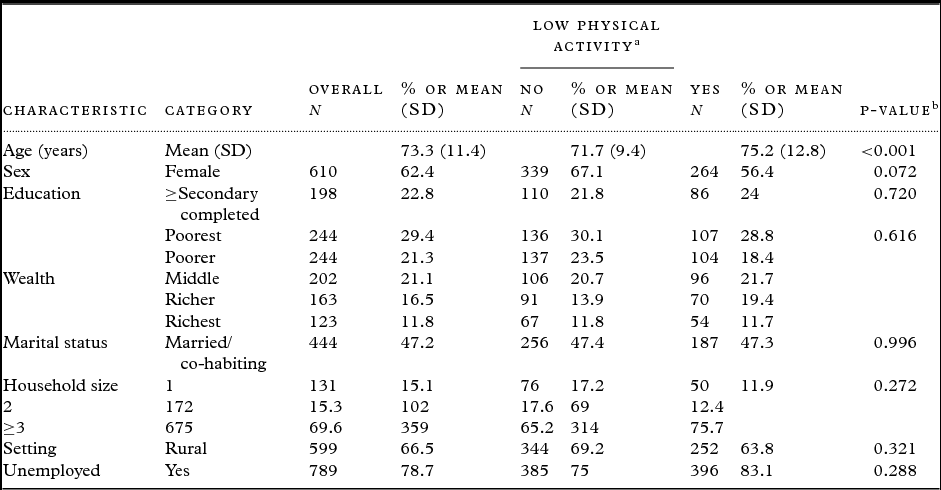
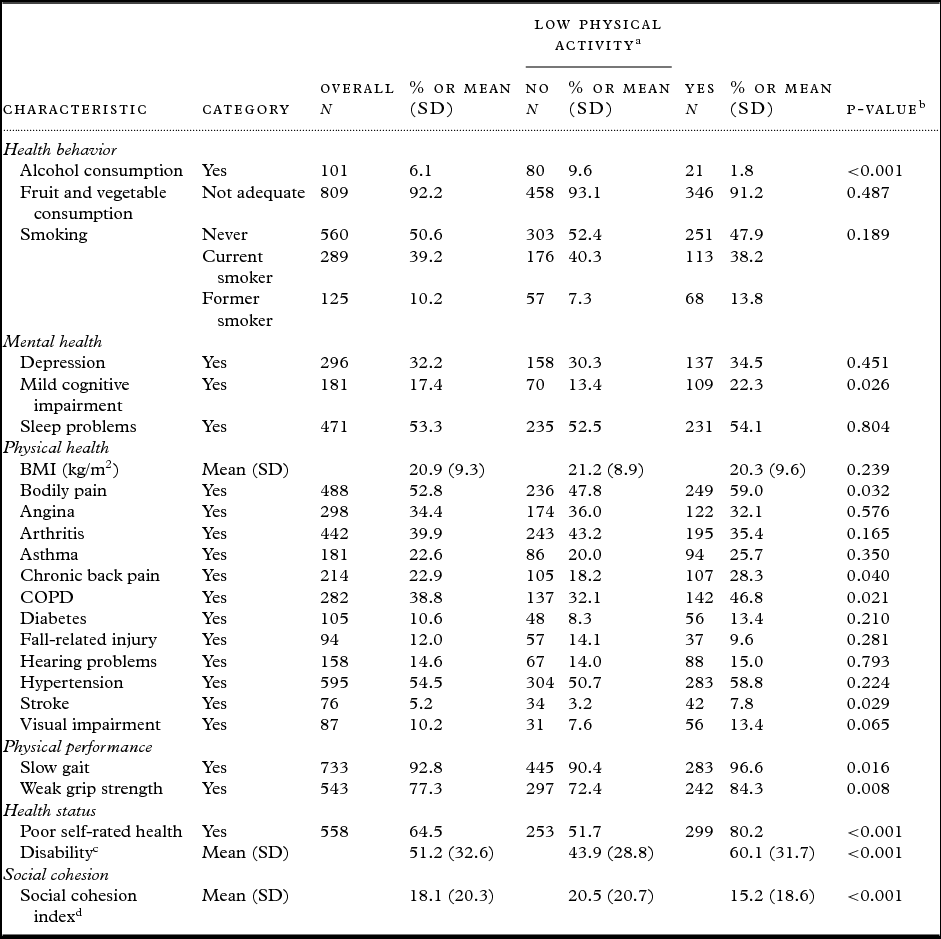
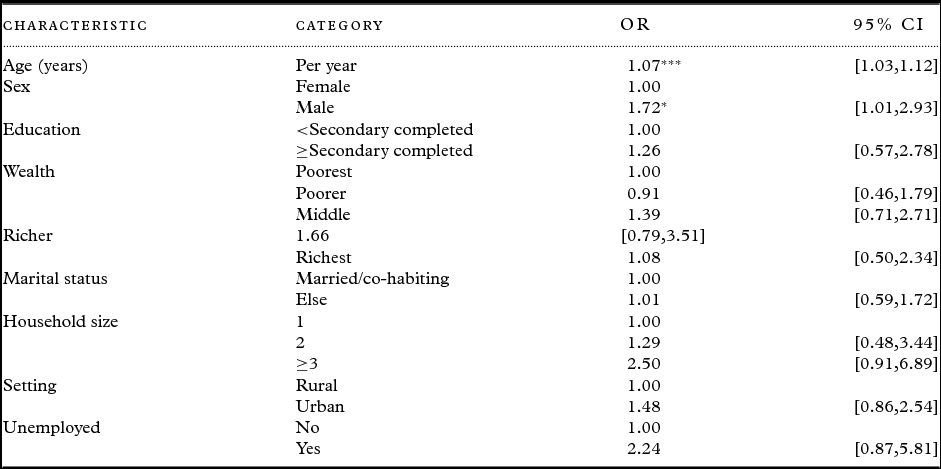
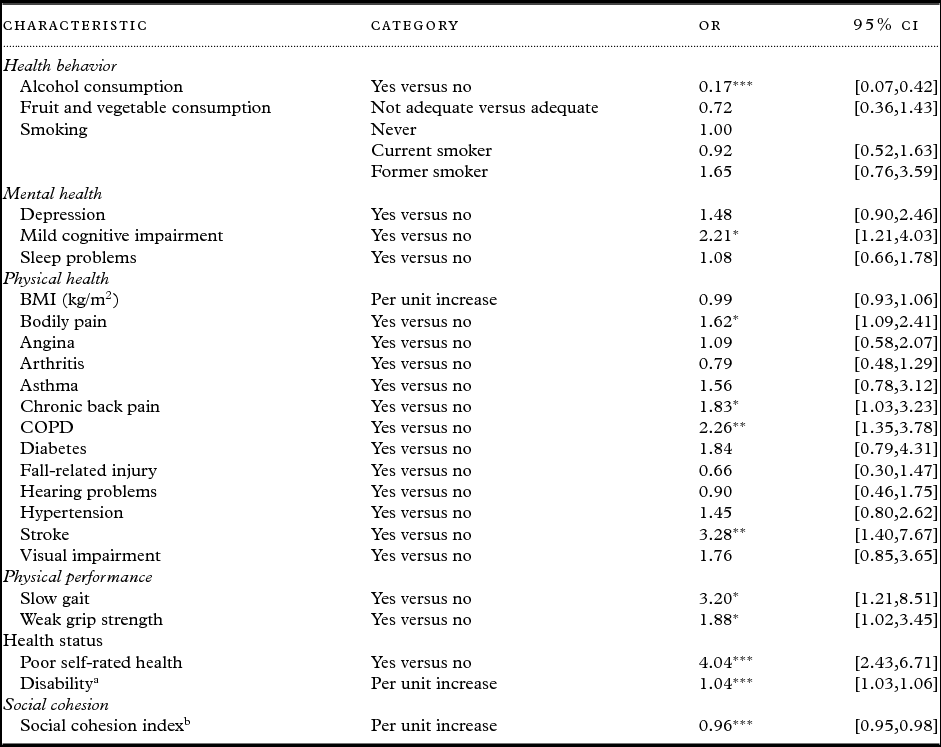
Data were available for a total of 14,585 individuals aged ≥65 years. The overall prevalence of anxiety in this population was 9.7% (95% CI = 8.5–11.1%). The corresponding figures for each country were: China 1.0% (0.7–1.4), Ghana 8.1% (6.8–9.7), India 21.3% (18.4–24.6), Mexico 5.9% (3.8–9.0), Russia 7.2% (5.1–10.1), and South Africa 11.0% (8.1–14.8). The final sample for the main analysis consisted of the 980 individuals aged ≥65 years with anxiety (China, n = 51; Ghana, n = 173; India, n = 437; Mexico, n = 69; Russia, n = 142; South Africa, n = 108). The mean (SD) age of the sample was 73.3 (11.4) years and 62.4% were females. The prevalence of low PA was 44.9% (95% CI = 39.2–50.7%). In the unadjusted analysis, older age was the only significant correlate of low PA among the sociodemographic factors (Table 1). In terms of other factors, those engaged in low PA had a higher prevalence of MCI, bodily pain, chronic back pain, COPD, stroke, slow gait, weak grip strength, and poor self-rated health, as well as a lower rate of alcohol consumption (p < 0.05) (Table 2). Greater levels of disability, and lower degrees of social cohesion were also significantly associated with low PA. In the multivariable analysis, the only sociodemographic correlates significantly associated with low PA were older age and male sex (Table 3). The significant correlates of low PA in other domains based on adjusted estimates included less consumption of alcohol, MCI, bodily pain, chronic back pain, COPD, stroke, slow gait, weak grip strength, poor self-rated health, more severe disability, and lower levels of social cohesion (Table 4).
Sociodemographic characteristics of the sample (overall and by low physical activity)

In the unadjusted analysis, older age was the only significant correlate of low PA among the sociodemographic factors.
Abbreviation: SD = standard deviation.
Data are unweighted N and weighted column % or mean (SD).
a The total amount of moderate to vigorous physical activity over the last week was calculated and those scoring <150 minutes were considered to have low physical activity.
b The difference in sample characteristics by low physical activity was tested by χ 2 tests and Student's t-tests for categorical and continuous variable, respectively.
Sample characteristics of the health and social cohesion domains (overall and by low physical activity)

Those engaged in low PA had a higher prevalence of MCI, bodily pain, chronic back pain, COPD, stroke, slow gait, weak grip strength, and poor self-rated health, as well as a lower rate of alcohol consumption (p < 0.05). Greater levels of disability, and lower degrees of social cohesion were also significantly associated with low PA.
Abbreviation: SD = standard deviation.
Data are unweighted N and weighted column % or mean (SD).
a The total amount of moderate to vigorous physical activity over the last week was calculated and those scoring <150 minutes were considered to have low physical activity.
b The difference in sample characteristics by low physical activity was tested by χ 2 tests and Student's t-tests for categorical and continuous variable, respectively.
c Disability was assessed by WHODAS 2.0 with scores ranging from 0 to 100. Higher scores indicate higher levels of disability.
d The social cohesion index ranged from 0 to 100 with higher scores representing higher levels of social cohesion.
Sociodemographic correlates of low physical activity estimated by multivariable logistic regression

In the multivariable analysis, the only sociodemographic correlates significantly associated with low PA were older age and male sex. Abbreviations: OR = odds ratio; CI = confidence Interval.
Models are adjusted for age, sex, and country with the exception of age and sex for which the estimates were derived from a model including age, sex, and country.
The total amount of moderate to vigorous physical activity over the last week was calculated and those scoring <150 minutes were considered to have low physical activity.
*p <0.05, ***p < 0.001.
Correlates of low physical activity (health and social cohesion) estimated by multivariable logistic regression

The significant correlates of low PA based on adjusted estimates included less consumption of alcohol, MCI, bodily pain, chronic back pain, COPD, stroke, slow gait, weak grip strength, poor self-rated health, more severe disability, and lower levels of social cohesion.
Abbreviations: OR = odds ratio; CI = confidence interval; BMI = body mass index.
Models are adjusted for age, sex, and country.
The total amount of moderate to vigorous physical activity over the last week was calculated and those scoring <150 minutes were considered to have low physical activity.
a Disability was assessed by WHODAS 2.0 with scores ranging from 0 to 100. Higher scores indicate higher levels of disability.
b The social cohesion index ranged from 0 to 100 with higher scores representing higher levels of social cohesion.
*p < 0.05, **p < 0.01, ***p < 0.001.
Discussion
General findings
To the best of our knowledge, the current study is the first multinational study to explore PA correlates in older people with anxiety. Based on the adjusted analysis, the only sociodemographic correlates significantly associated with low PA were older age and male sex, while significant correlates of low PA in other domains included less consumption of alcohol, MCI, bodily pain, chronic back pain, COPD, stroke, slow gait, weak grip strength, poor self-rated health, stroke, more severe disability, and lower levels of social cohesion. Next to this, our data show that nearly half (44.9%) of older people with anxiety do not meet PA guidelines.
The exact reason why individuals with anxiety are less likely to engage in PA is unknown but one hypothesis includes the social withdrawal theory, which posits that not engaging in PA may lead to social solitude and withdrawal from interpersonal relationships, both of which have been linked to increased feelings of social anxiety (Rubin and Burgess, Reference Rubin, Burgess, Vasey and Dadds2001). It is possible that many of the factors identified in our study are linked with low PA through lack of social relationships. For example, individuals with chronic physical conditions and disability may be more vulnerable to social isolation due to restrictions in their ability to conduct activities of daily living or stigma (Cohen-Mansfield et al., Reference Cohen-Mansfield, Hazan, Lerman and Shalom2016). Indeed, the current data show that lower levels of social cohesion are associated with lower PA participation. Lack of social cohesion may reduce PA levels by reducing the likelihood that one will take advantage of local opportunities to engage in PA. On the other hand, it may be that those with anxiety are also less inclined to engage in PA as a means of coping with their anxiety symptoms, as has been suggested in previous research among people with mental illness with social physique anxiety (De Herdt et al., Reference De Herdt, Knapen, Vancampfort, De Hert, Brunner and Probst2013). However, very little is known about the underlying mechanism that links anxiety and low PA. A previous randomized controlled trial (RCT) provides some insight, in which the authors randomized young adults to be more sedentary and identified that increasing sedentary behavior over two weeks resulted in increases in IL-6 which accompanied deteriorations in mood (Endrighi et al., Reference Endrighi, Steptoe and Hamer2016), while in another RCT, a 1-week sedentary behavior-inducing intervention had deleterious effects on anxiety in an active, young adult population (Edwards and Loprinzi, Reference Edwards and Loprinzi2016). However, given the cross-sectional nature of our data, we cannot confirm the direction of these purported associations. Regardless, it is established from a meta-analysis of RCTs that PA can reduce anxiety symptoms (Stubbs et al., Reference Stubbs2017).
We found that in the elderly, older age, male gender, and the presence of a wide range of physical health problems including chronic pain are associated with less PA. The reason why men with anxiety are less physically active warrants further investigation. One hypothesis is that when compared to women, men have a faster decline in some activities as they age, mainly social activities (Finkel et al., Reference Finkel, Andel and Pedersen2016) and this could further contribute to a more sedentary lifestyle.
It is known that people with anxiety may be more likely to have chronic pain (Culpepper, Reference Culpepper2009), which might impact upon their mobility. Thus, collaborative interventions that seek to reduce pain and improve mobility among those with symptoms of anxiety might be an important strategy to increase PA and reduce anxiety levels in this population. We also found that gait speed and grip strength are associated with lower PA in older people with anxiety. These factors may be reflecting physical illness or disability, and the difficulty to engage in PA due to these conditions. Alternatively, low PA is known to result in conditions such as sarcopenia (pathological loss of skeletal muscle mass and function) (Beaudart et al., Reference Beaudart2017) and in frailty. Interventions that seek to improve physical performance might be a viable way to help increase mobility and a person's capacity to engage in PA.
Next to this, we found a positive association between MCI and low PA in older people with anxiety. Although the reason why individuals with MCI are less likely to engage in PA is largely unknown, this could be due to comorbid medical conditions or due to difficulty in planning and executing PA. Next to this, impairments in executive functioning can result in slow gait and an increased risk of falls in older people, which in turn is associated with a fear of falling again and avoidance of PA (Shimada et al., Reference Shimada2015). Fear of falling is known to increase sedentary behavior in older adults (Stubbs et al., Reference Stubbs, Patchay, Soundy and Schofield2014) and is closely related to anxiety (Hull et al., Reference Hull, Kneebone and Farquharson2013), yet can improve with targeted exercises in older adults (Kumar et al., Reference Kumar2016).
In the health behavior domain, individuals who consume alcohol were more likely to be physically active. It may be that those who consume alcohol are more socially active, or that individuals with disability or a chronic condition (who are less likely to engage in PA) had quit alcohol consumption following a doctor's advice.
Finally, we also assessed whether the correlates of PA differ among those with and without anxiety. The results showed that the correlates were similar overall but with some differences. See Tables S1 and S2, available as supplementary material online attached to the electronic version of this paper at www.journals.cambridge.org/ipg. For example, anxious males were more likely to engage in low PA while poor self-rated health was a stronger correlate among those with anxiety.
Limitations
The current data should be considered in the light of some limitations. First, the study is cross-sectional, therefore cause and effect cannot be deduced. Future prospective research is required to disentangle the directionality between the presence of anxiety and PA behavior and the effect of potential mediators. Second, the anxiety variable used was based on a single question. Although previous studies have also used the identical definition for anxiety, and the use of extreme categories is likely to have improved specificity, one should be aware that the perception of anxiety is strongly influenced by ethnic, racial, and cultural factors. Our data show that there was a wide variation in the prevalence of anxiety across countries. Therefore, future studies should include a more complete anxiety assessment and ideally use a clinical diagnosis. Third, PA was measured with a self-report questionnaire, which is known to be less accurate than objective assessments (Soundy et al., Reference Soundy, Roskell, Stubbs and Vancampfort2014; Stubbs et al., Reference Stubbs2016). It is well known that self-reported measures can overestimate PA levels (Ainsworth et al., Reference Ainsworth2006). Fourth, future studies would benefit from assessing to what extent macro-level environmental factors such as food insecurity, unsafe traffic, and civil conflicts in LMICs are linked to physical inactivity in the older population with anxiety in these countries. Finally, there was a wide discrepancy in the response rate (range: 53–93%) between countries and the sample size of some countries was small. Thus, the results may not be generalizable to the entire population of the countries included.
Policy-related and clinical implications
If the current data are confirmed in longitudinal studies, rigorous community-based and clinical recommendations can be made. First of all, our study shows that a focus on social cohesion might facilitate older people with anxiety to become more active. This can be done in several ways. In neighborhoods where only a few older residents feel that they belong to the community, PA could be increased by promoting social engagement and participation among community members by organizing social activities targeting older people. In neighborhoods where the overall level of social cohesion is already high, further benefits may be achieved by socially integrating older residents who do not already feel that they belong. Third, from a clinical perspective, our current results suggest that, among older adults with anxiety symptoms, healthcare professionals should consider somatic co-morbidities, pain, MCI, muscle strength, and slow gait as these might be important barriers for physical inactivity. On the other hand, in older adults with somatic co-morbidities, pain, frailty, or sarcopenia, anxiety symptoms should be taken into account as potential barriers for a more active lifestyle.
In conclusion, our data illustrate that a number of sociodemographic and health factors are associated with PA levels among older people with symptoms of anxiety in six LMICs. These findings provide guidance for future educational, population, and clinical level interventions across LMICs to help older people with anxiety, who are at risk for physical inactivity, to become more active.
Conflict of interest
The authors declare that they have no conflicts of interest to report.
Description of authors’ roles
D. Vancampfort, B. Stubbs, and A. Koyanagi designed the study. A. Koyanagi led the data analysis with support from M. Hallgren. D. Vancampfort, B. Stubbs, N. Veronese, and A. Koyanagi wrote the manuscript. All authors provided critical comments on the manuscript and approved the final version.
Acknowledgments
A. Koyanagi's work is supported by the Miguel Servet contract financed by the CP13/00150 and PI15/00862 projects, integrated into the National R+D+I and funded by the ISCIII – General Branch Evaluation and Promotion of Health Research – and the European Regional Development Fund (ERDF-FEDER).
Supplementary material
To view supplementary material for this article, please visit https://doi.org/10.1017/S1041610217002216