Introduction
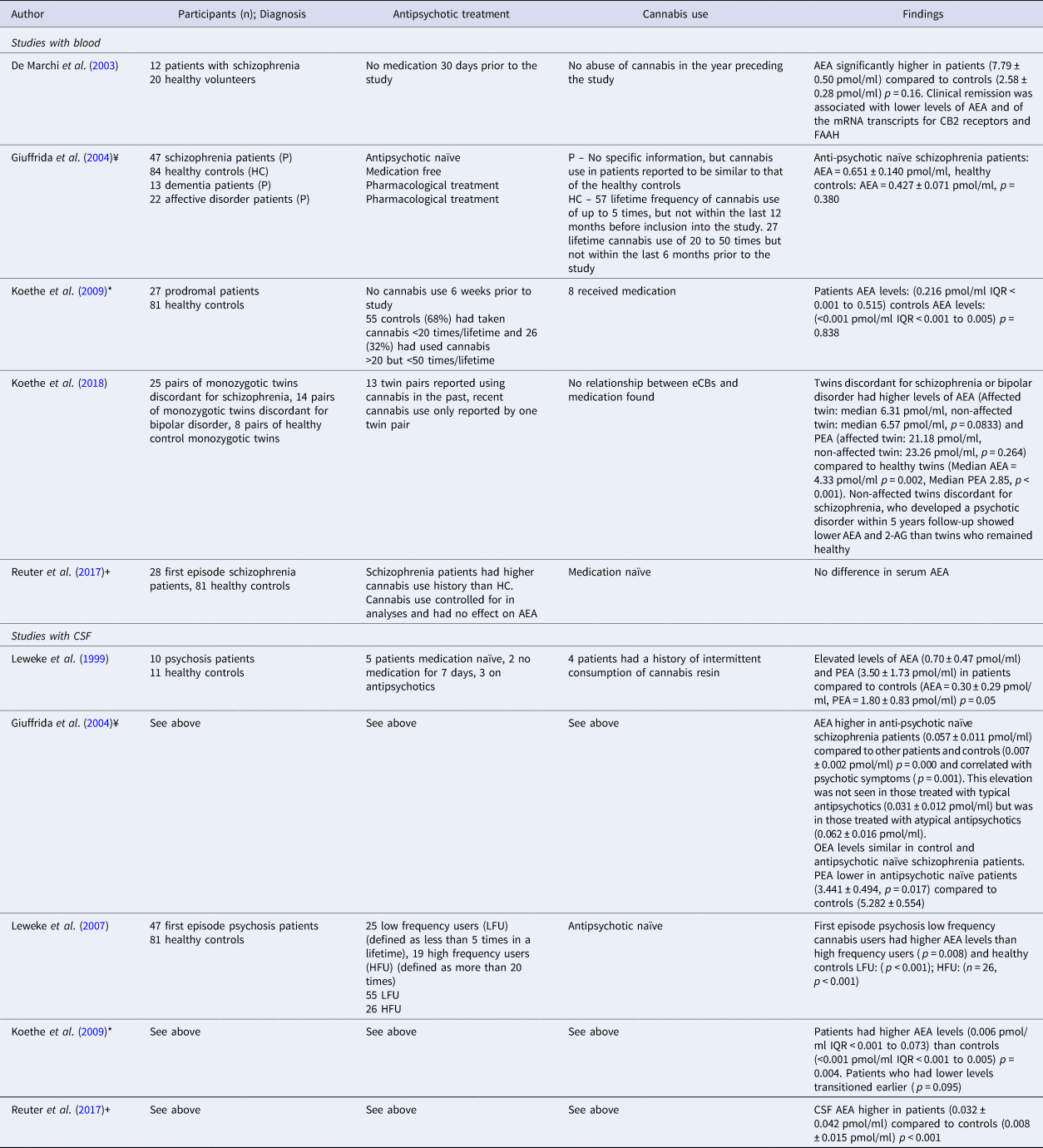
Independent of evidence associating cannabis use and onset and relapse of psychosis (Moore et al., Reference Moore, Zammit, Lingford-Hughes, Barnes, Jones, Burke and Lewis2007; Schoeler et al., Reference Schoeler, Monk, Sami, Klamerus, Foglia, Brown, Camuri, Altamura, Murray and Bhattacharyya2016a, Reference Schoeler, Petros, Di Forti, Klamerus, Foglia, Ajnakina, Gayer-Anderson, Colizzi, Quattrone and Behlke2016b, Reference Schoeler, Petros, Di Forti, Pingault, Klamerus, Foglia, Small, Murray and Bhattacharyya2016c; Sami and Bhattacharyya, Reference Sami and Bhattacharyya2018), evidence has also been accumulating regarding alterations in components of the eCB system in patients with psychosis (Bioque et al., Reference Bioque, García-Bueno, Macdowell, Meseguer, Saiz, Parellada, Gonzalez-Pinto, Rodriguez-Jimenez, Lobo, Leza and Bernardo2013; Ranganathan et al., Reference Ranganathan, Cortes-Briones, Radhakrishnan, Thurnauer, Planeta, Skosnik, Gao, Labaree, Neumeister, Pittman, Surti, Huang, Carson and D'souza2016). The endocannabinoid (eCB) system is a lipid signalling system that is involved in the regulation of brain development, motor control, cognition, emotional responses, and homeostasis. The most researched endocannabinoids (eCBs), which are the endogenous ligands for cannabinoid receptors (particularly CB1 and CB2), are anandamide (AEA) and 2-arachidonoylglycerol (2AG), while there are also the structurally analogous lipids N-palmitoylethanolamine (PEA) and N-oleoylethanolamine (OEA). A number of studies have investigated eCB levels in peripheral blood samples, because of easy accessibility and found that AEA is increased in schizophrenia patients and that clinical remission is associated with a decrease in AEA (De Marchi et al., Reference De Marchi, De Petrocellis, Orlando, Daniele, Fezza and Di Marzo2003; Reuter et al., Reference Reuter, Bumb, Mueller, Rohleder, Pahlisch, Hanke, Arens, Leweke, Koethe and Schwarz2017; Koethe et al., Reference Koethe, Pahlisch, Hellmich, Rohleder, Mueller, Meyer-Lindenberg, Torrey, Piomelli and Leweke2018). Studies investigating levels in cerebrospinal fluid (CSF) have also found alterations in the eCB system (Giuffrida et al., Reference Giuffrida, Leweke, Gerth, Schreiber, Koethe, Faulhaber, Klosterkötter and Piomelli2004). For example, compared to healthy controls, AEA was increased in the CSF of people with early psychosis, with higher AEA levels being linked to the delayed transition to psychosis in those in the prodromal phase of the illness, suggestive of a protective role for AEA in psychosis (Koethe et al., Reference Koethe, Giuffrida, Schreiber, Hellmich, Schultze-Lutter, Ruhrmann, Klosterkötter, Piomelli and Leweke2009). Table 1 summarises current evidence of eCB alteration in those with established psychosis (Leweke et al., Reference Leweke, Giuffrida, Wurster, Emrich and Piomelli1999; De Marchi et al., Reference De Marchi, De Petrocellis, Orlando, Daniele, Fezza and Di Marzo2003; Giuffrida et al., Reference Giuffrida, Leweke, Gerth, Schreiber, Koethe, Faulhaber, Klosterkötter and Piomelli2004; Leweke et al., Reference Leweke, Giuffrida, Koethe, Schreiber, Nolden, Kranaster, Neatby, Schneider, Gerth and Hellmich2007; Reuter et al., Reference Reuter, Bumb, Mueller, Rohleder, Pahlisch, Hanke, Arens, Leweke, Koethe and Schwarz2017; Koethe et al., Reference Koethe, Pahlisch, Hellmich, Rohleder, Mueller, Meyer-Lindenberg, Torrey, Piomelli and Leweke2018) or at risk (Koethe et al., Reference Koethe, Giuffrida, Schreiber, Hellmich, Schultze-Lutter, Ruhrmann, Klosterkötter, Piomelli and Leweke2009). In general, these studies suggest higher levels of AEA in patients, with one study also reporting higher levels of PEA (Koethe et al., Reference Koethe, Pahlisch, Hellmich, Rohleder, Mueller, Meyer-Lindenberg, Torrey, Piomelli and Leweke2018). More recently, PET imaging evidence has also emerged of reduced CB1 availability in patients with established psychosis (Ranganathan et al., Reference Ranganathan, Cortes-Briones, Radhakrishnan, Thurnauer, Planeta, Skosnik, Gao, Labaree, Neumeister, Pittman, Surti, Huang, Carson and D'souza2016; Borgan et al., Reference Borgan, Veronese, O'daly, Marques, Rogdaki and Howes2018) with prominent reductions in key brain regions implicated in psychosis, consistent with post-mortem evidence (Eggan et al., Reference Eggan, Hashimoto and Lewis2008; Eggan et al., Reference Eggan, Stoyak, Verrico and Lewis2010; Volk et al., Reference Volk, Eggan, Horti, Wong and Lewis2014). However, evidence from other PET and post-mortem studies has not always been consistent (Wong et al., Reference Wong, Kuwabara, Horti, Raymont, Brasic, Guevara, Ye, Dannals, Ravert and Nandi2010; Ceccarini et al., Reference Ceccarini, De Hert, Van Winkel, Peuskens, Bormans, Kranaster, Enning, Koethe, Leweke and Van Laere2013), potentially due to methodological differences between studies. Nevertheless, existing evidence reviewed above suggests that eCB dysfunction may be linked to the pathophysiology of psychotic disorders such as schizophrenia (Leweke et al., Reference Leweke, Mueller, Lange and Rohleder2016; Ranganathan et al., Reference Ranganathan, Cortes-Briones, Radhakrishnan, Thurnauer, Planeta, Skosnik, Gao, Labaree, Neumeister, Pittman, Surti, Huang, Carson and D'souza2016).
Studies investigating eCB levels in blood and CSF in patients v. controls

*+¥ These studies are the same, but used both serum and CSF eCB.
Therefore, the objective of the present study was to investigate whether established risk factors of psychosis are associated with evidence of eCB dysfunction as indexed by eCB levels in peripheral blood.
Endocannabinoid system and clinical high-risk state for psychosis
Out of all the putative risk factors associated with the onset of psychosis, a recent umbrella review incorporating data from 683 individual studies investigating 170 different risk or protective factors, showed that clinical high-risk for psychosis state (CHR) has the strongest association with the onset of psychosis (Radua et al., Reference Radua, Ramella-Cravaro, Ioannidis, Reichenberg, Phiphopthatsanee, Amir, Yenn Thoo, Oliver, Davies and Morgan2018). Therefore, whether presentation with the CHR state is associated with evidence of eCB dysfunction is of particular interest. To our knowledge, only one study has examined eCB levels in those at CHR for psychosis (Koethe et al., Reference Koethe, Giuffrida, Schreiber, Hellmich, Schultze-Lutter, Ruhrmann, Klosterkötter, Piomelli and Leweke2009). Presented in Table 1, this study examined 27 patients in the initial prodromal state of psychosis and 81 healthy volunteers. They found that CSF AEA levels were elevated in the patients and that those with lower levels had a higher risk for transitioning to psychosis, although there was no significant difference in serum AEA levels between those in the prodrome and healthy volunteers.
Endocannabinoid system and stress
Among the other recognised risk factors for psychosis (Radua et al., Reference Radua, Ramella-Cravaro, Ioannidis, Reichenberg, Phiphopthatsanee, Amir, Yenn Thoo, Oliver, Davies and Morgan2018), stress is ubiquitous, and our understanding of its role in enhancing the risk of mental disorders is increasingly becoming more sophisticated (Pruessner et al., Reference Pruessner, Cullen, Aas and Walker2017). It is also of considerable interest because its effects may be potentially amenable to treatment. Of the different types of stress, exposure to childhood trauma (CT) in particular has been linked to an increased risk of development of psychotic disorder (Read, Reference Read1997; Read et al., Reference Read, Os, Morrison and Ross2005; Varese et al., Reference Varese, Smeets, Drukker, Lieverse, Lataster, Viechtbauer, Read, Van Os and Bentall2012) as well as its relapse (Petros et al., Reference Petros, Foglia, Klamerus, Beards, Murray and Bhattacharyya2016). CT has also been shown to be a risk factor across the psychosis continuum with it being associated with an increase in psychotic-like symptoms in healthy controls (Fisher et al., Reference Fisher, Appiah-Kusi and Grant2012), as well as CHR (Bechdolf et al., Reference Bechdolf, Thompson, Nelson, Cotton, Simmons, Amminger, Leicester, Francey, Mcnab and Krstev2010; Addington et al., Reference Addington, Stowkowy, Cadenhead, Cornblatt, Mcglashan, Perkins, Seidman, Tsuang, Walker and Woods2013) and higher paranoia (Appiah-Kusi et al., Reference Appiah-Kusi, Fisher, Petros, Wilson, Mondelli, Garety, Mcguire and Bhattacharyya2017).
A significant body of evidence has amassed which indicates that the eCB system is intimately involved in the regulation of the stress response (Hill and Tasker, Reference Hill and Tasker2012). In vitro studies using rat tissue showed that the eCB system was involved in feedback control of the HPA axis response (Di et al., Reference Di, Malcher-Lopes, Halmos and Tasker2003) and that glucocorticoids could in turn induce rapid increases in AEA and 2-AG (Di et al., Reference Di, Malcher-Lopes, Marcheselli, Bazan and Tasker2005a).
In human studies, it has been reported that acute stress leads to an increase in circulating eCBs and structurally similar lipids (Hill et al., Reference Hill, Miller, Carrier, Gorzalka and Hillard2009; Dlugos et al., Reference Dlugos, Childs, Stuhr, Hillard and De Wit2012). Furthermore, animal (Di et al., Reference Di, Malcher-Lopes, Marcheselli, Bazan and Tasker2005b; Malcher-Lopes et al., Reference Malcher-Lopes, Di, Marcheselli, Weng, Stuart, Bazan and Tasker2006) as well as human studies have shown that increased glucocorticoids, the key stress response hormone, cause an elevation in eCB levels (Dlugos et al., Reference Dlugos, Childs, Stuhr, Hillard and De Wit2012).
While the relationship between acute exposure to stress and alterations in the eCB system has been investigated a great deal, particularly in animal studies, whether exposure to specific types of stress, such as childhood trauma, a known risk factor for psychosis, is associated with altered functioning of the eCB system in humans remains unclear.
As outlined above and argued previously (Mizrahi, Reference Mizrahi2015; Appiah-Kusi et al., Reference Appiah-Kusi, Leyden, Parmar, Mondelli, Mcguire and Bhattacharyya2016), although there is some evidence that risk factors for the onset of psychosis such as the CHR state and childhood trauma may be associated with alterations in the eCB system, their association has not been systematically investigated to date. Therefore, the main objective of the present study was to investigate whether risk factors for psychosis, namely presentation with a CHR state and exposure to childhood trauma were associated with altered eCB levels as detected in peripheral blood and whether the co-occurrence of both risk factors had a greater effect on eCB levels. Specifically, we predicted that both being CHR and exposure to CT on their own would be associated with higher levels of AEA and PEA (e.g. Koethe et al., Reference Koethe, Pahlisch, Hellmich, Rohleder, Mueller, Meyer-Lindenberg, Torrey, Piomelli and Leweke2018) and that individuals with both risk factors (i.e. CHR and exposed to CT) would exhibit the greatest alteration in eCB levels. Further we predicted that the severity of symptoms of CHR and the total childhood trauma score would correlate with AEA and PEA levels.
Method
Participants
Cases consisted of 33 individuals who met the criteria for Personal Assessment and Crisis Evaluation (PACE) CHR criteria (Yung et al., Reference Yung, Phillips, Mcgorry, Mcfarlane, Francey, Harrigan, Patton and Jackson1998), who were recruited from a specialist clinical service for people at risk for psychosis in South London who were enrolled on a clinical trial, all procedures reported here were carried out before any drugs were administered. Inclusion criteria and sampling procedures have been reported previously (Bhattacharyya et al., Reference Bhattacharyya, Wilson, Appiah-Kusi, O'neill, Brammer, Perez, Murray, Allen, Bossong and Mcguire2018). Individuals were included if they met CHR criteria and were aged 18–35 and agreed to stay abstinent from drugs for the duration of the study. Individuals were excluded if there was a history of previous psychotic disorder or manic episode, neurological disorder or current DSM-IV diagnosis of substance dependence, IQ less than 70 and any contraindication to MRI or treatment with CBD. Controls consisted of 58 individuals who were recruited via classified advertisement and community websites from the same geographical area as those at CHR. All participants were matched for age (within 3 years) and gender. All procedures complied with the Helsinki Declaration, as revised in 2008. Participants were reimbursed for their time and travel expenses. These procedures were approved by Psychiatry, Nursing and Midwifery Research Ethics Committee at King's College, London (Approval number PNM/13/14-22) and NHS ethics (13/LO/0243). All participants gave written informed consent before taking part in the study and completed anonymised questionnaires in private.
Assessment of childhood trauma
Childhood trauma was assessed using the Childhood Trauma Questionnaire (CTQ) (Bernstein and Fink, Reference Bernstein and Fink1998). The CTQ is a 28-item self-report questionnaire that retrospectively assesses CT and provides scores on five subscales (emotional abuse, physical abuse, sexual abuse, emotional neglect and physical neglect) as well as a total trauma score produced by summing all 5 subscales. We used the cut-off points outlined by Walker et al. (Reference Walker, Unutzer, Rutter, Gelfand, Saunders, VonKorff, Koss and Katon1999) to create two groups; maltreatment and no maltreatment (Walker et al., Reference Walker, Unutzer, Rutter, Gelfand, Saunders, VonKorff, Koss and Katon1999). The cut-off points were 8 for physical abuse, sexual abuse and physical neglect, 15 for emotional neglect and 10 for emotional abuse. Anyone who scored at or above the cut-off point for any of the five subscales were placed in the maltreatment group, and those below these cut-off points were placed in the no maltreatment group.
Assessment of perceived stress
Perceived stress was assessed using the Perceived Stress Scale (PSS) (Cohen et al., Reference Cohen, Kamarck and Mermelstein1983). The PSS is a 14-item scale, which assesses the degree to which participants feel their life is stressful. They are asked to report on stressful experiences within the last month and in particular situations in which one might feel that life is unpredictable, uncontrolled and overloaded.
Assessment of symptoms in CHR
Symptoms were assessed using the Comprehensive Assessment of At-Risk Mental States (CAARMS) (Yung et al., Reference Yung, Yung, Pan Yuen, Mcgorry, Phillips, Kelly, Dell'olio, Francey, Cosgrave and Killackey2005). This is a semi-structured interview which assesses disorders of thought content, perceptual abnormalities, conceptual disorganisation, motor changes, concentration and attention, emotion and affect, subjectively impaired energy and impaired tolerance to stress. This was conducted by an experienced psychiatrist (RW).
Cannabis use assessment
Cannabis use was assessed using the Cannabis Experiences Questionnaire (CEQ) (Barkus et al., Reference Barkus, Stirling, Hopkins and Lewis2006), a 17-item self-report questionnaire. For the purpose of this study, we used the variable which indicated if they had current cannabis use.
Endocannabinoid analysis
On the study day, participants arrived for their assessment at 9am. Following a standardised breakfast, blood samples were collected at 10.30 AM. 26 CHR participants and 46 healthy controls were able to provide blood samples for analysis. Samples were immediately processed, and the plasma stored at −80 °C until analysis. Endocannabinoid levels were assayed using a standardised Liquid Chromatography-Mass Spectrometry (LC-MS) technique using Waters Xevo TQS-micro coupled to a UHPLC Acquity H Class LC system at King's College London.
Analysis
Data analysis was carried out using IBM SPSS Statistics 21 (SPSS, 2012). Missing values on the questionnaires were imputed by replacing them with individual participants' mean score for the scale. Six participants missed one question each on the CTQ and one participant missed one question on the PSS. Six healthy controls and 1 CHR participant did not complete the CTQ, two healthy controls did not complete the PSS. Therefore, the analyses were conducted after imputing the values of CTQ and PSS for individuals with missing data. We compared whether sociodemographic variables and potential confounders (cannabis use, perceived stress, age and gender) were different between either the HC or CHR or were significantly associated with eCB levels on univariate analyses using chi-square tests or t tests. Those confounders that were significantly different were controlled for in subsequent analyses. Four separate factorial analyses of covariance (ANCOVAs) were carried out to investigate whether exposure to CT and being CHR were associated with higher levels of AEA, PEA, 2AG and OEA, with eCB levels being the dependent variable, presence or absence of risk factors such as being CHR (or not) and having been exposed to CT (or not) being the two independent variables and PSS score as the covariate. Finally, we created a new variable, creating three groups: (1) those that were both CHR and had a history of CT; (2) those that were CHR but had no history of CT or HC with a history of CT; and (3) HC without a history of CT. We then conducted two separate ANCOVAs to assess if those with both of these risk factors (being CHR and exposed to CT) had higher eCB levels than those with only one of these risk factors (i.e. those that were CHR but had no history of CT or those HC with a history of CT). We also tested whether eCB levels were highest in those who were both CHR and had a history of CT and lowest in HC without a history of CT, with intermediate levels in the group that comprised those that were CHR but had no history of CT and those HC with a history of CT. Finally, we conducted separate correlational analyses to investigate whether AEA and PEA levels were associated with symptoms in the CHR group or with the total childhood trauma score.
Results
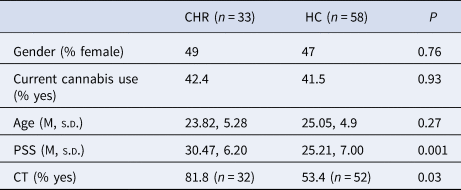
Table 2 summarises the participants' demographic and clinical information. There were no statistically significant differences in age, gender or current cannabis use across the diagnostic groups. PSS and CTQ scores were higher in CHR compared to HC.
Demographics

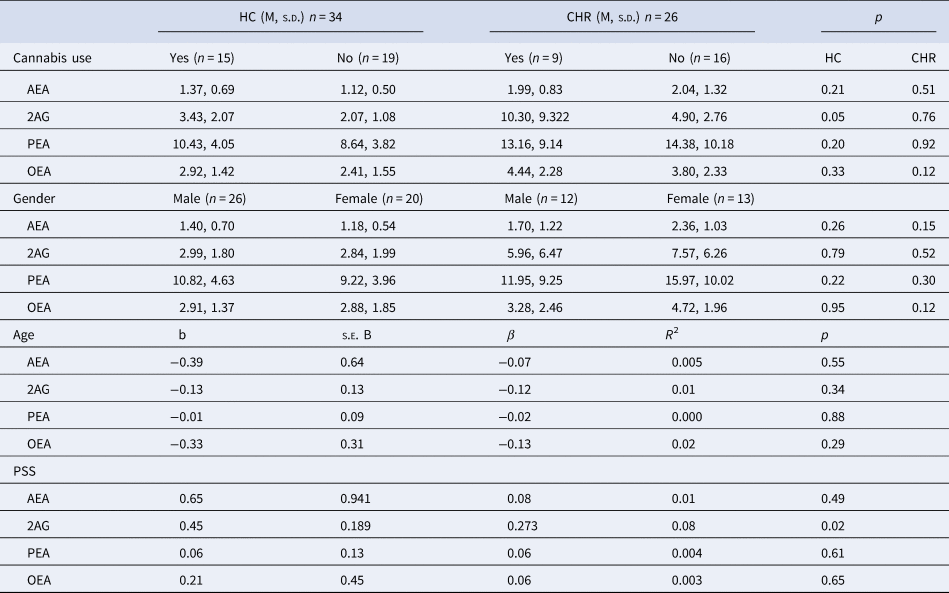
Table 3 outlines that on univariate analysis, neither previous cannabis use nor gender was associated with statistically significant effects on eCB levels in either the HC or CHR except AG2 in HC. Age had no effect on eCB levels, and 2AG only was significantly related to PSS levels.
Effect of cannabis use and gender on eCB levels

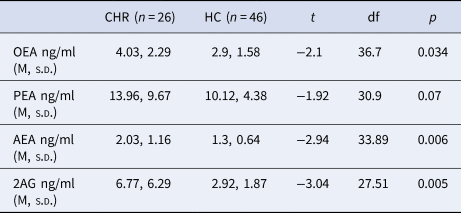
Table 4 shows that CHR had significantly higher OEA, AEA and 2AG levels compared to HC and approached significance for PEA.
Descriptive statistics

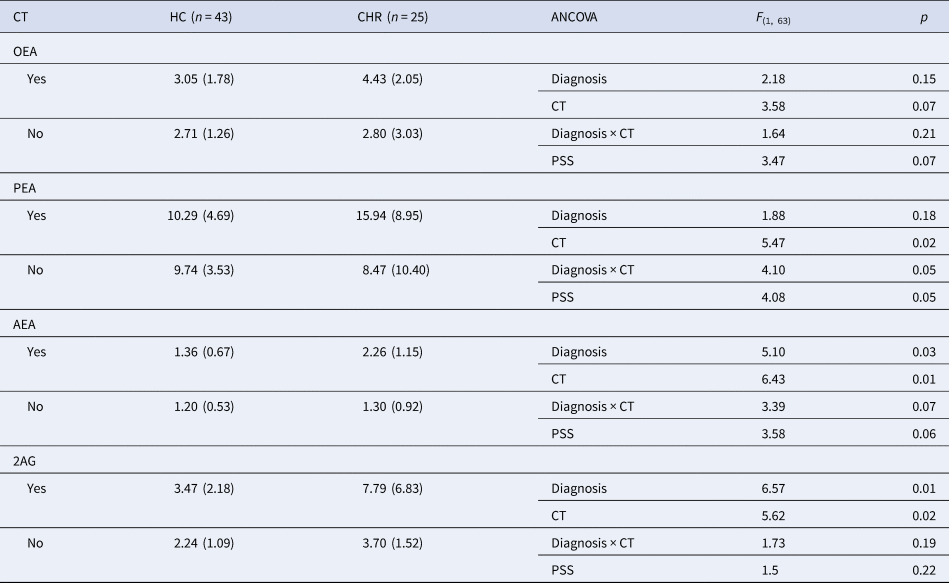
Table 5 summarises the mean (s.d.) levels of the different eCBs in people with CHR or exposed to CT, while controlling for PSS score. We did not control for other potential confounding factors such as gender or history of previous exposure to cannabis as these factors were not significantly associated with eCB levels, consistent with previous evidence (Giuffrida et al., Reference Giuffrida, Leweke, Gerth, Schreiber, Koethe, Faulhaber, Klosterkötter and Piomelli2004; Koethe et al., Reference Koethe, Giuffrida, Schreiber, Hellmich, Schultze-Lutter, Ruhrmann, Klosterkötter, Piomelli and Leweke2009; Reuter et al., Reference Reuter, Bumb, Mueller, Rohleder, Pahlisch, Hanke, Arens, Leweke, Koethe and Schwarz2017). Exposure to CT was associated with significantly higher levels of PEA, AEA and 2AG while CHR patients had significantly higher levels of AEA and 2AG in peripheral blood. Furthermore, there was a statistically significant effect of interaction between CT and CHR on PEA levels and a trend level effect on AEA levels in peripheral blood.
ANCOVA results

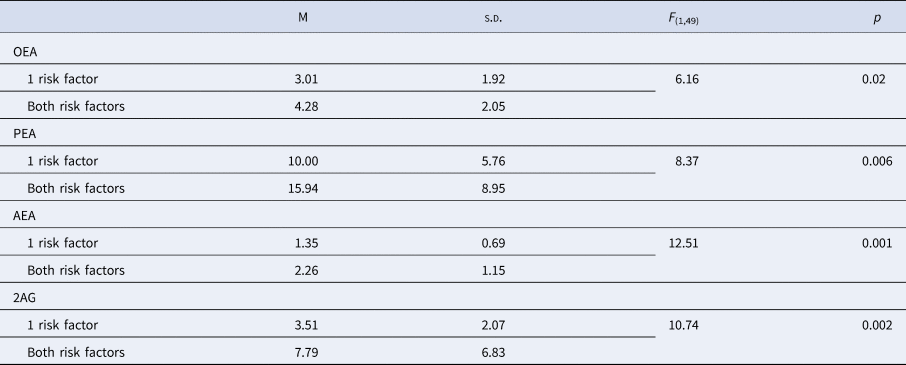
Table 6 shows that individuals with one risk factor (either HC with a history of CT or CHR with no history of CT) had lower eCB levels than individuals with both risk factors (those who were CHR and had a history of CT).
Comparison of 1 risk factor to 2 risk factors

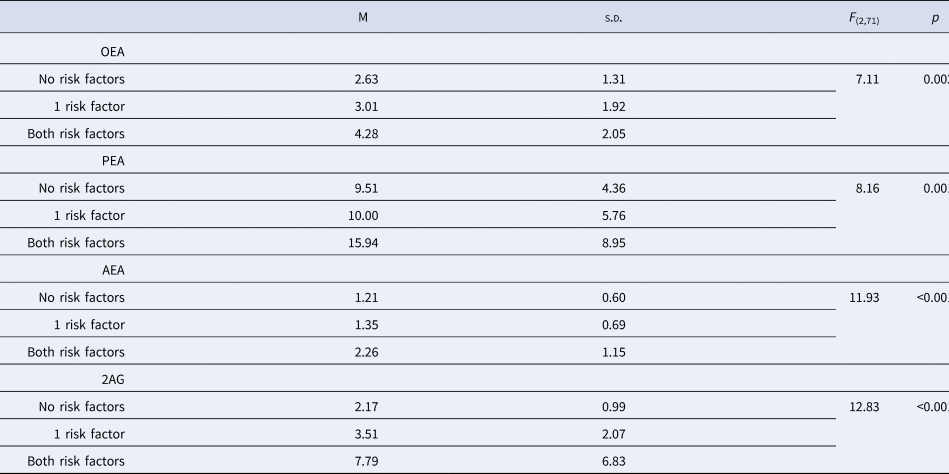
Further post hoc analysis (presented in Table 7) revealed that eCB levels were highest in those who were both CHR and had a history of CT and lowest in HC without a history of CT, with intermediate levels in the group that comprised those that were CHR but had no history of CT and those HC with a history of CT.
Linear relationship between eCB levels and number of risk factors

There was a significant correlation between PEA levels and total CAARMS score (r = 0.44, p = 0.03) and total CTQ score (r = 0.28, p = 0.02). There was a trend for correlation between AEA levels and total CAARMS score (r = 0.34, p = 0.09) but not with total CTQ score.
Discussion
As predicted, we found that CHR individuals had significantly higher AEA levels, but unlike previous studies, we also found higher OEA and 2AG levels. Contrary to previous studies (Leweke et al., Reference Leweke, Giuffrida, Wurster, Emrich and Piomelli1999; Koethe et al., Reference Koethe, Pahlisch, Hellmich, Rohleder, Mueller, Meyer-Lindenberg, Torrey, Piomelli and Leweke2018), we did not find significantly higher PEA levels, although this difference did approach significance. This is in line with evidence that schizophrenia patients had higher blood levels of AEA (De Marchi et al., Reference De Marchi, De Petrocellis, Orlando, Daniele, Fezza and Di Marzo2003) and that those in the prodromal state of psychosis had higher CSF levels of AEA (Koethe et al., Reference Koethe, Giuffrida, Schreiber, Hellmich, Schultze-Lutter, Ruhrmann, Klosterkötter, Piomelli and Leweke2009). Our study extends previous research by showing that those with a history of childhood maltreatment also had higher levels of AEA, 2AG and PEA. Furthermore, we report evidence of an effect of interaction between CHR and CT on PEA levels, such that in the absence of exposure to CT, CHR status was associated with lower levels of PEA compared to HC, while those who were both CHR and had been exposed to CT had higher levels of PEA compared to those who either had none of these risk factors or had one risk alone. Additional analyses showed that, as predicted, those with only one risk factor (exposure to CT or CHR status) had lower levels of PEA, AEA, OEA and 2AG compared to those with both risk factors (CHR with history of exposure to CT). Further, eCB levels increased linearly with the number of risk factors individuals were exposed to, such that those who were exposed to neither risk factor (HC without CT) had lower eCB levels compared to those with only one risk factor (exposure to CT or CHR status), who in turn had lower levels compared to those with both risk factors (CHR with history of exposure to CT). Importantly, these results were not confounded by the effect of perceived stress as a result of recent stress exposure over the past month. Furthermore, we found a significant correlation between PEA levels and total CAARMS score as well as total CTQ score and a trend-level correlation between AEA and total CAARMS score. Collectively, these results suggest that altered levels of these eCBs may be related to the extent of exposure to risk (as indexed by the severity of the CHR symptoms in those with CHR as well as the total CTQ score in those exposed to trauma in childhood), supporting the idea that their alterations may be linked to the risk of developing psychosis and potentially suggesting how stress may increase the risk of psychosis.
These results are consistent with evidence from Koethe et al. (Reference Koethe, Pahlisch, Hellmich, Rohleder, Mueller, Meyer-Lindenberg, Torrey, Piomelli and Leweke2018), who reported higher levels of AEA and PEA in affected twins discordant for schizophrenia or bipolar disorder compared to healthy twins and also Leweke et al. (Reference Leweke, Giuffrida, Wurster, Emrich and Piomelli1999) who also reported elevated levels of AEA and PEA in patients with schizophrenia. In contrast, Giuffrida et al. (Reference Giuffrida, Leweke, Gerth, Schreiber, Koethe, Faulhaber, Klosterkötter and Piomelli2004) reported lower levels of PEA in antipsychotic naïve schizophrenia patients compared to controls. Previous studies have reported a negative association between AEA levels and severity of psychotic symptoms in those with established psychosis (Giuffrida et al., Reference Giuffrida, Leweke, Gerth, Schreiber, Koethe, Faulhaber, Klosterkötter and Piomelli2004) which is in contradiction to our results. Methodological differences between our study and previous ones may underlie these differences. In particular, Giuffrida et al. examined CSF and studied patients with a diagnosis of schizophrenia whereas we examined eCB levels in peripheral blood and studied people who had not yet developed a frank psychotic disorder. Furthermore, others have reported lower levels in those in clinical remission (De Marchi et al., Reference De Marchi, De Petrocellis, Orlando, Daniele, Fezza and Di Marzo2003), consistent with the results presented here.
How eCB dysfunction as indicated by altered eCB levels may lead to psychosis remains unclear. It has been suggested that dysfunction of the eCB system may lead to psychosis by increasing dopaminergic activity (Müller-Vahl and Emrich, Reference Müller-Vahl and Emrich2008), the final common pathway in the pathophysiology of psychosis (Howes and Kapur, Reference Howes and Kapur2009). Preclinical studies have demonstrated that administration of a dopamine receptor agonist is associated with increase in AEA release in the dorsal striatum (Giuffrida et al., Reference Giuffrida, Parsons, Kerr, De Fonseca, Navarro and Piomelli1999) and hyperdopaminergia observed in dopamine transporter knockout mice (an animal model for schizophrenia) is associated with decrease in striatal AEA levels (Tzavara et al., Reference Tzavara, Li, Moutsimilli, Bisogno, Di Marzo, Phebus, Nomikos and Giros2006).
Strengths and limitations
The present study has a number of limitations. One of the key limitations of the present study relates to its cross-sectional design, thus limiting any conclusions that may be drawn about the relationship between CHR status and exposure to CT and alterations observed in eCB levels as well as between eCB alterations and psychosis. In particular, it is not possible to disentangle whether heightened eCB levels are a response to the illness or play a causal role in the development of psychosis. Longitudinal studies that include baseline eCB level assays that predated exposure to CT or the label of CHR status are ideal to help infer whether alterations predated risk status, but are logistically demanding and were not available in the present study. Follow-up studies in larger cohorts are needed to investigate the association between altered eCB levels and later transition to psychosis in order to understand the precise nature of the relationship between alterations observed and the onset of psychosis. Nevertheless, results presented here support a role for eCB alterations in the pathophysiology of psychosis.
We asked all participants to refrain from the use of drugs particularly cannabis before the study and recent cannabis exposure was ruled out by urine drug screen, which confirmed that participants were drug-free on the study day. Nevertheless, we cannot fully rule out enduring changes to the eCB system as a result of long-term cannabis use affecting the results of the present study. However, this seems less likely as we did not find even a trend-level association between history of recent cannabis use and eCB levels in our study participants. Furthermore, negative results on urine drug screen implied that study participants must have been abstinent from cannabis for more than a few days before taking part in the study and recent evidence suggests that other parameters of eCB function such as brain CB1 receptor availability start returning back to normal as early as after 2 days of abstinence (D'Souza et al., Reference D'souza, Cortes-Briones, Ranganathan, Thurnauer, Creatura, Surti, Planeta, Neumeister, Pittman and Normandin2016).
Detection of altered eCB levels in peripheral blood samples in this study also raises the issue of whether alterations in peripheral blood are related to any changes in the brain and vice versa. In previous studies examining differences in eCB levels between patients and controls, studies investigating levels in CSF (Koethe et al., Reference Koethe, Giuffrida, Schreiber, Hellmich, Schultze-Lutter, Ruhrmann, Klosterkötter, Piomelli and Leweke2009) have found similar results to those investigating peripheral blood levels (Leweke et al., Reference Leweke, Piomelli, Pahlisch, Muhl, Gerth, Hoyer, Klosterkötter, Hellmich and Koethe2012), although other studies have reported no correlation between serum and CSF eCB levels (Koethe et al., Reference Koethe, Giuffrida, Schreiber, Hellmich, Schultze-Lutter, Ruhrmann, Klosterkötter, Piomelli and Leweke2009; Reuter et al., Reference Reuter, Bumb, Mueller, Rohleder, Pahlisch, Hanke, Arens, Leweke, Koethe and Schwarz2017). Nevertheless, it is worth noting that Reuter et al. (Reference Reuter, Bumb, Mueller, Rohleder, Pahlisch, Hanke, Arens, Leweke, Koethe and Schwarz2017) reported that association between binocular depth inversion, a visual perceptual abnormality linked to psychosis vulnerability, and eCB (AEA) level alteration that differentiated schizophrenia patients from healthy controls, was observed in AEA levels in peripheral blood rather than in the CSF (Reuter et al., Reference Reuter, Bumb, Mueller, Rohleder, Pahlisch, Hanke, Arens, Leweke, Koethe and Schwarz2017).
It may also be argued that although our study controlled for the confounding effects of perceived stress, we did not control for the effects of subsequent trauma exposure or re-victimisation following an initial exposure to trauma in childhood. While it is well known that those who experience trauma are more likely to experience re-victimisation in adulthood (Coid et al., Reference Coid, Petruckevitch, Feder, Chung, Richardson and Moorey2001), a recent study investigating 7353 people found that the association between childhood trauma and psychosis was not mediated by re-victimisation (Bebbington et al., Reference Bebbington, Jonas, Kuipers, King, Cooper, Brugha, Meltzer, Mcmanus and Jenkins2011), suggesting that effects of re-victimisation are unlikely to have confounded the results of the present study.
Notwithstanding these limitations, it is worth noting that we employed an internationally recognised definition of CHR unlike in the previous study investigating eCB abnormalities in prodromal psychosis patients (Koethe et al., Reference Koethe, Giuffrida, Schreiber, Hellmich, Schultze-Lutter, Ruhrmann, Klosterkötter, Piomelli and Leweke2009) and also investigated all four major eCBs unlike in previous studies.
Implications and conclusions
In summary, here we have shown an association between CHR status and/or a history of childhood maltreatment and elevated eCB levels in peripheral blood, with a greater alteration in those with both CHR status and history of childhood maltreatment and a correlation between the altered levels and severity of CHR symptoms and extent of childhood maltreatment. However, further studies in larger cohorts and employing longitudinal design are needed to confirm these findings and delineate the precise role of eCB alterations in the pathophysiology of psychosis. If confirmed, this may complement preclinical evidence that point towards the eCB system as a potential target for mitigating the harmful effects of stress.
Acknowledgements
We would like to thank all the participants for taking part in this study, as well as the students and staff past and present for their help in the collection and entering of data. Particularly Eimear Leyden, Sita Parmar, Liam Embliss, Rupa Ramesh, Anand Beri, Maria Calem, Irene Wuersch, Cordelia Watson, Efisia Sais and Tabea Schoeler.
Financial support
Elizabeth Appiah-Kusi was supported by the National Institute for Health Research (NIHR) Collaboration for Leadership in Applied Health Research and Care South London at King's College Hospital NHS Foundation Trust when this work was carried out. The views expressed are those of the authors and not necessarily those of the NHS, NIHR or the Department of Health. Dr Bhattacharyya was supported by the National Institute for Health Research (NIHR) through an NIHR Clinician Scientist Award (NIHR CS-11-001) and the Medical Research Council (MRC) (MR/J012149/1) when this work was carried out. Dr Matthijs Bossong is supported by a Veni fellowship from the Netherlands Organisation for Scientific Research. This study represents independent research supported by the National Institute for Health Research (NIHR)/Wellcome Trust King's Clinical Research Facility and the NIHR Biomedical Research Centre and Dementia Unit at South London and Maudsley NHS Foundation Trust and King's College London. The views expressed are those of the author(s) and not necessarily those of the NHS, the NIHR or the Department of Health.