Introduction
Head and neck squamous cell carcinoma (SCC) has a tendency to metastasise to regional lymph nodes, decreasing survival by 50 per cent.Reference Woolgar, Triantafyllou, Lewis, Hunt, Williams and Takes1 Because this metastasis is an important prognostic factor, neck dissection is a key element of head and neck SCC surgery. When clinical, radiological or metabolic evidence of neck disease is identified, therapeutic neck dissection is indicated. In the N0 stage, neck dissection is performed as a staging and therapeutic procedure when the risk for positive lymph nodes exceeds 20 per cent.Reference Shah and Gil2 Several studies have been performed to assess whether or not patients undergoing salvage surgery after chemoradiotherapy or radiotherapy (RT) alone require prophylactic neck dissection. However, this remains a controversial issue in the post-bioradiotherapy cohort.Reference Grégoire, Lefebvre, Licitra and Felip3
The management of head and neck SCC has changed because of organ preservation strategies.Reference Pfister, Laurie, Weinstein, Mendenhal, Adelstein and Ang4–Reference Pfister, Spencer, Brizel, Burtness, Busse and Caudell5 Cetuximab is a recombinant human and mouse chimeric monoclonal antibody that binds specifically to the extracellular domain of human epidermal growth factor receptor. In doing so, it prevents phosphorylation of epidermal growth factor receptor's intracellular tyrosine kinase. This inhibits cell growth, induces apoptosis and decreases production of vascular endothelial growth factor.Reference Sato, Kawamoto, Le, Mendelsohn, Polikoff and Sato6 In the treatment of locally advanced head and neck SCC, cetuximab in combination with RT, called bio-RT, has shown an improvement in locoregional control and a reduction of mortality in comparison with RT alone, without increasing the acute toxic effects associated with RT.Reference Bonner, Harari, Giralt, Azarnia, Shin and Cohen8
Cetuximab is now approved for the treatment of patients with locally advanced head and neck SCC in combination with RT,Reference Bonner, Harari, Giralt, Azarnia, Shin and Cohen8 with platinum-fluorouracil chemotherapyReference Vermorken, Mesia, Rivera, Remenar, Kawecki and Rorrey9 or as monotherapy in patients with platinum-resistant, recurrent or metastatic disease.Reference Vermorken, Trigo, Hitt, Koralewski, Diaz-Rubio and Rolland10 We have previously demonstrated a very high rate of complications related to salvage surgery after conservative treatment with bio-RT.Reference Rovira, Tornero, Oliva, Taberna, Montal and Nogues11 In summary, 75 per cent of patients suffered complications, of which 50 per cent were classified as major complications. More importantly, in the univariate analysis, neck dissection was found to be a key factor for developing post-operative complications.Reference Rovira, Tornero, Oliva, Taberna, Montal and Nogues11
The aim of this study was to evaluate the accuracy of computed tomography (CT) and positron emission tomography (PET)-CT in patients undergoing primary site salvage surgery after head and neck SCC previously treated with bio-RT. By using this analysis, it may be possible to avoid unnecessary neck dissection that has proven to increase the post-operative complication rate in these patients. We also describe survival outcomes and compare between groups with or without neck dissection.
Materials and methods
Study population and design
This study describes a retrospective chart review conducted at a tertiary referral, academic cancer centre hospital. The protocol of this study was approved by the institutional ethics committee (reference number: PR323/15) at University of Bellvitge hospital. Eligible patients included consecutive newly diagnosed cases of invasive, locally advanced head and neck SCC that were diagnosed at our institution and treated with bio-RT. Tumour and overall disease staging was conducted according to the 7th edition of the American Joint Committee on Cancer Staging guidelines.Reference Edge, Byrd, Compton, Fritz, Greene and Trotti A12 Clinical and pathological information collected included location of the primary tumour, primary tumour–node–metastasis (TNM stage), recurrent TNM stage, type of pre-operative evaluation and pathological analysis. After salvage surgery, the results of the pathological analysis of neck specimens were compared with the pre-operative documentation to assess the accuracy of the pre-operative imaging. Overall survival, disease specific survival, local recurrence free survival and regional recurrence free survival were also analysed.
In our clinical practice, a CT-scan was performed two months after the end of non-surgical treatment to assess response. If no evidence of disease was found, clinical and radiological follow up was initiated. However, when the CT-scan raised any suspicion of persistent disease, a PET-CT scan was performed 1 month later (12 weeks after the end of bio-RT). This technique was introduced in 2010 at our institution. Previously, cervical CT-scan was the only test performed. When local persistence or recurrence was suspected according to PET-CT or during follow-up evaluation, a panendoscopy with oesophagoscopy was performed under general anaesthesia. We defined persistence as the presence of disease within six months of treatment completion and recurrence as the identification of disease more than six months after the end of bio-RT. When recurrence was confirmed by pathological analysis, the multidisciplinary tumour board committee decided which patients were suitable for salvage surgery. Following surgery, the results of the pathological analysis of neck specimens were compared with the tumour pre-operative documentation. In this way, we assessed the accuracy of the pre-operative tests performed. We also analysed the overall survival, disease specific survival, local recurrence free survival and regional recurrence free survival.
Statistical considerations
Overall survival was calculated from the time of diagnosis of the recurrence until death from any cause. Disease specific survival was calculated from the time of diagnosis of the recurrence to the time of death due to head and neck SCC after salvage surgery. Local recurrence free survival and regional recurrence free survival were calculated from the time of diagnosis of the recurrence until the time of the diagnosis of the local or regional recurrence, respectively.
Sensitivity was defined as the percentage of patients with neck node disease (confirmed by the pathology report or with nodal recurrence within the first year of follow up) who had a positive PET-CT result. Specificity was the percentage of patients without neck node disease (confirmed in the pathology report or without nodal recurrence within the first year of follow up) who had a negative PET-CT result.
Negative predictive value was calculated as the percentage of patients who were truly negative for the disease in the neck given that the PET-CT result was negative, while the positive predictive value was the percentage of patients who were truly positive for disease in the neck given that the PET-CT result was positive. Kaplan–Meier analysis was used for the survival curves, and differences among survival were assessed with the log-rank test.
Results
Characteristics of patients and treatment
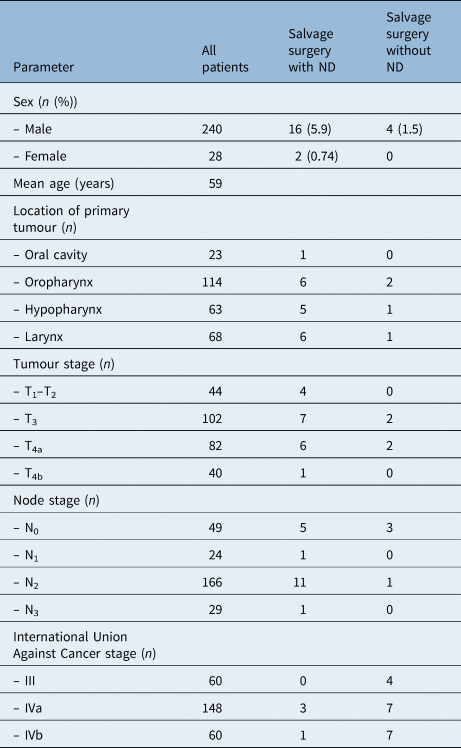
A total of 268 patients diagnosed from March 2006 to December 2013 were included in the retrospective chart review. The demographic and clinical characteristics of the 268 patients included (at initial diagnosis) are shown in Table 1.
The demographic and clinical characteristics of the 268 patients

ND = neck dissection
The mean age at diagnosis was 59 years, and the majority of patients were male. All patients had advanced stage disease (III–IV) at diagnosis: 84 per cent were stages T3–T4, and 82 per cent were node positive. All patients received a standard treatment with bio-RT. Radiotherapy was administered during a 7 to 8-week course of treatment (standard dosing to the primary site and involved nodal basins was 70 Gy, and uninvolved nodal basins received a dose of 50 Gy) concomitant with intravenous cetuximab (loading dose of 400 mg/m2 1 week before RT and then weekly infusions of 250 mg/m2 while receiving RT).
Patients received conventional three-dimensional conformal external beam RT until January 2009 when intensity modulated RT was introduced at our institution. One hundred and eighty-seven patients (70 per cent) received induction chemotherapy prior to bio-RT. According to the protocols of our institution, induction chemotherapy was used in laryngeal and hypopharyngeal locations or when a tumour was considered unresectable (T4b and voluminous N3 or N2c). Docetaxel, cisplatin and 5-fluoruracil, and paclitaxel, cisplatin and 5-fluoruracil based protocols were followed.Reference Vermorken, Mesia, Rivera, Remenar, Kawecki and Rorrey9,Reference Hitt, López-Pousa and Martínez-Trufero13 Eighty-one patients (30 per cent) did not receive induction chemotherapy because of patient or disease factors (low disease volume, prior inclusion on a clinical trial or medical comorbidities).
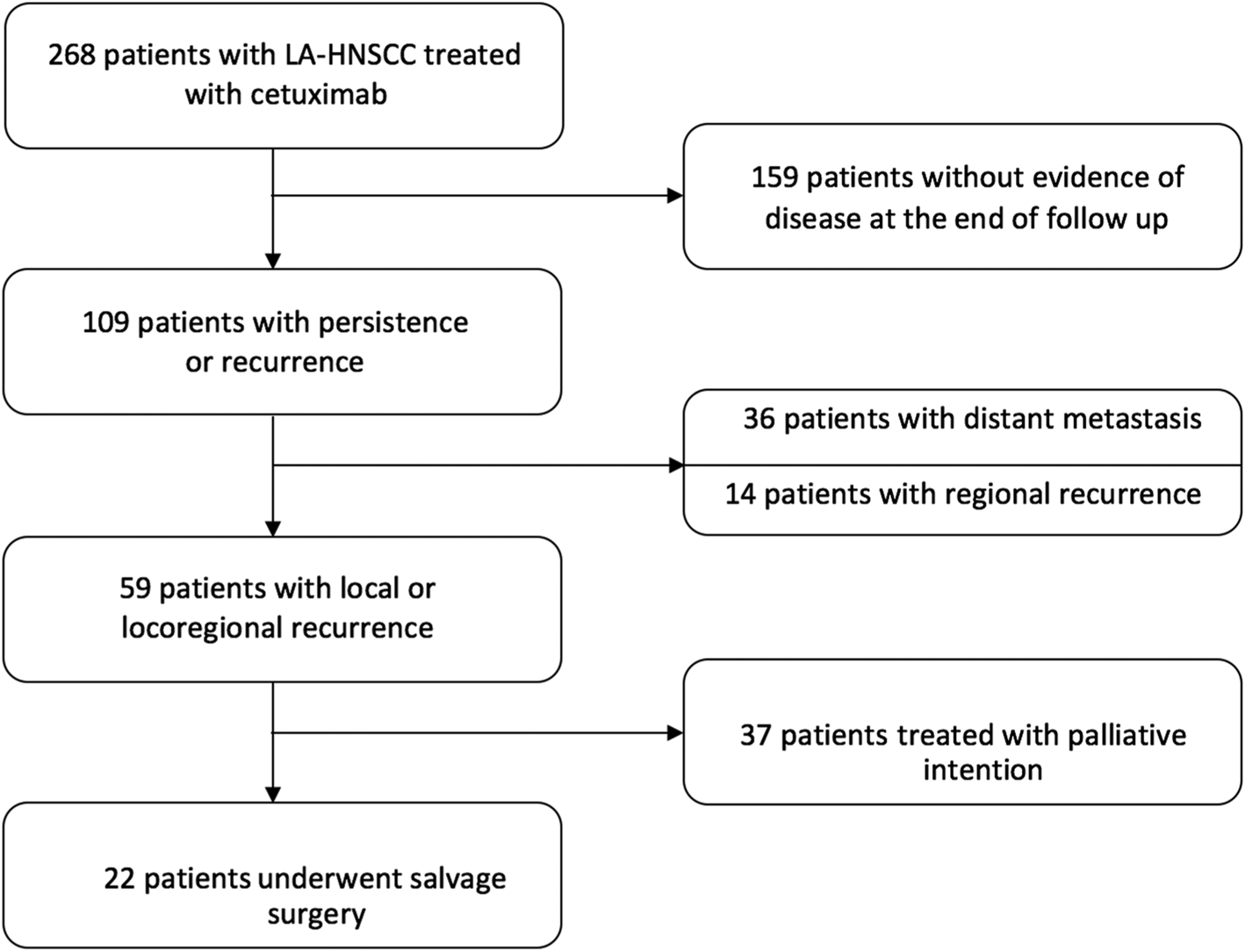
A total of 109 patients (41 per cent) developed recurrent or persistent disease after definitive treatment with bio-RT, including 36 patients (13 per cent) with distant metastases, 14 patients (5 per cent) who presented with regional recurrence only and 59 patients (22 per cent) who developed locally recurrent or residual disease with or without regional failure.
Among these 59 patients with local persistent or recurrent disease, 22 patients underwent salvage surgery (Figure 1). Five (22.7 per cent) of these 22 patients had persistent local disease, and 17 patients developed a local recurrence. Of note, the reasons why these 22 patients who underwent salvage surgery did not receive conventional treatment with platinum-based concomitant chemoradiotherapy are as follows. Nine patients (41 per cent) received bio-RT alone due to comorbidities that contraindicated the use of platinum-based therapies such as neuropathy, hearing impairment, renal failure or age above 70 years. Three patients (14 per cent) received bio-RT after medical decision due to toxicity to induction chemotherapy that contraindicated chemoradiotherapy. Ten patients (45 per cent) received bio-RT because they were included in a clinical trial (open label randomised, multi-centre phase III trial of docetaxel, cisplatin and 5-fluoruracil chemotherapy plus concomitant treatment with cisplatin and conventional radiotherapy versus docetaxel, cisplatin and 5-fluoruracil chemotherapy plus concomitant cetuximab and conventional radiotherapy in locally advanced, unresectable head and neck cancer; NCT00716391).
Flow chart for selection of eligible patients. LA-HNSCC = locally advanced head and neck squamous cell carcinoma

Surgical resection included 6 circumferential pharyngolaryngectomy procedures (27 per cent), 6 bucopharyngectomy procedures (27 per cent), 6 total laryngectomy procedures (27 per cent), 2 total glossectomy procedures (9 per cent), 1 total laryngectomy extended to the base of the tongue (5 per cent) and 1 circumferential pharyngolaryngectomy with total glossectomy (5 per cent).
Our departmental protocol was to perform a simultaneous neck dissection at the time of local salvage surgery with the extent of lymphadenectomy being decided by the tumour board committee. Eighteen patients (81.8 per cent) underwent neck dissection (9 unilateral and 9 bilateral neck dissection), and 4 patients did not undergo neck dissection.
Of note, the only patient treated without neck dissection among the CT only evaluation group was an 82-year-old man with severe comorbidities. The rest of patients treated without neck dissection had no suspicious lymph nodes on pre-operative PET-CT. The decision of not performing a neck dissection was made by the treating physician with the agreement of the multidisciplinary board meeting after balancing increased risk of complications and benefit of neck dissection on patients with other comorbidities and long elapsed time since the end of treatment (average 31.7 months).
Evaluation of occult node metastases
Among the 22 patients who underwent salvage surgery, 9 patients (41 per cent) were clinically and radiologically staged pre-operatively only with CT scan while 13 (59 per cent) were staged with PET-CT as well. A total of 12 patients (54 per cent) were staged as N0, 6 patients (27 per cent) as N1, 3 patients (14 per cent) as N2b and 1 patient (5 per cent) as N2c.
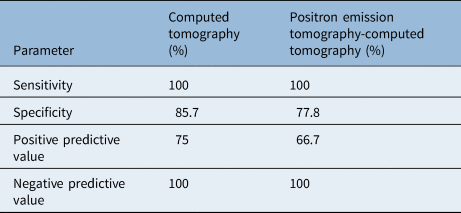
A total of 331 lymph nodes were retrieved from 27 neck dissections, with 9 that were unilateral and 9 that were bilateral in 18 patients. Twelve nodes (4 per cent) were positive in 7 patients who were all pre-operatively classified as node positive. Three of the six N1 patients were down-staged to N0 histologically. There were no positive nodes (0 of 136) in the 8 N0 patients who had neck dissection, and no nodal recurrence was observed in the 4 patients who did not. The sensitivity, specificity, positive predictive value and negative predictive value of CT and PET-CT are outlined in Table 2.
Diagnostic value of computed tomography and positron emission tomography-computed tomography in detecting post-bioradiotherapy neck metastasis

Outcome
The median follow up was 23.2 months (range, 2–79 months). At the end of follow up, 5 patients (23 per cent) were alive. Nine patients (41 per cent) developed recurrence: 6 patients (27 per cent) had locoregional relapses and 3 patients (14 per cent) had metastatic recurrences. Another 4 patients (18 per cent) developed second tumours (3 of them were related to tobacco use). Finally, 4 patients (18 per cent) died due to other causes: one from a complication of the surgical procedure (carotid artery rupture), two from cerebrovascular accident and one from community-acquired pneumonia.
Impact of neck dissection on survival
We compared the survival rates between patients who underwent neck dissection and those who did not.
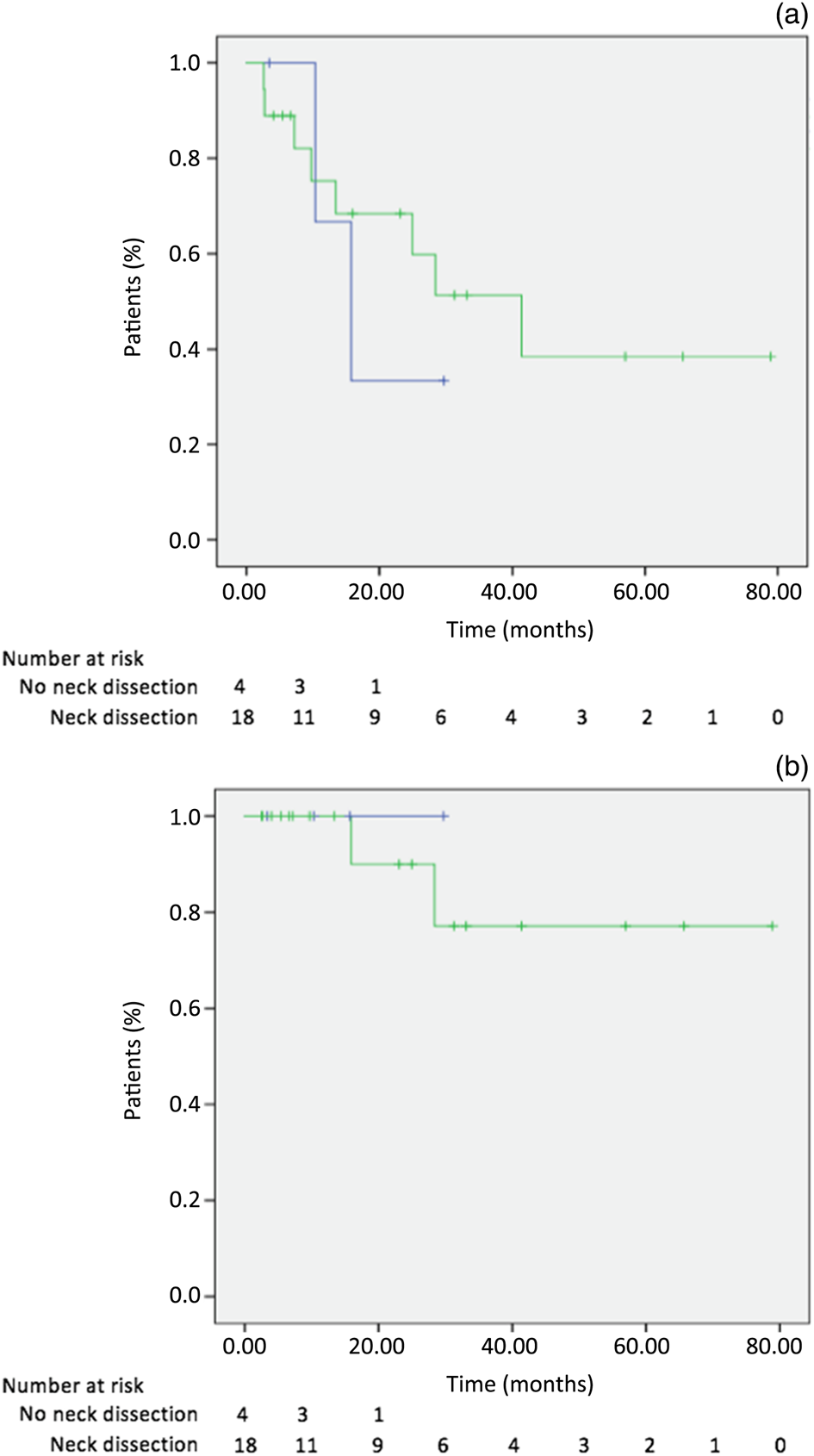
The results did not show any statistically significant differences in overall survival, disease specific survival and regional recurrence free survival between the two groups of patients (p = 0.67, p = 0.91 and p = 0.62, respectively; Figure 2). We identified a better disease specific survival and regional recurrence free survival among these patients who were identified pre-operatively as clinically and radiologically N0 (p = 0.03 and p = 0.05, respectively) and a trend toward a better overall survival (p = 0.1) among these patients. These results must be taken with caution because of the small number of patients in the group without neck dissection, but they serve to prove there was no obvious increased mortality associated when conservative management of N0 was conducted.
(a) Specific and (b) regional recurrent free survival between patients treated with and without neck dissection.

Discussion
Since the patterns of lymph node tumour spread are predictable based on the location and stage of the primary tumour,Reference Lindberg14–Reference Shah, Candela and Poddar16 selective neck dissection became widely accepted. However, these same patterns of lymph node spread are assumed but have not been described for recurrent or persistent head and neck SCC after bio-RT.
As previously reported by our unit, even though late toxicity after conservative treatment with bio-RT was significantly lower than with chemoradiation,Reference Taberna, Rullan, Hierro, Navarro, Vazquez and Lozano17 the rate of post-operative complications after salvage surgery remains similarly high after both treatments.Reference Rovira, Tornero, Oliva, Taberna, Montal and Nogues11 Defining the reasons for this high rate of complications is beyond the objectives of this study. Nonetheless, according to the data previously published, performing neck dissection is an important factor that increases the risk of severe post-operative complications.Reference Basheeth, O'Leary and Sheahan18
The survival benefit achieved by neck dissection seems to be obvious in node-positive patients, but the benefits of elective neck dissection are still a matter of contention for clinically and radiologically recurrent N0 patients after bio-RT. It is therefore relevant to know the impact that performing neck dissection has on an already poor survival (5-year overall survival for salvage surgery after bio-RT reported to be less than 50 per centReference Pezier, Nixon, Scotton, Joshi, Guerrero-Urbano and Oakley19) in order to balance that survival potential benefit with the increased risk of complication and decide the best surgical treatment for each individual patient.
As micro-metastases may be underestimated even after routine pathological examination,Reference van den Brekel, Stel, van der Valk, van der Waal, Meyer and Snow20 one must accept that the most accurate and advanced imaging technique will also miss a percentage of micro-metastases. Our aim is to minimise the risk of underestimating lymph node metastases, and PET-CT seems to be a very useful tool in achieving this.Reference Perie, Hugentobler, Susini, Balogova, Grahek and Kerrou21,Reference Brouwer, Hooft, Hoekstra, Riphagen, Castelijns and de Bree22 Montal et al. performed a retrospective study that tried to assess the nodal radiological appearance of head and neck SCC after treatment with bio-RT. They demonstrated that the radiological characteristics were similar to appearances after chemoradiotherapy. However, when residual neck disease is suspected by CT, PET-CT has a higher negative predictive value.Reference Montal, Oliva, Taberna, De Avila, Rovira and Cos23 According to our results, CT, with PET-CT for equivocal cases, offers a reliable assessment of the neck with a very high negative predictive value.
There is a general consensus in favour of elective neck dissection during primary head and neck cancer surgery when the likelihood of occult metastasis is more than 20 per cent,Reference Shah and Gil2 but it is less clear when there is tumour relapse after non-surgical treatment. The largest series study advocating the need for elective neck dissection was reported by Birkeland et al. in 2016Reference Birkeland, Rosko, Issa, Shuman, Prince and Wolf24 with 203 recurrent or residual head and neck SCC cases classified as recurrent N0 with CT scan. A total of 406 elective neck dissections were performed with 17 per cent risk of occult neck disease being more prevalent in T4 (34 per cent) and supraglottic tumours (28 per cent).
By performing bilateral neck dissection on every patient independently of the staging, this study avoids the selection bias; however, re-staging prior to salvage surgery was performed with PET scan in only 21 per cent of the patients, avoiding the potential benefit of PET. Other published series have promoted the avoidance of neck dissection. The series study with the largest number of patients included 125 salvage total laryngectomy procedures with 98 patients undergoing neck dissection.Reference Freiser, Ojo, Lo, Saint-Victor, Bollig, Nayak and Sargi25 Although incurring a potential selection bias, especially because there was no report of the proportion of patients with node positive disease at the time of initial diagnosis, the authors concluded that according to the lack of benefit of elective neck dissection in disease specific survival and overall survival, elective neck dissection is not recommended. It is indeed the impact on survival that is the most relevant variable to decide whether neck dissection is indicated or not. On that note, Bohannon et al.Reference Bohannon, Desmond, Clemons, Magnuson, Carroll and Rosenthal26 and Temam et al.Reference Temam, Koka, Mamelle, Julieron, Carmantrant and Marandas27 showed no survival benefit associated with elective neck dissection for the treatment of recurrence after chemoradiation in the clinically staged recurrent N0 neck on different cohorts of patients.
• The lymph node spread pattern for recurrent and persistent head and neck squamous cell carcinoma (SCC) after bioradiotherapy (bio-RT) has not been described
• Survival after salvage surgery for recurrent or persistent head and neck SCC after bio-RT is poor
• Neck dissection has proved to increase the risk of post-operative complications during salvage surgery
• Positron emission tomography-computed tomography (PET-CT) has a very high negative predictive value for neck metastasis after treatment with bio-RT
• Conservative treatment of the node negative neck using PET-CT on patients with local recurrence after bio-RT should be considered
Sanabria et al.Reference Sanabria, Silver and Olsen28 conducted a comprehensive systematic review to identify when prophylactic neck dissection is indicated in salvage surgery. They concluded that only early glottic tumour cases (T1–T2) whose recurrences were also diagnosed at an early stage (recurrent T1–T2) would be appropriately treated with salvage surgery to the primary site without neck dissection. They suggest that neck dissection should be strongly considered in patients with other tumour locations, especially those recurring as recurrent T2–T4.Reference Sanabria, Silver and Olsen28
No studies have been published so far on when to perform elective neck dissection during salvage surgery for patients with a clinically and radiologically N0 neck with local recurrence after conservative treatment with bio-RT. This study has some limitations including the small number of patients and its retrospective nature. Notwithstanding this, our data suggest that the rate of occult neck disease in the salvage surgery after conservative treatment with bio-RT patient group is low and that PET-CT offers reliable results. Accordingly, we reaffirm our previous statement that a consideration should be given to conservative treatment of the neck when clinical and radiological evaluation shows no evidence of nodal disease.
Conclusion
There are no studies assessing the role of elective neck dissection during salvage surgery after bio-RT failure. Until now, clinical experience and studies with chemoradiation have been extrapolated to bio-RT. One of the most important factors when considering the usefulness of elective neck dissection is the rate of occult metastasis. This study shows that the current imaging techniques offer very high negative predictive value and, therefore, that conservative treatment of the neck must be considered when dealing with patients with primary tumour recurrence without evidence of neck disease using these contemporary imaging techniques. However, further studies are needed to determine the risk of occult neck metastasis in each individual case to offer patients the most accurate treatment.
Acknowledgements
The authors would like to acknowledge EeLyn Chan and Christostomos Tornari for proofreading the manuscript and Valenti Navarro for his immeasurable and immense statistical input.
Competing interests
Ricard Mesia has received personal fees and non-financial support from Merk, and personal fees from AstraZeneca and MSD. Miren Taberna has received non-financial support from Merck and Archimedes, and personal fees from Sanofi Pasteur and Merck. The rest of the authors have no conflict of interests to declare.