Introduction
The mangrove habitat of the western Arabian Gulf is a biologically extreme environment typified by a lack of freshwater input, with extreme high-end temperature and salinities (Al-Maslamani et al., Reference Al-Maslamani, Walton, Kennedy, Al-Mohannadi and Le Vay2013). Due to these extreme arid conditions the mangrove forests can be considered ecologically unique. They represent an extreme ecosystem where the tree assemblages consist of only one species, Avicennia marina (Forssk.) Vierh., which forms the entire ecotope (Abdel-Razik, Reference Abdel-Razik1991; Al-Khayat & Jones, Reference Al-Khayat and Jones1999; Riegl & Purkis, Reference Riegl and Purkis2012; Al-Maslamani et al., Reference Al-Maslamani, Walton, Kennedy, Al-Mohannadi and Le Vay2013; Walton et al., Reference Walton, Al-Maslamani, Skov, Al-Shaikh, Al-Ansari, Kennedy and Le Vay2014). The arid mangrove of the west coast of the Arabian Gulf in particular can be considered an ancient and well-established ecosystem, which is supported by a suite of endemic species confined to the specific demographics and conditions created by A. marina (De Grave & Al-Maslamani, Reference De Grave and Al-Maslamani2006; Al-Maslamani et al., Reference Al-Maslamani, Walton, Kennedy, Al-Mohannadi and Le Vay2013, Reference Al-Maslamani, Al-Masdi, Smyth, Chatting, Obbard and Giraldes2015; Naderloo, Reference Naderloo2017).
One of the most prevalent species associated with this mangrove environment is the tree climber crab Metopograpsus messor (Forskål, 1775) a medium-sized crab native to the western Indian Ocean and the Arabian/Persian Gulf (Naderloo, Reference Naderloo2011). A Grapsidae crab, it belongs to a group of terrestrial tree climbers described as occupying herbivorous, detritivorous and omnivorous niches within the trophic chain. It is considered a habitat-generalist and is common in a variety of coastal environments including muddy substrates, rocky shores and mangroves (El-Sayed et al., Reference El-Sayed, El-Meaddawy and Fouda2000; Linton & Greenaway, Reference Linton and Greenaway2007; Poon et al., Reference Poon, Chan and Williams2010; Naderloo, Reference Naderloo2011; Lee, Reference Lee, Castro, Davie, Guinot, Schram and von Vaupel Klein2015). The species is easily identifiable by its dark coloured dashes and in some specimens by red chelae (Holthuis, Reference Holthuis1977; Naderloo, Reference Naderloo2011).
The decapod species represent integral components within the majority of marine trophic chains occupying different roles throughout, including that of predators (Boudreau & Worm, Reference Boudreau and Worm2012). Indeed, predatory behaviour in decapods is commonly identified as active foraging. However there are no recorded observations of crabs presenting a proactive fishing behaviour. Accounts of decapods using substrate-borne vibrations in predator avoidance and courtship have been documented in numerous terrestrial species (Christy, Reference Christy1991; Hill, Reference Hill2001; Koga et al., Reference Koga, Backwell, Christy, Murai and Kasuya2001). However, the use of substrate-borne vibrations for prey-localization during foraging and fishing has not been documented (Brownell & Farley, Reference Brownell and Farley1979; Bell et al., Reference Bell, McCoy and Mushinsky1991).
This study reports the fishing behaviour of Metopograpsus messor as witnessed in the arid mangroves of the western Arabian Gulf and their use of mangrove pneumatophore networks and substrate-borne vibrations for prey-localization. A list of the main component species and a discussion of the ecological drivers which may account for the observed behaviour is also presented.
Materials and methods
Study area
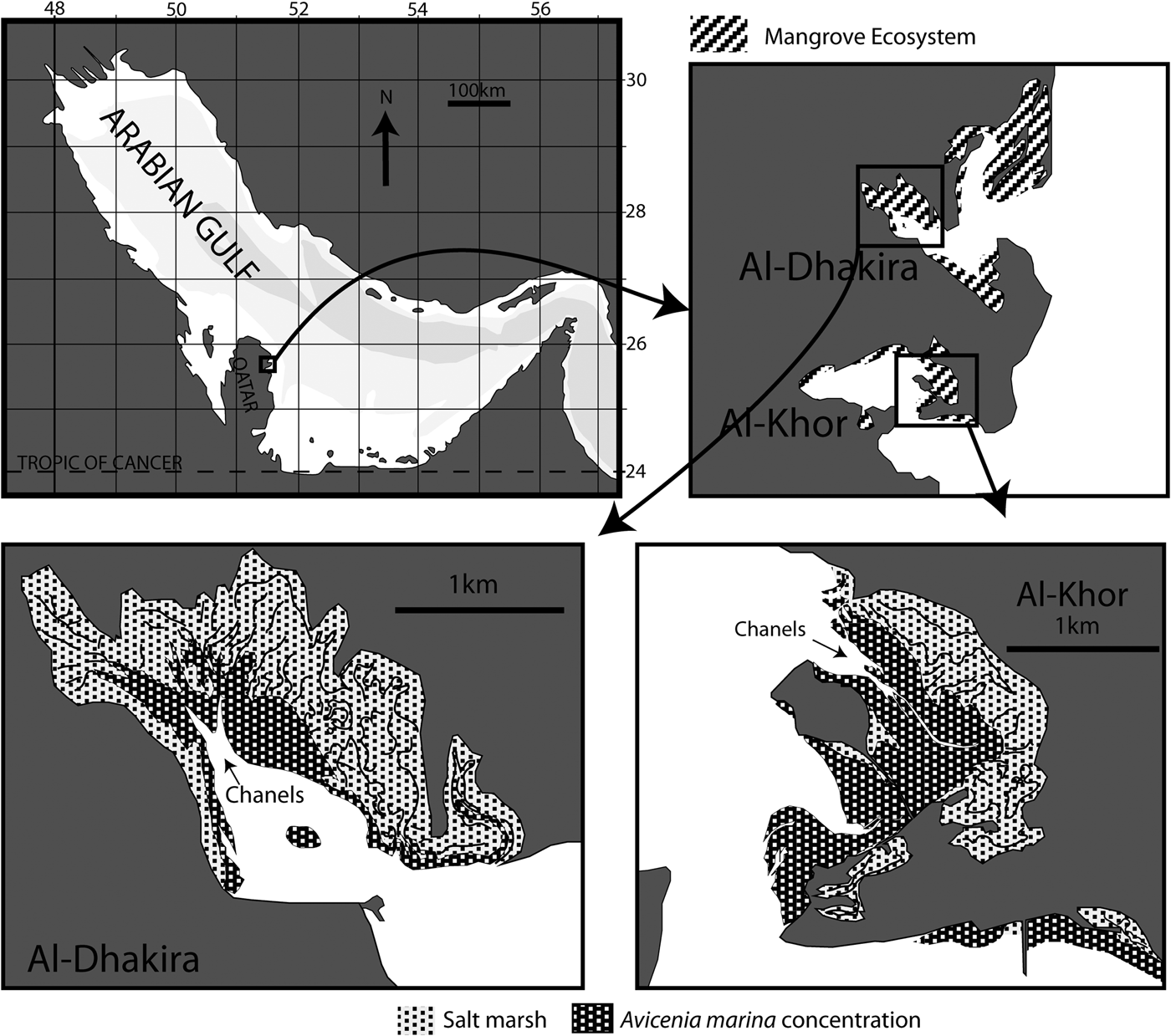
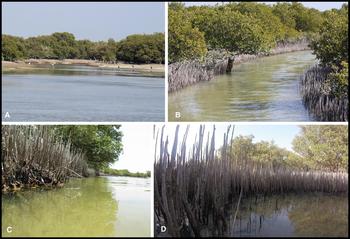
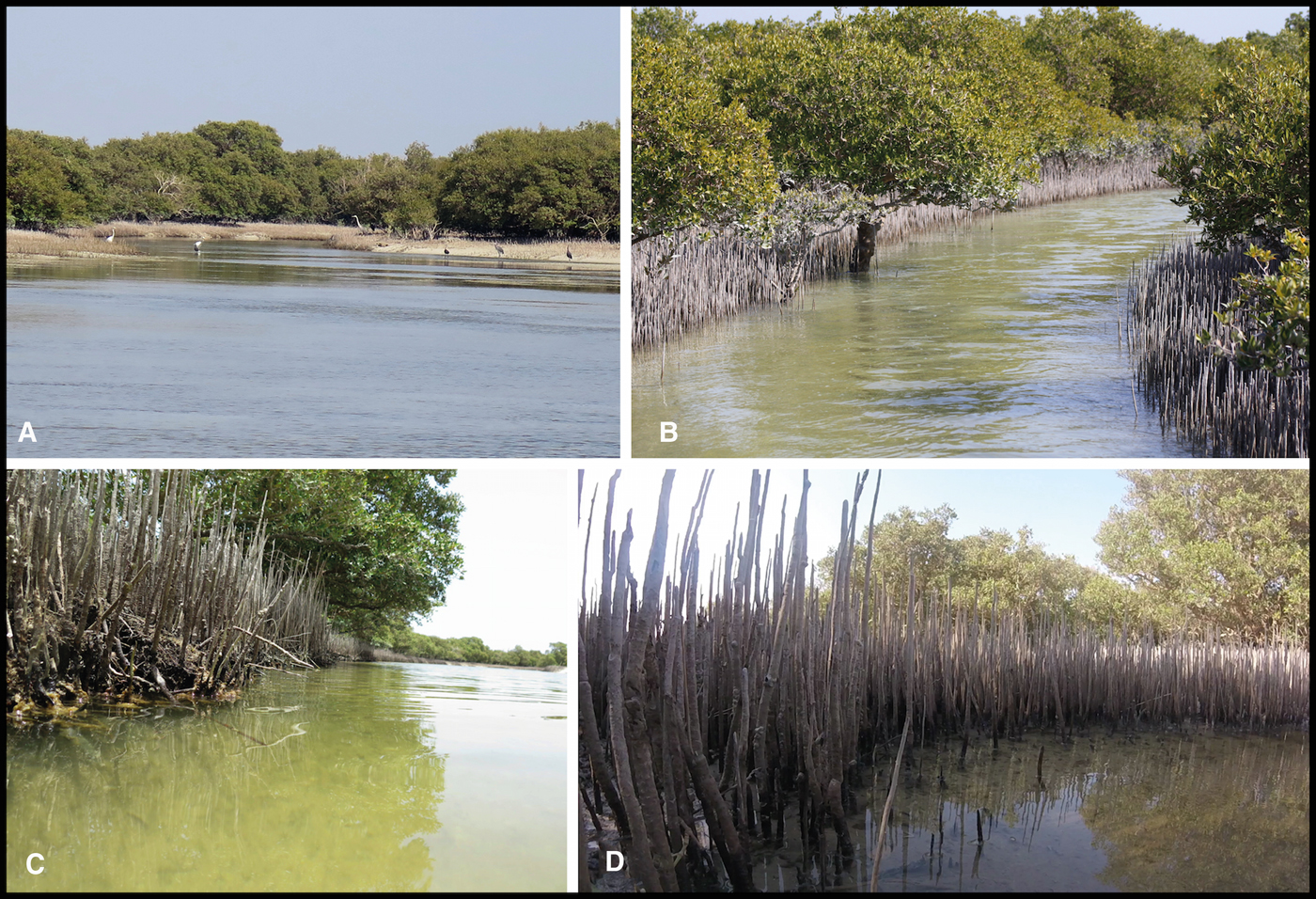
Observations and records took place in situ within the mangrove assemblages at Al-Khor (25o41′29.2″N 51o33′15.7″E) and Al-Dhakira (25o45′01.5″N 51o32′21.7″E) on the east coast of Qatar (Figure 1). The mangrove environment at these two sites was characterized by a riparian ecosystem formed as a result of hydrodynamic sculpting due to ebbing and flooding tides. The riparian corridors were fringed by pneumatophores of A. marina trees which grew along the boundaries of the channels (Figure 2). The study sites were visited every 2 months over a 2-year period.
Map of the survey sites at Al-Khor and Al-Dhakira, Qatar. Highlighting the mangrove areas; the salt marshes and high densities of the mangrove tree Avicennia marina; and the entrance of the channels at the studied riparian zone.

Images of the studied mangrove, with (A) the entrance of the channels in the open-water areas near the sea; (B) the end of the channels in the semi-confined water areas in the peripheral mangrove zone, near the salt marshes; and the studied riparian zone (C) in open-water areas and (D) the semi-confined water areas.
Fishing behaviour and prey-localizing behaviour
Metopograpsus messor fishing and prey-localizing behaviour was recorded with naked eyes and video camera using sampling behavioural rules as per Martin & Bateson (Reference Martin and Bateson1986). Intertidal and subtidal observations were obtained at a distance of ~3–10 m, using snorkelling when necessary. A total of 48 ecological observations were conducted to record and describe the proactive predatory fishing behaviour and prey-localizing/foraging behaviour. Surveys were performed throughout the tidal cycle, which was schematically divided into: Low Tide; Flood Tide start (intertidal flooded areas <5 cm); Flood Tide (intertidal flooded areas >5 cm); High Tide (water covering the pneumatophores). The fishing and prey-localizing behaviour of M. messor in relation to the tidal cycle and position in the riparian zone was recorded using the following categories: (1) hiding in cavities; (2) prey-localizing/foraging on the bottom; (3) fishing on pneumatophores; (4) climbing the mangrove trees.
Prey-localization experiment
During the fishing behaviour small fish creating vibrations on pneumatophores during the ingression of the flooding tide (start) were documented. This was accompanied by M. messor moving in the direction of the vibration source. Based on this observation, a comparative in situ assessment of tactile sensitivity in relation to pneumatophore vibration was designed to evaluate the contribution of substrate-borne vibrations in prey-localization. The experiment was recorded using video as per sampling rules described in Martin & Bateson (Reference Martin and Bateson1986). The hypothesis being that the prey-localizing behaviour of this crab was initiated and directed by pneumatophore-borne vibrations.
The experiment focused on stimuli-response. Small knocks were made against pneumatophores using a piece of wood to create vibrations on a single pneumatophore in an attempt to mimic the vibrations which had been observed being created by small fish. The experiment was replicated 30 times during the start of flood tide. Before each experiment, observers remained motionless for 5 min, to allow crabs to get accustomed to their presence.
Ecological relations and implications with the described behaviours
To evaluate the abiotic and biotic relations and implications in regards to predatory behaviour and the abundance of M. messor the following observational components were documented: trophic inter- and intra-specific associations and temperature and salinity ranges. To quantify the ecological evaluation the riparian survey zone was schematically divided in accordance with the observational event: open-water area close to the sea (Figure 2A, C); and semi-confined water area on the peripheral mangrove zone, an area with tide pools and in close proximity to salt marshes (Figure 2B, D). These ecological evaluations took place during the flood tide as it represented the phase of the tidal cycle when prey-localizing and fishing behaviour were most commonly observed. Voucher specimens of recorded species were collected and returned to the laboratory for taxonomic verification, preservation and cataloguing.
All specimens observed were recorded using a timed-search visual census methodology, which incorporated walking the intertidal zones and snorkelling mangrove channels for sub-surface analysis. The ecological index used for all crab species was frequency. Species observed in the first 10 min were considered frequent, and after this period were considered occasional. In addition, the abundance index was used to count the total number of M. messor specimens observed in the first 10 min. A total of 40 one-hour surveys were undertaken following this protocol.
Results
Mangrove channels – species composition and environmental characteristics
A high degree of variation was recorded in temperature and salinity when comparing water masses in the mangrove channels. The open-water areas near the sea presented a maximum temperature of 36°C and salinities of 50 ppt, similar to those previously documented in the region (Camp et al., Reference Camp, Schoepf, Mumby, Hardtke, Rodolfo-Metalpa, Smith and Suggett2018). More extreme environmental conditions of a maximum temperature >49°C and salinity 75 ppt were recorded in the semi-confined water areas at the end of the channels, on the periphery of the mangroves.
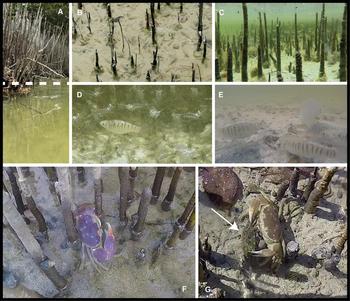
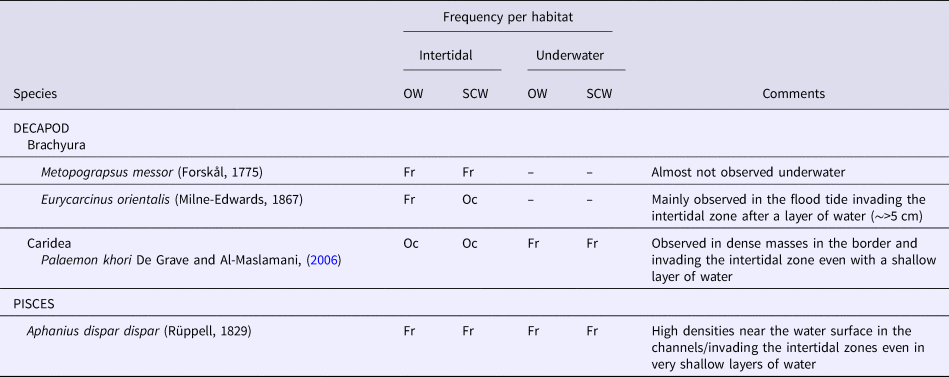
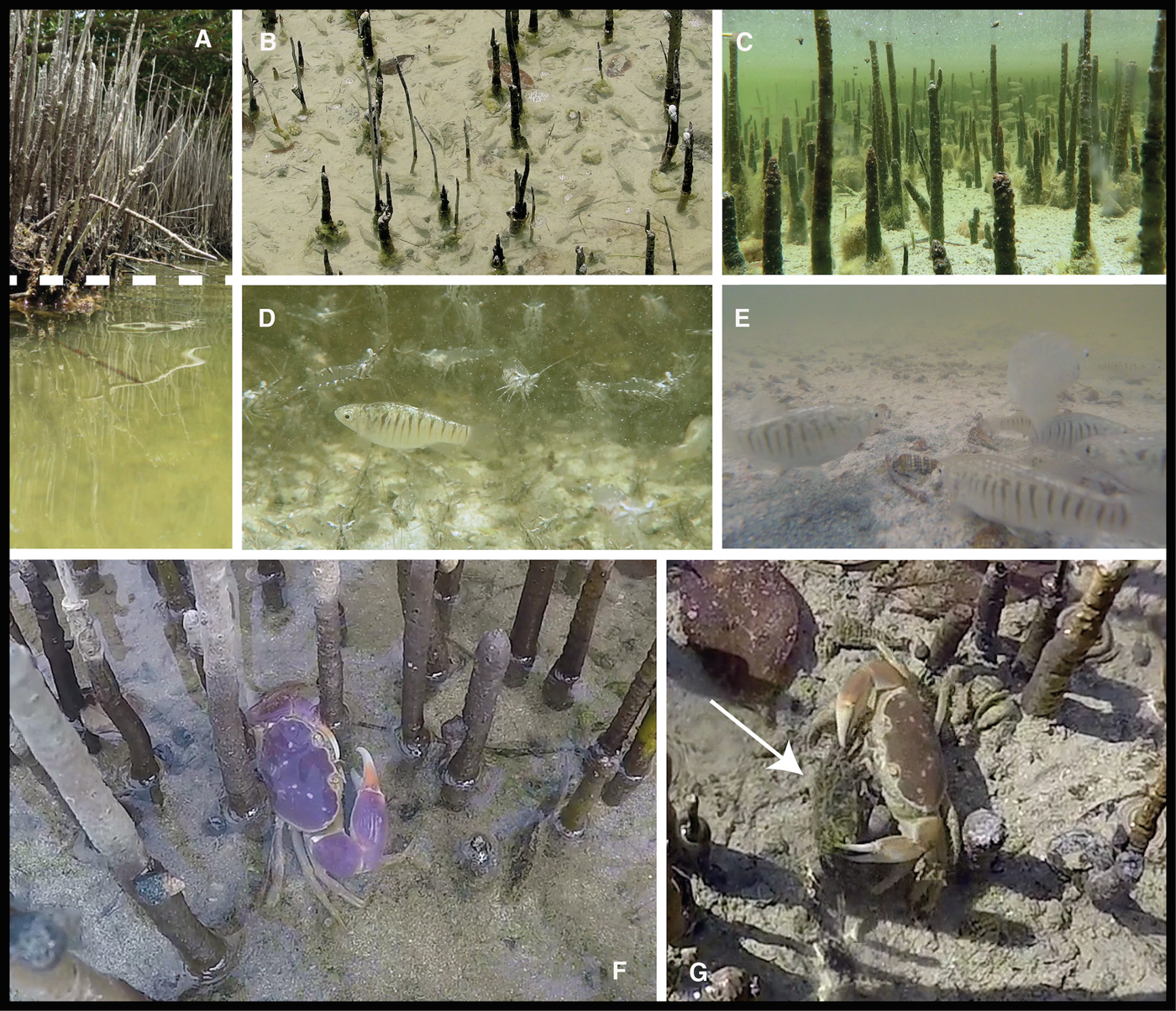
The main component species observed in the riparian zone during the flood tide are presented in Table 1. The crab M. messor was frequent in all intertidal zones with total abundance of >100 specimens recorded in the first 10 min during all surveys. The small fish Aphanius dispar dispar (Rüppell, 1829) was dominant underwater within the subtidal zone (Figure 3B–E) and was observed in all channels in open-water areas and in semi-confined water areas, including tidal pools. It was recorded invading the intertidal riparian zone during the start of the tidal influx when water levels were <4 cm (Figure 3B) and dominating the intertidal zone throughout the flooding tide (Figure 3C). Among decapods in the intertidal zone the purple crab Eurycarcinus orientalis A.Milne-Edwards, 1867 was frequent in the open-water mangrove areas and occasional in the semi-confined water areas and particularly prevalent in flooded areas of >5 cm (Figure 3F, G). Frequently, the endemic shrimp Palaemon khori De Grave & Al-Maslamani, Reference De Grave and Al-Maslamani2006 was observed in high-density assemblages within the riparian zone in all channels in the open-water areas and in semi-confined water areas, including tidal pools, (Figure 3D). However, its densities decreased in the intertidal riparian zone.
Images of observation within the studied mangrove; (A) the riparian zone dividing the intertidal zone above and the subtidal zone in flood. With shoals of A. d. dispar invading the intertidal zone (B) with a shallow layer of water <4 cm and (C) with a higher water level >5 cm; and in the subtidal zone during the low tide (D) among the shrimp P. khori and (E) a shoal in shallow tide pools. Also, the illustration of E. orientalis within the flooded intertidal zone foraging/prey-localizing (M) with a vivid colour and (N) a pale coloured specimen after the capture of M. messor (arrow pointing to the prey).
List of main species observed during the flood tide in the riparian zone of the channels in the arid mangrove of Qatar

The riparian zone was divided in two regions: the channels near the sea with open waters (OW); and the peripheral mangrove areas in the end of the channels with semi-confined waters (SCW). Species were considered to be Frequent (Fr) or occasional (Oc).
Fishing and prey-localizing behaviour
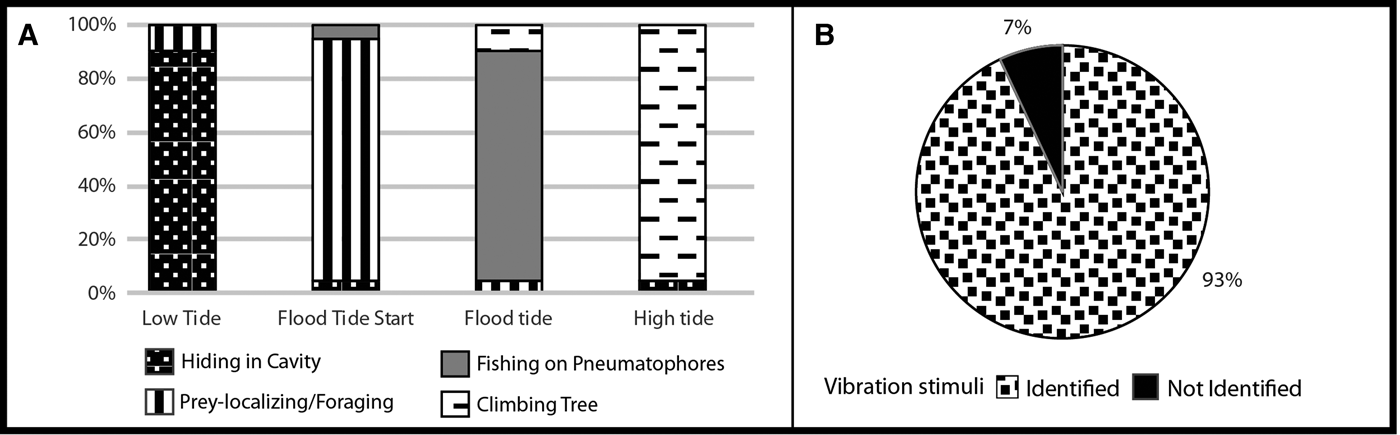
The results of the observed displacement/position of M. messor in relation to the tidal cycle are highlighted in Figure 4A, where the majority of the species followed a displacement pattern in accordance with the rising water level; prey-localizing behaviour at the start of the flood tide and fishing behaviour during the remainder of the flood tide up until the water level covers the entire crab.
Ecological data; (A) the percentage of specimens of Metopograpsus messor (hiding in cavities, walking on the bottom, climbing the pneumatophores and climbing a tree), during the low tide, the flood tide (in the start) and after the water has risen some centimetres (flooding in the intertidal) and the high tide (with the pneumatophores totally flooded); (B) the percentage of times that M. messor identified or did not identify the vibration stimuli in the pneumatophore.

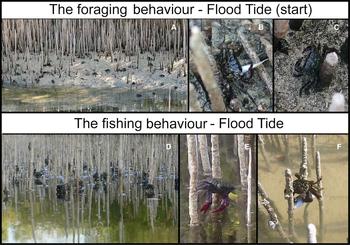
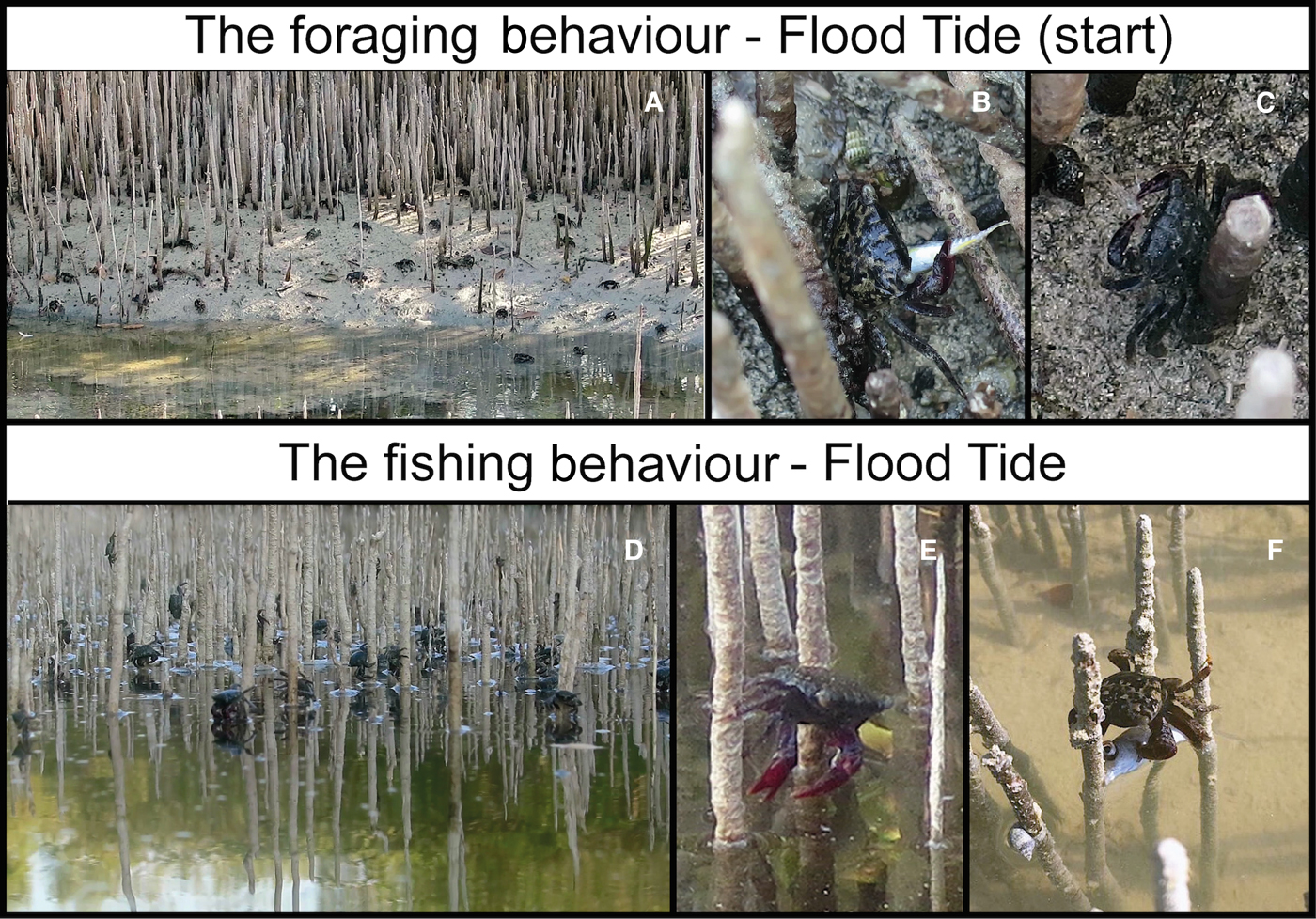
During the low tide M. messor was virtually absent in the riparian zone, it was observed hiding in burrows of other crabs (Figure 4A). Prior to the flooding tide M. messor was observed moving out of burrows along the riparian corridor start prey-localizing (Figure 5A). Crabs within the riparian zone initially displayed prey-localizing (foraging) behaviour (Figure 5A) when the incoming water had just entered the mangrove system. As the tidal influx increased and water levels rose M. messor began to climb A. marina pneumatophores. The crabs took a position just above the surface and adopted a fishing stance (Figure 5D). This behavioural phase was characterized by the crabs anchoring themselves using their pereiopods to the roots with their chelipeds positioned in a pincher-like trap. Once in position M. messor would remain motionless and wait for prey to move within striking range (Figure 5E). Metopograpsus messor displayed a high level of tactile sensitivity to stimuli on the water surface and was recorded attempting to capture anything within range of its chelipeds. The crab was observed capturing actively moving fish in its chelipeds and retaining the prey in a vice-like grip until all movement had ceased (Figure 5F). Prey-localizing and fishing behaviours during the flood tide were recorded at all observational events (Figure 5D–F). Metopograpsus messor specimens were recorded congregating on the trunks and branches of A. marina at a height consistent with the water level during the peak of high tide when the riparian zone was completely flooded (Figure 4A).
Images of the two observed behaviours displayed by Metopograpsus messor: the foraging/prey-localizing behaviour at the start of the flood tide with (A) the specimens concentrated in the riparian zone, (B) after the capture of a fish A. d. dispar and (C) a shrimp P. khori. The fishing behaviour on the flood tide after a heightened water level with (D) the specimens concentrated in the riparian zone, (E) a specimen in the ‘fishing position’ and (F) after the capture of a fish.
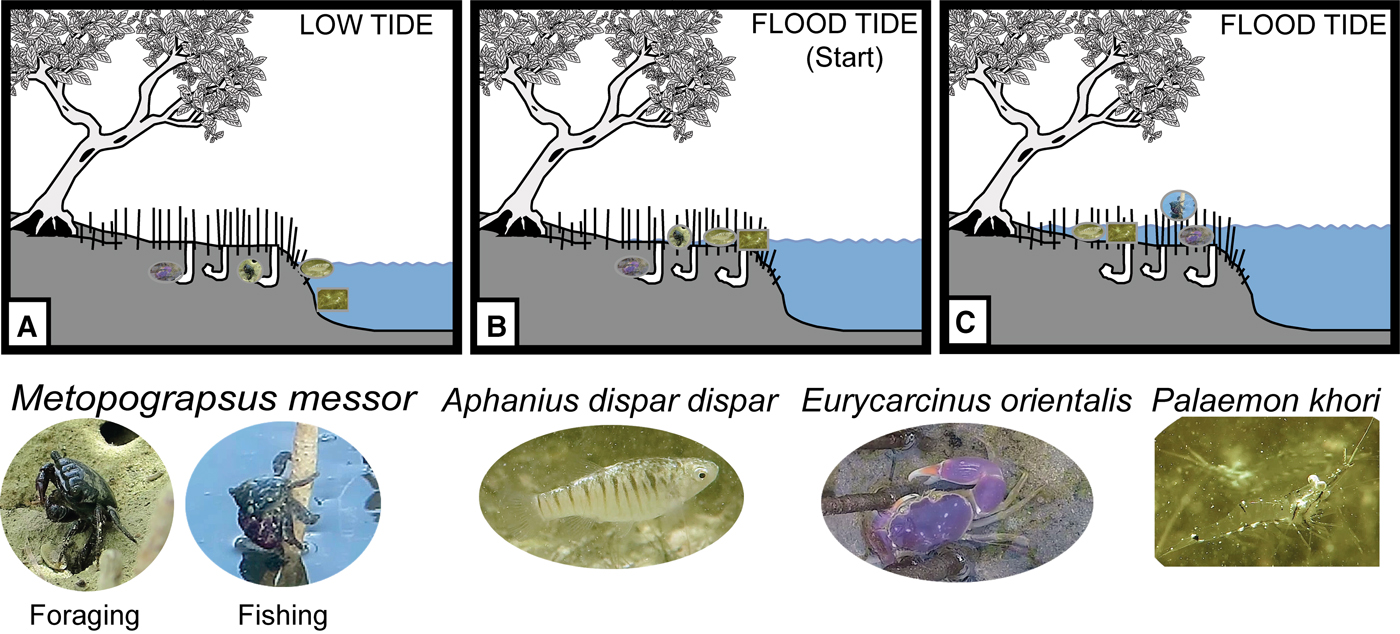
A general overview about the relationship between flood tide, prey-localizing and fishing behaviour and the main species observed is illustrated in Figure 6. The activity of M. messor in relation to the tidal phase is portrayed in Figure 6A; at low tide most specimens are absent or hidden from view. However once the flood tide begins (Figure 6B) the population of M. messor move out from the burrows and adopt a prey-localizing behaviour. Once shoals of A. d. dispar start to invade the intertidal zone M. messor adopt a fishing stance (Figure 6C), as water levels rise M. messor starts active fishing behaviour which is accompanied by E. orientalis moving out of its burrows to begin a predatory hunt.
Relations linkage with the fishing behaviour displayed by Metopograpsus messor on the flood tide; with the observed position of each species: M. messor in the foraging/prey-localizing and fishing behaviour; A. d. dispar, E. orientalis and P. khori. (A) in the low tide; (B) at the beginning of the flood tide with just a small layer of water; (C) in the sequential flood tide progression.

Observed trophic relationships with M. messor
As the flood tide began to ingress, several specimens of M. messor were observed holding A. d. dispar in their chelipeds (Figure 5B). Some individuals of M. messor were recorded with P. khori clasped in their chelipeds (Figure 5C) and some with small specimens of M. messor highlighting a cannibalistic behaviour. The purple crab E. orientalis was recorded prey-localizing and preying on M. messor once the flooding tide was underway (Figure 3G).
Pneumatophore-borne vibrations and prey-localizing
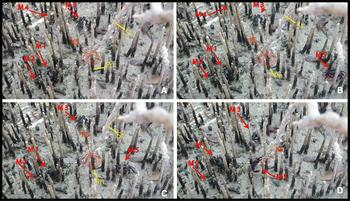
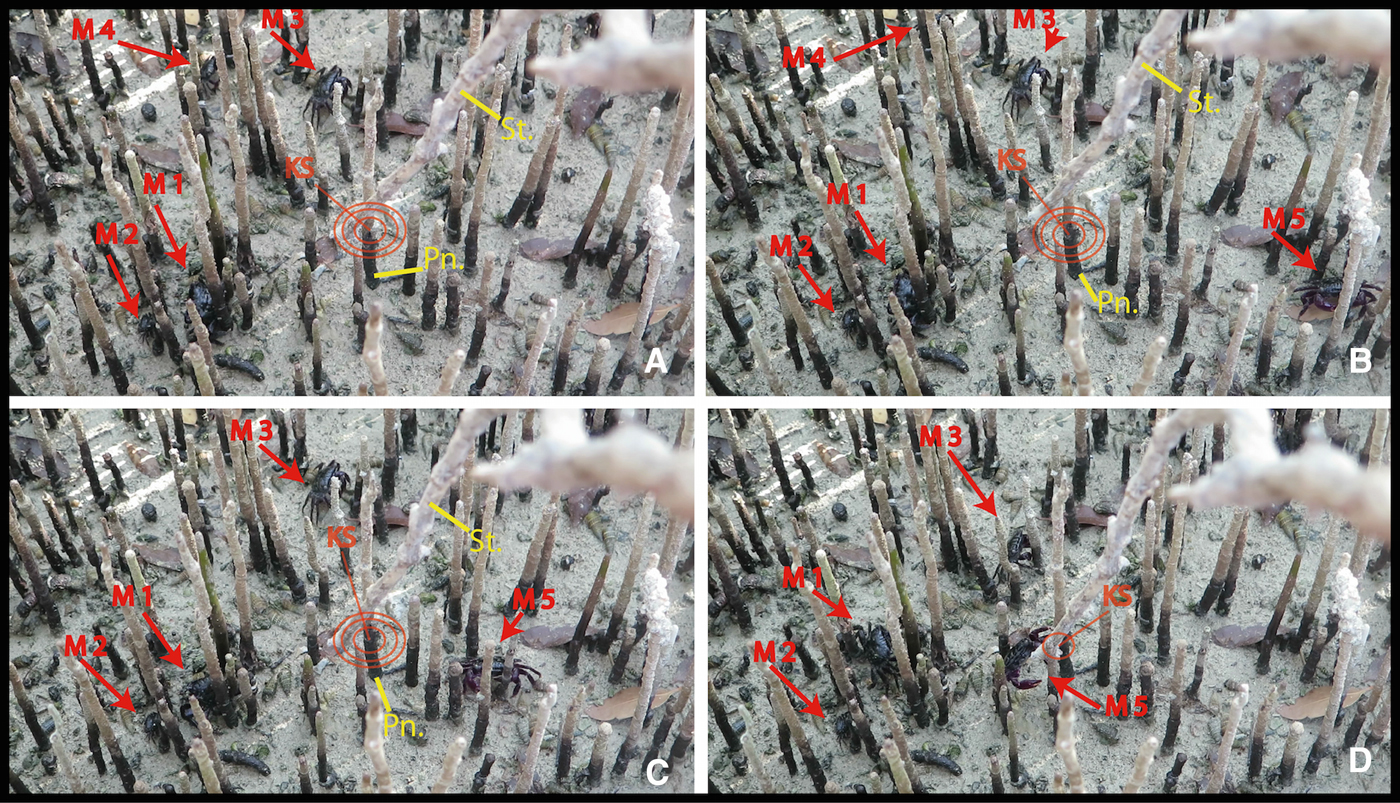
Experiments to evaluate M. messor response to pneumatophore-borne vibrations showed that in >93% of replicates, specimens could locate the exact pneumatophore being stimulated (Figure 4B). Interestingly, some replicates recorded an accumulation of specimens identifying the pneumatophore-borne vibrations. However, when a group was present, only the largest reached the vibration source (Figure 7). When large crabs with red chelae were present the other individuals did not approach the vibration source even though the stimuli had been recognized. This priority of self-preservation displayed by smaller crabs even though capturing food is a stimulus-induced urgency, emphasizes the intraspecific competition and hierarchical relationship within this species (Figure 7A–D). The high percentage response from M. messor revealed the crab is equipped with acute tactile sensitivity awareness which effectively identified pneumatophore movements as indicators of active prey. In addition, the use of a piece of wood to create the vibration means that olfactory and visual cues can be excluded as triggers in prey-localization.
Images in sequential moments A, B, C and D, illustrating the ‘knocking experiment’ to evaluate the ‘vibration sensibility’, when using a wooden stick as stimuli (St.) and selecting a single pneumatophore (Pn), vibrations were created simulating a fish with a specific knocking-spot (KS). In the first moment (A) four Metapograpsus messor (M1–4) were in the visual field near the knocking spot; in the second moment (B) the fifth specimen (M5) with reddish chela appeared in the visual field; in the third moment (C) while specimens (M1–3) keep observing and M4 moves far from the visual field, the fifth specimen (M5) arrives at approximately the knocking spot; in the fourth moment (D) the specimen with reddish chela (M5) reaches the knocking-spot and tries to catch the stick while two others (M1 and M3) carefully stay nearby.
This experiment suggests a direct trophic relation between M. messor and A. d. dispar, as all observations in the study recorded shoals of A. d. dispar producing vibrations as they accessed the mangrove channels during the start of the tidal influx (Figure 3B). This would suggest a direct relationship in regards to the high frequency of A. d. dispar and the daily displacement of M. messor during the tidal influx a probable driver in the development of the crab's fishing behaviour.
Discussion
Trophic relationships related to fishing and prey-localizing behaviour
The trophic relationship observed in this study identified a unique trait associated with M. messor as the crab is generally considered an opportunist detritivore, herbivore and omnivore but not an active predator (El-Sayed et al., Reference El-Sayed, El-Meaddawy and Fouda2000). Indeed, the results highlight that the prey-localizing and predatory fishing behaviour are not just opportunistic traits for a few specimens but are an established pattern for the entire population (Figure 5D). This characteristic has not been recorded in other Grapsid crabs (Fratini et al., Reference Fratini, Cannicci, Abincha and Vannini2000; Linton & Greenaway, Reference Linton and Greenaway2007; Poon et al., Reference Poon, Chan and Williams2010; Lee, Reference Lee, Castro, Davie, Guinot, Schram and von Vaupel Klein2015). Metopograpsus messor was observed predating not only A. d. dispar but also the shrimp P. khori and smaller M. messor demonstrating that the crab is more of a generalist predator rather than a specialist (El-Sayed et al., Reference El-Sayed, El-Meaddawy and Fouda2000; Walton et al., Reference Walton, Al-Maslamani, Skov, Al-Shaikh, Al-Ansari, Kennedy and Le Vay2014). It is possible that a genetic trait has dominated this specific population of M. messor to evolve from opportunistic foragers to generalist hunters/fishers. It is important to highlight this recorded activity as it documents a terrestrial crab behaving in a predatory manner with a vertebrate.
Another inter-linked trophic relationship was that of the purple crab E. orientalis which actively hunted M. messor. Species at the genus Eurycarcinus are recognized predators of other crab species in mangrove environments (Dahdouh-Guebas et al., Reference Dahdouh-Guebas, Giuggioli, Oluoch, Vannini and Cannicci1999; Fratini et al., Reference Fratini, Cannicci, Abincha and Vannini2000) and apparently this is the case of E. orientalis in the arid mangrove. It is unlikely that E. orientalis is an exclusive predator of M. messor, however the availability and abundance of the prey has influenced the species prey–predator dynamics. The fact that E. orientalis emerged from its burrows after a significant volume of water had flooded the intertidal zone, is probably related to its gill adaptations in avoiding desiccation. But certainly, the presence of a predator underwater could act as the stimulus for a mass displacement of M. messor climbing the pneumatophores. This trophic connection between A. d. dispar, M. messor and E. orientalis is supported by nitrogen isotope δ 15N analysis (see Walton et al., Reference Walton, Al-Maslamani, Skov, Al-Shaikh, Al-Ansari, Kennedy and Le Vay2014). The high densities of P. khori along the fringe of the riparian zone (Figure 3D) initially suggested a direct trophic web relation with A. d. dispar and M. messor as the species share a specific habitual niche (Figure 3D). However, isotope analysis revealed that P. khori is not a main prey item for A. d. dispar or M. messor, as no correlated δ 15N isotope values were reported (see Al-Maslamani et al., Reference Al-Maslamani, Walton, Kennedy, Al-Mohannadi and Le Vay2013; Walton et al., Reference Walton, Al-Maslamani, Skov, Al-Shaikh, Al-Ansari, Kennedy and Le Vay2014). It may be that the trophic relation between P. khori and M. messor and other species in this riparian habitat is accounted for at the planktonic stages, as the endemic shrimp is described as a plankton feeder (Al-Maslamani et al., Reference Al-Maslamani, Walton, Kennedy, Al-Mohannadi and Le Vay2013) and a large constituent of the A. d. dispar diet is plankton (Keivany & Ghorbani, Reference Keivany and Ghorbani2012).
An interesting observation was the social hierarchy within M. messor, whereby large alpha specimens had priority in capturing prey (Figure 7), with smaller individuals even allowing larger specimens primacy in locating vibrations. The smaller crabs (M1 and M3 in Figure 7) were visibly avoiding any inter-species competition. Similar behaviour has been reported in other grapsid species (Nara et al., Reference Nara, Kitaura and Wada2006) but not for M. messor. The observed cannibalism of smaller M. messor by the larger alphas highlights the voracity of this hierarchical social standing (El-Sayed et al., Reference El-Sayed, El-Meaddawy and Fouda2000; Walton et al., Reference Walton, Al-Maslamani, Skov, Al-Shaikh, Al-Ansari, Kennedy and Le Vay2014). It should be noted that the most dominant alphas displayed the red chelae (Holthuis, Reference Holthuis1977; Naderloo, Reference Naderloo2011), an indicator which could be related to the individual's hierarchical position. The research has raised more behavioural questions in relation to this unique mangrove habitat and its inhabitants, particularly in the population dynamics of this crab, the correlation of its colour patterns and the diet composition in relation to hierarchical position. Furthermore, M. messor occurs in different regions and habitats of the Gulf and Indian Ocean (Naderloo, Reference Naderloo2017) and is an invasive in Hawaii (Paulay, Reference Paulay2007). Behavioural studies comparing this species in different regions may highlight what is characteristic of the species and what are regional adaptations.
Evolutionary considerations about the fishing and prey-localizing behaviours
The extremes in salinity and temperature experienced in the western Arabian Gulf during the summer months have been comprehensively documented, typifying this marine region as an extremely high temperature environment (Riegl & Purkis, Reference Riegl and Purkis2012; Al-Maslamani et al., Reference Al-Maslamani, Al-Masdi, Smyth, Chatting, Obbard and Giraldes2015; Giraldes et al., Reference Giraldes, Al-Maslamani, Al-Ashwel, Chatting and Smyth2016; Camp et al., Reference Camp, Schoepf, Mumby, Hardtke, Rodolfo-Metalpa, Smith and Suggett2018). However, the conditions recorded in the peripheral zone of this mangrove ecosystem are beyond previously recorded temperatures and salinities. This research revealed the ability of species such as P. khori and A. d. dispar not only to survive in peripheral areas of the mangrove where water temperature can be >49°C and salinity 75 ppt but flourish, thereby displaying evolutionary adaptations to live in a very challenging ecosystem. This high density of P. khori, endemic to the studied ecosystem (De Grave & Al-Maslamani, Reference De Grave and Al-Maslamani2006; Al-Maslamani et al., Reference Al-Maslamani, Walton, Kennedy, Al-Mohannadi and Le Vay2013), suggests that this arid mangrove is indeed an ancient and isolated well-established extreme ecosystem. An ancient and isolated characteristic has been supported by the presence of endemic gastropod species (BWG pers. observ.) such as Pirenella conica (Blainville, 1829), Clypeomorus bifasciata persica (Houbrick, Reference Houbrick1985), Echinolittorina arabica (El Assal, 1990), Mitrella blanda (Sowerby, 1844) and Priotrochus kotschyi (Philippi, 1849). Fossil records indicate that the speciation of these gastropods took place some 6000 years ago when extreme saline lakes dominated the region (Houbrick, Reference Houbrick1985; Reid et al., Reference Reid, Dyal and Williams2010; Stewart et al., Reference Stewart, Aspinall, Beech, Fenberg, Hellyer, Larkin, Lokier, Marx, Meyer, Miller, Rainbow, Taylor, Whittaker, Al-Mehsin and Strohmenger2011; Williams et al., Reference Williams, Apte, Ozawa, Kaligis and Nakano2011; Al-Maslamani et al., Reference Al-Maslamani, Al-Masdi, Smyth, Chatting, Obbard and Giraldes2015). The presence of an ecosystem with endemic species which evolved under these arid conditions presents evidence to support that the current mangrove ecosystem has existed since this geological period. Therefore, the interspecific behaviours of species associated in this mangrove ecosystem may have been undergoing a process of evolutionary adaptation since this geological epoch, forcing the evolutionary interspecific relationships between the few component species adapted to survive under these extreme hot and saline conditions. In other words, the unique fishing behaviour and the pneumatophore-borne vibration for prey-localizing which is associated with M. messor may have developed out of necessity during an aeon of isolation within an extreme environment, where an opportunist omnivore species became an active predator.
This research demonstrates the high sensitivity of M. messor to vibration initiated stimuli for prey-localizing; a prey (or predator) indicator which is replicated in a substrate-borne scenario for several arthropods (Brownell & Farley, Reference Brownell and Farley1979; Bell et al., Reference Bell, McCoy and Mushinsky1991; Christy, Reference Christy1991; Hill, Reference Hill2001; Koga et al., Reference Koga, Backwell, Christy, Murai and Kasuya2001). It also demonstrates a behavioural displacement within the Grapsoid crabs phylogeny (Lee, Reference Lee, Castro, Davie, Guinot, Schram and von Vaupel Klein2015), which is present in several intertidal crabs in a convergent evolution of tree climbers in mangrove ecosystems (Fratini et al., Reference Fratini, Vannini, Cannicci and Schubart2005). It would appear that these vibration sensors have been utilized out of necessity as prey-localization tools in the arid mangroves of Qatar, a habitat dominated by inter-connected pneumatophore webs. Therefore, the evolved fishing behaviour of M. messor may be considered as being of a higher behavioural complexity than that documented for other omnivorous Grapsoid crabs (Fratini et al., Reference Fratini, Cannicci, Abincha and Vannini2000; Linton & Greenaway, Reference Linton and Greenaway2007; Poon et al., Reference Poon, Chan and Williams2010; Lee, Reference Lee, Castro, Davie, Guinot, Schram and von Vaupel Klein2015). The behavioural traits are a consequence of tidal-related displacement and a tree climbing crab's vibration sensitivity in a pneumatophore dominated habitat (Abdel-Razik, Reference Abdel-Razik1991; Al-Khayat & Jones, Reference Al-Khayat and Jones1999; Riegl & Purkis, Reference Riegl and Purkis2012; Al-Maslamani et al., Reference Al-Maslamani, Walton, Kennedy, Al-Mohannadi and Le Vay2013; Walton et al., Reference Walton, Al-Maslamani, Skov, Al-Shaikh, Al-Ansari, Kennedy and Le Vay2014). This phenotypic behaviour is related to the arid mangrove environment in conjunction with the phylogenetic characteristics inherited by M. messor.
The high abundance of A. d. dispar, the primary prey resource of M. messor, is another influencing factor in this documented predatory evolutionary adaptation. The daily feeding runs by the fish on the flooding tide reinforce the importance of the crab's early positioning on the pneumatophores prior to water influx. These intertidal feeding forays by fish are a common phenomenon in mangroves worldwide and likewise influence the behaviour of associated predators (Robertson & Duke, Reference Robertson and Duke1990; Krumme, Reference Krumme2004). However, in this case, the small body mass of A. d. dispar permits it to swim in shoals in extremely shallow water, thereby producing vibrations which are transferred through the pneumatophores which act as stimuli for the highly tactile-sensitive M. messor. The experiment performed during this study demonstrated that M. messor was able to locate a single pneumatophore vibration which had been created to mimic the disturbance produced by A. d. dispar, suggesting a direct prey–predator linked trophic relationship (Abrams, Reference Abrams2000). A similar association has been described for other grapsoid crabs in Sheaves & Molony (Reference Sheaves and Molony2000) but in this case the behaviour was based on the Avicennia marina pneumatophore web. Therefore, the frequent invasion of A. d. dispar in the intertidal zone in extremely shallow water and the opportunistic generalist diet of the tree climber crab supports the theory of a direct evolutionary relationship. The large abundance of those species recorded in this study strongly suggest that this interspecific interaction is a successful prey–predator trophic relation. However, further research would be necessary to assess if the fishing behaviour is a genetically evolved characteristic related to a specific local population, particularly as this brachyuran crab species is not exclusive to the mangroves but occurs in other habitats within the Arabian Gulf (Naderloo, Reference Naderloo2011).
Author ORCID
Bruno Giraldes, 0000-0002-6845-3183.
Acknowledgements
Thanks are extended to Mr Reyniel M. Gasang for his technical support during the field surveys.
Financial support
This publication was made possible by the NPRP award (NPRP 7–1302 – 1–242 ‘Ecological processes underlying ecosystem function in arid mangroves’) from the Qatar National Research Fund (a member of Qatar Foundation). The findings herein reflect the work, and are solely the responsibility of the authors.