It took a long time and a great deal of effort before two battles, fought along the upper Hudson Valley of New York during the War of Independence, were memorialized in a monument. The Battle of Saratoga (as the clashes came to be termed) was critical to the birth of the nation, since it provoked the surprise surrender of the British Army and a boost in confidence in the Americans’ prospects.Footnote 1 Although the first national memorial to a Revolutionary battle, commemorating the Americans’ defeat at Bunker Hill had been erected in 1843, four decades lapsed before a similar edifice was built to commemorate the pivotal victory on the outskirts of Saratoga. Efforts to acknowledge the victory's significance began in the 1850s, when the Saratoga Monument Association (SMA) formed to build a memorial. Two decades of fund-raising campaigns and promotional efforts came to a peak on the centenary of the capitulation, when a lavish celebration was held to mark the long-anticipated laying of the Monument's foundation stone. In a ceremony of “pomp and circumstance,” the association's president, former New York Governor Horatio Seymour, spoke passionately about the anticipated structure's didactic and inspirational future: “It will tell of the common sacrifices and common trials of the fathers of the republic … Here sectional passions will fade away; and the glorious memories and the fraternal feelings of the past will be revived.”Footnote 2
The Monument to the Battle of Saratoga, completed in 1887, was one of many commemorative projects designed to instruct public memory and to counteract Gilded Age troubles. Mounting evidence of corporate greed and government corruption tested the faith of those who believed in the reunited republic's viability, while the Panic of 1873 raised fears of national economic collapse.Footnote 3 Some social critics identified intemperance or socialism as the seeds of national decline, while others decried the corrosive influence of materialism. As money became “plentiful for every attainable luxury … without a great deal of toil,” the values of sacrifice and service, central to the forging of the nation, seemed cheapened.Footnote 4 The gentlemen trustees of the SMA shared those concerns, particularly those with lineal ties to Revolutionary patriots. Along with other white patricians, they believed they had the right and duty to steer the nation's future course by tutoring their fellow citizens on the priceless contributions the founders had made for future generations.
The Battle of Saratoga Monument was one of many projects inspired by the reactionary character of public commemoration in the postbellum era, as white Americans, North and South, turned from the nation's altered political landscape and indulged in a nostalgic form of nationalism.Footnote 5 Violence and Jim Crow laws dismantled the modest gains of Reconstruction, but they were also undermined through white veterans’ search for ways to valorize the courage of Civil War service.Footnote 6 As David Blight has shown, the “politics of forgetting” was only one side of racist national reconciliation: the other came in the form of calculated acts of memorialization.Footnote 7 In the late nineteenth century, notes Kirk Savage, “public monuments were meant to yield resolution and consensus, not to prolong conflict.”Footnote 8 The campaign to commemorate the battles fought at Saratoga in 1777 typified this consensus-seeking trend by diverting attention from recent experiences of death and division and by drawing on and fostering memories of unity.Footnote 9 Ex-Governor Seymour, who had called for compromise with the South earlier in his career, and who opposed Radical Reconstruction, was one of many white elites who turned to Revolutionary memory in an attempt to restitch the frayed “affective bonds of nationalism” caused by fratricidal slaughter.Footnote 10 Working alongside Revolutionary heritage and white lineal societies, builders of patriotic monuments ignored the republic's unfulfilled promises of liberty and equality for all, which remained evident in the persistence of racial disenfranchisement, the dispossession and annihilation of Native peoples, the gulf between classes, and the contentious inequalities between the sexes.Footnote 11 Instead, memorials to the Revolution built in the late nineteenth century narrated tales of white heroes and planted them on the grounds of sacrifice where a more diverse array of indigenous and African American fighters had lost their lives.Footnote 12 A wave of monument fever and statue mania swept the nation in the Gilded Age as self-appointed “guardians of tradition,” including the trustees of the SMA, stewarded projects that glorified the white nation's origins.Footnote 13 However, frustration and failures beset patriotic monument building, despite the many triumphs of the guardians and the confidence their promotional literature conveyed. The SMA trustees, like the individuals who formed other memorial associations, were powerful but not invincible. From the memorial's initial conception in the 1850s, up to its completion and hand-off to state authorities in the 1890s, the ambitious planners were required to make compromises every step of the way.Footnote 14
The foundational literature on patriotic memory underplayed the challenges inherent in public commemoration by reading backwards from successful projects to memorializers’ motives. Referring to the Saratoga Monument, David Glassberg states that it “marked the attempt by those celebrating to enter themselves into the history they commemorated.”Footnote 15 Like John Bodnar and John Gillis, who turned a critical eye to the elitist agendas behind historic pageants and national monuments, Glassberg emphasized the power of tradition's guardians to impose “the conservative moral values they associated with the past.”Footnote 16 These earlier readings took little account of the conflicts and struggles behind the scenes of monument building. In contrast, Sarah Purcell's study of the protracted effort to build a Monument to the Battle of Bunker Hill illustrates the benefits of a ground-up analytical approach that captures dissenting voices and conflicting agendas.Footnote 17
Nick Yablon's study of unfinished monuments moves even further by focusing on false starts, funding shortfalls, and political failures. Commemorative projects in suspension failed to freeze events in a “heroic past”; rather, they “revealed that past to be ongoing with the present, its outcome and legacies not yet decided.” As a result, monuments-in-the-making left the histories they attempted to mark open to debate and to contradictory interpretations.Footnote 18 Unfulfilled plans and incomplete edifices made a mockery of grandiose visions, and attempts to fix in stone a hegemonic view of history often came to naught, principally because the costs involved were exorbitant. Yet, we cannot read even completed monuments simply as symbols of elite “interests.” Whether commemorative projects stagnated or proceeded, and whether initial plans were scrapped or modified, associational records hold tales of money woes and political trials. Combined with private correspondence, this evidence enables historians to look beyond commemorative plans to the personnel behind them, revealing stories of distress and unfulfilled desires. Within monument associations, a dedicated few invariably steered efforts, particularly those with strong, emotional attachments to national history, and historians must consider their dreams, disappointments, and resolve in order to view public monuments as something beyond stone artifacts to elitist memory.
If the 1990s witnessed the historiographical heyday of collective and national memory studies, individual memory has dominated scholarship since that time.Footnote 19 Since this work concentrates on marginalized and subordinated peoples and persons beset by trauma, however, it has overlooked the sorts of actors involved in the shaping of public memory, who remain undifferentiated elites, able to construct “usable pasts” to serve their group interest.Footnote 20 Assigning one viewpoint to elites and assuming that privileged individuals wield uncontested power to shape interpretations of the past impoverishes our ability to analyse the history of monument building. As James V. Weartsch observes, the failure to interrogate elite individual memory conflates the dominant with dominant narratives. Rather than hive off “the individual from collective processes [of remembering],” scholars should seek to understand their relationship.Footnote 21 Equally important, this approach adds individuals and their own pasts to the often abstract historiography of patriotic memory.Footnote 22
Histories of commemorative projects launched before state and national governments took the lead in heritage management will benefit most by a closer account of the individuals who brought them into being.Footnote 23 By concentrating on the postbellum phase of the Battle of Saratoga Monument's planning, and by highlighting its unique features – the involvement of an exceptional female Board member, Ellen Hardin Walworth, and the trustees’ innovative means of acknowledging Benedict Arnold's military role in the victory—I analyze the interplay of past and present, both in the campaign to build the Monument and in the experiences and recollections of the association's leadership.Footnote 24 Tacking between the trustees’ personal attachments to the Revolution and white America's search for rebirth, I demonstrate that the Battle's commemoration was a fraught process in which uncomfortable histories were managed, but never erased.
PERSONAL AND MONUMENTAL HISTORIES
Historians have devoted considerable critical attention to the politics of public memory but have largely ignored the dynamics of personal memory in relation to national patriotic commemorative endeavors within the wider dynamics of public history making.Footnote 25 I reverse that trend by deploying a microhistorical approach to question how and why individuals poured considerable effort and faith into highly publicized projects that carried a significant likelihood of public failure.Footnote 26 The Monument to the Battle of Saratoga was a high-risk venture, in which a handful of men and one woman took deep personal interest—emotional and intellectual, as well as patriotic and political—in the cultivation of Revolutionary memory.Footnote 27 Despite the persistent difficulties the Board faced from the late 1850s to the early1880s, those interests deepened over time. During the same period, Ellen Walworth's fortunes also shifted dramatically, from romance and marriage to domestic tragedy, followed by her determination to salvage her life. When she joined the Board members in 1880 their combined fortunes brightened, and the Monument belatedly took shape. This singular conjuncture illuminates the Revolution's protean meanings in the late nineteenth century, in private as well as public memory.
As the nation lurched from secession crisis to war, and from Reconstruction to Redemption and Reconciliation, the insertion of the Revolution in public memory seemed to offer white patriots the perfect salve for the nation's wounds and a foundation for the fulfillment of national destiny.Footnote 28 These paramount proponents of conservative nationalism carried their own histories and memories into their patriotic efforts in a period of profound and disturbing change. From the late 1850s to 1887, the SMA managed to complete the full array of the structure's interior interpretive panels and exterior statues, plus a series of battlefield historic markers, including an intentionally unfinished design feature.Footnote 29 Like other elites who headed public commemorative projects over this period, SMA members shared the urge to erase the painful and less-than-glorious features of the past, but they found themselves, more often than they wished (and in more ways than they had initially anticipated) forced to confront troubling memories. For the Monument's trustees, the figure of Benedict Arnold, hero of Saratoga and subsequent traitor to the republic, brought into sharp relief the impossibility of erasure. Representing his history presented a problem the Board solved through an architectural element: a niche in the obelisk's outer wall, which included Arnold's name but left it without a statue—there but not there. The SMA's selective orchestration of public memory through the Monument harmonized with Ellen Walworth's strategy of managing distressing personal memories: both entailed considerations not just of what to include and exclude but the ongoing question of how to frame the past.
SECESSION AT LARGE, UNIFICATION AT SARATOGA
The idea that led to the commemoration of the battles that occurred near Saratoga in 1777 sprouted in the 1850s. Like the move to build a Monument to the Battle of Bunker Hill, the idea emerged when individuals formed local and intimate connections between past and present, transforming their sentiments into patriotic political aspirations on a national scale. The men who established the SMA—white patriots who feared the nation's dissolution more than they hated the institution of slavery—hoped that constructing “common shrines” of national remembrance might, as prominent essayist Henry T. Tuckerman argued, counteract the growing inclination of Americans to divide over sectional interests.Footnote 30 Identifying memorial builders by class and ethnicity is essential, but it is equally important to analyze the founders and principal players of the SMA at a scale that captures the significance of their conviction: these men believed in the Revolution's capacity to inspire a nation and to hold it together. In their effort to realize their dreams, monument planning tested their faith and revolve.
The trustees’ family ties to the Revolutionary generation and their personal ambitions brought emotional intensity to their commitment, which began as a dream in 1859 and turned into something of a nightmare over the 1860s and early 1870s. The economic and political conditions that prevailed in these decades were unfavorable to their project, but a more favorable climate prevailed by the 1880s. This coincided with greater public enthusiasm for patriotic projects, which improved the trustees’ financial position and allowed them to complete the structure. Yet the fact that so many monuments planned in the same period were never built or completed underscores the fact that finished monuments appeared only when “actual people as well as abstract forces” came together.Footnote 31 And for the Monument Board, setting the battles of Saratoga into stone and into public consciousness was as much a personal mission as a commitment to patriotic commemoration.
The very meeting place of the men who determined the proper commemoration of the battles was freighted with significance that befit the founders’ purpose. Known as Schuyler House, the home was built in 1777 by General Philip J. Schuyler, a wealthy landlord and one of the heroes of Saratoga. During the heat of that battle, the British Army had razed the general's home, but Schuyler rebuilt the mansion from the ashes of war with salvaged materials. On October 17, 1856, the new owner, George Strover, hosted a banquet for fellow Revolutionary war enthusiasts to commemorate the seventy-second anniversary of Lieutenant-General Burgoyne's surrender. A colonel in the War of 1812, Strover became a wealthy building contractor who regularly welcomed guests to his home, with “its antique and curious furniture, and the ancient relics.”Footnote 32 The most curious by far was the skull of a Tory spy, whose execution during the Saratoga campaign had been witnessed by Strover's father when he was a scout in the campaign against Burgoyne. One of the guests, John A. Corey (Strover's son-in-law and a Saratoga county court judge), shared family memories and the sense that the battle grounds deserved acknowledgment. The pair agreed that any public project commemorating two significant battles required the backing of more influential men with broader political connections.Footnote 33
As sectional tensions pulled at the nation's threads, the formation of the SMA in 1859 attempted to draw Americans together through Revolutionary memory. From its start as a dinner party theme, the association became a chartered organization, thanks to the backing of three prominent men: two former New York State governors, Hamilton Fish (a Whig and later a Republican), and Horatio Seymour (a Democrat); and Peter Gansevoort, another Democrat and a director of the New York State Bank. Although they were partisan opponents, each man had a keen interest in the Revolution, inspired by his lineal ties to ancestors who served in the War of Independence. Fish's father was a major who led a New York regiment in several significant battles, including Saratoga; Seymour's grandfather captained a horse troop and also served in the Burgoyne campaign; and Gansevoort, the eldest of the trio at seventy-one, was the son of a celebrated colonel who valiantly defended Fort Stanwix against the enemy.Footnote 34 When Fish became the SMA's first president, he was already working through the Society of the Cincinnati to cultivate patriotic memory. The country's longest-standing lineal organization, the Society's membership (first-born male descendants of commissioned officers in the Continental Army) was dwindling into irrelevance until Fish's presidency in 1854, when he loosened its eligibility criteria to include male descendants of all Revolutionary War officers, whether or not they had joined when the Society had formed in 1783.Footnote 35 As president of that Society as well as the SMA, Fish and the organizations he headed reoriented public attention toward the military forging of the nation even as forces gathered to tear the country asunder.
If the leadership of the SMA was propitious, its timing was ill-starred, and its initial plans were so far-fetched as to be doomed from the start.Working under Fish were fourteen trustees and officers who selected the site at which Burgoyne was believed to have surrendered his sword to the British Army. Then came the Civil War, a trustee later reflected, which “cast such a gloom over the whole country, and taxed the patriotic energies of the people,” that the enterprise was “suspended.”Footnote 36 Frozen would have been a better word to describe the ensuing decade of inaction. Several of the initial trustees died or became too elderly to serve; some men mourned the loss of family members in the Civil War; and key players, particularly Seymour and Fish, became embroiled in federal politics.Footnote 37 The fire of the Board's convictions might have died out had Corey, the SMA's first secretary, not rekindled it late in 1872 by seeking a new charter and recruiting new members. When Corey died in April of 1873, one of the association's youngest new members, William Leete Stone (1835–1908), assumed the secretary's post. His enthusiasm and energy, his considerable expertise in military history, and his Saratoga battles pedigree (the grandson of a Continental Army soldier) breathed new life into the association.Footnote 38 Prospects improved further when the New York State Assembly approved an appropriation of $50,000 to support the Monument's construction, contingent on the SMA's success in attracting seed funding. Once again, national events (the Panic of 1873 and the ensuing depression) meant that the promised funding fizzled. The association's request for $5,000 from each of the original States netted just one positive response and Congress refused to provide a cent of the $200,000 needed to “accomplish this patriotic enterprise to the credit of the American people.”Footnote 39 For a time, all looked grim.
The impending centenaries of the nation's independence in 1776 and of the Battle of Saratoga in 1777 added a sense of urgency to the SMA's financial troubles; in addition, these momentous turns of the nation's calendar stirred the trustees’ imaginations. Though they criticized the era's materialism, the trustees wholeheartedly embraced the “epoch of bigness.”Footnote 40 This monument, they enthused, ought to be taller and grander than any other in the country's history (figure 1). Their motivation, to “make the structure worthy of the pride of the nation,” far outstripped their resources, and the anticipated cost—$300,000—proved impossible to fund within such a short period of time. The material and scale of the monument, a stone obelisk reaching 230 feet in height (9 feet higher than Bunker Hill's, and 80 feet taller than the partially completed Washington Monument at the time) called for a massive outlay of quarried stone and the labor of skilled masons.Footnote 41 “The time was not auspicious,” they had to admit. The SMA's fall-back strategy was to press the Assembly again for the funds required to lay the monument's cornerstone by October 1877. “The financial derangement of the country,” the trustees pressed, ought not to dampen the “high patriotic duty [which] should prompt the people of this state to commemorate the centennial anniversary of the great victory of the American arms at Saratoga.”Footnote 42 This argument impressed the Assembly's Ways and Means committee, which approved a grant of $10,000 in the spring of 1877. However, the governor, Lucius Robinson, vetoed the appropriation. Faced with the prospect of defeat, this further blow set the trustees scrambling for donations.Footnote 43
The SMA's original vision for the monument in 1873 (History of the Saratoga Monument Association, frontispiece).

As the anniversary of the battles loomed, funds sufficient to lay the concrete foundation and to set the granite cornerstone dribbled in. This was far short of appropriate progress for a monument befitting an event of national importance, especially in light of the pace at which similar monuments were built. The Battle of Bunker Hill Monument Committee had taken several decades to complete their project, but by 1877 its supporters could boast that their Monument was “a fit type of the national unity,” a monolith “signifying that out of many States there has sprung up, by a sort of natural growth, our glorious Union.”Footnote 44 In the nation's capital, postwar lobbying for a monument to peace received a congressional grant of $20,000 and was completed in 1877, after only a decade of planning. Its inscription, referring to the late Civil War, read, “They died that their country might live.”Footnote 45 By the autumn of 1877, the trustees decided that pageantry was their best hope to keep their dream alive and to deliver the patriotic message that a barely begun monument was meant to convey.
“A SCENE NOT SOON TO BE FORGOTTEN”Footnote 46
Due to this funding shortfall, the SMA modified its monument plans and concentrated on ceremonies designed to whip up enthusiasm for their project. Since the Battle of Saratoga was more accurately a series of battles that ended in British defeat, the SMA planned two commemorative events. The first was held on September 19 at Bemis Heights, where Major-General Benedict Arnold had distinguished himself as a victorious field commander before his notorious fall from grace. The second took place at the future site of the Monument's cornerstone. Civil War veterans were enlisted to feature in the ceremonies as a public reminder that the united republic had been forged in battle on that very spot a century earlier. By leading the celebrations at Bemis Heights and by reenacting a battle between the Americans and British, the assembled soldiers and sailors could not help but bring to mind memories of the war just past. Survivors of New York Volunteer Artillery Battery B, along with colonels, captains, generals, and troops from around the state stood proudly at the pageant's center. Their marshal was Lieutenant-Colonel Winsor B. French, who had been awarded a Brigadier General's brevet for gallantry for leadership of his brigade in the 77th New York Infantry. French rallied the veterans by likening the patriots’ service to their own: “That battle was decisive of the American Revolution, and may be said to have achieved the independence which your valor and patriotism has maintained, and secured to yourselves and your posterity.” Another featured speaker was John Austin Stevens, who bankrolled the Union Army and worked closely with Lincoln. He was also the grandchild of Ebenezer Stevens, a cofounder of the Society of the Cincinnati. Stevens closed his “lengthy and exceedingly valuable historical address” by demanding of the audience: “How long will it be ere the government of the Empire State shall erect a monument to the gallant men who fought and fell upon their fields, and here secured her liberty and renown?”Footnote 47 At the second event, scheduled for the following month, the unfinished monument raised the same awkward question.
For those familiar with the SMA's nearly twenty-year history and its original monument plans, the grander commemorative celebrations that took place on October 17 provided palpable evidence of its compromised objectives. Because the height of the main shaft had shrunk to 150 feet, the circumference of the base had also been trimmed down by two-thirds from the original dimensions.Footnote 48 A cornerstone could be laid, thanks to a last-minute donation from a firm of masons in New York City.Footnote 49 What the day lacked in substantial progress, though, it more than made up for in military pageantry, lofty oratory, and most significantly for the SMA, public interest. William Leete Stone's published memoir of the event ran to 180 pages, beginning with the claim that 30,000 patriotic citizens had gathered on that “most auspicious” day, which opened with the salute of 100 live cannons that shook the diminutive monument base (figure 2).Footnote 50 Over the morning a procession of carts and carriages, two miles in length, trundled along roads decorated in “good taste and commendable patriotism.” Two grandstands were set up for the speakers, chief among whom was Horatio Seymour. The former governor was still tainted by accusations that he had encouraged the bloody anti-draft riots in New York City in 1863, and that he had blocked federally backed efforts to fully enfranchise African Americans.Footnote 51 Now out of the glare of the political spotlight, he seized the opportunity to put his own past, as well as the nation's, behind him. As the SMA's president, he addressed a crowd whose recollections of the Civil War were fresher and more sensitive than were their memories of the War of Independence. He encouraged the Assembly to recall the Revolution as an uprising in which “treason in the eye of the law” had been transformed into “triumphant patriotism.”Footnote 52 This magnificent transformation might never have occurred, he told them, without the Americans’ victory over their oppressors at Saratoga.
The Monument at the time of the centennial celebrations in 1877, topped by a cannon captured in the War of 1812. Stone, History of the Saratoga Monument Association (1879), 19.
Seymour's speech (of some 8,000 words) was earnest, but it must have taxed the patience of the Assembly. Indeed, the “brilliant military spectacle” planned to cap off the day had to be cancelled since the oratory had taken up more than its allotted time. Yet anyone listening would have picked up Seymour's sense of his personal duty to honor his forebears. Despite the century that had passed before the commemoration of this great military turning point, in which his own grandfather had served, Seymour hoped that the wait had “made deeper and stronger our gratitude to those who here served their county so well, and by their sacrifices and sufferings, achieved its independence and secured the liberties, the prosperity and greatness of the American people.” The nation had survived the war, and regardless of how deeply the survivors now suffered he challenged his listeners to compare their quotidian burdens to the trials endured by the Revolutionary generation: “In view of their dangers and sufferings, how light appear the evils of our day.” The Battle's anniversary was a day of unity, not division, and the dedication of the Monument was a time for men from all quarters and stations to recall the struggles that had wrought national union. Scanning the concrete foundation, adorned by a lone cannon captured in the War of 1812, he envisioned the obelisk to come: “A monument upon this spot will not merely minister to local pride; it will not foster sectional prejudices … It will tell of the common sacrifices and common trials of the fathers of the republic.” But dreams and pledges could never suffice if a real monument were ever to materialize. All great nations with glorious pasts invested the funds necessary to mark the advance of civilization, Seymour declared. Thus, it followed that Americans must do the same and “reverence the virtues of their fathers” in the form of a “lasting monument” on this sacred battle site.Footnote 53
As the day drew to a close, the “hacks, stages, wagons and horsemen” that had brought spectators to the hallowed ground of battle began to make their way home.Footnote 54 The visitors had enjoyed numerous activities, including the tours on offer at the Schuyler mansion led by the venerable Colonel Strover (now aged eighty-seven) and his wife Eliza. Like the younger generation of SMA Board members, Strover could take pride in a day that had proved how truly “the sentiment of the people was in favor of State aid to this Association.” However, attendance figures failed to convince politicians to provide the substantial funds necessary to erect the obelisk. As late as 1879 there was “not one dollar” in the SMA's accounts, despite concerted lobbying at both the state and federal levels of government. As the trustees admitted, “the outlook would have been dreary indeed to any but a few of the enthusiastic members who now enlisted more vigorously than ever in the work before them.”Footnote 55 The centennial event was a “scene not soon to be forgotten” and a call to arms, necessary if ever their “long-projected Monument” was to be built. Their pageant also marked the moment when a woman joined the SMA's masculine ranks.
A FEMALE GUARDIAN OF TRADITION
From the rousing tunes played by Colt's Military Band to the mustering of uniformed cavalry, the centennial was an exuberant all-male, all-white pageant, one of many events that defined the public sphere a “masculine province.”Footnote 56 As Mary P. Ryan observes, celebrations of this nature were “clearly marked by masculine signs, most often crafted by male hands,” and the exclusion of women in public rites lasted well into the 1880s.Footnote 57 The theatrical, staged, and scripted character of the centennial program necessarily excluded women, who were neither soldiers nor politicians. In contrast to African Americans and Native Americans, who were left out of the story of victory, several speakers did mention the parts women had played in the historic battles. Women appeared in the role of pitiful victims, such as Jane McCrea, a loyalist massacred by Indian allies of Burgoyne (who declined to punish them); and as brave heroines, including Catherine Schuyler (the general's wife), who burned her wheat harvest to prevent its use by the British. No woman spoke, though, and none appeared on the grandstands. There was only one participatory role for women in the opinion of the Centennial Celebration Committee: spirited spectator.
Yet, the SMA's records reveal that one woman, Ellen Hardin Walworth, did play a part in the ceremonies, albeit in spirit and by proxy. Earlier in 1877, she had published a guidebook to the battlefield and history of the battles, and her publication was encased along with several other items within the Monument's foundation. In addition, a letter that William Stone had solicited from Walworth was read to the crowd, detailing the part her great-grandfather had played in the historic surrender of Burgoyne. As a proud descendant of a Revolutionary soldier, who was one of General Morgan's sharpshooters in the battles, her pedigree was impeccable. She also shared the profile of her fellow male guardians of tradition—native-born, white, well-educated, and politically conservative. Three years after the pageant, her nomination to the Board of Trustees rendered her commemorative labors visible and formal.
In most respects, Walworth was typical of the well-born white women who flocked to lineal and patriotic organizations in the late nineteenth century. The history of women's involvement in patriotic clubs, including those concerned with the erection of historical monuments, stretched back to the antebellum period, but the intensity and volume of women's associational life burgeoned in the Gilded Age, giving rise to what Francesca Morgan terms “women-centered nationalism.”Footnote 58 Walworth took her first step into patriotic commemoration and preservation in the mid-1870s, when she joined women who took charge of the Mount Vernon homestead's restoration. In 1890, at the age of fifty-eight, she cofounded the Daughters of the American Revolution, which quickly became the nation's foremost patriotic preservationist and monument-building organization, outstripping the Sons of the Revolution in membership numbers.Footnote 59 In the intervening decade, she worked with the men of the SMA Board toward their shared goal of patriotic tutelage.
Walworth's participation in an otherwise male organization and her prominent national role in the militarization of patriotic commemoration in the late nineteenth century suits her for analysis as an “exceptional typical” historical subject. Matti Peltonen argues that “a marginal or extreme case is in some respects typical of a larger area or a group, but in its extremeness differs from the typical case in significant ways.”Footnote 60 Walworth was unquestionably exceptional: a woman with keen interest in history and a proud heritage, and a person whose life story included marital cruelty, divorce, and a notorious family murder. Her brush with infamy made her a dubious choice for Board membership, especially at a point when the association faced financial ruin with nothing but a foundation to vouch for their decades of work. Nevertheless, her lineage and resilience, combined with her knowledge of military history, suited the SMA's purposes. The trustees’ appointment of Walworth suggests that what they shared with her outweighed what set Ellen Walworth apart from the men of the Board. The enlistment of a woman in this fraternity also confirms men's growing readiness to recognize women's capacity to organize, fundraise, and assume responsibility. Historian Rebecca Edwards in her Angels in the Machinery attributes this late-nineteenth-century trend to the “crucible of the Civil War,” which opened up fissures in political machinery that women began to exploit.Footnote 61 Yet Walworth was no angel, nor did she present the Board with a “woman-centered” agenda that featured the domestic side of the battles, or a request to tell the story of women's contribution to the victory. Having survived the 1870s, she was determined to elevate her Revolutionary heritage over and above the debris of her disastrous marriage. As she held fast to her heroic lineage, drawing on her male ancestors’ military successes and sacrifices as a personal resource and a political cause, Walworth's commemorative strategies modeled those applied by white preservationists in this period, including the men of the SMA.
Walworth's determined management of the conflicting and painful memories in her personal life was compatible with the “patriciate's” attempt to craft the nation's past for public edification.Footnote 62 Both Walworth and the SMA harbored a deep desire to expunge or downplay certain unsettling memories. Both faced the reality, however, that some events and individuals refused to go away. For her five children's sake, and to present herself as a worthy widow, Ellen Walworth kept the name of the man she had once loved passionately but who had turned into a monstrous tyrant. She also found it useful to use the Walworth name to identify the school and boarding home she established in the former marital home to make ends meet.Footnote 63 Similarly, the SMA faced the uncomfortable question of Benedict Arnold's commemoration in the memorial. Their solution was to mark his name on the obelisk but to deny him a statue, though they did permit him space within the monument's walls on a wall sculpture panel. Walworth's salvaging and celebration of inspirational family history dovetailed with simultaneous attempts, by lineal societies, patriotic associations, and monument builders, to present selective views of Revolutionary heroes to inspire a nation in ways that commemorations of the Civil War did not.Footnote 64 The SMA and Walworth undertook a joint memorial mission in a political mood that turned, over the course of the 1880s, away from the “unfinished revolution” of Reconstruction, toward a Revolution sealed through military victory.Footnote 65
“A LIFE PROSPEROUSLY BEGUN—AND SO DISASTROUSLY DEVELOPED”Footnote 66
Born Ellen Hardin, the SMA's female trustee began life in Kentucky and later moved to Illinois, where her father, John J. Hardin, practiced as an attorney.Footnote 67 A Whig politician and an associate of Abraham Lincoln in the early 1830s, he had the means to send his eldest child to the Jacksonville Female Academy, where she studied literature, moral philosophy, natural science, mathematics, classics, and history.Footnote 68 Upon graduation, she joined an antebellum cohort of white women who were well equipped to engage in public life and increasingly inclined to do so.Footnote 69 Ellen Hardin's early life supplied her with the social contacts and cultural capital she drew upon decades later when unimaginable troubles altered her fate.
The first test of her personal strength came in 1847, the year John Hardin died fighting for his country during the War with Mexico. In Jacksonville, the Hardins’ hometown, a massive public funeral honored the martyred hero. Fourteen-year-old Ellen joined the throng that watched the haunting procession roll by. Amid “the solemn tolling bells,” a riderless horse, pulling a cart carrying her father's remains, led a “long line of carriages and horsemen.”Footnote 70 All eyes fixed on the horse's empty saddle and the stirrups, where the fallen colonel's boots hung limply.Footnote 71 John Hardin was an inspiration throughout Ellen's life, but he failed to leave his family well provided. Thus, when a prominent widower, Reuben Hyde Walworth, the former Chancellor of New York, courted and proposed marriage to Ellen's mother, Sarah Hardin, she accepted the offer and moved with her three children to Saratoga Springs in 1851.Footnote 72
The union of the parents brought their adult children into intimate association, and a romance bloomed between the former Chancellor of New York's son, Mansfield, and Ellen Hardin, aged nineteen. The first sign of trouble began with the young couple's conversion to Catholicism at a time when numerous Protestant intellectuals were drawn to the Church's “paradoxical antiquity and novelty.”Footnote 73 Both Ellen and Mansfield had been raised as Protestants (indeed, Reuben Walworth was a devout Presbyterian), but the groom's brother, an ordained priest, swayed them to convert, and he performed their marriage ceremony in 1852. Family life began with the Walworths’ first son, Frank, born in 1853, but his parents’ relationship broke down over the 1860s, faltering in step with the dissolution of national unity. Ellen Walworth's faith faltered, too—not just her religious convictions but also her faith in the sanctity of marriage. Mansfield Walworth had always been a poor provider, and on top of this, he became increasingly violent, subjecting his wife to “unendurable acts of personal violence.”Footnote 74 In 1871, Ellen Walworth sued her husband for divorce on the grounds of cruelty and non-support, but by exercising her legal rights she enraged him further, prompting him to write letters threatening murder.Footnote 75 When her son intercepted the correspondence in the spring of 1873, he made a fateful decision. A pistol at the ready, nineteen-year-old Frank Walworth confronted his father and shot him dead in a Manhattan hotel room.Footnote 76
The story of a prominent family's sordid secrets became national news over the summer of 1873, as Ellen Walworth's son was tried, convicted of murder in the second degree, and sentenced to life in Sing Sing State Penitentiary. Over that same summer, the SMA trustees were regrouping and trying to formulate requests for legislative funding. They held their meetings in Saratoga Springs’ Grand Union Hotel, which delivered metropolitan and local papers twice daily. The trustees could hardly have missed the headlines: THE WALWORTH MURDER; PARRICIDAL TRAGEDY.Footnote 77 The local papers were sympathetic toward the widow, but the Manhattan press was divided. The Brooklyn Eagle stated that hanging was the only punishment fit for parricide, and it deplored other papers that used “the sacred name of mother ... to heroize the blackest deed in modern times.”Footnote 78 Some editors accused the mother herself of interference in the judicial process, since officials transferred Frank Walworth from Sing Sing State Penitentiary to the Auburn Asylum for the Criminally Insane in 1874 on the grounds that he suffered from epilepsy. Although Ellen Walworth was no longer a practicing Catholic, nativists suspicious of conspiracies and secret deals dredged up the family's ties to Catholicism. The anti-Catholic Christian Advocate described the family's efforts, led by the murderer's mother, as acts of “indecent affrontery [sic].”Footnote 79 And when Governor Lucius Robinson finally granted Frank Walworth a pardon in 1877 (just days after he vetoed the Assembly's appropriation of funds for the monument), the paper published snide remarks concerning the influence of “a very artful woman.”Footnote 80 The widow in the spotlight was hardly the most likely candidate to join the roster of “patriotic gentlemen” on the association's board. Yet, in 1880, these gentlemen approached Ellen Walworth to join their campaign.
“THE SAME STEADFAST, SELF-SACRIFICING SPIRIT”Footnote 81
“There must always be struggle and sacrifice,” Ellen Walworth wrote in her private journal, shortly before she accepted the association's invitation.Footnote 82 She had been taught this truth as the direct descendant of a patriot and as the daughter of a hero killed in one of the nation's great battles. Other patriotically minded white Americans shared Walworth's sense of privilege and duty. For such people the Revolution's commemoration as a historical fact and as a nativist ancestral citizenship claim became imperative in the decades following the Civil War.Footnote 83 This was an “age of memory and ancestor worship by design and desire,” as Michael Kammen observes.Footnote 84 Such desires were profoundly personal, deepened by an organic impression of lineality. Several generations removed from John Hardin, her ancestor of Saratoga fame, Walworth's investment in the meanings of Revolutionary struggle and victory was simultaneously personal and public. Stories of her Revolutionary ancestor's sharpshooting at the Battle of Bemis Heights, which she heard first as a child, came to life when she first arrived in Saratoga Springs in 1851. One of Chancellor Walworth's acts of welcome was to take his then stepdaughter on a tour of the battle site where her ancestor had fought for liberty. “Fresh as I then was from the memory of the supreme sacrifice my own father had made for his country on the field of Buena Vista,” she later wrote, “this visit to the ground where my great-grandfather had fought and received special honors, was a marked event in my young life.”Footnote 85
As her life in middle age was dogged by tragedy, these memories, along with recollections of her family's military service, filled her with confidence, purpose, and a research agenda. Although a woman, she sensed that she had inherited her male ancestors’ character: “It is strange that the same passions, the same ambitions, stir me as those that led them on.”Footnote 86 As with many white Americans in the 1870s, weary of war, the country's impending centenary stirred her, instilling a sentiment that prompted her, along with other patriotic women, to take on public roles as tenders of the nation's memory. The Mount Vernon Ladies Association, established in 1853, accepted her offer to serve as a New York affiliate, and in 1876 Walworth became the president of the local Saratoga branch.Footnote 87 In her first public address in a parlor of the opulent United States Hotel, Walworth greeted her audience by hailing them as “the Daughters of the Nation,” whose duty it was to refurbish “the home of Washington … the National Homestead.” Their work would also encouraged rapprochement between the North and the South. “However diverse may be our private interests and occupations,” she urged, “our great interests are all national.” With breathtaking nerve, the survivor of a violently broken home claimed that her life, like the nation's, had been shaped through “family connections.” Walworth referred to her Hardin roots, which tied her back to Kentucky, and she regaled her audience with stories about her ancestor's role in the Battle of Saratoga in New York. She had first heard of his bravery as a child, she told them, “little dreaming in the strange blending of our national life I would ever stand, as an old resident, on this historic ground.”Footnote 88 Every woman in attendance knew that these “blendings” had led to a horrid marriage and a patricide. Yet the muck of the trial, which had included the reading of Mansfield Walworth's vicious and profane letters into the evidence, had stuck to her dead husband, not her.Footnote 89 No one raised any hint of sexual impropriety on the widow's part, and she comported herself with rectitude throughout the trial and in the years following. More significantly, her listeners, and white patriots more broadly, preferred to celebrate the nation's glorious origins, rather than to pick through the fresh bones and warm ashes of the recent past, particularly at this centennial milestone. Emboldened by her first foray into public, Ellen Walworth clung to her belief that “success in life depends on discovering … how to unmake and remake.”Footnote 90
In addition to her heritage work, Ellen Walworth conducted historical research using unpublished letters, maps, and public records. The distinction Pierre Nora makes, between history and memory, was fuzzy in her career, as it was in those of other American historians of her time who were slow to embrace European ideals of positivist history and scientific method.Footnote 91 By the standards of her day, Walworth was a well-trained historian, concerned equally about the accuracy of the historical record and its preservation, and driven to enhance history's crucial role in civic elevation. In elite white circles, archival and library research were pursuits considered compatible with feminine refinement, as Mary Otis Warren (author of a much-reprinted 1805 history of the Revolution) and other well-educated women proved in the decades leading up to Walworth's move into the “masculine pursuits” of historical publishing and public commemoration.Footnote 92 That world began to change in the Gilded Age, as the historical profession in the United States consolidated and as new forms of accreditation emerged. Some amateur historians considered it advantageous to seek professional qualifications, but women and men of learning, such as Stone and Walworth, could still become respected authorities, particularly if they used original records.Footnote 93 And Walworth had a more personal reason to become a student of Revolutionary history, as she revealed in her journal: “heroism, the noblest heroism, is the persistent purpose to lead an intellectual life, to accomplish good and to win happiness in spite of one terrible calamity.”Footnote 94
Publishing in historical journals also brought Walworth to the attention of fellow historians who respected her work.Footnote 95 Until the American Historical Review began to publish in 1895, the Magazine of American History was the most prestigious outlet for research papers based on original sources.Footnote 96 Established in January 1877, it provided the ideal outlet for Ellen Walworth's first major piece of historical research, “The Battle of Saratoga, Burgoyne and the North Campaign, 1777.” Her blow-by-blow account of military maneuvers appeared, fortuitously, five months before the centenary of the decisive battles.Footnote 97 It was timely in another respect, since fellow military historian William Stone was at the same time working on his own book about General Burgoyne's losing campaign in the Battle of Saratoga.Footnote 98 Far from a rival, Stone regarded Walworth as a colleague. Just as significantly, he shared her devotion to the memory of Revolutionary forebears, himself being the grandson of a patriot. Stone's endorsement of Walworth appears to have been critical to her nomination to the SMA board. In Walworth's mind, such recognition confirmed the merit of having stuck to her credo. “I have succeeded,” she wrote, “in retaining the few desirable things that were left from a life prosperously begun—and so disastrously developed.”Footnote 99
“MRS E. H. WALWORTH WAS THEN INTRODUCED”Footnote 100
Ellen Walworth's day-to-day life of scraping by in a run-down house bore no resemblance to the lifestyles of her fellow trustees, bachelors, and family men who lived in comfort (and luxury, in the case of men such as wealthy philanthropist John Watts de Peyster).Footnote 101 She was a published historian, and she operated an “academy” for young students, but she was also the sole provider for her household, forced to run a guesthouse in order to pay the bills and keep up appearances.Footnote 102 The SMA would have returned empty-handed had they asked the widow for a donation, but they could draw on something more valuable: her expertise in military history and her personal commitment to the battles’ commemoration, not just at the monument site, but also on the very ground where combatants had fought and where victory had been won. The Monument Association needed Ellen Walworth and she needed the association—in both cases, to build in order to be rebuilt.
In the lead-up to the centennial celebration, Walworth capitalized on Saratoga's booming tourist trade by publishing her guidebook to the battlefields, “the birthplace of heroism and the hills of triumph.”Footnote 103 With her son still in prison she persisted with her campaign for his release. She also made time to tramp through gullies and farmers’ fields in 1876 and early 1877 and to prepare detailed battle maps that compared historic battle sketches to contemporary topographical maps. Her discussions with the elderly locals convinced her that the SMA ought to expand its mission.Footnote 104 At a meeting of the SMA on August 17, 1880, three years after Frank Walworth was finally pardoned for the murder of his father, “Mrs E. H. Walworth, of Saratoga” was introduced to the Board as its newest member.Footnote 105 Not a moment was wasted on ceremony. The aging president of the association, ex-Governor Seymour, made an “urgent request” that its new female trustee present her plan to erect historical markers on the battlegrounds, in order to indicate precisely where and how the soil had become “rich with the blood of heroes.”Footnote 106 By the evening's end, Walworth was duly named “Chairman of the Committee on Tablets” (figure 3).
“Ellen Hardin Walworth, Chairman of the Committee on Tablets,” Walworth, Battles of Saratoga, 96.
Her appointment can be read two ways. On the one hand, it diverted Walworth from the main site of action—the mounting monument; on the other, the board entrusted Walworth to determine sites of significance for the War of Independence, an activity that included composing the battle accounts to be chiseled into the granite slabs. After years of hiking through the “fields of heroism”Footnote 107 with her stepfather and her children, she now marched to different orders to turn farmers’ fields into sacred sites of pilgrimage, a preoccupation that grew in the wake of the Civil War.Footnote 108 Within two months of her appointment, Walworth staked out nineteen sites, for which donors were invited to purchase granite slabs to be designed by the monument's architect. What the tablets lacked in height (7 to 9 feet tall, compared to the 150-foot obelisk) they made up for in the ease and speed of their erection.Footnote 109 In a manner both subtler and more historically accurate than either the centennial ceremonies or the monument, the markers pointed ordinary townsfolk, farmers, and excursionists to locations where their forebears had made history. These encounters, Walworth claimed, would prompt citizens to “find incentive for nobler action beyond.” This was Walworth's version of national service performed through democratic education. Academic historians might scoff at her chronicling, she allowed, but she was convinced that “a period has arrived when historical subjects can scarcely be claimed as belonging exclusively to a small class of people.”Footnote 110 Still, it went without saying that only those with means could afford to sponsor tablets. One donor was Walworth's brother, Union General Martin D. Hardin, who paid for the marker that recognized their great-grandfather's part in the battles.Footnote 111 Although the tablets were a notch down in scale and prestige from the sky-high plans of Strover and the original trustees in the antebellum period, they augmented the SMA's memorializing ambitions by pinning patriotic national memory to its military birthplace.
“THE MONUMENT IS THE CYNOSURE OF PATRIOTISM”Footnote 112
By the early 1880s, the future looked brighter for the SMA as well as Walworth. New York's economy began to rebound after the mid-1870s financial collapse that began in Manhattan and rocked the nation. After several false promises, the State Assembly began to make good on its word of support. By the end of 1880, the state granted $25,000 to the SMA, enough to start the obelisk's construction. As one long-serving trustee gushed, “Every season has its boom, and let this be the year of monuments.”Footnote 113 The new monument, rising in the aftermath of the Civil War, would act as a beacon, directing the nation back to its true, unified destiny, just as the Bunker Hill Monument had been built to encourage the post-Revolutionary generation “to mark its own public gratitude.”Footnote 114 The architect selected by the SMA, Jared C. Markham, believed public works of art were vital to build up “a high tone and spirit, a pride of nationality, and a pure and lofty patriotism.”Footnote 115 Michael Kammen singles out Markham as a one of the late nineteenth century's foremost conservative visionaries, who believed that “true national art” arose from the character of the people, and that works of art must be carefully curated, lest the tastes of foreigners dictate their nature.Footnote 116 Nationalism and traditionalism merged in nativists’ efforts to treat the period's ethnic and racial diversity and ignorance of American history with doses of high-minded, patriotic history. Ex-Governor Seymour offered a similar prescription. Speaking on “the necessity of educating public sentiment” at the meeting when Walworth was introduced, he noted that New York, compared to other states, was “composed in a measure of different nationalities.” Consequently, monuments and markers were especially needed for “those who [had] never heard of these glorious deeds.”Footnote 117 Yet even native-born citizens did not possess the training or diligence required to decode military maps or to interpret historic manuscripts. Accordingly, it fell on public-spirited individuals to provide aides mémoires. The daughter of John Hardin could not fight like her father, so she girded herself to serve her country as a public educator.
As the monument's construction began in 1880, the SMA hoped that visitors might begin to make pilgrimages to the site where military triumph had established “the independence of our country.”Footnote 118 Thanks to Ellen Walworth's tablets, day-trippers and locals alike could also track, for the first time, the course of the battles in situ. Prominent male trustees deemed it advantageous to cite her progress in their effort to attract federal funding to cover the full cost of the work. By the 1880s, several of the trustees, including the president who replaced Seymour in 1880, were federal politicians who used their positions to good effect. The SMA's new president was Republican Senator John H. Starin, a member of the Sons of the American Revolution and a descendant of Thomas Sammons, an officer in the Revolutionary who had later served as a congressman.Footnote 119 Working with the House Military Committee, Starin introduced an appropriation bill in 1880 that requested $30,000 for the obelisk's completion. After a fretful year of doubtful financing, the bill passed in March 1881. In Congress, Starin could count on support from fellow trustee Samuel Cox, a Democrat from New York who claimed that the monument, once complete, would be the “cynosure of patriotism.”Footnote 120 As Washingtonians watched the shaft of the Washington Monument surge beyond 200 feet, they may have differed.Footnote 121 Nevertheless, the federal appropriation, combined with the funds from the State of New York, provided the SMA with resources sufficient to build on the foundation. On November 3, 1882, workers topped the completed obelisk with a capstone.
The SMA's need to convince two levels of government to fund its plan for a monument of national significance explains the edifice's long unfinished period. The association's travails also suggest why so many similar projects were left uncompleted or in ruins by the late nineteenth century despite the best efforts of elites to build them. Financial shortfalls alone, however, cannot explain why the statues installed to commemorate the battles’ leaders left out one general. As Nick Yablon argues, the reasons behind the incorporation of unfinished elements into completed designs were more than budgetary. In some instances, memorializers creatively transformed left out features “from an unfortunate accident to calculated effect.” He notes that, toward the turn of the century, the “rhetoric of the unfinished” began to appear in monuments, which conveyed a sense of history yet-to-be completed.Footnote 122 The SMA's decision to leave Major-General Benedict Arnold's niche empty was an early example of this commemorative strategy, and it was certainly no accident.Footnote 123
“ONE OF THE HAPPIEST IDEAS EVER EMBODIED IN A SIMILAR STRUCTURE”Footnote 124
From the 1850s on, everyone involved in the battles’ commemoration had faith that their efforts would inspire and instruct public patriotism. This commitment made Benedict Arnold a design dilemma. Should the monument pay homage to the soldier for his heroics at Bemis Heights or should it expunge the Revolution's most notorious traitor from the story of Burgoyne's defeat? As early as 1873, the trustees made plans to place statues in the obelisk's niches to commemorate three of the generals who had led the battles (Philip Schuyler, Horatio Gates, and Daniel Morgan). The fourth, for Major-General Arnold, would lie empty. The Board provided no record of the reasoning behind its decision, but a speech delivered by one of its members at the centennial celebrations provides a clue. The title of the talk given by B. W. Throckmorten—New Jersey lawyer, prominent Republican, and SMA advisory board member—was, simply, “Arnold.” He admitted that the headstrong general presented a commemorative challenge, since he had been a bold and brilliant military figure. Indeed, this day of celebration owed much to Arnold's battle smarts, as Throckmorten opened: “But for the valor of Benedict Arnold, there had been no reason, perchance, for the assembling of this vast concourse, and this corner stone might never have been laid.” He then disclosed that the urge to forget competed with the need to remember Arnold's Lucifer-like fall from grace:
Remembering the services Arnold rendered his country upon the battle field of Saratoga, one can almost wish that oblivion might blot his name from the future pages of history. But this could not be. To every virtue, doubtless its reward! To every evil, its avenging sequel! And, it would almost seem that the avenging sequel to the evil Benedict Arnold wrought, would affright the world against the crime of treason!
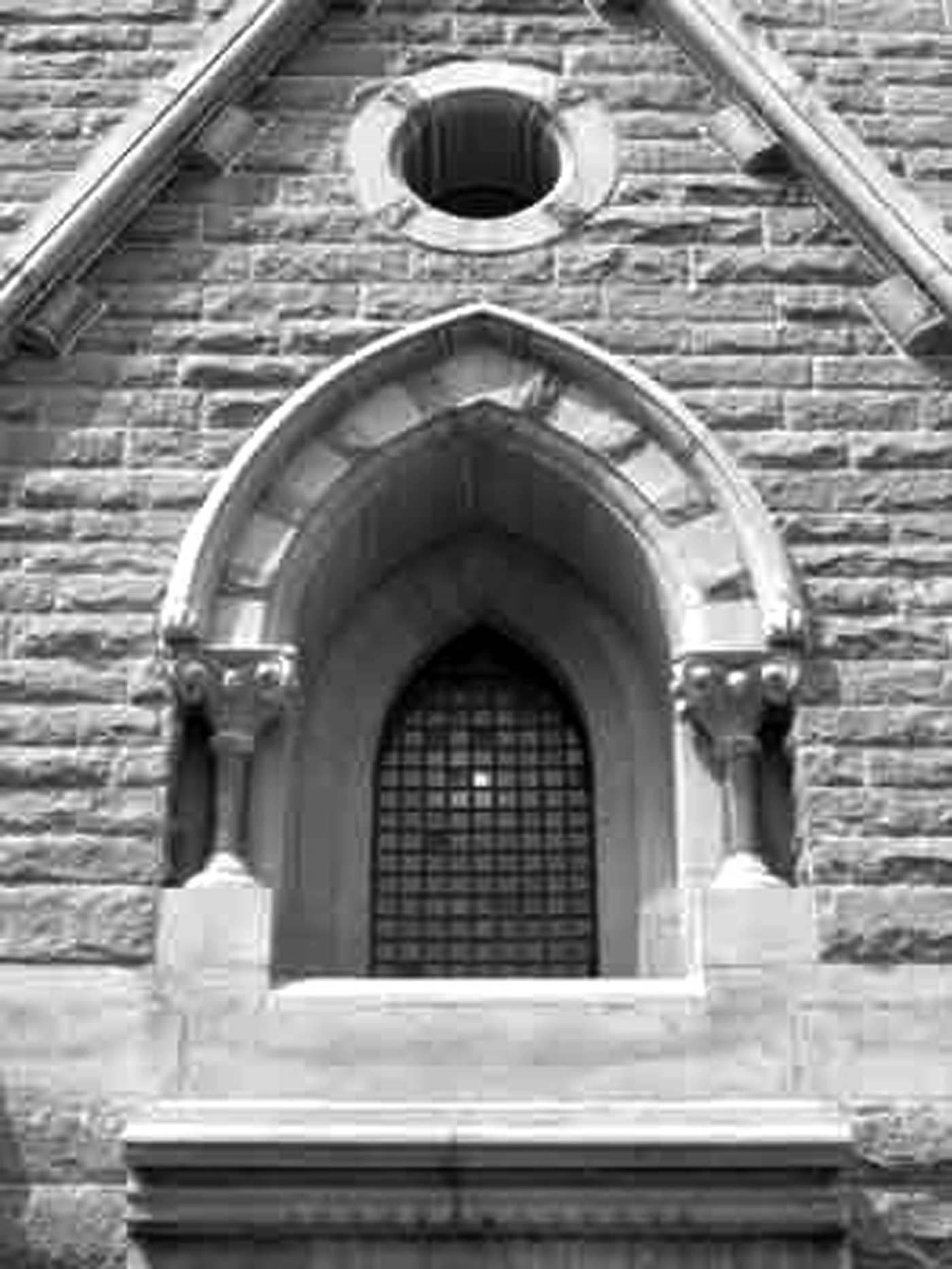
Throckmorten explained how the SMA had responded to this commemorative quandary. From the point of view of military history, Arnold's “conspicuous triumph” would, in itself, merit a monument. However, a monument to the nation's founding must teach a larger lesson, better conveyed through the Major-General's absence (figure 4). In years to come, he predicted, citizens would visit this hallowed spot and fill the void with contempt: “That niche can never really be vacant—empty to the sight—Benedict Arnold will fill it. There he will stand, pilloried before the gaze of centuries.” The monument's unfinished feature, far more effective than chiseling the word “traitor” into a statue, he believed, would “enkindle throughout the length and breadth of our land a love of country so fervent, that from henceforth there will be no need for empty niches in any monuments erected upon our soil.”Footnote 125 Throckmorten's exposition articulated the SMA's selective interpretation of the past and its future-oriented mission. Equally, the association's “rhetoric of the unfinished” resonated with Ellen Walworth's resolve to commemorate only the “desirable things” of the heroic past to deliver its destined promise.
Benedict Arnold's empty niche, facing south toward the battlefield (courtesy of the National Park Service).
Andrew D. White, the first president of the American Historical Association and a diplomat who had traveled extensively, endorsed the monument's “incentive to patriotism,” and he considered the trustees’ intentional omission of a traitor to be “one of the happiest ideas ever embodied in a similar structure.”Footnote 126 But Arnold kept popping up in ways that indicate the trustees’ hesitancy to brush out his role in the victory. His likeness in battle was sculpted into a bronze plaque installed, with fifteen others, on the inner wall of the monument. In addition, the association decided to erect a marble column, one of Ellen Walworth's tablet projects, to mark the spot where Arnold was believed to have fallen after receiving a musket ball wound in the calf. These representations of the brash soldier had nothing to do with pressure from external actors. On the contrary, they expressed the trustees’ ambivalence over a traitorous hero. The SMA's minutes of 1883 record unanimous approval for the installation of Markham's interior bas-relief sculptures, to present “in enduring bronze historical and allegorical scenes germane to the campaign,” one of which was Arnold's bold charge.Footnote 127 The cost was not trivial—the SMA needed another $40,000 to add the embellishments—but the association pressed on with its plans in Congress. In 1884, the year in which the Washington Monument finally reached completion, the Senate passed the bill appropriating the requested amount, which allowed the Arnold scene and the other bas-relief sculptures to be set inside the obelisk.Footnote 128 In 1887, a decade on from the SMA's celebrations over a rather forlorn foundation, these embellishments included a feature of deliberate exclusion as well as a pointed feature of remembrance. The monument's exterior projected vacant space, while its interior encased the duplicitous hero's story of valor and sacrifice within.
An additional opportunity for Arnold's memorialization opened up further afield, in the form of a historical marker. When the chairman of the Committee on Tablets delivered her progress report at the SMA's July 1882 meeting, she informed her fellow trustees that a stake now marked the site where Benedict Arnold had sustained his injury. The minutes recorded no objections. The Board's decision to defray the costs of the battlefield markers by soliciting donors meant that individuals, such as Ellen Walworth's brother, could highlight incidents and actors of their choice, subject to the Board's. Long-serving trustee Walter de Peyster had plenty of money to spare and a pro-Arnold commemorative agenda to match. Although he was an SMA vice president, he could not, like Ellen Walworth and many of the other trustees, claim an ancestor who had fought at the Battle of Saratoga. Indeed, he was a wealthy land developer whose grandfather was a captain for the Crown in the War of Independence. As a Brigadier General of the New York militia and a student of war, de Peyster insisted that Arnold receive credit for military prowess and service.Footnote 129 A laudatory biography of de Peyster, published just after his death, described him as a man whose “peculiar genius found complete expression in military criticism, military history, and military biography.”Footnote 130 His reputation as a leading military tactician lent credibility to de Peyster's desire to recognize Arnold's acumen and bravery. The standard granite slab would not do, the wealthy donor decided; so in 1887 he commissioned George E. Bissell (the artist who had designed General Gates's statue) to sculpt a marker in white marble. Yet, as the SMA Board president, de Peyster appreciated that a traitor did not deserve equal commemorative billing. Consequently, Bissell's monument simply depicted a cavalry boot to represent Arnold's injured leg.Footnote 131 The enigmatic marker did include an inscription on the back indicating that it honored the “most brilliant soldier of the Continental Army who was desperately wounded on this spot.” Whatever divisions may have existed in the past, between the Continentals and the British, or more recently, the North and the South, the military genius that had brought the nation into being could not and ought not be forgotten.
CONCLUSION
The installation of embellishments to the monument principally completed the trustees’ work. Ellen Walworth continued in her role overseeing the commissioning of battlefield markers, and her work received special mention when the trustees pressed Congress for funding in 1888 and again in 1890. This time the SMA requested $20,000 to hold a monument dedication ceremony with “becoming dignity.”Footnote 132 But both bills failed, and the trustees’ energies flagged, with resignations and death notices dotting meeting reports. The indefatigable Stone was one of the few whose enthusiasm and dedication, as both secretary and chairman of the Committee of Design, never waned. In 1894, he compiled battlefield visit accounts, from 1780 onward, into an edited book, which he introduced by reminding readers that “the present proud position of the United States among Nations hinged entirely upon this episode in our country's annals.”Footnote 133 Ellen Walworth was one of the authors whom her old comrade approached to contribute. In contrast to her foundation stone dedication letter, which she wrote in 1877, two months after her son was released from prison, Walworth penned this 1894 reminiscence as the successful cofounder of the National Society Daughters of the American Revolution. At the SMA's final recorded meeting in July 1891, a resolution passed unanimously to send “greeting and cordial wishes for success in [the] patriotic undertakings” of the Daughters, whose objects included their commitment “to perpetuate the memory and spirit of the men and women who obtained American Independence by the acquisition and protection of historical spots, and the erection of monuments.”Footnote 134
The association's “pageant of indescribable interest” at the centennial celebrations notwithstanding, there was no guarantee in 1877 that the planned obelisk would ever appear atop the stone plinth around which the celebrants rallied on that autumn day. Tight-fisted legislators tested the trustees’ faith repeatedly. Throughout their trials, the Board continued to stress that the commemoration of the distant past—a time of peril, which had ended in victory and promise—provided a blueprint for Americans to follow, far clearer than the murky outcome of the Civil War. Nevertheless, their hope was as fragile as the nation's faith that the reunited country would hold, suffering still from the wounds of war and plunged into economic crisis. Consolidating national union, not worrying over the unhealed wounds of racial injustice, was the plan they pursued. William Stone suggested as much when he connected the present to the past in his address at the cornerstone laying in 1877: “The bond of union was complete; and every man, carrying himself back one hundred years, felt as though his country had been rescued, in the last hour, from a most imminent peril.”Footnote 135 The patriots’ resort to violence, which had rescued Americans from tyranny, inspired feverish patriotic public memory work, while other forms of violence in the nation's past and present—the overseers’ whip and the Klansman's rope—were blotted out.Footnote 136 The SMA played its part, by making the Revolution the central narrative in a national imaginary tied to the triumphant past.Footnote 137
The cultivation of Revolutionary memory through monuments accommodated and depended upon a range of actors beyond politically powerful wealthy white men. Microhistory's initial purpose—to capture the experiences of the historically marginal and to give a voice to those who had been silenced – need not be applied exclusively to studies of the subaltern.Footnote 138 The leaders of the SMA were far from voiceless in their own time, and they commanded sufficient resources, not to mention an unwavering sense of purpose, to record their plans and activities. Yet, not unlike peasants and petty criminals (the sorts of individuals typically studied in microhistories), these elites conducted their lives on multiple planes of existence amid shifting historical circumstances not entirely of their own making.Footnote 139 For men such as Seymour, Fish, and Stone—and for Ellen Walworth, an exceptional typical woman—national, family, and individual memory were intermeshed. Personal and political interests invariably inhere in commemorative projects, but their particular “blendings” (as Walworth disclosed in her 1876 speech to the ladies of the Mount Vernon Preservation Society) vary according to unpredictable circumstances and relationships. Scholarship that treats memorializers solely as “agents of commemoration” is ill-suited to analyze why many memorials lay unfinished for decades or failed altogether. Similarly, questioning why some projects succeeded ought not to overlook the difficulties faced and compromises made along the way.Footnote 140
Moreover, Walworth's determination to shut out painful recollections with family memory paralleled the Board's design innovation, prompted by one of the most complex figure in the nation's history. The Arnold niche in the Battle of Saratoga Monument, deliberately left vacant, was a symptom of intentional amnesia, which set in stone the expurgated story of a victor marred by disgrace and betrayal. Salvaged memory, given a patriotic gloss, was the order of the day in the Gilded Age. But the shine was superficial, as both Ellen Walworth and her fellow trustees knew. Alongside the commemoration of the glorious past, the nation's conflicted history persisted, as elite men and women understood, and as their internal records and private writings confirm. The management of the past never amounted to its mastery.