




No CrossRef data available.
Article contents
Neurobehavioral effects of harmful algal bloom (HAB) toxins: A critical review
Published online by Cambridge University Press: 04 May 2005
Abstract
Human exposure to naturally occurring marine toxins has been associated with a range of neurobehavioral abnormalities. The toxins are produced by harmful algal blooms (HABs) and are typically contracted through seafood consumption. The primary target of many of the HAB toxins is the neurologic system, and the neurobehavioral symptoms associated with the HAB illnesses have influenced public health policy. The HAB-related illnesses most frequently linked to neuropsychological disturbance are Amnesic Shellfish Poisoning, Ciguatera Fish Poisoning, and Possible Estuarine Associated Syndrome, which is associated with exposure to the Pfiesteria piscicida organism. Although the neurophysiologic mechanisms underlying many of the HAB illnesses have been well delineated, the literature examining the neuropsychological impairments is unclear and needs to be defined. This review is intended to introduce an emerging area of study linking HAB illnesses with neuropsychological changes. (JINS, 2005, 11, 331–338.)
Keywords
Information
- Type
- CRITICAL REVIEW
- Information
- Journal of the International Neuropsychological Society , Volume 11 , Issue 3 , May 2005 , pp. 331 - 338
- Copyright
- © 2005 The International Neuropsychological Society
INTRODUCTION
This review examines the neurobehavioral consequences of exposure to Harmful Algal Bloom (HAB) toxins, which are naturally occurring toxins produced by microalgae in marine, freshwater, or brackish estuarine water environments. Many of the HAB toxins are highly potent neurotoxins linked to serious human health effects. The neurobehavioral symptoms associated with HAB-related illnesses have been the subject of public concern and have influenced public policy decisions. In 1997 in Maryland, for instance, concern about the human health and neuropsychological effects of exposure to the Pfiesteria piscicida organism led to the closure of the Maryland waterways (Griffin, 1997) and the enactment of new water quality legislation (Simpson, 1998).
The term, HAB, refers to a proliferation or “bloom” of certain microalgae in the water, which can lead to massive fish kills, the deaths of birds and marine mammals, and seafood contamination. HABs have been known to cause changes in the color of marine water (e.g., red tides). HABs can deplete oxygen or block sunlight necessary for the survival of other organisms (Centers for Disease Control and Prevention, 2004). In addition, during HABs some microalgae, such as dinoflagellates, diatoms, and cyanobacteria, produce toxins. The toxins accumulate in digestive organs and soft tissues of fish and shellfish via feeding, and become bioconcentrated as they move up the food chain, ultimately affecting the humans who consume them. Human consumption is particularly problematic because the toxins are generally tasteless, odorless, and heat- and acid-stable, rendering normal screening and food preparation procedures insensitive and ineffective at detecting or preventing toxicity (Baden et al., 1995; Fleming et al., 1999, 2001a).
Harmful Algal Bloom (HAB) Illnesses
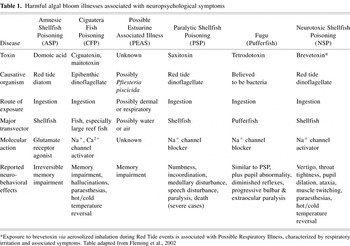
Table 1 displays the major HAB illnesses associated with neuropsychological symptoms, as well as the associated toxin, causative organism, route of exposure, transvector, molecular action, and neurobehavioral symptoms (Table adapted from Fleming et al., 2002). Although Possible Estuary Associated Syndrome (PEAS), associated with exposure to the Pfiesteria piscicida organism, is presented in the table, research has neither identified the specific toxin associated with the Pfiesteria organism nor confirmed that exposure to it leads to human illness (Samet et al., 2001).
Harmful algal bloom illnesses associated with neuropsychological symptoms

Human exposure to the toxins occurs usually through consumption of contaminated fish (especially large reef fish) and shellfish (particularly mollusks such as mussels, oysters, and clams), and may occur also through skin contact or aerosol inhalation (or drinking water such as in the case of cyanobacteria). A major target of the toxins is the human neurologic system, which mediates central and peripheral nervous symptoms, as well as multisystem symptoms. Acutely, patients present usually with gastrointestinal, cardiac, or respiratory symptoms. They often complain of neurologic symptoms that can last days to years (Baden et al., 1995; Blythe et al., 1994; Lehane & Lewis, 2000; Perl et al., 1990; Quod & Turquet, 1996; Teitelbaum et al., 1990). Neurologic complaints may include memory dysfunction, abnormal sensations in the extremities, headaches, fatigue, mood disorders, and hallucinations (Baden et al., 1995; Bagnis et al., 1979; Barton et al., 1995; Gillespie et al., 1986; Lewis & King, 1996; Perl et al., 1990).
This review will address neuropsychological studies conducted on the HAB illnesses. Other comprehensive reviews address the molecular, physiological, and epidemiological aspects of these illnesses (see Baden et al., 1995; Fleming et al., 1995, 2001a).
Diagnostic Issues
There are several impediments to accurate diagnosis of HAB illnesses. First, there are no human biomarkers for the toxins (Fleming et al., 2001a) and many of the symptoms are not verifiable by laboratory or imaging data, so clinicians must often base HAB-related diagnoses on patients' self-reported symptom and exposure history. Second, the nonspecific symptoms of HAB illnesses are easily misattributed to other conditions. For instance, chronic ciguatera fish poisoning symptoms may include general malaise, depression, headaches, memory problems, peculiar feelings in extremities, and/or hallucinations, which are also consistent with a number of psychiatric disorders and with chronic fatigue syndrome; due to prolonged itching symptoms in ciguatera, the illness can be misattributed to dermatologic disorders (Lehane & Lewis, 2000).
Additionally, the nonspecific symptoms of psychogenic conditions may be misattributed to HAB illnesses. Somatoform disorders and hypochondriacal responses are frequent among patients presenting for evaluations due to toxicant exposure (White et al., 2000). In the presence of lay media publicity about purported HAB health threats (Barker, 1997; Grant, 1997), hysteria may be a concern (Greenberg et al., 1998), and may contribute to symptom reporting. Additionally, the fact that many seafood-poisoning patients litigate against fish vendors and restaurants may increase the likelihood of intentional feigning or unconscious exaggeration of symptoms for secondary gain (see Dunn et al., 1995).
REVIEW OF STUDIES
Studies on the neuropsychological effects of the HAB toxins may help clarify the diagnosis and symptom course of the illnesses. They may also help clarify the consequent effects on physical well being, family relationships, and ability to work. Human neuropsychological studies have been conducted on three of the HAB illnesses: Amnesic Shellfish Poisoning, the Pfiesteria-associated syndrome, and Ciguatera Fish Poisoning.
Amnesic Shellfish Poisoning
Amnesic Shellfish Poisoning (ASP) was first recognized in 1987 in Canada after an outbreak of seafood poisoning due to consuming mussels contaminated with domoic acid. Of the 107 cases identified, 50–75% reported vomiting and abdominal cramps, 43% headaches, and 25% memory loss. Nineteen cases were hospitalized with serious neurological dysfunction, of which three died in the hospital and one three months later (Perl et al., 1990).
One study (Teitelbaum et al., 1990) examined the neuropsychological performance of 14 of the most severely affected outbreak victims (10 men and four women, average age 65 years). The clinical descriptions included coma, ophthalmoplegia, the suggestion of bilateral sixth nerve palsies, and diplopia. There was neuromotor involvement evidenced by hemiparesis, transient hyperreflexia and Babinski sign, chronic atrophy of distal muscles and mild weakness, hyporeflexia, and loss of distal sensitivity to pain and temperature change. At least five patients experienced seizures in the hospital, and there were chronic seizure disorders reported for up to four months.
Neuropsychological evaluations were conducted four to six months after intoxication, with findings suggesting that 12 of the 14 patients displayed an anterograde memory disorder with other cognitive functions relatively preserved. Positron emission tomography (PET) studies on four of these patients revealed decreased rate of glucose metabolism in the amygdala and hippocampus in two patients who also exhibited depressed memory performance. Neuropathology studies on four additional patients (who did not receive neuropsychological evaluations), who died 7 to 98 days after intoxication, revealed abnormalities in anatomical memory structures including the hippocampus and amygdala. These findings suggested memory impairment due to domoic acid intoxication that correlated with damage to anatomical memory substrates. The findings were of interest because domoic acid administration in monkeys and rats was also associated with damage to the hippocampus and amygdala as well as with seizures (Tryphonas et al., 1990a, 1990b; Tryphonas & Iverson 1990). It was proposed that seizure activity due to excitotoxic mechanisms mediated the neuropathologic and clinical features of the illness in humans, and that treatment with anticonvulsant medications may help prevent neurologic damage in future domoic acid poisoning cases (see Olney et al., 1990).
Although the reported neuropsychological findings in the Teitelbaum study are compelling, the investigators did not use standardized methods of administering or scoring the verbal memory measures, and did not explain their method of interpreting visual memory performance. Additionally, preexisting medical conditions in this small patient sample, including cerebral infarct, Parkinson's Disease, and chronic renal failure, may have contributed to any neuropsychological findings.
Although the four neuropathology cases provide a basis for a presumed link between hippocampal damage and memory dysfunction in the domoic acid case series, these neuropathology cases were not among the 14 who received neuropsychological evaluations. Nor was there any documentation that these neuropathology cases had experienced memory deficits or other cognitive dysfunction. Moreover, among these four cases (who ranged in age from 71 to 84 years), three had been in coma, two had acute brain infarctions, two died of septic shock, and one of myocardial infarct, all of which may have contributed to the neuropathologic findings (Snodgrass, 1990).
Pfiesteria piscicida
A great deal of scientific attention has addressed the Pfiesteria piscicida organism (see Fleming et al., 1999, Samet et al., 2001). Several reports link possible occupational exposure to Pfiesteria with possible neurobehavioral effects. Glasgow et al. (1995) reported a case series of ten laboratory workers possibly exposed to Pfiesteria through dermal and/or aerosolized routes while working with it in the course of their regular laboratory duties. Symptoms included sensory disturbance, emotional lability, stomach and respiratory irritation, and memory loss lasting usually until termination of exposure, although neuropsychological test data were not provided. Subsequently, Schmechel and Koltai (2001) described the neuropsychological performance of a laboratory scientist presenting to a memory disorders clinic two weeks after discontinuing occupational exposure to Pfiesteria. The scientist obtained scores more than two standard deviations below the normative mean on measures of mental arithmetic, reading speed, fluency, fine motor ability, verbal learning, and delayed recall. Six weeks later, measures of learning and delayed recall were at least one standard deviation above the mean, arithmetic was within a standard deviation below the mean, and reading speed improved modestly but was still about two standard deviations below the mean. Schmechel and Koltai indicated that among the laboratory workers with known and proven exposure to Pfiesteria cultures who presented to the memory disorders clinic, there was substantial clinical variability. They indicated that secondary or preexisting medical conditions, unconscious modeling (especially given the high publicity of Pfiesteria in the lay and scientific press), and the possibility of malingering or exaggeration of symptoms due to secondary gain may have contributed to the variability.
Grattan and Oldach (1998) compared 19 individuals with reported occupational Pfiesteria exposure to 19 nonexposed controls. Exposure was defined as direct contact with estuarine waters of the Chesapeake Bay during periods of fish kills or at times when fish with active Pfiesteria-like lesions were present. Participants were divided into high, moderate, and low exposure groups based on total amount of time exposed to reportedly contaminated water. Individuals reporting exposure were more likely to complain of neuropsychological symptoms than controls, and they displayed lower scores on trial 5 of the Rey Auditory Verbal Learning Test (RAVLT), the Stroop and the Grooved Pegboard. It was concluded that high exposure was associated with poorer performance for each of these measures. Follow-up examination of a subgroup of the participants reportedly revealed improvement of the RAVLT score.
This study was limited by the lack of evidence that Pfiesteria piscicida or morphologically related organisms were present in the water to which cases were exposed. Additionally, the authors stated that the delayed recall and recognition measures did not reveal significant group differences after controlling for number of words learned, which suggests that the ability to recall newly encoded verbal material was intact in this group. With the small sample size and multiple statistical tests performed, it is possible that the trial 5 impairment was due to chance.
In a separate report (Grattan et al., 1998), 18 individuals with alleged exposure to Pfiesteria displayed greater likelihood of complaining of memory problems and endorsing symptoms of mood disturbance than controls. However, their responses may have been influenced by the fact that they were already documented as having abnormal neuropsychological test results.
Swinker et al. (2001a, 2001b) conducted two cross-sectional, case-control studies on the persistent human health and neuropsychological effects of possible exposure to Pfiesteria in North Carolina, three months after the last documented Pfiesteria-related fish kill. One study (2001a) examined the effects of occupational exposure in individuals recruited from a roster of commercial fisherman (22 cases and 21 controls). The other study (2001b) examined the effects of occupational and recreational exposure among individuals calling a Pfiesteria Hotline (11 cases and 11 controls). In both studies, the surrogate index for exposure was having been exposed to waters associated with dinoflagellate-related fish kills, diseased/stressed fish, or the presence of the Pfiesteria organism. Both studies employed standardized neuropsychological test batteries assessing multiple cognitive domains, a measure of visual contrast sensitivity (VCS), and medical and neurologic examinations. Neither study identified an increased likelihood of an estuary associated syndrome, or evidence of persistent health or neuropsychological effects attributable to exposure to Pfiesteria or related organisms, despite the potential sampling bias in the hotline callers.
Hudnell et al. (2001) evaluated 22 reportedly exposed and 20 unexposed people using VCS. The authors reported a lower pattern detection score on the VCS test for exposed individuals. Shoemaker and Hudnell (2001) indicated that administration of cholestyramine, a medication used to lower cholesterol and remove bile acids from the body, was associated with improvement in the VCS score. The major limitation to these studies is that VCS deficits are not specific to any particular condition or etiology (Hudnell & Shoemaker, 2003), and are seen in a wide range of medical conditions (Schreiber et al., 2002; Swinker et al., 2001a, 2001b; Swinker, 2003). VCS deficits, therefore, are not useful as sole indicators of health effects.
Ciguatera Fish Poisoning
Ciguatera fish poisoning is the most frequently reported food poisoning illness caused by a marine toxin (Fleming et al., 2001b). It is caused by consumption of coral reef fish such as barracuda, grouper and snapper, which are contaminated primarily by the natural toxin, ciguatoxin, as well as other toxins. It is marked by chronic neuropsychological complaints, and peripheral neurological symptoms such as muscle weakness, tingling in the mouth region, and hot–cold temperature reversal (Arena et al., 2004; Lehane & Lewis, 2000).
Despite the pervasive descriptive reports of neurologic and neuropsychological symptoms, there has been only one neuropsychological study published on the effects of ciguatera poisoning. In this study (Arena et al., 2004), exposure was defined by acute onset of gastrointestinal symptoms within 24 hr of ingesting a good-tasting reef fish, typically with neurologic complaints including paresthesias and fatigue. Diagnosis was made by physicians and confirmed by study investigators. Using a matched cohort design, 12 cases and 12 age- and gender-matched friend controls received a battery of neuropsychological tests, at one to nine months after exposure.
The neuropsychological battery consisted of WAIS III Vocabulary, the Boston Naming Test, WAIS III Block Design, California Verbal Learning Test, Rey-Osterrieth Complex Figure, the Stroop Test, and measures of affect including the Profile of Mood States, the Beck Depression Inventory, and the Beck Anxiety Inventory. The battery also included the NES-2 symptom severity questionnaire. Persons with ciguatera reported a significantly higher degree and range of neurotoxicity-related complaints than controls; 58% reported memory disturbance and 17% hallucinations, confirming prior reports that neuropsychological complaints are a frequent component of the symptom presentation in this illness (Bagnis et al., 1979; Lehane & Lewis, 2000; Lewis & King, 1996). The cases also displayed significantly greater levels of distress on measures of mood and well being, consistent with findings in workers exposed to industrial toxicants (Morrow et al., 1993), although they did not reach clinical levels. There were not significant group differences on cognitive measures, suggesting that the frequent neuropsychological complaints in patients may be driven in part by mood disruption.
This study was limited in statistical power and in the sensitivity of the battery, especially in its measurement of executive functioning and psychomotor speed, which are associated with vulnerability to toxicant effects (White et al., 2000). Additionally, large variability among cases in time since exposure may have obscured the detection of neuropsychological effects. The study did not evaluate whether cases were involved in litigation against fish restaurants or vendors who sold the fish that caused their ciguatera, which may have contributed to symptom reporting (see Dunn et al., 1995). There was no confirmatory evidence of exposure to the ciguatera toxins. Finally, the effects of Mannitol may have prevented the detection of ciguatera's effects, because 10/12 of the ciguatera cases had received intravenous Mannitol treatment, which has been reported to improve ciguatera symptoms (Bagnis, 1992; Blythe et al., 1992; Palafox et al., 1988). In a follow-up study employing a repeated-measures, case-control design, we are evaluating the acute versus chronic neuropsychological effects of ciguatera fish poisoning, the role of Mannitol treatment in ameliorating the symptoms, and the extent to which subjective neuropsychological complaints are accounted for by mood disruption versus objectively measured cognitive impairments.
SUMMARY AND IMPLICATIONS
There is a substantial body of evidence suggesting that exposure to HAB toxins or organisms can have severe human health and neuropsychological consequences. Critical review of the neuropsychological studies reveals frequent and often compelling descriptive accounts of neurological and neuropsychological impairments or evidence of subjective cognitive and mood complaints. In studies published to date, however, there is not strong evidence to substantiate the presence of neuropsychological impairments due to exposure to HAB toxins or organisms.
Neuropsychological research on the effects of toxin exposure can have broad, sweeping impact on public policy and regulations. In the case of toluene, for instance, the United States Environmental Protection Agency (1992) cited a single neuropsychological study (Foo et al., 1990) as its principal information source on human central nervous system effects in establishing exposure level guidelines, despite the study's limited sample size and its lack of information on selection procedures and other potential confounds (see Lees-Haley, 2000). In the case of HABs, preliminary findings on the neuropsychological effects of domoic acid in humans led to the establishment of Amnesic Shellfish Poisoning as one of four major shellfish poisoning illnesses described by the FDA (U.S. FDA, 1992), even though the memory deficits in the outbreak were not substantiated by the measurement methods used, and the findings have yet to be replicated. The series of Pfiesteria studies led to closure of the Maryland waterways, enactment of new water quality legislation, and the appropriation of many millions of federal dollars to fund research and manage the purported health threat (Burkholder & Glasgow, 2001; University of Maryland, 1998). These changes impacted the farming, fishing, and seafood industries, with an estimated $43 million dollar loss of sales, for instance, to Maryland seafood firms in 1997 (Lipton, 1998). These policy and economic impacts occurred even though the specific Pfiesteria toxin had not been identified and any human health effects due to Pfiesteria exposure had not been substantiated.
Future Directions
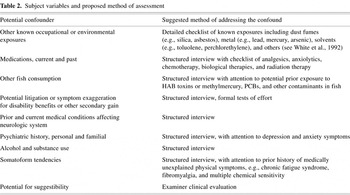
Because of the media and government attention given to human health and neuropsychological effects of HABs, neuropsychological investigators must continue to address the potential research confounds and impediments as systematically and conscientiously as possible. Small sample sizes are an ongoing challenge due in part to the relatively low rate of occurrence of these illnesses. We recommend the establishment of long-term collaborations among HAB researchers and their local poison centers, hospital emergency rooms and community doctors, as a means of identifying cases and monitoring the neuropsychological effects of these illnesses. Another challenge pertains to sampling bias; although subjects seeking medical or legal remedy for their complaints may serve as a convenient study sample, recruitment efforts should be targeted at all individuals with a relevant history of exposure, whether or not they are experiencing subsequent symptoms (Lees-Haley & Williams, 1997). Another challenge is establishing, in the absence of reliable human biomarkers, that exposure to the toxin of interest has occurred. Investigators must attempt to define exposure and inclusion criteria in a manner that minimizes the multitude of alternative explanations that may account for any potential findings in their studies. Of note, current scientific efforts are aimed at developing a human biomarker for ciguatera fish poisoning (Backer et al., 2004). Also, there are potential confounds particular to HAB research, in addition to the standard ones addressed in neuropsychological studies. Table 2 reveals subject variables to be considered in formulating HAB investigations, and methods of addressing them.
Subject variables and proposed method of assessment

Finally, in order to reduce the likelihood of obtaining spurious positive results due to multiple comparisons, a priori hypotheses must be established. Because many of the instruments used in neuropsychological studies are comprised of multiple subscores (e.g., RAVLT), such a priori hypotheses should specify a limited and carefully selected set of variables to be used to test the hypotheses. By designing hypothesis-driven studies that address potential confounds, and by clarifying the extent and the limits of the interpretations to be made from the data, neuropsychologists can serve a pivotal role in clarifying the effects of HAB toxin exposure on humans.
ACKNOWLEDGMENTS
The writing of this manuscript was funded in part by the National Institute of Environmental Health Sciences, grant numbers T32 ES337320 and ES05705. The authors gratefully acknowledge Lora Fleming, MD, PhD, of the University of Miami NIEHS Marine and Freshwater Biomedical Sciences Center and School of Epidemiology and Public Health and Lorraine Backer, PhD, MPH, of the National Center for Environmental Health, Centers for Disease Control and Prevention, for their assistance and support in the writing of this manuscript.
References
REFERENCES
Arena, P.,
Levin, B.,
Fleming, L.E.,
Friedman, M.A., &
Blythe, D.G.
(2004).
A pilot study of the cognitive and psychological correlates of
chronic ciguatera poisoning.
Harmful Algae,
3,
51–60.Google Scholar
Backer, L.C.,
Dickey, R.,
Poli, M.,
Davis, C.,
Luber, G.,
Friedman, M.,
Fleming, L.E.,
Patel, M., &
Blythe, D.
(2004).
Development of a biological marker for exposure to ciguatera
toxins.
A poster presented at the 11th International Conference on
Harmful Algae Blooms, Cape Town, South Africa.
Baden, D.G.,
Fleming, L.E., &
Bean, J.A.
(1995).
Marine toxins. In
F.A. de Wolff (Ed.),
Handbook of clinical neurology, 21: Intoxications of the nervous
system, Part II, pp.
141–175.
Amsterdam, The Netherlands:
Elsevier Science BV.
Bagnis, R.
(1992).
Public health, epidemiological and socioeconomic patterns of
Ciguatera in Tahiti (pp.
157–168). In
Proceedings of the Third International Conference on Ciguatera
Fish Poisoning, April 30–May 5, 1990, La Parguera, Puerto
Rico.
Quebec:
Polyscience Publications.
Bagnis, R.,
Kuberski, T., &
Laugier, S.
(1979).
Clinical observation on 3009 cases of ciguatera (fish poisoning) in
the South Pacific.
American Tropical Medical Hygiene,
28,
1067–1073.Google Scholar
Barker, R.
(1997).
And the waters turned to blood.
New York:
Simon & Shuster.
Barton, E.D.,
Tanner, P.,
Turchen, S.G.,
Tunget, C.L.,
Manoguerra, A., &
Clark, R.F.
(1995).
Ciguatera fish poisoning: A Southern California epidemic.
The Western Journal of Medicine,
163,
31–36.Google Scholar
Blythe, D.,
Fleming, L.E.,
Ayyar, D.R.,
Baden, D.,
De Sylva, D., &
Schrank, K.
(1994).
Mannitol treatment for acute and chronic ciguatera fish
poisoning.
Memoirs of the Queensland Museum,
34,
465–470.Google Scholar
Blythe, D.G.,
De Sylva, D.P.,
Fleming, L.E.,
Ayyar, R.A.,
Baden, D.G., &
Schrank, K.
(1992).
Clinical experience with i.v. Mannitol in the treatment of
ciguatera.
Bulletin Societal Pathologique Exp,
85,
425–426.Google Scholar
Burkholder, J.M. &
Glasgow, H.B.
(2001).
History of toxic Pfiesteria in North Carolina estuaries from 1991 to
the present.
BioScience,
51,
827–841.CrossRefGoogle Scholar
Centers for Disease Control and Prevention
(March 2004).
About Harmful Algal Blooms. CDC Harmful Algal Blooms.
Department of Health and Human Services.
www.cdc.gov/hab/factsheet.pdf.
Dunn, J.T.,
Lees-Haley, P.R.,
Brown, R.S.,
Williams, C.W., &
English, L.T.
(1995).
Neurotoxic complaint base rates of personal injury claimants:
Implications for neuropsychological assessment.
Journal of Clinical Psychology,
51,
577–584.Google Scholar
Fleming, L.E.,
Backer, L., &
Rowan, A.
(2002).
The epidemiology of human illnesses associated with harmful algal
blooms.
In
D. Baden &
D. Adams (Eds.),
Neurotoxicology Handbook, Volume 1 (pp.
363–381).
Totowa, New Jersey:
Humana Press, Inc.
Fleming, L.E.,
Bean, J.A., &
Baden, D.G.
(1995).
Epidemiology of toxic marine phytoplankta. In
G.M. Hallegraeff,
D. Anderson, &
A.D. Cembella (Eds.),
UNESCO IOC manual on harmful marine phytoplankta (33) (pp.
475–488).
Paris, France:
UNESCO.
Fleming, L.E.,
Easom, J.,
Baden, D., &
Levin, B.
(1999).
Emerging harmful algal blooms and human health: Pfiesteria and
related organisms.
Toxicologic Pathology,
27,
573–581.CrossRefGoogle Scholar
Fleming, L.E.,
Katz, D.,
Bean, J.A., &
Hammond, R.
(2001a).
Epidemiology of seafood poisoning. In
Y.H. Hui,
D. Kitts, &
P.S. Stanfield (Eds.),
Foodborne disease handbook,
2nd Edition.
New York:
Marcel Dekker, Inc.
Fleming, L.E.,
Katz, D.,
Bean, J.A., &
Hammond, R.
(2001b).
Epidemiology of Seafood Poisoning. In
Y.H. Hui and
D.D. Kits (Eds.)
Seafood and Environmental Toxins, (pp.
287–310).
New York:
Marcel Dekker.
Foo, S.J.,
Jeyatnam, J., &
Koh, D.
(1990).
Chronic neurobehavioural effects of toluene.
British Journal of Industrial Medicine,
47,
480–484.Google Scholar
Gillespie, N.C.,
Lewis, R.J.,
Pearn, J.H.,
Bourke, A.T.,
Holmes, M.J.,
Bourke, J.B., &
Shields, W.J.
(1986).
Ciguatera in Australia: Occurrence, clinical features,
pathophysiology and management.
The Medical Journal of Australia,
145,
584–589.Google Scholar
Glasgow, H.B.,
Burkholder, J.M.,
Schmechel, D.E.,
Tester, P.A., &
Rublee, P.A.
(1995).
Insidious effects of a toxic estuarine dinoflagellate on fish
survival and human health.
Journal of Toxicology and Environmental Health,
46,
501–522.CrossRefGoogle Scholar
Grant, M.
(1997).
The cell from hell.
People,
May 19, 1997.
Grattan, L.M. &
Oldach, D.
(1998).
Learning and memory difficulties after environmental exposure to
waterways containing toxin-producing pfiesteria or pfiesteria-like
dinoflagellates.
Lancet,
352,
532–540.CrossRefGoogle Scholar
Grattan, L.M.,
Oldach, D.,
Tracy, J.K., &
Greenberg, D.R.
(1998).
Neurobehavioral complaints of symptomatic persons exposed to
Pfiesteria piscicida or morphologically related organisms.
Maryland Medical Journal,
47,
127–129.Google Scholar
Greenberg, D.R.,
Tracy, J.K., &
Grattan, L.M.
(1998).
A critical review of the Pfiesteria hysteria hypothesis.
Maryland Medical Journal,
47,
133–136.Google Scholar
Griffin, J.R.
(1997).
Secretary John R. Griffin testimony before House Subcommittee on
Fisheries Conservation, Wildlife and Oceans Committee on Resources.
Maryland Department of Natural Resources.
Chesapeake Bay Front Page
(http://www.dnr.state.md.us).
Hudnell, K.,
House, D.,
Schmid, J.,
Koltai, D.,
Stopford, W.,
Wilkins, J.,
Savitz, D.A.,
Swinker, M., &
Music, S.
(2001).
Human visual function in the North Carolina clinical study on
possible estuary-associated syndrome.
Journal of Toxicology and Environmental Health Part A,
62,
575–594.Google Scholar
Hudnell, H.K. &
Shoemaker, R.C.
(2003).
Neuropsychological testing versus visual contrast sensitivity:
Response.
Environmental Health Perspectives,
111,
A14–A15.CrossRefGoogle Scholar
Lees-Haley, P.R.
(2000).
Methodology in epidemiological studies of human neurobehavioral
toxicity: A case study with critical review.
Psychological Reports,
86,
85–101.Google Scholar
Lees-Haley, P.R. &
Williams, C.W.
(1997).
Neurotoxicity of chronic low-dose exposure to organic solvents: A
skeptical review.
Journal of Clinical Psychology,
53,
699–712.3.0.CO;2-D>CrossRefGoogle Scholar
Lehane, L. &
Lewis, R.J.
(2000).
Ciguatera: Recent advances but the risk remains.
Journal of Food Microbiology,
61,
91–125.CrossRefGoogle Scholar
Lewis, R.J. &
King, G.K.
(1996).
Ciguatera (Fish Poisoning). In
J.A. Williamson,
P.J. Fenner,
J.W. Burnett, &
J.F. Rifkin (Eds.),
Venomous and poisonous marine animals: A medical and biological
handbook (pp.
346–353).
Sydney, Australia:
University of New South Wales Press.
Lipton, D.W.
(1998).
Pfiesteria's economic impact on seafood industry sales and
recreational fishing.
Conference presentation, Pfiesteria: Where do we go from here?
Economics of Policy Options for Nutrient Management and
Dinoflagellates,
Center for Agricultural and Natural Resource Policy, University of
Maryland
(www.arec.umd.edu/policycenter/Pfiesteria/brochure-front.htm).
Morrow, L.A.,
Kamis, H., &
Hodgson, M.J.
(1993).
Psychiatric symptomatology in persons with organic solvent
exposure.
Journal of Consulting and Clinical Psychology,
61,
171–174.Google Scholar
Olney, J.W.,
Teitelbaum, J.,
Pinsky, C., &
Debonnel, G.
(1990).
Domoic acid toxicity. Panel Discussion: Treatment.
Canada Diseases Weekly Report,
Suppl. 1E,
117–120.Google Scholar
Palafox, N.A.,
Jain, L.G.,
Pinano, A.Z.,
Gulick, T.M.,
Williams, R.K., &
Schatz, I.J.
(1988).
Successful treatment of ciguatera fish poisoning with intravenous
mannitol.
Journal of the American Medical Association,
259,
2740–2742.Google Scholar
Perl, T.M.,
Bedard, L.,
Kosatsky, T.,
Hockin, J.C.,
Todd, E.C., &
Remis, R.S.
(1990).
An outbreak of toxic encephalopathy caused by eating mussels
contaminated with domoic acid.
New England Journal of Medicine,
322,
1775–1780.CrossRefGoogle Scholar
Quod, J.P. &
Turquet, J.
(1996).
Ciguatera in Reunion Island (SW Indian Ocean): Epidemiology and
clinical patterns.
Toxicon,
34,
779–785.CrossRefGoogle Scholar
Samet, J.,
Bignami, G.S.,
Feldman, R.,
Hawkins, W.,
Neff, J., &
Smayda, T.
(2001).
Pfiesteria: Review of the science and identification of research
gaps. Report for the National Center for Environmental Health, Centers for
Disease Control and Prevention.
Environmental Health Perspectives,
109,
639–659.Google Scholar
Schmechel, D.E. &
Koltai, D.C.
(2001).
Potential human health effects associated with laboratory exposures
to Pfiesteria piscicida.
Environmental Health Perspectives,
109,
775–779.Google Scholar
Schreiber, J.S.,
Hudnell, H.K.,
Geller, A.M.,
House, D.E.,
Aldous, K.M.,
Force, M.S.,
Langguth, K.,
Prohonic, E.J., &
Parker, J.C.
(2002).
Apartment residents' and day care workers' exposures to
tetrachlorethylene and deficits in visual contrast sensitivity.
Environmental Health Perspectives,
110,
655–664.Google Scholar
Shoemaker, R.C. &
Hudnell, H.K.
(2001).
Possible estuary-associated syndrome: Symptoms, vision and
treatment.
Environmental Health Perspectives,
109,
539–545.Google Scholar
Simpson, T.W.
(1998).
A citizens guide to the Water Quality Improvement Act of
1998.
Maryland Cooperative Extension, University of Maryland,
College Park, Eastern Shore.
Snodgrass, S.R.
(1990).
Correspondence, neurologic sequelae after ingestion of mussels
contaminated with domoic acid.
New England Journal of Medicine,
323,
1631–1633.Google Scholar
Swinker, M.,
(2003).
Neuropsychological testing versus visual contrast sensitivity in
diagnosing PEAS.
Environmental Health Perspectives,
111,
A13–A14.CrossRefGoogle Scholar
Swinker, M.,
Koltai, D.,
Wilkins, J.,
Hudnell, K.,
Hall, C.,
Darcey, D.,
Robertson, K.,
Schmechel, D.,
Stopford, W., &
Music, S.
(2001a).
Estuary-associated syndrome in North Carolina: An occupational
prevalence study.
Environmental Health Perspectives,
109,
21–26.Google Scholar
Swinker, M.,
Koltai, D.,
Wilkins, J., &
Woodhall, S.
(2001b).
Is there an estuary-associated syndrome in North Carolina? Findings
in a series of hotline callers.
North Carolina Medical Journal,
62,
126–132.Google Scholar
Teitelbaum, J.S.,
Zatorre, R.J., &
Carpenter, S.
(1990).
Neurologic sequelae of domoic acid intoxication due to the ingestion
of contaminated mussels.
New England Journal of Medicine,
322,
1781–1787.CrossRefGoogle Scholar
Tryphonas, L. &
Iverson, F.
(1990).
Neuropathology of excitatory neurotoxins: the domoic acid
model.
Toxicologic Pathology,
18 (1, Pt 2),
165–169Google Scholar
Tryphonas, L.,
Truelove, J., &
Iverson, F.
(1990a).
Acute parental neurotoxicity of domoic acid in cynomolgus
monkeys.
Toxicologic Pathology,
18,
297–303.Google Scholar
Tryphonas, L.,
Truelove, J.,
Nera, E., &
Iverson, F.
(1990b).
Acute neurotoxicity of domoic acid in the rat.
Toxicologic Pathology,
18 (1, Pt 1),
1–9.Google Scholar
United States Environmental Protection Agency,
Integrated Risk Information System (IRIS): Toluene (CASRN
108-88-2)
(1992).
http://www.epa.gov/iris/subst/0118.htm,
http://cfpub.epa.gov/iris/quickview.cvm?substance_nmbr=0118
United States Food and Drug Administration,
Foodborne Pathogenic Microorganisms and Natural Toxins
Handbook
(1992).
http://www.cfsan.fda.gov/∼mow/chap37.html
University of Maryland
(August 19, 1998).
6.3 million Federal grant funds Pfiesteria research; University of
Maryland School of Medicine heads neurocognitive, neurotoxicologic
studies.
University of Maryland Press Release on Pfiesteria Grant.
Press Contact: Jennifer Donovan.
(http://www.niehs.nih.gov/oc/news/umdpfiesteria.html).
White, R.F.,
Feldman, R.G., &
Proctor, S.P.
(1992).
Neurobehavioral effects of toxin exposures. In
R.F. White (Ed.),
Clinical Syndromes and Adult Neuropsychology. The
Practitioner's Handbook, (pp.
1–51).
Amsterdam, The Netherlands:
Elsevier Science Publishers B.V.
White, R.F.,
Feldman, R.G., &
Proctor, S.P.
(2000).
Neurotoxicology. In
B.S. Fogel,
R.B. Schiffer, &
S.M. Rao (Eds.),
Synopsis of neuropsychiatry, (pp.
503–510).
Philadelphia, Pennsylvania:
Lippincott Williams & Wilkins.
Harmful algal bloom illnesses associated with neuropsychological symptoms
Subject variables and proposed method of assessment
 You have
Access
- 26
- Cited by