Introduction
In the last 5 years, fodder beet (Beta vulgaris; FB) has been widely adopted as a winter forage crop or as a supplement for early and late-lactation dairy cows in ryegrass pasture-based (Lolium perenne) systems of New Zealand. Although the use of FB has declined slightly within the last 2 years, popularity of FB has previously been driven by the high yield potential >20 t dry matter (DM)/ha (Chakwizira et al., Reference Chakwizira, Meenken, Maley, George, Hubber, Morton and Stafford2013, Reference Chakwizira, de Ruiter and Maley2016), high crop utilization >90% (Saldias and Gibbs, Reference Saldias and Gibbs2016) and the versatility to graze FB in autumn and winter or harvest bulb to supplement herbage in spring. FB is rich in water soluble carbohydrate (WSC) which accounts for over 60% of the biomass (Clark et al., Reference Clark, Givens and Brunnen1987) and contains minimal proportions of fibre (<200 g/kg DM) and crude protein (CP; <100 g/kg DM) (Dalley et al., Reference Dalley, Malcolm, Chakwizira and de Ruiter2017). The low CP and high WSC content of FB bulb may reduce N excretion by diluting intake of high CP herbage (Dalley et al., Reference Dalley, Waugh, Griffin, Higham, De Ruiter and Malcolm2019), or by synchronizing the supply of WSC to soluble protein. Nutrient synchrony may improve microbial utilization of soluble protein and reduce the excretion of urea in urine, which contributes to eutrophication and N leaching (Hall and Huntington, Reference Hall and Huntington2008; Cameron et al., Reference Cameron, Di and Moir2013). However, the large fraction of sugar and low fractions of fibre also present a risk of sub-acute ruminal acidosis (SARA) and acute ruminal acidosis (Owens et al., Reference Owens, Secrist, Hill and Gill1998). Acidosis occurs when volatile fatty acids (VFAs) rapidly accumulate in the rumen, causing pH to decline and limiting microbial degradation of cellulose and fibre (Khafipour et al., Reference Khafipour, Krause and Plaizier2009). SARA is characterized by daily episodes of low pH and reduced buffering capacity (Owens et al., Reference Owens, Secrist, Hill and Gill1998), but is self-corrected. Declining pH proliferates microbes that produce lactic acid which is 10-fold more acidic than other VFAs (Owens et al., Reference Owens, Secrist, Hill and Gill1998). Increased lactic acid causes a downward spiral of rumen pH leading to acute and often systemic acidosis that the animal is unable to self-correct.
Although acute presentation represents an immediate loss of capital to the dairy business, monetary losses from SARA are not obvious but may be equally financially harmful due to the limited diagnostic ability and reported wide-spread prevalence across the herd (Plaizier et al., Reference Plaizier, Krause, Gozho and McBride2008). Animals suffering from SARA experience welfare challenges such as reduced intake, malaise and translocation of endotoxin present in the cell wall of Gram-negative bacteria, which can cause liver abscesses, systemic inflammation and laminitis (Nagaraja et al., Reference Nagaraja, Bartley, Fina and Anthony1978; Nocek, Reference Nocek1997; Gozho et al., Reference Gozho, Plaizier, Krause, Kennedy and Wittenberg2005; Zebeli and Metzler-Zebeli, Reference Zebeli and Metzler-Zebeli2012). Low rumen pH may also limit the lifetime productivity of the cow due to residual effects on rumen epithelia (keratinization) that reduce the absorption of VFA from the rumen and further increase susceptibility to acidosis (Kleen et al., Reference Kleen, Hooijer, Rehage and Noordhuizen2003). Mean rumen pH has been identified as a poor technique for defining SARA. Although duration of pH below a threshold of 5.8 (Zebeli et al., Reference Zebeli, Dijkstra, Tafaj, Steingass, Ametaj and Drochner2008) or 5.6 (Gozho et al., Reference Gozho, Plaizier, Krause, Kennedy and Wittenberg2005) better describes the tangible affects to microbial activity, there is no singular agreed upon threshold across the literature due to variation of response among individual animals. Consequently, alternative indicators of animal welfare, other than episode duration of low pH, are needed.
One option to assess welfare is to quantify the ‘discomfort’ of livestock. Minimal total discomfort is the additive integration of internal (due to changes of internal state and supply nutrients) and external signals (changes of environment) by the central nervous system (Forbes, Reference Forbes1996; Forbes and Provenza, Reference Forbes, Provenza and Cronje2000). The connection of taste and visceral afferents in the solitary nucleus with the limbic system in the cerebral cortex, allow ruminants to adjust feeding behaviour to suit momentary nutrient demands (Provenza, Reference Provenza1995). For example, ruminants may choose to select nutritious foods (positive reinforcement) and avoid toxins (negative reinforcement) based on additive post-ingestive feedbacks (Forbes, Reference Forbes1996; Provenza, Reference Provenza1996). Furthermore, foods such as FB, which are toxic, deficient in nutrients or rich in readily digestible nutrients, are likely to cause stronger aversions than feeds such as pasture (Forbes, Reference Forbes2007). Although SARA will cause increased discomfort and aversions to FB, it is not known if a combination of timing, frequency and DM allocation, of both herbage and FB may help to alleviate discomfort and improve animal welfare.
The effect of FB on ruminal pH has been reported for beef cattle. Feeding FB ad libitum to beef steers in metabolism crates had no effect on mean pH compared to animals fed with a traditional ryegrass herbage diet (Prendergast and Gibbs, Reference Prendergast and Gibbs2015). However, Waghorn et al. (Reference Waghorn, Collier, Bryant and Dalley2018) reported five out of eight non-lactating dairy cows, developed acute acidosis, when similar allocations of FB were offered. Despite the increased use of FB as an early lactation supplement to utilize residual winter forage, research of the effects on early lactation rumen function and fermentation is scarce. Waghorn et al. (Reference Waghorn, Law, Bryant, Pacheco and Dalley2019) reported acidosis in two out of four late-lactation dairy cows fed with a diet containing 60% FB and industry recommendations for lactating cows are <40% inclusion. However, the rising plane of nutrition experienced early in lactation has been identified as a key driver of acidosis, due to greater nutrient demand and early lactation dairy cows may experience greater risk of developing SARA compared with late-lactation dairy cows (Penner et al., Reference Penner, Beauchemin and Mutsvangwa2007). Definition of the amount and frequency of FB and herbage fed during early lactation, and the potential impact on animal health and production is required.
The primary objective of this modelling study was to investigate how DM allocation of FB in early lactation affected rumen pH and total discomfort when used to supplement the spring herbage supply. The secondary objective was to explore whether a feeding strategy, as a factorial arrangement of time, amount and frequency of herbage and FB allocation (FBA), could improve total discomfort and milk production of early lactation dairy cows fed with FB.
Materials and methods
Model description
MINDY is a deterministic, mechanistic and dynamic model of a grazing ruminant which simulates diurnal patterns of metabolism by assessing animal internal state and external motivations to feed. The model comprised of seven component models which include: (1) the dairy cow digestion and metabolism model of (Baldwin, Reference Baldwin1995) which was modified by Gregorini et al. (Reference Gregorini, Beukes, Romera, Levy and Hanigan2013) and models of (2) diurnal grazing patterns and feed motivation, (3) sward structure and herbage chemical composition, (4) grazing behaviour, (5) dietary preference and selection (Gregorini et al., Reference Gregorini, Villalba, Provenza, Beukes and Forbes2015), (6) grazing bioenergetics oral processing and digesta outflow (Gregorini et al., Reference Gregorini, Provenza, Villalba, Beukes and Forbes2018a) and (7) a model of diurnal urination and drinking patterns (Gregorini et al., Reference Gregorini, Provenza, Villalba, Beukes and Forbes2018b). Equations, coding, model validation and sensitivity analysis of MINDY have been reported previously (Gregorini et al., Reference Gregorini, Beukes, Romera, Levy and Hanigan2013, Reference Gregorini, Villalba, Provenza, Beukes and Forbes2015, Reference Gregorini, Provenza, Villalba, Beukes and Forbes2018a, Reference Gregorini, Provenza, Villalba, Beukes and Forbes2018b).
Simulation design
We simulated 90 dietary treatments using a factorial arrangement of FBA, herbage allowance (HA) and time of allocation. The allocations of FB bulb were 0, 2, 4 and 7 kg DM/cow/day (0FB, 2FB, 4FB and 7FB, respectively) and herbage allocations were 18 (75 m2/cow), 28 (115 m2/cow) and 48 kg DM/cow (200 m2/cow) per day above ground (18HA, 28HA and 48HA, respectively). Based on expected post-grazing residual of 1550 kg DM/ha, MINDY was allocated 10.5 (18HA), 16.1 (28HA) and 28 kg DM/day (48HA) of available herbage mass per day. In the simulations, herbage was offered either in the morning (AM) or afternoon (PM) or split across two equal meals following morning and afternoon milking (AM + PM). Supplement was also fed following morning (AMS), afternoon (PMS) or morning and afternoon milking (A + PS). MINDY was initialized as a 4 year old Frisian X Jersey dairy cow between 30 and 50 days of lactation with an initial liveweight of 533 kg. Milking was scheduled for 06.00 h and 16.00 h each day. MINDY was set to record all outputs every 15 min over 20 days although, data obtained from the initial 10 days were removed to ensure model stabilization.
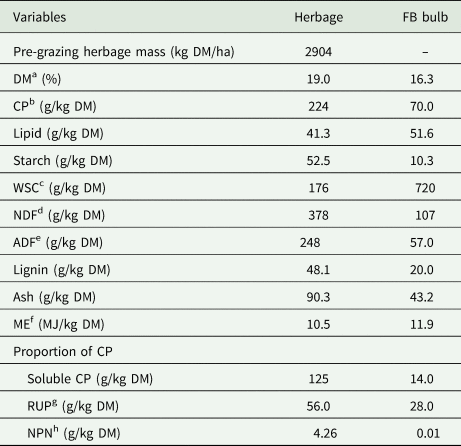
The nutritional composition of herbage was based on a typical rotationally grazed spring perennial ryegrass dominant sward, grazed at an extended tiller height of 30 cm (2900 kg DM/ha). The chemical composition of pasture and FB is shown in Table 1. FB consumption was simulated as a harvested bulb (leaf is removed during harvesting), which was offered on a feed pad following the morning milking. The time spent on the feed pad was simulated to increase with the amount of FB allocated (15, 60 and 120 min/day, 2FB, 4FB and 7FB, respectively) which enabled MINDY to finish the FB meal. This increase is due to the declining attraction of supplement and is based on the specific satiety parameter described by Gregorini et al. (Reference Gregorini, Villalba, Provenza, Beukes and Forbes2015). Briefly, attraction to a specific feed increases with time passed since the last meal and declines as the feed is eaten.
Chemical composition of herbage and FB bulb

aDry matter, bcrude protein, cwater soluble carbohydrate, dneutral detergent fibre, eacid detergent fibre, fmetabolizable energy, grumen undegradable protein, hnon-protein nitrogen.
Outputs and analysis
Outputs requested of the model were: dry matter intake (DMI) of herbage and FB (kg DM/cow/day), milk production and composition (kg and percentage of fat and protein) and nitrogen (N) concentration of faeces and urine. Diurnal variations of rumen fermentation products (ammonia, pH, acetate, butyrate, propionate, lactate and total VFA concentrations), rumen DM pool, neutral detergent fibre (NDF) and acid detergent fibre (ADF) and ruminal passage of organic matter were also requested, in addition to total discomfort. Total discomfort is a parameter derived from the minimum total discomfort model of Forbes (Reference Forbes2007) and integrated into MINDY (Gregorini et al., Reference Gregorini, Villalba, Provenza, Beukes and Forbes2015).
The first step involves the calculation of momentary optimal feed (MOF) based on optimal feed and MINDY's momentary internal state. Where momentary refers to any particular point in time and optimum is a set of defined conditions. The MOF is then determined by adjusting each macronutrient up or down from the optimum value, according to MINDY's current internal state. For every percentage point deviation from the standard levels e.g. from the defined rumen pH of 6.2, an increase or decrease percentage of particular macronutrient is applied by linear factor. Linear factors of pH, rumen ammonia, hunger, rumen NDF and metabolizable energy (ME) are then calibrated so that the balance of one driver at a time would restore or bring MINDY close to the ‘standard levels’. Thus, a meal of MOF will restore MINDY's comfort. The model is then asked to calculate total discomfort from a particular feed against the MOF and is a unitless value. Therefore, the greater the total discomfort, the lower the attraction to a particular feed:

Briefly, w, c and o represent the weighting of the current and momentary optimal supply of nutrient j of the set of i nutrients. We assumed that MINDY follows a set of rules and makes the ‘correct’ decision based on her internal state, which have been reported previously (Gregorini et al., Reference Gregorini, Villalba, Provenza, Beukes and Forbes2015).
Differences of model outputs do not vary within each simulation, thus, statistical analysis is not possible. Therefore, the effects of diet and time are discussed in terms of absolute differences and not statistical significance. Outputs were averaged across days and between each step of data collection. Step size of rumen pH and rumen fermentation end products were collected every 15 min and data points were also averaged across day. Milk production, DMI and nitrogen excretion outputs were also requested each day. To determine effect of FBA on rumen pH and total DMI, data were averaged across the medium HA allocation that were offered either AM or PM but not AM + PM. Diets were screened using a multi-objective optimization technique called the Pareto front analysis which is a computer-based decision support system that identifies scenarios which are the ‘best’ trade-off in outcomes (Matthews et al., Reference Matthews, Buchan, Sibbald and Craw2002). Diets which maximized milk production and reduced total discomfort were defined as optimal solutions. Optimal solutions are known as the Pareto front which will be herein referred to as the Pareto frontier and was conducted using the function psel in the R (R Core Team, 2018, v. 3.4.4) package rPref (http://cran.r-project.org/web/packages/rPref/index.html).
Results
Intake and milk production
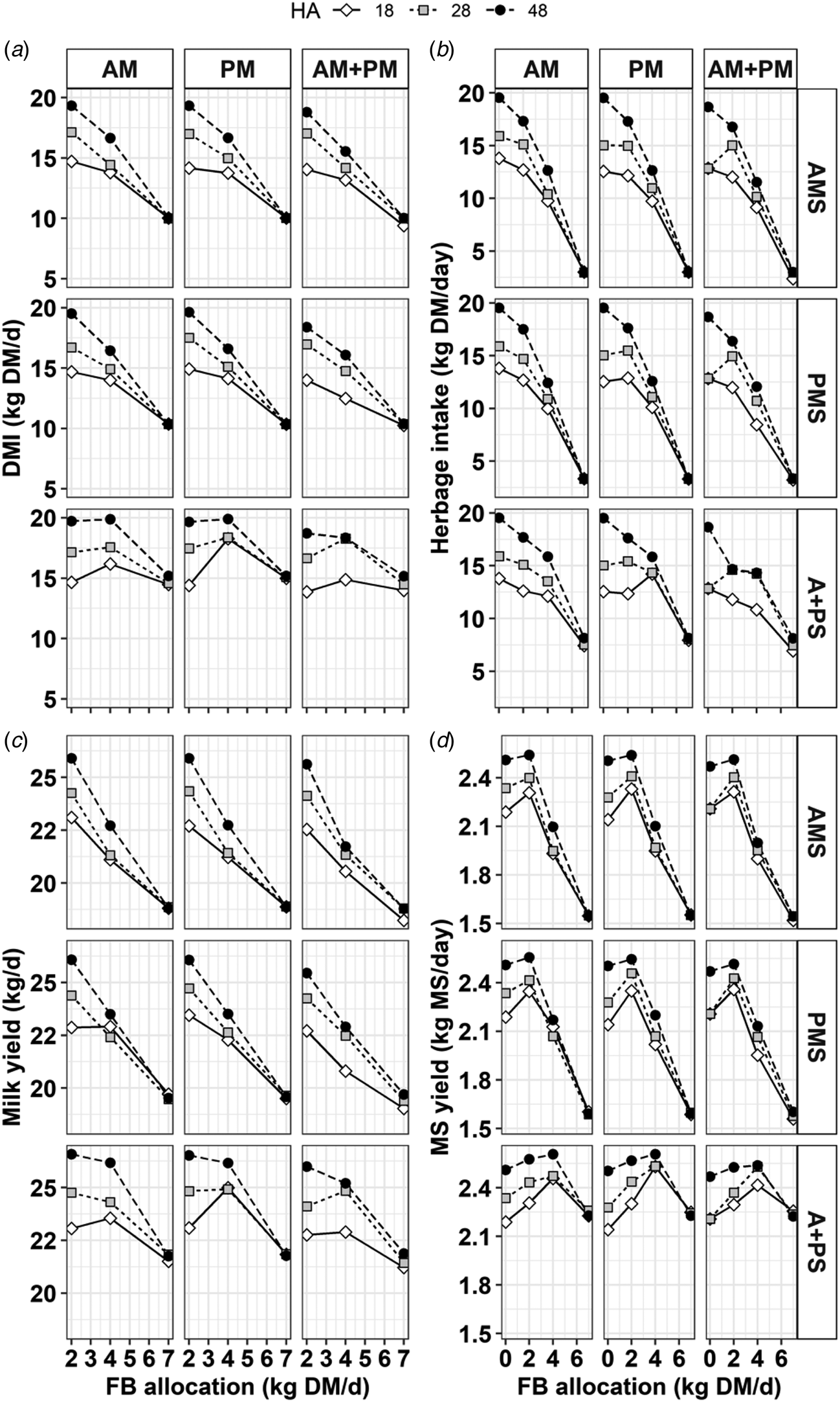
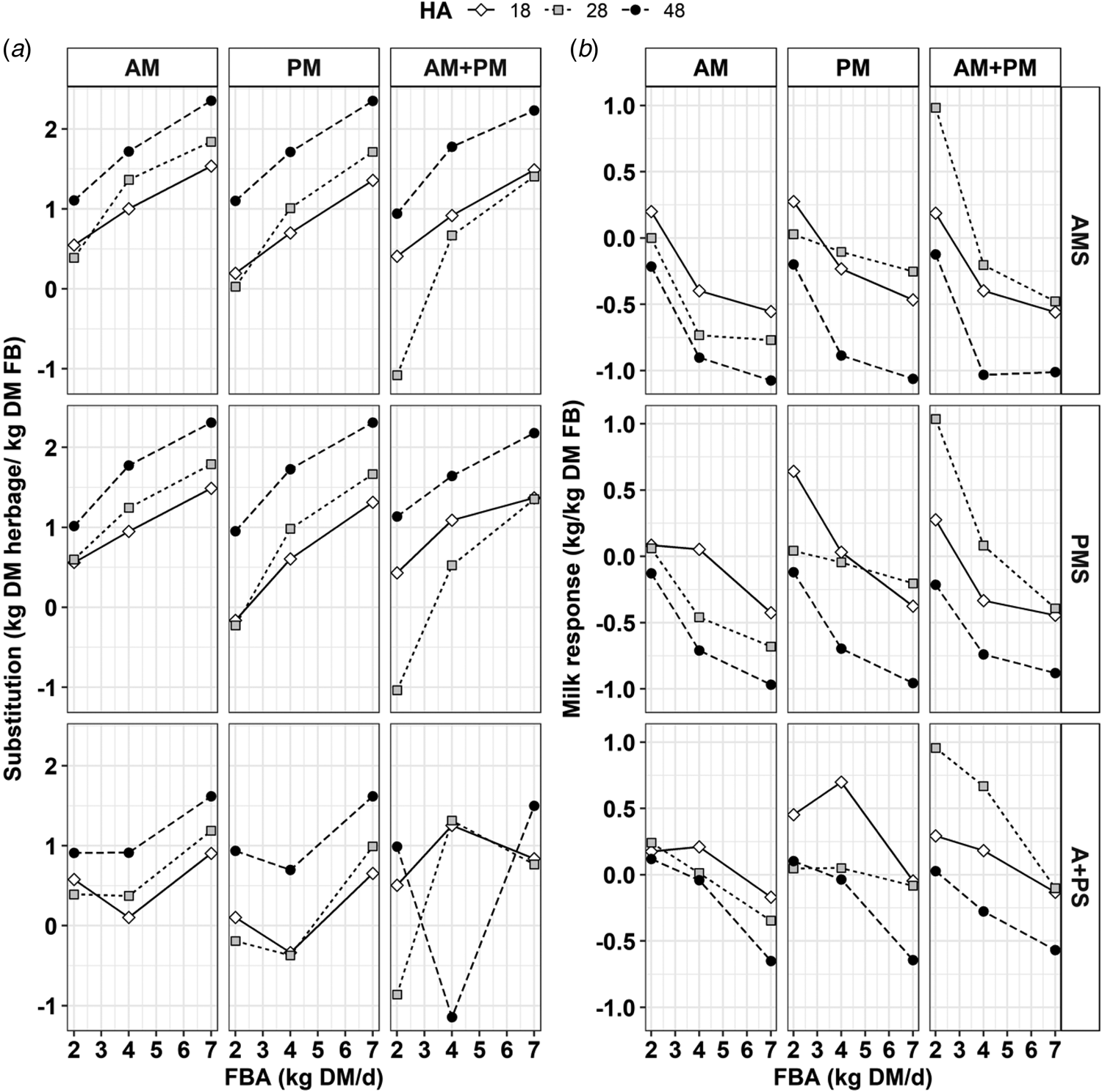
Across all herbage allocations, FB proportions constituted 0, 13.0, 26.6 and 57.1% of predicted daily DMI (0FB, 2FB, 4FB and 7FB, respectively). Herbage intake declined in response to FBA by 2.3% (2FB), 30% (4FB) and 79% (7FB), compared with 0FB when FB was fed once daily. However, the 2FB treatment increased total DMI by 8.3% compared with 0FB, whereas DMI of the 4FB treatment was similar to 0FB and declined 28% when 7FB was fed (15.6, 16.9, 15.9 and 11.7 kg DM/day, 0FB, 2FB, 4FB and 7FB, respectively). Feeding MINDY FB A + PS increased DMI by 17.2% in 4FB and 31.4% in 7FB, compared with once daily feeding. Within the 2FB diet, PM allocation of herbage increased DMI between 1 and 2% across all HA, and DMI responded similarly to PM allocation of both FB and herbage, although differences are not substantial (Fig. 1). Compared with 18HA, MINDY predicted DMI of the 0FB treatment would increase 18% when allocated 28HA and 33% when allocated 48HA (13.1, 15.5 and 19.5 kg DM/day, 18HA, 28HA and 48HA, respectively). Within the 0FB diet, PM allocation of herbage did not affect DMI when compared with AM allocation although, AM + PM grazing reduced DMI (15.3, 15.1 and 14.1 kg DM/cow/day, respectively). Predicted DMI was greatest (19.7 kg DM/cow) when 4FB was fed A + PS with 48HA allocated AM or PM and lowest (9.4 kg DM/cow) when 7FB as fed AMS with 18HA allocated AM + PM (Fig. 1). Substitution rate declined when FB was fed A + PS compared with AMS or PMS feeding (Fig. 2). Across all levels of FB supplementation, AM + PM grazing reduced total DMI compared with AM or PM grazing (Fig. 1).
(a) Daily DMI and (b) herbage (kg DM/cow), (c) daily milk yield (kg/cow) and (d) milk solids (fat + protein) yield (MS: kg/cow) in response to allocation of FB fed in the morning (AMS), afternoon (PMS) or morning and afternoon (A + PS) and HA (18, 28, 48 kg DM/cow/day) fed in the morning (AM), afternoon (PM) or morning and afternoon (AM + PM).

(a) Substitution rate (kg DM herbage/kg DM of FB) and (b) milk response (kg milk/kg DM FB) to increase FBA (0, 2, 4, 7 kg DM/cow/day) fed in the morning (AMS), afternoon (PMS) or morning and afternoon (A + PS) and HA (18, 28, 48 kg DM/cow/day) fed in the morning (AM), afternoon (PM) or morning and afternoon (AM + PM).
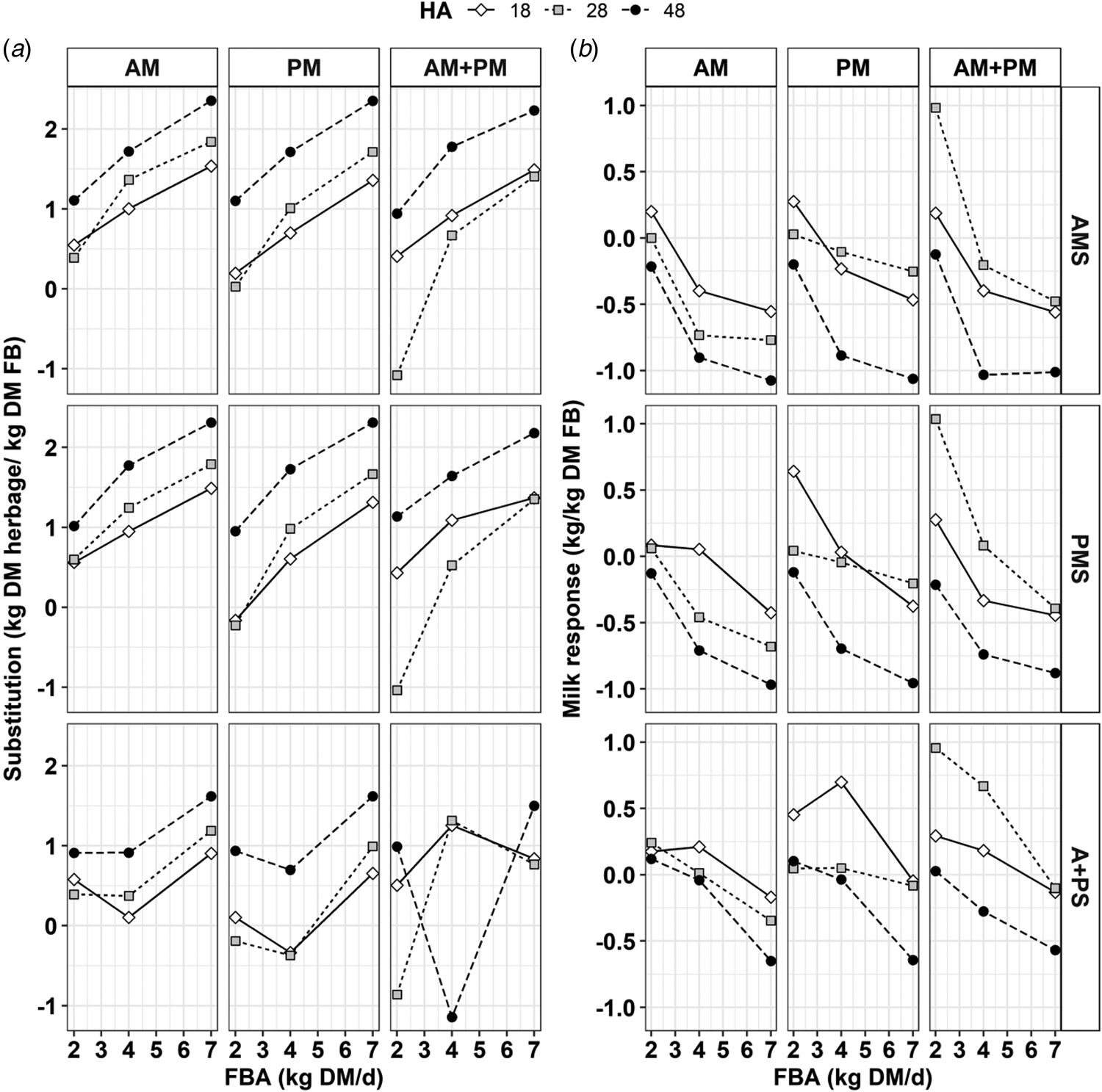
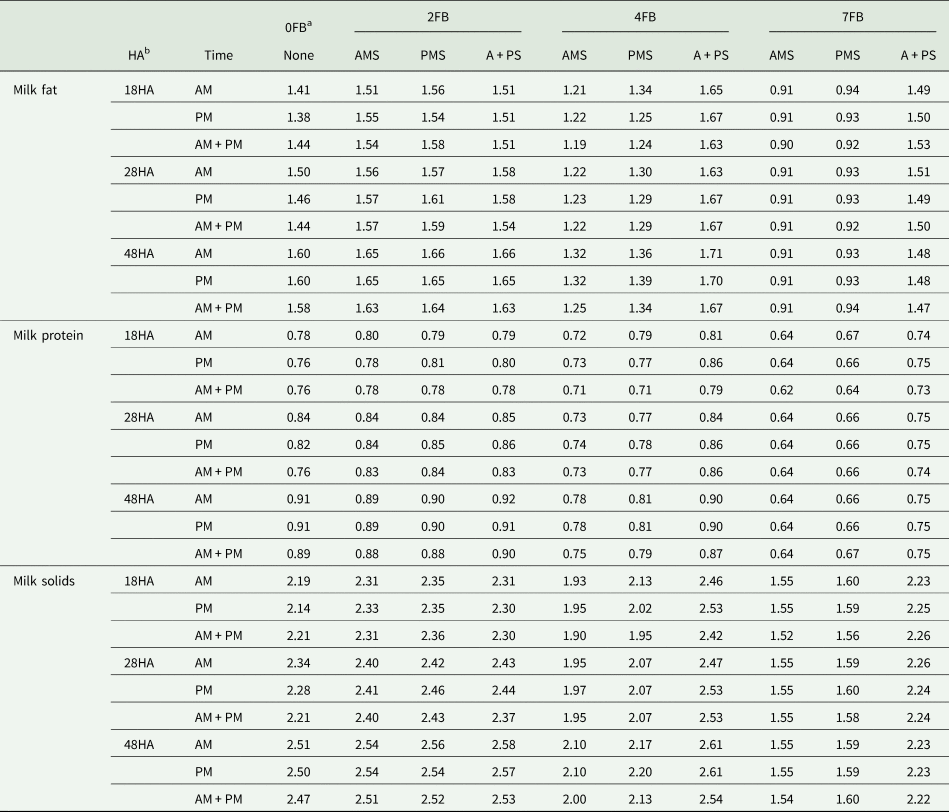
Model predictions of milk production reflected DMI which compared with 18HA increased 7.1 (28HA) and 15.8% (48HA) (22.4, 24.0 and 26.3 litres/cow/day; 18HA, 28HA and 48HA, respectively) although, the effect of HA on milk solids yield was less pronounced (Fig. 1). When time of FBA was ignored, MINDY predicted a curvilinear response to FBA as milk yield increased 2.5% with 2FB and declined 8.2 and 19.8% with 4FB and 7FB, respectively, compared with 0FB (Fig. 1). However, milk production increased when FB was fed A + PS compared with AMS or PMS feeding (1.6, 12.2 and 13.4%; 2FB, 4FB and 7FB, respectively) whereas AMS and PMS feeding produced similar quantities of milk (Fig. 1). The lowest milk yield 18.2 litres/cow occurred when 7FB was fed AM with 18HA which was allocated AM + PM (Fig. 2). Although greatest milk yield 26.6 litres/cow was achieved by feeding 2FB AM and allocating 48HA either AM or PM. Furthermore, feeding FB in the afternoon rather than in the morning improved milk yield by 0.5 kg/day, irrespective of FBA. The predicted milk response to FB (kg milk/kg DM of FB) increased between 2FB and 4FB but declined at greater FBA. There appeared to be greater milk response to FB when both herbage and FB were allocated in the afternoon and when HA was restricted (Fig. 2). The percentage of milk solids decreased with increased FBA (10, 10, 9, and 8%, 0FB, 2FB, 4FB and 7FB, respectively), which reflect reduced proportions of both protein and fat. Total yields of milk fat and protein both declined with greater DM allocation of FB (Table 2). HA did not affect milk solids yield, other than a slight increase of milk fat (Table 2).
Predicted milk fat and protein (kg/cow/day) of cows fed FB in the morning (AMS), afternoon (PMS) or morning and afternoon (A + PS) and varying herbage allocations fed in the morning (AM), afternoon (PM) or morning and afternoon (AM + PM)
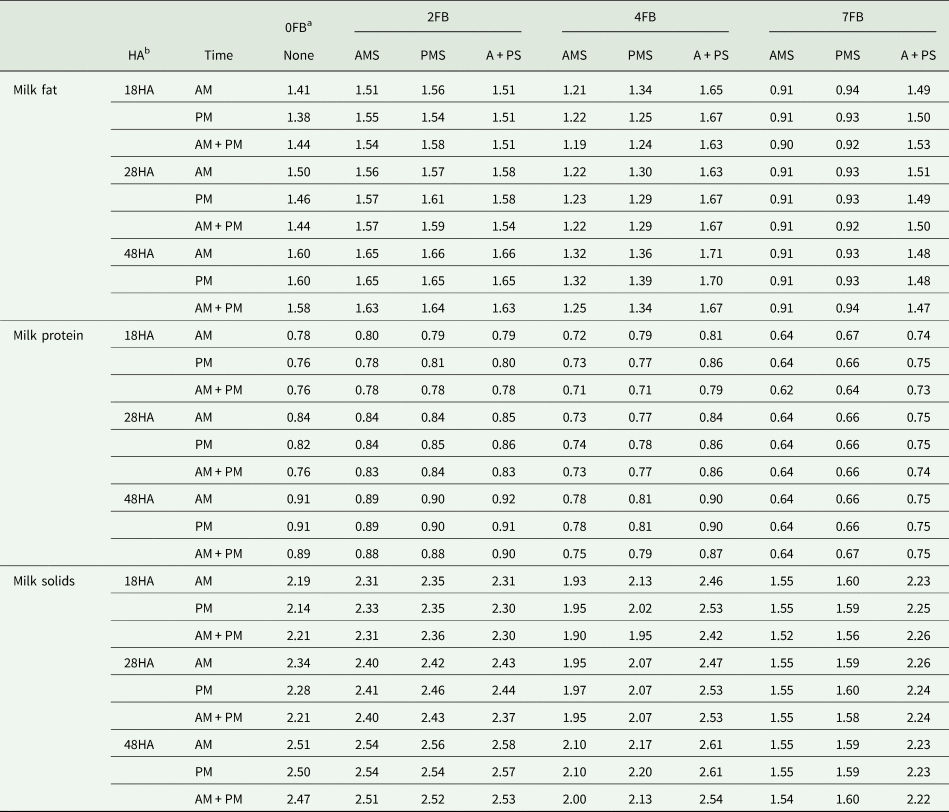
a 0FB: control no FB diet, 2FB: 2 kg DM FB, 4FB: 4 kg DM FB, 7FB: 7 kg DM FB/cow.
b Daily HA 18, 28, 48 kg DM/cow above ground, 18HA, 28HA and 48HA, respectively.
Rumen pH
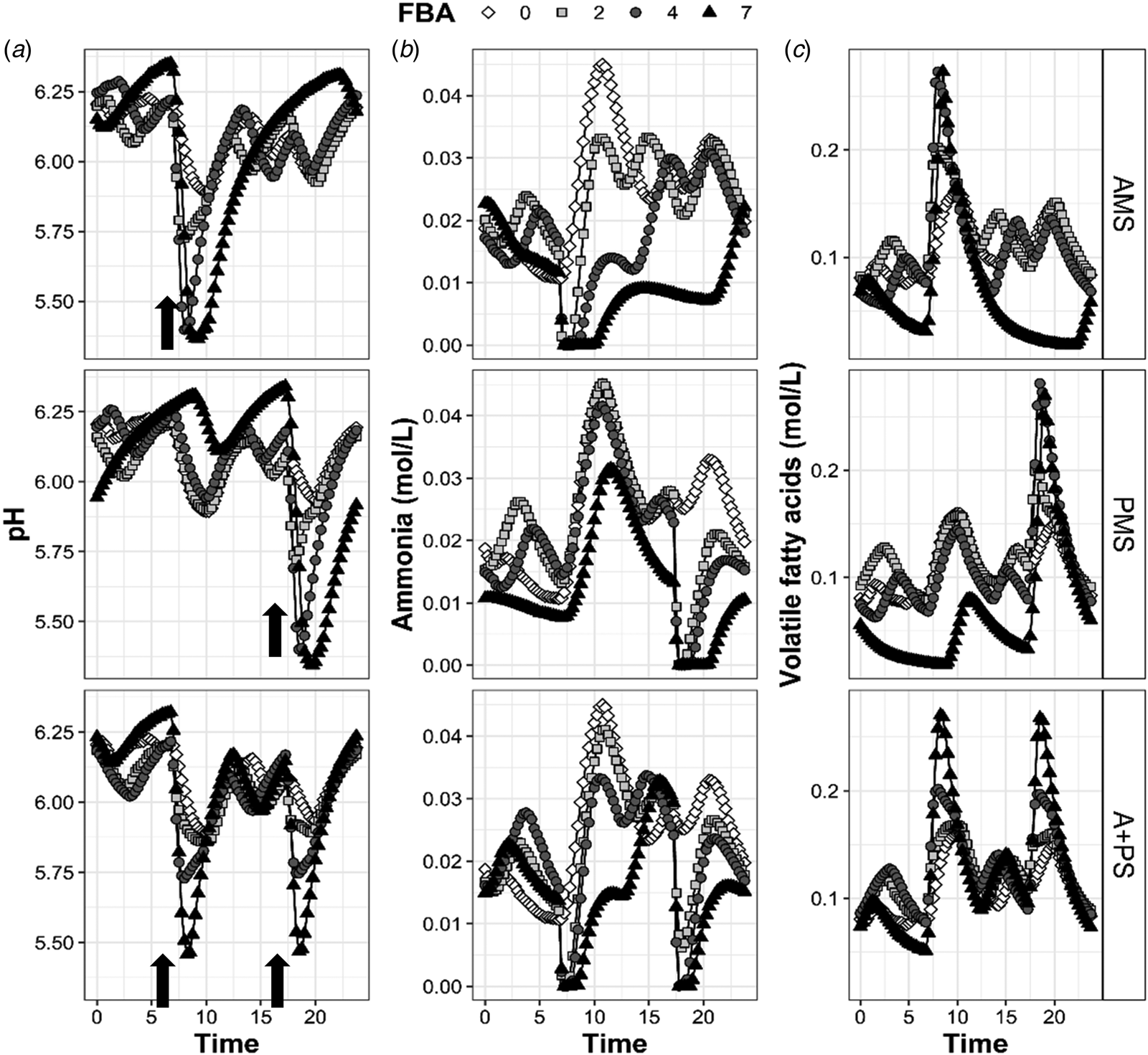
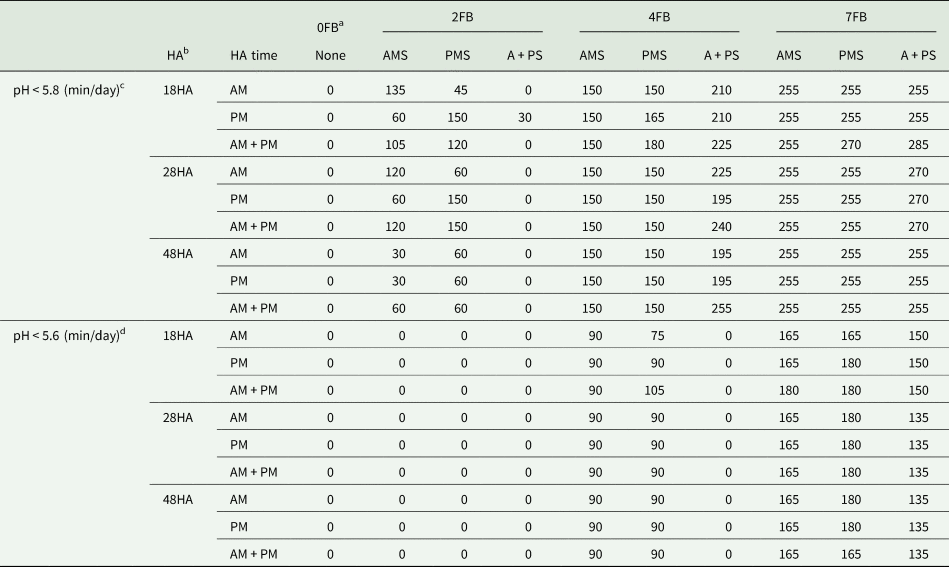
The predicted daily mean of rumen pH was not affected by FBA. However, differences were pronounced when diurnal variation of rumen pH was considered. The nadir pH across all HA declined with increased FB inclusion (pH 5.83, 5.68, 5.40 and 5.34; 0FB, 2FB, 4FB and 7FB, respectively), whereas pH maximum increased slightly with FBA (pH 6.27, 6.25, 6.31 and 6.37; 0FB, 2FB, 4FB and 7FB, respectively). Model predictions suggest 0FB and 2FB diets would maintain rumen pH above 5.6 (Table 3). Moderate and large allocation of FB increased the duration of pH < 5.6 (~90 and 160 min/day, 4FB and 7FB, respectively), which was corrected by increasing the frequency that FB was fed (Fig. 3) as rumen pH > 5.6 was maintained when 4FB was fed A + PS. Twice daily feeding of FB also reduced the time that pH was <5.6 in 7FB diets by ~17 min/day. Consideration of time at which pH < 5.8 provides further definition of the effect of FBA on diurnal patterns of rumen pH. MINDY predicted that time pH < 5.8 would also increase relative to FBA (pH < 5.8: 0, 59.4, 173.9, 258.3 min/day). Although, A + PS feeding increased the time pH was <5.8 compared to once daily feeding of 4FB and 7FB (Table 3).
Diurnal variation of rumen pH (a), ammonia (b) and VFA (c) concentrations (mol/l) when MINDY was fed with 28 kg DM of pasture in the morning and different allocations of FB (FBA) (0, 2, 4 or 7 kg DM of FB/cow/day) in the morning (AMS), afternoon (PMS) or evenly split over two meals morning and afternoon (A + PS). The arrow at the bottom of each section in the first column represent the time that FB was fed each day.

Daily duration of pH < 5.8 or 5.6 in response to varying allocations of herbage (HA) fed in the morning (AM), afternoon (PM) or morning and afternoon (AM + PM), and FB fed in the morning (AMS), afternoon (PMS) or morning and afternoon (A + PS)
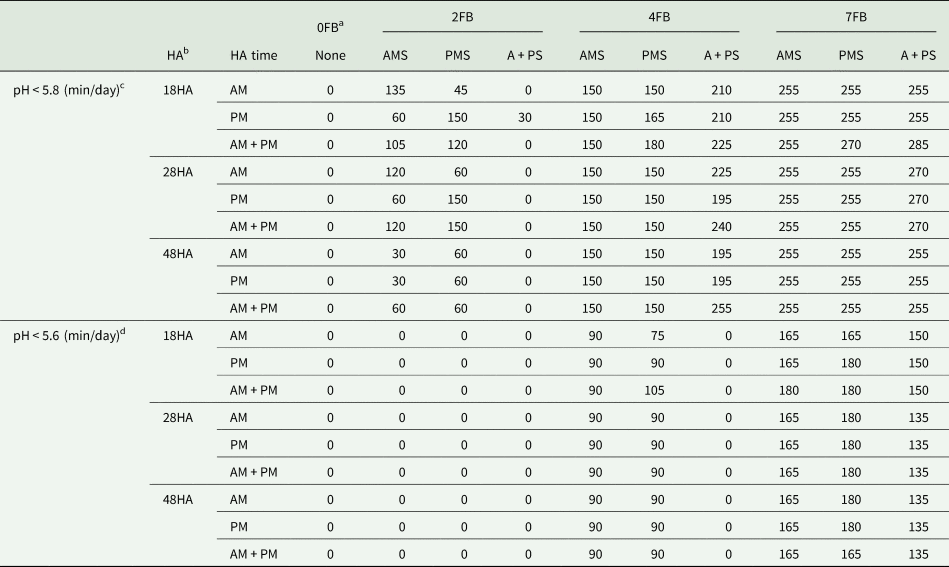
a 0FB: control no FB diet, 2FB: 2 kg DM FB, 4FB: 4 kg DM FB, 7FB: 7 kg DM FB/cow.
b Daily HA 18, 28, 48 kg DM/cow above ground, 18HA, 28HA and 48HA, respectively.
c Daily duration of rumen pH < 5.8.
d Daily duration of rumen pH < 5.6.
Rumen fermentation and outflows of digesta
MINDY predicted that rumen concentrations of VFA would increase with HA (0.10, 0.11 and 0.12 mol/l; 18HA, 28HA and 48HA, respectively), and model predictions were minimally affected by time of HA (<1.25%). Mean VFA concentration declined when 7FB was fed, compared with smaller allocations (0.107, 0.121, 0.118 and 0.087 mol/l; 0FB, 2FB, 4FB and 7FB, respectively). Morning and evening feeding of 4FB and 7FB caused VFA concentrations to increase (2–3-fold) 2–3 h following FB consumption (Fig. 3). Minor increases of propionate were also detected in response to FBA although, declined at the greatest allocation of FB (0.023, 0.025, 0.026 and 0.019 mol/l; 0FB, 2FB, 4FB and 7FB, respectively). Model predictions indicate greater concentrations of acetate with 2FB but acetate concentrations declined as FBA increased (0.071, 0.81, 0.78 and 0.57 mol/l; 0FB, 2FB, 4FB and 7FB, respectively). At moderate (4FB) and high allocations (7FB) of FB the rumen concentration of lactic acid increased substantially (0.01 and 0.08 mol/l; 4FB and 7FB, respectively). However, lactic acid concentrations declined when FB was fed A + PS compared with either AMS or PMS feeding. There was a small positive interaction between FBA and the amount of herbage offered. However, lactic acid concentrations were negligible from 2FB or 4FB fed A + PS.
Model predictions suggest daily average concentration of rumen ammonia increased in response to HA (0.016, 0.019 and 0.023 mol/l; 18HA, 28HA and 48HA, respectively) and declined when herbage was fed AM + PM. Minor differences of rumen ammonia were observed between AM or PM herbage allocation, but declined with increasing FBA (Fig. 3). Consumption of FB reduced ruminal ammonia concentrations although, only small differences were apparent between 2FB and 4FB, whereas 7FB caused ammonia to decline considerably (0.023, 0.022, 0.020 and 0.012 mol/l; 0FB, 2FB, 4FB and 7FB respectively), which also reflect reduced intake of herbage. The difference in rumen ammonia between AMS and PMS feeding of FB increased with FBA and ranged from 0.4 to 16.3% which may also reflect herbage intake.
Predicted ruminal pools of NDF and ADF declined in response to FB intake (5.5, 5.4, 5.1 and 3.8 kg/day; 0FB, 2FB, 4FB and 7FB, respectively) but increased in response to HA (4.5, 4.8 and 5.1 kg/day; 18HA, 28HA and 48HA, respectively). Moderate and high allocations of FB reduced DM passage from the rumen below 0FB diets (10.9, 11.0, 10.0 and 7.1 kg/day; 0FB, 2FB, 4FB and 7FB, respectively) and increased with the amount of herbage allocated (9.8, 10.6 and 12.3 kg/day; 18HA, 28HA and 48HA kg/day, respectively). MINDY predicted the ruminal passage of DM would increase when FB was fed A + PS rather than AMS and PMS. When daily AMS and PMS passage rate of DM were averaged, twice daily feeding of FB caused similar DM passage (−0.1 kg DM/day) at 2FB, but increased DM passage 1.3 kg/day at 4FB and 2.27 kg/day at 7FB.
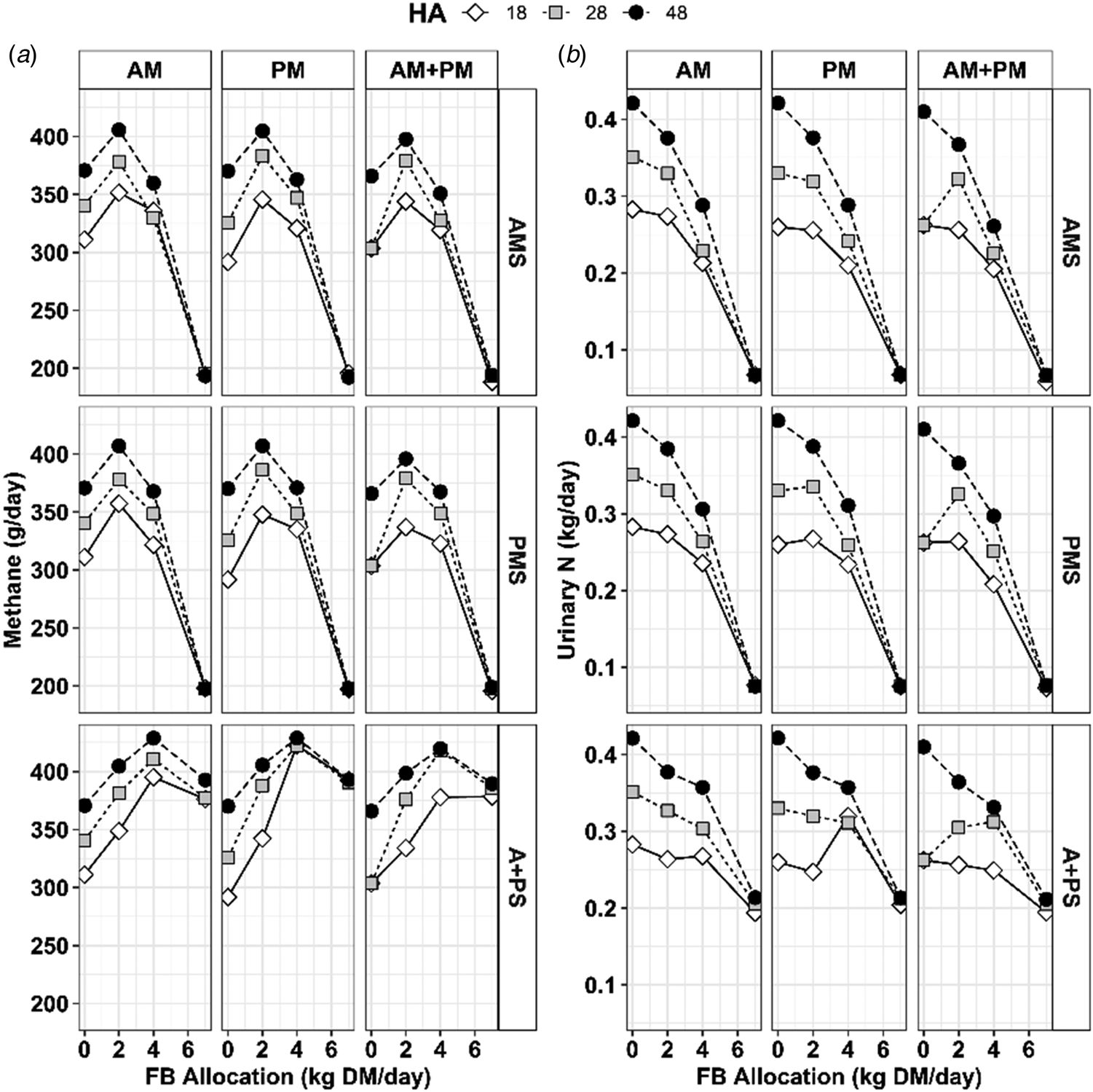
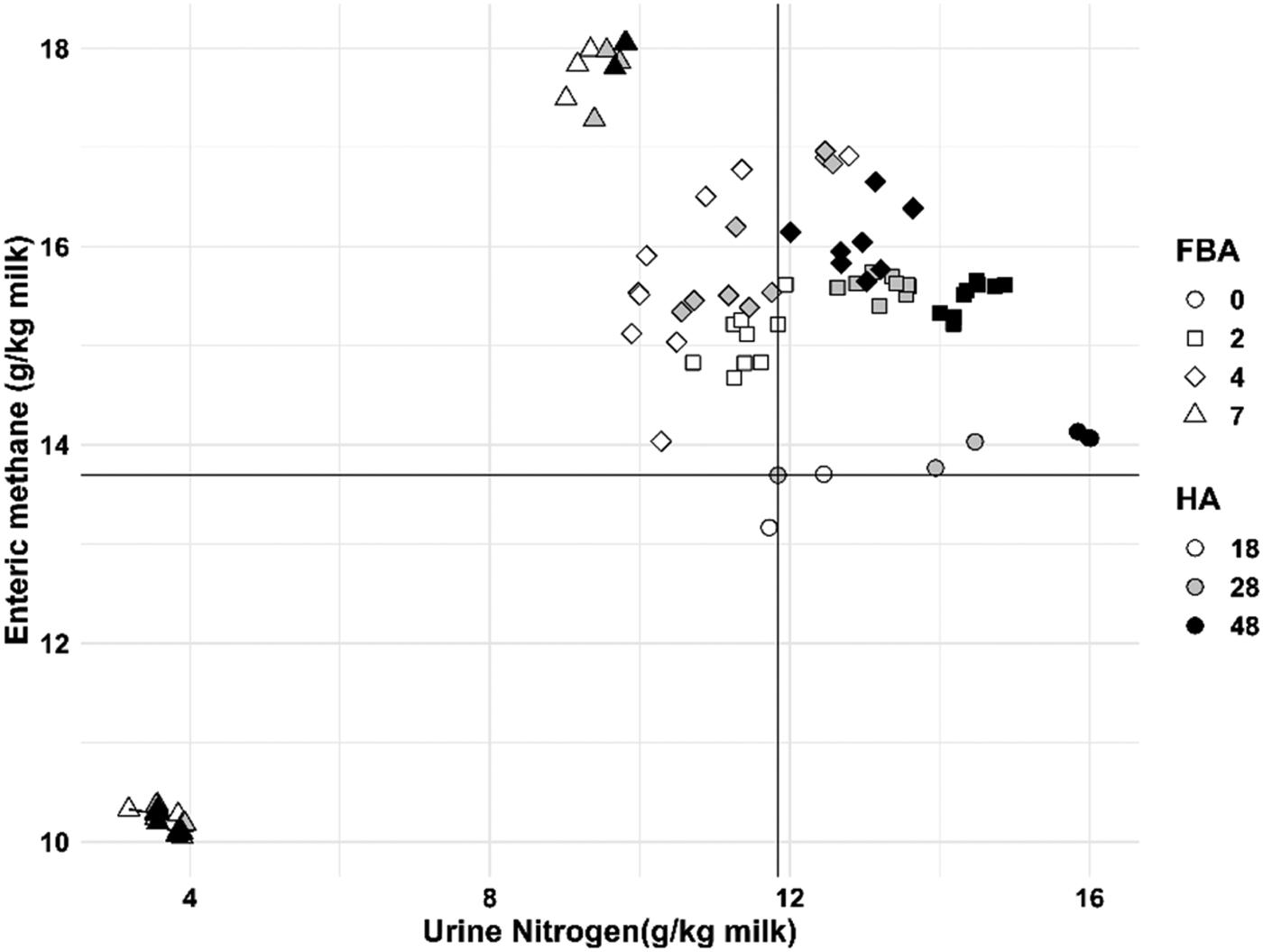
Across the 28HA diets, the intake of N briefly increased and then declined, in response to greater intakes of FB (558 to 615, 476 and 238 g N per day; 0FB, 2FB, 4FB and 7FB, respectively). Morning and afternoon feeding of FB increased herbage intake and N compared with AMS or PMS feeding (548, 464 and 454 kg N/day, respectively); estimated N intake also increased with HA (484, 558 and 758 g N/day; 18HA, 28HA and 48HA, respectively). The low N content of FB bulb diminished urinary N excretion by 4% (2FB), 19% (4FB) and 65% (7FB), compared with 0FB. Across all rates of FB feeding, urinary N excretion increased when FB was fed A + PS compared with AMS or PMS feeding and also increased with HA (Fig. 4). Although allocating herbage in the afternoon slightly reduced urinary N content, this effect diminished with increased HA. Faecal N content also declined with increased FB intake (141, 162, 139 and 83 g/day; 0FB, 2FB, 4FB and 7FB, respectively) and increased with the amount of herbage allocated (125, 141 and 191 g N/day; 18HA, 28HA and 48HA, respectively). Enteric methane emissions reflected DMI, increasing with HA and 2FB but decreasing with 4FB and 7FB diets. Although, A + PS feeding of FB caused CH4 yield from 4FB and 7FB diets to increase compared to AMS or PMS feeding (Fig. 4). The Pareto frontier analysis, identified 7FB fed either AMS or PMS would provide the optimum solution for reducing pollution swapping between CH4 and urinary N/kg milk produced (Fig. 5). FBA reduced urinary N intensity but increased the intensity of CH4 emissions (Fig. 5).
(a) Methane emission (g/day) and (b) urinary nitrogen excretion (kg/day) predicted from increasing FBA (0, 2, 4, 7 kg DM/cow/day) fed in the morning (AMS), afternoon (PMS) or morning and afternoon (A + PS) and HA (18, 28, 48 kg DM/cow/day) fed in the morning (AM), afternoon (PM) or morning and afternoon (AM + PM).

Pollution intensity of urinary nitrogen (g/kg milk/day) and enteric methane (g/kg milk/day) in response to FBA (0, 2, 4 and 7 kg DM/cow/day) and herbage allocation (18, 28 and 48 kg DM/day). The ‘frontier’ (black line in the bottom left corner) represents diets which are the best compromise between reducing urinary nitrogen and enteric methane emissions. Diets along the frontier were all 7FB which caused SARA. The reference line represents a control 0FB diet with 28 kg DM/cow of herbage.

Total discomfort
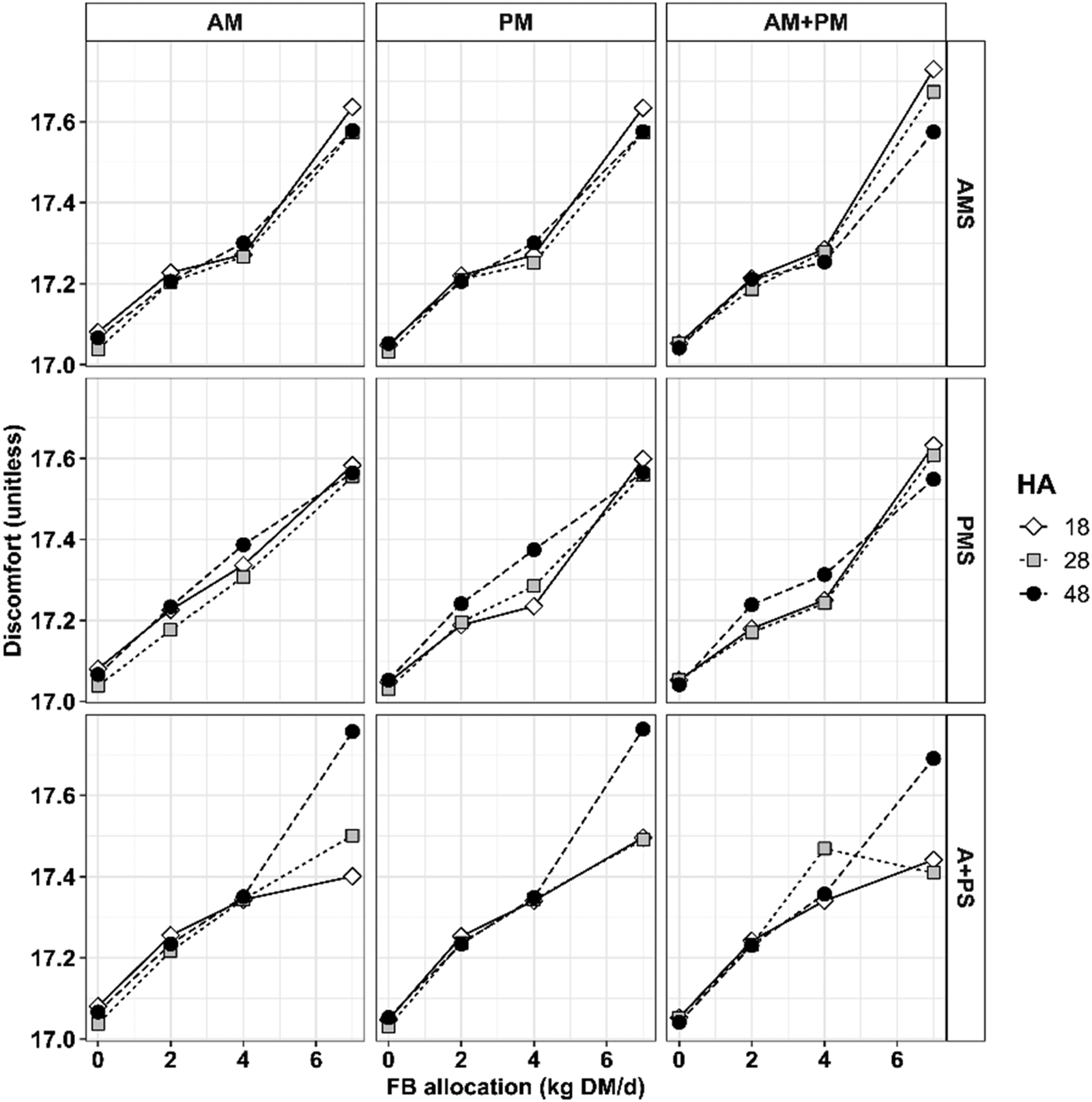
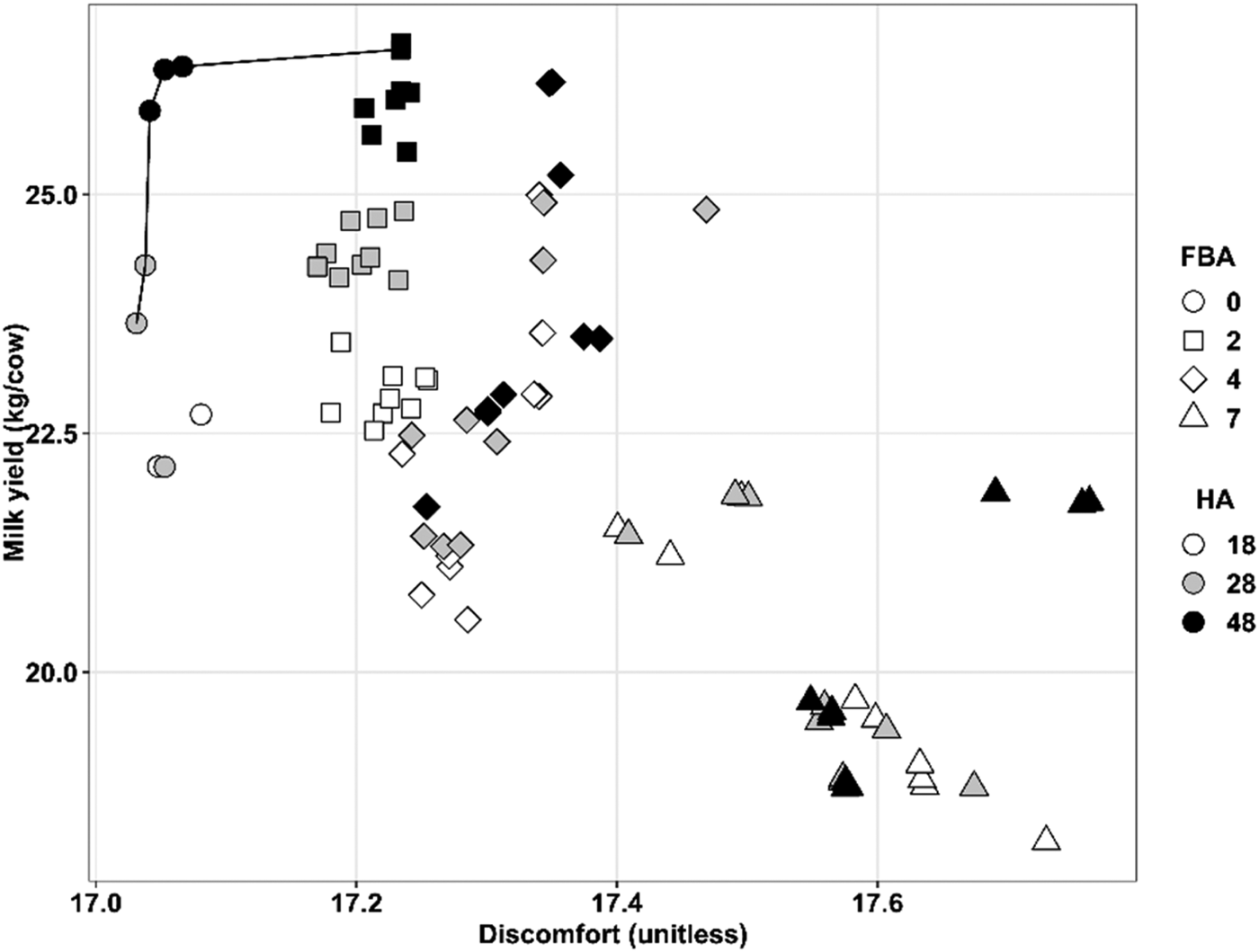
The combination of FB and herbage with time and frequency of allocation produced some feeding options which increased milk yield and reduced animal discomfort. Total discomfort increased with the amount of FB consumed (17.1, 17.2, 17.3 and 17.6 units for 0FB, 2FB, 4FB and 7FB, respectively), but was not affected by the time or frequency that FB was allocated or the time and amount of HA (Fig. 6). The Pareto front analysis identified seven diets which gave the optimal trade-off between milk production and discomfort (Fig. 7). These diets consisted of four control (0FB) treatments of 28HA and 48HA offered once daily, and one 48HA which was fed AM + PM. Of the seven diets only two included FB, at 2FB fed twice daily with 48HA fed AM or PM.
Total discomfort in response to increasing FBA fed in the morning (AMS), afternoon (PMS) or morning and afternoon (A + PS) and HA (18, 28, 48 kg DM/cow/day) fed in the morning (AM), afternoon (PM) or morning and afternoon (AM + PM).

Relationship between FBA (0, 2, 4 and 7 kg DM/cow/day), milk yield (kg/cow/day) and discomfort. The ‘frontier’ (black line in the upper left corner) represents diets which are the best compromise between improving milk production and reducing animal discomfort.

Discussion
Ruminal pH and total discomfort
MINDY predicted a positive milk response to low FBA, but milk response and DMI declined at greater rates of supplementation due to disruption of the rumen environment. MINDY predicted that the daily duration of pH < 5.6 would increase with FBA, causing moderate SARA from 4FB and 7FB diets. However, halving the FB meal reduced the duration of low rumen pH, compared with once daily supplementation. These results agree with previous findings (Kaufmann, Reference Kaufmann1976; Cohen et al., Reference Cohen, Stockdale and Doyle2006) and represent an increased distribution of soluble carbohydrate load in the rumen. Although A + PS supplementation of FB increased the nadir pH it was not completely able to correct the time that pH was <5.6 (Gozho et al., Reference Gozho, Plaizier, Krause, Kennedy and Wittenberg2005), which most likely reflects the increase of DM passage through the rumen (Waghorn et al., Reference Waghorn, Collier, Bryant and Dalley2018).
MINDY predicted that the 7FB treatment, which constituted 57% of total DMI, would result in a daily episodic decline of rumen pH below 5.6 for 150 min/day. Predicted bouts of low pH reported here were longer in duration and lower in value than those reported previously for beef steers fed ad libitum FB with 1 kg DM of lucerne silage (Prendergast and Gibbs, Reference Prendergast and Gibbs2015). However our values fit within the data obtained for lactating dairy cows consuming similar diets (Waghorn et al., Reference Waghorn, Collier, Bryant and Dalley2018). The time dependent threshold for SARA has been reported at pH < 5.6 for >180 min/day (Gozho et al., Reference Gozho, Plaizier, Krause, Kennedy and Wittenberg2005) which was not met by either 7FB or 4FB diets in the modelling scenarios. However, the substantial increase of lactic acid concentration, reduced DMI and milk production indicate that MINDY experienced SARA when fed 7FB and that rumen conditions were sub-optimal when 4FB was fed.
Moderate allocations of FB (<40% inclusion) have previously been reported as ‘safe’ for late-lactation dairy cows (Dalley et al., Reference Dalley, Waugh, Griffin, Higham, De Ruiter and Malcolm2019; Waghorn et al., Reference Waghorn, Law, Bryant, Pacheco and Dalley2019). Discrepancies between late-lactation studies and the current data set may be a consequence of cows being more susceptible to low pH during the post-partum transitioning period (Penner et al., Reference Penner, Beauchemin and Mutsvangwa2007), but further in vivo studies are required to verify this finding. Diurnal variations of pH within the current data set appear to be accurate, as MINDY predicted pH would fall to the lowest values by around 3–4 h after FB consumption, which agrees with experimental data (Waghorn et al., Reference Waghorn, Law, Bryant, Pacheco and Dalley2019). In fact, MINDY may have under-estimated the effect of FB on pH, as 60% dietary inclusion of FB caused clinical acidosis in late lactation (pH < 5.0) (Waghorn et al., Reference Waghorn, Law, Bryant, Pacheco and Dalley2019). Therefore, pH was expected to decline more when 7FB was fed, particularly under restricted grazing conditions. Model predictions strongly suggest that rumen pH is below optimum when the meal size of FB exceeds 2 kg DM during early lactation, although twice daily feeding may help to stabilize the rumen environment by minimizing the time that rumen pH is <5.6.
The total discomfort parameter of MINDY responded to a low rumen pH and therefore, the amount of FB. The Pareto front analysis indicated a combination of low FBA fed twice daily and high HA provided the best compromise between milk production and animal discomfort (Fig. 7). This may not be a practical solution for NZ milk producers, because spring feeding of FB is a consequence of an excess of the winter crop which decomposes within 3 months once harvested. Therefore, feeding just 2 kg DM/day of FB may reduce utilization of supplement whereas grazing high HA will reduce the nutritive composition of herbage and may require modified grazing management which allow increased diet selectivity.
Although, MINDY predicted discomfort of the ‘average’ cow fed FB, consideration of social pressures affecting feeding motivation across the herd are also required. In the current scenario MINDY represented a single individual, which was forced to complete her meal of FB by remaining on the feed pad until she had finished. There was a positive relationship between time spent on the feed-pad and FBA, which reflects the increased discomfort experienced from FB as the meal progressed. Increased attraction to supplement preceding the meal and declining attraction as the meal progresses, is an aversive response to excessive supply of a nutrient (Forbes, Reference Forbes2007), but also reflect sensory inputs such as texture, odour, malaise or flavours (Provenza, Reference Provenza1995). However, in NZ pasture-based systems, cows are commonly fed in herds rather than individually. Social hierarchies within the herd are known to restrict DMI of timid cows while enabling those which are more dominant to over-indulge (García et al., Reference García, Pedernera, Fulkerson, Horadagoda and Nandra2007). Timid cows are more susceptible to acidosis because they experience greater pressure by dominant animals to eat quickly and less frequently rather than eating selectively based on signals of satiety or surfeit (eating to excess) (Owens et al., Reference Owens, Secrist, Hill and Gill1998). Although individual variation of eating behaviour and social hierarchy's are not predicted by MINDY, further evaluation of this variation and its relationship with ruminal acidosis is needed.
To add further complexity, eating motivation and total discomfort changes considerably within individuals from day to day (Provenza, Reference Provenza1995; Gregorini et al., Reference Gregorini, Villalba, Provenza, Beukes and Forbes2015). Overconsumption of a readily fermentable feed such as FB will lead to an aversion due to the associated feeling of discomfort (Forbes and Provenza, Reference Forbes, Provenza and Cronje2000). An aversion to FB will increase the individual cow's risk of developing ruminal acidosis, as daily intake of FB becomes more variable. Ruminants prefer to adjust their food choices to minimize the feeling of discomfort (Provenza, Reference Provenza1995). However, choices are limited under pastoral grazing systems with harvested FB, which is commonly fed out on the paddock due to minimal use of infrastructure in NZ dairy systems. Spring feeding of FB in the paddock (prior to allocation of a new pasture break allocation) enables cows which experience discomfort from FB to choose between a supplement which increases total discomfort, grazing the residual pasture or waiting until the new pasture break becomes available. Aversion of some individuals to FB will increase the risk of acidosis across the remaining herd, as the amount of FB allocated per cow increases. Although it may be possible to identify and remove animals which are averse to eating FB, subtle variations of daily FB intake and SARA will not be visually detectable. Furthermore, as aversion is a negative reinforcement of post-ingestive feedback (Provenza, Reference Provenza1995), removal of the animal is not a preventative technique. Each animal should be provided with sufficient space and access to the FB on offer to reduce competition however, this will not prevent competition entirely.
Milk response and substitution rate
The predicted increase of DMI and milk production in response to increased HA has been reported previously (Dalley et al., Reference Dalley, Moate, Roche and Grainger1999; Dillon et al., Reference Dillon, Crosse, O'brien and Mayes2002; Auldist et al., Reference Auldist, Marett, Greenwood, Hannah, Jacobs and Wales2013). Increased HA and rate of supplementation are also known to increase the substitution of herbage for supplement (Penno et al., Reference Penno, Macdonald, Holmes, Davis, Wilson, Brookes and Thom2006a). Thus, MINDY predicted the milk response to supplement (kg milk/kg DM of FB) would also decline with FBA as a consequence of greater substitution of herbage for FB, reflecting the negative correlation with substitution rate (Bargo et al., Reference Bargo, Muller, Delahoy and Cassidy2002). Conversely, restricted pasture allocation is also known to increase the milk response to supplement due to greater utilization and nutrient use efficiency, which supports our results (Phillips, Reference Phillips1988; Penno et al., Reference Penno, Macdonald, Holmes, Davis, Wilson, Brookes and Thom2006b). Increasing the HA from 25 to 40 kg DM/cow/day reduced the milk response to supplement from 1.36 to 0.96 kg milk/kg concentrate (Stockdale et al., Reference Stockdale, Currie and Trigg1990; Bargo et al., Reference Bargo, Muller, Delahoy and Cassidy2002). However, MINDY's response to FB supplement was comparatively lower, as the maximum response achieved was ~1 kg milk/kg DM FB when 2FB was fed in the afternoon and supplemented with a restricted HA (18HA fed AM + PM). Moderate milk responses (0.93 kg milk/kg DM concentrate) have also been reported when silage is supplemented with starch-rich grains such as barley. Although, the rate of supplementation (8.2 kg/cow/day) was considerably greater than those used by the model (Crosse and Gleeson, Reference Crosse and Gleeson1986). The low milk production response to FB may also be a consequence of the low DM of bulb, as low DM forages increase ruminal fill compared to high DM, starch-rich, cereal grains (Phillips, Reference Phillips1988; Stockdale et al., Reference Stockdale, Currie and Trigg1990).
MINDY predicted a substantial difference in milk response between low HA and high HA. The negative milk response simulated by feeding 48 kg DM of herbage/cow/day, reflect increased substitution of herbage for FB which is consistent with previous research (Waghorn et al., Reference Waghorn, Law, Bryant, Pacheco and Dalley2019). There appears to be little advantage to post-partum milk production or energy balance when the structural carbohydrates in herbage are replaced with non-structural carbohydrates found in cereal grains (Roche et al., Reference Roche, Lee, Aspin, Sheahan, Burke, Kolver, Sugar and Napper2006), sucrose (Penner and Oba, Reference Penner and Oba2009) or FB bulbs (Fleming et al., Reference Fleming, Edwards, Bryant, Dalley and Gregorini2018; Waghorn et al., Reference Waghorn, Law, Bryant, Pacheco and Dalley2019) in pastoral dairy systems. This lack of early lactation milk response probably reflects the negative energy balance experienced by all modern dairy cows post-partum (Roche et al., Reference Roche, Lee, Aspin, Sheahan, Burke, Kolver, Sugar and Napper2006). However, as there are a limited number of studies which have assessed the milk response (kg milk/kg DM supplement) to fresh FB, further research is still needed.
Sucrose, the predominant source of sugar in FB (Clark et al., Reference Clark, Givens and Brunnen1987), is reported to improve DMI (Chamberlain et al., Reference Chamberlain, Robertson and Choung1993; Broderick and Radloff, Reference Broderick and Radloff2004; Penner and Oba, Reference Penner and Oba2009). Supplementation of a diet consisting of herbage and maize silage with low amounts of liquid molasses increased milk production below an upper limit of 9% of daily intake (Broderick and Radloff, Reference Broderick and Radloff2004). The reported improvement of rumen pH when sucrose replaces starch increases DMI (Chamberlain et al., Reference Chamberlain, Robertson and Choung1993; Penner and Oba, Reference Penner and Oba2009). However, this does not always translate to greater milk production (Broderick and Radloff, Reference Broderick and Radloff2004; Penner and Oba, Reference Penner and Oba2009). Replacing starch with sugar reduces the supply of glucogenic precursors, which may limit milk response from supplement (Evans and Messerschmidt, Reference Evans and Messerschmidt2017). FB may further limit milk production by reducing gross energy (GE) intake as Waghorn et al. (Reference Waghorn, Law, Bryant, Pacheco and Dalley2019) reported GE values for FB bulb was less than pasture (16.3 v. 18.7 kJ/g DM).
Ruminal fermentation
Except for lower concentration of all VFA and a slight increase of propionate associated with increasing FBA, rumen fermentation profiles were similar across diets. Changes of fermentation profiles in response to sucrose or FB supplementation are variable, with some accounts of increased synthesis of butyric acid when starch is replaced with sucrose (Khalili and Huhtanen, Reference Khalili and Huhtanen1991; Chamberlain et al., Reference Chamberlain, Robertson and Choung1993) or FB is used to supplement herbage (Eriksson et al., Reference Eriksson, Ciszuk, Murphy and Wilson2004; Waghorn et al., Reference Waghorn, Law, Bryant, Pacheco and Dalley2019; Pacheco et al., Reference Pacheco, Muetzel, Lewis, Dalley, Bryant and Waghorn2020) although, Pacheco et al. (Reference Pacheco, Muetzel, Lewis, Dalley, Bryant and Waghorn2020) found propionate concentrations increased in response to FB supplementation. These responses reflect altered chemical composition of the diet as formation of propionate is increased with glucogenic precursors such as starch, whereas butyrate reflect greater dietary sugar content, due to FB (Oba, Reference Oba2011). Although FB reduced the content of fibre, increased formation of butyrate may be due to hydrogen concentrations which alter fermentation thermodynamics (Hegarty and Gerdes, Reference Hegarty and Gerdes1999). However, further research is required to evaluate how FB may affect the hydrogen dynamics and fermentation end products in vivo.
Environmental pollutants
Dietary supply of CP was below the recommended 17–19% DM when 7FB diets were fed (Satter and Roffler, Reference Satter and Roffler1975). Although A + PS feeding across all FBA improved herbage intake and subsequently the dietary protein supply. Nitrogen intake was not altered by the time of herbage allocation and rumen ammonia concentrations were similar to previous empirical studies (Trevaskis et al., Reference Trevaskis, Fulkerson and Nandra2004; Gregorini, Reference Gregorini2012). MINDY predicted urinary N excretion would decrease with increased FBA although, empirical study suggest FB may have minimal impact on urinary N when fed 25 : 75 with herbage (Dalley et al., Reference Dalley, Waugh, Griffin, Higham, De Ruiter and Malcolm2019). The increase of enteric methane emission with FBA suggest FB may cause pollution as Pareto front analysis failed to identify diets which would realistically improve both UN and CH4 intensity, without causing SARA.
The twice daily feeding regimen of FB compared with once daily supplementation, not only increased rumen pH but also reduced ammonia concentrations. Increasing the meal frequency of cereal grains which are rich in rumen degradable starch, slows the rate of carbohydrate degradation which may help stabilize ruminal pH and increase utilization of ammonia for microbial protein synthesis (Stockdale et al., Reference Stockdale, Callaghan and Trigg1987). Although sucrose-rich feeds are often also low in protein which can reduce rumen NH3 (Broderick et al., Reference Broderick, Luchini, Reynal, Varga and Ishler2008), the theory of synchronizing soluble protein with readily fermentable carbohydrates may be limited under pastoral conditions with FB, because of the large temporal, spatial and seasonal variation of nutrients across herbage swards and therefore, timing of their availability in the rumen (Hall and Huntington, Reference Hall and Huntington2008). Although our results imply tangible changes to rumen digestion and pH even at low FBA, experimental work is required to explore the effect of rumen degradable protein and carbohydrate supply when supplementing grazed pasture with FB, particularly if FB is to be used to reduce urinary nitrogen concentrations.
Conclusion
SARA is predicted by MINDY when FB intake exceeded 27% of daily DMI. The results from this study suggest that cows may be more susceptible to acidosis when FB is fed in early lactation and will experience a greater discomfort relative to the amount of FB fed. However, feeding FB twice daily improved intake, milk production and rumen pH compared to once daily feeding. The Pareto front analysis of model predictions suggested milk production and total discomfort may be improved when small amounts of FB (1 kg DM) are fed twice daily, alongside 48HA. However, MINDY does not take into account the complex feeding behaviours caused by competition and which may increase variation of FB intake and risk of SARA, when translated at the herd scale. Twice daily feeding of FB will also increase labour and machinery costs which in addition to the extra cost required to harvest FB in spring, and the low milk response to supplement, suggest that FB may not be a cost-effective supplement under pastoral grazing conditions.
Acknowledgements
The authors would like to acknowledge Gil and Hemda Levy from DairyNZ Ltd for their technical assistance with the MINDY model.
Financial support
This research received no specific grant from any funding agency, commercial or not-for-profit sectors.
Conflict of interest
The authors declare there are no conflicts of interest.
Ethical standards
Not applicable.