Burrata is a ‘pasta filata’ cheese that originated in Apulia (Italy) at the beginning of XIX century, and is now under consideration for obtaining the EU Protected Geographical Indication (EU, 2012). It is produced from cow's milk and cream, and presents a ‘double structure’: an external ‘bag’ made of mozzarella paste, and an inner core made of a cream called ‘stracciatella’ (a mixture of mozzarella strips and double cream). The bag is obtained by stretching the mozzarella curd in hot water, forming a cheese ball and turning it into a sort of pouch. The pouch is then filled with stracciatella, closed with a string and cooled down in chilled water. Thus, mozzarella is the main ingredient for preparing Burrata, since it is used for making the bag and the strips, whereas the cream accounts for about 40% of the total cheese weight. The cheese can be manufactured by hand or mechanically (Faccia et al. Reference Faccia, Gammariello, Conte, Del Nobile, Preedy, Patel and Watson2013), but hand-made Burrata has short shelf-life (3–4 d), due to poor microbiological characteristics (Gammariello et al. Reference Gammariello, Conte, Di Giulio, Attanasio and Del Nobile2009; Conte et al. Reference Conte, Brescia and Del Nobile2011; Dambrosio et al. Reference Dambrosio, Quaglia, Saracino, Malcangi, Montagna, Quinto, Lorusso and Normanno2013; Tirloni et al. Reference Tirloni, Stella and Bernardi2014). Mechanisation of the forming and filling phase (contemporary made by means of the so called ‘blower machine’) extends shelf-life until 20 d, also allowing export. Under the nutritional point of view, even though Burrata is a fresh and high-moisture cheese, it cannot be considered as a very healthy food. The reason is the high fat and caloric content: about 60% fat on dry matter, most part of which is saturated, and >300 kcal/100 g (Italian National Research Council, 1996). It is well known that diets high in saturated fatty acids increase the risk of obesity and cardiovascular diseases, and the improvement of the nutritional characteristics of cheese has been a popular subject of research during the last decades. Several technologies have been developed for producing different types of low-fat cheese (Mistry, Reference Mistry2001; Banks, Reference Banks2004), and for improving the nutritional quality of fat. This latter goal can be reached by suitable cattle feeding (Dhiman et al. Reference Dhiman, Helmink, Mcmahon, Fife and Pariza1999; Mustafa et al. Reference Mustafa, Chouinard and Christensen2003; Sarrazin et al. Reference Sarrazin, Mustafa, Chouinard, Raghavan and Sotocinal2004; Caroprese et al. Reference Caroprese, Sevi, Marino, Santillo, Tateo and Albenzio2013), but it can also be obtained by direct fortification of milk with polyunsaturated fatty acids (PUFA). In this case, the unpleasant flavour represent a major limit, in particular when formulations based on fish oil are used (Campbell et al. Reference Campbell, Drake and Larick2003; Kolanowsky & Weißbrodt, Reference Kolanowsky and Weißbrodt2007; Martini et al. Reference Martini, Thurgood, Brothersen, Ward and McMahon2009). The unpleasant flavour can be reduced by using microencapsulated oils or products of vegetable origin, which have higher perception thresholds (Ye et al. Reference Ye, Cui, Taneja, Zhu and Singh2009; Bermúdez-Aguirre & Barbosa-Cánovas, Reference Bermúdez-Aguirre and Barbosa-Cánovas2011).
The purpose of the present paper was to develop a suitable cheesemaking technology for producing Burrata with improved nutritional characteristics and acceptable sensory quality. In particular, efforts were made for producing a reduced-fat type and fortifying it with PUFA.
Materials and methods
The experimentation consisted of four phases: (a) reduction of the fat content of the ingredients; (b) production of reduced-fat Burrata; (c) production of reduced-fat Burrata enriched with PUFA; (d) chemical and sensory analyses of the cheeses.
Reduction of the fat content of the ingredients
As indicated above, the two main ingredients for preparing Burrata are mozzarella and cream. It must be pinpointed that the fat concentration of these two ingredients gives a crucial contribution to flavour and body of the cheese. In order to assess the extent by which fat could be reduced, three types of mozzarella curd were prepared by direct acidification (Faccia et al. Reference Faccia, Trani and Di Luccia2009) from whole (3·7% fat), semi- skimmed (2·0% fat) and totally skimmed (0·1% fat) pasteurised milk. As to the cream, the low-fat types available on the market were not useful due to poor texture, and we decided to develop a suitable type in the laboratory. To this aim, 28% fat cream was diluted with suspensions of several non-fat thickeners. We tested denatured milk whey proteins, inulin, sodium alginate (Eigenmann and Veronelli, Milano, Italy), cornstarch, and carob seed flour (Farmalabor, Canosa, Italy). Carob seed flour (CSF) proved to be the most efficient thickener for our purposes, and in order to assess the most suitable concentration it was suspended in water at 60 °C at three different levels (0·5, 1·0 and 2·0%), homogenised in a blender and cooled down to 4 °C. During cooling the suspensions jellified, and the gels were mixed with the cream (1 : 1, v : v). The three low-fat creams obtained (about 14% fat) were sensory evaluated by a panel composed of five experts, 2 of which were members of the research group and 3 were technicians from the dairy industry. The panel compared the experimental samples with the 28% fat cream (used as a reference sample) as to body (thickness/creaminess), flavour intensity, and foreign flavours (different from those that are normally found in cream). A five points bipolar comparative scale was used where, with respect to the reference sample: (a) for body and flavour ‘1’ = minimum, means that these attributes were perceived as much less intense in the experimental samples, and ‘5’ = maximum, as much more intense; (b) for foreign flavours ‘1’ = minimum, means that strong and pleasant foreign flavour was perceived in the experimental samples, whereas ‘5’ = maximum, indicates the perception of very unpleasant flavour. The cream sample that received the best score was used for continuing the experimentation.
Production of reduced-fat Burrata (RF)
Three prototypes were manufactured by using the low-fat cream and the whole, semi-skimmed and totally skimmed mozzarella curds: they were coded as RFWM, RFSM, and RFTM, respectively. The curd was stretched in hot water (85 °C) containing 1·5% NaCl, and the obtained mozzarella was used both for forming the bag and preparing the strips for the stracciatella cream. After filling and closing the bag, the cheeses were cooled in chilled water for 30 min, and finally packaged in a vessel containing refrigerated water. Samples were then taken, put in refrigerated bags and transported to the laboratory for chemical and sensory analyses. The experimentation was performed in an industrial dairy and was repeated three times, in different days.
Production of reduced-fat Burrata enriched with PUFA (RF-PUFA)
The RF prototype that gave the best result was fortified with PUFA by using a mixture of two food grade formulations of vegetable origin (Farmalabor Srl, Canosa, Italy): 5411 Omega-3, a concentrate oil from flaxseeds rich in C18 : 3 : n3 (α-linolenic acid, ALA), and 0066 acid powder from Carthamus tinctorius, rich in 9cis, 11trans- and 10trans, 12cis- conjugated linoleic acid (CLA). The two formulations were mixed in the ratio 1 : 1 (w/w), thoroughly homogenised in a dark bottle and added to the cold low-fat cream immediately before the preparation of stracciatella. Burrata moulding/filling was then rapidly made, in order to avoid exposure to air and prevent oxidation. Three levels of fortification were tested: 0·6 g (Ld = low dose), 1·2 g (Md = medium dose), and 2·4 g (Hd = high dose) PUFA mixture per 100 g cream.
Cheese analyses
The cheeses were analysed for the determination of moisture (IDF, 1986), fat (Soxhlet method), protein (Kjeldahl method) and lactose (enzymatic assay). The caloric content was calculated according to the FAO tables, using the Atwater specific factors for butter (FAO, 2003). Proteolysis and lipolysis were studied after storage of the cheese at 4 °C for 7 d. Proteolysis was assessed by polyacrylamide gel electrophoresis in the presence of urea (urea-PAGE) as reported by Andrews (Reference Andrews1983). The gel was stained with blue silver as indicated by Candiano et al. (Reference Candiano, Bruschi, Musante, Santucci, Ghiggeri, Carnemolla, Orecchia, Zardi and Righetti2004) and subjected to densitometry analysis by using Quantity One software (BioRad, Hercules, CA). Lipolysis was assessed by gas chromatographic determination of free fatty acids (FFA), as reported in a previous paper (Faccia et al. Reference Faccia, Gambacorta, Caponio, La Gatta and Di Luccia2007). All chromatographic analyses were performed by using a HP5890 gas chromatographer, equipped with a HP-88 capillary column (100 m × 0·25 mm, 0·25 µm film thickness from J&W, CA, USA). The split/splitless injector temperature was set at 220 °C with a split ratio of 1/50. The oven conditions were: starting temperature 140 °C, 6 °C/min until 165 °C, 2·8 °C/min until 230 °C, isothermal at 230 °C for 25 min; FID temperature 280 °C; constant pressure at 200 kPa. The same chromatographic conditions were used for determining the total fatty acids profile of the PUFA-enriched samples. All analyses were run in triplicate. Sensory analysis was performed by 40 non-trained panellists having experience with sensory evaluation of pasta filata cheeses. The panel compared the experimental cheeses with a full-fat sample. For RF Burrata, experimental and control samples were compared by two-sided paired-preference comparison test. Judges were asked to indicate: (a) if differences were perceived between samples; (b) which of the two was preferred as to flavour, aroma and texture; (c) the presence of unacceptable samples. For the RF-PUFA type the ranking test was used: judges were asked to rank the three samples based on preference for overall flavour, using a score from 1 (most preferred sample) to 3 (least preferred sample). A score equal to 0 was only used to indicate unacceptable sample. In both cases the tests contemplated forced choice. The cheeses (about 100 g) were served in disposable dishes with three digit codes at the temperature of 18–20 °C. The order of presentation was balanced. Water was provided for palate cleansing between samples. Significant differences were established for α < 0·05.
Data were processed by SPSS v.19 (IBM Inc; Chicago, Illinois). Shapiro–Wilk test of normality and Levene's test of equality of variance were performed to identify the parametric and non-parametric variables. Anova test was used for parametric variables and the Wilcoxon Signed Rank for non-parametric at a confidence interval of 95%; they were applied to verify the differences among groups.
Results and discussion
RF Burrata
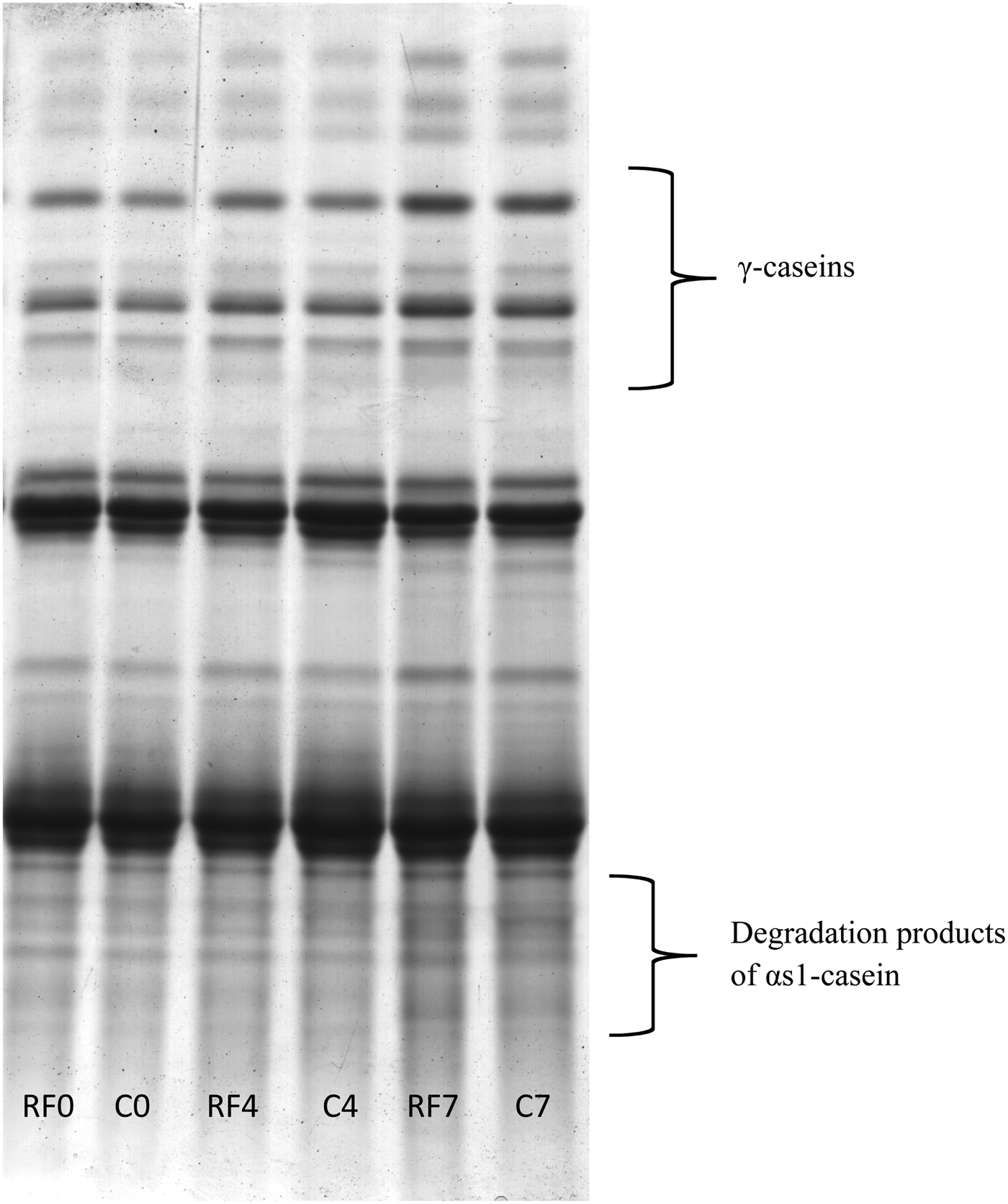
Among the thickeners tested for producing low-fat cream, whey proteins, cornstarch and inulin negatively affected the sensory characteristics, whereas sodium alginate caused acidification and coagulation (results not shown). Carob seed flour produced good thickening effect without impairing the cream flavour. Carob is an interesting plant for its functional properties and is not considered an allergen (Corsa et al. Reference Corsa, Avallonea, Cosenza, Farina, Baraldia and Baraldia2002; Makris & Kefalas, Reference Makris and Kefalas2004), so it can be used in Burrata manufacturing without relevant concerns. The sensory evaluation indicated that the most suitable concentration was 0·5%, because at higher levels excessive formation of lumps during cooling and negative texture perception (‘glueyness’) were observed. The compositional characteristics of the RF Burrata prototypes made from milks with different fat content are shown in Table 1. As expected, the chemical composition of the three samples was fairly different, mainly as to the fat/protein ratio. With respect to the control cheese, they also had higher moisture content. According to the EU regulation, a reduced-fat cheese should contain at least 30% less fat than the corresponding full-fat cheese (EC, 2006), whereas according to the Italian standard it must contain from 20 to 35% fat, expressed on dry matter (Italy, 1992). As can be seen, the only use of low-fat cream did not allow to meet the legal requirements, and skimming milk for preparing the mozzarella base has to be considered an indispensable step. Both RFSM and RFTM samples reached the required level of fat and caloric content, but only the former had good characteristics under the sensory point of view (data not shown). In substance, the sample obtained from totally skimmed milk was judged to be unacceptable, mainly due to structural defects. The sensory analysis showed highly significant difference between the reduced-fat sample and the control (32 positive responses). The responses about preference were surprising: even though the highest number of positive responses for flavour and aroma was attributed to the control cheese, the only significant difference was found for texture, and was in favour of reduced-fat Burrata (P < 0·05). These results suggest that the technological modifications introduced influenced the overall sensory perception, but the related changes in flavour, aroma and texture were not negatively perceived. The results of the assessment of proteolysis are reported in Fig. 1. At our knowledge, these are the first results reported in the literature on proteolysis of Burrata. The urea-PAGE patterns show slight changes with time, indicating a very low level of primary proteolysis both in control and experimental cheese. The two main groups of proteolytic products (γ-and αs1-I caseins) started to increase after 7 d, as already reported for high moisture mozzarella (Faccia et al. Reference Faccia, Trani, Loizzo, Gagliardi, La Gatta and Di Luccia2014). Similarly, lipolysis was very poor, as normally found in unripened cheeses. The total amounts of free fatty acids in control and experimental Burrata at 7 d refrigerated storage were not significantly different (0·19 and 0·17 mg/g fat). On the whole, the absence of significant differences in proteolysis and lipolysis indicates that shelf-life of reduced-fat burrata should not be impaired with respect to the full-fat type. Nevertheless, this aspect also needs a microbiological study, which is currently in progress.
Polyacrylamide gel electrophoresis in the presence of urea (UREA-PAGE) patterns of the final prototype of reduced-fat (RF) and control Burrata (C) at 0, 4 and 7 d of storage at +4 °C.

Gross composition (% ±SEM) and caloric content of reduced-fat Burrata made from whole (RFWM), semi-skimmed (RFSM), and totally skimmed milk (RFTM), and control (C). Values with different superscript in the same column are different at P < 0·05
RF-PUFA Burrata
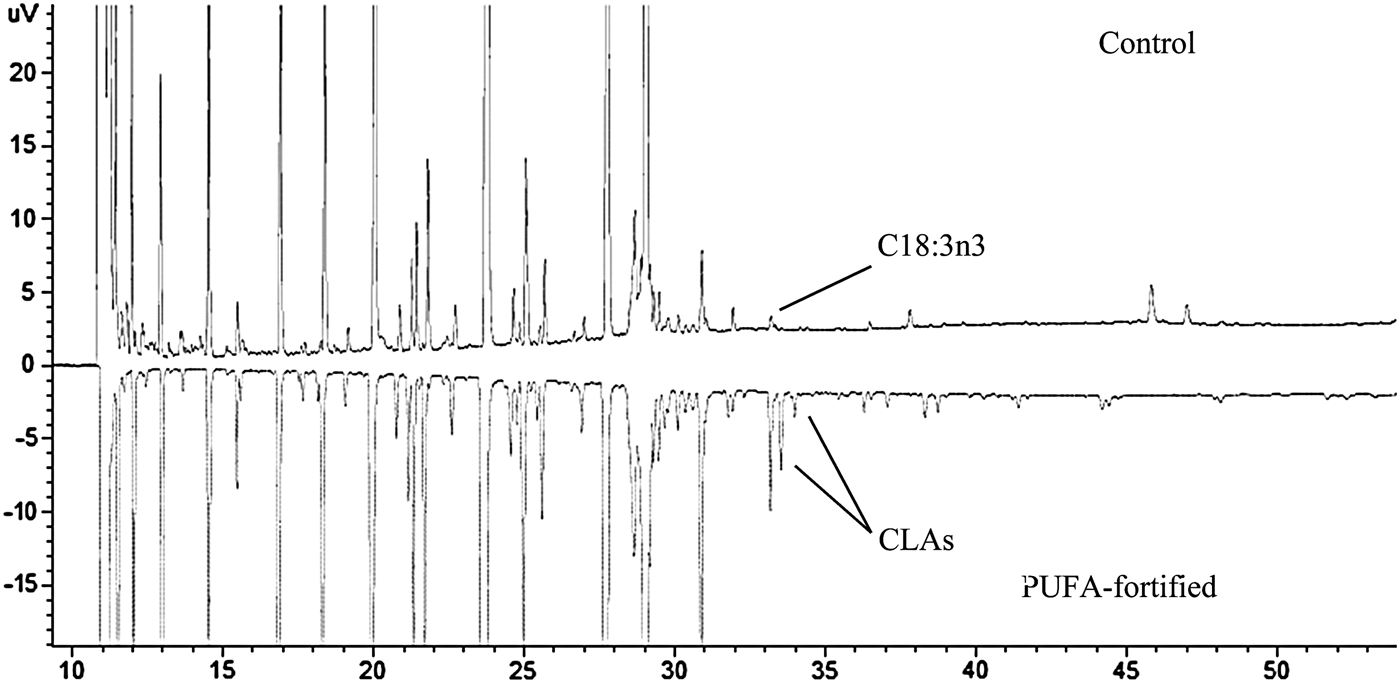
The commercial formulations used had the following unsaturated fatty acids composition, expressed as g 100 g−1: 13·2 oleic, 17·0 linoleic, 60·5 α-Linolenic (5411 Omega-3 flaxseeds oil), and 12·8 oleic, 30·9 9cis,11trans-conjugated linoleic, 28·2 10trans,12cis-conjugated linoleic (0066 CLA powder from Carthamus tinctorius). The increase of the PUFA content that was obtained in the cheeses was almost proportional to the level of fortification used, but the recovery of the 10trans,12cis-isomer was not very effective (Table 2). The results demonstrate that the processing protocol of Burrata allows easy retention of the formulates added, differently from other cheeses, for which addition has to be made in milk. The amounts of total CLA and ALA detected in the fortified cheeses ranged from 6·8 to 24·5 mg/g, and from 7·0 to 25·3 mg/g fat, respectively. A comparison with the data reported in the literature is hardly possible, since the PUFA concentration in milk products are highly variable, depending on environmental factors, farming practices, genetic and physiological factors related to the animals, and also to the extraction method used for their determination (Collomb et al. Reference Collomb, Schmid, Sieber, Wechsler and Ryhanen2006; Domagala et al. Reference Domagala, Sady, Graga, Pustkowiac and Florkiwics2010). According to the literature, the CLA content in cow cheeses ranges from 0·50 to 28·6 mg/g, whereas that of ALA ranges from 3·2 to 11·2 mg/g: the highest values are found in cheeses made from milk of grazing cattle or fed with oil-supplemented diets (Molkentin Reference Molkentin2009; Nunes & Torres, Reference Nunes and Torres2010; Abd El-Salam & El-Shibiny, Reference Abd El-Salam and El-Shibiny2014). On the whole, the values reached in our experimentation fell within the medium-high part of the ranges cited, or also exceed it but, unfortunately, the sensory analysis showed that the highest levels of fortification were not applicable. In fact, only the Ld sample received good scores, and was ranked as the preferred one. The panel unanimously rejected the Hd sample and attributed a low score to the intermediate level of fortification (data not shown). These results indicate that only the lowest level (0·6/100 g cream) can be used without causing impairing of the sensory characteristics of Burrata. Anyway, the outcome of the experimentation is relevant for two major reasons: (1) the CLA and ALA contents are higher than those reported for Italian fresh pasta filata cheeses, such as scamorza and mozzarella (Bergamo et al. Reference Bergamo, Fedele, Iannibelli and Marzillo2003; Cicognini et al. Reference Cicognini, Rossi, Sigolo, Gallo and Prandini2014); (2) the increase with respect to the control cheese is about 8-folds higher. In fact, it clearly appears from Fig. 2 that the contribution of the raw materials to PUFA concentration in the experimental cheese was negligible. A possible explanation is that the milk and cream employed in our experimentation derived from farms that scarcely perform grazing. This result suggests that if our protocol is applied to raw materials that naturally contain high amounts of PUFA, a significant enhancement should be obtained.
Fatty acids profile of PUFA-enriched and control Burrata.
Concentration of conjugated linoleic acids and α-linolenic acid (mg/g fat ±SEM) in PUFA enriched (Hd, high level of fortification; Md, medium level of fortification; Ld, low level of fortification) and control (C) Burrata. Values with different superscript in the same row are different at P < 0·05
In conclusion, the present investigation demonstrated that it is technologically possible to produce a reduced-fat version of Burrata without significantly impairing the sensory features. However, the attainment of a low-fat version by totally skimming the milk is not feasible due to excessive modification of texture and taste. Enrichment of the cheese with PUFA can easily be performed at the dairy, since the processing protocol of this cheese is compatible with addition of any lipid commercial formulations.
This work was financially supported by Ministero dell'Istruzione, dell'Università e della Ricerca Scientifica by the the projects PON 01_00851 ‘Bioinnovazioni per produzioni lattiero casearie ad elevato contenuto salutistico’ and PON 02_00186 ‘Protocolli tecnologici e clinici innovativi per la produzione di alimenti funzionali – PROALIFUN’.