Introduction
Phlogopite (KMg3AlSi3O10(F, OH)2) is a phyllosilicate mineral composed of Al, Fe(III), and Mg octahedral sheets sandwiched between two adjacent silica tetrahedral sheets to form a 2:1 clay structure (Ciullo, Reference Ciullo1996). Octahedral and tetrahedral ion substitutions affect the chemical composition of the mineral depending on the geology of the ore that is mined (Foster, Reference Foster1960; Reguir et al., Reference Reguir, Chakhmouradian, Halden, Malkovets and Yang2009). The layered silicate structures are weakly bonded by an interlayer cation (usually K) to supply the ideal cleavage (Rieder et al., Reference Rieder, Cavazzini, D'yakonov, Frank-Kamenetskii, Gottardi, Guggenheim, Koval', Müller, Neiva, Radoslovich, Robert, Sassi, Takeda, Weiss and Wones1998) for extraction of all soluble cations by acid leaching (Kuwahara & Aoki, Reference Kuwahara and Aoki1995; Mamy, Reference Mamy1970).
Härkönen and Keiski (Reference Härkönen and Keiski1984), Kaviratna and Pinnavaia (Reference Kaviratna and Pinnavaia1994), Kuwahara and Aoki (Reference Kuwahara and Aoki1995), and Okada et al. (Reference Okada, Nakazawa, Kameshima, Yasumori, Temuujin, MacKenzie and Smith2002) reported that leaching phlogopite with a strong acid at high temperatures results in the extraction of virtually all cations into solution, leaving only undissolved SiO2. The porosity and applications of the SiO2 residue have been studied by Härkönen and Keiski (Reference Härkönen and Keiski1984), Kraevskaya et al. (Reference Kraevskaya, Belomestnova and Zhuravlev1985), Okada et al. (Reference Okada, Nakazawa, Kameshima, Yasumori, Temuujin, MacKenzie and Smith2002), Wypych et al. (Reference Wypych, Adad, Mattoso, Marangon and Schreiner2005), and Deysel et al. (Reference Deysel, Berluti, du Plessis and Focke2020). da Silva et al. (Reference da Silva, França, Ronconi, Sampaio, da Luz and de Sousa da Silva2008) and Said et al. (Reference Said, Zhang, Qu, Liu, Lei, Hu and Xu2018) reported that the solubility of K from the interlayers of phlogopite in H2O is low. Acid extraction is required to extract all the K from the layered structure.
Conversion
After acid leaching for a specified time (t), the mass of the filtered and dried solids (m t) can be used to determine the conversion gravimetrically using Eq. 1,

where αG,t represents the gravimetric conversion fraction, m 0 is the initial mass of feed phlogopite, and m ∞ is the mass of the acid-insoluble fraction.
Modeling
According to Levenspiel (Reference Levenspiel1999), the leaching reaction occurs in five sequential steps: (1) diffusion of reactants from the bulk solution through a film to the particle, (2) diffusion through an ash layer on the surface of the particle to the unreacted core, (3) reaction with the solid, (4) diffusion of the products through the ash layer to the exterior of the particle, and (5) diffusion through a liquid film back to the bulk solution. Levenspiel (Reference Levenspiel1999) derived equations based on this mechanism for different particle shapes (Table 1), where the rate expressions are in the form

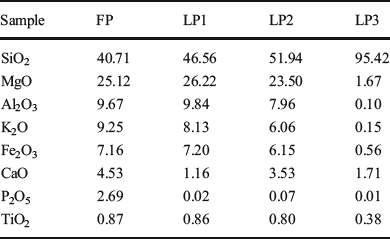
Chemical compositions (wt.%) of the feed (FP) and leached phlogopite (LP) samples obtained by XRF

k is the reaction rate constant and t is the reaction time. Khawam and Flanagan (Reference Khawam and Flanagan2006) also derived models for desolvation reactions and culminated in the same equations as Levenspiel (Reference Levenspiel1999).
The temperature dependence of the rate constant is usually represented by the Arrhenius equation (Arrhenius, Reference Arrhenius1889)

where k0 is the pre-exponential (frequency) factor, E a is the activation energy (J mol–1), R is the universal gas constant (8.314 J mol–1 K–1), and T is the absolute temperature of the reaction (K).
Several studies (Mortland, Reference Mortland1958; Reed & Scott, Reference Reed and Scott1962; Chute & Quirk, Reference Chute and Quirk1967; von Reichenbach, Reference von Reichenbach1969; Leonard & Weed, Reference Leonard and Weed1970; Mamy, Reference Mamy1970; Giletti & Anderson, Reference Giletti and Anderson1975; Lin & Clemency, Reference Lin and Clemency1981; Kuwahara & Aoki, Reference Kuwahara and Aoki1995; Kalinowski & Schweda, Reference Kalinowski and Schweda1996; Taylor et al., Reference Taylor, Blum, Lasaga and MacInnis2000) have confirmed that the amounts of potassium extracted from mica materials during leaching and the boundary distance are linearly affected by the square root of the reaction time. This is indicative that the rate of exchange is diffusion-controlled.
According to van Straaten (Reference van Straaten2002), ~1.5 million tons of phlogopite are discarded yearly at the Palabora Igneous Complex (PIC). Phlogopite from this region contains substantial amounts of potassium (~10% K2O) and magnesium (~25% MgO) (Eriksson, Reference Eriksson1982; Schoeman, Reference Schoeman1989) that could be exploited. Converting this abundance of waste material into economically viable products such as joint filling in the construction industry, fillers in paints and plastics, and insulating materials in the electronics industry (Dye & Hartshorn, Reference Dye and Hartshorn1924; Kraevskaya et al., Reference Kraevskaya, Belomestnova and Zhuravlev1985; Heckroodt, Reference Heckroodt1991; Ciullo, Reference Ciullo1996; del Rey-Perez-Caballero & Poncelet, Reference del Rey-Perez-Caballero and Poncelet2000; Verbeek, Reference Verbeek2002) not only reduces the amount of waste accumulated during mining operations but also provides additional significant profit potential.
To maximize the cation exploitation of phlogopite, the acid-leaching process must be thoroughly understood. The primary objectives of the current study were to examine the effects of acid leaching of phlogopite by characterizing the solid undissolved products using various analytical techniques, and to develop a solid-state kinetic model which represents accurately the leaching process. Kalinowski and Schweda (Reference Kalinowski and Schweda1996), Lin and Clemency (Reference Lin and Clemency1981), Taylor et al. (Reference Taylor, Blum, Lasaga and MacInnis2000), and Balland et al. (Reference Balland, Poszwa, Leyval and Mustin2010) studied cation extraction from phlogopite using mild conditions: pH 1–7, time in days or weeks, and low solid:liquid ratios. Their studies showed that potassium is not leached selectively; hence, for maximum potassium recovery, all the leachable cations should be removed, leaving only the insoluble SiO2. No kinetic model for leaching phlogopite with concentrated acids and at high solid:liquid ratios is available in the literature. After the leaching is completed, the leach liquor can be processed further to selectively precipitate the Fe and Al, leaving a pH-neutral liquid, high in nitrogen and potassium concentrations which can be used as a fertilizer.
Experimental
Materials
Phlogopite from Foskor in the PIC, South Africa, was received as 100–200 mm ‘run of mine’ (RoM) rocks. It was subsequently crushed, milled, and sieved to obtain a 250–600 μm fraction. As the rocks were RoM, they contained apatite, diopside, and calcite, which could not be removed. Nitric acid (55%, 11.87 M) obtained from Promark Chemicals, Pretoria, South Africa, was used as the leaching solvent. Sodium hydroxide (98%) from Sigma-Aldrich, Johannesburg, South Africa, was used to produce the base solution for titration, and phenolphthalein from Associated Chemical Enterprises, Johannesburg, South Africa, was used as the titration indicator.
Method
Leaching
Batch leaching experiments were done at 308, 323, and 338 K in a glass beaker. For each temperature, experiments were conducted at different nitric acid concentrations (2, 3, and 4 M); and different reaction times (1800, 3600, 5400, 7200, 14400, and 21600 s). All experiments were done in triplicate. The particle size range (250–600 μm), solid:liquid ratio (1:10 kg L–1), and stirring speed (500 rpm) were kept constant. Leach liquors were separated from the solids by vacuum filtration. The solids were water-washed and dried overnight at 373 K. Feed phlogopite and leached residue samples corresponding to conversions of 14% (LP1), 44% (LP2), and 100% (LP3) were collected and analyzed using XRF, XRD, FTIR, BET, TGA, and SEM. The conversion fractions were calculated using Eq. 1. For model verification, leaching experiments were conducted using random temperatures, initial acid concentrations ([H+]0), and leaching times.
Analytical characterization
A Thermo Fisher ARL Perform'X Sequential XRF instrument, manufactured in Ecublens, Lausanne, Switzerland, with Uniquant software was used to determine the chemical compositions of the solid residues. XRD analysis was performed using a PANalytical X’Pert Pro powder diffractometer, manufactured by Malvern Panalytical in Almelo, Netherlands, in θ–θ configuration with an X’Celerator detector and variable divergence- and fixed receiving slits with Fe-filtered CoKα radiation (λ = 1.789 Å). FTIR absorbance spectra were recorded on a Perkin Elmer Spectrum 100, manufactured by Llantrisant in Wales, United Kingdom using the single reflection ATR diamond crystal. All spectra were obtained between 4000 and 550 cm–1 at a resolution of 4 cm–1 with an average of 32 scans. N2 physisorption analyses were performed using a Micromeritics TriStar II Surface Area and Porosity BET instrument, manufactured in Georgia, USA. TGA was conducted using a Hitachi STA7300 thermogravimetric analyzer, manufactured by Mettler-Toledo Sales International GmbH in Greifensee, Switzerland, under a nitrogen atmosphere for temperatures up to 1000°C at a heating rate of 10°C min–1. Surface morphologies were imaged with a Zeiss Gemini Ultra 540 Plus FEG-SEM, manufactured in Oberkochen, Germany. The initial acid concentrations were determined by titration using sodium hydroxide as the base solution and phenolphthalein as the indicator.
Results and Discussion
Characterization of the Feed Phlogopite and Acid-leached Solid Residue
Chemical composition analysis (XRF).
Table 1 shows the chemical compositions of the feed and leached phlogopite samples obtained by XRF analysis. The results for the raw phlogopite sample correspond with literature values (Baksheev et al., Reference Baksheev, Damian, Damian, Prokof'ev, Bryzgalov and Marushchenko2016; Deysel et al., Reference Deysel, Berluti, du Plessis and Focke2020; Kalinowski & Schweda, Reference Kalinowski and Schweda1996; Khalighi & Minkkinen, Reference Khalighi and Minkkinen1989; Mamy, Reference Mamy1970; Porteus, Reference Porteus2018; Reguir et al., Reference Reguir, Chakhmouradian, Halden, Malkovets and Yang2009; Schoeman, Reference Schoeman1989; Üçgül & Gi̇rgi̇n, Reference Üçgül and Girgin2002).
The concentrations of Mg, Al, K, Fe(III), Ca, and Ti(IV) present in the leached samples decreased, as expected, with leaching. Consequently, the SiO2 concentration increased dramatically as a result of the cationic extractions. Sample LP3 contained <5% of the unreacted elements.
Crystalline structure analysis (XRD)
The XRD patterns for the feed phlogopite and the leached solids are presented in Fig. 1, with an enhanced view of the 20–40°2θ region for clarity of less intense peaks.
Magnified view of XRD patterns for each sample with the vertical (counts) axis truncated to improve the clarity of less intense peaks

Phlogopite was present in all the samples, with its primary peak at ~10.14°2θ. Secondary phlogopite peaks occurred at 20.35, 30.73, 41.37, and 52.40°2θ. The intensity counts of sample FP were very high, with strong, sharp diffraction peaks, indicating preferred orientation and high crystallinity of the raw phlogopite structure. Hydrobiotite, quartz (SiO2), diopside, and apatite were also detected in the feed phlogopite, and leached samples with primary peaks at ~ 8.5, 30, 35, and 37°2θ, respectively. Calcite was present with a primary peak also at ~35°2θ. The XRD patterns of the partially leached samples were similar to that of the feed phlogopite sample; however, the peaks were considerably less intense due to structural degradation of the feed phlogopite by the extraction of the octahedral cations. The peaks shifted slightly to higher angles with the primary peaks of LP1 and LP2 at 10.16°2θ. The reduction in peak intensity implies that a time-dependent loss in crystallinity occurs in the phlogopite upon acid leaching.
The XRD pattern for LP3 showed a drastic decrease in the phlogopite peak intensities upon leaching, with the formation of a halo between 22 and 29°2θ, corresponding to an amorphous product. Peaks observed at ~35 and 41.5°2θ indicated the presence of diopside in the material. The d spacing decreased from 10.12 Å for the feed phlogopite to 9.83 Å for the completely leached solid. This means that the (001) lattice plane's interplanar space decreased by 2.9% (or 0.29 Å) with complete conversion. This could be attributed to lattice defects caused by the loss of ions with considerable volume and charge, causing electrostatic interactions between layers within the lattice and the interlayer (Niu et al., Reference Niu, Kinnunen, Sreenivasan, Adesanya and Illikainen2020).
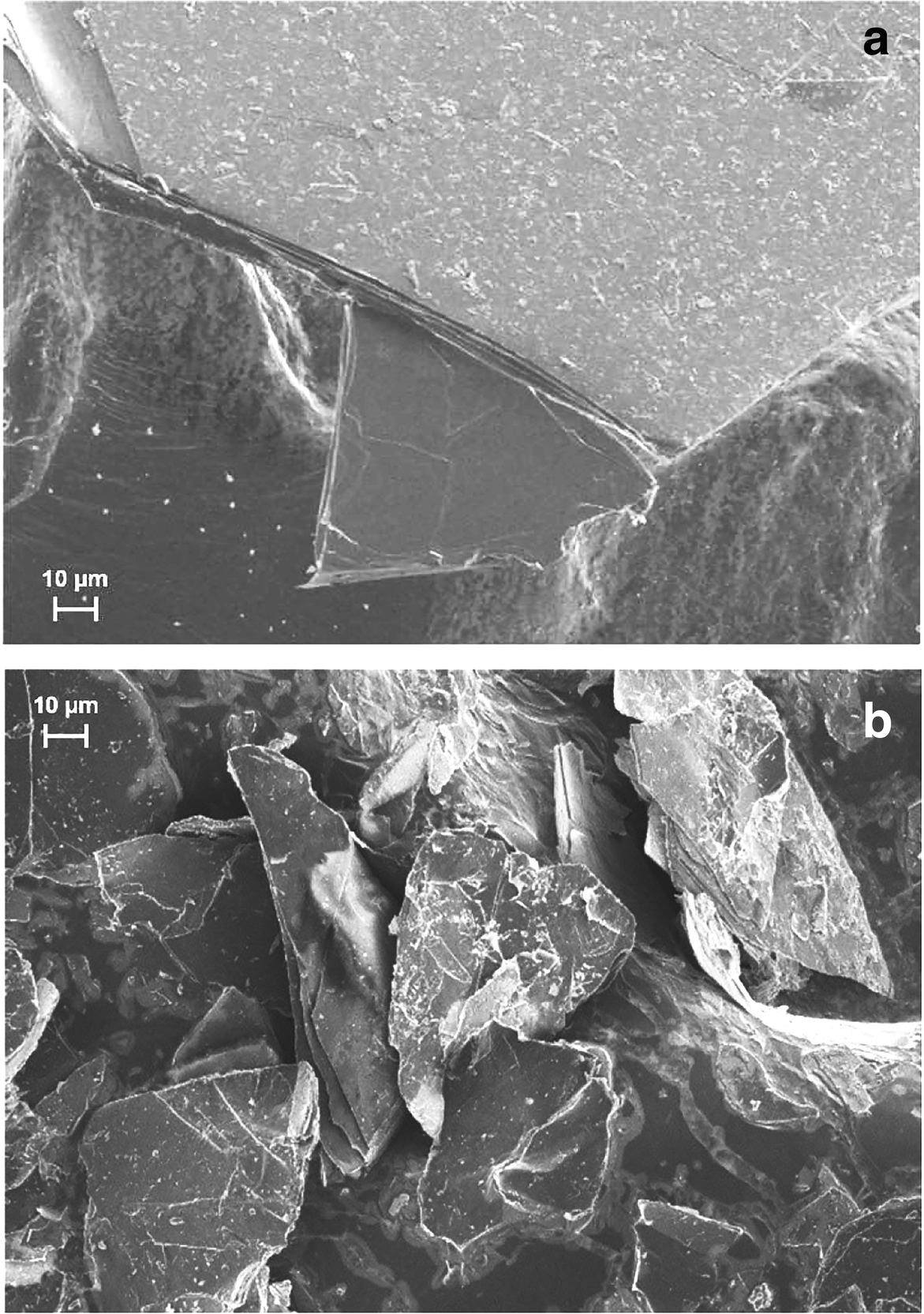
Because the feed phlogopite is highly crystalline, the absence of defects in the lattice means that the motion of H+ molecules permeating into the lattice is restricted (Schmalzried, Reference Schmalzried1995; Ropp, Reference Ropp2003). This strongly suggests that the leaching is controlled by internal diffusion because the mobility of constituents into the system is the controlling factor. This also confirms the results reported by Kaviratna and Pinnavaia (Reference Kaviratna and Pinnavaia1994) that the depletion of cations from the octahedral sheets and interlayers occurs by proton attack at layer edge sites. The cations cannot be reached through the highly ordered, unbroken silicon-oxygen layers which surround the basic components. Okada et al. (Reference Okada, Arimitsu, Kameshima, Nakajima and MacKenzie2006) reported that rapid leaching is associated with high SBET and low crystallinity and that slow leaching is due to a smaller amount of Mg (Fe) in the octahedral sheets and a lower degree of Al substitution in the SiO4 tetrahedral sheets; therefore, despite the high crystallinity and small surface area of the feed phlogopite, it still undergoes rapid leaching due to its high degree of Mg and Fe(III) in the octahedral sheets and Al substitution in the tetrahedral sheets (refer to Table 1 for Mg, Al, and Fe contents). Microfractures on the surfaces of particles provide additional access pathways for proton attack, thereby increasing leaching rates. SEM analysis was used to determine whether such fractures were present (Fig. 4).
Chemical nature analysis (ATR-FTIR)
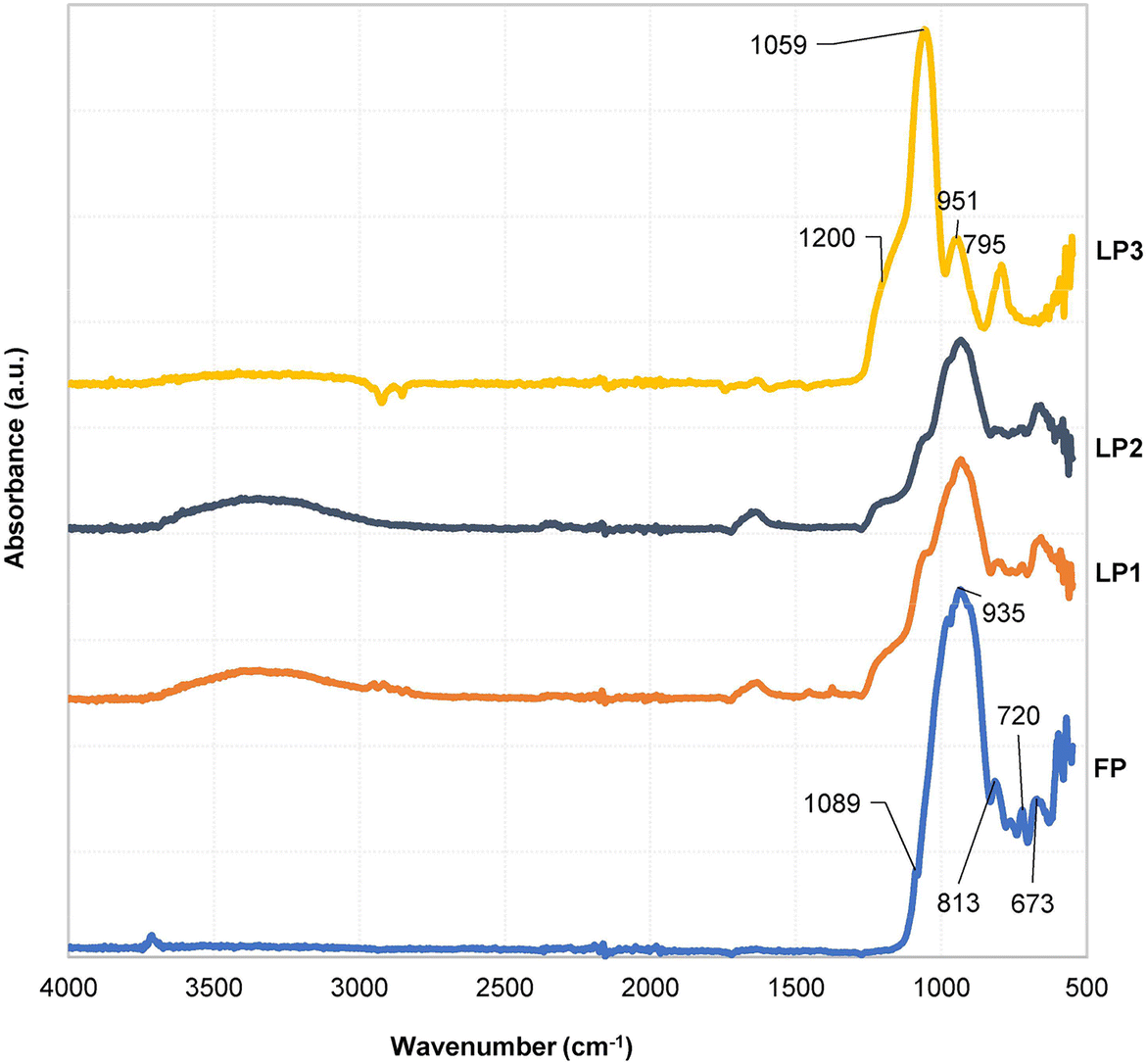
The chemical nature of the various samples was confirmed by studying their FTIR fingerprints (Fig. 2). The feed phlogopite sample exhibited characteristic vibration bands around 935, 813, 720, 673, and 571 cm–1 which correspond with literature values (Jenkins, Reference Jenkins1989; Beran, Reference Beran2002). The absorbance value depends on the number of molecules only if they continue to be IR active and if the magnitude of vectoral components normal to the beam remains unchanged; therefore, the reduced intensities of absorbance bands around 935, 813, and 720 cm–1 as leaching increases could be due to the structural degradation of the phlogopite associated with the removal of the Mg, Fe(III), and Al cations (Farmer, Reference Farmer1974; Temuujin et al., Reference Temuujin, Jadambaa, Burmaa, Erdenechimeg, Amarsanaa and MacKenzie2004).
FTIR spectra of raw phlogopite and leached products

The feed phlogopite and the partially leached solids exhibited strong, well-defined vibration bands around 935 cm–1. This band can be attributed to Si–OH vibrations (Mendelovici et al., Reference Mendelovici, Frost and Kloprogge2001), formed from the hydroxylation of the acid-leached apical oxygen atoms bonded initially to the brucite-like sheets (Wypych et al., Reference Wypych, Adad, Mattoso, Marangon and Schreiner2005). These silanol groups are expected to be hydrogen-bonded to water molecules based on hydration (Wypych et al., Reference Wypych, Adad, Mattoso, Marangon and Schreiner2005). The medium vibration bands observed at 720 and 813 cm–1 are due to the presence of Al in the tetrahedral sheets of the phlogopite structure. This initiates Al/Si disorder due to Al–O–Si and Al–O–Al linkages, respectively (Beran, Reference Beran2002). The reduced absorbance intensities of these bands in LP1 and LP2 and the absence of this band in sample LP3 verifies the removal of Al by leaching.
The absorbance spectra observed for sample LP3 displaying bands at 1059, 951, and 795 cm–1 resembles that of amorphous silica gel (Costa et al., Reference Costa, Gallasa, Benvenutti and da Jornada1997; Ocaña et al., Reference Ocaña, Fornés and Serna1989). With complete leaching (LP3), an amorphous silica product was obtained. This is indicated by the dominant vibration band at 1059 cm–1 with a shoulder around 1200 cm–1. These bands are associated with stretching and bending vibrations of SiO4 tetrahedra (Awazu, Reference Awazu1999; Farmer, Reference Farmer1974). The presence of the band at 795 cm–1 also confirmed the formation of a three-dimensional amorphous silica phase (Costa et al., Reference Costa, Gallasa, Benvenutti and da Jornada1997; Deysel et al., Reference Deysel, Berluti, du Plessis and Focke2020; Madejová & Komadel, Reference Madejová and Komadel2001; Okada et al., Reference Okada, Nakazawa, Kameshima, Yasumori, Temuujin, MacKenzie and Smith2002; Temuujin et al., Reference Temuujin, Okada and MacKenzie2003) which substantiates results obtained from the XRD analysis.
Si–O bending vibrations in the mid-IR high-energy regions are often coupled with stretching and bending vibrations of the cation-oxygen octahedra occurring in corresponding spectral areas. Vibration bands of octahedral Mg are expected in the far-IR spectral range; however, the 673 cm–1 band may be attributed to the combined effects of Si–O stretching vibration and Mg–O vibration (Si–O–Mg) (Beran, Reference Beran2002). This band's reducing intensities in the leached samples is probably due to the decreased abundance of Mg in the octahedral sheets. Kloprogge and Frost (Reference Kloprogge and Frost1999) and Madejová and Komadel (Reference Madejová and Komadel2001) assigned bands around 620 and 660 cm–1 to OH–Mg–OH deformations.
Surface area and porosity analysis (BET)
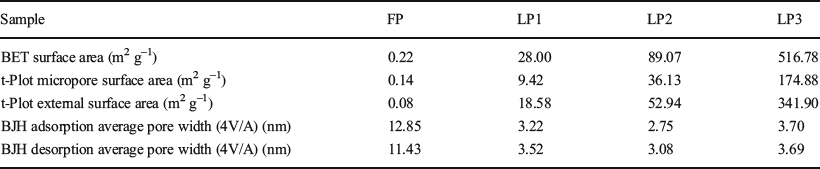
A summary of the pore size and specific surface area for the various samples (Table 2) revealed that the pore widths of the phlogopite particles decreased with an increase in conversion, while surface areas increased. As the phlogopite was leached, the K, Mg, Fe(III), and Al cations were removed from the layered structure leaving vacancies, which may lead to a surface charge and/or a partial dissolution of the layers, which in turn could cause a rearrangement of the layers in the particles, potentially creating “pores” in the structure. Pore sizes decrease dramatically from feed (unleached) phlogopite to completely leached phlogopite by ~29% with the specific surface areas increasing from a mere 0.22 m2 g–1 for the raw phlogopite to 28, 89, and 517 m2 g–1 for LP1, LP2, and LP3, respectively. The surface area increased more than 2000 times the original value throughout the leaching process. The specific surface area of leached sample (LP3) was in accord with previously recorded leached phlogopite values (Härkönen & Keiski, Reference Härkönen and Keiski1984; Okada et al., Reference Okada, Nakazawa, Kameshima, Yasumori, Temuujin, MacKenzie and Smith2002, Reference Okada, Arimitsu, Kameshima, Nakajima and MacKenzie2005), and some sources considered the raw phlogopite to be non-porous (Härkönen & Keiski, Reference Härkönen and Keiski1984).
Pore size and surface-area summary from BET analysis

Härkönen and Keiski (Reference Härkönen and Keiski1984) reported that micropores formed when interlayer K cations were extracted. Mesopores started to develop when cations from the octahedral sheets began to dissolve, and fine pores formed when silicon tails around the edges of phlogopite plates became entangled and disordered. According to Xue et al. (Reference Xue, Zhang, Tang, Yang, Chen, Man and Dang2016), parallel-plate pores and tapered plate pores are associated with interlayer intraparticle pores or microfractures between the layers of clay minerals.
The average pore widths (Table 2) indicated that the samples were mostly mesoporous (2–50 nm; Rouquerol et al., Reference Rouquerol, Avnir, Fairbridge, Everett, Haynes, Pernicone, Ramsay, Sing and Unger1994). According to Milliken et al. (Reference Milliken, Rudnicki, Awwiller and Zhang2013), brittle minerals and clay minerals generally form micropores and mesopores. This was further confirmed by Okada et al. (Reference Okada, Nakazawa, Kameshima, Yasumori, Temuujin, MacKenzie and Smith2002), who also leached phlogopite with nitric acid. Okada et al. (Reference Okada, Arimitsu, Kameshima, Nakajima and MacKenzie2005) suggested that increasing the number of layered structure units and suppressing the formation of framework structure units to produce products with higher surface areas.
The external surface areas (non-micropore areas) of the leached products (LP1–LP3) accounted for the majority of the BET surface area. This means that larger pores were more plentiful than micropores. Micropores contributed 63, 44, 40, and 34% of the total BET surface area of samples FP, LP1, LP2, and LP3, respectively. As leaching time increased, more pores were formed (mesopores and micropores). Some micropores may be unstable and become mesopores as leaching time increases.
Thermal Analysis (TGA-DTG)
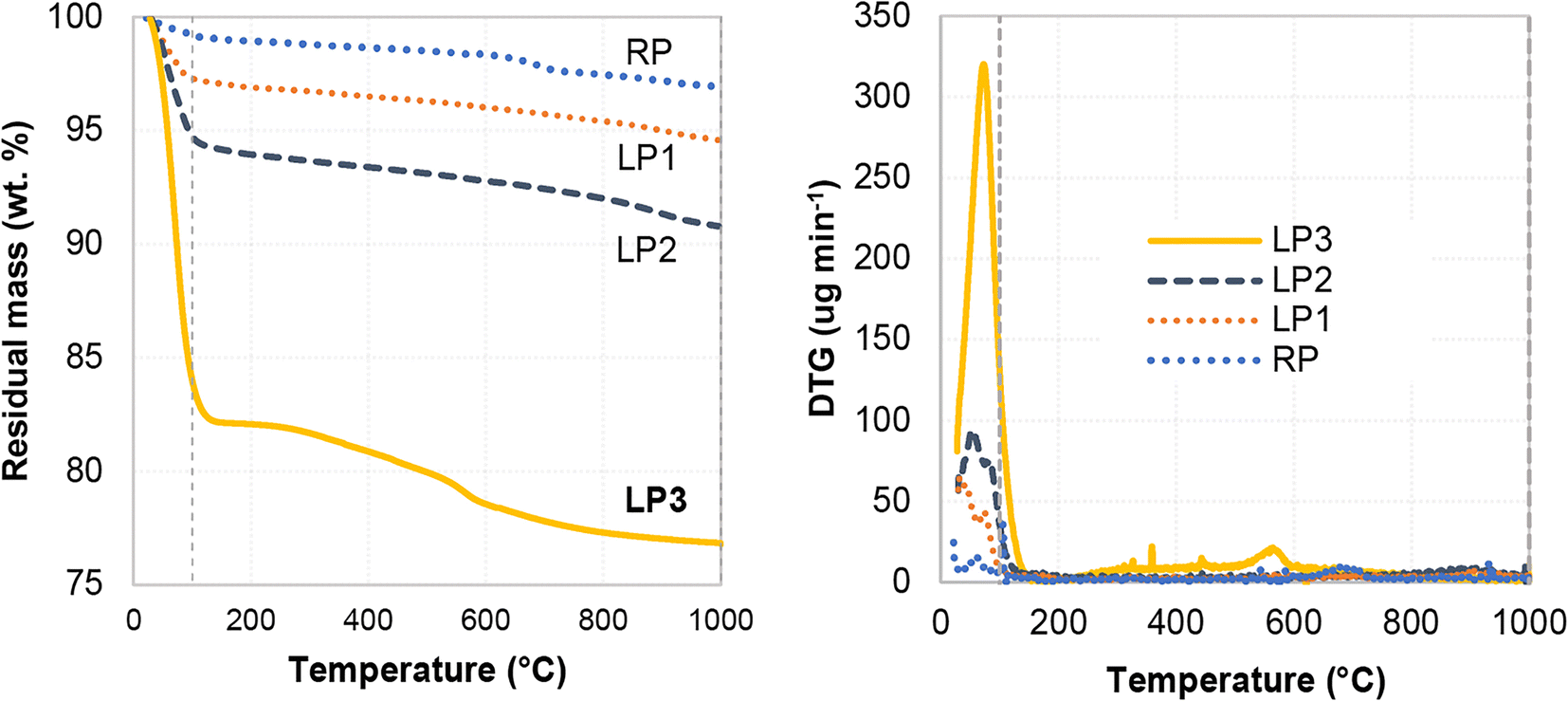
The TGA diagrams (Fig. 3a) showed that mass losses occurred in two main regions for the FP sample. The mass loss at temperatures <200°C corresponded with the desorption of physisorbed water molecules, and the mass loss at temperatures >600°C was attributed to dehydroxylation reactions. The leached samples also experienced dehydration at temperatures <200°C, with gradual weight losses above 300°C. This may represent the condensation of silanol Si–OH groups and the subsequent release of strongly held interlayer water. The DTG curves (Fig. 3b) emphasized the zones in which the reaction steps occurred over the entire temperature range. The peak of the derivative curve indicates the point of the most significant rate of change on the weight loss curve whereby the maximum rate of reaction (mass loss) occurred.
a TGA and b DTG curves of all samples

The TGA results confirmed the observations made by the BET analysis. Because LP3 had a larger surface area than the other samples, a larger quantity of water was physically adsorbed onto its surface; hence, 17.5% of the mass was lost compared to 0.9–6% for the other samples within the first 10 min of heating (<120°C). Sample LP3 mass losses were more significant than those of FP and the partially leached samples because LP3 lacked the K, Mg, Fe(III), Al, Ti(IV), and Ca contents (Table 1) which were present in increasing quantities in samples LP2, LP1, and FP, respectively. These cations were retained in the sample structures and were not released within this temperature range, resulting in less significant weight losses in the raw and partially leached samples.
Morphology and composition distribution analysis (FEG-SEM)
FEG-SEM was used to gain information about the physical nature of the solid surfaces (Fig. 4) and showed the surface morphologies of the feed phlogopite and leached solid sample (LP3). The SEM images indicated that the original layered structure and platy morphology of the phlogopite were partially retained despite prolonged leaching. The feed phlogopite sample (Fig. 4a) exhibited faint cracks on its surface, while the cracks appeared more pronounced in the leached sample LP3 (Fig. 4b). Sample LP3 appeared to have deteriorated edges, supporting the notion of proton access by the edge-attack mechanism (Kaviratna & Pinnavaia, Reference Kaviratna and Pinnavaia1994).
SEM images of a the feed phlogopite and b leached sample, LP3

Leaching
The structural formula (half unit-cell) of the raw phlogopite was calculated using the method prescribed by Foster (Reference Foster1960) for trioctahedral micas and was based on the chemical composition of the raw phlogopite sample (Table 1). The leaching reaction was expected to proceed according to the stoichiometric chemical equation (Eq. 4).

The XRF data were used to calculate the average molar mass of the raw phlogopite sample (430 g mol–1). According to Eq. 4, and based on the XRF data (Table 1), 2.45 M HNO3 (200 mL) is theoretically required to react with 20 g of the feed phlogopite.
Plots of the gravimetric conversion over time showed that conversion increased with initial acid concentration (Fig. 5a) and with temperature (Fig. 5b). An increase in acid concentration for the same volume meant that more H+ ions were available to react in that volume, thereby increasing the number of interactions between the reacting species, which increased the reaction rate (Kotz et al., Reference Kotz, Treichel and Townsend2012). Conversion also increased with an increase in temperature. Higher temperatures increase the kinetic energies (and hence, the movement) of the reacting species, thereby reducing the viscosity and density of the solvent, and increasing the diffusion (Liong et al., Reference Liong, Wells and Foster1991; Perry & Green, Reference Perry and Green1999). Once these “energized” molecules had diffused into the solid particles, the reaction rate also increased as the fraction of molecules with sufficient energy to collide effectively and to overcome the activation energy of the reaction increased (Kotz et al., Reference Kotz, Treichel and Townsend2012). The temperature effect on both the chemical and physical (diffusional) rate constants is represented by Arrhenius-type equations (Levenspiel, Reference Levenspiel1999; Poling et al., Reference Poling, Prausnitz and O'Connell2001; Dybkov, Reference Dybkov2002; Ropp, Reference Ropp2003), where temperature has a significant influence on the reaction and diffusion rates; however, the activation energy of the chemical reaction was generally higher than that of diffusion and the reaction rate is more temperature sensitive than the diffusion rate (Levenspiel, Reference Levenspiel1999; Dybkov, Reference Dybkov2002). According to Levenspiel (Reference Levenspiel1999), temperature-sensitive reactions usually have high activation energies. Table 3
a αG vs time concentration profiles for T = 338 K and b temperature profiles for [H+]0 = 3 M

Conversion models (adapted from Levenspiel, Reference Levenspiel1999)

* terms in parentheses represent the shorthand notation nomenclature used by Khawam and Flanagan (Reference Khawam and Flanagan2006)
Modeling
Selection of model reactions
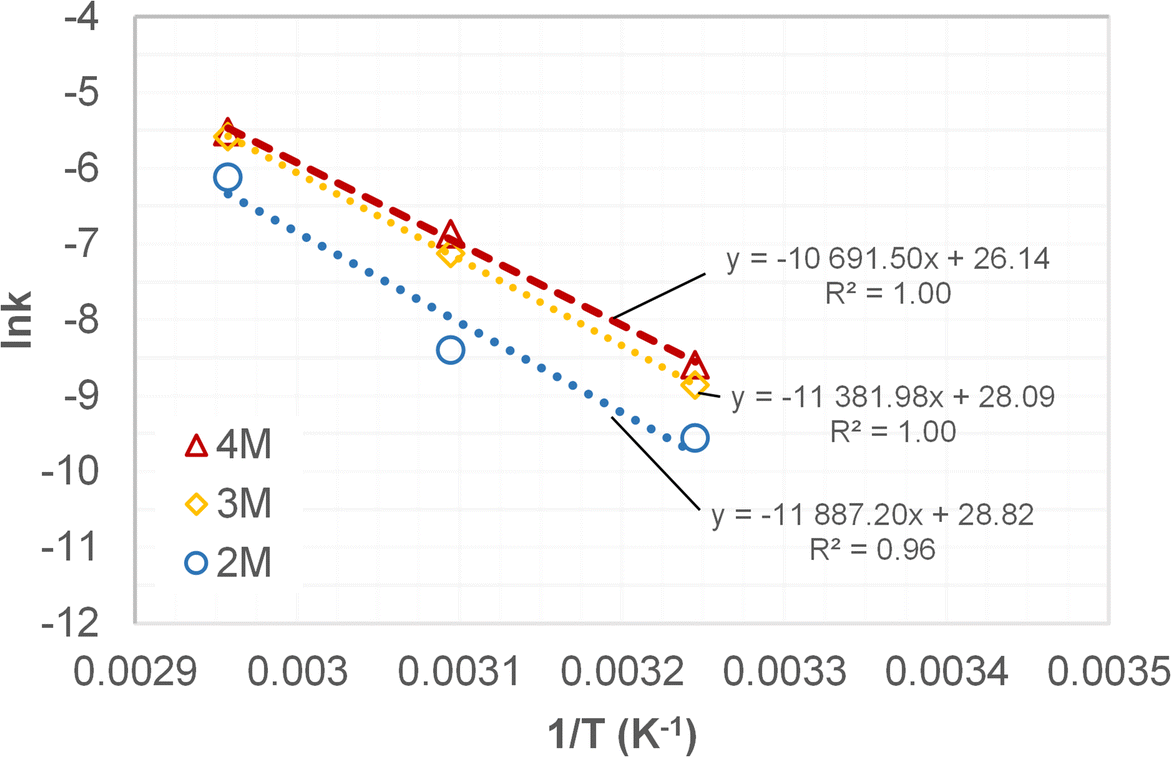
The gravimetric conversion data were fitted to the various reaction models using linear regression in Microsoft Excel®. The regression coefficient (R2) values obtained were compared to determine the best-fitting model (Fig. 6). The reaction control and film diffusion models did not fit the data. The ash diffusion model through a flat plate (D1) gave the best regression coefficient (R2 = 0.99). The reaction rate constants (k) for each experiment were used in Eq. 3 to determine the activation energies (E a) and the pre-exponential constants (k0) for each initial acid concentration. The Arrhenius plots for the D1 model for each acid concentration are reported in Fig. 7.
Regression analysis of g(α) over time for diffusion models D1, D2, and D3

Arrhenius plot for various initial acid concentrations

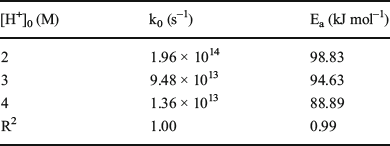
The slopes and intercepts and, therefore, the k0 and E a values vary with initial acid concentration. The activation energies observed (slopes) decreased with an increase in acid concentration. The more H+ ions present in solution, the greater the reaction rate due to the high probability of collisions in the same volume. Because activation energy is inversely related to the rate constant (Eq. 3), this explains the decrease in activation energy. Activation energy dependence on pH was discussed by Kalinowski and Schweda (Reference Kalinowski and Schweda1996) and Dockrey and Mattson (Reference Dockrey, Mattson and Paul2016). Fogler (Reference Fogler2006) reported that reactions with high activation energies (>200 kJ mol–1) are probably rate controlled; therefore, activation energies within that range (Table 4) are probably associated with diffusion-controlled reactions. Note also that both kinetic parameters (k0 and E a) exhibited linearity with respect to [H+]0 (Table 4).
k0 and E a values from the Arrhenius plot as functions of [H+]0

Reaction Model Testing
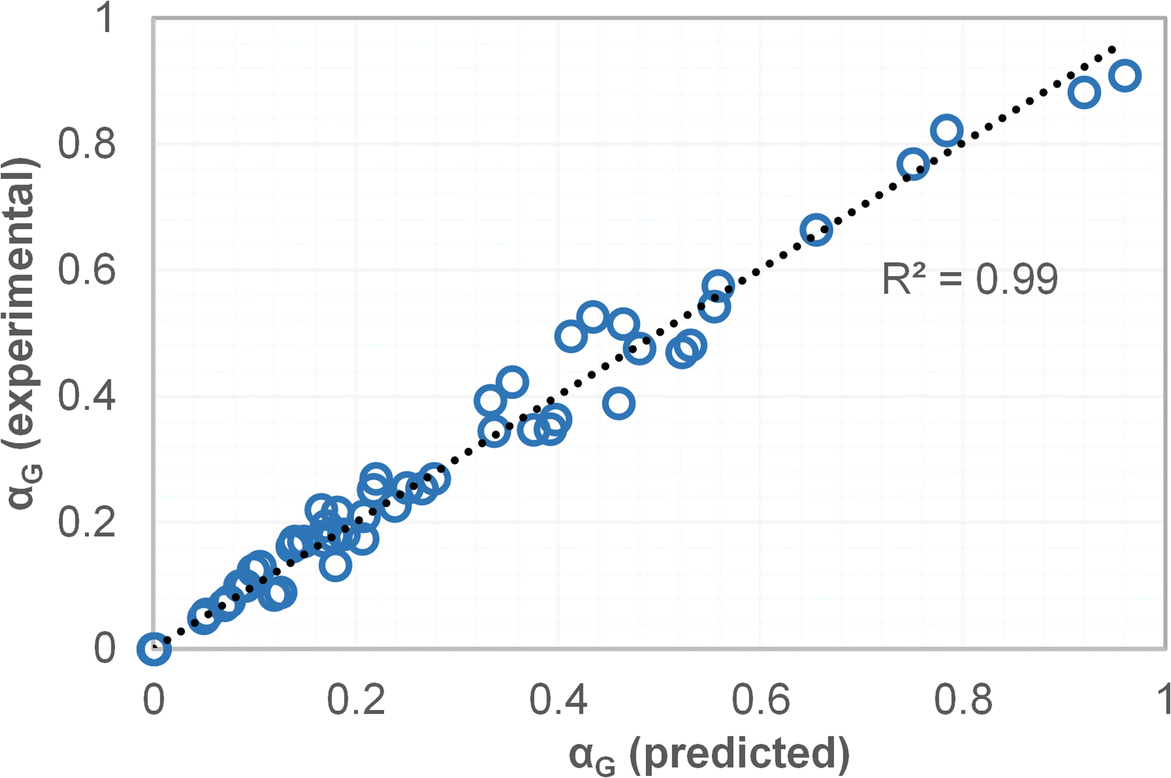
Batch runs were done in random combinations of reaction time (≤360 min) temperature (308, 323, and 338 K), and acid concentration (2, 2.4, 2.6, 3, and 4 M). The predicted conversion (Eq. 2, Eq. 3, and the k0 and E a relationships; Table 4) were compared to the experimental values (Fig. 7). k0 and E a values for the 2.4 and 2.6 M acid concentrations were interpolated linearly from the values in Table 4. These experimental values were not used in the development of the kinetic model. The purpose of these experiments was to test the model using different data points.
The direct proportionality between the predicted conversion from the reaction model and experimental conversion from the testing data (Fig. 7) indicated that model D1 was the most suitable model to be used for making accurate predictions of what occurs experimentally when leaching phlogopite with nitric acid (Fig. 8).
Relationship between αG predicted from the reaction model and αG experimental from the testing data

Although model D1 was found to provide an accurate representation of the leaching process, many models exist to describe solid-state kinetics; therefore, applying other models or even isoconversional (model-free) methods could also be explored. Moreover, a complementary approach involving a combination of isoconversional and model-fitting methods (Khawam & Flanagan, Reference Khawam and Flanagan2005) could be attempted.
Conclusions
All analyses revealed complementary results with respect to the cationic extractions. The samples exhibited decreased cationic content with leaching. The feed phlogopite underwent structural degradation due to the extraction of the Mg, Fe(III), and Al cations, resulting in the formation of an amorphous silica product. Sample LP3 was mostly SiO2, with <5% of the other components. The presence of microfractures on the surface of the particles provided additional access pathways for proton attack, thereby increasing leaching rates despite the high crystallinity and small surface area of the feed phlogopite. The presence of Mg, Fe(III), and Al in relatively large quantities in the feed phlogopite also enhanced leaching rates (Okada et al., Reference Okada, Arimitsu, Kameshima, Nakajima and MacKenzie2006).
The use of the D1 model to represent the leaching of phlogopite under the given conditions was confirmed by the strong regression of g(α) over time and of the Arrhenius plot. Simulation tests also revealed strong linearity between the experimental conversion data and the predicted conversion values obtained from the D1 model; therefore, the selected kinetic triplet (k0, Ea, and model) was able to approximate what occurs experimentally for the overall conversion. Results from this study could prove useful when leaching phlogopite at accelerated leaching conditions as opposed to using kinetics simulated at more natural, neutral conditions (Kalinowski & Schweda, Reference Kalinowski and Schweda1996; Lin & Clemency, Reference Lin and Clemency1981; Taylor et al., Reference Taylor, Blum, Lasaga and MacInnis2000; Balland et al., Reference Balland, Poszwa, Leyval and Mustin2010). These conclusions were based on observations from experimental data and, because internal diffusion limitations were present, the kinetics reported in this study are “apparent or disguised kinetics”; therefore, the established kinetics should be used for reactions operated in the same regime as the “disguised regime” of this study to ensure accurate results.
Funding
This study was privately funded under the supervision and support of Barend J. du Plessis
Data availability
The datasets generated during and/or analyzed during the current study are available from the authors on reasonable request.
Code availability
Python® and Microsoft Excel® were used for calculations in this study. The codes are available from the authors upon reasonable request.
Declarations
Conflicts of interest/Competing interests
The authors declare that they have no conflict of interest.