INTRODUCTION
Sorghum is one of the major staple crops of Burkina Faso. It is generally grown by subsistence farmers in diverse, low-input systems, with production occupying 1.4 million ha or 48% of arable land (Ministère de l'Agriculture de l'Hydraulique et des Ressources Halieutiques/Direction des Statistiques Agricoles (MAHRH/DGPSA), 2006). National and international institutions have been collecting local genetic resources of sorghum (Sorghum bicolor [L.] Moench) since the late 1960s. These resources are preserved in several different gene banks, one of which is located at the Saria research station in Burkina Faso. In 2002, when the current project commenced, the working collection of Institut de l'Environnement et de Recherches Agricoles (INERA) at this station contained around 900 accessions, 150 of which were landraces from Burkina Faso.
Farmers in Burkina Faso grow and exchange an array of local photoperiod-sensitive guinea landraces that are adapted to a wide range of rainfall situations as well as diverse soil and production conditions. Sorghum varieties are expected to measure up to specific regional and cultural production purposes, such as fodder use, processing characteristics, culinary qualities etc. Most studies confirm that the guinea race types of sorghum continue to meet most of the socio-economic requirements of these farming communities while minimising risk and ensuring yield stability (Barro-Kondombo et al. Reference Barro-Kondombo, Sagnard, Chantereau, Deu, vom Brocke, Durand, Gozé and Zongo2010). In fact, there is a wealth of genetic diversity being cultivated by farmers and maintained at research stations. Yet, sorghum breeding programs have long focused on exotic or introduced germplasm such as kafir and caudatum races (often of a tan plant colour), which promise high yield potential but have a weak response, or no response at all, to photoperiodicity. Local landrace resources are underutilised, as illustrated by the fact that only about 23% of crosses carried out in breeding programs in Burkina Faso between 1980 and 1990 made use of a local variety as a parent variety (Trouche et al., Reference Trouche, Chantereau, Zongo, Bacci and Reyniers1998).
Furthermore, whereas geneticists and plant breeders have ready access to these genetic resources, farmers in most cases do not. Given that the farming communities are the ones who have maintained and often improved these traditional landraces – and who depend on them for food provision – it stands to reason that they should benefit most from the ex-situ conservation. Yet, this is not always the case. It is a predicament that has already been identified by Friis-Hansen and Sthapit (Reference Friis-Hansen and Sthapit2000), who make use of case studies to illustrate how new users, such as NGOs and projects active in farming communities, can facilitate the transfer of ex-situ genetic resources to farmers. Participatory plant breeding (PPB) and participatory variety selection (PVS) have been recommended by other authors as efficient means for introducing, evaluating and diffusing sets of diverse genetic resources to farmers (Trouche et al., Reference Trouche, vom Brocke, Aguirre and Chow2009; Weltzien et al., Reference Weltzien, Kanouté, Touré, Rattunde, Diallo, Sissoko, Sangaré and Siart2008).
In view of the shortcomings of the formal breeding approach, the INERA sorghum breeding program at Saria decided in the late 1990s to re-orientate its breeding program towards more efficient utilisation of its local genetic resources. One approach tested was the direct involvement of farmers in the formal breeding programs so that their specific needs might be better addressed (vom Brocke et al., Reference Vom Brocke, Trouche, Weltzien, Barro-Kondombo, Gozé and Chantereau2010). The idea was to combine sorghum improvement with conservation of sorghum biodiversity. Implemented in 2002, this approach is coherent with several later research efforts that combine strategies for sustained development and management of crop genetic diversity (e.g. Smale, Reference Smale2006). The twofold objective of the project was pursued collaboratively by INERA and Centre de Coopération Internationale en Recherche Agronomique pour le Développement (CIRAD) with the support of local farmer organisations and International Crops Research Institute for the Semi-Arid Tropics (ICRISAT).
The Boucle du Mouhoun region in the northwest of Burkina Faso (henceforth referred to as the Mouhoun region), which lies in the north Sudanian climatic zone (700–900-mm average annual), is often referred to as the breadbasket of the country. It is a region rich in sorghum landrace diversity. Indeed, it is not unusual to find six to 10 different sorghum cultivars in one village (Barro-Kondombo et al., Reference Barro-Kondombo, Sagnard, Chantereau, Deu, vom Brocke, Durand, Gozé and Zongo2010). The region's high agricultural potential, however, has become a direct threat to its sorghum diversity. Changes in cropping systems towards more intensive cultivation of cotton and maize are pushing sorghum crops onto ever more marginal soils, thus reducing the number of utilised cultivars (Barro-Kondombo et al., Reference Barro-Kondombo, Sagnard, Chantereau, Deu, vom Brocke, Durand, Gozé and Zongo2010). This situation has been exacerbated by changes in rainfall variability over the past 50 years (Nicholson, Reference Nicholson2005). A survey carried out in 2003 in 10 villages (Barro-Kondombo et al., Reference Barro-Kondombo, Sagnard, Chantereau, Deu, vom Brocke, Durand, Gozé and Zongo2010) shows that farmers had discarded anywhere from one to four varieties on account of late flowering, which the farmers linked to shortened rainy seasons, and/or on account of the variety's susceptibility to parasitic weed striga (striga hermonthica), which is associated with depletion of soil fertility (INERA/CIRAD, 2013). Results from the survey indicate that a typical village of the Mouhoun region is cultivating on average seven different sorghum varieties. Two out of these seven cultivars are at risk of being abandoned in the near future.
The objective of this paper is to illustrate how a simple approach can successfully identify varieties that respond to changing agricultural and climatic contexts: farmers are given access to ex-situ varietal diversity, including earlier collected landraces from the same or other regions, which they test on their farms through concerted participatory varietal selection. Further, the study shows how breeders and farmers can effectively work together to incorporate farmers’ variety choices into the seed supply chain so as to bring about a wide and sustainable dissemination of suitable varieties.
MATERIAL AND METHODS
Study site and partnerships
In the Mouhoun region in the northwest of Burkina Faso, the main experimental sites were established in Sanaba, located in the Banwa province, and the two villages of Lekuy and Barakuy, both in the Kossi province. Participating farmers in this study were members of the farmer organisation, Union de Groupement pour la Commercialisation des Produits Agricoles (UGCPA), which is involved in the production and commercialisation of cereals. To foster close collaboration with the farmers of UGCPA, the partnership aimed to assure that (1) breeders became acquainted with the local context and needs of the region; (2) experimentation would take place under local environmental and production constraints; (3) rapid dissemination of preferred varieties in the target region would be facilitated and (4) a large number of male and female farmers would be involved in the evaluation of genetic materials.
Choice and provenance of germplasm for field trials
It was our aim to cover a wide range of flowering response from the white grained sorghums and to take into consideration a wide range of plant architecture, panicle shape and grain quality. In this regard, we decided to make both landraces and improved sorghum materials available in the national sorghum breeding program. Altogether 34 varieties were chosen by breeders based on their knowledge of the agronomic and cycle characteristics of these varieties, and with the prerequisite that the growing cycle should correspond to the climatic zone of the study area. In choosing the improved varieties for this experiment, breeders took into account farmer appreciations learned from previous on-farm experiments carried out in central Burkina Faso (Trouche et al., Reference Trouche, Da, Palé, Sorgho, Ouédraogo, Den Gosso, Hocdé, Lançon and Trouche2002). Local controls were chosen by participating farmers in the target villages.
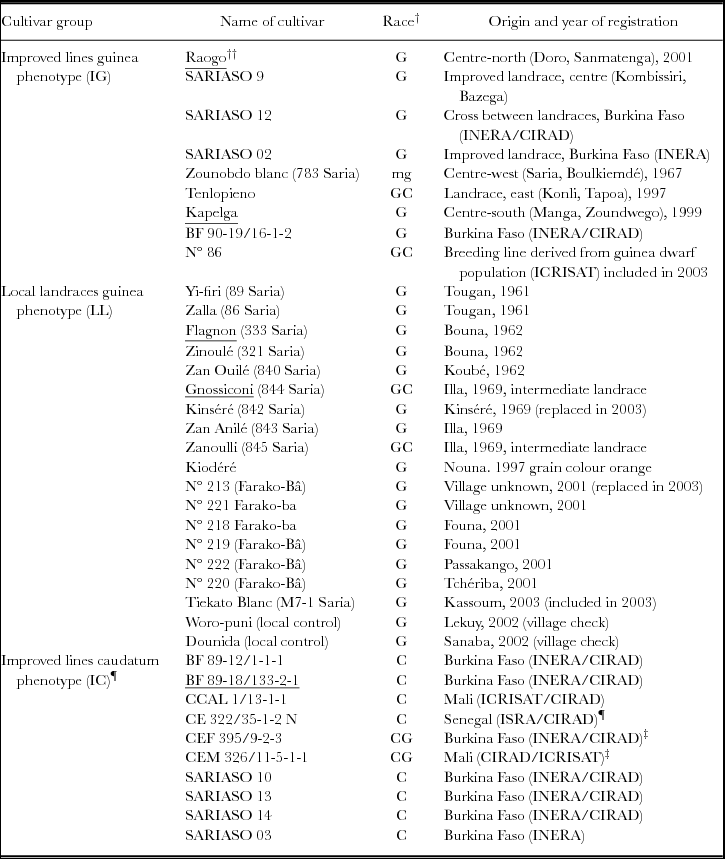
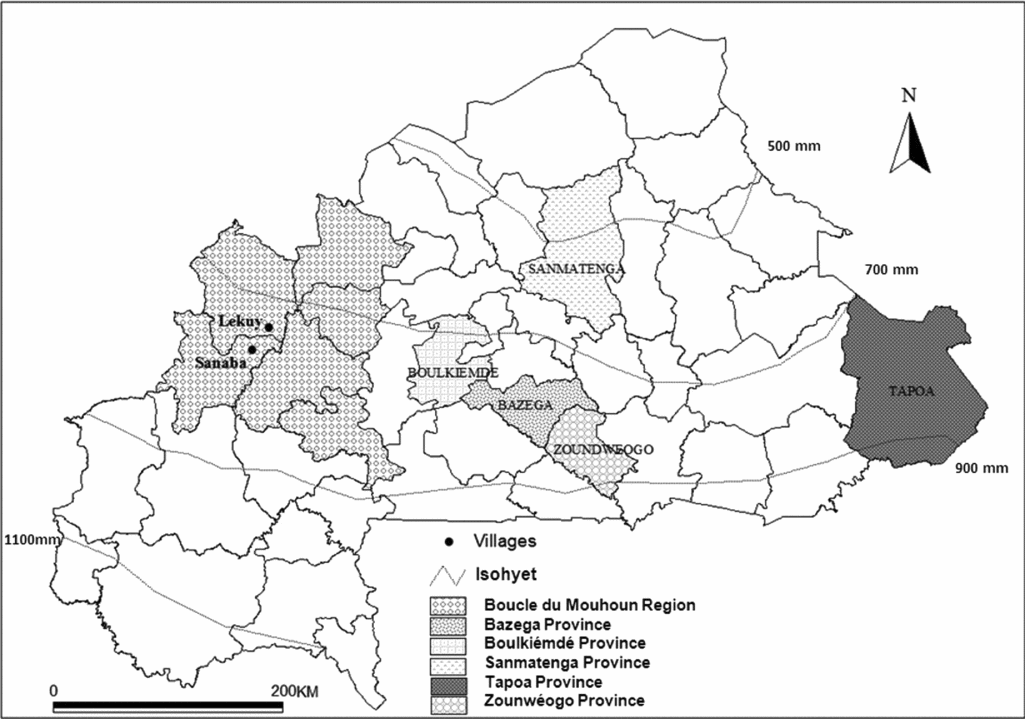
Most landraces were obtained from the sorghum gene banks maintained at INERA Saria in the centre-west and at the Farako-ba research stations in the west of Burkina Faso. Some of the landraces were native to the Mouhoun region; others were from different ecological regions of the centre-north of Burkina Faso and its central regions (Table 1, Figure 1). All landraces have guinea race phenotypes. The improved materials included recent breeding lines and varieties developed by INERA's conventional sorghum breeding program, either with caudatum race phenotypes or guinea phenotypes. As the phenotype (guinea versus caudatum) presents a strong apparent difference for farmers, the genetic material was classified into the following three groups (Table 1): (1) Improved lines with caudatum phenotype (IC), (2) improved lines with guinea phenotypes (IG), which includes the guinea landraces introduced from other regions of Burkina Faso and improved guinea breeding lines and (3) local guinea landraces originating from the Mouhoun region (LL). The LL group consisted of landraces collected recently, between 1997 and 2002, and those having been in ex-situ storage for more than three decades (collected between 1961 and 1967). Farmers indicated that two landraces (Gnossiconi and Flagnon) that were introduced into the gene bank in the 1960s were once cultivated in the region before being abandoned around a generation ago. Two elderly farmers were individually interviewed in the villages of origin to ascertain the availability of these two landraces today.
Cultivar groups (IG = improved lines with guinea phenotype, LL = local landraces, IC = improved line with caudatum phenotype) tested in on-farm trials in Lekuy and Sanaba village in the Mouhoun region during 2002 and 2003. Name of cultivar, botanical race, place of origin and year of introduction into the Saria collection.

†G = guinéa, C = caudatum, CG = Caudatum-Guinea intermediate with caudatum plant type, GC = Guinea-Caudatum intermediate with guinea plant type, mg = Guinea of the margaritiferum group.
¶Between 1/2 and 1/8 of the genome of these lines is based on a local caudatum source from Burkina Faso.
‡Modern varieties derived from crosses involving C breeding lines and G landraces from Senegal (CEF 395/9-2-3) or Uganda (CEM 326/11-5-1-1).
††Underlined varieties are also entries of the 2004 agronomic trial.
Map of Burkina Faso showing isohyets (mm) for agro-ecological regions and representing the main intervention sites (villages Sanaba and Lekuy) in the Mouhoun region and provinces of origin of introduced landraces.
Sequence of on-farm activities
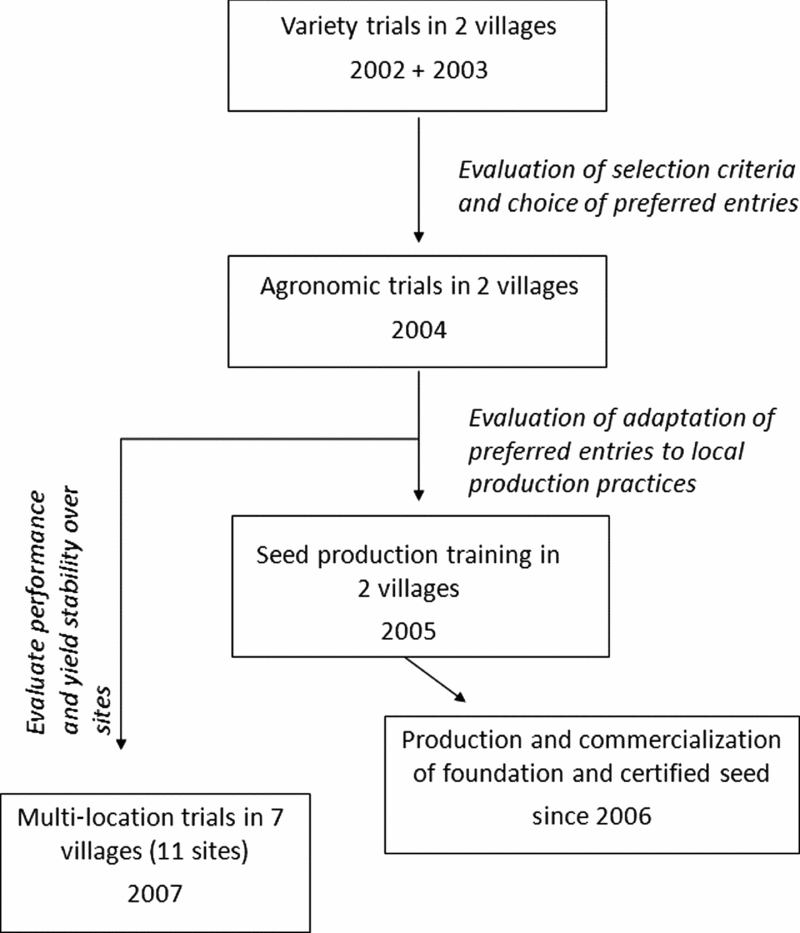
In total, three on-farm experiments were conducted through this study from 2002 to 2007. Finding that breeders were solely responsible for the decision of the initial panel of germplasm as well as for the field protocol and nature of agronomic observations, experiments for the most part were led by researchers. The trials themselves, however, were managed by field agents from the farmer organisation together with the farmer who contributed the land for the particular trial. Farmers were consulted by means of participatory variety evaluations, which helped guide researchers’ choices of germplasm for subsequent trials. These experiments were complemented by seed production activities from 2005 onwards. The sequence of these actions can be seen in Figure 2.
Series of on-farm participatory field trials and seed production activities in the Mouhoun region between 2002 and 2010.
Initial variety trial: This comprised four individual trials over two years (2002/2003) in two villages (Lekuy and Sanaba). The experimental design was a 6 × 6 lattice with two replications (one replication per farmer). Each entry was sown in two 8-m-long rows with 0.80-m spacing between rows and 0.30-m spacing between planting holes (hills). With the support of the farmer organisation's field agent, the replications were managed by four farmers according to their customary cropping practices, which can generally be summed up as follow: ploughing the field with animal traction after 10–15-mm rainfall at the onset of the monsoon season; sowing after the first good rainfall; and then thinning of plants to three per planting hole, along with two rounds of manual weeding 45 days after sowing. It should be mentioned that farmers wished to use fertiliser in accordance with national recommendations for sorghum cultivation in the target zone, which is 100 kg ha−1 of NPKSB (14–23–14–6–1) and 50 kg ha−1 of urea at the stem elongation stage. In 2003, two of the 36 entries were replaced, as their overly late maturity was deemed by farmers as unsuitable for local conditions. Sowing took place between June 28 and July 7 for the stated years and sites, which, according to farmers, were relatively late sowing dates compared with the May–June sowings often practised in the region.
To record farmers’ assessments of the tested varieties, we used a preference-voting tool at the crop maturity stage (end of October/beginning of November). This approach was used to facilitate farmers’ selection of useful entries while informing breeders about their preferred traits. The voting was carried out for the Lekuy and Sanaba trials of 2002 and 2003 using in each case the most homogenous replication. Participating from Lekuy village were altogether 29 farmers in 2002 (seven of which were women) and 22 farmers in 2003 (11 of which were women). Participating from Sanaba were 36 farmers (eight of which were women) in 2002 and 21 farmers in 2003 (10 of which were women). The procedure for both years entailed, firstly, familiarising all participants with the objectives of the trials and evaluations as well as the trial design and the voting method; and then asking participants to visit all the plots in the chosen replication prior to selecting their preferred entries by attaching labels (in total each farmer received five selection labels).
During the same visits we elicited details about farmers’ selection criteria and preferred variety types through discussion sessions in small groups, the size of which depended on the availability of technicians and translators. In 2002, for instance, the assessment exercise was carried out in four groups with seven to 13 male farmers per group, plus one female group (seven to eight women). Each group was asked to identify the five most preferred entries and then to cut one plant that best represented all the traits/characteristics preferred by different members of the group. These plants were then used as prompts during subsequent discussions about plant characteristics important to farmers, e.g. traits linked to adaptation and yield, grain processing and food preparation, stems or fodder use, or commercialisation. These exercises were repeated in 2003, with the only difference being that during the individual selection stage each farmer was accompanied by a facilitator who noted down the farmer's reasons for each entry selected.
Agronomic trial: In 2004, farmers in the Mouhoun region asked if they could test in their own fields the most preferred one from the ‘new varieties’ of the 2002/2003 variety trials using different fertility management levels (‘new varieties’ denote cultivars not presently grown in the area). The trial design was chosen together with the farmer organisation for the purpose of comparing variety performance under recommended doses of chemical fertilisers, and under local management practices, e.g. application of compost, intercropping with legumes. Four preferred varieties were chosen, including one caudatum breeding line with high yield performance and another local control variety (Table 1, underlined cultivar names). Due to limitations in seed quantities and testing resources, the experiment comprised only one trial with two replications: one replication conducted in the Lekuy village, and another in the neighbouring village of Barakuy. In both villages there were three farmers to evaluate two of the different varieties (which were randomly allocated to them) under four different fertilisation and management treatments, i.e. (1) sorghum + intensive, recommended chemical fertilisation for sorghum as described above; (2) sorghum + organic fertilisation only (2.5 t ha−1 of farmer compost); (3) sorghum + cowpea traditional intercropping + compost application (cowpea sowed between sorghum rows after emergence) and (4) sorghum with no fertilisation. Plot size was 50 m2 for each treatment, and the row spacing was the same as in the 2002/2003 variety trials. The agronomic trials were visited at maturity by a group of five men and five women from each village, and their assessments for each variety regarding fertilisation treatment were noted down by the UGCPA agent.
Multi-locational yield trials: Eleven multi-locational on-farm trials were conducted in 2007 with the aim of generating more reliable data on yield performance for the preferred varieties with a view to their formal release. The trials covered a range of typical constraints present in the region, from flooding to late sowing and drought spells during vegetative state. These trials were completely randomised blocks with two replications per site/farmer across 11 sites, and included four entries of white and red grained landraces that had been tested in earlier studies. Each farmer was asked to provide his own local cultivar as a control. The entries were sown in five rows of 6 m each with the same spacing and management practices as described for the 2002/2003 variety trials.
Analysis of agronomic data and farmers’ preferences
Data on panicle yield (PaYld, kg ha–1), grain yield (GrYld, kg ha–1), 1000-grain weight (TGW, g), crop duration (HeDat, days to 50% heading) and plant height (PlHgt, cm) were collected for each entry in the 2002/2003 variety trials. However, in 2002 only the first three traits were observed due to time constrains of the field agent. Data were used for identifying promising varieties in terms of productivity as well as gaining an overall impression of the importance of these agronomical traits from the farmer's point of view. Analysis of variance for the individual test environments (villages) was performed according to the underlying lattice design (2002/2003) and a complete randomised block design (2007) using the PLABSTAT program (Utz, Reference Utz2005). In order to reveal effects of the fertility management on the different varieties tested, the 2004 agronomic trial was analysed as a factorial design with variety and fertility levels considered as fixed effects and with the village factor as a replication using the GENSTAT statistical package (release 14.1).
Data of nine entries and 11 sites of the multi-locational trial were analysed using a mixed model with only the error term taken as random. Regression coefficients (where b = 1 describes average adaptation of the variety under the local constrains, b < 1 indicates that the variety tends to show better adaptation to poor environments and b > 1 indicates that the variety gives above-average stability only in good environments) were used to describe the adaptation of each tested variety in the multi-locational trials in 2007 on the basis of grain yield data. Data were analysed according to two stability models from Finlay and Wilkinson (Reference Finlay and Wilkinson1963) and Eberhart and Russel (1966). They were parameterised as linear mixed models with site means as environment index and compared using a maximum likelihood ratio test. From this test the more parsimonious Finlay–Wilkinson model (1963) was not inferior to the Eberhart and Russell model (p = 0.55). In other words, the variance of deviations from regression lines was not statistically different and can be considered to be the same across varieties. Hence, the Finlay–Wilkinson model (1963) was applied to describe the interaction of varieties with environments. These calculations were performed with the SAS software package (version 9.3) using a mixed model with fixed genotypes and random residual interaction effects.
To identify criteria important to farmers for choosing a new sorghum variety, we counted the number of times a specific trait or plant characteristic was included in the farmers’ motives for selecting a variety during the 2003 trials. The sum for each trait was expressed in percentage of the total number of ‘appreciations’ given by farmers in Lekuy and Sanaba respectively. In order to identify farmers’ preferences for specific entries in the 2002 and 2003 trials, voting results were expressed as frequencies, i.e. percentage of votes that a given variety received in relation to total votes distributed in a village in 2002 and 2003. In order to detect effects of villages, years, gender and variety groups, analysis of variance was performed using GENSTAT (release 14.1), using either years or villages as the blocking factor.
Initiating seed production
Of the entries voted for by the farmers during the on-farm activities, only small amounts of seed were available. This was especially the case for the landraces. As UGCPA was keen to make available to their members and to other farmers in the area the seed of these newly identified varieties, breeders began looking at ways to link the farmer organization to the seed supply chain. Taking into account the recently reinforced implementation of the seed law in Burkina Faso, the various project partners decided to focus on seed diffusion via the formal seed system, i.e. decentralized production of certified seed.
In 2005, two seed production training plots (625 m2 each) were initiated in the Sanaba and Lekuy villages for conducting training sessions in seed production techniques in accordance with the national regulations for the production of certified seed. Breeder seed was provided for two preferred varieties (Kapelga and Gnossiconi). Technicians and breeders from INERA, together with agents from the national seed service, supervised the seed production program during both field visits and accompanied the farmers throughout the crucial phases of seed production. The second stage began in 2006 and 2007 when the members of UGCPA started producing and commercialising certified sorghum seed for five varieties selected in the earlier on-farm trials. Due to limited foundation seed available at the research station, only small isolated seed production plots (400–8000 m2) could be established per variety in 2006. In the following years the area sown for one variety was between 0.5 ha and 1.0 ha per farmer. The quantities of certified seed produced were monitored between 2005 and 2010.
RESULTS
Performance of agronomic traits and their importance to farmers
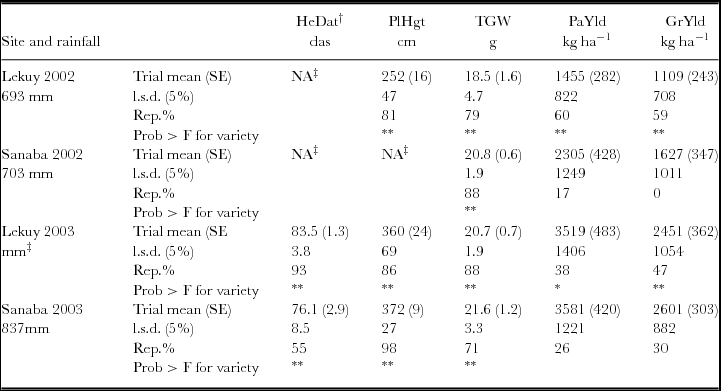
Apart from the Sanaba 2002 trial, all individual trials showed significant entry effects for grain yield (Table 2). The relatively high coefficients of variation (CV) (between 16% and 20% in 2002, and 30% in 2003) for grain yield in these trials could be attributed to differences in soil fertility and/or crop management between farmers. Heading date was significant for entry effect in the 2003 trials and showed favourable CV values and repeatabilities, indicating a good differentiation between entries for this trait (22 days between the earliest and the latest entry reaching 50% heading). Similarly, significant differences for plant height and 1000-grain weight were observed between entries, indicating a reflection of racial diversity present between them. The overall mean value for grain yield for the 2002 and 2003 on-farm trials was 1949 kg ha−1, with a tendency of higher performance of entries from the IC and IL groups compared with the LL group (data not shown).
Analyses of variance for the four individual test environments performed according to the underlying lattice design. Trial mean with standard errors (SE), least significant differences (l.s.d. 5%), repeatability (rep.%) and significance of entry effect.
*p < 0.05; **p < 0.01.
†For abbreviations of traits, see text.
‡Data not available.
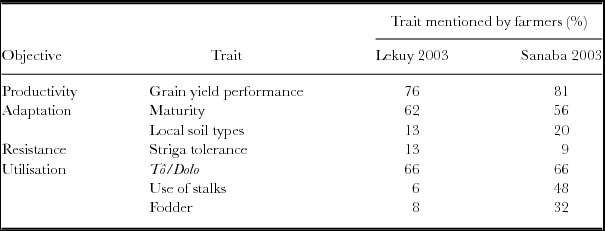
In explaining their reasons for selecting a certain entry, farmers used two to seven criteria and/or plant traits. The most popular criteria were grain and flour yield components, and usage-oriented traits, such as food quality, fodder quality, usefulness of stalks for construction. This was in addition to various characteristics related to adaptation such as days to maturity, adaptation to specific soil conditions and biotic and abiotic stress resistances. Most of the varieties selected by farmers were appreciated for their productivity, followed by the trait related to human consumption and that of date of maturity (Table 3). Fodder-related traits, as well as the use of sorghum stalks for construction and artisanal activities, were more important for the village of Sanaba whereas striga resistance was more of a concern for farmers in Lekuy. The most commonly mentioned adaptation trait was days to maturity. Farmers appreciated varieties that could adapt better to the altered climatic conditions, i.e. a shorter growing season expressed through less rainfall. In their view, short duration (or early maturing) varieties could withstand an end-of-season drought or later sowing, either because of the later onset of the rainy season or because of prioritising the sowing of maize and/or cotton. As the sowing date of the trials was relatively late (about one month) compared with local practices, varieties with the appropriate state of grain maturity at the time of evaluation were considered as ‘early’. Farmers considered varieties as drought-resistant if their leaves and stems showed little senescence, i.e. they still were of green colour at the end of the season.
Farmer criteria for selecting an entry related to local growing constraints and objectives. Percentage of the number of times criteria figured in farmers’ appreciations when selecting a variety relative to the total number of appreciations given during evaluations in Lekuy 2003 (n = 144) and Sanaba 2003 (n = 149).
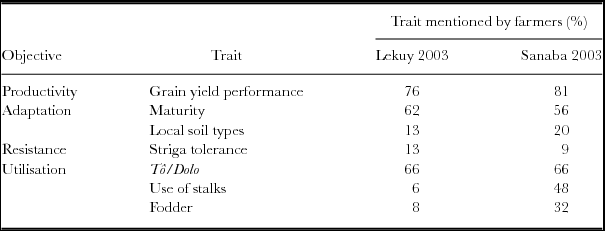
Varieties most commonly selected by farmers
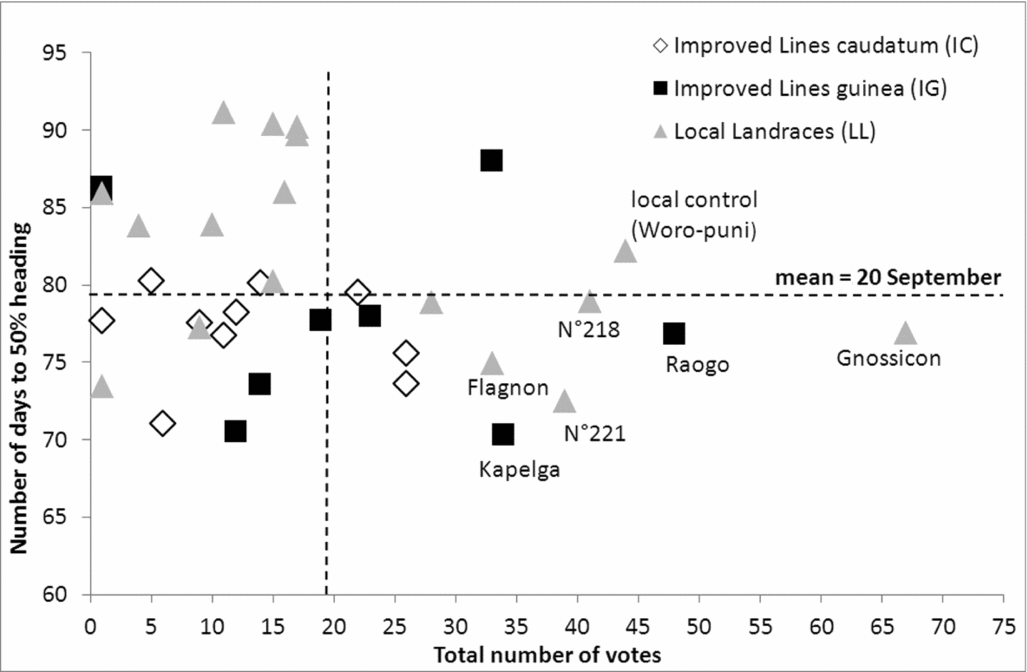
According to farmers, the relatively late sowing date for the region is due to changing rainfall patterns, which now rarely allows for earlier sowing at the end of May or the beginning of June. These earlier sowing dates were apparently the norm during ‘the time of their parents’. This later onset of rains has been further exacerbated by recurrent post-flowering drought. The need to adapt the growing cycle of varieties to these perceived changes in rainfall patterns is clearly reflected in the farmers’ variety choices. Farmers voted mostly for landraces with shorter growing cycles, that is landraces with flowering before September 20. In this category farmers clearly gave preference to varieties of the guinea type from both IG and LL groups (Figure 3). The majority of the introduced landraces share this early flowering trait whereas only two recently collected landraces from the LL group display similar early heading dates. On the whole, the LL variety Gnossiconi, which has been maintained in the Saria gene bank for 30 years, and the IG landrace Raogo, which originates from the drier centre-north region (500–700-mm annual rainfall), received the most votes. Elderly farmers interviewed in the villages of origin also mentioned the early maturity of Gnossiconi and Flagnon. The farmer interviewed about Gnossiconi indicated that the variety was abandoned around 30 years ago on account of its growing cycle being too short. The elderly farmer said that the shorter cycle varieties cultivated in the past were selected for their ability to ensure food for the annual soudure period (a time of general food scarcity shortly before the general cereal harvest). But since the variety was too susceptible to bird damage (it presented the first grain for birds) it was eventually discarded. The farmer interviewed about the Flagnon variety also confirmed its earliness and its being abandoned, but was less explicit about the reasons.
Total number of votes per entry distributed by farmers in Lekuy and Sanaba in 2002 and 2003 and cycle duration of entries (observed in Lekuy and Sanaba in 2003).
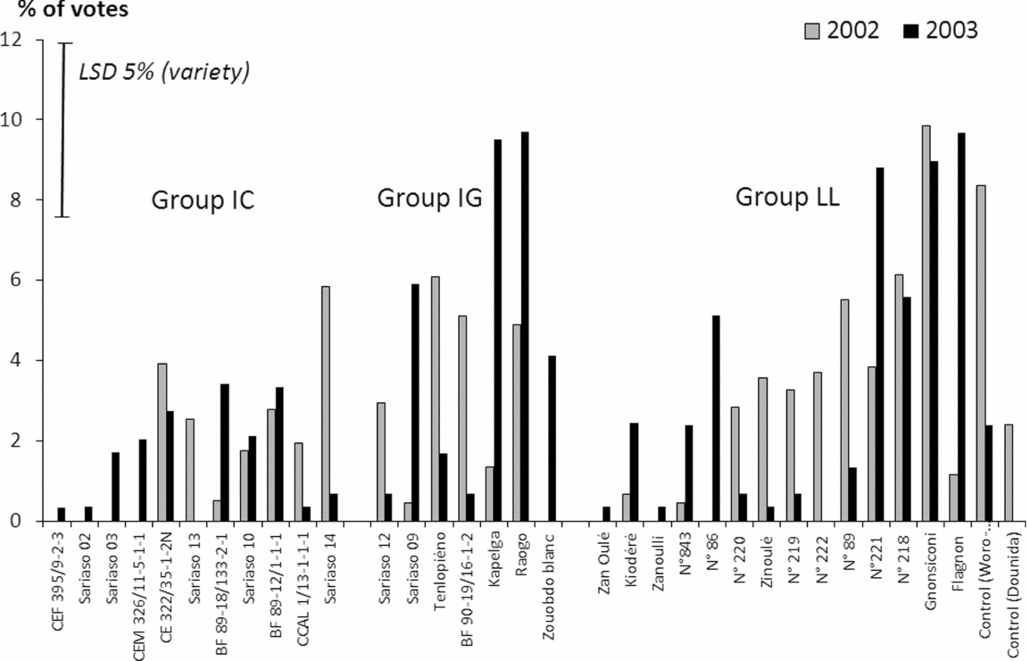
Even though farmers distributed their votes broadly among varieties, variety preferences, expressed as the percentage of votes, were nevertheless significant (p < 0.05). Depending on years, villages and farmer groups (men or women), these preferences could vary, albeit not significantly (Figure 4). Many preferences were based solely on culinary and processing properties, or on environmental factors. For instance, grain quality of the otherwise productive and early IC variety Sariaso 14 is adversely affected by higher rainfall (reddish discolouration and grain mould). This probably explains its higher rejection rate in the higher rainfall sites and yet its popularity in Lekuy during the drought-affected year of 2002. The IL landrace Zounobdo blanc was mostly preferred by the women in 2003. It belongs to the margaritiferum race and produces very small, hard grains. Zounobdo blanc can be used as a replacement for rice and is often cooked on special occasions. The Raogo (IG) and Flagnon (LL) varieties were appreciated by the women for the amount and quality of flour that could be produced from their grains. This was confirmed during processing and culinary testing of tô, the staple dish of this region, using different varieties from the 2002/2003 trials (data not shown). The men, in contrast, gave more votes to the IC varieties in both years, including BF 89-12/1-1-1, a caudatum race variety with large panicles and very big, white grains. Lack of vitreousness in these grains, however, was disliked by the women, who claimed that this was not amenable for the preparation of tô.
Percentage of total votes distributed to each entry by farmers in 2002 and 2003.
Performance of varieties in agronomic and multi-locational trials
Variety and fertility effects were significant (p < 0.01) for grain yield in the agronomic trial. The variety Gnossiconi, with 2493 kg ha−1 average grain yield, showed a significantly higher overall productivity than the other varieties (between 1521 and 1760 kg ha−1) across all fertility treatments when using the least significant difference (l.s.d.) at the 5% level of 359 kg ha−1 to compare variety performance. Besides its productivity, Gnossiconi was appreciated for its earliness, green leaves at maturity and apparent tolerance to striga, even in unfertilised plots. In Barakuy village, farmers were generally satisfied with the performance of all the varieties under non-fertilised conditions. At Lekuy village, farmers declared the improved breeding line BF 89-18/133-2-1 as unsuitable for local cropping conditions due to its observed susceptibility to striga.
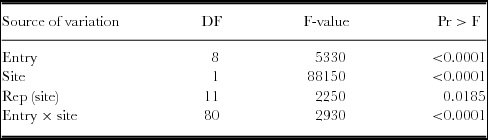
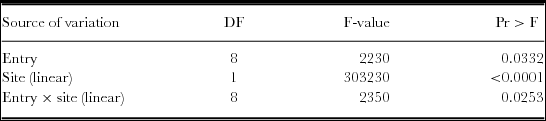
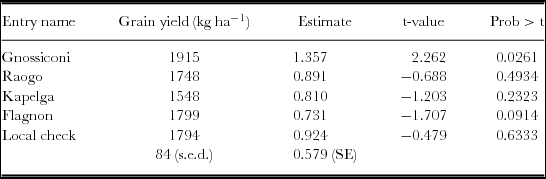
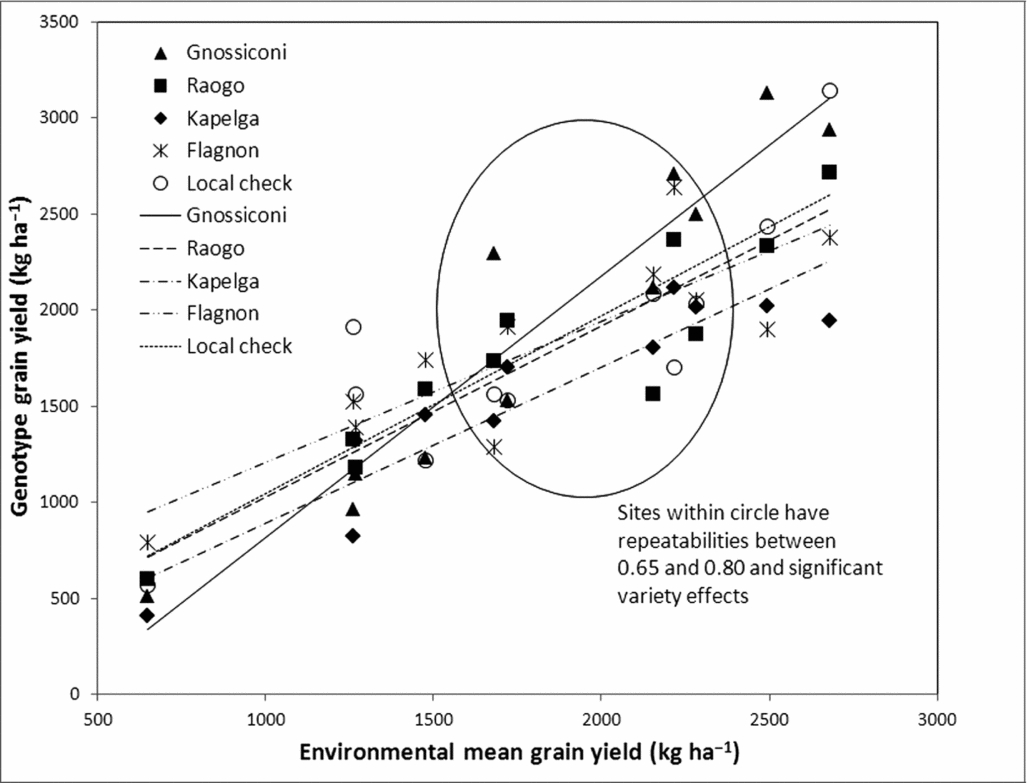
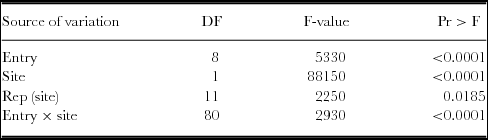
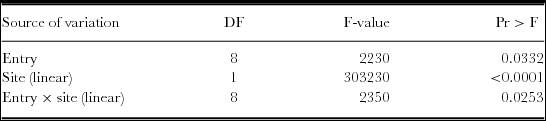
Grain yield analysis for 11 individual sites of the multi-locational trial revealed CV values between 9% and 34% and repeatabilities between 6% and 80%, in addition to significant entry effects in six of the 11 test environments (data not shown). Individual trial mean values (environmental mean values) for grain yield for the 11 sites varied between 650 kg ha−1 and 2500 kg ha−1, indicating considerable differences in the productivity of sites. This is confirmed by an l.s.d. (5%) of 185 kg ha−1 for sites and significant F-statistic for site effects, as shown in the combined analysis in Table 4. The table also points to significant effects for entries and their interaction with sites. Among the four entries focused on in this trial (Gnossiconi, Raogo, Kapelga and Flagnon), Gnossiconi had on average the highest grain yield (1915 kg ha−1); however, compared with the local check, this grain yield performance was not significantly superior (Table 6). The analysis according to the Finlay–Wilkinson model (1963) revealed differences (p = 0.0253) between regression coefficients for entries (Table 5). Regression coefficients confirm an average environmental response for Raogo, Kapelga, Flagnon and Kapelga as well as the local check. Gnossiconi shows a slight but significant positive response in the more productive environment (Table 6, Figure 5). However, as the deviations from regression lines are significant overall, and the contribution of deviations to the stability was considered the same for any variety, no conclusion on stability differences could be drawn from these tests.
Combined analysis of 11 sites from field trials with nine entries conducted in the Mouhoun region in 2007.
Combined analysis according to the Finlay–Wilkinson (1966) model of 11 sites from field trials with nine entries conducted in the Mouhoun region in 2007.
Mean grain yield performance and estimates for slopes of regression lines for grain yield for five varieties evaluated in nine entry trials at 11 sites in the Mouhoun region in 2007.
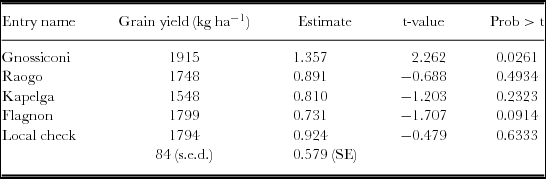
Note: s.e.d.: standard error of difference; SE: standard error.
Graphical representation of the Finlay–Wilkinson regression showing five of the nine varieties tested in multi-locational trials in 2007. Grain yields of five varieties in 11 environments plotted against the respective mean values of environments.
Seed production and diffusion
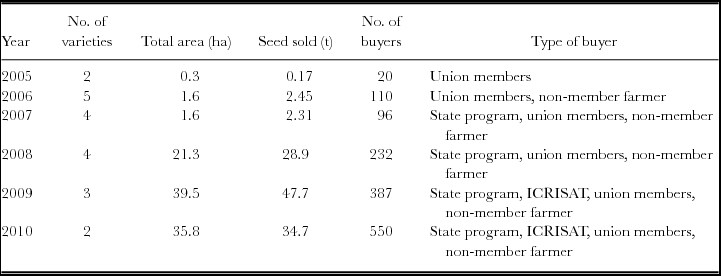
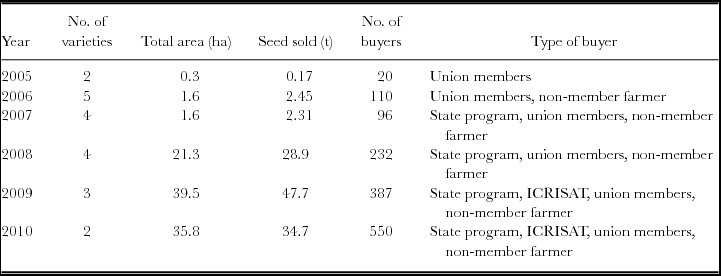
In the seed production training plots, farmers were able to produce a total of 180 kg of seed from the Gnossiconi and Kapelga varieties in 2005. In agreement with the national service, the seed harvested from these plots was certified as foundation seed and thereafter sold to the members of UGCPA for the production of certified seed. Due to strong interest in the new varieties among farmers, UGCPA then requested the Saria research station in 2006 to provide it with foundation seed for the four preferred landraces (Kapelga, Gnossiconi, Flagnon, Raogo). The national seed service welcomed the initiative to produce locally and to diffuse quality seed from farmer-selected varieties. The commercialisation of this certified seed was organised by UGCPA, which prioritised its members before supplying to non-members, whether they be farmers, state programs or NGOs. Seed production and commercialisation of the aforementioned varieties increased in 2007 and then again in 2009 (Table 7). The decline in 2010 was due to a drastic change in the seed law, which prohibited certified seed production on fields smaller than 3 ha. This regulation came late in the season and farmers had no time to adjust their strategies in time. In 2009, the national union of seed producers of Burkina Faso (UNPSB) recommended Gnossiconi and Kapelga seed from UGCPA for the 2009–2010 growing season. On this basis one could confidently say that the seed produced by UGCPA has been scaled up to a national level, indeed even to a West African regional level. Farmer cooperatives in the northwest of Mali tested out the varieties of Gnossiconi, Flagnon and Kapelga in their fields in 2009. They are now reported to be requesting more seed of this variety every year and testing it through the sale in small seed packs.
Seed production, number of seed producers, number of sorghum varieties produced between 2006 and 2010 in the Mouhoun region by the UGCPA farmer union.
DISCUSSION
Enhancing farmers’ choices to adapt to climate and cropping system changes
The strong interest in the early cycle landrace varieties, ‘re-introduced’ to farmers through the on-farm trials in the present study, indicates that neither the informal nor the formal system appears to have kept pace with farmers’ needs and conditions. Almekinders et al. (Reference Almekinders, Louwaars and de Bruijn1994) argue that population growth is placing increasing pressure on land in developing countries. This, combined with the recent introduction of modern farming technologies, has brought about rapid change in agricultural production systems that are beyond the capabilities of smallholder farmers. In Mali, for instance, the expansion of maize cultivation in the more intensified cotton production zones has indirectly led to a later sowing of the sorghum crops because of the habit of prioritising cotton and maize (Bazile and Soumaré, Reference Bazile and Soumaré2004). Participatory approaches could fill this technology gap for smallholder farmers by assessing their needs and regularly offering new varietal options. This approach has already been implemented with success in Nicaragua by Trouche et al. (Reference Trouche, vom Brocke, Aguirre and Chow2009), who introduced new sorghum germplasm for specific culinary uses. In general, plant breeders have ready access to a large range of diversity, either ex-situ germplasm, improved or experimental varieties. They should therefore facilitate farmers’ regular access to this diversity so as to encourage and safeguard biodiversity in these susceptible marginal regions. The variety trials implemented in this study enabled plant breeders to successfully transfer germplasm from the Sahelian regions (shorter maturity) to a Soudanian region and thus offer smallholder farmers new options for adapting to climatic and economic variability.
The successful ‘re-introduction’ of the landraces Gnossiconi and Flagnon underlines the importance of regularly reviewing of the existing materials in gene banks and making these varieties available to farmers for testing. The need for frequent multiplication of the collections maintained in the artisanal gene bank of the Saria research station compelled breeders to review and evaluate the varieties, thus giving them a valuable overview of the available materials and their potential. Not only can cultivars be abandoned or lost due to changes in climatic patterns or cropping systems, they can also be forgotten in gene banks. And in an evolving agricultural system, a cultivar abandoned one day might be deemed advantageous again in the future, as was the case with the varieties Gnossiconi and Flagnon, which had been in ex-situ preservation for 30 years before being ‘re-discovered’. These landraces are now back in popularity on the basis of the very characteristic that caused them to be abandoned in the first place, i.e. a short growing cycle. It is the latter reason that triggered their disappearance in former days when, according to the farmers, the rainy season was longer and most of their varieties had correspondingly long growing cycles. Seboka and van Hintum (Reference Seboka and van Hintum2006) confirmed that farmers’ selection criteria could change along with changing biophysical and socio-economic conditions. These authors also propose the re-introduction of landraces with preferred traits in adapted environments as an avenue for linking ex-situ and on-farm conservation; and for increasing on-farm diversity as insurance against increasing abiotic and biotic stresses.
Key traits for sorghum competitiveness in the Mouhoun region
It is now widely acknowledged that (1) smallholder farmers in subsistence cropping systems evaluate multiple criteria when judging the usefulness of a given variety, and (2) there is no single perfect variety that covers all the different conditions and needs of these farmers’ production systems (Lacy et al., Reference Lacy, Cleveland and Soleri2006; Mulatu and Zelleke, Reference Mulatu and Zelleke2002). This has been re-confirmed by the present study, which shows that farmers in the Mouhoun region use a range of criteria to assess the usefulness of a variety, from productivity and striga resistance to superior grain colour or hardness and, more recently, shorter growing cycles. The latter criterion was indeed one of the more striking results of this study: the consistency with which farmers in the Mouhoun region opted for earlier flowering types, and especially LL varieties, was unmistakable. A shorter cycle now apparently provides better yield security than the longer cycle varieties cultivated in the region. Indeed, Nicholson (Reference Nicholson2005) reports that rainfall has been decreasing in the West African region for the last 50 years. The farmers of the Mouhoun region are of the same mind, asserting that the monsoon rains have been arriving late and ending earlier ever since ‘the time of their parents’, i.e. a generation ago. Akponikpè et al. (Reference Akponikpè, Johnston and Agbossou2010) elicited similar views among 234 farmers across the Sub-Saharan and Sudanian zones of West Africa interviewed about climate change and adaptation strategies. The most obvious strategy for smallholder farmers in dealing with these shortened monsoon seasons is to resort to their old abandoned landraces, many of which have been fortunately maintained in the ex-situ collection of Saria. Cultivars grown in the south Sahelian zones of Burkina Faso, which also have shorter growing cycles combined with other preferred plant traits, are another viable option. The uncertainty imposed by climate variability acts as a disincentive to investment in agricultural technology and market opportunities. The risk-averse farmer favours precautionary strategies that buffer again climatic extremes over activities that are more profitable on average (Hansen et al., Reference Hansen, Mason, Sun and Tall2011). The strong interest in the LL variety Gnossiconi points to a growing trend in the region towards finding sorghum varieties that can (1) produce secure and stable yields in the face of unpredictable climatic conditions, and (2) respond to the objectives of agricultural intensification, especially regarding the strong demographic growth in Burkina Faso (McMillan et al., Reference McMillan, Masters and Kazianga2011). Farmers also seem to be aware that there are however trade-offs between earliness and yield potential, as otherwise preferred varieties with shorter growing cycles than Gnossiconi received all less votes. The agronomic and multi-locational trials conducted for this study confirmed that the Gnossiconi variety reacts positively in higher yielding environments, in addition to its advantage of being a short-cycle cultivar. The varieties Raogo, Flagnon and Kapelga also have the advantage of early maturity together with other preferred attributes such as superior grain quality for tô and/or the ability to produce traditional beer. Crucially, it is this short-cycle landrace that farmers in the Mouhoun region prefer in spite of the fact that the short-cycle IC varieties generally produced superior grain yields during on-farm trials. In spite of the breeding efforts over the past years to include local germplasm into crossing programs as described by Trouche et al. (Reference Trouche, Chantereau, Zongo, Bacci and Reyniers1998), it seems that the farmers were reluctant to vote for these lines owing to their unfamiliarity with the plant type, including doubts about its culinary qualities (vom Brocke et al., Reference Vom Brocke, Trouche, Hocdé and Bonzi2011). Moreover, farmers expressed reservations about the short heights in this IC group (such stems do not lend themselves well to local uses) and their need for fertile soils. Such soils in the Mouhoun region are now primarily reserved for maize and cotton cultivation. This confirms the results of vom Brocke et al. (Reference Vom Brocke, Trouche, Weltzien, Barro-Kondombo, Gozé and Chantereau2010) that the plant type of a variety, which is defined as the combination of different plant traits and characteristics and their performance under specific environmental conditions, is crucial for accepting a variety.
Effective identification and dissemination of varieties
Identifying highly suitable varieties for farmers under variable climatic environments requires several years of on-farm evaluation, including diverse soils and fertiliser conditions, as illustrated by the variability of grain yields and farmer preferences (votes) relative to the evaluation years and sites of this study. Haussmann et al. (Reference Haussmann, Rattunde, Weltzien-Rattunde, Traoré, vom Brocke and Parzies2012) also agree that selection for adaptation to climatic variability will be more efficient when conducted in several environments, as this captures key environment stress. The approach presented in this study was effective in identifying new varieties adapted to constraints relevant to farmers and related to climatic variability, i.e. a shorter growing season. Despite the lack of precision in the agronomic trial (few replications), the relevance of the results cannot be devaluated, especially for the strong performance of the Gnossiconi variety. This fact is supported by the multi-locational trials, for a range of on-farm trial sites can represent critical testing environments for adaptation to the production system (Haussmann et al., Reference Haussmann, Rattunde, Weltzien-Rattunde, Traoré, vom Brocke and Parzies2012).
It has been acknowledged that for PVS and PPB to have a large impact in West Africa and elsewhere, seed dissemination activities need to be streamlined (Almekinders et al., Reference Almekinders, Louwaars and de Bruijn1994; Witcombe et al., Reference Witcombe, Petre, Jones and Joshi1999). In West African countries, such as Burkina Faso and Mali, private seed industry is weak or non-existent. There is no effective formal seed system for traditional crops such as sorghum. In these regions, the farmers’ main access to seed is still through the age-old informal seed network of exchange, a system in which 80–90% of seed is farm-grown (Delaunay et al., Reference Delaunay, Tescar, Oualbéogo, Brocke and Lançon2008). Nonetheless, farmers in the Mouhoun region have been relatively successful in diffusing the new varieties identified through a selection approach that consults and considers farmers’ preferences and choices. In order to overcome the typical constraints of unsuitable technologies and diffusion methods reliant on modern infrastructure, Almekinders et al. (Reference Almekinders, Louwaars and de Bruijn1994) recommend an integration of the traditional seed system with the activities of the formal seed system. This was achieved in the current study by working with an effective farmer organisation and involving them at all stages of the research. The UGCPA, which has a trusted position in the Mouhoun area, facilitated a strong linkage between farmers and breeders, thereby assuring that the varieties were responding to farmers’ current needs. The training of farmers for on-farm seed production in close collaboration with national seed services and the commercialisation of seed by farmer organisations are further evidence of the integrative approaches that facilitated the dissemination of seed, both nationally and across the border, through a combination of formal and informal approaches. In the present study, smallholder farmers were more inclined to buy seed from a locally produced source (informal) rather than from a ‘foreign’ seed distributor; on the other hand, the initial quantities of available foundation seed for the farmer-preferred varieties was limited and only the national seed service (formal) could ensure its availability. This integrative approach is in line with the recommendations of Witcombe et al. (Reference Witcombe, Petre, Jones and Joshi1999) who showed that even though superior rice varieties identified through PVS in India could spread within a relatively short time frame via traditional channels, a sustainable seed supply strategy, preferably commercial, is needed in order to make a lasting impact.
CONCLUSIONS
Results indicate that identifying varieties that are adapted to climate-variable environments and also suitable for farmers’ needs requires several years of on-farm evaluation in order to capture diverse soils and fertility conditions. New solutions to abiotic stress conditions were found through the opening up of gene banks to farmers and facilitating the transfer of varieties from different agro-climatic regions through variety trials combined with agronomic trials. The choice of varieties was strongly directed by farmers’ perception of climate change, local processing and consumption habits and ability to adapt to low-input production and intensification. This research shows the advantage of managing germplasm collections locally, as this facilitates more effective access to appropriate materials for farmers. Finally, collaboration with a strong farmer organisation can assure the sustainability of interventions and provide a wide reach to those farmers who can benefit most from such collaboration.
Acknowledgements
We are grateful for the participation and contribution of farmers from the Burkinabè villages of Lekuy, Barakuy, Sanaba, Kera, and many more in the Mouhoun region. We also thank G. Palé, D. Kamboua, N. Bonzi and S. M. Ndiaye for their valuable technical support and advice, and M Halidou Compaoré for designing the map in this manuscript. The study would not have been possible without the financial support of the Fond Français pour l'Environnement Mondial (FFEM) and the Collaborative Crop Research Program of the McKnight Foundation, which funded this study. We also thank the two anonymous reviewers for their valuable suggestions. We further thank A. McGowan for the editing of the draft manuscript.