INTRODUCTION
In 1956, a young Tanzanian named John Makame wrote to the director of the Institute of Malaria and Vector Borne Diseases at Amani requesting that he be reinstated in his job as a malaria orderly. He had resigned earlier that year from his post at the remote research station to work as a depot keeper for Shell in the nearby city of Tanga. He explained: ‘[H]aving spent fifteen years at school where society was at the limit of only four hundred boys, at most; I thought it might be a good idea to see something of the towns, so as to give myself a wide outlook of life, although I had intended to work at Amani.’ He went on to say that he wanted to be re-employed as his ‘father had wished me to work at Amani and I realize that “your father's wish is a polite command”’.
The director of the Institute, Captain Bagster Wilson, agreed to reinstate Makame but family circumstances forced him to resign again a year later and to seek the 700 shilling salary offered to him in Tanga, a sum twice the salary of a junior scientific assistant in Amani. Makame had been instructed to go to Gonja, a remote satellite outstation of Amani, to work for the Pare-Taveta mosquito-spraying scheme. In his second and final resignation letter on 6 May 1958, Makame wrote regretfully that he was unable to do this. As his father was now dead and his mother was having a ‘mental break’, he was obliged to assume responsibility for his siblings.
I am informed that I am expected to go and work in Gonja and I fully realize that the Government Service Regulations provide that I should be prepared to work anywhere in East Africa. I fail to ignore the fact that I shall not be able to give you satisfaction in my work there as I am not happy to go to Gonja and because I agree with Dr Kwame Nkrumah's words ‘what must be done must be done well’ and as it is my motto not to let my wishes interfere with ‘Public Interest’ (if I should do so I shall be a Misfit), it is my responsibility to resign. I feel I must appreciate, without any envy, the fact that you have been a ‘loving father’ to accept the ‘prodigal son’ after I had resigned your service on 30/3/1956. I shall always remember that Amani has been my first place to work at when I was young. It has, therefore, had a lot to do with the cultivation of my character and what is more important the cultivation of my ‘moral life’. Thank you again for your good leadership. The next few years, I think, will be times of great change in this country – in all fields of public affairs.Footnote 1
Makame's letter reaches back into the colonial past, evoking a series of overlapping and conflicting commitments; he speaks of the ‘Public Interest’ and how he must separate and sequester his own private obligations from that object, and if he were to fail in this he would be a ‘Misfit’. His letter blends an ethos of Afro-nationalism with memories of colonial debt and interdependency. Makame carefully explains how the unstable conditions of lower-grade auxiliary scientific work at Amani have entered into conflict with his family obligations and have made it impossible for labour, kinship and ‘moral life’ to align in time and place. Makame's letter evokes not only the perils and uncertainties of employment in science in colonial East Africa but also its pleasures, and, in particular, the appeal of the moral and civic connotations of science. Finally, in Makame's closing words, the letter links the present of science and the postcolonial future of the independent nation. In this paper we explore the new perspectives opened up by the Amani archive on social and labour relations at a British-run East African research station in the decades preceding and following independence, as African workers sought to transform Amani and to find a new place within it for themselves.
AN ARCHIVE AT AMANI
This paper is based on a series of documents and records left in the National Institute for Medical Research Amani Hill Station in the Eastern Usambaras in north-eastern Tanzania. With the exception of a few scattered pieces from the pre-war period when the Institute was an agricultural research station, the records run from the Institute's establishment in 1949 as the East African Institute of Malaria and Vector Borne Diseases up until the late 1970s. The archive is not arranged purposively; perhaps it is best described as a local archive – a series of random documentary deposits (Kurtz Reference Kurtz2001). The content of the archive does not suggest any particular reason for its preservation; rather, the survival of these documents appears to be part of a generalized institutional torpor at Amani – the station has not functioned as an active research institute since the 1990s. However, despite its chaotic organization, the archive contains a remarkable amount of information about the daily management and running of a scientific research institute in late colonial and postcolonial Tanganyika. In this paper we deal with questions that emerged from a larger project on the history of scientific research at Amani which mixed ethnographic, archival and oral history research methods. Here, we focus on the documents held in the local archive in order to understand Amani not only as a space of scientific knowledge production but also as a home for African workers and as a workplace that occupied a distinct place in the imaginations of educated Tanzanians.
DECOLONIZING SCIENCE
Historians and anthropologists have explored the impact of wage labour on the social fabric of African communities and on the rhythms of African lives as Africans migrated for work and adapted to its disciplines and exigencies (Atkins Reference Atkins1993; Cooper Reference Cooper1996; Lindsay Reference Lindsay2003). Historians of science have argued that science was a crucial part of the exercise of colonial power (Bonneuil Reference Bonneuil2000; Hecht Reference Hecht2002; Tilley Reference Tilley2011), and the experiences of the technical cadre of colonial professionals are increasingly acknowledged to have been of crucial importance to the ‘second colonial occupation’ (Clarke Reference Clarke2007; Tilley Reference Tilley2011; Neill Reference Neill2012). There is, however, a significant asymmetry in these studies of late colonial science and medicine. We know very little about the specific experiences of Africans employed in science in the 1950s and 1960s. Why did Africans such as John Makame aspire to work at sites of scientific research like Amani? And what can the archive at Amani tell us about the status and meaning of scientific work in the colonial and postcolonial labour market? While philosophers and historians of science have investigated the invisibilization of technicians and the hierarchies of scientific tasks that secure the cultural and intellectual prestige of scientists at the expense of those who labour to gather scientific material (Shapin Reference Shapin1989; Timmermans Reference Timmermans2003), this work has only rarely focused on the perspective of African technicians (for some exceptions, see Geissler Reference Geissler, Geissler and Molyneux2011; Lachenal Reference Lachenal, Geissler and Molyneux2013; Tousignant Reference Tousignant2013). Here, we interrogate the archive at Amani to explore the everyday experiences of such people. What kinds of particular social relations arose at Amani from patterns of labour and leisure associated with research? African technicians at Amani were certainly ‘invisibilized’ in Shapin's sense: they were rarely acknowledged at the stage of publication. However, many of the men in Amani in the 1950s and 1960s were part of an educated and politically conscious class who sought to change, and eventually to de-colonize, their working environments. What role did ambitious Africans, from qualified researchers to technicians, play in the transition of the control of science and research from the former colonial power to the newly independent government?
The vast majority of the material in the Amani archive relates to the daily business of administering a large and complex research institution with its satellite stations to which staff had to be dispatched and then monitored, and from where they would transport back data for review and analysis. The daily business of science can be reconstructed out of the masses of raw data pencilled into ledgers and notebooks. Publication is also represented in files stuffed with offprints and hand-corrected drafts. The directors of the Institute corresponded constantly with scientists in the wider network of imperial and postcolonial tropical medicine, at the World Health Organization (WHO), the London School of Hygiene and Tropical Medicine, and the Nuffield Foundation – they hustled for grants to continue their research programmes and exchanged news, ideas and gossip from the field. As part of a comfortable and convivial research station situated at a temperate altitude in exceptionally attractive landscape, the directors received requests for hospitality from the Medical Research Council of the UK and also from WHO and other fellowship programmes, which sent young scientists to collect data. Other, more outlandish requests came from the network of tropical medicine laboratories and institutes in the global North which were dependent on colleagues in Africa to send data and raw materials – the archive contains invoices for a shipment of live bushbabies to the University of Texas. In return, the scientists in Amani requested equipment and resources and solicited funds from all possible partners and collaborators. The archive overflows with records of overtime, expenses claims, queries of expenses claims, invoices for purchases of supplies, and High Commission circulars, later East African Common Services Organization (EACSO) circulars.Footnote 2 There are also thick files of correspondence between the Union of African Workers and the British administration detailing complaints and contestation about working conditions, racial insults, and opportunities for African training and advancement at Amani.
The archive is full of material relating to the management of the African workforce – hiring and terminating employment, wage and pension entitlements, as well as closely argued and contentious debates about training, and about Africanization and the scientific value of African labour at the Institute. We limit our focus here to a ten-year period running from the mid-1950s to 1966, the year in which Gerry Pringle, the last British director, left Amani. While our chosen dates will certainly appear arbitrary in the context of wider Tanzanian politics, we have focused on this timeframe as it is the period during which Amani had British directors: first Bagster Wilson and later Gerry Pringle. There was some strong cultural and institutional continuity in the transfer from the former to the latter. After 1966, as part of a conscious effort to bring about change in Amani, a non-British director was appointed to ease the transition towards a fully Africanized management.
The early 1960s were a time of change at Amani. In 1962, African employees formed the Union of Malaria Institute Workers, affiliated first with the Tanganyika Labour Federation and, after 1964, with the National Union of Tanganyika (NUTA). Amani in the 1950s and 1960s was a place where hierarchical work relations were frequently punctured by racial insult and where redress could be accessed through the intercession of the union leadership and its mastery of the intricacies of official discourse. Correspondence between the union and Gerry Pringle makes up a large repository of complaint and contestation over labour relations and we draw upon this material in order to better understand the African experience of life and work at Amani.
We begin with Amani's location, perched on a hill overlooking a landscape that, while beautiful, was marked by deprivation, dispossession and unfree labour. Amani was a destination for migrant labour, both for white-collar workers attempting to escape the plantations and estates, and for Africans with some scientific training tracing singular trajectories of ambition and aspiration across the territory to the Institute. Amani was attractive to African employees as it appeared to promise a structured career punctuated by regular progression and promotion. However, African workers and European scientists had a different sense of field and laboratory work appropriate to particular grades, and Africans struggled from the late 1950s onwards to differentiate and standardize their work and to connect their labour more closely to the production of science. While these conversations leave only scattered traces in the archive relating to the 1950s, in the 1960s the material politics of daily life, work and dwelling in Amani increasingly came to be more boldly expressed, circuited through political debates about Africanization, nationalism and self-determination. The particular texture of the struggle to unionize and Africanize a research station reveals Africanization in one particular aspect – as a project of political restitution, an idiom framed by local understandings of work, and as an instrument for individual advancement. Following the sense of the material in the Amani archive, we argue that debates and practices of Africanization emerged out of antagonistic labour relations, and that Africanization at Amani was experienced most forcefully – by Africans and Europeans alike – as increasingly contentious and problematic labour relations surfaced, and as increasingly vociferous claims to the cultural power of science were made by African workers.
AMANI AND THE CATEGORY OF SCIENTIFIC WORK IN THE COLONIAL ECONOMY
By virtue of its isolation, located some 50 kilometres from the nearest town and accessible only by a dangerous and sometimes impassable road, Amani in the 1950s had many of the hallmarks of a classic colonial field station (Kennedy Reference Kennedy1996). Favoured by German and then British civil servants for its temperate climate and beautiful setting, it housed European scientific staff and their families in some comfort in well-appointed private housing supported by domestic staff. European appreciation of Amani's isolation in its ‘cool and lovely surroundings’ (although they did complain of a certain ‘intellectual aridity’) belied the fact that, although certainly difficult to access, Amani was located at the centre of Tanganyika's colonial economy: the factories, tea estates and sisal plantations and the service industries that sprang up around them.
By the 1940s, the Tanga region had been drawing in migrant workers from the ‘tribal regions’ for over sixty years (Sunseri Reference Sunseri1996). By 1949, the Tanga region employed 25 per cent of the country's total wage labour force. While locals were employed intermittently, sisal and tea production were dependent on the labour of migrants paid ‘bachelor wages’: a salary that could barely sustain one adult male labourer (Mangesho Reference Mangesho2011). These labourers constituted a ‘semi-proletariat’ who remained dependent upon and attached to their subsistence cultivation and their peasant milieu (Shivji Reference Shivji1986). As they were only partially dependent upon wage labour, this workforce was thought to be quiescent and flexible. As a colonial official argued in a 1930 Annual Labour Report, the depression did not result in a significant increase in labour organization or unrest on the plantations, as, if a labourer lost his job, he merely ‘brought back with him a disappointing amount of cloth and other luxuries and resigned himself to cultivating his garden’ (cited in Shivji Reference Shivji1986: 36).
Colonial legislation regulating employment was primarily concerned with these migrant workers and aimed at maintaining low wages on the plantations while offering Africans who migrated for work some limited protection against forced labour, exploitation and unsafe working conditions. Labour legislation such as the Master and Native Servants Ordinance explicitly excluded white-collar workers such as the plantation proletariat, the few Africans who had worked their way into permanent waged positions as dressers, clerks, carpenters, artisans and surveyors (Shivji Reference Shivji1986). As a result, less data was gathered on these workers by colonial authorities and we know relatively little about their experiences and motivations. Many letters of application preserved in the archive at Amani, however, are from men drawn from this professional group who were hopeful of obtaining a post in Amani and becoming involved in scientific work.
The diminishing returns of the colonial economy throughout the 1940s, as well as a decline in agricultural productivity, made increasing numbers of Tanzanians dependent on wage labour on the estates and in the colonial industries. This economic change exerted a downward pressure on wages and resulted in worsened working conditions in the colonial economy. It also had the effect of narrowing the range of commercial and business opportunities available to educated Africans as the structure of colonial society became increasingly rigid (Iliffe Reference Iliffe1979). Many men who sought to build careers within the structures of British overseas science belonged to a generation of mission-educated lower-middle-class men competing for a shrinking number of white-collar and professional jobs. The application letters written to Amani frequently contain accounts of education disrupted by bereavement or a rupture in the family finances, and they often express a hope that a career at a scientific institution would provide opportunities for education, training and the acquisition of transferable scientific field skills. In 1965, for example, Charles Awongo explained: ‘I am in standard nine but there is no school for me next year because of poverty which is just appeared for the demise of parents.’ In fact, many young Africans wrote to Amani requesting more information about the ‘malaria training school’. In 1963, James Weqoro wrote: ‘I respectfully beg to apply for a vacancy in your Institute to train me as a health inspector … As my father could no longer afford to pay the required school fees, I had to discontinue school.’Footnote 3 This close association of Amani with training and opportunity arose partly from the Institute's colonial history. The first British director of Amani, Captain Bagster Wilson, placed great emphasis on training a wide range of employees and reported that in the Institute's first decade:
320 persons had been trained … from medical officers, through British trained health inspectors, from assistant health inspectors, malaria assistants, mosquito supervisors, and health assistants from East Africa, down to mosquito headmen … The general plan of all but one of the courses has been to build up a background of knowledge of anopheline structure, ecology and behaviour with direct reference to their applications at other, field, periods of instruction; and then turn to the rationale of control methods, and the detail of their execution … It seems that the underlying conception has been that it is useless to expect initiative and purpose without a degree of understanding appropriate to the grade of employee, but always that the standards should be pitched a little higher than seems adequate. This is not to ignore the existence of other possible limitations, of capacity or fidelity.Footnote 4
Wilson's account of training, while undoubtedly paternalistic, reflects his strong interest in the education of African workers at Amani. Wilson's conviction that technicians working at the mundane and repetitive end of the chain of scientific production should have an understanding of mosquito behaviour and basic principles of malaria ecology demonstrates the particular quality of the possibilities and experiences available to African workers at Amani.
TRAINING AND GRADING: DEFINING AND DIFFERENTIATING AFRICAN LABOUR AT AMANI
Due in part to its isolation, Amani bears some resemblance to the world of the estates, farms and factories that lay around it, the settings that have dominated historical accounts of labour relations and industrial organization in Africa. The research institute is a self-enclosed world with obscure technical hierarchies comprehensible only to insiders, with the strongly racialized social spaces of the European homes and the club, and in-between spaces such as the laboratories, access to which is governed by acquired skills and learned conduct. On the other hand, the particular social relations of scientific work strongly suggest that labour relations were experienced as unique. Scientific work involves long journeys into the forest, increasing the possibility of social and sexual intimacies between European staff and African technicians. Scientific workers also acquired certain rights as part of the authority of science and public health – the right to enter and spray people's homes, to ask invasive questions, to take blood samples – and access to vehicles and scientific apparatus, all of which gave them a certain cachet.
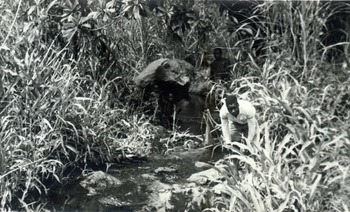
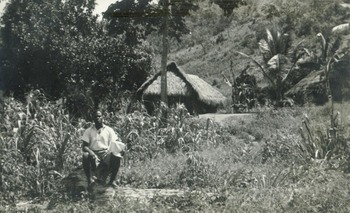
Judging from the application materials, many of the educated young men who sought a career in science at Amani had high expectations: they hoped that their work would be meaningful and stimulating. These expectations, however, were frequently frustrated and the archive preserves some traces of African disappointment with the nature of the day-to-day work. There was little clear distinction at Amani between ‘fieldwork’, which involved the cultivation of a range of particular field and laboratory crafts (from blood taking to crab catching to preparing slides), and the manual labour into which Africans of all cadres were frequently drafted in order to keep the Institute and the satellite stations functioning (see Figures 1 and 2). The indeterminate boundaries of scientific labour and the slippage between categories of work caused some conflict and discord over the racial divisions in the definition and distribution of tasks. This would become the subject of much contestation and argument in the 1960s but there are scattered hints in the archive that such issues arose from time to time in the 1950s as well. For example, in 1960 the Institute chemist Tom Fletcher wrote to the Pare field officer Alexander Kabuni:
The truck has been sent down to you today with a load of mats in view of the heavy rain we are getting at present I have decided to return to Gonja tomorrow, Tuesday, to help re-roof the other quarters there … I am only prepared to help in this matter providing that everyone cooperates and I am not going to listen to a lot of stories from people saying it is not their work so please see that everyone understands.
Dipping for Anopheles funestus larvae.Footnote 5

Samuel, a supernumerary mosquito searcher.

Kabuni wrote back from the field protesting that a shamba boy would have to be hired to carry out the manual labour.
While written instructions, private correspondence and planning documents in the archive suggest that Britons and Europeans working at Amani often perceived the African labour force as homogeneous, African labour was in fact highly differentiated at Amani, with a range of posts and cadres distributed according to a technical hierarchy to which Africans were distinctly emotionally attached and ultimately instrumental in reshaping. Africans found the distinctions between the grades of unskilled and semi-skilled labour (which were privately acknowledged to be messy and arbitrary) to be opaque and confusing. The names of the different cadres underwent some change during the period examined by this paper. From the pejorative ‘flyboy’, which was slowly suppressed in common use and scientific publication, to ‘mosquito searcher’ and finally to ‘malaria orderly’, these shifts represented precious and precarious increments of advancement tied to different relations, and to different configurations of field, disease, knowledge and technician. The final iteration for the lowest ranks of African technician – malaria orderly – was not only a clinical title but it also shifted the focus of work from the vector (the mosquito) to the parasite (malaria): a more scientific designation.
Clearly, it would be potentially highly misleading to read class status from the cadre or grade assigned to African workers. As Bagster Wilson's own account of training at Amani suggests, the primary motive for offering basic scientific instruction was instrumental and geared towards producing adequate field workers who had as much knowledge as they needed to perform their tasks competently. The criteria used for determining progress and advancement were viewed differently by British and African workers. From the perspective of the British administration, the distribution of salary points was organized primarily according to ‘fidelity’ (the quality Bagster Wilson stressed as most important in his account of training at Amani), with the longest-serving staff and those perceived to be the most trustworthy and diligent drawing the highest salaries. To some of the younger and more ambitious African workers at Amani, the distribution of salary points according to diligence rather than the skills and qualities of individual workers was perceived as unfair and generated complaint. In 1965, for example, John S. Kikwesha wrote to Amani from the satellite station in Gonja:
I have the honour to write this letter so as to ask you to consider of raising up my salary. As the actual fact I do not see the reason why my fellow man who is working with me as an assistant is being paid more highly than what I am getting. After all, this man does not know how to write, Sir, do you think such a man can be able to keep the proper records of the field for the V.S.S. work. So as I feel of being useful to this Team and also being capable to run the Round of my Team even lonely in spite of the absence of my fellow man, then I do not see any point why I should not get the same salary. And if it is the point of being a Team Leader why not to be regarded as a Team Leader as long as I am doing almost everything to this Team. And frankly speaking such treatments to a Government servant do give much headache and pain to the thoughts, and as result his mind and ambition forced to be spoiled to challenge up his duties heartily. Please, I beg you for your kindness and justice to help to solve my unhappiness to my work.Footnote 6
The response to John Kikwesha's request for a rise in his salary is not held on file so we do not know how it was received. However, Kikwesha's distress tells us much about the tensions that could arise in the field, as African workers sought to distinguish themselves from their colleagues. In this regard Amani certainly had much in common with other colonial work environments, such as medicine, policing and nursing. Education and training created liminal colonial subjects dislocated from their milieu who were both relatively privileged and also exposed to the injuries and inequalities of the colonial system (Coulson Reference Coulson1982). The close attention that we pay here to the experiences of these young Tanzanians – the milieu from which they came, their encounters with colonial hierarchies, the forms of professionalization they sought and the values they attached to work – can help to contextualize the rise of Africa's ‘new’ urban middle classes within a longer history and a complex generational politics (see Mercer Reference Mercer2014).
Experiences at Amani also resonate with broader patterns of colonial professionalization. The debates that wind through the Amani archive on training and developing the capacities of the African staff reflect discourses of social development and colonial welfare espoused by the Colonial Office in the 1950s (see Eckert Reference Eckert2004). In Amani, as elsewhere in East Africa, these ideas competed with contradictory narratives on the ground – many cynical, instrumental and racist – ranging from concerns that trained Africans would seek employment elsewhere, leaving the station with a skills shortage, to judgements about the suitability of Africans for responsible posts. In what follows we hope to draw out the specifics of Amani as a colonial and postcolonial workplace by considering how the strange and subtle skills of field science were interpreted and instrumentalized by African technicians.
REDEFINING WORK: SUBMISSIONS TO THE EACSO GRADING COMMITTEE
The new generation of Africans in Amani who arrived in the late 1950s had invested in the idea of science as knowledge work and hoped that it would offer progression, status and reward.Footnote 7 In 1965, the Institute was visited by an EACSO Grading Committee (immediately glossed by the union as the ‘Regrading’ Committee); this was charged with assessing the duties and pay scales of all employees and bringing them into line with the Pratt Report. The union organized a collection of their members' duties in the hope of having their status reviewed. This document is not a straightforward assessment of employees' duties; rather, the material submitted to the Grading Committee was an opportunity for Africans to give an account of their contribution to scientific work conducted at the Institute and an assessment of their skills. In his letter to the committee, the head of the union, Mr Choveny, wrote that he hoped that ‘sympathetic consideration for upgrading be given to old and experienced and capable staff of the junior and subordinate grades’; to the old criterion of ‘fidelity’, Choveny sought to add skill and capacity. The documents have been annotated and amended, presumably by the leadership of the union, and, where technicians were seen to have judged their capabilities too modestly, some contributions have been scratched out and replaced with qualifiers such as ‘advanced’ or ‘highly skilled’.
These lists of regular duties give us an insight into the range of work African technicians performed at Amani. One laboratory attendant, for example, described his work as:
1. Cleaning laboratory and laboratory equipment
2. Cleaning library
3. Feeding hamsters
4. Taking blood slides
5. Rearing snails
6. Looking after chameleon colony
7. Feeding and taking care [of] a duiker for experiment
The submissions to the Grading Committee also begin to help us make sense of the complex question of what exactly was at stake for African employees as they sought to redraw and defend the boundaries of their work. Another laboratory attendant, for example, gave his duties and responsibilities as:
1. Catching mosquitoes
2. Identification of mosquitoes
3. Best collector of a number of kinds of small animals (e.g. snails, snakes, crabs, rats, etc.) and insects (e.g. simulium, flies, etc.) for entomological work
4. Dissection of mosquitoes
5. Photography
6. Writing labels of very fine letters with and without stencils
Some workers wanted to record and valorize skills and attributes that might have been overlooked or might have fallen into obsolescence, such as literacy in the language of the former colonial power (‘Officer could read in the old German time and can read and write very well’). Scientific and parascientific activities such as bookkeeping appear as craft skills but are also represented as acts of literacy, echoing the concerns of Mr Kikwesha that he was unfairly treated in relation to his illiterate ‘Fellow Man’. Like Mr Kikwesha's protest, these texts seek to inscribe in scientific labour the precarious achievements of class.
Scientific skill was emphasized even in the case of domestic and auxiliary staff. Mr Kabsumi, the veterinary auxiliary in charge of the Amani dairy herd, gave his duties as recording milk yield, dipping the cattle and also ‘examining cattle blood under a microscope’. While the union sought to politicize cleaning toilets as ‘dirty work’ that ought to be rewarded with a further allowance in addition to salaries, several technicians drew particular attention to their skilled work trapping flies and Culex mosquitoes from latrines. Scientific work might be dirty, demanding and arduous, but these skills seemed to contain the promise of some advancement and the content of labour that could be spun as scientific was emphasized in the union's submission.
African research technicians sought careers that might, in time, permit them to advance from trapping flies to independent scientific production and research. As Dougnon shows in his oral histories of Dougon migrants who worked at the Office du Niger in the colonial period, Dougon categories of work were reshaped by employment in the colonial economy and exposure to ‘white man's work’. Just as at Amani, African employees at the Office du Niger became concerned with the idea of a career and with the dynamic fluidity of colonial employment, with time, grades and transfers becoming important notions that anchored identity and aspiration (Dougnon Reference Dougnon2009). In his ethnography of Ugandan railwaymen in the 1960s, Grillo shows the ‘ladder’ of advancement on the railways, with clear progression mapped out from the dirtiest and most dangerous tasks to relatively desirable jobs, and explores how any deviation from the charted map of progress up the ladder caused immense personal distress and allegations of sabotage and witchcraft (Grillo Reference Grillo1973).
The archive at Amani shows us glimpses of how practical problems of labour were steeped in a complex politics of class, cleanliness, race and prestige. When the union challenged perceived denigration or racialization of labour, this did not only take the form of appeals to working rights and job security; the specificity of scientific work required that the union make visible the categories of scientific production and translate those categories into ‘ladders’ of skill and status. Through the union and the Grading Committee, Africans sought to make sense of the scientific work that transgressed and confused different categories of employment – skilled and unskilled, craft and professional – and to expand and redefine professional grades, filling up those grades with day-to-day labour. The struggle over scientific labour at Amani – for example, the refusal of men of certain grades to do certain tasks considered inappropriate or demeaning – not only implied an everyday politics of resistance and recalcitrance; it also required that African workers used the instruments at their disposal to query the status and meaning of different kinds of scientific work.
‘KEENLY AND DILIGENTLY UNTIL I REACH THE APEX’: POSTCOLONIAL AMBITION AT AMANI
In addition to negotiating the ladder of employment in the former colonial institutions, postcolonial Tanzania offered another pathway to success in the professions: education. We move now to consider the experience of one ambitious Tanzanian and to reconstruct his career at Amani. Modestus Chogga was born in 1929 in the Iringa district and educated up to grade ten in secondary school. In his civil service record he gave his father's profession as ‘Peasant’. Until the age of ten, he attended a bush school in Lupalama Village; later, he was educated at Tosamaganga secondary school, a Catholic mission school. From 1949 he worked as a sanitary inspector for the Overseas Food Corporation (OFC), the corporation established to oversee the disastrous Tanganyika Groundnut Scheme. He was a talented individual, and his employer at the OFC was loathe to lose him and described him as his ‘right-hand man’: he passed from Class V to Class II (senior health assistant) – the highest class open to him – in a few years. His civil service record listed his employer from 1955 to 1957 as the Tanganyika African National Union (TANU), formed by Nyerere in 1954. As a member of TANU, Chogga had led a campaign against cattle dipping in Iringa and this balancing of exemplary colonial civil servant and ‘right-hand man’ with his rather firebrand politics would mark his time at Amani and his later career.Footnote 8
Chogga arrived at Amani in January 1958, hired as a malaria assistant at a salary of £152 a year. Chogga's application materials, references and correspondence concerning the post detail some of the reasons why he sought employment at Amani. He wrote that his work as a sanitary inspector had made him interested in vector control:
From 1951 to 1955 I underwent practical training in all branches of the work of a sanitary inspector at Urambo, etc. I used to control different sections or departments e.g. Refuse Control, Meat and Food Inspection etc., but Mosquito and Tsetse control were my specialised branches (as I did manage them till the last moment); besides inspection and administrations and laboratory work i.e. Diagnosing Malaria Parasites, Tryps, etc. I therefore have decided to join the Unit so as to specialise in Malaria and Mosquito control only as my career; besides academic ambitiousness.Footnote 9
Chogga's ‘academic ambitiousness’ played a significant role in his move to Amani; when accepting the position, he wrote that he felt that the director had indicated in the interview that the Institute would support him in his academic projects. While working as a sanitary inspector he studied a correspondence course with BTC Nairobi, and, preparing for his arrival at Amani, he stated his intention to study for the Cambridge School Certificate by correspondence course. He said: ‘I will try to utilize the valuable recreational hours (esp. evenings and nights – as it is my acquired habit), keenly and diligently until I reach the apex, etc.’ Chogga certainly seemed to flourish at Amani: after two years of employment, he listed under ‘leadership’ in his CV Treasurer of the Amani African Social Club, Chairman of the Amani Jazz Band, and Secretary of the Amani Wanderers Football Club. In 1960 he added Chairman of the Amani Primary School Parents Committee to this already impressive list. Chogga was also instrumental in the formation of the union at Amani and worked to build up union membership at the satellite stations of Korogwe and Ubwari.Footnote 10
In 1963 – two years after independence – Chogga was one of 150 people offered a place at Kivukoni College to pursue a course in government, public administration and law. He wrote to Gerry Pringle announcing the news: ‘I am fully prepared to study diligently and to use this chance for not only my non-material goods benefit being invested in me; but indirectly for the Institute.’ Chogga's choice of Kivukoni College, however, caused some consternation at the Institute. Kivukoni College was established by TANU in 1958 to be run along the lines of Oxford's Ruskin College. Nyerere was wary of ‘bookish’ education, which he regarded as ‘conducive to social stratification’ (Burton and Jennings Reference Burton and Jennings2007). Kivukoni was intended for Tanzanians with limited education who had nonetheless distinguished themselves in the trade union movement. The purpose of the education provided at Kivukoni was to train a radical cadre of skilled civil servants to work in local government and public service (Linton Reference Linton1968). It served the dual purpose of expediting the Africanization of Tanzanian institutions and shaping the ideological bent of the Africans who replaced the Europeans. Kivukoni was also ideally suited for Chogga as it was a conduit and crucible of postcolonial ambition, a reliable means for civil servants to build careers in TANU (Ivaska Reference Ivaska2011).
One of the pedagogical strategies Kivukoni used to avoid the risk of social stratification and differentiation of the kind that appeared to be important to white-collar workers at Amani was that students were internally assessed but were not given a final grade. A pamphlet from Chogga's file that advertises the college explains this decision in the following terms:
No certificate (except a statement of attendance) is given. It is not possible to fit a course of the Kivukoni type into the accepted schemes of education when trying to evaluate it. The primary aim is not to produce good examinees, but Tanganyikans with a will to assist in the development of their country.Footnote 11
This political strategy created some problems for ambitious graduates such as Chogga; the lack of assessment made it difficult to translate his academic work at Kivukoni into practical career advancement in the grades defined by EACSO. Marshalling his considerable skills of argumentation and persuasion, he set out to mediate between the civic and socialist objectives of Kivukoni and the employment grades of EACSO. He energetically petitioned the Africanization committee of EACSO via the leadership of the Institute to retroactively pay for his education and subsistence while he studied at Kivukoni. During these negotiations, Pringle wrote to Chogga to explain that the Africanization fund was intended to pay for practical education and training that would directly support the functioning of institutions, and not for a radical intellectual programme of the kind offered at Kivukoni (‘the course is not a technical one or concerned with subjects connected with the scientific work of this Institute, completion of the course does not necessarily qualify you for accelerated promotion within this Institute’). Chogga replied indignantly: ‘It is the policy of any democratic government all over the world, a servant who tries hard to improve academically in his or her service; is usually helped to advance both in responsibility and in emolument.’ It was perhaps partly this disappointment as well as Chogga's pragmatism and his self-declared ambition that precipitated his departure from Amani. In 1965 he left to stand for election in his home district of Iringa. Gerry Pringle, who would himself leave Amani the following year, wrote Chogga a glowing reference rating his scientific ability, his performance at work and his all-round character as ‘excellent’.
Leander Schneider has argued that the legacy of the confrontation between the British administration and TANU in Tanzania was that the Tanzanian postcolonial political sensibility was marked by a Manichean world view through which national elites constructed independence as a categorical break with the colonial past (Schneider Reference Schneider2006). Looking from the perspective of an ‘out of the way’ place such as Amani and through the eyes of Africans who sought to translate their own fragile and hard-won literacies and capacities into the production of science can tell us about the desires and aspirations of rank-and-file TANU members, people who moved between British, East African and Tanganyikan institutions and frames to leverage opportunities in postcolonial Tanzania. Modestus Chogga clearly saw no ideological or practical contradiction between seeking career advancement within the institutional structures of the colonial state and seeking an education for himself at an institution founded by Nyerere with the goal of radicalizing postcolonial civil servants. In the struggle to build a life and in the search for meaningful work, the union, the university and a scientific career were all options Chogga weighed and ultimately rejected in favour of politics. In many ways Chogga's is a unique case. However, we can trace in the thick file of correspondence he left behind at Amani some of the strategies his peers and colleagues engaged, and also some of the dilemmas and disappointments these strategies produced. African technical and scientific workers at Amani made plans for career progression within the EACSO hierarchies and made direct appeals to EACSO to help them in speeding up the process of Africanizing senior research positions. This reflects not only an ambitious desire for advancement but also a belief in the integrity and durability of the institutions of the colonial system in postcolonial Tanzania, a belief that would create tensions at times between the politics of solidarity and self-determination and individuals' desires for a scientific career.
AFRICANIZING AMANI: AN AFRICAN INSTITUTION IN THE GLOBAL HISTORY OF SCIENCE
The archive at Amani shows glimpses of the vast hinterland of colonial labour that lay beyond the research station and the calculations made by Africans seeking employment in science: men who sought to craft stable careers that would lead them towards postcolonial futures of prosperity and achievement. In some ways, this material presents a counter-narrative to histories of tropical medicine viewed from the perspective of expatriate scientists, which emphasize the constant traffic of people and connectivity of ideas. In the first half of the paper we placed Amani within the local economies of labour in order to better understand Africans' interest in scientific work in the 1950s. However, it would be a mistake to assume that African workers at Amani were calculating on a parochial scale.
Throughout the 1960s, the union at Amani grew in size and in confidence and sent workers' representatives to local and national TANU meetings. During this period, TANU also sought to increase its control over regional branches, and, as a consequence, the Amani union became less reactive and more of an organized mouthpiece for national politics. At the same time, the union increasingly bombarded the administration with demands couched in a new language that blended Nyerere's vision of socialist development with managerialist appeals to the administration. For example, one of the specific union demands relating to upgrading the housing stock at Amani was expressed in the following way: ‘We request that our EACSO government introduce a scheme whereby we can be given loans for building the required modern houses in Tanzania during the five year plan.’ Perhaps this turn is part of a broader union policy of bombarding the leadership at Amani with irresolvable, paradoxical demands that articulated an inchoate sentiment of self-determination, a strategy more rhetorical than practical. However, the tenor of this dialogue reflects a more general strategy pursued by East African labour movements in the first half of the decade of independence. In the early 1960s, workers began to address their everyday workplace grievances to larger imagined audiences, and they started to construct their arguments on a national scale. These organizations began to go beyond piecemeal negotiation and ‘turned the assertions of control on the model of European industrial relations into claims to entitlements, whose legitimacy could not be directly denied without calling into question the ideological basis of post-war imperialism’ (Cooper Reference Cooper1996: 19). As the union pursued the case of Africans who were seeking training abroad and brokered pay and promotion agreements, they increasingly evoked the African future of Amani.
It was not only the staff of the research stations who were thinking about their postcolonial futures. The Africanization of East Africa's network of research stations also resonated beyond Amani, where senior members of TANU advocated for scientific research and for African scientists. TANU documents from the 1960s demonstrate the perceived importance of Africanizing key functions in culturally prestigious industries such as aviation, and the future of scientific research was central to these debates. TANU members argued that there was already a high level of scientific expertise in their countries and that research institutes were strongholds of a continued European dominance. TANU minutes show that complaints had been registered from those Africans who had been groomed for a research career but were being sent to London for training when they were ready to take over research duties in their stations now. Overseas training, they argued, was an alibi for non-Africanization. In a meeting of senior TANU members to debate the rhythm and timing of Africanization, the minutes show that Mr Mwinamo:
alleged that those expatriates and advisers who were being understudied by Africans were doing everything to frustrate Africanization. The policy is there only on paper but not in practice. Mr. Owuor also stated that the Unions were against the practice of taking Africans Overseas for courses they can take locally whereas non-Africans were kept in posts that such Africans can take over immediately.Footnote 12
The notion of ending the training schemes that would have sent African scientists to train at the heart of the old imperial network in London under the sign of Africanization and self-determination may appear to have been ultimately a self-defeating strategy, a potential dead end for African science and a means of foreclosing the possibility of African contributions to the ‘global’ history of scientific discovery. At this juncture in the early 1960s, however, making Amani and other postcolonial research stations a home for a distinctively African and postcolonial science meant breaking historical ties with the metropole, even if these ties were once again traced and reinforced by individual Africans' ambitions for research careers within the old colonial structures.
CONCLUSION
African colonial research institutions have been seen as experimental outposts of late colonial social development (Tilley Reference Tilley2011; Jézéquel Reference Jézéquel2011); these institutions appear in this literature as laboratories for technocratic governance, or as the crucibles for a last, late flowering of colonial tropical medicine. In this paper we have considered these places as homes: places that afforded complex and sometimes problematic cross-cultural intimacies and exposed educated young Africans to the hypocrisies and racism of colonial bureaucracies as well as offering them opportunities for training and advancement and catalysing desires for careers in science and research. African technicians sought carefully to define and account for their work in order to capture their more ephemeral field and laboratory skills and to translate those skills into general matrices used to assess pay and status. This process of evaluation exposed fractures and conflicts in the workforce as workers critically assessed their own skills and those of their peers.
In the 1960s, African workers enrolled distant institutions and other discourses into this complex and fraught politics of mediation and translation. Dissatisfied with the speed of progress at Amani, some sought education within the trade union movement and brought back to Amani new ideas and new strategies. The archive reveals Amani to have been closely connected not only to local labour economies but also to national and regional political institutions through the mobility and political activity of African employees. The ability to work on the scale at which scientific research operates – to localize, Africanize or globalize scientific production – is clearly not distributed equally between actors. Today, so-called ‘global’ science is often synonymous with international partnerships that lock African researchers into complex, transnational hierarchies that are difficult to query or to resist. The stories traced in this paper, however, remind us that ‘global’ places such as Amani have always been connected to the world through close ties created by African ambition and by African labour.
ACKNOWLEDGEMENTS
Research for this paper was supported by the ESRC (grant number RES-360-25-0032) and the Leverhulme Trust (grant number F/02 116D). We are grateful to Robert Malima, the head of the Amani station, to William Kisinza, the director of Amani Medical Research Centre, and to Claire Frankland of the LSHTM archives for assistance with the images. Special thanks to Wenzel Geissler, Emma Hunter, James Giblin and the anonymous reviewers for advice and assistance. Earlier versions of this paper were presented at the European Science Foundation-funded workshop ‘Homes for science: the anthropology of tropical and Arctic field-stations', the University of York History Department seminar, and the Anthropology Department seminar at the University of Oslo.