


Introduction
The lack of regulation in Northern Ireland was identified as a key priority for equine welfare in Northern Ireland in the North of Ireland Veterinary Association (NIVA) Equine Welfare Priorities report (North of Ireland Veterinary Association [NIVA] 2024). Equine performance is directly influenced by hoof health, and because any unqualified person can legally shoe a horse, uneducated practices can lead to a decline in overall animal welfare (Thirkell & Hyland Reference Thirkell and Hyland2017). Proper education and licensing can enhance welfare, as the lack of education and knowledge about a horse’s needs among stakeholders is cited as one of the most significant barriers to improved welfare (Hall-Bromley & Dixon Reference Hall-Bromley and Dixon2025). Compromised hoof integrity directly impacts a horse’s locomotion, comfort, and overall quality of life (Thirkell & Hyland Reference Thirkell and Hyland2017). According to a 2018 national equine health survey conducted by Blue Cross, 38% of 16,000 UK horses had health issues, with 31.9% of the health issues being foot-related (Blue Cross 2018). Lameness in equids is one of the most common health problems, and its cause can often be inappropriate shoeing or trimming which may exacerbate existing pain (Mohite et al. Reference Mohite, Sheikh, Singh, Kalita, Williams and Compston2019). Poor farriery practices can decrease the welfare of horses; for example, a 100% incidence of lameness and hoof defects was noted of 200 animals assessed in Pakistan and India in communities where farriery is unregulated or where structured training is lacking (Mohite et al. Reference Mohite, Sheikh, Singh, Kalita, Williams and Compston2019; Brooke 2021). There are currently no published Northern Ireland-specific prevalence data regarding the scale and nature of foot and hoof problems in horses. The most frequently cited UK-wide source, the National Equine Health Survey (Blue Cross 2018), was conducted across the UK as a whole and does not disaggregate findings by country or region; Northern Ireland-specific figures are therefore not extractable from this data-set. The figures cited above therefore reflect the broader UK equine population and should be interpreted with appropriate caution when applied to Northern Ireland. Anecdotal feedback from equine veterinary practitioners in Northern Ireland suggests that foot and hoof conditions represent a significant welfare concern in the region. The absence of disaggregated surveillance data for Northern Ireland is itself a gap in the evidence base. To date, the impact of lack of farriery regulation on equine welfare in Northern Ireland has not been studied.
Equestrian sports and disciplines have a significant presence across the UK and Ireland. The popularity and diversity of these sporting activities, as well as the demands and expectations placed on horses, can generate numerous risks to a horse’s health, particularly in hoof management (Holmes & Brown Reference Holmes and Brown2022). A survey of equine owners and riders based in the UK revealed that 25.1% of health issues were foot-related (Ireland et al. Reference Ireland, Wylie, Collins, Verheyen and Newton2013). Another UK-based clinical survey of eventing horses (n = 1,677) revealed that 49.4% of horses had experienced lameness or musculoskeletal issues, with 26% of these cases occurring within the previous 6 months. Of these, 421 (25.1%) cases were related to foot problems (Tranquille et al. Reference Tranquille, Chojnacka and Murray2024). The Welfare of Animals Act (Northern Ireland) 2011 is the local legislation that establishes a duty of care for the welfare of protected animals (Legislation.gov.uk 2011). This legislation is separate from the animal welfare legislation operating in Great Britain, namely the Animal Welfare Act (2006) in England and Wales and the Animal Health and Welfare (Scotland) Act (2006) in Scotland. Northern Ireland instead operates under the Welfare of Animals Act (Northern Ireland) (2011), despite all four nations forming part of the UK. The three pieces of legislation encompass similar goals, such as ensuring that responsible persons provide the animal with a suitable environment and a healthy diet, allow the animal to behave naturally, offer appropriate company, and protection from pain, suffering, injury, and disease. Under the Animal Welfare Act 2006, the UK Department for Environment, Food, and Rural Affairs (DEFRA) published a code of practice for the welfare of horses, ponies, donkeys, and their hybrids, outlining proper care for equids (DEFRA 2017). Farriery is defined in the Farriers (Registration) Act 1975 (p 11) as ‘any work in connection with the preparation or treatment of the foot of a horse for the immediate reception of a shoe thereon, the fitting by nailing or otherwise of a shoe to the foot or the finishing off of such work to the foot’. The establishment of this act is emphasised in the code of practice to prevent health risks associated with hoof care and management, aiming to prevent suffering in horses arising from the care of unskilled farriers and shoeing smiths. Within this, the Farriers Registration Council (FRC) was created to maintain a register of qualified farriers, oversee their training and education, and investigate any instances of malpractice. Only trained professionals registered with the FRC may legally shoe horses, and it is a criminal offence for unregistered persons to practice (Farriers Registration Council 2025). However, the Farrier (Registration) Act only includes individuals shoeing horses in Great Britain. It does not apply to individuals practising in Northern Ireland. The Department of Agriculture, Environment, and Rural Affairs in Northern Ireland (DAERA) has no reference to the Farrier (Registration) Act in its own code of practice, and there is no legal requirement for farrier registration (DAERA 2012).
Stakeholder perspectives are crucial to understanding the primary barriers to change within animal industries (Horseman et al. Reference Horseman, Buller, Mullan, Knowles, Barr and Whay2016). Human Behaviour Change frameworks, including the COM-B (Capability-Opportunity-Motivation = Behaviour) model and Behaviour Change Wheel (Michie et al. Reference Michie, van Stralen and West2011) are increasingly being used to assess animal welfare issues using stakeholder perspectives (e.g. Carroll & Groarke Reference Carroll and Groarke2019; Clark et al. Reference Clark, Proctor, Mahon and Holloway2024; Carroll et al. Reference Carroll, Taylor, Stallard and Wills2025; Delgado et al. Reference Delgado, Marcinkiewicz, Rhodes and Ellis2025). The Behaviour Change Wheel provides a systematic and theory-based framework for approaching and evaluating behaviour change interventions (Glanville et al. Reference Glanville, Abraham and Coleman2020). The inner core of the framework is known as COM-B and is composed of three key assessment objects to analyse the determinants of behaviour: Capability, ‘the psychological and physical capacity to engage in the activity concerned’, Opportunity, ‘all the factors that lie outside the individual that make the behaviour possible or prompt it’ and Motivation, ‘all those brain processes that energise and direct behaviour’ (Michie et al. Reference Michie, van Stralen and West2011; p 4). In relation to equine welfare, Furtado et al. (Reference Furtado, Perkins, Pinchbeck, McGowan, Watkins and Christley2022) conducted stakeholder interviews, established open-access discussion forums, and facilitated focus group discussions on the factors influencing the UK’s equine obesity crisis. Limited knowledge in recognising equine weight problems, reduced physical capacity among some owners to exercise their horses, and broad acceptance of overweight animals within peer communities were identified (Furtado et al. Reference Furtado, Perkins, Pinchbeck, McGowan, Watkins and Christley2022). This illustrates how capability, opportunity, and social norms can interact to sustain welfare-compromising practices. One advantage of the COM-B model is that it can be directly linked to intervention strategies known to address specific barriers (Michie et al. Reference Michie, van Stralen and West2011, Reference Michie, Atkins and West2014).
Considering this, the target behaviour of interest was compliance with a proposed system of farriery regulation in Northern Ireland, while the desired outcome was the provision of effective farriery services, i.e. the delivery of farriery services to an appropriate professional standard that supports equine health and welfare
The aims of the current study were to:
-
1. Identify stakeholder experiences of, and expectations for, farriery services in Northern Ireland (NI);
-
2. Identify barriers to, and facilitators of, effective farriery provision in NI;
-
3. Identify barriers to, and facilitators of, compliance with regulation of farriery in NI; and
-
4. Recommend suitable solutions to address the identified barriers that are underpinned by psychological theory.
Research question: How do horse owners, farriers and veterinarians perceive current farriery practice, its implications for equine welfare, and the barriers and facilitators to potential regulation in Northern Ireland?
Hypotheses:
H1. Awareness that farriery is not currently regulated in Northern Ireland differs between horse owners and equine industry professionals.
H2. Respondents who indicated that they had witnessed animal welfare issues associated with farriery are more likely to believe that regulation would improve equine animal welfare than those reporting no such issues.
H3. Perceived animal welfare issues attributed to farriery differ between horse owners and equine industry professionals.
Materials and methods
Study design
This study employed a mixed-methods design comprising a cross-sectional survey of horse owners and two semi-structured focus groups, one with veterinarians and one with farriers. Reporting followed the Consolidated Criteria for Reporting Qualitative Research (COREQ; Tong et al. Reference Tong, Sainsbury and Craig2007), see Supplementary material A.
Ethical considerations
This study was approved by the Queen’s University Belfast (QUB) MHLS Faculty REC (MHLS 25_110) and was reviewed following the Proportionate Review process for Postgraduate Taught projects. Participants were informed of the purpose of the study and were required to give consent. The questionnaire was anonymous and no identifying information was requested. Focus groups were treated as confidential. All research was conducted in accordance with QUB guidelines.
Stakeholder survey
We used a mixed-methods study design to investigate stakeholder perspectives in Northern Ireland, comprising primarily quantitative data alongside some qualitative data from open-ended responses. Data collection consisted of two phases, with Phase 1 incorporating the use of a survey for equine stakeholders, including horse owners and veterinary professionals. For the current study, equine industry professionals (EIPs) are defined as any individual participating in an equine-related occupation or field of activity as part of their livelihood, adapted from the definition of a professional (Merriam-Webster 2026). Participants could choose from 15 different professions (see Supplementary material B) or add their own if required. Participants were able to select all applicable roles within the equine sector. Respondents identifying solely as horse owners were classified as “horse owners”, whereas those identifying with one or more equine-related professions, either alone or alongside horse ownership, were classified as “equine industry professionals”.
The survey aimed to assess the extent of Northern Irish stakeholder knowledge on farriery and to understand their perspectives on farrier regulation. Participants were required to be at least 18 years of age, reside in Northern Ireland, and either own or care for a horse. The survey consisted of 29 open-ended and multiple-choice questions, formatted using Microsoft® Forms. The survey was live between July and October 2025 and was distributed via social media and through multiple organisations, including the British Horse Society and Northern Ireland Farriers Association (NIFA). The survey was live for 12 weeks and n = 209 responses were available after data cleaning. A copy of the survey is included in Supplementary material B.
Data triangulation (Caillaud & Flick Reference Caillaud, Flick, Barbour and Morgan2017) was achieved by integrating findings from the Stage 1 stakeholder survey with Stage 2 focus groups involving farriers and veterinarians. Two separate focus groups were held by profession (farriers; n = 7, veterinarians; n = 5), which aimed at identifying barriers to, and facilitators of, effective farriery provision and regulation of the industry. Focus groups were held online to maximise attendance, given participants’ busy schedules. Group sizes were determined based on recommended group size of between four and 12 participants (Carlsen & Glenton Reference Carlsen and Glenton2011), and on participant availability. The final group sizes were considered appropriate for facilitating in-depth discussion while allowing all participants the opportunity to contribute meaningfully. Data collection continued until sufficient depth and repetition of key themes were observed across the focus groups.
The focus groups were conducted online via Microsoft Teams® by AH and ES. GC and GA were also present and sought clarification on points where necessary. AH holds a BSc and was working towards an MSc at the time of the study. At the time of the study, GC (PhD) was a Lecturer in the School of Psychology, and GA (PhD) and ES (BVM BVS, MRCVS) were Lecturers in the School of Biological Sciences. Three facilitators were female and one is male. GC had prior training and experience in focus group moderation and provided guidance to AH.
No prior relationship was established with most participants. However, ES knew some participants in a professional capacity as a veterinarian and through involvement with the North of Ireland Veterinary Association. Participants were informed that the researchers were animal welfare and animal health researchers and were provided with information on the study aims prior to participation. The researchers had an interest in animal welfare and behaviour; no specific biases or assumptions were communicated to participants. Both focus groups were held online.
Focus Group 1: Farrier-focused
The first focus group was attended by seven currently practicing farriers, recruited using purposive sampling, from the NIFA and other independent farrier businesses. Participants had to be at least 18 years of age, reside in Northern Ireland, and be employed in the farrier profession. All participants provided voluntary verbal consent prior to the discussion beginning. The discussion was recorded and automatically transcribed using the Microsoft Teams® transcription function. The focus group lasted approximately 1.5 h. A semi-structured focus group schedule was used to guide discussion (See Table 1).
Semi-structured focus group schedule exploring farriers’ perspectives on farriery practices

Table 1. Long description
Table listing nine topic areas and associated semi-structured focus group questions for farriers. Topics cover training and qualifications, satisfaction with training, continuing professional development, challenges in practice, barriers to regulation, views on regulation in Northern Ireland, career pathway into farriery, motivations for working as a farrier, and the most rewarding aspects of the profession.
Focus Group 2: Veterinarian-focused
The second focus group was held with veterinary professionals from Northern Ireland. This group consisted of five voluntary participants. Participants were recruited using purposive sampling, from local equine veterinary practices, and were required to be over 18 years of age, reside in Northern Ireland, be a currently practising veterinary surgeon and registered with the Royal College of Veterinary Surgeons. Like the first focus group, participants were asked to provide verbal consent before the session began. This discussion lasted approximately one hour via Microsoft Teams®. A semi-structured focus group schedule was used (see Table 2 ).
Semi-structured focus group schedule exploring veterinarians’ perspectives on farriery practices

Table 2. Long description
Table listing seven topic areas and associated semi-structured focus group questions for veterinarians. Topics cover perceptions of farrier training, correcting farrier work, experiences working with farriers, communication with farriers, frustrations in veterinarian-farrier interactions, the importance of collaborative relationships, and views on regulation of farriery.
The farrier focus group was 30 min longer than the veterinarian focus group. This reflected several factors, including the larger number of participants in the farrier group (seven vs five participants) and greater depth of discussion as regards certain topics.
Statistical analysis
Descriptive analyses of the survey results were automatically generated from Microsoft Forms® and converted into an Excel® spreadsheet. Three 2 × 2 Pearson’s Chi-squared tests of independence were used to explore the association between respondent group (horse owner vs equine industry professional) and awareness that farriery is not currently regulated in Northern Ireland (Yes/No); Belief that some encountered animal welfare issues could be attributed to farriery (Yes/No) and belief that regulation would improve equine animal welfare (Yes/No); and association between respondent group (horse owner vs equine industry professional) and belief that some encountered animal welfare issues could be attributed to farriery (Yes/No). Responses of ‘don’t know’ were excluded from statistical analysis but are reported descriptively. Cramér’s V was calculated as a measure of effect size for significant associations. Statistical analysis was carried out using SPSS version 30.
Thematic analysis
Transcripts from the recorded focus group discussions were saved as Microsoft Word® documents and printed to facilitate a manual qualitative analysis, using a six-stage process of thematic analysis proposed by Nowell et al. (Reference Nowell, Norris, White and Moules2017). The six stages included are: (1) Familiarisation with data; (2) Generation of initial codes; (3) Searching for themes/subthemes; (4) Reviewing; (5) Defining/naming; and (6) Producing the final report (Nowell et al. Reference Nowell, Norris, White and Moules2017). Initial codes were mapped deductively to the COM-B model (Michie et al. Reference Michie, Atkins and West2014) while allowing for inductive sub-themes to emerge within each COM-B domain. AH did the initial coding and GC reviewed and refined codes.
Beginning with the first focus group discussion (farriers), the transcript was read multiple times to ensure familiarity with the data. The data were revisited, noting important findings, and initial codes (main themes) were generated. Each theme was marked and highlighted by hand and inputted into an Excel® spreadsheet, creating a list of identified codes. To further explore themes/subthemes, the Excel® spreadsheet was exported into a Word® document for Framework Analysis. Framework analysis systematically sorts and organises qualitative information according to an existing framework, using information originating from large-scale policy research (Klingberg et al. Reference Klingberg, Stalmeijer and Varpio2023). Framework analysis was developed specifically for applied policy research (Goldsmith Reference Goldsmith2021) and provides a structured means of generating findings that can inform farriery policy in Northern Ireland. Using this method, the data extracts were labelled according to the pre-existing framework (COM-B): Physical Capability, Psychological Capability, Physical Opportunity, Social Opportunity, Reflective Motivation, and Automatic Motivation (Michie et al. Reference Michie, Atkins and West2014). Furthermore, each data extract from its respective COM-B category were labelled as a Facilitator (F) or a Barrier (B) to illustrate the nature of the identified themes (Carroll et al. Reference Carroll, Taylor, Stallard and Wills2025). The frequency of each theme was recorded to indicate its prominence within the data-set. The identified barriers and facilitators were then mapped to the Behaviour Change Wheel (BCW). The BCW is informed by existing evidence indicating that different intervention functions (e.g. education, training, persuasion and environmental restructuring) are more appropriate for addressing particular deficits in Capability, Opportunity and Motivation (Michie et al. Reference Michie, Atkins and West2014).
This process was repeated with the transcript of the veterinarian focus discussion. GC refined the codes and organised subthemes under the COM-B constructs using NVivo software, version 14.
While the focus group schedule was designed with reference to the COM-B framework (Michie et al. Reference Michie, van Stralen and West2011), survey findings were mapped retrospectively to the COM-B components during analysis to enable integration of the quantitative and qualitative findings within a single theoretical framework.
Results
Descriptive survey results
Participant demographic information is presented in Table 3. Participants reported paying between £50 and £200 for a full set of shoes (median: £72.50, IQR: £20) and between £10 and £80 for a hoof trim (median: £30.00, IQR: £15). Farrier services were typically used every 6 weeks (median: 6.0, IQR: 1.5; range: 2–26 weeks). Participants reported involvement in both competitive and non-competitive equine activities; most commonly non-competitive ridden exercise (home-based) (47.3%), showjumping (46.9%), hacking (43.5%) and dressage (42.0%). Participants were horse owners, and equine industry professionals (EIPs), including veterinary surgeons, professional riding instructors and coaches, animal physiotherapists and farriers.
Demographic characteristics of survey participants, comprising horse owners (n = 152) and equine industry professionals (n = 57)

Table 3. Long description
Table summarising the demographic characteristics of 209 survey participants, comprising 152 horse owners and 57 equine industry professionals. Variables include county of residence, gender, age group and primary role in the equine sector, with percentages reported for each response category. County Down, females, adults aged 45–54 years, and horse owners represent the largest groups. A footnote explains that equine industry professionals could also be horse owners.
* an equine industry professional was defined as an individual participating in an equine-related occupation or field of activity as part of their livelihood. Equine industry professionals could also be a horse owner.
When asked to rank five factors influencing the selection of an EIP, reputation (mean rank: 4.25) and qualifications (mean rank: 4.15) were rated as most important, followed by membership of regulatory bodies (mean rank: 2.60), cost (mean rank: 2.44), and family or personal connections (mean rank: 1.56) being ranked as least important overall. Descriptive responses relating to farriery use, professional qualifications, training provision, and awareness of regulation are presented in Table 4.
Survey responses from horse owners (n = 152) and equine industry professionals (n = 57) relating to farriery use, regulatory awareness and perceptions of equine welfare and farriery regulation in Northern Ireland

Table 4. Long description
Table summarising survey responses from 152 horse owners and 57 equine industry professionals. Questions cover farriery use, qualifications, awareness of training and registration, knowledge of qualifications, perceptions of animal welfare issues, awareness of regulation in Northern Ireland, and views on future regulation. Percentages are reported for each response category. Most respondents support regulation and believe it would improve equine welfare.
* NI = Northern Ireland.
† Experienced, witnessed, or heard about. See qualitative analysis for details.
‡ an equine industry professional was defined as an individual participating in an equine-related occupation or field of activity as part of their livelihood. Equine industry professionals could also be a horse owner.
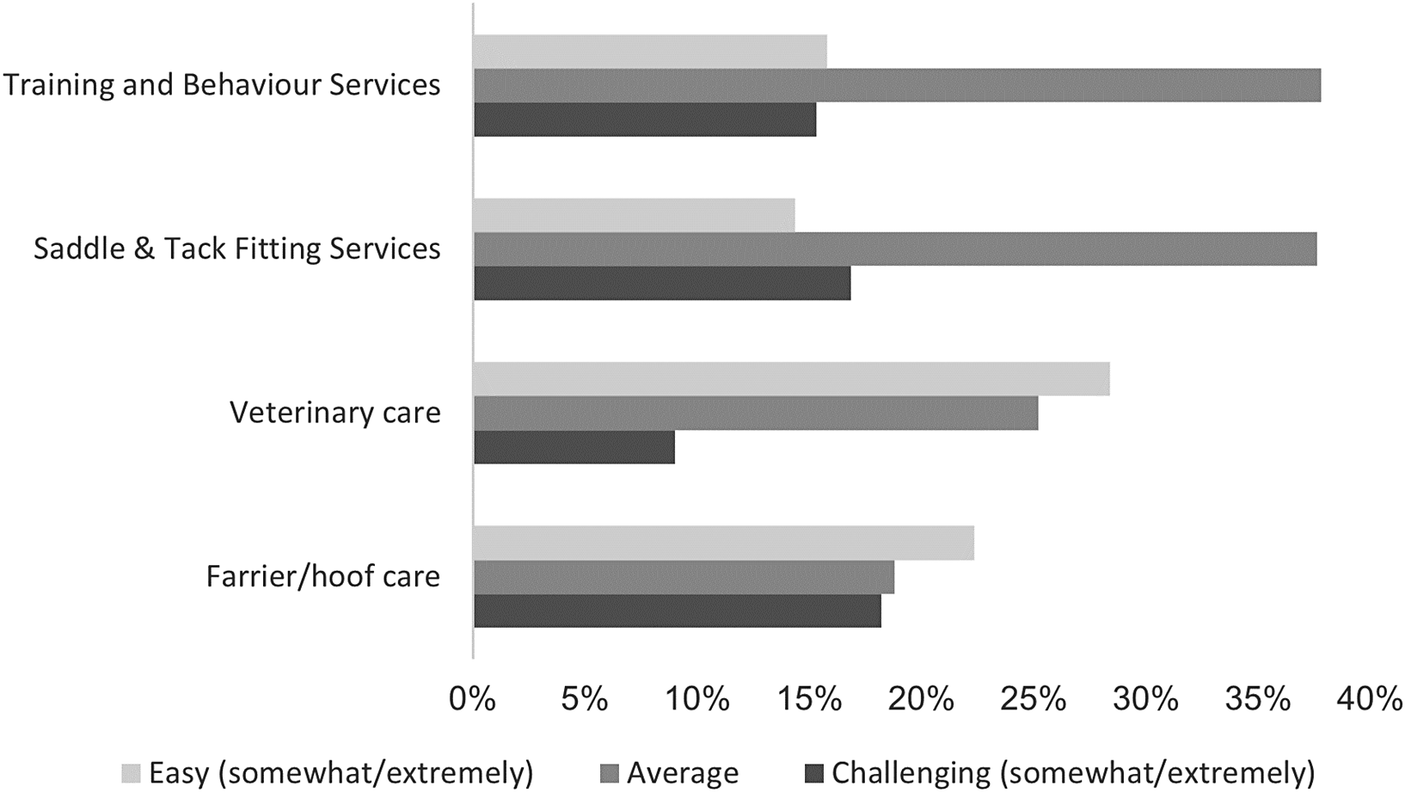
Perceived challenge in accessing farriery, veterinary, and other equine services is shown in Figure 1. Responses were originally recorded on a five-point scale ranging from ‘extremely challenging’ to ‘extremely easy’. These categories were collapsed into three groups: challenging (extremely/somewhat challenging); average; and easy (somewhat/extremely easy).
Perceived challenges in accessing equine services according to horse owners and veterinary professionals. Bars show the percentage of respondents rating access to farrier/hoof care (n = 208), veterinary care (n = 206), saddle and tack fitting services (n = 202), and training and behaviour services (n = 193) as easy, average, or challenging.

Stakeholder awareness and welfare-related attitudes towards farriery regulation
There was a significant association between respondent group and awareness of non-regulation (χ² = 5.78[1]; P = 0.016), with EIPs (70.2%) more likely than horse owners (51.7%) to report that they are aware that farriery is currently unregulated in Northern Ireland, with a small effect size (Cramér’s V = 0.167). There was a significant association between perceived animal welfare issues attributed to farriery, and belief that regulation would improve equine animal welfare (χ² = 4.30[1]; P = 0.038), with respondents reporting such issues more likely to endorse regulation (91.3%) than those reporting no issues (79.3%), with a small effect size (Cramér’s V = 0.163). There was a significant association between respondent group and perceived animal welfare issues attributed to farriery (χ² = 5.33[1]; P = 0.021), with EIPs (58.3%) more likely than horse owners (39.1%) to attribute welfare issues to farriery practices, with a small effect size (Cramér’s V = 0.169).
Survey open-ended responses
Positive aspects of current farriery services
Respondents were asked to describe positive aspects of farrier services in Northern Ireland. Many provided brief, general statements, describing farriers as “very knowledgeable” or “timely and willing to discuss and resolve issues”. Others offered more detailed accounts that highlighted specific practices and longer-term relationships. Continuity of care was perceived as being important, with many respondents reporting use of the same farrier over long periods, fostering trust between the farrier, the horse, and the owner. For example, one respondent stated, “We have used the same farrier for 6 years. He has always been reliable, friendly and very good at his job”. Participants frequently valued reliability and punctuality, alongside patience and calm handling, particularly with young, difficult, or rehabilitating horses. Good communication and a willingness to work collaboratively with veterinary surgeons and other EIPs were also seen as key.
Areas for improvement in current farriery practices
When asked to describe areas for improvement, respondents raised concerns primarily relating to communication and reliability. Participants reported difficulty contacting farriers, arranging appointments, and depending on them to attend as agreed. One respondent noted that farriers are becoming “increasingly hard to get, and there seems to be a lack of supply”, while another stated, “The communication is a nightmare. They never answer.” Issues were not limited to booking, with respondents also identifying late arrival and non-attendance as areas requiring improvement, including the need for farriers to be “actually turning up when they say they will” and accounts of farriers “arranging a time and date and not arriving and not telling me that they aren’t coming then not answering calls”. Many respondents expressed concern about variable standards of practice and the absence of effective regulation, particularly the presence of individuals operating without recognised qualifications. One participant noted that there are “too many farriers operating without full qualifications” while another argued that “until it becomes a protected title and farriers are required to be registered… we will continue with the race to the bottom standards”. Concerns about regulation were also linked to animal welfare and accountability, with one respondent reporting, “I once had an unregulated or unregistered farrier hit my horse and be aggressive to others. As he was unregulated and not registered with a body, I had no professional route to complain about his professionalism”. Several respondents described farriery as an isolated profession, calling for “better links with other equine professionals…” and explained that some farriers “still refuse to adapt the ‘takes a team’ approach to horse care” which was seen as hindering effective management of complex cases.
Perceived welfare impacts associated with farriery services
Participants were asked whether they had encountered equine welfare issues they believed were directly attributable to farriery. While many stated that they encountered none (55.9%; see Table 2), others described welfare concerns linked to inconsistent or inappropriate farriery, most commonly poor hoof balance, unsuitable shoeing or trimming, and horses becoming overdue due to lack of access. One respondent noted, “I often see horses with poor hoof balance and overgrown feet because owners have been let down by their farrier or simply can’t get a farrier to come to them”. Several respondents described horses becoming lame following shoeing or trimming; others described clinical pathologies developing or being exacerbated by inappropriate farriery such as metacarpal exostosis, navicular syndrome, hoof-pastern axis deviations and keratinolytic disease of the zona alba. In many cases, improvement was reported after changing farrier, for example, “I changed farriers on vet advice, and my horse came sound again” and “We swapped and the pony’s gait is no longer affected”. Concerns were also raised about poor workmanship and aggressive handling. One respondent described witnessing horses being struck during shoeing, noting, “I have seen horses hit with rasps,” while another explained, “[I’ve] Seen some poorly shod and trimmed horses by other farriers”.
Regulation of farriery in Northern Ireland
Respondents were asked how farriery should be regulated in Northern Ireland. Most favoured formal regulation aligned with existing systems elsewhere, commonly suggesting extension of the Farriers Registration Act (1975) to Northern Ireland so that standards mirror those in Great Britain. Many proposed mandatory registration with a central professional body, supported by statutory qualifications, a code of conduct, and compulsory continuing professional development. One respondent stated, “Farrier should be a protected term like veterinary surgeon”. Respondents also emphasised the importance of transparency and accountability, recommending an easily accessible public register to allow horse owners to verify qualifications and identify appropriately trained practitioners, for example calling for “a register of farriers” with “qualifications and CPD [Continuous Professional Development] required”.
Focus groups
Across the focus groups, several barriers and facilitators were identified and mapped to the six components of the COM-B model (Michie et al. Reference Michie, Atkins and West2014): Psychological Capability, Physical Capability, Physical Opportunity, Social Opportunity, Automatic Motivation, and Reflective Motivation.
Capability
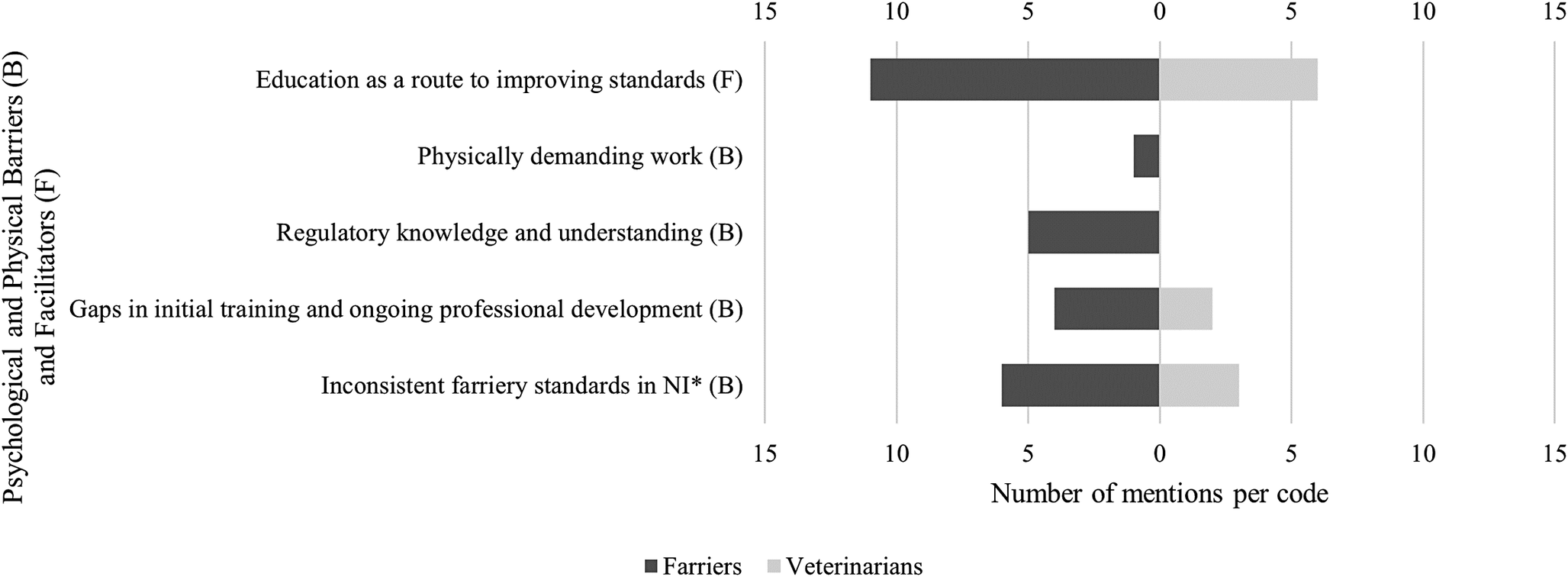
Most capability-related barriers concerned psychological capability (See Figure 2).
Physical and Psychological Capability barriers to, and facilitators of, effective farriery provision and farriery regulation in Northern Ireland. *NI = Northern Ireland.

Inconsistent farriery standards in Northern Ireland
Participants described variable skill levels across farriery practice in Northern Ireland, attributed to both differences in qualification and training quality. One farrier stated, “there definitely is a clear difference in the people that are qualified and the people that aren’t qualified”. It was also noted that poor practice was encountered more broadly; “We all get that referral where we get this horse that has been poorly shod, poorly looked after, and us guys are picking up the thing”. The role of training quality was also emphasised, with one farrier stating; “I think if you have a good boss you’re going to be good.” Veterinarians similarly observed inconsistency, describing “a lot of different levels of farriery here”.
Gaps in initial training and ongoing professional development
Participants highlighted gaps in both initial training and ongoing professional development within farriery. Farriers described the current training provision in Northern Ireland as condensed and fragmented, noting that “we only have 60 days across the two years to train them the craft of farriery” and that for some, “the training process is [not] long enough to allow them to build up their skills and confidence” Concerns were also raised about inconsistency in on-the-job learning once those on the current training programme returned to employers, with one farrier contrasting local provision with experience elsewhere, stating, “I learned more in six months over there [Great Britain] than I did here”. Veterinarians framed continuing professional development as a normal and expected part of professional practice, emphasising that “every day’s a school day” and suggested that more structured CPD could support learning and skill development across careers.
Regulatory knowledge and understanding
Participants expressed uncertainty about how regulatory systems would operate in practice, particularly in relation to trainee eligibility, supervision arrangements, and cross-jurisdiction recognition of qualifications. This uncertainty was reflected in comments such as “we don’t know the details” indicating a lack of clarity about how developments in the Republic of Ireland and the UK may affect farriery in Northern Ireland.
Education as a route to improving standards
Participants consistently framed education and training as central to improving farriery standards and welfare. Many described current shortcomings in education as more pressing than legislative gaps, with one stating, “I see an education issue more so than a legislation issue”. Education was frequently referred to as a prerequisite for effective regulation, with participants emphasising that “you have to educate before you can legislate”, and that education and legislation “need to go hand in hand”. Veterinarians similarly highlighted the role of education, continuing professional development, and assessment, suggesting that “[a] course and continuing ed[ucation] and some sort of an exam would be a good thing to… level the playing field”. Structured CPD was suggested to make ongoing learning part of routine farriery practice.
Opportunity
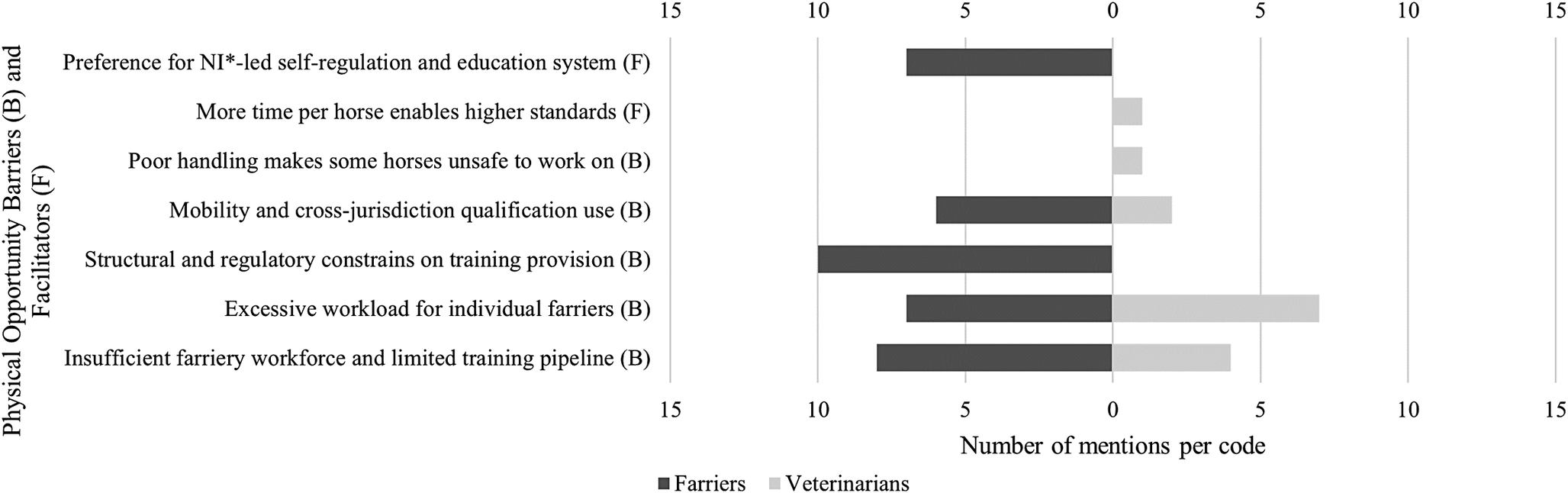
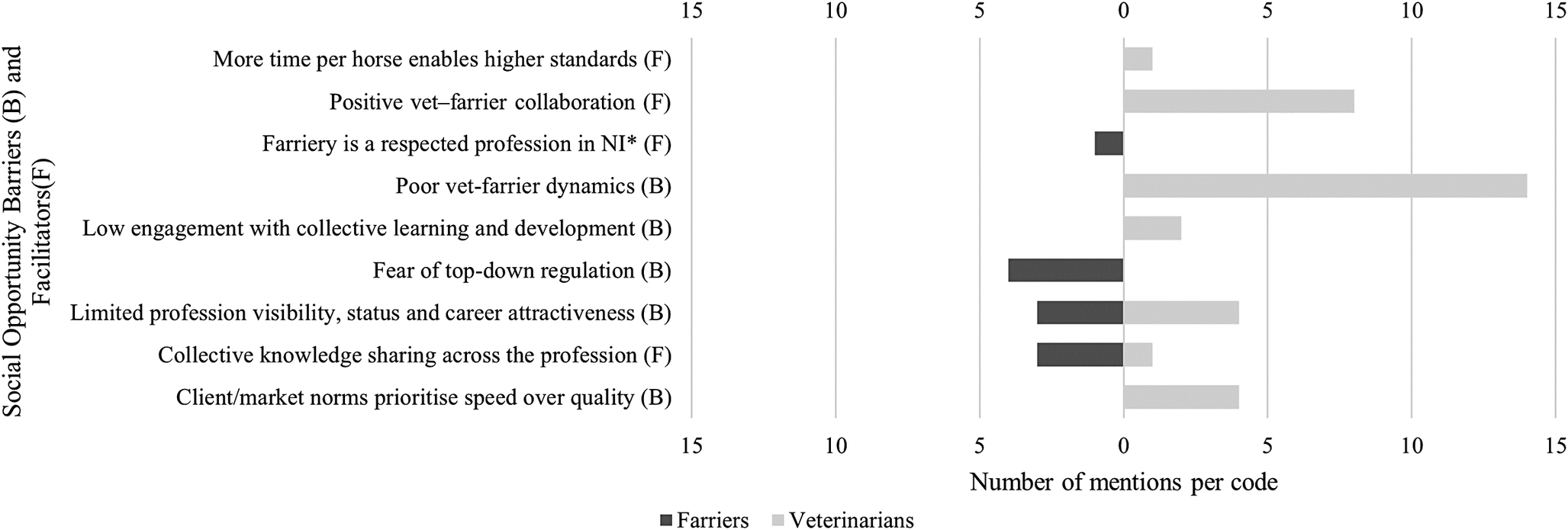
Several barriers and a number of facilitators related to both physical and social opportunity were identified (see Figures 3 and 4).
Physical Opportunity barriers to, and facilitators of, effective farriery provision and farriery regulation in Northern Ireland. *NI = Northern Ireland.

Social Opportunity barriers to, and facilitators of, effective farriery provision and farriery regulation in Northern Ireland. *NI = Northern Ireland.

Physical opportunity
Excessive workload for individual farriers
Participants described heavy workloads for individual farriers, noting that there is “lots of work, maybe too much work for individuals”, with one stating, “I’m very busy all the time” and explaining; “I could take on somebody tomorrow and fill their book easily”. This workload was discussed alongside economic constraints on hiring and service provision, with participants noting that some “don’t feel they can take on [trainees] now” due to new rules on minimum wage. Farriers also reflected that they “probably didn’t charge enough” historically, shaping current pressures on service delivery. Service availability was described as uneven, with one participant noting that owners of “a wee single Shetland pony… or a donkey… can’t get nobody to come” while “top end clients… I’m going to turn up if and when they need me”. Veterinarians highlighted how this shortage translated into time pressure in practice, noting that “when they get a reputation for being good, it’s very difficult because then they try and spread themselves too thin” and that when farriers are “worried that they’re late for the next call” attention to individual cases can slip.
Insufficient farriery workforce and limited training pipeline
Closely linked to high workloads for existing farriers, participants identified workforce shortages as a central constraint, driven by low numbers entering training and an ageing practitioner base. Farriers noted that “we only have very, very few numbers that have come through that are living in [Northern Ireland]” with reports that “there hasn’t been a guy in [Northern Ireland] qualified in five years” and that the majority of practising farriers are “in the 50s bracket plus”. This was viewed as a potential future animal welfare risk, with concerns that “it’s going to become a welfare issue that people physically can’t get farriers”. Veterinarians emphasised that these shortages affected practice even where strong working relationships existed, describing “a really big issue trying to find a farrier” and that “even when we do get a farrier on board… trying to get that farrier to then commit to that case ongoing and going forward is quite difficult”.
Preference for Northern Ireland-led self-regulation and education system
The most commonly cited facilitator was support for a move towards self-regulation, with most participants emphasising that this should neither involve farriers regulating themselves, nor simply aligning with existing Great Britain regulations. Instead, self-regulation was generally envisaged as a Northern Ireland-led system overseen by an independent governing body, with one participant explaining, “I think if we became self-regulated and have our own education system, I think that would be much better”. Participants demonstrated a willingness to engage with locally led regulation focused on training quality and professional standards, with one farrier stating that working collaboratively with existing training and professional bodies in Northern Ireland “would be brilliant”.
Social opportunity
Veterinarian-farrier dynamics
While this topic was not raised by farriers, veterinarians discussed both negative veterinarian-farrier dynamics, and examples of effective collaboration. The most discussed issue was difficulty working with some farriers, characterised by limited communication, resistance to veterinary input, and challenges securing ongoing commitment to specific cases, for example, where requests from veterinarians were “either not done or there’s no feedback comes back from the farrier and the job’s not done”. In particular, the terms “awkward” or “awkwardness” were used repeatedly by veterinarians to describe these interactions. Veterinarians also described more positive models of collaboration, typically involving a small number of trusted farriers who were “very open-minded” willing to review imaging, acknowledge uncertainty, and engage in joint decision-making.
Limited profession visibility, status and career attractiveness
Farriers described farriery as having low visibility and status within Northern Ireland, which was perceived to undermine its attractiveness as a career. Farriers contrasted local perceptions with experiences elsewhere, noting that in England they were seen as “much more professionals” whereas in Northern Ireland, farriers were viewed as “somebody that slaps shoes on horses”. This lack of professional recognition was linked to weak recruitment, with concerns that “there’s not people who want to come into [the] industry and don’t see it as a profession or potential long-term profession”. Farriers also highlighted the absence of farriery within outreach activities, noting that despite investment in recruitment stands at major agricultural shows, “none of that covers farriery” and that at the time of interview, prospective entrants had been told that the course was no longer running. Veterinarians echoed these concerns, referring to downward pressure on farriers’ status and pricing, with fears that increasing fees could result in losing clients, and describing how farriers are often expected to work cheaply with “difficult, dangerous horses”.
Fear of top-down regulation
Participants expressed concern about externally imposed regulation, particularly the potential extension of the Farriers Registration Council system to Northern Ireland. Farriers conveyed apprehension that regulatory change could be introduced with limited opportunity for dialogue or local adaptation, with one farrier stating, “I don’t think they’re willing to sit down and modify things”.
Client/market norms prioritise speed over quality
Veterinarians described client and market expectations as a constraint on farriery practice, a theme that was not raised by farriers. Vets highlighted that expectations around speed and price often outweighed considerations of time spent or quality of work, noting that “it comes down to the clients and the expectations and what people are willing to pay”. One veterinarian described frustration where a farrier had invested time in self-education and quality, and lost work to others completing the job in less time for “the same money or twice the money”.
Collective knowledge sharing across the profession
Participants described collective knowledge sharing as a facilitator for improving practice across the profession. Farriers acknowledged the value of working together and learning from peers, with one stating that “everybody sitting here knows something that I don’t know. Knowledge is for sharing,” and calls for the profession to “all come together”. Veterinarians shared this view, expressing a desire for mechanisms that allow farriers to seek support from more experienced colleagues, for example by “pick[ing] up the phone to a more qualified farrier” or working together in workshop-style settings.
Motivation
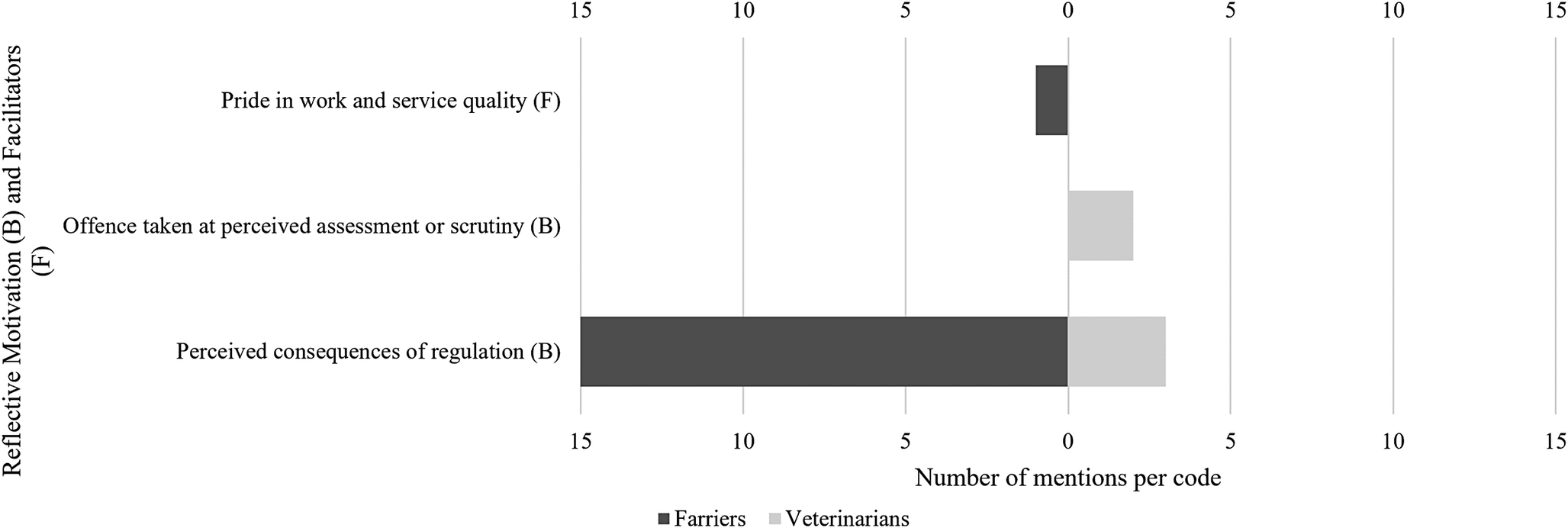
A number of barriers and facilitators related to motivation were identified, associated with reflective motivation (see Figure 5).
Reflective Motivation barriers to, and facilitators of, effective farriery provision and farriery regulation in Northern Ireland.

Reflective motivation
Offence taken at perceived assessment or scrutiny
Veterinarians described instances where suggestions of referral, joint attendance, or additional input were interpreted by farriers as criticism, rather than support. One veterinarian noted that proposing to attend alongside another practitioner “went down like an absolute lead balloon” as it was taken to imply that they “didn’t rate them as a farrier”. Similar reactions were described elsewhere, with non-attendance at training events attributed to participants being “offended”.
Concerns about regulation and unintended consequences
Participants expressed concerns about the potential consequences of introducing new regulations or extending existing GB regulations in Northern Ireland. Farriers questioned whether adopting the current model used in GB would function locally, with one stating that “if that was duplicated and brought here, it simply just wouldn’t work in its current form”. Others pointed to perceived difficulties in GB, arguing that “the current system isn’t even working in England, so it’s definitely not going to work here". Veterinarians also raised concerns about unintended effects. One stated, “are we increasing a barrier to entry and only making a problem more difficult?”, while another cautioned that “having qualifications isn’t an automatic solution… we just have to be careful we don’t make farriery entry too tricky and exacerbate the problem”. Related to concerns about regulation, participants expressed mixed views on the necessity and purpose of regulation. Some questioned the need for legislation, stating; “we don’t have legislation. Has it done us any harm at the minute?” Uncertainty was also evident, with participants noting that they were “still trying to figure out what our benefits may be from it”.
Solutions
During the discussions, a number of solutions were identified by farriers and veterinarians. These are outlined below.
Economic sustainability and value recognition
Veterinarians argued that farriers should “set a price, a decent price that may be above the unqualified, and work to a good standard”, noting that owners must begin to ask, “Are you registered? Is there a register? What sort of qualification do you have?” Client education was viewed as important; “until horse owners understand the difference and expect that there should be a level of qualification… it’s going to be a very slow and difficult process”.
Northern Ireland-led governance and shared professional responsibility
Farriers expressed support for a locally appropriate regulatory structure, with one asking, “can we not lobby the government to bring in a regulatory body for us?” and another noting, “we as farriers can’t police other farriers, we need a body to step in”. Participants described the need to “get together and say, this is what we want” but emphasised that implementation should sit with an independent body. While some saw value in existing models, others believed “there is the right people out there” to deliver governance suited to Northern Ireland.
Normalise learning, referral and peer exchange
Veterinarians supported making peer referral and CPD a normal part of farriery practice. There was support for compulsory CPD “in order to practice”, framed as a way to make development “an accepted thing” so that ongoing learning becomes routine. Previous voluntary initiatives had limited local uptake, suggesting that without formal requirements, engagement is likely to remain low.
Promote farriery as a viable career path in Northern Ireland
Farriers described the profession as poorly promoted and often absent from agricultural events. Some reported that interested young people were told training routes were unavailable. Participants emphasised that many “want to be farriers but just don’t know how” and called for clearer entry routes, stronger promotion, and active recruitment to improve visibility and attract new entrants.
Structured training and skills development pathways
Participants proposed longer and more structured training programmes, with one suggesting “a four-year apprenticeship…” alongside training days. Current upskilling courses were described as “too condensed”, with learning often stopping once trainees return to their employer. Some explained that trainees are used mainly as labour rather than being trained. On-the-job training was viewed as necessary to allow for skill development.
For barriers and a selection of proposed solutions related to compliance with the regulation of farriery in Northern Ireland, see Table 5. The intervention functions presented represent examples of potential approaches informed by a selection of the most frequently discussed barriers and facilitators identified in the focus groups, supplemented by findings from the horse owner survey. They are not intended to represent an exhaustive list of all possible intervention strategies.
Barriers and proposed solutions relating to compliance with regulation of farriery in Northern Ireland, mapped to the Behaviour Change Wheel framework (Michie et al. Reference Michie, van Stralen and West2011, Reference Michie, Atkins and West2014)

Table 5. Long description
Table mapping barriers and facilitators identified in the qualitative study to the Behaviour Change Wheel framework. For each COM-B component and stakeholder group, the table presents the identified barrier or facilitator, proposed solution, corresponding intervention function and policy category. Recommendations include improved education, public awareness, communication, workforce capacity and collaboration between veterinarians and farriers to support effective regulation.
* CPD = Continuous Professional Development
Discussion
The role of stakeholder Capability in ensuring effective farriery provision and regulation
Horse owner knowledge gaps were evident from the survey data. While most believed their farrier held qualifications, just under a third reported knowing how to check qualifications. Equine industry professionals (EIPs) were more aware of non-regulation of farriery and were more likely to attribute welfare issues to farriery practices. Mechanisms that enable independent verification of credentials, such as a publicly accessible register of farriers, may support informed decision-making and strengthen trust between horse owners and farriers. Comparable systems include animal welfare certification schemes for animal products (Main et al. Reference Main, Mullan, Atkinson, Cooper, Wrathall and Blokhuis2014) and the Royal College of Veterinary Surgeons (RCVS) register, which allows pet owners to confirm whether veterinarians and veterinary nurses are authorised to practise in the UK (RCVS 2026a).
Education of farriers was also seen as a route to improving standards in the industry, through both initial training and ongoing professional development. Findings from the current study suggest that more structured initial training pathways and greater consistency in workplace learning may support the development of technical competence and confidence among trainee farriers. Once qualified, Continuing Professional Development (CPD) is a mechanism for maintaining standards among farriers. CPD is a mandatory requirement across many regulated professions in the UK, including dentistry, human medicine and veterinary medicine (Karas et al. Reference Karas, Sheen, North, Ryan and Bullock2020; Gates et al. Reference Gates, McLachlan, Butler and Weston2021). In Great Britain, approved Training Farriers have been required to complete a minimum of 10 Continuous Professional Development (CPD) points each year since 2014, and this requirement was extended to all newly registered farriers from 2016. CPD became mandatory for all registered farriers in Great Britain in 2023, as a condition of maintaining registration with the Farriers Registration Council (The Worshipful Company of Farriers 2025). Currently, there is no such requirement in Northern Ireland. Introducing mandatory CPD for NI farriers may help to normalise ongoing learning within the profession and support greater consistency in practice. Furthermore, making such training mandatory would help in making it a normal part of farriery in NI and ensure engagement. Professionals, including veterinarians, have shown a preference for learning activities that involve peer interaction and hands-on learning (Dale et al. Reference Dale, Pierce and May2013; Gates et al. Reference Gates, McLachlan, Butler and Weston2021). Given the technical nature of farriery, and the importance of collaboration between farriers, veterinarians and other EIPs, training that incorporate peer exchange and practical experience may be particularly valuable. It is also important to note that the Veterinary Surgeons Act (1966) is currently under active review. Following detailed discussions between DEFRA, the RCVS, and other key stakeholders throughout 2025, the UK Government launched a public consultation on proposed reforms in January 2026, which closed in March 2026, with a formal government response expected in summer 2026 (RCVS 2026b). A key fact for the present study is that the consultation includes a proposal to bring farriers within the scope of the reformed legislation, which would have the effect of extending statutory regulation of farriery to Northern Ireland for the first time, through repeal of the Farriers Registration Act (1975) and abolition of the Farriers Registration Council (BVA 2026). If enacted, this would represent a fundamental change to the regulatory landscape described in this paper. Northern Ireland’s status as a devolved jurisdiction means that the precise legislative implications for this region remain to be determined; however, these developments strongly reinforce the timeliness of the present study, and the importance of the evidence base it provides to inform that process.
The role of stakeholder Opportunity in ensuring effective farriery provision and regulation
The shortage of available farriers was a theme running through the survey and focus group responses. Farriers reported high workloads and the need to prioritise clients, while horse owners and veterinarians noted difficulties in accessing farrier services. Thirkell and Hyland (Reference Thirkell and Hyland2017) reviewed client-farrier relationships in the UK and found that over a third of participants reported issues with farrier time-keeping. In contrast to the present study, however, only 9% of respondents reported a shortage of available farriers. While the country breakdown was not reported in this study, it could suggest that lack of availability may be a more pronounced issue within Northern Ireland compared to other parts of the UK. In the current study, most owners reported shoeing intervals of six to seven weeks, although this ranged widely (two to 26 weeks). Evidence suggests that intervals exceeding six weeks can increase cumulative loading within the hoof and increase injury risk (Lesniak et al. Reference Leśniak, Williams, Kuznik and Douglas2017). Therefore, limited access to farriery services has clear welfare implications. Some farriers reported prioritising higher-value clients, suggesting that average horse owners may be disproportionately affected by workforce shortages.
Veterinarians in the current study also emphasised the need to avoid introducing additional barriers to farriery, given existing constraints on availability and workload. Any proposed changes should therefore support, rather than restrict access to services, including measures to reduce barriers to entry and encourage recruitment into the profession. Evidence from other professions suggests that professional standards and workforce sustainability can be achieved concurrently if implementation is gradual. Across healthcare settings, lack of time, limited resources, and excessive workloads have been identified as barriers to engagement with CPD, whereas accessible training and supportive working environments facilitate participation (Mlambo et al. Reference Mlambo, Silén and McGrath2021; Merry et al. Reference Merry, Castiglione, Rouleau, Létourneau, Larue, Deschênes, Gonsalves and Ahmed2023). In the context of farriery, this suggests that CPD should be low cost, flexible and easily accessible. A phased approach to mandatory CPD may help raise professional standards without inadvertently exacerbating workforce shortages.
In terms of Social Opportunity, effective communication and collaboration are widely recognised as key non-technical skills in veterinary practice (Cake et al. Reference Cake, Bell, Williams, Brown, Dozier, Rhind and Baillie2016). However, the current findings suggest these are not yet embedded within the culture of farriery in Northern Ireland. Veterinarians described some positive working relationships with farriers, but most interactions were deemed difficult. Interestingly, these issues were raised by veterinarians but not by farriers, which may reflect differences in awareness, professional norms, or training. Structured CPD delivered in peer-based settings, including joint training with veterinarians, may help normalise collaboration and improve working relationships. Both farriers and veterinarians referred to a lack of visibility of farriery as a viable career path. Increasing the visibility of farriery (e.g. at agricultural events), alongside structured training pathways and targeted recruitment could further support entry into the profession in Northern Ireland.
Horse owners reported long-term, trusted relationships with their farrier as a positive aspect of the relationship, while the main areas for improvement related to communication and reliability. Similar pros and cons were identified by Thirkell and Hyland (Reference Thirkell and Hyland2017) in their UK-wide survey on client-farrier relationships, where participants reported longstanding relationships with their farrier once trust was established. Similarly, the current study findings suggest that strengthening communication and collaborative practices between farriers, veterinarians, and horse owners may help reinforce trust.
The role of stakeholder Motivation in ensuring effective farriery provision and regulation
The survey results indicated strong support among horse owners and other equine stakeholders for the regulation of farriery in Northern Ireland, with most expecting regulation to be introduced and believing it would improve animal welfare. This contrasted with farriers, for whom the primary motivational barrier related to perceived consequences of regulation. Given the complexity of animal welfare and the involvement of stakeholders with differing interests, solutions should be developed through collaborative, multi-stakeholder approaches that integrate scientific, practical, and policy knowledge, rather than relying solely on top-down regulation (Fernandes et al. Reference Fernandes, Blache, Maloney, Martin, Venus, Walker and Tilbrook2019). Beliefs about the consequences of regulation may be most effectively addressed through education, persuasion, and modelling (Michie et al. Reference Michie, Atkins and West2014), for example, by clearly communicating expected benefits, showcasing positive examples of regulated practice, and engaging farriers in the co-development of regulatory approaches. When farriers collectively commit to changes and view regulation as legitimate and beneficial, implementation is more likely to be successful (May Reference May2013). The relative recency of prominent advocacy for farriery regulation in Northern Ireland reflects the devolved legislative context and the comparatively smaller and more dispersed equine sector in the region, which has historically limited the visibility of farriery welfare concerns within the Northern Ireland Assembly’s legislative programme. The Farriers Registration Act (1975) has never extended to Northern Ireland, and unlike Great Britain, no equivalent statutory framework has been introduced. In the Republic of Ireland, farriery is not subject to statutory regulation equivalent to that in Great Britain; however, Farriery Ireland (established 1999) maintains a voluntary register of qualified farriers and operates the Irish School of Farriery, delivering a QQI Level 6 qualification through the SOLAS apprenticeship framework. This voluntary professional infrastructure on the island of Ireland illustrates that structured training and qualification frameworks can be developed independently of statutory regulation and may represent a relevant comparator for Northern Ireland. Where this study references international examples of unregulated farriery practice, including evidence from Pakistan and India (Mohite et al. Reference Mohite, Sheikh, Singh, Kalita, Williams and Compston2019; Brooke 2021), these settings are characterised by structural poverty, absence of formal agricultural governance, and limited access to veterinary infrastructure; factors that do not parallel the Northern Ireland context. These international comparisons are included to illustrate the welfare consequences of inadequate farriery standards more broadly, rather than to draw direct regulatory parallels with Northern Ireland.
Study limitations
This study had a number of limitations. The survey was primarily distributed through social media platforms, possibly excluding those who are less engaged with social media and technology, which may introduce a sampling bias. As a result, underrepresentation of some groups may exist. This study also relied on self-reported data, which can be subject to a social desirability bias, the tendency for participants to provide responses they believe will be viewed favourably by others, rather than accurately reflecting their genuine beliefs (Grimm Reference Grimm2010). However, the survey was completed anonymously, reducing the likelihood that participants would modify their responses due to concerns about personal identification or judgement.
Animal welfare implications
The findings highlight potential risks to equine welfare arising from inconsistent farriery standards, limited service availability, and poor communication between farriers and veterinarians. Participants reported concerns including delayed or missed appointments and variable quality of care, both of which may compromise equine health and welfare. Workforce shortages may further reduce access to timely farriery, particularly for lower-value animals. Improving training provision, supporting ongoing professional development, and enabling horse owners to verify practitioner qualifications may promote more consistent standards of care. Strengthening collaboration between farriers and veterinarians is also likely to support more effective management of cases. Overall, improving access to qualified farriers and supporting consistent, high-quality practice may help reduce welfare risks.
Conclusion
This study identified several barriers to effective farriery provision and regulation in Northern Ireland. While horse owners and equine industry professionals, including veterinarians, showed strong support for regulation, farriers expressed concerns about its potential consequences. Workforce shortages, inconsistent training, and limited collaboration between farriers and veterinarians were key constraints on service delivery. Education, structured training, and mechanisms to verify qualifications were identified as key facilitators of positive change. Any changes to regulation of farriery in Northern Ireland will require active involvement of farriers and other stakeholders to ensure a workable system that supports farriers and safeguards equine welfare.
Supplementary material
The supplementary material for this article can be found at http://doi.org/10.1017/awf.2026.10106.
Competing interests
None.




 Open access

