





Non-technical Summary
The boundary between the Ediacaran (635–539 million years ago, Ma) and Cambrian (539–487 Ma) periods represents a critical transition in Earth history, with the dawn of the Phanerozoic (539–0 Ma) bringing a rapid increase in the diversity and complexity of life. Currently, this important boundary is defined by the first appearance of complex burrowing behaviors exhibited by early marine organisms, recorded in the rock record as trace fossils. However, because the appearance of these trace fossils is restricted to particular rock types, they are difficult to correlate with supplemental boundary indicators, such as skeletal remains of early animals and diagnostic chemical excursions.
Investigating earliest Cambrian deposits in South China has revealed that spiny organic-walled microfossils, or acritarchs, can serve as a useful marker for the Ediacaran–Cambrian boundary. These acritarchs are widely distributed in a variety of rock types preserved across South China, allowing their occurrences to be reliably correlated with other boundary indicators. These acritarchs are also demonstrated to be equivalent in time to other markers, indicating their suitability for recognizing the boundary. Acritarchs were identified at 11 localities across a shallow- to deep-water transect on the Yangtze Craton in South China, signifying their broad environmental distribution. Consequently, these acritarchs are determined to be a robust boundary marker in South China. Additionally, two latest Ediacaran microfossils, consisting of strings of bead-like and crescentic modules, are shown to be characteristic of late Ediacaran rocks, providing an additional constraint on the Ediacaran–Cambrian boundary. This study demonstrates that, in South China, acritarchs and modular microfossils can be used to effectively and reliably bracket the Ediacaran–Cambrian boundary.
Introduction
The Ediacaran–Cambrian transition represents a critical evolutionary event in Earth history, with an observed rapid diversification of biomineralizing, burrowing, planktonic, and nektonic organisms in the rock record (Alroy, Reference Alroy2010; Wood and Zhuravlev, Reference Wood and Zhuravlev2012; Nowak et al., Reference Nowak, Servais, Monnet, Molyneux and Vandenbroucke2015; Mángano and Buatois, Reference Mángano and Buatois2017) accompanied by abrupt, drastic changes in ocean chemistry (Maloof et al., Reference Maloof, Porter, Moore, Dudás, Bowring, Higgins, Fike and Eddy2010). Effectively defining and recognizing the Ediacaran–Cambrian boundary in sedimentary successions is essential for characterizing the tempo and mode of environmental and ecological changes during this crucial transition.
The first appearance of the complex trace fossil Treptichnus pedum (Seilacher, Reference Seilacher1955) Jensen, Reference Jensen1997, at Fortune Head (Newfoundland, Canada) was selected as the Global Standard Stratotype Section and Point (GSSP) for the Ediacaran–Cambrian boundary (Narbonne et al., Reference Narbonne, Myrow, Landing and Anderson1987; Landing, Reference Landing1994). In subsequent work, the first appearance of T. pedum was observed several meters below the original GSSP (Gehling et al., Reference Gehling, Jensen, Droser, Myrow and Narbonne2001). Treptichnus pedum is an ichnofossil exhibiting multiple branching probes, hypothesized to represent burrows of early priapulid animals (Vannier et al., Reference Vannier, Calandra, Gaillard and Żylińska2010), identified worldwide (Buatois, Reference Buatois2018), and shown to tolerate a broad range of environmental conditions in siliciclastic facies (Buatois et al., Reference Buatois, Almond and Germs2013). The appearance of this ichnofossil signifies the earliest known widespread complex burrowing and undermat mining behaviors (Herringshaw et al., Reference Herringshaw, Callow and McIlroy2017), which made it the preferred choice for defining the Ediacaran–Cambrian boundary (Narbonne et al., Reference Narbonne, Myrow, Landing and Anderson1987; Landing, Reference Landing1994).
Recently, T. pedum has come under scrutiny as a suitable biostratigraphic marker (Landing et al., Reference Landing, Geyer, Brasier and Bowring2013; Babcock et al., Reference Babcock, Peng, Zhu, Xiao and Ahlberg2014; Buatois, Reference Buatois2018). The challenge of using the first occurrence of T. pedum to define the Ediacaran–Cambrian boundary is principally a result of its facies dependence; that is, T. pedum primarily occurs within siliciclastics. This complicates correlation between siliciclastic successions and those dominated by carbonates, which frequently lack trace fossils but contain other biostratigraphic markers, such as small shelly fossils (SSFs) or chemostratigraphic data in the form of δ13C isotope profiles (Topper et al., Reference Topper, Betts, Dorjnamjaa, Li, Li, Altanshagai, Enkhbaatar and Skovsted2022), prompting reconsiderations of the official definition of the Ediacaran–Cambrian boundary (e.g., Babcock et al., Reference Babcock, Peng, Zhu, Xiao and Ahlberg2014).
Microfossils represent a possible additional biostratigraphic constraint on the Ediacaran–Cambrian boundary. A notable increase in the abundance and diversity of acanthomorphic acritarchs is observed at the base of the Cambrian (Knoll, Reference Knoll1994; Huntley et al., Reference Huntley, Xiao and Kowalewski2006; Moczydłowska, Reference Moczydłowska2011). Among these acritarchs, the Asteridium–Heliosphaeridium–Comasphaeridium (AHC) assemblage zone (Yao et al., Reference Yao, Xiao, Yin, Li and Yuan2005) is particularly important for recognizing the base of the Cambrian System in South China. The AHC assemblage comprises a group of acanthomorphic acritarchs—Asteridium tornatum (Volkova, Reference Volkova, Volkova, Zhuravleva, Zabrodin and Klinger1968) Moczydłowska, Reference Moczydłowska1991, Heliosphaeridium ampliatum (Wang, Reference Wang1985) Yao et al., Reference Yao, Xiao, Yin, Li and Yuan2005, and Comasphaeridium annulare (Wang, Reference Wang1985) Yao et al., Reference Yao, Xiao, Yin, Li and Yuan2005—that co-occur with tubular microfossils, such as Megathrix longus Yin, Reference Yin1987a, and various SSFs.
Regional correlation of the AHC biozone has been employed across South and Northwest China (Yao et al., Reference Yao, Xiao, Yin, Li and Yuan2005; Dong et al., Reference Dong, Xiao, Shen, Zhou, Li and Yao2009; Ahn and Zhu, Reference Ahn and Zhu2017; Luo and Zhu, Reference Luo and Zhu2025), while global correlations have been made to acritarch assemblages of the Eastern European Platform (Moczydłowska, Reference Moczydłowska1991; Yao et al., Reference Yao, Xiao, Yin, Li and Yuan2005), India (Tiwari, Reference Tiwari1999), and possibly Kazakhstan (Sergeev and Ogurtsova, Reference Sergeev and Ogurtsova1989). Additionally, uppermost Ediacaran strata in South China contain the characteristic microfossils Horodyskia minor Dong et al., Reference Dong, Xiao, Shen and Zhou2008, and Nenoxites jiumenensis (Dong et al., Reference Dong, Xiao, Shen and Zhou2008) n. comb., both consisting of uniserial modules (Dong et al., Reference Dong, Xiao, Shen and Zhou2008; Chen and Feng, Reference Chen and Feng2019; Zhu et al., Reference Zhu, Yang, Yuan, Li, Zhang, Zhao, Ahn and Miao2019). The possibility of using Cambrian and Ediacaran microfossil assemblages to identify the Ediacaran–Cambrian boundary has, thus far, received little attention.
Here, we propose using Cambrian acanthomorphic acritarchs in conjunction with the Ediacaran microfossils H. minor and N. jiumenensis to bracket the Ediacaran–Cambrian boundary, providing a consistent and reliable biostratigraphic constraint, in South China. To test the validity of this biostratigraphic regime, the stratigraphic occurrences of Ediacaran uniserial modular microfossils and early Cambrian acanthomorphic acritarchs are correlated across 14 localities on the Yangtze Craton of South China. We evaluated the consistency of key fossil occurrences across facies and depositional environments along a carbonate shelf-to-basin transition, assessed the potential of using the AHC and HmNj assemblage biozones to bracket the boundary in South China, and explored the possibility of utilizing this boundary proxy globally.
Geological setting
Ediacaran–Cambrian deposition on the passive continental margin of the Yangtze Craton (Fig. 1) is represented by shelf facies in the northwest (which was further differentiated into the inner shelf, intrashelf lagoon, and shelf margin; Fig. 1.2) and slope and basinal facies toward the southeast (Figs. 1.2, 2). In the inner shelf and intrashelf lagoon facies, Ediacaran sediments are composed of mixed shales and dolostones of the Doushantuo (635–551 Ma) and Dengying (551–539 Ma) formations (Condon et al., Reference Condon, Zhu, Bowring, Wang, Yang and Jin2005; Linnemann et al., Reference Linnemann, Ovtcharova, Schaltegger, Gärtner and Hautmann2019). These Ediacaran strata are disconformably overlain by Cambrian Yanjiahe Formation carbonates and shales, which underly younger Shuijingtuo Formation black shales (Figs. 1.3, 2). In shelf margin environments, a carbonate shoal developed during the Ediacaran Period, with intraclastic carbonates and interbedded shales deposited in northeastern Guizhou, northern Hunan, and southwestern Hubei provinces. Deepwater slope and basinal strata developed in the southeast of the Yangtze Block (Fig. 1.2). These deposits comprise Doushantuo Formation basinal black shales overlain by silicified mudstones and shales of the Ediacaran–Cambrian Liuchapo Formation, and then basinal black shales of the early Cambrian Niutitang Formation (Figs. 1.3, 2).
Geological context. (1) Location of the Yangtze Block, with dashed rectangle marking area enlarged in (2). (2) Generalized paleogeographic reconstruction for the Yangtze Platform during the terminal Ediacaran to early Cambrian, modified from Jiang et al. (Reference Jiang, Wang, Shi, Xiao, Zhang and Dong2012). Studied localities include: Jiuqunao (1; 30°52’48.2"N, 110°52’54.0"E); Jijiapo (2; 30°45’10.8"N, 111°01’58.8"E); Baiguotang (3; 30°44’23.3"N, 110°58’04.0"E); Hezi’ao (4; 30°30’43.3"N, 111°09’03.4"E); Ganziping (5; 29°03’58.5"N, 110°26’43.8"E); Sancha (6; 29°03’57.6"N, 110°33’31.1"E); Daping (7; 29°00’47.1"N, 110°29’00.6"E); Siduping (8; 28°54’48.9"N, 110°27’02.1"E); Xugongping (9; 28°51’51.1"N, 110°27’54.5"E); Louyixi (10; 28°40’58.5"N, 109°58’45.4"E); Longbizui (11; 28°29’40.7"N, 109°50’35.4"E); Yanwutan (12; 28°24’48.7"N, 110°29’46.8"E); Taoying (13; 27°50’01.4"N, 109°01’04.9"E); and Jianxincun (14; 26°46’22.7"N, 108°25’01.0"E). (3) Generalized stratigraphy of the upper Cryogenian to lower Cambrian deposits on the Yangtze Platform. Stratigraphic age constraints (stars: left, shallow; right, deeper) are from: (a) Condon et al. (Reference Condon, Zhu, Bowring, Wang, Yang and Jin2005); (b) Huang et al. (Reference Huang, Chen, Ding, Zhou and Zhang2020); (c) Chen et al. (Reference Chen, Zhou, Fu, Wang and Yan2015); (d) Zhang et al. (Reference Zhang, Chang, Chen, Wang and Feng2022); (e) Chen et al. (Reference Chen, Wang, Qing, Yan and Li2009).

Figure 1. Long description
Panel 1 is a map of China showing the Tarim, North China, Yangtze, and Cathaysia blocks. A red dashed rectangle highlights the Yangtze block in South China.
Panel 2 is a detailed paleogeographic map of the Yangtze Platform. A legend at the bottom left identifies five zones from Northwest to Southeast: Inner shelf in light yellow, Intrashelf basin or shelf lagoon in medium yellow, Inferred shelf margin in light green, Shelf margin in dark green, and Slope or basin in blue. Fourteen red dots numbered 1 through 14 are clustered primarily along the shelf margin and slope zones near Wuhan. Major cities Chengdu, Wuhan, Shanghai, and Guangzhou are marked for reference. A 500 kilometer scale bar is at the bottom right.
Panel 3 is a stratigraphic column. From bottom to top:
* Cryo. period: Nantuo Formation in purple, consisting of glacial diamictites with interbedded siltstone and sandstone.
* Ediacaran period: Doushantuo Formation with interbedded black shale, silty dolostone, and limestone. Above it is the Dengying or Liuchapo formations featuring thick dolostone and limestone in the shelf and black shale in the basin. A specific marker for black, high T O C shale is dated at 551.1 plus or minus 0.7 M a.
* Cambrian period: Yanjiahe or basal Niutitang formations with interbedded carbonates, shale, and organic-rich chert.
Yellow stars indicate age constraints, with dates ranging from 635.2 plus or minus 0.6 M a at the base to 536.3 plus or minus 5.5 M a at the top.
Schematic cross-section of the shelf-to-basin Tonian–Cambrian stratigraphy along a northwest–southeast transect of the Yangtze Platform. The Ediacaran–Cambrian boundary, as defined in this study, is illustrated by the red dashed line. C = Cryogenian; T = Tonian. Numbers correspond to localities in Figure 1, showing their approximate location along the transect. Modified from Jiang et al. (Reference Jiang, Shi, Zhang, Wang and Xiao2011).

Figure 2. Long description
The diagram illustrates a Northwest to Southeast transect divided into four zones: Shelf, Outer shelf, Slope, and Basin. A scale bar in the top right indicates a depth of 800 meters and a horizontal distance of 100 kilometers.
Vertical Stratigraphy and Formations:
* At the base is the Tonian T period, represented by the L T Liantuo Formation and Baxi Group in orange with black dots, indicating conglomeratic sandstone and siltstone. This layer is thickest in the Northwest shelf and thins toward the Southeast basin.
* Above the Tonian are Cryogenian C layers including the C H Chang’an and Fulu formations (purple with circles, glacial diamictite), the X M Xiangmeng Formation (teal, manganese-bearing shale-siltstone), and the N D Nantuo or Dongshanfeng Formation (light purple with circles, glacial diamictite).
* The Ediacaran E period follows, featuring the D S Doushantuo Formation cap dolostone in red, and the L P or D S Liuchapo and Doushantuo formations in grey, representing slope-basinal shales and carbonates. The D Y Dengying Formation is shown in yellow (peritidal shoal complex) and green (open shelf carbonates).
* The uppermost layer is the Cambrian period, marked by the S J T Shuijingtuo, Y J Yanjiahe, and N T Niutitang formations in dark grey, representing open shelf carbonates and shales.
Key Features:
* A red dashed line marks the Ediacaran-Cambrian boundary, which remains horizontal across the shelf but dips sharply downward following the slope into the basin.
* Localities numbered 1 through 14 are marked with black triangles along the top surface, with 1 to 4 on the Shelf, 5 to 7 on the Outer shelf, 8 to 11 on the Slope, and 12 to 14 in the Basin.
* The right margin identifies the tectonic setting, transitioning from a Rift basin during the Tonian to a Passive margin during the Ediacaran and Cambrian.
Shelf facies
On the shelf, Ediacaran–Cambrian boundary strata are represented by the carbonate-dominated Dengying Formation and the overlying Yanjiahe Formation (Fig. 2; Zhang et al., Reference Zhang, Chang, Chen, Wang and Feng2022). Characterized by interbedded shelf carbonates, gray to black shale, and cm-scale, black, organic-rich chert layers, the Yanjiahe Formation is interpreted to have been deposited during a marine transgression in a carbonate ramp setting (Jiang et al., Reference Jiang, Shi, Zhang, Wang and Xiao2011). The shelf is composed almost entirely of limestone and dolostone, with a gradual increase in phosphatic chert and shale content both vertically and towards the shelf edge.
The Yanjiahe Formation has been subdivided into five informal members based on lithostratigraphy (Guo et al., Reference Guo, Li and Li2014). The lowermost member comprises interbedded silty dolostone and chert. Overlying this, the second member is defined by phosphatic, intraclastic, dolomitic wackestones and packstones containing the first SSF assemblage zone (i.e., the Anabarites trisulcatus–Protohertzina anabarica biozone [Guo et al., Reference Guo, Li and Li2014]) and AHC microfossils (Dong et al., Reference Dong, Xiao, Shen, Zhou, Li and Yao2009; Ahn and Zhu, Reference Ahn and Zhu2017), suggesting that the Ediacaran–Cambrian boundary is within this member (Yao et al., Reference Yao, Xiao, Yin, Li and Yuan2005; Guo et al., Reference Guo, Li and Li2014; Steiner et al., Reference Steiner, Yang, Hohl, Zhang and Chang2020). This inference is further supported by the presence of a pronounced negative δ13C isotope excursion, inferred to be equivalent to the BAsal Cambrian Isotope Excursion (BACE), at stratigraphic levels coincident with or slightly below the AHC assemblage biozone (Ishikawa et al., Reference Ishikawa, Ueno, Komiya, Sawaki, Han, Shu, Li, Maruyama and Yoshida2008; Jiang et al., Reference Jiang, Wang, Shi, Xiao, Zhang and Dong2012; Ahn and Zhu, Reference Ahn and Zhu2017). The third member consists of gray mudstone–wackestone interbedded with silty shale. A transition into carbonaceous limestones marks the fourth member. Finally, the fifth member is represented by gray intraclastic limestones preserving Aldanella yanjiaheensis Chen, Reference Chen1984, and Watsonella crosbyi Grabau, Reference Grabau1900 (Guo et al., Reference Guo, Li and Li2014, Reference Guo, Li, Qiang, Song, Zhang, Han and Wang2021), characteristic of the third SSF assemblage biozone (i.e., the W. crosbyi assemblage zone), which has been proposed to define the basal boundary of Cambrian Stage 2 (Peng et al., Reference Peng, Babcock, Ahlberg, Gradstein, Ogg, Schmitz and Ogg2020; Steiner et al., Reference Steiner, Yang, Hohl, Zhang and Chang2020).
The Shuijingtuo Formation overlies the Yanjiahe Formation and represents a major marine transgression that deposited black shale facies above platform carbonates (Wang et al., Reference Wang, Chen, Yan, Wei and Xiang2012). The Shuijingtuo Formation can be divided into two informal members: a lower unit of black shale interbedded with nodular limestone, and an upper unit of silty shale and argillaceous limestone (Li and Holmer, Reference Li and Holmer2004). In the lower Shuijingtuo Formation, an assemblage consisting of eodiscoid trilobites (Li et al., Reference Li, Steiner, Zhu and Zhao2012), lingulid brachiopods (Li and Holmer, Reference Li and Holmer2004; Broce et al., Reference Broce, Schiffbauer, Sharma, Wang and Xiao2014), and bradoriids (Li et al., Reference Li, Zhu, Steiner and Qian2004) corresponds to Cambrian Stage 3 strata. A CA-ID-TIMS zircon U–Pb age of 526.43 ± 0.54 Ma from the basal Shuijingtuo Formation (Yang et al., Reference Yang, Bowyer, Condon, Li and Zhu2023) provides a minimum age constraint on the underlying Yanjiahe Formation.
Slope and basin facies
In the slope and basin, Doushantuo Formation black shales underlie silicified shales of the Liuchapo Formation (Fig. 2); the silicified organic-rich Liuchapo shales are infrequently interbedded with silts and carbonates. The Liuchapo Formation is traditionally regarded as Ediacaran in age, coeval with the Dengying Formation (Zhu et al., Reference Zhu, Zhang, Steiner, Yang, Li and Erdtmann2003). However, a pronounced negative carbonate carbon isotope excursion of −10 ‰ is identified in the Liuchapo Formation (Chen and Feng, Reference Chen and Feng2019), but not in the Dengying Formation (Ling et al., Reference Ling, Feng, Pan, Jiang, Chen and Chen2007; Ishikawa et al., Reference Ishikawa, Ueno, Komiya, Sawaki, Han, Shu, Li, Maruyama and Yoshida2008; Guo et al., Reference Guo, Strauss, Zhu, Zhang, Yang, Lu and Zhao2013; Chen and Feng, Reference Chen and Feng2019; Liu et al., Reference Liu, Jiang, Zhang, Liu, Ai, Duan and Zhu2025). A SIMS zircon U–Pb age of 540.7 ± 3.8 Ma reported from an ash bed two meters above this negative δ13Ccarb excursion indicates it can be correlated with the BACE (Chen and Feng, Reference Chen and Feng2019), demonstrating that the Ediacaran–Cambrian boundary is preserved within the Liuchapo Formation. This assessment is also consistent with the numerous radiometric ages in the range of 546–535 Ma reported from the upper Liuchapo Formation (Fig. 1.3; e.g., Chen et al., Reference Chen, Zhou, Fu, Wang and Yan2015; Yang et al., Reference Yang, Zhu, Condon and Li2017; Chen and Feng, Reference Chen and Feng2019; Wang et al., Reference Wang, Zhou, Chu, Xu, Li, Luo and Guo2020).
Overlying the Liuchapo Formation in slope-to-basin facies, the Niutitang Formation represents a major marine transgression with widespread deposition of black shale (Fig. 2). The Niutitang Formation can be subdivided into four informal units. The lowest unit is observed as a basal phosphoritic chert within the first meter of the formation. This unit is recognized in Hunan and Guizhou provinces and has been noted to contain sparse SSFs (Steiner et al., Reference Steiner, Wallis, Erdtmann, Zhao and Yang2001; Zhang et al., Reference Zhang, Shu, Li and Han2001) and AHC taxa (Luo and Zhu, Reference Luo and Zhu2025). A laterally persistent, organic-rich, metalliferous, Ni-Mo-PGE sulfide ore layer, approximately 2 m above the base of the Niutitang, is utilized as a regional marker bed for correlation (Zhang et al., Reference Zhang, Liu and Zhao2008; Wang et al., Reference Wang, Chen, Yan, Wei and Xiang2012). Niutitang strata above this ore layer comprise carbonaceous shales containing trilobites, bradoriids, and brachiopods (Peng and Babcock, Reference Peng, Babcock, Peng, Babcock and Zhu2001; Zhang et al., Reference Zhang, Liu and Zhao2008), as well as articulated hexactinellid and demosponge fossils (Steiner et al., Reference Steiner, Mehl, Reitner and Erdtmann1993; Luo and Reitner, Reference Luo and Reitner2019). Numerous studies have recovered ages of ca. 530–520 Ma for the basal Niutitang Formation (Jiang et al., Reference Jiang, Pi, Heubeck, Frimmel, Liu, Deng, Ling and Yang2009; Xu et al., Reference Xu, Lehmann, Mao, Qu and Du2011; Wang et al., Reference Wang, Shi, Jiang and Zhang2012; Chen et al., Reference Chen, Zhou, Fu, Wang and Yan2015), indicating that the entirety of the formation is Cambrian in age, despite previous reports of ages at or around the Ediacaran–Cambrian boundary from presumed stratigraphic equivalents in shallow-water strata (Jenkins et al., Reference Jenkins, Cooper and Compston2002; Compston et al., Reference Compston, Zhang and Cooper2008; Zhu et al., Reference Zhu, Li, Hou, Pan, Wang, Deng and He2009).
Materials and methods
Field sampling of strata undertaken in the summers of 2008 and 2011 focused on obtaining samples across the wide range of depositional environments represented by the uppermost Ediacaran and lowermost Cambrian Yangtze Craton shelf-to-basin transition successions in South China (Fig. 1.2). Sampling the Yanjiahe, Niutitang, and Liuchapo formations across several sections provided increased facies coverage, from shallow carbonate shelf to basinal black shale facies. Phosphatic chert of the Yanjiahe Formation, siliceous rocks of the Liuchapo Formation, and the basal Niutitang phosphorite bed were preferentially targeted to maximize fossil recovery; exquisitely preserved acritarchs are frequently associated with chert and phosphorite deposits (Yao et al., Reference Yao, Xiao, Yin, Li and Yuan2005; Dong et al., Reference Dong, Xiao, Shen, Zhou, Li and Yao2009; Guo et al., Reference Guo, Li and Li2014).
Samples of nodular and bedded phosphatic cherts hosted in carbonates and silty mudstones, representing shelf facies, were collected from the Yanjiahe Formation at the Jiuqunao (1), Jijiapo (2), Baiguotang (3), and Hezi’ao (4) sections (Figs. 1.2, 2). Samples from the shelf margin, slope, and basin facies were collected from the Liuchapo and/or Niutitang formations at Ganziping (5), Sancha (6), Daping (7), Siduping (8), Xugongping (9), Louyixi (10), Longbizui (11), Yanwutan (12), Taoying (13), and Jianxincun (14) (Figs. 1.2, 2).
Samples (n = 523) of phosphatic material, cherts, and siliceous sediments were collected, with stratigraphic heights/depths recorded from 14 measured sections along a 300 km north–south transect. Standard petrographic thin sections were prepared for all samples and examined on an Olympus BX51 petrographic microscope. Photographs were taken with an integrated Infinity1 digital camera. Abundances of observed microfossils were recorded on a per thin section basis.
Repositories and institutional abbreviations
Thin sections are reposited at the Virginia Polytechnic Institute Geosciences Museum (VPIGM), Blacksburg, Virginia, USA.
Results
Lithostratigraphy
Liuchapo Formation
The Liuchapo Formation (Fig. 3.1), which interdigitates with the Dengying Formation (Figs. 2, 3.2), consists of interbedded, silicified, black, organic-rich, and silty shales, in addition to thin, silicified, dolomitic mudstones (Fig. 3.3). The formation has a maximum thickness of only ~5–9 m on the shelf margin (Ganziping and Daping), but this increases basinward to 65 m at Longbizui. Phosphatic grains are uncommon in the basin (Louyixi, Longbizui, and Jianxincun) but increase in quantity moving towards the shelf (Daping, Siduping, and Xugongping).
Representative field photographs of Ediacaran–Cambrian transition strata in South China. (1) Silicified shales of the uppermost 9 m of the Liuchapo Formation exposed at Yanwutan. (2) Boundary between dark-colored silicified shales of the Liuchapo Formation and overlying light-colored carbonates of the Dengying Formation at Sancha. (3) Silicified shales and mudstones of the lower Liuchapo Formation seen at Xugongping, 7 m above the base of the formation. (4) Member 1 of the Yanjiahe Formation at Jijiapo, comprising siliciclastic-rich, dolomitic mudstones and wackestones with associated thin chert beds. (5) Medium-bedded, AHC-bearing, phosphatic dolostones of Yanjiahe Formation Member 2 exposed at Jijiapo. (6) Thin mudstone layers interbedded with phosphatic and silicified wackestones and packstones, representing Yanjiahe Formation Member 3, observed at the Hezi’ao section. (7) Black shales of the basal Niutitang Formation at Sancha.

Figure 3. Long description
A multi-panel set of seven field photographs showing various rock formations.
* Panel 1 shows a wide outcrop of finely laminated silicified shales with a 1 m scale bar at the bottom right.
* Panel 2 displays a large cliff face showing a distinct boundary between dark silicified shales at the base and light-colored carbonates above with a 5 m scale bar.
* Panel 3 provides a close-up of tilted, fractured silicified shales and mudstones with a 0.2 m scale bar.
* Panel 4 shows a layered outcrop of dolomitic mudstones and wackestones with thin chert beds and a 1 m scale bar.
* Panel 5 depicts medium-bedded phosphatic dolostones partially covered by green vegetation with a 0.2 m scale bar.
* Panel 6 shows a vertical rock face with thin mudstone layers interbedded with wackestones and packstones with a 1 m scale bar.
* Panel 7 illustrates a close-up of dark black shales with a 1 m scale bar at the bottom right.
The Liuchapo Formation can be divided into five distinct units. Unit 1, a peloidal-packed shale (0.2–10 m thick), forms the basal part of the Liuchapo Formation (Fig. 3.3). Peloids are generally no larger than 200 μm. This unit is observed at the base of the Liuchapo Formation between Daping, on the outermost shelf rim, and Jianxincun, in the deep basin. Disarticulated sponge spicules, preserved within micritic lithoclasts, are present at Ganziping. Planar bedded to laminated organic-rich black shales (0.2–7 m thick) represent Unit 2 and can be observed at Siduping, Louyixi, and Jianxincun. Unit 3 (0.5–3 m thick), present at Ganziping, Siduping, and Xugongping, is typified by convoluted laminae and massively layered shales with lithoclasts and disarticulated microfossils. Unit 4 comprises 0.2–2 m of dolomitic mudstones and silty shales, which occur near, or at the top of, the Liuchapo Formation in the outer shelf. This unit could be regarded as a facies continuation of the Dengying Formation given the interdigitate relationship between the two (Fig. 2). Rare, silicified, microcrystalline lithoclasts occur in Unit 4 at Ganziping and Daping. Finally, Unit 5 (0.8–6 m thick) is dominated by silicified phosphatic wackestones and packstones. This unit is identifiable at the top of the Longbizui, Yanwutan, and Jianxincun sections.
Yanjiahe Formation
The Yanjiahe Formation is dominated by interbedded limestones and dolostones, with minor amounts of shale and chert. It was divided into five informal lithologic members by Guo et al. (Reference Guo, Li and Li2014, fig. 1) based on observations made at the Gunziao section (= Jijiapo section in this paper). The division of the Yanjiahe Formation into five distinct members is retained here; however, the diagnostic characteristics of each lithofacies are updated to reflect a broader range of sampled Yanjiahe Formation sections.
The basal member (6.8–11.5 m thick) is expressed as clay- and silt-rich massive dolomitic mudstones and wackestones associated with thin chert beds. This unit is observed at Jijiapo (Fig. 3.4) and Jiuqunao. It contains phosphatic grains (<300 μm) that co-occur with sparse peloids. The overall organic content is low, and no diagnostic microfossils are preserved in the lower part of the member. In the upper portion, simple plug-shaped trace fossils and AHC acritarchs have been reported (Ding et al., Reference Ding, Li and Chen1992; Dong et al., Reference Dong, Xiao, Shen, Zhou, Li and Yao2009; Guo et al., Reference Guo, Li and Li2014; Ahn and Zhu, Reference Ahn and Zhu2017; Chang et al., Reference Chang, Zhang, Clausen, Bottjer and Feng2019).
Member 2 (Fig. 3.5) measures approximately 7.5–14.0 m in thickness. It is defined by organic-rich, silicified, phosphatic, dolomitic wackestones and packstones with interbedded phosphatic layers preserving microfossils characteristic of the AHC and A. trisulcatus–P. anabarica assemblage biozones (Dong et al., Reference Dong, Xiao, Shen, Zhou, Li and Yao2009; Guo et al., Reference Guo, Li and Li2014; Ahn and Zhu, Reference Ahn and Zhu2017). Abundant fossiliferous peloids (up to 400 μm), microbored grains, and scattered silicified lithoclasts are observable. Beds are mostly structureless, with only rare occurrences of weakly planar bedding.
Member 3 is recognized as 15–38 m of fossiliferous, phosphatic, silicified, lime wackestones and packstones interbedded with thin mudstone/siltstone (Fig. 3.6) and containing chert/phosphatic concretions. Peloids range in size from 40–200 μm. SSFs are observed in chert/phosphatic concretions. This facies is observed at Baiguotang, Jijiapo, Jiuqunao, and Hezi’ao.
Member 4 (1.0–5.0 m thick) is characterized by carbonaceous lime mudstones and wackestones. This facies always occurs after the first occurrences of acritarchs and SSFs. It is primarily observed at Hezi’ao, but also has been recorded at Jijiapo and Jiuqunao (Jiang et al., Reference Jiang, Wang, Shi, Xiao, Zhang and Dong2012).
Member 5, best seen at Jijiapo, is an approximately 2-m-thick dolostone with associated phosphatic clasts. Phosphatized animal embryos (Steiner et al., Reference Steiner, Yang, Hohl, Zhang and Chang2020), sarccorhytid ecdysozoan fossils (Wang et al., Reference Wang, Qiang, Guo, Vannier, Song, Peng, Zhang, Sun, Yu, Zhang and Zhang2024), and SSFs characteristic of the W. crosbyi assemblage biozone (Guo et al., Reference Guo, Li and Li2014, Reference Guo, Li, Qiang, Song, Zhang, Han and Wang2021) have been reported from this member.
Niutitang Formation
The basal unit of the Niutitang Formation, sampled at Sancha, Longbizui, and Taoying, may be recognized as a siliceous phosphoritic bed underlying a succession of organic-rich black shale (Fig. 3.7). In thin section, this bed is expressed as an organic-rich, peloidal, spicular shale hosting AHC assemblage microfossils. The section at Sancha consists of peloidal phosphatic shales displaying planar lamination to massive bedding, with occasional outsized chert lithoclasts. At all three localities, thin sponge spicule-rich bioclastic lenses occur within the Niutitang. A cm- to dm-thick metalliferous ore layer was observed in Niutitang outcrops at Sancha, Daping, and Taoying.
Biostratigraphy
The microfossil assemblages observed across the Ediacaran–Cambrian transition in South China represent multiple independent biotas comprising a variety of diverse organisms. Algae, cyanobacteria, and skeletal metazoans are identified, in addition to various organic remains of unknown biological affinities. Terminal Ediacaran successions are dominated by uniserial modular organisms of the HmNj assemblage (Fig. 4), which is succeeded by an array of early Cambrian AHC acanthomorphic acritarch taxa (Fig. 5) and SSFs (Fig. 6). At the five localities where both uniserial modular microfossils and acanthomorphic acritarchs are observed, the first occurrence of AHC acritarchs always postdates the last occurrence of HmNj assemblage taxa (Fig. 7).
Transmitted light microscopic (TLM) images of representative HmNj (Horodyskia minor–Nenoxites jiumenensis) assemblage taxa. (1) Horodyskia minor, VPIGM–4828 (11-XGP-LCP-35.0, 19.3×141.0, H42/1), exhibiting quartz-rich halo surrounding string of beads. (2) Horodyskia minor, VPIGM–4829 (11-XGP-LCP-33.0, 21.1×126.8, F28/3). (3) Nenoxites jiumenensis n. comb., VPIGM–4830 (11-SDP-LCP-13.0, 119.0×8.0, T20/3). (4) Nenoxites jiumenensis n. comb., VPIGM–4831 (11-GZP-LCP-0.0, 21.7×128.0, E29/3), with terminal spherical segment (left of image). For this and other figures of TLM images, a VPIGM number is given for each image, followed by thin section number, Olympus BX-51 coordinates, and England Finder coordinates in brackets.

Figure 4. Long description
The four panels are arranged in a two-by-two grid. Each panel contains a scale bar representing 250 micrometers.
Panel 1 (Top-Left): Shows Horodyskia minor specimen V P I G M 4828. A horizontal string of dark, oval-shaped beads is embedded in a grainy, layered matrix. A lighter, quartz-rich halo is visible surrounding the central string of beads.
Panel 2 (Top-Right): Shows Horodyskia minor specimen V P I G M 4829. This view provides a closer perspective of a vertical chain of four large, dark, elliptical beads set against a speckled, light-colored background.
Panel 3 (Bottom-Left): Shows Nenoxites jiumenensis specimen V P I G M 4830. The image displays faint, tan-colored, crescent-shaped fossil structures distributed across a pale, translucent field with scattered dark mineral grains.
Panel 4 (Bottom-Right): Shows Nenoxites jiumenensis specimen V P I G M 4831. On the left side, there is a terminal spherical segment. The center and right of the panel feature dark, thick, nested crescentic or C-shaped segments arranged in a curved sequence within a dense, granular matrix.
TLM images of representative AHC assemblage taxa. (1) Asteridium tornatum, VPIGM–4832 (JQN-YJH-10.4, 13.7×112.8, N13/4). (2) Comasphaeridium annulare, VPIGM–4833 (08JX-29.3, 13.3×129.8, O30/2). (3) Heliosphaeridium ampliatum, VPIGM–4834, at top of image, Comasphaeridium annulare, VPIGM–4835, at bottom (JQN-YJH-10.5, 4.8×121.5, W22/4). (4) Three specimens of Heliosphaeridium ampliatum, VPIGM–4836 to VPIGM–4838 clockwise from left specimen (08-HZA-Cam-5.4, 10.6×123.9, Q25/3). (5) Dense population of Heliosphaeridium ampliatum preserved within an organic-rich peloid, VPIGM–4839 (JQN-YJH-10.5, 23.4×124.8, D25/2). (6) Megathrix longus in association with Heliosphaeridium ampliatum (bottom left), VPIGM–4840 (11-BGT-YJH-0.9, 23.2×113.8, D15/1).

Figure 5. Long description
A multi-panel T L M micrograph display containing six numbered panels.
Panel 1: A circular microfossil, Asteridium tornatum, with a distinct outer rim set against a grainy, dark organic background. Scale bar is 20 micrometers.
Panel 2: A specimen of Comasphaeridium annulare showing a central spherical body with fine, radiating hair-like processes. Scale bar is 20 micrometers.
Panel 3: Two specimens. At the top is Heliosphaeridium ampliatum with prominent radiating spines. At the bottom is a Comasphaeridium annulare with short, fine processes. Scale bar is 20 micrometers.
Panel 4: Three specimens of Heliosphaeridium ampliatum arranged in a triangle. The left and bottom-right specimens show clear radiating processes, while the top-right specimen is slightly out of focus. Scale bar is 20 micrometers.
Panel 5: A wide-field view showing a dense population of Heliosphaeridium ampliatum embedded within a dark, organic-rich peloid matrix. Numerous small circular forms with spines are visible throughout the grainy texture. Scale bar is 50 micrometers.
Panel 6: A large, elongated, and segmented filament of Megathrix longus dominates the frame, showing dark transverse bands. At the bottom left, a smaller Heliosphaeridium ampliatum is visible. Scale bar is 50 micrometers.
TLM images of SSFs identified in thin section, coincident with AHC assemblage acritarchs. (1) Anabarites trisulcatus, VPIGM–4841 (JPY-YJH-F-a, 5.4×126.1, W25/1). (2) Kaiyangites novilis, VPIGM–4842 (08-HZA-Cam-6.3, 17.8×126.4, J27/4). (3) Protohertzina? sp., VPIGM–4843 (11-BGT-YJH-0.01b, 10.1×125.4, R26/0). (4) Zhijinites? sp., VPIGM–4844 (08-HZA-Cam-5.8, 6.5×140.0, U41/3). (5) Sponge spicules, VPIGM–4845 (08-HZA-Cam-6.0, 16.5×142.8, K43/4). Most are monaxons, but the specimen ~1/3 from the right appears to be a hexactine.

Figure 6. Long description
A multi-panel T L M photomicrograph arranged in three rows.
* Panel 1 (Top-Left): Shows a circular to sub-circular cross-section of Anabarites trisulcatus with a distinct outer wall and granular internal matrix. A 100 micrometer scale bar is at the bottom right.
* Panel 2 (Top-Right): Displays a V-shaped or angular longitudinal section of Kaiyangites novilis with a multi-layered wall structure against a dark, clastic background. A 100 micrometer scale bar is at the bottom right.
* Panel 3 (Middle-Left): Features a triangular cross-section of Protohertzina? species with thick, dark, laminated walls. A 100 micrometer scale bar is at the bottom right.
* Panel 4 (Middle-Right): Shows a thin, elongated, needle-like horizontal section of Zhijinites? species embedded in a dark, mottled matrix. A 250 micrometer scale bar is at the bottom right.
* Panel 5 (Bottom): A wide panel showing numerous sponge spicules. Most are elongated monaxons appearing as bright, translucent rods. One specimen approximately one-third from the right edge shows a branched, hexactine-like structure. A 100 micrometer scale bar is at the bottom right.
Ediacaran–Cambrian stratigraphic relationships and biostratigraphy of the Yangtze Craton. Stratigraphic columns for each studied locality are plotted against the occurrences of the HmNj (Horodyskia minor–Nenoxites jiumenensis) assemblage (orange bars) and AHC (Asteridium–Heliosphaeridium–Comasphaeridium) assemblage (green bars) zones. Using the last and first occurrences of these assemblage zones, the Ediacaran–Cambrian boundary (red line) can be defined throughout the shelf-to-basin transect represented by the Yangtze Craton stratigraphy. The boundary is placed at the stratigraphic horizon containing the first occurrence of AHC taxa. HmNj assemblage zone taxa provide a maximum constraint on the boundary. Traditionally, the boundary (purple dashed line) has been placed at the top of the Dengying and Liuchapo formations (e.g., Xiang et al., Reference Xiang, Zhu, Li and Zhou1999). Occurrences of the BACE (BAsal Cambrian Isotope Excursion) are based on published data: Jiuqunao (Jiang et al., Reference Jiang, Wang, Shi, Xiao, Zhang and Dong2012), Jijiapo (Jiang et al., Reference Jiang, Wang, Shi, Xiao, Zhang and Dong2012; Ahn and Zhu, Reference Ahn and Zhu2017), Hezi’ao (Jiang et al., Reference Jiang, Wang, Shi, Xiao, Zhang and Dong2012). Stratigraphic heights or depths are marked in meters, with the zero-tick mark representing the datum from which sections were measured in the field. The stratigraphic gap in the Liuchapo Formation at Taoying is approximate due to the sample from the basal Liuchapo being collected from the nearby Wenghui section. Sample abbreviations at top match those in Figure 1: JQN = Jiuqunao; JJP = Jijiapo (M1–M5 mark the five lithostratigraphic members of the Yanjiahe Formation recognized at this section); BGT = Baiguotang; HZA = Hezi’ao; GZP = Ganziping; SC = Sancha; DP = Daping; SDP = Siduping; XGP = Xugongping; LYX = Louyixi; LBZ = Longbizui; YWT = Yanwutan; TY = Taoying; JX = Jianxincun.

Figure 7. Long description
The diagram displays fourteen stratigraphic columns labeled 1 through 14 at the top, corresponding to localities from J Q N to J X. The transect is divided into four environmental zones from left to right: Shelf (columns 1 to 4), Outer Shelf (columns 5 to 7), Slope (columns 8 to 10), and Basin (columns 11 to 14).
* A solid red horizontal line marks the Ediacaran-Cambrian boundary across all columns, defined by the first occurrence of A H C taxa.
* A purple dashed line represents the traditional lithostratigraphic boundary, which fluctuates above and below the red line.
* Vertical bars indicate assemblage zones: green bars for A H C (Asteridium-Heliosphaeridium-Comasphaeridium) and orange bars for H m N j (Horodyskia minor-Nenoxites jiumenensis).
* Red stars indicate B A C E (BAsal Cambrian Isotope Excursion) occurrences in columns 1, 2, and 4.
* Lithology is color-coded: purple for Niutitang or Shuijingtuo Formation, light green for Yanjiahe Formation, blue for Liuchapo Formation, orange-tan for Dengying Formation, and pale yellow for Doushantuo Formation.
* The Shelf columns (1-4) are dominated by thick Yanjiahe and Dengying formations.
* The Slope and Basin columns (8-14) show a transition to the Liuchapo Formation, with column 11 (L B Z) being the longest vertical section.
* A vertical scale bar at the bottom right indicates 10 meters.
* Legend symbols include patterns for Limestone, Dolostone, Shale, Interbedded carbonate or shale, Phosphorite/chert nodules or beds, Silty dolostone, Siltstone, Ash bed, N i-M o layer, and Silicified zones.
HmNj assemblage zone
The HmNj assemblage zone is here defined as an acme biozone characterized by the abundant occurrence of Horodyskia minor and Nenoxites jiumenensis n. comb. in the terminal Ediacaran System. The uniserial modular microfossils H. minor (Fig. 4.1, 4.2) and N. jiumenensis (Fig. 4.3, 4.4) are recognized as strings of spherical (H. minor) or meniscate (N. jiumenensis) elements, which manifest in thin sections as circular and crescentic structures, respectively. The majority of H. minor and N. jiumenensis specimens are silicified. Some rare occurrences show limited pyritization, while others exhibit partial replacement by sub-parallel-oriented platy clay minerals.
Horodyskia minor specimens observed in thin section (Fig. 4.1, 4.2) consist of spheroidal to ellipsoidal beads with diameters of 0.1–0.8 mm. Total chain length varies with degree of disarticulation. Most specimens are observed as disarticulated chains or isolated spheroids randomly oriented within bedding planes; the latter can infrequently form hash deposits. Contact between individual beads is rare. Some exceptionally preserved specimens have quartz-pure haloes surrounding a string of beads (Fig. 4.1). Compared to H. minor, N. jiumenensis is more commonly preserved as multiple element chains (Fig. 4.3, 4.4). Nenoxites jiumenensis elements can be between 0.1–0.4 mm in diameter and, like in examples of H. minor, a halo of microcrystalline quartz may surround them.
The HmNj assemblage zone is recognized exclusively in shelf margin, slope, and basin deposits of the Liuchapo Formation (Fig. 7); no representatives of these taxa are found in the equivalent Ediacaran Dengying Formation deposited on the shelf. This is likely a consequence of taphonomic bias, as these bead-like microfossils are preserved via silicification of the rock succession in which they were deposited; this taphonomic pathway does not occur in the carbonates of the Dengying Formation. However, their absence could also reflect ecological exclusion from shallow-water environments during the latest Ediacaran.
Excluding the shallow water deposits (Jiuqunao, Jijiapo, Baiguotang, and Hezi’ao), HmNj assemblage zone fossils are identified in 8 of the 10 examined shelf margin to basin Liuchapo Formation sections (Fig. 7). At Ganziping, H. minor is found throughout the ~5.0 m section of the Liuchapo Formation, and N. jiumenensis is absent only from the uppermost 0.7 m. Both taxa occur throughout the ~5 m of exposed Liuchapo Formation at Daping. At Siduping, H. minor and N. jiumenensis are identified across a 10-m interval. Horodyskia minor is recognized between 4.0 and 48.0 m at Xugongping, with N. jiumenensis occurring over a similar range of 7.0–45.0 m. At Louyixi, H. minor is recognized between 9.5–15.0 m below the boundary between the Liuchapo and Niutitang formations, but only a single specimen of N. jiumenensis is documented at the stratigraphic depth of 12.5 m. At Longbizui, H. minor is observed throughout the lower 39.0 m of the Liuchapo Formation, whereas N. jiumenensis is limited to 7.0–13.0 m from the base of the formation. Horodyskia minor and N. jiumenensis occur in a single sample from the basal 5 m of the Liuchapo Formation at Taoying. Both taxa are found throughout the lower 16.0 m of the Liuchapo Formation at the Jianxincun section. The highest absolute number of occurrences for both taxa typically occurs in the middle of the range across which they are present in each section. Neither H. minor nor N. jiumenensis are identified from the sections at Sancha, where the Liuchapo Formation was not sampled due to poor exposure, or Yanwutan, which preserves only AHC assemblage taxa (Fig. 7).
Horodyskia minor and N. jiumenensis do not occur with the same frequency throughout the sampled sections; the total number of identified H. minor specimens (1172) is almost three times that of the observed N. jiumenensis specimens (464). This may be a consequence of the increased disarticulation frequency of H. minor specimens. At Siduping, Xugongping, and Longbizui, the first occurrence of N. jiumenensis postdates that of H. minor, while at Ganziping, Xugongping, and Longbizui, the last occurrence of N. jiumenensis predates that of H. minor. In only one section (Jianxincun) does N. jiumenensis occur in a thin section where H. minor is absent. Despite this, it is only at Longbizui that the occurrence range of these fossils is notably different within a succession.
Strata that contain H. minor and N. jiumenensis are dominated by these taxa; rarely are additional fossils identified within the assemblage. Organic-rich spheroidal forms, tens to hundreds of microns in diameter, are identified as Chuaria circularis Walcott, Reference Walcott1899; they co-occur alongside HmNj assemblage fossils throughout the documented stratigraphy. Rare sponge spicules are identified in the uppermost portions of the Liuchapo Formation at Ganziping, Xugongping, and Longbizui, where HmNj fossils are also present.
AHC assemblage zone
The AHC assemblage zone is characterized by the co-occurrence of three acanthomorphic acritarch taxa: Asteridium tornatum, Heliosphaeridium ampliatum, and Comasphaeridium annulare. As initially defined by Yao et al. (Reference Yao, Xiao, Yin, Li and Yuan2005), the lower limit of the assemblage zone was set at the abundant occurrence of A. tornatum and H. cf. lubomlense or H. ampliatum, with C. annulare occurring at roughly the same level but in lower abundance, and its upper limit was marked by the first appearance of the acritarch genus Skiagia Downie, Reference Downie1982. Based on subsequent studies (Dong et al., Reference Dong, Xiao, Shen, Zhou, Li and Yao2009; Ahn and Zhu, Reference Ahn and Zhu2017; Luo and Zhu, Reference Luo and Zhu2025) and a regional survey presented in this paper, we propose a modified definition of the AHC assemblage zone: its lower limit at the first occurrence of an AHC taxon, its duration characterized by abundant occurrence of the AHC taxa, and its upper limit at the last occurrence of the AHC taxa, which are thought to predate the first appearance of Skiagia.
The AHC taxa have relatively small vesicle diameters (~5–20 μm) but exhibit distinctive process morphologies. Specimens of A. tornatum are identified by evenly distributed solid, short, and conical processes with pointed tips (Fig. 5.1). Heliosphaeridium ampliatum (Fig. 5.3–5.5) has much longer processes than those of A. tornatum, with process lengths often equaling or exceeding the diameter of the vesicle, but they have an overall conical morphology. Examples of C. annulare (Fig. 5.2) commonly have larger vesicle sizes than either A. tornatum or H. ampliatum and a different process morphology; C. annulare processes are short, numerous, and densely distributed, creating hair-like projections outwards from the vesicle.
In most cases, AHC microfossils occur in high abundance (e.g., ~20–50 specimens per thin section). The majority of the identified acritarchs, particularly H. ampliatum, are observed as clusters of many individuals (Fig. 5.5), although they can be found individually. AHC acritarchs are typically recovered from siliceous and phosphatic peloidal wackestones and packstones, frequently within peloids, but can also be preserved in silicified mudstones. The AHC assemblage zone is identified in 11 of the 14 studied sections and is represented across the shelf-to-basin transect (Fig. 7).
Among the AHC acanthomorphic acritarchs, H. ampliatum is by far the most abundant in this study (1523 individuals). This is primarily a result of the preservation of entire populations of H. ampliatum within organic-rich peloids (Fig. 5.5). In some instances, H. ampliatum reaches population densities of several hundred individuals per square centimeter in thin section. Heliosphaeridium ampliatum is the AHC acritarch most prone to degradation, particularly those individuals preserved within peloids, with specimens commonly exhibiting at least some broken processes and varying degrees of damage to vesicle walls; occasionally, isolated broken processes may be observed. This degradation can be challenging for classification, because H. ampliatum individuals with broken processes can resemble A. tornatum. However, if the processes were broken, they would have a truncated distal end instead of the pointed tip characteristic of A. tornatum, and the differential density of the processes would still be discernible; additionally, H. ampliatum is recognized as having hollow processes, whereas those of A. tornatum are solid. Specimens outside of peloids are solitary and usually undamaged. Heliosphaeridium ampliatum is preserved across the entire shelf-to-basin transect. In shelf successions, H. ampliatum is recovered from the lower Yanjiahe Formation at Jiuqunao, Jijiapo, Baiguotang, and Hezi’ao. Within the slope and basin, this taxon occurs in the lower Niutitang phosphorite at Sancha and Longbizui, as well as in the uppermost Liuchapo Formation at Xugongping, Louyixi, Longbizui, Yanwutan, and Jianxincun.
Comasphaeridium annulare is the second most abundant AHC acritarch; however, the total number of recovered specimens (151) is only a tenth of the number of identified H. ampliatum. Single C. annulare microfossils can occur in close aggregation with populations of H. ampliatum inside peloids, but generally they are found as isolated individuals in the matrix of peloidal wackestones and packstones. Of the three AHC taxa, H. ampliatum and C. annulare are most frequently observed together in thin section; of the sections where H. ampliatum is recovered, only the Yanjiahe Formation at Baiguotang does not also contain C. annulare. Like H. ampliatum, C. annulare occurs across the shelf-to-basin transect. Specimens are recovered from shelf sections represented by the lower Yanjiahe Formation at Jiuqunao, Jijiapo, and Hezi’ao. Within the shelf margin, slope, and basin deposits, C. annulare is identified from the uppermost Liuchapo Formation at Xugongping, Louyixi, Longbizui, Yanwutan, and Jianxincun. Additionally, C. annulare occurs in the lowermost Niutitang Formation at Sancha, Longbizui, and Taoying.
Asteridium tornatum is the rarest of the three AHC acritarch taxa, with only 78 individuals identified. Specimens are frequently observed as individuals, but can occur in groups of two or three. Like H. ampliatum, this taxon is commonly associated with organic-rich peloids. Despite their limited numbers, A. tornatum is recognized across the shelf-to-basin transect. The shelf deposits of the lower Yanjiahe Formation at Jiuqunao, Jijiapo, and Hezi’ao contain A. tornatum. In shelf margin, slope, and basin deposits, this taxon is recovered from the Niutitang Formation at Sancha and the Liuchapo Formation at Longbizui and Yanwutan.
Overall diversity is much higher within the AHC assemblage zone compared to the HmNj assemblage zone, with several additional taxa recorded in association with the AHC acritarchs across the Yanjiahe, Niutitang, and Liuchapo formations (see supplementary Systematic Paleontology for additional details). Megathrix longus (Fig. 5.6) is a long, tubular microfossil exhibiting evenly spaced corrugated or curved cross walls within each tube, possibly representing a species of oscillatoriacean cyanobacteria (Shang et al., Reference Shang, Liu, Yang and Chen2016). Megathrix longus is frequently associated with AHC assemblage zone taxa (Yao et al., Reference Yao, Xiao, Yin, Li and Yuan2005; Dong et al., Reference Dong, Xiao, Shen, Zhou, Li and Yao2009) and is thus a useful additional biostratigraphic indicator for the zone. Sponge spicules (Fig. 6.5) are frequently observed, as well as relatively rare examples of fragmented SSFs (Fig. 6.1–6.4).
Several other acritarch species co-occur with the AHC taxa. Additional species of Heliosphaeridium, H. coniferum (Downie, Reference Downie1982) Moczydłowska, Reference Moczydłowska1991 (Fig. 8.1) and H. lubomlense (Kirjanov, Reference Kirjanov1974) Moczydłowska, Reference Moczydłowska1991 (Fig. 8.2), are recognized, as well as the potential green microalga Yurtusia uniformis Dong et al., Reference Dong, Xiao, Shen, Zhou, Li and Yao2009 (Fig. 8.5; see also Dong et al., Reference Dong, Xiao, Shen, Zhou, Li and Yao2009; Shang et al., Reference Shang, Liu, Moczydłowska and Yang2020). Heziaosphaera bimorphospina n. gen. n. sp. (Fig. 8.3, 8.4), which exhibits process morphologies characteristic of both Heliosphaeridium ampliatum and C. annulare, was also discovered within the Yanjiahe Formation at Hezi’ao. Recovered specimens of Archaeophycus yunnanensis (Song in Luo et al., Reference Luo, Jiang, Wu, Song and Ouyang1982) Dong et al., Reference Dong, Xiao, Shen, Zhou, Li and Yao2009 are identifiable as cuboidal cell colonies forming dyads, triads, and tetrads (Fig. 8.6). Examples of Chuaria circularis Walcott, Reference Walcott1899 preserved as unbroken but deformed outer envelopes (Fig. 8.7; see also Steiner, Reference Steiner1996), co-occur with the acanthomorphic acritarchs throughout the documented stratigraphy. Similar fossils from the basal Cambrian in South China have been described as filmy fossils (Luo and Zhu, Reference Luo and Zhu2025) and interpreted as cuticular remains of early animals (Yin et al., Reference Yin, Borjigin, Knoll, Bian, Xie, Bao and Ou2017).
TLM images of additional microfossils identified in association with AHC (Asteridium–Heliosphaeridium–Comasphaeridium) taxa. (1) Heliosphaeridium coniferum, VPIGM–4846 (08-HZA-Cam-5.2, 16.7×122.7, K23/4). (2) Heliosphaeridium lubomlense at bottom of image, VPIGM–4847; Heliosphaeridium ampliatum at top, VPIGM–4848 (JQN-YJH-10.5, 4.2×133.1, X34/1). (3) Heziaosphaera bimorphospina n. gen. n. sp., holotype, VPIGM–4849 (08-HZA-Cam-6.3, 7.0×146.5, U47/0). (4) Two specimens of Heziaosphaera bimorphospina n. gen. n. sp., VPIGM–4849 (08-HZA-Cam-6.3, 6.1×147.1, W48/3). (5) Yurtusia uniformis, VPIGM–4850 (JQN-YJH-10.5, 6.8×106.0, U7/3). (6) Archaeophycus yunnanensis population, VPIGM–4851 (08JX-31.0, 15.8×129.9, L31/3). (7) A large Chuaria circularis envelope. A second partial envelope is visible in the lower right of the image, VPIGM–4853 (11-HZA-YJH-22.1, 11.9·110.0, P11/3).

Figure 8. Long description
A collection of seven transmitted light microscopy micrographs. Panels 1 through 6 are arranged in a two-column by three-row grid on the left, while panel 7 occupies the full height of the right side. Each panel includes a 20 micrometer scale bar.
Panel 1. A small circular microfossil with short radiating spines centered in a cloudy matrix.
Panel 2. Two specimens of Heliosphaeridium. One at the top and one at the bottom, both featuring distinct, long, tapered spines extending from a central vesicle.
Panel 3. Single Heziaosphaera bimorphospina holotype showing a clear central body with several long, thin processes extending into the surrounding dark organic matter.
Panel 4. Two specimens of Heziaosphaera bimorphospina positioned vertically. The top specimen is intact, while the bottom one appears partially open or ruptured.
Panel 5. A Yurtusia uniformis specimen characterized by a thick, radially striated outer wall surrounding a smooth central area.
Panel 6. A dense population of Archaeophycus yunnanensis appearing as a cluster of small, overlapping circular cells.
Panel 7. A large, vertically oriented panel showing a long, folded, and convoluted organic envelope of Chuaria circularis. The envelope is thin and dark, snaking through a lighter matrix with dark mineral clusters. A second partial envelope is visible in the lower right corner.
Other fossils
Thirty-eight SSFs were identified in thin section during this study. These specimens occur in the Yanjiahe Formation at Baiguotang and Hezi’ao, and in the Liuchapo Formation at Yanwutan and Jianxincun. They were recovered from the same horizons as the AHC assemblage zone taxa, generally coincident with or postdating the first occurrence of these acritarch species. Despite many specimens being identified, only a few may be confidently assigned taxonomically. Numerous challenges, including the fragmentary nature of the fossils and the difficulty associated with recognizing diagnostic features in thin section, mean it is not possible to define the taxonomic affinities for the majority of the SSF material; however, eight specimens can be assigned to pre-existing SSF taxa (see also supplementary Systematic Paleontology).
Two specimens of Anabarites trisulcatus Missarzhevsky in Voronova and Missarzhevsky, Reference Voronova and Missarzhevsky1969 (Fig. 6.1) are identified from the Yanjiahe Formation exposed at Jijiapo and Hezi’ao. Anabarites trisulcatus forms part of the A. trisulcatus–P. anabarica assemblage zone, which defines the basal boundary of the Cambrian System in South China (Steiner et al., Reference Steiner, Li, Qian and Zhu2004, Reference Steiner, Li, Qian, Zhu and Erdtmann2007, Reference Steiner, Yang, Hohl, Zhang and Chang2020). The Hezi’ao specimen was recovered from the 0.2-m interval of the Yanjiahe Formation, coincident with the first appearance of AHC taxa within this section. The co-occurrence of these taxa lends support to the inference that the AHC assemblage may be correlated with the A. trisulcatus–P. anabarica assemblage zone (Yao et al., Reference Yao, Xiao, Yin, Li and Yuan2005; Ahn and Zhu, Reference Ahn and Zhu2017). The Jijiapo specimen, recovered from a float sample, has limited biostratigraphic utility because its precise stratigraphic position is uncertain. The most abundant identifiable SSF is Kaiyangites novilis Qian and Yin, Reference Qian and Yin1984 (Fig. 6.2), an eponymous fossil in the P. anabarica–K. novilis assemblage zone (Steiner et al., Reference Steiner, Li, Qian, Zhu and Erdtmann2007). Four specimens of K. novilis occur in the first 1.2 m of the Yanjiahe Formation at Baiguotang, while a further two are identified within the 6.3-m interval of the Yanjiahe Formation at Hezi’ao. Both of these K. novilis occurrence intervals are coincident with AHC assemblage zone taxa.
Sponge spicules (Fig. 6.5) are recognized across the shelf-to-basin transect, occurring in the Yanjiahe Formation at Jiuqunao, Jijiapo, Baiguotang, and Hezi’ao; in the Liuchapo Formation at Ganziping, Xugongping, Louyixi, Longbizui, Yanwutan, and Jianxincun; and in the Niutitang Formation at Sancha, Siduping, Longbizui, and Taoying. At several localities, the first occurrence of sponge spicules predates that of AHC acritarchs, with slope and basin sections demonstrating co-occurrence of sponge spicules and HmNj taxa (see also Chen et al., Reference Chen, Feng, Algeo, Zhang, Chang and Li2023). Spicules are typically monaxonal monactine or diactine. Hexactine spicules are infrequently observed. Monaxonal monactine spicules have one axis and one ray, with one end of the spicule pointed, while the opposite end is rounded. Monaxonal diactines are similarly defined by a single axis but have two rays, resulting in a morphology in which both spicule ends are pointed. Archetypal hexactine spicules have three orthogonal axes and six rays. However, one or two rays may be aborted, resulting in modified pentactines or stauractines, with five or four rays, respectively. Spicules are typically preserved as casts (Fig. 6.5). In addition to the spicules recorded in thin section, pyritized sponge body fossils and spicules up to several centimeters in length were observed in shale slabs of the Niutitang Formation at Siduping (Fig. 9.1).
Cambrian macrofossils from the Niutitang and Liuchapo formations. (1) Pyritized sponge body fossil from Niutitang Formation shales at Siduping. Field photograph. (2–4) Vendotaenid-type macroalgae and putative metazoan carbonaceous compressions from the Liuchapo Formation at Yanwutan. Field photographs. (4) Enlarged view of (3), highlighting a ribbon-like fossil exhibiting transverse striations. Width of one cent coin = 1.9 cm.

Figure 9. Long description
The figure consists of four panels arranged in a two-by-two grid.
* Panel 1 at the top-left shows a dark gray shale slab from the Niutitang Formation. It contains a pyritized sponge body fossil characterized by a network of fine, light-colored, intersecting lines forming a lattice-like structure across the rock surface. A U S one cent coin, measuring 1.9 centimeters in width, is placed at the top-left edge for scale.
* Panel 2 at the top-right displays a light gray rock slab from the Liuchapo Formation. It is covered with dark, tangled, ribbon-like carbonaceous compressions of Vendotaenid-type macroalgae. A U S one cent coin is positioned on the right edge.
* Panel 3 at the bottom-left shows another slab from the Liuchapo Formation with similar dark carbonaceous compressions, including putative metazoan fossils. The fossils appear as scattered, elongated dark shapes on the gray matrix. A U S one cent coin is at the top-left edge.
* Panel 4 at the bottom-right is a close-up view of the fossils in panel 3. It highlights a specific ribbon-like fossil that exhibits distinct transverse striations or horizontal banding along its length, surrounded by smaller fragmentary carbonaceous remains.
At Yanwutan, macroscopic carbonaceous compressions (Fig. 9.2–9.4), interpreted as macroalgae, were identified within a stratigraphic interval of the upper Liuchapo Formation approximately 8–12 m below the Liuchapo–Niutitang boundary, preserved in layers of silty shale intercalated with thin-bedded carbonaceous limestone. These macroalgal fossils are probably vendotaenids, although they lack the longitudinal striae characteristic of the genus Vendotaenia Gnilovskaya, Reference Gnilovskaya1971, and some specimens exhibit transverse annulations (Fig. 9.4). Vendotaenids have also been described from the Yanjiahe Formation at Jijiapo (Guo et al., Reference Guo, Li, Han, Zhang, Zhang, Ou, Liu, Shu, Maruyama and Komiya2008). At both localities, these vendotaenids are generally preserved with high density. Additionally, Guo et al. (Reference Guo, Li, Han, Ou, Zhou and Zheng2012) reported the macroalgal fossil Protoconites minor Chen et al., Reference Chen, Xiao and Yuan1994, and the problematic macrofossil genus Yanjiahella Guo et al., Reference Guo, Li, Han, Ou, Zhou and Zheng2012, from the Yanjiahe Formation at Jijiapo; Yanjiahella has been interpreted as an echinoderm (Guo et al., Reference Guo, Li, Han, Ou, Zhou and Zheng2012; Topper et al., Reference Topper, Guo, Clausen, Skovsted and Zhang2019), although this has been disputed (Zamora et al., Reference Zamora, Wright, Mooi, Lefebvre and Guensburg2020).
Discussion
The GSSP for the Cambrian is defined at a point within the Chapel Island Formation at Fortune Head, Newfoundland (Narbonne et al., Reference Narbonne, Myrow, Landing and Anderson1987). The stratigraphic position of the GSSP is coincident with the first appearance (at the time of ratification) of the trace fossil T. pedum, which symbolizes the first widespread occurrence of diverse, abundant, complex trace fossils that likely reflects a major metazoan behavioral shift (Geyer and Uchman, Reference Geyer and Uchman1995; Narbonne et al., Reference Narbonne, Myrow, Landing and Anderson1987; Geyer, Reference Geyer2005). Thus, global correlation of the Ediacaran–Cambrian boundary, as currently defined, depends on recognizing the first appearance of T. pedum (Landing, Reference Landing1994; Peng et al., Reference Peng, Babcock, Cooper, Gradstein, Ogg, Schmitz and Ogg2012).
However, there are limitations associated with using T. pedum as the GSSP for the Ediacaran–Cambrian boundary (Babcock et al., Reference Babcock, Peng, Zhu, Xiao and Ahlberg2014). At a global scale, the first appearance of T. pedum is highly variable relative to other potential markers (Topper et al., Reference Topper, Betts, Dorjnamjaa, Li, Li, Altanshagai, Enkhbaatar and Skovsted2022), and it can occur coincident with fossils that are traditionally regarded as either Ediacaran or Cambrian taxa (e.g., Buatois, Reference Buatois2018). It has further been argued that T. pedum is largely restricted to shallow marine environments or transgressive regimes (Geyer, Reference Geyer2005) and occurs only within coarser siliciclastic facies (Wilson et al., Reference Wilson, Grotzinger, Fischer, Hand and Jensen2012; Buatois et al., Reference Buatois, Almond and Germs2013). As a result of this facies dependence, it is challenging to accurately calibrate the first occurrence of T. pedum against other commonly used boundary approximations, such as carbon isotope chemostratigraphy and SSF occurrences, which have been used independently to approximate and correlate the Ediacaran–Cambrian boundary and earliest Cambrian strata in carbonate-dominated successions (Maloof et al., Reference Maloof, Porter, Moore, Dudás, Bowring, Higgins, Fike and Eddy2010; Yang et al., Reference Yang, Steiner, Zhu, Li, Liu and Liu2016; Steiner et al., Reference Steiner, Yang, Hohl, Zhang and Chang2020; Guo et al., Reference Guo, Li, Qiang, Song, Zhang, Han and Wang2021; Luo et al., Reference Luo, Brock, Liang, Song, Hu, Liu and Zhang2024).
Acanthomorphic acritarchs have emerged as an additional global biostratigraphic marker for the beginning of the Cambrian (Yao et al., Reference Yao, Xiao, Yin, Li and Yuan2005; Dong et al., Reference Dong, Xiao, Shen, Zhou, Li and Yao2009; Ahn and Zhu, Reference Ahn and Zhu2017; Zhu and Li, Reference Zhu and Li2017). Basal Cambrian acanthomorphic acritarchs have previously been used in biostratigraphic correlation between the stratigraphy of the East European Platform and Cambrian successions worldwide, with four assemblage zones developed based on characteristic co-occurring acritarch morphologies (Moczydłowska, Reference Moczydłowska1991). Microfossils belonging to the first of these assemblage zones, defined by the co-occurrence of Asteridium tornatum and Comasphaeridium velvetum Moczydłowska, Reference Moczydłowska1988 (Moczydłowska, Reference Moczydłowska1991), and their equivalents (e.g., Yao et al., Reference Yao, Xiao, Yin, Li and Yuan2005), have been recovered in Avalonia (Palacios et al., Reference Palacios, Jensen, Barr, White and Miller2011), the Lesser Himalaya (Tiwari, Reference Tiwari1999), South Australia (Moczydłowska and Zang, Reference Moczydłowska and Zang2006), Spain (Palacios and Vidal, Reference Palacios and Vidal1992), Kazakhstan (Sergeev and Ogurtsova, Reference Sergeev and Ogurtsova1989), Tarim (Yao et al., Reference Yao, Xiao, Yin, Li and Yuan2005; Dong et al., Reference Dong, Xiao, Shen, Zhou, Li and Yao2009), and South China (Yin, Reference Yin1987a, Reference Yinb; Ding et al., Reference Ding, Li and Chen1992; Zang, Reference Zang1992; Yao et al., Reference Yao, Xiao, Yin, Li and Yuan2005; Dong et al., Reference Dong, Xiao, Shen, Zhou, Li and Yao2009; Ahn and Zhu, Reference Ahn and Zhu2017). These acritarchs may therefore have a global distribution, are morphologically distinctive, and temporally constrained, indicating their global biostratigraphic potential for identifying the Ediacaran–Cambrian boundary (Ahn and Zhu, Reference Ahn and Zhu2017).
In South China, the first early Cambrian acanthomorphic acritarch assemblage zone, equivalent to the A. tornatum–C. velvetum zone established by Moczydłowska (Reference Moczydłowska1991), comprises the morphologically distinct A. tornatum, H. ampliatum, and C. annulare (Yao et al., Reference Yao, Xiao, Yin, Li and Yuan2005). This assemblage zone has been recognized in multiple stratigraphic successions across the Yangtze and Tarim cratons (Yao et al., Reference Yao, Xiao, Yin, Li and Yuan2005; Dong et al., Reference Dong, Xiao, Shen, Zhou, Li and Yao2009; Ahn and Zhu, Reference Ahn and Zhu2017; Luo and Zhu, Reference Luo and Zhu2025; this study).
As originally defined, the AHC assemblage zone was marked by the abundant occurrence of an AHC taxon at its lower limit and the first appearance of the acritarch genus Skiagia at its upper limit (Yao et al., Reference Yao, Xiao, Yin, Li and Yuan2005). This definition implies that the AHC assemblage zone spans the entire Terreneuvian Series, although AHC taxa are only known from Stage 1 and have not been documented in Stage 2. New data presented here and published elsewhere (Dong et al., Reference Dong, Xiao, Shen, Zhou, Li and Yao2009; Ahn and Zhu, Reference Ahn and Zhu2017; Luo and Zhu, Reference Luo and Zhu2025) allow us to refine the definition of the AHC assemblage zone, with its lower limit at the first occurrence of an AHC taxon, its duration characterized by abundant occurrence of the AHC taxa, and its upper limit at the last occurrence of the AHC taxa. The redefined AHC assemblage zone is likely Fortunian in age, given that the AHC assemblage zone underlies the W. crosbyi assemblage biozone in the Yanjiahe Formation at Jijiapo (Guo et al., Reference Guo, Li and Li2014, Reference Guo, Li, Qiang, Song, Zhang, Han and Wang2021). The W. crosbyi assemblage zone has been proposed to mark the basal boundary of Cambrian Stage 2 (Peng et al., Reference Peng, Babcock, Ahlberg, Gradstein, Ogg, Schmitz and Ogg2020; Steiner et al., Reference Steiner, Yang, Hohl, Zhang and Chang2020). Thus, the refined AHC assemblage zone is restricted to Stage 1, much narrower in stratigraphic scope than the original definition. Future studies are required to fill the biostratigraphic gap between the AHC assemblage zone and the first appearance of Skiagia.
This study expands the number of Yangtze Craton successions where AHC acritarchs are identified (Figs. 1.2, 7). AHC assemblage zone taxa are recovered from 11 of the 14 analyzed sections (Fig. 7): Jiuqunao, Jijiapo, Baiguotang, Hezi’ao, Sancha, Xugongping, Louyixi, Longbizui, Yanwutan, Taoying, and Jianxincun. These deposits represent a complete transect across the shelf-to-basin transition of the Yangtze Craton. AHC acritarchs are recognized in all represented depositional environments on the craton, occurring in the Liuchapo, Yanjiahe, and Niutitang formations within siliceous and phosphatic mudstones, wackestones, packstones, and shales.
AHC acritarchs co-occur with Anabarites trisulcatus, representative of the first SSF assemblage zone recognized in South China, supporting previous conclusions regarding the correlation between the AHC assemblage zone and this SSF zone (Ahn and Zhu, Reference Ahn and Zhu2017). Previously published carbon isotope and radiometric age data for the Jiuqunao (Jiang et al., Reference Jiang, Wang, Shi, Xiao, Zhang and Dong2012), Jijiapo (Jiang et al., Reference Jiang, Wang, Shi, Xiao, Zhang and Dong2012; Ahn and Zhu, Reference Ahn and Zhu2017), Hezi’ao (Jiang et al., Reference Jiang, Wang, Shi, Xiao, Zhang and Dong2012), and Longbizui (Wang et al., Reference Wang, Chen, Yan, Wei and Xiang2012; Guo et al., Reference Guo, Strauss, Zhu, Zhang, Yang, Lu and Zhao2013) sections demonstrate that the AHC assemblage zone consistently occurs in close proximity to a pronounced negative carbon isotope excursion interpreted to represent the BACE (Fig. 7). Consequently, the first occurrence of AHC assemblage zone taxa throughout the Yangtze Craton can be correlated with both SSF and geochemical approximations for the Ediacaran–Cambrian boundary, indicating that these microfossils provide a consistent and reliable way to identify the boundary (Ahn and Zhu, Reference Ahn and Zhu2017; Zhu and Li, Reference Zhu and Li2017; Chang et al., Reference Chang, Zhang and Feng2025) across a variety of depositional environments and preservational settings (Fig. 7).
The identification of K. novilis alongside diagnostic AHC taxa provides additional support for the proposed correlation between the AHC and A. trisulcatus–P. anabarica assemblage zones (Ahn and Zhu, Reference Ahn and Zhu2017). Kaiyangites novilis is a diagnostic fossil in the P. anabarica–K. novilis assemblage zone (Steiner et al., Reference Steiner, Li, Qian, Zhu and Erdtmann2007), considered a deep-water equivalent to the A. trisulcatus–P. anabarica assemblage zone. Anabarites trisulcatus is restricted to shallow water limestone or dolostone sequences, whereas K. novilis was considered to be limited to siliceous and limestone beds deposited in deeper water beyond the shelf (Steiner et al., Reference Steiner, Li, Qian, Zhu and Erdtmann2007). The occurrences of K. novilis in shallow water settings at Baiguotang and Hezi’ao expand the environmental distribution of this taxon, although it remains a rare SSF in shelf deposits, and confirms the equivalence of the two SSF assemblage zones. Consequently, both the A. trisulcatus–P. anabarica and P. anabarica–K. novilis assemblage zones remain useful for correlating across early Cambrian deposits in China and may also be regarded as coincident with the AHC assemblage zone.
The stratigraphic position of the Ediacaran–Cambrian boundary, as recognized by the first occurrence of AHC assemblage zone taxa, fluctuates across the Yangtze Craton relative to lithostratigraphic boundaries (Figs. 2, 7). In the shelf, the boundary, defined by the lowest stratigraphic occurrences of AHC biozone taxa, occurs in the lower Yanjiahe Formation; however, the precise location shows notable variability. At Jiuqunao and Jijiapo, the first occurrence of AHC taxa is around the boundary between members 1 and 2 of the Yanjiahe Formation, 10–20 m above the lower boundary of the formation (Fig. 7). At Baiguotang and Hezi’ao, AHC taxa first appear directly above the boundary between the Dengying and the Yanjiahe formations (Fig. 7) due to more substantial erosional unconformities in these sections. In the shelf margin, the Ediacaran–Cambrian boundary is best placed in the basal Niutitang Formation, where the AHC assemblage biozone is identified at the Sancha section (Fig. 7). In the slope and basin, the boundary again shows variability relative to lithostratigraphic boundaries. Ultimately, the validity of this assemblage zone needs to be further tested within a high-resolution sequence-stratigraphic framework, which is currently unavailable.
The HmNj assemblage zone is consistently observed below the AHC assemblage zone, thus providing an additional maximum constraint on the Ediacaran–Cambrian boundary (Fig. 7), which must be above the youngest occurrence of HmNj taxa. The uniserial modular microfossils H. minor and N. jiumenensis are known to have their last occurrences limited to strata that are independently constrained to be latest Ediacaran in age (e.g., Dong et al., Reference Dong, Xiao, Shen and Zhou2008; Luo and Miao, Reference Luo and Miao2020; Chai et al., Reference Chai, Wu and Hua2021; Yi et al., Reference Yi, Chen, Algeo and Feng2022), disappearing prior to the Cambrian. We note that Chen and Feng (Reference Chen and Feng2019) reported occurrences of H. minor from purported Cambrian strata in the Liuchapo Formation at the slope section of Sifangjing; however, no AHC acritarchs have been described from this section, and it remains possible that the HmNj-bearing strata at Sifangjing is terminal Ediacaran in age. In all other South China sections studied thus far, HmNj fossils are restricted to the terminal Ediacaran of the Liuchapo Formation (e.g., Dong et al., Reference Dong, Xiao, Shen, Zhou, Li and Yao2009; Yi et al., Reference Yi, Chen, Algeo and Feng2022; Chen et al., Reference Chen, Feng, Algeo, Zhang, Chang and Li2023; Zhang et al., Reference Zhang, Chang, Feng and Zheng2023; Luo and Zhu, Reference Luo and Zhu2025; this study).
In successions where HmNj and AHC taxa both occur, they may be used to bracket the Ediacaran–Cambrian boundary to a meter-scale resolution in some cases (Fig. 7). However, this precise biostratigraphic definition of the boundary may only be applied in the silicified stratigraphy of the shelf margin and basin of the Yangtze Craton due to the facies dependence of HmNj taxa, which are not preserved in the carbonate-dominated shelf facies. Given the recovered relationship between the HmNj and AHC taxa in sections where they occur together, the last occurrence of N. jiumenensis may be used as a proxy for the terminal Ediacaran (Chen et al., Reference Chen, Feng, Algeo, Zhang, Chang and Li2023). Because the last occurrence of HmNj assemblage taxa may precede the first occurrence of AHC taxa by a notable volume of strata (Fig. 7), the disappearance of HmNj taxa alone is not utilized as a direct boundary proxy.
This study establishes the first occurrence of early Cambrian acanthomorphic acritarchs, alongside the disappearance of Ediacaran modular taxa, as an accurate estimation for the Ediacaran–Cambrian boundary across the Yangtze Craton in South China. Early Cambrian acritarchs demonstrate a wide facies distribution across carbonate and fine-grained siliciclastic successions, a short stratigraphic range, and can be correlated with alternative boundary definitions, including SSF assemblage zones and geochemical proxies (Fig. 7). AHC taxa are more frequently preserved across the Yangtze Craton than either SSFs or the BACE (Jiang et al., Reference Jiang, Wang, Shi, Xiao, Zhang and Dong2012; Ahn and Zhu, Reference Ahn and Zhu2017). Consequently, it is proposed here that the first occurrence of AHC assemblage zone taxa can be adopted as a subsidiary, or even major, marker of the Ediacaran–Cambrian boundary in South China.
Whether the biostratigraphic significance of terminal Ediacaran and earliest Cambrian microfossil taxa, as evidenced in South China, is globally applicable remains to be established. AHC-type taxa are recognized worldwide and have previously been utilized to establish biostratigraphic regimes (Moczydłowska, Reference Moczydłowska1991). Nenoxites, in addition to other late Ediacaran modular fossils such as Palaeopascichnus Palij, Reference Palij and Ryabenko1976, and Shaanxilithes Xing et al., Reference Xing, Ding, Luo, He and Wang1984, also demonstrate global distributions (e.g., Psarras et al., Reference Psarras, Donoghue, Garwood, Grazhdankin, Parry, Rogov and Liu2023; Pinto et al., Reference Pinto, Álvarez-Lloret, Callegari and Scharf2025) and have previously been proposed as potential index fossils for latest Ediacaran successions (e.g., Meyer et al., Reference Meyer, Schiffbauer, Xiao, Cai and Hua2012; Chai et al., Reference Chai, Wu and Hua2021). Despite recognition of the potential of these fossils for use in biostratigraphy, adequate assessment of their global application has not been undertaken. The effectiveness of acanthomorphic acritarch biostratigraphy and, to a lesser extent, associated modular fossils, in constraining the Ediacaran–Cambrian boundary across the Yangtze Craton in South China prompts further investigations into globally representative successions to establish the feasibility of applying this biostratigraphic proxy worldwide.
Conclusions
Recent discoveries have raised considerable questions surrounding the reliability of using the trace fossil Treptichnus pedum to define the base of the Cambrian. In certain Ediacaran–Cambrian deposits, such as those in South China, T. pedum is an unreliable and unsuitable marker of the boundary. Investigations of stratigraphic successions across the Yangtze Craton of South China have revealed a supplemental biostratigraphic definition. Early Cambrian acanthomorphic acritarchs characteristic of the AHC assemblage (i.e., Asteridium tornatum, Heliosphaeridium ampliatum, and Comasphaeridium annulare) are recovered from 11 of 14 analyzed Yangtze Craton sections, representing a diverse range of lithologies and depositional environments. Acritarch occurrences are shown to correlate with the first SSF assemblage zone in South China as well as the globally recognized BACE, both representing alternatives to T. pedum for recognizing the Ediacaran–Cambrian boundary. Thus, the first occurrence of AHC taxa is demonstrated to approximate the Ediacaran–Cambrian boundary. Additional identification of the Ediacaran modular microfossils Horodyskia minor and Nenoxites jiumenensis (collectively the HmNj assemblage zone) in the stratigraphy underlying the AHC assemblage zone allows the boundary to be bracketed to a meter-scale resolution. The regionally consistent stratigraphic pattern of the AHC and HmNj assemblage biozones is demonstrated here to provide reliable biostratigraphic constraints on the Ediacaran–Cambrian boundary in South China, calling for a global test of these biostratigraphic markers.
Systematic paleontology
The systematic paleontology of small shelly fossils follows the International Code of Zoological Nomenclature (ICZN: https://www.iczn.org/the-code/the-code-online/; accessed February 1, 2026); for all other fossils, we follow the International Code of Nomenclature for Algae, Fungi, and Plants (ICNAFP: https://www.iaptglobal.org/_functions/code/madrid; accessed February 1, 2026). Additional systematics may be found in the supplementary materials.
Acritarchs
Group Acritarcha Evitt, Reference Evitt1963
Genus Heziaosphaera new genus
Type species
Heziaosphaera bimorphospina n. gen. n. sp.
Diagnosis
Same as species.
Etymology
From the discovery locality at Hezi’ao and the Greek sphaîra, regarding the spheroidal vesicles.
Remarks
Heziaosphaera n. gen. is erected to accommodate small acanthomorphic acritarchs exhibiting bimorphic processes, or processes of two distinct morphologies. Large bimorphic acritarchs are known from Ediacaran deposits (Shang and Liu, Reference Shang and Liu2024); however, early Paleozoic bimorphic or heteromorphic acritarchs are rare (e.g., Jain, Reference Jain and Jain2020; Shan et al., Reference Shan, Yan, Zhang, Li and Servais2022). Small, morphologically complex, Phanerozoic acritarchs that exhibit bimorphic processes do not generally appear until the latest Cambrian (Downie, Reference Downie1982) or Ordovician–Silurian (e.g., Eisenack et al., Reference Eisenack, Cramer and Díez1973; Mendelson, Reference Mendelson1987). This is the first early Cambrian acritarch to exhibit bimorphic processes from South China.
Heziaosphaera bimorphospina new species
Type
The specimen illustrated in Figure 8.3 is designated as the holotype, reposited at Virginia Polytechnic Institute Geosciences Museum, with a museum catalog number of VPIGM–4849.
Material
Eleven specimens identified from the Yanjiahe Formation at Hezi’ao, South China.
Diagnosis
Small acritarchs exhibiting bimorphic processes. Small processes are short, numerous, densely distributed, radially arranged, and apparently solid. Large processes are long, evenly but sparsely distributed, stiff, hollow, and conical.
Description
Spherical to ovate vesicles measuring 7.9–11.7 μm in diameter (mean = 9.0 μm, s.d. = 1.1 μm, n = 11). Large, conical processes are 8.1–17.5 μm (mean = 11.3 μm, s.d. = 2.7 μm) in length and 0.8–2.3 μm (mean = 1.4 μm, s.d. = 0.4 μm) in basal width. They are evenly distributed on complete specimens, separated by ~2–6 μm. Number of observed longer processes varies between 4 and 7, with an average of 5 per specimen. Shorter processes are 0.8–2.7 μm (mean = 1.5 μm, s.d. = 0.5 μm) in length and <0.2 μm in width; they are evenly but densely distributed, separated by <0.5 μm.
Etymology
From the Latin bi, meaning two; the Greek morph, meaning form or shape; and the Latin spina, referring to the two distinct process morphologies.
Remarks
Heziaosphaera bimorphospina n. gen. n. sp. exhibits process morphologies similar to those of co-occurring H. ampliatum and C. annulare. The larger processes of H. bimorphospina are reminiscent of the spines exhibited by Heliosphaeridium ampliatum, although they are less numerous and comparably longer than those of H. ampliatum. The smaller, hair-like processes of H. bimorphospina can be compared to those of C. annulare, but those of the latter are generally slightly longer.
Microfossils similar to those described here may have previously been identified in early Cambrian strata of South China (Wang, Reference Wang1985, fig. 3:6, 3:10, 3:11). However, these microfossils were defined as possessing short, dense, and radially arranged processes; no mention of larger, straight spines was made in their original description. Due to the poor image quality and the uncertainty in identifying the larger processes, it is unclear whether these specimens belong to H. bimorphospina.
Incertae Sedis
Genus Nenoxites Fedonkin, Reference Fedonkin1976
Type species
Nenoxites curvus Fedonkin, Reference Fedonkin1976
Remarks
It has previously been argued that Ediacaran fossils from South China assigned to the genus Palaeopascichnus exhibit features consistent with a classification within the genus Nenoxites (e.g., Luo and Miao, Reference Luo and Miao2020; Yi et al., Reference Yi, Chen, Algeo and Feng2022), but this has not been formalized. The genus Nenoxites was originally identified and described as a trace fossil consisting of a series of alternating, curved, transverse grooves and ridges (Fedonkin, Reference Fedonkin1976). Palaeopascichnus exhibits similar morphological features (Palij, Reference Palij and Ryabenko1976), but these genera can be differentiated by their grooves and ridges (Luo and Miao, Reference Luo and Miao2020). Nenoxites was defined based on the observation that the curved elements did not always extend across the lateral width of the fossil but could be shifted laterally or centered (Urbanek and Rozanov, Reference Urbanek and Rozanov1983). The chamber-like elements of Palaeopascichnus extend to the edge of the fossil and demonstrate rounded edges, rather than points, and the chain of elements can branch dichotomously (Kolesnikov et al., Reference Kolesnikov, Rogov, Bykova, Danelian, Clausen, Maslov and Grazhdankin2018). Thus, because Palaeopascichnus jiumenensis Dong et al., Reference Dong, Xiao, Shen and Zhou2008, P. minimus Shen et al., Reference Shen, Xiao, Dong, Zhou and Liu2007, and P. meniscatus Shen et al., Reference Shen, Xiao, Dong, Zhou and Liu2007, are observed to have crescent segments with sharp ends, convex sides pointing in the same direction, and a small gap between adjacent segments, reassignment to the genus Nenoxites is appropriate (Yi et al., Reference Yi, Chen, Algeo and Feng2022), and three new combinations—Nenoxites minimus (Shen et al., Reference Shen, Xiao, Dong, Zhou and Liu2007) n. comb., Nenoxites meniscatus (Shen et al., Reference Shen, Xiao, Dong, Zhou and Liu2007) n. comb., and Nenoxites jiumenensis (Dong et al., Reference Dong, Xiao, Shen and Zhou2008) n. comb.—are formalized here.
Examples from South China have also been argued to exhibit morphological features distinct from either Palaeopascichnus or Nenoxites, such as a circular terminal structure, resulting in the erection of the new genus Ordinilunulatus Liu et al., Reference Liu, Dong, Qin, Liu and Li2022, to accommodate these fossils. However, these distinctive features, including variations in the halo surrounding the segments, the total length of the fossils, the number of segments per chain, the presence of a circular terminal structure, and the presence of a filament, vary between specimens. Thus, such variations may represent taphonomic artifacts or observational variations (e.g., a saucer-shaped segment may appear crescent or circular in thin section, depending on its orientation relative to the thin section), and they are not considered taxonomically informative. Consequently, the genus Nenoxites is favored here for the South China fossils.
Nenoxites jiumenensis (Dong et al., Reference Dong, Xiao, Shen and Zhou2008) n. comb.
Reference Dong, Xiao, Shen and Zhou2008 Palaeopascichnus jiumenensis Dong et al., p. 372, fig. 7.
Reference Dong, Song, Xiao, Yuan, Chen and Zhou2012 Palaeopascichnus cf. jiumenensis, Dong et al., p. 605, fig. 4A–D.
Reference Luo and Miao2020 Nenoxites sp., Luo and Miao, p. 9, fig. 8C–E.
Reference Yi, Chen, Algeo and Feng2022 Nenoxites jishouensis Yi et al., p. 5, fig. 4A, B, E–I.
Reference Yi, Chen, Algeo and Feng2022 Nenoxites irregularis Yi et al., p. 5, fig. 4J–M.
Reference Liu, Dong, Qin, Liu and Li2022 Ordinilunulatus jiumenensis Liu et al., p. 9, fig. 7A–H.
Holotype
Specimen in Dong et al. (Reference Dong, Xiao, Shen and Zhou2008, fig. 7f); 06JM–3, VPIGM–4611.
Material
A total of 464 specimens from the Liuchapo Formation at the Ganziping, Daping, Siduping, Xugongping, Louyixi, Longbizui, Taoying, and Jianxincun sections.
Occurrence
Upper Ediacaran in South China, including the Liuchapo Formation in Guizhou and Hunan provinces (Dong et al., Reference Dong, Xiao, Shen and Zhou2008; Luo and Miao, Reference Luo and Miao2020; Yi et al., Reference Yi, Chen, Algeo and Feng2022; Liu et al., Reference Liu, Dong, Qin, Liu and Li2022) and the Piyuancun Formation in southern Anhui Province (Dong et al., Reference Dong, Song, Xiao, Yuan, Chen and Zhou2012).
Description
A series of uniserially arranged saucer-shaped segments. Segments are 97.1–444.4 μm in width (mean = 226.0 μm, s.d. = 72.0 μm, n = 100) and 20.5–175.3 μm in thickness (mean = 59.0 μm, s.d. = 31.3 μm). The series may include a spherical terminal segment, but this is rarely preserved and may in fact represent the transverse cut through a saucer-shaped segment. The concave side of the discoidal segments is oriented in the same direction, with the spherical terminal segment located at the concave end of the series, if present. There are 4–21 (mean = 6, s.d. = 3.1, n = 41) segments per series, spaced by 12.2–368.3 μm (mean = 79.3 μm, s.d. = 64.7 μm, n = 110). Spacing between segments remains approximately constant within each series. Some segments are shifted laterally away from the central axis of the series. Most series are curved or sinuous. Branching is never observed. Width remains approximately constant throughout the series. Segments may be surrounded by a halo of light-colored microcrystalline quartz and connected by a filament.
Remarks
Palaeopascichnus jiumenensis was initially described by Dong et al. (Reference Dong, Xiao, Shen and Zhou2008), characterized by its series of meniscate-shaped structures that are arranged uniserially and may demonstrate a spherical terminating segment. This description can be applied to several reported occurrences of uniserially arranged meniscate-shaped chain structures from South China that have been variously assigned to different genera and species. Nenoxites sp. (Luo and Miao, Reference Luo and Miao2020, fig. 3F–G) was differentiated from previously identified Palaeopascichnus because Luo and Miao (Reference Luo and Miao2020) determined that their specimens exhibited crescent elements with sharpened ends and a sideward shift of individual elements away from the central string axis, in some examples. This description is more consistent with the genus Nenoxites than Palaeopascichnus (Fedonkin, Reference Fedonkin1976).
The illustrated fossils of Dong et al. (Reference Dong, Xiao, Shen and Zhou2008, fig. 7) exhibit the Nenoxites-type features identified by Luo and Miao (Reference Luo and Miao2020), indicating that they also belong to the genus Nenoxites. The taxa N. jishouensis and N. irregularis erected by Yi et al. (Reference Yi, Chen, Algeo and Feng2022) were differentiated according to their preservation in three dimensions, although slight differences in segment morphology and separation of elements were also noted. However, Nenoxites jiumenensis specimens demonstrate considerable variability according to the quality of their preservation (e.g., Yi et al., Reference Yi, Chen, Algeo and Feng2022, fig. 4), making it challenging to differentiate morphologically similar taxa into biologically meaningful species according to measurement differences that may be a consequence of taphonomy. Nenoxites jishouensis and N. irregularis were differentiated from N. jiumenensis based on the absence of a spherical terminal element, a feature that is here deemed taxonomically unreliable, as discussed above. Thus, these three species are regarded as synonyms. Similarly, the transfer of Palaeopascichnus jiumenensis or Nenoxites jiumenensis to Ordinilunulatus jiumenensis by Liu et al. (Reference Liu, Dong, Qin, Liu and Li2022) on the basis of the presence of a circular terminal element is also questionable. Thus, we choose to adopt the combination of Nenoxites jiumenensis.
Acknowledgments
We are grateful to Q. Tang (Nanjing University), K. Pang (Nanjing Institute of Geology and Paleontology), B. Wan (Northwest University), and M. Meyer (Virginia Tech) for assisting with fieldwork. We thank Associate Editor J. Botting, reviewer X. Shang, and an anonymous reviewer for constructive comments. Portions of this manuscript were adapted from K. O’Donnell’s Master’s thesis (O’Donnell, Reference O’Donnell2013), titled Constraining the Ediacaran–Cambrian boundary in South China using acanthomorphic acritarchs and Palaeopascichnus fossils, defended at Virginia Tech in 2013. This study was supported by the Virginia Tech Department of Geosciences (OMLD, KO’D), Virginia Tech Institute for Critical Technology and Applied Sciences (OMLD), AASP – The Palynological Society (OMLD), the National Science Foundation (EAR-2021207 and DEB-2449385, SX), and the Virginia Polytechnic Institute Geosciences Museum.
Competing interests
The authors declare no competing interests.
Data availability statement
Supplementary data, including additional systematic paleontology and a fossil occurrences data table, are available at the Dryad Digital Repository: https://datadryad.org/dataset/doi:10.5061/dryad.6wwpzgndp.
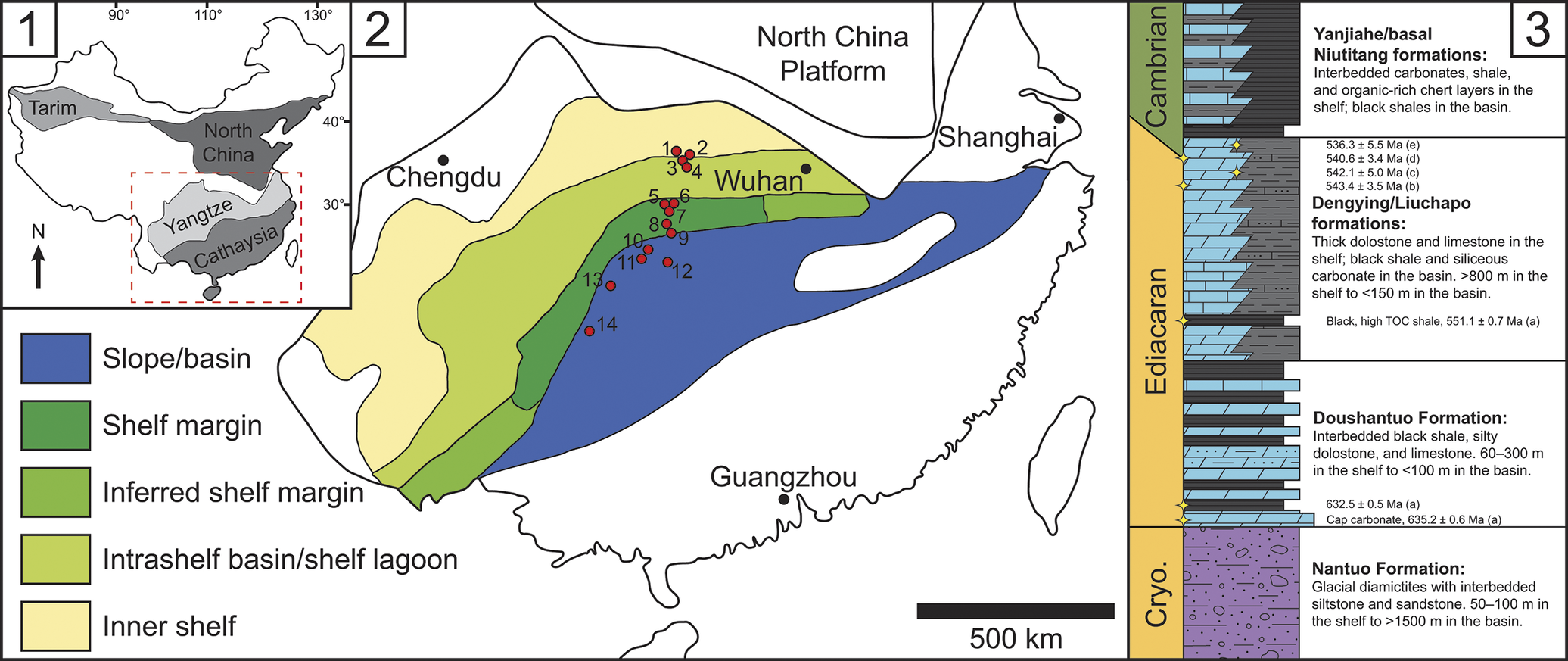
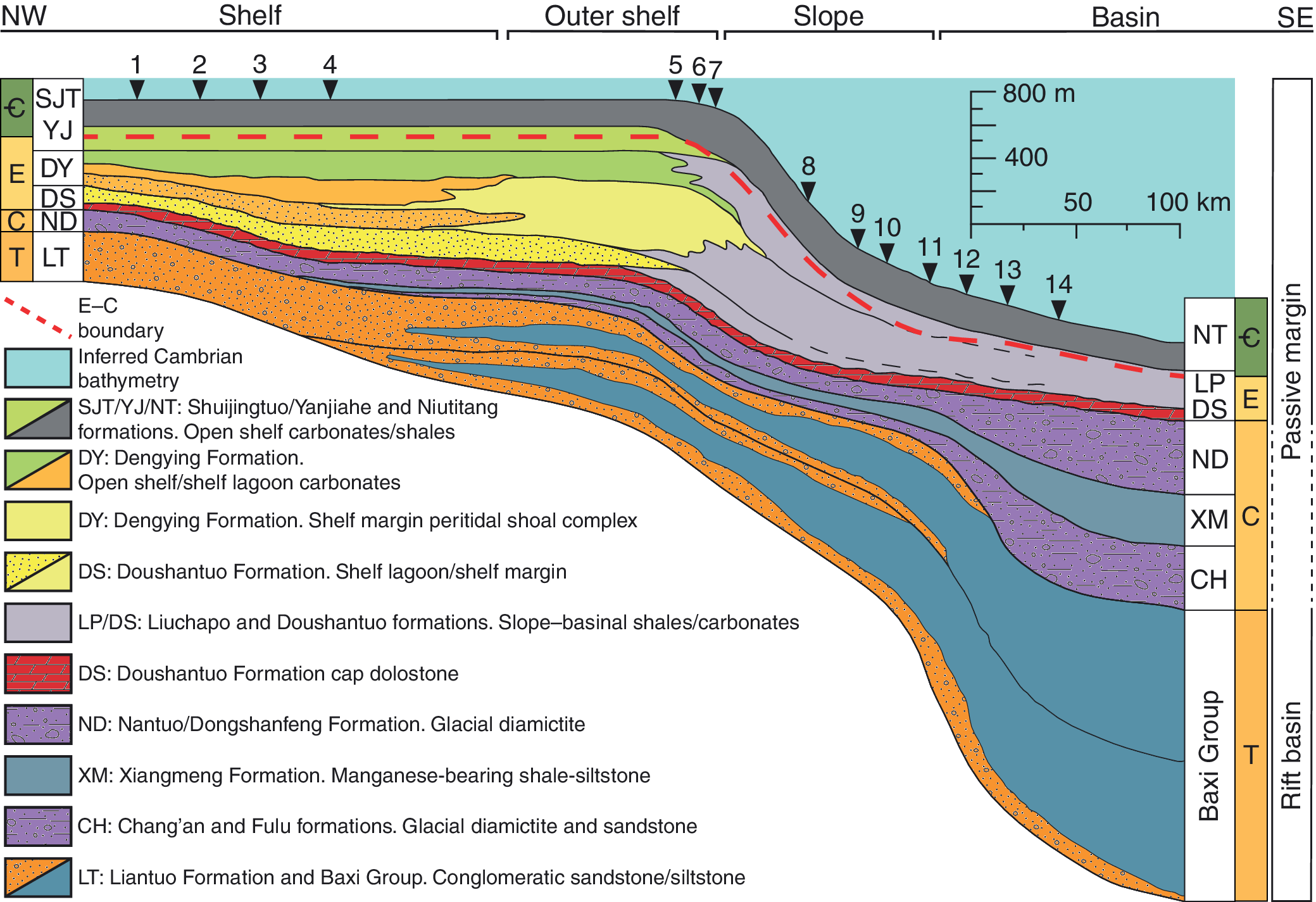
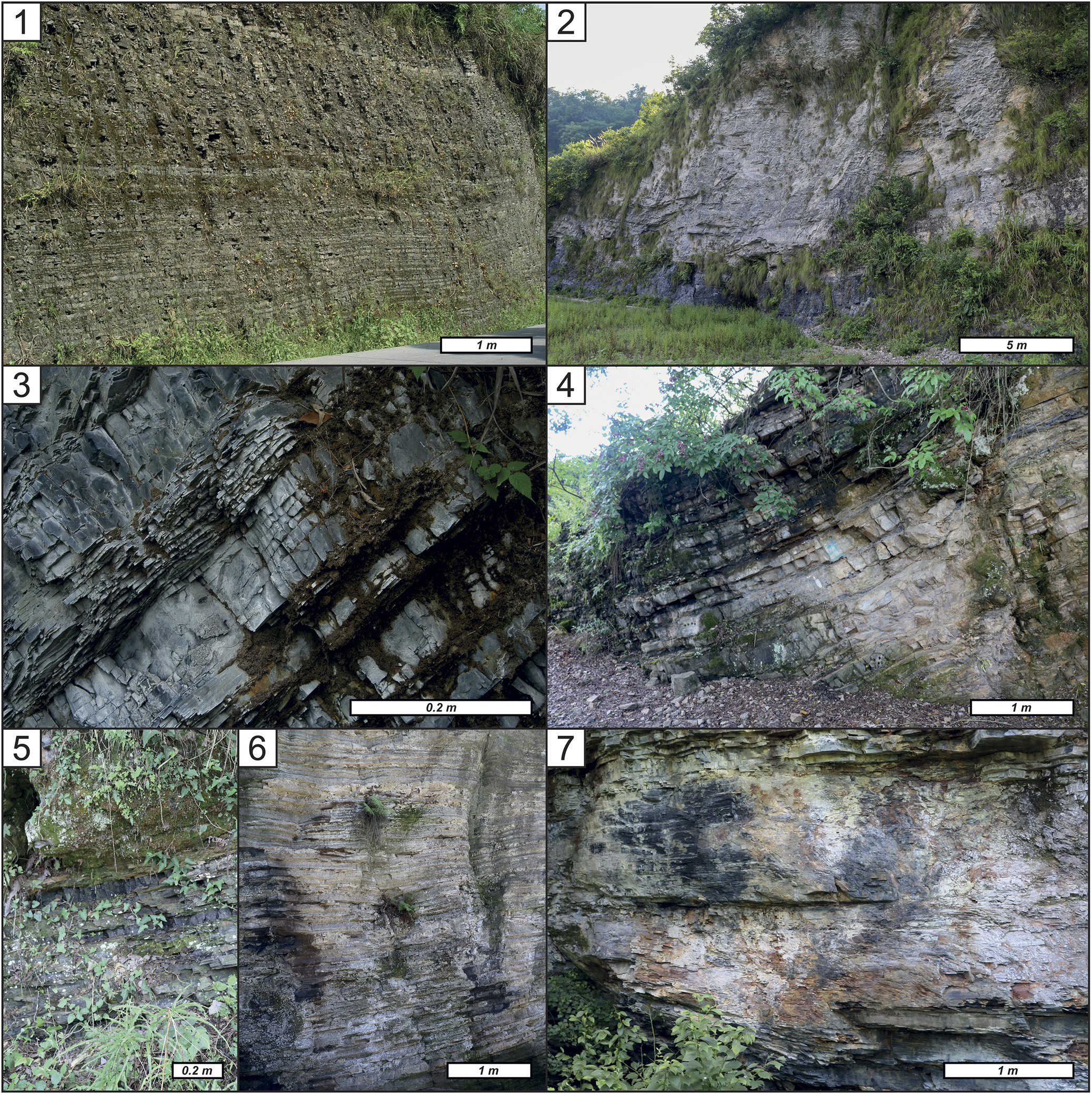
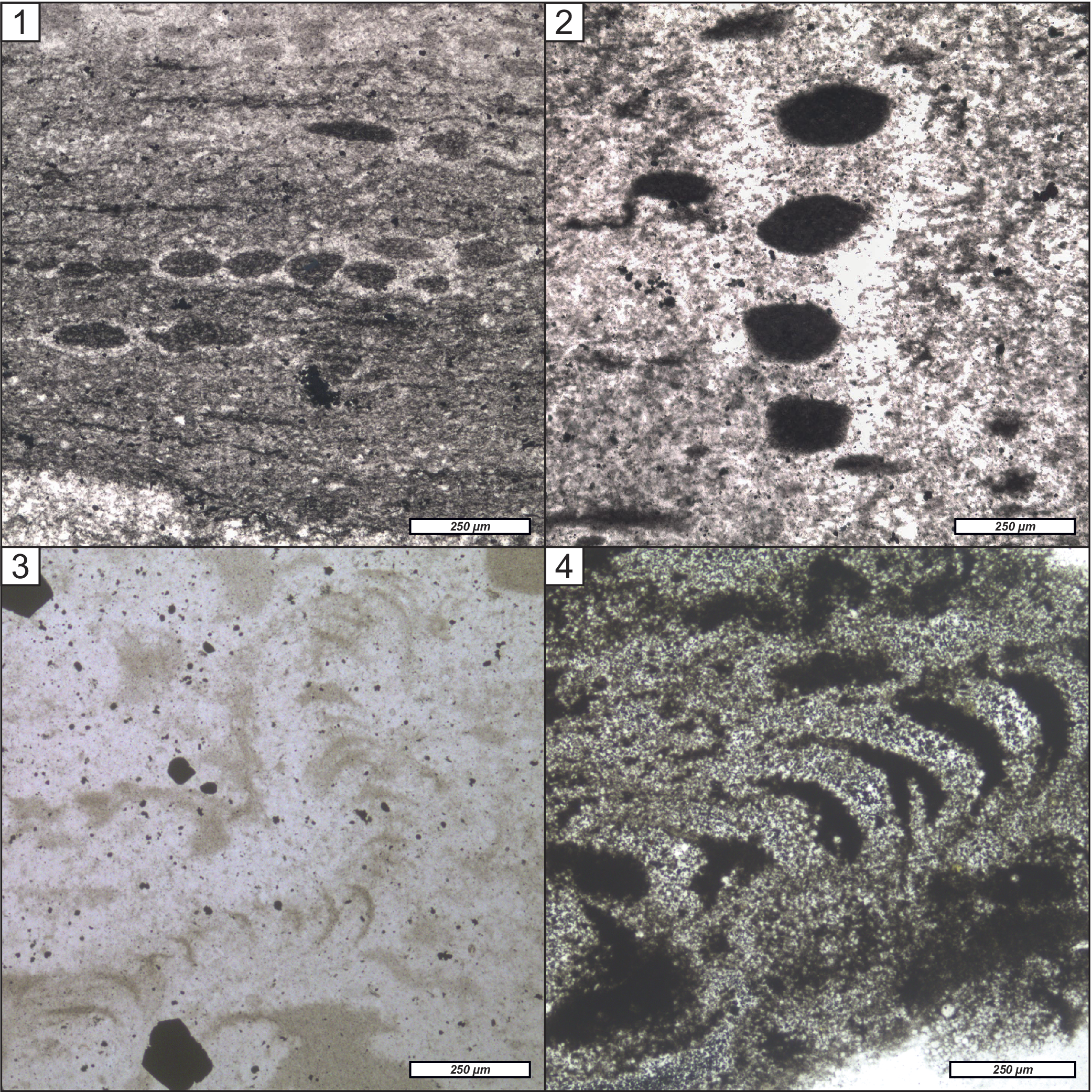
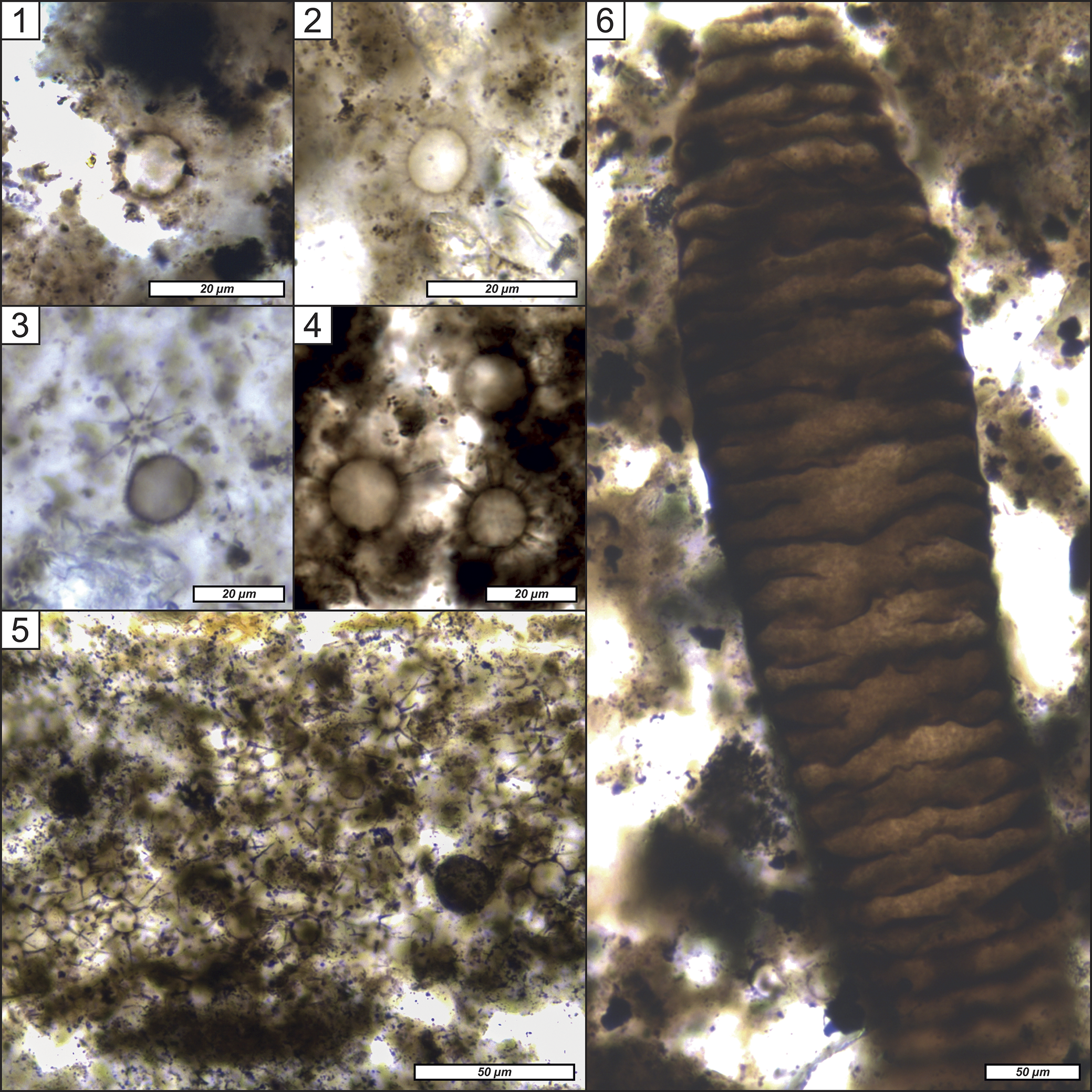
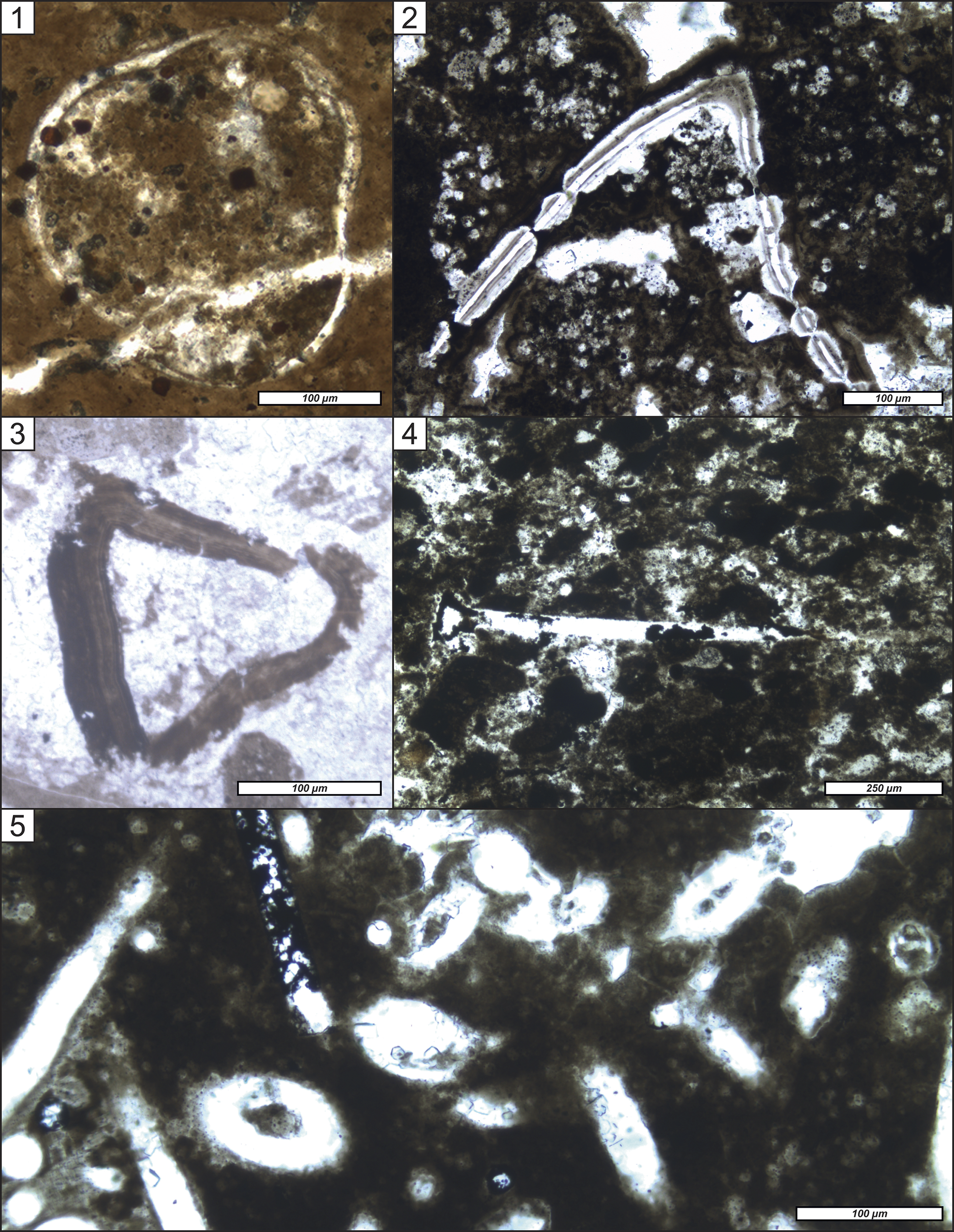
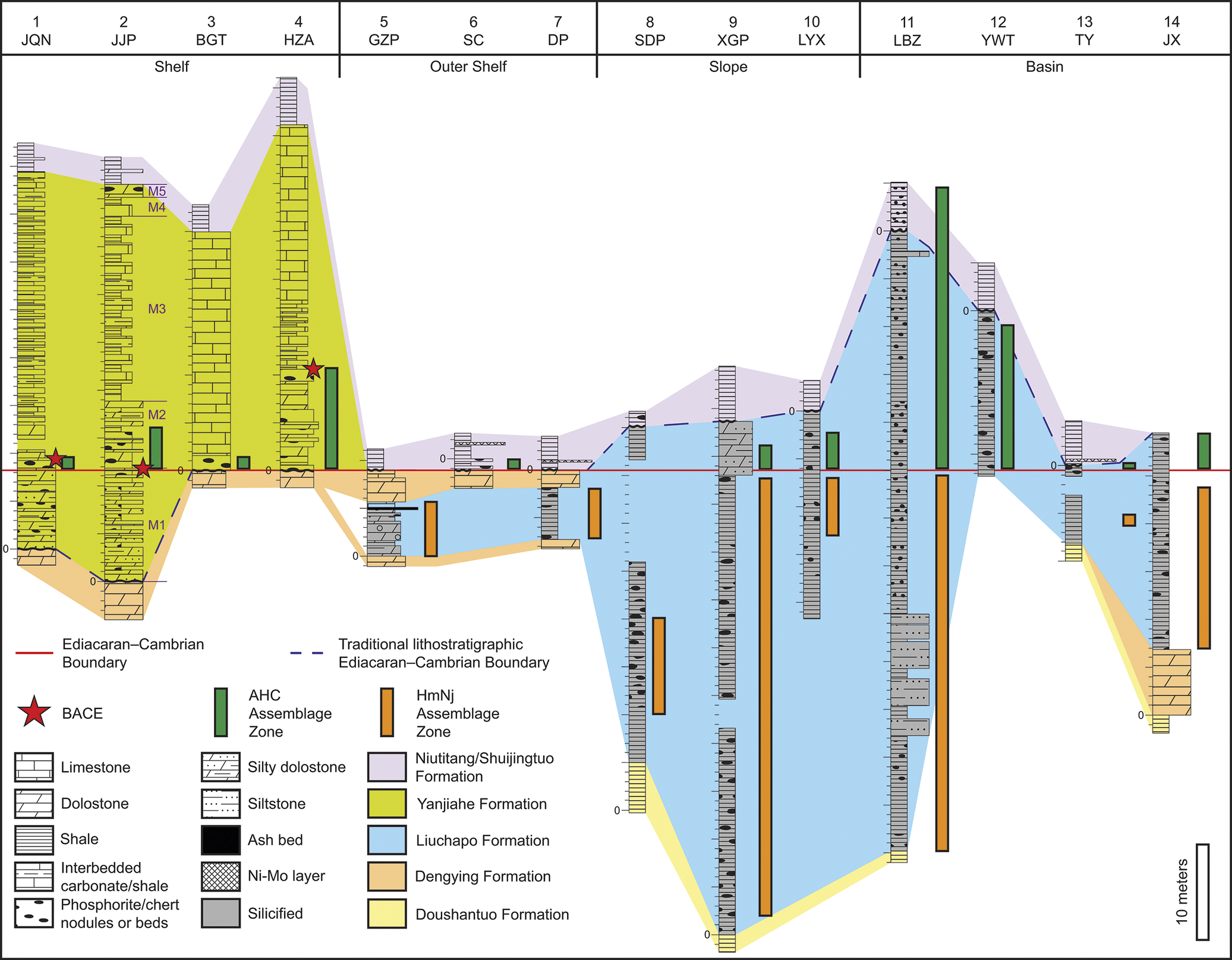
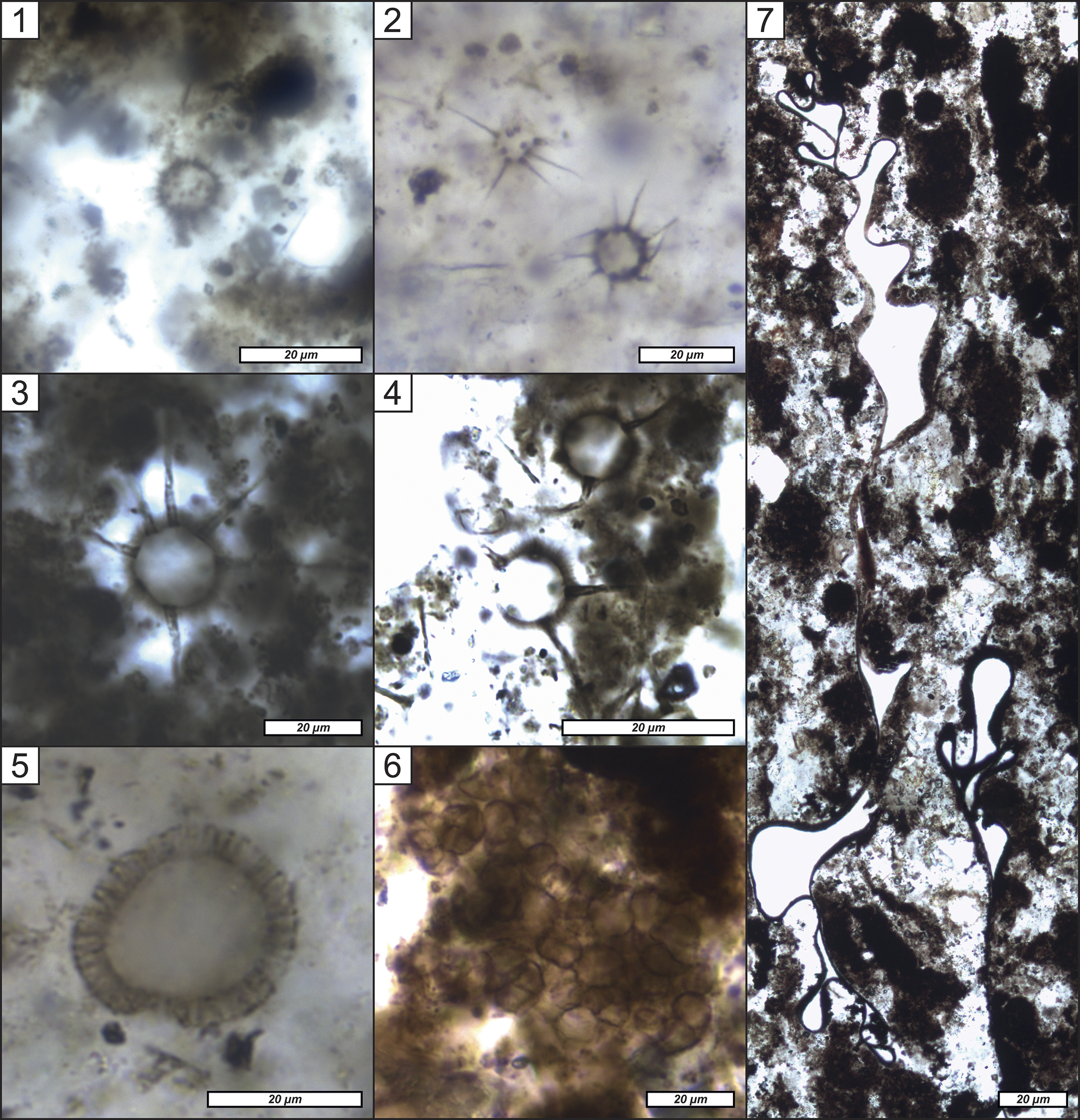
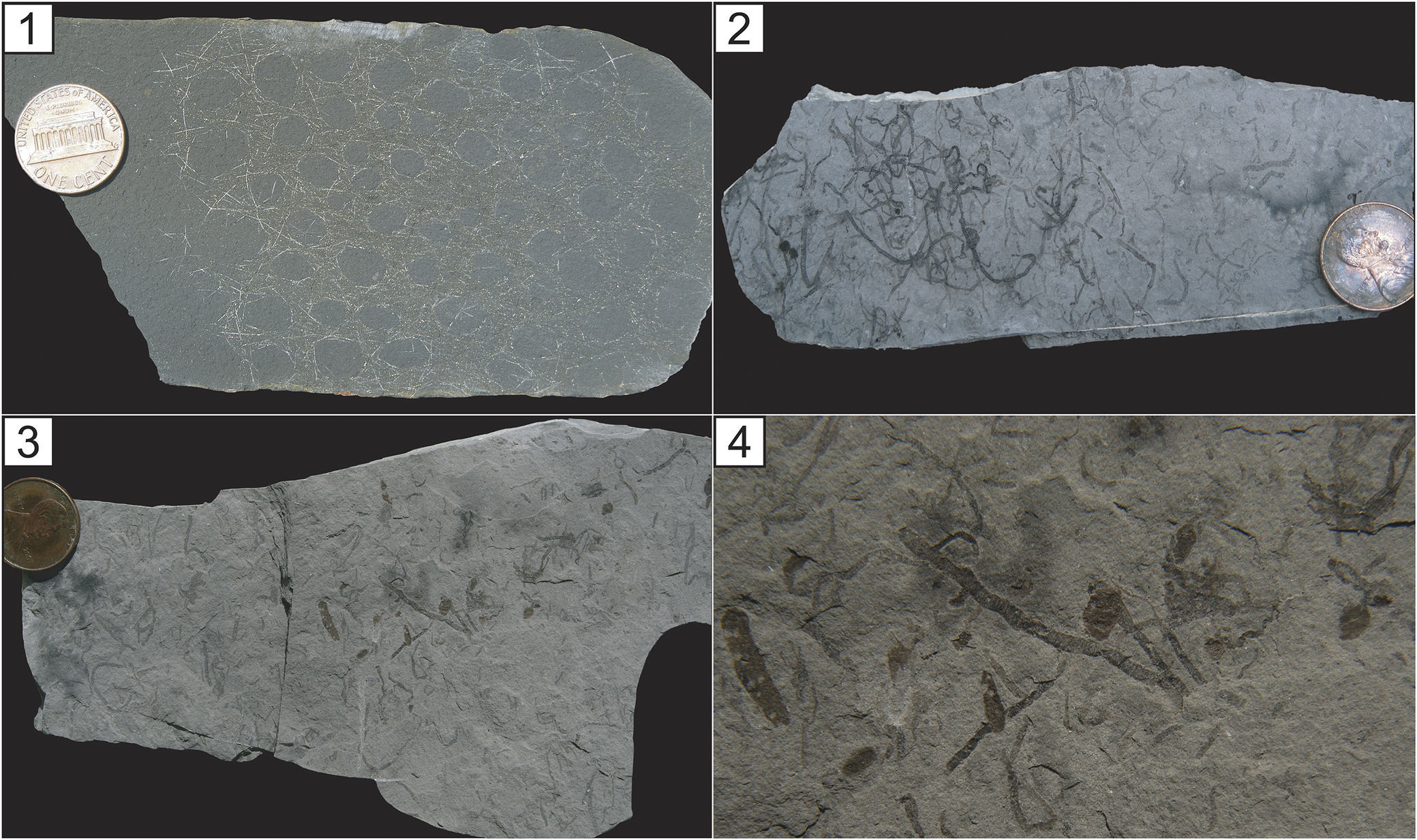

 Open access

