Introduction
Children born with congenital heart disease (CHD) face numerous challenges, including a heightened risk of feeding and swallowing problems. This increases their risk specifically for paediatric feeding disorder (PFD), a condition characterised by impaired oral intake that is inappropriate for a child’s age. Reference Goday, Huh and Silverman1 Paediatric feeding disorder includes a broad array of difficulties—medical, nutritional, oral-motor, and psychosocial dysfunction—that can make it more difficult for children to consume nutrition safely and efficiently. Many children with CHD experience dysfunction in oral motor skills, oral sensory processing, and swallowing, significantly hindering their ability to feed independently and achieve developmental milestones.
Most existing research on feeding and swallowing in CHD has concentrated on the more overt manifestations of paediatric feeding disorder in this population, such as aspiration and feeding tube dependence. This focus is understandable given the high incidence of these complications among children with CHD. These children are at significant risk for malnutrition, growth failure, and neurodevelopmental delays, often leading to prolonged dependence on feeding tubes. Studies indicate that up to 50% of neonates with CHD require a feeding tube at the time of hospital discharge, Reference Hsieh, Tabbutt and Xu2 and about one-third continue to rely on tube feeding after their initial hospitalisation. Reference Mussatto, Hoffmann and Hoffman3 Furthermore, research shows that nearly one-third of children with CHD develop paediatric feeding disorder within the first year after congenital heart surgery, Reference Mohiuddin, Raol and Tey4 often necessitating a feeding tube to meet caloric needs. At 2–3 years of age, approximately 30% of children with CHD remain dependent on feeding tubes. Reference Mohiuddin, Raol and Tey4 Aspiration is also common, with studies spanning over 25 years reporting that one-third of children with CHD experience aspiration, and more than 40% encounter feeding and swallowing difficulties. Reference Norman, Zühlke, Murray and Morrow5 Certain conditions, such as hypoplastic left heart syndrome, exacerbate these issues, with up to 50% of affected infants experiencing poor suck/swallow coordination and aspiration. Reference Martini, Beghetti and Annunziata6
However, the current clinical emphasis on aspiration and tube dependence as the primary markers of paediatric feeding disorder overlooks the broader spectrum of feeding challenges that children with CHD encounter as they progress to more advanced stages of feeding. Issues such as difficulties with texture progression, transitioning to cup drinking, and efficiently chewing solid foods may not be fully captured during routine clinic visits, leaving important feeding challenges unaddressed. Additionally, the complex relationship between feeding difficulties and broader neurodevelopmental outcomes remains poorly understood. The use of gastrostomy tubes (G-tubes) at discharge has been identified as a key indicator of neurodevelopmental delays (ND) by 18–24 months of age, Reference Mussatto, Hoffmann and Hoffman3,Reference Jadcherla, Khot, Moore, Malkar, Gulati and Slaughter7 and prolonged tube dependence beyond six months is a known risk factor for developmental delays. Reference Ricci, Alton and Ross8 However, reliance on a feeding tube alone does not provide insight into the specific feeding challenges these children face. Research consistently shows that age-appropriate oral feeding abilities are crucial for a child’s overall development. Reference Mussatto, Hoffmann and Hoffman3 A critical gap in the literature exists in understanding how paediatric feeding disorder interacts with developmental delays, particularly the nature of these delays. These two issues are often studied in isolation, rather than as interrelated factors.
This gap in knowledge is concerning, given the profound impact feeding difficulties can have on a child’s long-term development. Without a comprehensive approach to identifying and treating feeding disorders in this population, many children with CHD may not receive the early interventions needed to prevent or mitigate developmental delays. Reference Gaynor, Gerdes and Nord9–Reference Sananes, Manlhiot and Kelly11 To date, the interaction between paediatric feeding disorder and neurodevelopmental delay outcomes in children with CHD remains underexplored, and specific feeding difficulties—such as the transition from tube to oral feeding, sensory aversions, and the impact of feeding-related stress—are rarely examined in detail.
The aim of this study is to address this gap by identifying children with CHD who are at risk for or have developed paediatric feeding disorder, and to examine their feeding outcomes at 18 months of age, particularly regarding both nutrition and feeding skills. By exploring how feeding disorders affect developmental outcomes and identifying specific feeding challenges that have been understudied, this research aims to contribute to a more nuanced understanding of how feeding difficulties and developmental delays interact in children with CHD. Ultimately, the study seeks to inform early screening and identification strategies that can improve both feeding and neurodevelopmental delay outcomes for these vulnerable children.
Materials and methods
A retrospective descriptive study was conducted to assess feeding outcomes in children with CHD who met American Heart Association high-risk criteria, specifically, children who underwent repair in the first year of life. The study included children who attended follow-up visits at three time points between 6 and 24 months of age: 6–<12 months, 12–<18 months, and 18–<25 months, at the Herma Heart Institute Developmental Follow-up Clinic between 2007 and 2013. Data from the third visit (18–<25 months) were analysed for this study.
At each visit, children underwent a medical evaluation and neurodevelopmental delay assessment. The data collected included demographic information, birth history, health status (e.g., cardiac diagnosis, hospital length of stay, anthropometrics), and feeding status (oral vs. tube feeding). Cognitive, language, and motor abilities were assessed using the Bayley Scales of Infant and Toddler Development-III. Reference Bayley12 A composite score ≥85 was considered within normal developmental limits.
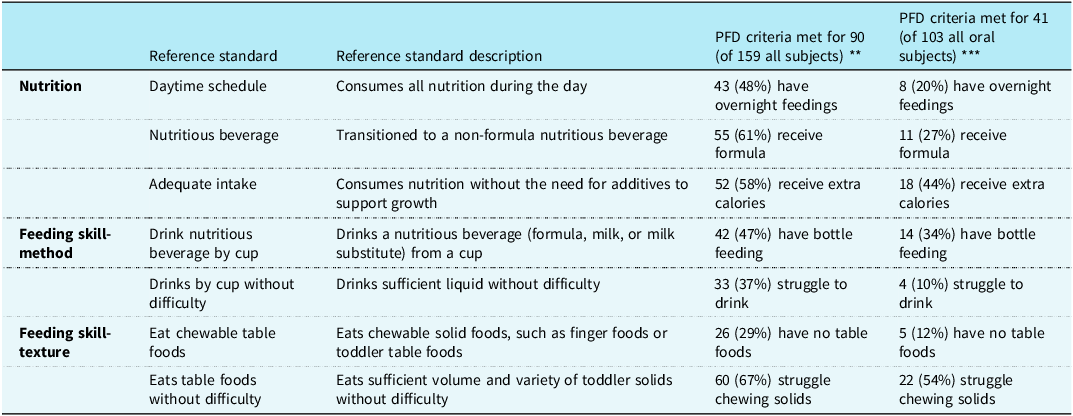
Feeding-related data were gathered from clinic visit notes and any additional visits within one month of the appointment. Nutritional intake and feeding skill-related information consistent with the diagnostic criteria for paediatric feeding disorder Reference Goday, Huh and Silverman1 was obtained, as outlined in Table 1. The reference standards for the feeding outcomes were based on the achievement of age-appropriate milestones. Reference Carruth and Skinner13–19 These reference standards represent the minimum expectations for this age group. Due to the retrospective nature of the study, more detailed information about nutrition and feeding practices was not consistently available.
Reference standards for age-appropriate feeding for children by 18 months of age and percentage of children failing to meet each milestone

** Note: All %s calculated using denominator = 90. ***Note: All %s calculated using denominator = 41.
Children needed to meet only one of the seven criteria to be identified as having paediatric feeding disorder. They met criteria in the nutrition domain if they were (1) consuming formula, (2) required overnight feedings, or (3) consuming concentrated or fortified beverages for growth. In the feeding skill-method domain, children were classified as having paediatric feeding disorder if they (4) drank their non-formula nutritious beverage from a bottle, or (5) experienced difficulties with drinking. In the feeding skill-texture domain, children were classified as having paediatric feeding disorder if they (6) had no chewable solids, or (7) experienced difficulties with the volume or variety of solids. Importantly, the presence of a feeding tube was not used as a criterion for defining paediatric feeding disorder in this study. Instead, feeding status (oral vs. tube feeding) was treated as a predictor of paediatric feeding disorder.
Statistical analysis
Data were summarised as n (%), mean and standard deviation or median and interquartile range (IQR) or range as appropriate. Chi-square or Fisher’s exact test was used to compare categorical variables, while the Mann-Whitney-Wilcoxon test was used for continuous variables. Probability of tube feeding (vs oral), paediatric feeding disorder and different types of feeding difficulties were modelled using logistic regression. Covariates used were demographics along with risk factors such as cardiac status, existence of medical/genetic conditions, number of open-heart surgeries, length of stay, existence of prenatal conditions, weight status at birth and at visit, and developmental delays. Odds ratio and 95% confidence interval (CI) were reported with respective p-values. Variables were categorical except for length of stay, weight and weight percentile, which were continuous. Hence, an odds ratio < 1 implied low weight and low weight percentile caused higher chances of paediatric feeding disorder. An odds ratio > 1 implied long length of stay caused higher chance of paediatric feeding disorder. Models for tube feeding and paediatric feeding disorder were performed for the entire group and for the oral subgroup. All statistical analyses were performed using SAS version 9.4 20 and R version 4.3.1. 21 A p-value of <0.05 was considered statistically significant.
Results
Participant demographics, feeding status, and development
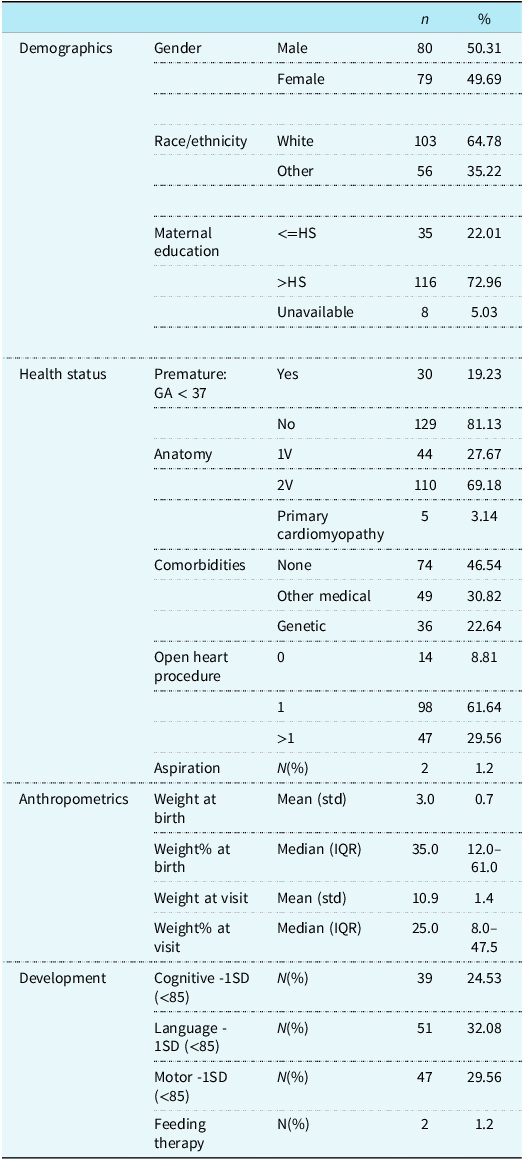
A total of 159 children were included in this analysis, with a mean age of 21 months (standard deviation 2.07; range 18.05–24.99 months). Table 2 provides details regarding demographics, cardiac status, medical comorbidities and other health, weight status, and development for all 159 children. In addition to cardiology, children saw an average of fewer than one (ranging from 0 to 5) specialty medical providers. Forty-two children (26%) were followed by gastroenterology and another 42 children (26%) by otolaryngology. Fifteen children (9%) were followed by pulmonology, 13 children (8%) by ophthalmology, and 19 children (12%) by other specialists, including endocrinology, dermatology, and dentistry. Fewer than 10 children were followed by specialists in other fields. Additionally, 18 children (11%) had vocal fold paralysis.
Participant demographics, health status, and development at 18-<25 months of age (n = 159)

Age-appropriate feeding
Predictors for age-appropriate feeding (all oral without paediatric feeding disorder) (n = 62) included having a mother with >high school education (odds ratio 3.64; 95% CI 1.23–10.76, p = 0.02), higher weight% at visit (odds ratio 0.98; 95% CI 0.97-∼1.00, p = 0.03), and typical development in cognition (odds ratio 5.32; 95% CI 1.34–21.13, p = 0.02), language (odds ratio 5.2; 95% CI 1.67–16.16, p = 0.004), and motor (odds ratio 6.11; 95% CI 1.56–23.92, p = 0.009) domains.
Tube feeding dependence
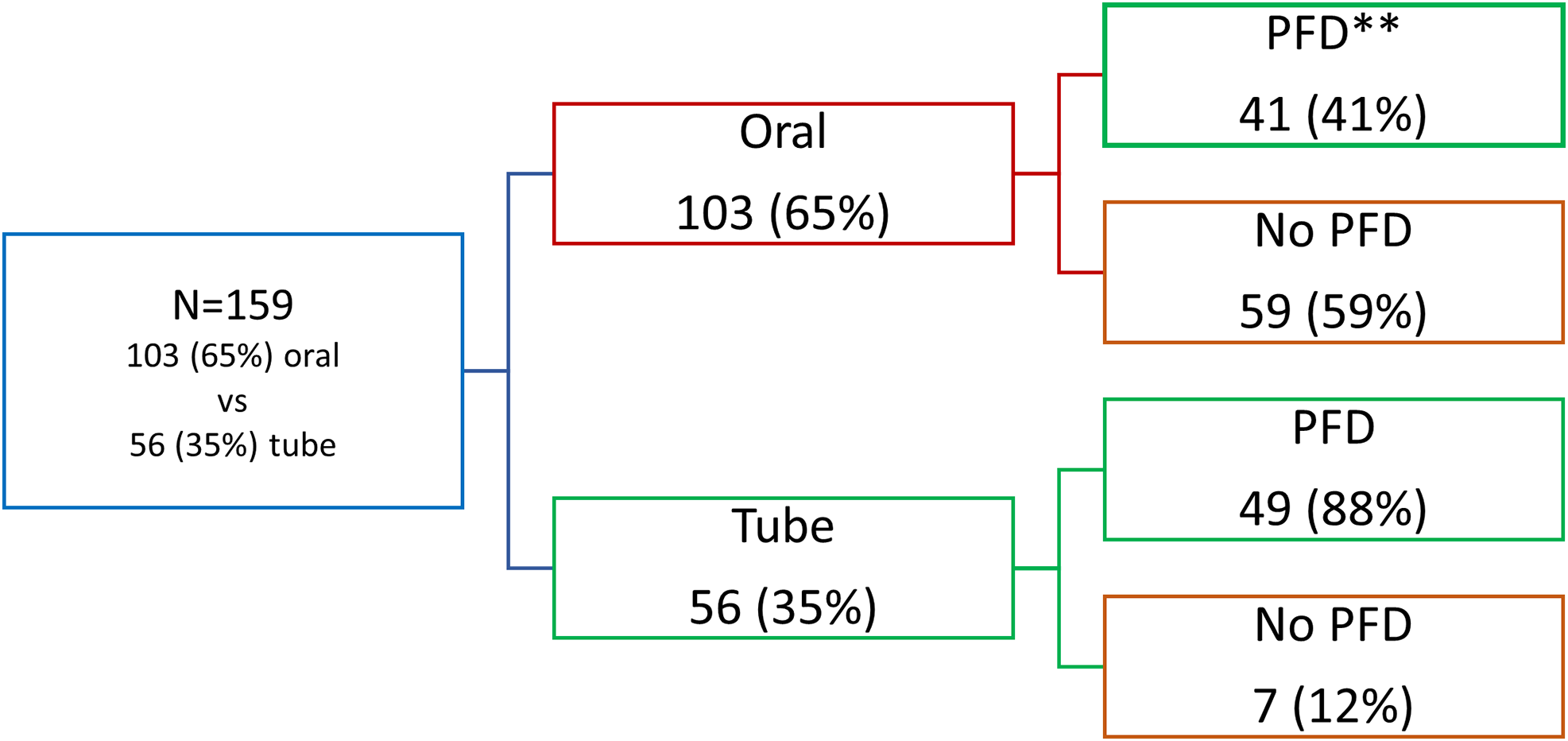
Figure 1 details the feeding status for children in this study. In total, 56 out of 159 were tube fed (35.2%) and 103 were oral (64.8%). The percentage of paediatric feeding disorder in those with tubes was significantly higher compared to %PFD in the oral group (n = 49 (88%) versus n = 41 (41%), p < 0.0001). Black children were more likely to be tube-fed compared to white children (odds ratio 3.13; 95% CI 1.07–9.17, p = 0.04). Tube-fed children were also more likely to have other medical (odds ratio 5.97; 95% CI 2.55–13.97, p < 0.0001) or genetic conditions (odds ratio 7.16; 95% CI 2.86–13.97, p < 0.0001), have undergone two or more open heart surgeries (odds ratio 2.61; 95% CI 1.29–5.27, p = 0.008), have longer hospital stays (odds ratio 1.03; 95% CI: 1.02–1.04, p < 0.0001), and delays < 85 in cognition (odds ratio 6.83; 95% CI 3.07–15.18, p < 0.0001), language (odds ratio 4.84; 95% CI 2.35-9.94, p < 0.0001) and motor domain (odds ratio 8.81; 95% CI 4.06–19.15, p < 0.0001). Supplementary Table S1 in the supplement shows the results in detail.
N (Percentage) of children with and without PFD and feeding status (oral versus tube) footnote: N = 3 subjects had missing information for PFD PFD = paediatric feeding disorder.

Neurodevelopment status for 159 children
Sixty-three (40%) children in this sample exhibited neurodevelopmental delay. Of those children with neurodevelopmental delays, thirty children (48%) had delays in all three domains (cognition, language, motor), 14 children (22%) had delays in two domains, and 19 children (30%) had delays in one domain.
Paediatric feeding disorder at 18-<25 months for the 159 children in the study
Overall, n = 90 (58%) of the 159 children had paediatric feeding disorder. See Figure 2 for the model results for the outcome paediatric feeding disorder. Several factors were associated with an increased likelihood of paediatric feeding disorder, including other medical and genetic conditions, having undergone ≥2 open heart surgeries, longer length of stay, lower birth weight, lower weight at visit, maternal education ≤high school or delays of <85 in cognition, language, and motor domains. There were no significant differences in paediatric feeding disorder prevalence based on gender, race, gestational age, or cardiac anatomy. In children with neurodevelopmental delay, the percentage of children with paediatric feeding disorder was more than twice as high as those without neurodevelopmental delay (76% vs. 34%, p < 0.0001).
Forest plot showing paediatric feeding disorder (PFD) in children at 18-<25 months of age for the group of 159 subjects Footnote: odds ratio (OR) and 95% confidence interval (CI) were reported with respective p-values. Variables were categorical except for length of stay, weight and weight percentile which were continuous. Hence, an OR < 1 implied low weight and low weight percentile caused higher chances of PFD. An OR > 1 implied long length of stay caused higher chance of PFD. OR = odds ratio; CI = confidence interval; HS = high school; GA = gestational age; SV = single ventricle; DV = double ventricle; LOS = length of stay; WNL = within normal limits.

Paediatric feeding disorder subgroup: paediatric feeding disorder criteria met by n = 90 (58%) of 159 children
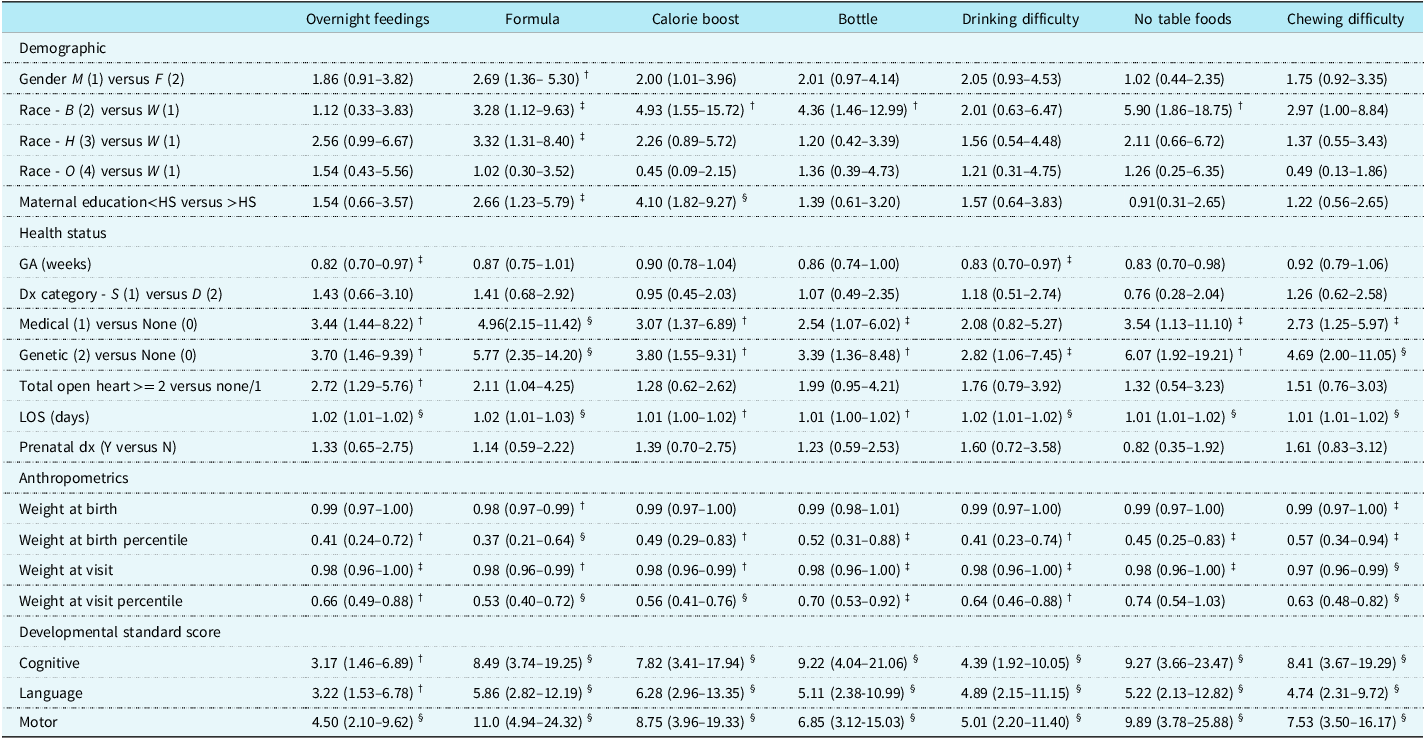
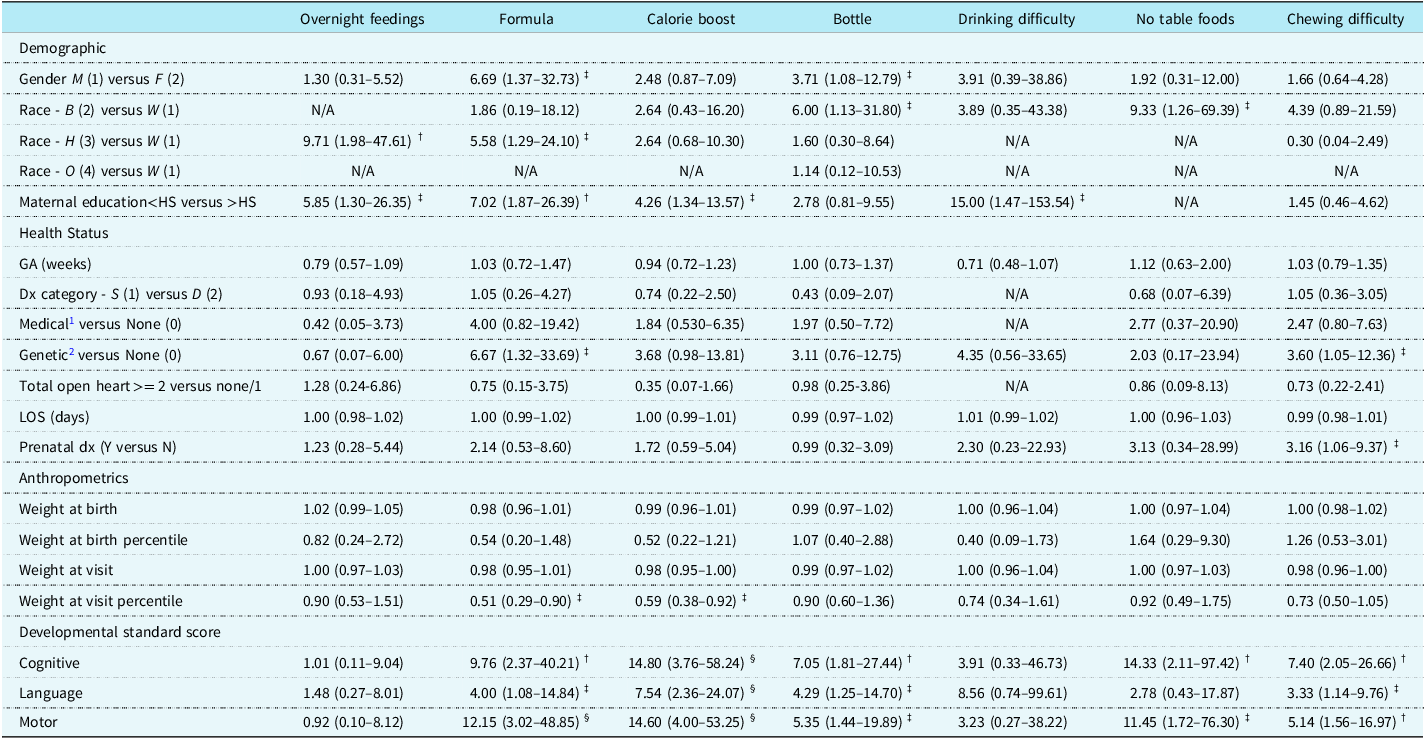
Children faced challenges in meeting expected nutrition and feeding milestones across the three key domains: nutrition, feeding method, and feeding texture, as detailed in Table 1. Percentages of children meeting paediatric feeding disorder criteria are shown in Table 1 and Table 3 for model results.
Odds ratio and confidence intervals for children meeting paediatric feeding disorder criteria

† P < 0.01.
‡ P < 0.05.
§ P < 0.001.
F=female; M = male; B = black; W = white; H = Hispanic; O = other; HS = high school; GA = gestational age; S = single ventricle; D = double ventricle; PC = primary cardiomyopathy; LOS = length of stay; dx=diagnosis.
In the nutrition domain, n = 55 (61%) of children continued to rely on formula, n = 43 (48%) required overnight feedings, and n = 52 (58%) required calorie boosting. Prolonged use of formula, overnight feedings, and calorie boosting were more common among children with comorbid medical plus genetic conditions, longer length of stay, lower weight at birth and growth concerns at their visit, and with neurodevelopmental delays. Overnight feedings were also more common in children with prematurity.
Regarding feeding methods, n = 42 (47%) of children continued to rely on bottle feedings for their nutritious beverage. Thirty-three children (37%) experienced difficulties when drinking from a cup. Children with medical plus genetic conditions, lower weight at birth and growth concerns at visit, and with neurodevelopmental delays were more likely to have prolonged use of a bottle and difficulty with drinking by cup. Prolonged use of a bottle was also more common in children with longer length of stay and drinking difficulty in children with prematurity.
In terms of feeding texture, even though n = 64 (71%) of children had transitioned to table foods by 18 months, n = 60 (67%) encountered difficulty chewing these foods. Factors such as medical plus genetic conditions, longer length of stay, low weight at birth and growth concerns at visit, and neurodevelopmental delay were associated with difficulty chewing. Prematurity was also associated with the absence of table foods.
Among children in the paediatric feeding disorder group, n = 50 (56%) had neurodevelopmental delays. Of these, n = 34 (65%) exhibited cognitive delay, n = 41 (82%) had language delay, and n = 41 (82%) experienced motor delay. Among children with both paediatric feeding disorder and neurodevelopmental delays, n = 29 (58%) had delays in all three domains, n = 8 (16%) had delays in two domains, and n = 13 (26%) had delays in one domain.
Paediatric feeding disorder at 18-<25 months for the 103 children in the all-oral group
Of the 103 children who were all oral, n = 41 (41%) had paediatric feeding disorder. See Supplementary Table S2 for the model results for the outcome paediatric feeding disorder within the oral subgroup. Children with lower weight at visit, maternal education <= high school, and neurodevelopmental delays in cognition, language, and motor domains were more likely to experience paediatric feeding disorder. Among children in the all-oral group with paediatric feeding disorder, n = 14 (34%) had neurodevelopmental delays. Of these, n = 9 (64%) exhibited cognitive delay, n = 13 (93%) had language delay, and n = 10 (71%) experienced motor delay. Among all-oral children with both paediatric feeding disorder and neurodevelopmental delays, n = 8 (57%) had delays in all three domains, n = 2 (14%) had delays in two domains, and n = 4 (29%) had delays in one domain.
Paediatric feeding disorder subgroup: paediatric feeding disorder criteria met by n = 41 (41%) of 103 all oral children
Children without feeding tubes (n = 41) faced challenges in meeting expected nutrition and feeding milestones across the three key domains: nutrition, feeding method, and feeding texture, as detailed in Table 1. Percentages of children meeting paediatric feeding disorder criteria are shown in Table 1 and Table 4 for model results.
Odds ratio and confidence intervals for children meeting PFD criteria from the 103 oral cohort

† P < 0.01.
‡ P < 0.05.
§ P < 0.001.
F=female; M = male; B = black; W = white; H = Hispanic; O = other; HS = high school; GA = gestational age; S = single ventricle; D = double ventricle; PC = primary cardiomyopathy; LOS = length of stay; dx=diagnosis.
In the nutrition domain, n = 11 (27%) of children continued to rely on formula, and n = 8 (20%) required overnight feeding, and n = 18 (44%) required calorie boosting. Calorie boosting was more common among children with growth concerns at their visit and with neurodevelopmental delays.
Regarding feeding methods, n = 14 (34%) of children continued to rely on bottle feeding for their nutritious beverage. n = 4 (10%) experienced difficulties when drinking from the cup. Children who were female, black, and with neurodevelopmental delays were more likely to have prolonged use of a bottle.
In terms of feeding texture, even though n = 36 (88%) of children had transitioned to table foods by 18 months, n = 22 (54%) encountered difficulty chewing these foods. Factors such as having a genetic condition, prenatal diagnosis, and neurodevelopmental delay were associated with difficulty chewing.
Prolonged use of formula, overnight feedings, drinking difficulty by cup, and the absence of table foods had wide confidence intervals and had lack of significant findings, likely due to the small patient cohort.
Discussion
This retrospective study of 159 children with CHD offers valuable insights into feeding outcomes and the prevalence of paediatric feeding disorder in this population. The criteria utilised to define paediatric feeding disorder were based on the minimum requirements for nutritional intake and feeding skills, meaning that the actual prevalence of PFD in this cohort is likely an underestimation. Despite this, 58% of children (n = 90) met the criteria for paediatric feeding disorder at 18 months, and even among children who were exclusively fed orally, 41% (n = 41) met the criteria for paediatric feeding disorder, suggesting that feeding difficulties can persist even in those who transition to oral feeding. Consistent predictors of paediatric feeding disorder that were associated with all seven criteria were medical/genetic comorbidities, low birth weight and growth concerns at 18-<25 months, and neurodevelopmental delay in cognition, language, and motor domains. These findings underscore the importance of early intervention to address feeding challenges in this vulnerable group.
Feeding tube dependence and associated factors
Over one-third of children in this study continued to rely on a feeding tube, consistent with previous research linking CHD and other complex medical conditions to prolonged feeding tube dependence. Reference Mussatto, Hoffmann and Hoffman3,Reference Ricci, Alton and Ross8 Most tube-fed children had been dependent on feeding tubes since their initial discharge, indicating that early medical and developmental challenges may hinder the transition to oral feeding. Outpatient tube-weaning programmes with close surveillance by a multidisciplinary team of paediatric cardiologists, speech–language pathologists, and dieticians may be able to help mitigate some of these challenges.
Notably, Black children were more likely to be tube-fed compared to white children, which aligns with previous studies reporting racial disparities in health outcomes. This warrants further investigation into the role of social determinants of health and access to early interventions. Reference Margol, Dantes, Dutreuil, Jahan, Santore and Linden22 In addition to race, other factors such as the comorbidities, multiple open-heart surgeries, longer hospital stays, and neurodevelopmental delays were strongly associated with feeding tube dependence.
Paediatric feeding disorder and predictive factors
The prevalence of paediatric feeding disorder in this cohort was strikingly high, with 58% of children meeting the minimum criteria for paediatric feeding disorder at 18-<25 months. This figure underscores the significant burden of feeding difficulties in children with CDH. Our study identified several risk factors for paediatric feeding disorder, including the presence of comorbidities, multiple heart surgeries, longer hospital stays, lower birth weight, and lower maternal education. Notably, children with a length of stay in the hospital of 30 days or longer had a 3.9 times higher chance of having paediatric feeding disorder.
This study highlights the strong association between neurodevelopmental delays and paediatric feeding disorder. Children with delays in cognitive, language, and motor domains faced an 80% higher risk of developing paediatric feeding disorder. This finding reinforces the well-established link between developmental impairments and feeding difficulties. Reference Mussatto, Hoffmann and Hoffman3 Interestingly, about 25% of children with paediatric feeding disorder had delays in only one domain, while 19% had delays in all three domains, highlighting that varying degrees of delay result in paediatric feeding disorder. Understanding the type of delays that most impact feeding development is crucial for early monitoring and intervention. Children with CHD are particularly vulnerable to neurodevelopmental delays, which not only affect their overall health but also their feeding behaviour. Motor delays can impair swallowing and chewing, while sensory processing issues may contribute to texture intolerance and oral aversions. The strong link between neurodevelopmental delays and paediatric feeding disorder underscores the need for multidisciplinary care, involving paediatric cardiologists, paediatricians, psychologists, developmental therapists, speech therapists, and feeding specialists to address the complex needs of these children. For some of our highest-risk patients with single-ventricle physiology, we have established a multidisciplinary care clinic where providers can work together to meet patients’ needs in a single geographic setting. This facilitates ongoing discussions to optimise both the medical and neurodevelopmental care these patients require.
On the other hand, 39 (43%) of children with paediatric feeding disorder did not exhibit neurodevelopmental delays, which suggests that other factors—such as medical complications or altered feeding experiences or disrupted parent–child interactions—may also contribute differently to the development of paediatric feeding disorder. This finding calls for a more nuanced understanding of paediatric feeding disorder that considers medical, nutritional, developmental, and psychological factors, as well as the potential for feeding difficulties to emerge independent of neurodevelopmental delays.
Feeding challenges in the nutrition, method, and texture domains
Substantial challenges were observed in the nutrition, feeding skill-method, and feeding skill-texture domains. In terms of nutrition, about one-third of children continued to rely on formula and overnight feedings. These children likely had higher energy needs, but feeding skill dysfunction and inefficient feeding may also have contributed to these challenges. These findings emphasise the ongoing need for tailored nutritional care plans that address both immediate and long-term feeding requirements, particularly in children with complex medical conditions.
In terms of feeding methods, 74% of children had transitioned to cup drinking, but 21% still struggled with this skill. Factors such as prematurity, low birth weight, and neurodevelopmental delays were associated with difficulties in liquid intake, indicating that early medical challenges and developmental delays impede the acquisition of feeding skills. These challenges highlight the importance of providing targeted support for developing age-appropriate feeding skills.
Regarding texture, 29% of children had no table foods by 18 months. For those who added table foods to their diet, 67% had difficulty with chewing. Medical comorbidities, longer hospital stays, low maternal education, and neurodevelopmental delays were strongly linked to chewing difficulties, suggesting that these factors interfere with the development of oral-motor skills. This finding highlights the need for ongoing support to help children develop the motor skills necessary for safe and efficient eating, especially in the presence of medical or developmental delays.
Paediatric feeding disorder in the all-oral group
As mentioned, even in children who were able to feed orally, paediatric feeding disorder was a significant concern with 41% of the all-oral group meeting the criteria for paediatric feeding disorder. In this cohort, neurodevelopmental delays were a major contributing factor. These findings suggest that paediatric feeding disorder is not solely related to the feeding method (tube-fed vs. all-oral) but is also influenced by broader developmental factors. Other factors such as lower weight at the time of the visit and lower maternal education were also associated with an increased risk of paediatric feeding disorder in the all-oral group. This emphasises the need for continued surveillance and intervention in all children with medical complexity, regardless of their feeding method, to ensure optimal feeding outcomes.
Limitations
While this study provides valuable insights into the feeding outcomes of children with complex medical histories, there are some limitations to consider. The retrospective design limits the ability to draw causal conclusions about the relationships between medical conditions, feeding methods, and feeding outcomes. Additionally, parent-report data may be subject to recall bias. Lastly, since only minimum paediatric feeding disorder criteria were used, the study likely underestimates the true extent of feeding dysfunction in this cohort.
Future directions
Future research should focus on the long-term impact of altered early feeding experiences in children with CHD. Longitudinal studies are essential for understanding how feeding difficulties evolve across different developmental stages and for identifying critical windows for intervention. This could help prevent persistent feeding problems and reduce their developmental consequences.
Further research should also explore the role of caregiver-infant interactions during feeding, such as how parents adapt their feeding practices and the quality of the parent–child bond. Investigating sensory processing differences, oral-motor skills, and texture preferences could provide deeper insights into the complexity of feeding disorders in this population. Additionally, understanding the neurobiological mechanisms underlying feeding difficulties, particularly in relation to motor control, sensory processing, and cognitive development, is crucial for developing targeted therapies.
Finally, studies should evaluate the effectiveness of specific feeding therapies, such as oral motor therapy, texture progression, and sensory integration interventions. Understanding the optimal timing for these therapies and their role in improving feeding outcomes could inform best practices for managing feeding disorders in children with CHD. Additionally, exploring the role of caregiver education and support, particularly in helping families implement feeding strategies at home to reduce mealtime stress, will be critical in improving feeding outcomes and preventing prolonged feeding difficulties.
Conclusions
This study underscores the significant feeding challenges faced by children with CHD at 18–<25 months of age, and that feeding difficulties can persist even in those without a feeding tube or aspiration. Despite transitioning to oral feeding, many children with CHD continue to experience significant delays in nutrition and feeding skills, including prolonged reliance on formula or overnight feedings and struggling with age-appropriate feeding milestones, such as drinking from a cup and chewing solids. The findings emphasise that feeding difficulties in children with CHD are multifaceted and extend beyond the presence of a feeding tube or aspiration. This reinforces the critical need for early and comprehensive feeding screenings that assess not only feeding schedules and intake but also transitions to more advanced feeding textures and drinking methods. Given the complexity of these feeding challenges, effective management requires a coordinated, multidisciplinary approach that incorporates medical, developmental, and nutritional interventions. Additionally, further research is essential to identify the most effective strategies for managing and preventing long-term feeding difficulties in this vulnerable population.
Supplementary material
The supplementary material for this article can be found at https://doi.org/10.1017/S1047951125110421.
Financial support
This work was supported by the Mend-A-Heart Foundation.
Competing interests
None.
Ethical standards
The authors assert that all procedures contributing to this work comply with the ethical standards of the relevant national guidelines on human experimentation and with the Helsinki Declaration of 1975, as revised in 2008, and have been approved by the institutional committee at Children’s Wisconsin.