Support is strong for identifying, and intervening with, dementia early to potentially delay cognitive decline, improve functioning, decrease responsive behaviors, delay institutionalization, and provide patients and their caregivers the opportunity for early education and to plan for the future (Ashford et al., Reference Ashford, Borson, O’Hara, Dash, Frank and Robert2007; Brodaty, Gresham, & Luscombe, Reference Brodaty, Gresham and Luscombe1997; Fillit, Reference Fillit2007). However, dementia is often challenging to diagnose. Evidence shows that dementia is under-diagnosed in primary care (Connolly, Gaehl, Martin, Morris, & Purandare, Reference Connolly, Gaehl, Martin, Morris and Purandare2011; van den Dungen et al., Reference van den Dungen, van Marwijk, van der Horst, van Charante, MacNeil Vroomen and van de Ven2012) due to a number of factors including lack of knowledge about dementia and its presenting symptoms (Barrett, Haley, Harrell, & Powers, Reference Barrett, Haley, Harrell and Powers1997; Woods et al., Reference Woods, Moniz-Cook, Iliffe, Campion, Vernooij-Dassen and Zanetti2003). Other factors are the lack of physician confidence in their diagnostic skills, poor patient and physician communication (Bradford, Kunik, Schulz, Williams, & Singh, Reference Bradford, Kunik, Schulz, Williams and Singh2009), and beliefs that diagnosis requires specialist consultation (Connolly et al., Reference Connolly, Gaehl, Martin, Morris and Purandare2011).
Specialized programs, memory clinics, and collaborative approaches to dementia diagnosis and management have been recommended as significant opportunities to improve dementia recognition and care within primary-care settings (McCarten et al., Reference McCarten, Anderson, Kuskowski, McPherson, Borson and Dysken2012; Morgan et al., Reference Morgan, Crossley, Kirk, D’Arcy, Stewart and Biem2009; Vickrey et al., Reference Vickrey, Mittman, Connor, Pearson, Della and Ganiats2006). A number of different memory clinic models have been described, predominately specialist-led operating in tertiary care settings (Callahan et al., Reference Callahan, Boustani, Weiner, Beck, Livin and Kellams2011), geriatric psychiatry and research settings (Logiudice et al., Reference Logiudice, Wlatrowicz, Brown, Burrows, Ames and Flicker1999; Luce, McKeith, Swann, Daniel, & O’Brien, Reference Luce, McKeith, Swann, Daniel and O’Brien2001), and primary-care settings (Greaves & Greaves, Reference Greaves and Greaves2011; Greaves et al., Reference Greaves, Greaves, Walker, Greening, Benbow and Jolley2013), with most operating at arm’s length from primary-care providers. Some of these specialist-led models emphasize a collaborative or partnership approach to care and implement various strategies to coordinate care including case management approaches (Callahan et al., Reference Callahan, Boustani, Weiner, Beck, Livin and Kellams2011) and system navigation support (Greaves et al., Reference Greaves, Greaves, Walker, Greening, Benbow and Jolley2013). In the United States, two randomized controlled trials involving care management teams, led by an advanced-practice nurse or social worker, have shown benefits in management of behavioral and psychological symptoms, adherence to guideline recommendations, and overall care quality; however, little benefit has been shown in terms of in health system resource utilization (Callahan et al., Reference Callahan, Boustani, Unverzagt, Austrom, Damush and Perkins2006; Vickrey et al., Reference Vickrey, Mittman, Connor, Pearson, Della and Ganiats2006).
In 2006, the Centre for Family Medicine Family Health Team, Kitchener, Ontario, Canada, established a family physician–led multidisciplinary memory clinic to address dementia care gaps within primary care. In Canada, Family Health Teams (FHT) are a model of primary care consisting of groups of interprofessional care providers working together to provide primary care to patients (Rosser, Colwill, Kasperi, & Wilson, Reference Rosser, Colwill, Kasperi and Wilson2010). In an FHT memory clinic, the collaborative inter-professional team typically consists of a family physician, two to three nurses, and a social worker, with receptionist support. Some memory clinics also include a pharmacist, an occupational therapist, and representatives from local Alzheimer societies so that immediate linkages to information, education, and support can be made for patients and caregivers. This model, which can be modified depending on available resources, can be implemented with a minimum of one physician and two nurses. Each memory clinic also has a designated geriatrician or geriatric psychiatrist who is available for telephone or e-mail consultative support to the memory clinic physician, or to provide direct patient consultation when necessary.
This memory clinic model is based on the chronic care model (Wagner, Austin, & von Korft, Reference Wagner, Austin and von Korft1996), a framework that has been widely adopted by health care organizations to improve the management of various chronic diseases in ambulatory care. The framework promotes six interrelated elements: (a) multidisciplinary care, (b) patient self-management, (c) coordinated care, (d) delivery system redesign, (e) clinical information systems, and (f) evidence-based care. By bringing together the patient’s family physician, interprofessional care providers, specialist physicians, and community resources, health care providers are integrated within the primary-care practice to meet patient and caregiver needs.
This care model differs from other models and approaches (Callahan et al., Reference Callahan, Boustani, Unverzagt, Austrom, Damush and Perkins2006; Greaves & Jolley, Reference Greaves and Jolley2010; Vickrey et al., Reference Vickrey, Mittman, Connor, Pearson, Della and Ganiats2006) in which care coordination and system navigation may be provided as a separate, independent component with less integration of the family physician’s care. Within this memory clinic model, the entire team functions together using a co-active team-based care management approach that includes the patient’s primary-care physician, thereby facilitating collaborative practice among all care providers and community services and ensuring that the care for most patients and caregivers is maintained at the primary-care level. Moreover, this memory clinic model is unique in that the multidisciplinary team is led by a delegated family physician from within the FHT. The rationale for integrating a family physician lead was twofold: first, to reduce the reliance on geriatric specialists for diagnosis and management, which currently contributes to long wait times for assessment given the limited supply of geriatricians (Hogan et al., Reference Hogan, Borrie, Basran, Chung, Jarrett and Morais2012). The second reason was for the family physician lead to work collaboratively with the patient’s own family physician within the FHT in providing timely assistance and guidance with the most difficult aspects of dementia care throughout the course of illness. Such challenges include the provision of an early, accurate diagnosis, addressing concerns about fitness to drive, and managing behavioural symptoms.
The orientation of each memory clinic visit is holistic and proactive, with care provision being customized to the needs of each patient-caregiver dyad. System navigation support is provided to increase caregivers’ awareness of and access to available community supports and services, as there is evidence that caregiver use of community services and supports can delay institutionalization (Gaugler, Kane, Kane, & Newcomer, Reference Gaugler, Kane, Kane and Newcomer2005; Mittelman, Ferris, Shulman, Steinberg, & Levin, Reference Mittelman, Ferris, Shulman, Steinberg and Levin1996) and reduce the adverse outcomes for caregivers (Wright, Hickey, Buckwalter, Hendrix, & Kelechi, Reference Wright, Hickey, Buckwalter, Hendrix and Kelechi1999). At each visit, team members work collaboratively to address the question: “What crises will this dyad soon face given their current circumstances, and what necessary supports are required right now to protect against a crisis event?” The memory clinic continues to follow patients intermittently through the course of illness, working in partnership with the primary-care physician to ensure that changes in patient and caregiver needs are identified and met, which is in addition to providing early accurate diagnosis, addressing concerns, optimizing medications, assisting with care navigation, and managing specific issues such as behaviours.
The aim of this model is to increase the capacity for quality dementia care within primary-care practice and, using existing resources, to increase efficiency of use of geriatric specialists by streamlining referrals to only the most necessary. Evaluative studies of primary-care-based memory clinics (Lee et al., Reference Lee, Hillier, Stolee, Heckman, Gagnon and McAiney2010) have demonstrated provision of timely access to high-quality care and low specialist referral rate of 8 per cent of cases as compared to an 82 per cent referral rate in typical family practice (Pimlott et al., Reference Pimlott, Siegel, Persaud, Slaughter, Cohen and Hollingworth2006); the model is consistent with ideal chronic disease management models in the ability to provide quality care for the majority of patients with low-to-intermediate-intensity interventions and reserving high-intensity interventions with specialist referrals to less than 10 per cent of cases (Scott, Reference Scott2008). This shared-care model involves a holistic approach to the patient and caregiver dyad and includes care coordination, caregiver support, and system navigation support throughout the course of illness. Details of this memory clinic model are described elsewhere (Lee et al., Reference Lee, Hillier, Stolee, Heckman, Gagnon and McAiney2010; Lee, Kaperski, & Weston, Reference Lee, Kasperski and Weston2011).
To demonstrate the generalizability of this memory clinic model, an accredited interprofessional training program was developed in collaboration with the Ontario College of Family Physicians to assist FHTs to establish interprofessional memory clinics in other primary-care settings. This training program, which is described in detail elsewhere (Lee, Kaperski, & Weston, Reference Lee, Kasperski and Weston2011; Lee, Hillier, Heckman, & Gagnon, Reference Lee, Hillier, Heckman and Gagnon2012; Lee, Weston, & Hillier, Reference Lee, Weston and Hillier2013a), consists of a two-day workshop, observership, and mentorship program aimed at increasing team knowledge and skill related to the assessment and management of patients with memory problems. The aim of this training program is to improve the detection and management of dementia through the development of self-sustaining primary care–based memory clinics, led by family physician experts, using standardized assessment tools and evidence-based best-practice guidelines to enhance dementia care (Lee, Weston, Heckman, Gagnon, Sloka, & Lee, Reference Lee, Weston, Heckman, Gagnon, Sloka and Lee2013b).
This article describes the implementation of the newly formed memory clinics resulting from the aforementioned training program and the impact of these clinics on access to quality assessment and management of dementia within primary care. Moreover, this article explores patient and caregiver satisfaction with the memory clinic and the timeliness of access to assessment, capacity building among referring physicians, and the use of specialist services.
Methods
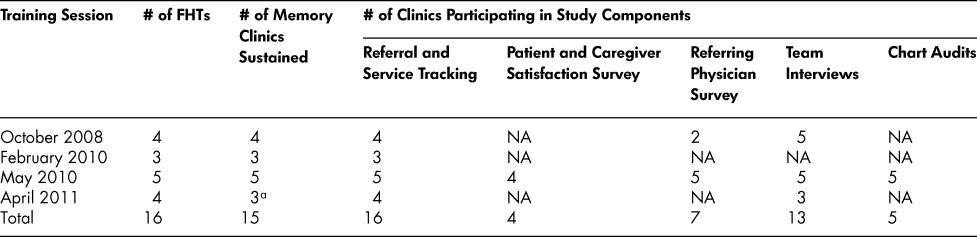
We employed a mixed qualitative and quantitative approach to describe the patient population served and services provided, to identify potential impacts, and to describe the development and implementation of these memory clinics. Although the implementation of this model of care was consistent across all of the clinics, due to limited funding it was not feasible for all clinics to participate in all study components. At a minimum, all clinics tracked their referrals and specific outcomes; five clinics that participated in the same training session (May 2010) completed a more intensive evaluation (see Table 1). This study was approved by the McMaster University Research Ethics Board.
Memory clinic participation in the various study components
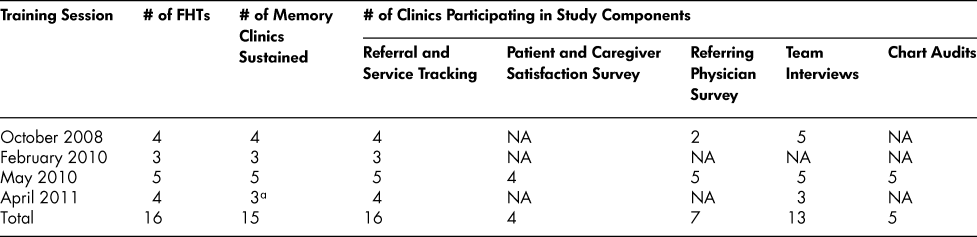
FHT = Family Health Team
NA = Not administered
a One FHT disbanded its memory clinic after operating two clinics; data for six patients assessed in the clinic were included in this study.
Memory Clinic Participation
A total of 16 FHTs participated in this evaluation study; these teams participated in training programs offered between October 2008 and April 2011 (this does not include the Centre for Family Medicine Family Health Team memory clinic). All of these teams were located in Central and Southwestern Ontario. These FHTs served a patient base ranging from 4,149 to 118,000 people, with a mean patient base of 32,685 (SD = 33,757) and a median of 22,000. Memory clinics varied in composition; at a minimum each memory clinic had at least one family physician (range across clinics: 1–4) and one nurse (range across clinics: 1–5 including nurse practitioners and registered practical nurses). Nine of the memory clinics had at least one social worker (range across clinics: 1–2), five had a pharmacist; one, an occupational therapist; one, a program coordinator and care navigator; and one memory clinic had two mental health counselors. All of the memory clinics operated one day per month, with some offering the clinic over two half-days per month. During times of high referrals, some memory clinics would operate the clinic an extra half-day per month in order to expedite the assessments.
Measures
Referral and Service Tracking
Each memory clinic collected information related to patient date of referral, referral status (urgent vs. non-urgent), age, gender, presenting problem, assessment diagnosis, and treatment recommendations. These data were tracked from the time of inception of the memory clinic for up to 23 months (M = 9.6 months, SD = 5.9, range: 1–23 months).
Patient and Caregiver Satisfaction Surveys
Following participation in the memory clinic training program in May 2010, four memory clinics distributed an anonymous paper-based survey to patients and caregivers following their clinic appointment to assess their satisfaction with the assessment and diagnosis process; these surveys were distributed between 15 September 2010 and 30 September 2011. Respondents completed the survey in the waiting room and returned completed surveys in a sealed envelope to a survey collection box. A number of aspects of the memory clinic (timeliness, quality of explanations, willingness to recommend the clinic to others, value of the clinic in addition to regular primary care) were rated using a 5-point Likert scale, from “strongly disagree” to “strongly agree”. Overall satisfaction with the memory clinic was rated using a 7-point Likert scale, from “extremely dissatisfied” to “extremely satisfied”.
Physician Survey
An online survey was distributed to 76 family physicians practicing within seven of the FHTs to assess their satisfaction with the memory clinic and the support they received to manage their patients’ dementia. These physicians had referred at least one patient to their FHT memory clinic; all of the clinics that were established following participation in the memory clinic training program offered in October 2008 and May 2010 were selected to participate in this component of the evaluation. These surveys were distributed between November 2010 and October 2011, at least 1.5 years following the establishment of the memory clinics. Various aspects of the memory clinic (timeliness of access to assessment, assessment results and treatment recommendations, impact on their knowledge and management of dementia) were rated using a 5-point Likert rating scale (“strongly disagree” to “strongly agree”). A 5-point Likert scale was used to rate the extent to which the quality of care they provide to patients with cognitive impairment has changed as a result of their involvement with the memory clinic (“much worsened”, “worsened”, “no change”, “improved”, and “much improved”).
Interviews with Memory Clinic Members
Team members from 13 memory clinics were invited to participate in individual or group interviews conducted via telephone six to eight months following the inception of their clinics. Questions included the following: (a) What do you think are some of the impacts associated with having a memory clinic within a primary-care setting?; (b) What are the benefits to patients and caregivers?; (c) What are the benefits to referring physicians?; and (d) What are the benefits to the health care system? All interviews were conducted by one author (LMH) to ensure consistency and were digitally recorded and transcribed. Interviews were conducted to the point of saturation (little or no new information was generated from the last interviews conducted).
Chart Audit
As a method of quality assessment, the charts of 10 patients from each of five memory clinics (50 in total) were independently reviewed by two geriatricians. Each memory clinic was asked to provide the charts of the last 10 consecutive patients assessed in the clinic. All five of the memory clinics established following their participation in the memory clinic training program in May 2010 were invited to participate in this component of the study. The chart audit tool, developed by the College of Physicians and Surgeons of Ontario (Wenghofer, Williams, Faulkner, & Klass, Reference Wenghofer, Williams, Faulkner and Klass2006; Wenghofer et al., Reference Wenghofer, Klass, Abrahamowicz, Daupinee, Smee and Blackmore2009) included quality indicators such as diagnosis, investigations, prescribed medications, treatment plan, and follow-up, which were assessed as either “appropriate”, “appropriate with suggestions”, or “of concern”. Diagnosis confirmation was based on information provided in the chart, including the Diagnostic and Statistical Manual of Mental Disorders, Fourth Edition (American Psychiatric Association, 1994) criteria, standardized test results, comprehensive history, and interactions with patients. All audit discrepancies were resolved between the geriatricians by consensus after discussion and joint review of the chart.
Data Analysis
Quantitative survey data were analyzed using IBM’s SPSS software (IBM Corp, Version 20.0, Armonk, NY: IBM Corp, http://www-01.ibm.com/software/analytics/spss/products/statistics/). Descriptive statistics (frequencies, means, standard deviations) were generated for numeric variables. Chart audit inter-rater agreement was calculated using the kappa coefficient (Landis & Koch, Reference Landis and Koch1977). Interview transcripts were analyzed using a qualitative naturalistic inquiry approach to develop an understanding of impacts associated with the clinics at several levels: patient and caregiver, health provider, and health system (Lincoln & Guba, Reference Lincoln and Guba1985). Responses to each question were examined and categorized, contrasting these to create a summary of responses (Krueger & Casey, Reference Krueger and Casey2000). This inductive analysis, which we used to identify recurring themes in the data without prior assumptions (Patton, Reference Patton2002), was conducted by one of the authors (LMH) and then reviewed by a second author (LL) to confirm saturation and reliability.
Results
Of the 16 FHTs, 15 were able to sustain their memory clinic over time. The FHT in which a memory clinic was not sustained was disbanded after seeing six patients due to limited management support because there was an unusually high level of existing resources in the geographic area (e.g., timely access to specialized services and specialists) for managing patients with cognitive impairment. Across all 15 memory clinics, 729 patients were referred, with a mean of 48.6 patients per memory clinic (SD =24.5; Mdn = 53) and a range of 6–80 patients across memory clinics (6 patients from the disbanded memory clinic were included in this study). Of those referred to the memory clinic, 79.8 per cent (n = 582) were assessed, with a mean of 38.8 (SD = 23.3) patients assessed per memory clinic (range: 6–77); 97 patients were awaiting assessment and 50 were not assessed, reasons for which included patient refusal, patient death prior to appointment, and acute illness. The majority of referrals (84.4%) were not considered urgent.
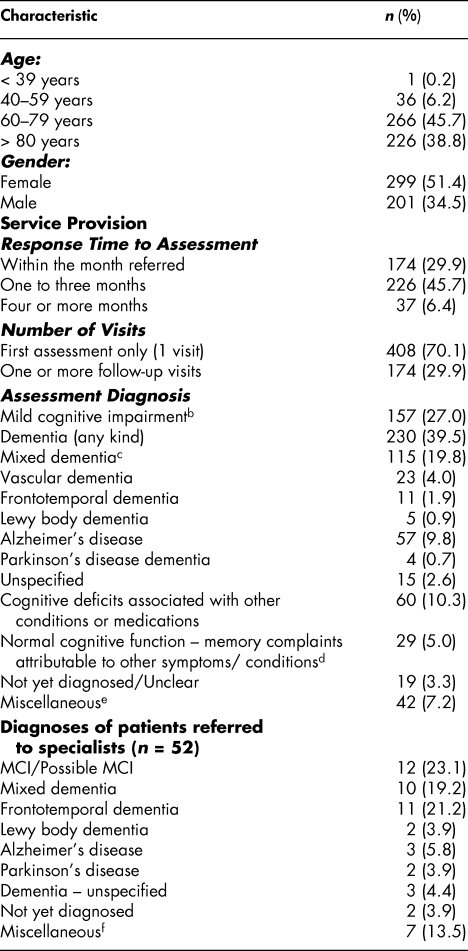
Characteristics of the patient population served by the memory clinics are presented in Table 2. The average age of patients seen in the memory clinics was 76 years (SD = 10; n = 529), with a range of 38 to 96 years. The mean response time to assessment was 1.4 months (SD = 1.7) with a range of less than one (patients seen within the month of referral) to 12 months. The majority of patients (74.2%; n = 432) were seen within two months of referral, and 76.9 per cent of urgent referrals (n = 39) were seen within one month of referral. During the period of study, the majority of patients were seen for a single assessment and not for a follow-up appointment. Across all patients assessed, the number of follow-up appointments ranged from 1 to 6x, with an average of 1.2 (SD = .63) visits per patient. The majority of patients received a diagnosis of dementia or mild cognitive impairment.
Characteristics of the patient population served by the memory (n = 582)a
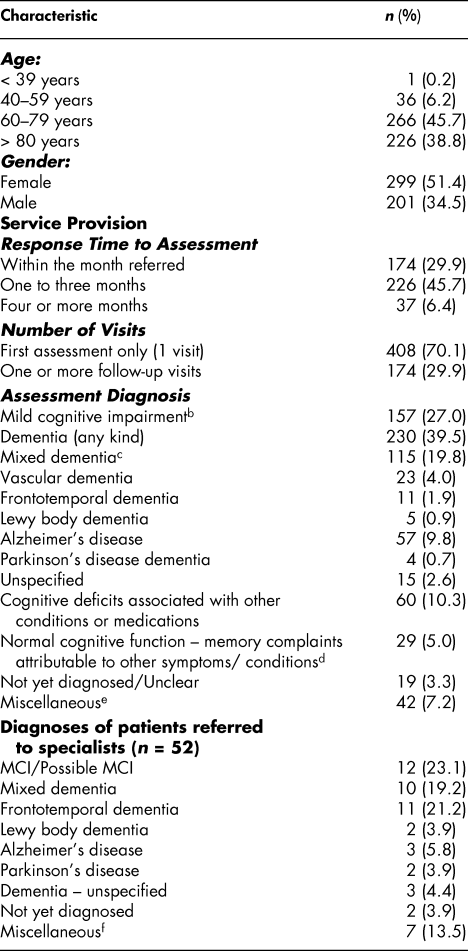
COPD = Chronic Obstructive Pulmonary Disease
MCI = Mild Cognitive Impairment
a Note: Percentages across all characteristics may not sum to 100% due to missing information. For presenting problems percentages sum to over 100% because in some cases more than one presenting problem was recorded.
b Includes mild cognitive impairment with or without other symptoms (e.g., depression).
c Currently, there are no clear guidelines for the diagnosis of mixed dementia (Jellinger, 2007; Robillard, 2007). Mixed dementia is defined as dementia having features of both Alzheimer’s disease and vascular dementia or Alzheimer’s disease with significant vascular risk factors with or without confirmation radiologically of vascular involvement.
d For example: depression, anxiety, post-traumatic stress disorder.
e For example: Query cerebrovascular accident, lacunar infarcts, vascular cognitive impairment no dementia (VCIND), normal pressure hydrocephalus.
f Miscellaneous: Query cerebrovascular accident (2), lacunar infarcts, significant depression, bipolar disorder, vascular cognitive impairment no dementia (VCIND), normal pressure hydrocephalus.
Both pharmacological and non-pharmacological interventions were recommended based on assessment results. A trial of cholinesterase inhibitors (AChEIs) was recommended in 42.6 per cent of the patients diagnosed with dementia, while recommendations to switch the type of AChEIs, to increase, or to continue with existing AChEI prescriptions were made for 9.1 per cent of patients with dementia. In total, recommendations related to the use of AChEIs (initiation, change, or plans to initiate) were made for 67.4 per cent of patients diagnosed with dementia. Other patients received a new prescription for medications other than AChEIs (e.g., antidepressants).Patients were referred to a variety of services including counseling support, home care services, long-term care (LTC) planning, home safety assessments, community resources such as the Alzheimer Society First Link program, meal delivery services, seniors’ centres, exercise programs, adult day programs, sleep clinic referrals, and driving assessments. (More detailed information on the type and number of recommendations made are available from the authors.)
Referrals to a specialist (geriatrician or neurologist) were made for 8.9 per cent of patients; this did not include informal advice obtained in discussion between the memory clinic physicians and their geriatrician or geriatric psychiatrist support. Although data were not collected on specific reasons for referrals to specialists, the majority of patients referred to specialists had a possible diagnosis of mild cognitive impairment or dementia (see Table 2) but often with questions regarding other factors that could be involved, such as the role of Parkinson’s, bipolar disorder, and Down syndrome. All patients diagnosed with possible frontotemporal dementia were referred to a specialist.
Patient and Caregiver Satisfaction
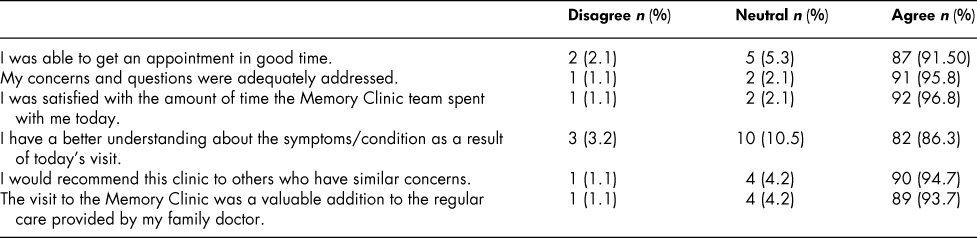
Satisfaction surveys were completed by 95 patients, representing a 47.3 per cent response rate. The response rate across the four sites ranged from 13.8 per cent to 66.7 per cent. Surveys were completed by 55 patients and 34 caregivers (six respondents did not identify whether they were patients or caregivers). Data are presented across both groups because there were no significant differences in ratings between patients and caregivers. Survey respondents were very satisfied with their visit to the memory clinic (mean satisfaction rating = 6.2/7; SD = .95, n = 68). Over 92 per cent of respondents agreed that (a) they received an appointment in good time, (b) their questions were adequately addressed, (c) they were satisfied with the amount of time the team spent with them, (d) they would recommend the memory clinic to others, and (e) the clinic was a value added to their regular primary care (see Table 3). A lower, but still high, percentage of respondents (86.3%) agreed that they had a better understanding of the condition as result of the memory clinic visit.
Patient and caregiver ratings of agreementawith various perceptions of the memory clinic (n = 95)b

a 5-point rating scale: Strongly disagree, disagree, neutral, agree, strongly agree; “Disagree” = the sum of “strongly disagree” and “disagree” ratings; “Agree” = sum of “strongly agree” and “agree” ratings.
b Percentages may not sum to 100% due to missing responses.
Referring Physician Satisfaction
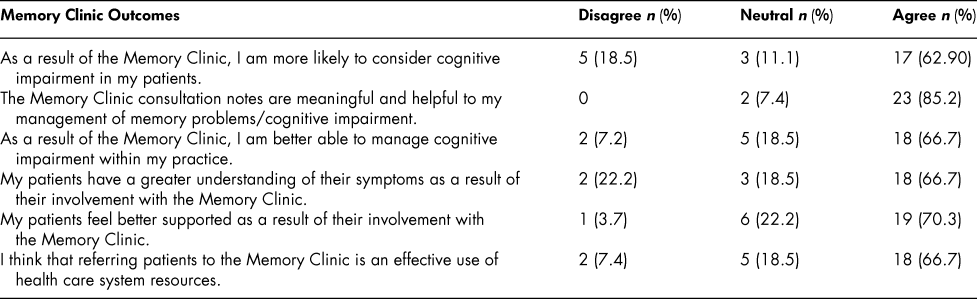
Surveys were distributed to 76 physicians; 27 physicians completed the survey, representing a 35.5 per cent response rate. The response rate across the seven sites ranged from 7.1 per cent to 50.0 per cent. Survey respondents had been in family practice an average of 19 (SD = 11.2 years) (range 1 to 39 years). Overall, referring physicians were very satisfied with the timeliness and quality of assessment, diagnostic and treatment recommendations, and availability of the team for consultation (all mean ratings ≥ 4.0, SD = .69–.88 on a 5-point scale). The majority of physicians (> 63%) agreed that as a result of their interactions with the memory clinic, they were more likely to consider cognitive impairment with their patients, better able to manage cognitive impairment independently; they also felt that the clinic consultation notes were meaningful and helpful to their practice (see Table 4). Similarly, the majority of physicians (> 67%) agreed that their patients are better informed about their symptoms, feel better supported as a result of their involvement with the memory clinic, and that the clinic was an effective use of health care system resources. Overall, 59.3 per cent of physicians indicated that the quality of care that they provided to patients with cognitive impairment has improved (sum of improved and much-improved ratings) as a result of the memory clinic; 29.6 per cent indicated no change in the care they provide as a result of the clinic (11% did not respond).
Referring physician ratings of agreementawith various perceptions of the memory clinic (n = 27)b
a 5-point rating scale: Strongly disagree, disagree, neutral, agree, strongly agree; “Disagree” = the sum of “strongly disagree” and “disagree” ratings; “Agree” = sum of “strongly agree” and “agree” ratings.
b Percentages may not sum to 100% due to missing responses.
Chart Audit
Across all five memory clinics for which chart audits were conducted, inter-rater agreement was moderate (Landis & Koch, Reference Landis and Koch1977) with kappa = 74 (.95 CI = .70 – .78); within each clinic the kappas ranged from .50 to .80 (.95 CI range = .31–.87). Following a review of the disagreements in the audit assessments, inter-rater agreement was almost perfect with kappa coefficient = .86 (.95 CI = .83–.88); within each memory clinic the kappa coefficients ranged from = .69 to .97 (.95 CI range = .59–1.0). The main area of disagreement was the need for specific components of a physical examination. Where deemed appropriate, suggestions were made regarding additional considerations, including (a) medications to consider, (b) additional risk factors, (c) potential laboratory investigations, (d) management of co-morbid conditions and the need to provide clearer documentation of the rationale for various investigations and assessments, (e) the meaning of abnormal laboratory results, and (f) more detailed communication to referring physicians. The results of these audits were generally comparable to those generated in an evaluation of the Centre for Family Medicine FHT memory clinic (Lee et al., Reference Lee, Hillier, Stolee, Heckman, Gagnon and McAiney2010).
Impacts Associated with the Memory Clinics
A total of 40 memory clinic members across 13 memory clinics participated in an interview; 21 in individual telephone interviews, and 9 in group interviews (two in-person and three via telephone) with a range of two to four participants each. Group interviews were an average of 30 minutes (SD = 7.0; range: 22 to 40) in length and individual interviews were an average of 18.2 minutes (SD = 6.4; range: 8 to 40) in duration. An equal distribution of physicians and nurses (n = 13) participated in the interviews, including nurse practitioners, registered nurses, and registered practical nurses. Other participants included representatives from the Alzheimer Society (n = 5), social workers (n = 4), mental health counsellors (n = 2), an occupational therapist, a pharmacist, and a care navigator.
Memory clinic members identified a number of impacts associated with the primary care–based memory clinics. Impacts for patients and caregivers were associated primarily with improved and timely access to specialized inter-professional assessment and early intervention, which provided an opportunity to reduce crises and caregiver burden. Memory clinics in primary-care settings were perceived as providing patients with care in a familiar environment by care providers with whom they are familiar. Referring physicians experienced reduced burden of care due to reduced patient crises, easy and timely access to consultation support, and a shared burden of managing driving issues and delivering bad news. The memory clinics provided an opportunity for capacity building among all disciplines for assessment, diagnosis, and management of dementia. Most notable among identified health system benefits were the more efficient use of limited specialist resources, with the potential for early identification and intervention to reduce unnecessary emergency department visits and to delay LTC placement. These impacts are reflected in the following comments:
“Patients get better care. Because it’s all happening in their FHT the family doc is more involved because the physicians are close by and working better together. It’s more integrated. It’s better than when you send patients off to specialists and no one is talking together beyond the consultation letter that you get.” [IDA11#8]
“As for the health system itself, you’re decreasing wait times for the geriatricians, so to me that’s big. For a lot of them you’re waiting eight months to a year to get in. So now they’re [patients] not waiting that long. They’re able to get what they need faster.” [IDA11#6]
Discussion
Almost all new memory clinics established through the training program were sustained over time and demonstrated their ability to detect and manage dementia independently within primary care. The one memory clinic that was not sustained over time was located in an area well served by geriatricians, suggesting that this model of care may be most relevant in areas that are underserviced by specialists, particularly rural areas where limited access to specialty consultants is known to further impede diagnosis and treatment for dementia (Teel, Reference Teel2004). Not all patients need to be referred to specialists; this study provides added support for existing evidence that trained family physicians are capable of effectively diagnosing and managing a significant proportion of patients with dementia (van den Dungen et al., Reference van den Dungen, van Marwijk, van der Horst, van Charante, MacNeil Vroomen and van de Ven2012). More importantly, this study demonstrates the sustainable application of this model of care beyond the originating FHT to other FHTs with varying human resources.
Consistent with calls for system redesign to improve the system of care for persons with dementia (Massoud, Lysy, & Bergman, Reference Massoud, Lysy and Bergman2010; Scott, Reference Scott2008), the memory clinics triage patients according to need, tailoring interventions accordingly, and referring only the most complex cases to specialists, with the vast majority of persons with dementia being managed at the primary-care level. Across all of the memory clinics, the percentage of referrals to specialists (9%) falls within a range consistent with ideal chronic disease management models of care (Scott, Reference Scott2008), and is in contrast to reports of up to 82 per cent of primary care–based patients with dementia being referred to specialists (Pimlott et al., Reference Pimlott, Siegel, Persaud, Slaughter, Cohen and Hollingworth2006). This care model demonstrated that patients can access assessment within primary care in a timely manner, on average 1.4 months from the time of referral, which is significantly sooner than the typical 6-to-12 month wait time for specialists (Massoud et al., Reference Massoud, Lysy and Bergman2010).
Moreover, this model increases health system capacity by enhancing family physician knowledge, skill, and confidence in managing dementia through education and peer mentorship opportunities, and by reducing burdens on specialist care through optimal management of most cases at the primary-care level (Lee et al., Reference Lee, Hillier, Stolee, Heckman, Gagnon and McAiney2010). These system efficiencies are evident not only in the reduced referrals to specialists but also in the low number of follow-up visits to the memory clinics (M = 1.2 over an average of 9 months), as compared to other models where the number of follow-up visits are up to 14 per year for patients diagnosed with dementia (Callahan et al., Reference Callahan, Boustani, Unverzagt, Austrom, Damush and Perkins2006). As the memory clinic team works in partnership with the primary-care physician in this shared-care model, the need for more frequent follow-up visits is not needed, further supporting efficiencies.
Although the merits of screening for dementia remain controversial (Le Couteur, Doust, Creasey, & Brayne, Reference Le Couteur, Doust, Creasey and Brayne2013), there is evidence to support case-finding for dementia in those for whom there are concerns about presence of a memory disorder (U.S. Preventive Services Task Force, 2003). Generally, there is much support for early diagnosis with an aim to prevent or delay cognitive, behavioral, and functional decline, and to support caregivers in order to prevent crises (Mittelman et al., Reference Mittelman, Ferris, Shulman, Steinberg and Levin1996; Pratt, Clare, & Kirchner, Reference Pratt, Clare and Kirchner2006). Although family physicians may administer screening tests for dementia, it has been noted that many are reluctant to conduct further assessments upon receipt of a positive screen; they do not move forward to make the diagnosis, which leaves the dementia unmanaged (Boise et al., Reference Boise, Eckstrom, Fagnan, King, Goubaud and Buckley2010). The challenges that family physicians face in diagnosing and managing dementia are well documented (Barrett et al., Reference Barrett, Haley, Harrell and Powers1997; Bradford et al., Reference Bradford, Kunik, Schulz, Williams and Singh2009; Pimlott et al., Reference Pimlott, Persaud, Drummond, Cohen, Silvius and Seigel2009). The results of this study suggest that the shared-care approach of the primary care–based memory clinic model may be an effective strategy for reducing the challenges associated with dementia diagnosis and management in primary care.
Limited research has been conducted to date on the effectiveness of this type of shared-care approach to diagnosis and management. A randomized controlled trial comparing the effectiveness of post-diagnosis treatment and care coordination provided by a memory clinic with that provided by family physicians found no differences in quality of life or caregiver burden (Meeuwsen et al., Reference Meeuwsen, Melis, Van Der Aa, Golüke-Willemse, Van Raak and Schölzel-Dorenbos2012), thus supporting the important role that family physicians can play within a shared-care approach following the diagnosis of dementia. Integrated and patient-centered care have been identified as key features of successful memory clinics (Clark, Moreland, Greaves, Greaves, & Jolley, Reference Clark, Moreland, Greaves, Greaves and Jolley2013). This study found that the primary-care memory clinic model reduces the burden of care on family physicians by providing timely comprehensive assessment and intervention recommendations and addressing some of the most challenging aspects of dementia care, such as driving concerns. Many family physicians are reluctant to remove drivers’ licenses for fear of increasing the risk of social isolation, depression and stress among patients and caregivers (Molnar, Byszewski, Marshall, & Man-Son-Hing, Reference Molnar, Byszewski, Marshall and Man-Son-Hing2005), and compromising the patient-physician relationship (Adams, McIlvain, Geske, & Porter, Reference Adams, McIlvain, Geske and Porter2005). By obtaining the careful corroborated history necessary for early accurate diagnosis, administering and interpreting cognitive screening tests, providing an individualized multidisciplinary care plan, and periodic monitoring, the primary-care memory clinic addresses the significant barrier of lack of time faced by family physicians in order to effectively manage all chronic diseases they encounter within a typical family practice (Boyd et al., Reference Boyd, Darer, Boult, Fried, Boult and Wu2005; Østbye et al., Reference Østbye, Yarnall, Krause, Pollak, Gradison and Michener2005).
Specialist-conducted chart audits verify the quality of care that can be provided in family physician–led memory clinics. Some disagreement existed between geriatricians regarding lack of documented physical examination in some cases; however, this may reflect unfamiliarity with the shared-care model in which a necessary physical examination is conducted by the referring family physician or, if a referral is made, by the specialist for complex or atypical cases where physical examination is critical. In this model of care, specialist referrals are considered mandatory for patients with suspected frontotemporal dementia, Lewy body dementia, Parkinson’s disease dementia, early onset dementias, rapidly progressive dementias, or any dementias with atypical features.
Furthermore, while many guidelines suggest that physical examination is an important part of the diagnostic process (Galvin & Sadowsky, Reference Galvin and Sadowsky2012; Patterson et al., Reference Patterson, Gauthier, Bergman, Cohen, Feightner and Feldman2001; The Dementia Study Group of the Italian Neurological Society, 2000), it is unclear which specific components of a physical and neurological examination are critical to diagnostic and management decisions. Indeed, it has been suggested that because physical examination contributes little to the diagnostic process in persons with dementia, it is not included in telemedicine consultations (Martin-Khan, Reference Martin-Khan2008; Martin-Khan, Varghese, Wootton, & Gray, Reference Martin-Khan, Varghese, Wootton and Gray2009). At present, there is no evidence to guide what physical examination is necessary in these intermediary clinics because to the best to our knowledge, intermediary dementia care clinics led by family physicians are a novel concept. Given the time commitment involved in memory clinic assessments, the clinical value of specific physical examination components must be determined to justify the additional time required for routine implementation into clinics (Reuben, Roth, Kamberg, & Wenger, Reference Reuben, Roth, Kamberg and Wenger2003). Research is currently under way to elucidate the key components of a physical and neurological examination that would be of clinical value in these clinics and includes the development of a framework for quality assurance to ensure fidelity of this intervention.
Limitations and Future Directions
This study had a number of limitations. The overall response rate to the patient and caregiver survey was low. Due to study funding limitations, this survey was administered to a subset of 4 of the 16 memory clinics; also, the lack of a random sampling strategy for the patient and caregiver satisfaction survey may have resulted in selection bias, in that those satisfied with the service may have been more likely to complete the survey. This could be minimized in future studies with the use of random sampling or other quasi-experimental designs. Similarly, a selection bias may exist for the referring physician survey. This survey was administered in less than half of the clinics and the response rate was low, thus limiting the generalizability of the findings, although the findings in this study were similar to those found by Lee and colleagues (Lee et al., Reference Lee, Hillier, Stolee, Heckman, Gagnon and McAiney2010), that had a 73 per cent response rate to this same survey. Future studies with referring physicians should attempt to identify the extent to which these physicians follow up on recommendations made by the memory clinics. The lack of long-term tracking of referrals limits our understanding of the role of the memory clinics in ongoing management. The low average number of follow-up visits (1.2) may reflect the short time frame for data collection (generally 6–8 months following the launch of the clinics), but may also reflect the minimal need for the clinics to provide frequent ongoing support with the intentional integration of care provided by the patient’s family physicians. Evidence of health system impacts was largely anecdotal; empirical studies would provide stronger evidence of the impact of the memory clinics on health and social service utilization.
This study represents one phase of a comprehensive evaluative research project to study primary-care memory clinics, as informed by the knowledge-to-action (KTA) model (Graham et al., Reference Graham, Logan, Harrison, Straus, Tetroe and Caswell2006), with various studies examining gaps, barriers, and facilitators in dementia care that were defined and addressed with the creation of the memory clinic model (KTA cycle stages 1 and 2) and evaluating the training program as a tailored knowledge translation intervention to disseminate this model of care to other Ontario Family Health Teams (KTA cycle stages 3 and 4) (Lee et al., Reference Lee, Hillier, Stolee, Heckman, Gagnon and McAiney2010; Lee et al., Reference Lee, Hillier, Heckman and Gagnon2012; Lee et al., Reference Lee, Weston and Hillier2013a, Lee, Hillier, & Weston, Reference Lee, Hillier and Weston2014). Although the chart audits in this current study suggested that the overall quality of care provided in the memory clinic was very high, some variation among the sites suggests the need to develop quality assurance processes to ensure consistent high-quality care across all memory clinics and sustainability.
Ongoing studies are under way to develop a quality assurance framework across all primary-care memory clinics to ensure ongoing fidelity to the memory clinic program and the delivery of quality care, and to facilitate the standardized implementation of refinements to the memory clinic care processes as new knowledge is developed (KTA cycle stage 5). Future studies are planned to develop a rigorous evaluative framework and methodology to assess the health system impacts of established primary-care memory clinics (KTA cycle stage 6), particularly regarding LTC delay and avoidance of emergency department visits and hospitalizations for ambulatory-care sensitive conditions (Reuben et al., Reference Reuben, Roth, Kamberg and Wenger2003), which may be averted with improved outpatient management. Comparisons will be made of the outcomes associated with this model with those of alternative models of care. Cost effectiveness, in terms of cost savings with reductions in the use of more costly acute care services will be the focus of future research. Additionally, future studies will aim to adapt this care model to suit other primary-care contexts such as aboriginal and francophone communities and remote settings (KTA cycle stages 3 and 4) as well as to sustain knowledge use (KTA cycle stage 7).
With the aging of the population and anticipated increases in the prevalence of dementia, the need is urgent for further research on promising models of dementia care that both increase primary care’s capacity to manage dementia and improve the system of care for persons with dementia and their family caregivers.