In 2017, suicide prevention was named one of the top five priorities for improving the care provided to veterans in the USA. Specifically, a strategic goal of reducing the veteran suicide rate to zero was proposed as data indicate that the veteran suicide rate has exceeded that of the general population each year since the mid-2000s (DoDSER, 2015; USA Today, 2017). Achieving this goal includes targeted suicide prevention efforts for vulnerable veterans. Recent research indicates that transgender veterans experience suicidal ideation (SI) and attempt suicide at concerning rates. It is estimated that there are over 134 000 transgender veterans currently living in the USA and an additional 15 500 transgender adults serving in active duty or the National Guard or Army Reserves (Gates & Herman, Reference Gates and Herman2014). A national sample of transgender veterans found that 66% of participants endorsed lifetime planning for suicide and 32% endorsed a history of at least one suicide attempt (Lehavot et al. Reference Lehavot, Simpson and Shipherd2016). Additionally, 36% of participants endorsed SI during multiple days in the past 2-weeks (Tucker et al. Reference Tucker, Testa, Reger, Simpson, Shipherd and Lehavotin press). These estimates are substantially higher than lifetime rates of SI (13.5%) and suicide attempts (2–9%) in the general population (Kessler et al. Reference Kessler, Borges and Walters1999; Nock et al. Reference Nock, Borges, Bromet, Cha, Kessler and Lee2008; Baca-Garcia et al. Reference Baca-Garcia, Perez-Rodriguez, Keyes, Oquendo, Hasin and Grant2010). It appears transgender veterans are at significantly increased risk relative to their veteran peers as well. Data from Veterans Health Administration (VA) medical records suggest at least a fourfold increased prevalence of SI, plans, and attempts in veterans with v. without transgender-related diagnoses (e.g., gender identity disorder and gender dysphoria; Blosnich et al. Reference Blosnich, Brown, Shipherd, Kauth, Piegari and Bossarte2013; Brown & Jones, Reference Brown and Jones2016). An additional study of veterans utilizing VA health care noted deaths by suicide was more than twice as high in transgender veterans compared with the suicide rate among their cisgender peers. Moreover, it was noted that veterans with transgender-related diagnoses were more likely to die by suicide at an earlier age (49) relative to their cisgender veteran counterparts (55–60). Certainly, these data suggest reducing transgender veteran suicide risk will be important to suicide prevention efforts among veterans.
One way in which resilience to suicide may be conferred in transgender adults is through their utilization of transition-related medical interventions (TRMIs) to treat gender dysphoria, including hormone therapy and gender affirmation surgical procedures. Evidence suggests that transgender adults who utilize hormone therapy demonstrate lower symptoms of depression and better quality of life (Newfield et al. Reference Newfield, Hart, Dibble and Kohler2006; Costa & Colizzi, Reference Costa and Colizzi2016; Glynn et al. Reference Glynn, Gamarel, Kahler, Iwamoto, Operario and Nemoto2016). Additionally, three prospective cohort studies of transgender adults in the general population demonstrated that hormone therapy was associated with reduced symptoms of depression and improved quality of life and psychological functioning, with follow-up periods ranging from 3 to 12 months post-initiation (Colizzi et al. Reference Colizzi, Costa and Todarello2014; Heylens et al. Reference Heylens, Elaut, Kreukels, Paap, Cerwenka and Richter-Appelt2014; Manieri et al. Reference Manieri, Castellano, Crespi, Di Bisceglie, Dell'Aquila and Gualerzi2014; White Hughto & Reisner, Reference White Hughto and Reisner2016). While SI has been examined less frequently, some evidence has found an association between hormone therapy utilization and SI. In a sample of 314 US male-to-female transgender adults, 75% of participants who did not use hormone therapy endorsed lifetime SI, compared with 51% of those who endorsed the history of hormone therapy (Wilson et al. Reference Wilson, Chen, Arayasirikul, Wenzel and Raymond2015). A sample of 380 Canadian transgender adults indicated a similar effect. Participants undergoing hormone therapy were approximately 50% less likely to endorse lifetime SI in comparison with those who desired TRMI but were not undergoing hormone therapy (Bauer et al. Reference Bauer, Scheim, Pyne, Travers and Hammond2015).
Research on the psychosocial effects of gender affirmation surgery has also demonstrated its potential benefits. A 2010 meta-analysis of 28 studies examining the relationship between gender affirmation surgery and gender dysphoria, mental health outcomes, and quality of life generally demonstrated positive effects (Muard et al. Reference Murad, Elamin, Garcia, Mullan, Murad and Erwin2010). Across studies, 80% of all individuals with a gender identity disorder who underwent any gender affirmation surgery demonstrated reduced gender dysphoria, 78% reported improvement of general psychiatric symptoms, and 80% indicated an improvement on a metric of quality of life. A reduction in suicide attempt rate was also seen post-surgery, although rates remained higher than the general population rate. Data published after this meta-analysis indicated a 62% relative risk reduction in lifetime SI in Canadian transgender adults post-surgery (Bauer et al. Reference Bauer, Scheim, Pyne, Travers and Hammond2015). Additionally, having undergone chest surgery but not genital surgery was associated with a lower lifetime prevalence of SI among male-to-female transgender adults in the USA compared with male-to-female transgender adults who had not undergone TRMI (Wilson et al. Reference Wilson, Chen, Arayasirikul, Wenzel and Raymond2015). Similar work has linked the history of surgical procedure(s) in male-to-female transgender adults to increased self-esteem and decreased mental health symptoms, particularly depression symptoms (Ainsworth & Spiegel, Reference Ainsworth and Spiegel2010; Glynn et al. Reference Glynn, Gamarel, Kahler, Iwamoto, Operario and Nemoto2016). Despite this evidence noting the potential benefits of surgical intervention, a prospective cohort study of Swedish transgender adults following surgical procedure demonstrated suicide rates were still higher than cisgender peers (Dhejne et al. Reference Dhejne, Lichtenstein, Boman, Johansson, Långström and Landén2011). This study did not directly compare rates of suicide between those who underwent surgical intervention and those who did not. Taken together, the relationship between gender affirmation surgery and suicide-related outcomes demonstrates a potential protective effect. However, the relationship between TRMI and SI and attempts has not been explored among transgender veterans, thus it is unclear if the findings in the larger literature are applicable.
To date, no research has investigated whether hormone and/or surgical TRMI relates to the frequency of SI in this at-risk population. If data from the general population are applicable to veterans, it suggests that access to these services may reduce suicide risk in transgender veterans. Additionally, data from the National Transgender Discrimination Study (Grant et al. Reference Grant, Mottet, Tanis, Herman, Harrison and Keisling2010) suggest that insurance coverage of all medically necessary TRMI and preventative healthcare would place a less economic strain on the general transgender population compared with not providing these services (Padula et al. Reference Padula, Heru and Campbell2016). However, access to and coverage for TRMI remains inconsistent at best and nonexistent at worst (VHA Directive, 2013-003; Stroumsa, Reference Stroumsa2014).
The current study investigated the relationship between symptoms of depression, SI, and history of both hormone therapy and gender affirmation surgery in a national sample of transgender veterans. Based on prior literature, it was expected that transgender veterans who have undergone hormone therapy would demonstrate a lower prevalence of recent depression symptoms and SI compared with those who have never undergone hormone therapy. Similarly, we hypothesized that transgender veterans who have undergone either/both chest and/or genital surgery would have a lower prevalence of recent depression symptoms and SI compared with those who have not undergone a surgical procedure. No hypotheses were made regarding a comparison of depression symptoms and SI in those who have undergone hormone therapy but not a surgical procedure and those who have undergone either/both chest and/or genital surgery due to an absence of prior literature comparing psychological outcomes between these groups of transgender adults. Finally, this study explored whether effects of hormone therapy and/or gender affirmation surgery on SI could be attributed to changes in symptoms of depression, an important correlate of SI in transgender veterans (Lehavot et al. Reference Lehavot, Simpson and Shipherd2016; Tucker et al. Reference Tucker, Testa, Reger, Simpson, Shipherd and Lehavotin press).
Method
Procedure
Complete details for of the study procedure have been previously described (Lehavot et al. Reference Lehavot, Simpson and Shipherd2016). Briefly, participants were recruited through postings on transgender veteran-related social media outlets and listservs. Participants had to be 18 years or older, indicate prior service in the US Armed Forces, self-identify as transgender, and live in the USA to complete the anonymous online survey. Procedures received institutional review board approval and complied with the American Psychological Association (APA) ethical standards for the treatment of human subjects.
Measures
Demographics
Demographic information collected included age, self-identified current gender identity, sexual orientation, race, ethnicity, and annual household income.
Transition-related medical intervention (TRMI)
The following three questions assessed the history of TRMI: (1) Have you ever taken hormones for transgender-related purposes (for example estrogen, testosterone)? (2) Have you ever had surgery to modify your chest or breasts, such as chest reduction, enlargement, or reconstruction? (3) Have you ever had surgery to modify your genitalia (for example orchiectomy, hysterectomy, sex reassignment or genital reassignment surgery)? Respondents answered each question with yes/no.
Suicidal ideation
We used two different outcomes to examine SI. First, the second item of the Suicidal Behaviors Questionnaire – Revised (SBQ-R; Osman et al. Reference Osman, Bagge, Gutierrez, Konick, Kopper and Barrios2001) was used to assess the frequency of SI experienced in the last year. Participants indicate the frequency of SI from 1 (never) to 5 (very often (5 or more times)). Second, to get a more recent indicator of SI, question nine of the PHQ-9 was used to assess the frequency of experiencing SI in the 2-weeks prior to participation. Participants rated how frequently they experienced, ‘thoughts that you would be better off dead, or of hurting yourself’ from 0 (not at all) to 3 (nearly every day). Previous research has demonstrated the clinical and theoretical relevance of interpreting data from these individual items in both veteran and general adult samples (Osman et al. Reference Osman, Bagge, Gutierrez, Konick, Kopper and Barrios2001; Louzon et al. Reference Louzon, Bossarte, McCarthy and Katz2016).
Depression symptoms
Depression symptoms were assessed via the Patient Health Questionnaire–9 (PHQ-9; Kroenke et al. Reference Kroenke, Spitzer and Williams2001). When symptoms of depression and SI were correlated in study analyses, item 9 of the PHQ-9 was removed and the total score of the remaining eight items (PHQ-8) represented symptoms of depression minus SI and thoughts of death. The PHQ-8 has been empirically validated as a meaningful measure of depression symptoms without the measurement of SI (Kroenke et al. Reference Kroenke, Strine, Spitzer, Williams, Berry and Mokdad2009). Internal consistency of the PHQ-9 was excellent (α = 0.94) as was the PHQ-8 (α = 0.93).
Analytical strategy
A ‘TRMI’ variable was created with the following dummy codes: 0 = no TRMI, 1 = hormone therapy but no surgical intervention, 2 = hormone therapy and surgery on either chest or genitalia, and 3 = hormone therapy and surgery on both chest and genitalia. Consistent with current international standards of care (WPATH, 2012), no participants indicated a history of the chest or genital surgery without a history of hormone therapy. We chose not to separate participants with surgery on one part of the body (i.e., chest but not genitalia or genitalia but not chest) in the medical intervention grouping as only 20 participants indicated surgery on genitalia but not chest and 17 surgery on the chest but not genitalia [thus collapsed into group 2 = surgery on either chest or genitalia (and hormone therapy)]. Chi-square analyses and ANOVAs were executed to determine if demographic variables (e.g., gender identity, age, race, ethnicity, and annual income) differed by TRMI status.
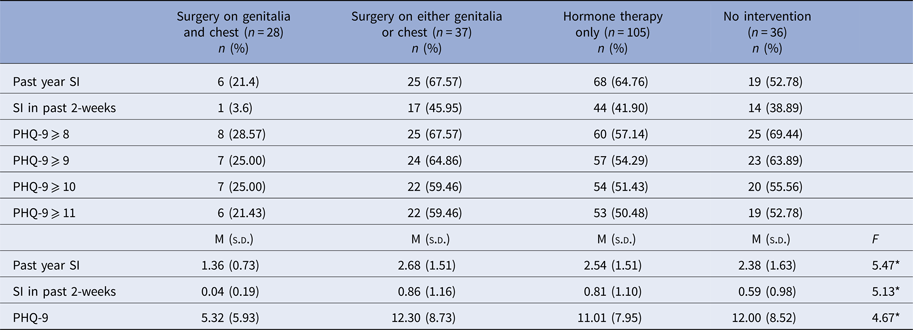
To help elucidate severity of depression symptoms and SI between these groups of TRMIs, the number and percentage of participants within each group who endorsed symptoms of depression in the past 2-weeks above the clinical cut-off as well as SI in the last year and in the last 2-weeks. Percentage of participants within each TRMI group with PHQ-9 total scores of above 8, 9, 10, and 11 are presented in Table 2 as a meta-analysis indicated similar specificity and sensitivity of cut-off scores between 8 and 11 across all studies analyzed (Manea, Gilbody, & McMillan, Reference Manea, Gilbody and McMillan2012). These percentages are presented to provide a better understanding of the sample's severity regarding symptoms of depression. As a clinical cut-off score has not been universally agreed upon as evidenced by this recent meta-analysis, we chose to represent percentages above commonly utilized clinical cut-off scores (Manea et al. Reference Manea, Gilbody and McMillan2012).
Three ANCOVA analyses and least significant difference (LSD) post-hoc comparisons were executed to determine if the frequency of SI in the past year, SI in the past 2-weeks, and depression symptoms (PHQ-9) differed as a function of intervention status when controlling for age, gender identity, race, ethnicity, and annual household income.
Indirect effect analyses (non-parametric bootstrapping procedures with 5000 bootstrapping samples; Hayes, Reference Hayes2013) were used to follow up on between-group (TRMI) differences in SI outcomes to determine if the effect may in part be due to variation in symptoms of depression. In these analyses, dummy coded dichotomous intervention groupings (e.g., 1 = surgery on both genitalia and chest, 0 = no TRMI) served as the predictor variable, SI experienced in the past 2-weeks (PHQ-9 item 9) served at the outcome variable, symptoms of depression experienced in the past 2-weeks (PHQ-8) served as the mediator, and age, gender identity, race, ethnicity, and annual household income served as covariates. Only group differences in SI experienced in the past 2-weeks were followed up with indirect effect analyses, as the timeframe of this metric of recent SI matched the timeframe of the mediator (symptoms of depression experienced in the past 2-weeks).
Results
Of the 312 eligible individuals who agreed to participate, data from 14 participants failed validity checks. Of the 312 eligible individuals who agreed to participate, data from 14 participants failed validity checks. Specifically, all surveys were examined to ensure they met eligibility criteria (over age 18, live in the USA, self-reported transgender identity, veteran status) and to examine internal consistency of the data. Listwise deletion of missing data regarding TRMI status and suicide outcomes left a final sample of 206 self-identified transgender veterans (Mage = 48.47, s.d. = 14.73). SI was assessed toward the end of the survey; missing data became more common with the addition of each measure, indicating that it was likely due to survey length as opposed to survey content.
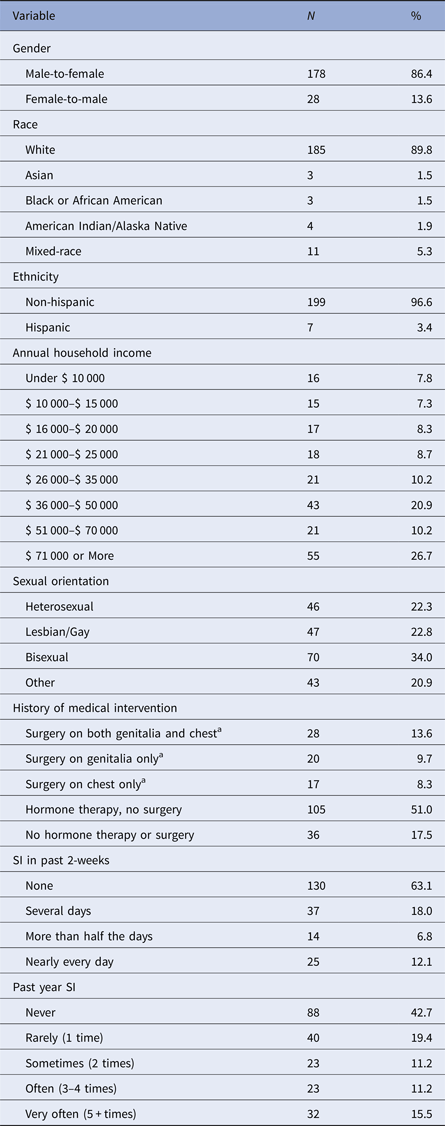
The majority of participants (86.4%) self-identified with a male-to-female gender identity. Most participants identified as White (89.8%), and non-Hispanic (96.6%). The majority of the study sample endorsed TRMI of some kind: 28 (13.6%) gender affirmation surgery on both the chest and genitalia, 20 (9.7%) surgery on genitalia only, 17 (8.3%) surgery on chest only, 105 (51%) hormone therapy (but no gender affirmation surgery), and 36 (17.5%) endorsed no TRMI. Table 1 provides a description of demographic characteristics, TRMI utilization, and frequency of SI in the previous year and past 2-weeks within the study sample.
Demographic characteristics and levels of recent SI of the study sample (N = 206)

a All participants who endorsed the history of surgical medical intervention also endorsed a history of hormone therapy.
Demographics and medical intervention
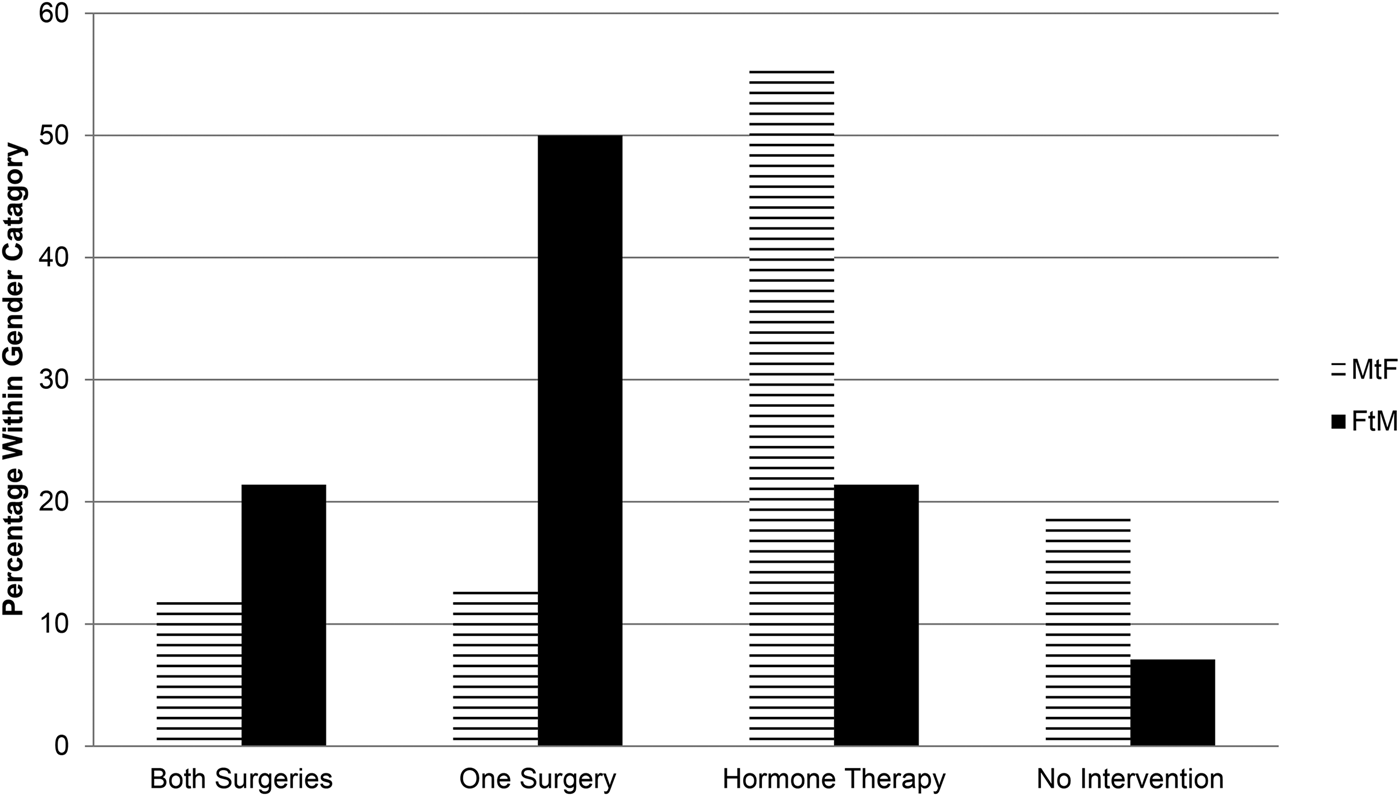
A significant relationship between TRMI and current gender identity was found, with participants who identified as female-to-male being more likely to have undergone gender affirmation surgery compared with those who identified as male-to-female, χ2(3) = 27.51, p < 0.001 (Fig. 1). For example, 71.4% of female-to-male participants had undergone surgery (21.4% both and 50% one surgery) v. 25.3% of male-to-female participants (12.4% both and 12.9% one surgery).
Percentage of male-to-female (MtF)and female-to-male (FtM), participants who endorsed gender affirmation surgery on both genitalia and chest, surgery on either genitalia or chest, hormone therpay but no surgery, and no history of TRMI intervention.

Age was also related to TRMI, F(3, 203) = 6.06, p = 0.001. Specifically, participants who had undergone no TRMI (M = 41.14, s.d. = 14.90) were younger than those who had undergone hormone therapy only (M = 48.44, s.d. = 13.72, p = 0.042, d = −0.51), those who had undergone surgery on either genitalia or chest (M = 49.86, s.d. = 15.35, p = 0.046, d = −0.58), and those who had undergone surgery on both genitalia and chest (M = 56.18, s.d. = 13.55, p < 0.001, d = −1.06). Additionally, those who had undergone hormone therapy but not surgery were marginally younger than those who had undergone surgery on both genitalia and chest, p = 0.054, d = −0.57.
No relationships between TRMI and race, ethnicity, sexual orientation, and income were seen (χ2(12) = 9.39, p = 0.669; χ2(3) = 0.59, p = 0.898; χ2(9) = 10.62, p = 0.303; χ2(21) = 22.40, p = 0.377).
Medical intervention, SI, and depression symptoms
Descriptive statistics for SI (past year and past 2-weeks) and depression symptoms (PHQ-9 total scores) within each TRMI group are presented in Table 2. These results generally depict a lower percentage of the endorsement of experiencing some level of SI in the last year or the last 2-weeks in those who had undergone surgery on both genitalia and chest compared with those with other or no TRMI. Percentages of PHQ-9 scores above the clinical cut-offs followed a similar trend across groups.
Number and percentage of participants within TRMI groups who endorsed total PHQ-9 scores above clinical cut-off and some level of SI in the past 2-weeks and past year
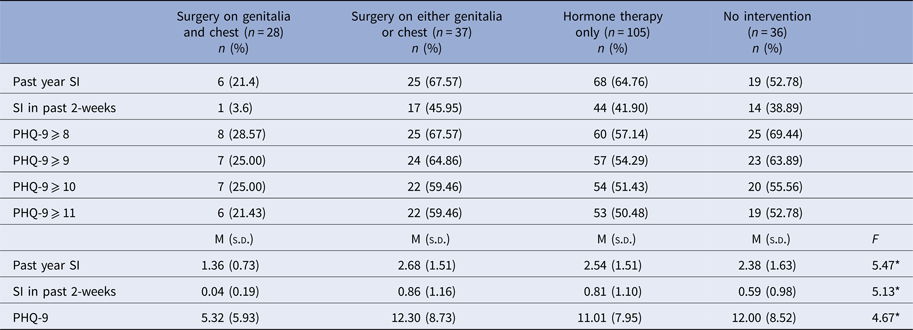
SI, suicidal ideation.
Note: *p < 0.01.
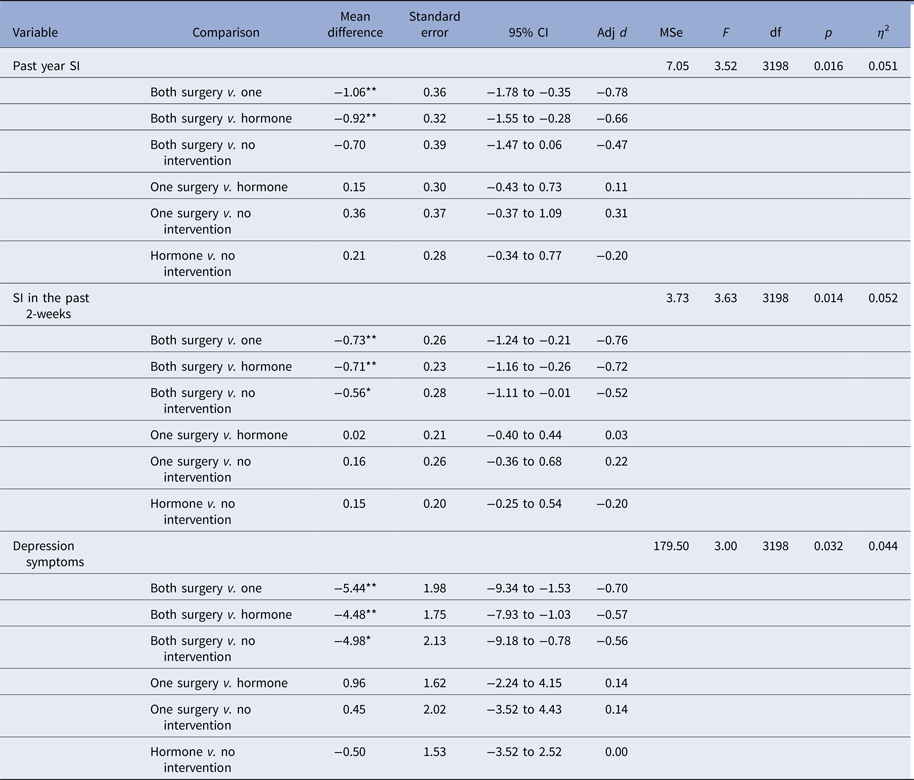
TRMI group differences were found for all three outcomes when controlling for age, gender identity, race, ethnicity, and annual household income, with effect sizes ranging from η 2 = 0.044 to 0.052 (Table 3). Lower frequencies of SI in both the past year and past 2-weeks were seen in those who had undergone surgery on both genitalia and chest compared with those who had undergone surgery on either genitalia or chest and those who had undergone hormone therapy but no surgery. A significant effect was seen when comparing SI in the last 2-weeks between those who had undergone both surgeries and those who had undergone no TRMI, but the same comparison for SI in the past year was not statistically significant (p = 0.071). No differences in frequency of SI were seen between those who had undergone surgery on either genitalia or chest, hormone therapy but no surgery, and those who had undergone no TRMI.
ANCOVA results and pairwise comparisons of recent SI and depression symptoms among participants by medical intervention group
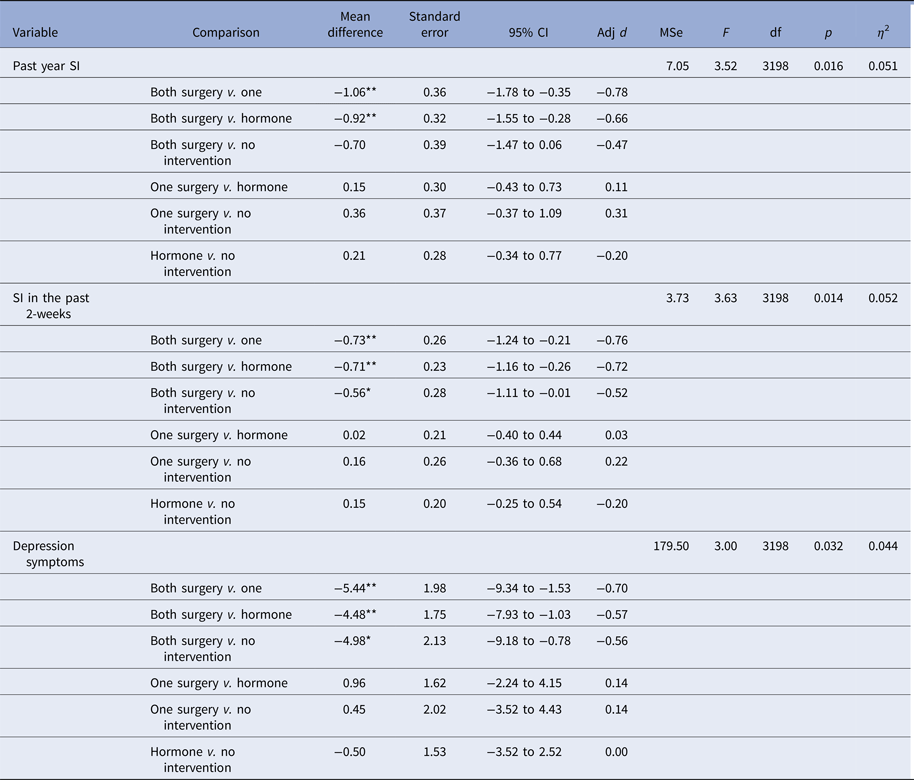
Note: *p < 0.05, **p < 0.01, ***p < 0.001; all means adjusted for age, gender identity, race, ethnicity, and annual household income.
Those who had undergone surgery on both genitalia and chest endorsed significantly lower depression symptoms compared with those with surgery on either genitalia or chest, hormone therapy but no surgery, and those who had undergone no TRMI. No differences in depression symptoms were seen between those who had undergone surgery on genitalia or chest, hormone therapy but no surgery, and those who had undergone no TRMI.
Indirect effect of medical intervention on SI through depression symptoms
An indirect effect was found for surgery on both genitalia and chest v. no TRMI on SI in the past 2-weeks through depression symptoms while controlling for covariates [Β = −0.2565, 95% BC confidence interval (CI) −0.7117 to −0.0027]. The model predicted 52.30% of the variance of SI in the past 2-weeks, F(6,57) = 3.06, p = 0.012.
A similar indirect effect was found for surgery on both genitalia and chest v. hormone therapy only on SI in the past 2-weeks through depression symptoms while controlling for covariates (Β = −0.3100, 95% BC CI −0.6759 to −0.0695). The model predicted 44.08% of the variance of SI in the past 2-weeks, F(6126) = 3.26, p = 0.005.
Finally, an indirect effect was found for surgery on both genitalia and chest v. surgery on either genitalia or chest on SI in the past 2-weeks through depression symptoms while controlling for covariates (Β = −0.3397, 95% BC CI −0.7644 to −0.0504). The model predicted 51.95% of the variance of SI in the past 2-weeks, F(7,57) = 8.81, p < 0.001.
Discussion
In light of alarming rates of SI and past suicide attempts among transgender veterans (Blosnich et al. Reference Blosnich, Brown, Shipherd, Kauth, Piegari and Bossarte2013; Lehavot et al. Reference Lehavot, Simpson and Shipherd2016; Tucker et al. Reference Tucker, Testa, Reger, Simpson, Shipherd and Lehavotin press), this study aimed to evaluate the relationships between utilization of different TRMIs and levels of depression and SI in this transgender veteran population. This work is particularly timely as it is currently unclear whether new transgender service members can be enrolled, and their health care costs are central to this debate (Vanden Brook, 2017). In this sample, respondents reported high use of hormone therapies (82.5%) but fewer reported surgeries (23.3% genital, 21.9% chest). Results also demonstrated the substantially lower frequency of SI for those who had undergone hormone therapy in addition to surgery on both the chest and genitals compared with those who had not undergone any TRMI, as well as compared with those who had undergone hormone use only or just one surgical intervention. These differences demonstrated large effect sizes. Differences in SI over the past 2-weeks between these groups were partially explained by symptoms of depression. However, contrary to expectations, there were no differences in SI frequency or depression symptoms between those who had undergone one type of surgery, hormone use only, and no intervention. Considering the significant relationships between history of both surgeries and past year and past 2-weeks SI, further exploration of the impact of making surgical intervention available for transgender veterans who desire it is warranted
An unexpected finding was demonstrated in the current study as those who had undergone hormone therapy did not demonstrate less SI as compared with those without a history of TRMI. A similar finding was seen when comparing those who had undergone both hormone therapy and one surgical procedure compared with those without a history of TRMI. Previous work has suggested reduced risk for SI in transgender adults who had undergone hormone therapy alone as well as chest or genital surgery alone (Muard et al. Reference Murad, Elamin, Garcia, Mullan, Murad and Erwin2010; Bauer et al. Reference Bauer, Scheim, Pyne, Travers and Hammond2015; Wilson et al. Reference Wilson, Chen, Arayasirikul, Wenzel and Raymond2015). The discrepant findings in the current study may in part be due to study limitations noted below; however, these results may also suggest that hormone intervention and non-comprehensive surgical intervention are not sufficient to decrease the risk of future SI in transgender veterans, representing a potentially unique aspect of this sample. It is plausible that different cultural, contextual, and intrapersonal factors exist that moderate the effects of TRMIs on SI among transgender veterans, as compared with transgender San Franciscans and Canadians considered in prior studies (Bauer et al. Reference Bauer, Scheim, Pyne, Travers and Hammond2015; Wilson et al. Reference Wilson, Chen, Arayasirikul, Wenzel and Raymond2015). For example, transgender veterans may have unique experiences, such as membership in a masculinity-dominated culture, combat exposure, and military minority stress, each of which may influence both decisions to engage in TRMIs and mental health outcomes. Similarly, this transgender veteran sample was comprised primarily of male-to-female individuals, who may experience higher pressure to complete all TRMIs to present a socially accepted female gender expression. It may be that the current findings should be applied most tentatively to this population. There were only a small number of female-to-male participants in this sample yet a high proportion reporting having had both chest and genital surgery (over 71%). This high utilization of intervention is somewhat discrepant with previous work in non-veteran transgender adult samples that demonstrated approximately one-quarter of female-to-male transgender adults desire or need genital surgery (Testa et al. Reference Testa, Rider, Haug and Balsam2017).
Important study limitations should be considered when interpreting study results. First, the sample size of the current study was not adequate to detect small effects. This concern might be most salient as less than 30 participants indicated surgical interventions on both the chest and genitals. Additionally, it is important to note that this study did not assess desire for TRMIs. Not all transgender individuals desire TRMI as previous online studies have demonstrated that less than half of their study samples endorsed a desire for TRMI (Kuper et al. Reference Kuper, Nussbaum and Mustanski2012; Testa et al. Reference Testa, Rider, Haug and Balsam2017). The lack of assessment of interest in these interventions might explain why there were no differences in SI between those who reported no intervention, hormone therapy only, and one surgery type only, as our comparative groups may have included people who have no desire or need for such interventions. Furthermore, this study used one-item measures of past year and past 2-weeks SI. Although these items were extracted from psychometrically validated measures of SI and have been used individually in previous research, the use of single items, particularly self-report items, is a limitation (Millner et al. Reference Millner, Lee and Nock2015). The use of one-item measures of TRMI history suffers from similar yet unique limitations. For example, it is possible that some TRMIs (e.g., hysterectomy) could have been experienced by participants but not for transition purposes.
In regard to the cross-sectional design of the study, data may be influenced by multiple confounds. Indeed, prior research employing longitudinal designs have been more consistent than cross-sectional studies in finding a positive relationship between hormone therapy and psychological well-being (Costa & Colizzi, Reference Costa and Colizzi2016). While the current study included multiple covariates (age, gender identity, race, ethnicity, annual household income), other potential confounds were not accounted for. For example, a timeline of social transition was not considered. It is possible that participants in this sample who had engaged in both surgical procedures were further along in their social transitions and were, therefore, less likely to be navigating the initial coming out process and the challenge of navigating the world when one's gender presentation is changing and/or does not fit into the socially accepted binary categories. Other potential unmeasured variables that may influence both utilization of TRMI and SI and were not considered in this study include time since TRMI intervention, insurance coverage, health literacy, body satisfaction, access to providers competent in transgender health care, access to mental health services and psychosocial transition-related intervention, provider rapport, and levels of support for transition in one's social and employment contexts. Finally, it is also possible that resilience to mental health concerns such as symptoms of depression and SI may predispose the ability for transgender veterans to advocate for their care and navigate medical transition intervention. In this case, it may be that pursuit of TRMI is influenced by a transgender veteran's symptoms of depression and frequency of SI. Temporal distinctions cannot be inferred given the cross-sectional design.
With these limitations considered, the results of the current study inform future clinical, policy, and research efforts relevant to the need for improved suicide prevention efforts for transgender veterans. Results indicate that only those who reported multiple transition-related surgeries, as well as hormone intervention, endorsed significantly lower levels of SI and depression relative to other groups of transgender veterans. This suggests that it is imperative not to simply ‘lump’ TRMIs as all or nothing or even surgery v. hormone or no intervention. The greatest mental health outcomes for transgender veterans may be related to supporting veterans in accessing comprehensive medical interventions. This is an especially important finding in light of the fact that access to surgical interventions for transgender veterans is restricted. Under VA policy eligible transgender veterans receive medically necessary care including hormone therapy, mental health counseling, preoperative evaluations, and post-operative care, although not gender affirming surgical procedures (VHA Directive, 2013-003). Certainly, longitudinal research prospectively tracking transgender veterans will be necessary to better assess causal links between TRMIs, including hormone therapy as well as affirmation surgeries, and SI. Nonetheless, the current study suggests that a comprehensive approach to medically necessary care for transgender veterans may be most strongly associated with improved mental health outcomes.
The current study is the first to investigate whether TRMI were related to symptoms of depression and frequency of recent SI in transgender veterans. Results indicated that depression symptoms and frequency of SI experienced in the past year and past 2-weeks were significantly lower in veterans who had undergone surgery on both chests and genitals (as well as hormone therapy) compared with all other levels of TRMIs. The results indicate the potential critical importance of access to desired and medically indicated TRMI for transgender veterans, an underserved population in particular need of enhanced suicide prevention efforts (Blosnich et al. Reference Blosnich, Brown, Shipherd, Kauth, Piegari and Bossarte2013; Lehavot et al. Reference Lehavot, Simpson and Shipherd2016).
Acknowledgements
This research was supported by a research grant from the Williams Institute Small Grants Program to Drs. Lehavot, Simpson, and Shipherd. This work was supported by the Denver-Seattle VA HSR&D Center of Innovation, VA Puget Sound Health Care System, and VA Boston Health Care System. Dr. Lehavot was supported by a VA Career Development Award from the CSR&D Service of the VA Office of Research and Development (IK2 CX000867). The opinions expressed in this work are those of the authors and do not necessarily represent those of the institutions, the Department of Veterans Affairs, or the US Government.