National data indicate that over half of US youths have been exposed to at least one adverse experience of maltreatment, violence, poverty, parental loss, or parental maladjustment (Finkelhor, Ormrod, Turner, & Hamby, Reference Finkelhor, Ormrod, Turner and Hamby2005; McLaughlin et al., Reference McLaughlin, Green, Gruber, Sampson, Zaslavsky and Kessler2012). These experiences predict a range of negative outcomes across the life course, including poor physical and mental health and academic achievement (Duncan, Yeung, Brooks-Gunn, & Smith, Reference Duncan, Yeung, Brooks-Gunn and Smith1998; Felitti et al., Reference Felitti, Anda, Nordenberg, Williamson, Spitz and Edwards1998; McLaughlin et al., Reference McLaughlin, Green, Gruber, Sampson, Zaslavsky and Kessler2012). Developing interventions to remediate long-term consequences of exposure to childhood adversity requires greater understanding of the developmental processes that are disrupted as a result of these experiences.
Prevailing research approaches involve limitations that reduce their utility in delineating the intervening developmental processes that lead to negative life outcomes following childhood adversity. In some studies, single types of adversity, such as abuse, neglect, or parental divorce, have been examined in isolation as predictors of developmental outcomes (Anda et al., Reference Anda, Felitti, Bremner, Walker, Whitfield and Perry2006; Chase-Lansdale, Cherlin, & Kiernan, Reference Chase-Lansdale, Cherlin and Kiernan1995; Dubowitz, Papas, Black, & Starr, Reference Dubowitz, Papas, Black and Starr2002). Because different types of adversity frequently co-occur (Finkelhor, Ormrod, & Turner, Reference Finkelhor, Ormrod and Turner2007; McLaughlin et al., Reference McLaughlin, Green, Gruber, Sampson, Zaslavsky and Kessler2012), examining a single type of adversity without accounting for co-occuring ones makes it difficult to identify developmental consequences of particular adverse experiences. Recognition of this co-occurrence has prompted a transition to examining associations of the number of adverse experiences with developmental outcomes, which is often referred to as the cumulative-risk approach (Arata, Langhinrichsen-Rohling, Bowers, & O'Brien, Reference Arata, Langhinrichsen-Rohling, Bowers and O'Brien2007; Dube et al., Reference Dube, Felitti, Dong, Chapman, Giles and Anda2003; Edwards, Holden, Felitti, & Anda, Reference Edwards, Holden, Felitti and Anda2003; Evans, Li, & Whipple, Reference Evans, Li and Whipple2013). However, this approach assumes that diverse experiences influence development through similar mechanisms and obscures differences in the associations of particular types of environmental experience with specific developmental processes. Such distinctions are likely to be important. For example, child abuse and neglect have been associated with distinct patterns of performance on emotion discrimination tasks (Pollak, Cicchetti, Hornung, & Reed, Reference Pollak, Cicchetti, Hornung and Reed2000).
Identifying core dimensions that underlie multiple types of childhood adversity and influence development through similar mechanisms addresses the oversimplification of prevailing approaches and may be a more effective strategy for studying developmental processes disrupted following adversity. We recently articulated a novel conceptual framework arguing that threat and deprivation are two core dimensions that have unique effects on emotional, cognitive, and neural development (McLaughlin, Sheridan, & Lambert, Reference McLaughlin, Sheridan and Lambert2014; Sheridan & McLaughlin, Reference Sheridan and McLaughlin2014). Animal neuroscience findings suggest that experiences of threat and deprivation influence development differently (Diamond, Rosenzweig, Bennett, Lindner, & Lyon, Reference Diamond, Rosenzweig, Bennett, Lindner and Lyon1972; Eiland, Ramroop, Hill, Manley, & McEwen, Reference Eiland, Ramroop, Hill, Manley and McEwen2012), but few human studies have directly compared these dimensions as predictors of developmental outcomes in youth, although exposures that reflect the dimensions of threat and deprivation have been compared in previous research (e.g., abuse and neglect, respectively; Pollak et al., Reference Pollak, Cicchetti, Hornung and Reed2000). The present study served as an empirical test of two theoretical predictions about how threat and cognitive deprivation influence automatic emotion regulation and cognitive control.
Threat involves exposure to events that involve harm or threat of harm to oneself and others, consistent with the DSM-5 definition of trauma (American Psychiatric Association, 2013). Threat is a primary dimension of physical, sexual, and emotional abuse and exposure to other types of interpersonal violence. Experiences of threat are argued to influence the development of emotional processing (McLaughlin, Sheridan, & Lambert, Reference McLaughlin, Sheridan and Lambert2014; Sheridan & McLaughlin, Reference Sheridan and McLaughlin2014). Specifically, exposure to a threatening event serves as a potent learning experience that may result in heightened reactivity to negative emotional information and attention to potential threats (Van Marle, Hermans, Qin, & Fernandez, Reference Van Marle, Hermans, Qin and Fernandez2009), responses that are adaptive in the presence of danger and maladaptive in safe environments. Chronic threat exposure and the absence of a safe environment in childhood limit opportunities to discriminate between threat and safety cues and to practice extinction learning of fear responses that are no longer appropriate, which may interfere with the development of automatic emotion regulation processes. Overall, we expect that childhood threat is associated with heightened reactivity and attention to emotional information and deficits in the automatic down-modulation of emotional responses. Experiences of childhood threat have been associated with atypical emotional processes in numerous studies. For example, child abuse is associated with enhanced perceptual sensitivity and attention to angry facial expressions (Pollak & Sinha, Reference Pollak and Sinha2002; Pollak & Tolley-Schell, Reference Pollak and Tolley-Schell2003), dysregulated behavioral and emotional reactions to anger (Hennessy, Rabideau, Cicchetti, & Cummings, Reference Hennessy, Rabideau, Cicchetti and Cummings1994; Maughan & Cicchetti, Reference Maughan and Cicchetti2002), and maladaptive emotional and physiological reactivity to stress (Cooley-Quille, Boyd, Frantz, & Walsh, Reference Cooley-Quille, Boyd, Frantz and Walsh2001; Glaser, van Os, Portegijs, & Myin-Germeys, Reference Glaser, van Os, Portegijs and Myin-Germeys2006; Gump, Reihman, Stewart, Lonky, & Darvill, Reference Gump, Reihman, Stewart, Lonky and Darvill2005; McLaughlin, Sheridan, Alves, & Mendes, Reference McLaughlin, Sheridan, Alves and Mendes2014).
In contrast, cognitive deprivation refers to the limited quantity and complexity of cognitive inputs and learning opportunities during periods of development when such environmental experiences are expected. Cognitive deprivation is a primary dimension of experience for children exposed to material deprivation associated with poverty, institutionalization, and physical neglect. Institutionalization serves as the most obvious example of cognitive deprivation; children raised in institutions experience reduced language exposure and cognitively enriching activities (Smyke et al., Reference Smyke, Koga, Johnson, Fox, Marshall and Nelson2007; Zeanah et al., Reference Zeanah, Nelson, Fox, Smyke, Marshall and Parker2003). Poverty and physical neglect both involve deprivation in access to basic necessities, including food, shelter, and clothing (Hildyard & Wolfe, Reference Hildyard and Wolfe2002; Rose, Reference Rose1999), and are strongly associated with deprivation in language exposure and cognitive complexity at home and school (Bradley, Corwyn, McAdoo, & Coll, Reference Bradley, Corwyn, McAdoo and Coll2001; Hart & Risley, Reference Hart and Risley1995; Sirin, Reference Sirin2005). For example, poverty is associated with reduced access to learning materials (e.g., books) and stimulating cognitive experiences at home (e.g., parent reading) and outside the home (e.g., visits to museums; Bradley et al., Reference Bradley, Corwyn, McAdoo and Coll2001). It is important to note that poverty is a complex experience that is associated with elevated risk for experiencing many forms of adversity, including threat (e.g., violence in the community or home) as well as cognitive deprivation (e.g., low complexity of spoken language in the home, low cognitive stimulation). To isolate aspects of poverty related to cognitive deprivation, it is therefore critical to measure and adjust for violence exposure.
In contrast to threat, experiences of cognitive deprivation are argued to influence the development of cognitive control through the reduction of expected inputs and learning opportunities that scaffold typical cognitive development (McLaughlin, Sheridan, & Lambert, Reference McLaughlin, Sheridan and Lambert2014; Sheridan & McLaughlin, Reference Sheridan and McLaughlin2014). Cognitive control involves updating and manipulating information in working memory and switching between sets of rules or tasks (Miyake & Friedman, Reference Miyake and Friedman2012). Both working memory and switching ability contribute to the ability to inhibit dominant or automatic responses, referred to as cognitive control (Miyake & Friedman, Reference Miyake and Friedman2012). Reduced quantity and complexity of linguistic inputs associated with material deprivation (Hart & Risley, Reference Hart and Risley1995) may hinder the development of cognitive control abilities. For example, youths exposed to poverty may have reduced opportunities to practice and master cognitive control skills associated with the processing of complex language structures (e.g., sentences containing conjunctions), including working memory (e.g., holding the meaning of different clauses in mind) and cognitive flexibility (e.g., learning and using novel rules; Baddeley, Reference Baddeley2003; Gathercole & Baddeley, Reference Gathercole and Baddeley1993). Inadequate exposure to cognitively enriching activities at home and school (Bradley et al., Reference Bradley, Corwyn, McAdoo and Coll2001) may further hamper cognitive control development. Material deprivation in childhood is associated with cognitive control deficits. Low socioeconomic status (SES), institutionalization, and physical neglect are associated with poor performance on working memory and/or inhibition tasks (Bos, Fox, Zeanah, & Nelson, Reference Bos, Fox, Zeanah and Nelson2009; Farah et al., Reference Farah, Shera, Savage, Betancourt, Giannetta and Brodsky2006; Mueller et al., Reference Mueller, Maheu, Dozier, Peloso, Mandell and Leibenluft2010; Noble, McCandliss, & Farah, Reference Noble, McCandliss and Farah2007; Noble, Norman, & Farah, Reference Noble, Norman and Farah2005).
The current study examined the unique associations of multiple forms of childhood violence exposure, indicators of threat, and poverty, an indicator of cognitive deprivation, with automatic emotion regulation and cognitive control in a large, community-based sample of adolescents using a multivariate approach that controlled for poverty in models examining violence and for violence in models examining poverty. Based on our conceptual framework (McLaughlin, Sheridan, & Lambert, Reference McLaughlin, Sheridan and Lambert2014; Sheridan & McLaughlin, Reference Sheridan and McLaughlin2014), we expected that childhood violence exposure would uniquely predict automatic emotion regulation deficits and that the degree of these deficits would increase with greater exposure to violence, and poverty would uniquely predict cognitive control deficits. Participants completed behavioral tasks assessing automatic emotion regulation (adaptation to emotional conflict) and cognitive control (inhibition and switching). Participants also completed a task examining cognitive control in an emotional context (inhibition of responses to emotional stimuli). Disruptions in emotional processing associated with violence are likely to heighten attention and reactivity to emotionally salient stimuli at the expense of task-relevant information, and deficits in cognitive control associated with poverty should emerge in both neutral and emotional contexts. We therefore expected that both violence and poverty would be associated with cognitive control occurring in an emotional context. We tested these predictions and examined whether they held after adjustment for internalizing psychopathology, which has been associated with both emotional-processing deficits and poor cognitive control (Craske et al., Reference Craske, Waters, Lindsey Bergman, Naliboff, Lipp and Negoro2008; Roy et al., Reference Roy, Vasa, Bruck, Mogg, Bradley and Sweeney2008; Snyder, Reference Snyder2013). Finally, we compared the findings from our differentiated multivariate approach to adversity to two prevailing approaches: (a) examination of individual types of adversity without accounting for co-occurring exposures and (b) a cumulative-risk score. We expected that single and cumulative-risk approaches would obscure specificity in the associations between specific types of childhood adversity and specific developmental outcomes that would be revealed using a differentiated multivariate approach.
Methods
Participants
A sample of 287 adolescents aged 16–17 years (55.1% female) was recruited in three urban centers in the United States (Boston, MA, Pittsburgh, PA, and Seattle, WA) using strategies that ensured variation in race and ethnicity, SES, and exposure to adversity. Advertising was focused at community centers, local schools, after-school programs, and public transportation in diverse neighborhoods, including low SES areas. Community health, mental health, and education organizations that provided services to adolescents exposed to trauma were also targeted. The sample was racially and ethnically diverse (41.8% White, 21.1% Black, 16.4% Asian, 6.4% Hispanic, and 14.3% biracial or other). Informed consent was obtained from parents, and adolescents provided assent.
Measures
Threat
We operationalized threat as experiences involving direct exposure to violence. The Childhood Trauma Questionnaire (CTQ) assesses the frequency of exposure to abuse and neglect during childhood and adolescence (Bernstein, Ahluvalia, Pogge, & Handelsman, Reference Bernstein, Ahluvalia, Pogge and Handelsman1997; Bernstein et al., Reference Bernstein, Fink, Handelsman, Foote, Lovejoy and Wenzel1994, Reference Bernstein, Stein, Newcomb, Walker, Pogge and Ahluvalia2003). The CTQ has high internal consistency, test–retest reliability, and convergent and discriminant validity with therapist maltreatment ratings and trauma interviews (Bernstein et al., Reference Bernstein, Ahluvalia, Pogge and Handelsman1997, Reference Bernstein, Stein, Newcomb, Walker, Pogge and Ahluvalia2003). To capture items related only to the dimension of threat, scores on 15 items in the physical, emotional, and sexual abuse subscales were summed to produce a child abuse score, with higher scores indicating greater exposure. These items had high reliability in this sample (α = 0.88). Approximately 25.1% of the sample met criteria for exposure to child abuse based on a previously validated CTQ cutoff with maximal sensitivity and specificity for detecting clinically significant abuse exposure reported during in-depth clinical interviews (Walker et al., Reference Walker, Unutzer, Rutter, Gelfand, Saunders and VonKorff1999).
The Screen for Adolescent Violence Exposure (SAVE) measures frequency of direct and indirect exposure to violence in school, home, and neighborhood settings (Hastings & Kelley, Reference Hastings and Kelley1997). The SAVE has high internal consistency, test–retest reliability, and discriminant and convergent validity with objective local crime data (Hastings & Kelley, Reference Hastings and Kelley1997). Scores of 12 items assessing direct exposure to violence in the community (e.g., being mugged or seeing someone get shot) were summed to produce a community violence exposure score, with higher scores indicating greater exposure. Items used to produce the score were distinct from items on the CTQ. The SAVE had high reliability in this sample (α = 0.80).
Because child abuse and community violence represent experiences of threat that we hypothesize influence emotional processing through similar mechanisms, a total violence score was calculated by standardizing the CTQ child abuse score and the SAVE community violence score for each participant and summing the standardized scores. Furthermore, continuous variables of child abuse, community violence, and total violence were used to capture meaningful variation across the entire violence distribution because even low levels of violence likely influence emotional processing.
Cognitive deprivation
A parent or guardian completed an SES measure. The income to needs ratio was calculated by dividing total household income by the US census 2012 poverty line for a family of that size, with a value of <1 indicating that a family was living below the poverty line. A dichotomous measure of poverty was used rather than the linear income to needs ratio because it is unlikely that deprivation of cognitive inputs and learning opportunities exist at the higher end of the income distribution (e.g., a child in a family with $100,000 annual income is unlikely to experience cognitive deprivation relative to a child in a family with $200,000 annual income), whereas prior research has consistently documented an association between poverty and cognitive deprivation (Bradley et al., Reference Bradley, Corwyn, McAdoo and Coll2001; Hart & Risley, Reference Hart and Risley1995; Sirin, Reference Sirin2005). In addition, we examined variation across the distribution of income relative to need using a log transformation of the income to needs ratio to account for the positively skewed distribution. Such transformations have also been used in prior research on income to needs and child development (Noble et al., Reference Noble, Houston, Brito, Bartsch, Kan and Kuperman2015) and reflect our hypothesis that variation in income relative to need will be associated with cognitive deprivation only at the lower end of the distribution.
Approximately two-thirds (n = 187; 65.2%) of families provided income information, and 10.2% of these families were living in poverty. Participants without income information did not differ from those with income information on sex, exposure to child abuse or community violence, performance on the emotional Stroop task, or switching ability on the arrows task. However, differences in inhibitory control on the arrows task, t (283) = 2.11, p = .035, were observed between groups. Specifically, participants with income information demonstrated better inhibitory control on the arrows task (M = 4.68, SD = 4.12) than did those without income information (M = 5.90, SD = 5.53).
Although neglect is an important aspect of deprivation, the physical and emotional neglect subscales of the CTQ were not included in the current analysis. The physical neglect subscale includes two items that refer to material deprivation (i.e., “I didn't have enough to eat” and “I had to wear dirty clothes”), two items that refer to the availability of caring and responsive adults (i.e., “I knew there was someone to take care of me and protect me” and “There was someone to take me to the doctor if I needed it”), and one item that refers to parental substance abuse (i.e., “My parents were too drunk or high to take care of the family”). These five items had poor reliability in this sample (α = –0.01), indicating that this subscale was not measuring a single construct. Furthermore, the reliability of the two items measuring material deprivation, which is most relevant to the dimension of cognitive deprivation, was also unacceptable (α = 0.51).
Emotional neglect, though an important form of adversity, was not examined for two reasons. First, it is not an indicator of cognitive deprivation, which is the focus of our conceptual model. Second, the emotional neglect subscale of the CTQ includes only items that assess family cohesion (e.g., “There was someone in my family who made me feel important or special” and “People in my family felt close to each other”) that are then reverse scored. This is a questionable measure of emotional neglect, because a child may report not feeling important or special or close to family members for numerous reasons in the absence of neglect.
Psychopathology
The Children's Depression Inventory (CDI; Kovacs, Reference Kovacs1992) is a widely used self-report measure of depressive symptoms in children and adolescents. The CDI includes 27 items consisting of three statements (e.g., “I am sad once in a while,” “I am sad many times,” and “I am sad all the time”) representing different levels of severity of a specific symptom of depression. The CDI has sound psychometric properties, including internal consistency, test–retest reliability, and discriminant validity (Kovacs, Reference Kovacs1992; Reynolds, Reference Reynolds, Reynolds and Johnston1994). The CDI demonstrated high reliability in this sample (α = 0.86).
The Multidimensional Anxiety Scale for Children (MASC; March, Parker, Sullivan, Stallings, & Conners, Reference March, Parker, Sullivan, Stallings and Conners1997) is a 39-item measure of child anxiety. The MASC assesses physical symptoms of anxiety, harm avoidance, social anxiety, and separation anxiety and is appropriate for youth ages 8 to 19 years. Each item presents a symptom of anxiety, and participants indicate how true each item is for them on a 4-point Likert scale ranging from never true (0) to very true (3). Example items include “I feel tense or uptight” and “My heart races or skips beats.” The MASC has high internal consistency and test–retest reliability across 3-month intervals, and established convergent and divergent validity (Muris, Merckelbach, Ollendick, King, & Bogie, Reference Muris, Merckelbach, Ollendick, King and Bogie2002). The MASC demonstrated high reliability in this sample (α = 0.89).
Behavioral tasks
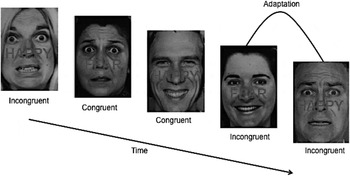
The emotional Stroop task assesses inhibition of responses to emotional stimuli or, more broadly, cognitive control in an emotional context (Etkin, Prater, Hoeft, Menon, & Schatzberg, Reference Etkin, Prater, Hoeft, Menon and Schatzberg2010). On each trial, participants viewed a person with either a happy or a fearful facial expression overlaid with the word “HAPPY” or “FEAR” (Figure 1). Participants were asked to categorize the facial expression, but not the written word. During congruent trials, the facial expression and written word matched; during incongruent trials, participants had to inhibit the tendency to respond to the written word to respond to the facial expression. The mean reaction time of congruent trials was subtracted from that of incongruent trials, with larger differences indicating worse inhibitory control.
The emotional Stroop task. Inhibition of words of emotion during incongruent trials was calculated by subtracting the mean reaction time of congruent trials from that of incongruent trials. An adaptation to emotional conflict score was calculated by subtracting the mean reaction time on incongruent trials preceded by a congruent trial from that of incongruent trials preceded by an incongruent trial.

The emotional Stroop task also assesses adaptation to emotional conflict, which is widely interpreted as a form of automatic emotion regulation (Egner, Etkin, Gale, & Hirsch, Reference Egner, Etkin, Gale and Hirsch2008; Etkin, Egner, Peraza, Kandel, & Hirsch, Reference Etkin, Egner, Peraza, Kandel and Hirsch2006; Etkin et al., Reference Etkin, Prater, Hoeft, Menon and Schatzberg2010; Gyurak, Gross, & Etkin, Reference Gyurak, Gross and Etkin2011). Incongruent trials preceded by congruent trials elicit high levels of emotional conflict between nonmatching facial expressions and written words, whereas incongruent trials preceded by an incongruent trial involve relatively lower levels of emotional conflict and are associated with faster reaction times (Etkin et al., Reference Etkin, Prater, Hoeft, Menon and Schatzberg2010). This adaptation effect is interpreted to be a form of automatic emotion regulation because it occurs outside of conscious awareness (Etkin et al., Reference Etkin, Prater, Hoeft, Menon and Schatzberg2010; Gyurak et al., Reference Gyurak, Gross and Etkin2011) and is associated with activation of a neural network involved in various forms of automatic emotion regulation in children and adolescents (i.e., greater negative coupling of the amygdala and pregenual anterior cingulate cortex; Marusak, Martin, Etkin, & Thomason, Reference Marusak, Martin, Etkin and Thomason2015) and in adults (i.e., higher activity in the rostral anterior cingulate cortex coupled with decreased activity in the amygdala; Egner et al., Reference Egner, Etkin, Gale and Hirsch2008; Etkin et al., Reference Etkin, Egner, Peraza, Kandel and Hirsch2006, Reference Etkin, Prater, Hoeft, Menon and Schatzberg2010). An adaptation to emotional conflict score was calculated by subtracting the mean reaction time on incongruent trials preceded by a congruent trial from the mean reaction time on incongruent trials preceded by an incongruent trial, with higher scores indicating worse adaptation.
The arrows task, an arrows inhibition subtest of the Developmental Neuropsychological Assessment II, measures inhibition of an automatic response and rule switching (Brooks, Sherman, & Strauss, Reference Brooks, Sherman and Strauss2009). It was administered as a measure of cognitive control in a neutral context. Participants viewed several rows of black and white arrows pointing either up or down. In the baseline trial, participants were asked to say the direction that each arrow was pointing. In the inhibition trial, participants were asked to say the opposite direction that each arrow was pointing. In the switching trial, participants were asked to say the correct direction that arrows of one color were pointing and the opposite direction that arrows of the other color were pointing. The time taken to complete the baseline trial was subtracted from the time required to complete the inhibition trial and the switching trial. Larger differences indicated worse inhibitory control or switching ability.
Statistical analysis
We used linear regression to examine the associations of childhood violence and poverty with performance on behavioral tasks. Specifically, we estimated a series of multivariate models examining the violence composite and poverty as predictors of performance on each task. Poverty was controlled for in models examining the violence composite to isolate aspects of violence exposure related specifically to threat, and the violence composite was controlled for in models examining poverty to isolate aspects of poverty specifically related to cognitive deprivation. We also examined the interaction of the violence composite and poverty. Simple slopes were then examined for children living above and below the poverty line for significant interactions. Multivariate analyses were replicated using the log-transformed income to needs ratio rather than poverty.
We then juxtaposed results from the differentiated multivariate approach with those from the two prevailing approaches. The single-risk approach was examined in unadjusted models examining child abuse, community violence, poverty, and log-transformed income to needs ratio as predictors of performance on each task, without controlling for co-occurring types of adversity. To test the cumulative-risk approach, child abuse, community violence, and poverty were dichotomized and summed to produce a score of the total number of childhood adversities, which was then examined as a predictor of performance on all tasks. We used validated cutoffs to dichotomize child abuse and poverty variables (Bradley et al., Reference Bradley, Corwyn, McAdoo and Coll2001; Hart & Risley, Reference Hart and Risley1995; Sirin, Reference Sirin2005; Walker et al., Reference Walker, Unutzer, Rutter, Gelfand, Saunders and VonKorff1999). Because there is no validated threshold for community violence exposure on the SAVE, we used a cutoff of two standard deviations above the mean to dichotomize exposure to community violence.
Sex was included as a covariate in all analysie given sex differences in exposure to specific types of interpersonal violence in childhood and adolescence (Finkelhor, Ormrod, & Turner, Reference Finkelhor, Ormrod and Turner2009; McLaughlin et al., Reference McLaughlin, Koenen, Hill, Petukhova, Sampson and Zaslavsky2013) and the use of emotion regulation strategies in adolescence (Hilt, McLaughlin, & Nolen-Hoeksema, Reference Hilt, McLaughlin and Nolen-Hoeksema2010; Nolen-Hoeksema, Morrow, & Fredrickson, Reference Nolen-Hoeksema, Morrow. and Fredrickson1993). However, results were identical when sex was not included as a covariate. To ensure that co-occurring psychopathology did not confound associations, all models were replicated controlling for anxiety and depression.
Results
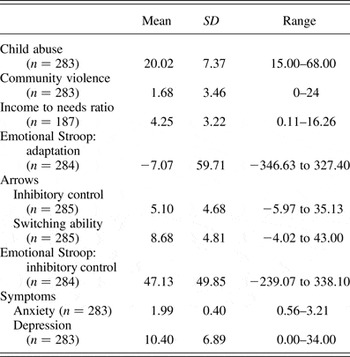
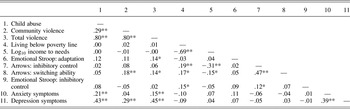
Table 1 provides descriptive statistics for all variables, and Table 2 provides zero-order correlations among these variables.
Descriptive statistics of childhood adversity, automatic emotion regulation, cognitive control, and psychopathology variables

Zero-order correlations among childhood adversity, automatic emotion regulation, cognitive control, and psychopathology variables

*p ≤ .05. **p ≤ .01.
Differentiated, multivariate approach
Violence
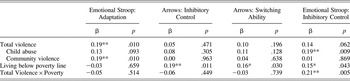
We examined the associations of violence variables with automatic emotion regulation and cognitive control, while controlling for poverty and sex (Table 3). Higher total violence exposure was associated with higher adaptation scores (i.e., greater reaction time difference for incongruent trials preceded by a congruent trial relative to incongruent trials preceded by an incongruent trial; β = 0.19, p = .010), reflecting worse adaptation to emotional conflict. Higher total violence exposure was not associated with inhibition or switching on the arrows task or with inhibition on the emotional Stroop task. The results were unchanged when adjusting for log-transformed income to needs ratio rather than for poverty and when we additionally adjusted for anxiety and depression (online-only supplementary Tables S.1–S.2).
Differentiated, multivariate approach: adjusted associations among childhood adversity, automatic emotion regulation, and cognitive control variables

Note: Poverty was controlled for in models examining child abuse, community violence exposure, or total violence exposure; total violence was controlled for in models examining poverty; and standardized total violence and poverty were included in models examining the interaction of total violence and poverty. Sex was included as a covariate in all analyses.
*p ≤ .05. **p ≤ .01.
The pattern of associations between severity of child abuse and severity of community violence with task performance, controlling for poverty and sex, was consistent with that of the violence composite; however, child abuse severity was additionally associated with inhibitory control on the emotional Stroop task (β = 0.19, p = .009). The associations of individual types of abuse, including physical, sexual, and emotional abuse, with outcomes, while controlling for poverty and sex, were consistent with those observed using the aggregate abuse variable (supplementary Table S.3). Specifically, sexual abuse was associated with poor adaptation on the emotional Stroop task, sexual abuse and physical abuse were associated with poor inhibition on the emotional Stroop task, and none of the abuse subtypes was related to inhibition or switching on the arrows task.
Poverty
We next examined the association of poverty with automatic emotion regulation and cognitive control, while controlling for total violence exposure and sex (Table 3). Poverty was not associated with adaptation on the emotional Stroop task, but was associated with worse inhibition (β = 0.19, p = .011) and switching (β = 0.16, p = .030) on the arrows task and worse inhibition on the emotional Stroop task (β = 0.15, p = .043).
The results were largely consistent when the log-transformed income to needs ratio was used instead of poverty (supplementary Table S.1). The log-transformed income to needs ratio was associated with inhibition (β = −0.31, p = .000) and switching (β = −0.14, p = .053) on the arrows task but was not associated with inhibition on the emotional Stroop task. All patterns were identical after adjustment for anxiety and depression (supplementary Tables S.1 and S.2).
Interaction of violence and poverty
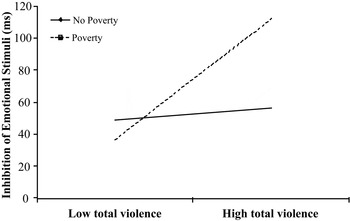
A significant interaction of the violence composite and poverty emerged in predicting inhibition on the emotional Stroop task (β = 0.21, p = .005), but not for any other outcome (Table 3). Specifically, greater violence exposure was associated with inhibitory control deficits on the emotional Stroop task in participants living in poverty (b = 37.76, t = 3.24, p = .001), but not in participants living above the poverty line (b = 3.58, t = 1.06, p = .289; Figure 2). Adjustment for anxiety and depression did not alter the interaction (supplementary Table S.2).
Simple slopes of total violence and inhibitory control on the emotional Stroop task at each level of poverty. The mean reaction time of congruent trials was subtracted from that of incongruent trials, with larger differences indicating worse inhibitory control.

Prevailing approaches
Single types of adversity
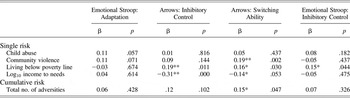
Consistent with an approach focusing on single types of adversity, we examined associations of child abuse, community violence, poverty, and log-transformed income to needs ratio with performance on all tasks, without controlling for co-occurring adversities (Table 4). These models revealed a significant association between community violence and cognitive control that was not present in multivariate models, and masked associations of community violence with emotion regulation and child abuse with inhibition in an emotional context that were present in models controlling for poverty.
Prevailing approaches: Single risk and cumulative risk

Note: A test of the single risks approach was represented in unadjusted models in which co-occurring types of adversity were not controlled (e.g., child abuse without controlling for poverty). The child abuse, community violence, and poverty variables were dichotomized and summed to produce a score of the total number of adversities experienced to represent the cumulative risk approach. Sex was included as a covariate in all analyses.
*p ≤ .05. **p ≤ .01.
Specifically, child abuse was unrelated to all outcome variables when examined in isolation, and community violence was associated only with poor switching ability on the arrows task (β = 0.19, p = .002). Associations between poverty and all outcomes were similar to those in adjusted models. Poverty was not associated with adaptation, but was associated with worse inhibition (β = 0.19, p = .011) and switching (β = 0.16, p = .030) on the arrows task, and poor inhibition on the emotional Stroop (β = 0.15, p = .044). Similarly, associations of the log-transformed income to needs and all outcomes were also similar to those in adjusted models. Results from the single-risk model were unchanged when anxiety and depression were controlled (supplementary Table S.4).
Cumulative risk
Finally, we examined a cumulative-risk approach based on a count score of the total number of adversities (Table 4). The cumulative-risk approach masked associations between violence exposure and automatic emotion regulation and between poverty and inhibition that emerged in the differentiated, adjusted models.
Specifically, a greater number of adversities was associated only with worse switching ability on the arrows task (β = 0.15, p = .047). No associations were observed between the total number of adversities experienced and any other outcomes. The results from the cumulative-risk model were unchanged with additional adjustment for psychopathology (supplementary Table S.4).
Discussion
We tested a novel conceptual framework distinguishing between the dimensions of threat and deprivation (McLaughlin, Sheridan, & Lambert, 2014; Sheridan & McLaughlin, Reference Sheridan and McLaughlin2014). Specifically, we examined whether exposure to violence, an indicator of threat, was uniquely associated with automatic emotion regulation and whether poverty, an indicator of cognitive deprivation, was uniquely associated with cognitive control in adolescence. Specifically, we measured exposure to violence and poverty and then simultaneously examined the associations of both types of adversity with outcomes in a multivariate approach. Consistent with our hypotheses, greater violence exposure was associated with deficits in automatic emotion regulation, but not with cognitive control. In contrast, poverty was associated with poor cognitive control, but not with automatic emotion regulation. Our approach, distinguishing between different types of adversity, revealed specificity in the associations of different forms of childhood adversity with emotional and cognitive outcomes that were not observed using other prevailing approaches involving a focus on either single adversities or cumulative risk. Our findings suggest that different dimensions of childhood adversity have distinct influences on developmental outcomes and highlight the potential utility of distinguishing between these types of childhood adversity, as proposed in our conceptual model.
In prior studies, childhood violence exposure has been associated with disruptions in emotional processes, including enhanced perceptual sensitivity to threatening facial expressions (Pollak & Sinha, Reference Pollak and Sinha2002; Pollak & Tolley-Schell, Reference Pollak and Tolley-Schell2003) and dysregulated emotional and physiological responses to stress (Cooley-Quille et al., Reference Cooley-Quille, Boyd, Frantz and Walsh2001; De Bellis et al., Reference De Bellis, Chrousos, Dorn, Burke, Helmers and Kling1994; Glaser et al., Reference Glaser, van Os, Portegijs and Myin-Germeys2006; Gump et al., Reference Gump, Reihman, Stewart, Lonky and Darvill2005; McLaughlin, Sheridan, Alves, et al., Reference McLaughlin, Sheridan, Alves and Mendes2014; Maughan & Cicchetti, Reference Maughan and Cicchetti2002). Our findings extend this research by documenting an association of childhood violence exposure, including abuse and community violence, with poor ability to implicitly engage control processes that resolve competing emotional responses (a form of automatic emotion regulation; Egner et al., Reference Egner, Etkin, Gale and Hirsch2008; Etkin et al., Reference Etkin, Egner, Peraza, Kandel and Hirsch2006, 2010; Gyurak et al., Reference Gyurak, Gross and Etkin2011). Alterations in neural circuitry underlying fear learning, including the amygdala and medial prefrontal cortex (Kim & Jung, Reference Kim and Jung2006), following a threatening experience may contribute to these automatic emotion regulation deficits. Children and adolescents exposed to violence exhibit worse adaptation to emotional conflict and less negative coupling of the amygdala and pregenual anterior cingulate cortex in response to such conflict compared to nonexposed youth (Marusak et al., Reference Marusak, Martin, Etkin and Thomason2015), suggesting that a similar maladaptive pattern of neural activation may underlie poor adaptation following child violence exposure observed in this sample. Furthermore, child trauma is associated with elevated amygdala reactivity to anger (McCrory et al., Reference McCrory, De Brito, Sebastian, Mechelli, Bird and Kelly2011) and poor functional connectivity between the amygdala and ventromedial prefrontal cortex (Herringa et al., Reference Herringa, Birn, Ruttle, Burghy, Stodola and Davidson2013).
Childhood violence exposure was not associated with cognitive control in tasks without emotional stimuli; however, greater severity of child abuse was associated with inhibition of a dominant response to emotional stimuli after controlling for poverty. Heightened perceptual sensitivity and reactivity to emotional stimuli in children exposed to violence may draw attention to emotional stimuli (Shackman, Shackman, & Pollak, Reference Shackman, Shackman and Pollak2007) and make it more difficult to inhibit responses to such stimuli. These results suggest that exposure to environmental threats may have a strong enough influence on emotional processing to make inhibition of responses to emotional stimuli more difficult, even in the absence of general inhibitory control deficits. Prior research has observed inconsistent associations between childhood violence exposure and cognitive control (Augusti & Melinder, Reference Augusti and Melinder2013; DePrince, Weinzierl, & Combs, Reference DePrince, Weinzierl and Combs2009), which could be due to lack of adjustment for indicators of deprivation, which is often co-occuring with threat (Finkelhor et al., Reference Finkelhor, Ormrod and Turner2007; McLaughlin et al., Reference McLaughlin, Green, Gruber, Sampson, Zaslavsky and Kessler2012), or to inconsistency in the severity of violence exposure or the cognitive tasks examined (e.g., cognitive control in a neutral or emotional context) across studies.
In contrast to violence, poverty was uniquely associated with deficits in cognitive control, but not with automatic emotion regulation. Specifically, poverty was associated with worse inhibition across both tasks and switching ability; lower income relative to need (particularly at the low end of the income distribution) was also associated with poor inhibition and switching. These findings are consistent with research showing that poverty is associated with impaired inhibition and working memory in young children (Farah et al., Reference Farah, Shera, Savage, Betancourt, Giannetta and Brodsky2006; Noble et al., Reference Noble, Norman and Farah2005, Reference Noble, McCandliss and Farah2007). Our findings suggest that these deficits in cognitive control persist into adolescence and emerge in both neutral and emotional contexts. Insufficient exposure to cognitive inputs (e.g., language) and learning opportunities associated with poverty (Bradley et al., Reference Bradley, Corwyn, McAdoo and Coll2001; Hart & Risley, Reference Hart and Risley1995; Sirin, Reference Sirin2005) may influence neural systems that support cognitive control. For example, low SES is associated with atypical structure and function in the lateral prefrontal cortex (Noble, Houston, Kan, & Sowell, Reference Noble, Houston, Kan and Sowell2012; Sheridan, Sarsour, Jutte, D'Esposito, & Boyce, Reference Sheridan, Sarsour, Jutte, D'Esposito and Boyce2012), which may represent a neurodevelopmental pathway linking cognitive deprivation to cognitive control ability. This is an important question for future research.
We also observed an interaction between violence exposure and poverty in predicting inhibition in an emotional context. Specifically, violence exposure was associated with deficits in inhibition of responses to emotional stimuli among participants living in poverty, but not among participants living above the poverty line. This finding suggests that the disruptions in emotional processing following childhood violence exposure (e.g., heightened attention to threat, elevated emotional reactivity, and poor automatic emotion regulation) may make inhibition particularly difficult in the presence of a general inhibitory control deficit associated with poverty. In contrast, adolescents without exposure to poverty and associated inhibitory control deficits may be able to effectively inhibit enhanced attention and reactivity to emotional stimuli.
Important differences were observed in the associations of childhood adversity with emotional and cognitive outcomes based on our multivariate approach of examining underlying dimensions of adversity compared to single-adversity and cumulative-risk approaches. The single-adversity models obscured specificity in the associations of violence and poverty with emotional and cognitive outcomes. Specifically, associations present in unadjusted models (e.g., of community violence with switching ability) disappeared in adjusted models, highlighting that the well-established pattern of co-occurrence of childhood adversities (Finkelhor et al., Reference Finkelhor, Ormrod and Turner2007; McLaughlin et al., Reference McLaughlin, Green, Gruber, Sampson, Zaslavsky and Kessler2012) limits the validity of examining individual types of adversity without controlling for co-occurring exposures. In cumulative-risk models, greater exposure to adversity was associated only with switching ability, concealing important developmental consequences of childhood adversity on emotion regulation and inhibition. Although a cumulative-risk approach has been advocated over an approach distinguishing between distinct types of adversity (e.g., Evans, Li, & Whipple, Reference Evans, Li and Whipple2013), our findings highlight serious limitations with this approach. In particular, this approach has the potential to mask a more differentiated set of associations of particular types of adversity with emotional and cognitive outcomes. These results highlight the importance of assessing and controlling for co-occurring forms of adversity to disentangle their unique associations with developmental outcomes.
In order to develop effective intervention approaches to prevent the onset of psychopathology and other negative consequences among youths exposed to adversity, greater understanding of the unique developmental influences of different forms of childhood adversity is required. Experiences involving threat may influence emotional and cognitive development differently from experiences involving deprivation. Different dimensions of adversity may therefore require different interventions. Specifically, alterations in emotion regulation following violence exposure suggest that interventions that bolster such skills through exposure and habituation to trauma-related cues, discrimination of threat and safety cues, and cognitive reappraisal (for a review, see Dorsey et al., Reference Dorsey, McLaughlin, Kerns, Harrison, Lambert and Briggs-Kingin press) might be particularly effective in preventing psychopathology and other adverse outcomes in youths exposed to violence. In contrast, youths living in impoverished environments deprived of cognitive stimulation and complex language exposure may benefit from interventions that seek to improve basic cognitive abilities, such as language comprehension, working memory, inhibition, and cognitive flexibility.
This study has several notable limitations related to the measurement of cognitive deprivation. First, not all parents were willing to provide income information, which reduced statistical power. Furthermore, participants without income information differed from those with income information on inhibitory control on the arrows task. Second, the physical neglect subscale of the CTQ demonstrated poor internal consistency in this sample and could not be used in analyses. Future studies utilizing reliable measures of physical neglect would be useful to replicate our findings related to poverty as an indicator of cognitive deprivation. Third, material forms of deprivation, including poverty and physical neglect, are indirect measures of cognitive deprivation (i.e., not all children raised in poverty experience cognitive deprivation; Bradley et al., Reference Bradley, Corwyn, McAdoo and Coll2001; Hart & Risley, Reference Hart and Risley1995; Sirin, Reference Sirin2005). Furthermore, poverty is associated with increased risk for exposure to numerous other forms of adversity, including cognitive deprivation, threat (e.g., violence exposure and noninterpersonal trauma), and parental psychopathology. While controlling for violence exposure occuring across a variety of contexts in adjusted analyses helped isolate aspects of poverty most closely related to cognitive deprivation, other risks associated with poverty, such as parental psychopathology and noninterpersonal trauma (e.g., car accidents), were not assessed and controlled for in adjusted analyses. The poverty variable may have therefore captured residual threatening experiences not accounted for by the composite threat variable. Future research using measures that directly assess the amount, frequency, and complexity of cognitive inputs and learning experiences that are necessary for typical development and, when absent, are most strongly related to adverse developmental outcomes (e.g., observational measures; Bradley et al., Reference Bradley, Corwyn, McAdoo and Coll2001) is an important next step. There are two important considerations related to the measurement of threat in this study. First, we only examined exposure to interpersonal violence and not other forms of trauma (e.g., accidents and injuries). Future research should examine the extent to which these other forms of trauma are associated with emotional processing. Second, our sample was not recruited based on exposure to violence. Associations of child violence exposure with emotional processing would likely be stronger in a sample with greater exposure to violence. However, it is notable that associations of violence exposure with emotional adaptation and inhibition of emotional stimuli emerged in this community-based sample.
The emotional Stroop task also involved limitations. First, although adaptation is widely interpretated as a measure of automatic emotion regulation, it may involve aspects of cognitive control, such as conflict monitoring. Future studies are needed to replicate these findings with other measures of automatic emotion regulation (e.g., tasks that assess fear extinction or habituation). Second, the emotional Stroop task was not designed to examine effects of violence and poverty on adaptation and inhibition separately by emotion type (i.e., fear vs. happiness). Given that childhood violence exposure is associated with enhanced processing of angry facial expressions specifically (Pollak & Sinha, Reference Pollak and Sinha2002; Pollak & Tolley-Schell, Reference Pollak and Tolley-Schell2003), future studies could examine whether childhood violence exposure specifically predicts deficits in inhibition in response to threatening facial expressions, for example. Third, although we speculate that different mechanisms may contribute to poor performance on the emotional Stroop task for adolescents with exposure to violence and poverty, we were unable to examine this directly.
While this is the first study to parse the distinct influences of different dimensions of adversity on child development, it did not include all aspects of deprivation or all dimensions of adversity. Future research should define and empirically test additional aspects of childhood deprivation, including the absence of responsive and nurturing care, and should expand this conceptual model to incorporate other unique dimensions of adversity, such as lack of environmental predictability (Evans, Gonnella, Marcynyszyn, Gentile, & Salpekar, Reference Evans, Gonnella, Marcynyszyn, Gentile and Salpekar2005). Future studies should also assess the role of the developmental processes examined here as mechanisms linking experiences of childhood threat and deprivation to mental health and educational outcomes. A multisystems approach that incorporates cognitive and affective neuroscience techniques, in addition to behavioral measures, will also help to clarify these underlying mechanisms.
Conclusion
Childhood violence exposure, an indicator of threat, and poverty, an indicator of cognitive deprivation, are associated with unique deficits in automatic emotion regulation and cognitive control, respectively, in adolescence. These findings highlight the importance of distinguishing between different forms of environmental adversity in order to better understand their associations with developmental outcomes. A closer examination of the meaningful dimensions of environmental experience that predict specific and potentially modifiable aspects of development is critical to identify mechanisms linking adverse environments to the onset of physical and mental health problems.
Supplementary Material
To view the supplementary material for this article, please visit http://dx.doi.org/10.1017/S0954579416000584.