


During and after migration, people may face many negative situations in terms of health, safety, and social aspects. The World Health Organization reports migration as an important social indicator of health.Reference Karaca and Tülüce1 Türkiye is a country located in a migration corridor due to its geographical location and is the country with the highest number of refugees in the world, hosting over 4 million refugees.Reference Karaca and Tülüce1, Reference Gamsizkan and Onmez2
Article 24 of the United Nations Convention on the Rights of the Child guarantees children’s rights to health promotion, health care, and the right to benefit from care services and promotes that no child should be deprived of these rights.3 Pediatric nurses are specialized nurses who work in collaboration with the child, the family, and other related people affecting the child’s health status, in correcting deviations from health and preventing diseases; monitoring growth and development; providing care in acute or chronic diseases; identifying situations that may affect health; and solving problems and managing them effectively from birth to the end of adolescence at home, school, and hospital. The nurse, who is responsible for protecting and promoting the health of the child and the family and providing the necessary nursing care in case of illness, has many roles such as caregiver, educator, advocate, counselor, and ethical decision-maker.Reference Cetinkaya, Turan and Ceylan4
Refugee children are considered among vulnerable groups who may have difficulty in accessing basic health services, and are at risk for physical and psychological health problems, infectious and chronic diseases, and nutritional deficiencies.Reference Korkmaz5–Reference Pekdogan and Saygun7 The role of the nurse is unique in understanding the refugee child patient’s history, health care needs, personal concerns, and the concerns of family and friends.Reference Korkmaz5, Reference Zengin, Duken and Yayan6, Reference Stephen and Zoucha8 The care needs of refugees, changing patient profiles, and increasing asylum movement affect the workload and working environment of nurses, who have a significant and important role in the health care workforce. Nurses are recognized as the health care professionals most affected by this increased workload and challenging conditions.Reference Korkmaz5, Reference Zengin, Duken and Yayan6 Due to worldwide migration, health care personnel in general and pediatric care personnel in particular are increasingly challenged by people from various ethnic backgrounds. The provision of culturally competent care, the management of different health beliefs and practices, and the need to communicate effectively with people from different cultural and ethnic backgrounds with their own values and languages can be expressed as the effects of migration on nursing care.Reference Tavallali, Jirwe and Kabir9 Language barriers and social and cultural differences between care providers and refugee pediatric patients and their families stand out in terms of the difficulties encountered in managing the nursing role.Reference Zengin, Duken and Yayan6, Reference Tavallali, Jirwe and Kabir9 The need to emphasize the problems in the provision of health services to refugees is increasing in terms of nursing services. It is emphasized that this problem should be addressed as a priority, since communication difficulties may prevent patients from receiving adequate care and place a physical and psychological burden on nurses.Reference Orlando10 There are indications that the increase in the number of refugees accessing health care services in Türkiye has also increased the difficulties among health care providers. As a reflection on the reason behind this increased difficulty, nurses state that they experience problems while performing treatment and care practices.Reference Korkmaz5, Reference Stephen and Zoucha8 In order to define how refugees affect nurses’ working conditions, this study was conducted to investigate pediatric nurses’ experiences of caring for refugee children.
Materials and Methods
Participants
The study was designed using the phenomenological method to examine the experiences of pediatric nurses while caring for refugee children. A qualitative research method was preferred in order to extensively understand the lived experiences and perceptions that led to these experiences.
The research was conducted by interviewing 16 pediatric nurses working in the inpatient wards of the pediatric health and diseases clinic at Istanbul Prof. Dr. Cemil Taşcıoğlu City Hospital, which accepts pediatric patients from newborn to 18 years of age from all over Türkiye, especially from Istanbul. Interviews were conducted in a suitable empty room in the hospital, with the pediatric nurses who agreed to participate in the research, met the sample selection criteria, and volunteered between November 13, 2023 and February 29, 2024. Nurses with a prebachelor degree or higher in nursing, more than 1 year of work experience in pediatric inpatient services, and experience in providing care to refugee children more than once were included in the study.
Data Collection
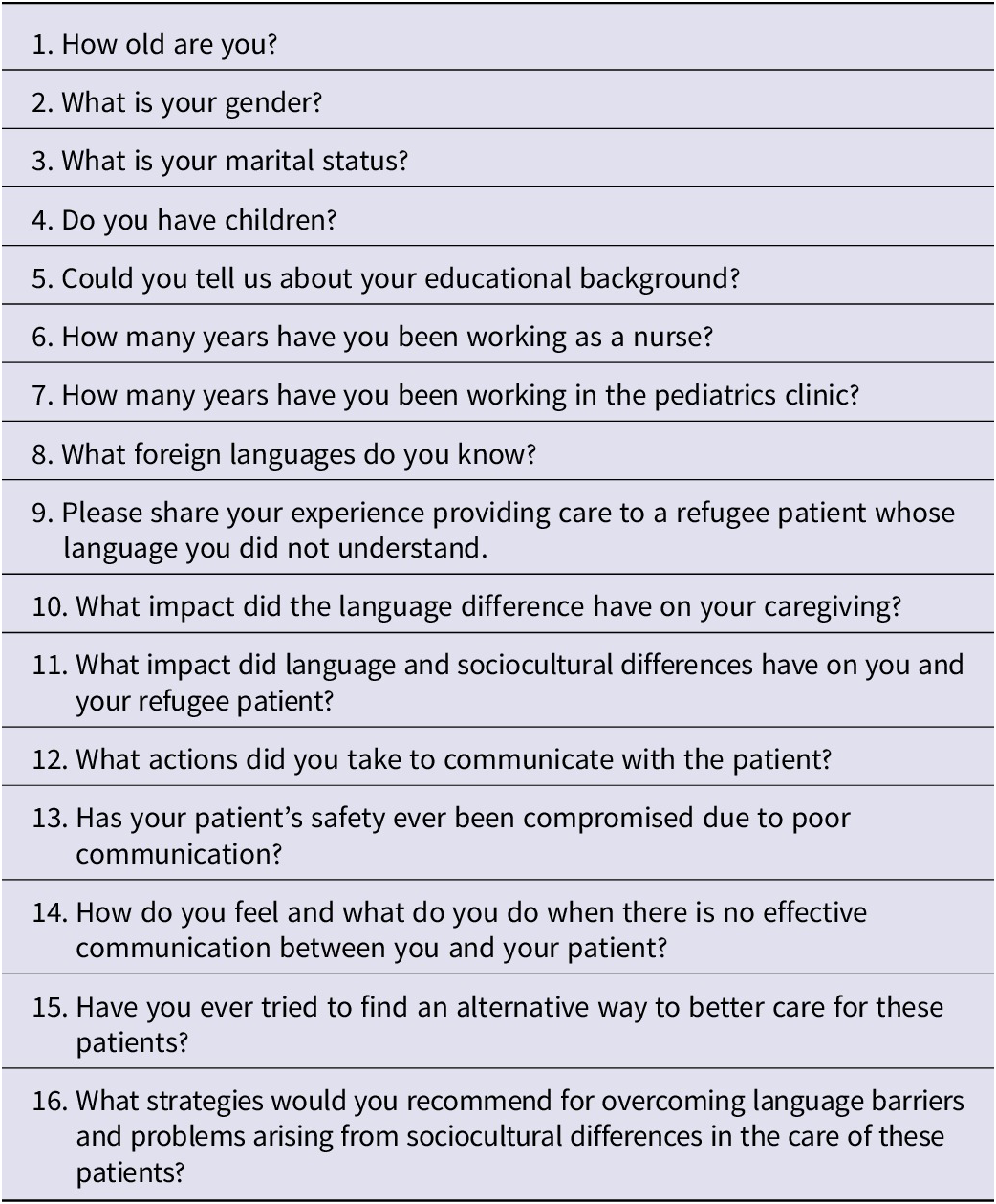
Before data collection, the nurses were requested to read and sign the informed consent form. Nurses who agreed to participate were asked questions in accordance with the order in the interview form, which consisted of an 8 question “descriptive personal information section” and an 8 question “semi-structured questions section,” prepared to prevent data loss during voice recording (Table 1). The study was conducted by interviewing pediatric nurses who agreed to participate in the study for 30 minutes. Following the descriptive personal information section of the interview and using the data obtained from those answers, semi-structured, open-ended questions were asked using an in-depth, face-to-face, one-on-one interview technique. During the interview, the researcher’s voice recorder was used. The participant was informed about the audio recording and that he/she could withdraw from the research if they wished. After the interview, the audio recording was transcribed.
The interview form
Analysis
In the evaluation of qualitative data obtained by conventional qualitative content analysis, Graneheim and Lundman’s stepwise qualitative content analysis and Lincoln and Guba’s evaluation criteria were used simultaneously with data collection.Reference Graneheim and Lundman11, Reference Lincoln, Guba and Pilotta12 Immediately after the interview, it was transcribed and read in its entirety several times, meaning units were determined independently by the researchers and primary codes were produced in this way; similar codes were divided into categories and main and sub-codes were created by consensus. By establishing a close relationship and long-term interactions with the study participants, and by reviewing the codes that were constantly verified and compared by several participants with the criteria of credibility, dependability, confirmability, and transferability, we avoided the researchers’ perspective affecting the data, and importance was given to meticulously obtaining the findings.
In the first step, the voice conversations were recorded. In the next step, the MAXQDA 2022 program was used for the process of creating coding and themes and analyzing the relationship of codes with sub-codes. Descriptive data were analyzed using the Statistical Package for the Social Sciences (SPSS) for Windows 26.0 (IBM SPSS Inc., Armonk NY).
Results
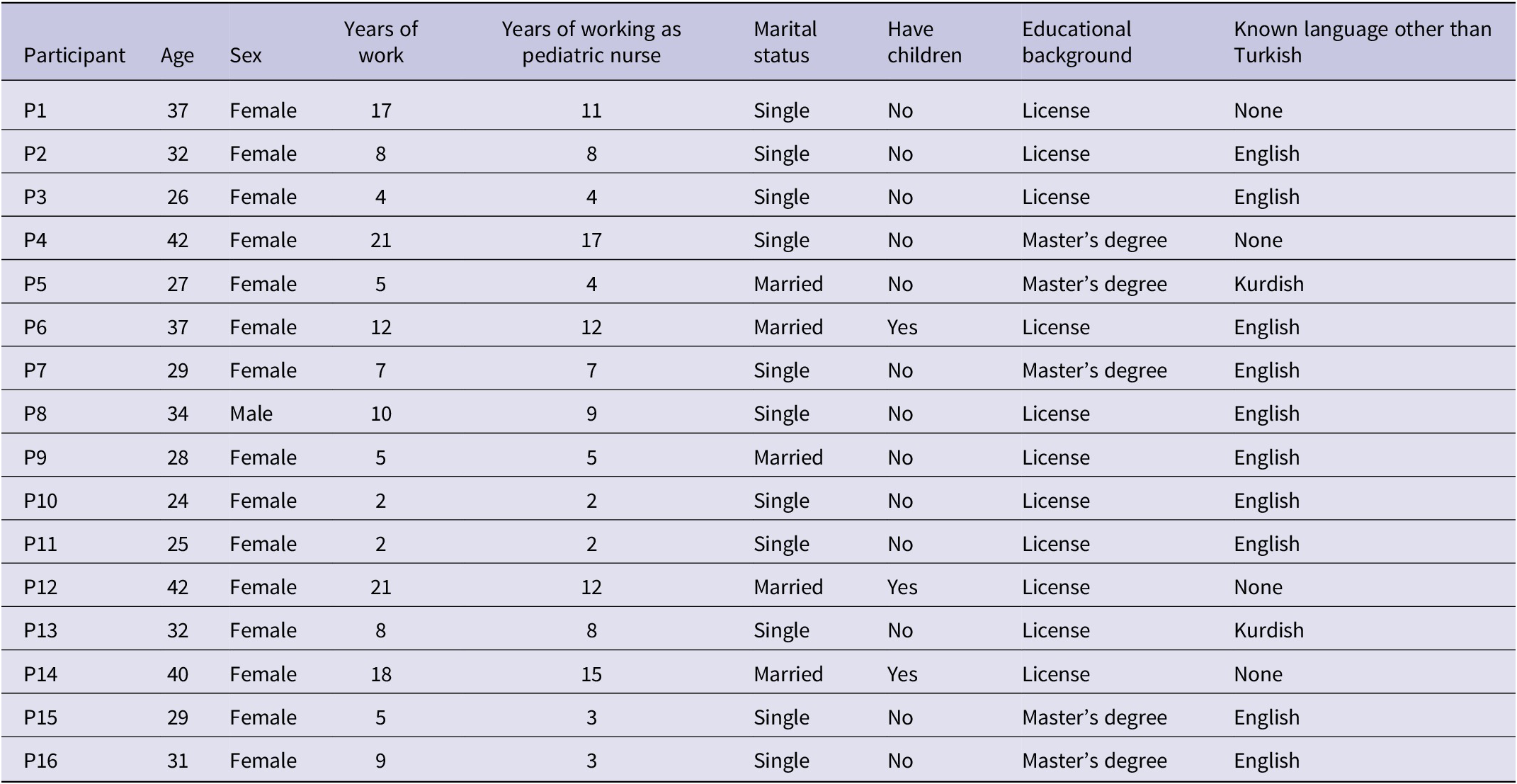
The mean age of the nurses in the study was 32.18±5.92 (minimum: 24; maximum: 42) and 15 of them were female. The mean working years of the nurses was 9.62±6.39 years (minimum: 2; maximum: 21) and the mean working years as a pediatric nurse in the pediatric clinic was 7.62±4.71 years (minimum: 2; maximum: 17). Five of the nurses had a master’s degree and 4 of them did not speak any language other than Turkish. Descriptive characteristics of the nurses are shown in Table 2.
Descriptive information about the nurses
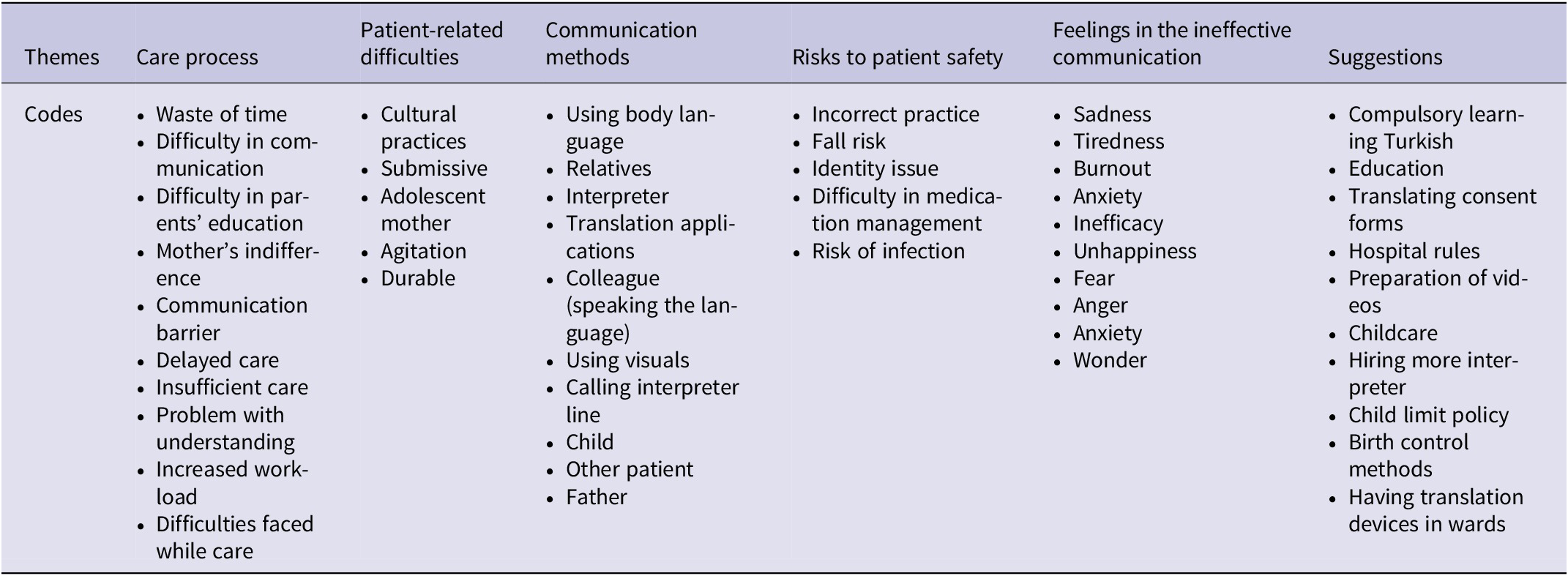
In line with the data extracted from the interviews of the nurses within the scope of the study, 6 themes were obtained: “care process, difficulties related to the patient, communication methods, risks in patient safety, feelings experienced in the absence of communication, and suggestions” (Table 3).
Themes and code sections obtained from the study. The codes are listed according to the density of sub-codes, with the more prominent code at the top
As a result of the findings obtained in the study, it was determined that there were time losses in the “care process” of the refugee patient whose language was not understood by the nurses, delays in providing care, difficulties in providing education, the risk of inadequate care, communication barriers in terms of language and sociocultural aspects, increased workload in the care process due to these reasons, having to spend less time with other patients, and refugee patients’ high number of visitors. A nurse who stated that she had difficulty in changing traditional practices noted: “Socioculturally, of course, they have their own characteristics. For example, we undress the child with fever, we leave the patient room, the parent dresses the patient back after us, and his explanation is ’This is how we do it there.’ You cannot break their previous wrong experiences.” (Participant 1)
Almost all of the nurses state that mothers are indifferent toward their children. There are participants who state that mothers do not pay enough attention to their children, that they have problems with issues such as diaper rash, and that they attribute what happens to the child or the child’s recovery to the will of God. The majority of nurses reported that they experienced disruptions and delays in the time allocated for care due to language problems, insufficient number of interpreters, or problems in conveying what was said. A few of the nurses reported difficulties in providing education to parents: “In a treatment where the mother should participate in the treatment, we first show it and then we give it to her. When we check, we see that the mother does not do it.” (Participant 3)
“It actually increases the care time and the time we give to solve problems in terms of communication. I can say that it reduces the time we have to care for other patients. Because we have to explain and wait to be understood. We don’t have the luxury of saying ’the patient doesn’t understand me, I can’t explain,’ so we make a lot of effort. It creates difficulties both in terms of the staff’s time and the patient’s communication with us.” (Participant 16)
The “communication methods” used by nurses to communicate with refugee patients with whom they had communication problems due to language differences were found to be using images, working with an interpreter, calling the interpreter line, translation programs, getting support from the other patients or patient’s relatives, getting help from colleagues who speak the relevant language, communicating through the father or other children who speak Turkish, and using body language. A nurse who experienced problems with communication methods stated the following:
If the child is going to school, they are learning Turkish, so I communicate with the mother through the child. If it is a sick baby, we especially want the father because fathers have learned some Turkish because they work, so we tell the father what we want him to tell the mother about the care, or if they have relatives who speak Turkish, they let us talk to them on the phone. If there is an interpreter in the hospital, we call him/her. The Ministry of Health has an interpreter line and we call it. I mostly try to communicate with body language when I am the only one on the shift, I try to explain quickly. (Participant 2)
Almost half of the nurses stated that they used images while communicating with families: “We tried to facilitate the system of what and where to throw the waste with visual shapes, they were throwing the waste very wrongly.” (Participant 7)
The concepts mentioned by nurses when describing the “difficulties they experienced with patients and their families” due to language and sociocultural differences mainly point to the reflections of different cultural practices. Three of the nurses stated that they experienced difficulties because the mothers were adolescents:
There is a situation where refugees marry off girls at a very young age, for example, one of our patients in the ward was pregnant with her second child. Because of her age, she was also in the pediatric ward. Her husband became her companion, which surprised and saddened me; after all, she was just a child. (Participant 14)
One of the nurses stated that refugees bring their children to the hospital with more delays: “Turkish families come to the hospital immediately if the child has a fever. But refugees bring the child when the child is almost dying; they wait almost until the last moment and I think they are more resilient.” (Participant 9)
Two of the nurses reported that refugee patients and their relatives were more obedient and did not interfere in nurses’ job. On the contrary, one nurse reported that they were more acrimonious:
Because of the language and communication barrier, they don’t interfere in our work at all, they accept whatever we do because when they cannot communicate, they have to accept everything. When we do the treatment, they seem to trust unconditionally. I don’t know if their approach will change after a while, but they are like this now. (Participant 7)
We are going to check the child’s temperature during hospitalization; we cannot explain it to the family. We try to use our body language, the parents does not understand and they get agitated because of this. We do not always have an interpreter with us for every procedure and it is very difficult. (Participant 1)
Nurses who reported difficulties due to cultural practices gave examples:
They would not feed the newborn until 7 times of adhan. It was a religious requirement in their opinion and this would cause the baby’s sugar level to drop too low and they would bring the baby to the hospital. It causes an increase in the number of patients for us and extra costs for them. (Participant 14)
The concerns shared by the nurses regarding the “risks that may be experienced in the safety of patients” due to poor communication were the risk of infection, difficulty in the management of medication to be administered, identity problems in the admission of the sick child, and the risk of medical malpractice. The interviewed nurses drew attention to the deficiencies in the care provided outside the hospital and at home, and stated that they observed that pediatric patients were readmitted to the hospital for this reason.
Did the patient’s relative understand us? Did we convey it correctly? In the end, we cannot follow this. After discharge, they come to the outpatient clinic, to the doctor, not to the ward. We don’t know if we were able to teach them, if it was practiced at home, we don’t know the results. (Participant 4)
The most common problem I have is that we never get the right answer to questions like “What medication did you use at home, what medication did you give last time?” because they can neither read nor know the properties of the medicines, which I think is a great danger and it is completely due to communication. They have a different alphabet, they don’t know. (Participant 9)
Nurses who reported that patients had problems with identity issues also shared their experiences:
Names are very confusing because of accent. The way they say some sounds by suppressing or lengthening them does not match with our language. Therefore, the pronunciation of the names gets mixed up. I think this is very dangerous; that’s why I make them say their names, I confirm it. I have learned this, there may be confusion when I read it. Their names are also very similar; it is open to error. (Participant 7)
Some of the nurses mentioned that there was a fall risk of children, citing parents’ malpractices: “They are strangely relaxed, the mother leaves the child alone. She does not elevate the headboard or the bed protector. I am surprised when I see a mother who sleeps with her baby next to her. They never think if there will be a problem.” (Participant 12)
“The patient was bored of taking pills, and also was pretending to swallow them in front of the nurse, and her mother started to hide them under the bed. A nurse friend of ours noticed it.” (Participant 1)
Regarding the “feelings experienced by nurses when they do not have effective communication” with their patients, almost all of them, except for 1, stated that they experienced sadness when they could not communicate effectively with their patients:
I feel inadequate, I feel sad for my patient whom I have been caring for days or weeks and whom I love. And of course there is the post-discharge period. I am afraid of what will happen when the child we have cared for months, maybe very well, goes home, the parents will not be able to take care of them like us, the child will get sick again, and I feel sad. (Participant 13).
Almost half of the nurses described experiencing unhappiness, irritability, burnout, anxiety, fatigue, and confusion due to communication barriers with their patients.
Feeling that you are not useful is actually a huge burden on your conscience, it makes you feel inadequate. The thought that I will not be of any use makes me unhappy. Because we expect this feedback in patient care. There are many refugee patients and experiencing the same problems over and over again with each patient exhausts me professionally, emotionally, and in terms of time management anxiety, and it turns into a tiring situation both physically and psychologically. (Participant 6)
Having many children is actually considered a cultural characteristic of theirs and they abuse it. Since they look after many children at home, they expect us to do all the work here, and they don’t want to take care of them here. There were those who wanted to leave their children with us here and go home. The mother needs to participate in the care in hospital and there are many things she must learn from us here, but she doesn’t want to. This makes us suspicious when the patient is discharged; home care of that child may be inadequate. (Participant 5)
In order to overcome language barriers and problems arising from sociocultural differences in the care of patients, “suggestions” included increasing the number of interpreters, having translation devices in the wards, preparing videos for ensuring compliance with hospital rules, policies specific to limiting the number of children and birth control methods for this purpose, child care, and compulsory Turkish language education.
Refugees should be trained on some basic practices and childcare. Videos such as public service announcements can be prepared on the most important basic issues because TV is watched all the time. A video can be prepared and shown in the hospital, it can be put on the TVs in the rooms for compulsory viewing. Even waste sorting is a big problem; it can be shown visually. Videos can be prepared as basic things to do in the hospital and shown at the first hospitalization. Consent forms for medical procedures can be translated because there is no legal sanction in this way; the parents, usually father, writes and scribbles in Arabic, we don’t understand what he is writing, and he doesn’t know what he is consenting to. (Participant 2)
“They definitely need to be able to express themselves. Consent forms are in Turkish; maybe they can be translated. Hospital rules can become easier to convey to them. There can be translation devices in the wards, they can be integrated into the hospital system.” (Participant 3)
Discussion
The pediatric nurses caring for refugee children we interviewed experienced the following problems in the care process: loss of time in providing nursing care services due to the difficulties caused by language and sociocultural differences, the risk of providing inadequate care due to difficulties in patient care education, communication barriers, mothers’ lack of interest, delays in the care process due to these reasons and increased workload, having to spend less time with other patients, and the high number of visitors in refugee patients. When Hadimli et al. asked midwifery students to evaluate the impact of migration on the health system in Türkiye, the most common response was “increased workload and decreased quality of health services.”Reference Hadimli, Kocak and Sener13 In terms of the problems experienced, 59.1% of the participants mentioned refugee patients did not comply with the rules of the health institution.Reference Hadimli, Kocak and Sener13 In Akkoç, Tok, and Hasiripi’s study, 19% of the participants stated that refugees talked loudly in patient rooms or corridors and 9% stated that they don’t respect visiting hours.Reference Akkoc, Tok and Hasiripi14 Looking at the problem from the perspective of refugees, Zurca et al. found that families of refugee pediatric patients were dissatisfied with the time nurses spent with them at the bedside, which may be due to communication problems arising from language and sociocultural differences.Reference Zurca, Fisher and Flor15
In Aydin’s evaluation, which focuses on Syrian refugees and health service delivery in Türkiye, it is emphasized that the biggest problem in accessing health services is the language barrier.Reference Aydin16 Dreier, Zernikow, and Wager reported that verbal communication of pediatric nurses with sick children and their families is of great importance and emphasized this as the first step of family-centered care.Reference Dreier, Zernikow and Wager17 In our study, we observed that nurses frequently used body language to communicate with refugee patients, as well as methods such as making use of patient relatives and interpreters, using translation programs, requesting support from a nurse friend who speaks that foreign language, using images, calling the interpreter line, and getting support from other children who speak the same language, or the father of the patient if he understands Turkish. Brisset, Leanza, and Laforest position the interpreter in health care as a witness to how the health care institution handles sociocultural and language issues.Reference Brisset, Leanza and Laforest18. Squires states that family members or other patients familiar with the language should not interpret for children.Reference Squires19 Altindiş, Inci, and Erkorkmaz revealed problems such as difficulties in signing consent forms, using body language and dictionaries, trying to explain something with pictures and drawings, and not being sure how accurately the interpreter could translate.Reference Altindis, Inci and Erkorkmaz20 When asked about the frequency with which refugees understand the subjects expressed in Turkish, 12.7% of them answered “never,” 28.9% answered “rarely,” and when asked about the frequency with which they can express themselves using Turkish, 15.9% answered “never” and 26.5% answered “rarely.”Reference Altindis, Inci and Erkorkmaz20 In the study by Hadimli et al., it was recorded that 89.8% of midwifery students had communication problems with refugee patients, 76.8% of them communicated with body language, and 53.9% communicated with the help of a Turkish-speaking patient relative or another patient. Asking for help from an interpreter was the method chosen by 41.3% and using a mobile application for translation by 23.6%.Reference Hadimli, Kocak and Sener13 Karaca and Tülüce emphasized the insufficient number of interpreters and recommended the provision of interpreting support by telephone, hiring interpreters according to the number of patients applying to hospital, and the use of information materials translated into the native language of the refugee.Reference Karaca and Tülüce1
When describing the difficulties they experience with patients and their families due to language and sociocultural differences, the nurses point to the reflections of different cultural practices, the fact that there may be an obedient attitude toward instructions in the family, the reality of adolescent mothers, agitation in the family, and the observation that refugee children may be more resistant to diseases. A systematic review reported that the most important barrier to patient care education from the perspective of nurses is the inability of nurses to communicate with patients from different ethnic, sociocultural, and religious groups.Reference Adib and Zare21 Zurca et al. states that cultural differences may affect the quality of nursing care. They reported that refugee pediatric patients’ families usually do not raise their voices and express their concerns unless they are asked directly. The authors also observed that although the refugee parents may not understand the medical care plan, they may not ask for further explanation or request the use of an interpreter, they may not feel competent to ask for an interpreter, and even if an interpreter is available, they may not be benefited adequately.Reference Zurca, Fisher and Flor15 The authors’ message, similar to Panter-Brick et al., is to increase health care professionals’ awareness of potential cultural differences to ensure that the family better understands the information provided.Reference Panter-Brick, Grimon and Kalin22 Karaca and Tülüce showed that when evaluating the problems hierarchically, the most important problem in terms of importance was not knowing the cultural background of the patient, and the rearmost one was the problem of access to medical histories.Reference Karaca and Tülüce1 Nikfarid et al. and Beykmirza et al. noted that the way of coping with diseases is influenced by many cultural factors, and the families of refugee child patients may be reckless, accepting, or indifferent toward the diseases.Reference Nikfarid, Rassouli and Shirinabadi23, Reference Beykmirza, Nikfarid and Atashzadeh-Shoorideh24 It is clear that there is a need for detailed studies addressing the problem of adolescent mothers in this field.
Similar to our study in which nurses shared their concerns about patient safety such as fall risk, the problem of identity confirmation in the hospital admission, difficulty in the management of medication to be administered, and the risk of infection, Altindiş also stated that refugees have intensive applications to pediatric clinics; 65.6% of these patients had problems in learning the functioning of the health system, 71.4% could not understand the information signs in health institutions, 81.2% had problems in making appointments, 77.8% could not agree with the physician about their diagnosis and treatment, and 51.4% had problems understanding the drug usage instructions at the pharmacy.Reference Altindis, Inci and Erkorkmaz20 In Aydin’s study, it was revealed that children of Syrian refugees who rented houses outside the camps lived in unhealthy physical conditions and had repeated admissions to hospitals with the same complaints, especially respiratory tract infections.Reference Aydin16 Gamsizkan and Onmez suggest that the health information of refugee child patients should be transferred to health data systems in detail in order to minimize the problems experienced.Reference Gamsizkan and Onmez2
In their answers to the interview questions, the nurses stated that when they experienced communication problems, they felt sadness, fatigue, burnout, worry, inadequacy, unhappiness, fear, nervousness, anxiety, and confusion. In the study by Gönenc et al. in which midwives’ and nurses’ views on providing health care services to refugee women and their cultural sensitivity were examined, 97.3% stated that they had difficulty in providing care, 28.2% felt helplessness, 22.5% felt pity, and 15.5% felt anger.Reference Gonenc, Goktas and Dursun25 Eris et al., who examined the burnout level of nurses and midwives working in towns where Syrian refugee camps are located, shared that the increase in workload directly increases the level of emotional burnout.Reference Eris, Havlioglu and Kucukozkan26 Zurca et al. states that nurses experience the feeling of not being able to provide informative and emotional support due to their inability to verbally communicate effectively with patients and their relatives.Reference Zurca, Fisher and Flor15
In order to overcome language barriers and sociocultural differences in the care of patients, the suggestions of the nurses who participated in our study were to focus on education of mother in addition to compulsory Turkish language learning, to translate consent forms into the languages of refugees, prepare videos about hospital rules in different languages and broadcast them to the public in where everyone can see them, increase the number of interpreters, organize family planning programs for refugees, and provide translation devices in hospitals. Beykmirza et al. emphasize the employment of certified medical interpreters, the use of electronic translation technologies, and the teaching of basic phrases in different languages to health personnel.Reference Beykmirza, Nikfarid and Atashzadeh-Shoorideh24 Kahraman and Sahin, in their study examining the impact of refugees on the health system, showed that 58% of nursing students thought that refugees did not attach importance to family planning.Reference Kahraman and Sahin27 Yesilyurt and Savasci suggest that instead of health personnel learning the language of refugee patients, it is a more reasonable option for refugee patients to learn Turkish, and they suggest increasing language options in the hospital appointment system, expanding the framework of the field of medical interpreting, and completing the patient’s course in the hospital with the interpreter assigned to the patient.Reference Yesilyurt and Savasci28
The limitation of our study, which can be stated due to its design, is that it was conducted in a single hospital. The data obtained were based on the self-expressions of 16 nurses who volunteered to participate in the study.
In conclusion, it was determined that all of the nurses experienced difficulties while caring for refugee pediatric patients. Among the difficulties experienced, problems related to “the care process, communication methods, difficulties related to the patient, risks in patient safety, and feelings experienced in the lack of communication” were reported. In line with the results of this study, it can be recommended to increase the employment of medical interpreters in hospitals to prevent communication problems and to provide more qualified care and patient care education, to prepare and use brochures with hospital rules in different languages so that refugee patients can learn, and to organize awareness seminars to nurses through professional interpreters for cultural difference problems. In addition, in order to solve communication problems, it would be appropriate to provide and encourage refugees to learn Turkish, to produce approaches to support the motivation of nurses, and to gather data that will contribute to the solution of problems by conducting more comprehensive literature studies on this subject.
Acknowledgments
We would like to thank Burak Güney, MD for their valuable voluntary support in finalizing the manuscript.
Author contribution
All authors contributed to the study conception, design, data collection, and analysis. The first draft of the manuscript was written by Aslihan Güney and all authors commented on previous versions of the manuscript. All authors read and approved the final manuscript.
Funding statement
The authors received no financial support for the research, authorship, and/or publication of this article. No funds, grants, or other support was received.
Competing interests
The authors have no relevant financial or non-financial interests to disclose and have no competing interests to declare that are relevant to the content of this article. All authors certify that they have no affiliations with or involvement in any organization or entity with any financial interest or non-financial interest in the subject matter or materials discussed in this manuscript.
Ethical standard
Prof. Dr. Cemil Taşcıoğlu City Hospital Clinical Research Ethics Committee approved the study in accordance with the Declaration of Helsinki (code: E-48670771-514.99-228742715). The purpose of the study and its methods, including voice recording, were explained to all nurses participating in the study. Verbal and written consent was obtained by providing assurance regarding confidential management of their voluntary participation and the data.



