For adolescents, puberty is an important biological, psychological, and social milestone that marks a period of transition in each of these major developmental areas (Windle et al., Reference Windle, Spear, Fuligni, Angold, Brown, Pine and Dahl2008). As the onset of puberty evokes both substantial physiological changes and shifts in adolescents’ social status and interpersonal relationships, experiencing early puberty may expose adolescents to novel challenges and experiences prior to the maturation of cognitive and emotional systems to cope with them, while simultaneously distancing early maturers from their same-age peers with later pubertal timing (Simmons & Blyth, Reference Simmons and Blyth1987; Windle et al., Reference Windle, Spear, Fuligni, Angold, Brown, Pine and Dahl2008). Accordingly, there has been great interest in the consequences of early pubertal development (PD; measured as the maturation of physical sexual characteristics). Many studies have established a link between early PD (relative to one's peers) and numerous behavioral and emotional outcomes, including earlier substance use initiation as well as more frequent substance use in adolescence (Dick, Rose, Viken, & Kaprio, Reference Dick, Rose, Viken and Kaprio2000; Graber, Lewinsohn, Seeley, & Brooks-Gunn, Reference Graber, Lewinsohn, Seeley and Brooks-Gunn1997; Jones, Reference Jones1965; Kaltiala-Heino, Koivisto, Marttunen, & Fröjd, Reference Kaltiala-Heino, Koivisto, Marttunen and Fröjd2011; Richards & Oinonen, Reference Richards and Oinonen2011; Stattin & Magnusson, Reference Stattin and Magnusson1990).
This association between early PD and substance use in adolescence is important, because early-onset alcohol use is a robust risk factor for later alcohol abuse and/or dependence (Huurre et al., Reference Huurre, Lintonen, Kaprio, Pelkonen, Marttunen and Aro2010; US Department of Health and Human Services, 2007), and early-onset nicotine use similarly predicts the development of nicotine dependence (Hartz et al., Reference Hartz, Short, Saccone, Culverhouse, Chen, Schwantes-An and Bierut2012). Adolescence is a critical period for neurodevelopment, as well as for establishing lifelong behavioral habits (Crews, He, & Hodge, Reference Crews, He and Hodge2007; Windle et al., Reference Windle, Spear, Fuligni, Angold, Brown, Pine and Dahl2008). Evidence from animal models and human studies suggests that initiation of substance use during early adolescence affects critical pathways in the brain and can lead to long-term neurological impacts including addiction and cognitive impairments (Alfonso-Loeches & Guerri, Reference Alfonso-Loeches and Guerri2011; Koskinen et al., Reference Koskinen, Ahveninen, Kujala, Kaprio, O'Donnell, Osipova and Rose2011; Schramm-Sapyta, Walker, Caster, Levin, & Kuhn, Reference Schramm-Sapyta, Walker, Caster, Levin and Kuhn2009; Windle, Reference Windle, Spear, Fuligni, Angold, Brown, Pine and Dahl2008). In addition, PD has been implicated in neurodevelopmental changes increasing sensitivity to rewarding stimuli (Forbes et al., Reference Forbes, Ryan, Phillips, Manuck, Worthman, Moyles and Dahl2010) and sensation-seeking behaviors (Martin et al., Reference Martin, Kelly, Rayens, Brogli, Brenzel, Smith and Omar2002), both of which may increase the likelihood of initiating and using psychoactive substances with rewarding properties. If early PD leads to substance use initiation during a critical neurodevelopmental period, it may qualitatively alter lifelong trajectories of substance use and substance-related problems. Beyond the risk of abuse or dependence in adulthood, substance use in adolescence is itself associated with a number of negative outcomes, including learning deficits (Crews et al., Reference Crews, He and Hodge2007), risky sexual behaviors (Windle et al., Reference Windle, Spear, Fuligni, Angold, Brown, Pine and Dahl2008), injury and assault (Kypri et al., Reference Kypri, Paschall, Langley, Baxter, Cashell-Smith and Bourdeau2009), and suicidal ideation and attempts (Riala et al., Reference Riala, Alaräisänen, Taanila, Hakko, Timonen and Räsänen2007).
Whereas pubertal timing itself is an unsuitable target for preventing early adolescent substance use, the relationship between early PD and substance use/initiation is likely mediated by modifiable psychosocial factors that are influenced by changes in pubertal status. During early adolescence, peers and parents are prominent sources of influence on adolescent behavior and particularly on substance use (Kelly et al., Reference Kelly, Chan, Toumbourou, O'Flaherty, Homel, Patton and Williams2012; Korhonen et al., Reference Korhonen, Huizink, Dick, Pulkkinen, Rose and Kaprio2008; Schulte, Ramo, & Brown, Reference Schulte, Ramo and Brown2009; Windle et al., Reference Windle, Spear, Fuligni, Angold, Brown, Pine and Dahl2008). Evidence suggests that the relationship between early maturation and substance use is mediated by increased affiliation with substance-using peers and decreased parental monitoring/involvement (Negriff & Trickett, Reference Negriff and Trickett2012; Schelleman-Offermans, Knibbe, & Kuntsche, Reference Schelleman-Offermans, Knibbe and Kuntsche2013; Westling, Andrews, Hampson, & Peterson, Reference Westling, Andrews, Hampson and Peterson2008). Responding to their more mature physical characteristics, parents and peers may begin to treat adolescents in more adult ways (for parents, this may mean giving their children more independence and less oversight; Simmons & Blyth, Reference Simmons and Blyth1987), and adolescents themselves may begin to self-select into peer groups that participate in perceived “grown-up” activities like smoking and drinking alcohol. Some studies suggest that early-maturing girls have greater exposure to substance use due to affiliation with older peers and older boyfriends (Stattin & Magnusson, Reference Stattin and Magnusson1990; Westling et al., Reference Westling, Andrews, Hampson and Peterson2008), and there is also evidence that a similar mechanism of peer influence increases risk for substance use in early-maturing boys (Negriff & Trickett, Reference Negriff and Trickett2012).
A major limitation of the existing literature is the largely untested assumption that because early PD is linked to earlier onset or increased substance use in early to middle adolescence, it will continue to be a risk factor for heavy or problematic substance use in adulthood as well. An alternative possibility is that this association merely reflects a temporal (rather than a qualitative) shift in trajectories such that early-maturing individuals begin using substances earlier but late-maturing individuals subsequently catch up later in development (e.g., Dick et al., Reference Dick, Rose, Viken and Kaprio2000). There have been few empirical examinations of the trajectory of this association beyond adolescence that allow comparative testing of these two hypotheses. In the few existing studies with older samples, results suggest that the association between early PD and alcohol use in girls becomes nonsignificant by age 17 (Kaltiala-Heino et al., Reference Kaltiala-Heino, Koivisto, Marttunen and Fröjd2011) or reverses direction by age 22 (Richards & Oinonen, Reference Richards and Oinonen2011), such that late-maturing girls become the heavier drinkers. Heavier drinking in late maturating girls was also seen in another sample composed primarily of older adolescents (age range = 11–17; Marklein, Negriff, & Dorn, Reference Marklein, Negriff and Dorn2009). In contrast, Biehl, Natsuaki, and Ge (Reference Biehl, Natsuaki and Ge2007) reported a continued association of early PD with higher alcohol use into adulthood for females. For boys, both early and late maturation have been linked to heavier drinking in late adolescence/early adulthood (Graber, Seeley, Brooks-Gunn, & Lewinsohn, Reference Graber, Seeley, Brooks-Gunn and Lewinsohn2004; Kaltiala-Heino et al., Reference Kaltiala-Heino, Koivisto, Marttunen and Fröjd2011). The majority of studies that have found a significant positive association between early PD and substance use have not examined whether this association persists into young adulthood. The conflicting findings that have been reported in emerging adulthood suggest that a number of additional factors are likely to be involved, creating a more complex relationship between PD and later patterns of substance use.
Another limitation in the existing literature is that the most commonly used indicator of PD is age at menarche. Although this measure can be easily and reliably ascertained and recalled in retrospective reports more accurately than other PD indicators (Koo & Rohan, Reference Koo and Rohan1997), it is only one of many facets of puberty, and it is but moderately correlated with other indicators such as growth spurt and body hair development (Biro et al., Reference Biro, Huang, Crawford, Lucky, Striegel-Moore, Barton and Daniels2006; Widén et al., Reference Widén, Silventoinen, Sovio, Ripatti, Cousminer, Hartikainen and Palotie2012). Another obvious problem with age of menarche is that it excludes males, resulting in a deficit in current knowledge of how early maturation relates to substance use in boys. There is mixed evidence regarding whether early maturation is associated with substance use equally for boys and girls (Arim, Tramonte, Shapka, Dahinten, & Willms, Reference Arim, Tramonte, Shapka, Dahinten and Willms2011; Graber et al., Reference Graber, Lewinsohn, Seeley and Brooks-Gunn1997; Harrell, Bangdiwala, Deng, Webb, & Bradley, Reference Harrell, Bangdiwala, Deng, Webb and Bradley1998; Rose, Dick, Viken, Pulkkinen, & Kaprio, Reference Rose, Dick, Viken, Pulkkinen and Kaprio2001). There are substantial gender differences in the adolescent trajectories of both PD (Windle et al., Reference Windle, Spear, Fuligni, Angold, Brown, Pine and Dahl2008) and substance use (Schulte et al., Reference Schulte, Ramo and Brown2009), but few studies have included both males and females in the same protocol to compare sex differences in the relationship between PD and substance use. Thus, it is unclear whether factors defining the relationship between PD and substance use, potentially including direct causal factors, differ between males and females.
Finally, studies comparing individuals from different families, a design characterizing virtually all studies in this area, may lead to spurious results due to between-family factors that can confound the relationship between variables. These between-family factors, including familial socioeconomic status, family structure (especially absence of the biological father), and familial conflict, are associated with both early PD and increased adolescent substance use (Arim et al., Reference Arim, Tramonte, Shapka, Dahinten and Willms2011; Deardorff et al., Reference Deardorff, Ekwaru, Kushi, Ellis, Greenspan, Mirabedi and Hiatt2011; Kim & Smith, Reference Kim and Smith1998; Mustanski, Viken, Kaprio, Pulkkinen, & Rose, Reference Mustanski, Viken, Kaprio, Pulkkinen and Rose2004; Quinlan, Reference Quinlan2003). Evolutionary theory suggests that childhood environments in which there is an absence of models of enduring, stable relationships and/or a scarcity of resources prime individual development toward achieving short-term reproductive success, for which earlier puberty provides an advantage (Arim et al., Reference Arim, Tramonte, Shapka, Dahinten and Willms2011; Belsky, Steinberg, & Draper, Reference Belsky, Steinberg and Draper1991). Biological father absence has repeatedly shown an association with early PD, and may directly impact PD as well as reflecting a shared genetic liability or indexing other factors relevant to early maturation such as familial stress and socioeconomic status. The relationship between biological father absence and accelerated PD has primarily been found in females, although a few studies have identified a similar relationship in both genders (Bogaert, Reference Bogaert2005; Kim & Smith, Reference Kim and Smith1998; Mustanski et al., Reference Mustanski, Viken, Kaprio, Pulkkinen and Rose2004).
Social and environmental factors that differ systematically between families may additionally complicate the PD–substance use association. A previous study found that early PD was associated with substance use only in families with high levels of household risk (e.g., low levels of resources and/or high levels of conflict; Lynne-Landsman, Graber, & Andrews, Reference Lynne-Landsman, Graber and Andrews2010). Accordingly, population-based studies that do not take into account such between-family differences may not be fully informative as to the relevant pathways of risk. To control for possible between-family confounds, it is necessary to use age-matched individuals reared in the same environment, for which samples of twins provide an ideal solution. To our knowledge, only one study has examined the association between early PD and substance use in twins, by comparing substance use in female twins discordant for age at menarche by 2 or more years (Dick et al., Reference Dick, Rose, Viken and Kaprio2000). Using longitudinal data from the population-based FinnTwin16 study (Kaprio, Pulkkinen, & Rose, Reference Kaprio, Pulkkinen and Rose2002), Dick et al. (Reference Dick, Rose, Viken and Kaprio2000) found that in pairs of female twins discordant for age of menarche, the early-maturing twin had greater substance use at age 16, but this association was nonsignificant in follow-up assessments at ages 17 and 18.5, indicative of early PD producing only a short-term shift in alcohol use trajectories.
The present study sought to address these existing limitations and expand on the findings of Dick et al. (Reference Dick, Rose, Viken and Kaprio2000) by utilizing an independent and equally large, prospective, population-based sample of both male and female Finnish twins, followed longitudinally across four waves from age 12 to age 22, with multi-indicator scales of PD in early adolescence. We examined the relationship between PD and alcohol, nicotine, and illicit drug use across adolescence and into young adulthood, using hierarchical models to compare the effects between families and within twin pairs from the same family, and testing for mediation by peer and parental influences. Because of the mixed findings in the existing literature, this study intended to clarify five key aspects of the relationship between PD and substance use: sex differences; persistence or attenuation of the association from early adolescence to young adulthood; mediation though peer and parental influences; the role of the potential confounding factor of biological father absence; and whether the association is upheld within families, eliminating between-family sources of confounding that may cause a spurious relationship.
Methods
Participants
Participants in this study were from the FinnTwin12 sample (Kaprio, Reference Kaprio2006; Kaprio, et al., Reference Kaprio, Pulkkinen and Rose2002), a prospective longitudinal study of five sequential cohorts of Finnish twins with initial assessments in the year during which the twins were age 11–12 and continuing, at present, into their mid-20s. In Finland, all individuals are assigned a personal identification number at birth; this is linked to the biological mother and maintained in the Population Register Centre. From this registry, twins born from 1983 to 1987 were identified and contacted to participate in the FinnTwin12 study, permitting an unbiased sampling strategy that included all twins born in Finland during that time period who were living with one or both of their parents, residing in Finland, and enrolled in a regular school. The study was approved by the ethics committee of the Hospital District of Helsinki and Uusimaa and the Institutional Review Board of Indiana University, Bloomington. At the first assessment, 5,184 twins participated (50% female, 31% monozygotic [MZ], 32% same-sex dizygotic [DZ], 31% opposite-sex DZ, and 6% uncertain zygosity), with response rates at each wave of 85%–90% (Kaprio, Reference Kaprio2013).
From the full twin sample, a subset of families was selected for more intensive study, including clinical interviews of twins at ages 14 and 22 and more extensive questionnaires across data collection waves. The subsample comprised about 40% of all twin pairs, who were selected mostly at random but with some oversampling for individuals at risk for alcohol problems (see Rose, Dick, Viken, Pulkkinen, & Kaprio, Reference Rose, Dick, Viken, Pulkkinen and Kaprio2004, for full details). Of the 1,035 families selected for this subset, 90% and 73% of the target sample participated at age 14 and age 22, respectively (age 14: n = 1,854, 49% female; age 22: n = 1,347, 53% female).
In the present study, we used data from the full epidemiological sample for most variables, supplemented by additional substance use variables that were assessed only in the intensive sample, as described below. Given the substantial differences between males and females in the timing and rates of PD as well as in adolescent substance use patterns and the effects of parental monitoring and peer substance use (Dick et al., Reference Dick, Pagan, Viken, Purcell, Kaprio, Pulkkinen and Rose2007; Rose et al., Reference Rose, Dick, Viken, Pulkkinen and Kaprio2001), we conduct all analyses with an examination of sex differences and use only same-sex twin pairs in order to facilitate within-family comparisons. Our final sample size was thus 3,632 individuals for the epidemiological sample (49% female, 46% MZ, 45% DZ, and 8% uncertain zygosity), of which 1,304 were also a part of the intensive subset.
Measures
Participants were mailed questionnaires at age 11–12 (referred to as age 12), within 2 months of their 14th birthday, within 3 months of being aged 17.5, and between ages 20 and 26 (average age of 22; referred to as age 22). Individuals from the intensive sample participating in the clinical assessments completed the questionnaires onsite or returned them by mail. These questionnaires contained a variety of questions about subjects such as personality, home environment, peers, and substance use. Most items were repeated in each wave, although more extensive questions about own and peers’ use of alcohol, cigarettes, and other substances were included at age 14 and later. An additional questionnaire sent to the parent(s) at the initial assessment included questions about the home and family, including the presence or absence of the biological father in the rearing environment.
PD
At age 12, participants responded to the five-question Pubertal Development Scale (PDS; Petersen, Crockett, Richards, & Boxer, Reference Petersen, Crockett, Richards and Boxer1988), a commonly used self-report measure with established reliability and validity (Carskadon & Acebo, Reference Carskadon and Acebo1993; Petersen et al., Reference Petersen, Crockett, Richards and Boxer1988). This scale has three questions for both sexes, assessing growth in height, body hair, and skin changes, and two sex-specific questions (males: development of facial hair and voice change; females: breast development and menarche). Each question had four response categories (“growth/change has not begun,” “growth/change has barely started,” “growth/change is definitely under way,” and “growth/change seems complete”), except for menarche, which was dichotomous. The response item “seems complete” was left out at age 12 due to the expectation that few individuals at that age would have reached that advanced stage of development. The PDS was also administered at age 14, but we use only the age 12 measures in this study in order to assess early maturation.
Items for the PDS in this sample had an internal consistency (Cronbach α) of 0.40 for boys and 0.63 for girls. As the unidimensional nature of the PDS is well established (and was upheld in exploratory factor analysis in this sample), scale items were combined into factor scores for each participant using a one-factor confirmatory factor analysis, which weights item contributions to the total score based on the strength with which the item relates to the underlying latent construct (i.e., PD). Confirmatory factor analysis was conducted separately for males and females in the OpenMx package (Boker et al., Reference Boker, Neale, Maes, Wilde, Spiegel, Brick and Fox2011) for R version 2.15.3 (R Core Team, 2013), and factor scores were computed with two-stage, full information maximum likelihood estimation with Bayesian expected posterior methods (see Estabrook & Neale, Reference Estabrook and Neale2013), which take into account the binary/ordinal response structure of the items while also including individuals with missing or incomplete data. PD factor scores thus represent an individual's level of PD at age 12 relative to their same-sex and same-age peers, with higher scores indicating earlier maturers.
Peer substance use
At ages 14 and 17, all participants were asked three questions regarding how many of their friends (a) drink alcohol, (b) smoke cigarettes, and (c) use any kind of illicit drugs, with response items including none, 1, 2–5, or more than 5. These item sets had an internal consistency of α = 0.73/0.78 at age 14 for boys/girls, and 0.64/0.73 at age 17. Items were combined into factor scores for each participant as described in the previous section.
Parental monitoring
At ages 12 and 14, all participants were asked about how often their parents know (a) their plans for each day; (b) their interests, activities, and whereabouts each day; and (c) where they are and who they are with when not at home. Response options were almost always, usually, sometimes, or rarely or never. The options sometimes and rarely or never were combined in the age 12 responses due to low frequencies of endorsement. These item sets had an internal consistency of α = 0.74/0.73 at age 12 for boys/girls, and 0.73/0.78 at age 14, and were combined into factor scores for each participant as previously described.
Self-reported substance use
Drinking frequency
At age 12, participants in the intensive subset were asked if they had initiated alcohol use (drinking with friends without parents around). At ages 14, 17, and 22, participants in the full sample were asked about current frequency of drinking, with four ordinal response options at age 14 (from never/I don't drink alcohol to once a week or more), which were expanded to nine options at ages 17 and 22. These items were recoded at each age into pseudocontinuous number of days drinking per month, using the median value of the option's range where applicable (e.g., 1–2 times per month became 1.5 days).
Alcohol use disorder (AUD) symptoms
At ages 14 and 22, participants from the intensive subset were administered the adolescent and adult versions of the Semi-Structured Assessment for the Genetics of Alcoholism (Bucholz et al., Reference Bucholz, Cadoret, Cloninger, Dinwiddie, Hesselbrock, Nurnberger and Schuckit1994; Hesselbrock, Easton, Bucholz, Schuckit, & Hesselbrock, Reference Hesselbrock, Easton, Bucholz, Schuckit and Hesselbrock1999), which assessed alcohol abuse and alcohol dependence symptoms using criteria from the DSM-IV (American Psychiatric Association, 1994). Symptoms of either disorder were combined to form an overall AUD symptom count at age 14 (due to low frequency of endorsement of symptoms from either disorder) and of alcohol dependence symptoms at age 22.
Smoking frequency
At age 12, participants in the intensive subset were asked if they had initiated cigarette use. At ages 14, 17, and 22, participants in the full sample were asked if they had initiated cigarette use, and if so, about their current smoking frequency with four ordinal response options at age 14 (from I have tried smoking but I don't smoke to I smoke at least once each day) and an additional categorical option of I am trying to or have quit smoking. These were expanded to eight ordinal response options at ages 17 and 22, and responses were recoded to a pseudocontinuous measure of number of cigarettes per month, again using median values for response options with a range of values. Noninitiation was coded as a frequency of zero, while “trying to or have quit” was coded as missing, as the actual frequency of use could not be determined.
Illicit drug use
At age 17, participants in the full sample were asked how many times in their lifetime they had used any kind of illicit drugs, with five ordinal response levels from never to 20 or more times. At age 22, participants in the intensive sample were asked how many times in their lifetime they had used each of the major categories of illicit drugs, using items from the Semi-Structured Assessment for the Genetics of Alcoholism, while participants in the rest of the sample were asked about lifetime frequency of (a) cannabis use and (b) any other illicit drug use, using the same response options as at age 17. Response options for age 22 were harmonized across these two assessment methods to create two items (cannabis or other illicit drugs) and were recoded, for both age 17 and age 22, as a pseudocontinuous number of lifetime uses.
Data analysis
Our analytic strategy involved three major components. First, we quantified the phenotypic association between PD and substance use at each age with correlational analyses. Second, having established whether an association exists, we used twin modeling to determine whether this association might be due to a shared genetic or environmental etiology (e.g., the same genetic or environmental causal factors contributing to both early PD and substance use). Third, of primary interest to this study, we conducted a multilevel structural equation model to estimate the longitudinal phenotypic relationship between PD and substance use and evaluate mediational and confounding factors influencing this relationship.
Genetically informative twin models
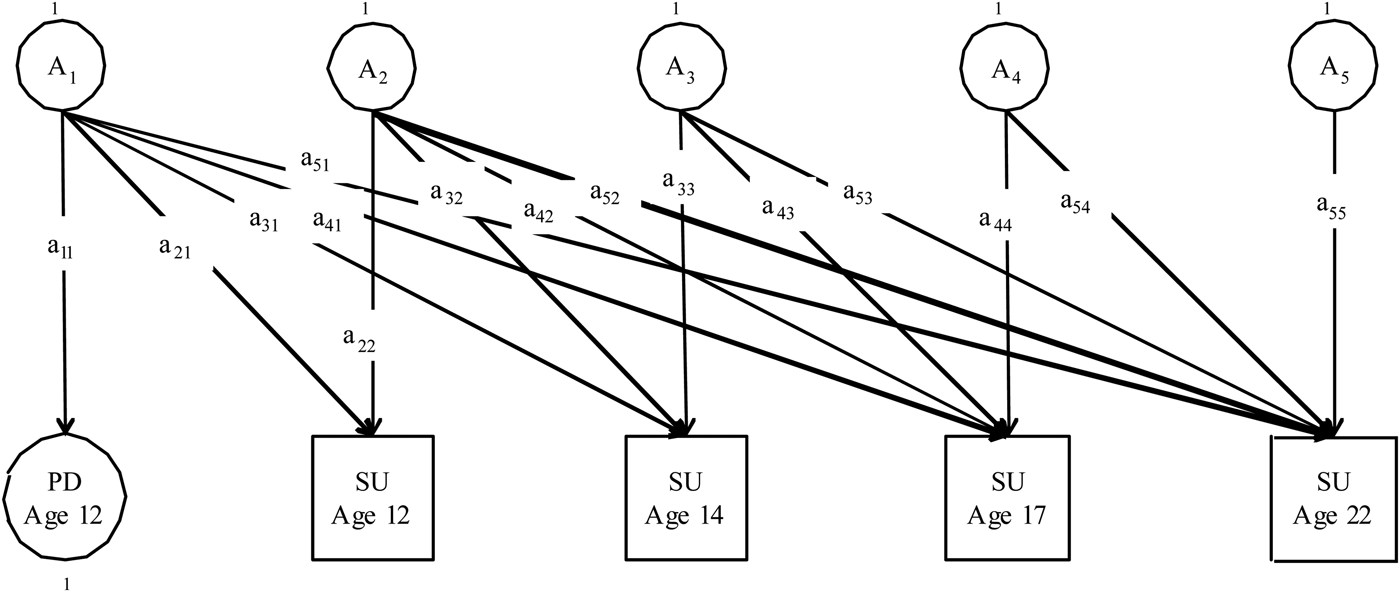
We used the twin sample to conduct genetically informative multivariate twin modeling, which can identify the extent to which the covariance between two or more traits is due to genetic versus environmental causes being shared between the traits. Twin models can be used to partition the variance and covariance of traits into contributions from additive genetic (A), common environmental (C), and unique environmental (E) effects by comparing the relative within-trait and cross-trait similarity for MZ and DZ twins (Neale & Cardon, Reference Neale and Cardon1992). MZ twins share all of their genetic variation while DZ twins share about half of their segregating genetic variation, but both types of twins share their common environment (factors that contribute to within-family resemblance) to the same extent; thus, the differences in trait similarity between MZ and DZ pairs is informative as to the contributions from A versus C. Unique environmental factors are individual exposures and experiences that make twins within pairs less similar to each other and make the MZ correlation less than unity. Using these principles, we fit Cholesky decomposition of variance models between PD factor scores and each set of substance use variables (drinking, AUD symptoms, smoking, and illicit drug use), as illustrated in Figure 1. We conducted omnibus tests of the significance of each genetic and environmental source to the covariance between PD and substance use by constraining all covariance paths from an A/C/E source (e.g., the joint set of paths a21, a31, a41, and a51) to zero. The change in model fit between the full and constrained models was evaluated with a chi-square test of the difference in –2 times the loglikelihood between models, with p values <.05 indicating a significant decrease in model fit caused by the constrained parameters and thus the importance of that genetic or environmental source to the trait covariance. Twin models were fit in the OpenMx package (Boker et al., Reference Boker, Neale, Maes, Wilde, Spiegel, Brick and Fox2011) for R version 2.15.3 (R Core Team, 2013), using full information maximum likelihood estimation.
Theoretical model of a Cholesky decomposition of variance between pubertal development and substance use. For ease of presentation, only the additive genetic (A) factors are shown; identical sets of paths for common environmental (C) and unique environmental (E) factors are in the full model, and these sets of paths are correlated between twins within pairs based on the principles of biometrical modeling (see text).

Multilevel longitudinal models
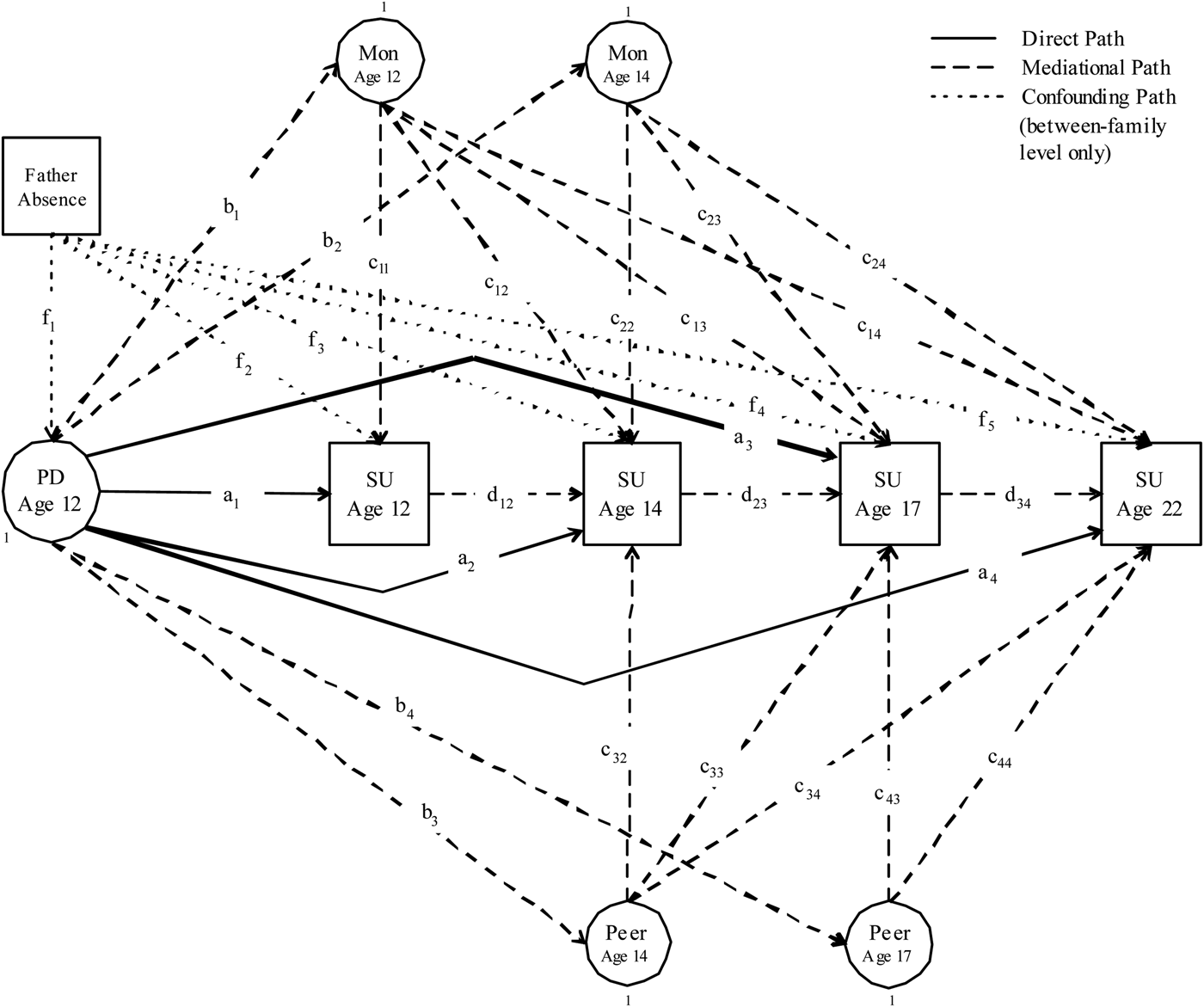
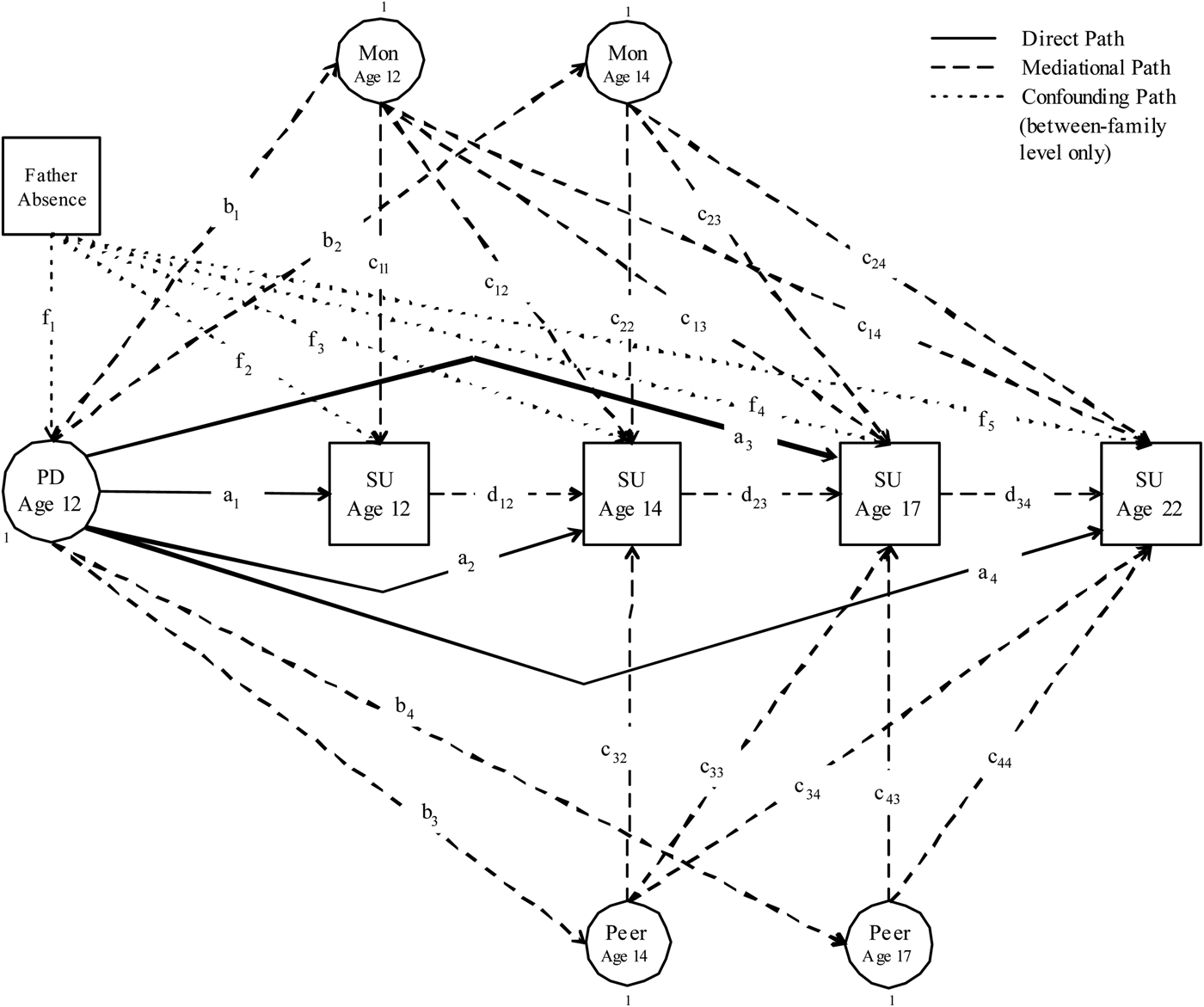
Next, we used a multilevel structural equation model to estimate the strength of the phenotypic relationship between PD and substance use across early adolescence through young adulthood, at the between-family and within-family levels. This model was also used to test whether this relationship was mediated by peer deviance/parental monitoring, or accounted for by the confounding factor of biological father absence that may be associated with both early PD and heavier substance use. A two-level model allowed for the estimation of these effects at the between-family population level, and at the within-family level in which within-pair differences in PD are used to predict within-pair differences in substance use outcomes, controlling for potential confounding factors that differ between families (Preacher, Zyphur, & Zhang, Reference Preacher, Zyphur and Zhang2010). The multilevel model was conducted for each substance use phenotype, including estimates of the direct effect of age 12 PD on substance use at each age, controlling for its effect on substance use at previous ages, as well as the effects of peer substance use and parental monitoring on concurrent and later substance use, and their mediational paths between PD and substance use. The model also estimated (at the between-family level) the effects of biological father absence on PD, substance use, and each of the mediators. An illustrative example of these models is shown in Figure 2. Direct and indirect effects of PD on substance use were calculated for each substance use outcome at each assessment age.
Diagram of the multilevel structural equation model of the relationship among pubertal development, substance use across adolescence and young adulthood, and hypothesized mediating/confounding factors. Peer, peer substance use; Mon, parental monitoring.
We tested for sex/gender differences in these relationships by fitting each of these models separately by sex in a multigroup analysis, and then constraining the regression path coefficients to be equal across sexes and comparing the fit of the constrained model to the multigroup model with a chi-square test of the difference in –2 log likelihood. Comparison of these models indicates whether there are differences in the relationships between variables as a function of sex (i.e., moderation effects) or simply sex differences in the variable means. All multilevel model analyses were conducted in Mplus version 7.31 (Muthén & Muthén, Reference Muthén and Muthén1998–2012) using maximum likelihood estimation with robust standard errors.
Results
Descriptive statistics and correlations
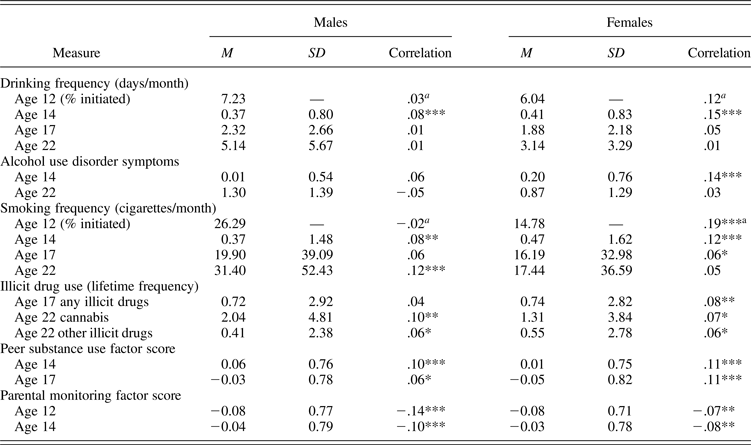
Table 1 presents descriptive statistics for the substance use variables and their correlations with age 12 PD factor scores for males and females. The correlations between PD and substance use were virtually all positive but modest (.19 or less), with general trends of the strongest correlations being with age 14 substance use, and stronger correlations for females than males. One exception to this trend was a correlation of .12 between PD and age 22 smoking frequency for males (female correlation of .05, ns). Consistent with the theorized relationship between PD and parent/peer interactions, early PD was correlated with higher peer substance use (r = .06 to .11) and lower levels of parental monitoring (r = –.07 to –.14).
Sample descriptive statistics for substance use, peer, and parenting variables and their correlations with age 12 pubertal development latent factor scores in a sample of Finnish twins
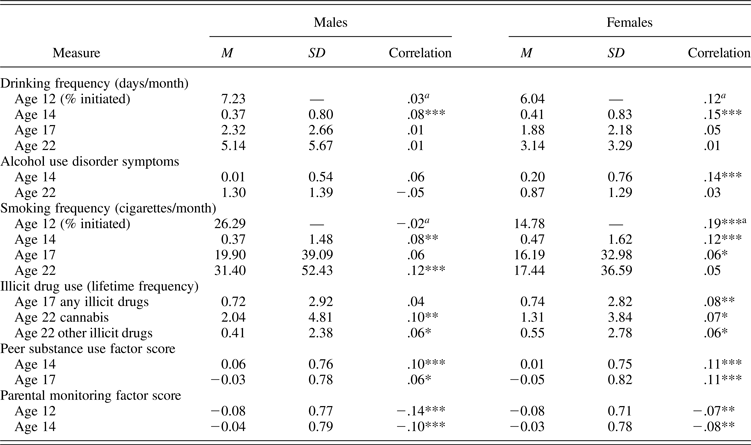
a Polyserial correlation (all others are Pearson correlations).
*p < .05. **p < .01. ***p < .001.
Genetically informative twin models
Multivariate twin Cholesky models were fit to each longitudinal set of substance use variables to determine whether the observed relationship between PD and substance use was due to a shared genetic or environmental etiology. From each full model, genetic (A), common environmental (C), or unique environmental (E) covariance paths between PD and each substance use measure were fixed to zero, and the change in model fit was evaluated. We also tested for overall significance of a shared liability between PD and substance use by dropping all A, C, and E covariance paths at once. When the covariance paths cannot be dropped from the model without a significant (chi-square test p < .05) decrease in fit, this indicates a significant shared genetic or environmental etiology between PD and substance use.
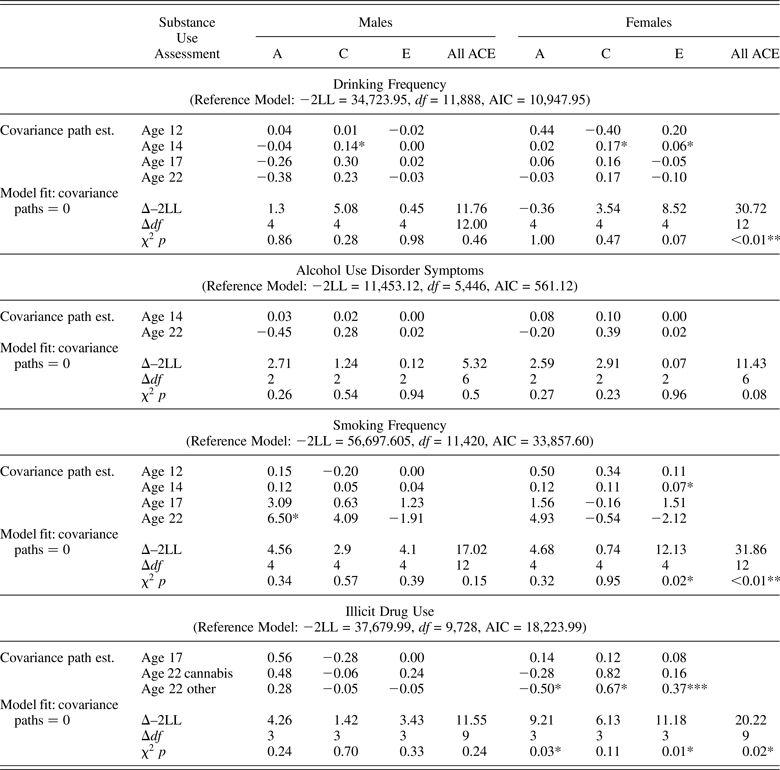
Table 2 presents the covariance path estimates from these Cholesky models and the fit indices comparing the change in model fit of the nested submodels (A/C/E covariance paths dropped) versus the full multivariate model illustrated in Figure 1. Omnibus tests of the nested models indicated that there was little overlap in the genetic or environmental factors contributing to PD and substance use. For males, all shared A, C, and E paths could be dropped for all substances without a significant decrement in model fit. For females, there was a significant overlap between PD and drinking frequency that was primarily driven by shared C factors and E at age 14. Similarly for smoking frequency in females, overall E influences were shared with PD, and were most strongly shared at age 14. There was no significant overlap in sources of covariance between PD and AUD symptoms. The A, C, and E influences were shared between PD and illicit drug use at age 22 for females, although notably the A covariance was in a negative direction, such that the genes contributing to early PD were associated with less frequent illicit drug use at age 22. We present only the PD–substance use covariance paths here; additional results from the multivariate twin models are available in online-only supplementary Table S.1 or upon request from the first author.
Sources of covariance between pubertal development and substance use outcomes as estimated by twin Cholesky models
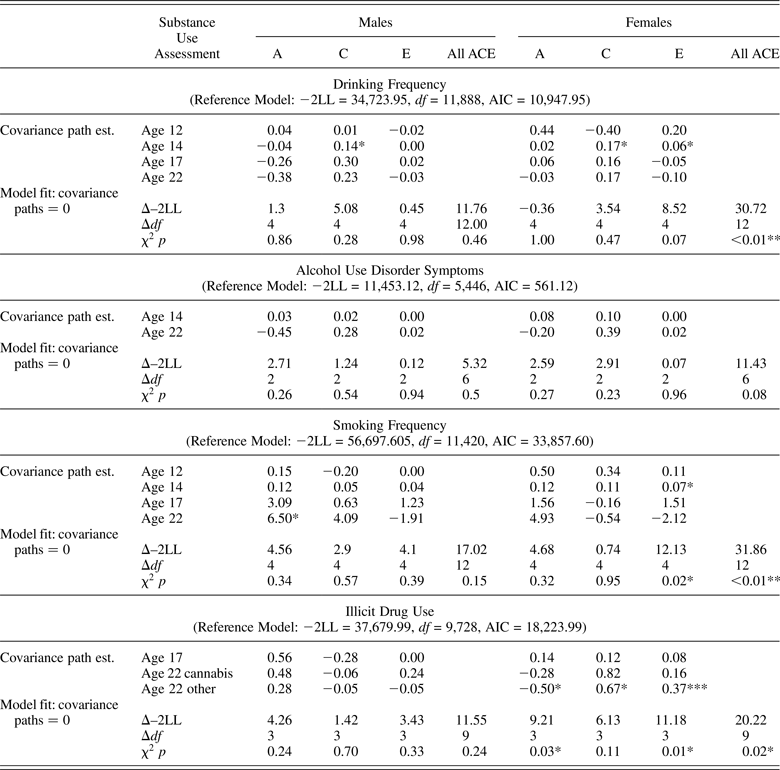
Note: Covariance paths represent the unstandardized path estimates for the A, C, or E latent factor shared between pubertal development and substance use at each assessment age (e.g., Paths a21, a31, a41, and a51 in Fig. 1). Model fit indices compare the change in fit from the reference model when all covariance paths from each latent factor (A, C, or E) paths are constrained to zero, indicating a significant genetic or environmental contribution to the covariance. –2LL, –2 model log likelihood; AIC, Akaike information criteria; A, additive genetic factors; C, common environmental factors; E, unique environmental factors.
*p < .05. **p < .01. ***p < .001.
Multilevel longitudinal models
We next fit a series of two-level structural equation models for each set of substance use measures to examine the longitudinal relationship between PD and substance use at the between- and within-family levels, testing for mediational and confounding effects of the environmental factors of peer substance use, parental monitoring, and biological father absence. We first tested whether the associations between variables in the model could be equated for males and females, and found that, for all outcomes, constraining the path estimates to equality led to a highly significant decrease in model fit (supplementary Table S.2). This indicated that the patterns of relationships between variables differed between the sexes (interaction effects), beyond simple sex differences in the variable means. We therefore focus the rest of our presentation of results on those from the multigroup sex models.
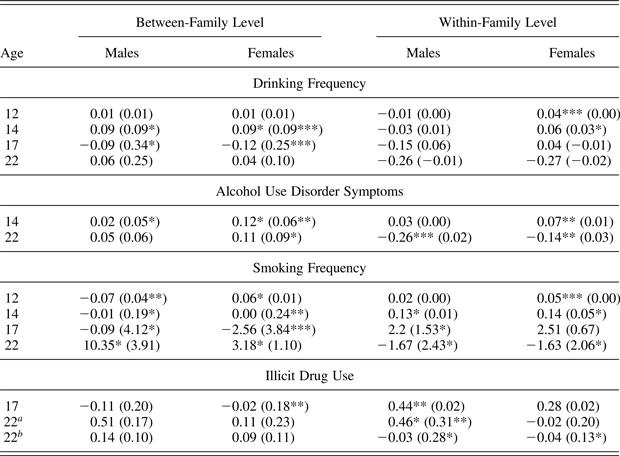
Estimates of the effect of age 12 PD on substance use measures at each age are presented separately for males and females in Table 3, with the between-family level effects in the left-hand column and the within-family level effects on the right. In Table 3, the direct effects of PD can be interpreted as the regression coefficient from a single measurement of substance use being regressed on age 12 PD (e.g., Paths a1, a2, a3, or a4 in Figure 2). The indirect effects, in parentheses, encompass the sum of all indirect paths between PD and the specified substance use measure, including the autoregressive association (e.g., PD's association with substance use at age 17 through its cumulative effects from ages 12 and 14, Paths a1 × d12 × d23), and the association through all connecting mediational paths. The direct and indirect effects can be summed to calculate the total effect of early PD on substance use at the specified age (i.e., what the regression coefficient would be for a univariate analysis that did not include mediation effects or covariates). We summarize results from this table relevant to each part of the research question in the sections below.
Comparison of the effects of age 12 pubertal development on substance use in the multilevel structural equation models at the between-family and within-family levels
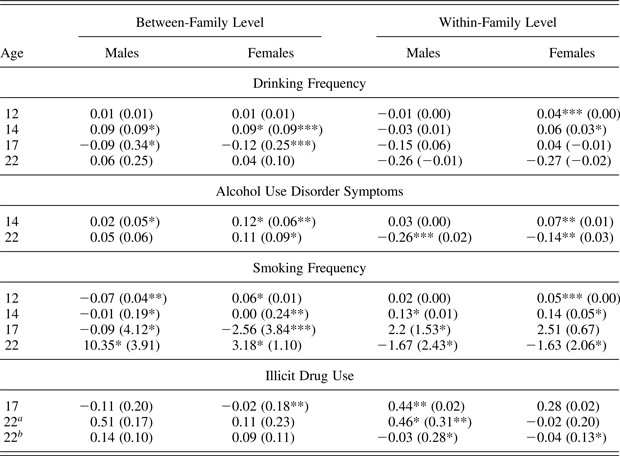
Note: The direct effects of pubertal development (PD) on substance use at each age are shown (indirect effects in parentheses). Direct effects are the regression coefficients from a single measurement of substance use being regressed on PD (Paths a1, a2, a3, or a4 in Fig. 2). Indirect effects sum all paths between PD and substance use, including both the autoregressive association (e.g., PD's association with substance use at age 17 through its cumulative associations at earlier ages, calculated as Paths a1 × d12 × d23) and the mediational paths through peer substance use and parental monitoring (see Fig. 2).
a Cannabis use.
b Other illicit drug use.
*p < .05. **p < .01. ***p < .001.
Longitudinal effects of PD on substance use
Although the focus of presentation is on the within-family effects, we briefly note that at the between-family level (Table 3, left column), early PD was associated with higher levels of each of the four substance use outcomes at one or more ages assessed in this study, consistent with previous cross-sectional reports. These associations were largely through indirect (mediational) effects, were generally more evident in females than males, and each showed a decreasing trend in the magnitude and/or significance of association across time, particularly between the age 17 and age 22 assessment. A positive association between PD and smoking frequency was observed at age 22 in both sexes, which was unique in being the only direct path persisting in an association beyond age 14.
Early PD and substance use had a different and more subtle pattern of association at the within-family level (Table 3, right column). Within twin pairs, PD was associated with a higher likelihood of drinking initiation at age 12 and (indirectly) a modestly higher drinking frequency at age 14 in females, with no significant associations for males. The effect size decreased across adolescence, with negative, although nonsignificant, associations at age 22. The same pattern was seen for AUD symptoms: a positive association at age 14 in girls, reversing direction across time such that by age 22, the early maturing twin in both male and female pairs was predicted to have fewer alcohol problems than the later maturing co-twin. Smoking initiation at age 12 was more likely for the early maturer in female pairs, as was a higher smoking frequency at ages 14–22 in both sexes, although the effect was modest in general and not significant at age 17 for girls. Of note, the direction of association for the direct effects of PD reversed at age 22 and became negative in both sexes; however, the stronger and positive indirect effects leave the balance of the total effects in the positive direction. Early PD also had a positive association with illicit drug use, evident in significant direct effects on age 17 drug use and age 22 cannabis use for males, as well as significant indirect effects on age 22 use of other illicit drugs for both sexes. Longitudinal trends of attenuation in effect size were similar at the within-family level as observed at the between-family level, although they uniquely demonstrated a reversal in the direction of association by young adulthood, particularly for alcohol use outcomes.
Mediation by peer substance use and parental monitoring
The hypothesized peer and parenting mediating variables showed the expected relationship with substance use. At the between-family level, early PD was related to higher peer substance use at age 14 and age 17 for both males and females, and to lower parental monitoring in males (negative but not significant for females; see supplementary Table S.3). However, this association was not upheld at the within-family level, where the early-maturing twin only among female pairs reported lower levels of parental monitoring at age 12 and 14 (β = –0.11 to –0.14, p < .01), and there were no differences in peer substance use related to PD (supplementary Table S.4). At both the between- and within-family levels, peer substance use and parental monitoring were themselves associated with higher and lower substance use, respectively, across each type of substance. This held for both males and females, though the significant associations were virtually all cross-sectional within age/measurement occasion (supplementary Table S.4). As mentioned above, the indirect effects of PD on substance use through these mediational pathways were substantial at the between-family level (Table 3). Within families, mediational effects were influential only for smoking and illicit drug use after early adolescence. We note that of the significant within-family indirect effects shown in Table 3, 64%–88% of the indirect effects for smoking and 54%–94% of the indirect effects for illicit drug use were attributable to cumulative autoregressive effects (d paths, Figure 2) rather than the peer/parenting mediational effects (b and c paths, Figure 2).
Effects of absence of the biological father
Having an absent biological father was associated with higher PD scores in males (M = 0.19 vs. M = 0.04 for father-absent vs. father-present boys), t (1,450) = 3.55, p < .01, but not females (M = 0.02 vs. M = 0.01 for father-absent versus father-present girls), t (1,304) = 0.25, p = .80. Removing biological father absence as a predictor of PD and substance use in the multilevel models led to virtually no changes in the parameter estimates of the effects of PD (see supplementary Table S.5).
Discussion
The present study examined associations between early PD and adolescent/young adult substance use in a population-based, longitudinal sample of Finnish twins. The unique properties of the twin sample allowed us to disentangle the relationship between PD and substance use by estimating the genetic versus environmental contributions to their association and by controlling for potential confounding factors that differ systematically between families and predict both early PD and substance use. Broadly, our findings suggest that the previously reported associations between early PD and greater adolescent alcohol use/problems may be only modest and limited to early adolescence, while early PD appears to have longer lasting associations with nicotine and illicit drug use. We highlight the major findings from this study below.
-
1. The findings from previous studies of an association between early PD and adolescent substance use were replicated. At the between-family level, which is comparable to studies using population-based samples, PD was associated with heavier use of multiple substances for both sexes. The magnitude of the effect sizes were modest, with PD accounting for, at most, an expected difference of less than half a drinking day per month, 0.2 AUD symptoms, 15 cigarettes per month, or one lifetime use of an illicit drug. The strength of association decayed with age, in line with the numerous reports of an association in early/middle adolescence but less consistent results in young adulthood. We also replicated previous findings that these substance use associations were largely due to indirect effects through peer substance use, parental monitoring, and cumulative effects on substance use over time.
-
2. The association between PD and substance use is partially attributable to confounding factors that differ between families. The within-family models provided a robust test for a true association between early PD and substance use, controlling for many potential causes of spuriousness. Within pairs, the magnitude of the effects of PD were attenuated relative to that observed at the population level, and even reversed in direction in some cases. In addition, though mediational effects were robust at the between-family level, there was little evidence for them within pairs. These findings suggest that the mediational effects of peer substance use and parenting found in other studies (e.g., Schelleman-Offermans et al., Reference Schelleman-Offermans, Knibbe and Kuntsche2013) more likely reflect correlated liabilities to early PD, substance use, and peer/parenting factors that differ systematically between families and may share a common underlying cause. Though, outside of any relation to PD, within-pair differences in peer substance use and in parental monitoring were linked to heavier substance use, indicative of the importance of these as targetable risk factors for adolescent and young adult substance use.
-
3. Any shared causal factors overlapping between early PD and heavier substance use are likely to be environmental rather than genetic in nature. The results from the twin Cholesky models indicated that, for females, some of the same environmental influences contributed to both early PD and heavier drinking/smoking in early adolescence and illicit drug use in young adulthood. This is consistent with the single other study examining multivariate biometric models of PD and substance use, which found evidence only for shared common environmental factors, and not genetic factors, between girls’ adolescent drinking frequency and age at menarche (Dick et al., Reference Dick, Rose, Viken and Kaprio2000). Lack of overlap in any of these factors for males may be a result of the less robust phenotypic correlation, or may be indicative of a (modest) causal association between the traits rather than a shared liability. Duffy and Martin (Reference Duffy and Martin1994) discuss the difficulty in distinguishing a shared liability from a phenotypic causal association when using twin models, especially if both traits have a similar genetic architecture (here, PD and substance use were each moderately heritable).
-
4. Biological father absence does not explain the association between PD and substance use, but was associated with early PD in males. In contrast to a number of previous studies, biological father absence had no relationship to PD in females. This discrepancy may be due to differences in measures of PD, as most studies have used retrospective accounts of age at menarche as their definition of PD (Bogaert, Reference Bogaert2005; Kim & Smith, Reference Kim and Smith1998; Quinlan, Reference Quinlan2003). A previous study examining the associations between individual PD indicators (PDS items) and biological father absence found that not all indicators differed significantly between father-present and father-absent individuals, with menarche showing the greatest difference for females, and overall somewhat greater differences for males than for females (Mustanski et al., Reference Mustanski, Viken, Kaprio, Pulkkinen and Rose2004).
-
5. Sex differences are important to consider. There were sex differences in the pattern of relationships for each substance, with females generally having an earlier age of onset for when these associations emerge (perhaps not surprising given the earlier average age of pubertal onset for girls). PD was more strongly associated with alcohol outcomes and parental monitoring levels for females, while the association between PD and illicit drug use was stronger for males.
-
6. The pattern of association weakens or reverses across time, indicative of a “catch-up” effect, although it differs by substance. For drinking frequency and AUD symptoms, the within-family direction of association reversed at age 22, such that early PD was associated with lower alcohol use/problems in young adulthood. These results are consistent with a catch-up effect that may be due to early maturers peaking earlier and beginning to decline in their substance use as their later-maturing counterparts are reaching peak use. Nevertheless, two previous studies have found that adolescent alcohol use predicted drinking problems in middle adulthood more so than in young adulthood (Huurre et al., Reference Huurre, Lintonen, Kaprio, Pelkonen, Marttunen and Aro2010; Pitkänen, Kokko, Lyyra, & Pulkkinen, Reference Pitkänen, Kokko, Lyyra and Pulkkinen2008), so caution should be taken in extending these findings beyond the ages here included. Normative high levels of substance use in young adulthood may dilute the associations during that limited time period.
For smoking frequency, although there was a similar decrease in the total effects and a reversal in direction of the direct effects across time, early PD retained a modestly significant association with heavier smoking frequency at age 22 through indirect pathways. This may be evidence of the potential importance of PD on setting individuals on divergent developmental trajectories of nicotine use through subtler mechanisms, such as early initiation that leads to long-term, persistent addiction rather than transient, adolescent-limited increases in smoking. In particular, normative (but temporary) high levels of substance use in middle to late adolescence could mask a more lasting effect that emerges among early initiators who become addicted and persist in heavy use in adulthood, which could explain the population-level correlation seen between PD and age 22 smoking. While drinking in adolescence has been largely attributed to shared environmental factors such as peer influences (Pagan et al., Reference Pagan, Rose, Viken, Pulkkinen, Kaprio and Dick2006), some evidence from animal models suggests that adolescence is a critical time for the neurodevelopmental changes related to the development of nicotine addiction (Brielmaier, McDonald, & Smith, Reference Brielmaier, McDonald and Smith2007). A co-twin control study of MZ twins differing in age of onset of smoking by 2 years or more found that the co-twins with earlier onset had increased risk of nicotine dependence in adulthood (Kendler, Myers, Damaj, & Chen, Reference Kendler, Myers, Damaj and Chen2013), while Hartz et al. (Reference Hartz, Short, Saccone, Culverhouse, Chen, Schwantes-An and Bierut2012) demonstrated that early onset of smoking can moderate one's genetic risk for nicotine dependence. If this is the case, early PD may be a risk factor for adult nicotine dependence via its effect on increasing likelihood of initiation of regular smoking during a critical neurodevelopmental stage.
Research is needed on whether this may be similarly true for illicit drug use, for which PD also showed persistent indirect effects on heavier use at age 22. An alternative explanation may be important to consider: given the epidemiological differences in timing of onset and peak use of illicit drugs versus alcohol and nicotine (e.g., Substance Abuse and Mental Health Services Administration, 2011), it may be that the associations with illicit drug use simply represent a time shift that would dissipate at older ages that were not assessed in this study. We might see, as with alcohol, that early maturers peak in initiation and use sooner and the trajectory for late maturers is just shifted by a few years. The link between PD and illicit drug use is in need of further investigation, especially with longer term follow-up. Differences in the addictiveness of substances (i.e., likelihood and speed of transition to dependence given initiation; Lopez-Quintero et al., Reference Lopez-Quintero, Perez de los Cobos, Hasin, Okuda, Wang, Grant and Blanco2011) may be an important determinant of why early initiation leads to more or less temporary effects on long-term use trajectories for different substances. Future research across all substances is required to better understand what causal links, rather than correlated liabilities, may exist between factors that increase earlier initiation of substance use and long-term outcomes of substance use beyond the transient influences of adolescence.
Limitations
The findings of this study should be viewed in the context of several limitations. First, with the exception of the structured clinical assessments in the intensive subsample, most data were collected via self-report of questionnaires completed at home, which may have been influenced by social desirability biases or parental presence (especially regarding substance use variables in individuals below the legal age). While smoking and alcohol use patterns in Finnish adolescents and young adults are broadly comparable to other European and US populations, illicit drug use has until recently been much less common in Finland. Thus, replication of these analyses in other populations is needed. Participants also reported on the actions of others, including peer substance use and parental monitoring, which may reflect perceived rather than actual behaviors. The items indexing parental monitoring, for example, may thus reflect parental knowledge or the child's willingness to disclose information to parents, which may differ from a true measure of “monitoring” and accordingly may have different associations with PD and/or substance use. However, previous research has found that child rather than parent reports of parenting behaviors are more reliably associated with the child's substance use behaviors (Varvil-Weld, Turrisi, Scaglione, Mallett, & Ray, Reference Varvil-Weld, Turrisi, Scaglione, Mallett and Ray2013), and that perceived rather than actual peer substance use is most strongly associated with one's own substance use (Iannotti & Bush, Reference Iannotti and Bush1992). Second, given the complexity of the models and sample attrition at older ages, estimates may be somewhat imprecise, and we may have been underpowered to detect small effects of PD and to disentangle genetic versus environmental sources of variance in the biometric models when the magnitude of the effects themselves are very small. Third, participants were measured at the same age for assessments of PD; while this limits potential confounding effects of age differences in the sample, limited variance from a single time-point measure of a developmentally dynamic construct may have attenuated the associations seen between PD and other outcomes.
Fourth, because this was a longitudinal study, there is a risk of differential attrition. We compared age 12 and age 14 data from individuals who remained or dropped out of the study after the age 14 wave, and although participant retention was high, there were some significant differences. Those who dropped out were more likely to be male, to smoke and drink more at 14 (but no differences in substance use at age 12), to have more AUD symptoms at age 14, and to have lower age 12 PD scores (late developers), higher peer substance use scores, and lower parental monitoring scores. However, this should bias our results in a conservative rather than liberal direction, based on the directions of the associations that were found. This study also has numerous strengths, including unbiased population ascertainment, longitudinal data collection beyond adolescence with high retention rates, PD scores derived from multiple indicators to decrease the error associated with single items such as age as menarche, comparisons of gender differences using data collected with the same measures, and the use of twin pairs to control for many of the between-family confounds that make it difficult to understand the nature of the relationship between PD and substance use.
Conclusion
Early PD has a long but conflicted history of association with an increased risk for numerous emotional and behavioral health outcomes in adolescence, including substance use. Using a large, longitudinal, epidemiological sample of twins, the current study shed light on several issues muddying the nature of this association. We conclude that, although evident that the association exists, it is a relatively modest effect and has a nuanced presentation depending on gender, age, and substance use measure, which perhaps explains why discrepancies may be seen across studies and especially across samples of different ages. A substantial portion of the association is due to confounding factors that differ between families and represent correlated liabilities shared between early maturation and heavier substance use. Such correlated liabilities appear to be attributable to environmental rather than biological factors, and cannot be explained by absence of the biological father. In addition, the association between early PD and higher alcohol use/problems was limited to early adolescence and was consistent with a catch-up effect. Our findings indicate that the early PD may have more robust and persistent effects on adult nicotine use through divergent trajectories beginning earlier in adolescence. These effects are not solely due to mediation by peer and parental factors, and further research is necessary to identify other pathways that may explain this association. Within-family differences in peer substance use and parental monitoring, however, were themselves associated with differences in substance use between co-twins; these factors may thus be useful targets for prevention/intervention efforts. This study's findings highlight the complexity of the association between early maturation and substance use, and illustrate the need to consider many overlapping factors and alternative explanations in order to fully understand their relationship.
Supplementary Material
To view the supplementary material for this article, please visit https://doi.org/10.1017/S0954579417000487.