INTRODUCTION
More than 1400 parasite species, including viruses, bacteria, fungi, protozoa, helminths and nematodes, infect humans (Taylor et al. Reference Taylor, Latham and Woolhouse2001), and worldwide, slightly more than 20% of the global cancer burden is attributable to infectious agents (viruses, bacteria and eukaryotic parasites) (de Martel et al. Reference de Martel, Ferlay, Franceschi, Franceschi, Vignat, Bray, Forman and Plummer2012). Moreover, two viruses (Epstein-Barr Virus (EBV) and Human herpesvirus 8, also known as Kaposi's sarcoma-associated herpes virus), which are cancer-causing agents, exhibit complex relationship with malaria (Thakker and Verma, Reference Thakker and Verma2016; Thorley-Lawson et al. Reference Thorley-Lawson, Deitsch, Duca and Torgbor2016). Certain eukaryotic parasites may also play a critical role in human oncogenesis (e.g. Gupta et al. Reference Gupta, Nowakowski, Haseeb, Shurin, Thanavala and Ismail2015; Reddy and Fried, Reference Reddy, Fried, Shurin, Thanavala and Ismail2015; Machicado and Marcos, Reference Machicado and Marcos2016). Conversely, several reports indicate that pathogens, including eukaryotic parasites, may elicit anti-tumour immune responses that lead to protection against tumourigenesis (reviewed in Oikonomopoulou et al. Reference Oikonomopoulou, Brinc, Kyriacou and Diamandis2013, Reference Oikonomopoulou, Brinc, Hadjisavvas, Christofi, Kyriacou and Diamandis2014; Darani et al. Reference Darani, Yousefi, Safari and Jafari2016). To date, the factors influencing the bi-directional influence of infectious eukaryotic agents on carcinogenesis are not well understood.
Malaria parasites are among the very few infectious agents known to exert a possible bi-directional role on carcinogenesis (e.g. IARC, 2014; Deng et al. Reference Deng, Zheng, Zhou, Liu, Ding, Xu, Chen, Hou, Min and Dai2016). Malaria is likely the oldest documented disease affecting humans; some of the earliest medical writings from China and Assyria accurately describe malaria-like intermittent fevers (Neghina et al. Reference Neghina, Neghina, Marincu and Iacobiciu2010). Four species of Plasmodium (Protozoa: Apicomplexa) have long been recognized to infect humans: Plasmodium falciparum responsible of the most dangerous forms of malaria, Plasmodium vivax and Plasmodium ovale cause benign tertian malaria, Plasmodium malariae causes benign quartan disease (Igweh, Reference Igweh and Okwa2012; Roucaute et al. Reference Roucaute, Pichard, Faure and Royer-Carenzi2014). Despite concerted efforts to reduce the deleterious impact of malaria, worldwide morbidity and mortality in 2015 were estimated at approximately 210 million and 0·44 million, respectively (WHO, 2015). Furthermore, in accordance with the old thinking, which assumed that malaria was beneficial to patients suffering from diseases, including cancers, the anti-tumourigenic potential of Plasmodium was recently investigated (e.g. Chen et al. Reference Chen, He, Qin, Li, Shi, Zhao, Zhong and Chen2011; Deng et al. Reference Deng, Zheng, Zhou, Liu, Ding, Xu, Chen, Hou, Min and Dai2016). Moreover, the mechanisms underlying the involvement of P. falciparum in oncogenesis are only just starting to be better understood (Thorley-Lawson et al. Reference Thorley-Lawson, Deitsch, Duca and Torgbor2016). This paper reviews data concerning the bi-directional role of malaria in cancer and its relevance to cancer prevention and therapy.
PRO- AND ANTI-TUMOURIGENESIS ASSOCIATED WITH EUKARYOTIC PARASITE infections
To the current knowledge, approximately half a dozen eukaryotic parasites are more or less directly associated with human carcinogenesis, including Platyhelminths, Nematoda and Protozoa (e.g. Benamrouz et al. Reference Benamrouz, Guyot, Gazzola, Mouray, Chassat, Delaire, Chabé, Gosset, Viscogliosi, Dei-Cas, Creusy, Conseil and Certad2012; Oikonomopoulou et al. Reference Oikonomopoulou, Brinc, Kyriacou and Diamandis2013; Gupta et al. Reference Gupta, Nowakowski, Haseeb, Shurin, Thanavala and Ismail2015; Reddy and Fried, Reference Reddy, Fried, Shurin, Thanavala and Ismail2015); however, for certain parasites further evidence is required to elucidate cause-effect relationships (e.g. Machicado and Marcos, Reference Machicado and Marcos2016). Non-eukaryotic pathogens can directly influence tumourigenesis, while eukaryotic parasites primarily appear to indirectly promote carcinogenesis (e.g. Oikonomopoulou et al. Reference Oikonomopoulou, Brinc, Kyriacou and Diamandis2013; Machicado and Marcos, Reference Machicado and Marcos2016). As noted by Machicado and Marcos (Reference Machicado and Marcos2016), the mechanisms of eukaryotic parasite-induced cancer included ‘chronic inflammation, sustained proliferation, modulation of the host immune system, reprogramming of glucose metabolism and redox signalling, induction of genomic instability and destabilization of suppressor tumour proteins, stimulation of angiogenesis, resisting cell death and activation of invasion and metastasis’.
Conversely, several observations reported as early as the 1700s support a link between infection and cancer prevention or regression (reviewed in Oikonomopoulou et al. Reference Oikonomopoulou, Brinc, Kyriacou and Diamandis2013; Darani et al. Reference Darani, Yousefi, Safari and Jafari2016). These observations were generally made in the context of bacterial diseases, but a few rare cases involved eukaryotic infections (reviewed in Hoption Cann et al. Reference Hoption Cann, van Netten and van Netten2006; Kucerova and Cervinkova, Reference Kucerova and Cervinkova2016). Several recent epidemiological investigations demonstrated an inverse association between various acute infectious diseases, or even fever alone, and cancer risk (reviewed in Kienley, Reference Kienley2012). It is now known that hyperthermia can directly induce tumour cell necrosis and apoptosis (Kienley, Reference Kienley2012). Moreover, studies have revealed the complex modifying effects of fever and elevated temperature on the host response, cytokine levels, immune surveillance and anti-tumour activity (reviewed in Kienley, Reference Kienley2012). In addition, the suppression or regression of neoplastic growth through the application of infectious agents has been observed for bacterial pathogens but also for commensal bacteria (Hu et al. Reference Hu, Wang, Ye, Yang, Huang, Meng, Shi and Ding2015) and there is evidence that certain microbial products (e.g. lipopolysaccharides) and vaccines exert anti-tumour effects (Oikonomopoulou et al. Reference Oikonomopoulou, Brinc, Kyriacou and Diamandis2013). These examples show that fever-independent mechanisms may also play an anti-oncogenic role.
In the past two decades, adverse relationships between certain eukaryotic parasitic infections and human cancers have been reported by different research groups. For example, the anti-cancer activities of parasites belonging to several taxonomic groups (Euglenozoa, Protozoa, Nematoda, Amoebozoa and Platyhelminth) have been observed during in vitro investigations and/or in experimental animals (Alizadeh et al. Reference Alizadeh, Pidherney, McCulley and Niederkorn1994; Darani et al. Reference Darani, Shirzad, Mansoori, Zabardast and Mahmoodzadeh2009; Chookami et al. Reference Chookami, Sharafi, Sefiddashti, Jafari, Bahadoran, Pestechian and Darani2015; Sofronic-Milosavljevic et al. Reference Sofronic-Milosavljevic, Ilic, Pinelli and Gruden-Movsesijan2015; Ubillos et al. Reference Ubillos, Freire, Berriel, Chiribao, Chiale, Festari, Medeiros, Mazal, Rondán, Bollati-Fogolín, Rabinovich, Robello and Osinaga2016; Wang and Gao, Reference Wang and Gao2016). Moreover, parasites that exhibit anti-tumour potential might also be associated with the induction of carcinogenesis, such as the Platyhelminth Echinococcus granulosus and the Apicomplexa Toxoplasma gondii (Lun et al. Reference Lun, Lai, Wen, Zheng, Shen, Yang, Zhou, Qu, Hide and Ayala2015; Turhan et al. Reference Turhan, Esendagli, Ozkayar, Tunali, Sokmensuer and Abbasoglu2015; Machicado and Marcos, Reference Machicado and Marcos2016), which exemplifies the ambivalent link between parasites and cancer. Throughout the course of parasitic infections, anti-tumour effects may be mediated by several mechanisms (e.g. reviewed in Oikonomopoulou et al. Reference Oikonomopoulou, Brinc, Kyriacou and Diamandis2013, Reference Oikonomopoulou, Brinc, Hadjisavvas, Christofi, Kyriacou and Diamandis2014). It is outside the scope of this study to perform an exhaustive review of these anti-tumour mechanisms; however, a brief summary is provided. The majority of these mechanisms imply interactions with the host immune system. Parasites may indeed influence the fine balance between immunosuppression and immunity against a tumour by modulating the availability and presentation of cross-reactive antigens, influencing the induction of pre-existing immunity and shaping the components of the tumour microenvironment (e.g. Daneshpour et al. Reference Daneshpour, Bahadoran, Hejazi, Eskandarian, Mahmoudzadeh and Darani2016). Parasitic infections can also induce anti-inflammatory responses. As observed for helminths, this is often achieved with a balanced Th1/Th2 response or via the activation of immune regulatory pathways involving immune suppressive cells such as regulatory T (Treg) cells as well as immune regulatory cytokines (reviewed in Oikonomopoulou et al. Reference Oikonomopoulou, Brinc, Kyriacou and Diamandis2013, Reference Oikonomopoulou, Brinc, Hadjisavvas, Christofi, Kyriacou and Diamandis2014). Parasitic infections may also induce a high-level immune surveillance state and increase the antigenicity of nascent tumour cells. Moreover, infections can induce the inhibition of angiogenesis, which leads to a reduction in tumour growth as experimentally shown during T. gondii infection using a murine model (Kim et al. Reference Kim, Jung, Kim, Kim, Shin, Lee and Lee2007). In addition, antigenic similarities exist between various tumours and certain parasites such as E. granulosus, and anti-tumour effects may be associated with these similarities (Chookami et al. Reference Chookami, Sharafi, Sefiddashti, Jafari, Bahadoran, Pestechian and Darani2015).
MALARIA, AN OLD PUTATIVE REMEDY AGAINST MENTAL AILMENTS AND INFECTIOUS DISEASES
The idea that intermittent fevers can have a curative effect dates back to classical antiquity (Faure, Reference Faure2014), in the Hippocratic Corpus dated back to the 5th-4th centuries BC it was mentioned that quartan fevers cure convulsions and epilepsy (Adams, Reference Adams1849, p. 751; Temkin, Reference Temkin1945, p. 46). The supposed beneficial influence of malaria against various types of mental diseases was noted by several physicians throughout the centuries that followed (Whitrow, Reference Whitrow1990; Duffell, Reference Duffell2001). Furthermore, since the end of the 19th century, physicians have pointed to the supposed therapeutic value of malaria inoculation against infectious diseases. From the 1920s to the mid-1940s, a therapeutic strategy employing malarial inoculation for the treatment of patients with neuro-syphilis was used in both Europe and North America (Snounou and Pérignon, Reference Snounou and Pérignon2013). Few patients were definitively cured, and others demonstrated only partial remission. Therapeutic strategies involving malarial inoculation were also tested against other infectious diseases, although generally without convincing success (Snounou and Pérignon, Reference Snounou and Pérignon2013; Faure, Reference Faure2014). It is now believed that the relative effectiveness of malaria against certain infectious bacterial diseases is attributable to the increase in body temperature, creating unfavourable conditions for parasites (Snounou and Pérignon, Reference Snounou and Pérignon2013). Currently, the use of malaria therapy has not been completely abandoned by all physicians. In the 1980s–1990s, P. vivax was injected into patients with late-stage Lyme disease (Heimlich, Reference Heimlich1990; Anonymous, 1991a , b ) and into HIV-infected individuals. However, these practices were risky, P. vivax can be associated with the development of severe diseases with complications (Wassmer et al. Reference Wassmer, Taylor, Rathod, Mishra, Mohanty, Arevalo-Herrera, Duraisingh and Smith2015) and their effectiveness was unproven (Chege et al. Reference Chege, Higgins, McDonald, Shahabi, Huibner, Kain, Kain, Kim, Leung, Amin, Geddes, Serghides, Philpott, Kimani, Gray-Owen, Kain and Kaul2014).
POSSIBLE IMPLICATIONS OF MALARIA IN CARCINOGENESIS
The notion of a positive association between malaria and cancer has existed for more than three centuries (Durand-Fardel, Reference Durand-Fardel1868, p. 260; Deaderick, Reference Deaderick1909). A possible empirical link had been established between malarial hepatomegaly, a type of morbidity frequently associated with this disease, and increased liver size during cancer. However, in two studies from Southeast Asia, no significant association was observed between malaria and primary hepatocellular carcinoma (Welsh et al. Reference Welsh, Brown, Arnold, Mathews and Prince1976; Lu et al. Reference Lu, Lin, Chen, Chen, Liaw, Chang and Hsu1988). Nevertheless, there is evidence supporting a critical role for malarial infections in other types of cancer, as described below.
Burkitt lymphoma
The association between P. falciparum malaria and endemic Burkitt's lymphoma (eBL), which is a type of non-Hodgkin's lymphoma, was noted in Africa more than 50 years ago, when the co-occurrence of this cancer and highly malaria-endemic areas was first observed (reviewed in Thorley-Lawson et al. Reference Thorley-Lawson, Deitsch, Duca and Torgbor2016). This cancer is aetiologically related to a member of the herpesvirus family (EBV) (National Toxicology Program, 2016). However, the precise mechanisms of P. falciparum’s involvement in lymphomagenesis are only just beginning to be better understood (Thorley-Lawson et al. Reference Thorley-Lawson, Deitsch, Duca and Torgbor2016). Malaria-induced immunosuppression (‘immunomodulation’ may be more appropriate (Cunnington and Riley, Reference Cunnington and Riley2010)) plays a deleterious role in EBV lymphomagenesis, permitting, inter alia, an increasing viral load in EBV-infected cells (IARC, 2014; Torgbor et al. Reference Torgbor, Awuah, Deitsch, Kalantari, Duca and Thorley-Lawson2014). More importantly, P. falciparum exerts several effects focused on germinal centre B cells, where eBL originates (Torgbor et al. Reference Torgbor, Awuah, Deitsch, Kalantari, Duca and Thorley-Lawson2014). Indirectly, P. falciparum induces the DNA-mutating and double-strand-breaking enzyme activation-induced cytidine deaminase, which is responsible for somatic hypermutation in B cells when they enter the germinal centre (Torgbor et al. Reference Torgbor, Awuah, Deitsch, Kalantari, Duca and Thorley-Lawson2014). This genomic instability protects the B cells, including those infected with EBV, from apoptosis (Torgbor et al. Reference Torgbor, Awuah, Deitsch, Kalantari, Duca and Thorley-Lawson2014). In vitro experiments employing a Plasmodium chabaudi mouse model of malaria have shown that chronic infection deregulates the expression of the cytidine deaminase gene, leading to DNA damage and translocations; ultimately, this might induce lymphomas in the absence of viral infection (Robbiani et al. Reference Robbiani, Deroubaix, Feldhahn, Oliveira, Callen, Wang, Jankovic, Silva, Rommel, Bosque, Eisenreich, Nussenzweig and Nussenzweig2015). In addition to eBL, EBV infection has been observed in other human malignancies, including lymphatic and haematological tumours such as Hodgkin's disease, T cell lymphoma and NK cell lymphoma and certain epithelial cancers, such as nasopharyngeal and gastric carcinomas (National Toxicology Program, 2016). In all cases, the nature of EBV infection in infected cancer cells is predominantly latent. The relationships between EBV, malaria and these types of cancer are not well understood.
Nasopharyngeal carcinoma (NPC)
NPC is found predominantly in Southeast Asia and tropical Africa; its aetiology is multifactorial and includes, among other factors, prior infection with EBV (Chu et al. Reference Chu, Wu, Tunkel and Ishman2008). Only two studies, carried out in Southeast Asia, suggest a possible association between malarial infection and the aetiology of NPC. The first study showed that patients with high titres of anti-malarial antibodies also had high titres of an EBV-associated antibody that is diagnostic for NPC (Yadav and Prasad, Reference Yadav and Prasad1984); however, the tested dataset comprised only 22 patients with NPC. In the second study, a history of malarial infection was significantly associated with NPC in males only, and this NPC was related to high levels of anti-EBV antibodies (Chen et al. Reference Chen, Liang, Chang, Wang, Hsieh, Hsu, Chen and Liu1990). However, according to the working group of the IARC (2014), the reliability and specificity of recall for historically remote infections (i.e. a self-reported history of malaria) may be very uncertain, raising concern about exposure misclassification.
Kaposi sarcoma (KS)
Human herpesvirus 8 (HHV8) is the causal agent of all clinical forms of KS, even if infection with this virus alone is not sufficient to cause this cancer (Thakker and Verma, Reference Thakker and Verma2016). An immunodeficient state is one of the most important cofactors predisposing an HHV8-infected person to KS, as observed during HIV co-infection (Thakker and Verma, Reference Thakker and Verma2016). Non-HIV related KS named classical Kaposi sarcoma (cKS) is a rare indolent neoplasm that is more common among people of Mediterranean origin and Jews of Ashkenazi descent (Wahman et al. Reference Wahman, Melnick and Rhame1991). KS is a highly angiogenic and invasive tumour often involving diverse organ sites, including skin, visceral organs and oral cavity. Despite intensive studies, the histogenesis of KS (and cKS) tumour cells remains an enigma, it has been suggested that KS has an early stage of polyclonal reactive-inflammatory-angiogenic hyperplastic lesion, which progress to a monoclonal true sarcoma stage (Patrikidou et al. Reference Patrikidou, Vahtsevanos, Charalambidou, Valeri, Xirou and Antoniades2009).
Surprisingly, some studies (Geddes et al. Reference Geddes, Franceschi, Balzi, Arniani, Gafà and Zanetti1995; Cottoni et al. Reference Cottoni, Masala, Budroni, Rosella, Satta, Locatelli, Montesu and De Marco1997; see comments in IARC, 2014), although not all (Serraino et al. Reference Serraino, Corona, Giuliani, Farchi, Sarmati, Uccella, Andreoni and Rezza2003; Cottoni et al. Reference Cottoni, Masala, Pattaro, Pirodda, Montesu, Satta, Cerimele and de Marco2006), have suggested a positive link between malaria and Kaposi cancer in former malaria-endemic areas of Italy. These investigations examined people living (and/or born) in these regions before malaria eradication. In Italy, the campaign to eradicate malaria from the entire national territory was virtually ended in 1948; thus, if some of the conclusions are valid, the risk of cKS was increased 30 or more years after individuals had been exposed during their childhood. This would imply that either the viruses infecting individuals with malaria during their childhood had a greater chance to be reactivated several decades later or that malaria infection during childhood induced a state permitting virus reactivation after several decades. Moreover, the study of Geddes et al. (Reference Geddes, Franceschi, Balzi, Arniani, Gafà and Zanetti1995) suggests that P. vivax might be a more effective co-factor than P. falciparum.
Currently, HHV8 infection is highly prevalent in sub-Saharan African countries where malaria is endemic (reviewed in Nascimento, Reference Nascimento2014); moreover, there is a co-incidence of aggressive forms of cKS in P. falciparum malaria-endemic regions (Conant and Kaleeba, Reference Conant and Kaleeba2013). Wakeham et al. (Reference Wakeham, Webb, Sebina, Muhangi, Miley, Johnson, Ndibazza, Elliott, Whitby and Newton2011, Reference Wakeham, Webb, Sebina, Nalwoga, Muhangi, Miley, Johnston, Ndibazza, Whitby, Newton and Elliott2013) showed that in Uganda, where malaria is highly endemic, positivity for malarial antibodies is strongly associated with HHV8 both in mothers and their children. In this country, these results have been recently confirmed (Nalwoga et al. Reference Nalwoga, Cose, Wakeham, Miley, Ndibazza, Drakeley, Elliott, Whitby and Newton2015). Outside Africa, high HHV8 seroprevalence has been reported among populations of the Amazon region of Brazil, a malaria-endemic area. In this area, positivity for a history of malaria is highly associated with high HHV8 seropositivity among non-Amerindians but not among Amerindians; however, according to the authors, this association may have been underestimated in the latter population (Nascimento, Reference Nascimento2014). In both African and Amazonian studies, P. falciparum is incriminated; however, in the majority of these studies, the lack of direct measurement of malaria and the timing of studies several years after malaria exposure complicate the interpretation of the results. In summary, further epidemiological and experimental laboratory studies are needed to underpin the role of malarial co-infections in the progression of HHV8 pathogenesis. Moreover, to date, experimental evidences demonstrating direct molecular mechanisms of interactions between HHV8 and Plasmodium are lacking. HHV8 infections have been linked with other malignancies, such as the lymphoproliferative disorders primary effusion lymphoma and plasmablastic variant of multicentric Castleman's disease (Starita et al. Reference Starita, Annunziata, Waddell, Buonaguro, Buonaguro and Tornesello2015; Thakker and Verma, Reference Thakker and Verma2016), and the putative correlation between malaria and these diseases should be investigated.
Cervical cancer
Odida et al. (Reference Odida, Schmauz and Lwanga2002) reported a geographical correlation in Uganda between malarial endemicity levels and the relative risk of high-grade cervical cancer malignancy (attributable to Human Papilloma Viruses (HPVs)). However, according to the working group of the IARC (2014), ‘the completeness of the cancer and population data in this study were uncertain’. Moreover, malaria is not associated with reduced immune responses to the HPV-vaccines (Nakalembe et al. Reference Nakalembe, Banura, Namujju and Mirembe2015) and there is even some evidence that participants with malaria exhibited increased vaccine responses compared with participants without malaria (Brown et al. Reference Brown, Baisley, Kavishe, Changalucha, Andreasen, Mayaud, Gumodoka, Kapiga, Hayes and Watson-Jones2014).
Cancers at other sites
Although the implications of viral infections are far from certain, as suggested in Uganda, a positive association between non-Burkitt and non-Hodgkin's lymphomas (NBNHL) and malarial endemicity has been observed; moreover, an elevated frequency of NBNHL demonstrating high-grade malignancy is present in highly malaria-endemic areas (Schmauz et al. Reference Schmauz, Mugerwa and Wright1990). In Los Angeles County (USA), an epidemiological case-control study of NBNHLs revealed an excess of patients reporting a history of malaria (Ross et al. Reference Ross, Dworsky, Nichols, Paganini-Hill, Wright, Koss, Lukes and Henderson1982). In Northern Italy, a relationship between a history of malaria and risk of non-Hodgkin's lymphoma (NHL) but not Hodgkin's disease, was observed (Tavani et al. Reference Tavani, La Vecchia, Franceschi, Serraino and Carbone2000), whereas another Italian study suggested an association between malaria at a young age and ‘low grade’ lymphatic malignancies, although past episodes of malaria weakly increased the risk of NHL (Vineis et al. Reference Vineis, Crosignani, Sacerdote, Fontana, Masala, Miligi, Nanni, Ramazzotti, Rodella, Stagnaro, Tumino, Viganò, Vindigni and Costantini2000).
In the USA, a relationship was also observed between both malaria outbreaks and brain tumour incidence as well as all cancer mortality rates; however, the involvement of malaria is questionable and it was hypothesized that Anopheles could transmit unknown infectious agent (likely a virus) conferring predisposition to cancer (Lehrer, Reference Lehrer2010a , Reference Lehrer b ). Indeed, mosquito bites can introduce a complex cocktail of up to 60 infectious agents directly into the bloodstream, often resulting in contemporaneous immunosuppression and a multiplicity of co-infections (Benelli et al. Reference Benelli, Lo Iacono, Canale and Mehlhorn2016; Ward et al. Reference Ward, Ward and Johansson2016).
Studies of carcinogenicity in experimental murine animals infected with Plasmodium spp.
A critical analysis of animal models of carcinogenesis associated with malarial infections can be found in the IARC report (2014), which commented almost all the following experiments. Indeed, the analysed experiments involved a certain degree of bias or were not statistically significant; therefore, they are only briefly summarized here. In mice, malarial (Plasmodium berghei) infection increased the rate of spontaneous lymphomagenesis (Jerusalem, Reference Jerusalem1968). However, in mice, on one hand, spontaneous leukaemias occurred, while on the other hand, malarial infection can activate both exogenous and endogenous retroviruses with frequently fatal consequences (Salaman et al. Reference Salaman, Wedderburn and Bruce-Chwatt1969; Wedderburn, Reference Wedderburn, Porter and Knight1974; Nickell et al. Reference Nickell, Freeman and Cole1987). Another report mentioned that into mice, concurrent infection with P. berghei increased the incidence of malignant lymphoma during the first 6 months following the injection of an extract of spleen and thymus from mice with lymphoma induced by Moloney leukaemogenic virus (Wedderburn, Reference Wedderburn1970). Hargis and Malkiel (Reference Hargis and Malkiel1979) had observed that sarcomas were induced in neonatal mice via the inoculation of simian virus 40 (SV40), and infection with P. berghei decreased the latency and increased the incidence and invasiveness of these tumours. Whereas, the more recent study suggested that Plasmodium yoelii infection of mice greatly facilitated the growth of a syngeneic virus-induced transplantable lymphoma (Wedderburn et al. Reference Wedderburn, Campa, Tosta and Henderson1981), this association was not statistically significant; however, once again there is a putative link between malaria and lymphoproliferative diseases. All of these experiments, even under criticism, suggest that it is not possible to exclude a putative link between malarial infection and cancerogenesis via virus-related cancer reactivation.
Molecular mechanisms potentially involved in malaria-induced carcinogenesis
To date, only the mechanisms underlying P. falciparum’s involvement in endemic Burkitt lymphomagenesis are relatively well understood (reviewed in Thorley-Lawson et al. Reference Thorley-Lawson, Deitsch, Duca and Torgbor2016). In the other cases, it is hypothesized that malarial-induced cancers may be the indirect consequences of alterations in normal immune function induced by malaria (IARC, 2014). Indeed, there is strong evidence that malaria can lead to altered immune responses via the modulation of both humoral and cell-mediated immunity (Toure-Balde et al. Reference Toure-Balde, Sarthou, Aribot, Michel, Trape, Rogier and Roussilhon1996; Urban and Todryk, Reference Urban and Todryk2006; Weiss et al. Reference Weiss, Traore, Kayentao, Ongoiba, Doumbo, Doumtabe, Kone, Dia, Guindo, Traore, Huang, Miura, Mircetic, Li, Baughman, Narum, Miller, Doumbo, Pierce and Crompton2010; Illingworth, et al. Reference Illingworth, Butler, Roetynck, Mwacharo, Pierce, Bejon, Crompton, Marsh and Ndungu2013; Pradhan and Ghosh, Reference Pradhan and Ghosh2013; Riley et al. Reference Riley, Hviid, Theander and Kierszenbaum2013). Therefore, P. falciparum malaria with subsequent transient immuno-dysfunctions can lead to opportunistic infections in previously immunocompetent patients (Wykes and Good, Reference Wykes and Good2008). Similar effects have been observed during prolonged exposure to P. vivax infections in malaria-endemic areas, which are also known to induce immune system dysfunction (Goonewardene et al. Reference Goonewardene, Carter, Gamage, Del Giudice, David, Howie and Mendis1990; reviewed in Longley et al. Reference Longley, Sattabongkot and Mueller2016). Transient malaria-induced immune disorders may contribute to the occurrence and severity of viral (and viral-linked cancers such as eBL), bacterial and eukaryotic infections (reviewed in Faure, Reference Faure2014). Moreover, in mice, the immunodepressive effects of murine Plasmodium have also been demonstrated, including during virus co-infections and the immune response to vaccines (Salaman et al. Reference Salaman, Wedderburn and Bruce-Chwatt1969; Bomford and Wedderburn, Reference Bomford and Wedderburn1973; Tarzaali et al. Reference Tarzaali, Viens and Quevillon1977). Both acute and chronic Plasmodium malarial mouse infections were accompanied by antigen-specific, as well as non-specific, immunosuppression (McBride et al. Reference McBride, Micklem and Ure1977). In addition, depression of the immunological response persisted for several weeks after recovery from clinical acute infection and during the entire duration of chronic infection (McBride et al. Reference McBride, Micklem and Ure1977). Thus, malaria exposure can facilitate the reactivation of virus-related cancers and perhaps also increase susceptibility to infection, which in turn may lead to increased transmission.
Plasmodium parasites may also be potent mutagens. Plasmodium falciparum and murine P. chabaudi malarial infections can indirectly induce chromosomal damages (Kusi, Reference Kusi2013; Robbiani et al. Reference Robbiani, Deroubaix, Feldhahn, Oliveira, Callen, Wang, Jankovic, Silva, Rommel, Bosque, Eisenreich, Nussenzweig and Nussenzweig2015). In addition, in response to Plasmodium infection, phagocytes produce superoxide and other reactive oxygen species (ROS), which can potentially increase the risk of oncogenesis (Eze et al. Reference Eze, Hunting and Ogan1990). Moreover, as with other intracellular protists, Plasmodium spp. are known to induce apoptosis inhibition, an effect that may be a significant step in the progression to malignancy (Carmen and Sinai, Reference Carmen and Sinai2007).
MALARIA MAY ALSO POSSESS ANTI-ONCOGENIC PROPERTIES
Empirical reasons justifying the use of malaria-therapy against human cancers
In the past, physicians believed that cancers were extremely rare in patients with infectious diseases principally due to bacterial infections but also, although rarely, to eukaryotic infections (reviewed in Hoption Cann et al. Reference Hoption Cann, van Netten and van Netten2006; Kucerova and Cervinkova, Reference Kucerova and Cervinkova2016). Starting in the 17th century, European physicians were convinced of an inverse correlation between malaria and cancer; the first documented case involved the apparently complete remission of a breast cancer after a double attack of double tertian malaria, described in 1775 by the physician Trnka von Krzowitz (Reference Trnka von Krzowitz1775). After the 1850s, the belief that malaria could exert a protective role against cancer gained renewed interest because it was observed that as malaria progressively disappeared from areas of Europe that were highly malaria-endemic in the past, the number of cancers increased and it was widely believed that cancer was extremely rare in tropical Africa due to protective effects derived from malaria (Clemow Reference Clemow1903, pp. 71–72). However, at the beginning of the 20th century, an assumption of the beneficial effects of malaria on the incidence of malignant tumours was no longer tenable for several physicians (Setti, Reference Setti and de Renzi1904; reviewed in von Hansemann, Reference von Hansemann1914). In addition, more recent studies have confirmed that cancers are not infrequent in Africa as it was previously believed (Parkin et al. Reference Parkin, Sitas, Chirenje, Stein, Abratt and Wabinga2008; Adloye and Grant, Reference Adloye, Grant, de Graft Aikins and Agyemang2015).
However, despite the criticism of many physicians (reviewed in von Hansemann, Reference von Hansemann1914), analogous malaria-therapy strategies for the treatment of neurosyphilis were developed in Western countries in the second half of the 19th century in an attempt to combat various cancers. However, voluntary inoculations with Plasmodium to cure cancers were proposed or carried out by only a few physicians (e.g. Kruse, Reference Kruse1901; Loeffler, Reference Loeffler1901; Davidson, Reference Davidson1902; Mori, Reference Mori1902; Orta, Reference Orta1902; Rovighi, Reference Rovighi1902, Reference Rovighi1905). This therapeutic strategy was abandoned at the beginning of the 20th century (Clemow Reference Clemow1903, pp. 71–72). However, clinical trials of malaria-therapy on generally terminal cancer patients continued to be sporadically performed as in Germany in the 1920s and from 1950s to 1970 (Braunstein, Reference Braunstein1929a , Reference Braunstein b , Reference Braunstein1931; Zabel, Reference Zabel and Zabel1970). Moreover, studies examining the effectiveness of P. vivax malaria-therapy for the treatment of cancers were carried out at the very end of the 20th century in China (Xiaoping et al. Reference Xiaoping, Heimlich and Binquan1999). However, P. vivax inoculations can be risky and their effectiveness against cancer has not been demonstrated.
Experiments suggesting that malarial infections and malarial proteins may possess anti-oncogenic properties
In mouse model, P. yoelii malarial infection slows the tumour growth of one specific type of experimental cancer (Wedderburn et al. Reference Wedderburn, Campa, Tosta and Henderson1981). In another study, to investigate the effects of malaria-therapy on the growth of murine sarcoma tumour cells, mice were infected with P. yoelii on the 2nd day after tumour cell inoculation (Liu et al. Reference Liu, Zhu, Ma and Li2006). Seven days later, tumour diameters in mice in the experiment group were smaller than those of control mice inoculated only with tumour cells. However, the authors themselves concluded that the anti-cancer effects were weak (Liu et al. Reference Liu, Zhu, Ma and Li2006). The results of these two studies are less conclusive than those summarized below.
In an epidemiological study, it has been concluded that there is a relationship between lung cancer mortality and malaria involving inverse growth and decline in certain countries (Zeng and Zhong, Reference Zeng and Zhong2011) also Chen et al. (Reference Chen, He, Qin, Li, Shi, Zhao, Zhong and Chen2011) have conducted various studies to determine if P. yoelii infection exerts therapeutic effects against cancer using the murine Lewis lung cancer (LLC) model. Both subcutaneous and intravenous malarial infection inhibited LLC growth and metastasis and prolonged the survival of tumour-bearing mice. Moreover, malarial infection exerted anti-tumour effects by inducing potent innate and adaptive anti-tumour immunity. Malarial infection significantly increased the secretion of IFN-γ and TNF-α, tumour-specific T cell proliferation, the activation of NK cell cytotoxicity activity and infiltration, and the cytolytic activity of CD8+ T cells. Moreover, in infected mice angiogenesis was inhibited in tumours and the number of proliferative cells was decreased, whereas the levels of apoptotic cells were increased. Furthermore, malarial infection enhanced the immune response to an experimental lung cancer DNA vaccine, and the combination produced synergistic effects on both the inhibition of tumour growth and the prolongation of mouse survival. Moreover, tumour-bearing mice infected with malaria developed long-lasting tumour-specific immunity, and malaria-induced anti-cancer effects were stronger in mice with a relatively longer natural disease course (approximately 4 weeks) of P. yoelii infection compared with those with short courses of infection (2 weeks, following anti-malarial drug treatment or using P. chabaudi) (Chen et al. Reference Chen, He, Qin, Li, Shi, Zhao, Zhong and Chen2011). Interestingly, a recent experiment employing mice infected with genetically attenuated sporozoites of P. yoelii, which is a safer approach, confirmed malaria-induced anti-tumour effects involving the induction of both innate and adaptive immunity (Deng et al. Reference Deng, Zheng, Zhou, Liu, Ding, Xu, Chen, Hou, Min and Dai2016).
Furthermore, in vitro experiments have shown that plasmodial proteins can have direct or indirect anti-oncogenic effects.
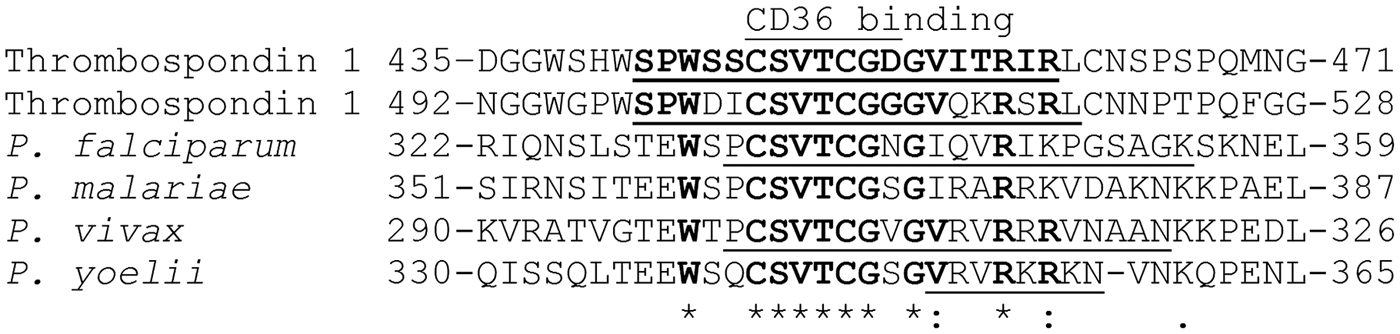
The circumsporozoite protein (CSP) of P. yoelii, a key component of the sporozoite stage of malaria parasites, can significantly suppress the growth of human colon cancer cells in a dose-dependent manner and induce their apoptosis (Ding et al. Reference Ding, Huang, Liu, Fu, Tan, Zheng, Zhou, Dai and Xu2012). CSP appears to have a pleiotropic role as follows: this protein induces the complete blockage of protein synthesis machinery, which can kill cells; moreover, macrophages appear to be particularly sensitive to the presence of this protein in the cytosol, thus providing a mechanism of immune evasion for Plasmodium (Frevert et al. Reference Frevert, Galinski, Hügel, Allon, Schreier, Smulevitch, Shakibaei and Clavijo1998). The inhibitory role of CSP on the proliferation of cancer cells may be dependent on outcompeting NF-κB nuclear translocation through its nuclear localization signal (NLS) motif (Ding et al. Reference Ding, Huang, Liu, Fu, Tan, Zheng, Zhou, Dai and Xu2012) (Fig. 1). However, other mechanisms cannot be excluded, as CSP can also modulate non-NF-κB target genes (Singh et al. Reference Singh, Buscaglia, Wang, Levay, Nussenzweig, Walker, Winzeler, Fujii, Fontoura and Nussenzweig2007). Moreover, peptides of Plasmodium spp. containing both the CD36 binding region and the NLS motif inhibit in vitro protein synthesis by binding to the ribosome (Frevert et al. Reference Frevert, Galinski, Hügel, Allon, Schreier, Smulevitch, Shakibaei and Clavijo1998) (Fig. 1). The NLS region of CSP contains basic (lysine and arginine) amino acids, and another region of the CSP of P. falciparum that is particularly rich in arginine also inhibits protein translation (Frevert et al. Reference Frevert, Galinski, Hügel, Allon, Schreier, Smulevitch, Shakibaei and Clavijo1998). Native Plasmodium CSP and recombinant CSP constructs introduced into the cytoplasm also lead to the inhibition of protein synthesis in mammalian cells. Using this strategy, the parasites can manipulate hepatocyte protein synthesis to meet the requirements of a rapidly developing schizont and destroy macrophages, representing an additional immune evasion mechanism of Plasmodium (Frevert et al. Reference Frevert, Galinski, Hügel, Allon, Schreier, Smulevitch, Shakibaei and Clavijo1998). Interestingly, a certain region of CSP exhibits strong sequence similarity with the three repeat sequences of the thrombosopondin-1 (TSP-1) type 1 region (Fig. 1). This extracellular matrix glycoprotein can play an anti-angiogenic role with potent anti-tumour effects (Lawler and Detmar, Reference Lawler and Detmar2004). Synthetic peptides derived from this protein inhibit angiogenesis (Tolsma et al. Reference Tolsma, Volpert, Good, Frazier, Polverini and Bouck1993) induced by basic fibroblast growth factor (FGF-2) or vascular endothelial growth factor (VEGF) (Iruela-Arispe et al. Reference Iruela-Arispe, Lombardo, Krutzsch, Lawler and Roberts1999). More importantly, suppression of tumour growth by TSP-1 has been associated with its ability to inhibit neovascularization (Weinstat-Saslow et al. Reference Weinstat-Saslow, Zabrenetzky, VanHoutte, Frazier, Roberts and Steeg1994). In a more recent study using epithelial ovarian cancer cells, peptides with only one repeat demonstrated lower pro-apoptotic and anti-proliferation effects than those containing three repeats (Russell et al. Reference Russell, Duquette, Liu, Drapkin, Lawler and Petrik2015). In addition, peptides containing the CD36 binding region (CSVTCG (see Fig. 1) or CSTSCG) mediate tumour cell metastasis (Tsuzynski et al. Reference Tsuzynski, Rothman, Deutch, Hamilton and Eyal1992); however, it is known that TSP-1 exerts pleiotropic effects, and reversed responses may also be observed depending on the cancer cell type (Pinessi et al. Reference Pinessi, Ostano, Borsotti, Bello, Guffanti, Bizzaro, Frapolli, Bani, Chiorino, Taraboletti and Resovi2015).
Alignement between two regions of the human Thrombospondin 1 type 1 repeats and parts of various plasmodial circumsporozoite proteins. The thrombospondin 1 peptides, which inhibit both FGF-2 or VEGF-induced angiogenesis (Iruela-Arispe et al. Reference Iruela-Arispe, Lombardo, Krutzsch, Lawler and Roberts1999), the NLS domain of P. yoelii (Ding et al. Reference Ding, Huang, Liu, Fu, Tan, Zheng, Zhou, Dai and Xu2012) and peptides of P. vivax and P. falciparum analogous from those which inhibit in vitro the translation (Frevert et al. Reference Frevert, Galinski, Hügel, Allon, Schreier, Smulevitch, Shakibaei and Clavijo1998) have been underlined. A line has been drawn above the amino acids the CD36 binding sequence (reviewed in Lawler, Reference Lawler2002). Human thrombospondin 1 (accession number (acc. n°): AAI36471), P. falciparum (acc. n°: AAW78182), P. vivax (acc. n°: BAO10674), P. malariae (acc. n°: CAA05617) and P. yoelii (acc. n°: CDZ10959). Identical amino acids are indicated by asterisks, and partly conserved amino acids are indicated by dots (two-dot regions show a higher degree of similarity). FGF, fibroblast growth factor; NLS, nuclear localization signal; VEGF, vascular endothelial growth factor.

More recently, Salanti et al. (Reference Salanti, Clausen, Agerbæk, Al Nakouzi, Dahlbäck, Oo, Lee, Gustavsson, Rich, Hedberg, Mao, Barington, Pereira, LoBello, Endo, Fazli, Soden, Wang, Sander, Dagil, Thrane, Holst, Meng, Favero, Weiss, Nielsen, Freeth, Nielsen, Zaia, Tran, Trent, Babcook, Theander, Sorensen and Daugaard2015) have showed that P. falciparum-infected erythrocytes express the plasmodial protein Variant Surface Antigen 2-CSA (VAR2CSA), which binds a distinct type of chondroitin sulphate A (CSA) exclusively synthesized in the placenta and in several types of malignant cells. This observation allowed the investigators to develop a promising strategy to specifically target cancer cells and block tumour growth in vivo. This might indirectly provide a new molecular explanation for the putative anti-oncogenic effects of malaria. Indeed, antibodies against VAR2CSA were detected in exposed multigravid women but also in men and children exposed either to P. falciparum or P. vivax (Gnidehou et al. Reference Gnidehou, Doritchamou, Arango, Cabrera, Arroyo, Kain, Ndam, Maestre and Yanow2014). In addition, the majority of naturally acquired responses target certain a part of VAR2CSA that does not mediate binding to CSA (Barfod et al. Reference Barfod, Bernasconi, Dahlback, Jarrossay, Andersen, Salanti, Ofori, Turner, Resende, Nielsen, Theander, Sallusto, Lanzavecchia and Hviid2007). Thus, if infected erythrocytes bind to malignant cells and if antibodies recognize VAR2CSA (or other malarial proteins) without blocking CSA adhesion, this may induce the destruction of both the infected erythrocyte and the linked cancerous cell.
DISCUSSION
Pro-carcinogenesis role of malarial infection
Several studies have provided evidence that certain eukaryotic parasites can promote oncogenesis and influence metastasis to distant tissues via various mechanisms (reviewed in Oikonomopoulou et al. Reference Oikonomopoulou, Brinc, Kyriacou and Diamandis2013, Reference Oikonomopoulou, Brinc, Hadjisavvas, Christofi, Kyriacou and Diamandis2014; Gupta et al. Reference Gupta, Nowakowski, Haseeb, Shurin, Thanavala and Ismail2015; Tripathi et al. Reference Tripathi, Jaiswal, Sharma and Malhotra2015; Turhan et al. Reference Turhan, Esendagli, Ozkayar, Tunali, Sokmensuer and Abbasoglu2015; Machicado and Marcos, Reference Machicado and Marcos2016). Moreover, studies have shown that plasmodial infections may induce DNA damage and apoptosis inhibition, which led to the emergence and the progression of cancer, respectively (Carmen and Sinai, Reference Carmen and Sinai2007; Kusi, Reference Kusi2013; Torgbor et al. Reference Torgbor, Awuah, Deitsch, Kalantari, Duca and Thorley-Lawson2014; Robbiani et al. Reference Robbiani, Deroubaix, Feldhahn, Oliveira, Callen, Wang, Jankovic, Silva, Rommel, Bosque, Eisenreich, Nussenzweig and Nussenzweig2015). However, the association between malaria and cancer induction can largely be explained by the well-established ability of Plasmodium infections to induce immune dysfunction (Toure-Balde et al. Reference Toure-Balde, Sarthou, Aribot, Michel, Trape, Rogier and Roussilhon1996; Urban and Todryk, Reference Urban and Todryk2006; Weiss et al. Reference Weiss, Traore, Kayentao, Ongoiba, Doumbo, Doumtabe, Kone, Dia, Guindo, Traore, Huang, Miura, Mircetic, Li, Baughman, Narum, Miller, Doumbo, Pierce and Crompton2010; Illingworth et al. Reference Illingworth, Butler, Roetynck, Mwacharo, Pierce, Bejon, Crompton, Marsh and Ndungu2013) and by the positive relationship between malaria and certain virus-associated cancers. Plasmodium spp. exposure may facilitate the reactivation of virus-associated cancers, viral transmission and related diseases via several mechanisms, including malaria-induced immunomodulation (e.g. Thorley-Lawson et al. Reference Thorley-Lawson, Deitsch, Duca and Torgbor2016; Thakker and Verma, Reference Thakker and Verma2016). Most studies have focused on endemic Burkitt lymphoma and to a lesser extent on classical KS, both caused by gamma herpes viruses. Currently, only the positive relationship between malaria and EBV is relatively well understood (e.g. Thorley-Lawson et al. Reference Thorley-Lawson, Deitsch, Duca and Torgbor2016). To date almost all of the studies focused deliberately on P. falciparum, in the future, it will be interesting to determine if other human Plasmodium species also play a role in tumourigenesis.
Anti-carcinogenesis role of malarial infection
As previously mentioned, the idea of an antagonistic relationship between malaria and cancer dates back several centuries (e.g. Trnka von Krzowitz, Reference Trnka von Krzowitz1775). Several studies have shown that temperature elevation, which can occur with infection, can induce numerous anti-tumour effects (reviewed in Kienley, Reference Kienley2012). The history of anti-oncological malaria-therapy started with the supposition that cancer could be cured by concomitant malarial fevers (Freitas et al. Reference Freitas, Santos and Castro2014). Even if malarial temperature elevation exerts both direct and indirect anti-oncogenic effects, most of the anti-tumourigenic actions of malaria would not be dependent on temperature elevation (e.g. Deng et al. Reference Deng, Zheng, Zhou, Liu, Ding, Xu, Chen, Hou, Min and Dai2016). The anti-tumour effects of malarial infections imply the induction of both a potent anti-tumour innate immune response and adaptive anti-tumour immunity (Chen et al. Reference Chen, He, Qin, Li, Shi, Zhao, Zhong and Chen2011; Deng et al. Reference Deng, Zheng, Zhou, Liu, Ding, Xu, Chen, Hou, Min and Dai2016). Moreover, in mice infected with malaria, angiogenesis was inhibited in tumours (Chen et al. Reference Chen, He, Qin, Li, Shi, Zhao, Zhong and Chen2011).
Additionally, Plasmodium spp. produces proteins that also demonstrate certain anti-oncogenic effects. The potential anti-tumourigenic ability of the CSP is limited, but derived peptides possess interesting anti-angiogenesis properties (Ding et al. Reference Ding, Huang, Liu, Fu, Tan, Zheng, Zhou, Dai and Xu2012). Moreover, infected erythrocytes potentially bind to several types of malignant cells via the plasmodial protein VAR2CSA (Salanti et al. Reference Salanti, Clausen, Agerbæk, Al Nakouzi, Dahlbäck, Oo, Lee, Gustavsson, Rich, Hedberg, Mao, Barington, Pereira, LoBello, Endo, Fazli, Soden, Wang, Sander, Dagil, Thrane, Holst, Meng, Favero, Weiss, Nielsen, Freeth, Nielsen, Zaia, Tran, Trent, Babcook, Theander, Sorensen and Daugaard2015) and potentially facilitate their destruction. The putative anti-tumourigenic properties of other malarial proteins should be explored; moreover, the use of proteins is a safer approach than the inoculation of wild type Plasmodium.
Types of cancer in which eukaryotic parasites potentially exert pro- and anti-oncogenic roles
The human cancers for which eukaryotic parasite involvement has been implicated are principally carcinomas and certain sarcomas localized in the target tissues or organs of the parasites (e.g. Oikonomopoulou et al. Reference Oikonomopoulou, Brinc, Kyriacou and Diamandis2013; Benamrouz et al. Reference Benamrouz, Conseil, Chabé, Praet, Audebert, Blervaque, Guyot, Gazzola, Mouray, Chassat, Delaire, Goetinck, Gantois, Osman, Slomianny, Dehennaut, Lefebvre, Viscogliosi, Cuvelier, Dei-Cas, Creusy and Certad2014; Turhan et al. Reference Turhan, Esendagli, Ozkayar, Tunali, Sokmensuer and Abbasoglu2015; Machicado and Marcos, Reference Machicado and Marcos2016). Similarly, the anti-cancer activities of eukaryotic parasites are principally concerned with carcinomas (e.g. Hibbs et al. Reference Hibbs, Lambert and Remington1971; Pyo et al. Reference Pyo, Jung, Xin, Lee, Chai and Shin2014; Vasilev et al. Reference Vasilev, Ilic, Gruden-Movsesijan, Vasilijic, Bosic and Sofronic-Milosavljevic2015; Ubillos et al. Reference Ubillos, Freire, Berriel, Chiribao, Chiale, Festari, Medeiros, Mazal, Rondán, Bollati-Fogolín, Rabinovich, Robello and Osinaga2016; Wang and Gao, Reference Wang and Gao2016); however, some anti-sarcoma activities have also been observed (Alizadeh et al. Reference Alizadeh, Pidherney, McCulley and Niederkorn1994; Darani et al. Reference Darani, Shirzad, Mansoori, Zabardast and Mahmoodzadeh2009). Regarding other types of cancers, positive parasite-induced effects against cancers of the haematopoietic and lymphoid tissues are only mentioned for two species, according to a relatively old study (Hibbs et al. Reference Hibbs, Lambert and Remington1971). Based on current knowledge, the anti-tumour effects observed are attributable to modifications to the host immune response, and thus their characteristics and locations within the host can be highly diverse. It must also be emphasized that, similarly to Plasmodium, T. gondii and E. granulosus, which exhibits certain anti-tumours effects, may also promote tumour development (Chookami et al. Reference Chookami, Sharafi, Sefiddashti, Jafari, Bahadoran, Pestechian and Darani2015; Turhan et al. Reference Turhan, Esendagli, Ozkayar, Tunali, Sokmensuer and Abbasoglu2015; Daneshpour et al. Reference Daneshpour, Bahadoran, Hejazi, Eskandarian, Mahmoudzadeh and Darani2016; Jung et al. Reference Jung, Song, Kim, Cho, Shin and Chai2016).
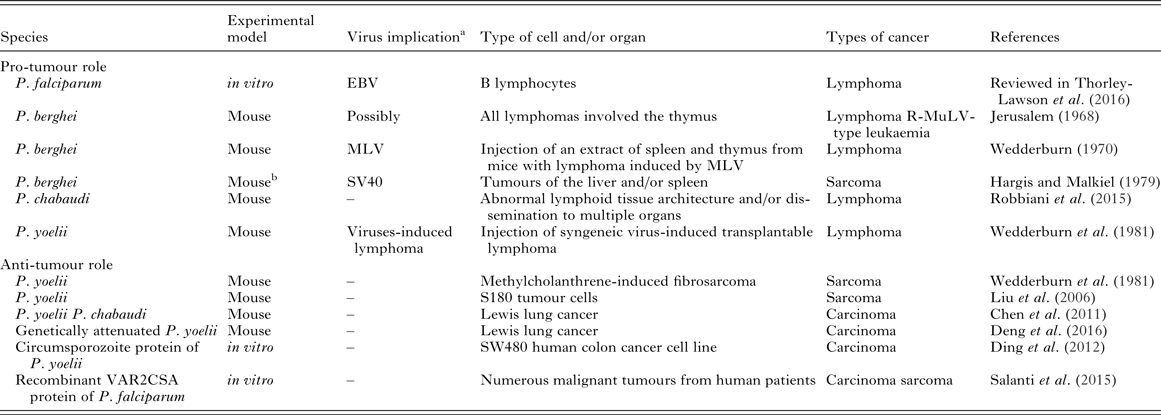
Details regarding the studies suggesting the pro- or anti-cancer implications of Plasmodium spp. have been summarized in Table 1. We incorporated all data known to us, even if the design or the statistical significance of the studies has been criticized (IARC, 2014). Two important features are evident from this analysis. On one hand, anti-carcinoma and anti-sarcoma activities have been observed for certain eukaryotic parasites, whereas Plasmodium spp. appears to be involved, either directly or indirectly, in the induction of lymphomas and leukaemias. However, even if certain data suggest that Plasmodium spp. alone are oncogenic agents (e.g. Thorley-Lawson et al. Reference Thorley-Lawson, Deitsch, Duca and Torgbor2016), the majority of studies primarily suggest an indirect pro-tumourigenic role via virus involvement. A single experimental study suggested that malaria could play a role in the induction of sarcomas; neonatal mice infected with both P. berghei and the virus SV40 developed sarcomas of the liver and/or spleen (Hargis and Malkiel, Reference Hargis and Malkiel1979). However, in this study, no adult mice developed sarcomas. Furthermore, when a parasite plays a favourable role in cancer development via virus involvement, the type and location of the cancer depend on the specificity of the virus species.
Details about experimental studies suggesting that Plasmodium spp. or some of their products might play a pro- or an anti-tumour role

EBV, Epstein-Barr Virus; MLV, Moloney leukaemogenic virus; R-MuLV, Rauscher murine leukaemia virus.
a Mentioned only if it is relevant.
b Neonatal.
CONCLUSIONS AND FUTURE PERSPECTIVES
To date, there is a great deal of scientific evidence indicating that eukaryotic parasites can act as carcinogens or create a pre-cancerous environment for tumour development, but eukaryotic parasites, sometimes the same ones, can also exhibit notable anti-tumour properties. Malarial parasites potentially exert pro- and anti-oncogenic roles; however, despite the growing body of evidence that malarial infections or the application of parasite-derived proteins can result in potent anti-tumour activities, it must be noted that malaria remains a life-threatening disease. Moreover, several virus-associated cancers are common both in highly malaria-endemic areas, such as tropical Africa, and in a variety of disorders associated with immune system impairment (Purtilo et al. Reference Purtilo, Manolov, Manolova, Harada and Lipscomb1984), and it is well known that malarial infection induces immune dysfunction. To date, anti-carcinogenic mechanisms involving parasites remain relatively poorly understood. Studies have noted the importance of the immune response in both pro- and anti-tumour processes and, in particular, the role of Th1-mediated immunity during infection with apicomplexan parasites (Plasmodium spp. and T. gondii), among others (e.g. Kim et al. Reference Kim, Jung, Kim, Kim, Shin, Lee and Lee2007; Chen et al. Reference Chen, He, Qin, Li, Shi, Zhao, Zhong and Chen2011; Deng et al. Reference Deng, Zheng, Zhou, Liu, Ding, Xu, Chen, Hou, Min and Dai2016). As therapeutic measures to inhibit tumours may be induced by Th1-dominant immunity (Nishimura et al. Reference Nishimura, Nakui, Sato, Iwakabe, Kitamura, Sekimoto, Ohta, Koda and Nishimura2000), studies employing Apicomplexa could open interesting pathways to combat cancers. Moreover, the relatively simpler genomes of eukaryotic single-cell parasites may open future pathways for new therapeutic approaches to treat cancers and also to better understand mechanisms of tumour induction.
ACKNOWLEDGEMENTS
The author thanks the referee for his review, which significantly improved the manuscript.
FINANCIAL SUPPORT
This research received no specific grant from any funding agency, commercial or not-for-profit sectors.