Introduction
Economic development, the emergence of the knowledge economy, and intensification of market competition have resulted in an increasing number of organizations establishing interorganizational teams to facilitate collaborative innovation (Chesbrough, Vanhaverbeke, & West, Reference Chesbrough, Vanhaverbeke and West2006). Various organizations, such as Ford, General Motors, and Procter & Gamble, integrate employees from other organizations into interorganizational teams that assume key roles in developing novel and innovative products (Stock, Reference Stock2014). Interorganizational teams comprise employees from different organizations (Enz & Lambert, Reference Enz and Lambert2012). The diversity of such teams provides different resources and information for the development of creativity (Ritter & Gemünden, Reference Ritter and Gemünden2004); however, it also results in obstacles in understanding and communication among members, thereby leading to failures of innovative activities (Tidd, Bessant, & Pavitt, Reference Tidd, Bessant and Pavitt2001). Particularly, the diversity of organizational cultures brings immense challenges for employees in working on innovative activities (Du Chatenier, Verstegen, Biemans, Mulder, & Omta, Reference Du Chatenier, Verstegen, Biemans, Mulder and Omta2009). Consequently, employees in interorganizational teams must effectively deal with different organizational cultures to successfully conduct innovative activities and enhance their creative performance.
Individuals’ creativity is an important source of team innovation (Drazin, Glynn, & Kazanjian, Reference Drazin, Glynn and Kazanjian1999). However, existing relevant studies on interorganizational teams mostly focus on team innovation (Gutiérrez, Reference Gutiérrez2011; Stock, Reference Stock2014). Evidence of individuals’ creativity is still scarce, particularly the factors that influence such creativity from an interorganizational perspective (Andersen & Kragh, Reference Andersen and Kragh2013). Because individuals’ competence is important for employees to successfully engage in innovative activities (Du Chatenier, Reference Du Chatenier2009), the current study identifies the corresponding individuals’ competence according to the interorganizational context and challenges from work (Chatenier, Verstegen, Biemans, Mulder, & Omta, Reference Chatenier, Verstegen, Biemans, Mulder and Omta2010). In interorganizational teams, the challenges from organizational culture differences demand employees with the requisite cultural competence. Although the effect of individual competence in addressing different organizational cultures has been realized during the employee innovation process, such effect has not been confirmed empirically in interorganizational teams (Du Chatenier et al., Reference Du Chatenier, Verstegen, Biemans, Mulder and Omta2009; Chatenier et al., Reference Chatenier, Verstegen, Biemans, Mulder and Omta2010). The present study explores cultural intelligence, which is a kind of cultural competence of individuals, has what effect on employees’ creative performance in interorganizational teams.
The present study first investigates cultural intelligence in the interorganizational context. Previous studies on cultural intelligence focus on international context (Earley & Mosakowski, Reference Earley and Mosakowski2004; Peterson, Reference Pothukuchi, Damanpour, Choi, Chen and Park2004; Triandis, Reference Triandis2006). However, the concept of cultural intelligence is not isomorphic, and the new meaning needs to be specified in different contexts (Gelfand, Imai, & Fehr, Reference Gelfand, Imai and Fehr2008). Apart from national culture, significant differences in organizational culture exist (Geert & Jan, Reference Geert and Jan1991). Such differences make employees cognize and behave differently, thereby resulting in misunderstandings and interaction problems (Pothukuchi, Damanpour, Choi, Chen, & Park, 2002). Therefore, employees need cultural intelligence to address diverse organizational cultures and to interact effectively with other organizational members. Moreover, organizational culture differences are different from national culture differences (Gerhart, Reference Gerhart2009), and they exist mostly in practices rather than in values (Geert & Jan, Reference Geert and Jan1991). Thus, cultural intelligence in an international context cannot address the problems resulting from organizational culture differences. Therefore, the concept of cultural intelligence needs to be extended to the interorganizational context.
Cultural intelligence refers to the ability of individuals to effectively deal with organizational culture differences in the interorganizational context. Employees with high cultural intelligence can sensitively recognize organizational culture differences, build harmonious interpersonal relationships, and interact effectively with employees from other organizations. Such employees can successfully gain emotional resources and increase the amount of informational resources (Chen, Chang, & Hung, Reference Chen, Chang and Hung2008; Huang, Reference Huang2009). These emotional and informational resources have positive effects on employees’ creativity (Madjar, Reference Martins, Schilpzand, Kirkman, Ivanaj and Ivanaj2008). Therefore, cultural intelligence is regarded as an important predictor of employees’ creative performance in interorganizational teams.
Except for the direct effect of individual abilities, scholars are calling for the investigation of the interactive effect of individual abilities and situations in the employee innovation process in interorganizational teams (Chatenier et al., Reference Chatenier, Verstegen, Biemans, Mulder and Omta2010). Trait activation theory provides a framework for understanding how situations affect the influence of traits on performance (Tett & Guterman, Reference Tett and Guterman2000; Tett & Burnett, Reference Tett and Burnett2003). Situational influences activate the differences not only in personality but also in ability (Hochwarter, Witt, Treadway, & Ferris, Reference Hochwarter, Witt, Treadway and Ferris2006). Cultural intelligence, as an individual ability, is primarily cultivated and developed through learning and training (Earley & Mosakowski, Reference Earley and Mosakowski2004); thus, situations play an important role in its use. Employees in interorganizational teams need to acquire relevant resources from the environment to innovate. When the environment lacks adequate resources, employees will initiate resource acquisition strategies to achieve salient performance outcomes (Hochwarter et al., Reference Hochwarter, Witt, Treadway and Ferris2006); on the contrary, employees are likely to conserve their personal resources, such as time and energy and they will deploy their abilities at high levels only when necessary (Hobfoll & Shirom, Reference Hobfoll and Shirom2001; Hochwarter et al., Reference Hochwarter, Witt, Treadway and Ferris2006). Employees can acquire the resources for innovation by using their cultural intelligence; thus, the quantity of resources in the environment determines whether employees need to activate their cultural intelligence. More team conflicts may occur in interorganizational teams because of diverse organizational cultures and differences in work practices (Wong & Burton, Reference Wong and Burton2000). These conflicts influence the number of resources in the teams (Chuang, Church, & Zikic, Reference Chuang, Church and Zikic2004). Therefore, the extent of team conflict can shape the influence of the employees’ cultural intelligence on their creative performance in interorganizational teams.
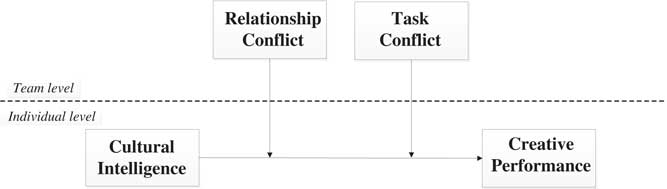
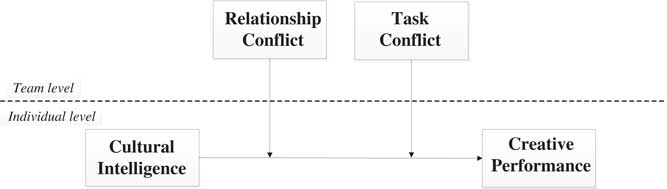
In this research, cultural intelligence is identified as the antecedent of individual creative performance in interorganizational teams. Additionally, a cross-level method is used to test the interaction between cultural intelligence and team conflicts (i.e., relationship and task conflicts) on individual creative performance. This study mainly provides four contributions to the literature. First, most studies have investigated the antecedents of individual creativity from the individual and organizational perspectives, but only a few studies have done so from an interorganizational perspective (Andersen & Kragh, Reference Andersen and Kragh2013). To address this issue, we explore the factors influencing individual creative performance in interorganizational teams, thereby further advancing our understanding of individual creativity from an interorganizational perspective. Second, the current study clarifies the importance of studying individuals’ competence in effectively dealing with organizational culture differences. Responding to the call made by Chatenier et al. (Reference Chatenier, Verstegen, Biemans, Mulder and Omta2010), the relationship between cultural intelligence and individual creative performance is empirically examined in the current study. Third, the effect of the interaction between individuals’ competence and contexts needs to be empirically explored in interorganizational teams (Chatenier et al., Reference Chatenier, Verstegen, Biemans, Mulder and Omta2010). To close the gap, the effect of interaction between cultural intelligence and team conflict on individual creative performance is empirically analyzed in the present study. Fourth, cultural intelligence is first investigated in the interorganizational context in this study. Figure 1 shows the cross-level conceptual model.
Conceptual model
Literature review and hypotheses
Interorganizational teams
Interorganizational teams are defined as ‘teams of which the members originate from different organizations assigned to work together for a common objective, share resources, interact socially, exhibit task interdependencies, and retain and manage boundaries’ (Temmink, Reference Temmink2015: 2). These teams are the platforms where one organization interacts frequently with cooperators, suppliers, customers, and other agents to pool extensive resources and knowledge that enhance team effectiveness (Hardy, Phillips, & Lawrence, Reference Hardy, Phillips and Lawrence2003). Interorganizational teams are different from intraorganizational teams because of the following special characteristics: first, interorganizational teams include diverse members who represent different organizational identities, obligations, and commitments; second, members of interorganizational teams face considerable demands, conflicts, and time pressure; third, interorganizational teams engage in various interactive activities with external environments, such as coordination, knowledge transfer, and political maneuvering (Drach-Zahavy, Reference Drach-Zahavy2011).
Previous studies started conducting research on interorganizational teams, but relevant studies focused considerably on the team level. At the team level, team effectiveness and team innovation have been investigated in interorganizational teams (Stock, Reference Stock2006, Reference Stock2014; Drach-Zahavy, Reference Drach-Zahavy2011; Harvey, Peterson, & Anand, Reference Harvey, Peterson and Anand2014). To improve team effectiveness, certain studies explored the influential factors of the effective functioning of interorganizational teams (Stock, Reference Stock2014). These antecedents included interaction with external environments (Drach-Zahavy, Reference Drach-Zahavy2011; Harvey, Peterson, & Anand, Reference Harvey, Peterson and Anand2014), knowledge sharing (Lawson, Petersen, Cousins, & Handfield, Reference Li and Hambrick2009), and team identification (Rockmann, Pratt, & Northcraft, Reference Rockmann, Pratt and Northcraft2007).
Individual creativity is the source of new ideas and approaches that provide the building blocks for team innovation (Drazin, Glynn, & Kazanjian, Reference Drazin, Glynn and Kazanjian1999). At individual level, literature has investigated employee creativity: trust in team members does not play an important role in employee creativity, whereas shared leadership is positively associated with employee creativity (Donati, Reference Donati2013). However, relevant empirical evidence remains underdeveloped. Therefore, individual creative performance still needs to be further explored in interorganizational teams (Zou & Ingram, Reference Zou and Ingram2013).
Cultural intelligence
Cultural intelligence reflects the adaptability of an individual to intercultural settings, which is defined as ‘the capability of an individual to function effectively in situations characterized by cultural diversity’ (Ang & Van Dyne, Reference Ang and Van Dyne2008: 3). Although cultural intelligence is a relatively recent concept, relevant studies are rapidly expanding. In cross-cultural settings, cultural intelligence shows an important effect on individual and team performance. The performance of expatriates is influenced by cultural intelligence because such capability enables them to realize local cultural knowledge, own motivation to behave appropriately, show appropriate behavior in a local cultural environment, and conduct their task successfully (Kim, Kirkman, & Chen, Reference Kim, Choi and Park2008). In work teams with cross-ethnic or national cultures, leaders’ cultural intelligence can also contribute to leader and team performances. High cultural intelligence enables leaders to communicate sufficiently with team members, partners, suppliers, and other stakeholders, and eventually promote leadership effectiveness and performance outcomes (Groves & Feyerherm, Reference Groves and Feyerherm2011). High cultural intelligence also allows leaders to be sensitive and receptive to the needs of employees from different cultural backgrounds, thereby developing collective team goals and promoting team performance (Groves & Feyerherm, Reference Groves and Feyerherm2011).
In the interorganizational context, cultural intelligence refers to the ability of an individual to interact effectively with members from other organizations with different organizational cultures. A culturally intelligent individual will have (1) flexible cognition, that is, he or she can realize sensitively and understand the differences between diverse organizational cultures, as well as adjust cognition to fit and adapt to the new work environment; and (2) the collaborative motivation to interact with others, that is, he or she has a collaborative and open mindset in communicating with other employees. Because each organization has a special organizational culture and work style (Sheridan, Reference Sheridan1992), and that organizational culture differences are distinct from those in national culture (Pothukuchi et al., 2002), cultural differences not only exist in the international context, but also in the interorganizational context. Organizational culture differences also have significant effects on interorganizational collaborative performance, and tend to cause more negative effects than national culture differences (Sirmon & Lane, Reference Sirmon and Lane2004). Hence, cultural intelligence in the interorganizational context is an important capability that can assist employees recognize and handle organizational culture differences and interact effectively with other organizational members.
Creative performance
Creative performance is the production of novel and useful ideas by individuals in a workplace (Dul, Ceylan, & Jaspers, Reference Dul, Ceylan and Jaspers2011). Among the personal factors that influence employee creativity are personality (Zhou & Oldham, Reference Zhou and Oldham2001), individual intrinsic motivation (Tierney & Farmer, Reference Tierney and Farmer2002), and abilities and skills (Benedek, Jauk, Sommer, Arendasy, & Neubauer, Reference Benedek, Jauk, Sommer, Arendasy and Neubauer2014). Previous studies have analyzed the relationship between intellectual abilities and creative performance. Leaders with social intelligence can produce a positive effect on creativity by creating collaborative cultures (Rahim, Reference Rahim2014). Emotional intelligence enables leaders to be aware of employees’ feelings and needs, and adjust leaders’ behaviors to encourage and support employee creativity (Zhou & George, Reference Zhou and George2003). High cultural intelligence can magnify the positive effects of expatriate leadership on organizational innovation. This finding is attributed to the ability of leaders with high cultural intelligence to understand cultural differences, select culturally appropriate behaviors, interact well with employees, and mobilize them for innovation (Elenkov & Manev, Reference Elenkov and Manev2009).
The interaction of personal and contextual factors also affects employee creativity (Woodman & Schoenfeldt, Reference Woodman and Schoenfeldt1990; Shalley, Zhou, & Oldham, Reference Shalley, Zhou and Oldham2004). In particular, studies on cross-level interaction prove that contextual factors can moderate relationships between individual factors and creativity (Hirst, Van Knippenberg, Chen, & Sacramento, Reference Hirst, Van Knippenberg, Chen and Sacramento2011). For example, an empirical study shows that the interaction between an individual approach orientation and team learning behavior positively influences employee creativity from a cross-level perspective (Hirst, Van Knippenberg, & Zhou, Reference Hirst, Van Knippenberg and Zhou2009). The cross-level interactive effect of creative self-efficacy and shared ‘knowledge of who knows what’ is positively associated with individual creativity (Richter, Hirst, Van Knippenberg, & Baer, Reference Richter, Hirst, Van Knippenberg and Baer2012).
Cultural intelligence and creative performance
In modern organizations, the creative ideas of employees are not merely the outcome of personal isolated thinking but the products of social interaction as well (Perry-Smith & Shalley, Reference Peterson2003). From this perspective, interaction with others plays an important role in fostering employee creativity. An interorganizational team comprises members from organizations with different organizational cultures. In such teams, the ability of interaction becomes important in dealing effectively with diverse organizational culture environments to successfully acquire informational and affective resources from other organizational members. Thus, cultural intelligence plays a crucial role in the creative performance of employees.
Culturally intelligent employees have a strong motivation to communicate effectively with members from other organizations (Gregory, Prifling, & Beck, Reference Gregory, Prifling and Beck2009). Frequent communication could inspire the employees’ central status in the social contact, thereby making these employees successfully gain diverse information from others, and broaden access to information (Chen, Chang, & Hung, Reference Chen, Chang and Hung2008). Effective communication can also promote a common understanding connected with task problems, strengthen important information sharing, and enable employees to acquire high-quality informational resources (Chen, Chang, & Hung, Reference Chen, Chang and Hung2008). The acquisition of adequate, useful, and new information in an interorganizational context spurs the divergent thinking of employees and encourages them to propose novel ideas and methods by integrating different information (Madjar, Reference Madjar2005; Perry-Smith, Reference Perry-Smith and Shalley2006). Consequently, high cultural intelligence enables employees to successfully obtain informational support from coworkers to generate creative ideas in interorganizational teams.
Moreover, employees with high cultural intelligence can understand the thinking and behavioral style of other organizational members (Gregory, Prifling, & Beck, Reference Gregory, Prifling and Beck2009). Thus, such employees can exhibit appropriate behavior that make others feel comfortable thereby building harmonious interpersonal relationships (Deng & Gibson, Reference Deng and Gibson2008), and ultimately successfully acquire an affective support system (Huang, Reference Huang2009). Affective support and encouragement from others enhance the confidence of employees (Liu, Kwan, Fu, & Mao, Reference Madjar2013), and reduce negative emotions when working on new and challenging tasks (Liao, Liu, & Loi, Reference Liu, Kwan, Fu and Mao2010). Thus, employees are likely to accomplish creative tasks, exert substantial effort in pursuing challenging goals, and generate novel ideas even when facing difficulties and failures (Muñoz-Doyague & Nieto, Reference Panteli and Sockalingam2012).
In summary, diverse information can stimulate creativity, and innovation at work is a risky endeavor; thus, employees need informational and affective support from coworkers to take on challenging tasks, generate novel and useful ideas (Madjar, Reference Martins, Schilpzand, Kirkman, Ivanaj and Ivanaj2008). Therefore, cultural intelligence has positive effects on employee creative performance through informational and affective support in interorganizational teams. Then, we present the following hypothesis:
Hypothesis 1: Cultural intelligence is positively related to creative performance.
Trait Activation Theory
Trait activation is ‘the process by which individuals express their traits when presented with trait-relevant situational cues’ (Tett & Burnett, Reference Tett and Burnett2003: 502). Traits strongly predict behavior or performance when contexts contain extensive trait-relevant cues. By contrast, the expression and influence of traits is restricted when contexts offer considerably few trait-relevant cues. Trait activation theory is the advancement of interactive perspective that can explain not only the time, but also the manner by which situational factors affect the relationship between personal traits and behaviors or performance (Geukes, Mesagno, Hanrahan, & Kellmann, Reference Geukes, Mesagno, Hanrahan and Kellmann2012). Hence, trait activation theory is a person–context interactive framework that specifies the contextual characteristics under which particular traits may strongly predict work outcomes (Tett & Burnett, Reference Tett and Burnett2003). The activation of abilities is likely to occur in the contexts which require corresponding competencies for effective performance (Hochwarter et al., Reference Hochwarter, Witt, Treadway and Ferris2006).
Moderating role of team conflict
Conflict is broadly defined as ‘perceived incompatibilities or perceptions by the parties involved that they hold discrepant views or have interpersonal incompatibilities’ (Jehn, Reference Jehn1995: 257). Previous studies categorize conflicts into the two types, namely, relationship and task conflicts, based on the ‘if the conflict is related with task’ premise (Jehn, Reference Jehn1995; Amason & Mooney, Reference Amason and Mooney1999; Li & Hambrick, Reference Liao, Liu and Loi2005). Relationship conflict is defined as the ‘perceived or recognized interpersonal incompatibilities within groups, which are based on friction and personality clashes’ (Rose & Shoham, Reference Rose and Shoham2004: 943). By contrast, task conflict is defined as the ‘perceived or recognized disagreements within a group about the tasks to be performed, and focuses on judgmental differences about the best way to achieve common objectives’ (Rose & Shoham, Reference Rose and Shoham2004: 943). Conflict inevitably occurs in teams and organizations because of the complexity and interdependence of organizational activities (Jehn, Reference Jehn1995). In particular, employees in interorganizational teams inevitably encounter more conflicts because of interorganizational differences related to goals and organizational climates (Fey & Beamish, Reference Fey and Beamish1999). Relationship and task conflicts are also likely to occur in the interorganizational setting (Rose & Shoham, Reference Rose and Shoham2004).
The number of external emotional and informational resources influences the necessity of activating cultural intelligence in the employee innovation process in interorganizational teams. Prior study argued that ‘an incongruity between what is needed from and provided by the environment stimulates individuals to initiate tactics to ensure that salient outcomes are achieved’ (Hochwarter et al., Reference Hochwarter, Witt, Treadway and Ferris2006: 484). Moreover, employees tend to conserve their personal resources, such as time and energy, and to activate their own abilities only when necessary (Hobfoll & Shirom, Reference Hobfoll and Shirom2001). In interorganizational teams, employees can obtain sufficient resources for innovation relying on their cultural intelligence. Therefore, when employees are not provided with resources from the external environment, they will realize that activating cultural intelligence is necessary. Conversely, employees want to conserve their personal resources and are not likely to activate cultural intelligence.
In interorganizational teams, the extent of team conflict in interorganizational teams may determine whether employees need to activate their cultural intelligence. Team conflicts influence the number of emotional and informational resources in the teams (Chuang, Church, & Zikic, Reference Chuang, Church and Zikic2004). Relationship conflict restricts the effective interaction among team members; thus, these members receive less resources for innovation when relationship conflict is high (Simons & Peterson, Reference Simons and Peterson2000; Gil, Alcover, Peiró, Margarida Passos, & Caetano, Reference Gil, Alcover, Peiró, Margarida Passos and Caetano2005; Chen, Sharma, Edinger, Shapiro, & Farh, Reference Chen, Sharma, Edinger, Shapiro and Farh2011). Task conflict stimulates knowledge sharing among team members; thus, these members obtain more resources for innovation when task conflict is high (Panteli & Sockalingam, Reference Perry-Smith2005; Huang, Reference Huang2009). The abundant extent of resources under different levels of conflict situations affects the necessity of activating cultural intelligence.
Moderating effect of relationship conflict
Relationship conflict reflects the incompatibilities among team members; thus, tension, annoyance, and animosity may exist among members within a team (Jehn, Reference Jehn1995). Relationship conflict typically provokes distrust, hostility, and other negative emotions (Panteli & Sockalingam, Reference Perry-Smith2005). In the high relationship conflict context, the relationship between employees becomes considerably tense. Thus, employees are unwilling to demonstrate altruistic behaviors toward coworkers (Chen et al., Reference Chen, Sharma, Edinger, Shapiro and Farh2011); subsequently, they experience difficulty in gaining emotional comfort from coworkers. Additionally, incompatible interpersonal relationships inhibit the interaction of employees (Bono, Boles, Judge, & Lauver, Reference Bono, Boles, Judge and Lauver2002) and hinder effective communication among them. Relationship conflict may also limit the sharing and processing of information relevant to tasks because employees spend substantial energy on personal antagonisms rather than on the task itself (Simons & Peterson, Reference Simons and Peterson2000; Gil et al., Reference Gil, Alcover, Peiró, Margarida Passos and Caetano2005). Therefore, high relationship conflict interferes with harmonious interpersonal relationships, open communication, and value-added information sharing (Panteli & Sockalingam, Reference Perry-Smith2005).
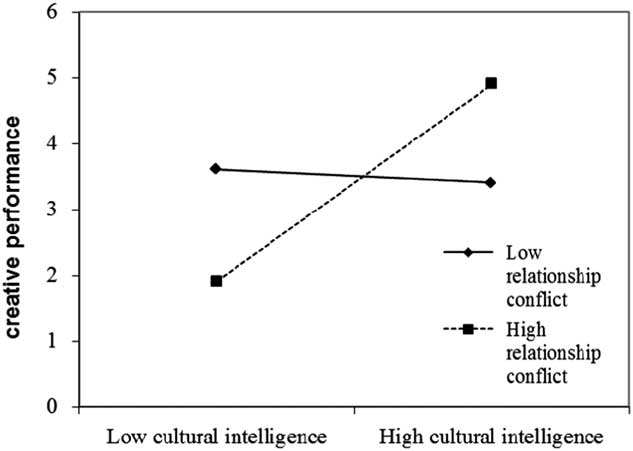
High relationship conflicts in interorganizational teams increase the necessity of activating cultural intelligence. High relationship conflicts hinder employees from acquiring affective and informational interactions because of interpersonal incompatibilities; thus, obtaining essential and relevant resources for innovation is difficult for employees (Simons & Peterson, Reference Simons and Peterson2000; Gil et al., Reference Gil, Alcover, Peiró, Margarida Passos and Caetano2005; Chen et al., Reference Chen, Sharma, Edinger, Shapiro and Farh2011). Therefore, high relationship conflicts reflect a situation in which the needed affective and informational resources and the provisions of the external environment differ. These differences stimulate employees to formulate strategies to ensure that performance goals are achieved (Cappella & Greene, Reference Cappella and Greene1982; Cappella & Green, Reference Cappella and Green1984). Employees in high relationship conflict situations may strive to apply and maximize their cultural intelligence to acquire affective and informational resources for innovation. Consequently, the relationship between cultural intelligence and creative performance is strengthened.
Employees in the situations with low relationship conflict are unlikely to activate cultural intelligence. In such situations, employees maintain harmonious interpersonal relationships with colleagues, as well as communicate with one another and integrate diverse information (Martins, Schilpzand, Kirkman, Ivanaj, & Ivanaj, Reference Muñoz-Doyague and Nieto2012). Thus, employees have adequate resources for innovation. Therefore, employees are unlikely to expend their personal resources to activate their cultural intelligence in order to obtain additional resources for innovation (Hobfoll & Shirom, Reference Hobfoll and Shirom2001). Therefore, the relationship between cultural intelligence and creative performance is weakened. Accordingly, the following hypothesis is proposed:
Hypothesis 2: Relationship conflict moderates the relationship between cultural intelligence and creative performance. When relationship conflict is high, the positive relationship between cultural intelligence and creative performance is strong.
Moderating effect of task conflict
Task conflict occurs when disagreements arise on the content of the task at hand, and when the viewpoints, ideas, and opinions among team members are different (Jehn, Reference Jehn1995). Task conflict stimulates divergent thinking, thereby enabling employees to consider task-related issues from multiple perspectives; hence, task conflict results in value-added information sharing (Panteli & Sockalingam, Reference Perry-Smith2005). Task conflict focuses on the discussion of task content and does not involve emotional disharmony. We assume that the acquisition of affective resources is indirectly influenced by the extent of task conflict.
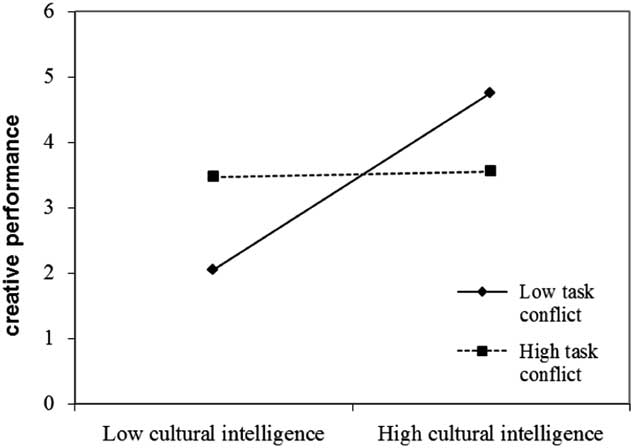
Activating cultural intelligence is unnecessary when task conflict is high. High task conflict situations provide sufficient informational resources for employees to propose creative ideas. Employees could express their views openly, profoundly understand the ideas of others and the current task, and obtain and integrate beneficial information to improve performance (Huang, Reference Huang2009). Thus, they have little need to gain additional resources for innovation from the external environment. Therefore, employees will conserve their personal resources (Hochwarter et al., Reference Hochwarter, Witt, Treadway and Ferris2006), and they are unlikely to activate their cultural intelligence. There are limited opportunities to express individual differences in cultural intelligence because of the diminished requirement of acquiring external relevant resources for innovation (Cappella & Greene, Reference Cappella and Greene1982; Cappella & Green, Reference Cappella and Green1984; Weingart, Todorova, & Cronin, Reference Weingart, Todorova and Cronin2010). Consequently, the differences in the cultural intelligence of employees are less likely to matter or cause differences in creative performance given a high task conflict.
Low task conflicts increase the necessity of activating cultural intelligence. Employees in low task conflict situations rarely discuss relevant work problems and neglect information compared with those in high task conflict situations (Shaw, Zhu, Duffy, Scott, Shih, & Susanto, Reference Shaw, Zhu, Duffy, Scott, Shih and Susanto2011). The lack of informational resources compels employees to apply and maximize their cultural intelligence in order to acquire the essential resources for innovation. Consequently, cultural intelligence accounts for greater variance in creative performance when the task conflict is low. Therefore, the following hypothesis is proposed:
Hypothesis 3: Task conflict moderates the relationship between cultural intelligence and creative performance. When task conflict is low, the positive relationship between cultural intelligence and creative performance is strong.
Methods
Context, participants, and procedures
Data were collected from interorganizational teams in China. Each team is comprised of members from two different organizations. We collaborated with a leading Chinese university to ensure the feasibility of our survey. A name list of top management from different organizations was obtained with the help of the university. These organizations were visited prior to conducting the survey to explain the research objective in order to gain the top management’s full support. The top managements from 19 organizations agreed to participate on the condition that the findings should be shared with them. In total, 19 organizations were involved in manufacturing, scientific instruments, information technology, and pharmaceutical industries. A total of 68 interorganizational teams were identified as participants. These interorganizational teams were surveyed during work hours. All members per team were invited to participate. The questionnaires were directly sent to these members to measure all cross-level model variables. The research objective was introduced, and the confidentiality of the respondents’ information was guaranteed on the first page of the questionnaire. The rest of the questionnaire measured all variable items. All respondents voluntarily and anonymously participated in the survey. Over 80% of the members completed the Chinese version of the questionnaires based on their work experiences. The questionnaires were returned immediately or mailed to the researchers. Except for the participants who gave immediate replies, we emailed other participants to remind them to return the survey within 3 weeks.
We originally send out questionnaires to 68 interorganizational teams. Finally, 54 teams returned questionnaires and the response rate of teams was around 79.4%. These teams include manufacturing teams (18.5%), R&D teams (57.4%), marketing teams (14.8%), and others (9.3%). The average team size was five members (range 3–8). Mean team tenure was 2 years. Participants of the survey consisted of 275 team members from 54 interorganizational teams, wherein 29.1% were male and 70.9% were female. The age of the participants ranged from 21 to 30 years (58.5%), 31 to 40 years (36%), 41 to 50 years (5.1%), and 50 years and above (0.4%). Around 15.3% of the participants had college degrees or below. Around 56.7% had bachelor’s degrees, and 18% had master’s degrees or above.
Measures
Cultural intelligence
The cultural intelligence scale is adapted from a 20-item individual cultural intelligence scale (Ang et al., Reference Ang, Van Dyne, Koh, Ng, Templer, Tay and Chandrasekar2007). We changed the contents of the items to fit an interorganizational context. The 5-point scale ranged from 1=‘strongly disagree’ to 5=‘strongly agree.’ Examples of the 20-item cultural intelligence scale in an interorganizational context are ‘I am conscious of cultural differences among different organizations,’ ‘I know the work style of different organizations,’ ‘I am willing to communicate with the people from other organizations,’ and ‘I can change my nonverbal behaviors to adapt to other organizational members.’ The Cronbach’s α for this scale is 0.90.
Relationship conflict
We asked employees to use Jehn (Reference Jehn1995) 4-item scale to assess relationship conflict. The items were rated by a 5-point scale ranging from 1=‘None’ to 5=‘A lot.’ The sample items are as follows: ‘How much friction is there among members in your team?’ and ‘How much are personality conflicts evident in your team?’ We changed the term ‘work unit’ from the original version to ‘team.’ The Cronbach’s α for this scale at the individual level is 0.79.
Task conflict
Using the 4-item scale developed and validated by Jehn (Reference Jehn1995), employees rated task conflict on a 5-point scale ranging from 1=‘None’ to 5=‘A lot.’ Examples of the items are ‘How often do people in your team disagree about opinions regarding the work being done?’ and ‘How frequently are there conflicts about ideas in your team?’ The term ‘work unit’ from the original version was also changed to ‘team.’ The scale’s Cronbach’s α for this study at the individual level is 0.88.
Creative performance
Employees’ creative performance was measured using the 3-item scale developed and validated by (Dul, Ceylan, & Jaspers, Reference Dul, Ceylan and Jaspers2011). This measure was based on a 5-point Likert scale (from 1=‘strongly disagree’ to 5=‘strongly agree’). The three items are as follows: ‘In my work, I often have new and innovative ideas,’ ‘In my work, I often come up with creative solutions to problems,’ and ‘In my work, I often suggest new ways of performing work tasks.’ The Cronbach’s α for this study was 0.85. We used self-reported measures to assess the creative performance of employees. Asking the supervisors to rate an employee’s creative performance was not feasible because all questionnaires were anonymous (Shalley, Gilson, & Blum, Reference Shalley, Gilson and Blum2009). Moreover, we lacked a method to follow up and match the individuals. Although self-reported measures have subjective bias, prior studies have determined that these measures were related (0.62) to supervisory assessments of creativity (Axtell, Holman, Unsworth, Wall, Waterson, & Harrington Reference Axtell, Holman, Unsworth, Wall, Waterson and Harrington2000). Several scholars also argued that employee creativity should be measured using self-reported measures because employees could recognize subtle things, thereby enabling them to propose creative ideas (Janssen, Reference Janssen2000; Shalley, Gilson, & Blum, Reference Shalley, Gilson and Blum2009).
All the scales were back-translated and adjusted from the original English items. First, the researchers translated the English items into Chinese. Second, a professional English teacher translated the Chinese items into English. Finally, we solved the errors of translation and assured accuracy.
Control variables
The literature suggested that some individual and team characteristics influence employee creativity (Tierney & Farmer, Reference Tierney and Farmer2002). We controlled for gender, age, education at the individual level, and team size and team tenure at the team level. Team size is measured by the number of team members.
Validation of multilevel data structure
Individual- and team-level constructs were included in the study. Thus, we adopted different analysis methods to validate the data structure. First, we examined whether individual perceived team conflict (i.e., relationship and task conflict) could be aggregated to represent the group-level construct. Existing literature suggests that intraclass correlations (ICC) can represent the reliability of group-level measure (Bliese, Reference Bliese2000). ICC (1) coefficient determined the variation degree of responses at the individual level, which is attributed to group-level construct. ICC (2) coefficient represented the reliability of the mean of group-level variables. For relationship conflict, ICC (1)=0.31 and ICC (2)=0.69. For task conflict, ICC (1)=0.39 and ICC (2)=0.77. Results show that relationship conflict and task conflict are suitable for aggregating group-level construct. In addition, we examined the consistency between groups of relationship conflict and task conflict construct according to calculate r wg . The mean r wg across teams is 0.84 for relationship conflict and 0.89 for task conflict. Result reveals that relationship conflict and task conflict are appropriate in aggregating group-level construct.
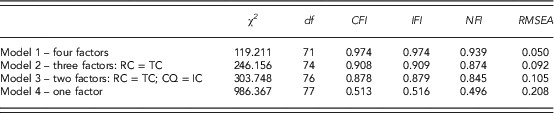
We assessed the discriminate validity of the four constructs (cultural intelligence, relationship conflict, task conflict, creative performance) through confirmatory factor analysis. As shown in Table 1, results show that the four-factor model provided a better fit than other models.
The confirmatory factor analysis results for various models

Notes. N=275.
CFI=comparative fit index; CQ=cultural intelligence; IC=creative performance; IFI=incremental fit index; NFI=normed fit index; RC= relationship conflict; RMSEA=root mean square error of approximation; TC= task conflict.
Common method bias
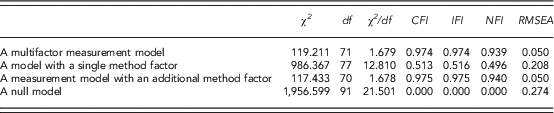
The variables used in this study, such as cultural intelligence, relationship conflict, task conflict, and creative performance, were simultaneously evaluated by individual employees. This method may cause common method bias. Thus, Harman’s one-factor test was used to analyze potential common method bias. All the items of these constructs were entered in an exploratory factor analysis. The results showed that these items were categorized as eight factors with eigenvalues >1, which accounted for 69.20% of the total variance. Moreover, the first factor only accounted for 12.65% of the total variance. The common method bias problem was addressed through confirmatory factor analysis except for Harman’s single factor analysis. In this approach a multifactor measurement model is tested, a model with a single method factor is tested, a measurement model with an additional method factor is tested, and a null model is examined as well (Carlson & Kacmar, Reference Carlson and Kacmar2000). The results show that the method factor does not significantly improve model fit (see Table 2). Thus, common method bias is not a serious problem in the present study.
The confirmatory factor analysis results for various models (CMV)

Note. CMV=common method variance.
Results
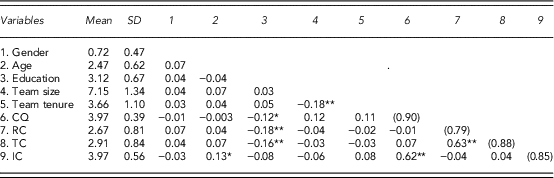
Table 3 shows the means, standard deviations, and correlations among all variables. Hypotheses 2 and 3 are cross-level interaction hypotheses, which suggest that relationship conflict and task conflict moderate the relationship between cultural intelligence and creative performance. To test these hypotheses, we used hierarchical linear modeling. All individual-level (level 1) variables were group-mean-centered, except for gender. The team-level (level 2) variables in Table 4 were not centered to reduce the possibility of multicollinearity (Raudenbush, Bryk, & Congdon, Reference Raudenbush, Bryk and Congdon2002).
Means, standard deviations, and correlations

Notes. N=275.
All correlations are at the individual level including group-level variables (i.e., relationship conflict and task conflict) assigned down to individuals. Reliability coefficients are reported on the diagonal.
CQ=cultural intelligence; IC=creative performance; RC= relationship conflict; TC= task conflict.
*p≤.05; **p≤.01.
Results of hierarchical linear modeling for the effects on employees’ creative performance of cross-level interactions of cultural intelligence with relationship conflict and task conflict

Notes. Employee N=275; team N=54.
CQ=cultural intelligence; IC=creative performance; RC= relationship conflict; TC= task conflict.
*p≤0.05; **p≤0.01; ***p≤0.001.
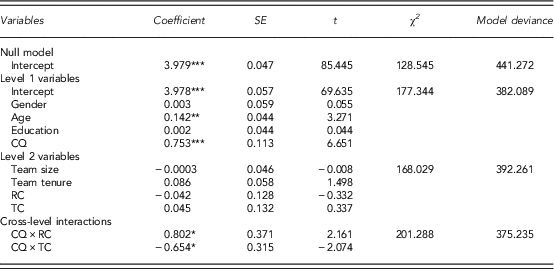
Results of hierarchical linear modeling are shown in Table 4. First, we tested the null model without predictors. We then added the individual-level variables (Step 1), team-level variables (Step 2), and cross-level interactions (Step 3) into the multilevel model. The coefficients of cross-level interactions were significant based on the final model.
We assessed the degree of between-group variance in employees’ creative performance according to the null model. Results revealed that a 22.33% variance in employees’ creative performance resided between groups. The between-group variance in employees’ creative performance was significant, as shown in the results of the χ2-test. This result indicated that the intercept term varied significantly in different groups.
Individual-level results
Table 4 shows that only the coefficient of age (γ=0.142, p≤0.01) is significant in all individual-level control variables. Hypothesis 1 predicts that employee’s cultural intelligence is positively related with employees’ creative performance. The coefficient of cultural intelligence (γ=0.753, p≤0.001) is significant. Thus, Hypothesis 1 is supported.
Cross-level interactions
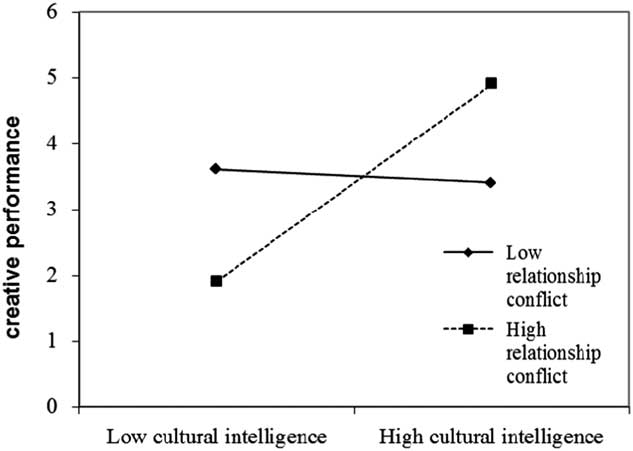
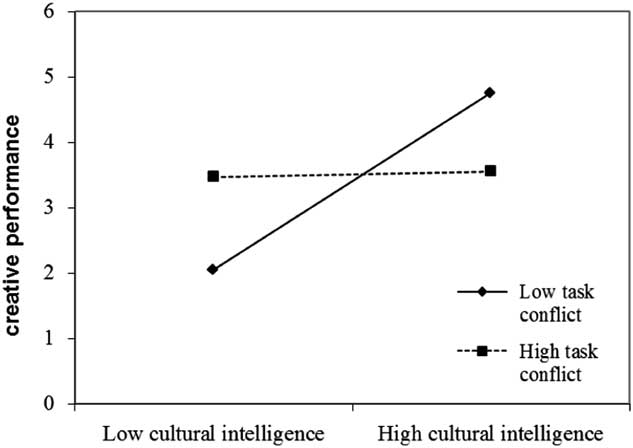
Hypotheses 2 and 3 predict that team-level relationship conflict and task conflict moderate the relationship between employee’s cultural intelligence and creative performance. We used the slopes-as-outcomes models (high-level variables significantly influence the slope between the two low-level variables) of hierarchical linear modeling to assess Hypotheses 2 and 3. High-level variables in cross-level interactions in Table 4 were grand mean-centered to test the slopes-as-outcomes models (Gavin & Hofmann, Reference Gavin and Hofmann2002). Results of the cross-level interactions are shown in Table 4. Relationship conflict (γ=0.802, p≤0.01) positively moderated the relationship between employee’s cultural intelligence and creative performance. Task conflict (γ=−0.654, p≤0.01) negatively moderated the relationship between employee’s cultural intelligence and creative performance. Figures 2 and 3 also, respectively, show the positive moderating effect of relationship conflict and the negative moderating effect of task conflict. In the slopes-as-outcomes models, we calculated the proportion of between-group variance from the cross-level moderator (Gavin & Hofmann, Reference Gavin and Hofmann2002). Results revealed that the combination of relationship conflict and task conflict accounted for 9.39% of the between-group variance in the relationship between employee’s cultural intelligence and creative performance. Hypotheses 2 and 3 are supported.
The moderating effect of relationship conflict
The moderating effect of task conflict
Discussion
This study highlights a novel avenue for promoting employee creativity in interorganizational teams. We propose and determine that cultural intelligence is positively associated with employees’ creative performance. Team conflict is a significant contextual factor and influences the expression of cultural intelligence. The results show that the relationship between cultural intelligence and creative performance is strengthened in the context of high relationship conflict. By contrast, when task conflict is high, creative performance depends less on cultural intelligence.
Theoretical implication
The present findings have several theoretical implications. First, this study augments the literature on employee creativity in interorganizational teams. A number of previous studies have investigated employee creativity in intraorganizational teams. Meanwhile, the influence mechanisms of employee creativity have been explored at the individual, team, and organizational levels (e.g., Kim, Hon, & Lee, Reference Lawson, Petersen, Cousins and Handfield2010; Shin, Kim, Lee, & Bian, Reference Shin, Kim, Lee and Bian2012; Chang, Jia, Takeuchi, & Cai, Reference Chang, Jia, Takeuchi and Cai2014). However, interorganizational teams differ from intraorganizational teams. Employees face considerable challenges because of immense diversities and conflicts, as well as frequent interaction with different organizations in such teams (Drach-Zahavy, Reference Drach-Zahavy2011). We empirically investigate employees’ creative performance under these conditions, thereby responding to the call for further study on employee creativity from an interorganizational perspective (Andersen & Kragh, Reference Andersen and Kragh2013). Furthermore, a prior study has investigated the antecedent of employee creativity in interorganizational teams, and concentrated on team climate variables, such as trust in team members and shared leadership (Donati, Reference Donati2013). By contrast, the current study assesses the influence of employees’ creative performance by considering individuals’ competence. The results show that individuals’ competence has a significant effect on employees’ creative performance except for team-level factors. This finding advances the understanding of employees’ creative performance in interorganizational teams.
Second, we identify cultural intelligence as the antecedent of employees’ creative performance. Following the suggestion that the effect of the personal ability of addressing organizational culture differences should be empirically examined in interorganizational teams (Chatenier et al., Reference Chatenier, Verstegen, Biemans, Mulder and Omta2010), we clearly demonstrate that cultural intelligence is positively associated with employees’ creative performance. Prior studies presented that intellectual abilities, including social intelligence and emotional intelligence, have several positive effects on creativity (Zhou & George, Reference Zhou and George2003; Rahim, Reference Rahim2014). Cultural intelligence focuses on interorganizational culture differences, and is different from social intelligence and emotional intelligence. This personal ability may be highly suitable in interorganizational teams. Our findings eventually confirm the positive relationship between cultural intelligence and creativity. Hence, this study complements the empirical evidence on the role of cultural intelligence in creativity research.
Third, our findings present that team conflict shapes the individual-level process of the effect of cultural intelligence on creative performance. This finding complements the existing study on the interaction between personal abilities and situations in interorganizational teams. Meanwhile, our analysis results provide additional empirical evidence of the effect of team context on the creative performance of individuals with different traits (Yang, Qian, Tang, & Zhang, Reference Yang, Qian, Tang and Zhang2015). Consistent with trait activation theory (Tett & Burnett, Reference Tett and Burnett2003), the current results support our hypothesis that relationship conflict positively moderates the effect of cultural intelligence on employees’ creative performance, whereas task conflict negatively moderates the effect of cultural intelligence. This study initially explores the moderating mechanism of contextual factors on the effect of cultural intelligence, thereby further enriching the literature on the relationship between cultural intelligence and employees’ creative performance.
Moreover, by introducing contextual factors as moderators, this study assesses the influence of team conflicts on the creativity of individuals with cultural intelligence. Existing studies mainly investigate the direct relationship between team conflicts (i.e., relationship conflict and task conflict) and creativity (Chen, Reference Chen2006; De Dreu, Reference De Dreu2006). However, researchers recently began to explore the moderating effects of team conflicts (Rau, Reference Rau2005; Arazy, Nov, Patterson, & Yeo, Reference Arazy, Nov, Patterson and Yeo2011). Several scholars have confirmed that team conflicts can moderate the relationship between cognitive style and creativity (Kim, Choi, & Park, Reference Kim, Hon and Lee2012). Therefore, the present study provides additional empirical evidence to the team conflict research stream by examining team conflicts as moderators in the relationship between cultural intelligence and employees’ creative performance. Additionally, a number of empirical studies on the relationship between relationship conflict and outcome variables demonstrate a negative effect (He, Ding, & Yang, Reference He, Ding and Yang2014; Yong, Sauer, & Mannix, Reference Yong, Sauer and Mannix2014), whereas others show no association (Chen, Reference Chen2006). Consequently, relationship conflict affects outcome variables differently in various contexts. In our study, relationship conflict is not significantly related to creative performance. However, the situations with high relationship conflict increase the necessity of activating employees’ cultural intelligence, thereby strengthening the relationship between cultural intelligence and creative performance. This finding advances the understanding of the moderating role of relationship conflict.
Fourth, the current study extends the concept of cultural intelligence to the interorganizational context. Cultural intelligence is defined as ‘the capability of an individual to function effectively in situations characterized by cultural diversity’ (Ang & Van Dyne, Reference Ang and Van Dyne2008: 3). Previous research related to cultural intelligence concentrated on the international context. Similarly, in the interorganizational context, the diversity of organizational cultures also needs cultural intelligence to deal with. In the current study, individuals with high cultural intelligence can address organizational culture differences and interact effectively with members from different organizational cultures. The validity of the redefined concept and the revised scale is verified in this study. This finding provides promising support for future studies on cultural intelligence.
Managerial implication
The results of this study also contribute to organizational management. Compared with intraorganizational teams, the composition of interorganizational teams is considerably diverse; team members face immense pressures and conflicts; they interact more frequently with external environments (Drach-Zahavy, Reference Drach-Zahavy2011). Consequently, organizations should recognize the distinctiveness and complexity of interorganizational teams. Therefore, organizations should adopt corresponding strategies to manage these teams, including appropriate personnel selection, training, and matching with team environments.
Organizations can select employees with high cultural intelligence to participate in interorganizational teams. For example, during the interview process, managers can select employees who obtained high scores in the measures of individuals’ cultural intelligence. Individuals’ cultural intelligence could be also tested through simulated working situations related to interorganizational cooperation. During the situational simulation process, managers should select employees who are good at communicating with members from different organizations and adapt effectively to the interorganizational situation. Employees who participated once in interorganizational activities and exhibited high cultural intelligence can be preferentially selected. In addition, employees who have the experience of frequently interacting with members from different organizations can be also preferentially selected.
Cultural intelligence can be improved through training in the international context (Earley & Mosakowski, Reference Earley and Mosakowski2004). Similarly, cultural intelligence in the interorganizational context can be developed through training. Organizations need to select the corresponding training content according to the strengths and weaknesses of employees in cultural intelligence. Several oral communication courses can be offered to employees who lack communication skills. During the process of cultivating cultural intelligence, organizations should make employees adequately understand information in a new environment, including team composition, team rules, and working styles of team members, among others. Organizations also need to make employees recognize and integrate useful information, as well as to match employees with the extrinsic environment (Triandis, Reference Triandis2006). In addition, organizations could invite professional teachers to strengthen training on the manners and behaviors of employees in the diverse organizational culture environment.
Organizations should focus on matching between strategies and team environments. The effects of different team conflicts would be paid attention to in the interorganizational context. Managers need to understand team conflicts during team processes and constructively utilize the effect of cultural intelligence in the context of different team conflicts. Managers can also adopt different strategies to develop creativity under different work situations. For example, in a high relationship conflict environment, managers can cultivate the cultural intelligence of employees to promote employee creativity.
Limitations and directions for future research
This research provides meaningful contributions to the production mechanism of employees’ creative performance in interorganizational teams; however, several limitations still merit discussion. First, the relationships of constructs in our model may be strengthened because of the single-source and cross-section data collection. However, the confirmatory factor analysis results showed that cultural intelligence, relationship conflict, task conflict, and creative performance were distinct constructs. The results of Harman’s one-factor test and additional analyses also confirmed that common method variance was not a significant problem. Future studies could collect data at different times and adopt the multisource data collection method to further investigate the conclusion of the present research.
Second, the questionnaires were distributed in China; thus, the universality of the research results of this study should be tested further. The Chinese people tend to behave in moderate ways and ultimately achieve interpersonal harmony (Ji, Lee, & Guo, Reference Ji, Lee and Guo2010). In Chinese teams, employees may interact easily with other organizational members and obtain resources for innovation. Therefore, the positive relationship between cultural intelligence and creative performance may be not very representative. Future research needs to verify the relationship between cultural intelligence and employees’ creative performance through a cross-national study.
Third, our study focused on the direct effect of cultural intelligence on the creative performance of employees in interorganizational teams. Future research would benefit from building a substantially comprehensive model to analyze the mediating mechanisms. For example, studies had indicated that individual creativity could be enhanced through trust building and knowledge sharing (Teigland & Wasko, Reference Teigland and Wasko2003; Gong, Cheung, Wang, & Huang, Reference Gong, Cheung, Wang and Huang2012). Individuals with high cultural intelligence are good at building harmonious interpersonal relationships and strengthening trust. Moreover, individuals with high cultural intelligence are able to interact effectively with others and enhance knowledge sharing. Consequently, interpersonal trust and knowledge sharing may act as mediators of the relationship between cultural intelligence and creative performance.
Finally, prior studies issued a call and encouraged scholars to integrate contextual influence into organizational behavior research, including creativity research (Härtel & O’Connor, Reference Härtel and O’Connor2014). Researchers also need to consider additional contextual variables and investigate their moderating effects on cultural intelligence and creative performance. Interorganizational teams are different from intraorganizational teams (Drach-Zahavy, Reference Drach-Zahavy2011); hence, future research could investigate other moderating variables that reflect the special situations of interorganizational teams.
Conclusion
Organizations increasingly tend to promote organizational innovation through interorganizational cooperation (Pullen, Weerd-Nederhof, Groen, & Fisscher, Reference Pullen, Weerd-Nederhof, Groen and Fisscher2012). For interorganizational collaborative innovation, the methods of prompting employees’ creative performance in interorganizational teams should be urgently addressed. This study reveals that cultural intelligence plays a crucial role in developing employees’ creative performance. In addition, a cross-level method is adopted to explore the relationship between cultural intelligence and employees’ creative performance under different team contexts (i.e., relationship and task conflicts). This study has significant implications in interorganizational team management, although it has a few limitations. In the future, we expect more scholars to focus on employee creativity in the interorganizational context.
Acknowledgements
This study is supported by the National Natural Science Foundation of China (71371177). We confirm that this manuscript is an original work that has not been submitted to nor published anywhere else. We confirm that all authors have read and approved the paper and have met the criteria for authorship listed above. In our study, cultural intelligence is identified as the antecedent of individual creative performance in interorganizational teams. Additionally, a cross-level method is used to test the interaction between cultural intelligence and team conflicts on individual creative performance. This aligns with the scope and aims of the Journal of Management & Organization, because the journal offers a unique outlet for management research that considers how context shapes managerial theory and practice; recognizing the diversity of business practices and environments found around the world.