In an international crisis, states make demands backed by threats to use force. Although these threats can be explicit in diplomatic communications, they will not generally carry much weight unless substantiated by some show of force—military measures designed to convey the commitment to resort to arms if one's demands are not satisfactorily met. To have an impact, this commitment must be credible; it must be in one's interest to carry out the threat if the opponent refuses to comply. In an environment where states possess private information about their valuations, capabilities, or costs, credibility can be established by actions that a state unwilling to fight would not want, or would not dare, to take. Military moves, such as arms buildups, troop mobilizations, and deployments to the potential zone of operations, can alter incentives in a crisis by changing one's expected payoff from the use of force. These are tacit bargaining moves that can restructure the strategic context thereby creating and possibly signaling one's commitments while under-mining those of the opponent. How can states use the military instrument to establish commitments, and how does the nature of the instrument affect their ability to communicate them credibly to their adversaries?
There are two distinct mechanisms for credible signaling. In economic models, information can be transmitted reliably by sinking costs—actors burn money to reveal that they value the disputed issue even more. In contrast, theories of interstate crisis bargaining usually rely on choices that increase the difference between backing down and fighting—actors tie their hands by running higher risks of war to reveal their resolve. The first mechanism involves costs that actors pay regardless of outcome, and the second involves costs that actors pay only if they fail to carry out some threat or promise.
Military actions have both cost-sinking and hands-tying effects, and so it is imperative that our theories account for them properly. Focusing only on the cost-sinking role has led scholars to dismiss mobilization as a useful signaling device (Fearon 1997; Jervis 1970; Rector 2003), shifting the focus to mechanisms that have hands-tying effects. Domestic audience costs are the most prominent example of such a signaling mechanism (Fearon 1994) and much work has been done on exploring the role of public commitments.1
See Smith (1998) on the microfoundations of the audience cost mechanism, and Schultz (2001b) for another critique of its shortcomings.
Because open political contestation is a feature of democratic polities, democratic leaders are said to be able to signal their foreign policy preferences better, which in turn provides an explanation of the democratic peace. The model reveals a dynamic of crisis escalation that differs from either pure sunk-cost or hands-tying signaling. Moreover, by demonstrating that it is possible to establish credible commitments with purely military means, the analysis weakens the theoretical argument that democracies are better able to signal their private information.
The model further shows that some of the general monotonicity results from Banks (1990) will not extend to an environment where the probability of victory—and hence the distribution of power—is endogenous to state crisis decisions.2
Banks (1990) establishes results that must be shared by all models with one-sided private information about benefits and costs of war regardless of their specific game-theoretic structure. These generic results turn out to need the additional assumption that the expected payoff from war cannot be manipulated by the actors directly, the very assumption this article questions.
Banks finds that the probability of war is increasing in the expected benefits from war of the informed actor. If military mobilization did not influence the probability of winning, then his results would extend to this model as well: actors that value the issue more would have higher expected utilities from war. However, mobilization does influence the probability of winning and, through it, the expected utility of war. Therefore, actors that value the issue more may or may not have higher expected utilities for war, depending on their relative preparedness to wage it—the level of which they choose during bargaining. Hence, some standard ideas about crisis escalation that depend on an exogenously fixed distribution of power may need to be modified.
Finally, the analysis illuminates what turns out to be an important shortcoming of existing rational deterrence models. These generally postulate preferences between capitulation and fighting—a resolved type prefers to fight, and an unresolved type prefers to submit—and then explore the consequences of uncertainty about which particular type one is facing. Thus, the models assume that commitments exist and the problem is one of communicating them credibly. I show how the military instrument can create commitments and then investigate how this can help with complete information but can hinder the prospects for peace when they have to be communicated under asymmetric information. Unfortunately, whereas mobilization can credibly commit an actor to stand firm, under uncertainty that actor may fail to allocate enough resources to undo his opponent's reciprocal commitment. In this situation, war can become preferable to capitulation for both.
COERCIVE EFFECTS OF MILITARIZED CRISIS BEHAVIOR
Perhaps the main problem that leaders face in a crisis is credibility: how does a leader persuade an opponent that his threat to use force is genuine? That he would follow up on it should the opponent fail to comply with his demands? The decision to carry out the threat depends on many factors, some or all of which may be unobservable by the opponent. The leader has to communicate enough information to convince her that he is serious. If the opponent believes the message and wants to avoid war, she would be forced to make concessions. However, if there exists a statement that would accomplish this, then all leaders—resolved and unresolved alike—would make it, and hence the opponent would have no reason to believe it. The problem then is to find a statement that only resolved leaders would be willing to make.
Jervis (1970) studies signals, which do not change the distribution of power, and indices, which are either impossible for the actor to manipulate (and so are inherently credible) or are too costly for an actor to be willing to manipulate. In modern terms, he distinguishes between “cheap talk” and “costly signaling,” even though he prefers to emphasize psychological factors that influence credibility.
It is well known that the possibilities for credible revelation of information when talk is cheap are rather limited and depend crucially on the degree of antagonism between the actors (Crawford and Sobel 1982; Morrow 1994b).3
Reputational concerns due to continuing interaction with domestic (Guisinger and Smith 2002) or foreign (Sartori 2002) audiences may lend credibility to cheap talk. When both cheap talk and costly messages are available, costly signals can improve the precision of communication (Austen-Smith and Banks 2000).
Following Schelling (
1960), most studies have explored tacit communication through actions instead of words. Schelling (
1966) noted that tactics that reveal willingness to run high risks of war may make threats to use force credible. In general, such willingness results in better expected bargains in crises (Banks
1990), although it does not necessarily mean that the actor willing to run the highest risks would get the best bargain (Powell
1990).
One can think of such tactics in terms of expected benefits from war and expected costs of avoiding it: anything that increases one relative to the other could commit an actor by tying his hands at the final stage. Fearon (1994) noted that domestic political audiences can generate costs for leaders who escalate a crisis and then capitulate, creating an environment in which a leader could tie his hands and, thus, signal resolve to foreign adversaries. Even though leaders pay the costs only if they back down, their willingness to risk escalation to a point where each of them would be irrevocably committed to not backing down can reveal their resolve.
This contrasts with another signaling mechanism that relies on sinking costs; that is, incurring expenses that do not directly affect the expected payoffs from war and capitulation (Spence 1973). Only actors who value the issue sufficiently would be willing to pay these costs, turning them into a credible revelation of resolve by separating from low-resolve actors through their action. When the last clear chance to avoid war comes, these costs are sunk and cannot affect the decision to attack, hence they cannot work as a commitment device and their function is purely informational.
What is the role of military actions, such as mobilization, in a crisis? Fearon (1994, 579) notes that the “informal literature on international conflict and the causes of war takes it as unproblematic that actions such as mobilization ‘demonstrate resolve’,” and argues that “if mobilization is to convey information and allow learning, it must carry with it some cost or disincentive that affects low-resolve more than high-resolve states.” He then goes on to dismiss the financial costs of mobilization as being insufficient to generate enough disincentive to engage in it and concludes that we should focus on an alternative mechanism—domestic political costs—that has a hands-tying effect.
Although one may quibble with the notion that mobilization is not costly enough, the more important omission is that the argument treats mobilization (and similar militarized crisis activities) as costly actions that are unrelated to the actual use of force. However, one can hardly wage war without preparing for it, and the primary role of mobilization is not to incur costs but rather to prepare for fighting by increasing the chances of victory. But improving one's prospects in fighting increases the value of war relative to peace and can therefore have a hands-tying effect. In fact, it is difficult to conceive of pure sunk costs in this context. Perhaps military exercises away from the potential war zone could qualify as such, but almost anything countries can do in terms of improving defenses or enhancing offensive capability affects the expected payoff from fighting quite apart from the costs incurred in doing it. Even though he does not analyze it, Fearon (1997, n. 27) does recognize this and notes that “insofar as sunk-cost signals are most naturally interpreted as money spent building arms, mobilizing troops, and/or stationing them abroad … the probability of winning a conflict … should increase with the size of the signal.”
Underestimating mobilization's role as a commitment device beyond its immediate costliness leads one influential study to conclude that “the financial costs of mobilization rarely seem the principal concern of leaders in a crisis” (Fearon 1994, 580), implying that these costs are insufficient to generate credible revelation of resolve. As I will show, this is true only if mobilization functions solely as a sunk cost; if we consider its hands-tying function, mobilization does acquire crisis bargaining significance.4
Rector (2003) analyzes the impact of mobilization on crisis bargaining but only considers it as partial prepayment of war costs. Because it ignores the hands-tying impact, the study concludes that mobilization has no signaling effect.
It affects not only signaling behavior of the potential revisionist but also the defensive posture of the status quo power.
Empirically then, it seems that military actions which states take during a crisis—mobilizing troops, dispatching forces—entail costs that are paid regardless of the outcome, and in this sense are sunk; however, they also improve one's expected value of war relative to peace, and in this sense they can tie one's hands. Militarized coercion involves actions with these characteristics, but existing theories of interstate crisis bargaining have not analyzed their consequences properly.
In the formal literature, the issue has been almost completely side-stepped in favor of models that incorporate only one of the two functions: the probability of winning is exogenously fixed instead of being determined endogenously by the decisions of the actors.5
This also holds for models where the power distribution changes independently of the choices of the actors, as in Powell (1999, chap. 4) and Slantchev (2003).
This class of models is nearly exhaustive: very few admit endogenous probability of victory. I am aware of four exceptions. Brito and Intriligator (
1985) study resource redistribution as alternative to war under incomplete information but analyze Nash equilibria that may not be sequential (so threats may not be credible) and assume military allocations are made simultaneously (and so one cannot react to the mobilization of the other). Powell (
1993) studies the guns versus butter trade-off, but, because he analyzes the complete information case, we cannot use the results to study signaling issues. Kydd's (
2000) analysis of bargaining and arms races concentrates on complete information, and the treatment of uncertainty is limited to the special case of two types. Due to the structure of the model, information is revealed at the stage that precedes armament decisions. Consequently, Kydd finds that the informed player's arming choice—that it can potentially use for signaling—is “not really affected by uncertainty; she will arm at whatever level is optimal for her” (238). This is fine for investigating whether arms races can occur in equilibrium, but constraining for a model that focuses on the potential signaling role of the military instrument. As we shall see, uncertainty does have a significant impact on mobilization levels. Finally, the most closely related approach is that of Morrow (
1994a), who models the effect of an alliance as having a dual role: increasing the expected value of war and decreasing the value of the status quo. However, the costs of alliance are not truly sunk because the player does not pay them if it capitulates. As a result the solutions differ significantly from the ones I present here.
6 Although the economic analysis of contests is closely related to the optimal resource allocation issue (Hirshleifer 1988), the contest models do not allow actors to make their war initiation decisions in light of the new information furnished by the mobilization levels, an important feature of sequential crisis bargaining (Morrow 1989).
In other words, nearly all existing models cannot seriously investigate the impact of military moves in crisis situations because they ignore the hands-tying effect they may have. This is an important shortcoming because, in these models, the probability of winning determines the expected payoff from war, which in turn determines the credibility of threats and, hence, the actor's ability to obtain better bargains. As Banks (1990) demonstrates, the higher the informed actor's expected payoff from war, the higher his payoff from setting the dispute peacefully, and the higher the probability of war in equilibrium. All crisis bargaining models that treat the probability of winning as exogenous would produce this dynamic. However, as I argued, this crucial variable that essentially generates optimal behavior in crisis bargaining models should be part of the process that depends on it. If deliberate actions influence its value, which in turn affects the informational content of these actions, how are we to interpret mobilization decisions? To what extent are costly military actions useful in communicating in crisis: do they make crises more or less stable? What levels of military mobilizations should we expect and what is the price of peace in terms of maintenance of military establishment by defenders?
To answer such questions, the model must have the following features: (a) both actors should be able to choose the level of military mobilization as means of tacit communication, (b) an actor's mobilization should be costly but should increase its probability of winning if war breaks out, (c) mobilization may not necessarily increase the expected utility from war (even though it makes victory more likely, a positive impact, its cost enters negatively), (d) at least one of the actors should be uncertain about the valuation of the other, and (e) actors should be able to make their deliberate attack decisions in light of the information provided by the mobilization levels. Consequently, the model I construct in the next section incorporates all of these.
THE MODEL
Two players, S1 and S2, face a potential dispute over territory valued at v1 ∈ (0, 1) by the status quo power S1, who is currently in possession of it. Although this valuation is common knowledge, the potential revisionist S2's valuation is private information.7
Since S1 has the territory, it is natural to assume that his valuation is known to everyone. The labels “status quo power” and “potential revisionist” identify which actor would be in possession of the territory if a crisis does not occur. This has nothing to do with the degree of satisfaction with the status quo that determines these labels in classical realism. For ease of exposition, I refer to S1 as a “he” and S2 as a “she.”
believes that
v2 is distributed on the interval [0, 1] according to the cumulative distribution function
F with continuous strictly positive density
f, and this belief is common knowledge.
Initially, S1 decides on his military allocation level, m1 [ges ] 0. Choosing m1 = 0 is equivalent to relinquishing the claim to the territory and ending the game with payoffs (0, v2). Otherwise, the amount m1 > 0 is invested in possible defense. The costs of mobilization are sunk and incurred immediately. After observing his choice, S2 either decides to live with the status quo or makes a demand for the territory by starting a crisis. S2 can escalate by choosing a level of mobilization, m2 > 0, or can opt for the status quo with m2 = 0, ending the game with the payoffs (v1 − m1, 0). After observing S2's level of mobilization, S1 can capitulate, ending the game with payoffs (−m1, v2 − m2); preemptively attack, ending the game with war; or resist, relinquishing the final choice to S2. If he resists, S2 decides whether to capitulate, ending the game with payoffs (v1 − m1, − m2), or attack, ending the game with war.
If war occurs, each player suffers the cost of fighting, ci ∈ (0, 1). Victory in war is determined by the amount of resources mobilized by the players and the military technology. Defeat means the opponent obtains the territory. The probability that player i prevails is λmi/(λmi + m−i), where λ > 0 measures the offense–defense balance.8
The ratio form of the contest success function is undefined at m1 = m2 = 0, but since the game ends with m1 = 0, how we define it is immaterial.
If λ = 1, then there are no advantages to striking first. If λ > 1, then offense dominates and, for any given allocation (
m1,
m2), the probability of prevailing by striking first is strictly larger than the probability of prevailing if attacked. Conversely, if λ < 1, then defense dominates, and for any given allocation it is better to wait for an attack instead of striking first. If
i attacks first, the expected payoff from war is
, and, if i is attacked, it is
. It is easy to show that
. If defense dominates, then the expected value of war is higher when one is attacked than when one attacks first.9
This offense–defense balance depends on military technology and differs from the ease of conquest concept that goes under the same name in offense–defense theory (Jervis 1978; Quester 1977). According to that theory, “offense–defense balance” refers to whether it is easier to take a territory than to defend it. Because the territory belongs to S1 in this model, a defensive advantage means that S1 would defend it more easily given the same distribution of power than S2 could acquire.
For the rest of this paper, assume λ < 1. The central claims do not change when λ > 1, but the statement of the results is quite a bit more involved (Slantchev
2004a).
The solution concept is perfect Bayesian equilibrium (or simply “equilibrium”), which requires that strategies are sequentially rational given the beliefs, and that beliefs are consistent with the strategies, and derived from Bayes rule whenever possible (Fudenberg and Tirole 1991). The model incorporates the empirically motivated features I identified in the preceding section. It is complicated by the continuum of types and actions, and so it trades an ultimatum “bargaining” protocol for rich mobilization possibilities in letting both actors choose the level of forceful persuasion.
THE MOBILIZATION OF THE REVISIONIST STATE
It will be helpful to analyze the signaling game beginning with S2's allocation decision given some allocation m1 > 0. In any equilibrium, the strategies would have to form an equilibrium in this continuation game, and since S1 is uninformed, his initial decision reduces to choosing (through his allocation) the equilibrium that yields the highest expected payoff.
By subgame perfection, S2 would attack at her final decision node if, and only if, her expected payoff from war is at least as good as capitulating:
. That is, v2 [ges ] c2 + c2m1/(λm2) ≡ γ(m1, m2) > 0, where γ(m1, m2) is the highest type that would capitulate if resisted at the allocation level (m1, m2). All types v2 < γ(m1, m2) capitulate, and all types v2 [ges ] γ(m1, m2) attack when resisted. Note that γ(m1, m2) > 0 implies that the lowest-valuation types never attack even if they are certain to win. For any posterior belief characterized by the distribution function G(γ(m1, m2)) that S1 may hold, resisting at the allocation (m1, m2) yields S1 the following expected payoff:
. If S1 attacks preemptively, he would get
. Since
, it follows that
regardless of S1's posterior belief. Therefore, if defense dominates, then in equilibrium S1 never preempts; he either capitulates or resists.
Suppose that S1 capitulates for sure if he observes an allocation
. There can be at most one such assured compellence level in equilibrium. To see that, suppose that there were more than one. But then all S2 types who allocate the higher level can profit by switching to the lower one. Obviously,
is an upper bound on any equilibrium allocation by S2. Furthermore S2 would never mobilize m2 [ges ] 1 in any equilibrium. This is because the best possible payoff she can ever hope to obtain is v2 − m2 if S1 capitulates, and this is nonpositive for any m2 [ges ] 1, for all v2 [les ] 1.
All of this suggests that S2's equilibrium behavior would be determined by the relationship among the payoffs she can obtain from optimal offensive war, assured compellence, and capitulation. That is, S2's strategy can be characterized by a series of cut-points that divide her types into subsets who behave the same way. To this end, I now derive these cut-points and then show that only two configurations can occur in equilibrium.
Let β(m1) denote the type that is indifferent between optimal war and assured compellence; that is,
, where
is the optimal allocation by type v2 if she expects to fight for sure some m1. That is,
maximizes
subject to the constraint that
. Substituting and solving for β(m1) yields β(m1)= \smash
. The following lemma establishes the S2's preference between optimal war and assured compellence (all proofs are in the Appendix).
LEMMA 1
All v2 > β(m1) strictly prefer assured compellence to optimal war, and all v2 [les ] β(m1) prefer the opposite.
Let α(m1) denote the type that is indifferent between capitulation and assured compellence at
; that is,
. Since the payoff from assured compellence strictly increases in type, all v2 < α(m1) prefer capitulation to assured compellence, and all v2 [ges ] α(m1) prefer assured compellence to capitulation.
Let δ(m1) denote the type that is indifferent between capitulation and optimal war. That is,
, which yields
. Since the payoff from optimal war is strictly increasing in type, all v2 < δ(m1) prefer capitulation to optimal war, and all v2 [ges ] δ(m1) prefer optimal war to capitulation.
I now establish the possible configurations of these cut-points. With slight abuse of notation, I suppress their explicit dependence on m1.
LEMMA 2
If α [les ] δ, then all v2 < α capitulate and all v2 [ges ] α mobilize at the compellence level
in equilibrium, provided
is feasible.
Lemma 2 shows that, when δ [ges ] α, optimal behavior can take only one form if
is feasible.10
Technically, any m2 > 0 is feasible because there is no budget constraint. However, since S2 would never spend more than her highest possible valuation in equilibrium, this valuation functions as an effective constraint. The results remain unchanged if we allow for an arbitrary upper bound on valuations except we would have to restate the theorems in terms of that bound.
Hence, we need not worry about the location of β. The following lemma establishes that only one configuration remains for the other case.
LEMMA 3
If δ < α, then α < β.
These lemmata imply that we should look for solutions for just two cut-point configurations: α [les ] δ and δ < α < β. Optimal behavior depends on the relationship between these points and S2's highest valuation (unity).
Assured Compellence
In an assured compellence equilibrium, all types of S2 that mobilize do so at a level just enough to make S1 capitulate with certainty. Intuitively, if S1 has mobilized at a low level, it is relatively easy for S2 to countermobilize such that S1's payoff from war becomes sufficiently low. This undermines S1's incentive to resist even if there still exists a chance that S2 is bluffing. Despite S1's certain capitulation, not all low-valuation types will be willing to bluff because of the inherent costliness of mobilization. Hence, we shall look for an equilibrium in which all low-valuation types capitulate, and the rest allocate the assured compellence level. S1 resists all allocations smaller than this level (because only low-valuation types that would capitulate if resisted would fail to allocate the higher level) and capitulates otherwise.
Suppose α [les ] δ and α < 1. By Lemma 2, S2's optimal strategy must take the following form: all v2 < α capitulate immediately, and all v2 [ges ] α mobilize at the compellence level
. By definition,
, and therefore
. If
, then the assured compellence level is feasible because there exists a type of S2 that could choose to allocate
optimally, and so S1 is potentially compellable. Otherwise, he is uncompellable.
Subgame perfection implies that, if
, all types
capitulate if resisted (bluffers) and all
fight if resisted (genuine challengers). If
, only genuine challengers mobilize in equilibrium. Given S1's prior belief F(.), his posterior belief that S2 would capitulate when resisted conditional on
is
if
), and 0 otherwise. S1 capitulates whenever R1(m1, m2) [les ] −m1. Because R1 is strictly decreasing in m2 and because excess mobilization by S2 is pointless if S1 is sure to capitulate, it follows that in equilibrium
must solve
, or
Let
be the unique solution to equation (1).11
To see that equation (1) has a unique solution, let
and note that
. This implies that for all
. Equation (1) is strictly decreasing in
, and for all
it reduces to
, which itself converges to −c1 < 0 as
. Because the expression is continuous in
, it follows that equation (1) has a unique solution.
Proposition 1 (Assured Compellence)
Fix some m1. If and only if α < δ and α < 1 the following strategies constitute the unique equilibrium in the continuation game: all v2 < α capitulate, and all v2 [ges ] α allocate
; if resisted, all v2 < γ capitulate, and all v2 [ges ] γ attack. S1 resists after any
and capitulates after any
.
There is no risk of war in this equilibrium because whenever a positive mobilization occurs the crisis is resolved with S1's capitulation. If S1 allocates too little to defense, he can expect that S2 will challenge him with strictly positive probability and he will capitulate. This does not necessarily mean that S1 immediately gives up the territory in equilibrium: as long as the probability of a challenge is not too high, S1 is still better off spending on defense and taking his chances that S2's valuation would not be high enough to challenge him. This equilibrium involves bluffing whenever
, which cannot be eliminated with an appeal to any of the refinements like the intuitive criterion (Cho and Kreps 1987), universal divinity (Banks and Sobel 1987), or perfect sequentiality (Grossman and Perry 1986). Although nongenuine challengers may be present, their bluff is never called.
Risk of War
When S1's mobilization level increases, S2's countermobilization required to achieve assured compellence increases as well. As ensuring that outcome gets costlier, risking optimal war becomes more attractive. In particular, if the type who is indifferent between war and capitulation has a lower valuation than the type who is indifferent between assured compellence and capitulation, all intermediate-valuation types would rather fight than ensure the exceedingly costly capitulation by S1 or give up themselves. Increasing m1 even further eliminates all possibility that some type would be willing to attempt compellence, reducing S2's choice to capitulation or optimal war.
Turning to the formal statement of this result, suppose δ < α. By Lemma 3, only one possible configuration exists: δ < α < β. Since all v2 > δ prefer optimal war to capitulation, all challenges in this equilibrium are genuine, and G = 0 simplifies equation (1) yielding an analytic solution to the compellence level
. This is also the solution to equation (1) for the assured compellence equilibrium when
. Substituting for
yields β = (1/4λm1)(λc2 − m1v1/c1)2.
Proposition 2 (Risk of War)
Fix some m1. If, and only if, δ [les ] α and δ < 1, the following strategies constitute the unique equilibrium of the continuation game: all v2 < δ capitulate, all v2 ∈ [δ, β) allocate
, and all v2 > β allocate
; if resisted, all v2 < γ capitulate, and all v2 [ges ] γ attack. S1 resists after any
and capitulates after any
.
All challengers in this equilibrium are genuine. The outcome depends on whether S1 is potentially compellable and whether there exists a type of S2 that is willing to allocate at the assured compellence level.
If α < β < 1, the ex ante probability of war is Pr(δ [les ] v2 < β) = F(β) − F(δ) < 1. If S2 has a high enough valuation v2 > β, then she would allocate at the assured compellence level and S1 would capitulate. The most dangerous revisionists are the midrange valuation types v2 ∈ [δ, β), the ones who do not value the issue sufficiently to spend the amount necessary to ensure S1's peaceful concession. Even though S1 is potentially compellable, these types are unwilling to do it, and they go to war choosing their optimal attack allocation. It is worth noting that because they separate fully by their optimal allocation, S1 infers their type with certainty and knows that resistance would mean war because all challenges are genuine. If the revisionist happens to be of such a type, then war occurs with complete information following her mobilization.
If α < 1 [les ] β, then even though S1 is potentially compellable, no type is willing to do it, and war is certain conditional on a challenge. Because δ is strictly increasing in m1, it follows that higher allocations by S1 never increase the risk of war. (If F has continuous and strictly positive density, then increasing m1 strictly decreases the risk of war.) Unlike the previous case, the most dangerous revisionists here are always the ones with higher valuations v2 [ges ] δ because they cannot be deterred from challenging. S1 infers the revisionist's type with certainty and war occurs with complete information conditional on a mobilization by S2. I shall refer to this as the risk of war, type 1 equilibrium.
Finally, if 1 [les ] α, then S1 becomes uncompellable and S2's choice reduces to capitulation or optimal attack. From S1's ex ante perspective, the situation is identical to the preceding case where no type was willing to compel him, except that now no type is able to do so. Higher allocations by S1 never increase the risk of war in this case, and the most dangerous types are the high-valuation ones. I shall refer to this as the risk of war, type 2 equilibrium.
Assured Deterrence
Finally, if S1 mobilizes at a very high level, then he can become uncompellable and no types would be willing to challenge him given that he is certain to resist. In other words, S1 can achieve assured deterrence. This can happen when there is no type that is willing to fight even an optimal war, and when the assured compellence level is not feasible. The following proposition states the necessary and sufficient conditions for this equilibrium.
Proposition 3 (Assured Deterrence)
Fix some m1. If, and only if, α [ges ] 1 and δ [ges ] 1, the following strategies constitute the unique equilibrium of the continuation game: all v2 capitulate; if resisted, all v2 < γ capitulate, and all v2 [ges ] γ attack. S1 resists all allocations.
The probability of war is zero and the outcome is capitulation by S2. To understand the conditions, note that, when α > δ (as it would be in transitioning from the risk of war equilibrium), δ [ges ] 1 is sufficient. However, it is possible to transition from the assured compellence equilibrium directly. To see this, note that, since α < 1 and α < δ are necessary and sufficient for that equilibrium, then α [ges ] 1 is sufficient for it to fail to exist, and α < δ further implies δ > 1, and so it is also sufficient for deterrence to exist as long as α < δ. In other words, the configurations 1 [les ] δ < α and 1 [les ] α < δ both result in deterrence.
THE DEFENSE OF THE STATUS QUO STATE
Collectively, the three mutually exclusive equilibria exhaust all possible configurations of the cut-points and, therefore, provide the solution for the continuation game for any set of the exogenous parameters and any m1 > 0. I now turn to S1's initial mobilization decision. Since S1 is the uninformed actor, his choice boils down to selecting which type of equilibrium will occur in the continuation game. It is not possible to derive an analytic solution to this problem because of the nonlinearities involved in the optimization at the second stage. Still, because we can generally establish the order in which the continuation game equilibria occur as a function of m1, we can say what type of choices S1 will face if he increases his mobilization level. With the help of computer simulations, we can derive precise predictions for interesting ranges of the exogenous variables too.
The compellence equilibrium always exists regardless of the values of the exogenous parameters because, for m1 small enough, the necessary and sufficient condition form Proposition 1 are satisfied. What happens once m1 begins to increase? As the derivations in the previous section suggest, two cases are possible. First, as m1 increases, the conditions for deterrence can be satisfied, and the continuation game has only two possible solutions, both involving peace. Second, as m1 increases, the existence conditions can successively satisfy the risk of war and deterrence equilibria.
To see how S1 would choose his initial mobilization, if any, we must consider his expected payoffs in each of the possible continuation game equilibria. To conduct comparative statics simulations and analyses, I impose the additional assumption that F is the uniform distribution. This also allows me to reduce the expected payoffs for S1 to manageable expressions.
In the compellence equilibrium, S1 obtains the prize with probability Pr(v2 [les ] α) = α by the distributional assumption and concedes it without fighting with complementary probability. His expected payoff is EU
. In the risk of war equilibrium, S1 obtains the prize with probability Pr(v2 [les ] δ) = δ, fights a war with probability Pr(δ < v2 [les ] β) = β − δ, and concedes the prize with probability Pr(v2 > β) = 1 − Pr(v2 [les ] β) = 1 − β. His expected payoff is
where we used
. Finally, in the deterrence equilibrium, S1's payoff is:
. In equilibrium there can be only one assured deterrence allocation level by S1 because, if there were two, then S1 could profitably deviate to the lower one.
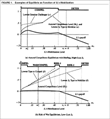
I now provide two numerical examples that will facilitate the substantive discussion. Assume the uniform distribution for S2's valuations, and set the parameters v1 = 0.6, c1 = 0.2, and λ = 0.99. In the simulation in Figure 1(a), S2's costs of fighting are high, c2 = 0.35, and in the simulation in Figure 1(b), her costs of fighting are low, c2 = 0.01. The solid line shows the range of values for m1 for which the various equilibria exist. The dotted vertical line shows S1's valuation for reference, and the solid vertical line shows S1's equilibrium mobilization level.
Examples of Equilibria as Function of S1's Mobilization
In the first example, the equilibrium outcome is peace: one of the actors will capitulate. S1 mobilizes
and takes his chances that S2 may be a high-valuation type that would compel him to capitulate. The assured compellence level is
. The probability that S1's low mobilization level would be able to deter S2 is Pr(v2 < α) = 33%, and so the risk of having to concede is 67%. All types v2 < α quit and S1 gets to keep the territory. On the other hand, all types v2 [ges ] α allocate
, after which S1 relinquishes the territory without a fight.
In the second example, the outcome can be either capitulation by one of the actors or war. S1's optimal mobilization increases to
. What follows depends on just how high the challenger's valuation is. If it is v2 < δ = 0.36, then S2 would be deterred from mobilizing, and the outcome would be peace. If it is v2 [ges ] β = 0.55, then S2 would mobilize at the assured compellence level
, S1 would capitulate, and the outcome would be peace again. However, if v2 ∈ [0.36, 0.55), then S2 would allocate her optimal fighting level
, and the outcome would be war. The ex ante probability of war is 19%, but conditional on S2's mobilization it is 30%, with war being certain if S2's mobilization level is less than
.
S1's expected payoff in this equilibrium is 0.02, which is much less than the 0.13 he would have expected in the previous example. This is not surprising, because as S2's costs of fighting decrease, so does S1's equilibrium payoff: to wit, his opponent is able to extract a better deal because going to war is not as painful, and so the threat to do it is much more credible.
These dynamics clearly demonstrate that establishing a credible commitment by tying one's hands can avoid war only if it also makes fighting sufficiently unpleasant to the opponent. A credible threat to fight cannot buy peace by itself, and a perfect commitment can virtually guarantee war if the opponent's valuation is misjudged. It is worth noting that crises that are peacefully resolved may involve higher military allocations than those that end in war: either S1 mobilizes a large enough force to deter S2, or S2 mobilizes a large enough force to compel S1. These allocations are higher than the optimal war allocations that either state would make if they expect to fight for sure. In other words, arms buildups are not necessarily destabilizing in a crisis. In fact, they appear positively related to peace when it comes to threatening the use of force.
DISCUSSION
Fearon (1997) nicely brackets the analysis presented here. He analyzes the two polar mechanisms for signaling interests: through actions that involve sunk costs only and actions that tie hands only. My model essentially encompasses everything in between—that is, actions that both tie hands and sink costs—and so it is worth comparing the results.
Bluffing with Implicit Threats
The most obvious difference that is of great substantive interest is that actions involving each mechanism separately result in equilibria where bluffing is not possible.12
That is, no equilibria that survive the Intuitive Criterion (Cho and Kreps 1987) involve bluffing. Fearon (1997, 82, n. 27) notes that it is unrealistic to assume that “sunk-cost signals have no military impact” and conjectures that the strong no-bluffing result would obtain even when we relax that assumption.
As it turns out, this result is unstable.
In Fearon's hands-tying model, bluffing cannot occur because actors with high valuations can generate arbitrarily high costs for backing down, which they never have to pay because their opponent would submit. Maximizing the payoff of high-valuation types reduces to maximizing the probability of capitulation by the opponent. This does not work in a model where hands-tying is inherently costly because now maximizing the probability of capitulation by the opponent must be balanced against its costs, which may put a cap on worthwhile mobilization levels, and that in turn can induce lower-valuation types to bluff because it makes it affordable. In addition to its costliness and impact on one's own war payoff, an actor's mobilization also affects the expected war payoff of its opponent. This separates mobilization from the audience-cost models where one's actions have no direct bearing on the opponent's payoffs. In other words, the actors' ability to generate high signals is constrained both by the costliness of the military instrument and by the actions of their opponent.
Take, for example, the assured compellence equilibrium in Figure 1(a). There are bluffers here: all v2 ∈ [α, γ) ≡ [.33, .42) would not attack should S1 decide to resist. The ex ante probability of a bluffer is Pr(α [les ] v2 < λ) = 9%, which increases to 13% after S2 mobilizes. However, even though S1 is now far more likely to be facing a bluffer, he is also far more likely to be facing a genuine challenger (87% versus an initial 58%), and so he chooses not to resist. The small mobilization has successfully screened out low-valuation types and S1 is unwilling to run a risk of war at this stage given how much S2's mobilization has reduced his payoff from war. Note that S1 could have eliminated all bluffers if he wished to do so by allocating approximately m1 = 0.28 (this is where γ = α), but doing so is not optimal because of the costs involved. Hence, not only is bluffing possible in equilibrium but S1 would not necessarily attempt to weed out such challengers. Further, S2's countermobilization has essentially untied S1's hands by lowering his expected payoff from war to the point where capitulation is preferable.
On the other hand, bluffing is impossible in equilibria that involve genuine risk of war. Consider Figure 1(b): there can be no bluffing here, for a bluffer would have to mobilize at the assured compellence level—otherwise she would be forced to back down when S1 resists and suffer the costs of mobilization—and this level is too high given S1's initial mobilization.
Hence, bluffing is possible only in equilibria that do not involve much revelation of information and involve no danger of war. This corresponds to results of Brito and Intriligator (1985), who also find that in the pooling (no signaling) equilibrium bluffing is possible but the probability of war is zero. Preventing bluffing involves precommitment to a positive probability of war, and the willingness to run this risk does transmit information.
The model reveals a subtle distinction in the conditions that permit bluffing. Bluffing is only optimal when S1 is expected to capitulate, but his willingness to do so depends on how likely S2 is to fight, which in turn depends on S2's costs of fighting and S1's mobilization level. Paradoxically, bluffing by S2 is possible only when her costs of fighting are relatively high (she is “weak”). The reason is the effect this has on S1's decision: because S2 is weak, and therefore not very likely to be willing to mobilize at a high level, S1 reduces his own costly allocation and thereby exposes himself to the possibility of having to concede. It is this low mobilization that makes bluffing an option: one must choose to expose oneself to bluffing. It is always possible to eliminate that possibility by making it too dangerous a tactic. When S2 has relatively low costs of fighting (she is “strong”), S1 knows that low mobilization would virtually ensure his capitulation, and so he ups the ante, eliminating bluffing possibilities in the process. Essentially, bluffing becomes too expensive even if it is certain to succeed. For this result to obtain, mobilization must both be inherently costly and increase probability of victory.
Fearon buttresses his no-bluffing results by quoting an observation by Brodie (1959, 272), who states that “bluffing, in the sense of deliberately trying to sound more determined or bellicose than one actually felt, was by no means as common a phenomenon in diplomacy … it tended to be confined to the more implicit kinds of threat.” I have emphasized the distinction between verbal threats and implicit threats because it is very important. Reputational concerns may eliminate the incentives to bluff with words (Guisinger and Smith 2002; Sartori 2002) but may not work for implicit threats like the ones in this model. As Iklé (1964, 64) observes, “whether or not the threat is a bluff can be decided only after it has been challenged by the opponent's noncompliance.” But probing an implicit threat is too dangerous because by its very nature, and unlike words, it influences the expected outcome of war. In equilibrium, these types of bluffs are never called, and hence S2 is never revealed as having made an incredible threat.13
The result of bluffs never being called in equilibrium probably arises from the one-sided incomplete information in the model. If there were uncertainty about S1's valuation as well, S2 could bluff hoping that S1 will quit, and because she does not know her opponent's type, she may end up facing one that is prepared to resist.
As Powell (
1990, 60) concludes, “sometimes bluffing works.”
Military coercion is a blunt instrument because its intent is not to reveal the precise valuation of the informed party but rather to communicate one's willingness to fight. Although much nuance is possible if actors had in mind the former goal, the latter is, of necessity, rather coarse. That one must resort to tacit bargaining through implicit threats cannot improve matters. Historians have emphasized the difficulty in clarifying “the distinction between warning and intent” (Strachan 2003, 18). Perhaps it is precisely because mobilization has such a crude signaling role, which is hard to disentangle from preparation for war, that mobilization has traditionally been considered very dangerous.
Endogenous Distribution of Power
Military coercion has a somewhat peculiar dynamic completely lost to models that ignore the war-fighting implications of military measures. For example, it is now generally accepted that the stronger the actor, the more willing he is to risk war to obtain a better bargain. The risk–return trade-off then resolves itself in higher equilibrium probability of war and a better expected negotiated deal (Banks 1990; Powell 1999).
Generally, a strong actor is one with a large expected war payoff. Valuation of the issue (high), costs of fighting (low), probability of winning (high), and military capabilities (large) can be lumped together to produce an aggregate expected payoff from fighting (high), which in turn defines the actor's type (strong). Potential opponents can then be indexed by their war payoffs, which are taken to be exogenous to the model. Bargaining essentially involves attempts to discern just how much concessions the opponent is prepared to make, and that in turn depends on how much he expects to obtain by fighting. When the distribution of power is fixed, the only way weak types can be discouraged from mimicking the behavior of strong types and demanding too much is for strong types to run a higher risk of war. Mobilization endogenizes the payoff from fighting, and its costliness provides another way to discourage weak types without necessarily running a higher risk of war.14
I thank an anonymous referee for suggesting how to frame this point.
This now means that we need to pay closer attention to the effects of short-term mobilizations because they help determine, at least in part, the expected payoff from war endogenously.15
It is true that there exist attributes that make an actor stronger ex ante: large industrial capacity, significant resource stockpiles, sizeable standing army, advanced technology, high-quality training of troops, and mobilization efficiency; all these are enabling characteristics that help an actor gear up for war and can distinguish him from opponents who lack such war-making potential. To this extent, the conventional determinants of strength are fine. However, because most wars are-quite short (median duration is less than six months), short-term capabilities matter more than long-term mobilization potential (Huth 1988). Signorino and Tarar (1999) find that the immediate balance of forces has a greater effect than even the short-term balance. Military mobilization of existing forces can affect the expected payoff from war dramatically even if there is a significant resource asymmetry that would render the outcome of a protracted war fairly predictable.
The immediate implication is that incentive-compatibility arguments that rely on an exogenous distribution of power may not extend to this context. For example (Banks
1990, 606) argues that “as the expected benefits from war increase, the informed player receives a better negotiated settlement but in addition runs a greater risk of war.” Because
S2's types are distinguished by their valuation of the issue in my model (mobilization and war costs are the same for all types), the equivalent statement would contend that higher-valuation types obtain
S1's capitulation with higher probability but also run an increased risk of war.
The model shows that the expected payoff from the crisis does increase in the actors' valuation of the issue, but not necessarily at the cost of a higher risk of war. In other words, the risk–return trade-off does not necessarily operate in this context, where the relevant trade-off is between signaling cost and expected return. To see that, consider the risk of war equilibrium. All low-valuation types capitulate immediately and so face zero probability of fighting. All midvaluation types mobilize their optimal fighting allocations, and the probability of war jumps to one. On the other hand, high-valuation types manage to scrape together the assured compellence level, which resolves the crisis with S1's capitulation, and the probability of war drops back to zero. In other words, although these types do spend more during the crisis, they obtain the surrender of their opponent without risking war. The possibility to compel S1 arises out of the latter's initial decision: he could have mobilized enough resources to make himself uncompellable by even the highest valuation type but, because of uncertainty, it is not optimal to do so. This is not to say that technology, war costs, and capabilities are not important—indeed, the two examples show the impact of S2's war costs—but rather that the commonly accepted crisis dynamics based on incentive-compatibility arguments dependent on a fixed distribution of power may not hold when that distribution of power is endogenous.
Furthermore, S1's optimal mobilization is not monotonically related to either his fighting costs or those of his opponent. For example, recall that, when
in the risk of war equilibrium in Figure 1(b). Increasing S2's costs to c2 = 0.25 produces
in an assured compellence equilibrium with no bluffers (figure not shown). Increasing them further to c2 = 0.35 produces
in the compellence equilibrium with bluffers in Figure 1(a). Note the distinction between the last two outcomes. When S2's costs are intermediate, S1 eliminates all bluffers and practically ensures that he would obtain S2's capitulation (the probability of him having to concede instead is less than 1%). When S2's costs increase further, S1 responds by drastically slashing his own military spending, even exposing himself to bluffing by doing so. Although he is now quite likely to concede (67%), his loss in this case is not too drastic because of the savings from the low allocation. In the previous case, on the other hand, even though he was nearly certain to win, the cost of doing so was quite high, making this tactic no longer profitable. In expectation, S1's payoff does increse in c2, and he obtains 0.13 in the latter case as opposed to 0.11 for the intermediate costs case. Perhaps counterintuitively, the status quo power is more likely to concede when his opponent is weaker (has higher costs of fighting) but equilibrium mobilization levels will be lower.
The Price of Peace
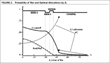
Figure 2 illustrates the impact of varying S1's costs. It shows the ex ante probability of war, S1's optimal allocation, and his payoff in equilibrium for various values of c1. The parameters are set to v1 = .999 (so that high costs do not become immediately prohibitive), λ = .99, and c2 = 0.10.
Probability of War and Optimal Allocations by S1
The nonmonotonicity is again evident. Because of his extremely high valuation, S1 cannot be compelled if his costs are relatively low. It is only at intermediate costs (c1 > 0.30) that compellence becomes feasible again. However, S2 will not attempt it in equilibrium, and hence, up to c1 ≈ 0.35, war is certain if S2 mobilizes. The ex ante probability of war declines across this range but
increases. That is, seemingly aggressive mobilization behavior can be seen as S1 compensating for the relative weakness in war occasioned by somewhat high costs: because war is more painful, he is prepared to pay more to decrease the chances of having to fight it. Nothing, of course, can help S1 overall in the sense that the costlier the fighting, the less must he accept in expectation.
Continuing the increase of c1 makes assured compellence not just feasible but also desirable, and from c1 ≈ 0.35 no equilibrium outcome will involve war because S1's high costs make fighting quite unattractive for him. Peace can be had in two ways: either S1 can deter his opponent, or S2 can compel her opponent. S1's behavior in the intermediate cost range is rather intriguing. While he can afford it, his strategy is to deter S2 or, failing that, to ensure that the probability of a challenge (to which he will surely concede) is relatively low. Note that, until c1 ≈ 0.45, the outcome is either assured deterrence or assured compellence but with extremely high mobilization levels by S1. Even after it becomes impossible to deter all types of S2, the status quo power persists in very high allocations that minimize the probability of having to concede in the compellence equilibrium (less than 0.1%). This is where peace can be very expensive.
Finally c1 becomes prohibitively high, and S1 drastically revises his strategy: maintaining a low probability of concession becomes too expensive. The trade-off between the costs of mobilization and expected concessions kicks in, and S1 precipitously decreases his allocation, exposing himself to ever increasing possibilities for bluffing as his costs go up.
As Figure 1(b) made clear, S2 types with high valuations must spend substantially more to compel S1 to capitulate than to fight him. This is, perhaps, not very surprising: given the initial mobilization by the status quo power, it may take a lot of threatening to persuade him to relinquish the prize peacefully. Still, it does go to show that peace can be expensive. This conclusion receives very strong support once we investigate the initial decision itself, as we did earlier. Peace may involve mobilizations at levels that are substantially higher than mobilizations that precede the outbreak of war. The price of peace can be rather steep either for the status quo state or for the potential revisionist.
As war becomes costlier, S1 minimizes the probability of having to wage it, even when this requires skyrocketing mobilization costs. The goal of avoiding war transforms into the goal of avoiding concessions, and S1 spends his way into successful deterrence until that, too, becomes too expensive. When this occurs, S1 simply “gives up” and switches to having a permanent, but small, military establishment. That is, he mobilizes limited forces he does not expect to use, and whose impact on the potential revisionist's behavior is rather minimal. These “useless” mobilization levels do serve to weed out frivolous challenges but generally do not work as a deterrent to genuine revisionists or to more determined bluffers.
Peace need not be expensive if either actor has very high costs of fighting. Its price rises steeply, however, when these costs go down. Powell (1993) finds that the peaceful equilibrium in a dynamic model where states redistribute resources away from consumption toward military uses also involves nonzero allocations, which sometimes can be quite substantial. The results here underscore his conclusions and provide a nuance to their substantive interpretation and empirical implications. These findings further imply that the common assumption of a costless status quo outcome in formal models may be quite distorting because it fails to account for the resources states must spend on mutual deterrence to maintain it.16
As a reviewer points out, when models normalize the status quo value to zero, they do not assume that it is costless but that the costs are sunk in the history preceding the game. My model endogenizes military investment and, by showing the effect of its strategic uses, implicitly argues that postulating fixed payoffs for the status quo may be distorting.
It is worth emphasizing that peace does not depend solely on the credibility of threats. In fact, when war occurs in equilibrium, both actors possess perfectly credible threats and both know it. However, their prior actions have created an environment where neither finds war sufficiently unpleasant compared to capitulation. This illustrates the danger of committing oneself without ensuring that the opponent is not similarly committed (Schelling 1966). Although this may happen easily when actors move simultaneously, it is perhaps surprising that it can also happen when they react sequentially and seemingly have plenty of opportunity to avoid it.17
Consider the game of Chicken and suppose each player could precommit to standing firm. If precommitment choices are simultaneous, then they may easily end up in a situation where they both precommit to stand firm, making disaster certain.
There may exist circumstances where, although peace is, in principle, obtainable, the cost of guaranteeing it is so high that the actors are unwilling to pay it. Peace in this model requires the successful compellence of S1 or deterrence of S2. In a situation where the value of war is determined endogenously, each actor can potentially be coerced into capitulation. The interesting question becomes why sometimes one or both of them choose not to do it. There are, of course, the trivial cases where the cost of doing that exceeds one's valuation so that it is not worth it (assured deterrence), but, more intriguingly, there are the cases where the necessary allocation costs less than one's valuation. In the second example, all types v2 ∈ (α, β) fight optimally even though allocating
would ensure S1's capitulation.
Creating Commitments and Communicating Them Credibly
Consider the notion of credibility in the common rational deterrence models.18
See Zagare and Kilgour (2000) for an authoritative treatment, with the references therein. Almost all existing models and most of the informal work shares the shortcoming I identify in this section.
These models postulate a preference between capitulation and war: a resolved actor prefers to fight (and therefore has a credible threat), and an unresolved actor prefers to concede. Some commitments, like an American promise to defend California, are inherently believable, but most are not (Schelling
1966, 35). This literature has focused on problems with communicating intentions when commitments are not inherently credible. The typical analyses assume that at lest one actor is uncertain if its opponent has a credible threat and then investigate how existing commitments can be credibly revealed.
Although superficially analogous, these models are very different from the one presented here because they assume that actors are unable to change the bargaining situation: one either has a credible threat or does not. However, in addition to their informational role, strategic moves can have a functional one (O'Neill 1991). They may alter the physical environment and restructure incentives altogether. That is, bargaining can create commitments because actors can manipulate their expected payoffs from following through on a threat and failing to do so.
Consider a stylized scenario where an actor makes a demand and issues a threat to go to war if the opponent does not concede. If that actor restructures the situation such that fighting becomes more attractive than ending the crisis without obtaining the concession, then it has effectively created a commitment not to back down. Imagine scales with the expected payoff from backing down (peace) on one side and the expected payoff from fighting (war) on the other. As long as the peace payoff outweighs the war payoff, the actor has no credible threat. Subtracting weight from the peace side (by making public statements that engage the national honor) or adding weight to the war side (by mobilizing troops) alters the balance, and eventually the war payoff may outweigh the peace payoff: at this point, the actor has created a credible commitment to fight.
Fearon (1994) offers a commitment model of this type. In it, leaders who choose to continue the crisis incur ever increasing audience costs; that is, the longer they escalate, the costlier it is for them to back down. If they prolong the crisis sufficiently, they will become locked into positions from which neither would recede, and the inevitable outcome will be war. The basic mechanism that enables them to tie their hands relies on progressively decreasing the benefit of peace until at some point war becomes the more attractive option.
Despite its popularity, the audience cost mechanism has several shortcomings. First, we have had limited success accounting for its microfoundations; that is, the domestic politics that would generate these costs (Schultz 2001b; Slantchev n.d.; Smith 1998). Second, audience costs are not inherently costly because leaders only pay them if they back down without obtaining concessions from their opponents. As Fearon (1997, 80) notes, leaders can generate arbitrarily high audience costs if they want because there are no physical constraints on doing so. Third, the mechanism requires the demanding assumption that leaders incur sufficiently high audience costs; so high, in fact, that peace becomes worse than war. When one considers something as vague and as amorphous as “national honor” and compares it to the destruction of lives and property, and the psychological scars a war inflicts on participants, this assumption becomes heroic indeed.
Military moves are a suitable candidate for coercive bargaining behavior that has both informational and functional aspects, and they do not suffer from the empirical implausibility of other commitment tactics. To gain some intuition about the workings of the military instrument, consider the other side of the decision-for-peace equation—the expected payoff from war—and actions such as mobilizing troops and sending them to the likely war zone. These are costly activities but they do improve one's chances should war actually break out. Imagine the precrisis situation of insufficient fighting preparedness with the attending prospect of having to spend the resources to “get there.” Compare this with the situation in which one has already paid the costs, and one's troops are ready to go on a short notice. Clearly, the latter situation would afford one a better bargaining position because one's expected payoff from war is now so much higher. If one succeeds in improving that expectation sufficiently, war can become more attractive than peace under the new circumstances, thereby enabling one to commit credibly to fighting. One's military moves can create a credible commitment. Unfortunately, the process of creating and communicating such a commitment may lead to war.
To see how this logic operates, let's examine the example in Figure 1(b) with complete information. Suppose v2 = 0.5; that is, she is one of the types that would end up in a war under incomplete information. It is easy to verify that in the unique subgame perfect equilibrium war does not occur. Instead, S1 allocates
, and S2 capitulates immediately. The outcome is successful deterrence by S1. What is especially striking about this result is that S1 achieves deterrence even though his best war-fighting payoff (−0.02) is worse than immediate capitulation (0). In other words, in a regular deterrence model, this actor does not possess a credible threat, and so one should not expect it to prevail under complete information. Why does this work here? Because sinking the mobilization cost makes capitulation costlier than before: if S2 resists, the new choice S1 has is between quitting (which now yields a payoff of −0.37, the sunk cost of mobilization) and fighting. The payoff from fighting at m1 = 0.37, assuming S2 mobilizes at her optimal level
, would be at least −0.05. Thus, S1 has tied his hands by sinking the mobilization costs at the outset, and he will certainly fight if challenged now even though at the outset he would have capitulated rather than fought even under the best circumstances. Because of S1's rather high mobilization level, fighting becomes too painful for S2 and so she capitulates. In this way, the military instrument has enabled S1 to create a credible commitment, and, because there is no uncertainty, the crisis is resolved in his favor.
Under complete information, communicating a commitment is not an issue. Consider now the analogous situation under asymmetric information where S1 is uncertain about S2's valuation. In this case, S1 allocates
. First, this is less than what is required to get S2 with valuation v2 = 0.5 to capitulate m1 > rapprox 0.37). Second, it is more than the maximum mobilization at which S2 would bother getting S1 to capitulate m1 [lap ] 0.23). S1's mobilization level is too high for him to backtrack once S2's valuation is revealed given what S2 is willing to do, but it is too low to get S2 to capitulate either. The outcome is war: S1's actions have now created a situation where neither opponent is prepared to back down. This situation arises because of uncertainty and would not have occurred had S1 known his opponent's valuation from the beginning. Signaling for S2 is pointless even though it perfectly reveals her valuation, and so her mobilization is simply preparation for war, not a warning.
In the rational deterrence context, the results show that uncertainty drives actors to choose mobilization levels that may change the bargaining context and render capitulation unpalatable to either side despite complete revelation of information. The model demonstrates how this can occur in a two-step fashion: actors fight because they create a situation where they have incentives to do so, and this situation arises because of the actors' crisis behavior under uncertainty. In other words, asymmetric information causes actors to risk committing too much (so that they would not want to back down if resisted) but not quite enough to force their opponent to back down (and so the opponent resists). Military moves may enable one to create and communicate commitments credibly, but, because they are costly and because they can be countered, there are limits to how effective they will be.
The notion of a commitment lock-in under complete information must be tempered: in the model, war occurs without residual uncertainty because the game form does not allow actors to bargain. Hence, the model does not speak to the inefficiency puzzle with complete information (Fearon 1995; Powell 2004). Rather, it provides a rationale for taking the military instrument seriously. Incorporating it in a flexible bargaining context must remain an avenue for future work.
CONCLUSION
Verbal threats to use force are neither inherently costly nor do they improve one's chances of victory should war break out. In militarized bargaining, threats are implicit in the crisis behavior where actual costs are incurred in activities that could contribute to the success of the military campaign should one come. Hence, military actions can sink costs and tie hands at the same time. I argued that most existing theories of crisis bargaining neglect this dual effect, and consequently their conclusions need to be modified—some substantially, others more subtly. Many empirical hypotheses can be drawn from the preceding analysis. In lieu of enumerating these again, I offer one interesting implication of the overall results.
Fearon (1994, 71) argues that “a unitary rational actor question (how can states credibly signal their foreign policy intentions despite incentives to misrepresent?) proves to require an answer with a nonunitary conception of the state.” This claim is correct if one assumes that military measures involve only sunk costs. However, such an assumption is difficult to sustain on empirical grounds, and I have shown that, once it is relaxed, unitary actors do recover their signaling abilities. Therefore, there is no a priori reason to privilege domestic politics to explain crisis bargaining.
If actors can use the military instrument to establish credible commitments, and if they are capable of signaling foreign policy through military means, the relative importance of audience costs and other domestic politics mechanisms becomes an open question. In particular, even if such mechanisms operate differently across regime types, there is no reason to expect that they would translate into crisis behavior that would itself depend on regime type. For example, even if democracies are able to generate higher audience costs than autocracies (Fearon 1994), or even if domestic political contestation enables them to reveal more information than autocracies (Schultz 2001a), it does not necessarily follow that democracies would be able to signal their resolve any better in a crisis in which military means are available to autocracies as well. One immediate consequence is that, unless they specify why autocracies forego these signaling possibilities, theories that explain the democratic peace on signaling grounds face a serious difficulty.
Of course, the model also demonstrates that mobilization serves as an implicit threat, and its role as a purely signaling device to warn the opponent of the dangers of escalation may be limited. This suggests that a potentially fruitful theoretical investigation would be to consider the choice between resorting to military moves and sticking to public commitments. Military coercion can be exceptionally dangerous because it alters the strategic environment and may change it to such an extent that war becomes a necessity. Empirically, then, it may not be clear whether mobilization is a warning or a preparatory step to war, a fact that helps explain why it is regarded nervously by crisis participants.
APPENDIX: PROOFS
Proof of Lemma 1
It suffices to show that the maximum expected payoff from fighting is increasing in S2's type at a slower rate than the payoff from assured compellence:
. Since
, these derivatives imply that
for all v2 > β(m1).
Proof of Lemma 2
Suppose δ [ges ] α. The payoff from assured compellence equals zero for type α while the payoff from optimal war equals zero for type δ. Since the expected payoff from assured compellence is strictly increasing in type, δ > α must strictly prefer compellence to war. By Lemma 1, it follows that all types v2 [ges ] α strictly prefer assured compellence to both optimal war and capitulation. Hence, if α [les ] δ, then all v2 < α capitulate in equilibrium, and all v2 [ges ] α mobilize at the compellence level.
Proof of Lemma 3
Suppose δ < α. There are three possibilities, depending on where β is located. Suppose δ < β < α. This implies that all types v2 [ges ] β > δ prefer compellence to optimal war, and war to capitulation, which implies they must prefer compellence to capitulation. But v2 < α implies that capitulation is preferred to compellence, a contradiction for all types v2 ∈ [β, α]. Suppose β < δ < α. This implies that all types v2 [ges ] δ > β prefer compellence to war and war to capitulation, and so they must prefer compellence to capitulation. However, all types v2 ∈ [δ, α] prefer capitulation to compellence, a contradiction. Suppose δ < α < β. This is the only possibility that is consistent with the preferences signified by these cut-points. All v2 < δ prefer capitulation to both compellence and war, all v2 ∈ [δ, β] prefer war to both compellence and capitulation, and all v2 > β prefer compellence to both war and capitulation.
Proof of Proposition 1
The on- and off-the-path beliefs can be specified as follows: if any
is observed, update to believe that v2 is distributed by F on
, and if any
is observed, update to believe that v2 is distributed by F on
. With these beliefs, if some type v2 < α deviates and allocates
, then S1 responds by resisting. Since δ [ges ] α, war is worse than capitulation for this type, and so she would capitulate and get −m2 < 0, so that such a deviation is not profitable. Allocating
and ensuring capitutation by S1 is not profitable for this type by construction. Suppose that some type v2 [ges ] α deviated to
, to which S1 responds by resisting. Since δ [ges ] α, Lemma 2 implies that such war would be worse than assured compellence. Finally, by the argument in the text, deviation to
cannot be profitable for any type. Uniqueness follows from Lemma 2, which pins down S2's optimal behavior. It is possible to find other beliefs that would sustain this equilibrium, but they all result in the same behavior.
Proof of Proposition 2
First, we need to decide what S1 will believe following an equilibrium mobilization by a nonempty set of S2 types that has measure zero—that is, when some types mobilize at the same level but the set itself has an equilibrium probability of zero. I assume that the support of S1's beliefs conditional on such mobilization is restricted to the set of types that mobilized at this level. This is necessary because each S2 type who expects to fight mobilizes at a unique level that is optimal only for that type. What is S1 supposed to believe after observing such a mobilization? Since there are no atoms in the distribution of types, the probability of any particular type is zero, and Bayes rule does not yield an answer. The restriction requires S1 to infer the type for whom the given allocation level would have been optimal for war even though only one type would make it in equilibrium.
Assume δ [les ] α and δ < 1. The three cases to consider are α < β < 1, α < 1 < β, and 1 [les ] α. On the path, beliefs are updated via Bayes rule. In particular, for any allocation
infers S2's type with certainty. The off-the-path beliefs can be specified as follows: if any
is observed, update to believe that v2 is distributed by F on [0, δ], and if any
is observed, update to believe that v2 is distributed by F on [β, 1] or, if β > 1, any beliefs would work. This equilibrium is unique up to a specification of off-the-path beliefs.
Proof of Proposition 3
All information sets are off-the-path but any beliefs that S1 might hold would sustain this equilibrium. Since α [ges ] 1, no m2 [les ] 1 can induce S1 to quit even if he is sure war would occur. Hence, he would resist all such allocations. If any type deviates to such m2, war is certain, but δ [ges ] 1 implies that even optimal war is worse than capitulation for all types. If any type deviates to some
then S1 would quit for sure but the payoff is strictly negative for all types, and hence such deviation is not optimal.
I am especially grateful to Robert Powell for extensive discussions. I thank James Morrow, David Lake, Jaehoon Kim, Joel Watson, Hein Goemans, Randall Stone, and Songying Fang for useful suggestions. Support from the National Science Foundation (Grant SES-0518222) is gratefully acknowledged. Finally, thanks go to Robert Walker and Kris Ramsay for clarifying the Chinese robot issue.






Comments
No Comments have been published for this article.