Introduction
Delirium is a highly prevalent neuropsychiatric syndrome in hospitalized patients with a relevant impact on individual health and public economy. It is defined as an abrupt deficit of attention and cognition with a fluctuating course, caused by an underlying somatic etiology (Trzepacz et al., Reference Trzepacz, Breitbart and Franklin1999).
Across healthcare settings, delirium rates vary between 10% and 60% (Vasilevskis et al., Reference Vasilevskis, Han and Hughes2012). In the intensive care setting, rates may be as high as 60–82% (Morandi et al., Reference Morandi, Jackson and Ely2009; Vasilevskis et al., Reference Vasilevskis, Han and Hughes2012; Zaal et al., Reference Zaal, Devlin and Peelen2015). Known risk factors are advanced age, male gender, previous episodes of delirium, preexisting dementia, and severity of the underlying illness (Voyer et al., Reference Voyer, McCusker and Cole2006; Vasilevskis et al., Reference Vasilevskis, Han and Hughes2012; Zaal et al., Reference Zaal, Devlin and Peelen2015). If not managed appropriately, delirium can result in adverse clinical outcomes: these include short-term increased morbidity and mortality, and prolonged hospitalization; long-term consequences are increased rates of cognitive decline, and deterioration in functionality and institutionalization (Inouye, Reference Inouye1998, Reference Inouye2006). Another factor contributing to poor delirium outcome is delirium severity, with more severe episodes being associated with worse outcome (Marcantonio et al., Reference Marcantonio, Ta and Duthie2002; Fong et al., Reference Fong, Tulebaev and Inouye2009).
Based on different psychomotor representations, delirium has been characterized in terms of a hypoactive, hyperactive, and mixed subtype. The hypoactive subtype represents decreased, slowed activity and apathy, decreased volume, speed and amount of speech, decreased alertness, and withdrawal. The hyperactive subtype features increased psychomotor activity, loss of self-regulation, restlessness, and wandering. The mixed subtype presents itself with both hypoactive and hyperactive features within a given day (Meagher and Trzepacz, Reference Meagher and Trzepacz2000).
These subtypes have an impact on management strategies and prognosis. In particular, the hypoactive and mixed subtypes are both associated with greater mortality than the hyperactive subtype (Avelino-Silva et al., Reference Avelino-Silva, Campora and Curiati2018), and there is some evidence to suggest that the hypoactive subtype responds less to psychopharmacological management (Stagno et al., Reference Stagno, Gibson and Breitbart2004). However, the role of psychotropics or antipsychotics in the management of delirium is increasingly being questioned (Neufeld et al., Reference Neufeld, Yue and Robinson2016; Agar et al., Reference Agar, Lawlor and Quinn2017). Recommendations are shifting from the routine administration of these drugs (Trzepacz et al., Reference Trzepacz, Breitbart and Franklin1999) to a cautious use in only those patients in distress (National Institute for Health and Clinical Excellence, 2010).
Thus, with limited evidence regarding the response to management, the objective of this study was to further examine the response for the hypoactive, hyperactive, and mixed subtypes of delirium in a cohort of 602 patients to supportive care only versus supportive care in combination with a single, dual, or triple+ psychotropic drug regimen.
Methods
Patients and procedures
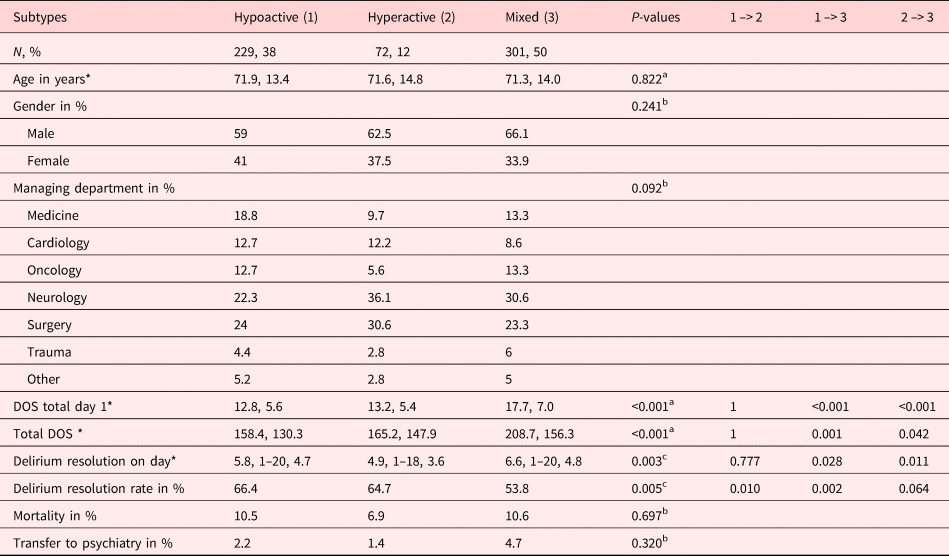
All patients in this observational cohort study were recruited from regular units at the University Hospital Zurich between February 2012 and June 2015. A screening algorithm for delirium was implemented. The Delirium Observation Screening Scale (DOS) was administered three times daily during the first three days and on incident delirium along with the short version of the Confusion Assessment Method (S-CAM) that was performed once delirium was suspected. The DOS and S-CAM were performed by nurses, specifically trained in their use. The study was approved by the ethics committee of the Canton of Zurich (KEK-ZH-Nr. 2012-0263). All participants provided written informed consent. Further reporting followed the STROBE statement (Vandenbroucke et al., Reference Vandenbroucke, von Elm and Altman2014). Patient characteristics are summarized in Table 1.
Sociodemographic and medical characteristics for patients and the respective subtypes

DOS, Delirium Observation Screening Scale.
a Analysis of variance (ANOVA).
b Pearson's χ 2 or Fisher's exact test.
c Kruskal–Wallis H-test.
* Mean and standard deviation.
Delirium management schedule
Once the delirium diagnosis was established, the delirium management schedule was initiated and DOS scoring to measure the course continued until delirium remitted. Management was performed according to the institution's consensus-based algorithm (Appendix 1).
The mainstay of delirium management was the treatment of the underlying etiology and supportive care. Supportive care featured nonpharmacological means, e.g., maintenance of the day–night rhythm through light management, constant caregivers, and mental and physical activation. For those patients with the hypoactive subtype and anxiety, distress, or restlessness, haloperidol, pipamperone, or lorazepam was administered. For the hyperactive and mixed subtypes, management included pipamperone, haloperidol for delusions or perceptual disturbances, and lorazepam for agitation. When the above-mentioned medications were not effective, patients were also managed with atypical antipsychotics such as risperidone, olanzapine, and quetiapine. For the noncompliant patient requiring intravenous administration, midazolam was used.
Pipamperone is a low-potency antipsychotic and an antagonist of 5HT2A-C-, D2−4-, and α1−2-receptors, with much higher activity against D4 and 5HT2A than D2 receptors and irrelevant activity against histamine1- and muscarinic-anticholinergic receptors (Ellenbroek and Cools, Reference Ellenbroek and Cools2012). Inclusion criteria were the presence of delirium, i.e., a positive score on the DOS and S-CAM (cf. below), active management of delirium, and DOS recordings for more than three days and age over 18. Exclusion criteria were insufficient DOS recordings (i.e., less than thrice per day) and hospitalization <24 h. Of note, we enrolled patients irrespective of their primary diagnosis at admission.
Measurements
Delirium rating scales in this study were the DOS and the short version of the CAM. The DOS has been validated as a screening tool for delirium and a measurement of delirium severity (Schuurmans et al., Reference Schuurmans, Shortridge-Baggett and Duursma2003; Scheffer et al., Reference Scheffer, van Munster and Schuurmans2011) according to DSM-IV (Diagnostic and Statistical Manual of Mental Disorders, 4th Edition) criteria of delirium (American Psychiatric Association, 1994); the DOS was specifically designed to capture early delirium symptoms. A total of 13 items refer to disturbances in the level of consciousness (1), attention (2–4), thought processes (5 and 6), orientation (7 and 8), memory (9), psychomotor behavior (10, 11, and 13), and affect (12). Each item is rated with a point scale (0 = not existent, 1 = sometimes to always, or not assigned = unable to assess). A total score of three or more indicates delirium. Remitted delirium is defined by scores of less than 7 on three DOS measurements obtained within 24 h. Subtyping of delirium was based on DOS items 10, 11, and 13, a validated and reliable approach (Scheffer et al., Reference Scheffer, van Munster and Schuurmans2011).
The S-CAM (Inouye et al., Reference Inouye, Kosar and Tommet2014) is a diagnostic tool validated for the assessment of delirium, reflecting the DSM III-R criteria for delirium (American Psychiatric Association, 1987). Items include (1) abrupt changes in mental status; subitems (2A) disturbance in attention; (2B) fluctuating course; and (2C) any inattention observed; (3) altered thought processes; and (4) altered level of consciousness. Available ratings for items 1, 2B, 2C, and 3 are yes, no, uncertain, and not applicable; for subitem 2A: not present, present in a mild form, present in a marked form, or uncertain; and for item 4: alert, hypervigilant, lethargic, stuporous, comatose, or uncertain. A diagnosis of delirium requires at least an affirmative response for items 1 or 2B, item 2A, and either item 3 or 4.
Statistical methods
Data were analyzed with SPSS version 25 for Windows, with P < 0.05 as the level of significance (two-tailed). Continuously scaled characteristics of the sample are presented as means with standard deviations or in case of a nonnormal distribution as medians with interquartile ranges; categorical variables are given as percentage values. The dataset was split according to the three delirium subtypes: hypoactive, hyperactive, and mixed. Delirium management was categorized into four groups: (1) supportive care only; (2) supportive care plus a single psychotropic drug; (3) supportive care plus two psychotropics (dual); and (4) supportive care plus three or more psychotropics (triple+). All psychotropics were categorized as follows: (a) antipsychotics including haloperidol, pipamperone, risperidone, olanzapine, and quetiapine and (b) benzodiazepines including lorazepam and midazolam. Dosages of psychotropic drugs were abstracted from hospital charts. Single subtherapeutic dosages were not considered as psychotropic management, i.e., <1 mg of risperidone, lorazepam; <7.5 mg of midazolam; <2.5 mg of olanzapine; <25 mg of quetiapine; and <20 mg of pipamperone. However, when patients received subtherapeutic dosages more than once, a cumulative effect was assumed and assigned to the respective medication group. The relevant dosages were computed as the total dosages divided by days administered.
Intergroup differences for continuous variables were computed by the analysis of variance or the Kruskal–Wallis test and for categorical variables by Pearson's chi-squared test or Fisher's exact test where appropriate.
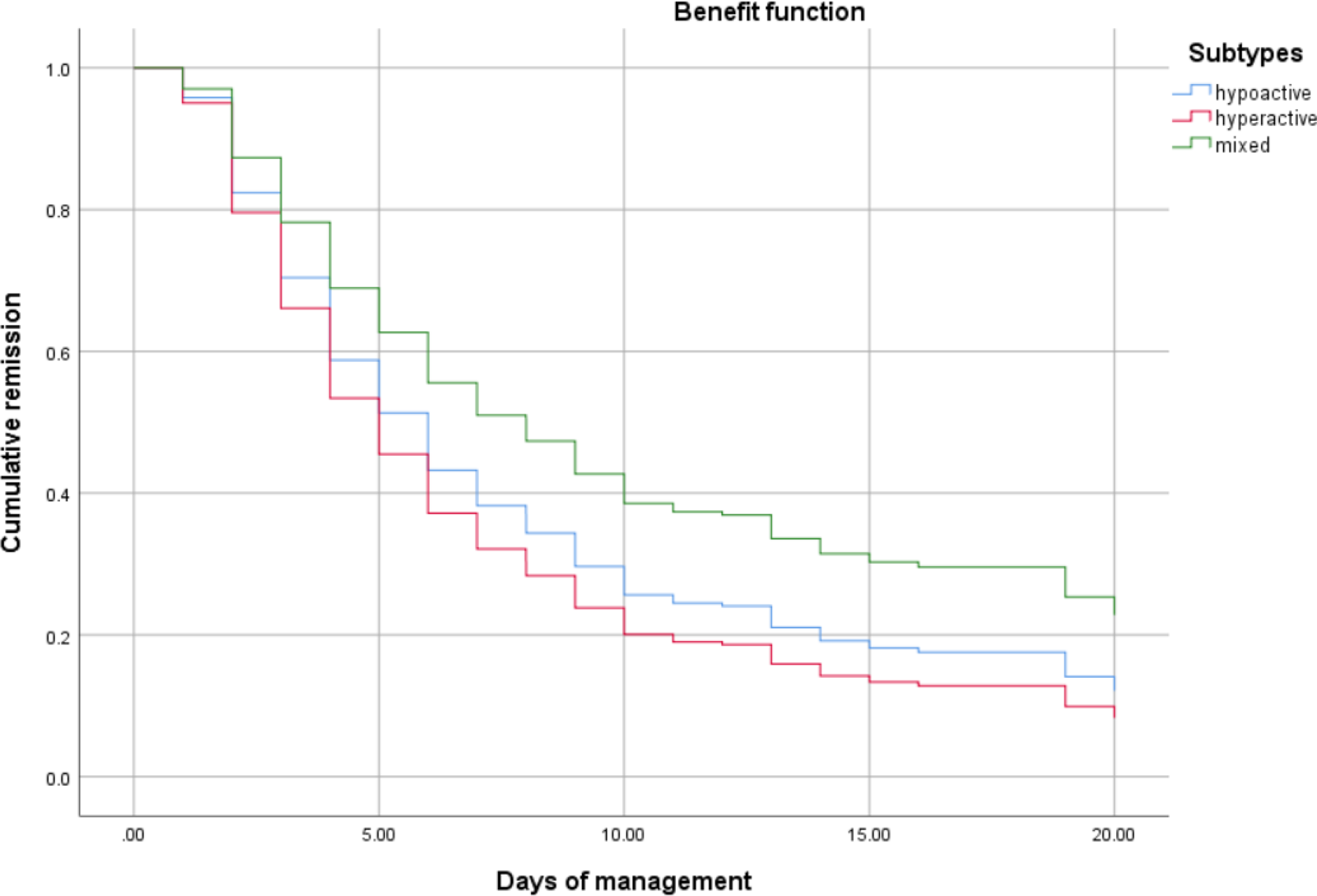
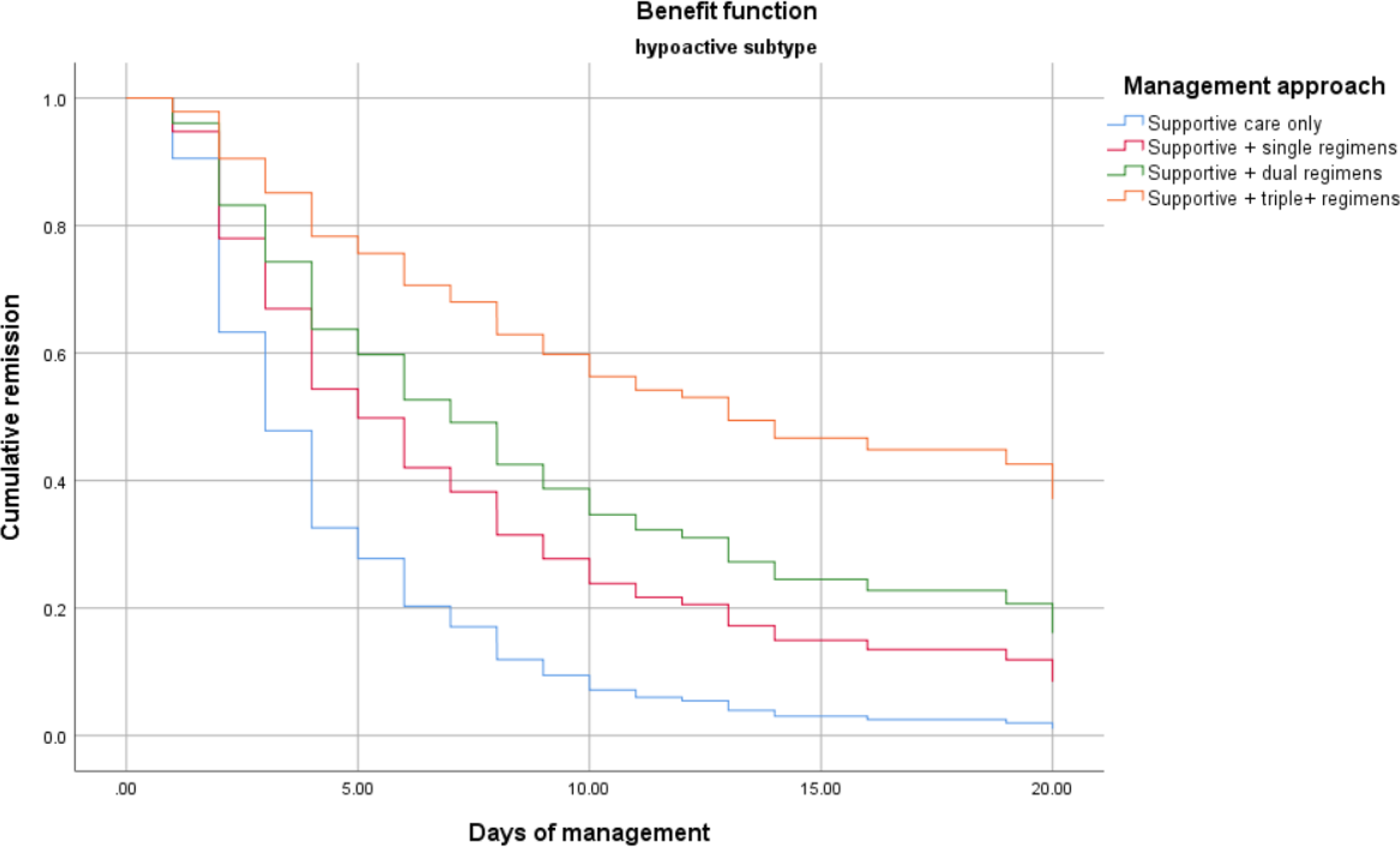
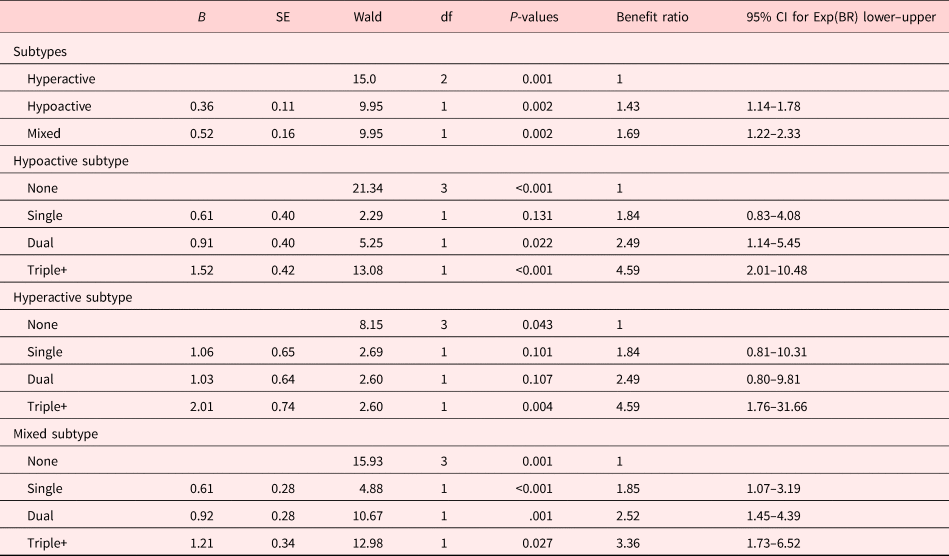
Cox regression models were calculated to estimate the odds of delirium remission across delirium subtypes and management strategies. For the delirium subtype model, i.e., irrespective of the management strategy, the hyperactive subtype was used as the indicator variable. For the management strategy model, i.e., pharmacotherapy in specific subtype groups, the contrast was set on treatment regimens and the indicator on supportive care only. For all models, the baseline delirium severity (DOS total day 1) was used as a covariate. Since the event for the Cox regression models was remission from delirium, the survival function represents the remission function and the hazard function represents the benefit function or ratio. The remission function is displayed in Figures 1 and 2, and the benefit functions or ratios are displayed in Table 3.
Cox regression model to evaluate the course of delirium in each subtype, independent of the management strategy. The y-axis depicts the percentage of patients with continued delirium and the x-axis depicts the days of management. Curves for the three delirium subtypes are displayed: hypoactive (blue), hyperactive (red), and mixed (green) subtypes. Remission rates were greater in the hyper- and hypoactive subtypes versus the mixed subtype.

Cox regression model to evaluate the course of delirium in the hypoactive subtype, depending on the management strategy. The y-axis depicts the percentage of patients with continued delirium and the x-axis depicts the days of management. Curves for the four strategies are displayed: supportive care alone (blue), mono- (red), dual- (green), and triple+ regimens (orange). Remission rates were lower in triple+ management, whereas patients on supportive care only fared best.

Results
Baseline characteristics of patients within the hypoactive, hyperactive, and mixed subtypes
Of the total of 602 patients, 229 (38%) had hypoactive, 72 (12%) had hyperactive, and 301 (50%) had mixed delirium. Delirium subtypes showed similar age and gender distribution. Patients were managed in various medical and surgical departments (Table 1). Remission of delirium was observed in 60.3% of all patients, with 66.4% in the hypoactive subtype, 64.7% in the hyperactive subtype, and 53.8% in the mixed subtype. Subtypes differed in their remission rate (P = 0.005). The hyperactive subtype reached superior remission rates compared to the hypoactive (P = 0.010) and mixed (P = 0.002) subtypes, whereas a trend was observed for superior remission in the mixed subtype versus the hypoactive subtype (P = 0.064). Baseline delirium severity was greater in patients with the mixed subtype compared with the hypoactive and hyperactive subtypes (P < 0.001). The summation score of all DOS measurements revealed a similar pattern (P < 0.001).
Management of delirium between the subtypes hypoactive, hyperactive, or mixed, irrespective of management
Delirium was most persistent in patients with the mixed subtype. If remission was achieved, it occurred on average on day 7. In the hypoactive subtype, if achieved, remission was achieved on average on day 6 and in the hyperactive subtype on day 5.
A total of 61 patients (10%) deceased in the course of hospitalization and 21 patients (4%) were transferred to inpatient psychiatric care. Both these rates did not differ between subtypes (Table 1).
The Cox regression model combining all management strategies was significant (the omnibus test of model coefficients, P = 0.001) with remission curves shown in Figure 1. Overall, the hyperactive subtype had better remission rates as compared to the hypoactive subtype [benefit rate (BR): 1.43, P = 0.002] and the mixed subtype (BR: 1.69, P = 0.002) (Table 3).
Management characteristics in the delirium subtypes
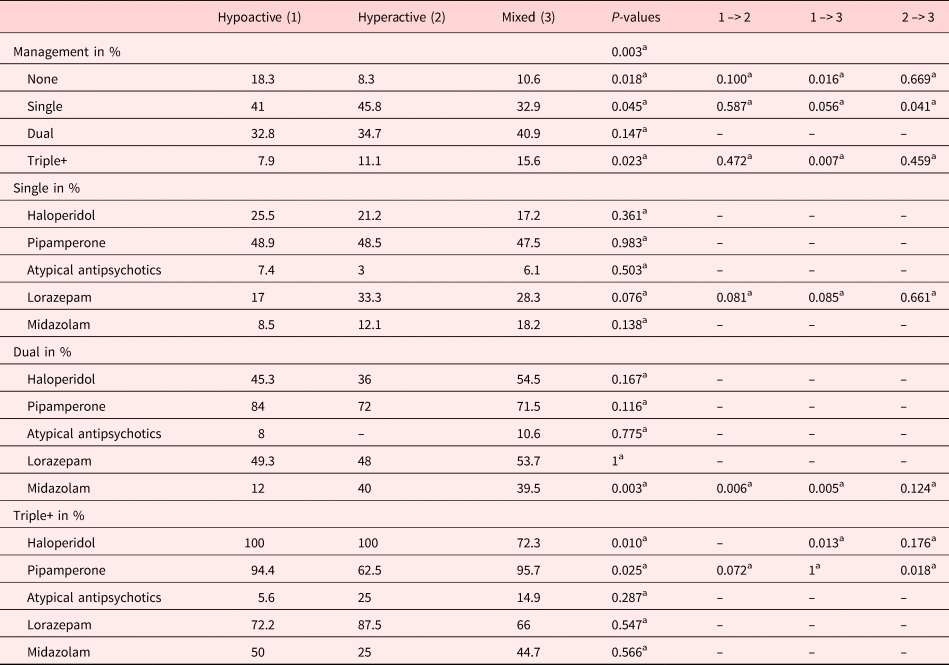
All the 602 patients in this study were managed for delirium, either with supportive care only (n = 80, 13%) or with supportive care plus a single (n = 227, 37.6%), dual (n = 224, 37.1%), or triple+ (n = 73, 12.1%) psychotropic regimen (Table 2). Patients with hypoactive delirium received significantly more often supportive care only compared to those with the mixed delirium subtype. Patients with mixed delirium received triple+ regimens more often than those with hypoactive delirium. There were significantly more patients treated with single psychotropic regimens in the hyperactive subtype than in the mixed subtype. All other management strategies were similarly distributed across groups.
Delirium management characteristics for patients and the respective subtypes

a Pearson's χ 2 or Fisher's exact test.
In terms of medication, the following was observed: in single regimens, the psychotropic agents did not differ between subtypes. When dual regimens were administered, midazolam was administered more often in the hyperactive and mixed subtypes than in the hypoactive subtype. In triple regimens, haloperidol was more often employed in patients with the mixed subtype than in those with the hypoactive subtype. More patients with the mixed subtype were receiving pipamperone as part of a triple+ regimen than patients with the hyperactive subtype.
Effectiveness of management interventions in the subtypes of delirium
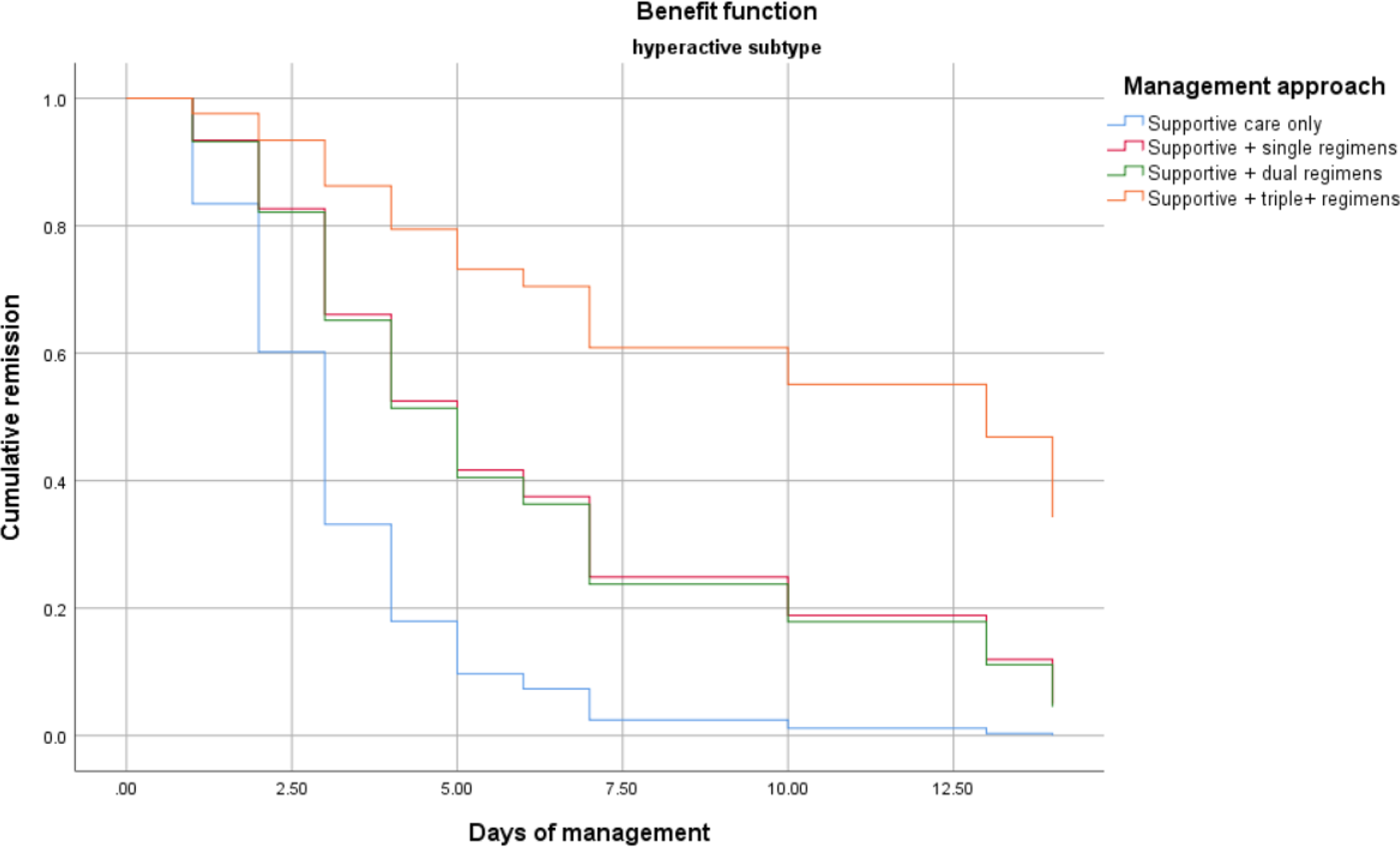
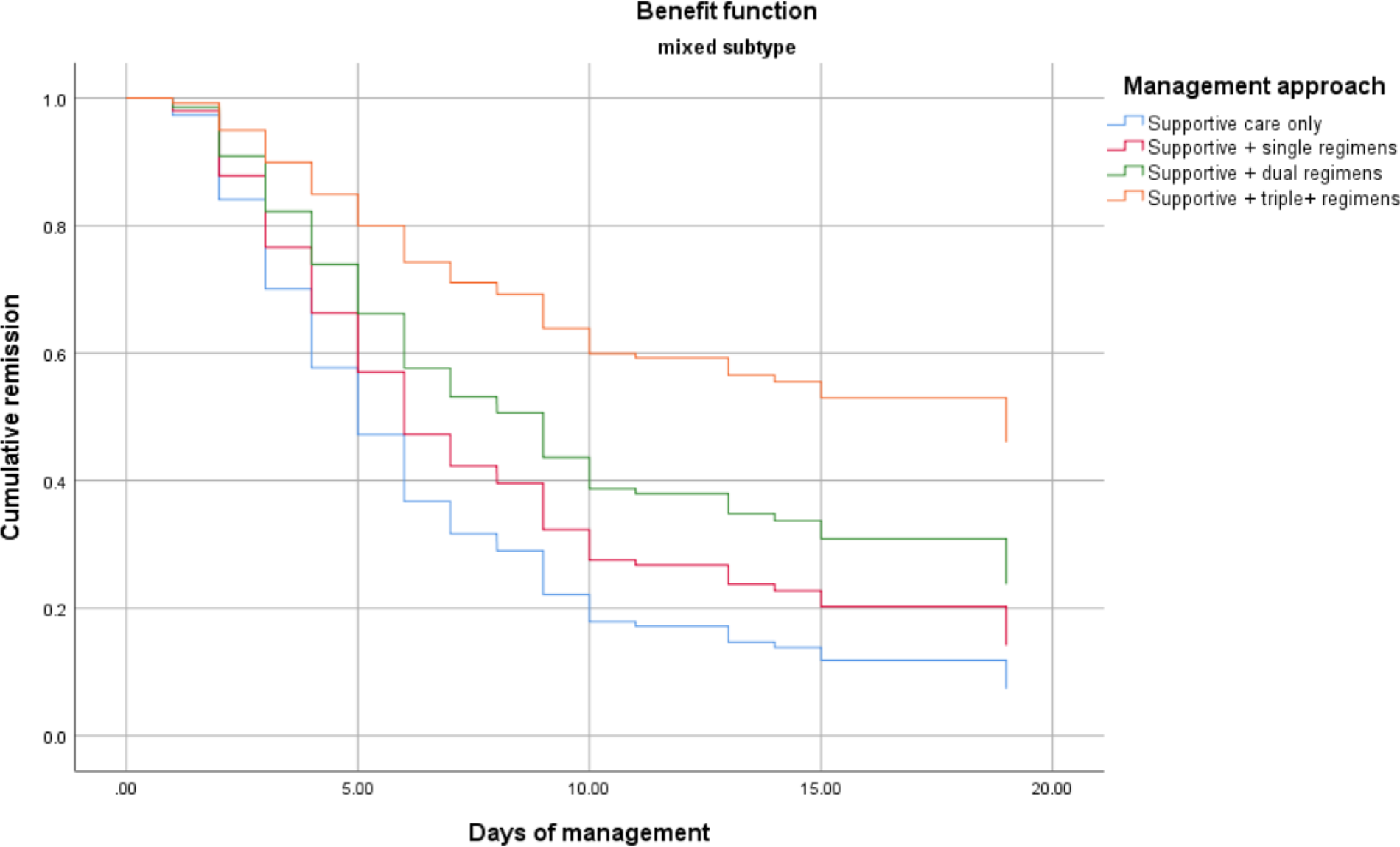
Independent of the subtype, the Cox regression models showed the highest benefit when only supportive care was provided, followed by single and dual regimens. Patients benefited the least from triple+ regimens (Table 3 and Figures 1 and 2). More specifically, for the hypoactive subtype, supportive care only benefited patients two and a half times more than dual regimens and four and a half times more than triple regimens (Table 3). For the hyperactive subtype, patients on supportive care only benefited four and a half times more than those on triple+ regimens. For patients with the mixed subtype, the benefits of supportive care only were almost twice as high compared with a single psychotropic regimen, more than two times greater than a dual psychotropic regimen and more than three times greater than a triple+ psychotropic regimen (Figures 3 and 4).
Remission analyses based on Cox regression models for delirium subtypes and their management

SE, standard error.
Cox regression model to evaluate the course of delirium in the hyperactive subtype, depending on the management strategy. The x- and y-axis and description of the curves correspond to legend of Figure 2. Remission rates were lower in triple+ management, whereas patients on supportive care only fared best.

Cox regression model to evaluate the course of delirium in the mixed subtype, depending on the management strategy. The x- and y-axis and description of the curves correspond to legend of Figure 2. Remission rates were lower in triple+ management, whereas patients on supportive care only benefited most.

Discussion
Summary of main findings
To our knowledge, this is the first study to show that the mixed subtype of delirium responds less to management, irrespective of which intervention is chosen. In addition, the mixed subtype predicted more severe and persistent delirium. Furthermore, the hypoactive subtype was less responsive to management than the hyperactive subtype, which responded best to management. In total, the allocation of subtypes was 38% hypoactive, 12% hyperactive, and 50% mixed. During short-term hospitalization, the subtypes did not significantly differ in mortality rates and transfer rates to inpatient psychiatric care.
The management interventions, i.e., supportive care only versus single, dual, or triple+ psychotropics (13%, 37.6%, 37.1%, and 12.1%, respectively), were generally the same between the subtypes by psychotropics used and included haloperidol, lorazepam, pipamperone, atypical antipsychotics, and midazolam. However, the responses to these interventions differed substantially. Generally, supportive care only yielded the best responses, whereas triple+ regimens performed the worst. The single and dual regimens reached intermediate responses. Specifically, for the most benign subtype, the hyperactive, supportive care only exceeded the response to triple+ regimens by more than fourfold. For the hypoactive subtype, less responsive than the hyperactive one, supportive care only exceeded the responses to the dual and triple+ regimens by more than twofold and fourfold, respectively. For the least responsive mixed subtype, supportive care only exceeded the responses to single and dual regimens by approximately twofold and more than threefold for triple+ regimens.
Thus, supportive care only benefited the patients the most and triple+ regimens the least. If psychotropics are chosen, their use ought to be limited to one or two psychotropics, which did not necessarily fare worse than supportive care only.
Comparison of study findings with the literature
Supporting the notion that the hypoactive subtype may be less responsive to management than the hyperactive (Stagno et al., Reference Stagno, Gibson and Breitbart2004), these results confirmed that the hyperactive subtype remitted faster than the hypoactive subtype. Notably, novel findings of our study are that the mixed subtype predicted more severe and refractory delirium, and responded the least to management.
In contrast to the previous notion that the hypoactive and mixed subtypes, but not the hyperactive subtype, were associated with increased mortality during hospitalization (previous studies report hazard ratios of 2.43 and 2.31, respectively) (Avelino-Silva et al., Reference Avelino-Silva, Campora and Curiati2018), these findings failed to replicate during this short-term hospitalization. Though the sample was similar in size, it might have differed in terms of age — 80 versus 71 years, subtype allocation — hypoactive more than mixed subtypes, and cohort — geriatric versus general hospital population.
The management of delirium remains to be controversial (Meagher et al., Reference Meagher, Agar and Teodorczuk2018). Even if the administration of antipsychotics was a recommended clinical routine in the past (Trzepacz et al., Reference Trzepacz, Breitbart and Franklin1999), a shift toward a more conservative approach has emerged recommending antipsychotics only for patients who are in distress caused by delirium (National Institute for Health and Clinical Excellence, 2010; Neufeld et al., Reference Neufeld, Yue and Robinson2016). To concur, a study in the palliative care setting suggested that the outcome for patients on either haloperidol or risperidone was worse compared to placebo with respect to delirium course and mortality (Agar et al., Reference Agar, Lawlor and Quinn2017). In this large sample of 602 patients, supportive care only was also the management approach which benefited the patients the most. Although patients on triple+ regimens fared the worst, it is premature though to reach a final verdict about the use of psychotropics including antipsychotics for the management of delirium. A parsimonious recommendation that could follow from the previous literature (Neufeld et al., Reference Neufeld, Yue and Robinson2016) and our observations is to choose psychotropics wisely and to limit their number to one or possibly two psychotropics. Nonetheless, managing patients with delirium with supportive care only is an option to consider.
The choice of psychotropics in this study was generally algorithm-driven and reflected common practice (Patel et al., Reference Patel, Gambrell and Speroff2009; Kotfis et al., Reference Kotfis, Zegan-Baranska and Zukowski2017). Whether there are differential effects of psychotropics on the management of delirium remains largely unknown. The understanding of the etiopathogenesis of delirium is still limited (Maldonado, Reference Maldonado2017) and hopefully, with growing evidence, the understanding and management of delirium will improve. Clearly, further studies, including randomized controlled trials, assessing the effects of various interventions in the management of delirium are sorely needed.
Study strengths and limitations
This study has not only several strengths but also limitations. This was the largest delirium sample included in a study to date. All patients were routinely assessed for delirium three times daily, capturing the fluctuations of delirium which may be overseen by once-daily assessment. The sample represented a naturalistic patient population and the implemented algorithm reflected common practice, although a randomized controlled design could have yielded more reliable results. Baseline cognition and cognitive disorders, as well as the severity of concomitant diseases, could not be recorded. All of these are known to impact the course of delirium (Fong et al., Reference Fong, Tulebaev and Inouye2009). The prevalence of delirium subtypes was uneven representing their natural presentation. However, more patients with the hyperactive subtype would have been desirable for greater statistical power between group comparisons.
Conclusions
The findings of this study suggest that the delirium subtypes, such as hypoactive, hyperactive, and mixed, are relevant to their response to management and in their management strategies. The mixed subtype predicted more severe and persistent delirium, and the hypoactive subtype was more persistent than the hyperactive subtype. However, neither subtypes predicted mortality nor transfers to inpatient psychiatry care. Regarding the management of delirium between subtypes, patients on supportive care only generally fared the best, whereas those on multiple psychotropics fared the worst. The clinical question as to whether psychotropic drugs should be used for the management of delirium in addition to supportive care remains controversial; however, if psychotropics are chosen, their use likely should be limited to those in need.
Conflict of interest
none.