Introduction
There is limited data on solid organ transplantation (SOT) from donors with positive blood cultures or established bloodstream infections (BSI) and subsequent antimicrobial management in the recipient. Data defining the incidence of donor-derived infection (DDI) are similarly scarce, leading to uncertainty in both the safety of utilizing these organs and in the optimal antimicrobial regimen in recipients of organs from infected donors. The American Society of Transplantation (AST) recommends 7–14 days of targeted preventive antibiotic therapy (PAT) based on limited data.Reference Wolfe and Ison1,Reference Fishman, Greenwald and Grossi2
The risk of transmission from bacteremic donors is difficult to determine for specific organs due to lack of data.Reference Fishman and Grossi3 Gram negative bacilli (GNB) BSIs pose the greatest risk of transmission and worse outcomes in DDI.Reference Wolfe and Ison1,Reference Singh4 Transmission rates as low as 1 in 83 have been documented even in cases of unrecognized BSI prior to transplant, with no difference in recipient or graft survival.Reference Lumbreras, Sanz and González5,Reference Mo, Lee and Park6 Donors with multidrug resistant (MDR) bacteremia have also demonstrated low to no transmission when recipients are given appropriate PAT for 7 days.Reference Mularoni, Bertani and Vizzini7 Studies in recipients of organs from donors with BSI are limited by small sample sizes, the choice and duration of antimicrobial regimens, and none have evaluated different durations of PAT.
The purpose of this study is to evaluate the incidence of DDIs in recipients of organs from donors with positive blood cultures. Additionally, this study will examine the differences between shorter versus longer duration of PAT.
Methods
Study design
This was a retrospective, single-center cohort study conducted at Mayo Clinic Arizona. We screened all adult SOT recipients from 1/1/2019 to 7/1/2024 receiving organs from donors with positive blood cultures, defined as United Network of Organ Sharing (UNOS)-reported donor blood cultures positive at any point during the terminal hospitalization prior to organ donation. Patients receiving kidney, heart, pancreas, liver, or any combination of the four were included. Patients were excluded if donor records did not corroborate the UNOS-reported positive blood cultures.
Data collection
Donor data was abstracted from UNOS through an Organ Procurement and Transplantation Network data request and validated through manual review of DonorNet. Recipient data was abstracted from the electronic medical record. Recipient demographics collected included age, sex, race, date of transplant, transplanted organ(s), indication for transplant, first transplant or retransplant, induction agent, and recipient antimicrobial therapy. If patients received more than one organ, the indication for each organ was included. All recipients received antimicrobial prophylaxis at time of surgery and for 48 hours postoperatively per institution protocol. Specific antimicrobial used for surgical prophylaxis differed by organ. Donor demographics included date of positive blood cultures in relation to time of donation, organism(s) isolated, number of positive blood culture bottles, antibiotics received during terminal hospitalization targeted to blood cultures, and cause of death. If the donor had known positive blood cultures prior to organ harvest, transplant coordinators shared pertinent information with surgical and transplant infectious disease teams, who provided recommendations for management in the recipient.
Donor positive blood cultures are defined as any organism isolated from any blood cultures obtained at any point prior to organ donation during donor’s terminal hospitalization. Donors were then classified as likely contaminants or true pathogens for the purposes of this study. “Likely contaminants” were donors with only organisms determined unlikely to be true pathogens based on either the virulence of pathogen + number of bottles isolated, reference list of common commensals,8 or if labeled on UNOS results as likely contaminant. This included coagulase-negative staphylococci (CoNS), viridans group streptococci (VGS), Coryneform or Cutibacterium species, gram positive rods or other uncommon organisms if isolated in only one blood culture bottle.
Outcomes
The primary outcome of the study was the incidence of DDI within 30 days of transplant, defined as the same pathogen with similar phenotype isolated in the recipient as the donor blood culture. Recipients with cultures from any source (to include blood, urine, or other fluid/tissue) positive for the same organism isolated in donor blood cultures were identified as possible DDI and subsequently reviewed by an infectious diseases pharmacist (D.I.) and physician (C.S.) to make the final determination of DDI.
Safety outcomes included recipient and graft survival at 30 days and 6 months posttransplant.
Secondary outcomes were duration of PAT for positive donor cultures, incidence of likely contaminants in donor blood cultures, and incidence of Clostridioides difficile infection (CDI) within 60 days of transplant. A posthoc analysis was conducted to compare these outcomes between recipients treated ≤7 days vs 8–14 days.
Only antimicrobials intended for PAT of donor blood cultures and effective against the final donor organism susceptibilities were included in the outcome analysis, which was determined via chart review (e.g., order indications, notes). The length of PAT was capped at 14 days. This decision was made after completion of data collection based on the observation that any recipients on antimicrobial therapy past 14 days, while initially started for PAT, were kept on antimicrobials longer due to unrelated infections.
Statistical analysis
Continuous variables are summarized as mean, standard deviation, median, interquartile range, and range; differences were tested using exact Kruskal-Wallis tests. Categorical variables are summarized as counts and percentages; differences were tested using Fisher’s exact tests. Statistical analyses were conducted using SAS version 9.4, with a significance level of α = 0.05.
Results
Recipients
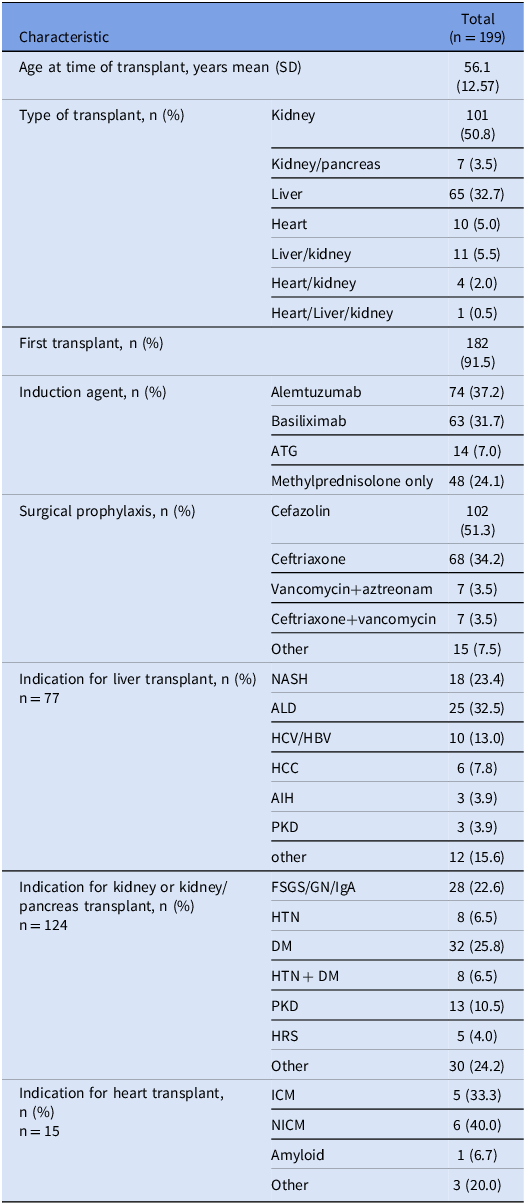
Of 200 SOT recipients initially identified for review based on UNOS-documented positive donor blood cultures (4.7% of 4,240 total transplants during study time), 199 recipients met all inclusion criteria. One recipient was excluded given no evidence of positive blood cultures in donor records. Organs were procured from 167 unique donors. Of the included recipients, 101 (50.8%) were kidney alone and 65 (32.7%) were liver alone, with 102 (51.3%) receiving cefazolin for surgical prophylaxis and 68 (34.2%) receiving ceftriaxone per institution organ-specific protocol. Additional baseline characteristics, including induction regimen and indications for transplant, are available in Table 1.
Recipient baseline characteristics

Table 1 Long description
The table presents baseline characteristics of 199 solid organ transplant recipients with positive donor blood cultures. It includes data on age at time of transplant, type of transplant, first transplant status, induction agent, surgical prophylaxis, and indications for liver, kidney, and heart transplants. The table has 19 rows and 2 columns, with the first column listing characteristics such as age, type of transplant, induction agent, and surgical prophylaxis, and the second column providing corresponding totals or percentages. Notable trends include the majority of recipients receiving kidney or liver transplants, with cefazolin being the most common surgical prophylaxis. The table also details specific indications for each type of transplant, such as NASH and ALD for liver transplants, and FSGS and DM for kidney transplants.
ATG, antithymocyte globulin (rabbit derived); NASH, nonalcoholic steatohepatitis; ALD, alcohol-related liver disease; HCV, hepatitis C virus; HBV, hepatitis B virus; HCC, hepatocellular carcinoma; AIH, autoimmune hepatitis; PKD, polycystic kidney disease; FSGS, focal segmental glomerulosclerosis; GN, glomerulonephropathy; IgA, IgA nephropathy; HTN, hypertension; DM, diabetes mellitus; HRS, hepatorenal syndrome; ICM, ischemic cardiomyopathy; NICM, non-ischemic cardiomyopathy.
Donors
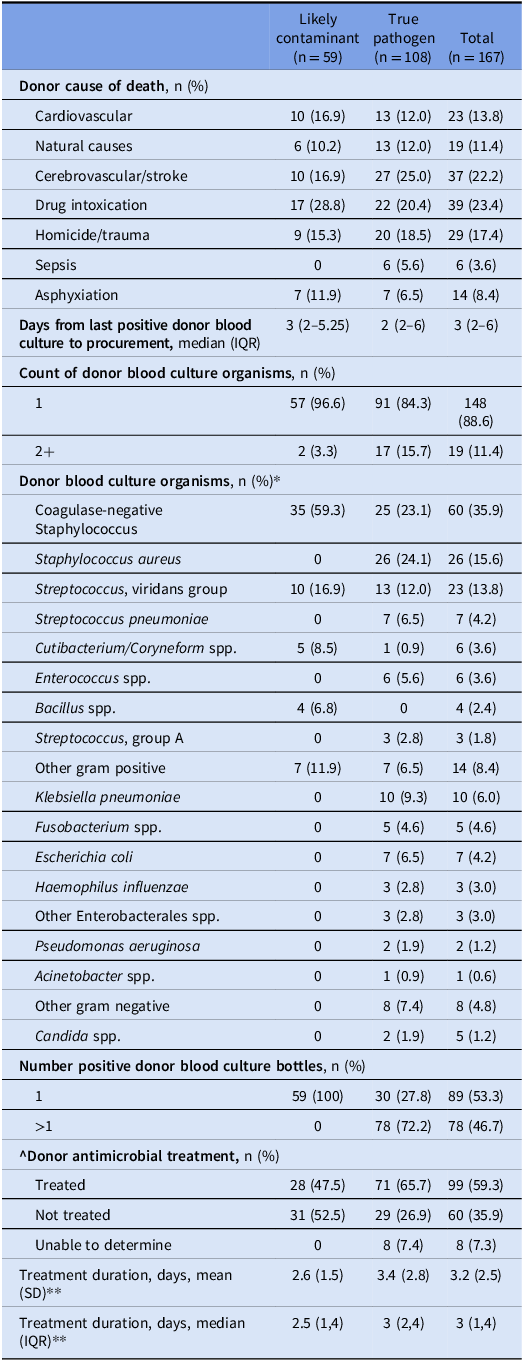
A total of 190 organisms were identified, and 19 donors had more than one organism isolated in blood cultures (Table 2). All donors classified as likely contaminants had only a single positive blood culture for any isolated organism. Gram-positives were the most common organisms isolated, with CoNS, Staphylococcus aureus, and VGS present in 35.9%, 15.6%, and 13.8% of donors, respectively. Out of the gram negative organisms, Klebsiella pneumoniae (6.0%) and Fusobacterium spp. (4.6%) were the most common isolates. Overall, 108/167 (64.7%) of donors were determined to have a pathogen. The full list of “other” donor organisms and donor organisms stratified by monomicrobial versus polymicrobial growth is available in supplementary Tables 1 and 2. The most recent positive donor blood cultures were collected at a mean of 4 days prior to procurement (SD ± 3.3 days), with a range of 0 to 18 days. All donors received broad-spectrum antibiotics immediately prior to procurement per local organ procurement organization protocol. Of the 167 donors, 99 (59.2%) were given antibiotics for the treatment of positive blood cultures, with a mean treatment duration of 3.2 days. The most commonly given antimicrobial agents were vancomycin (57.6%) and piperacillin/tazobactam (46.5%), with most donors receiving more than one antimicrobial during terminal hospitalization (supplementary Table 3). Of 26 donors with S. aureus isolated, 19 (73%) were treated. Of those treated, accurate durations of donor treatment were able to be determined for 18, with a median (IQR) duration of treatment of 2 (1, 3) days.
Donor characteristics

Table 2 Long description
The table presents data on donor characteristics and blood culture results, comparing likely contaminants and true pathogens. It includes 167 donors, with 59 likely contaminants and 108 true pathogens. The table is divided into several sections: donor cause of death, days from last positive donor blood culture to procurement, count of donor blood culture organisms, types of donor blood culture organisms, number of positive donor blood culture bottles, and donor antimicrobial treatment. Key trends include the prevalence of drug intoxication as the leading cause of death, the dominance of gram-positive organisms like Coagulase-negative Staphylococcus and Staphylococcus aureus, and the treatment of donors with antibiotics prior to procurement. The table provides detailed insights into the distribution and treatment of various organisms in donors.
* All organisms, including polymicrobial cultures. There were 2 donors in the Likely Contaminant group each with 2 organisms. In the True Pathogen group, 92 donors had a single organism identified, 14 donors had 2 organisms identified, and 3 donors had 3 organisms identified. As long as at least one organism was considered a pathogen, the donor was placed in the True Pathogens group.
** Duration was able to be accurately determined for 94/99 donors who received treatment.
^ Treatment targeted to donor blood cultures.
Primary outcome
Within 30 days of SOT, 49 recipients (24.6%) had at least one positive culture from urine, abdominal fluid, sputum, or blood. Two confirmed cases of DDI were identified (1.0%). Neither recipient received active antimicrobials prior to developing DDI. Both were extended-spectrum beta-lactamase (ESBL) phenotype Enterobacterales bacteremias, and neither donor received effective antimicrobial therapy prior to organ donation. All other recipient cultures were unrelated to donor pathogens.
The first DDI was ESBL K. pneumoniae bacteremia in a liver transplant recipient found incidentally on post-operative day (POD)#1 due to the recipient having preexisting E. coli bacteremia on the day of transplant. The team was alerted to the donor blood cultures on the same day, though the donor cultures were reported as just GNB at that time. The positive donor blood cultures were drawn on the day of donation and therefore the donor did not receive directed therapy. The recipient received ceftriaxone for surgical prophylaxis and was initiated on piperacillin/tazobactam POD#1, which was subsequently transitioned to ertapenem once susceptibilities returned. Both BSIs in the recipient (Escherichia coli and ESBL K. pneumoniae) were treated successfully for 10 days, without development of clinical illness or other adverse consequences.
The second DDI occurred in a kidney transplant recipient that developed ESBL E. coli bacteremia on POD#1. The patient received cefazolin for surgical prophylaxis. On POD#2, the patient was transferred to the ICU due to decreasing urine output, hypoglycemia, hemodynamic instability, and acute respiratory failure. On the same day, discoloration around the surgical incision was noted, with gas present and skin/soft tissue tracking along the incision seen on imaging. Antibiotics were broadened to meropenem and linezolid given concern for necrotizing fasciitis. The patient was taken to the operating room for emergent surgical debridement. The patient rapidly deteriorated and passed away on POD#2. Donor blood cultures drawn two days prior to procurement grew an identical ESBL E. coli. Final susceptibilities resulted after procurement, and thus the donor did not receive effective antimicrobial therapy. The transplant team was unaware of final donor blood culture results prior to the recipient’s demise.
Secondary outcomes
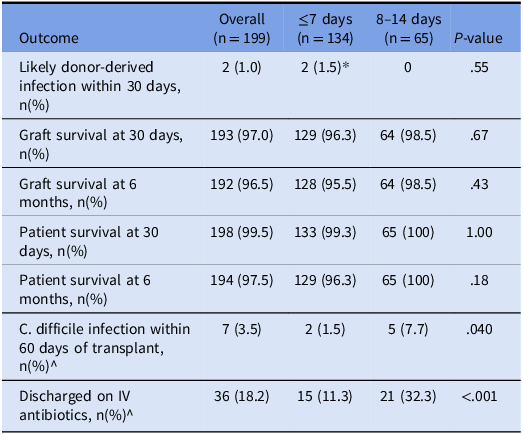
Table 3 details recipient outcomes overall and by duration of PAT (≤7 vs 8–14 days). Graft and recipient survival at 6 months posttransplant were 96.5% and 97.5%, respectively, with no difference by duration of PAT. Thirty-six (18.2%) recipients were discharged on IV antibiotics for PAT. Recipients who received 8–14 days had more CDI within 60 days of SOT (7.7% vs 1.5% 7 days, P = .040) and were more often discharged on intravenous antibiotics (32.3% vs 11.3%, P < .001).
Recipient outcomes overall and by duration of preventive antibiotic therapy

Table 3 Long description
The table presents data on recipient outcomes overall and by duration of preventive antibiotic therapy, divided into three columns: Overall, less than or equal to 7 days, and 8 to 14 days. The table includes six rows of data, each representing different outcomes such as likely donor-derived infection within 30 days, graft survival at 30 days and 6 months, patient survival at 30 days and 6 months, C. difficile infection within 60 days of transplant, and discharge on intravenous antibiotics. The table shows that graft and patient survival rates are high across all groups, with no significant difference by duration of therapy. However, recipients who received 8 to 14 days of therapy had higher rates of C. difficile infection and were more often discharged on intravenous antibiotics compared to those who received 7 days or less of therapy.
* Both cases of donor-derived infection occurred prior to administration of active antimicrobials in recipients.
^ n = 198.
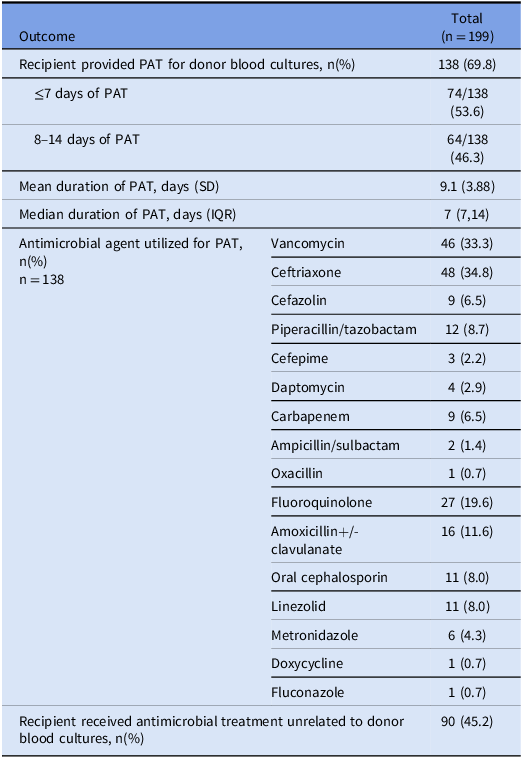
Most recipients (138/199, 69.3%) received PAT (Table 4). The mean duration of PAT overall was 9.1 days and was similar by donor organism group (8.6 days contaminant vs 9.3 days pathogen, P = .393). Of those treated, 74 (53.6%) received ≤7 days, while the remaining received 8–14 days. Most recipients received vancomycin (33.3%), ceftriaxone (34.8%), or fluoroquinolones (19.6%).
Antimicrobial therapy in recipients

Table 4 Long description
The table presents data on the outcomes and antimicrobial agents utilized for PAT in recipients. It includes information on the number of recipients who provided PAT for donor blood cultures, the duration of PAT, and the specific antimicrobial agents used. The table has 13 rows and 2 columns. The first column lists the outcomes and antimicrobial agents, while the second column provides the corresponding total values or percentages. Notable trends include the majority of recipients receiving PAT for 7 days or 8-14 days, with vancomycin, ceftriaxone, and fluoroquinolones being the most commonly utilized antimicrobial agents.
PAT, preventive antibiotic therapy.
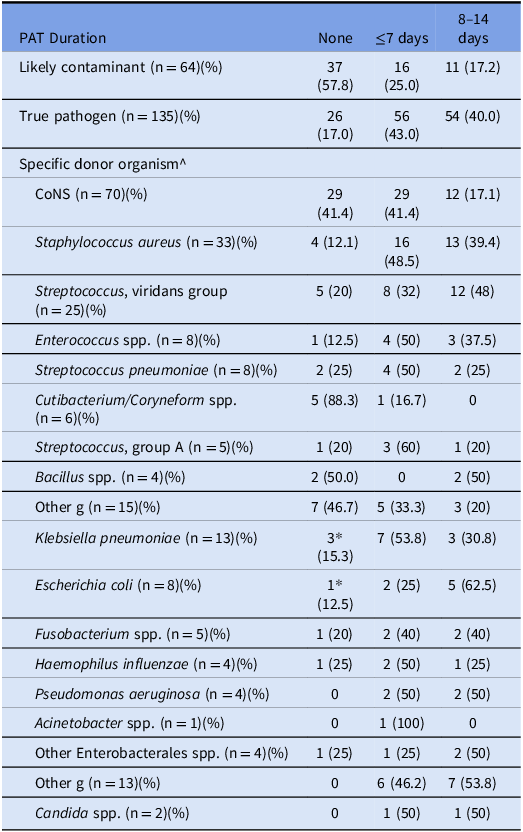
Overall, 64 (32.2%) recipients received organs from donors with likely contaminant blood culture organisms, of whom 27 (42.2%) recipients received PAT. Significantly fewer recipients were treated for likely contaminant donor blood cultures vs true pathogens (42.2% vs 83.0% treated, respectively, P < .001). PAT duration (none vs ≤7 days vs 8–14 days) by donor organism is shown in Table 5. Of the 135 recipients transplanted from donors with likely pathogens in blood cultures, 26 (17.0%) received no PAT apart from standard perioperative antimicrobials, with 2/26 (7.7%) resulting in DDI. Thirty-three recipients received organs from the 26 donors with S. aureus. Of these, 29/33 (87%) received PAT beyond standard perioperative antibiotics per institutional protocol for an average of 8.6 days. Given that both cases of DDI occurred prior to the initiation of PAT targeting the donor organism, there was no difference by PAT duration (≤7 days vs 8–14 days).
Recipient PAT duration by donor organism

Table 5 Long description
The table presents data on recipient PAT duration by donor organism, detailing the distribution of likely contaminants and true pathogens. It includes specific donor organisms such as CoNS, Staphylococcus aureus, Streptococcus viridans group, and others. The table is divided into columns representing different PAT durations: None, less than or equal to 7 days, and 8 to 14 days. Each row lists a specific organism, the number of recipients, and the percentage distribution across the different PAT durations. For example, CoNS has 29 recipients with no PAT, 29 with PAT for 7 days or less, and 12 with PAT for 8 to 14 days. The table highlights that 64 recipients received organs from donors with likely contaminants, while 135 received organs from donors with true pathogens. Notably, the table shows that significantly fewer recipients were treated for likely contaminants compared to true pathogens.
CoNS, coagulase-negative staphylococci; PAT, preventive antimicrobial therapy.
^More than one organism per donor possible. 25 recipients received transplants from 18 donors with polymicrobial blood cultures. 4/25 (16%) of recipients with polymicrobial donors had donors with 3 organisms, whereas the remainder had two organisms identified. Only 2/18 donors with polymicrobial cultures were identified as all contaminants.
*Indicates organisms that resulted in DDI, both of which were extended-spectrum beta-lactamase (ESBL) phenotype and occurred prior to recipient receipt of active therapy.
Discussion
We noted low rates of DDI in recipients of organs from donors with positive blood cultures, reinforcing the overall safety in utilizing organs from this donor pool. There was no difference in DDI between recipients provided with ≤7 versus 8–14 days of PAT; however, longer courses of PAT were associated with increased risk of CDI and discharge on IV antimicrobials. Therefore, shorter durations of PAT (≤7 days) are likely safe and effective in this population.
The paucity of data on the risk and management of donor BSI has led to ambiguity on the appropriate length of PAT in recipients. Of the studies evaluating the risk of transmission in this clinical context, few demonstrated significantly increased risk.Reference Lumbreras, Sanz and González5–Reference Mularoni, Bertani and Vizzini7,Reference Gonzalez-Segura, Pascual and Garcia-Huete9–Reference Svoronos, Hernandez Acosta and Vijayvargiya15 The AST guideline recommendation of 7–14 days is an empiric consensus, with no supporting data or trends to establish this range.Reference Wolfe and Ison1 Given the risks of antimicrobial overuse and paucity of data, an evidence-based approach to the duration of PAT in SOT recipients with positive donor blood cultures is warranted.
It is noteworthy that both cases of DDI in our study were multidrug-resistant gram-negatives that were unrecognized prior to transplant. This is consistent with prior studies showing very low rates to no transmission of gram positive organisms.Reference Mo, Lee and Park6,Reference Gonzalez-Segura, Pascual and Garcia-Huete9 In one of the earliest and most cited studies on this topic, Lumbreras et al. examined the clinical significance of unrecognized donor bacteremia in liver and heart transplant recipients.Reference Lumbreras, Sanz and González5 There were no cases of DDI or any significant differences in mortality or graft survival compared to recipients of organs from non-bacteremic donors.Reference Lumbreras, Sanz and González5 However, the authors identify the potential bias of bacteremia that is unrecognized prior to transplant, which may be more likely to represent low virulence organisms such as CoNS versus faster growing/more virulent organisms such as GNB.
The risk of transmission is highest immediately posttransplantation, with the majority of bacterial DDI seen within the first 30 days of transplant.Reference Wolfe and Ison1,Reference Mo, Lee and Park6,Reference Mularoni, Bertani and Vizzini7,Reference Zibari, Lipka, Zizzi, Abreo, Jacobbi and McDonald10,Reference Tong, Hu and Huang11,Reference Len, Gavaldà and Blanes13 There were no statistically significant differences in our study between the rate of transmission in recipients receiving ≤7 vs 8–14 days of PAT. Given that our two cases of DDI occurred immediately following SOT and prior to receipt of active antimicrobial therapy based on donor cultures, these results suggest that time to appropriate antimicrobial therapy in the recipient rather than final duration is the crucial factor in development of clinically significant DDI. In both cases of DDI in our study, neither pathogen was covered with the standard perioperative prophylaxis regimen due to resistance. Thus, it is conceivable that even a few doses of perioperative antibiotic prophylaxis targeting donor organisms might be sufficient to prevent DDI, provided the donor pathogens and their susceptibilities are known prior to transplantation. However, despite blood cultures being drawn on all donors at the time of procurement, delays in the transmission of blood culture results can impact recipient outcomes, as seen in our only death in which the transplant team was unaware of the donor blood cultures until after her demise. This raises the question of whether broader spectrum PAT might be appropriate for the donor and/or recipient for those cases in which the donor cultures or full susceptibilities are unavailable or unknown prior to transplantation. Most recipients in our study received either cefazolin or ceftriaxone for surgical prophylaxis, and the majority of donors received piperacillin/tazobactam and vancomycin at the time of procurement. Given the overall low rate of transmission and the even lower rate of recipient mortality from DDI, the benefits of broadening the spectrum of donor or recipient perioperative prophylaxis must be weighed against risks of CDI and colonization/infection with more resistant organisms.
The potential for contaminated donor blood cultures with commensal flora and subsequent treatment in recipients is considerable. We found that 35.3% of donors with positive blood cultures had only commensals isolated, resulting in treatment in 42.2% of recipients for an average of 8.6 days. This amounts to approximately 232 days of potentially unnecessary antimicrobial therapy. A recent study evaluating outcomes of kidney transplant recipients from donors with positive blood cultures applied a similar focus on potential contaminants, which they defined utilizing the CDC list of commensal organisms.Reference Svoronos, Hernandez Acosta and Vijayvargiya15 They demonstrated a low overall rate of transmission, reporting no cases of DDI in both recipients of likely pathogenic organisms and commensals despite the majority of the commensal recipients (27/36, 75%) receiving no PAT.Reference Svoronos, Hernandez Acosta and Vijayvargiya15 Collectively, these data suggest that the risk of DDI from commensals in donor blood cultures is minimal, if present at all, calling into question the practice of PAT in the recipients.
The association of longer duration of PAT (8–14 days) and discharge home on IV antibiotics with significantly higher rates of CDI is another reason to consider shortening PAT or even choosing not to treat in cases of donor blood culture contamination. Institutions should consider developing protocols to promote careful appraisal and selective use of antimicrobials in this population based on recipient and donor-specific risk factors to prevent unnecessary antibiotic exposure. Since such organisms can also be true pathogens in the right clinical setting (such as with multiple positive blood cultures and hardware infection), consultation with infectious diseases when in doubt is strongly recommended.
Limitations of this study include the retrospective, single-center design and the use of UNOS-identified positive donor cultures, which may have missed patients if donor cultures were not captured in UNOS or if recipients had DDI from unrecognized donor bacteremia. Our center utilizes alemtuzumab induction for a high proportion of kidney transplants, which is not available at all transplant centers and can modify infection risk. Lastly, while we were able to collect data on the antimicrobials given to donors during terminal hospitalization, this data was not analyzed for effectiveness for the donor blood cultures. Thus, we are unable to ascertain the extent to which choice and/or duration of antimicrobials given to the donors impacted the risk of pathogen transmission. While some studies comment broadly on the use of antibiotics targeted to donor pathogen,Reference Fishman and Grossi3,Reference Tong, Hu and Huang11,Reference Freeman, Giatras and Falagas12 most studies examine whether the donor received any antibiotics at all either 24 hours prior to procurementReference Lumbreras, Sanz and González5 or at any point during terminal hospitalization,Reference Gonzalez-Segura, Pascual and Garcia-Huete9,Reference Zibari, Lipka, Zizzi, Abreo, Jacobbi and McDonald10 and thus our study is consistent with prior literature.
To our knowledge, this study marks the largest published cohort of SOT recipients of donors with positive blood cultures. Our results suggest that organs from donors with positive blood cultures are safe to use with low risk of transmission, as long as appropriate antimicrobial therapy is promptly initiated. Additionally, we conclude that shorter durations of PAT ≤7 days may be safe to utilize in this patient population and are associated with lower rates of CDI; however, consideration of specific pathogen, proximity of positive donor blood cultures to organ harvest, donor antimicrobial therapy before harvest, and documentation of subsequent negative donor blood cultures remains necessary for determining the appropriate PAT regimen for each unique recipient. Future studies should evaluate whether even shorter durations of PAT (e.g., single dose effective dose) might be sufficient to prevent DDI.
Supplementary material
The supplementary material for this article can be found at https://doi.org/10.1017/ice.2026.10454.
Acknowledgments
None.
Financial support
None reported.
Competing interests
All authors report no conflicts of interests relevant to this article.