The Late Intermediate period (AD 1000–1450) was an era of considerable political, social, and economic variability across the south central Andes after the collapse of the Wari and Tiwanaku polities (Conlee et al. Reference Conlee, Jalh Dulanto, Mackey, Stanish and Silverman2004; Dulanto Reference Dulanto, Silverman and Isbell2008). In many places, the ayllu—an elastic concept that can be defined as “related families that held land in common and traced their descent from a common ancestor” (Kolata Reference Kolata2013:52)—came to be the basic building block of society and was expressed in a number of ways. Open sepulchres (chullpas) are one of the clearest examples of an ayllu-related institution: this burial practice materialized ancestral-based claims to resources (e.g., Bouyse-Cassagne and Chacama Reference Bouyse-Cassagne and Chacama R.2012; Dean Reference Dean2005; Duchesne Reference Duchesne2005; Duchesne and Chacama Reference Duchesne and Chacama R.2012; Hyslop Reference Hyslop1977; Isbell Reference Isbell1997; Kesseli and Pärssinen Reference Kesseli and Pärssinen2005; Kurin Reference Kurin2016; Lau Reference Lau2002; Mantha Reference Mantha2009; Salomon Reference Salomon and Dillehay1995; Stanish Reference Stanish, Vranich, Klarich and Stanish2012; Tantaleán Reference Tantaleán2006; Velasco Reference Velasco2014).
These “tombs for the living” have long fascinated Andean archaeologists (Dillehay Reference Dillehay and Dillehay1995:17). Important actors in many Late Intermediate period societies (Nielsen Reference Nielsen, Mills and Walker2008:220), chullpas, and those buried within them, were often prominently displayed in the landscape (Bongers et al. Reference Bongers, Arkush and Harrower2012; Rossi et al. Reference Rossi, Kesseli, Liuha, Meneses and Bustamente2002). In contrast, single-inhumation burial in cists, walls, and floors was the dominant burial practice along much of the coast at this time (e.g., Arriola Reference Arriola, Eeckhout and Owens2015; Bongers Reference Bongers2019; Buikstra Reference Buikstra and Dillehay1995; Bürgi et al. Reference Bürgi, Williams, Buikstra, Clark, Cerna, Pino, Rice, Stanish and Scarr1989; Chacaltana Cortez Reference Chacaltana Cortez2015; Conlee et al. Reference Conlee, Buzon, Gutierrez, Simonetti and Creaser2009; Sharrat Reference Sharratt2011; Williams Reference Williams1990), with chullpas only becoming more common after the Inca conquest (e.g., Bongers Reference Bongers2019; Bürgi Reference Bürgi1993; deFrance and Olson Reference deFrance and Olson2013; Nuñez Flores Reference Nuñez Flores2013).
Single-inhumation burials remained in widespread use on the coast despite the increasing aridity in the sierra that pushed people into lower elevations by the mid-twelfth century (Dillehay and Kolata Reference Dillehay and Kolata2004; Fehren-Schmitz et al. Reference Fehren-Schmitz, Haak, Mächtle, Masch, Llamas, Cagigao, Sossna, Schittek, Cuadrado, Eitel and Reindel2014; Schittek et al Reference Schittek, Forbriger, Mächtle, Schäbitz, Wennrich, Reindel and Eitel2015). The new pressure on coastal resources had to be navigated by families who were not used to living together (Murra Reference Murra and Murra1972; Stanish Reference Stanish1989). People solved the problems of increasing population density and heterogeneity on the coast during the Late Intermediate period in several ways—violence flared in some regions, for example, and strong ties were often maintained with one's homeland—and their solutions changed over time (e.g., Arkush and Tung Reference Arkush and Tung2013; Baitzel and Rivera Infante Reference Baitzel and Rivera Infante2019; Gordillo Begazo Reference Gordillo Begazo1996; Llagostera Reference Llagostera2010; McCool Reference McCool2017; Santoro et al. Reference Santoro, Dillehay, Jorge Hidalgo, Valenzuela R., Romero, Rothhammer and Standen2010; Zori and Brandt Reference Zori and Brant2012). Yet chullpas remained rare.
Does the paucity of Late Intermediate period chullpas on the coast suggest that alternatives to descent-based ayllus were also used to make resource claims? If so, what were these alternative structures, and under what conditions were they created and sustained? In this article, we explore these questions at the site of Quilcapampa la Antigua in southern Peru's Department of Arequipa. The Late Intermediate period was an era of accelerated cultural change in the department, and Quilcapampa was one of several sites in Sihuas that emerged quickly in response to population movements and burgeoning coast–highland exchange. The valley's increasing highland entanglements meant that many of Quilcapampa's families were at least familiar with the chullpa burial tradition in the Arequipa sierra (e.g., Baca et al. Reference Baca, Martyna, Weglenski and Stankoviv2014; Duchesne Reference Duchesne2005; Jennings and Yépez Álvarez Reference Jennings and Yépez Álvarez2009; Linares Málaga Reference Linares Málaga1990, Reference Linares Málaga1993; Morante Reference Morante1949; Neira Avendaño Reference Neira Avendaño, Avendaño, Galdós Rodríguez, Málaga Medina, Quiroz Paz Soldán and Guillermo Carpio Muñoz1990, Reference Neira Avendaño1998; Sobczyk Reference Sobczyk2000; Velasco Reference Velasco2018a). Almost everyone at Quilcapampa was nonetheless buried in small grave plots that each contained a handful of cist tombs.
Descent-based ayllus could have been maintained on the coast by dress, daily household rituals, and other actions. Yet we argue that the predominance of individual inhumations at Quilcapampa and other coastal settlements occurs because the ayllu as commonly organized in the highlands—keyed to ideas of common land, shared descent, and an idealized sense of community—was ill suited to conditions of migration and rapid population nucleation. Settling into new homes, Quilcapampa's residents were likely atomized into smaller, family-centered units. Cohesion, in this case, appears to have been buttressed in part through feasts and other ritually charged events in the site's 400-year-old plaza where a collectively imagined past helped create a civic body.
By the time of the Spanish conquest, Sihuas was organized into nested, descent-based ayllus similar to those seen elsewhere in the south central Andes (Galdos Rodríguez Reference Galdós Rodríguez, Avendaño, Galdós Rodríguez, Malaga Medina, Quiroz Paz Soldán and Guillermo Carpio Muñoz1990:193–195). This social landscape arose after highland polities established vertical archipelagos of ayllu-based settlements near the end of the Late Intermediate period and after the subsequent Inca reorganizations of Sihuas society. Quilcapampa was founded before these transformations, when people first sought mechanisms to organize life in the larger, more heterogeneous settlements that were emerging in Sihuas.
The Archaeology of the Mid-Sihuas Valley
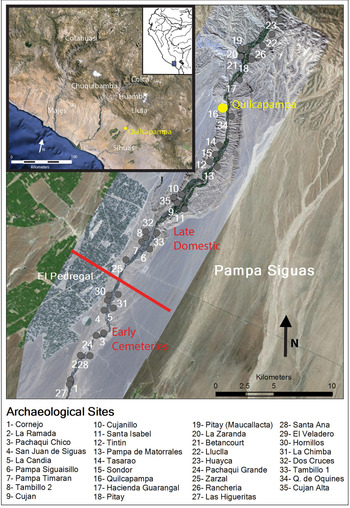
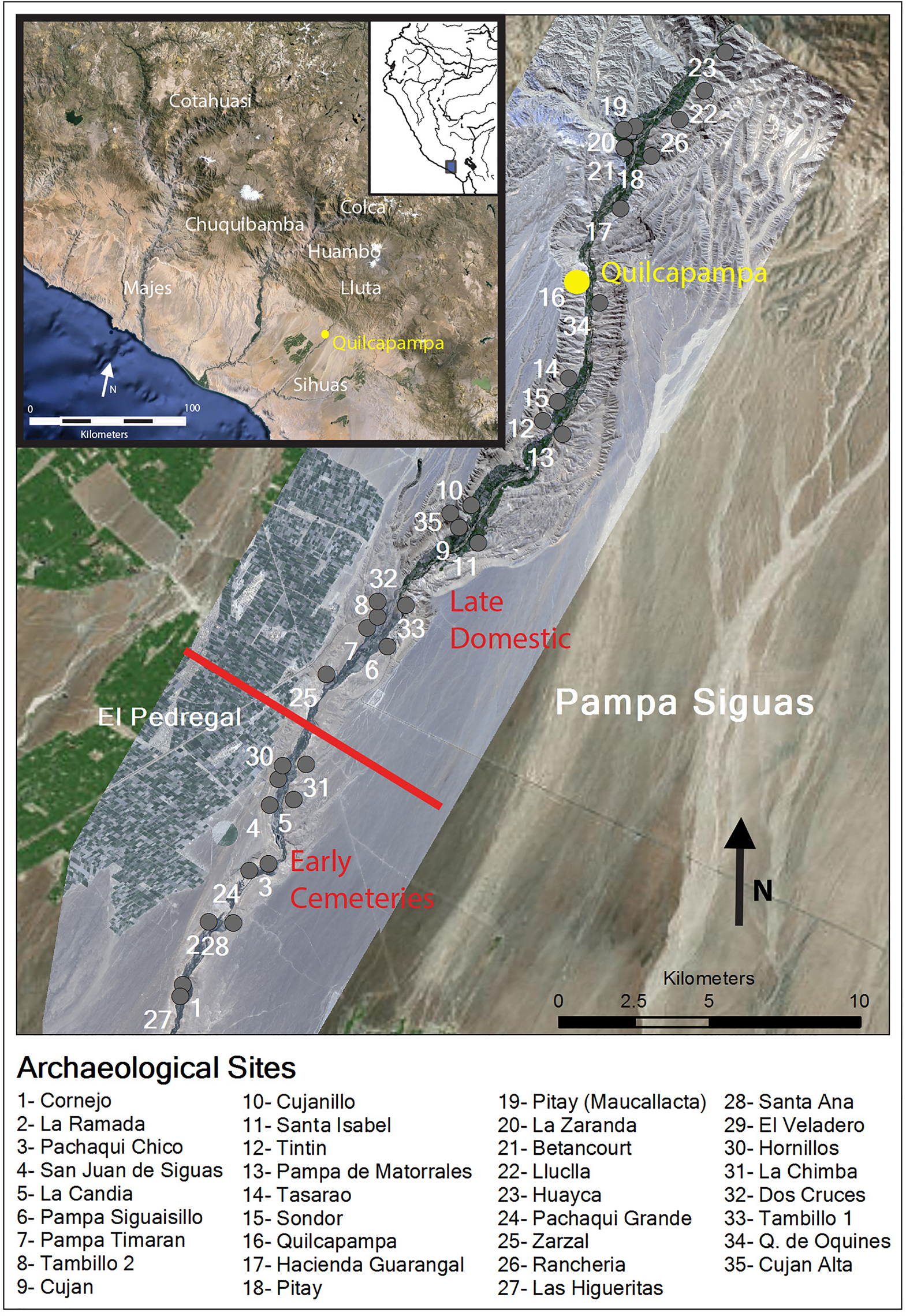
The archaeology of the mid-Sihuas fits well within the broader history of Arequipa (see Supplemental Text 1 on the archaeology of Arequipa). The earliest evidence for human occupation comes from La Chimba, San Juan, La Ramada, and other single-individual cist tomb cemeteries located in an arid stretch of the valley just below the contemporary town of San Juan de Sihuas (Haeberli Reference Haeberli2002, Reference Haeberli, Isbell and Silverman2006, Reference Haeberli2009; Quequezana Lucano Reference Quequezana Lucano1997, Reference Quequezana Lucano2009; Ravines Reference Ravines2007; Santos Ramírez Reference Santos Ramírez1980; Figure 1). Maize, guinea pigs, and other domesticated plants and animals are associated with these burials (Haeberli Reference Haeberli2002:95; Santos Ramírez Reference Santos Ramírez1976:160), and it is likely that the dead and their offerings were transported to the cemetery from ephemeral settlements located in the more arable part of the valley a few kilometers to the north. Alluvium and heavy farming of the valley floor, however, make the discovery of these ancient settlements difficult, and pedestrian surveys have not yet recovered clear evidence of early domestic sites (Linares Delgado Reference Linares Delgado2009; Quequezana Lucano Reference Quequezana Lucano1997; Santos Ramírez Reference Santos Ramírez1976).
Late Intermediate period settlements and earlier cemeteries in the mid-Sihuas Valley. The inset shows neighboring valleys mentioned in the text and indicates where the region is found in Peru (site locations adapted from Quequezana Lucano Reference Quequezana Lucano1997). (Color online)
Villages remain elusive into the Middle Horizon. The cemeteries below San Juan de Sihuas were still in use, and people seem to have continued to live on the valley bottom in small, dispersed settlements (Linares Delgado Reference Linares Delgado2009; Quequezana Lucano Reference Quequezana Lucano1997; Santos Ramírez Reference Santos Ramírez1976). The only site with a definitive Middle Horizon occupation is Quilcapampa, a short-lived Wari colony located above a cliff overlooking the river (Jennings, Yépez Álvarez, and Bautista Reference Jennings, Rizzuto, Yépez Álvarez, Jennings, Álvarez and Bautista2021). The dearth of domestic sites in Sihuas contrasts sharply with the neighboring middle Majes Valley, where a steep population rise pushed villages onto the valley's flanks by the beginning of the eighth century AD (Owen Reference Owen and Jennings2010; Tung Reference Tung2007). Wari influence was pervasive in the Middle Majes (Tung Reference Tung2007, Reference Tung2012) and would spread to Chuquibamba (Goldstein Reference Goldstein2010; Sciscento Reference Sciscento1989), Cotahuasi (Jennings and Yépez Álvarez Reference Jennings and Yépez Álvarez2015), and, to a lesser extent, Colca by the beginning of the tenth century (Doutriaux Reference Doutriaux2004; Wernke Reference Wernke2003).
Sihuas was separated from Majes by a wide, sandy pampa that helped insulate the valley from the transformations occurring to the north and east (Bingham Reference Bingham1912:492). Population expansion, agricultural intensification, and social stratification nonetheless occurred in Sihuas, but would happen in the context of the Late Intermediate period's growing coast–highland interactions. More than 80% of the sherds collected in the valley by Santos Ramírez are from this period, and all his domestic contexts date to this period or later, with the exception of Quilcapampa (Reference Santos Ramírez1976:169). Subsequent surveys by Linares Delgado (Reference Linares Delgado2009) and Quequezana Lucano (Reference Quequezana Lucano1997) confirm that mid-valley villages date to the Late Intermediate period, and this was our impression when visiting nearby sites during fieldwork at Quilcapampa.
People tended to live, as they do today, on the western flank of the valley where the gentler, more consolidated, slopes made it easier to construct residential terraces. Pitay, Quilcapampa, Sóndor, Tintín, San Basilo, and Pampa de Timirán were the largest of these settlements, each exceeding 50 ha (Santos Ramírez Reference Santos Ramírez1976:63; Yépez Álvarez et al. Reference Yépez Álvarez, Jennings and Berquist2018:128–129; Figure 1). The cemeteries below San Juan de Sihuas were abandoned during this period, with the dead buried on-site in cemeteries fringing each settlement. A variety of funerary traditions are documented in Sihuas—including chullpa towers associated with Late Intermediate and Late Horizon period pottery—but most people were buried in individual cist tombs.
Since the mid-Sihuas Valley is located within the “breadbasket” of Arequipa (Scaffidi Reference Scaffidi2018:100), more people chose to settle in this underdeveloped region. Survey-collected ceramic assemblages suggest that families moved down from the adjoining highlands to take advantage of new economic opportunities (Linares Delgado Reference Linares Delgado2009; Quequezana Lucano Reference Quequezana Lucano1997; Santos Ramírez Reference Santos Ramírez1976). These archaeological data dovetail with ethnohistoric accounts stating that highlanders were well established in Sihuas by the Inca conquest (Echevarria y Morales Reference Echevarria y Morales and Barriga1949 [1805]:165–166; Galdos Rodríguez Reference Galdós Rodríguez1985:133; Takahashi Reference Takahashi and Masuda1988:61).
The written accounts describe how the coastal communities established by highlanders were seen as offshoots of highland centers, linked by shared ayllu affiliations that facilitated population movement and economic exchange. In the case of Sihuas, we have records of eight such communities linked to Cabanaconde in the Colca Valley at the time of the Spanish conquest (Galdos Rodríguez Reference Galdós Rodríguez1985:166). At least two of these communities predate the migrants’ arrival on the coast, suggesting that highland enclaves sometimes developed within preexisting villages. Yet, the highlanders living in Sihuas after the conquest were adamant that they never served local leaders (Galdos Rodríguez Reference Galdós Rodríguez1985:36). Whatever the case, these particular ayllu-based vertical archipelagos appear to have arrived on the scene after Quilcapampa, with its links to Huambo and other closer sierra valleys, was already established (see the later discussion and Figure 1).
The Site of Quilcapampa
Quilcapampa straddles two precolumbian trails that provide access to the pampa (Bikoulis et al. Reference Bikoulis, Gonzalez-Macqueen, Spence-Morrow, Álvarez, Bautista and Jennings2016, Reference Bikoulis, Gonzalez-Macqueen, Spence-Morrow, Álvarez, Bautista and Jennings2018; Jennings, Yépez Álvarez, and Bautista Reference Jennings, Yépez Álvarez and Bautista2021; Jennings et al. Reference Jennings, Berquist, Spence-Morrow, Bikoulis, Gonzalez-Macqueen, Yépez Álvarez, Bautista, Jennings and Swenson2018). These trails and at least a few of the petroglyphs on the cliffs below the site predate the settlement by about a thousand years (Berquist et al. Reference Berquist, Spence-Morrowa, Gonzalez-Macqueen, Rizzuto, Álvarez, Bautista and Jennings2018, Reference Berquist, Macqueen, Jennings, Jennings, Álvarez and Bautista2021). The site's earliest occupation would not occur until the mid-ninth century AD, when Wari settlers founded a 2 ha settlement (Jennings, Yépez Álvarez, and Bautista Reference Jennings, Yépez Álvarez and Bautista2021). Consisting of a raised plaza, three compounds, and a scattering of surrounding houses, Quilcapampa was abandoned a few years after its founding in ceremonies that closed off entrances and filled in rooms. Only a few Wari sherds have been found in the Sihuas Valley outside of Quilcapampa, all in funerary contexts (Linares Delgado Reference Linares Delgado2009; Quequezano Lucano Reference Quequezana Lucano1997; Santos Ramírez Reference Santos Ramírez1976).
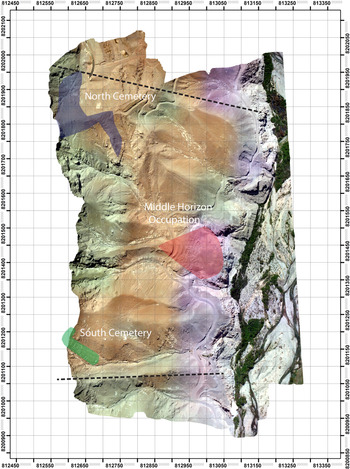
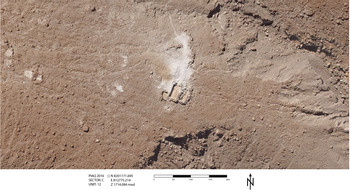
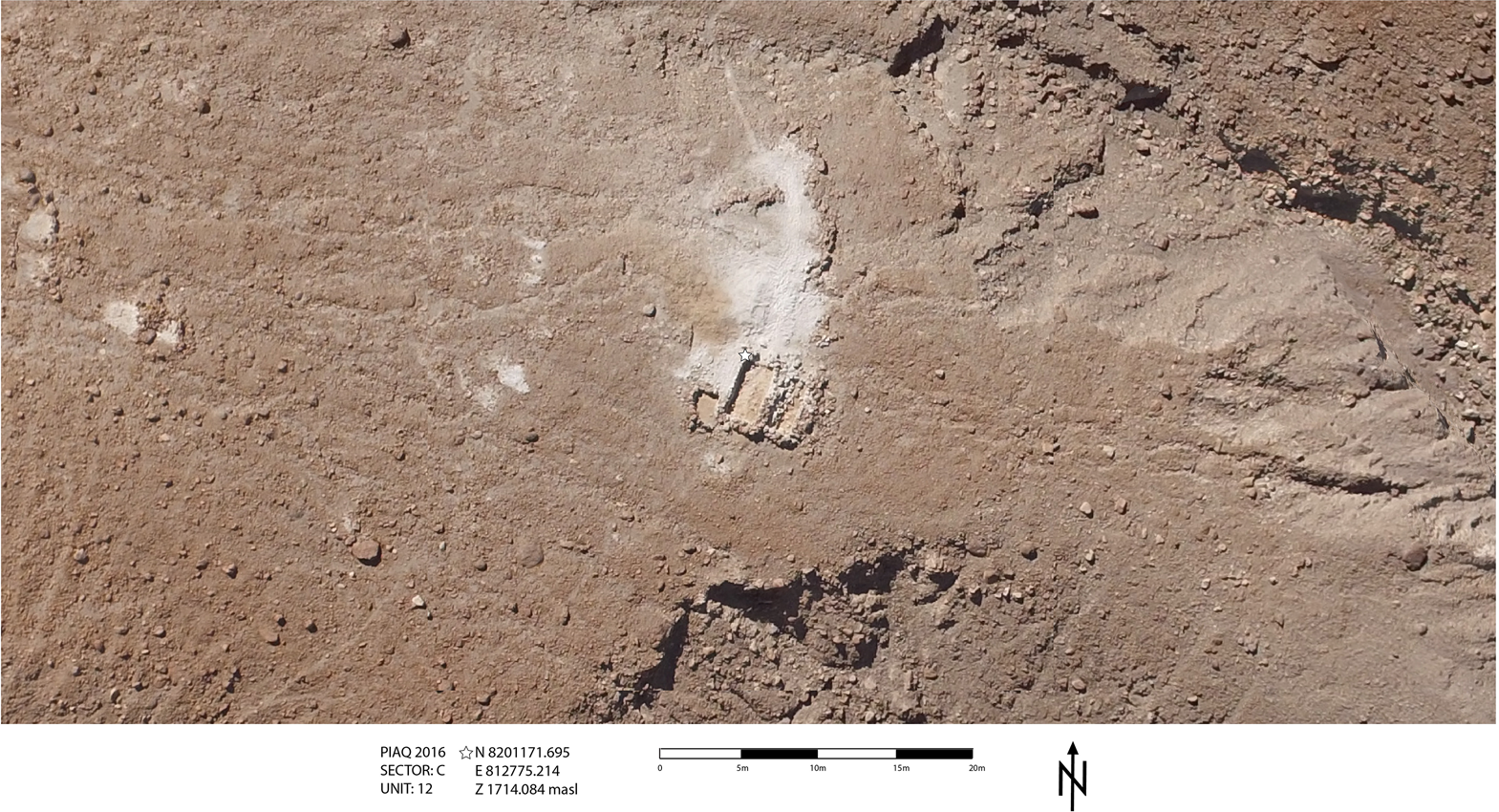
Bayesian modeling of radiocarbon dates from our excavations suggest that Quilcapampa was left unoccupied for more than 200 years after its Middle Horizon abandonment and was then abandoned for the second time before or at the beginning of the Inca expansion into the region near the end of the fifteenth century (see Supplemental Text 2 for dates and modeling). Surface survey suggests that the Late Intermediate occupation sprawled across some 70 ha (Figure 2), but Quilcapampa's precise extent is unknown because erosion has destroyed the standing architecture across most of the site. The construction of a canal and pumping station for an ambitious 1970s irrigation project compounded this damage, wiping out the northern edge of the site (Stensrund Reference Stensrund2016). In those few places where intact structures can be found today, the Late Intermediate period occupation is organized into single-family residences with external patios and associated storage facilities (Figure 3). The excavated botanical and faunal remains in four of these residences reflect an agropastoral subsistence strategy typical of the era.
Map of Quilcapampa showing the locations of the North Cemetery, South Cemetery, and Middle Horizon occupation. The dotted lines mark the approximate boundaries of the Late Intermediate period occupation. (Color online)

Orthophoto of Unit 12 excavations into a typical Late Intermediate period domestic structure with associated patio. (Color online)
When people returned to Quilcapampa in the Late Intermediate period, they built their homes on the slopes above the Middle Horizon portion of the site. Old Quilcapampa was left undisturbed and venerated by placing stacks of painted stones (placas pintadas) in the ruins—65 postabandonment placas were recovered during excavations (Rizzuto and Jennings Reference Rizzuto, Jennings, Jennings, Álvarez and Bautista2021). A regional offering tradition dating to the first millennium BC, placas were generally painted on one side, paired with another placa, and then stacked in piles (Cabrera Reference Cabrera2020; Linares Málaga Reference Linares Málaga1988; Tung Reference Tung2007). Although not directly dated, the postabandonment placas in old Quilcapampa are sandwiched between the ninth-century wall fall and an ash layer from the Huaynaputina eruption in AD 1600 (Bouysse-Cassagne and Bouysse Reference Bouyse-Cassagne and Bouysse1984). They are also consistent in decoration with those found in the site's Late Intermediate period houses.
The only area of the Middle Horizon ruins that may have been reused was the raised plaza. We suggest this for two reasons. An excavation unit on the plaza documented two construction phases. The earliest phase, radiocarbon dated to the Middle Horizon, was followed after a hiatus by a refurbishment of the plaza's short boundary wall. Although we were unable to directly date this refurbishment, four Late Intermediate period sherds were surface-collected from the plaza—our second reason for suggesting this area's reuse. No other Late Intermediate period ceramics or reoccupations were found in the Middle Horizon section of the site that surrounds the raised plaza, despite three field seasons of mapping, surface collection, wall trenching, and excavations (Jennings, Rizzuto, and Yépez Álvarez Reference Rizzuto, Jennings, Jennings, Álvarez and Bautista2021).
Of particular interest to this article are two cemeteries that are found at either end of the site. Much of the larger North Cemetery is missing because of the 1970s irrigation work, and the remains of newspaper, sardine cans, and other modern artifacts from looted contexts suggest that clandestine digging at Quilcapampa occurred around that time. The single-inhumation cist tombs in this cemetery begin on a ridgetop and then drape to the north across a wide quebrada. Where the topography is steep, terraces were constructed before burial. In some cases, terraces were quite small, designed to accommodate two to six tombs. In other cases, much larger terraces were built that were then subdivided into sections by single stone courses or elevated platforms that bound a tomb cluster. The smaller South Cemetery is more intact but mirrors the North Cemetery in many ways. It also begins on a ridgetop and drapes across a quebrada. It has a mix of small and large terraces, the latter of which are often subdivided into sections by single stone courses. Gentler slopes contain tomb clusters that are marked but not terraced.
The cist tombs in the North Cemetery number in the low thousands, whereas there are several hundred similar cists in the South Cemetery. The only possible collective tombs in Quilcapampa are the remains of five razed rectangular foundations on the ridgetops crowning each cemetery (four in the North Cemetery and one in the South Cemetery). Since no surface artifacts or skeletal remains were found in these contexts, the buildings’ functions remain unknown. Their location at least raises the possibility that selected residents were buried in chullpas. If so, efforts to institute open sepulchre traditions took place amidst a funerary pattern where almost everyone else chose to bury the dead as individuals.
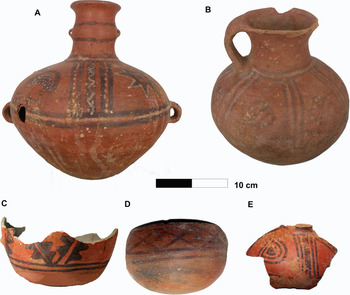
Variation in grave assemblages both within and between cemeteries suggests possible markers of origin. Contingent and mutable, identity is difficult to trace in the archaeological record (Díaz-Andreu et al. Reference Díaz-Andreu, Sam Lucy and Edwards2005; Shennan Reference Shennan1989; Stovel Reference Stovel2013). Yet excavations and surface collection recovered only local ceramics from the South Cemetery, whereas the North Cemetery contained a section featuring ceramic styles from the Lluta, Huanca, and Huambo Valleys in the mountains just above Quilcapampa (Figure 4). Only this section of the North Cemetery contained slate placas, rather than the locally available river cobble placas that dominate the site's assemblage; the slate placas were likely quarried from Yura Group formations in the adjacent sierra (Romero Fernández and Ticona Turpo Reference Romero Fernández and Ticona Turpo2003). The imported placas were sealed under tomb lintels in a familiar highland practice that was unique to the North Cemetery (see the later discussion).
(A) A cántaro from Tomb 19 and (B) pitcher from Tomb 26 in the South Cemetery, and (C–D) a bowl and (E) cántaro fragments from the surface collection in the North Cemetery. Iconography, form, and paste can be used to distinguish the ceramic assemblages. Additional images of South Cemetery ceramics are found in Figure 7. Figure by Justin Jennings. (Color online)

As the adage goes, pots do not equal people, especially in funerary contexts where exotics often signal a group's long-distance connections rather than its foreign origins (Stanish Reference Stanish and Reycraft2005:230). Yet it is clear that at least one group at Quilcapampa chose to consistently place pots and placas in their tombs that linked their dead to foreign locations, and we saw similar clusters of tombs with highland-style pottery during our visits to other Late Intermediate period sites in Sihuas. How people were buried was nonetheless similar enough across Quilcapampa to define a Late Intermediate period cist burial funerary pattern typical for the site and the valley in general.
A Late Intermediate Period Funerary Tradition at Quilcapampa
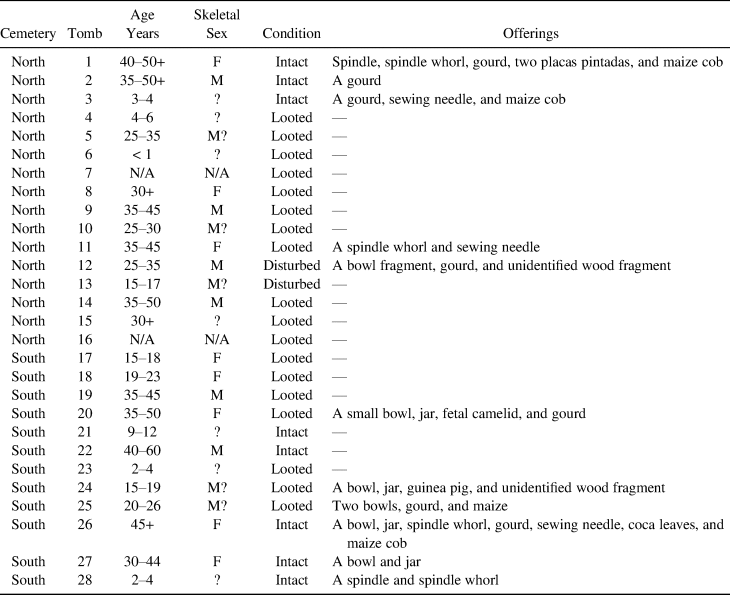
We excavated 28 tombs, all of which were single-inhumation cist tombs. Two tombs (T7 and T16) had no human remains. Sixteen tombs were in the North Cemetery: 3 were intact, 2 were partially disturbed with their contents largely or completely intact, and 11 were looted. Of the 12 tombs excavated in the South Cemetery, 5 were intact and 7 were looted. We conducted a range of osteological and isotopic analyses on a subsample of skeletal remains, which will be reported elsewhere. Here we report only the age and sex of the 26 recovered individuals (Table 1), along with a few observations relevant to how the bodies were treated before burial.
Age, Sex, and Associated Offerings for Excavated Burials at Quilcapampa.

Note: No skeletal remains were found in Tombs 7 and 16.
Of the 19 individuals for whom skeletal sex could be estimated, 8 were female and 11 were male/probable male, a nearly equal sex distribution. Among the 26 individuals, 6 (22%) were under the age of 12. In preindustrial societies, the expectation is that approximately half of the death assemblage will include juveniles (Howell and Kintigh Reference Howell and Kintigh1996). Their relative absence at Quilcapampa may suggest that some children were marked differently in life and death. The razed ridgetop buildings are one possible location for their interment.
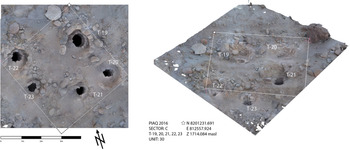
The first step in cist tomb construction was the delineation of the funerary space in which a handful of tombs would be placed. For Tombs 20–24, for example, the builders created a small funerary platform by fabricating a retention wall on three sides that was then filled in with soil (Figure 5). This burial plot may represent a family group interred during a single generation, because an adult female, adult male, a young child (2–4 years old), an older child (9–12 years old), and an adolescent identified as a probable male (15- to 19-years-old) were interred (Table 1). The jaw of the adult female was covered in hematite or cinnabar, evidence that mourners used a red pigment during funerary rituals.
Orthophoto of Tombs 19–23 in Unit 30. Note the platform used to define the edge of the burial plot. (Color online)

Stones could also be used as a boundary between burial plots, or sometimes a gap was sufficient enough to distinguish plots. Once the space was delineated, mourners then dug a cylindrical hole with a flat bottom and lined the hole's sides, and occasionally its base, with cobbles set in a pink mortar that was used only in tombs. The end result was a stone-lined cist large enough to accommodate a tightly flexed individual who was either seated cross-legged or with the knees pulled into the chest. Plain-weave textile fragments found in some of the tombs suggest that the dead were bundled, as do the remains of congealed bodily fluid on these bundle fragments.
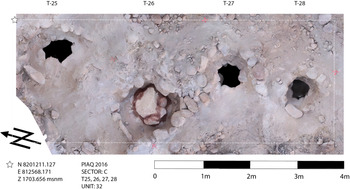
We suspect that a cist was constructed at the time of death for two reasons. First, tomb size reflects the size of the interred individual. Burial plots often contain a mix of adult and subadult burials. The adult burials tend to be placed in approximately 1 m deep cists, but subadults were buried in smaller cists that decreased to the size of an infant (Figure 6). Because tombs were seemingly built to fit the individual, it is unlikely that they were made before death. The skeletal articulations and the paucity of insect remains also suggest that people were buried soon after they died. The deceased were therefore likely bound into a flexed position, wrapped in textiles, and then lowered into the tomb within a few days of their death.
Orthophoto of Tombs 25–28 in Unit 32. Tomb 26 is shown still sealed with its capstone in red mortar; Tomb 28 contains a child burial. (Color online)

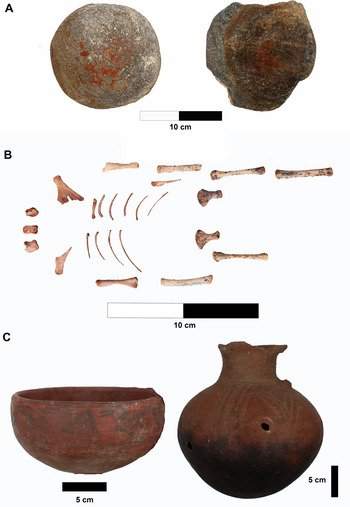
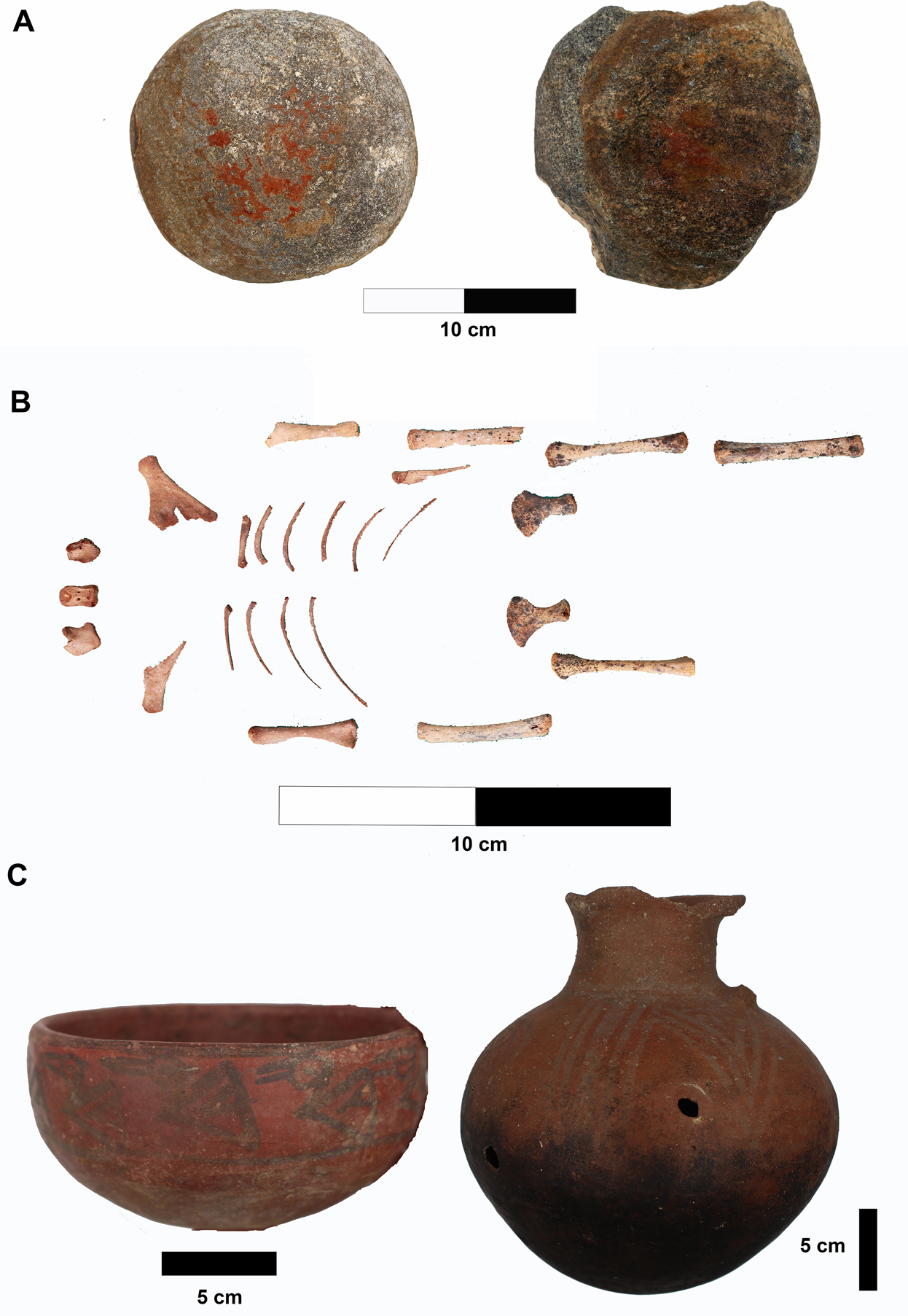
Mourners often placed a few objects on top of or around the bundle. Among the eight intact tombs for which we could be confident of original grave associations, one tomb with a child (Tomb 20) had no offerings, and the others had one to seven offerings. These objects varied—such as a pot, gourd, spindle, or fetal camelid (Figure 7)—but we would need a larger sample to determine whether grave goods can be linked to gender, class, or other factors. After the objects were placed with the bundle, a thick layer of red mortar was used to secure a capstone. The stone was usually a slab of white rhyolite tuff locally known as sillar. Only on the ridgetop in the North Cemetery was a layer of slate placas embedded within the capstone mortar. Once sealed, the cists do not appear to have been reopened, and there is no evidence for an opening, or ttoco, that would have enabled the living to directly speak or give offerings to the dead (e.g., Isbell Reference Isbell2004).
Examples of the few offerings found in each cist tomb: (A) painted cobbles found under the woman buried in Tomb 1 (Locus 1307), (B) fetal camelid buried in Tomb 19, and (C) a bowl and cántaro from Tomb 24. Figure by Justin Jennings. (Color online)
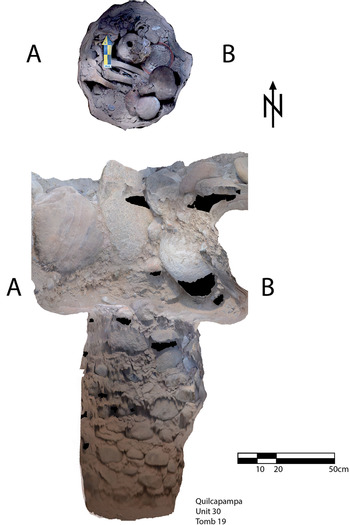
The final act of construction used larger stones to create either a circular or square collar around the tomb. The end result was a capped cist tomb sitting in a small depression ringed by upright stones (Figure 8). The collar shape appears to have been the same across plots, but circular and square collars were found in both cemeteries. On occasion, new collar walls were made by incorporating part of the collar of a preexisting tomb, providing additional evidence that cists were built one at a time as needs arose. Burnt botanical remains found on top of a few of the capstones may represent offerings made after the burial, but they are close enough to the modern surface that these contexts are not secure.
Tomb 19 contents and profile. Figure by Stephen Berquist. (Color online)

The Chullpas of the Colca Valley
When Quilcapampa began growing, there were already well-established polities in highland Arequipa. Most of the people in these polities were being buried in a wide variety of chullpas (Duchesne Reference Duchesne2005; Jennings and Yépez Álvarez Reference Jennings and Yépez Álvarez2009; Sobczyk Reference Sobczyk2000; Velasco Reference Velasco2014; Wernke Reference Wernke2013), and the little that we know about the archaeology of the Lluta, Huanca, and Huambo Valleys suggests that chullpas were also important in the possible homelands of some of Quilcapampa's residents (Linares Delgado Reference Linares Delgado1988). Yet to better understand the relationships between the living and the dead in highland Arequipa, we need to turn to the Colca Valley just to the north of Huambo and its wealth of colonial documents and archaeological research (e.g., Brooks Reference Brooks1998; Cook Reference Cook and Cook)2007; de la Vera Cruz Chávez Reference de la Vera Cruz Chávez, Albó, Arratia, Hidalgo, Núñez, Llagostera, Remy and Revesz1996; Doutriaux Reference Doutriaux2004; Malpass and de la Vera Cruz Chávez Reference Malpass and Chávez1990; Pease Reference Pease1977; Velasco Reference Velasco2014, Reference Velasco2018a, Reference Velasco2018b; Wernke Reference Wernke, Elson and Alan Covey2006a, Reference Wernke2006b, Reference Wernke2007, Reference Wernke2013). Although the particular relationships between chullpas and ayllus undoubtedly varied across highland Arequipa, the data from the Colca Valley contrast sharply with Quilcapampa's funerary practices.
By the Late Intermediate period, Colca was divided between two polities, the Collaguas and Cabanas, whose members spoke different languages (Ulloa Mogollón Reference Ulloa Mogollón and Jímenez de la Espada1965 [1586]). Each was organized into a nested political structure that determined, among other matters, access to resource zones and arable land (Wernke Reference Wernke2007, Reference Wernke2013). Matthew Velasco (Reference Velasco2014, Reference Velasco2018a, Reference Velasco2018b), Steven Wernke (Reference Wernke2003, Reference Wernke, Elson and Alan Covey2006a, Reference Wernke2007, Reference Wernke2013), and their colleagues provide a particularly nuanced understanding of mortuary practices among the Collaguas. Chullpas began proliferating by the end of the Middle Horizon and had become a highly visible part of the landscape by the beginning of the Late Intermediate period. They were agglutinated single-chambered structures with a lone entrance, which were built up horizontally and vertically as more space was needed to inter the dead (Velasco Reference Velasco2014). A line of chullpas was often built along a cliff face, with mourners returning to these cemeteries year after year to bury their dead. A mummy bundle was brought in—its body flexed and wrapped in textiles—and left with other mummies, a practice that continued until the Spanish conquest.
Most of Colca's cemeteries were linked to particular long-standing communities. A few contained chullpas of high-status adults from distinct ethnic groups, as suggested by the diverse cranial modification styles among the people buried within them (Velasco Reference Velasco2018a). The dead's position on the landscape “allowed the ancestral power to endure and influence the actions of the living for centuries” (Velasco Reference Velasco2014:462). They marked territory, fertilized lands, and performed a variety of other functions similar to those described elsewhere in the south central Andes. Yet not everyone in the Colca Valley was buried in chullpas. Children, for example, were significantly underrepresented in the chullpas of Yuraq Qaqa near modern-day Coporaque (comprising only 24% of the sample), and a few cist tombs can be found in and around settlements (Velasco Reference Velasco2014:456, Reference Velasco2018b:909; Wernke Reference Wernke2003).
Velasco's bioarchaeological research demonstrate that those buried in two Collaguas heartland cemeteries were closely related, suggesting that corporate identity was based at least in part on common descent (Reference Velasco2018b). This pattern occurs throughout the Late Intermediate period, but as time wore on there was increasing homogenization in cranial modification styles. This homogeneity can be linked to the creation of a new ethnic identity superseding that of the competing ayllus whose members remained tied to particular cemeteries. Velasco (Reference Velasco2018a:105) argues that this shift toward corporal homogeneity in the late Late Intermediate period “may have promoted cohesion among local elites and facilitated cooperation at higher levels of inclusiveness to coordinate agropastoral exchange, manage irrigation, or mobilize against outside forces, including (but not limited to) the encroaching Inka state.” The change may relate to increasing political centralization and violence in the second half of the Late Intermediate period (Kohut Reference Kohut2016:168)—a development that likely helped spur the fourteenth century's more formal coastal migrations.
The particulars of kinship relations and burial practices outside of Colca remain elusive, but DNA research elsewhere in Arequipa further suggests that biological relatedness was a critical factor in determining where one should be buried throughout much of the highlands (Baca et al. Reference Baca, Martyna, Weglenski and Stankoviv2014). Chullpas were also generally located in visible locations and were revisited for hundreds of years (Jennings and Yépez Álvarez Reference Jennings and Yépez Álvarez2009; Sobczyk Reference Sobczyk2000). If chullpas had a similar function on the coast, then it makes sense that they were not regularly used until the last decades of the Late Intermediate period. The social environment of incipient village aggregation and family-based migration of the mid-twelfth through early fourteenth centuries in the mid-Sihuas and other coastal valleys was ill suited to chullpa burials that signaled a group's ancestral connections to particular places on the landscape. Other means of materializing identity and affiliation were therefore needed.
Discussion
The lack of Late Intermediate period radiocarbon dates from other Sihuas sites makes it difficult to relate Quilcapampa's growth and abandonment to its neighbors. Yet the ethnographic and archaeological evidence for the period in general suggests that the more formal ayllu-based highland migrations were occurring to the coast by at least the mid-fourteenth century (Supplemental Text 1), and there are specific accounts of people from Colca living in Sihuas by the time of the Inca conquest (Echevarria y Morals Reference Echevarria y Morales and Barriga1949 [1805]:165–166; Galdos Rodríguez Reference Galdós Rodríguez1985:133; Takahashi Reference Takahashi and Masuda1988:61). We caution that more work is needed on Sihuas's chullpa burials to determine their dates and ethnic affiliation. More extensive work at Quilcapampa could also extend the site's time frame and reveal more than the cist burials that have been documented to date.
Current data suggest that families from both the area and surrounding highlands settled at Quilcapampa by as early as the mid-twelfth century. They lived on the slope above the Middle Horizon ruins and buried their dead in family plots in the cist tomb cemeteries that bracketed the site. Quilcapampa's 400-year-old plaza may have been refurbished by these new settlers, providing a space for collective rituals that helped create civic bonds. The first families came to the site before the ayllu-based migrations that brought people to Sihuas from even greater distances and then abandoned the site while these migrations were still ongoing.
Reclaiming a Powerful Place
Those who moved to Quilcapampa in the thirteenth century left the Middle Horizon ruins intact, and they built their homes above them on an as-needed basis as families moved into the site. Whether these families settled in neighborhoods based on ethnicity or other factors remains unclear because so little of the site remains, but ceramic assemblage differences between the North and South Cemetery suggest that locals drawn from the smaller, more ephemeral sites on the valley floor may have been distinguished from foreigners arriving from the adjacent sierra, something that future isotopic studies will evaluate. In either case, those moving to Quilcapampa were coming together into a new site, setting down roots next to people whom they may not have known.
Wari-affliated settlers briefly occupied Quilcapampa in the Middle Horizon. Yet Wari influence was limited elsewhere in the valley, and hundreds of years later, it is doubtful that those moving to Quilcapampa felt a direct connection to its earlier residents. The site's monumental walls, colorful potsherds, and enigmatic petroglyphs nonetheless marked Quilcapampa as a special place, and people still frequented the intervalley trails that climbed through the site (Jennings et al. Reference Jennings, Berquist, Spence-Morrow, Bikoulis, Gonzalez-Macqueen, Yépez Álvarez, Bautista, Jennings and Swenson2018). When Late Intermediate period population expansion in Sihuas pushed people up the valley's arid slopes, it is therefore unsurprising that people chose to settle at Quilcapampa.
Regardless of their origins, almost everyone shared a view of the Middle Horizon ruins from their patios, especially its raised plaza set on top of the petroglyph-filled cliff that bordered the river (Supplemental Figure 1). This plaza was the only part of the ruins that was likely reused in the Late Intermediate period, and one can imagine people making their way through fallen structures to attend the kinds of feasts and other ritually charged events that typically occurred in precolumbian Andean plazas (Lane Reference Lane2013). The placas placed on the ruins during this period may relate to plaza activities.
Burying the Dead
Cist burials were customary in Sihuas by the time of Quilcapampa's founding (Quequezano Lucano Reference Quequezana Lucano1997; Ravines Reference Ravines2007), with almost everyone seemingly buried in a designated funerary zone at a distance from where people lived. Those living in low-population density areas generally make claims to broader communities through extensive social ties rather than through asserting rights to particular territories or resources, especially if groups remain more mobile (Binford Reference Binford2001; McCorriston et al. Reference McCorriston, Michal Harrower and Oches2012). Resource tethering and intensification often occur as locations fill in with people or come under environmental stress—conditions that were both in place by the middle of the Late Intermediate period as aridity in the sierra fueled coastal migrations and decreased the average discharge of the Sihuas River.
Ayllus, at least as mechanisms that linked people to resources, would have been poorly developed in Sihuas, and those migrating into the valley who had been formally organized into ayllus had left many of their kinfolk—alive and dead—behind. As the landscape of Sihuas filled in, access to fields and other resources needed to be assured. People had to find new ways to make resource claims, and a highly visible, ancestral place on the landscape that could have supported Quilcapampa's claims was the Middle Horizon ruins and its renovated plaza. Families therefore set up their houses around old Quilcapampa, made offerings of placas in the ruins, and likely celebrated group rituals in the plaza.
Quilcapampa's residents then buried their dead in family plots along the site's margins. This location buffered their new homes from the outside world, using the bodies of the deceased as a material marker of their new claims to this powerful place and the arable land below it. Together, the living and the dead—adults and children—did the work of collectively creating community and claiming what they saw as their rightful place in a newly crowded and heterogeneous landscape.
A Different Kind of Place
There are hints of class and regional divisions in our data—hints that would undoubtedly be clarified with further research—and the foundations of a few possible collective tombs on the ridgetops. Yet Quilcapampa's cemeteries overwhelmingly consist of single-inhumation cist burial with modest offerings. The distinctions that stand out on the ground are small-scale ones: the terraces and lines of stones that define what may be family plots. In Colca, dozens of people were routinely buried together, with the same tombs being reused over generations (Velasco Reference Velasco2014; Wernke Reference Wernke2013). This burial practice turned the dead into a collective force who, if properly propitiated, worked for the living and aided in substantiating their claims to arable lands, residential places, and sacred spaces. Quilcapampa's residents also celebrated their dead, but the domestic and mortuary evidence suggest that affiliations spanning multiple families were, at best, weakly developed. Burials in the site's cemeteries and the ceremonial activities in old Quilcapampa nonetheless served to unite disparate families around a shared—though largely imagined—past, allowing people to weather the social disruption of early aggregation and migrations.
Intermediate sodalities would develop once people settled down. Over the next few generations, particular families grew closer through marriage, labor reciprocity, and other mechanisms. Ayllu organizations at Quilcapampa that relied on ancestral claims to resources thus became more feasible over time and were concepts already familiar to many living in Sihuas. As more people from Colca and other highland regions began to shoulder their way into the valley near the end of the Late Intermediate period, those living in the settlement likely recognized that claims to land and other resources would be best made through broader groupings of the dead rather than via the ruins of a short-lived outpost.
Conclusions
Cieza de León (Reference Cieza de León1959 [1553]:311–312), one the earliest Spanish chroniclers, noted,
In many valleys of the [coastal] plain . . . one finds great walls and divisions where each family has its allotted place to bury its dead, and for this purpose they have dug great hollows and cavities, each with its door, with all possible care. And it is a marvellous thing to behold the number of dead . . . separated one from the other . . . a vast number of skeletons and their clothing, rotted and corroded by time.
In part a lament of the Spanish conquest's widespread looting, Cieza de León's comments were also meant to draw a contrast between the burial towers of the highlands and the individual burials he saw on the coast. People were buried in a wide variety of ways across the south central Andes (Mantha Reference Mantha2015), but his broad distinction between the highlands and the coast still holds true after more than a century of archaeological fieldwork.
Ayllus structured life along much of the coast at the time of the Spanish conquest (Murra Reference Murra1975), but the dearth of chullpas raises what should be two central questions in Andean archaeology: How did ayllu organizations develop in different places on the coast, and what was the role of chullpas in their development? In a recent dissertation, Bongers (Reference Bongers2019) addresses these questions by looking at cist and chullpa burials in the middle Chincha Valley. His radiocarbon dates and excavations suggest that cist burials were no longer used in the valley after the Inca conquest. Although the reasons were likely varied, Bongers argues that the shift occurred in part “to establish and expand new bases of authority and reinforce territorial claims” during a time of cultural transition (Bongers Reference Bongers2019:368; see also Nuñez Flores Reference Nuñez Flores2013).
A similar rationale appears to have been in play in Sihuas in the mid-Late Intermediate period, but “bases of authority” and “territorial claims” were initially made by placing cist tombs in a new location. Highland migration per se did not lead to new funerary practices, because the conditions were not in place to sustain an ayllu organization centered on the veneration of the dead. Conditions had changed by the end of the period, and only further research will tell whether Sihaus's chullpa burials are more closely related to the circa fourteenth-century establishment of vertical archipelagos or the late fifteenth-century Inca conquest. Whatever the case, the Late Intermediate period's social, economic, and political dynamism is readily apparent in Sihuas, and much more work needs to be done in the valley and elsewhere to understand life in the Andes on the eve of the Spanish conquest.
Acknowledgments
This work was funded by the Social Sciences and Humanities Research Council of Canada (Grant #43150212), the National Geographic Society (Grant #9730015), the Royal Ontario Museum (Kircheis Family, Louise Hawley Stone Charitable Trust, and New World Archaeology grants), and the University of Toronto Archaeology Centre. Permission to conduct the fieldwork was granted by Peru's Ministry of Culture.
Data Availability Statement
All data are available from the Royal Ontario Museum.
Supplemental Material
For supplemental material accompanying this article, visit https://doi.org/10.1017/laq.2021.15.
Supplemental Text 1. The Archaeology of Arequipa.
Supplemental Text 2. Radiocarbon Dating and Bayesian Modeling.
Supplement Figure 1. Vista from the plaza to the ridges where the Late Intermediate period occupation was located. In the foreground are the ruins of the Middle Horizon occupation.