INTRODUCTION
Various theoretical models characterize caring as fundamental to nursing practice. Culture care theory, human caring theory, and the theory of nursing as caring are among the most popular (Boykin & Schoenhofer, Reference Boykin and Schoenhofer1993; Leininger, Reference Leininger2002; Watson, Reference Watson1988). These models differ in several core aspects, including scope and definition of caring (McCance et al., Reference McCance, McKenna and Boore1999). For example, culture care theory defines the nature and purpose of caring as activities provided by nurses in a culturally acceptable framework to improve the health, well-being, and end-of-life experience of individuals from a different culture (Leininger, Reference Leininger2002). On the other hand, human caring theory views the nature and purpose of caring as a process of transpersonal interaction between nurse and patient the purpose of which is to protect, enhance, and preserve life, with the goal of enabling a patient to find meaning in his/her illness and suffering (Watson, Reference Watson1988). Central to both theories, however, is the principle that the point of view of patients with respect to their needs is the preeminent concern of their nurses, who are expected to understand and respond to these needs in a way that demonstrates an awareness of each patient's perspective (Bassett, Reference Bassett2002).
The provision of end-of-life care is considered one of the most challenging aspects of a nurse's profession, because it requires a holistic care approach that focuses on meeting patients' physical, psychosocial, and spiritual needs (World Health Organization, 2012). Nurses who choose to work in a country with a markedly different culture from their own (e.g., Saudi Arabia) face a particularly difficult situation regarding awareness of how patients' cultural backgrounds affect their end-of-life care needs. A predominantly Muslim culture, nearly 67% of the nurses in Saudi Arabia come from foreign countries with different cultural contexts (Almutairi & McCarthy, Reference Almutairi and McCarthy2012). Nurses should be able to address cultural-specific beliefs, values, and practices related to the end-of-life process, which will influence the experience and meaning attributed to terminal illness and the process of dying (Giger et al., Reference Giger, Davidhizar and Fordham2006).
One prominent cultural challenge pertaining to the provision of end-of-life care is the extent and nature of family involvement in the decision-making process. In many cultures, families usually make medical decisions on behalf of the patient because these cultures value collectivism above individuality. However, some other cultures tend to place a higher value on the wishes of the individual (Searight & Gafford, Reference Searight and Gafford2005). Cultural attitudes about the perception of pain are another important consideration when determining appropriate end-of-life treatment, because some cultures have unique attitudes about the concept of physical pain. In some cultures, pain is viewed as evidence of weakness or as even just punishment, while others see the ability to bear pain as a positive trait (Shavers et al., Reference Shavers, Bakos and Sheppard2010). Awareness of patients' cultural values, behaviors, and beliefs can certainly influence nursing care and its outcomes (Beach et al., Reference Beach, Price and Gary2005). Therefore, differences between cultures, such as who is involved in decision making and what meaning is ascribed to pain and suffering, can affect the quality of end-of-life care (Wiener et al., Reference Wiener, McConnell and Latella2013). Indeed, while the physiological and psychological needs of a patient are always preeminent, nurses are also expected to deliver culturally competent care.
Nursing education has recently placed a greater emphasis on the awareness of cultural differences, as it has become more commonplace for nurses to work with patients from a wide variety of cultural backgrounds (Calvillo et al., Reference Calvillo, Clark and Ballantyne2009). Cultural competency is viewed as “an ongoing process in which the healthcare provider continuously strives to achieve the ability to effectively work within the cultural context of the client (individual, family, community)” (Campinha-Bacote, Reference Campinha-Bacote2002). Culture care theory (Leininger, Reference Leininger2002) focuses on providing meaningful transcultural nursing care, through studying the influence of several diverse and universal environmental, cultural, and social components, including kinship, and the economics of and education on care expression, patterns, and practices. Moreover, the theory emphasizes the need to incorporate religion as a cultural component into the process of care, because it has a strong influence upon nursing care when considered in the context of a particular culture.
Religion plays a structural role in forming patients' values and beliefs (Saroglou et al., Reference Saroglou, Delpierre and Dernelle2004). Patients' attitudes toward their illness and end-of-life experiences will inevitably be shaped by their religious beliefs (Pargament et al., Reference Pargament, Koenig and Tarakeshwar2004). Many patients see religion as very important in their lives, especially at the end of life (Kub et al., Reference Kub, Nolan and Hughes2003). Often when people are dealing with a life-threatening illness, religious and spiritual needs become substantially important, and addressing these needs effectively will contribute to a better quality of life for those patients and their families (Vallurupalli et al., Reference Vallurupalli, Lauderdale and Balboni2012).
Islam is a monotheistic religion. Muslims worship one God (Allah), and the Noble Qur'an is the Holy Book revealed to the last messenger, Mohammad, peace be upon him (PBUH). The main sources of Islamic teachings are based on the Noble Qur'an and Sunnah (the sayings, deeds, and agreements of the Prophet Mohammad [PBUH]). Several Islamic religious, social, and cultural practices are relevant to the practice of healthcare and can be categorized into five major domains. The first involves two of Islam's five pillars: five prayers per day at certain times (Salah) and fasting during the month of Ramadan for capable patients. The second is cleanliness. The patient's body and clothes should be free from bodily waste, if at all possible, and there should be a special washing before prayer (Wudu). The third is modesty, with care offered by same-gender healthcare providers and dressing modestly. Fourth, dietary restrictions include the prohibition of consumption of alcohol and pork products. The fifth domain, family ties, encompasses family involvement in physical care, decision making, and visiting times (Salman & Zoucha, Reference Salman and Zoucha2010; al-Shahri & al-Khenaizan, Reference al-Shahri and al-Khenaizan2005). Given the comprehensive range and specific details covered in these five domains, it can be argued that all those involved in the care of patients of the Islamic faith require a thorough knowledge and understanding of all aspects of the faith as it applies to each patient's situation (al Shahri & al-Khenaizan, Reference al-Shahri and al-Khenaizan2005).
Although previous studies have explored the issues related to cultural awareness experienced by non-Muslim nurses caring for Muslim patients, none of them investigated end-of-life caring experiences. One such study (Halligan, Reference Halligan2006) looked into the experience of foreign critical care nurses working in Saudi Arabia and demonstrated that religion, culture, and family were all important factors that have an impact on patient care. Further, the nurses involved in the study reported experiencing emotional struggles caused by conflicts between their cultural values and those of their patients. A study by Al-Yateem and Al-Yateem (Reference Al-Yateem and Al-Yateem2014) that explored the perceptions of overseas nurses as to how their level of understanding of Islamic practices influenced patient care found that nurses showed insufficient knowledge of Islamic principles and lacked cultural competency. The findings of a study conducted in Scotland (Worth et al., Reference Worth, Irshad and Bhopal2009) of terminally ill Muslim and Sikh patients' experiences of nursing care and of the accessibility of palliative care revealed a lack of cultural and religious understanding among nurses because cultural diversity training was unavailable. Consequently, the level of nursing care given to patients was often inadequate regarding cultural and religious needs.
Non-Muslim nurses are expected to be culturally competent about Islamic culture in general and its religious principles to provide optimal care to Muslim patients (Rashidi & Rajaram, Reference Rashidi and Rajaram2001). However, it is often more challenging to provide end-of-life care to terminally ill Muslim patients because of the intensity of their religious and spiritual needs. It requires knowledge of the specific tenets of Islamic religious, social, and cultural practices, especially if nurses are working in a predominantly Muslim country like Saudi Arabia.
The aim of our study was to explore non-Muslim nurses' lived experiences in caring for terminally ill Muslim patients and their families and to investigate the context or situations that influenced these experiences as described by the nurses. The results of the study will disclose any particular needs for culturally competent nursing care and inform the development of interventions to address such needs.
METHODS
We employed a qualitative descriptive phenomenology design. This approach is considered appropriate to produce a description of the phenomenon of recurring experience of caring for terminally ill patients. The purpose of the Husserlian phenomenological approach is to capture and understand the meaning of a “lived experience” of individuals involved in certain human behaviors or experience, so that only those who have experienced the phenomenon are able to describe it to the outside world (Burns & Grove, Reference Burns and Grove2010; Mapp, Reference Mapp2008).
Setting and Participants
Our study was conducted at the King Faisal Specialist Hospital and Research Centre (Riyadh, Saudi Arabia), a tertiary care hospital and a regional cancer center with an established palliative care unit that has operated since 1994. The hospital employs nurses of 30 different nationalities. This ensures diversity in the cultural, spiritual, and religious backgrounds of the nurses. The study included 10 nurses who met the inclusion criteria of being non-Muslim nurses with at least two years experience of caring for terminally ill Muslim patients, and being able to communicate in English. Nurses who had the experience of being a patient in the hospital were excluded from the study because the researchers believed that these nurses might reflect on their personal experience as patients. Arab non-Muslim nurses were excluded because they share common social and cultural practices with Arab Muslims. Participants were selected using a purposive sampling design, from different nationalities and various nursing specialties. Five nurses were chosen from the palliative care/oncology unit, three from oncology units, and two from medical units. Regarding nationalities, three nurses were from the Philippines, two from New Zealand, and one each from the United Kingdom, Canada, Ireland, India, and South Africa. The participants' years of experience caring for terminally ill Muslim patients ranged from 2 to 19 years, and their ages ranged from 29 to 57 years.
Data Collection and Analysis
We utilized semistructured interviews for data collection. All participants were interviewed separately with open-ended questions. Nurses were asked two predetermined main questions about what they had experienced while caring for terminally ill Muslim patients as well as the context or situations that influenced their experiences. A few additional questions were asked about the physical, social, cultural, spiritual, and religious practices of the patients and their families to encourage interviewees to share rich descriptions of the phenomena (Dicicco-Bloom & Crabtree, Reference Dicicco-Bloom and Crabtree2006). All recorded interviews were transcribed verbatim.
To ensure the rigor of our study, the researchers performed a process called “bracketing,” which is considered one of the main components of qualitative phenomenology (Ahern, Reference Ahern1999). Considering that the researchers were Muslims with longstanding experience in caring for terminally ill patients, bracketing aimed at eliminating researchers' unacknowledged preconceptions related to the studied phenomena that may have affected data collection and the analysis process (Tufford & Newman, Reference Tufford and Newman2012). Bracketing was performed before and during each interview as well as throughout data collection and analysis. The interview analysis and grouping of results into themes were reviewed and validated by two expert colleagues in the field of qualitative research, who were not involved in any other aspect of the study (Burnard, Reference Burnard1991).
The researchers employed a modification of the Stevick–Colaizzi–Keen method, which was first described by Moustakas (Reference Moustakas1994) and later modified by Creswell and Plano Clark (Reference Creswell and Plano Clark2007). This six-step method was chosen because of the clear description of the steps involved. Researchers began by reading the interview transcript for each participant separately and highlighting important statements that explained how the nurses experienced care. Subsequently, researchers grouped all the important statements into meaning units or themes. These themes guided researchers in writing a description of what the nurses experienced (textual description) and in writing a description of the context or setting that influenced how they experienced the phenomenon of caring for terminally ill Muslim patients (structural description). Finally, researchers wrote a composite description of the caring experience (the essence of the experience), which incorporated both textual and structural descriptions.
Ethical Considerations
The research ethics committee at King Faisal Specialist Hospital and Research Centre approved our study. The research was based on freely volunteered written informed consent. To ensure that confidentiality was maintained, all participants were assigned pseudonyms. Patients' identities were not disclosed during the narrative interviews. All interviews were audiotaped with the permission of participants. Participants were assured that the information gathered would be used solely for the purposes defined by the research and would not be utilized in any future research. Our research fully conformed with the Declaration of Helsinki.
RESULTS
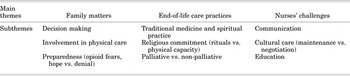
Our results are presented with three main themes: family matters, end-of-life care practices, and nurses' challenges. Nine basic subthemes were identified and are described with quotations from the participants. Table 1 presents the main themes and the subthemes.
Main themes and subthemes of nurses' interviews

Family Matters
Nurses described the decision-making process at the end of life as being controlled by the family, without any real involvement of the patient. The family often tried not to inform the patient about disease progression, with the intent of protecting the patient from “futile” or “harmful” information. However, the nurses perceived this as interfering with patients' autonomy in decision making and hindering the quality of care provided:
They first want to know before the patient knows as protection because they do not want the patient to be stressed. At the end of the day, you would see the patient suffering because, in such a way, they [family members] interfere in the decision making.
Families were described as meticulous in fulfilling patients' spiritual needs in addition to involvement in the physical aspect of care: “They go above and beyond to make sure that their loved ones' spiritual needs are taken care of; they would pray; they would sit, and they would rub oil.” One nurse viewed this involvement in care as a pleasant experience: “The families are so big here, and they are so caring. You see the love in the room. That is nice.” Although a few nurses believed that some families were demanding and extremely meticulous about their care, the nurses generally considered this as a display of compassion or desire to dispel helplessness.
The level of family preparedness for the end of a loved one's life varied according to nurses' descriptions. When the families were well prepared mentally and psychologically, they tended to accept and understand the concept of end-of-life care. Nevertheless, most nurses believed that some families could not grasp this concept. This was described thus: “It is like a gray area.” Despite the medical team's explanations, some families had some denial or unexplained hope. According to one nurse,
They are really not that accepting. Even if the patient's condition is not good, they still want you to do something, even though the doctors have explained the patient's prognosis.
One issue related to family preparedness raised by the nurses was a fear of using opioid analgesics. Some families displayed reluctance about opioid administration because of possible side effects (e.g., sedation, constipation, fear of addiction), especially the first time that opioids were prescribed. Generally, nurses found a substantial difference in level of family preparedness for opioid treatment depending on the involvement of the palliative care team:
I think many people and even physicians are scared of opioid addiction and its side effects. I think when the palliative care physicians explain [opioid therapy] to the families, it is a lot different to when regular physicians do.
End-of-Life Practices
Nurses described the cultural and spiritual practices at the end of life as predominantly centered on the religion of Islam. As one stated, “I think most things in this society are related to religion, to be honest; religion dictates everything.” Patients and their families commonly used such traditional medicines as olive oil, black seeds mixed with honey, and herbal mixtures, either applied topically to patients' skin or taken orally. Most nurses accepted these practices, and they considered them as a way of providing dignified end-of-life care by fulfilling the wishes of patients and family member. However, a few nurses expressed safety concerns about components of the herbal mixture, and some saw it as interfering with physical care.
In their narratives, the nurses considered the religious practices at the end of life as the essence of spiritual care for Muslims. There was much praying, reading, and playing the Qur'an on a tape recorder as well as drinking Zamzam water (from a well in Mecca), which is believed to possess healing properties, and turning patients' beds toward Mecca. Prayer was the most commonly described ritual practiced by patients. Despite their deteriorated condition and physical constraints, patients were described as devoted to practicing Islamic rituals, especially praying. As reported by another nurse,
They usually wanted to pray. They do not want to miss any prayer at all times, even if the patient is very ill and almost unconscious. They will still try to pray. They have requests to make sure that they are facing the “Qibla” [direction toward the Kaaba in the sacred mosque of Mecca], and that they have the “tayammum,” or the sand [dry ablution], or some of them will prefer the water.
This religious commitment was perceived as a means to satisfy the spiritual needs of patients, thus meeting the goals of end-of-life care. On the other hand, nurses were concerned about patients' physical inability to practice some rituals, such as washing before prayer:
They are already weak, but they find it fulfilling if they go to the bathroom and clean for the Salah, while, in fact, there is a high probability that the patient will fall.
Therefore, some nurses viewed this commitment as interrupting the work routine and disrupting the physical comfort of patients.
Noninvolvement of the palliative care team for some patients at the end of life influenced nurses' experiences, which was usually due to a missed referral. Non-palliative medical management was viewed as aggressive without addressing the particular needs of a patient's end-of-life care. The nurses were dissatisfied with some physicians' orders, such as the need for frequent bloodworks and administering fluid and electrolyte boluses to dying patients. There were also concerns about pain management practices and ineffective communication with patients and family members. As one nurse reported,
The medical teams like to check patients' bloodwork and vital signs very frequently and correct each sign of any abnormality. Whenever the patient's blood pressure is low, physicians tend to overload the patient with fluids. I feel sorry for the patients, because we disturb their comfort with unnecessary intervention.
Nurses' Challenges
One care challenge encountered by participants was communication, primarily because of a language barrier. However, there was a variation in the level of importance of this challenge. Nurses with little working experience in Saudi Arabia felt frustrated at not being able to understand what patients were saying: “The language barrier is a huge one. I have been here for two years, and I still do not get what my patients are saying. I try, but it is really difficult.” However, nurses with more experience did not consider it significant enough to affect the nature of care:
It is a little bit of an obstacle, but when you get to know a family well, using the therapeutic touch, asking for help from an Arabic speaker. … I never found it to be a significant barrier.
Patients and their families were described as very receptive when nurses spoke in broken Arabic or uttered religious words such as “Alhamdulillah” (thanks to God) and “Inshallah” (if God wills). One nurse mentioned, “When you speak in their tongue, they feel the sincerity. Even if it is broken [Arabic], they feel … that you are authentically there for them.” Nurses found “therapeutic touch,” which was not related to instrumental care, to be a useful way to overcome the language barrier and to establish effective communication, mainly with people of the same gender.
Cultural care was considered the major challenge for participants. Specifically, some nurses struggled to understand some of the cultural practices and issues related to care, such as the decision-making process and traditional medicine. Other nurses considered some cultural practices as burdensome for physical care and time-consuming. This challenge was depicted as a learning process or culture shock for some nurses. “Feeling frustrated,” “learning to adjust,” and “trying to be more considerate” were among the comments expressed by the nurses with regard to this challenge:
Praying is very different in Islam from what I am used to in Christianity. It is more vocal [and] structured, and it is at a certain time, so you have to acknowledge that. You cannot let it affect the care. It is very frustrating sometimes to deal with the different culture, but then you just have to say, “Okay.”
Cultural care maintenance was frequently practiced to support patients' values and beliefs, even if nurses believed it would not be beneficial or could be burdensome:
If they want to take extra herbs for their own reasons, they are dying, so let them be. Let them have their wishes. The goal of our care is not to treat patients' conditions but to give them a dignified end of life.
Cultural care accommodation was employed as well by some nurses while negotiating certain practices with the families, especially traditional medicine practices, such as applying herbal mixtures on patients' wounds. Although nurses were trying to provide culturally congruent care, some believed that they did not accommodate some physical and spiritual needs related to cultural care because of their lack of understanding and the unavailability of formal education in cultural care. Furthermore, most participants thought that providing such culturally congruent care for Muslim patients at the end of life required a thoughtful understanding of the culture and deep immersion in the experience. In the words of one participant,
You have to understand how strict they are with their religious practices. You have to understand the prayers, why they pray five times a day, what is suffering for them, and what is family. I find that knowing them by reading them in the beginning is not enough. You have to be there—to observe, experience, struggle, and learn from that experience.
DISCUSSION
Non-Muslim nurses considered providing holistic care to terminally ill Muslim patients and their families as a challenging experience. Nurses had to learn, understand, and accommodate new experiences, care concepts, and care practices because they were caring for patients from a different cultural and religious background, as well as within a different healthcare structure.
One of the main issues that the nurses encountered was the family approach toward the process of care. Terminal illness is viewed as a family experience because family caregivers suffer from psychosocial distress as the patient's condition progresses (Dumont et al., Reference Dumont, Turgeon and Allard2006). Therefore, the core principle in end-of-life care defines patients and their families as the unit of care (Matzo & Sherman, Reference Matzo and Sherman2009). In our study, the absence of patients' autonomy in the decision-making process was one of the nurses' concerns about the family approach. In Saudi Arabia, similar to other Arab countries—and probably Eastern cultures in general—people believe in making family-centered healthcare decisions (Aljubran, Reference Aljubran2010; McLaughlin & Braun, Reference McLaughlin and Braun1998; Younge et al., Reference Younge, Moreau and Ezzat1997). Physicians in these cultures prefer not to communicate directly to patients about issues related to illness because the families often try to conceal illness-related information from patients in the interest of protecting them. Consequently, there is less involvement of patients in decision making than in other cultures (Searight & Gafford, Reference Searight and Gafford2005). Families view direct disclosure of the truth about a terminal disease as psychologically harmful to patients because they become depressed and more hopeless after receiving the bad news (Blank, Reference Blank2011). One study that investigated decision making and disclosure of information at the end of life among a group of physicians and patients in Saudi Arabia revealed that 56% of physicians would inform patients about their prognoses even if the family opposed such an action (Mobeireek et al., Reference Mobeireek, Al-Kassimi and Al-Zahrani2008). Surprisingly, most patients in that study preferred family-centered decision making. Another study showed that 70% of Saudi physicians preferred to discuss patients' health issues with the family, not directly with patients (Al-Mohaimeed & Sharaf, Reference Al-Mohaimeed and Sharaf2013). The physicians may have chosen this way of communicating in order to respect the culture, avoid conflict, honor patient preferences not to be involved, or circumvent a lack of the communication skills required to deliver bad news (Al-Mohaimeed & Sharaf, Reference Al-Mohaimeed and Sharaf2013; Kagawa-Singer & Blackhall, Reference Kagawa-Singer and Blackhall2001; Mobeireek et al., Reference Mobeireek, Al-Kassimi and Al-Zahrani2008). However, Islamic teachings preserve the right of competent patients to make their own medical decisions and obligate healthcare professionals to tell the truth to patients when they seek answers (al-Shahri & al-Khenaizan, Reference al-Shahri and al-Khenaizan2005; Babgi, Reference Babgi2009). Clearly, the issue of decision making and disclosure of information relates more to the culture than the religion. Nurses need to understand the family dynamics and the patients' decision making preference to maintain culturally competent care and to avoid conflicts.
The family and maintaining strong family ties are considered to be basic structural components of Islamic society (Mutair et al., Reference Mutair, Plummer and O'Brien2014). Family members' involvement in the spiritual and physical care of loved ones is deeply rooted in Islamic tradition (Lawrence & Rozmus, Reference Lawrence and Rozmus2001). Moreover, Islamic culture, similar to other Eastern cultures, embraces the value of filial piety. This value emphasizes the role of the entire family in the provision of care for aging or sick family members (Hasnain & Rana, Reference Hasnain and Rana2010). Therefore, their presence and involvement act as a projection of their affection, compassion, and care for their dying beloved and reflect their religious, cultural, and family commitments. An experimental study to evaluate the effect of family members' involvement in routine care showed a positive impact on their coping skills, reduced anxiety, and provided a greater feeling of support (Mitchell et al., Reference Mitchell, Chaboyer and Burmeister2009). Other studies of nurses' perceptions about the involvement of family members in nursing care revealed that nurses appreciate this involvement and consider it important for maintaining a sense of helpfulness and empowerment among family members (Eldredge, Reference Eldredge2004; Fisher et al., Reference Fisher, Lindhorst and Matthews2008). As a response to this cultural and religious value, nurses are required to include family members in physical nursing care, teaching them how to provide and plan their care, so that they can maintain their cultural values.
The findings of our study are consistent with those of previous research regarding family members' unpreparedness for end-of-life care and their uncertainty regarding the patient's prognosis (Hebert et al., Reference Hebert, Schulz and Copeland2009; Waldrop et al., Reference Waldrop, Kramer and Skretny2005). Lack of preparedness influences family psychology and distracts the family from setting care goals related to their role (Hebert et al., Reference Hebert, Dang and Schulz2006a ). Family preparedness is “multidimensional in nature”; therefore, multidisciplinary team efforts are required to prepare the family medically, mentally, psychosocially, and spiritually (Hebert et al., Reference Hebert, Prigerson and Schulz2006b ). Effective communication between family caregivers and the healthcare provider is a major factor in preparedness (Back et al., Reference Back, Anderson and Bunch2008). Despite the fact that physicians were communicating the patient's prognosis to family members, the latter remained uncertain and unprepared, probably because of a lack of communication knowledge, skills, and training about end-of-life issues in some non-palliative care physicians in Saudi Arabia (Al-Doghaither, Reference Al-Doghaither2004; Al-Mohaimeed & Sharaf, Reference Al-Mohaimeed and Sharaf2013; Younge et al., Reference Younge, Moreau and Ezzat1997).
Other factors that affected family preparedness were related to the structure of the hospital. First, a psychologist was not available to respond to end-of-life psychological and emotional distresses. Second, professionally trained spiritual care providers were not available to provide spiritual care to patients and their families, similar to the role of chaplains in Western countries. Finally, there was a lack of palliative care training among physicians, often resulting in late or missed referrals to the palliative care team (Alamri, Reference Alamri2012; Alsirafy et al., Reference Alsirafy, Sroor and al-Shahri2010). Because of these structural barriers and the fact that preparing families for end-of-life care is mainly the physician's responsibility, the nurses felt helpless and constrained by the amount and nature of information communicated to families. However, nurses can play a crucial role in the process of preparedness by assessing the level of preparedness, maintaining realistic hope during communication with family members, and establishing a close liaison with physicians in arranging effective preparation sessions. More research is required to investigate the extent of family unpreparedness for end-of-life care in Saudi Arabia.
Globally, one common issue regarding end-of-life care is the family's fear of opioid use (Pargeon & Hailey, Reference Pargeon and Hailey1999). Some families are afraid that the patient will become addicted or will suffer undesirable side effects (Aranda et al., Reference Aranda, Yates and Edwards2004). Several studies have shown that opioid fear is mainly due to a lack of education provided to the family about pain management (Wells et al., Reference Wells, Hepworth and Murphy2003). The reluctance and fear of some non-palliative care physicians to prescribe opioids was one issue that the nurses mentioned in their narratives. Opioid fear is considered a physician-related barrier (mainly related to a lack of proper education) to pain management, especially cancer pain, worldwide (Breuer et al., Reference Breuer, Fleishman and Cruciani2011; Jacobsen et al., Reference Jacobsen, Sjögren and Moldrup2007). A study in Saudi Arabia showed that final-year medical students have insufficient knowledge about pain and its management because this information is lacking in the curriculum (Kaki, Reference Kaki2011). In Islamic teachings, the usage of opioids for pain management is permitted. However, its usage for recreational purposes is forbidden because it causes harm to the body (van den Branden & Broeckaert, Reference van den Branden and Broeckaert2010). Therefore, a paucity of education about pain and ineffective communication may have confused families' ability to distinguish between their cultural and religious beliefs about the uses of opioids for recreation and for alleviating suffering. Nurses need to advocate for a patient's right to receive effective pain management at the end of life through negotiating a pain management plan with physicians, educating families about the benefits and expected side effects of opioids, as well as clarifying misconceptions.
In their descriptions, the nurses emphasized that end-of-life spiritual and cultural practices were immensely influenced by the Islamic religion. The meaning of the Arabic word “Islam” is submission to the will of Allah (the creator of the universe). Therefore, Muslims' greatest need is to live their lives to fulfill the purpose of their creation by following Allah's laws in their thoughts, feelings, and deeds; hence, religion regulates all life aspects for Muslims: “Say, Indeed, my prayer, my rites of sacrifice, my living, and my dying are for Allah, Lord of the worlds” (Noble Qur'an, Al-'An'am 6:164). Several studies have investigated the definition of spirituality and have found that religious beliefs and practice are elements of spirituality (McSherry et al., Reference McSherry, Cash and Ross2004; Ross, Reference Ross2006). Spirituality and religion in the Islamic context are interrelated. Religious practices and concepts guide Muslims in defining the meaning of life (Rassool, Reference Rassool2000).
A major purpose of providing end-of-life care is to relieve suffering. Muslims believe in divine predestination, so that suffering occurs for a purpose in their lives, either to atone for sin or to test religious strength in enduring the suffering. However, Islamic teachings also encourage patients to seek treatment (al-Shahri & al-Khenaizan, Reference al-Shahri and al-Khenaizan2005; Rassool, Reference Rassool2000). Most Muslim patients seek medical treatment for their illness, alongside spiritual healing and traditional medicine. The spiritual healing practices performed by Muslims are derived from Islamic teachings, such as reading verses of the Noble Qur'an, saying specific prophetic supplications, and drinking Zamzam water (al-Shahri & al-Khenaizan, Reference al-Shahri and al-Khenaizan2005). Traditional medicine is mainly about the use of herbal remedies in Arabian culture. However, some of the herbal remedies are considered part of Islamic spiritual healing (e.g., Nigella seeds and honey). Although herbal medicine is widely utilized in Arabic countries, there are concerns about the safety of some herbal mixtures, including contamination, interaction with medications, and adverse effects (Saad et al., Reference Saad, Azaizeh and Abu-Hijleh2006).
Religious commitment plays a pivotal role in better mental and physical health outcomes (Matthews et al., Reference Matthews, McCullough and Larson1998). Religiosity is associated with quality-of-life improvements and coping with illness at the end of life (Daaleman & VandeCreek, Reference Daaleman and VandeCreek2000). Religious commitment refers to the willingness of individuals of a certain organized religious community to obey or participate in beliefs, attitudes, and ritual practices (Mueller et al., Reference Mueller, Plevak and Rummans2001). The nurses in our study perceived patients as religious and devoted to practicing rituals, especially prayer (Salah). Prayer is a fundamental element of Islamic practice. It is obligatory and performed five times daily at appointed times. Muslims must perform ablution (Wudu) before prayer. In the Islamic religion, prayer is an obligation of the faith, a connection between the Muslim and Allah, and worshiping Allah is the purpose of living. Therefore, neglecting this ritual means a weakness of faith (Al-Hashimi, Reference Al-Hashimi2005).
Nurses expressed concerns about patients' physical incapacity to practice some rituals. In Islamic teachings, many rituals are modified for sick patients, such as being allowed to pray three times per day, praying in bed, and simply touching clean sand and gently wiping the face and back of hands to do tayammum (dry ablution) instead of going to the bathroom to perform Wudu (Abdalati, Reference Abdalati2006). Understanding the importance of religious commitment, spiritual practices, and adjustment of rituals at the end of life for Muslims is an essential element in providing high-quality nursing care. Nurses are expected to ensure that their intervention does not coincide with the time of a ritual, to assist patients in performing their practices, and to negotiate adjustment of a ritual when necessary.
A main finding of our study was the lack of involvement of the hospital's palliative care team, in many cases because of a missed referral. According to the nurses, non-palliative care physicians have insufficient knowledge of and experience with the distinctive issues of end-of-life care, such as pain and symptom management and communication with patients and their families. In the opinion of many of the nurses, this issue influenced the quality and the nature of end-of-life care. Saudi Arabia, similar to most Middle Eastern countries, has yet to integrate palliative care into its healthcare system, with only provision of an isolated palliative care service in the absence of a comprehensive national strategy to improve palliative care (Zeinah et al., Reference Zeinah, Al-Kindi and Hassan2013). Several barriers exist to advancing integration of palliative care in Saudi Arabia, including a lack of palliative care education in medical schools (Alamri, Reference Alamri2012). The results of three studies conducted in Saudi Arabia showed that many patients at the end of their lives received aggressive treatment, and a high percentage of patients were referred to palliative care very late. The referrals focused mainly on patients with cancer and less on those with other illnesses. These studies emphasized adopting a multi-institutional strategy to advance palliative care integration (Alsirafy et al., Reference Alsirafy, Sroor and al-Shahri2010; Al-Zahrani et al., Reference Al-Zahrani, El-Kashif and Haggag2013; Ghanem et al., Reference Ghanem, Shaikh and Alia2011). The results of a systematic review to assess the issues of accessing the palliative care specialty showed a similar result regarding late referral and lack of knowledge and education among healthcare providers (Ahmed et al., Reference Ahmed, Bestall and Ahmedzai2004). In our study, the nurses had some misconceptions about patients' cultures and such issues related to lack of palliative care as family unpreparedness and fear of opioid use. Nurses are required to understand the culture of their patients, so that they can avoid stereotyping, are able to advocate patient care, and can negotiate with physicians for referral to palliative care.
Effective communication is an essential determinant of the quality of end-of-life care (Malloy et al., Reference Malloy, Virani and Kelly2010). On the other hand, ineffective communication at the end of life can have a negative impact on the quality of care, the patient–healthcare provider relationship, the preparedness of patients and their families, adherence to treatment, and satisfaction with the care provided (Back et al., Reference Back, Anderson and Bunch2008; Lee, Reference Lee2003). The language barrier is a major obstacle to establishing efficient communication (Lee, Reference Lee2003). Nurses with less experience working in Saudi Arabia said that their inability to understand the Arabic language created an emotional burden. However, those with more experience did not perceive it to be a major barrier to their care of and communication with patients. Many of the strategies that the nurses applied to bridge the language barrier were found to be successful in a previous study. These strategies included the use of interpreters and bilingual healthcare workers as well as learning some key Arabic words and phrases mainly related to healthcare and culture (Cioffi, Reference Cioffi2003). Moreover, nonverbal communication, which nurses also practiced, can have a significant impact on patients' satisfaction and can help establish an emotional connection with patients (Griffith et al., Reference Griffith, Wilson and Langer2003; Roter et al., Reference Roter, Frankel and Hall2006). According to Halligan (Reference Halligan2006), expatriate nurses working in critical care units in Saudi Arabia used touch only for purposes of physical care because of the social and cultural constraints, and they had an emotional burden because of the communication difficulties. In contrast, the nurses in our study were found to practice empathetic touch, mostly with patients of the same gender, as a means of nonverbal communication, to connect emotionally with patients. Thus, nurses need to utilize all the available resources to establish effective communication and to be culturally sensitive when practicing empathetic touch. Considering the significance of understanding cultural nuances in this regard, it is recommended to start special training courses in the hospital to improve the verbal and nonverbal communication skills of expatriate nurses. Indeed, more research is needed to investigate the influence of language barriers on nurses' coping skills and the nature of the end-of-life care they provide.
The major challenge for the non-Muslim nurses in our study was the struggle to provide congruent cultural care, especially when they began working in Saudi Arabia. They felt frustrated because of their inadequate cultural knowledge, and their exposure to cultural practices conflicted with their cultural norms. The results of a study conducted on cultural competence of multicultural nurses working in Saudi Arabia that used Campinha-Bacote's model showed that nurses experienced psychological stress, mainly because of limited cultural knowledge and awareness (Almutairi et al., Reference Almutairi, McCarthy and Gardner2015). Campinha-Bacote's model was developed to present healthcare providers with an insightful exposition of the process of delivering cultural competence. This continuing process requires unification of the main constructs of this model: cultural awareness, knowledge, skill, encounters, and desire (Campinha-Bacote, Reference Campinha-Bacote2002). Cultural awareness is the process of accepting patients' and families' cultural practices and values that conflict with nurses' norms through nurses' efforts to recognize and understand their own values, beliefs, and cultural and professional norms and practices. Therefore, this self-assessment will avert nurses' prejudices about different cultural practices as well as prevent them from imposing their own cultural values and beliefs (Campinha-Bacote, Reference Campinha-Bacote2002). One prominent example of this culture clash is the embedded value of collectivism in the healthcare system in Eastern cultures, where the family makes healthcare decisions and is deeply involved in hands-on care. In contrast, Western culture values individualism and patient autonomy in decision making about health and dying (Kemp, Reference Kemp2005). In our study, some nurses lacked cultural awareness in that they were dissatisfied with the cultural value of family collective decision making because it differed from their own norms of maintaining patient autonomy.
Some nurses lacked the knowledge and understanding of some cultural and religious practices, which was evident when they inquired about folk medicine practices and asked for a modification of religious rituals at the end of life. The nurses were mistakenly relating structural issues in the process of care, such as family preparedness, to the culture. The nurses worked in an Islamic country, but their narratives did not mention several religious and cultural practices—including dietary restrictions, maintaining modesty, and numerous numbers of visitors—which might be considered a cultural challenge if they were caring for a minority of Muslim patients in their own non-Muslim countries. Therefore, it is advisable to adjust some hospital policies and regulations in order to enable nurses to overcome these cultural challenges when dealing with minority terminally ill Muslim patients, such as allowing halal food from outside, flexibility in visiting times, and same gender–specific care, if possible. Although there was a deficiency of knowledge regarding some aspects of cultural and religious practices, the nurses managed to gain cultural knowledge in other areas through interaction with patients, families, and Muslim healthcare providers.
Cultural skills refer to the process of gaining information regarding patients' cultural values, beliefs, and practices through conducting a cultural assessment (Campinha-Bacote, Reference Campinha-Bacote2002). However, the nurses in our study were not able to perform a comprehensive cultural assessment because of the unavailability of such information through formal education, the language barrier, and their lack of cultural awareness (Taylor, Reference Taylor2005).
The process of interaction and implementation of relevant cultural modalities when nurses care for patients from a different culture is called a “cultural encounter” (Campinha-Bacote, Reference Campinha-Bacote2002). According to Leininger's (Reference Leininger2002) culture care theory, on which Campinha-Bacote's model was developed, three modalities guide nursing care decisions, actions, and practices during cultural encounters to facilitate the provision of appropriate and culturally congruent care. These modalities are cultural care preservation and/or maintenance, cultural care accommodation and/or negotiation, and cultural care repatterning and/or restructuring. The nurses in our study mainly applied cultural care maintenance in their daily practices, including turning a patient's bed to face the Qibla in Mecca, assisting in preparation for prayers, and permitting the practice of traditional medicine without being judgmental or inquiring about the benefits, and thus helping patients to preserve and maintain a certain cultural practice toward the end of life.
Cultural accommodation was applied less often. Nurses negotiated with patients and their families about the benefits and health outcomes for particular cultural practices—for example, application of herbal mixtures on patients' wounds and safe opioid use for pain management.
Cultural care repatterning refers to the ability of nurses to collaborate with patients in order to change their way of life so as to foster a favorable health outcome while respecting patients' cultural values. According to the nurses' narratives, there was no evident supporting cultural care repatterning. The limited application of cultural care accommodation and the nonappearance of cultural care repatterning probably resulted from a lack of understanding of the rationale behind some practices. The principle of learning transcultural nursing underscores the importance of obtaining substantive knowledge about specific cultural values, beliefs, and practices to achieve culturally congruent care (Leininger, Reference Leininger, Mashaba and Brink1994).
The nurses in our study emphasized the need for thoughtful understanding of Muslim patients' cultural practices at the end of life. Additionally, nurses believed that the unavailability of formal education was the main barrier to cultural competence. According to the literature, education about cultural competence plays an important role in improving nurses' cultural knowledge (Beach et al., Reference Beach, Price and Gary2005). Therefore, it is recommended that hospitals design an educational program to cover all components of cultural competence—such as cultural awareness, cultural assessment, and communication skills—to fulfill nurses' desire to become culturally competent.
The findings of the present study have important implications for practice. However, the implications of some findings, such as family preparedness and pain management, could be limited to Islamic countries with a similar palliative care situation to that of Saudi Arabia. In addition, non-Muslim nurses may be challenged by some cultural and religious practices not discussed in our study when they encounter Muslim patients in their home country, such as modesty and dietary restrictions. Because of the limitation of our study that described the lived experience of caring for terminally ill Muslim patients in a predominantly Muslim country, we recommend that a similar study be conducted in a non-Islamic country to give a more comprehensive view of any particular needs for culturally competent nursing care influenced by different contexts and situations.
Our study is believed to be the first to investigate non-Muslim nurses' lived experiences of providing end-of-life care to Muslim patients. Two important implications of the study findings are (1) the need for palliative care to be fully integrated into the care process and (2) the importance of introducing a culturally sensitive nursing care delivery model. Indeed, such a model needs to address the complex and challenging nature of the caring experience, which requires thoughtful understanding of cultural and religious practices and the family approach. Islamic teachings and practices should constitute the main construct of this model because specific cultural, spiritual, and social practices are central to Islam. Furthermore, patients and their families should be considered as the core of the model.
CONCLUSION
The lived experiences of non-Muslim nurses caring for Muslim patients in Saudi Arabia were mainly influenced by cultural and religious practices as well as a family approach to the care process. However, additional factors related to palliative care integration and hospital structure—including family preparedness and fear of opioids—had an impact on this experience. Nurses showed a lack of cultural knowledge regarding several cultural and religious practices. In particular, an unawareness of certain matters of cultural diversity related to the process of care, in addition to an absence of formal cultural education, often prevented nurses from incorporating Islamic teachings and cultural practices in their patients' end-of-life care.
This article has considered how non-Muslim nursing and caring entities need to offer the best possible understanding, empathy, and compassion, which could not only render the final hours of dying Muslim patients peaceful and humane, but also ensure that ritualistic and religious duties and rites are strictly and honorably maintained during this transitional period. Therefore, cultural care education must be introduced as part of a cultural care nursing delivery model. The application of such a model would enable non-Muslim nurses to be fully cognizant about and sympathetic toward Islamic teachings and practices that are necessary in providing competent, culturally sensitive, holistic end-of-life care to Muslim patients.
ACKNOWLEDGMENTS
We gratefully thank the nurses who participated in the study.