


Introduction
Depression and anxiety are common psychological problems in childhood and adolescence, with around one in ten experiencing clinically significant symptoms (Ford et al. Reference Ford, Goodman and Meltzer2003; Costello et al. Reference Costello, Erkanli and Angold2006). Evidence suggests that Cognitive Behavioural Therapy (CBT) is effective at reducing symptoms of anxiety and depression for young people (Compton et al. Reference Compton, March, Brent, Albano, Weersing and Curry2004; James et al. Reference James, Soler and Weatherall2007) and individual CBT is recommended in the NICE guidelines for mild/moderate depression and anxiety (NICE, 2005). However, studies indicate that few young people receive help for psychological difficulties (Ford et al. Reference Ford, Goodman and Meltzer2003) and barriers including embarrassment and stigma may prevent young people from seeking support (Marks & Cavanagh, Reference Marks and Cavanagh2009). In addition, many young people are not receiving evidence-based clinical interventions (Stallard et al. Reference Stallard, Udwin, Goddard and Hibbert2007), which may be due to high demands on child and adolescent mental health services (CAMHS) and the limited availability of trained CBT therapists. This suggests that improved access to treatment for children and adolescents is necessary, which may involve revising the way psychological interventions are delivered.
However, developmental differences between adolescents and adults means that young people may find it difficult to grasp the abstract concepts of CBT, due to their stage in cognitive development. For example, the ability to link thoughts, feelings and behaviours, as well as being able to recognize one's own thoughts requires meta-cognitive ability which develops later in childhood. Therefore, these tasks require more guidance in late childhood and early adolescence than adulthood (Barrett, Reference Barrett2000). This means that adaptations are required for use of CBT for young people, by making concepts concrete, fun and developmentally appropriate. Such adaptations could include presenting psychoeducation using stories and metaphors and having therapists model and expand on concepts for young people (Friedberg & Wilt, Reference Friedberg and Wilt2010). Furthermore, presenting information visually may make concepts memorable to young people.
One way of making psychological interventions more accessible to young people is to deliver them through alternative formats such as self-help websites and computerized CBT (cCBT) programmes. Cognitive behavioural theory proposes that depression and anxiety in childhood and adolescence is developed and maintained by young people's appraisals of situations (cognitions) and their responses to it (behaviours) (Kendall, Reference Kendall and Kendall1993). Therefore, cCBT, like standard CBT aims to identify and change young people's thoughts, feelings and behaviours through thought challenging and behaviour change techniques. Use of technology may increase young people's understanding of CBT concepts, as well as improving engagement and adherence to treatment, such as greater homework compliance. However, as research demonstrates that a good therapeutic relationship is associated with positive outcomes in youth interventions (Karver et al. Reference Karver, Handelsman, Fields and Bickman2006), it is likely that clinician assisted interventions would provide the most successful format for cCBT interventions.
There is a large evidence base suggesting the efficacy of cCBT for reducing symptoms of anxiety and depression for adults (Gega et al. Reference Gega, Marks and Mataix-Cols2004; Mackinnon et al. Reference Mackinnon, Griffiths and Christensen2008), and although the evidence for using cCBT with children and adolescents is not as well established, preliminary results are promising (Stallard et al. Reference Stallard, Richardson, Velleman and Attwood2011; Pennant et al. Reference Pennant, Loucas, Whittington, Creswell, Fonagy, Fuggle and Kendall2015). The literature currently describes 11 different cCBT programmes for young people, with three developed for anxiety, six for depression and two for both anxiety and depression (for a systematic review and meta-analysis, see Pennant et al. Reference Pennant, Loucas, Whittington, Creswell, Fonagy, Fuggle and Kendall2015). Although there is limited data on the use of cCBT with children, overall studies show a significant reduction in adolescent symptoms of anxiety and depression, yielding medium effect sizes (Pennant et al. Reference Pennant, Loucas, Whittington, Creswell, Fonagy, Fuggle and Kendall2015). For example, both therapist-assisted and online cCBT programmes for children and adolescents with diagnosed anxiety disorders have demonstrated favourable outcomes compared with a non-therapeutic control (Khanna & Kendall, Reference Khanna and Kendall2010; Spence et al. Reference Spence, Donovan, March, Gamble, Anderson, Prosser and Kenardy2011; Wuthrich et al. Reference Wuthrich, Rapee, Cunningham, Lyneham, Hudson and Schniering2012). Programmes targeting adolescent depression have also investigated the use of cCBT for ‘high-risk’ groups (Abeles et al. Reference Abeles, Verduyn, Robinson, Smith, Yule and Proudfoot2009; Clarke et al. Reference Clarke, Kelleher, Hornbrook, DeBar, Dickerson and Gullion2009; Fleming et al. Reference Fleming, Dixon, Frampton and Merry2012; van der Zanden et al. Reference van der Zanden, Kramer, Gerrits and Cuijpers2012), adolescents who had sought help with depression from a primary healthcare setting (Merry et al. Reference Merry, Stasiak, Frampton, Shepherd, Fleming and Lucassen2012) and those with clinically diagnosed depression (Abeles et al. Reference Abeles, Verduyn, Robinson, Smith, Yule and Proudfoot2009; Stasiak et al. Reference Stasiak, Hatcher, Frampton and Merry2014). A more recent review of the literature has also found that cCBT is effective for preventing and treating anxiety and depression in young people (see Stasiak et al. Reference Stasiak, Fleming, Lucassen, Shepherd, Whittaker and Merry2016).
All programmes demonstrated significant reductions in symptoms of depression compared to a non-therapeutic intervention, such as computer-delivered psychoeducation or no intervention, and advantages were typically maintained at follow-up. Furthermore, some studies reported remission rates to be as high as 80% for anxiety disorders and clinical depression (Abeles et al. Reference Abeles, Verduyn, Robinson, Smith, Yule and Proudfoot2009; Khanna & Kendall, Reference Khanna and Kendall2010; Spence et al. Reference Spence, Donovan, March, Gamble, Anderson, Prosser and Kenardy2011) and studies that have compared cCBT to individual CBT have found comparable outcomes (Khanna & Kendall, Reference Khanna and Kendall2010; Sethi et al. Reference Sethi, Campbell and Ellis2010; Spence et al. Reference Spence, Donovan, March, Gamble, Anderson, Prosser and Kenardy2011).
Only two cCBT programmes for young people have been ‘transdiagnostic’ in that they are designed to target both anxiety and depression. First, ‘MoodGym,’ a five-module online programme that is completed independently, has been found to significantly reduce anxiety and depression for both university students and adolescents at high risk of clinically significant mental health difficulties (Calear et al. Reference Calear, Christensen, Mackinnon, Griffiths and O'Kearney2009; Sethi et al. Reference Sethi, Campbell and Ellis2010). More recently, Stallard et al. (Reference Stallard, Richardson, Velleman and Attwood2011) reported a pilot randomized controlled trial of their six-session clinician-assisted programme, ‘Think Feel Do’, in a Tier 3 CAMHS setting. This study recruited 20 young people and used a delayed wait-list control design, where all young people received the intervention but were randomized to receive cCBT immediately (10 in the treatment group) or after a delay (10 in the control group). This meant that a control group comparison was possible while retaining the maximum number of participants in the intervention group. They found that the programme was successful at improving self-esteem and reducing adolescents’ negative beliefs about themselves, as well as symptoms of depression.
Although these findings suggest that using cCBT with children and adolescents is effective, many of the studies have used samples in the general population or those at risk of developing a mental health difficulty by sampling adolescents from schools. Only one study has investigated the effectiveness of using cCBT for young people who were experiencing more severe mental health difficulties requiring Tier 3 mental health services (Stallard et al. Reference Stallard, Richardson, Velleman and Attwood2011). Therefore, the feasibility and acceptability of using this method of delivering CBT with young people with more severe and complex difficulties requires further examination.
‘Pesky gNATs’
Pesky gNATs (O'Reilly & Coyle, Reference O'Reilly and Coyle2015a ) is a seven-level 3-D computer game for Mac or PC that provides a psychometric assessment of symptoms, supports a CBT intervention, and coaches mindfulness and self-regulation skills for young people aged 9–12 years with anxiety or low mood. Its authors aim to make available on a not-for-profit basis a range of high-quality technology systems that assist therapists in the delivery of evidence-based mental health interventions while maintaining all of the key characteristics of a good therapeutic relationship.
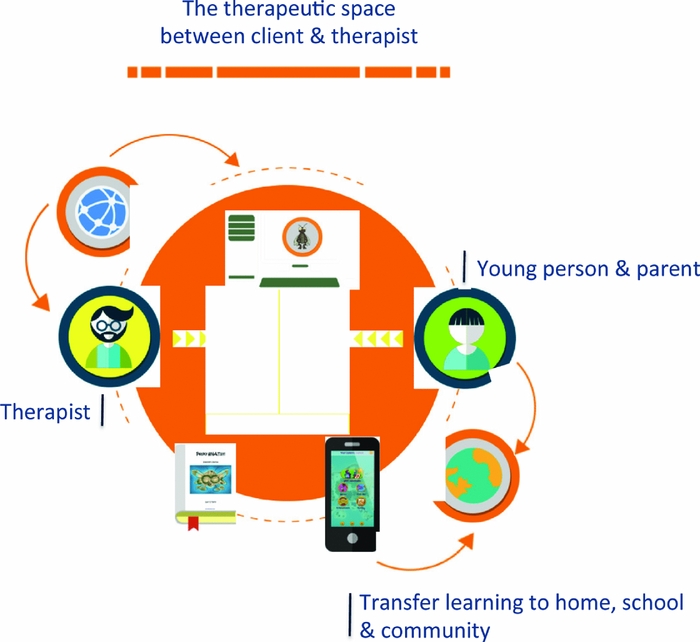
As illustrated in Figure 1 Pesky gNATs assists therapy by supporting it with three pieces of technology. These are: (1) the www.peskygnats.com website providing therapists with online training and a facility to download the computer game. (2) A computer game that a young person and a therapist play together during traditional face-to-face therapy sessions that delivers an evidenced-based mental health intervention. (3) A smart-phone app that allows a young person transfer what they learn in therapy to their home, school and community life.
The Pesky gNATs delivery model combining (1) online training for mental health professionals, with (2) a computer game played during therapy sessions that delivers an evidenced-based intervention, with (3) a Smartphone app that allows a young person transfer their therapeutic gains to their home, school and community.

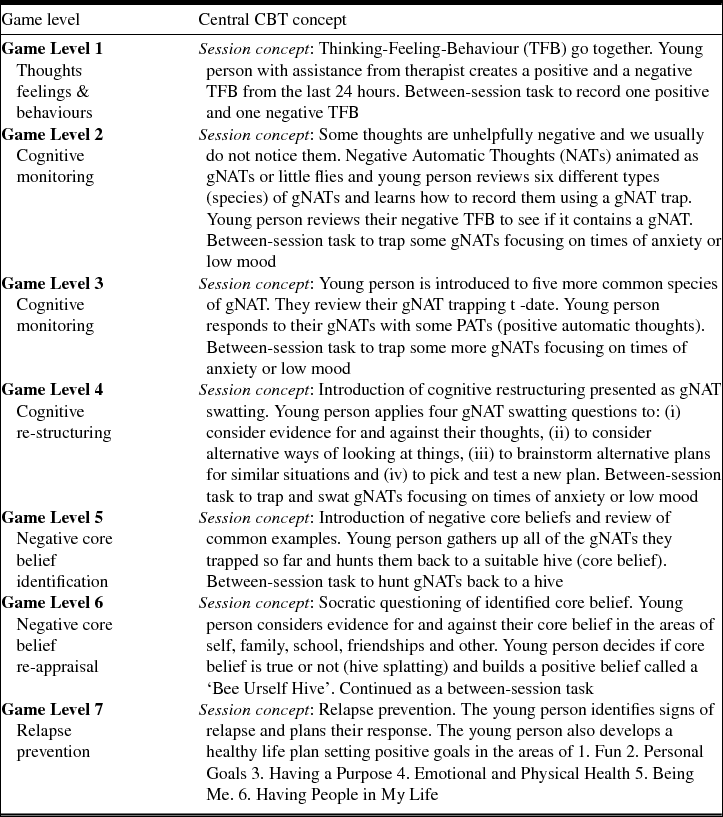
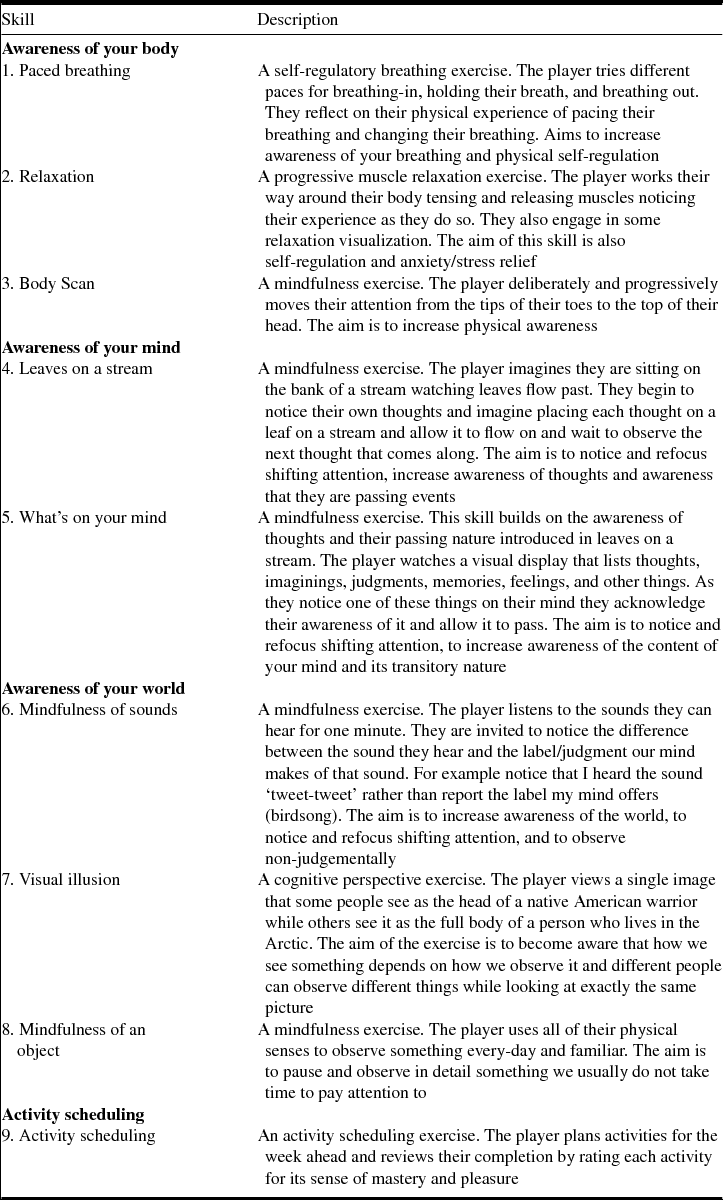
The ‘gNATs’ in the game's title is a play on words animating a key concept of CBT, Negative Automatic Thoughts (or NATs) as gNATs or little flies. Pesky gNATs is played by a young person alongside their therapist during the course of their regular therapy sessions. It progresses by teaching a young person to manage their anxiety or depressed mood by understanding and applying the general cognitive model (Beck & Haigh, Reference Beck and Haigh2014). While playing the game a young person first meets a character called ‘David gNATenborough’, a wildlife documentary film maker who thinks gNATs are such extraordinary creatures that he set up the world's first gNAT laboratory on a distant tropical island in order to study them. The young person then progressively learns how to trap and swat gNATs (observe and challenge their negative thoughts) and hunt them back to their Hives for some Hive splatting (identifying and challenging negative core beliefs) as they work with David and his team of assistants as they explore gNATs Island. Each level of the game also presents the young person with the opportunity to learn a relaxation, mindfulness or activity scheduling skill designed for developmental and technological suitability for young people aged 9–12 years (Tunney et al. in press). The full contents of Pesky gNATs is described in Tables 1 and 2 and Figure 2 provides screen shots from the game and app.
CBT content of Pesky gNATs (O'Reilly & Coyle, 2015a)

Relaxation, mindfulness and activity scheduling content of Pesky gNATs (O'Reilly & Coyle, 2015a)

Screen shots from the Pesky gNATs game and app.

Each level of the game proceeds with the same structure providing the young player with a CBT concept, a virtual social model of how to apply that concept, and input from their therapist to help them think through the personal application of that concept. That is, in every level a game character introduces a single CBT concept. It is then illustrated by a game character called Shona. She is a fictitious previous player who also had difficulties with anxiety and low mood who provides a social learning model. The game's characters then ask the young person how the CBT concept applies to him/her. The young person works this out through conversation with their therapist and together they report their answers within the game. The game's characters then set the young person a between-session (game level) task of applying the CBT concept to their everyday life at home, at school and in their community.
A key aim of O'Reilly & Coyle (Reference O'Reilly and Coyle2015a ) was to address the meta-cognitive challenges of CBT in the hope of making this form of therapy more accessible to younger children. That is, CBT requires young people to think a lot about their thinking, and how their thinking effects their feelings and behaviour, and if their thinking might be distorted, and if they can think of an alternative more realistic, more helpful thought, and to identify a ‘super’ thought (core belief) that underlies their anxiety or low mood. This requires young people to think in quite abstract ways about their thinking and is developmentally challenging for younger children. As such the game world and content of the version of Pesky gNATs used in this study is the prototype version designed for children aged 9–12 years. The current study reports the response of older adolescents aged between 13 and 16 years to the 9- to 12-year version of the game.
In the final version of the programme, that was not available until after the present study was completed, young people can carry out between-session therapy tasks with the assistance of a smartphone app. The Pesky gNATs app is available free through iTunes or Google Play stores (O'Reilly & Coyle, Reference O'Reilly and Coyle2015b ). The Pesky gNATs app rewards young people for completing between-therapy tasks by unlocking fun gNAT-related games that reinforce CBT concepts. The app was not available at the time of the current study and a hard copy Pesky gNATs manual was used to support between-session tasks.
The rationale for developing this programme was to increase engagement and access to the principles of CBT for children and adolescents. Although the amount of face-to-face contact is similar to short-term CBT (6-8 sessions), Pesky gNATs was designed to increase adherence to the evidence-based principles of CBT. In particular, it was designed to help children grasp some of the more abstract ideas of CBT by using an overarching metaphor to explain core CBT concepts Moreover, the delivery of CBT principles using a game format, metaphors, visually presented information, in-session practice and between-session practice was designed to increase adherence and knowledge retention.
Study aims
This study aimed to pilot the feasibility and acceptability of using a novel cCBT intervention designed for children aged 9–12 years called Pesky gNATs, with adolescents aged 13–16 years currently accessing a Tier 3 CAMHS. The rationale for choosing this age group was to investigate whether this version of Pesky gNATs was acceptable to an older age group or whether adaptations to the original version were required. This aim and method of evaluating the acceptability and feasibility was chosen in accordance with the Medical Research Council framework guidance (MRC, 2008) for developing and evaluating complex interventions, by assessing rates of recruitment, retention and testing procedures as a first stage in the evaluation process due to the novelty of the intervention. In addition, this study sought to obtain both qualitative and quantitative evaluations of the programme, which is also recommended in the MRC guidance.
The study was designed to answer the following questions:
-
(1) Is Pesky gNATs a feasible and acceptable intervention for use in a Tier 3 CAMHS setting for young people aged 13–16 years with anxiety and/or depression?
-
(2) If Pesky gNATs is acceptable to young people, what are their views of the programme?
To achieve this, participant recruitment and retention rates were obtained. Also, qualitative feedback on the experience of using cCBT was also collected from the young people following completion of the programme. Finally, adolescent- and parent-reported symptoms of anxiety and depression were collected pre- and post-intervention, as well as weekly scores on the impact of symptoms on functioning, and were examined to determine individual change on scores.
Method
Participants and design
Eleven participants were recruited from a local Tier 3 CAMHS service. Participants were aged between 13 and 16 years and were on a waiting list for individual CBT. Individuals with a suspected or diagnosed neuro-developmental difficulty, such as attention deficit hyperactivity disorder or an autism spectrum condition, intellectual disability or comorbid eating disorder were excluded from the study. In addition, individuals who were refusing school were excluded. Participants received seven hour-long sessions of cCBT delivered by a psychologist in clinical training under the supervision of a lead clinical psychologist. Both parent and adolescent outcome measures were completed at the beginning of session 1 and at the end of session 7. In addition, participants completed a weekly outcome rating scale at the start of the session to monitor the impact on symptoms on functioning. Qualitative feedback on the cCBT intervention was also collected at the end of the final session.
Measures
Revised Child Anxiety and Depression Scale – Parent Version (RCADS-P; Chorpita et al. Reference Chorpita, Yim, Moffitt, Umemoto and Francis2000). The RCADS-P is a 47-item questionnaire designed for parents of young people between the ages of 8 to 18 years to measure symptoms of depression and anxiety. Parents are asked to rate their child's feelings and behaviour on a 4-point Likert scale, ranging from ‘never’ (0) to ‘always’ (3). The questionnaire includes the following subscales: separation anxiety disorder (SAD), social phobia (SP), generalized anxiety disorder (GAD), panic disorder (PD), obsessive compulsive disorder (OCD) and major depressive disorder (MDD). It also yields a ‘Total Anxiety Scale’ (sum of the five anxiety subscales) and a ‘Total Anxiety and Depression Scale’ (sum of all six subscales). A higher positive score indicates a greater number of symptoms and RCADS-P T scores were used to account for adolescent age and gender. The RCADS-P has been shown to have good reliability and validity (Chorpita et al. Reference Chorpita, Moffitt and Gray2005).
Revised Child Anxiety and Depression Scale (RCADS; Chorpita et al. Reference Chorpita, Yim, Moffitt, Umemoto and Francis2000). The RCADS is a 47-item self-report questionnaire designed for young people between the ages of 8 and 18 years to measure symptoms of depression and anxiety. Responses are rated on a 4-point Likert scale, ranging from ‘never’ (0) to ‘always’ (3). The questionnaire includes the following subscales: separation anxiety disorder (SAD), social phobia (SP), generalized anxiety disorder (GAD), panic disorder (PD), obsessive compulsive disorder (OCD) and major depressive disorder (MDD). It also yields a ‘Total Anxiety Scale’ (sum of the five anxiety subscales) and a ‘Total Anxiety and Depression Scale’ (sum of all six subscales). A higher positive score indicates a greater number of symptoms and RCADS T scores were used to account for adolescent age and gender. The RCADS has been shown to have high reliability and validity (Chorpita et al. Reference Chorpita, Moffitt and Gray2005).
Outcome Rating Scale (ORS; Miller & Duncan, Reference Miller and Duncan2000). The ORS is a 4-item measure that is designed to be completed session by session. It captures four areas of functioning: personal distress, social relationships, work/school and overall well-being. These four dimensions are rated using four visual analogue scales and individuals are instructed to mark on each line where they are currently functioning. The ORS has good validity and reliability (Miller et al. Reference Miller, Duncan, Brown, Sparks and Claud2003).
Adolescent Evaluation Form. In addition to the standardized measures, quantitative feedback was gathered on an evaluation form. Participants were asked to rate how much they enjoyed the programme (‘How enjoyable have you found the Pesky gNATs programme?’) and how helpful it was (‘How helpful have you found the Pesky gNATs programme?’) on a 4-point Likert scale, from 0 ‘not at all’, 1 ‘not really’, 2 ‘kind of’, 3 ‘very’ and 4 ‘extremely’. They were also asked to report if they would recommend it to a friend (yes/no). Qualitative feedback in terms of perceived benefits and areas of improvement was also obtained by asking participants ‘What were the most useful things about Pesky gNATs’ and ‘What could be improved?’ These were designed to be open questions to allow more detailed feedback.
Procedure
Ethical approval was obtained from the University of Bath Ethics Committee (Approval Reference: 14–201), Wales NHS Research Ethics Committee (IRAS Project ID: 162440) and the local Research and Development department. Participants were recruited from a local Tier 3 CAMHS and had been placed on a waiting list for individual CBT following an initial assessment meeting with a CAMHS clinician. The local collaborator identified all participants who met the criteria for the study and then contacted participants in order of their length of wait for CBT, to inform them of the study and ask for their consent for the researcher to contact them by telephone. Those who gave permission were contacted by the researcher and invited to take part in the study. If the participant declined, they remained on the waiting list and were not contacted again.
Prior to completing the study, all participants were required to provide written consent to take part in the research and outcome measures were completed at the beginning of session 1 and the end of session 7 (RCADS and RCADS-P), as well as weekly outcome ratings (ORS). All outcome measures were given to participants by the therapist facilitating the programme, but these were completed by the young person independently. Participants then completed seven hour-long sessions of Pesky gNATs, accompanied by the researcher. The therapist facilitated the intervention by briefly checking in on participant mood at the beginning of the session, introducing the session content and assisting with tasks where necessary. Fidelity to the treatment model was ensured through the provision of weekly CBT supervision from a supervisor accredited by the British Association for Behaviour and Cognitive Psychotherapies (BABCP).
Data analysis
The amount of missing data was screened and of 11 participants, two participants had two questions from the RCADS-P missing each, which was corrected for by pro-rating the existing data. First, participant participation and retention rates were calculated to investigate the feasibility of delivering the intervention in the Tier 3 setting. This involved calculating the number of participants who initially agreed to take part in the study, those who entered the study and those who completed.
The qualitative data was then analysed using the six-step method of thematic analysis as described by Braun & Clarke (Reference Braun and Clarke2006). This involved collating all participant responses under the categories of ‘useful aspects of the intervention’ and ‘areas for improvement’ and then extracting codes from the data. Codes were then grouped by several overarching themes which were named and the number of participants reporting information relating to each theme was calculated.
Finally, due to the small sample size and inadequate power to conduct statistical analyses, data was analysed in terms of individual reliable change indices. The reliable change index (RCI; Jacobson & Truax, Reference Jacobson and Truax1991) is used to determine whether the change in an individual's score is statistically reliable when comparing pre- and post-intervention outcomes. This statistic is calculated using the reliability of the measure and demonstrates that there is a 5% chance that this change would be attributed to chance alone. The RCI was calculated for the individual subscales of the RCADS and RCADS-P based on Cronbach's alpha, means and standard deviations of norms reported in Ebesutani et al. (Reference Ebesutani, Chorpita, Higa-McMillan, Nakamura, Regan and Lynch2011). Clinically significant change on the RCADS was calculated by the total T score reducing to ≤70 (Law, Reference Law2012). Reliable and clinically significant change was also calculated for the ORS and this is determined as a 5-point change which must cross the clinical cut-off (for adolescents aged 13–18) of 28 (Law, Reference Law2012).
Results
Participant completion rates and characteristics
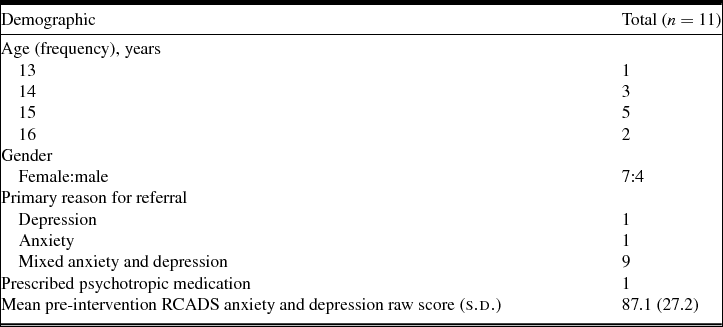
In total, 13 participants were contacted from the CBT waiting list by the local collaborator and were asked if they would like to take part in the study. All 13 agreed to be contacted by the researcher, but only 11 participants accepted the offer to take part in the study. This represented 85% of those who expressed an initial interest to take part in the research, demonstrating a high recruitment rate. Of the two participants who declined to take part, one did not think that using a computer to access therapy would be helpful and the other had recently moved geographical location, meaning they could not access the local CAMHS and was subsequently discharged. Retention rate was also very high with all participants attending 100% of sessions and completing treatment. All participants were of White British ethnicity and less than half (45%) lived in a two-parent family with both biological parents. Participant age, gender and primary reason for referral can be found in Table 3.
Participant demographics

RCADS, Revised Child Anxiety and Depression Scale.
Acceptability of programme
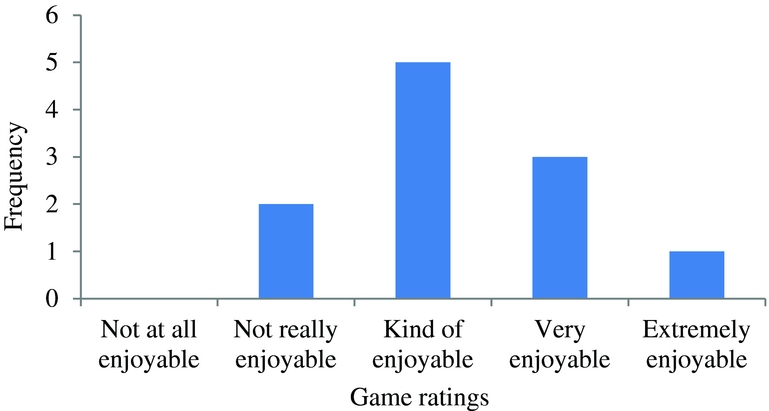
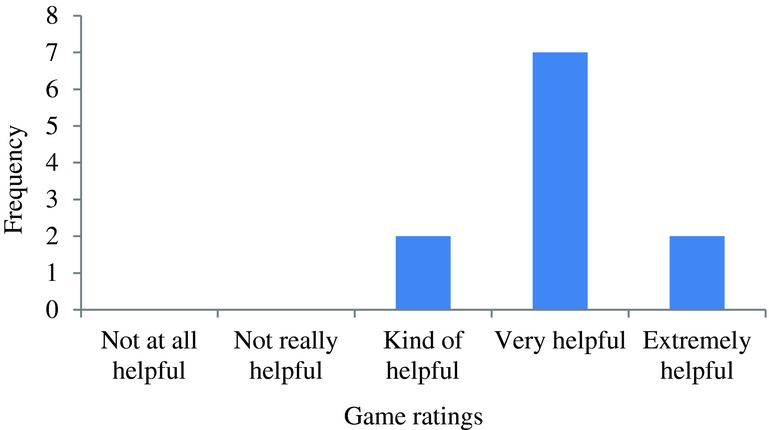
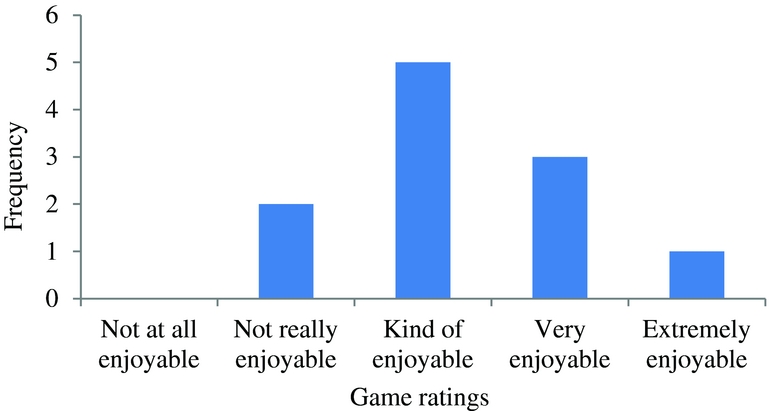
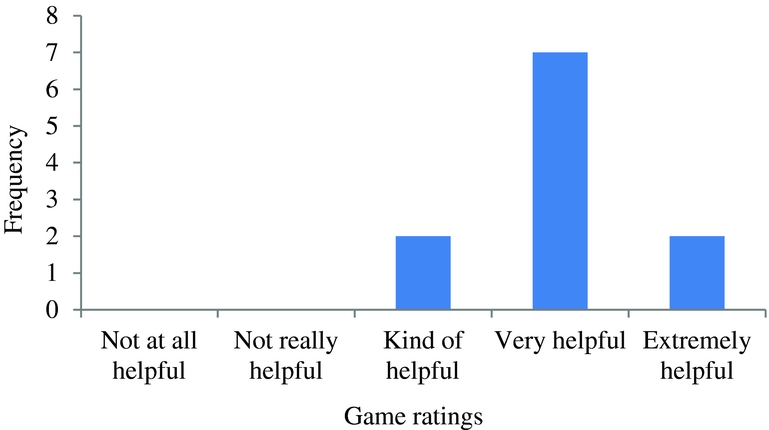
Young people's feedback on their experience of the intervention was largely positive and 81% (9/11) said they would recommend the game to a friend. Participants’ ratings of the programme in terms of how enjoyable and how helpful it was can be found in Figures 3 and 4. Although generally participants found the programme enjoyable, it seemed that the young people found it very helpful.
Participant ratings of the intervention's enjoyableness.
Participant ratings of the intervention's helpfulness.
Qualitative feedback
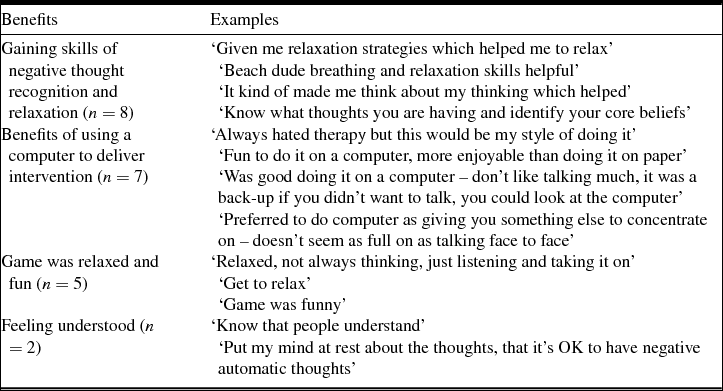
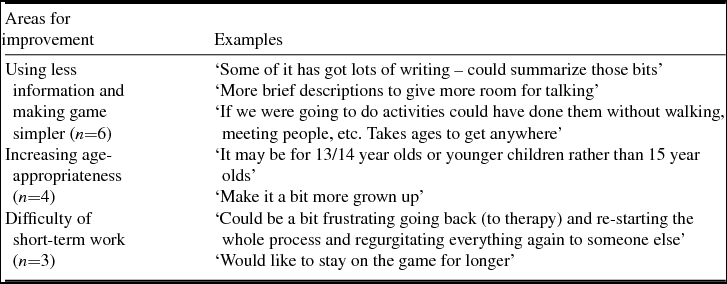
The qualitative data obtained from verbal feedback based on the questions from the feedback sheet given at the end of the intervention was analysed. First, all data was pooled together under the headings of ‘benefits’ and ‘areas for improvement’. From this, codes were derived by extracting similar concepts and grouping them together. Next, names for the overarching themes were generated and then data was re-visited to ensure that all relevant codes were captured by these themes. The main themes and examples are presented in Tables 4 and 5.
Useful aspects of the Pesky gNATs cCBT programme

Areas of improvement for the Pesky gNATs cCBT programme

Participants reported several benefits of the programme in terms of the skills they had gained but also in terms of the usefulness of using a cCBT intervention, compared with traditional CBT. Participants also reported positive experiences of using the game, saying that they were able to have fun and feel relaxed when completing the programme, as well as feeling understood. However, increasing the age-appropriateness of the programme was also highlighted and some young people felt that the game was more appropriate for younger adolescents. Making the programme simpler was also suggested and some young people felt that there was not enough room for talking. The disadvantage of using the programme as a stand-alone intervention was also raised, as young people thought that it could be difficult moving on to individual CBT with a new therapist and having to start the process again. However, this is based on the assumption that a different therapist would be used subsequent to completing the programme and may have been unique to the study design.
Quantitative results
Participant RCI
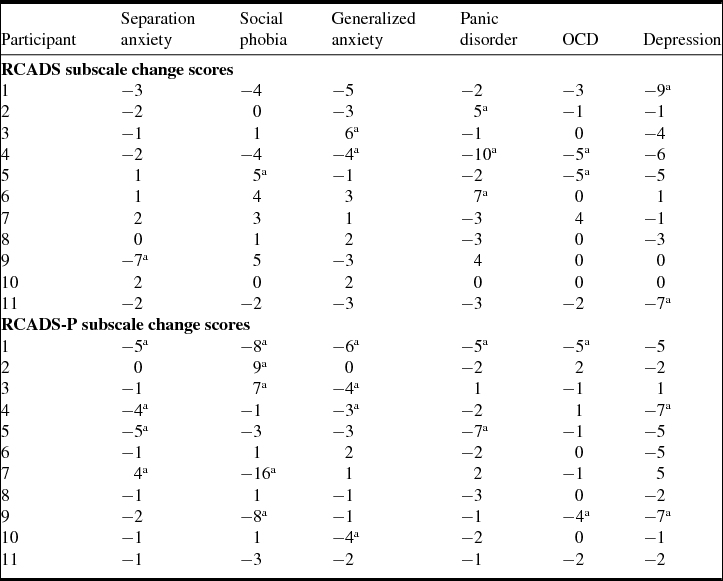
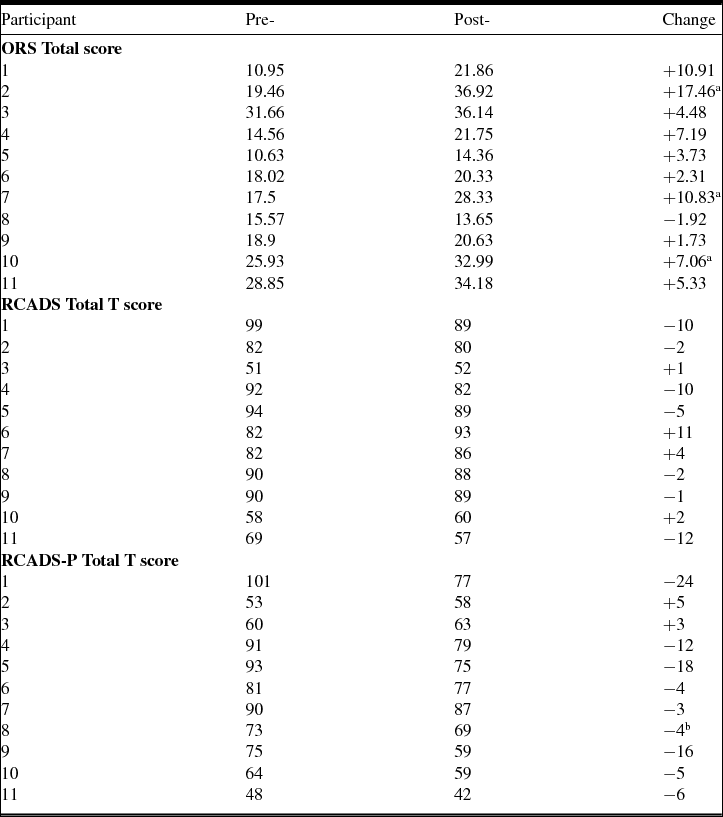
Reliable change indices were calculated for each individual for pre- and post-intervention scores on the RCADS, RCADS-P and the ORS. Reliable change was calculated for each individual using the six RCADS subscales and the six RCADS-P subscales (see Table 6). At the end of the seven sessions it was found that 5/11 participants showed reliable reductions on at least one subscale, with one participant showing reliable reductions on three subscales. However, four participants showed reliable increases on subscale scores following the intervention. Clinically significant change was calculated using the total RCADS and RCADS-P T scores (see Table 7). One participant showed a clinically significant reduction on total RCADS-P score but no participants achieved clinically significant change on self-reported symptoms. Finally, for the ORS, it was found that all but one participant reported an increase in functioning, with 4/11 showing reliable increases and three showing both reliable and clinically significant change (see Table 7). However, it was found that two participants’ pre-intervention scores were already above the clinical cut-off.
RCADS and RCADS-P change scores indicating reliable change

OCD, Obsessive compulsive disorder; RCADS-P, Revised Child Anxiety and Depression Scale – Parent Version.
a Meets the criteria for reliable change (RCI).
Within-subject RCADS and RCADS-P T scores indicating clinical change

ORS, Outcome Rating Scale; RCADS-P, Revised Child Anxiety and Depression Scale – Parent Version.
a Indicates reliable and clinically significant change.
b Indicates clinically significant change.
Participant follow-up
Post-hoc information was obtained about how many participants went on to access individual CBT following the cCBT intervention. It was found that 5/11 participants did not access further individual CBT due to subjective symptom improvement and were subsequently discharged from the service. This was decided at a review meeting with a CAMHS clinician from the service who gave the participant the option to continue therapy. Of the remaining six that needed further CBT, three needed between 3–6 sessions before they were discharged and three needed ≥6 sessions.
Discussion
This study was a preliminary investigation of the feasibility of using a novel cCBT programme for adolescents with depression and anxiety aged between 13 and 18 years. It was designed test the impact and acceptability of using cCBT in a Tier 3 CAMHS setting. Given that this was the first evaluation of a novel intervention, the study was designed in accordance with the MRC framework for developing and evaluating complex interventions (MRC, 2008) by primarily assessing the feasibility and acceptability of the programme.
First, results showed that Pesky gNATs was generally a feasible intervention for most young people in this small sample from a Tier 3 CAMHS setting, with participants demonstrating high participation and retention rates. Second, participants generally reported a high level of satisfaction with the game and it seemed that it was an acceptable method of delivering therapy for the young people in the study. Participants described several useful aspects of completing the cCBT intervention, which included both the content of the intervention ‘gaining skills’ as well as the process ‘using a computer’. Moreover, participants generally found the intervention more helpful than enjoyable, suggesting some scope for improving the enjoyment of the intervention, while retaining its helpfulness. A high level of satisfaction with cCBT has been reported previously for young people (Coyle et al. Reference Coyle, McGlade, Doherty and O'Reilly2011; Stallard et al. Reference Stallard, Richardson, Velleman and Attwood2011) and the frequent use of electronic media in young people may increase the attractiveness of using computerized therapies (Lenhart et al. Reference Lenhart, Purcell, Smith and Zickuhr2010).
The areas for improvement were also highlighted and included using less information, increasing age-appropriateness and finding the short-term nature of the intervention difficult. The problem of cCBT being very brief and time-limited as an intervention has also been raised by clinicians (Stallard et al. Reference Stallard, Richardson and Velleman2010). This suggests that it may be helpful to consider administering the programme as part of an intervention package or using it as an initial intervention. This would involve monitoring outcome before offering further therapy, which would be in line with a stepped-care model of intervention delivery (Bower & Gilbody, Reference Bower and Gilbody2005).
Finally, an investigation of reliable changes in individual pre- and post-total outcome scores revealed that none of the participants achieved clinically significant decreases in overall symptoms of depression and anxiety. However, a third of young people showed a reliable decrease in self-reported symptoms on various subscales and increases in subjective functioning following the seven sessions of the intervention. Moreover, as one participant demonstrated an increase in total score and others showed increases in subscale scores, it may be the case that Pesky gNATs is not suitable for all young people in a Tier 3 setting. Furthermore, other studies using larger sample sizes have found that between 70% and 80% of participants no longer met the criteria for an anxiety disorder at 12-month follow-up after receiving cCBT, which is comparable to around 80% for face-to-face CBT (Khanna & Kendall, Reference Khanna and Kendall2010; Spence et al. Reference Spence, Donovan, March, Gamble, Anderson, Prosser and Kenardy2011). However, the absence of a CBT comparison group in this study makes it difficult to make direct comparisons between Pesky gNATs and traditional face-to-face CBT.
The subscale symptom improvement found in the current study is also in some agreement with other studies that have found significant decreases in anxiety and depression using cCBT interventions designed to target both (Calear et al. Reference Calear, Christensen, Mackinnon, Griffiths and O'Kearney2009; Sethi et al. Reference Sethi, Campbell and Ellis2010; Ellis et al. Reference Ellis, Campbell, Sethi and O'Dea2011; Stallard et al. Reference Stallard, Richardson, Velleman and Attwood2011). However, all studies except the one by Stallard et al., used samples of young people who were at high risk of anxiety or depression, rather than those who had clinically significant symptoms, as well as having much larger sample sizes. Furthermore, just less than half no longer needed to access further intervention from CAMHS due to reported symptom improvement and around a third only needed 3–6 sessions of individual CBT following the cCBT intervention. This is much less than the recommended average length of 8–12 sessions of psychological intervention for young people with mild to moderate depression (NICE, 2005). In addition, over half of parents from the present study reported symptoms of anxiety and depression in their child that showed reliable reductions following the intervention. This is consistent with the one previous study that used cCBT with clinically depressed and anxious young people, who also found parent-reported decreases in total difficulties (Stallard et al. Reference Stallard, Richardson, Velleman and Attwood2011).
It was thought that the presence of a therapist was a necessary aspect of the Pesky gNATs programme. Participants did require scaffolding of concepts and support to apply principles to their own thinking and behaviour which would have not been possible if the programme was delivered online. This is in agreement with other studies showing superior outcomes of face-to-face contact in conjunction with online CBT, compared to online CBT alone. Further, a review and meta-analysis by Richards & Richardson (Reference Richards and Richardson2012) concluded that therapist input as an important component in cCBT. Also, Pennant and others (Reference Pennant, Loucas, Whittington, Creswell, Fonagy, Fuggle and Kendall2015) found that of the cCBT interventions included in their review, all that targeted anxiety and around half of those that targeted depression were facilitated with a therapist present.
Limitations
The study used a very small sample size which was sufficient as a preliminary pilot study of a novel intervention to investigate feasibility and acceptability, but greatly limited the conclusions that could be drawn about whether the intervention reduced symptoms of anxiety and depression. Also, the sample included young people who were moderate to severe in terms of the impact of their emotional difficulties reaching the threshold for Tier 3 CAMHS services and therefore only represents a small proportion of those who may experience anxiety and depression. Due to participants being unable to access the accompanying Pesky gNATs smartphone app, it was unclear whether this aspect of the programme would be acceptable to young people and whether it would have increased homework adherence or impact on symptom reduction. Therefore, further investigations are required to assess the usefulness of adding the app to cCBT. Also, participants’ responses to the programme may have been more favourable given that the therapist facilitating the programme administered the feedback using the evaluation form. This could have also had an impact on the feedback given as participants may have given more positive feedback due to social desirability, despite reassurances that they could answer in a completely honest way. Finally, as baseline and follow-up symptom scores was not obtained, and a control group was not used, it is unclear whether any symptom improvement could be attributed to the programme or whether symptom reduction persists longer term.
Clinical implications and future directions
The main clinical implication of this study is that Pesky gNATs is an acceptable and feasible intervention for young people from this Tier 3 CAMHS sample. It is yet to be concluded as to whether Pesky gNATs is effective as a stand-alone psychological intervention for adolescents with clinically significant levels of anxiety and depression.
Summary of main points
-
• The cCBT intervention Pesky gNATs was found to be a feasible and acceptable intervention in a Tier 3 CAMHS setting for adolescents with depression and anxiety.
-
• Participants identified several useful aspects of completing a cCBT intervention, such as gaining skills, finding it fun and feeling understood. However, participants found that Pesky gNATs may be suitable for a younger age group and found the short-term nature of cCBT difficult.
-
• Around a third of participants showed reliable decreases in self-reported symptoms of anxiety and depression, whereas over half of parents reported a reliable decrease in their child's symptoms. However, most participants required further individual sessions of CBT following the intervention and four participants showed an increase in symptoms on one RCADS subscale over the course of the cCBT. Therefore, Pesky gNATs may not be a suitable intervention for all young people accessing Tier 3 CAMHS and careful monitoring of symptom scores is required to determine intervention suitability.
Ethical standards
The authors assert that all procedures contributing to this work comply with the ethical standards of the relevant national and institutional committees on human experimentation and with the Helsinki Declaration of 1975, and its most recent revision.
This project has been given NHS ethical approval by REC for Wales 1 (REC reference number: 14.WA.1117) and has been sponsored by the University of Bath (Ethics application number: 14–201). Local research and development approval was also given by Weston Area Health Trust (R&D project number: 435).
Acknowledgements
This research was conducted as part of a Clinical Psychology doctorate (and has been submitted as part of a thesis completed for the award) and received no specific grant from any funding agency, commercial or not-for-profit sectors. The development of Pesky gNATs was supported by a grant from the SBRI (Small Business Research Initiative)
Declaration of Interest
The authors have no conflict of interest with respect to this publication.
-
• To understand the theoretical rationale behind the use of computerized CBT (cCBT) for children and adolescents.
-
• To gain knowledge of evidence base for cCBT for children and adolescents.
-
• To learn about a novel cCBT programme designed to reduce anxiety and depression for children and adolescents used in a CAMHS setting.




Comments
No Comments have been published for this article.