Implications
Heat stress is a significant financial burden to animal agriculture in most areas of the world. Acclimation to heat stress imposes behavioral, physiological and metabolic adjustments to reduce the strain and enhances the likelihood of surviving the stress, and it also frequently reduces ruminant performance and compromises health. Improving our knowledge of physiological and metabolic mechanisms of acclimation may contribute to the development and adoption of procedures (genetic, managerial and nutritional) that may help to maintain health, reproductive and productive efficiency in high-yielding ruminants living in hot environments. There is evidence of genetic differences within ruminants with respect to heat tolerance and this may provide clues or tools to select productive and thermotolerant subjects.
Introduction
Climate change, defined as the long-term misbalance of customary weather conditions such as temperature, wind and rainfall characteristics of a specific region, is likely to be one of the main challenges that mankind faces during the present century. The earth’s climate has warmed in the last century (0.74 ± 0.18°C) with the 1990s and 2000s being the warmest on instrumental record (Intergovernmental Panel on Climate Change (IPCC), 2007). Furthermore, the earth’s climate is predicted to continually change at rates unprecedented in recent human history (IPCC, 2007). Current climate models indicate a 0.2°C increase per decade for the next two decades and predict the increase in global average surface temperature by 2100 may be between 1.8°C and 4.0°C (IPCC, 2007).
The increasing concern with the thermal comfort of agricultural animals is justifiable not only for countries occupying tropical zones, but also for nations in temperate zones in which high ambient temperatures are becoming an issue (Nardone et al., Reference Nardone, Ronchi, Lacetera, Ranieri and Bernabucci2010). In terms of adaptation measures, it is generally faster to improve welfare, production and reproduction performances by altering the environment (West, Reference West2003; Mader et al., Reference Mader, Davis and Brown-Brandl2006). However, intense environmental modification (i.e. air conditioning) may be too expensive, economically unjustifiable or unsustainable. Therefore, a more consistent food supply for consumers and economic advantages to producers exist if improved thermotolerance could be accomplished without adversely affecting production (Collier et al., Reference Collier, Baumgard, Lock and Bauman2005).
Heat stress negatively influences farm animal productivity and thus it both jeopardizes the human food supply chain and the livestock economy. Advances in management strategies in part alleviate the impact of thermal stress on animal performance during the hotter seasons. However, the negative effects of heat stress will become more apparent in the future if climate change continues as most predicted and as the world’s population and food supply continue to increase in, and migrate toward the tropical and subtropical regions, respectively (Roush, Reference Roush1994). In addition, genetic improvement programs that enhance production traits may increase an animal’s susceptibility to high environmental temperatures due to the close relationship between metabolic heat generation and production level (Kadzere et al., Reference Kadzere, Murphy, Silanikove and Maltz2002).
Homeothermic animals (depending on their physiological state) have a thermoneutral zone where energy expenditure to maintain normal body temperature is minimal, constant and independent of environmental temperature (Yousef, Reference Yousef1987). When environmental variables, such as ambient temperature, humidity, air movement and solar radiation combine with reach values that surpass the upper limit of the thermoneutral zone, animals enter a condition known as heat stress. Heat stress occurs when the core body temperature of a given species exceeds its range specified for normal activity resulting from a total heat load (internal production and environment) exceeding the capacity for heat dissipation. This prompts physiological and behavioral responses to reduce the strain. Behavioral and physiological responses are initiated to increase heat loss and reduce heat production in an attempt to maintain body temperature within the range of normality. Initial responses are considered homeostatic mechanisms and include increased water intake, sweating and respiration rates, reduced heart rate and feed intake (Yousef, Reference Yousef1985; Horowitz, Reference Horowitz2002). If exposure to the thermal load is prolonged, heat acclimation (if survivable) is achieved via processes of acclimatory homeostasis (Horowitz, Reference Horowitz2002), and these are partially characterized by a decrease in growth hormone (GH), catecholamine and glucocorticoid levels. This altered endocrine status acts to lower circulating levels of thyroxine (T4) and triiodothyronine (T3), and this reduces the basal metabolic rate and thus heat production (Johnson, Reference Johnson1980; Yousef, Reference Yousef1987).
The objectives of this review are to focus and discuss how ruminants physiologically and metabolically acclimate to heat stress. The preponderance of information and thermal biology literature pertains to cattle, compared with other dairy ruminant species (primarily sheep, goats and buffaloes), and therefore the majority of data reviewed and discussed herein are concentrated on cattle. Bioclimatic indices and their accuracy in measuring heat stress, and biological consequences of heat stress on ruminant health, production and reproduction are reviewed.
Heat stress, critical temperatures and bioclimatic indices
The estimation of how ‘comfortable’ or ‘stressful’ environmental conditions are is complicated. This is mainly due to the various combinations of factors such as temperature, humidity, wind and direct and indirect radiations. A plethora of biometeorological indices has been developed and these empirical formulas would ideally predict the weather conditions when ruminants start to experience heat stress (Bohmanova et al., Reference Bohmanova, Misztal and Cole2007) and become susceptible to heat-induced death (Vitali et al., Reference Vitali, Segnalini, Bertocchi, Bernabucci, Nardone and Lacetera2009). Most temperature–humidity indices (THIs) are a combination of only ambient temperature (often referred to as dry-bulb temperature) and relative humidity. These two variables are easily measured and often made publically available from meteorological services. The primary difference among most THI equations is how much emphasis (weight) is placed on relative humidity and thus different equations will be better suited for different geographic locations (Bohmanova et al., Reference Bohmanova, Misztal and Cole2007). Although solar radiation can be a strong contributor to heat load, it is often not easily measurable and its effect is partially dependent on animal coat characteristics. Therefore, THI equations that do not incorporate a wet bulb variable (a measure of temperature, humidity, wind and solar radiation) have limitations for pasture- and feedlot-based systems.
The Livestock Conservation Institute originally arbitrarily categorized varying THI values into mild, moderate and severe for lactating cattle (Armstrong, Reference Armstrong1994) based upon the retrospective analysis from studies conducted in the 1950s and 1960s. It was traditionally thought that milk synthesis begins to decrease when the THI reaches 72 (Armstrong, Reference Armstrong1994), but recent data from the University of Arizona indicate that high-yielding dairy cows reduce milk yield at a THI of approximately 68 (Zimbelman et al., Reference Zimbelman, Rhoads, Rhoads, Duff, Baumgard and Collier2009). As long as genetic selection continues to be primarily based on annual milk yield, cows will likely continue to become more susceptible to heat stress conditions.
Acclimation and adaptation to heat stress
Among the physical environmental stressors, ambient temperature is ecologically the most important (Horowitz, Reference Horowitz2002). The terms for describing how animals respond to thermal challenges have been defined by the International Commission for Thermal Physiology (International Commission for Thermal Physiology (ICTP), 2001). This section will define and review some terms of thermal biology before a discussion of the interrelationships between ruminants and heat stress.
Acclimation: Physiological or behavioral changes occurring within the lifetime of an organism, which reduce the strain or enhance strain endurance. Strain is described as experimentally induced stressful changes in particular climatic factors such as ambient temperature in a controlled environment.
Acclimatization: Physiological or behavioral changes occurring within the lifetime of an organism in response to changes in its natural climate (e.g. seasonal or geographical).
Adaptation: Changes that reduce the physiological strain produced by stressful components of the total environment. This change may occur within an organism’s lifetime (phenotypic) or be the result of genetic selection in a species or subspecies (genotypic). Acclimation, as defined by the International Commission for Thermal Physiology (ICTP, 2001), relates to phenotypic adaptations to specified climatic components. In thermal physiology, using the term adaptation does not require specification of the climatic components of the total environment to which the organism adapts, but the most obvious component is often denoted (e.g. adaptation to heat). There are no distinct terms that relate genotypic adaptations to the climate or particular components of climate. In comparison to adaptation as defined in neurophysiology, the adaptive processes in thermal physiology usually occur with larger time constants.
Adaptation, genotypic: A genetically fixed condition of a species or subspecies (or its evolution), which favors survival in a particular total environment.
Adaptation, phenotypic: Changes that reduce the physiological and/or emotional strain produced by stressful components of the total environment and occurring within the lifetime of the organism (synonym: adaptation non-genetic).
In this review, we will use the term acclimation, but the content applies equally to acclimatization or phenotypic adaptation.
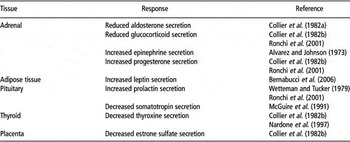
Acclimation involves an altered expression of pre-existing features and is a process driven by the endocrine system (Table 1), with the goal of maintaining animal well-being regardless of environmental challenges. The long-term acclimation to heat was classically referred to as acclimatory homeostasis (Horowitz, Reference Horowitz2002), but has recently been proposed to be a homeorhetic mechanism (Collier et al., Reference Collier, Baumgard, Lock and Bauman2005), because it appears to alter the set-points of homeostatic-related systems (i.e. basal and stimulated carbohydrate metabolism). This review uses ‘homeorhesis’, a Waddington term (Waddington, Reference Waddington1957) originally used to describe changes in homeostasis in lactating cows (Bauman and Currie, Reference Bauman and Currie1980), which is essentially interchangeable with ‘teleophoresis’ as described by Chilliard et al. (Reference Chilliard, Ferlay, Faulconnier, Bonnet, Rouel and Bocquier2000).
Some endocrine adaptation made during heat acclimation in cattle

The precise meanings of homeorhesis and teleophoresis differ according to the Greek language; however, each term refers to the ‘orchestrated or coordinated changes in the metabolism of body tissues necessary to support a physiological state’ (Bauman and Currie, Reference Bauman and Currie1980; Chilliard et al., Reference Chilliard, Ferlay, Faulconnier, Bonnet, Rouel and Bocquier2000). Thus, homeorhetic–teleophoretic regulation involves a dynamic coordination of physiological processes in support of a dominant physiological state or chronic situation. The described control is characterized by its chronic nature (hours or days) v. an acute response (seconds or minutes) characteristic of homeostatic-regulating examples. In addition, it simultaneously influences multiple tissues and systems, which results in an overall coordinated response, and it is mediated through altered responses to homeostatic signals (Bauman and Currie, Reference Bauman and Currie1980; Chilliard et al., Reference Chilliard, Ferlay, Faulconnier, Bonnet, Rouel and Bocquier2000).
Acclimation is a process that takes days to several weeks to occur and involves changes in hormonal signals that affect target tissue responsiveness to environmental stimuli. Therefore, a close examination of this process reveals that it resembles homeorhetic/teleophoretic mechanisms (Collier et al., Reference Collier, Baumgard, Lock and Bauman2005). This can be deduced by the functional differences between acclimatory responses and homeostatic or ‘reflex responses’ (Bligh, Reference Bligh1976). The acclimatory response needs days or weeks to occur in contrast to seconds or minutes. In addition, acclimatory responses possess a hormonal link in the pathway from the central nervous system to the effector cells, and usually alter the response of effector cells or organs to an environmental challenge. The main effect of these acclimatory responses is to coordinate metabolism to achieve a new equilibrium that could be considered as a new physiological state.
There is evidence for a temporal biphasic pattern of heat acclimation: short-term and long-term heat acclimations (STHA and LTHA, respectively; Horowitz et al., Reference Horowitz, Kaspler, Marmary and Oron1996; Hahn, Reference Hahn1999; Horowitz, Reference Horowitz2002). STHA is the phase in which changes are initiated within cellular signalling pathways (Horowitz et al., Reference Horowitz, Kaspler, Marmary and Oron1996) leading to disturbances in cellular homeostasis and begins to reprogram cells to survive the deleterious effects of heat stress (Horowitz, Reference Horowitz2001). In rodents, the full expression of STHA is attained when the drop in plasma thyroid hormones (T3 and T4) level exceeds 30% to 40% (Horowitz, Reference Horowitz2001). In ruminants, the STHA is characterized by responses initiated to compensate for the increased heat stress before permanent acclimation can be obtained. Increased heat dissipation (primarily through evaporative heat loss), reduced feed intake and milk yield and increased water intake are examples of the STHA response (Gaughan et al., Reference Gaughan, Lacetera, Valtorta, Khalifa, Hahn and Mader2009a).
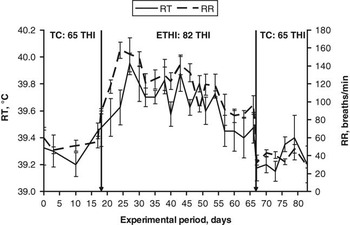
When the initial acclimation phase is complete and the heat-acclimated phenotype is expressed, LTHA occurs (Horowitz, Reference Horowitz2001 and Reference Horowitz2002). LTHA is characterized by a reprogrammed gene expression and cellular response resulting in enhanced efficiency of signalling pathways and metabolic processes (Horowitz, Reference Horowitz2002), and this, in large part, may be mediated by heat shock proteins (Hsp; described later; Maloyan et al., Reference Maloyan, Palmon and Horowitz1999). This phase of acclimation is also characterized by endocrine changes and this is presumably with the goal of decreasing metabolic heat production and increasing heat dissipation. Two examples of LTHA are (i) chickens hatched from eggs incubated at elevated temperatures are more tolerant to heat (Yalçin et al., Reference Yalçin, Çabuk, Bruggeman, Babacanoğlu, Buyse, Decuypere and Siegel2008a and Reference Yalçin, Çabuk, Bruggeman, Babacanoğlu, Buyse, Decuypere and Siegel2008b) and (ii) body temperatures from chronically (40 to 45 days) heat-stressed (82 THI) ewes gradually return to pre-stress values (65 THI; Figure 1) and similar results have been reported for heifers (Bernabucci et al., Reference Bernabucci, Bani, Ronchi, Lacetera and Nardone1999) and cattle (Hahn, Reference Hahn1999).
Least square means (±s.e.) of rectal temperature (RT) and respiration rate (RR) of sheep exposed to thermal comfort (TC; 65 THI) and elevated temperature–humidity index (ETHI; 82 THI). RT was registered at 0900 h using a digital thermometer with 0.1°C accuracy of measurement. RR was taken before the registration of RT, by counting flank movements for 1 min. Measurements were performed in duplicate (Bernabucci et al., Reference Bernabucci, Lacetera, Danieli, Bani, Nardone and Ronchi2009).

Evidence suggests that within domesticated ruminants differences exist between species, breed and production level with regard to heat stress susceptibility (Silanikove, Reference Silanikove2000b; Kadzere et al., Reference Kadzere, Murphy, Silanikove and Maltz2002; Collier et al., Reference Collier, Baumgard, Lock and Bauman2005). This is mainly due to species differences in the ability to reduce metabolic and endogenous heat production and increase heat dissipation. For instance, animals adapted to hot environments have lower metabolic and water turnover rates, and a higher capacity to dissipate heat via panting and sweating (Gaughan et al., Reference Gaughan, Lacetera, Valtorta, Khalifa, Hahn and Mader2009a). Among species, sheep and goats are considered less sensitive to heat stress than cattle (Silanikove, Reference Silanikove2000a and Reference Silanikove2000b; Kalifa et al., 2005). Silanikove (Reference Silanikove2000b) reported that goats are the best adapted species to harsh environments and goats indigenous to harsh environments perform better than other domesticated ruminants (Shkolnik and Silanikove, Reference Shkolnik and Silanikove1981; Devendra, Reference Devendra1990). The lower basal heat production, larger salivary glands and thus saliva secretion, higher surface area of absorptive mucosa, increased efficiency in the ability to recycle urea from blood to the rumen (compared to other grass and roughage eaters) and a capacity to substantially increase the volume of the foregut when fed high fibrous feed are the main morpho-physiological characteristics that allow goats to more easily adapt to harsh environments.
The increased susceptibility of cattle to heat stress is primarily due to their high metabolic rate, compared with that of other ruminants, and the poorly developed water retention mechanism in the kidney and gut. For example, the rate of water use by heat-stressed Holstein heifers was 2.84-fold higher (0.56 v. 0.20 l/kg0.75 body weight (BW)) than heat-stressed Sardinian female lambs (Bernabucci et al., Reference Bernabucci, Bani, Ronchi, Lacetera and Nardone1999 and Reference Bernabucci, Lacetera, Danieli, Bani, Nardone and Ronchi2009). In addition, beef cattle are less sensitive than dairy cattle to heat stress due to the overall decrease in endogenous heat production (lower plane of production, reduced heat increment of feeding, etc.). Furthermore, Senft and Rittenhouse (Reference Senft and Rittenhouse1985) proposed a model to evaluate thermal acclimation in cattle, which clearly demonstrated significant variability between beef cattle breeds. The variability was in the length of acclimation period and ranged from 9 days for Angus and Charolais to 14 days for Polled Hereford (Hereford and Santa Gertrudis had intermediate values (12 days)). In a recent study, Brown-Brandl et al. (Reference Brown-Brandl, Eigenberg and Nienaber2006) reported a significant effect of breed and breed by temperature interaction on respiration rates and panting scores. Angus and MARC III breeds had the highest respiration rate and panting score, followed by Gelbvieh and then Charolais. Those authors concluded that the results seemed logically due to hide color differences that affect the adsorption of solar radiation.
The level of acclimation to heat stress also varies among breeds within the same species and this is probably because Bos indicus and Bos taurus cattle have evolved within distinct climates (Hansen, Reference Hansen2004). During genetic adaptation, Zebu cattle have acquired thermotolerant genes (Hansen, Reference Hansen2004), and therefore have a higher degree of thermotolerance compared with B. taurus species. Gaughan et al. (Reference Gaughan, Mader, Holt, Josey and Rowan1999) reported that genetic adaptation allows B. indicus cattle to have lower respiration rates and rectal temperatures than B. taurus species when exposed to similar heat stress conditions. In terms of milk yield, Jersey dairy cows are more resistant to heat stress than Holstein cows (Sharma et al., Reference Sharma, Rodriguez, Mekonnen, Wilcox, Bachman and Collier1983), and Ragsdale et al. (Reference Ragsdale, Thompson, Worstell and Brody1953) reported that milk production of Holstein, Jersey and Brown Swiss cows exposed to 34°C was 63%, 68% and 84%, respectively, of thermal neutral conditions. However, the degree of ‘thermotolerance’ depends upon which variable is used to evaluate acclimation. For example, in vitro data indicate that lymphocyte tolerance to heat was lower in Brown Swiss compared with Holstein cows and this was associated with increased Hsp72 expression (Lacetera et al., Reference Lacetera, Bernabucci, Scalia, Basiricò, Morera and Nardone2006).
Acclimation responses also depend on pre-stress production levels. For example, low-yielding lactating cows are able to return to pre-heat stress production levels but high-producing cows cannot (Johnson and Vanjonack, Reference Johnson and Vanjonack1976), and this may be because the zone of thermal neutrality shifts to lower temperatures, as milk yield, feed intake and metabolic heat production increase (Coppock et al., Reference Coppock, Grant, Portzer, Charles and Escobosa1982; Kadzere et al., Reference Kadzere, Murphy, Silanikove and Maltz2002). In addition, the slope/persistency of milk yield decline during heat stress is steeper (−0.059%/day) in higher-producing (30 kg/day) cows than in lower (25 kg/day)-producing cows (−0.019%/day; Johnson et al., Reference Johnson, Shanklin and Hahn1987). In fact, increasing daily milk yield from 35 to 45 l is thought to increase sensitivity to thermal stress and reduces the ‘threshold temperature’ by 5°C (Berman, Reference Berman2005). This increased sensitivity is presumably due to the extra heat associated with synthesizing additional milk. For example, heat production from cows producing 18.5 and 31.6 kg milk/day was 27.3% and 48.5%, respectively, higher than non-lactating cows (Purwanto et al., Reference Purwanto, Abo, Sakamoto, Furumoto and Yamamoto1990). Moreover, a cow weighing 700 kg and yielding 60 kg milk/day produces about 44 171 kcal of heat/day; the same cow produces 25 782 kcal of heat/day at the end of lactation (milk yield of 20 kg/day) (Nardone et al., Reference Nardone, Ronchi, Lacetera and Bernabucci2006).
Genomic responses during acclimation
As reported above, high-producing dairy ruminants are acutely susceptible to environmentally induced hyperthermia because the metabolic heat load is proportionate to milk production levels. To counteract an increasing heat load, dairy cows must enlist adaptations on a cellular basis to increase heat dissipation and minimize heat production. However, the genomic alterations and associated molecular mechanisms leading to cellular heat stress acclimation are poorly understood. Recently, studies aimed at characterizing the global changes in cellular gene expression in cattle have incorporated microarray analysis utilizing bovine-specific cDNA arrays obtained from the National Bovine Functional Genomics Consortium. Microarray analysis profiled bovine mammary epithelial cell (BMEC) gene expression in response to acute heat stress using an in vitro system that approximates mammary development and function (Collier et al., Reference Collier, Collier, Rhoads and Baumgard2008). During severe and acute hyperthermia (42°C), the BMEC exhibited morphological changes (regression of ductal branches) and reduced cellular growth. Consistent with these physical alterations in cell behavior, gene expression associated with protein synthesis and cellular metabolism was decreased. In this model system, Hsp70 gene expression in BMEC remained elevated for 4 h at 42°C and then returned to basal levels after 8 h of exposure, indicating the end of heat tolerance and activation of genes associated with apoptosis (Collier et al., Reference Collier, Collier, Rhoads and Baumgard2008). A second study in lactating dairy cattle evaluated the gene expression profile of liver tissue in response to an extended period (14 days) of the heat stress (Rhoads et al., Reference Rhoads, Sampson, Tempelman, Sipkovsky, Coussens, Lucy, Spain and Spiers2005). The liver’s pivotal role in whole-body metabolism via coordination of endogenously and exogenously derived nutrients is most likely altered by heat stress-induced reductions in feed intake and shifts in metabolism. In agreement with this notion of hepatic remodelling, liver gene expression favoured reductions in cell growth and proliferation, and also in enhanced apoptosis.
A large proportion of an animal’s mass comprises skeletal muscle, which can have a profound impact on whole-animal energy metabolism and nutrient homeostasis, especially during periods of stress. To better understand how an environmental heat load influences the set points of several metabolic pathways within skeletal muscle, Rhoads et al. (Reference Rhoads, Obrien, Greer, Cole, Sanders, Wheelock and Baumgard2008) examined heat stress effects on skeletal muscle during beef cattle adaptation to chronic heat stress using microarray analysis. Skeletal muscle (semimembranosus) biopsies were obtained during thermal neutral conditions and again after exposure to heat stress. Data interrogation by pathway analysis identified dramatic changes in the skeletal muscle transcriptional profile revealing that during heat stress bovine skeletal muscle may experience mitochondrial dysfunction leading to impaired cellular energy status. This may have broad implications for the reduced growth, decreased milk production and heat intolerance observed in ruminants during heat stress especially if skeletal muscle is not able to make necessary contributions to whole-body energy homeostasis. Taken together, the microarray data demonstrate that bovine cells and tissues undergo changes in cellular behavior, which may be important for individual tissue function, whole-body metabolism and overall physiological acclimation to heat stress.
Metabolic and hormonal acclimation to hot environment
The biological mechanism by which heat stress impacts production and reproduction is partly explained by reduced feed intake, but also includes an altered endocrine status, reduction in rumination and nutrient absorption, and increased maintenance requirements (Collier et al., Reference Collier, Baumgard, Lock and Bauman2005), resulting in a net decrease in nutrient/energy availability. Naturally, a reduction in energy intake combined with increased energy expenditure for maintenance lowers energy balance, and partially explains why lactating cattle lose significant amounts of BW during severe heat stress (Rhoads et al., Reference Rhoads, Rhoads, VanBaale, Collier, Sanders, Weber, Crooker and Baumgard2009; Shwartz et al., Reference Shwartz, Rhoads, VanBaale, Rhoads and Baumgard2009).
Reductions in energy intake coupled with increased maintenance costs during heat stress causes negative energy balance (NEBAL) in lactating cows (likely stage of lactation independent) and a bioenergetic state, similar (but not to the same extent) to the NEBAL observed in early lactation. The NEBAL associated with the early post-partum period is coupled with increased risk of metabolic disorders and health problems, decreased milk yield and reduced reproductive performance (Drackley, Reference Drackley1999). Similarly, we hypothesize many of the negative effects of heat stress on production, and animal health and reproduction indices may be mediated by NEBAL. However, it is not clear how much of the reduction in performance (yield and reproduction) can be attributed or accounted directly (hyperthermia) or indirectly (reduced feed intake) to heat stress.
As stated above, heat stress acclimation is accomplished by changes in homeostatic responses (Horowitz, Reference Horowitz2002) and may include homeorhetic/teleophoretic processes involving an altered endocrine status that ultimately affects target tissue responsiveness to environmental stimuli. Hormones are also implicated in the acclimatory response to heat stress (Collier et al., Reference Collier, Baumgard, Lock and Bauman2005), and they primarily include thyroid hormones, prolactin, GH, glucocorticoids and mineralcorticoids. The thyroid hormones, T4 and T3, provide a major mechanism important for acclimation and have received considerable research attention. It is well known that heat acclimation decreases endogenous levels of thyroid hormones (in an attempt to reduce endogenous heat production) and those mammals adapted to warmer climates follow this pattern (Johnson and Vanjonack, Reference Johnson and Vanjonack1976; Horowitz, Reference Horowitz2001).
Circulating prolactin levels are increased during thermal stress in a variety of mammals including ruminants (Collier et al., Reference Collier, Beede, Thatcher, Israel and Wilcox1982a; Ronchi et al., Reference Ronchi, Stradaioli, Verini Supplizi, Bernabucci, Lacetera, Accorsi, Nardone and Seren2001; Roy and Prakash, Reference Roy and Prakash2007). This is paradoxical as reduced nutrient intake in thermal neutral ruminants decreases circulating prolactin concentrations (Bocquier et al., Reference Bocquier, Bonnet, Faulconnier, Guerre-Millo, Martin and Chilliard1998). A direct (independent of reduced feed intake) effect of heat stress on serum prolactin levels has been shown (Ronchi et al., Reference Ronchi, Stradaioli, Verini Supplizi, Bernabucci, Lacetera, Accorsi, Nardone and Seren2001). Increased prolactin initially seems contradictory (especially in lactating dairy cows), given prolactin’s well-known role in maintaining galactopoiesis in some species and lactogenesis in ruminants, but prolactin may play an important role in acclimation through improved insensible heat loss and sweat gland function (Beede and Collier, Reference Beede and Collier1986). Bromocryptine (a prolactin secretion inhibitor) treatment during heat acclimation affects sweat gland function by preventing increased sweat gland discharge (Kaufman et al., Reference Kaufman, Mills, Hughson and Peake1988). Prolactin levels also differ with season and it appears to be involved in acclimating to seasonal/weather changes (Leining et al., Reference Leining, Bourne and Tucker1979). Whether increased prolactin levels affect the ability of animals to metabolically adapt during a heat load is currently unknown but is of interest, given its importance as a homeorhetic hormone.
The hypothalamic–pituitary–adrenal axis is also a key component of the acclimatory response to thermal stress (Beede and Collier, Reference Beede and Collier1986; Collier et al., Reference Collier, Baumgard, Lock and Bauman2005). Corticotropin-releasing hormone stimulates somatostatin; possibly a key mechanism by which heat-stressed animals have reduced GH and thyroid levels (Riedel et al., Reference Riedel, Layka and Neeck1998). In dairy cattle, the glucocorticoids decrease during acclimation at 35°C (Alvarez and Johnson, Reference Alvarez and Johnson1973) and are lower in thermal-acclimated animals compared with controls (Ronchi et al., Reference Ronchi, Stradaioli, Verini Supplizi, Bernabucci, Lacetera, Accorsi, Nardone and Seren2001).
A prerequisite of understanding the metabolic adaptations that occur during heat stress is an appreciation of the physiological and metabolic adaptations to thermal neutral NEBAL (i.e. malnourishment or during the transition period). NEBAL is associated with a variety of metabolic changes that are implemented to support the dominant physiological condition of lactation (Bauman and Currie, Reference Bauman and Currie1980). Marked alterations in both carbohydrate and lipid metabolism ensure partitioning of dietary-derived and tissue-originating nutrients toward the mammary gland, and not surprisingly many of these changes are mediated by endogenous GH, which is naturally increased during periods of NEBAL (Bauman and Currie, Reference Bauman and Currie1980). One characteristic response to NEBAL is a reduction in circulating insulin coupled with a reduction in systemic insulin sensitivity. The reduction in insulin action allows for adipose lipolysis and mobilization of non-esterified fatty acids (NEFAs; Bauman and Currie, Reference Bauman and Currie1980). Increased circulating NEFAs are typical in ‘transitioning’ cows and represent (along with NEFA-derived ketones) a significant source of energy (and are precursors for milk fat synthesis) for cows in NEBAL. Post-absorptive carbohydrate metabolism is also altered by the reduced insulin action during NEBAL with the net effect of reduced glucose uptake by systemic tissues (i.e. muscle and adipose). The reduced nutrient uptake coupled with the net release of nutrients (i.e. amino acids and NEFAs) by systemic tissues are key mechanisms implemented by cows in NEBAL to support lactation (Bauman and Currie, Reference Bauman and Currie1980). The thermal neutral cow in NEBAL is metabolically flexible, in that alternative fuels (NEFAs and ketones) can be burned to spare glucose, which can be utilized by the mammary gland to copiously produce milk.
We recently showed that despite the reduced feed intake, heat-stressed cows do not have an increase in plasma NEFA (Rhoads et al., Reference Rhoads, Rhoads, VanBaale, Collier, Sanders, Weber, Crooker and Baumgard2009; Shwartz et al., Reference Shwartz, Rhoads, VanBaale, Rhoads and Baumgard2009), and this agrees with other heat-stressed ruminant models (Sano et al., Reference Sano, Takahashi, Ambo and Tsuda1983; Itoh et al., Reference Itoh, Obara, Rose, Fuse and Hashimoto1998; Ronchi et al., Reference Ronchi, Bernabucci, Lacetera, Verini Supplizi and Nardone1999). The lack of an elevated NEFA response is especially surprising, as acute heat stress causes a marked increase in circulating cortisol, norepinephrine and epinephrine levels (Collier et al., Reference Collier, Baumgard, Lock and Bauman2005), catabolic signals that normally stimulate lipolysis and adipose mobilization. This is also surprising as calculated EBAL is traditionally thought to be closely associated with circulating NEFA levels. The fact that heat-stressed cows fail to enlist this ‘shift’ in post-absorptive energetic metabolism (despite inadequate nutrient intake) may indicate that heat stress directly (not mediated by feed intake) impacts energetics.
An additional metabolic hallmark of malnourished animals in thermal neutral conditions is either a reduction in blood insulin or a decrease in systemic insulin sensitivity (Bauman and Currie, Reference Bauman and Currie1980). Despite marked reductions in nutrient intake, heat-stressed cattle exhibit increased basal insulin levels and stimulated insulin response (Itoh et al., Reference Itoh, Obara, Rose, Fuse and Hashimoto1998; Baumgard and Rhoads, Reference Baumgard and Rhoads2007; Wheelock et al., Reference Wheelock, Rhoads, VanBaale, Sanders and Baumgard2010), and this agrees with heat-stressed rodent experiments (Torlinska et al., Reference Torlinska, Banach, Paluszak and Gryczka-Dziadecka1987). The increased basal and stimulated insulin levels may explain the lack of an increase in basal NEFA levels in heat-stressed cows as insulin is a potent antilipolytic hormone (Vernon, Reference Vernon1992). The increase in basal insulin levels appears due to increased pancreas secretion, rather than reduced circulating insulin removal, because of the acute marked difference in insulin levels between heat-stressed and thermal neutral pair-fed cows following administration of an insulin secretagogue (Baumgard and Rhoads, Reference Baumgard and Rhoads2007).
In addition to adipose tissue, skeletal muscle is also mobilized during the periods of inadequate nutrient intake (in thermal neutral conditions) to support lactation. We have shown that heat-stressed cows (Baumgard and Rhoads, Reference Baumgard and Rhoads2007; Shwartz et al., Reference Shwartz, Rhoads, VanBaale, Rhoads and Baumgard2009) and heifers (Ronchi et al., Reference Ronchi, Bernabucci, Lacetera, Verini Supplizi and Nardone1999) have increased plasma urea nitrogen levels compared with the thermal neutral controls. Plasma urea nitrogen can originate from at least two sources: inefficient rumen ammonia incorporation into microbial proteins or from hepatic deamination of amino acids mobilized from the skeletal muscle. A better circulating indicator of muscle catabolism is either 3-methyl-histidine or creatine, both of which are increased in heat-stressed poultry (Yunianto et al., Reference Yunianto, Hayashi, Kaneda, Ohtsuka and Tomita1997), rabbits (Marder et al., Reference Marder, Eylath, Moskovitz and Sharir1990) and lactating cows (Schneider et al., Reference Schneider, Beede and Wilcox1988). Additional evidence suggesting that heat stress alters protein metabolism is decreased milk protein levels from heat-stressed cows (Rhoads et al., Reference Rhoads, Rhoads, VanBaale, Collier, Sanders, Weber, Crooker and Baumgard2009; Shwartz et al., Reference Shwartz, Rhoads, VanBaale, Rhoads and Baumgard2009), and it appears that αS- and β-casein synthesis is most susceptible (Bernabucci et al., Reference Bernabucci, Lacetera, Ronchi and Nardone2002b). The effects of heat stress on muscle and mammary protein metabolism is perplexing, as insulin typically stimulates protein synthesis in both tissues.
Cellular acclimation during hyperthermia involves the coordination of cellular responsiveness to endocrine cues coupled with intrinsic changes, a concept best illustrated in recent studies examining the somatotropic axis (Rhoads et al., Reference Rhoads, Rhoads, VanBaale, Collier, Sanders, Weber, Crooker and Baumgard2009, Reference Rhoads, Kim, Collier, Crooker, Boisclair, Baumgard and Rhoads2010). Dairy cattle in positive energy balance have a coupled somatotropic axis, defined as efficient GH-dependent insulin-like growth factor-I (IGF-I) synthesis and secretion by the liver in response to pituitary-derived or exogenous GH (Bauman and Vernon, Reference Bauman and Vernon1993). However, during the periods of NEBAL, circulating GH concentrations rise and plasma IGF-I concentrations fall, and the response of hepatic IGF-I production to exogenous GH is negligible at best (Bauman and Vernon, Reference Bauman and Vernon1993). These observations indicate that the somatotropic axis becomes uncoupled during the periods of NEBAL (Bauman and Vernon, Reference Bauman and Vernon1993).
Some have reported numerical or statistically significant reductions in GH levels during thermal stress (Mitra et al., Reference Mitra, Christison and Johnson1972; McGuire et al., Reference McGuire, Beede, Collier, Buonomo, Delorenzo, Wilcox, Huntington and Reynolds1991). However, we have recently reported no differences in mean GH concentrations, GH pulsatility characteristics or GH response to GH-releasing factor in heat-stressed v. pair-fed thermal neutral controls (Rhoads et al., Reference Rhoads, Rhoads, VanBaale, Collier, Sanders, Weber, Crooker and Baumgard2009). Despite these similar aspects of circulating GH, plasma IGF-I was reduced in heat-stressed cows. Circulating IGF-I has been implicated in the regulation of milk synthesis in dairy cattle and blood-borne IGF-I is produced in a GH-dependent fashion by the liver (Boisclair et al., Reference Boisclair, Wesolowski, Kim and Ehrhardt2006). We investigated whether hepatic GH responsiveness was altered during heat stress by measuring GH receptor abundance and STAT-5 phosphorylation (Rhoads et al., Reference Rhoads, Kim, Collier, Crooker, Boisclair, Baumgard and Rhoads2010). Heat stress, independent of reduced feed intake, decreased the abundance of the hepatic GH receptor, although both heat stress and malnutrition were sufficient to decrease STAT-5 phosphorylation. Consistent with reduced GH signalling through STAT-5, hepatic IGF-I mRNA abundance was lower in heat-stressed animals. Thus, the reduced hepatic GH responsiveness observed during heat stress appears to involve mechanisms independent of reduced feed intake. The physiological significance of reduced hepatic GH receptor abundance during heat stress is unclear at this time, but may serve to alter other GH-dependent hepatic processes such as regulation of gluconeogenesis.
Water metabolism
Increased water loss via skin and respiratory evaporation (sweating and panting, respectively) in an attempt to dissipate heat can disturb body water levels and mineral concentrations, particularly within vascular and extracellular compartments. The altered heat-induced changes in both circulating water and minerals interfere with the animal’s ability to maintain proper osmotic balance and blood pressure. In fact, Silanikove (Reference Silanikove1994) reported that increased body fluid loss due to sweating and panting in heat-stressed ruminants can increase the risk of cardiovascular dysfunction and an inability to maintain euthermia.
Heat-stressed high-producing dairy cows may have problems maintaining a steady plasma volume. However, in our controlled environment study (Nardone et al., Reference Nardone, Lacetera, Ronchi and Bernabucci1992), we reported a positive correlation (r = 0.62; P < 0.01) between water intake and rectal temperature in heat-stressed lactating cows. In addition, Silanikove (Reference Silanikove1992) reported that heat stress influences water metabolism by increasing plasma and extracellular fluid volume in proportion to the thermoregulatory requirement of the cow. Kadzere et al. (Reference Kadzere, Murphy, Silanikove and Maltz2002) suggested that either the increased efficiency of water transfer through the biological membranes (∼50%) or increased plasma volume provides a thermoregulatory advantage.
Biological consequences of hormonal and metabolic acclimation
Animals initiate many acute acclimation responses in order to survive thermal stress (Stott, Reference Stott1981), but some of these adaptations may ultimately adversely affect long-term health and/or productivity. In the sections below, we will address how physiological and metabolic adjustments affect health variables and production parameters.
Health
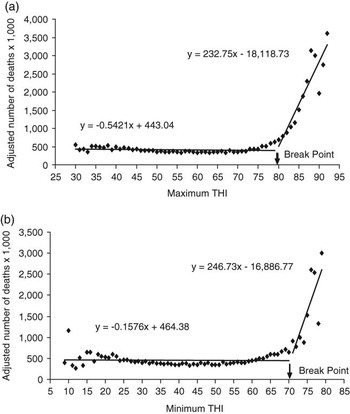
It is assumed that high ambient temperatures directly and indirectly affect the health status of farm animals (Gaughan et al., Reference Gaughan, Lacetera, Valtorta, Khalifa, Hahn and Mader2009a). Direct influences include temperature-related illness and death. Indirect influences include those derived from reduced nutrient intake, altered microbial populations (around and in the animal), redistribution of vector-borne diseases, decreased host resistance to infections, water shortages and food-borne diseases. A series of studies have described a higher risk of mortality during the hottest months (Dechow and Goodling, Reference Dechow and Goodling2008; Vitali et al., Reference Vitali, Segnalini, Bertocchi, Bernabucci, Nardone and Lacetera2009), and an increased death rate during extreme weather events (Hahn et al., Reference Hahn, Mader, Harrington, Nienaber and Frank2002). High temperatures may cause heat stroke, heat exhaustion, heat syncope, heat cramps and ultimately organ dysfunction, and these heat-induced complications occur when the body temperature rises approximately 3°C to 4°C. Our recent epidemiological dairy cow study (Vitali et al., Reference Vitali, Segnalini, Bertocchi, Bernabucci, Nardone and Lacetera2009) indicates that 80 and 70 are the daily maximum and minimum THI values, respectively, above which heat-induced death rate increases. In addition, 87 and 77 are the daily upper critical maximum and minimum THI, respectively, above which the risk of heat-induced death becomes maximum (Figure 2).
Relationship between daily temperature–humidity index (THI) and mortality. Adjusted number of deaths (ANDs) in relation to maximum (a) and minimum (b) THI (Vitali et al., Reference Vitali, Segnalini, Bertocchi, Bernabucci, Nardone and Lacetera2009). (a) A break point was detected at 79.6 THI. Below the break point, the AND was constant across THI values (R 2 = 0.0119, F1.50 = 0.910, P = 0.5), whereas above 79.6 THI, the AND rose sharply with THI (R 2 = 0.8382, F1.13 = 269.65, P < 0.001). (b) A break point was detected at 70.3 THI. Below the break point, the AND was constant across THI values (R 2 = 0.0004, F1.62 = 0.930, P = 0.5), whereas above 70.3 THI, the AND rose sharply with THI (R 2 = 0.6151, F1.9 = 707.01, P < 0.001).

Organisms initiating the stress acclimation process make a trade-off between ‘survival’ and an effective immune system, and it appears that heat shock factors and Hsp occupy a central place in this balance (Morange, Reference Morange2006). We recently reported that incubating bovine peripheral blood mononuclear cells under high temperatures is associated with both a gradual reduction in their ability to proliferate in response to mitogen stimulations and with a corresponding gradual increased Hsp72 gene expression (Lacetera et al., Reference Lacetera, Bernabucci, Scalia, Basiricò, Morera and Nardone2006). Furthermore, under these experimental conditions, a negative correlation was detected between DNA synthesis and Hsp72 mRNA levels. These results indicate that in cells exposed to stressful conditions, the synthesis of ‘protective’ proteins predominates and the synthesis of proteins or other molecules involved in proliferation is reduced. A similar association between severe heat stress and altered lymphocyte function was observed under field conditions (Lacetera et al., Reference Lacetera, Bernabucci, Scalia, Ronchi, Kuzminsky and Nardone2005). In the same study, we hypothesized that depressed cell-mediated immunity and an enhanced humoral response might be related to heat-induced increases in circulating cortisol by causing a shift from a T-helper 1 (Th1; cellular) to a Th2 (humoral) pattern of immunity leading to increased infection susceptibility.
Several dairy cow studies report increased occurrence of mastitis during the summer (Morse et al., Reference Morse, DeLorenzo, Wilcox, Collier, Natzke and Bray1988; Waage et al., Reference Waage, Sviland and Odegaard1998). Improved survival capability or multiplication of pathogens or their vectors (Chirico et al., Reference Chirico, Jonsson, Kjellberg and Thomas1997), or a negative action of heat stress on defensive mechanisms (Giesecke, Reference Giesecke1985) have been indicated as the potential causes of such epidemiological findings.
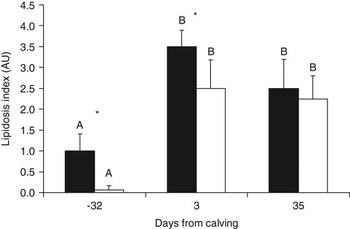
Finally, health problems in heat-stressed ruminants may also be a consequence of nutritional and metabolic acclimation. In particular, due to increased maintenance requirements for thermoregulation and lower feed intake, summer transition dairy cows are more likely to experience subclinical or clinical ketosis (Lacetera et al., Reference Lacetera, Bernabucci, Ronchi and Nardone1996) and are under higher risk of liver lipidosis (Figure 3; Basiricò et al., Reference Basiricò, Bernabucci, Morera, Lacetera and Nardone2009). Increased liver lipidosis probably compromises liver function and we have reported that heat-stressed cattle have reduced albumin secretion and liver enzyme activities (Ronchi et al., Reference Ronchi, Bernabucci, Lacetera, Verini Supplizi and Nardone1999). We have also shown that heat stress causes oxidative stress in transition dairy cows (Bernabucci et al., Reference Bernabucci, Lacetera, Ronchi and Nardone2002a).
Least square means and s.e. for the degree of liver lipidosis in transition dairy cows during summer (▪) and spring (□); *P < 0.05 within day; A, B = P < 0.01 within season (adapted from Basiricò et al. (Reference Basiricò, Bernabucci, Morera, Lacetera and Nardone2009)).

Rumen health
Heat stress has long been known to adversely affect rumen health (Mishra et al., Reference Mishra, Martz, Stanley, Johnson, Campbell and Hilderbrand1970) due to a variety of biological and management reasons (Bernabucci et al., Reference Bernabucci, Bani, Ronchi, Lacetera and Nardone1999 and Reference Bernabucci, Lacetera, Danieli, Bani, Nardone and Ronchi2009; Kadzere et al., Reference Kadzere, Murphy, Silanikove and Maltz2002). Heat-stressed cows consume less feed and consequently ruminate less and this results in decreased buffering agents (ruminating is the primary stimulant of saliva production) entering the rumen. In addition, because of the redistribution of blood flow to the periphery (in an attempt to enhance heat dissipation) and subsequent reduction in blood delivery to the gastrointestinal track, digestion end products (i.e. volatile fatty acids (VFAs)) are absorbed less efficiently and thus the total rumen VFA content increases (and pH decreases). Furthermore, increased respiration rates also contribute to rumen acidosis because panting causes enhanced CO2 to be exhaled. In order to be an effective blood–pH buffering system, the body needs to maintain a 20 : 1 HCO3− (bicarbonate) to CO2 ratio. Because of the hyperventilation-induced decrease in blood CO2, the kidney secretes HCO3− to maintain this ratio. This reduces the amount of HCO3− that can be used (via saliva) to buffer and maintain a healthy rumen pH. In addition, panting cows often drool reducing the quantity of saliva available for the rumen. The reductions in saliva HCO3− content and the decreased amount of saliva entering the rumen make the heat-stressed cow much more susceptible to subclinical and acute rumen acidosis (Kadzere et al., Reference Kadzere, Murphy, Silanikove and Maltz2002).
Changes in cow’s eating behavior probably also contribute to rumen acidosis. Cows in thermal neutral conditions typically consume 12 to 15 meals per day but decrease eating frequency to 3 to 5 meals per day during heat stress. The decreased frequency is accompanied by larger meals and thus more acid production post-eating. Furthermore, cows will typically gorge (over eat) the day following a heat wave and this gluttonous behavior is well known to cause rumen acidosis.
To compensate for the reduced nutrient and energy intake caused by heat stress and the metabolic heat load associated with fermenting forages, nutritionists typically increase the energy density of the ration using extra grains/concentrates. However, this practice should be conducted with care as this type of diet can be associated with a lower rumen pH. The combination of a ‘hotter’ ration and the cow’s reduced ability to neutralize the rumen directly increases the risk of rumen acidosis and indirectly enhances the risk of developing negative side effects of an unhealthy rumen environment (i.e. laminitis, milk fat depression, etc.).
Reproduction
High environmental temperatures may compromise reproductive efficiency in both genders. In females, heat stress compromises oocyte growth by altering progesterone, luteinizing hormone and follicle-stimulating hormone secretion and dynamics during the estrous cycle (Ronchi et al., Reference Ronchi, Stradaioli, Verini Supplizi, Bernabucci, Lacetera, Accorsi, Nardone and Seren2001). Moreover, heat stress may reduce summer fertility in dairy and beef cows by causing poor estrous expression due to reduced estradiol secretion from the dominant follicle developed in a low luteinizing hormone environment (Biggers et al., Reference Biggers, Geisert, Wetteman and Buchanan1987; De Rensis and Scaramuzzi, Reference De Rensis and Scaramuzzi2003; Amundson et al., Reference Amundson, Mader, Rasby and Hu2006). About a 20% to 27% drop in conception rates (Lucy, Reference Lucy2002; Chebel et al., Reference Chebel, Santos, Reynolds, Cerri, Juchem and Overton2004) or decrease in 90-day non-return rate to the first service in lactating dairy cows (Al-Katanani et al., Reference Al-Katanani, Webb and Hansen1999; Ravagnolo and Misztal, Reference Ravagnolo and Misztal2002) occurs in summer. Roy and Prakash (Reference Roy and Prakash2007) reported a lower plasma progesterone and higher prolactin concentration during estrous cycle in heat-stressed Murrah buffalo heifers. Those authors concluded that prolactin and progesterone profiles during the summer and winter are directly correlated with the reproductive performance of the buffalo, and that hyperprolactinemia may cause acyclicity/infertility in buffaloes during the hot summer. Heat stress has also been associated with impaired embryo development and increased embryo mortality in cattle (Wolfenson et al., Reference Wolfenson, Roth and Meidan2000; Bényei et al., Reference Bényei, Gaspard and Barros2001; Hansen, Reference Hansen2007). Furthermore, heat stress during pregnancy slows down fetal growth and increases fetal loss.
In bulls, semen concentration, number of spermatozoa and motile cells per ejaculation are lower in summer than in winter and spring (Mathevon et al., Reference Mathevon, Buhr and Dekkers1998; Nichi et al., Reference Nichi, Bols, Zuge, Barnabe, Goovaerts, Barnabe and Cordata2006). Meyerhoeffer et al. (Reference Meyerhoeffer, Wettemann, Coleman and Wells1985) reported that exposure to elevated ambient temperatures resulted in decreased bull semen quality as evidenced by a reduced percentage of motile sperm, reduced sperm output and an increased percentage of abnormal and aged sperm.
Production
Milk
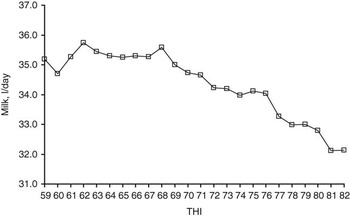
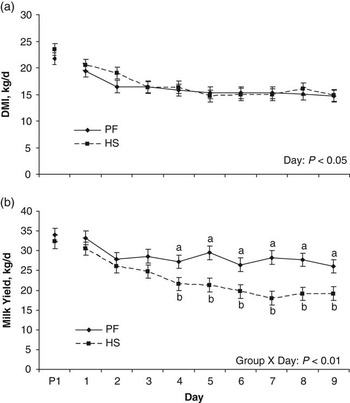
Johnson et al. (Reference Johnson, Ragsdale, Berry and Shanklin1962) showed a linear reduction in dry matter intake (DMI; −0.23 kg/day) and milk yield (−0.26 kg/day) when THI exceeded 70. In a 2-year study conducted under field conditions, we recently found a decrease of 0.27 kg of milk per THI unit only if Holstein cows were exposed to THI higher than 68 (Figure 4), and similar results were reported by Ravagnolo et al. (Reference Ravagnolo, Misztal and Hoogenboom2000). Bouraoui et al. (Reference Bouraoui, Lahmar, Majdoub, Djemali and Belyea2002) in a 2-year study, found a negative correlation between milk yield and daily THI (r = −0.76). In particular, milk yield decreased by 0.41 kg per cow per day for each THI unit increase of above 69. Bohmanova et al. (Reference Bohmanova, Misztal and Cole2007) reported different rates of milk production decline per unit of THI, ranging from −0.40 to −0.27 and from −0.59 to −0.23 kg in Georgia and Arizona, respectively. Reduced feed intake caused by heat stress has traditionally been assumed to be primarily responsible for the decrease in milk yield (Collier et al., Reference Collier, Beede, Thatcher, Israel and Wilcox1982a; West, Reference West2003). However, we have recently shown that reduced nutrient intake (indirect effects of heat) accounts for only about 35% of the heat stress-induced decrease in milk synthesis (Figure 5).
Temperature–humidity index on milk production in Holstein cows.

Effects of heat stress (HS) or pair-feeding (PF) on (a) dry matter intake and (b) milk yield in lactating Holstein cows. Solid lines with diamonds represent PF cows and dashed lines with squares represent HS cows. The mean value from days 1 to 9 of the thermal neutral ad libitum period (P1) was used as a covariate and is represented by P1 on the x axis. The results of days 1 to 9 are from P2 when cows were exposed to HS or exposed to thermal neutral conditions and PF with the HS cows (adapted from Rhoads et al. (Reference Rhoads, Rhoads, VanBaale, Collier, Sanders, Weber, Crooker and Baumgard2009)).

Our studies, conducted in climatic chambers, showed a heat-induced decrease in milk yield of 35% in mid-lactating dairy cows (Nardone et al., Reference Nardone, Lacetera, Ronchi and Bernabucci1992; Spiers et al., Reference Spiers, Spain, Sampson and Rhoads2004; Rhoads et al., Reference Rhoads, Rhoads, VanBaale, Collier, Sanders, Weber, Crooker and Baumgard2009), and 14% in early lactating dairy cows (Lacetera et al., Reference Lacetera, Bernabucci, Ronchi and Nardone1996). Milk yield for Holstein cows declined by 0.88 kg per THI unit increase for the 2-day lag of mean THI (West et al., Reference West, Mullinix and Bernard2003). The extent of milk yield decline observed in heat-stressed cows is dependent on several factors that interact with high air temperature. As reported before, the milk yield losses during a heat load are positively correlated with production levels before heat stress. The stage of lactation is also an important factor affecting how dairy cows respond to heat stress. Johnson et al. (Reference Johnson, Shanklin and Hahn1987) observed that the mid-lactating dairy cows were the most heat sensitive compared to their early and late lactating counterparts. In fact, mid-lactating dairy cows showed a higher decline in milk production (−38%) following exposure to heat. The same results have been obtained in a field study by Calamari et al. (Reference Calamari, Maianti, Calegari, Abeni and Stefanini1997) who observed a decline in milk yield of 11% to 14%, 22% to 26% and 15% to 18% in early (after the first month), mid- and late lactating dairy cows, respectively.
The nutritional–metabolic conditions of dairy cows during the different lactation stages might explain the higher heat sensitivity of mid-lactating dairy cows. In fact, milk yield in early lactating cows is strongly supported by tissue stores mobilization and less by feed intake, whereas milk yield in mid-lactating cows is mostly supported by feed intake, which reaches a peak in this stage. As the metabolic utilization of tissue stores has higher efficiency compared with the metabolic utilization of feed, the early lactating cows should produce less metabolic heat per kg of milk yielded, than mid-lactating cows. This is a possible explanation why mid-lactating cows are more sensitive to hot weather.
A hot environment negatively affects milk quality as well (Moran, Reference Moran1989; Bernabucci and Calamari, Reference Bernabucci and Calamari1998; Calamari and Mariani, Reference Calamari and Mariani1998). Above 72 THI, milk protein content declines, whereas the response of milk fat content seems delayed and results are contradictory. When comparing milk production during summer and spring in a dairy herd located in central Italy, we found a lower milk yield (−10%), and also lower casein percentage and casein index (casein/total proteins ratio) in summer (2.18% v. 2.58% and 72.4% v. 77.7%, respectively; Bernabucci et al., Reference Bernabucci, Lacetera, Ronchi and Nardone2002b). The decreased casein was due to the reduction in αs- and β-casein percentages. The strict relationship between casein content and fraction and milk behavior during the technical processes may explain the loss in cheese yield and the alteration of cheese-making properties during summer in Italy (Calamari and Mariani, Reference Calamari and Mariani1998).
The minor importance of sheep, goats and buffalo with regard to global milk production, in addition to lower selection intensity for high productivity and their effective adaptability to hot environments, explains why less heat stress attention has been given to these species. However, reports indicate that milk production traits in ewes seem to have a higher negative correlation with the direct values of temperature or relative humidity than THI. The values of THI above which ewes start to suffer from heat stress seem to be quite different among breeds (Finocchiaro et al., Reference Finocchiaro, van Kaam, Portolano and Misztal2005). Solar radiation seems to have a limited effect on milk yield, but a greater effect on yield of casein, fat and clot firmness in the milk of Comisana ewes (Sevi et al., Reference Sevi, Annicchiarico, Albenzio, Taibi, Muscio and Dell’Aquila2001). Even goats are affected by heat stress and responded by reducing milk yield and the content of milk components (Olsson and Dahlborn, Reference Olsson and Dahlborn1989).
Meat
Worldwide, beef cattle are generally reared outdoors with constant exposure to natural conditions, while maintenance in housing systems is limited. Beef cattle are particularly vulnerable not only to extreme environmental conditions but also to rapid changes in climate. In particular, fatter cattle (subcutaneous fat acts like insulation and slows heat dissipation), cattle with a heavy hair coat (more insulation) and darker-coated animals (black and dark red cattle) are very sensitive to heat (Brown-Brandl et al., Reference Brown-Brandl, Eigenberg and Nienaber2006; Gaughan et al., Reference Gaughan, Mader, Holt, Sullivan and Hahn2009b). The Scientific Committee on Animal Health and Animal Welfare (SCAHAW, 2001) suggested that the threshold temperature where adverse effects on DMI, growth and feed efficiency are readily apparent for beef cattle is 30°C with relative humidity below 80% and 27°C with relative humidity above 80% (Hahn, Reference Hahn1999). Mitlöhner et al. (Reference Mitlöhner, Morrow, Dailey, Wilson, Galyean, Miller and McGlone2001) reported reduced DMI and average daily gain, carcass weight loss, lower fat thickness and increase in disease incidence in steers kept under heat stress conditions. Furthermore, Kadim et al. (Reference Kadim, Mahgoub, Al-Ajmi, Al-Maqbaly, Al-Mugheiry and Bartolome2004) found strong negative effects of the hot season (average temperature of 34.3 ± 1.7°C and 48.8 ± 7.6% relative humidity) on the quality of beef meat. In particular, these authors reported higher ultimate pH values, lower Warner–Bratzler shear force and darker meat of M. longissimus thoracis in heat-stressed beef cattle when compared with muscle samples collected during the cool season.
Selecting heat tolerance
Finch et al. (Reference Finch, Bennett and Holmes1982) reported a negative correlation between sweating response and metabolic rate, which illustrates the difficulty in combining heat adaptability characteristics and production traits in cattle. Genetic selection for milk and meat production has reduced heat tolerance (Ravagnolo and Misztal, Reference Ravagnolo and Misztal2000; Kadzere et al., Reference Kadzere, Murphy, Silanikove and Maltz2002; Gaughan et al., Reference Gaughan, Lacetera, Valtorta, Khalifa, Hahn and Mader2009a). Heat tolerance today is considered one of the most important adaptive aspects in cattle (McManus et al., Reference McManus, Prescott, Paludo, Bianchini, Louvandini and Mariante2009). The identification of heat-tolerant animals within high-producing breeds may be useful only if these animals are able to maintain high productivity and survivability when exposed to heat stress conditions (Gaughan et al., Reference Gaughan, Lacetera, Valtorta, Khalifa, Hahn and Mader2009a).
To establish whether it is possible to select high-producing cattle for heat tolerance, at least two important points have to be ascertained (Nardone, Reference Nardone1998): (i) identification of one (preferably) or more measurable indices of heat tolerance and (ii) estimation of the genetic correlation between heat tolerance and productive and reproductive traits.
The heritability of some anatomical and morphological traits (i.e. sweat glands density and function, hair coat density and thickness, hair length and color and skin color) has been reported within ruminant breeds (reviewed in Nardone, Reference Nardone1998). Differences in anatomical and morphological characteristics partially explain differences in heat tolerance among species and breeds (Ingram and Mount, Reference Ingram and Mount1975; West, Reference West2003; Collier et al., Reference Collier, Collier, Rhoads and Baumgard2008; Dikmen et al., Reference Dikmen, Martins, Pontes and Hansen2009; Gaughan et al., Reference Gaughan, Lacetera, Valtorta, Khalifa, Hahn and Mader2009a and Reference Gaughan, Mader, Holt, Sullivan and Hahn2009b). Collier et al. (Reference Collier, Eley, Sharma, Pereira and Buffington1981) indicated that Jersey cows were more heat tolerant that Holstein cows, and Muller and Botha (Reference Muller and Botha1993) suggested that part of this enhanced tolerance is the difference in respiratory rate capacity. In addition, there are obviously differences in the surface area to mass ratio between the two breeds and this could contribute to the improved heat tolerance in Jersey cows.
Sweat gland density and function, hair coat density and thickness, hair length and color, skin color and regulation of epidermal vascular supply are animal factors affecting the efficacy of evaporative heat loss. Cattle have a single apocrine sweat gland associated with each hair fiber. Thus, hair density directly affects the number of sweat glands, and hair diameter and length affect evaporative heat loss (Gebremedhin and Wu, Reference Gebremedhin and Wu2001; Olson et al., Reference Olson, Chase, Lucena, Codoy, Zuniga and Collier2006). Studies conducted at the University of Arizona indicate dairy cattle are able to maintain core body temperature until skin surface temperatures exceed 35°C (Pollard et al., Reference Pollard, Estheimer, Dwyer, Gentry, Weber, Lemke, Baumgard, Henderson, Crooker and Collier2005). Above this surface temperature, cows begin to store heat, rectal temperature rises, cutaneous evaporative heat loss increases and variation (in body temperature) between cows is much greater than below 35°C. Reasons for this variability are likely because of differences in the number (and activity) of sweat glands and hair coat characteristics (Olson et al., Reference Olson, Chase, Lucena, Codoy, Zuniga and Collier2006).
Another example of thermotolerance linked with morphological characteristics is the ‘slick’ gene in cattle; ‘Slick’ cattle are characterized by shorter hair length. Cattle with shorter hair, hair of greater diameter and lighter coat color are more adapted to hot environments than those with longer hair coats and darker colors (Gaughan et al., Reference Gaughan, Mader, Holt, Sullivan and Hahn2009b). This phenotype has been characterized in B. taurus tropical cattle (Senepol and Carona), and this dominant gene is associated with an increased sweating rate, lower rectal temperature and lower respiration rate in homozygous cattle under hot conditions (Mariasegaram et al., Reference Mariasegaram, Chase, Chaparro, Olson, Brenneman and Niedz2007). However, no information on the association between genotype and production or reproduction traits are available. Hansen (Reference Hansen1990) found that Holstein cows with white coat coverage greater than 70% had lower rectal temperatures compared with cows with black coat coverage greater than 70%. King et al. (Reference King, Denise, Armstrong, Torabi and Wiersma1988) reported a positive correlation between the extension of white coat and reproductive performances of Holstein cows. Although coat color is heritable, it is unclear whether genetic selection based on color would benefit animal production agriculture.
Rectal temperature and respiration rates (or the combination) are commonly used to assess heat tolerance. Core body temperature results from all processes of thermoregulation, and rectal temperature is typically considered a good index of thermoregulatory capacity (Yousef, Reference Yousef1985). The heritability of rectal temperature is not well known, but appears to be medium to low (from 0.16 to 0.64; reviewed in Nardone, Reference Nardone1998). Genetic and phenotypic correlations between rectal temperature and productive (Johnson, Reference Johnson1987; Nardone et al., Reference Nardone, Lacetera, Ronchi and Bernabucci1992; Spiers et al., Reference Spiers, Spain, Sampson and Rhoads2004) and reproductive traits (Turner, Reference Turner1982) have been reported.
Selection for heat tolerance within a breed may be an opportunity for improving animal performance in hot climates. Nardone and Valentini (Reference Nardone and Valentini2000) simulated selection schemes using a quantitative genetic approach for milk yield in adapted local breeds and heat tolerance (measured as rectal temperature) in cosmopolitan high-yielding dairy breeds. High-yielding breeds selected on the basis of rectal temperature showed more than double the annual progress of milk production than locally adapted breeds. Those authors concluded that selection based on rectal temperature in high-yielding breeds was the best (because heat tolerance can be improved in a few generations in high-yielding breeds), whereas local breeds needed more than 30 generations to reach a comparable milk production.
Sire selection for heat tolerance may transmit important traits and should be considered. Carabano et al. (Reference Carabano, Wade and Van Vleck1990) did not find a sire by region interaction for milk and fat yield and concluded that bulls with daughters in one region would not be expected to be significantly re-ranked on records of daughters in another region of the United States. Zwald et al. (Reference Zwald, Weigel, Fikse and Rekaya2003), exploring variables useful as an indicator of genotype by environment interaction, reported that bulls’ daughters may perform differently in large v. small herds, or in herds with a hot climate v. herds with a cool climate. In a large study, Ravagnolo and Misztal (Reference Ravagnolo and Misztal2000) reported that below a 72 THI, heritability for milk yield was 0.17 and additive variance for heat tolerance was 0. When the THI was above 72, the additive variance for heat tolerance was similar to a general effect, and the genetic correlation between the two effects was −0.36. Furthermore, Bohmanova et al. (Reference Bohmanova, Misztal, Tsuruta, Norman and Lawlor2005) reported that bulls that transmit a high tolerance to heat stress have daughters with higher pregnancy rates, a longer productive life, but lower milk yields. Continued selection for milk yield without consideration of heat tolerance likely will result in greater susceptibility to heat stress. The selection for heat tolerance is possible, but the negative relationship of heat tolerance with milk yield needs to be recognized.
Hsp70 genotype and heat stress
The Hsp is a group of highly conserved proteins that are induced in both prokaryotes and eukaryotes by elevated temperatures or a variety of cellular stresses (Ross et al., Reference Ross, Curran, Crum, Rea, Barnett and Middleton2003). When heat shocked, the cells reduce their overall rates of gene transcription, RNA processing and translation, alter the activity of expressed proteins and, for a short period of time, increase expression of Hsp.
Hsp are traditionally classified by their molecular weight and the best understood are in the 110, 90, 70 and 60 kDa classes (Prohászka and Füst, Reference Prohászka and Füst2004). These ‘major’ Hsp are constitutively expressed at 37°C in the absence of heat stress. The second group comprises ‘minor’ Hsp that are induced by glucose deprivation and include glucose-regulated proteins (grp) with molecular weights of 34, 47, 56, 75, 78, 94 and 174 kDa. A third group consists of low (about 20 kDa) molecular mass Hsp. As a protein, Hsp possess three intrinsic biochemical activities (Macario and Conway de Macario, Reference Macario and Conway de Macario2007): (i) Chaperone activity that prevents the misaggregation of denatured proteins and assists in refolding of denatured proteins into their native conformations; (ii) Regulation of cellular redox state, which is best illustrated by Hsp32, better known as hemeoxygenase-1; (iii) Regulation of protein turnover, an example is ubiquitin, a protein expressed in unstressed cells, but upregulated by heat shock serving as a molecular tag marking proteins for degradation by proteasomes. The exact molecular targets for Hsp protection from cellular stress remain unresolved, but cell membranes, DNA and proteins have all been thought to be protected by Hsp.
Among Hsp, Hsp70 family (namely Hsp70.1 and Hsp70.2) has been most consistently associated with protection against conditions involving oxidative stress, such as ischemia, inflammation or aging (Favatier et al., Reference Favatier, Bornman, Hightower, Eberhand and Polla1997). Furthermore, Hsp70 protein and its antibody have been identified as being involved in the pathogenesis of hypertension, atherosclerosis, coronary heart disease, acute heat-induced illness and heat stroke (Gromadzka et al., Reference Gromadzka, Zielinska, Ryglewicz, Fiszer and Czlonkowska2001; Wu et al., Reference Wu, Ma, Chen, Sun, Xiao, Gao, Wang, Poudrier, Dargis, Currie and Tanguay2001; Pockley et al., Reference Pockley, Georgiades, Thulin, de Faire and Frostegard2003; Jin et al., Reference Jin, Xiao, Tanguay, Yang, Wang, Chen, Fu, Wang, Deng, Deng, Zheng, Wei and Wu2004). Hsp70.1 and Hsp70.2 are polymorphic, potentially accounting for variation in their functions and susceptibility to stress tolerance (Ross et al., Reference Ross, Curran, Crum, Rea, Barnett and Middleton2003; Wu et al., Reference Wu, Wang, Chen, Hsu, Lin, Lin, Fung, Chang and Lee-Chen2004; Zhou et al., Reference Zhou, Wang, Li, Yuan, Zeng, Wei, Tanguay and Wu2005). Single nucleotide polymorphisms (SNPs) in the coding region of Hsp70 genes could affect peptide-binding kinetics or affinity of the Hsp70 proteins and ATPase activity, while nucleotide changes in the flanking regions (promoter and 5′, 3′-untranslated region (UTR)) might affect inducibility, degree of expression or stability of Hsp70 mRNA.
In addition, variation in Hsp70 gene expression and polymorphisms has been positively correlated with variation in thermotolerance in Drosophila melanogaster, in Caenorhabditis elegans, in rodents and in humans (Hashmi et al., Reference Hashmi, Hashmi, Selvan, Grewal and Gaugler1997; Maloyan et al., Reference Maloyan, Palmon and Horowitz1999; Sonna et al., Reference Sonna, Gaffin, Pratt, Cullivan, Angel and Lilly2002; Gong and Golic, Reference Gong and Golic2004; Singh et al., Reference Singh, Kølvraa, Bross, Jensen, Gregersen, Tan, Knudsen and Rattan2006). In farm animals, some studies reported possible associations of SNP in the Hsp70 genes with stress response and tolerance to heat. For example, studies in pigs and chickens examined polymorphisms in the promoter region, in the 3′-UTR and in the coding region of the Hsp70 genes and these SNPs were associated with heat tolerance and stress response (Schwerin et al., Reference Schwerin, Maak, Kalbe and Fuerbass2001 and Reference Schwerin, Maak, Hagendorf, Von Lengerken and Seyfert2002; Mazzi et al., Reference Mazzi, Ferro, Tiraboschi Ferro, Savino, Coelho and Macari2003). To date, few studies have reported SNPs in the bovine Hsp70 genes. In beef cattle, 10 SNPs in the promoter region of the bovine Hsp70.1 gene were identified and they were associated with weaning weights and pregnancy (Banks et al., Reference Banks, Looper, Reiter, Starkey, Flores, Hallford and Rosenkrans2007; Starkey et al., Reference Starkey, Looper, Banks, Reiter and Rosenkrans2007). On the other hand, there are only two polymorphisms identified in the 3′ UTR of bovine Hsp70.1 gene in dairy cattle (Grosz et al., Reference Grosz, Skow and Stone1994; Adamowicz et al., Reference Adamowicz, Pers and Lechniak2005), but the association between Hsp70 gene polymorphism and production traits or thermotolerance was not studied. Cheng et al. (Reference Cheng, Li, Wang, Wang, Li, Sun and Zhong2009) reported a genetic polymorphism of Hsp70.1 gene and its association with resistance to mastitis in Chinese Holstein.
As information concerning genetic polymorphism Hsp genes is sparse in dairy cattle, we searched for new SNPs in the bovine Hsp70.1 gene in Italian Holstein cows under the SELMOL (molecular selection) project. The polymorphisms of Hsp70.1 gene in 450 Italian Holstein dairy cows were studied for the association between polymorphisms, production traits and physiological responses to heat stress. We identified two new SNPs in the 5′UTR of bovine Hsp70.1 gene in dairy cattle and distribution of genotypes and allele frequency are reported in Table 2.
Distribution of genotypes and alleles of the nucleotide sequence polymorphism within the 5′-UTR region of the bovine Hsp70.1 gene in Italian Holstein cows

UTR = untranslated region.
The objective of SELMOL project is the genetic selection of heat stress-resistant genotypes without adversely affecting production. To accomplish this at the genomic level, the genes associated with acclimation, adaptation and thermotolerance need to be identified and studied. The central role that Hsp have in cytoprotection during heat stress is shown by the fact that Hsp overexpression protects against hyperthermia and cerebral ischemia during the heat stroke (Lee et al., Reference Lee, Wen, Chang, Chen and Lin2006). Heat shock (41°C) causes increased Hsp synthesis, decreased protein synthesis, mitochondrial swelling and movement of organelles away from the plasma membrane associated with cytoskeletal reorganization (Edwards and Hansen, Reference Edwards and Hansen1996; Edwards et al., Reference Edwards, Ealy, Monterroso and Hansen1997; Rivera et al., Reference Rivera, Kelley, Erdos and Hansen2003). As discussed above, Collier et al. (Reference Collier, Collier, Rhoads and Baumgard2008) reported the direct effects of thermal stress on cellular growth and ductal branching and on downregulation of genes associated with protein synthesis and cellular metabolism in BMECs. Maloyan and Horowitz (Reference Maloyan and Horowitz2002) reported that Hsp72 overexpression together with hormonal signals is an integral part of the heat acclimation repertoire.
Final remarks
Summer heat stress negatively impacts ruminant (especially dairy animals) performance in most areas of the world. The severity of heat stress issues will become more of a problem in the future as global warming progresses and genetic selection for milk yield continues.
Heat stress, both directly (mediated by hyperthermia) and indirectly (mediated by reduced nutrient intake and behavior changes), affects metabolic and physiological acclimation that may reduce the synthesis of useful products (milk and meat) and makes the animal more susceptible to illness. Improved knowledge of the functional relationship between animals and their environment, and of the physiological mechanisms of acclimation to environmental stresses may contribute to the adoption of procedures that improve the welfare and efficiency of production and reproduction. Accurately identifying heat-stressed ruminants and understanding the biological mechanism(s) by which thermal stress reduces milk synthesis, growth and reproductive indices are critical for developing novel approaches (i.e. genetic, managerial and nutritional) to maintain production or minimize the reduction during stressful summer months.
There are genetic differences within ruminants with respect to heat stress adaptations and these may provide clues or tools to select productive and thermotolerant animals. The role of Hsp in coordinating thermotolerance suggest that there is opportunity to study the association between polymorphisms within the Hsp genes, production traits and physiological response to heat stress in dairy cattle. These studies could support the development of breeding programs to improve animal performances during thermal stress.
Acknowledgements
This study was supported by the SELMOL project (Italian Ministry of Agriculture, Food and Forestry).