

1. Introduction
In January 2017, the UK government announced a major new policy strategy to improve regional social mobility. The strategy specifically targeted twelve local areas identified as social mobility ‘coldspots’ – providing £75 million to ‘transform’ each into ‘opportunity areas’. Underpinning this initiative was a piece of research carried out for the Social Mobility Commission (SMC) that ranked English local authorities in terms of a ‘Social Mobility Index’. Two main findings emerged. First, London Boroughs occupied nearly all the top positions on the Index – with the Commission concluding that “London is pulling away” from the rest of the country when it comes to the chances of those from “disadvantaged backgrounds getting into good schools and getting good jobs”. Conversely, the Index found that coastal areas and old industrial towns are becoming “entrenched” areas of social disadvantage and immobility.
Despite the extent of its policy impact, there are significant limitations to the SMC Social Mobility Index. Most significantly, it does not contain any measures of intergenerational occupational social mobility – instead looking at the labour market through the lens of a series of measures of local economic opportunity. Yet while these variables are important in their own right they do not tap how economic opportunity is patterned across generations.
The neglect of regional intergenerational occupational mobility is not confined to the Social Mobility Index; it is present throughout the academic literature on UK social mobility. Unlike the US where there is now very detailed data on regional mobility rates (Reference Chetty, Hendren, Kline and SaezChetty et al. 2014), intergenerational mobility research in Britain is conducted almost exclusively at the national level. As Reference SavageSavage (1988) noted nearly thirty years ago, connecting geographical and social mobility has long represented the “missing link” in British social mobility research.
This paper therefore represents the first exploratory attempt to unravel regional differences in the patterning of social mobility in the UK. Specifically, drawing on data from Understanding Society (US), supported by the Labour Force Survey (LFS), we examine how rates of absolute and relative occupational mobility vary across Wales, two regions of Scotland, and 16 regions of England. We then go further, examining how observed patterns in Inner London may be explained by patterns of domestic and international migration, the class origins of migrants, and change in the occupational structure of a given region over time.
Notably, our findings problematise the dominant academic and policy narrative on regional social mobility in the UK, which presents London as the national ‘engine-room’ of social mobility (SMCP, 2015, 2016). In contrast, we find that Inner London has the lowest rate of absolute upward mobility of all 19 regions of the UK, and the highest regional rate of downward mobility. It also has a comparatively low rate of relative upward mobility into professional and managerial occupations.
We then examine this London effect further, finding that it is driven in large part by patterns of international and domestic migration. International migrants, who together make up nearly half of Inner London residents, fare comparatively badly in London; they experience low upward and high downward mobility. Domestic migrants, on the other hand, do comparatively well. Echoing the SMC Index and other literature, those from disadvantaged backgrounds tend to experience London as an escalator region. Yet, as a group, domestic migrants are dominated by those from privileged backgrounds. This has two further important implications. First, as privileged migrants cannot – by definition – experience intergenerational upward mobility, their large presence in the capital inadvertently contributes to low levels of (absolute) upward mobility. Second, these privileged migrants are also significantly less likely to experience downward mobility than those from similar backgrounds elsewhere in the country. This ‘glass floor’ effect may be partly explained by higher educational qualifications, but may also be indicative of processes of social closure or opportunity hoarding in the upper reaches of the Inner London labour market.
2. Related literatures
Regional social mobility in Britain
Spatial inequality and intergenerational social mobilityFootnote 1 are both key social scientific concerns yet are rarely connected in empirical work (Reference SavageSavage, 1988). Indeed, as Reference PaynePayne (2017) argues, the most conspicuous gap in social mobility research “is the absence of a spatial dimension”. This arguably reflects particular disciplinary silos.
In sociology, the dominant focus has remained firmly on national rates of intergenerational mobility, measured in terms of occupational social class (Reference Bukodi and GoldthorpeBukodi and Goldthorpe, 2014; Reference Goldthorpe and MillsGoldthorpe and Mills, 2008). However, this methodological nationalism hides the regional labour markets in which competition for jobs and social mobility takes place. For example, if one region has a much smaller set of middle-class jobs to move into than another, this will profoundly affect the possibilities of upward social mobility for anyone living there.
These localised opportunity structures have long histories in Britain. Class formation has historically been highly regionally-specific and symbolically imagined along a ‘North-South Divide’ (Reference Campbell, Baker and BillingeCampbell, 2004; Reference Martin, Baker and BillingeMartin, 2004; Reference Thrift and WilliamsThrift and Williams, 2014). Indeed, Reference Boberg-Fazlic and SharpBoberg-Fazlic and Sharp (2013) show that, while overall rates of social mobility were fairly constant in Britain between 1350–1850, there is “plentiful evidence” that mobility was greater in the north and significantly lower in the south – particularly the south-east. Such a division has also traditionally been synonymous with the boundary between the middle and working class – with an educated, middle class south counterposed to industrial, working-class heartlands in the north of England, Scotland and Wales. Of course the reality was always more complex than this and, as a number of sociologists have argued (Reference Cunningham and SavageSavage et al., 2015), the dichotomy of north versus south is increasingly outdated and simplistic. Instead, in the context of the profound restructuring of the UK economy in recent decades, much sociological research has instead demonstrated the increasing regional dominance of London (Reference HamnettHamnett, 2003). A recent study by Reference Obolenskaya, Lupton and ProvanObolenskaya et al. (2016), for example, finds wide disparities between London and northern regions across a range of domains with London recovering faster from the recent recession, seeing a greater rise in employment, slower decline in public sector jobs, sharper rise in house prices and greater improvement across a range of social outcomes compared to regions in the north. However, a weakness in this strand of recent, more spatially-sensitive, work is that it has not yet directly explored how regional inequalities map onto rates of social mobility across generations.
Geographers have inevitably been more sensitive to the spatial dimension of social mobility. Yet in geography, mobility is largely viewed intra-generationally and empirical work has often focused on the relationship between internal rates of migration and class destinations (Reference FieldingFielding, 1992; Reference Findlay, Mason, Houston, McCollum and HarrisonFindlay et al., 2009; Reference Champion, Coombes and GordonChampion et al., 2014). Another extensive literature has explored socio-spatial segregation within many major cities, with research on gentrification (Reference ButlerButler, 1997), geodemographic classifications (Reference Burrows and GaneBurrows and Gane, 2006), belonging (Reference BensonBenson, 2014; Savage et al., 2004), gated communities (Reference AtkinsonAtkinson, 2004) and ghettoisation (Reference Blokland and SavageBlokland and Savage, 2008), all insisting on the pivotal role of residential differentiation in marking out contemporary class division in Britain. The main limitation of this work, though, is that it ignores the intergenerational dimension of social mobility, and specifically how issues of class origin may affect patterns of migration or residential segregation.
The most sophisticated research to-date on regional social mobility has come from economics, and in particular the work of Reference Chetty, Hendren, Kline and SaezRaj Chetty and colleagues (2014, Reference Crawford, Gregg, Macmillan, Vignoles and Wyness2016). Looking at rates of income mobility and drawing on the tax records from 7 million individuals in the US, the authors show how the neighbourhoods in which children grow up play a significant role in determining their future earnings. So far this kind of large-scale, granular analysis has not been matched in the UK. Indeed research on intergenerational income mobility – like occupational mobility – continues to be conducted almost exclusively at the national level due to data limitations (Reference Crawford, Gregg, Macmillan, Vignoles and WynessGregg et al., 2016, Blanden et al., Reference Blanden, Goodman, Gregg, Machin and Corak2004, Reference Blanden, Gregg and Machin2005).
The ‘London Effect’
Arguably the only sustained engagement with regionally-specific social mobility has focused on London. The reason for this is that the capital has long been considered the ‘engine-room’ of British social mobility. Formational here are Fielding's (Reference Fielding1992, Reference Fielding, Butler and Salvage1995) landmark studies, which identified London and the South-East as an ‘escalator’ region providing high opportunities for graduates and other in-migrants.
A similar argument has also emerged in terms of intergenerational educational mobility, with a number of studies demonstrating that pupils from disadvantaged origins perform better in London schools than any other part of the UK – dubbed the ‘London Effect’ (Reference Greaves, Macmillan and SibietaGreaves et al., 2014; Reference Blanden, Greaves, Gregg, Macmillan and SibietaBlanden et al., 2015).
Finally, the SMC's recent regional social mobility index has further supported this celebratory narrative of London as the UK's mobility engine-room. The index compares the life chances of children from disadvantaged backgrounds in each of England's 324 local authorities, measured in terms of education at early years, school and youth, and then adulthood chances in terms of job opportunities and the housing market. Notably, the index finds that London local authorities lead the country on all measures of social mobility (SMCP, 2015, 2016).
However, these strands of literature all have significant limitations in terms of documenting regional social mobility. For example, London may well act as an ‘escalator’, but Fielding's work does not elucidate precisely who is able to take advantage of the capital's labour-market opportunities. Specifically, what are the class origins of London's migrants, and does the escalator work more effectively depending on one's class background? Similarly, while the recent increase in educational mobility in London is certainly striking, it is still too early to know whether these cohorts of disadvantaged children will translate higher educational attainment into labour market progression. And while the measures used to create the SMC Mobility Index tap important aspects of the labour market opportunities available to young people, critically none contain any intergenerational dimension. Finally, one limitation uniting all of these literatures is a disproportionate focus on upward mobility and a relative neglect of downward mobility. This is important in the context of London because the capital may be simultaneously a space of increased absolute opportunity for those from disadvantaged backgrounds while continuing to reward those from privileged backgrounds disproportionately in relative terms. Those from advantaged backgrounds, in other words, may be protected from downward mobility in London and enjoy a ‘glass floor’ effect (Reference McKnightMcKnight, 2015).
A series of recent sociological studies have pointed in exactly this direction. Using data from the GBCS, Reference Cunningham and SavageCunningham and Savage (2015, p. 321) argue that contemporary London is not so much an escalator region but an “elite metropolitan vortex” – “a space where the coming together of intense economic, social and cultural resources enable the crystallization of a particular elite social class formation” with “an increasing propensity toward self-recruitment”. Others point to low mobility rates in certain occupational sectors located chiefly in Central London, such as banking and finance (Sutton Trust, 2014; Reference Laurison and FriedmanLaurison and Friedman, 2016). Moreover, Reference Ashley, Duberley, Sommerlad and ScholariosAshley et al. (2015) argue that particularly strong “barriers to access” exist for those from working-class backgrounds seeking to enter elite London law and accountancy firms. The authors highlight how recruiters routinely misrecognise as “talent” classed performances of “cultural display”. For example, recruiters seek a ‘polished’ appearance, strong debating skills, and a confident manner, traits the authors argue can be closely traced back to middle class socialisation.
This argument has been further substantiated by Friedman and Laurison (forthcoming) who uncover a marked “class pay gap” in London's higher professional and managerial sector. Drawing on data from the 2014 Labour Force Survey, they find that those in these high-status occupations who are from working-class backgrounds earn, on average, £10,660 less per year than those whose parents were in higher professional and managerial employment.
It is clear, then, that there are several grounds on which to be sceptical that the ‘London Effect’ extends to overall rates of social mobility. However, at present there is no work that has directly addressed this in terms of intergenerational occupational mobility. This paper therefore begins the process of plugging this gap by providing an exploratory analysis of rates of absolute and relative social mobility in London (Inner and Outer) and across 17 other regions of England, Wales and Scotland. We then go further, examining how these regional mobility patterns may be explained by patterns of domestic and international migration, the class origins of migrants, and change in the occupational structure of a given region over time.
3. Methods and data
We measure intergenerational occupational mobility across regions based on the origin and destination social class of survey respondents age 25 to 60Footnote 2 in 2015 from Understanding Society, a large longitudinal panel following approximately 40,000 households from 2009 onwards. Understanding Society provides a wealth of information on survey respondents including their current National Statistics Socio-Economic Classification (NS-SEC), their education, and their parents' NS-SEC (highest parental NS-SEC) when they were 14. Importantly, we make use of the special licence data which include additional information on the respondent's region of destination (residence not work), region of birth and their age.
We are therefore able to measure the social mobility of 17,101 respondents across 19 regionsFootnote 3 of England, Wales and Scotland (Northern Ireland is not included) both in terms of their region of destination and their region of origin.Footnote 4 While the sample is nationally representative across region of destination (see Appendix table A1), there is no reason to think that the origins of those sampled would be nationally representative (and indeed it does not appear to be so) and hence we focus on social mobility in terms of respondents' current region of residence. However, when exploring potential explanations for our findings, we are also able to present evidence on social mobility by region of origin. We supplement our analysis with corresponding findings from the representative Labour Force Survey (LFS) in the corresponding years (2014/15; N = 53,601), where appropriate, to provide additional robustness checks.
We present analysis based on the social mobility of respondents comparing their last reported NS-SEC to that of their highest NS-SEC parent when they were 14. NS-SEC is made up of seven analytic classes, differentiating positions within labour markets and production units in terms of their typical ‘employment relations’. Appendix table A2 shows the breakdowns and examples of occupations in each class. Intergenerational movements to higher classes are counted as upward mobility, in absolute terms, and intergenerational movements to lower classes are counted as downward mobility.Footnote 5 It is important to look at regional social mobility in terms of both absolute and relative mobility rates. While absolute mobility measures the percentage of individuals whose class destinations are different from their class origins, relative mobility measures the relative chances of individuals of different class origins arriving at different class destinations. Relative rates are measured based on odds ratios. In this article, we focus on one key odds ratio: the odds of ending up in the top two classes if one is from the top two classes compared to the odds of ending up in the top two classes from any lower class. We focus on this to supplement our absolute mobility analysis as we believe that this provides a powerful metric describing the relative chances of advantage being reproduced intergenerationally across regions. However, it is important to note that there are numerous odds ratios relating to other NS-SEC movements that we do not show that could confound this odds ratio (see Reference Friedman, Laurison and MacmillanFriedman et al., 2017 for further discussion).
To explore potential explanations for our main findings, we consider two possible explanations that may be pivotal in explaining patterns of regional social mobility; changes in the occupational structure of a given region over time and changes to the population within that region. In this latter regard we specifically consider the extent of domestic and international migration into London, and the class origins of international and domestic migrants moving into London. Domestic migrants are defined as those who report a different British region of destination to region of origin in the Understanding Society dataFootnote 6 and international migrants are defined as those who report a non-UK country of origin. We examine the changing occupational structure and relative size of the population across regions by comparing data from the Labour Force Survey in 1992/937 and 2014/15.
4. Results
Regional absolute and relative social mobility
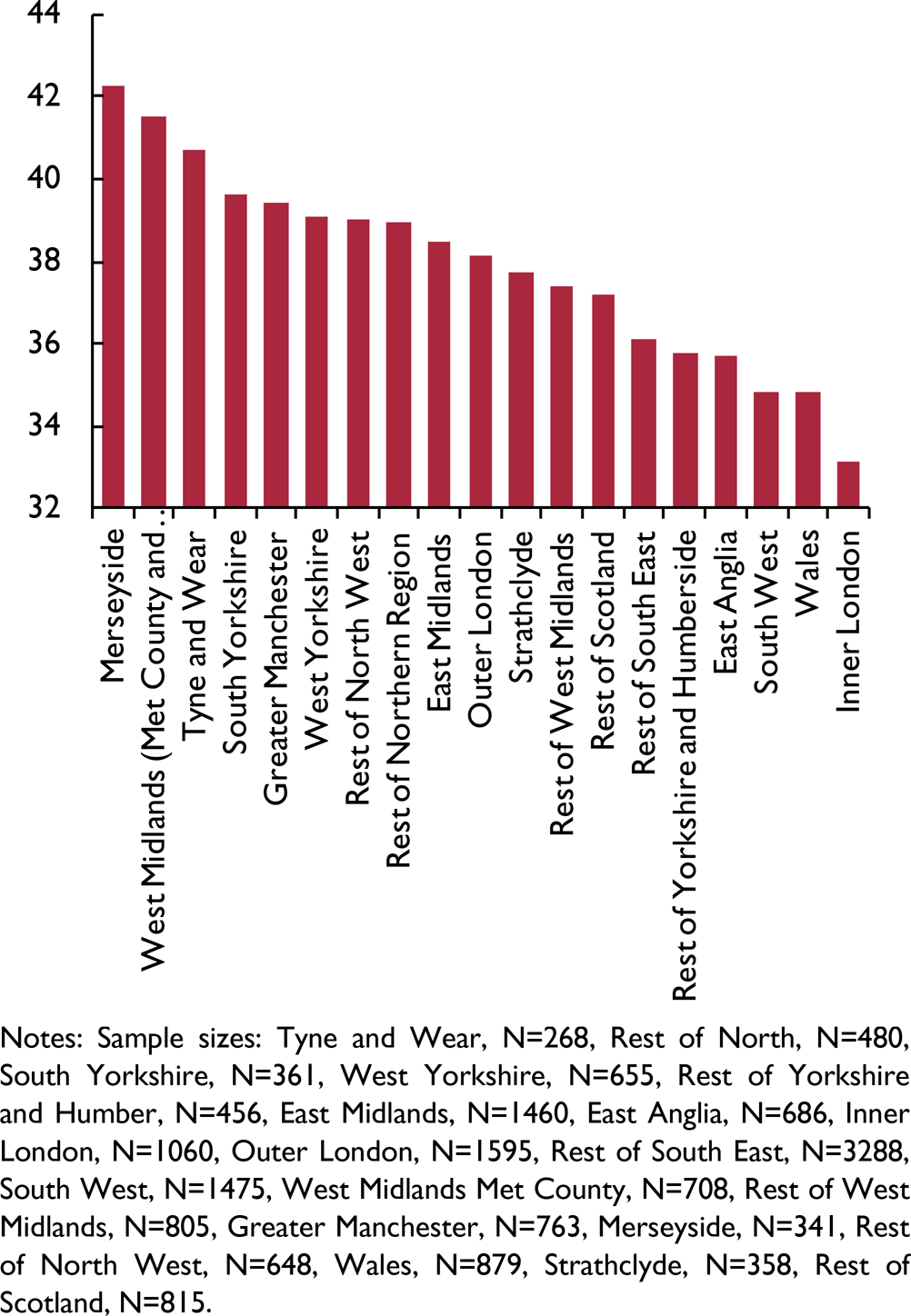
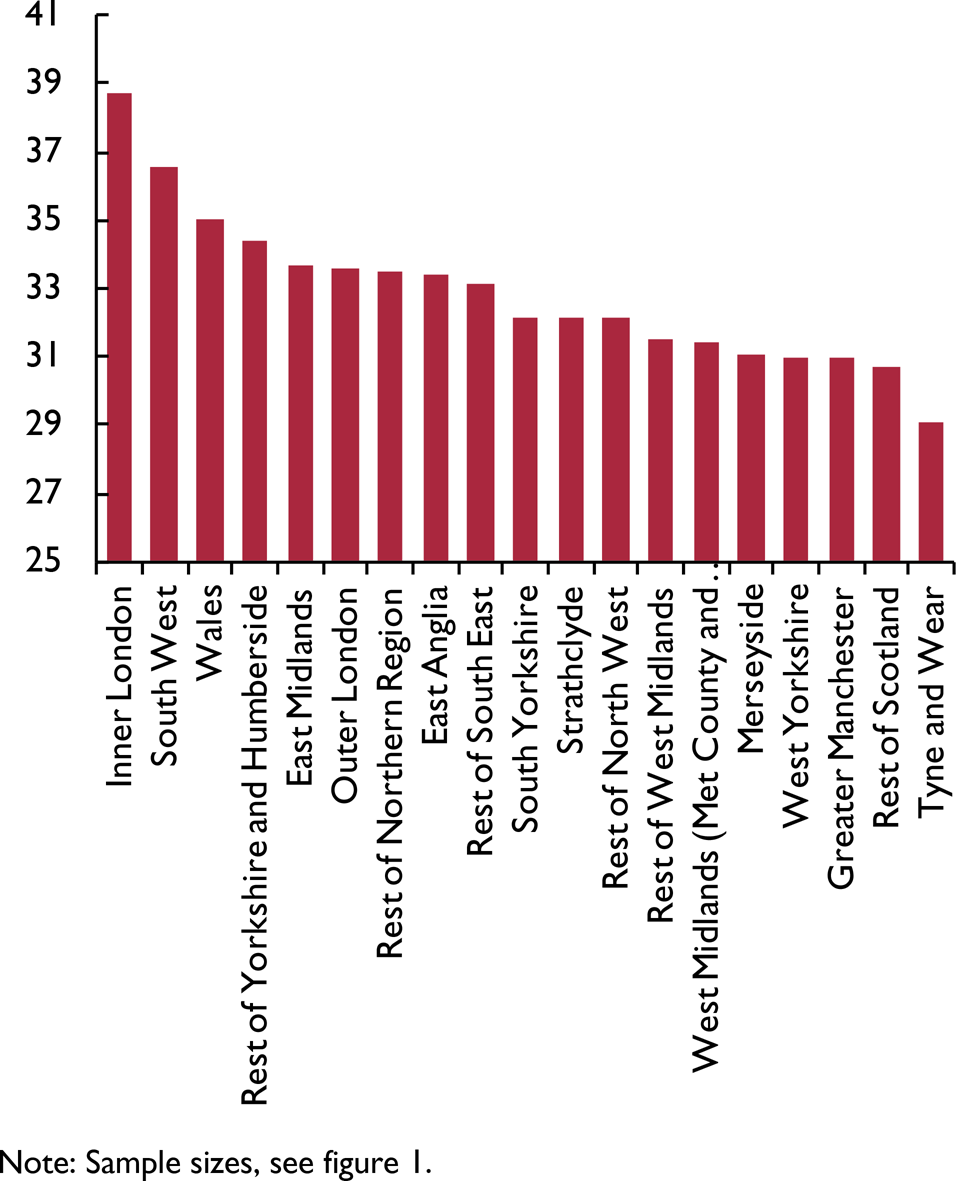
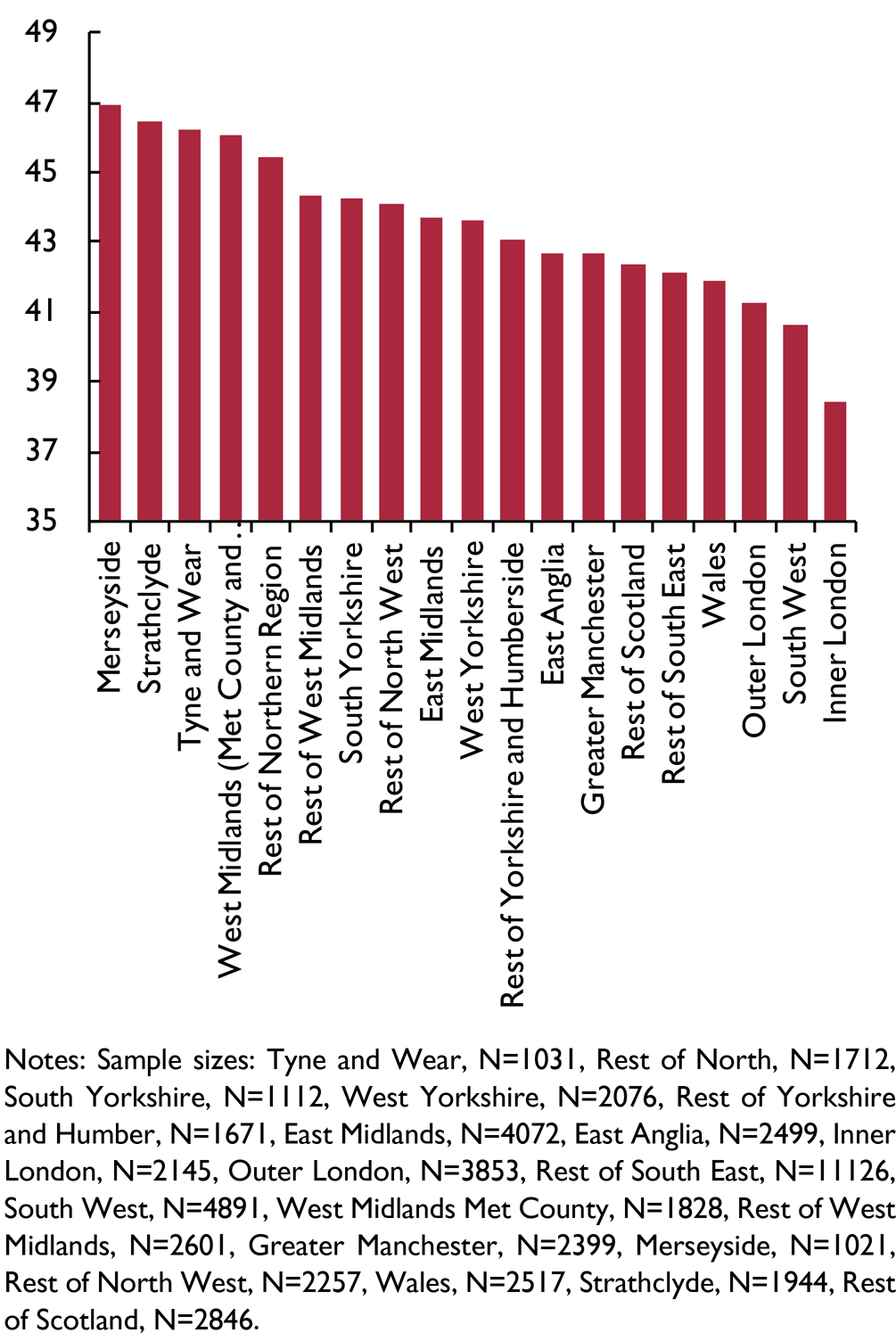
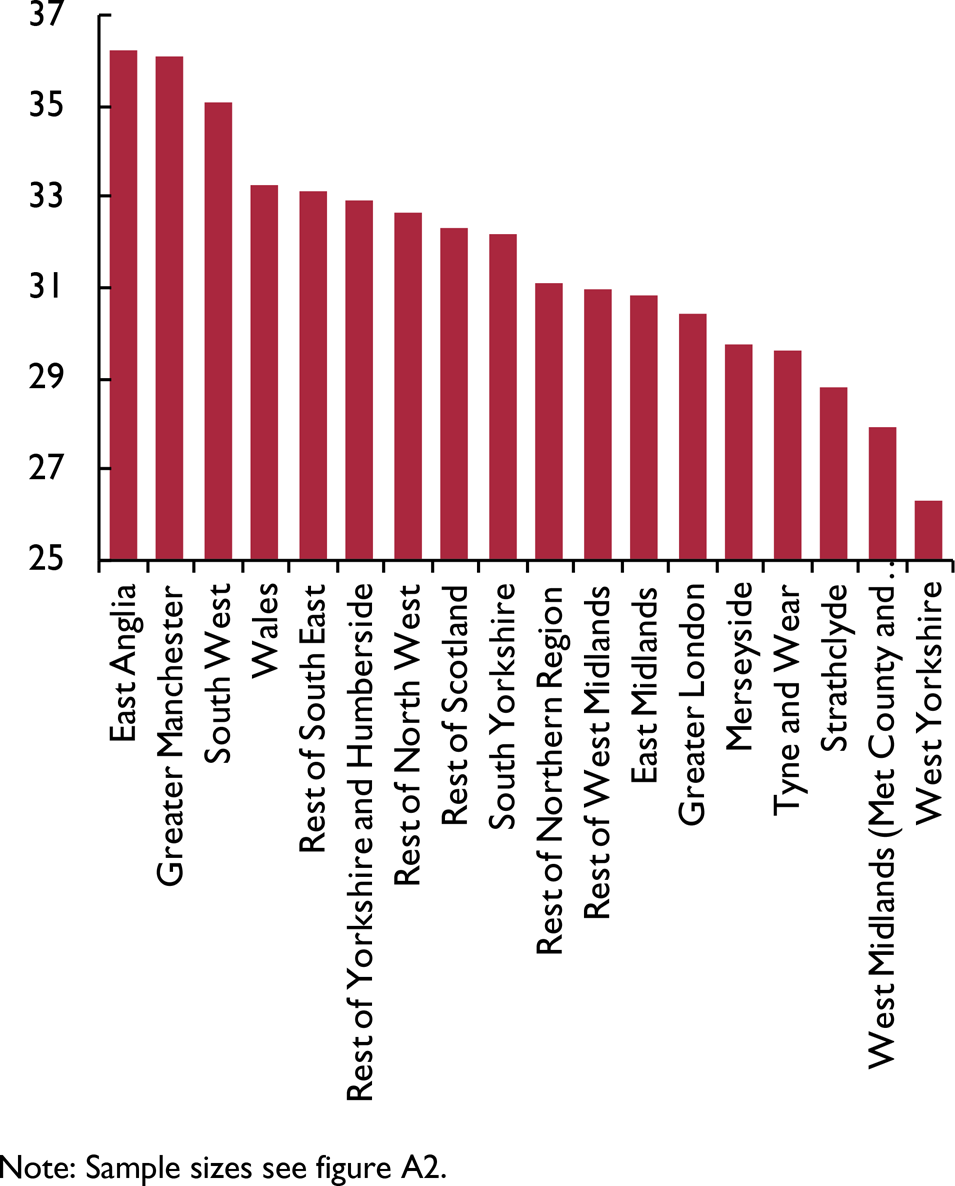
We begin by examining regional variation in rates of occupational mobility for the first time. Figure 1 shows total rates of absolute upward mobility among those currently living in 19 different regions within Britain, measured in terms of intergenerational movement between the 7 classes of the NS-SEC.Footnote 8Figure 2 shows rates of absolute downward mobility in each region.
Upward mobility by region of destination

Downward mobility by region of destination

In terms of upward mobility, figure 1 shows that there are small but important regional differences. For example, while over 40 per cent of those living in Merseyside, West Midlands Met County and Tyne and Wear have experienced some upward mobility, in Inner London,Footnote 9 Wales and the South West this figure is closer to one in three. It is notable that some of the results in figure 1 echo the other major recent analysis of regional upward mobility – the SMC Social Mobility Index. Both analyses find notably low levels of upward mobility in East Anglia and the South West. However, in other ways, figure 1 is clearly at odds with the SMC Index. For example, high mobility areas such as Tyne and Wear, Merseyside and Met West Midlands are mid-ranking areas in the SMC Mobility Index.
A similar pattern emerges when we consider rates of downward mobility – an issue often suppressed in political and policy discourses but hugely important for fully grasping regional differences in mobility. Figure 2 shows that as well as having the lowest rates of upward mobility, Wales, the South West and Inner London also have the highest rates of downward mobility. In contrast, Tyne and Wear and to a slightly lesser extent Merseyside and Met West Midlands have high rates of upward but low rates of downward mobility.
Perhaps the most striking findings from figures 1 and 2 are the place of Inner London. As mentioned, Inner London is often seen as the engine-room of upward mobility in Britain; its main boroughs comfortably top the SMC Mobility Index and have been lauded extensively in terms of educational social mobility. However, we find that Inner London has the lowest rate of absolute upward mobility of all 19 regions of Britain, and the highest regional rate of downward mobility.Footnote 10
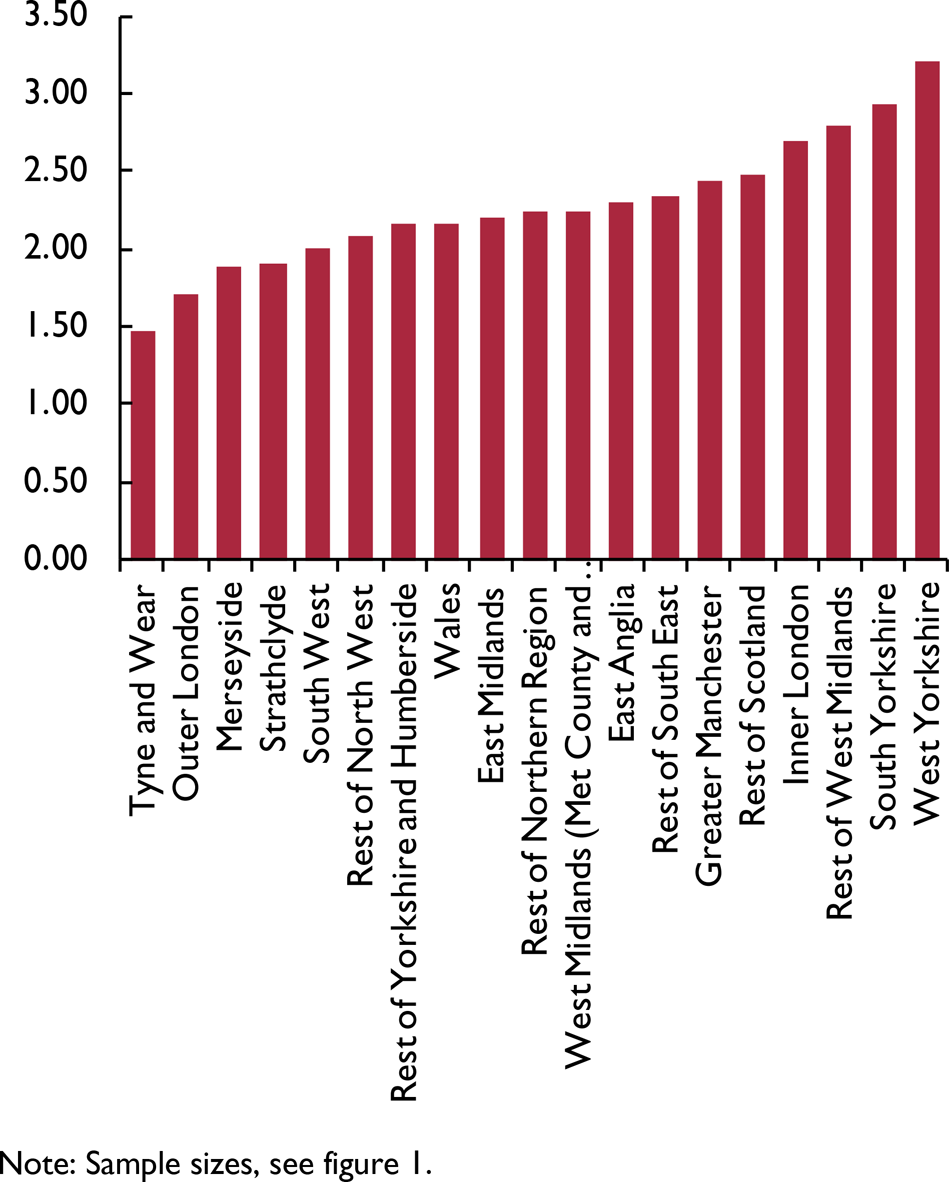
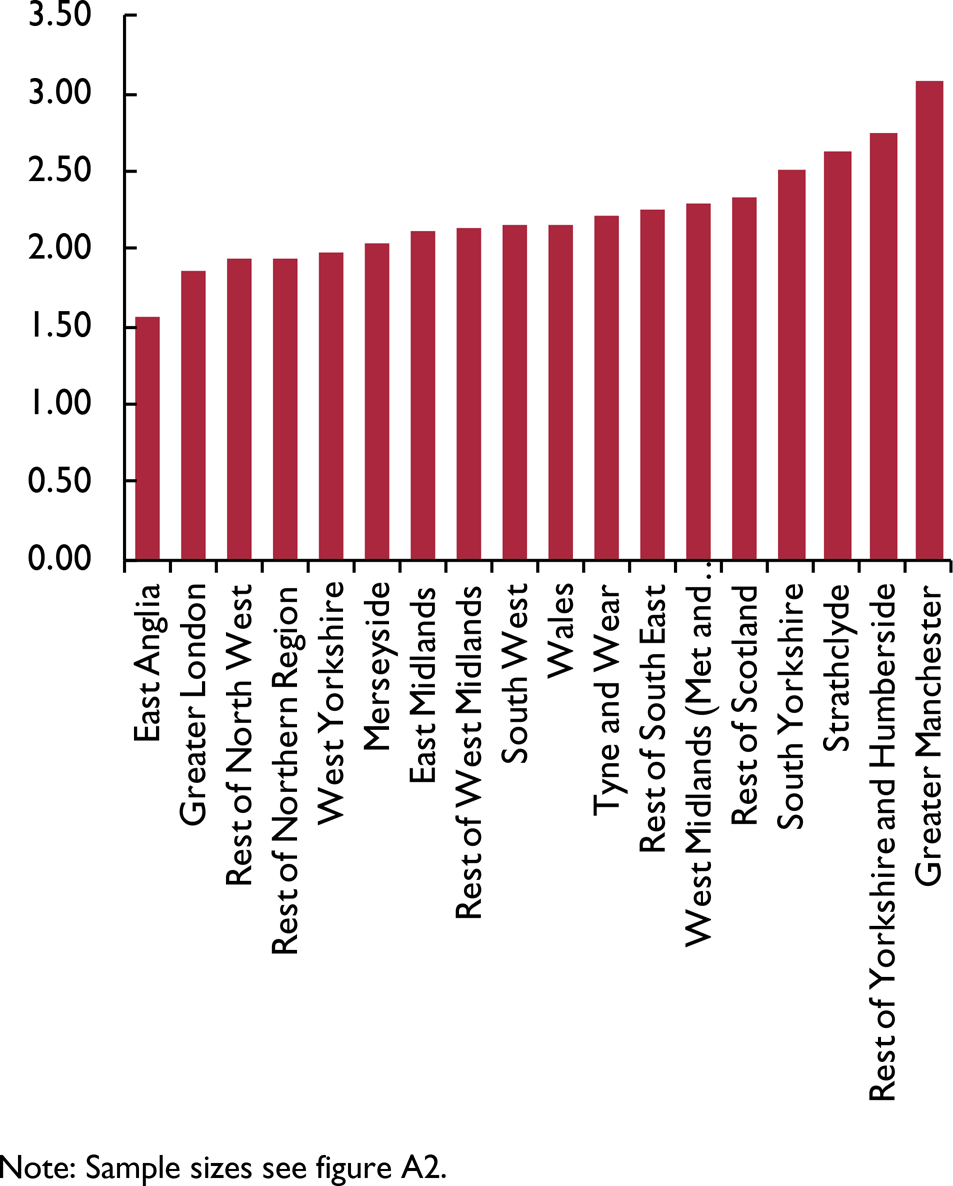
Figure 3 shows rates of relative mobility into the most highly prized occupational classes that contain professional and managerial jobs. Notably, this shows that there are some clear differences in regional upward mobility when viewed through the lens of relative rates. For example, while rates of absolute upward mobility are relatively high in areas such as South and West Yorkshire, the picture is very different in terms of relative mobility; in these areas those from privileged backgrounds are three times more likely to enter professional or managerial jobs compared to those from less privileged backgrounds. However, in most other regions, absolute and relative measures are fairly closely aligned. The reproduction of privilege is lowest in Tyne and Wear, which also has a high rate of upward mobility and there is a similar pattern in Merseyside.
Relative mobility to top two NS-SEC classes by region of destination

Significantly for this paper, the reproduction of privilege is also comparatively high in Inner London; here those from professional/managerial backgrounds are 2.6 times more likely to end up in professional/managerial employment than those from other backgrounds. While not as comparatively stark as figure 1 and restricted only to professional/managerial destinations, this nonetheless adds further weight to the finding that upward mobility is lower in London than elsewhere in the country – particularly within the professions.
Potential explanations
Occupational structure changes
How might we interpret these results? At first glance they certainly appear to disrupt the conventional picture of Inner London as an exceptional space for upward mobility. However, before drawing conclusions that elude to notions of opportunity or fairness in the capital's labour market it is first important to probe two explanatory factors with arguably different implications. For example, one potential explanation may be that patterns of occupational structural change in the capital have simply foreclosed possibilities for mobility in ways not experienced in other parts of the country. Certainly, at an aggregate national level much literature has documented the widespread expansion of professional and managerial jobs in the UK, particularly from the late 1940s to the early 1980s (Reference Goldthorpe, Llewellyn and PayneGoldthorpe et al., 1987). To understand whether this ‘increasing room at the top’ is patterned spatially in distinctive ways, table 1 probes the relative expansion and contraction of the three main groupings of occupational classes in NS-SEC from 1992 to 2015.

This helps us understand some of our findings so far – particularly the high absolute levels of upward mobility in Merseyside. Here there has been a very significant expansion of professional and managerial jobs to move upwards into. However, many other regions have faced significant expansion at the top and yet exhibit very low rates of absolute upward mobility. For example, changes in occupational structure do not therefore help us explain what is happening in the South West, East Anglia, Wales and Inner London. If anything, these regions have experienced above-average expansion of professional and managerial jobs and therefore there is little evidence of structural change hindering possibilities of mobility.
Population changes: the importance of migration
Another potential explanation for these patterns is that some regions have seen vast changes in their populations over time. It is worth remembering that in the figures above we describe mobility across regions according to where respondents currently live, as this is the best possible data available. In this way, the results do not distinguish between those who grew up, and stayed, in a region, those who migrated in from other parts of the country, and those who migrated from other countries. This is significant as the mobility trajectories of these groups may have rather different implications in discussions about regional mobility. For example, a substantial portion of the literature on regional social mobility, particularly in social policy, focuses on the quality of schools in a given region and the implied opportunities for educational upward mobility. In this research, educational mobility is often seen as the primary vehicle for achieving upward occupational mobility. However, linkages between schooling and labour market opportunities in a given region are largely only relevant to those who have stayed in their region of origin.
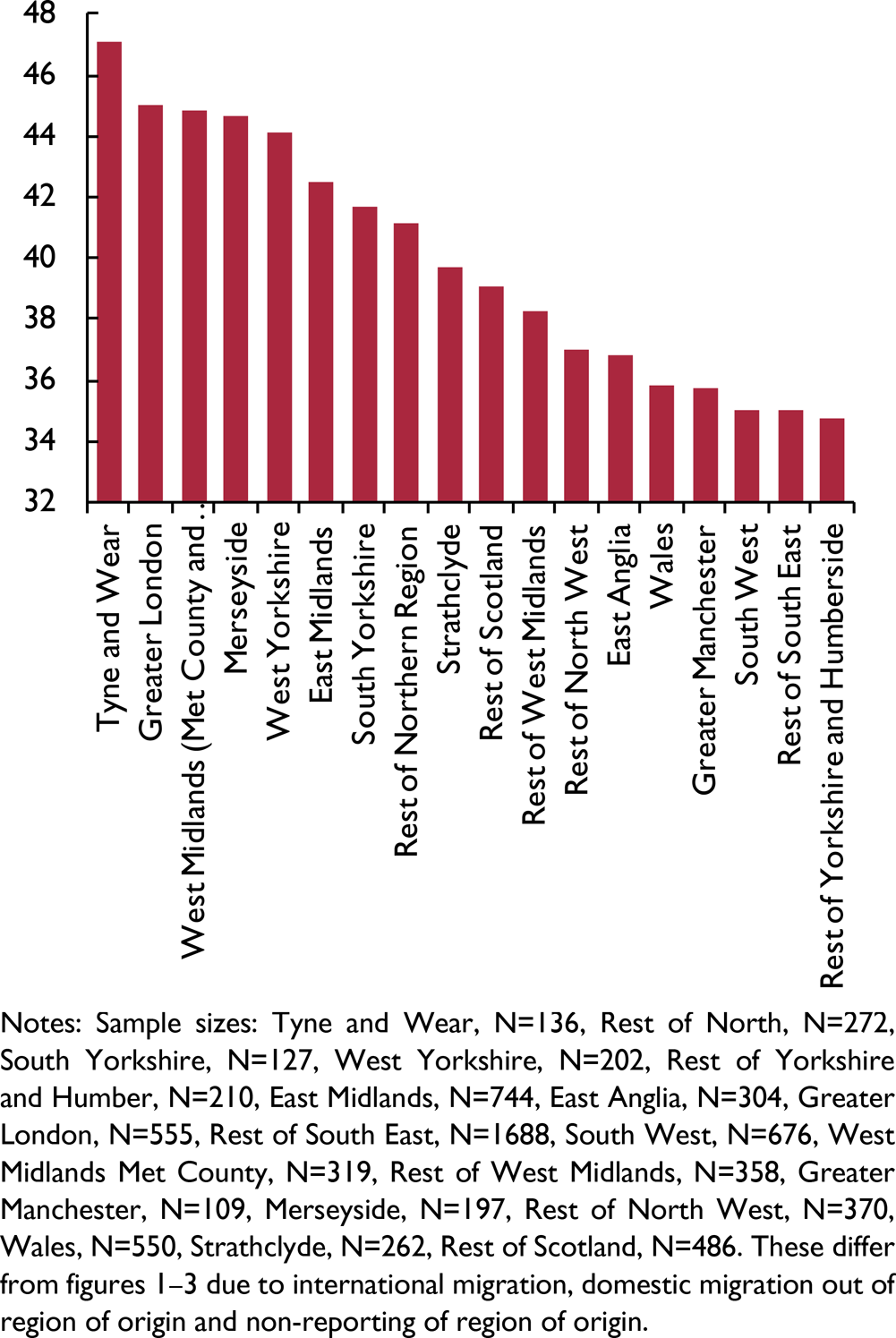
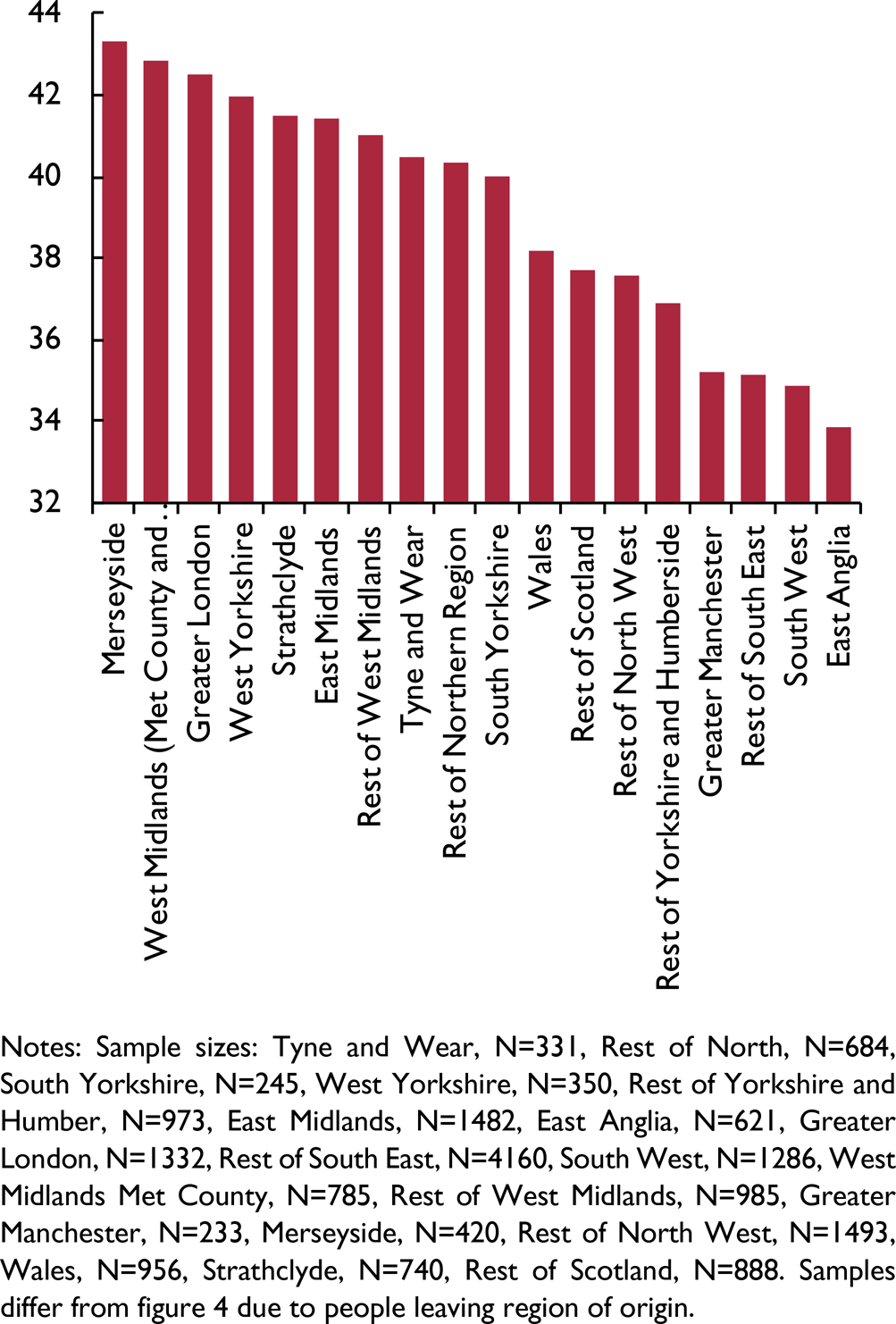
To explore this issue, figure 4 shows rates of absolute upward mobility by region of origin. Significantly, it therefore only includes those who have stayed in their region of origin. This is because the mobility of these ‘stayers’ arguably tells us something more reliable about the educational and occupational opportunities available in a given region, as these individuals have experienced each of these consecutive life stages in the same place.Footnote 11 Appendix figure A3 presents the corresponding analysis for absolute downward mobility by region of origin.
Figure 4 (and figure A3) largely corroborates the picture of regional mobility presented in figure 1 (and figure A2). For example, rates of upward mobility are both high for those who are from, and those who end up in, Tyne and Wear, Merseyside and the Metropolitan West Midlands, while rates of downward mobility are low for those who end up in and come from Tyne and Wear and Merseyside. Similarly, those from – and those who move to – Wales and the South West exhibit low levels of upward mobility and high levels of downward mobility. However, the congruence between patterns of origin and destination upward mobility does not hold for Inner London. Here we can only distinguish origin in terms of those brought up in Greater London but – consistent with recent literature on educational mobility – these individuals appear to experience above-average patterns of upward mobility. This is further supported by the patterns for relative mobility (see Appendix figure A4) that show that the odds of those from Greater London who are from privileged backgrounds reproducing their parents' class position is the second lowest of any region in Britain. However, as noted, when these individuals are combined with domestic and international migrants currently living in Inner London, the capital has comparatively low absolute and relative upward mobility rates.Footnote 12
Upward mobility by region of origin for those who stay in that region only

Of course what makes Inner London exceptional in a domestic context is precisely the comparatively high numbers of domestic and international migrants that flow to the city to live and work. To consider the role of such population change, table 2 ranks regions in order of those which have seen the greatest percentage increase in their share of the national population over the past 20 years. Notably, nearly all regions have experienced decline in their total share of population – particularly Wales, Strathclyde and the rest of the Northern region. London, on the other hand, has clearly been the recipient of these domestic migration flows – with Inner London's share of the national population increasing significantly. It is also striking that 46 per cent of the respondents in our sample currently living in Inner London are international migrants.Footnote 13 This, combined with high upward mobility among those from London, suggests that the lack of upward mobility and excessive downward mobility in London as a whole could be linked to this large migrant population.

Yet the fact that London exhibits different patterns of mobility based on whether its in-flow migrants are included suggests that what is at stake here is not just the degree of regional migration but also the class-composition of migrants themselves. Indeed, this dimension of migration is conspicuously absent in the geographical literature on migration, particularly work on London as an ‘escalator region’.
In table 3 we remedy this by exploring the class-origins of domestic migrants into Inner London, international migrants into Inner London, those who are from (Greater) London and stay in the capital, and the national average. This is highly illuminating. First, Panel A shows the striking overrepresentation of those from privileged backgrounds among domestic migrants. 56 per cent of domestic migrants to Inner London are from professional and managerial backgrounds compared to 36 per cent on average across Britain. And, of these, 26 per cent are from higher professional and managerial backgrounds compared to 14 per cent in the country as a whole. This skew has a strong bearing on rates of absolute upward mobility for current Inner London residents. Put simply, those who move in from Class 1 backgrounds cannot move upward and therefore this significantly lowers the proportion of London residents able to be upwardly mobile.

Building on Panel A we can simulate what the rate of upward mobility would look like in London if domestic migrants had the same class composition as those in Britain overall (in terms of proportion that were from Class 1). If this hypothetical scenario were realised there would be 12.2 percentage points (ppts) fewer class 1-origin migrants into London. Assuming these were instead distributed across the other origin classes in line with the national average, and had the same chance of upward mobility as the national average rate (38.5 per cent), then there would be 4.7 ppts more upward mobility in the London migrant group. This would translate into 2.2 ppts more upward mobility in London overall.Footnote 14 This is not insubstantial, yet it would still leave London with one of the lowest regional rates of upward mobility.
In Panel B, we consider upward mobility rates among those who can move upwards (from class origins 2–7). Two important findings emerge here. First, Inner London's low rates of upward mobility may also be linked to the experiences of international migrants; foreign-born residents from nearly all class backgrounds experience strikingly less upward mobility than those from similar origins elsewhere in London or the rest of the country. However, it is important to be cautious when considering the class origins of international migrants as there are likely to be important differences between the occupational structure, and class coding of individual occupations, in the UK and other national contexts.
Second, Panel B shows that the upward mobility trajectories of domestic and international migrants diverges strongly. Echoing the escalator thesis, domestic migrants to London actually experience more upward mobility than those from similar origins elsewhere in the country, particularly those from routine backgrounds and intermediate backgrounds.
The story for downward mobility is more complicated. Panel A indicates that domestic migrants have more scope for downward mobility than either the national average or those from London by virtue of having fewer individuals from NS-SEC class origin 7. A similar simulation to that for upward mobility therefore suggests that if there were as many routine occupation domestic migrants into London as there are on average in Britain, there would be 5.7 ppts more routine migrants. Assuming these were redistributed from the other class origins and had the same overall experience of downward mobility as the national average (32 per cent), there would be 1.8 ppts less downward mobility among London migrants, representing only 0.9 ppts less downward mobility in London overall. The overall class composition of domestic migrants, then, does not appear to be playing a large role in driving downward mobility rates.
Panel C examines the downward mobility of international and domestic migrants to London compared with the national average and those from London. Again this reveals two important findings. First, high downward mobility rates in the capital may be connected to the trajectories of international migrants, who – apart from those from very privileged NS-SEC backgrounds – experience comparatively high downward mobility. Second, Panel C again reveals that domestic migrants tend to do comparatively well in London, particularly those from professional and managerial backgrounds. Domestic migrants from privileged backgrounds actually experience significantly less downward mobility than the national average, particularly among those from higher (Class 1) and lower (Class 2) professional and managerial backgrounds.
Table 3 therefore goes some way in unravelling the puzzle of social mobility in Inner London. First, it suggests that low absolute upward mobility and high absolute downward mobility in the capital may be partly explained by international migrants. With the exception of those from higher professional and managerial backgrounds, those who are foreign-born appear to fare comparatively badly in the London labour market, with low rates of upward mobility and high rates of downward mobility. Second, table 3 also provides important insight into how domestic migrants are implicated in London's mobility patterns. In one way, this lends further support to the ‘escalator’ thesis, showing that domestic migrants are more likely to be upwardly mobile in London than those from similar backgrounds situated elsewhere. However, table 3 also shows how this domestic migrant group – taken as a whole – is implicated in low rates of upward mobility. This is because domestic London migrants are dominated by the privileged. Not only is this an important finding in and of itself – demonstrating that those from advantaged backgrounds may be better equipped, and more willing, to take advantage of career opportunities in the capital – but it also has important implications for social mobility. In a basic structural sense, the sheer size of this privileged group undermines the possibilities of upward mobility in Inner London. Such residents, by definition, cannot move up. But perhaps more importantly our results indicate that the mobility trajectories of these privileged migrants also has a strong bearing on the possibility of downward mobility and, by implication, openness in the capital. Our analysis shows that privileged domestic migrants seem to do particularly well in London, and are much less likely to experience downward mobility than those from similar backgrounds elsewhere in the country.
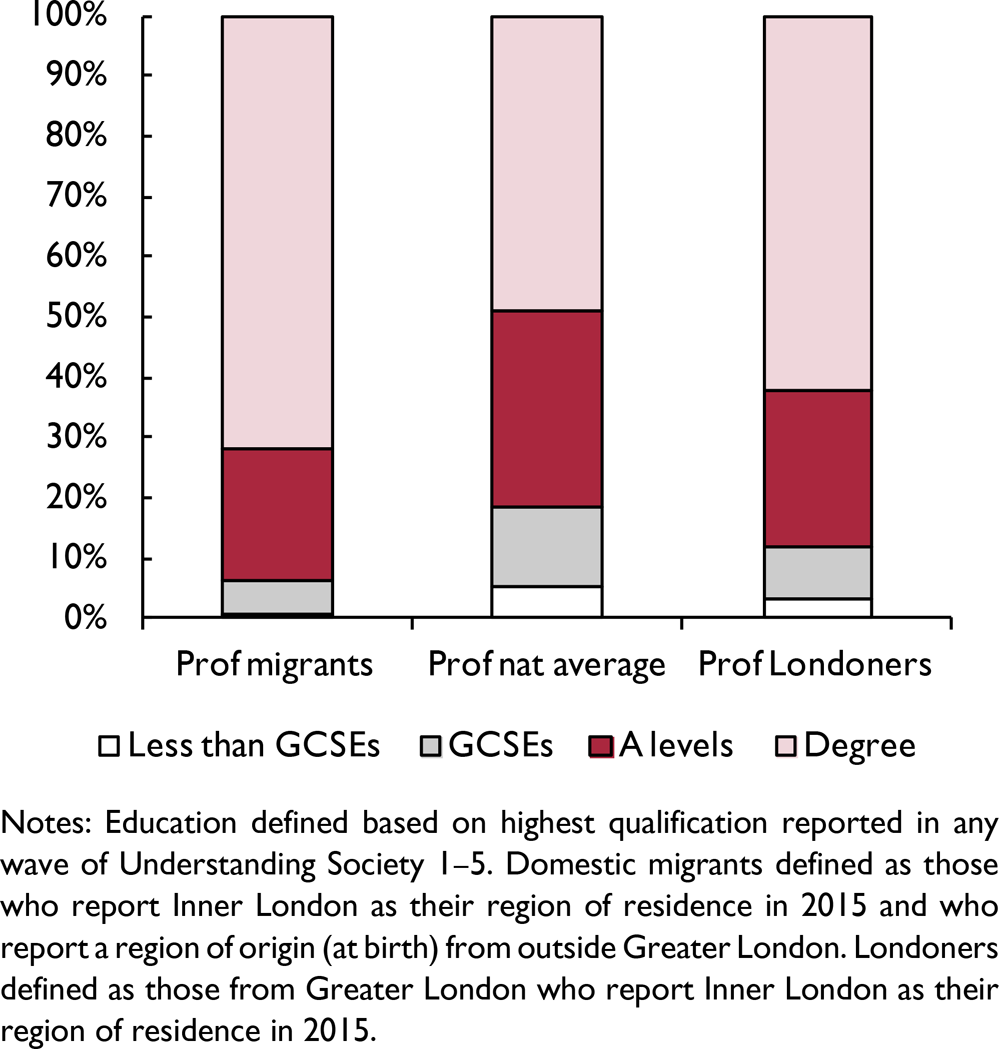
There may be meritocractic reasons for this. Figure 5 plots the education distributions of migrants from professional and managerial origins, the national average and those from London. This shows that privileged London migrants do tend to have higher educational qualifications than other groups − 72 per cent holding at least a bachelors degree qualification compared to 49 per cent in the UK as a whole and 62 per cent among those from London. However, these educational differences are fairly modest and there is strong evidence that class background has a direct effect on labour market outcomes, even conditional on education (Reference Crawford, Gregg, Macmillan, Vignoles and WynessCrawford et al., 2016; Reference Laurison and FriedmanLaurison and Friedman, 2016).
Education distributions of those from class I and 2 origins by migrants into London, Londoners and national average

5. Conclusions
A key issue overlooked in UK social mobility research is regional difference. In this paper we begin to address this methodological nationalism by providing the first, albeit exploratory, analysis of regional intergenerational occupational mobility. Our analysis demonstrates that rates of upward and downward mobility vary significantly inter-regionally. Two findings stand out in particular. First, our results indicate that in Merseyside and Tyne and Wear there are relatively high rates of absolute and relative upward mobility (as well as low levels of downward mobility). In Merseyside this may be partly explained by occupational structural change but in Tyne and Wear patterns are not explained by either changes in population or occupational structure. Further research is needed but this at least suggests that opportunities for those from disadvantaged backgrounds to achieve upward mobility may be high in Merseyside and particularly Tyne and Wear.
Second, we find that social mobility in Inner London is unique. However, this exceptionalism runs somewhat counter to the dominant policy narrative of London as the national engine-room of upward social mobility. We find some evidence of this; those from disadvantaged backgrounds who are from London, or who move in from elsewhere in the UK, do experience higher than average rates of upward mobility. In other words, as the geographical and educational literature suggests, London does act as an escalator. However, somewhat counterintuitively, we find that the average person currently living in London is actually much less likely to have experienced upward mobility than someone situated elsewhere in the country. The reasons for this are complex and appear rooted, at least in part, in the number, type and composition of migrants to London. More specifically we find that international migrants appear to fare particularly badly in the London labour market, experiencing comparatively low upward mobility and high downward mobility. Rates of upward mobility are also adversely affected by the fact that domestic migrants are disproportionally drawn from advantaged backgrounds. Not only is there no room for these privileged migrants to move up but our data suggest that they also hoard opportunities in the capital and are much less likely to experience downward mobility than elsewhere in the country.
Our data cannot adequately account for this London effect and more work is clearly needed. In particular, our findings relating to international migrants require further, more robust analysis, as the measurement constraints involved in comparing class origin across different countries are substantial. However, in terms of understanding domestic migration, here we suggest two possibilities that may provide fruitful avenues for future work to probe. First, it may be that there are distinct selection effects in terms of the types of people from privileged backgrounds who migrate to London. We see this partially in our data in the sense that privileged migrants are more highly educated than other groups. However, they may also be from especially affluent professional and managerial backgrounds, which may indirectly advantage them in the professional labour market – particularly in relatively precarious areas such as the cultural and creative industries where independent wealth can help insulate individuals from the peril of uncertain, short-term work (Reference Friedman, O'Brien and LaurisonFriedman et al., 2016; Oakley et al., forthcoming). Second, the immobility of privileged London migrants may be indicative of processes of opportunity hoarding or social closure in the Inner London labour market. Specifically, it may be that occupational gatekeepers in Inner London are more likely to reward signals associated with a privileged class background, such as particular accents, styles of dress, values and manners, self-presentation and cultural taste (Rivera, 2015). Of course the data at hand cannot examine this directly but it is worth noting that recent qualitative research has pointed to exactly this kind of ‘glass-floor’ effect in London-based accounting and professional services firms (Reference Ashley, Duberley, Sommerlad and ScholariosAshley et al., 2015).
Finally, it is important to acknowledge the limitations of our analysis. In particular it is worth noting that the sample sizes for some regions examined here are low. Although the granular detail provided by the LFS can correct for this in some ways, the fact that the LFS lacks measures of region of origin is a significant limitation. In particular, this means we are unable to probe important intra-regional dimensions of social mobility, such as how our findings vary by gender or age. It is also worth considering that London is currently leading the country on most measures of educational social mobility, a shift that is unlikely to be felt among the LFS and US respondents in this paper but which might significantly alter occupational mobility rates in the future.
Appendix
Upward mobility by destination region in Understanding Society compared to the Labour Force Survey

Upward mobility by region of origin for those who stay and those who leave

Downward mobility by region of origin for those who stay in that region only

Relative mobility to top two NS-SEC classes by region of origin